Feeds:
Posts
Comments

Archive for the ‘Jane Austen Novels’ Category

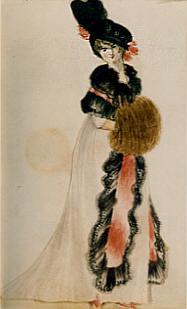
Watercolor by James Stanier Clarke. Thought to be of Jane Austen in 1815, when she visited Carlton House just months before the publication of Emma

Posted by: Tony Grant, London Calling

Jane Austen published Emma in December 1815, sixteen years after the French Revolution had ended but during a time when the women of that revolution were campaigning for women’s suffrage and especially for female education. It wasn’t a concept of education that had been considered before for women. Women were always thought unable to think like men. Their minds and brains worked differently on a much more superficial level, apparently. The grave subjects of philosophy, concepts about societies social needs, the study of History,mathematics,science, theology or Latin or Greek, were certainly not encouraged. It was a form of intellectual slavery. Women were kept childlike They were for marrying, procreating, looking after the home, bringing up children and being proficient in the finer arts of sewing, playing the pianoforte, singing, speaking French and being able to shop in a dress shop.

Rouseau and the Marquis de Condorcet (Marie Jean Caritat) in France and Mary Wollstonecroft here in England had different ideas for womens education.These ideas were infiltrating into the thoughts of Englishmen and women. They were the sort of ideas that would change society. I think Jane Austen introduced the character of Jane Fairfax to hint at such radical ideas. Jane Fairfax is an uncomfortable character within Emma. Emma Woodhouse can’t relate to her although they appear to be each others doppelganger, a mirror reflection of each other in many ways. But of course mirror reflections are opposites and you can’t actually become in contact with your reflection. There is a barrier, a layer of glass between you and your reflection. Jane and Emma, seem to exist in parallel worlds that cannot touch.
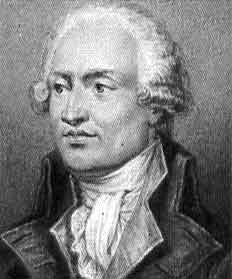
Marquis de Condorcet

Jane Austen, herself was an authoress earning money from what she wrote, but she still remained within the bounds of decent society. Emma is introduced by, “the Author of Pride and Prejudice.” She did not use her name. She was careful enough to dedicate Emma to The Prince Regent when it was suggested she might like to. She followed her urges and her intelligence and her talents but she kept her head down. She herself was critical of the education offered to young ladies and she herself had a horror of the profession of teacher as a result of her own experiences. Towards the end of her life Jane was writing Sanditon. Her heroine, Charlotte Heywood, is perhaps the most radical of her characters, in her views and in her actions. Would Jane Austen have eventually, “come out?”
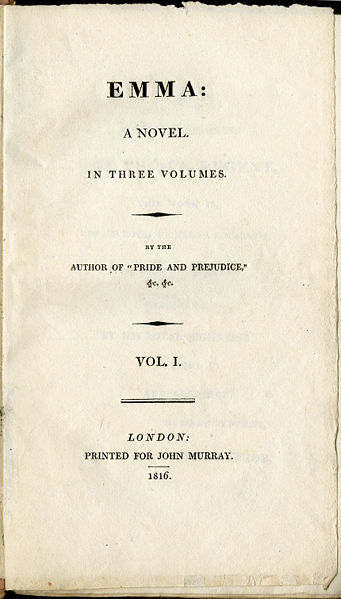
Jane Fairfax was the daughter of Lieutenant Fairfax, and her mother had been, before marriage, Miss Bates, the youngest daughter of Mrs Bates of Highbury.When her father was killed in action in a foreign country and her mother died soon after of consumption, Jane had returned to live with her grandmother and aunt, her mother’s elder sister in Highbury. However, Colonel Campbell, her fathers superior officer, offered to educate her and bring her up in his own small family to give her all the benefits of education and culture he could provide. Lieutenant Fairfax had been instrumental in saving his colonel’s life years before and being a dear officer and friend, Colonel Campbell felt it his duty to look after his friends daughter, Jane. Here is a passage from Emma describing Jane Fairfax’s education.

“ She had fallen into good hands, known nothing but kindness from the Campbells, and been given an excellent education. Living constantly with right minded and well informed people., her heart and understanding had received every advantage of discipline and culture; and Colonel Campbells residence, being in London, every lighter talent had been done justice to, by the attendance of first rate masters.”

It is interesting to note that Jane alludes to two sorts of education in relation to Jane Fairfax. First she says that she was, “given an excellent education,” and associated with well informed people and received every advantage of discipline and culture. The discipline bit is a little vague. It might refer to personal, behavioural discipline or it might refer to an intellectual discipline of the mind, inquisitive, challenging ideas, thinking. Maybe Jane Austen is being vague on purpose to allay the doubts and fears of the middle class reading masses. But what does Jane Austen mean by “an excellent education?” We know what she means by, “every lighter talent.”

It can only mean one thing. Jane Fairfax had been educated in cultural aspects that might include history, geography, mathematics, science and all the areas of learning usually kept for the great universities and the exclusive education of men.She had had the influence of right minded and well informed people too. Jane Austen herself had undoubtedly been immersed in and influenced by this sort of cultural education by way of her father’s library and erudite discussions with her intelligent and learned brothers.
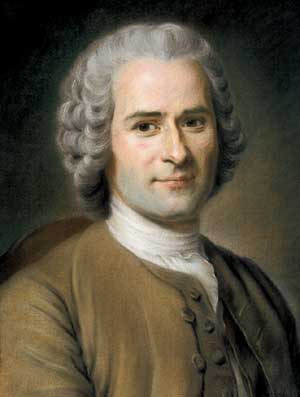
Jean Jaques Rousseau

Jean Jaque Rouseau ( 28th June 1712 – 2 July 1778) was a philosopher and writer.
He thought;

“ The education of women should always be relative to that of men. To please, to be useful to us, to make us love and esteem them, to educate us when young, to take care of us when grown up.”

His idea of education being important to women was so that they could then, in turn, educate their sons. He was only a little on the way to realising the full possibilities and potential for women. He wasn’t for giving women total freedom.

Marie Jean Antoine Nicolas Caritat (1743 – 1794) the Marquis de Condorcet, wanted to go much further than Rouseau with women’s education and freedoms. He wanted universal education as did Adam Smith, Thomas Paine and Thomas Jeffereson. He thought that the advances in reason and science would automatically limit family sizes leaving women the freedoms to expand their talents and energies in other directions. He wanted women to be admitted to the rights of citizenship. A very modern gentlemen. He had to go into hiding for his beliefs.

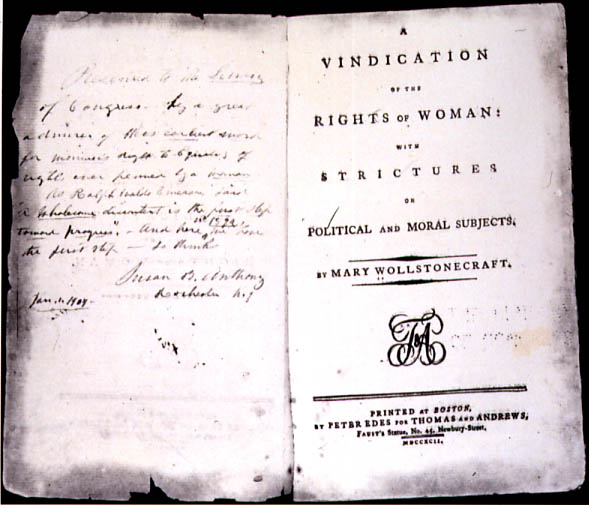
In England there was Mary Wollstonecroft. In the introduction to her “A Vindication of the Rights of Woman,” Mary Wollstonecroft writes,

“Contending for the rights of woman, my main argument is built on this simple principle, that if she be not prepared by education to become the companion of man, she will stop the progress of knowledge and virtue; for the truth must be common to all, or it will be inefficacious with respect to its influence on general practice. And how can woman expected to co operatre unless she knows why she ought to be virtuous? Unless freedom strengthens her reason till she comprehends her duty, and see in what manner it is connected with her real good. If children are to be educated to understand the true principle of patriotism, their mother must be a patriot; and the love of mankind, from which an orderly train of virtues spring, can only be produced by considering the moral and civil interest of mankind; but the education and situation of woman at present shuts her out from such investigations.”
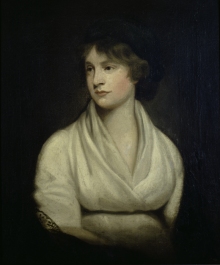
Mary Wollstonecraft

What Mary Wollstonecroft is actually saying here is that men and women need to be equal for the good and progress of mankind and if women are to be the teachers of children they need an education which enables them to think and explore and understand ideas, otherwise she cannot teach those ideas. An argument which cannot be challenged surely. Teachers today have degrees and are expected to have a thorough knowledge of their subjects and to be able to think and be creative.

How does this bring us back to Jane Fairfax? Jane Fairfax has had an, “excellent education,” and she appears to be evasive. It might be more a case of her having to be evasive as a means to survival. Emma Woodhouse cannot form a close relationship with her. As the novel unfolds we learn Jane is breaking societies strongest taboos. She and Frank Churchill are a match made in the realms of a freedom not acceptable in the England of those times. They are of a different economic and class backgrounds. Frank Churchill’s guardian, Mrs Churchill, while alive, would never condone such a relationship. Jane and Frank keep it secret and have to resort to all manner of subterfuge. Emma Woodhouse, in all her plans and manoeuvrings, and imaginings is defeated. Jane Austen is delving into areas that are perhaps closer to her own heart than she may well want to admit out right. In her final novel Sanditon, I think the way the character of Charlotte Heywood develops Jane was becoming more outspoken in her views about hypocrisy and the role of women in society. If Jane had lived into old age, with societies changes becoming more rapid with the industrial revolution, she might have become a champion of womans rights herself.
Finally, Jane Austen resolves the dilemmas, in a sort of Midsummer Nights Dream way. Characters find their true loves and permission is given, after Mrs Churchill’s death, for Frank and Jane to marry. So we have a happy ending for everybody. In a way, because Jane rounds everything off too nicely, as modern readers used to the full force of rough reality in the modern classic novel, perhaps we itch for Jane Austen to have gone the full hog. But, written as it was in the Georgian period, it was brave enough to allude to these issues. Jane couldn’t resist her true beliefs, really.

Gentle Readers, Tony Grant, who lives in England and oversees the blog, London Calling, wrote this most timely post. At the turn of the 19th century, women were not allowed to vote. This post points out the harsh realities for our female ancestors just a few generations ago. Regardless of party affiliation, I urge every woman in the U.S. to go to the polls on November 2 and exercise their hard-won freedom to VOTE for the candidate of their choice. – Vic

Images: Wikimedia Commons
Read Full Post »

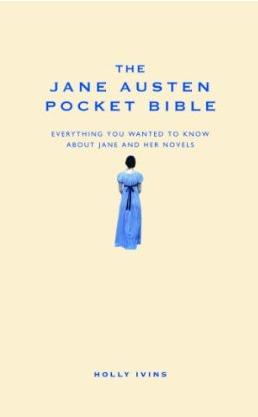
I recently received The Jane Austen Pocket Bible by Holly Ivins and have had occasion to use it a number of times. It is a small, compact, hard cover book filled with useful information about Jane’s life, novels, characters, movie adaptations, and the like.

Sprinkled throughout the chapters are facts and quotations, such as:

Pocket Fact:

“Some of Jeane’s earliest encouragement for her writing came from her neighbour Anne Lefroy, or Madame Lefroy as she was known. Anne was a lively and intelligent woman who was a great reader of Milton, Pope and Shakespeare, and was even known to write poetry herself…”

In Her Own Words:

“Our family are great Novel-readers and not ashamed of being so.” (Letter to Cassandra, 1798)

The book is divided into the following sections:

  • Introduction (including a timeline of her life and  how she wrote)
  • History and context, including a timeline of major historical events during this era.
  • Places Austen lived
  • Influences and literary context
  • Austen’s novels
  • Characters in Austen’s novels
  • Love, romance, and marriage in Austen’s novels
  • Film and TV adaptations of Austen’s novels
  • Glossary

Next time I visit England, I will bring this compact treasure trove with me. More than a guide, this handy reference will inform me and help me to recall important facts as I visit the places where she lived and worked. Outside of travel, this guide allows me to quickly look up facts as I write my posts.

I’ve taken the attractive paper cover off, for the book tucks in quite nicely in my briefcase or handbag, and its hard red cover is sturdy enough to withstand the wear and tear of travel.

I recommend this book to teachers, students, and Janeites whose interest in Jane Austen is never ending.

Other references:

Margaret Sullivan’s Jane Austen Handbook is delightful. Read my review here.

Joan Klingel Ray wrote Jane Austen for Dummies. Too large to take along on journeys, it nevertheless is a handy reference in any Jane Austen library. Read my review here.

I want to especially thank @sussexbestwalks, who I follow on Twitter, for arranging to send this book to me. What a lovely read and find. Order the book at this link.

Read Full Post »

Olivia Williams as Jane Austen

Even the most sheltered person will have been bombarded by these recent headlines:

Jane Austen had a helping hand!

Jane Austen had an editor!

Jane Austen had a spell checker!

Jane Austen couldn’t spell!

Jane Austen would have flunked English!

Jane Austen’s notes messy!

Each headline that rolled off my RSS reader became increasingly more ridiculous. What can we expect next?

Jane Austen did not write her own novels!

Jane Austen is really a male.

Jane Austen is a fraud!

So Jane Austen’s Emma and Persuasion were heavily proofed and edited. SO WHAT!? The source for all this brouhaha is Professor Kathryn Sutherland, who, after studying 1,100 of Jane’s handwritten manuscripts up close came to the conclusion that Jane had HELP.

Professor Sutherland of the Faculty of English Language and Literature claims her findings refute the notion of Austen as “a perfect stylist”. It suggests, she continues, that someone else was “heavily involved” in the editing process. She believes that person to be William Gifford, an editor who worked for Austen’s publisher John Murray II. – BBC news

Now any fan of Jane Austen knows that while John Murray might have published Emma and Persuasion, William Edgerton oversaw the publication of Sense and Sensibility, Pride and Prejudice, and Mansfield Park. Since her first published novel, she was actively involved in reworking her novels and perfecting them.

Professor Sutherland clarified her statements and also came to the conclusion that Jane was experimental in her writing and that she was innovative and willing to try new things, and that she placed a great emphasis on dialog. Eh, yeah. And, duh, wasn’t that obvious to begin with? It’s one of the reasons why Jane’s novels translate so well to film – her characters are defined by their speech.

As for using an editor, as far as I know any writer worth their salt turns their work over to an editor and proofer before their work is published. During the writing process, Jane was known to bounce ideas off her sister Cassandra. Her family expressed their opinions about her characters and stories, and she would certainly be influenced by those she trusted.

Many writers I know belong to writing groups in which their first drafts are scrutinized, dissected, and discussed. After such a discussion, the writer is free to take their advice or ignore it.  This, for many, is part of the creative writing process. Would such a group claim authorship of a book published under an individual writer’s name? Of course not. While they were instrumental in making that book happen, one would never claim after the fact that the writer’s role in crafting that novel was in any way diminished. I’m not saying that Professor Sutherland made these claims, but certain reporters have certainly taken up that way of thinking.

The headline that declared that Jane Austen’s notes were messy made me guffaw out loud. If any of you saw my first draft of anything, you would declare that I am illiterate. In addition, if you saw my first draft in my own handwriting, you would KNOW I am illiterate. Some writers in a creative frenzy, wanting to capture their thoughts quickly on paper before losing the thought, will actually write in a hurry, crossing out words, spilling ink, and forgetting their spelling and grammar.

As for preparing a work for publication, during her lifetime, Jane was heavily involved in rewriting her novels. She visited London and stayed with her brother Henry to prepare her Emma manuscript, and one imagines that she worked closely with William Gifford, the editor. The fact that she changed publishers and that John Murray, whose association with Byron made the poet a star, was significant for Jane. She had high hopes for her salability when making this move. Sadly, she would live long enough to see only one of her works published by this man, for Persuasion and Northanger Abbey were published posthumously.

Now, for the reporters’ sakes  (for they really were showing their ignorance with those ridiculous headlines,) let’s go over a turbo review of the history of spelling and grammar for the English language.*

1) Spelling was a free for all and writers wrote names and words according to how they sounded. The same name might be spelled a hundred different ways, such as Smith, Smyth, Smythe, Smithe, and so forth.

2) In 1712 Jonathan Swift wanted to create an Academy of the English Language that would provide people with grammatical and spelling rules. He was turned down by Parliament. Nevertheless, grammar books and spelling books began to appear in increasing numbers.

3) In 1755 Samuel Johnson published A Dictionary of the English Language.

4) In 1762, Robert Lowth wrote an Introduction to English Grammar.

5) The Oxford English Dictionary (OED) was first proposed in 1859. This seminal work would lay to rest any confusion about the meaning of English words and their origin by systematically studying every word since the year 1000AD, and including meanings, spelling variations, parts of speech, pronunciation, etc. for each one of them. James Murray began the project in 1879, but it was not until 1928 that the first edition was published.

So, gentle reporters: There was a reason for Jane Austen’s creative spelling. She lived in a time of flux for the English language and it took a while for the dust to settle and for linguists and grammarians to see eye to eye on how the English language should be systematized, regulated, and presented in dictionaries and grammar books. To those who profess that Jane’s spelling would have flunked her out of English, I say “Phoey!”

Use a translation device to read the next two worthy articles:

Read Full Post »

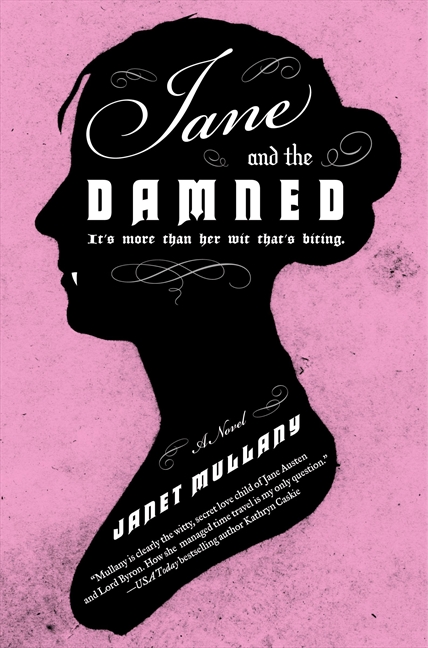
These days, centering a plot around Jane Austen as a vampire is as common as pre-packed sliced cheese, and so I approached Jane and the Damned with a jaundiced point of view. I must make a confession, however. I have been addicted to vampire novels and films about these bloodsuckers since my early 20’s, starting with Bram Stoker’s Dracula; Ann Rice’s Vampire Lestat series; Gary Oldman as the ancient bloodsucker; the cheeky tv series, Buffy the Vampire Slayer; and more recently True Blood and to a lesser extent, Twilight.

If an author or film director asks me to enter their vampire world, all I want in return is a rollicking good ride. In Jane and the Damned, author Janet Mullany does just that. Jane Austen, budding young writer, is turned into a vampire on a whim by William, a mature vampire and her dance partner at a local assembly ball. She begins to feel strange immediately.

Jane shares her awful knowledge with her father, who, while horrified at the news of his daughter having been bitten by one of the Damned, keeps a calm head. He trundles his family (wife Cassandra and daughter Cassandra and Jane) off to Bath so that Jane can take “the cure.” This treatment of taking the Bath waters is not guaranteed, for it might well kill Jane (and has killed many human seeking to rid themselves of the Vampiric poison inside them), but it is the only solution. They must rush against time before Jane’s human side disappears forever, for the longer they wait, the less successful and more painful and deadly the cure.

Rev Austen and Jane decide to keep Jane’s “condition” a secret from her mother and sister, saying only that Jane’s uncertain health requires that the family must remove to Bath immediately. As bad luck would have it, just as they settle into that Georgian city, the French invade England, and their lives are turned topsy-turvy.

Jane’s new life is conflicted on two fronts. First, she does not want to turn into a vampire. Second, she longs to taste human blood. And so her vampire adventure begins.

Going against vampire etiquette, Jane’s maker, William, has abandoned her to her fate. In Ms. Mullany’s vampire empire, the bear leader (or Creator) must guide an initiate into the intrecacies of becoming a vampire. The first feeding is problematic, since a full-blooded human takes a while to turn into one of the walking dead. A new vampire has not enough knowledge to wade through the many intricacies of vampire life without making a number of blunders. Enter Luke, who decides to act as Jane’s bear leader.

Handsome, witty, and wise in the way of Henry Tilney, Luke oversees Jane’s transformation with a hands-off approach, for he is ever aware that William has first claim on Jane and could change his mind at any time.

I have described the plot in more detail than is usual for one of my reviews, for this book is so filled with plots, sub-plots, and details that the story never peters out. Jane and the Damned feels rich, not thin, and Janet Mullany skillfully keeps juggling all the story threads she has tossed into play for a lively read. While I’ve disliked previous Jane Austen monster books, this one kept my interest for the following reasons:

1.) A thoroughly plotted back story. Mullany’s vampire empire and its mythology are well thought out. In the world Janet Mullaney has constructed, the monsters’ presence in Regency England, their ethics and mores, and their desire to rid Britain of the French make perfect sense.
2.) Internal conflict. Throughout the plot our heroine constantly struggles between her human self and vampire self, and this internal war adds to the external tension of a plot that is filled with action, romance, and historical detail. Jane must make a gutwrenching decision: to embrace her vampire life and leave her earthly family or to reclaim her human soul at the risk of death (and the chance for eternal life and happiness with the man she loves.)
3.) Desire and sensuality. In her new life, Jane yearns to be human, yet her desire for human blood overpowers her common sense, and as the novel progresses, she can no longer resist the charms of her hero. Sensuality begins to invade Jane’s life, whose awakening from sheltered spinsterhood to mature woman kept sparking my interest. (BTW, Ms. Mullany does not confuse sensuality with x-rated descriptions of the sexual act, for which I am grateful.)
4.) Boredom and ennui. Eternal life is not all that it’s cracked up to be. After a few centuries as one of the undead, a vampire is hard pressed to find anything new to do or interesting to experience. Janet Mullany has not neglected this important aspect of vampiric existence.
5.) Epic battle. In this instance, the army of the Damned has decided to defeat the French, who have invaded England (a real threat in those days) and who are bivoacked in Bath. Historical details of life in a war zone in the late 18th century are spot on, and author Mullany does not flinch from showing the seedier side of war: death, starvation, and occupation.

In short, Janet Mullany (right) addresses almost every fault I have found with other recent vampire novels set in the Regency era. Her vampire empire is so well crafted that she did not need to ride Jane Austen’s magical publicity coattails to make the story more palatable or salable. And yet, the thought of Jane Austen as an action heroine who comes into her own as she fights the French and surrenders to her own sensual longings is irresistible.

Add to the mix Ms. Mullany’s extensive knowledge about the Regency era and Jane Austen’s life (I love her depiction of Mrs. Austen), and you have a thoroughly enjoyable read. Do I recommend Jane and the Damned to everyone? No. But if you are a vampire junkie like me, you will be quite happy with your purchase.

Read Full Post »

Dancing With Mr. Darcy is a fabulous book. A book reviewer isn’t supposed to reveal an opinion right away, but I have many reasons for liking this compilation, which began as a short story competition in 2009 sponsored by Chawton House Library to celebrate the bicentenary of Jane Austen’s arrival in the Hampshire village of Chawton. This was a momentous occasion in Jane’s life, for she would enjoy her most productive years there.

Dancing with Mr. Darcy is great for bed time reading.

When my head hits the pillow, I can stay awake for 20 minutes at the most. That’s just the right amount of time to savor one of these stories, which is between 2,000-2,500 words in length, reflect upon it, and turn off the light. The book will remain on your bedstand for at least 20 nights if you stick to this schedule. But here’s the kicker: It’s hard to put down.

The stories are truly original.

The inspiration for these stories was taken from any theme in Jane Austen’s novels, like a character or single sentence. Authors could also draw upon Chawton House, an Elizabethan mansion, as their muse. Whatever they decided, they were encouraged to get their creative juices flowing. And were they ever!

The book opens with a story inspired by Chawton and a dead Jane Austen crossing the River Styx . She is accused in a Higher Court by the older female characters she created for wilfully portraying them as manipulative harpies and scolds. I wondered how author Victoria Owen would resolve this curious plot, but it ended beautifully and logically. Another story that drew my attention was Felicity Cowie’s ‘One Character in Search of Her Love Story Role‘, in which the central charcter, Hannah Peel, a contemporary heroine, finds her voice by interacting with classic literary heroines, including Jane Bennet and Jane Eyre.

Fresh voices are given an opportunity to shine.

Unknown authors do not often get to compete in a public forum for an opportunity to have their work published with the backing of a prestigious institution. I read the short biographies at the end of the book, and while many of the authors took creative writing or majored in English, some are still students, one lives on a farm, another is a book reviewer, several are scholars, another is a math and science teacher, and yet another was educated to be a lady. With such a variety of backgrounds, it is no wonder that the stories are not clichéd.

Many of the tales had contemporary settings, and there were times that I had to puzzle out just what their connection was to Jane Austen or Chawton house. Like all compilations, I preferred some stories over others, such as Kelly Brendel’s Somewhere, inspired by a passage in Mansfield Park, and Eight Years Later, which is Elaine Grotefeld’s take of love lost and found again in the mode of Persuasion.

Jane Austen would have approved.

The variety of the stories, and their excellence and fresh approach to the Austenesque genre makes this book stand out from the pack. Jane Austen would have approved of their original plots, their intelligent writing, and the variety of ideas that sprang from the original impetus. These twenty stories were selected from 300 submissions, and one can only imagine how many good stories barely missed the cut.

Sarah Waters at Chawton House, July 2009. Image @Chawton House

In a different way, I found this compilation equally as thrilling as A Truth Universally Acknowledged, edited by Susannah Carson, a book of critical insights by famous authors about Jane Austen that I adored and reviewed late last year. Stories that are judged, weighted, or juried tend to have an edginess and contemporary bite that attract me.

In this instance, the stories were judged by a Chair judge, Sarah Waters, the author of Tipping the Velvet and Fingersmith, and a panel of judges: BBC journalist Lindsay Ashford; author Mary Hammond; Rebecca Smith (five-times great niece of Jane Austen, descended through her brother Frances); and freelance editor Janet Thomas.

The book is available today at your local or online bookseller. Run, don’t walk to obtain your own copy. I give it three out of three Regency fans and then some.

Read Full Post »

« Newer Posts - Older Posts »