This Jane Austen blog brings Jane Austen, her novels, and the Regency Period alive through food, dress, social customs, and other 19th C. historical details related to this topic.
Happy Valentine’s Day, JAW friends! Are you sending cards this year or planning something special? I found it interesting to read about Valentine’s Day during the Regency Era and found several histories of the holiday online. A short overview from The Jane Austen Centre proved intriguing.
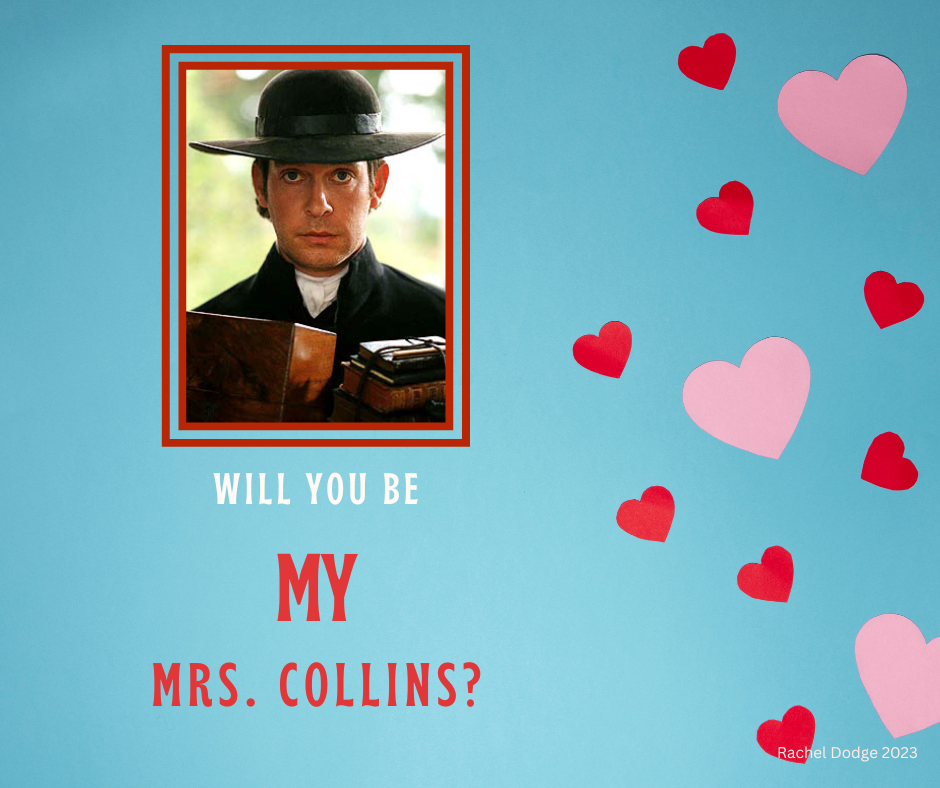
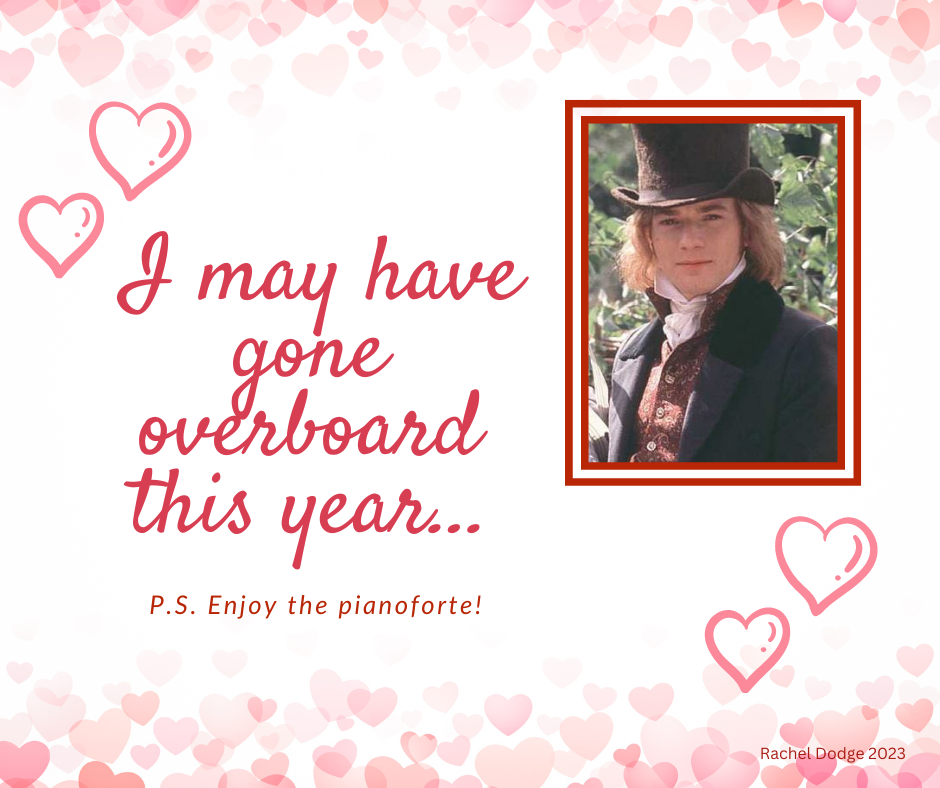
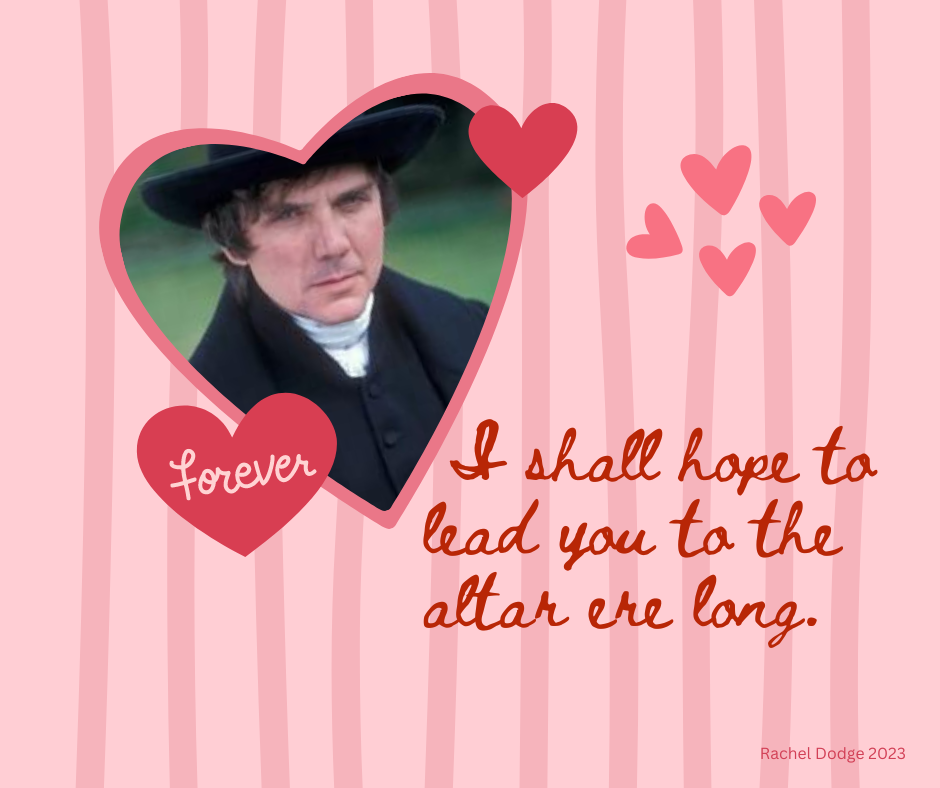
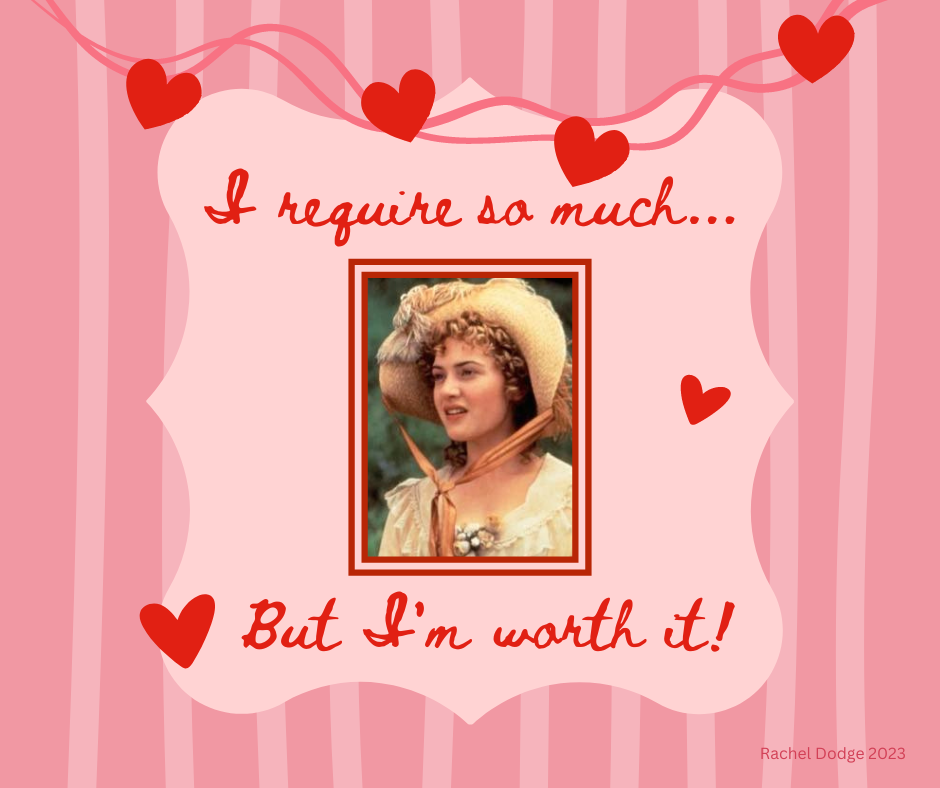
As I thought about the kinds of Valentine’s Day cards and letters Jane Austen’s characters might have sent to one another, I had a few creative ideas. The following is the fruit of an hour spent laughing over what some of Austen’s most famous (and silly) characters might say if they sent out Valentine’s Day cards.
Enjoy!
True Romantics
And finally, a few Jane Austen-themed Valentine’s Day graphics that you might like to share with a loved one! After all, she did write some of the most romantic lines in the English language!
A very Happy Valentine’s Day to you, from all of us here at Jane Austen’s World! May your day be filled with love, laughter, friends, sweet treats, and good books. Feel free to share this post with your friends and loved ones!
What’s in a voice? According to recent research, quite a lot. In her article “Only 4 Syllables Needed to Recognize Voice,” Madeline McConnell says humans can identify familiar voices in as few as four syllables, or two words. That’s better than some of the most advanced voice recognition software available today.
Here’s how it works in everyday life: Spouses can recognize their mate’s voice across a crowded room. From a young age, “babies are able to distinguish the voice of their mothers from the voices of others” (McConnell). And close friends can hear one another’s voices from an adjacent room.
In the case of Anne Elliot and Captain Wentworth, a word uttered by anyone else truly would not sound so sweet. The way they actively listen to one another—often without speaking directly to one another—plays a crucial role in repairing their relationship, rebuilding their trust, and rekindling their love.
Anne Listens
Throughout the novel, Austen gives us many important clues about Wentworth’s true feelings for Anne, often through what Anne hears (and overhears) him say. As Anne listens and hopes, she strains to catch hints of Wentworth’s true opinion of her now, to either “its constancy or its change” (Ch. 4). Here are a few key examples of Anne intent listening:
When they meet: “Her eye half met Captain Wentworth’s, a bow, a curtsey passed; she heard his voice.” (Ch. 7)
As she listens to his review of the past: “‘That happened before I went to sea in the year six,’ occurred in the course of the first evening they spent together: and though his voice did not falter, and though she had no reason to suppose his eye wandering towards her while he spoke, Anne felt the utter impossibility, from her knowledge of his mind, that he could be unvisited by remembrance any more than herself. There must be the same immediate association of thought, though she was very far from conceiving it to be of equal pain.” (Ch. 8)
Her discernment of the voice and mind she knows so well: “When he talked, she heard the same voice, and discerned the same mind.” (Ch. 8)
Her keen interest in the “low voice” on the other end of the sofa: “[I]n another moment he was perfectly collected and serious, and almost instantly afterwards coming up to the sofa, on which she and Mrs Musgrove were sitting, took a place by the latter, and entered into conversation with her, in a low voice, about her son, doing it with so much sympathy and natural grace . . .” (Ch. 8)
Her reaction to overhearing Wentworth, “in the hedge-row, behind her,” walking and talking with Louisa: “The listener’s proverbial fate was not absolutely hers; she had heard no evil of herself, but she had heard a great deal of very painful import.” (Ch. 10)
Her reaction to him “speaking with a glow, and yet a gentleness” to her: “She coloured deeply, and he recollected himself and moved away. She expressed herself most willing, ready, happy to remain.” (Ch. 12)
Her intense focus on his words and the sound of his voice: “Whether he would have proceeded farther was left to Anne’s imagination to ponder over in a calmer hour; for while still hearing the sounds he had uttered, she was startled to other subjects by Henrietta, eager to make use of the present leisure for getting out, and calling on her companions to lose no time, lest somebody else should come in. (Ch. 22)
And here especially, we see Anne’s ability to “distinguish” Wentworth’s words even in the midst of a noisy room, when he says, “A man does not recover from such a devotion of the heart to such a woman. He ought not; he does not.”
Either from the consciousness, however, that his friend had recovered, or from other consciousness, [Wentworth] went no farther; and Anne who, in spite of the agitated voice in which the latter part had been uttered, and in spite of all the various noises of the room, the almost ceaseless slam of the door, and ceaseless buzz of persons walking through, had distinguished every word, was struck, gratified, confused, and beginning to breathe very quick, and feel an hundred things in a moment. (Ch. 20)
Jane Austen’s Persuasion
Wentworth Listens
This keen sense of listening doesn’t just go one way. Even when he doesn’t look at her, Wentworth listens carefully to Anne. At the end of the novel, we discover the extent to which he has listened to her conversations with others and tried to discern her feelings:
When the topic of Mr. Elliot comes up: “As she spoke, she felt that Captain Wentworth was looking at her, the consciousness of which vexed and embarrassed her, and made her regret that she had said so much, simple as it was.” (Ch. 22)
When Charles says “What is Mr. Elliot to me?” and Anne realizes that Wentworth is “all attention, looking and listening with his whole soul; and that the last words brought his enquiring eyes from Charles to herself.” (Ch. 22)
How carefully Wentworth listens to Anne’s response to Charles: “She had spoken it; but she trembled when it was done, conscious that her words were listened to, and daring not even to try to observe their effect.” (Ch. 22)
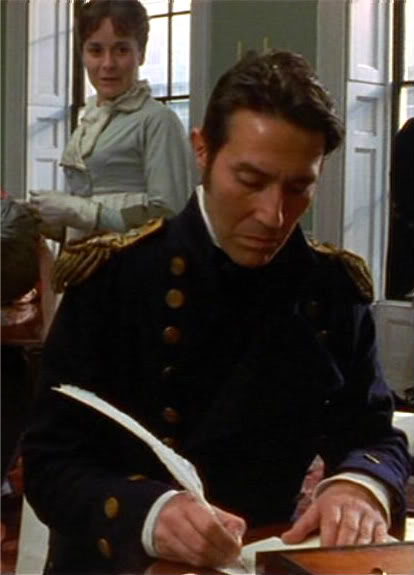
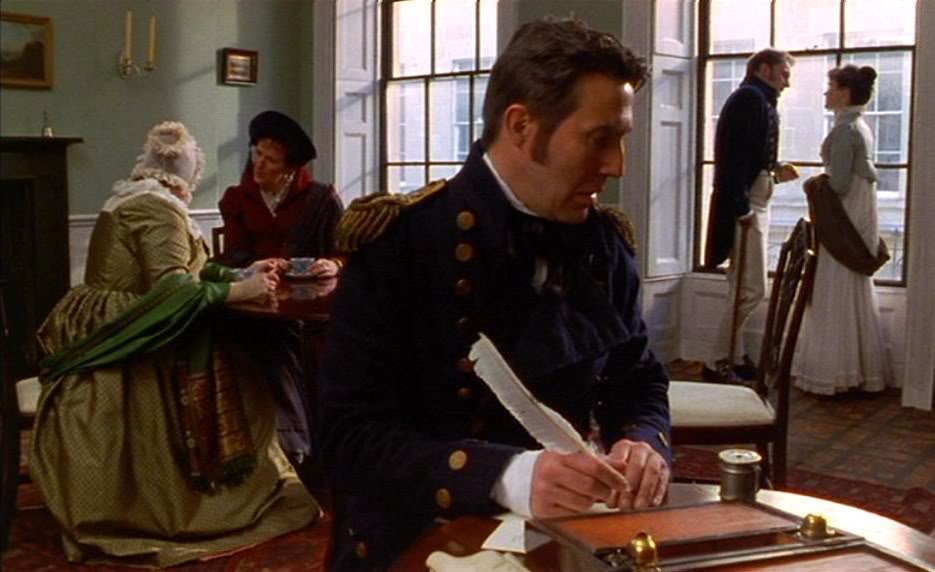
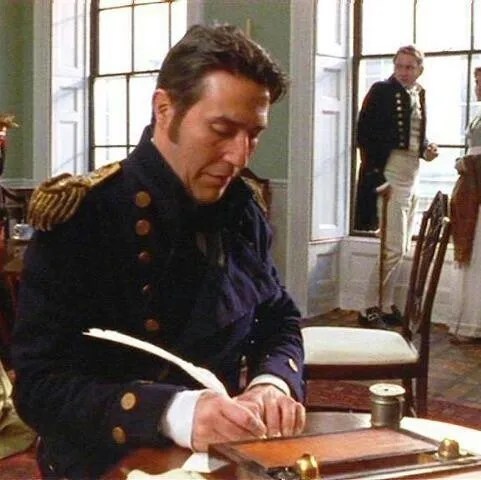
Wentworth’s reaction to the topic of parents becoming involved in long or “uncertain” engagements: “Anne found an unexpected interest here. She felt its application to herself, felt it in a nervous thrill all over her; and at the same moment that her eyes instinctively glanced towards the distant table, Captain Wentworth’s pen ceased to move, his head was raised, pausing, listening, and he turned round the next instant to give a look, one quick, conscious look at her.” (Ch. 23)
When Wentworth tunes in to Anne’s conversation with Captain Harville about love affairs and constancy of heart between the sexes: “a slight noise called their attention to Captain Wentworth’s hitherto perfectly quiet division of the room. It was nothing more than that his pen had fallen down; but Anne was startled at finding him nearer than she had supposed, and half inclined to suspect that the pen had only fallen because he had been occupied by them,striving to catch sounds, which yet she did not think he could have caught.” (Ch. 23)
The most stunning piece of evidence is Captain Wentworth’s letter to Anne, which he drafts while listening to her conversation with Captain Harville:
I had not waited even these ten days, could I have read your feelings, as I think you must have penetrated mine. I can hardly write. I am every instant hearing something which overpowers me. You sink your voice, but I can distinguish the tones of that voice when they would be lost on others. (Ch. 23)
Jane Austen’s Persuasion
Wentworth’s words reveal that he was not only listening carefully to Anne during the letter-writing scene, but that he has been listening to her throughout the novel. Indeed, Anne’s voice is something like a siren call to the seafaring Captain Wentworth. No matter how hard he has tried to forget her, he has “never seen a woman since whom he thought her equal” and has only “imagined himself indifferent” (Ch. 23).
Rekindled Love
Though Anne and Wentworth’s initial courtship was brief, and though they have not seen each other for many long years, Austen shows us the depth of their true feelings through what they say (and don’t say). While this article only covers some of the most pointed examples of the subtle communication between these two characters, a close reading of the novel reveals so much more. Austen shows us throughout the novel—through gestures, looks, and glances—just how aware they both are of one another in every scene, in every room, and in every situation.
Indeed, Austen builds much of the romantic tension between Anne and Wentworth based more on what they say to other people than on what they say to one another. Throughout the novel, she uses listening and, yes, eavesdropping, as a clever literary technique. As Anne listens in on Wentworth’s conversations, analyzing his every word, phrase, tone, and inflection, we listen in as well, gathering clues as we go. And as she begins to dare to hope, so do we.
The art of listening well in Persuasion plays an important role in reigniting an old flame, rekindling lost love, and soothing broken hearts, helping to make Anne and Wentworth “more exquisitely happy, perhaps, in their re-union, than when it had been first projected.”
What other moments have you noticed in this novel or another Austen novel when listening closely was important to the plot?
I own quite a few copies of each of Jane Austen’s novels. Many are annotated, some are old editions or designed for children. Others are illustrated with different artists, many of whom are well known. Most recently I purchased Sense and Sensibility (hardcover), and Pride and Prejudice and Emma (kindle.) All three are illustrated by one of my favorite wildlife artists, Marjolein Bastin, who is known worldwide for her delicate watercolors and gorgeous depictions of flowers, birds, and animals from the field. Click on images below to view some of the beautiful illustrations up close.
Book Cover
Opening pages
Volume One announcement page
Postcard insert of carriage arrival in London
Illustrator Marjolein Bastin
While Ms Bastin’s painting subjects do not at first seem aligned with Austen’s stories, they are as romantically gorgeous as the author’s prose. They are, in fact, perfect gifts for introducing family members and friends to your favorite author. Considering Austen’s upbringing in Steventon and the countryside and her final years in Chawton Cottage, these images in Ms Bastin’s portfolio are suited to evoking the countryside in soft, beautiful strokes.
Certainly purchasing a hardback is the best choice, for such a book is tactile, allowing us to finger the pages, and flip back and forth to reread a passage. Hardback books last a long time and remain in good condition much longer than a paperback. In Sense and Sensibility’s edition, gifts of inserts appeared at random throughout the chapters – note the postcard in figure four above!
Online books also have their good features, however. They are portable. I can read them on several devices any time and any place where I have connectivity. My iPad and smart phone allow me to read at night without light, and to change the font size to suit my eyes. While one can find particular passages, the tactile joy of reading a book is gone. When purchasing these books, one does not own them. You are only renting them.
Plus, digital volumes are hidden inside a tablet or computer, while my hardbacks are given logical designations inside my bookcases. I can feast my eyes on them at will and run my fingertips lovingly along their spines. Below are the covers and inserts from my digital books.
Cover of Pride and Prejudice
Insert in Pride and Prejudice of a music sheet of a waltz by J.B. Cramer.
Cover of Emma
Insert of a Charade in Emma
More information about illustrated books & illustrators:
Sense and Sensibility by Jane Austen: Adapted by Nancy Butler & Sonny Liew: This illustrated adaptation of Sense and Sensibility in comic book form was adapted skillfully by Butler and beautifully drawn by Liew. This book is great for younger readers or those who need help with illustrations to read our language. In the latter instance the book should be read with duet reading and an explanation or interpretation by teacher/tutor of 19th century concepts or vocabulary.
Marjolein’s work is enjoyed the world over. In addition to her partnership with Hallmark, she provides ongoing contributions to Libelle, as well as a variety of product partners in Europe and North America. She and her husband Gaston divide their time between country homes in Holland, Switzerland and in Missouri, near Hallmark’s headquarters, as well a tropical retreat in the Cayman Islands. Each setting provides a unique glimpse of what nature has to offer throughout the world.
My personal story: My mother (Moeder) filled a Bastin Dutch birthday calendar of her friends and relatives. This is how I got to know the artist. (My first cousin’s name is Marjolijn.) See the calendar front page below in Dutch.
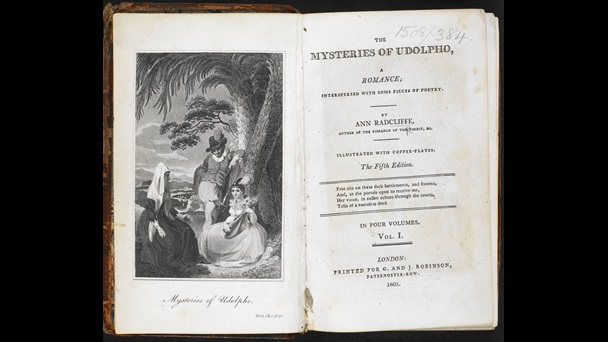
In Austen’s youth, sentimental romances and sensational Gothic novels full of dramatized heroines, dark towers and dungeons, and dangerous male villains became popular. These included novels like Charlotte Smith’s Emmeline (1788), which some believe is echoed in Austen’s early writings, and Ann Radcliffe’s The Mysteries of Udolpho (1794), which Austen later referenced in Northanger Abbey in its famous discussion of novels.
The Mysteries of Udolpho (1794) by Ann Radcliffe. Image: British Library.
These sensationalized novels were widely scorned by polite society and considered indecent because they were thought to promote sinful thoughts and immoral behavior. Lord Francis Jeffrey is quoted as saying the following about British fiction during the mid to late eighteenth century:
A greater mass of trash and rubbish never disgraced the press of any country than the ordinary novels that filled and supported the circulating library down nearly to the time of Miss Edgeworth’s first appearance… There had been Miss Burney’s Evelina and Cecilia…But the staple of our novel market was beyond imagination despicable, and had consequently sunk and degraded the whole department of literature of which it had usurped the name.
Indeed, much of the British literary world agreed. Samuel Johnson commented on the moral obligation of fiction writers to instruct the minds of young readers: “These books are written chiefly to the young, the ignorant, and the idle, to whom they serve as lectures of conduct, and introductions into life” (Johnson, Rambler No. 4).
Are They All Horrid?
So just what were these novels – this “greater mass of trash and rubbish” – that were so degrading to the public? In Northanger Abbey, Isabella Thorpe—a character we quickly learn is not the best guide or role model for any young person—lists them right out for us!
Isabella: “Dear creature! how much I am obliged to you; and when you have finished Udolpho, we will read The Italian together; and I have made out a list of ten or twelve more of the same kind for you.”
Catherine: “Have you, indeed! How glad I am! — What are they all?”
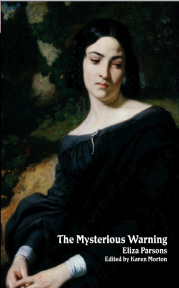
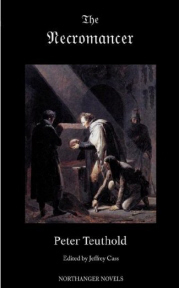
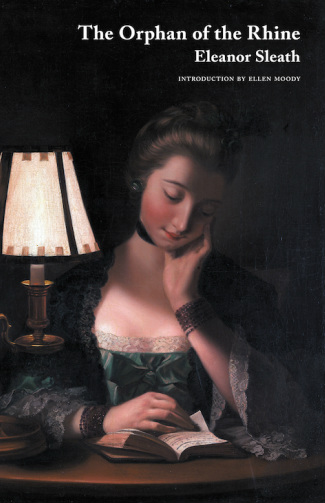
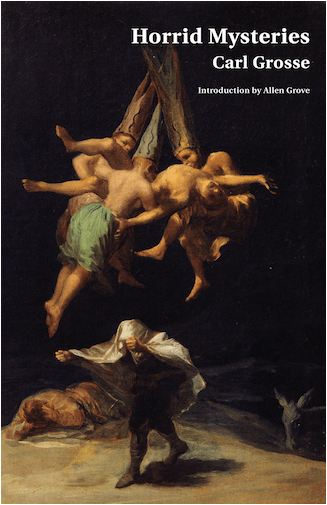
Isabella: “I will read you their names directly; here they are, in my pocket-book. Castle of Wolfenbach, Clermont, Mysterious Warnings, Necromancer of the Black Forest, Midnight Bell, Orphan of the Rhine, and Horrid Mysteries. Those will last us some time.”
Catherine: “Yes, pretty well; but are they all horrid, are you sure they are all horrid?”
Isabella: “Yes, quite sure; for a particular friend of mine, a Miss Andrews, a sweet girl, one of the sweetest creatures in the world, has read every one of them.”
Yes, that’s right. Austen gives us, her readers, the exact names of these “horrid” novels that we should definitely read avoid. But what exactly made the books on Isabella’s must-read list so deliciously “horrid”? Let’s find out!
Each of these books is now widely available online as e-texts, on e-readers, and even in print. Thanks to publishers such as Valencourt Books, we have access to these “scandalous” novels, giving them—and their genre—a proper place in the literary canon (and allowing us to more fully understand Austen’s work on Northanger Abbey).
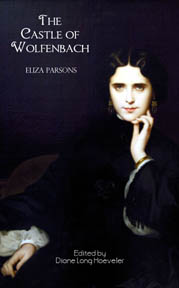
The Castle of Wolfenbach (1793) by Eliza Parsons
The Castle of Wolfenbach by Eliza Parsons (1793) is the novel that has been printed and reprinted the most, as it is now considered an important literary work from Austen’s day and a “highly readable” Gothic novel of its time.
No longer to be regarded as a footnote to the literary history of Jane Austen’s Northanger septet, Eliza Parsons’s Castle of Wolfenbach (1793) now secures its proper place as both a work of historical importance and a highly readable Gothic novel in its own right with this fine edition. Diane Long Hoeveler’s thoughtful introduction opens new perspectives on Parsons’s achievement in the field of what might be called “international” Gothic in her creation of an “ideologically bifurcated female Gothic, part liberal and part conservative” in its political outlook. This new edition both supplants earlier editions of this pivotal Gothic and tells us much about how the Gothic novel evolved in the late 1790s as an historical reflector of the fears, beliefs, and prejudices of a revolutionary, yet reactionary, era.
-Frederick S. Frank, Professor Emeritus of English, Allegheny College, and author of The First Gothics, Valancourtbooks.com
Book Description: Matilda Weimar flees her lecherous and incestuous uncle and seeks refuge in the ancient Castle of Wolfenbach. Among the castle’s abandoned chambers, Matilda will discover the horrifying mystery of the missing Countess of Wolfenbach. But when her uncle tracks her down, can she escape his despicable intentions?
A sampling of covers for The Castle of Wolfenbach.
One of the seven “horrid novels” named in Jane Austen’s Northanger Abbey, The Castle of Wolfenbach is perhaps the most important of the early Gothic novels, predating both The Mysteries of Udolpho and The Monk.
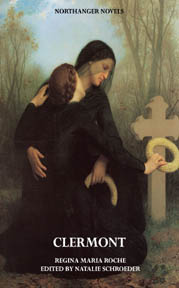
Clermont (1798) by Regina Maria Roche
Book Description: Clermont is the story of Madeline, a porcelain doll of a Gothic heroine, who lives in seclusion from society with her father, Clermont, whose past is shrouded in mystery. One stormy night, their solitude is interrupted by a benighted traveller, a Countess who turns out to be a friend from Clermont’s past.
Madeline goes to live with the Countess to receive her education, but her new idyllic life soon turns into a shocking nightmare. Ruffians attack the gentle Countess, and Madeline is assaulted in a gloomy crypt. And to make matters worse, a sinister stranger appears, threatening to reveal the bloody truth of Clermont’s past unless Madeline marries him. Can she avoid the snares of her wily pursuers, solve the mystery of her father’s past, and win the love of her dear De Sevignie?
The Mysterious Warning (1796) by Eliza Parsons
Book Description: The good old Count Renaud is dead, and his will makes the degenerate Rhodophil his heir, disinheriting his other son Ferdinand, who has married against his father’s wishes. Rhodophil promises to share his new riches with his younger brother and his wife Claudina, but Ferdinand hears a mysterious voice from beyond the grave, warning him to flee his brother and his wife to save himself from sin and death!
Ferdinand obeys the supernatural warning and sets out to find fortune and adventure. In the course of his quest he will encounter a recluse in a ruined castle with a horrible secret, find himself captured and imprisoned by the Turkish army, and encounter one of Gothic literature’s most depraved female characters, the monstrous Fatima. And if he survives all these dangers, Ferdinand must return to Renaud Castle to solve the mystery of the ghostly voice and uncover the terrible truth about his wife and his brother!
The Necromancer; or, The Tale of the Black Forest (1794) by Lawrence Flammenberg
Book Description: “The hurricane was howling, the hailstones beating against windows, the hoarse croaking of the raven bidding adieu to autumn, and the weather-cock’s dismal creaking joined with the mournful dirge of the solitary owl…”
The Necromancer consists of a series of interconnected stories, all centering on the enigmatic figure of Volkert the Necromancer. Filled with murder, ghosts, and dark magic, and featuring a delirious and dizzying plot that almost defies comprehension, The Necromancer is one of the strangest horror novels ever written.
One of the earliest Gothic bestsellers, The Necromancer was first published in 1794, and after more than two centuries still retains the power to thrill and fascinate readers.
The Orphan of the Rhine (1798) by Eleanor Sleath
Book Description: Seduced and betrayed by a rake, Julie de Rubine lives in seclusion with her infant son, Enrîco. One day, their calm retirement is interrupted by the Marchese de Montferrat, who promises to provide for Julie and her son if she agrees to care for an unfortunate orphan, Laurette, whose origin is shrouded in mystery. Under the assumed name of Madame Chamont, Julie raises the two children, whose youthful friendship eventually blossoms into love.
As Laurette matures, she resolves to learn the identity of her real parents. Her only clues are a painted miniature of a beautiful lady and the whisperings of a sinister monk, who warns her to avoid the Marchese de Montferrat. But when Julie is kidnapped by banditti and Laurette is taken to the gloomy castle of the lascivious Marchese, will she be able to uncover the truth and marry her beloved Enrîco, or will she fall victim to the lustful Montferrat?
The rarest of the seven “horrid novels,” Eleanor Sleath’s The Orphan of the Rhine (1798) is indebted to Ann Radcliffe’s The Mysteries of Udolpho (1794) and Regina Maria Roche’s The Children of the Abbey (1796) but possesses a charm and fascination all its own.
Horrid Mysteries (1796) by Carl Grosse
Book description: A bizarre work whose labyrinthine plot defies summary, Horrid Mysteries (1796) recounts the experiences of Don Carlos and his friend, the Marquis of G******, who become entangled in the web of a secret society bent on world domination. As the heroes flee from place to place across Europe, the agents of this dark confederacy, seemingly possessed of supernatural powers, are always at their heels—and death lies around every corner!
Unavailable for nearly 50 years, this unabashedly lurid Gothic novel written by an enigmatic German who styled himself the “Marquis of Grosse” and “Marquis of Pharnusia” returns to print at last as the seventh and final reissue in Valancourt’s series of the rare Gothic novels mentioned in Jane Austen’s Northanger Abbey.
Gothic Novels and Jane Austen
For more on this topic, our own Tony Grant has also written about Austen’s influences and her work on Northanger Abbey in his article, Netley Abbey and the Gothic. In his article, Tony also references an article by John Mullan on the fascinating topic of Gothic literature that is well worth your time: The Origins of the Gothic.
In his Rambler No. 4, Johnson said that the “task” of “present writers” is to write books that “serve as lectures of conduct, and introductions into life” so that “nothing indecent” should be set in front of the eyes of young men and women.
As sensational, Gothic novels were being written, other authors were at the same time attempting to raise the bar and write novels that were both entertaining and instructive. Many of the books in each of these genres are novels with which Austen herself was familiar or, in many cases, would have read. Next month, I’ll be talking about didactic fiction—writing that was meant to provide positive role models and good morals—and the influence it had on Austen’s writing.
Cover of Bath: An Adumbration in Rhyme by John Matthews
Inquiring readers: Many of you who have visited here before are aware of Dr. Wiebracht’s online senior high school students’ research on John Matthews’s 18th century poem “Bath: An Adumbration in Rhyme.” This link leads to their published work, as well as Dr. Wiebracht’s description about the project and his advice for teachers on starting a similar semester-long online endeavor. Their remarkable results were published on this blog in January and spring of this year. The third step in Dr. Wiebracht’sexamination of the poem – a publication – is presented in this review.
So the beaux in their boots, the belles in their slippers,
Come to walk up and down, and peep at the dippers,
For though strange it appears, I’d have you to know,
Whilst you’re drinking above, some are bathing below,
And each glass of water brought up by the pumps
Contains the quintessence of half-a-score rumps.”
– Bath: An Adumbration in Rhyme, John Matthews
A Peep at the Dippers, Cruikshank. Public Domain Image
The forgotten contemporaries of Jane Austen and an introduction to the first book in a series that will examine them
In his introduction of this unique annotated publication, Wiebracht writes that it:
speaks as directly as possible to the typical reader – the same reader Austen herself addressed. And teachers and students, particularly high-school students, will be inspired to know that the volume they are reading was researched, designed, and edited in large part by other high-school students. Indeed, as a teacher and scholar, one of my hopes for this series is that it challenges the narrow assumption that only university faculty and graduate students are capable of making original contributions to literary scholarship. This isn’t so.”
After the students completed their project in December 2020, Dr. Wiebracht and his academic colleagues continued to study the Adumbration. The result was this completed book, published in August of this year.
The major goals for Dr. Wiebracht, his students, and academic researchers were to find original sources to chronicle the genesis of this poem and the resources that influenced it. These sources can be found in the Table of Contents under bibliography and further reading, as well as a biographical essay on John Matthews, and an essay on Bath satire. Also included is a thoroughly accessible, but academic analysis of *Northanger Abbey (with references to Persuasion) regarding Austen’s descriptions of Bath, Anstley’s The New Bath Guide (1762), and G. Davis’s and P. Bonhall’s book, entitled A History of Bath: Image and Reality(2006). The highlight of this volume, though, is the poem, located near the very end. My close friend, H. Major, (and editor) particularly liked how the annotations were placed on the right page, next to the archaic phrases in the poem on the left page for helpful understanding.
Side by side- poem on the left, annotation on the right
This 54-page book is the first in a planned series entitled Forgotten Contemporaries of Jane Austen. The selected works will have a varied audience in mind, with characteristics that include:
The work is not available in any other modern edition.
It must discuss subjects that directly concern Jane Austen and are featured prominently in her novels.
It must be relatively short to enable teachers and professors to use it as a supplement in a class or unit devoted to Jane Austen.
It must have merit in its own right.
I won’t reveal too many details about the information contained in this first Critical Edition, for it would spoil your fun in learning what it has to offer when you purchase the book, which I recommend highly, but I would like to mention one sequence of connections that clearly tie several topics together: Bath in the late 18th century + Jane Austen’s Northanger Abbey and Persuasion + 18th century satire + writing in rhyme + macaronis and fops + Matthew’s one-dimensional view of fops compared to Austen’s more masterful take on that fashionable group of gentlemen.
Historical and literary connections:
In 1762, Christopher Anstey wrote The New Bath Guide: Or Memoirs of the B-R-D Family, which consisted of 15 letters in poetic verse. The popularity of this guide began a tradition of writing letters, journals, and guides in rhyme. Decades later, John Matthews followed in his footsteps by using bawdy and satiric references, while also including Greek myths and the daily habits of visitors to Bath, and the region’s topography.
Anstey’s rhyme regarding a reflection on arrival in Bath
In his poem, published in 1795, Matthews describes a day in Bath from morning to night using the sharp humor characteristic of Georgian era satire (notice the quote about taking the waters in the pump room at the start of this review). Matthews was not the only one to follow this wide practice. Men and women of fashion often wrote in rhyme, as did Jane Austen’s mother, Cassandra, who wrote delightful recipes in that tradition. Jane, too, wrote poetry, but her poems are merely adequate when compared to her novels.
In one passage in the Adumbration, Matthews mentions macaronis in Milsom Street:
“Where, booted and spurred, the gay macaronies,
Bestride Mandell’s counter instead of their ponies,
Preferring the pleasure of ‘tending the fair,
To breathing the freshness of Lansdown’s pure air” – Matthews
From the mid-18th century, cartoonists and writers made merry sport of the affectations of effete fops and macaronis, who were objects of visual and verbal fun. In his Adumbration, Matthews follows his era’s sardonic judgment. The annotations offer definitions and historical context that are placed conveniently near the Georgian terms and phrases that modern readers no longer understand.
Jane Austen’s take on fops, in the form of Sir Walter Elliot (Persuasion), a man who cared more about his personal appearance than most men and women of his acquaintance, is more nuanced than Matthews’ fops, for behind Sir Walter’s sartorial pride and conceit, is a man disdainful of the middling sort, a man whose high opinion is reserved only for those he deems his equals, and a man who squanders his inheritance in the service of his immense ego. Unlike Austen, Mathews simply makes surface sport of a macaroni’s preference for fashion, much like the caricatures of his era.
Both Austen and Matthews portrayed Bath past its prime, however. It was once a highly desired resort town that, by the 1790’s, saw the mingling of the rising middle classes with an aging gentry and those on the downward slide, like Sir Walter, or with fortune hunters. Today, we read Matthews’ guide for fun and understanding; but we tend to reread Jane’s “fun” novels for their richness and insights!
Portraits of John Matthews and Jane Austen. Vic’s image is from the book
Stanford online high school student testimonials:
The Jane Austen’s World team would like to thank the students for their hard work on this project and the excellent results. We would also like to thank Dr. Wiebracht and his colleagues for illuminating this document for a wider audience. In addition to their research, students were required to read Austen’s *Northanger Abbey. They also attended two 1 hour zoom workshops, one given by Tony Grant, and the other given by me, Vic. A number of them sent notes of thanks!
“Thank you so much for being willing to get involved in our Bath project, for your enthusiasm on our work, and for helping us learn something new and unique about Jane Austen’s era! – Josie Chan
“Thank you so much for giving us a space on your platform, and for visiting our class last year! Your insight on both Jane Austen and the publication process was invaluable.” – Varsha Venkatram
“Thank you so much not only for giving us the opportunity to publish on your blog but for sharing your expertise. Your advice was an invaluable guide in this process.” – Sophia Romagnoli
“Thank you for visiting our class and publishing our article on your blog! It’s an honor to have been part of a team contribution to Jane Austen’s World. – Carolyn Engargiola
Note from Jane Austen’s World: Dear students, the honor is ours. We are so proud of your research and contributions, and cannot recommend this book highly enough – Vic Sanborn and Tony Grant
Order the book on Amazon:
Bath: An Adumbration in Rhyme: A Critical Edition for Readers of Jane Austen (Forgotten Contemporaries of Jane Austen) Paperback – 8 August 2021
by John Matthews (Author), Ben Wiebracht (Editor), Josephine Chan (Editor), & 6 more
Fashionable Goodness: Christianity in Jane Austen's England is now available! By JAW contributor Brenda S. Cox. See Review. Available from Amazon and Jane Austen Books.
Available through December 31st, 2025. Click on image for details, and share this poster with other teachers and students!
The Obituary of Charlotte Collins by Andrew Capes
Click on image to read the story.
Comments
“My idea of good company…is the company of clever, well-informed people, who have a great deal of conversation.” – Jane Austen, Persuasion
Gentle readers: Please feel free to post your comments and continue the conversation! Due to SPAM, we will no longer accept comments on posts after 30 days of publication. In some instances, links will be removed from comments as well.
Administrators and Contributors
Vic Sanborn, founder of this blog, is supported by a team of talented and knowledgeable writers about Jane Austen and the Regency era. They are:
Tony Grant, who now contributes his photos from London and England
Click on their names to enter their own blogs.
In addition, we thank the many experts and authors who frequently contribute their posts and opinions, and who continue to do so freely or at our request.
Click here to enter the page. Topics include Regency fashion, historic foods, Jane Austen societies, British sites, related topics. Click on image.
May we suggest?
Hello, my name is Vic and I live in Maryland, USA. I have adored Jane Austen almost all of my life. I am a proud lifetime member of the Jane Austen Society of North America. This blog is a personal blog written and edited by me and my team. We do not accept any form of cash advertising, sponsorship, or paid topic insertions. However, we do accept and keep books and CDs to review.
If you would like to share a new site, or point out an error, please email us. (Yes, we are fallible. We'll own up to our mistakes and will make the corrections with a polite smile on our faces.) Write us at
Thank you for visiting this blog. Your comments and suggestions are most welcome.
Project Gutenberg: eBook of Stage-coach and Mail in Days of Yore, Volume 2 (of 2), by Charles G. Harper
STAGE-COACH AND MAIL IN DAYS OF YORE: A PICTURESQUE HISTORY
OF THE COACHING AGE, VOL. II, By CHARLES G. HARPER. 1903. Click on this link.


















 Jane Austen's World