Feeds:
Posts
Comments

Archive for the ‘jane austen’ Category

Mr Darcy, Colin Firth, astride a white horse

Mr Darcy, Colin Firth, astride a white horse

Is chivalry alive and well? Good question. I venture to guess that a large number of Jane Austen’s readers subscribe to the traditional hero as embodied in Mr. Darcy, Mr. Knightley, Colonel Brandon, and Captain Wentworth, all admirable men, who despite some flaws, are wont to treat a lady with respect and come to her rescue out of a sense of duty, or from good breeding or a besotted heart.

Just in time for Valentine’s day comes Queendom.com’s tudy on gender roles in courtship behavior, which reveals that while most courtship conventions have changed, some age-old romance rituals are still going strong. Pulling up on a white horse isn’t necessary for the modern woman, but some chivalry is still a heart-melting must. (Inquiring readers, I have ventured to put my own spin (in blue) on this contribution from lona Jerabek, Ph.D.)

Some men hurtled, on horseback, with a giant stick in their hands. Emperor Shah Jahan built The Taj Mahal as a final resting place for his most beloved wife. Both Cleopatra and Juliet refused to live in a world where they couldn’t be with the one they loved. Thankfully, courtship conventions and romantic gestures need not be this extreme. According to Queendom’s data, most men and women take a modern approach to dating, but a little chivalry can still go a long way.

Jane Austen’s rules of courtship vs modern times

Collecting data from 950 men and 1621 women, Queendom’s research on gender roles and courtship reveals that:

  • 77% of men and 70% of women feel that a date can be initiated by either gender. In fact, 65% of the women have either asked a man out on a date, or would be willing to do so. (This would be a big faux pas in Jane Austen’s book, for a gently bred lady would NEVER make the first move, lest she be thought forward. There were those who had powers of persuasion through beauty and words, like May Crawford, or who took advantage of a man during a moment of weakness and, like that rat terrier, Lucy Steele, never let go. Others, like Marianne Dashwood, ignored society’s strictures, but all in all, a young lady of good breeding would hesitate to step out of the bounds of propriety and bring shame upon her family by acting upon her impulses and brazenly ask a man to pay court. Her actions would be much more subtle than that.)
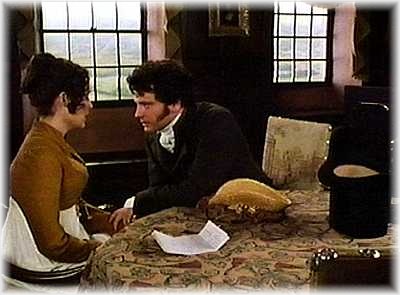
Mr. Darcy listens to Elizabeth about Lydia's predicament, then quietly goes about rectifying the situation and helping Lydia out of a scrape. A true romantic hero.

Mr. Darcy listens to Elizabeth about Lydia’s predicament, then quietly goes about rectifying the situation and helping Lydia out of a scrape. A true romantic hero.

  • 67% of men and 60% of women believe that chivalry is important (e.g. opening doors, pulling out chair, etc.). (This number would have been 100% in Jane’s day. A man who failed to follow the rules of propriety, like John Thorpe, would instantly be regarded as deplorable and wouldn’t stand a chance.)
  • 60% of women still like to be wined and dined, at least in the initial stages of dating. (Courtship was much more constrained, with the virginal girl guarded like hawks by her chaperons and family. After her coming out, a woman would NEVER be seen alone in her swain’s company. The only time they could touch or talk at length was during the set of a dance. They could never dine alone in an inn, for instance, without damaging her reputation. As for drinking wine, a gently bred girl might be given a glass of watered down elderberry or orange wine, but nothing that would make her tipsy and lose control.)
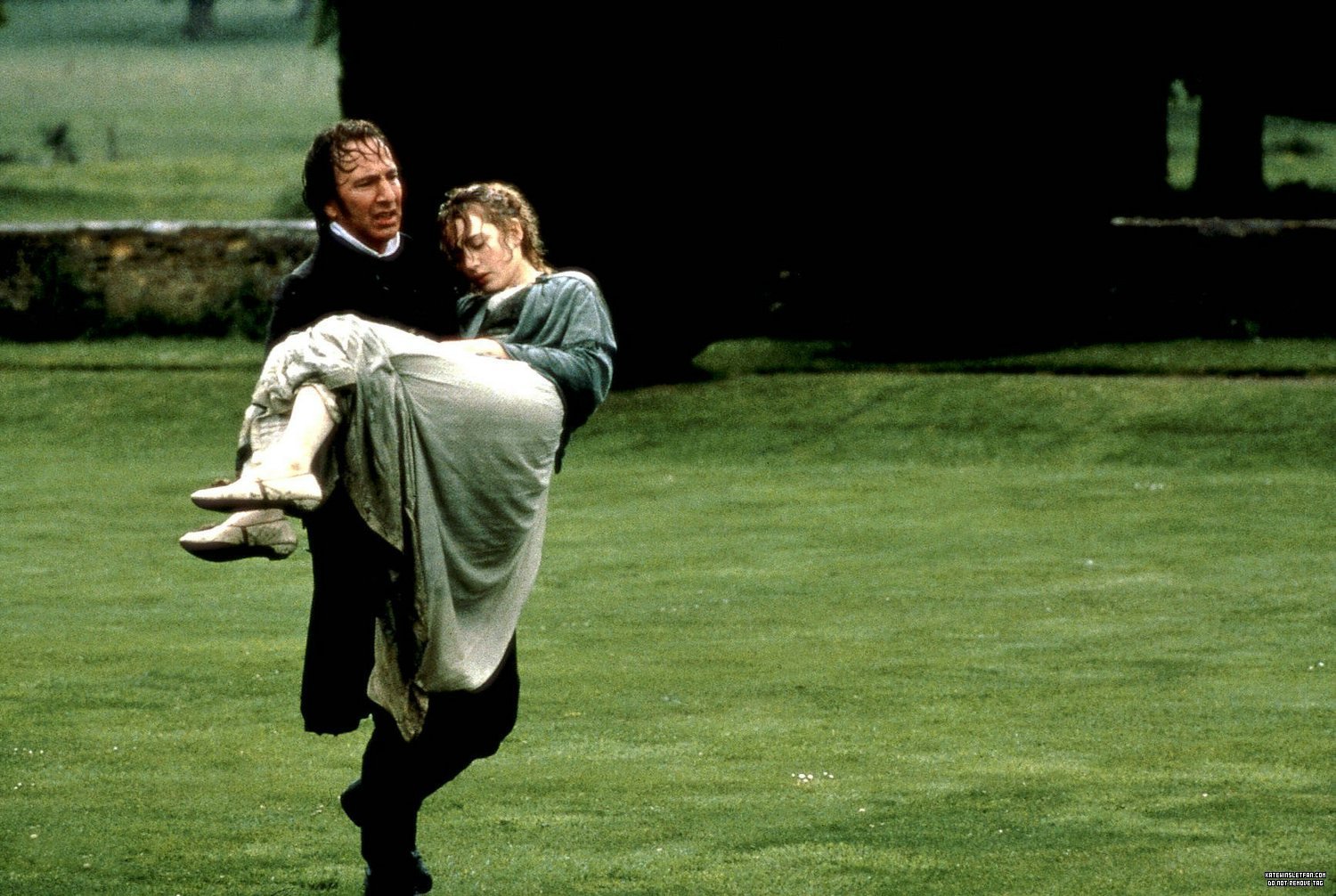
At first blush it is Willoughby who seems heroic, but it is the quieter Colonel Brandon who rescues Marianne from her untidy tendencies.

At first blush it is Willoughby who seems heroic, but it is the quieter Colonel Brandon who rescues Marianne from her untidy tendencies.

  • 26% of men want to be the one who controls how the relationship plays out (i.e. how many dates they should have, how fast the relationship moves, when to meet each other’s family). 39% of men would prefer to let the woman control the direction of the relationship, 35% prefer it to be a mutual decision. For women, 27% want to be in full control, 31% prefer to let men decide; 43% prefer it to be mutual. (Back in the Regency era a wily woman could manipulate the situation behind the scenes, like Charlotte Lucas, in order to snare her man, but most, like Jane Bennet, were passive and took their cues from their suitor’s actions or family’s wishes. A Regency miss who takes control of her courtship or acts in a hasty and willful manner was regarded a hoyden, as with Lydia Bennet and Maria Rushworth,  two stupid girls who were the instruments of their own undoing.)
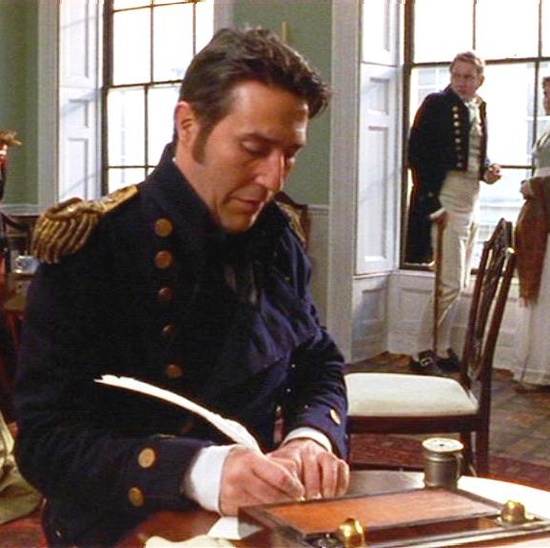
Anne yearned. Anne desired. But it wasn't until Captain Wentworth penned his letter that he opened up the way to their blissful romantic reunion.

Anne yearned. Anne desired. But she could do nothing. It wasn’t until Captain Wentworth took pen in hand and wrote his swoon-worthy letter that he opened up the way to their blissful romantic reunion.

  • When it comes to popping the question, 66% of men and 65% of women think it’s fine for the woman to do the asking. (Not in Jane Austen’s day, when men were obligated to do the asking. A women’s sole power, that of choice, was exercised before marriage. It was up to her instinct and good  judgment to refuse a cad or accept a good man for a husband. Heaven forbid if love clouded her good sense. Unless she was an aristocrat, the family would accede to her wishes, for once she married, she would have no rights and lose control of her money, land, and children. Thus a young woman (girls in many instances) had to be smart about her choice of mate or rely on wise council. Unfortunately for Miss Anne Elliot, her wise council, Mrs. Russel, turned out to be wrong and poor Anne had to wait eight long years before she could marry Captain Wentworth and find happiness in his arms.)
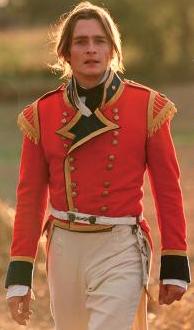
Wickham, a handsome fortune hunter

Wickham, a handsome fortune hunter

  • In terms of who pays for the first date (a long-standing debate), 47% of men feel that the man should pay; 24% feel that the bill should be split; 29% stated that whoever initiated the date should pay. On the women’s side, 31% feel the man should pay, another 31% feel that the bill should be split, and 38% indicated that whoever initiated the date should pay. (Now this is a tricky one, for in Regency times many a fortune hunter was able to inveigle an invitation to dinner or a party for which others paid, including his intended’s family. There were some bachelors who traveled from house to house and, aside from their personal expenses, never parted with a penny. The woman might not literally dig into her reticule to pay for the cad’s board and food, but in the instance of a fortune hunter, he most likely did not foot the bill either, except for a trinket or two with which to woo his heiress.)
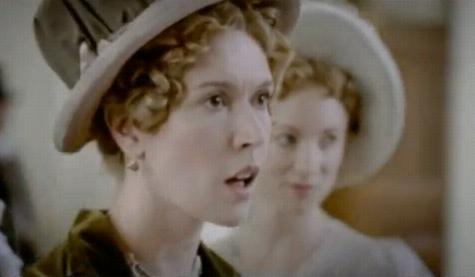
Snooty Elizabeth Elliot lost her chance to snare a man

Snooty Elizabeth Elliot lost her chance to bag a man

  • And that old “play-hard-to-get” theory? Still just a theory. Only 19% of men and 28% of women believe that a woman should be mysterious and play hard to get for the first few dates. (Elizabeth Elliot played hard to get and where did that get her? At 29 she’s staring spinsterhood in the face. Good old Charlotte Lucas took the horse by the reigns and saddled her man, albeit a fairly defective one. Mr. Collins had a house and a job, which was all that Charlotte wanted or needed. She encouraged him to garden, while spending her days alone in her private parlor.)

“Women no longer need to play the more submissive, demure role – and it’s nice to see that both genders support this progress,” states Dr. Ilona Jerabek, president of PsychTests. “This doesn’t mean that men are off the hook and don’t need to put an effort into romance anymore. The modern woman still likes romance, but it’s now a shared endeavor, with both genders putting an effort into the relationship. What fascinated us most about this study was that younger men and women had somewhat more traditional courtship views than older age groups.” (It is obvious from the following statistics that attitudes towards chivalry and courtship have changed drastically in 200 years. Imagine a young and spirited woman like Elizabeth Bennet adopting any of the following modern attitudes!:)

Age differences in courtship perceptions: surprising results

Queendom’s age comparisons reveal several interesting differences:

  • 28% of men under 30 and 22% of men over 30 feel that the man should plan most of the dates.
  • 60% of men under 30 and 76% of men over 30 feel that a woman should be able to propose to a man.
  • 20% of men under 30 and 13% of men over 30 said that they would feel threatened by a woman who took control of what they did on the first date.
  • 26% of men under 30 and 14% of men over 30 believe that it should be the man who asks the woman out, not vice versa.
  • 51% of men under 30 and 39% of men over 30 believe stated that the man should pay for the first date.
  • 66% of women under 30 and 71% of women over 30 have either asked a man out or would consider doing it.
  • 64% of women under 30 and 72% of women over 30 think it’s ok to be the one to ask a man to marry them.

The modern way vs Jane Austen’s way of beguiling your beloved

  • Forget the dozen roses. Buy one, wrapped with a ribbon. (200 years ago: Give her a posy of fresh wild flowers that you picked in a field.)
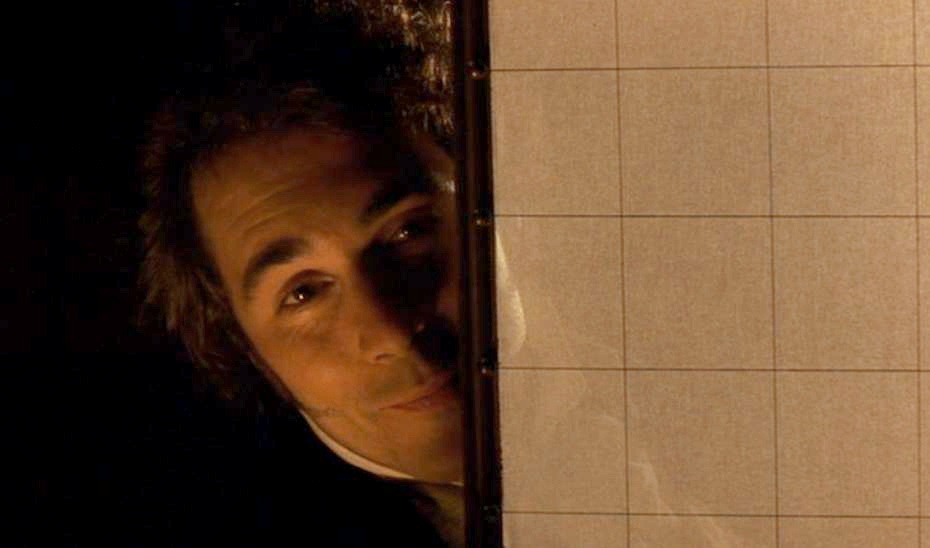
Marianne draws Willoughby's silhouette

Marianne draws Willoughby’s silhouette in the drawing room

  • Show up at your partner’s workplace and whisk him or her away for lunch. (200 years ago: Sit in the drawing room with your intended and let her wind her wool skein over your hands or suggest that you draw his silhouette.)
  • Place a love note in your partner’s lunch bag or on the bathroom mirror. (200 years ago: sing a duet at the pianoforte and make sure that the bench is a tad small.)
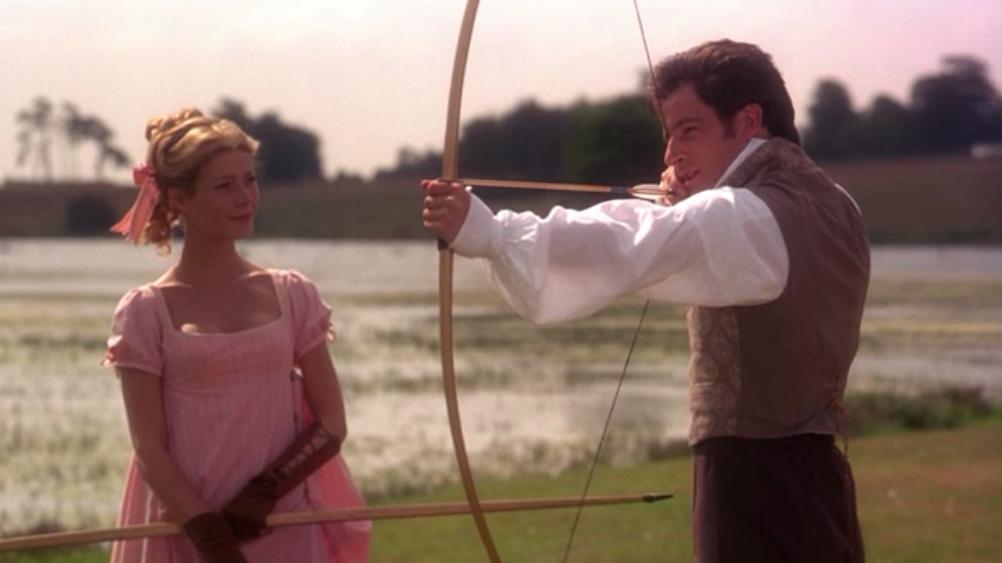
Archery as sport

Archery as sport and a means of courtship

  • Grab a blanket, a bottle of wine, and drive out to a place where you can see the stars. (200 years ago: arrange a walking party with your sisters and cousins and ask him to tag along. Have the servants grab the blankets and wine, and drive you to your location.)
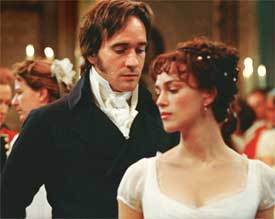
Darcy and Elizabeth

Darcy and Elizabeth

  • Slow dance in your living room. (200 years ago: Make sure to solicit her hand for the supper dance, wherein you shall spend another pleasurable hour in her company.)
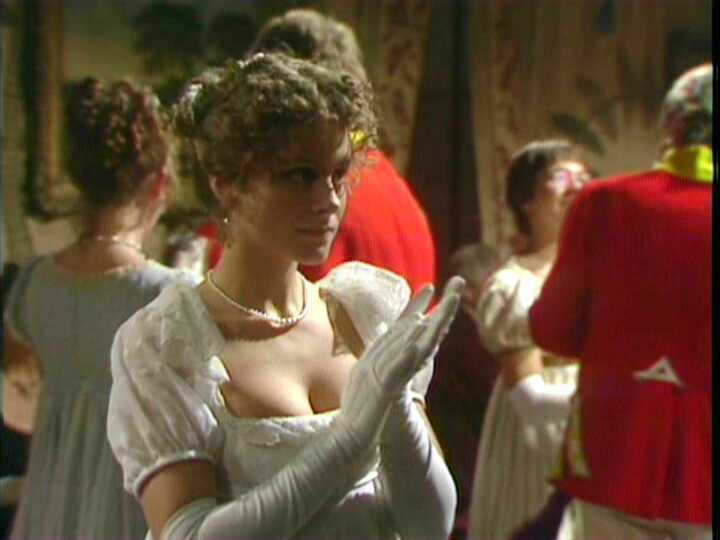
Elizabeth Bennet, 1980

Elizabeth Bennet, 1980

  • Avoid embarrassing lingerie no-nos. Take him to a lingerie store and show him all the naughty things you like. (200 years ago: drop your handkerchief near your exposed ankle for him to retrieve, or make sure that your loveliest eye-catching locket nestles snugly between your well-exposed breasts. )
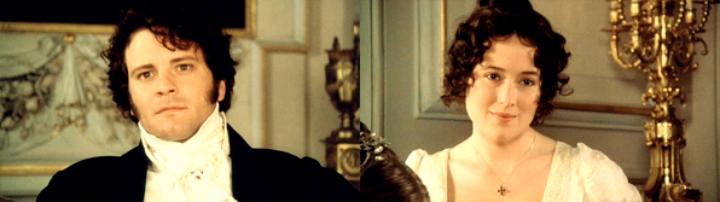
Darcy and Elizabeth make goo goo eyes at each other across the room

Darcy and Elizabeth make goo goo eyes at each other across the room

  • Meet at a local hang-out and pretend you’re two strangers flirting with each other. (200 years ago: make goo goo eyes at each other in the drawing room while others play a musical instrument, or pretend that you don’t like each other and trade bantering insults.)
  • Build a little bonfire in your backyard and make chocolate Smores. (200 years ago: engage in a game of archery and set out an al fresco tea.)
  • Get tango or salsa lessons together. (200 years ago: ask the music master to visit the village to teach the latest dances.)

As you can see, gentle readers, while the rules of romance have changed over the years, the game remains the same! What would Jane Austen have thought of today’s courtship rules, I wonder?

Queendom.com , a subsidiary of PsychTests AIM Inc. , is a site that creates an interactive venue for self-exploration with a healthy dose of fun.  PsychTests AIM Inc. originally appeared on the internet scene in 1996, providing psychological assessment products and services to human resource personnel, therapists, academics, researchers and a host of other professionals around the world.  

Read Full Post »

Inquiring readers: This event is a mere hour down the road from my humble abode. I am thinking of attending. Anyone else in the mid-Atlantic area thinking of going?

The next welcome and special program of the local Southeastern VA Regional Chapter of the Jane Austen Society of North America is on Saturday, March 2, 2013 at 2:30 p.m.  Williamsburg Regional Library, 515 Scotland St., Williamsburg, VA  23185.

The program (skits on familial relationships) will start at 3:30 p.m. to accommodate those members who are also attending the George Washington Ball rehearsal that afternoon.  Registration starts at 2:30 p.m., followed by a beginning dance and an information fashion parade.  Announcements will be made regarding membership and upcoming programs.  Raffle and door prizes will be awarded.

Admission is free for current members; $5 for non-members; $4 for costumed attendees.  CASH ONLY.


Call Virginia Lee for details (757) 221-6686.
Join JASNA, The Jane Austen Society of North America! You don’t
need to be an Austen expert ― just an Austen lover!
Please visit our web site at http://www.jasna.org for information.
Student dues available!

Read Full Post »

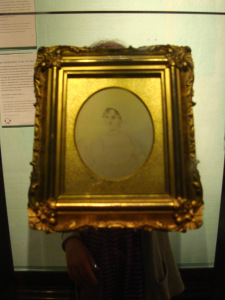
Gentle readers, this year marks the 200th anniversary of Pride and Prejudice. This blog will feature a variety of posts about the novel and on its author, Jane Austen. Frequent contributor, Tony Grant (London Calling) recently visited the National Portrait Gallery in London and viewed the small watercolour portrait of her painted by Cassandra Austen. In this tribute, Tony demonstrates her star status among other literary superstars.

jane1

Click on this link to see the portrait’s location within the National Portrait Gallery

If you enter the National Portrait Gallery as you walk into the main atrium go up the tall escalator on the left and you come to a foyer area at the top off which there are entrances into two main galleries. On the right is the wonderful gallery displaying the powerfully evocative Tudor monarchs and their statesmen.

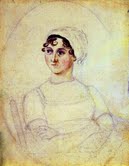
On the left are the 18th and 19th century galleries portraying the politicians, monarchs, reformers and writers of that period. It is here , many of you will know, is the tiny portrait of Jane Austen attributed to her sister Cassandra and drawn in 1810 using pencil and watercolours. It is an unprepossessing little picture. It’s great worth is in who it is. But, if you stand back from the plinth with the perspex box on its summit containing Jane and view the whole vista you will notice that Jane is surrounded by a halo of super star writers. She is the centre of the group.

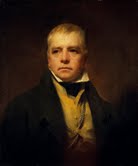
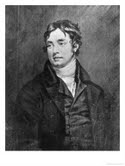
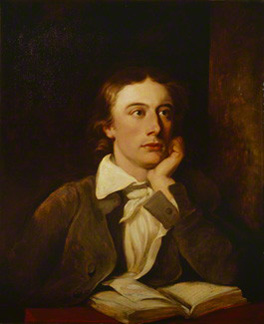
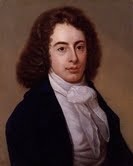
Bottom left is Sir Walter Scott. Moving clockwise next comes Samuel Taylor Coleridge, at the top is John Keats and then as you move down right of Jane, Robert Southey follows and last, bottom right, is Robert Burns. Quite a group, and there she is in the middle, our Jane. If you think I am imagining the halo metaphor, walk behind the plinth with Jane displayed and you will notice that there is nothing on the wall, there is a space. The halo metaphor works. The only thing behind Jane is a handwritten catalogue number on the back of the portrait itself. It reads; “NPG 360, Jane Austen.” It’s written in pencil in a reasonably legible hand. A scrawled note such as somebody might write as a memo to themselves on a post it and stick on their fridge door.

All of these writers were geniuses and there is Jane right at their centre. The men were all Romantics. Jane perhaps ridiculed some aspects of Romanticism in Northanger Abbey but she wrote about romance and its vicissitudes. The men wrote about their emotional response to the world. Jane did not portray her own emotions, just the emotions of her characters.

walter scottSir Walter Scott (1771-1832) painted by Sir Edwin Landseer.

Chivalry!—why, maiden, she is the nurse of pure and high affection—the stay of the oppressed, the redresser of grievances, the curb of the power of the tyrant —Nobility were but an empty name without her, and liberty finds the best protection in her lance and her sword.” Ivanhoe

Many of Scott’s novels harked back to a supposed ideal period , the Middle Ages, when chivalry was the moral high ground for men and women fitted into the system as perfect idols worshipped by men. However this was for the aristocracy. Serfdom was really slavery. Serfs were possessions. Scott wrote in Ivanhoe and Quentin Durward and novels such as those about this ideal dreamlike world. It was the ultimate escapism.
coleridgeSamuel Taylor Coleridge (1772-1834) painted by Peter Van Dyke.

The western wave was all a-flame.
The day was well nigh done !
Almost upon the western wave
Rested the broad bright Sun;
When that strange shape drove suddenly
Betwixt us and the Sun.
It seemeth him but the skeleton of a ship.”

Samuel Taylor Coleridge was a friend of William Wordsworth and his sister Dorothy. They promoted Romanticism together which added a more emotional and personal response to the world in addition to the ways of thinking the Age of Enlightenment promoted.

NPG 194; John Keats by William Hilton, after  Joseph SevernJohn Keats (1795 – 1821) painted by Joseph Severn

A thing of beauty is a joy for ever:
Its loveliness increases; it will never
Pass into nothingness; but still will keep
A bower quiet for us, and a sleep
Full of sweet dreams, and health, and quiet breathing.”

John Keats died of tuberculosis in Rome in February 1821. Joseph Severn, the portrait artist was his best friend and was with him in Rome when he died. Keats was another Romantic poet. When he first started publishing his poetry he was heavily criticised in Blackwood’s Magazine. Those with invested interests in the status quo and couldn’t think imaginatively beyond what they knew, seemed hell-bent on preventing the human race from progressing. It was ever thus.

robert southeyRobert Southey(1774 -1843) painted by Peter Van Dyke.

We pursued our way
To the house of mirth, and with that idle talk
That passes o’er the mind and is forgot,
We wore away the time. But it was eve
When homewardly I went, and in the air
Was that cool freshness, that discolouring shade
That makes the eye turn inward.”

Robert Southey was another of the Romantic poets. He lived in the lakes with Wordsworth and Coleridge and is generally known as one of the Lakeland poets. He is now considered a lesser poet than either Wordsworth or Coleridge. In 1813 he became the poet laureate and Byron lambasted him for this.

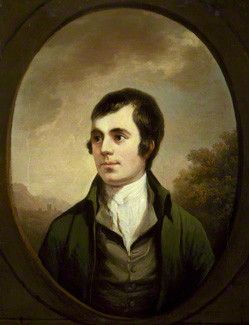
NPG 46; Robert Burns by Alexander NasmythRobert Burns (1759 – 1796) painted by Alexander Nasmyth

We’ll gae down by Cluden side,
Thro’ the hazels spreading wide,
O’er the waves that sweetly glide
To the moon sae clearly.
Yonder Cluden’s silent towers,
Where at moonshine midnight hours,
O’er the dewy-bending flowers,
Fairies dance sae cheery.”

Robert Burns is a Scottish national hero. Websites dedicated to him use his name, his picture and his poems in an unashamedly mercenary way. He is probably the most marketed writer in this group and a real money spinner for the Scottish economy. He was actually a great poet it is sometimes worth stopping and remembering. What can be difficult for many readers is the Scottish dialect and use of colloquial phrases in his poems. His poetry is worth spending time with. They require deep emotional investment. They are rich with feelings and emotions. He was a romantic poet more by inclination than belief. It was just him, the way he was.

jane austenJane Austen (1775 – 1817) painted by Cassandra Austen

The first line of Pride and Prejudice goes such:

It is a truth universally acknowledged that a single man in possession of a good fortune , must be in want of a wife.”

However, the last lines of the penultimate chapter of Pride and Prejudice are also worth considering and shed light on Elizabeth and Fitzwilliam Darcy in particular.

…….she looked forward with delight to the time they should be removed from society so little pleasing to either, to all the comfort and elegance of their family party at Pemberley.”

Read Full Post »

Inquiring readers: Chris Stewart from Embarking on a Course of Study, has been submitting posts to this blog for over two years. As we discussed Downton Abbey, we realized we had very similar views, including a snarky streak. Chris has graciously submitted her take of Episode 3, which is right on the money (in my book.) Enjoy!

If you have not seen Episode 3, click here to see a streaming video online provided by PBS Masterpiece Classic. Warning: Plot spoilers if you continue reading on.

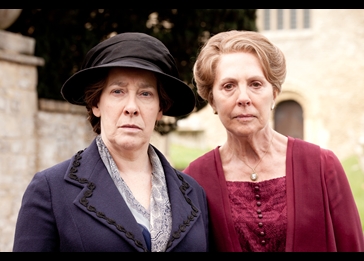
3D Glasses image - movie theaterDownton Abbey, Season 3, Episode 3: Not Enough Noses Out of Joint

This week, except for the copious use of the P word and the discussion of women’s right to vote, there was very little to learn here, both historically, or about the characters. I kept wanting “Downton Abbey 3-D.” Give me some glasses to put on so I could find the depth.

Anna and Mr. Bates: The Case of the Missing Letters

Credit: Courtesy of © Carnival Film & Television Limited 2012 for MASTERPIECE

Credit: Courtesy of © Carnival Film & Television Limited 2012 for MASTERPIECE

Carson hands out mail. No letters for Anna from Mr. Bates again. She’s worried. Cut to letters handed out at the prison. None for Mr. Bates. He looks upset too. So clearly someone is holding both their letters back at the prison. There’s a quick end to a possible source of tension for the hour.

Anna tells Mrs. Hughes about the letters. Is Mr. Bates being gallant and trying to set her free? Why else would he be silent and stop her from visiting? Whoa there! If this happened, we should have seen her go to the prison and be turned away. Much better than missing letters.

While at work, another prisoner whispers to Bates, “They know you tricked them.” Bates: “What that’s to do with me?” He thwarted their plan to pin something on him so they’re angry. I find the prison drama both too low-key and vague. Apparently, Bates was reported to the Governor for violence and is considered dangerous. This is why no letters and no visits. “Thank God, I thought she’d given up on me,” Bates says. “Don’t thank God until you know what else they’ve got in store for you,” his fellow prisoner warns. Ho hum. I admit, though, the look of relief and happiness on Bates’ face, got me. More of what we love Bates for, please!

Later, the guards enter his cell and search it, go through the bedding again. According to plan, Bates has hidden the object previously hidden in his bed, in his cell mate’s bed. They take the cell mate away. He tells Bates that he’ll be sorry. Cue ominous music.

Matthew and Mary, Still Married to the House

Mary and Matthew discuss Matthew’s role as co-owner of Downton. He doesn’t want to go into every detail of the running of the estate or challenge Robert’s authority. Mary says he has to pull his weight.

Matthew and Mary meet in nursery to look over wallpaper. Matthew asks if that’s all she wants to talk about. They are in the nursery after all. What about that trip to the doctor? Is she announcing she’s pregnant? No, she had trouble with her hay fever. Matthew leans close behind her and says suggestively, what will they use for a day nursery if the need arises? Mary looks very uncomfortable and says they can worry about that further down the line. Whoops! Did they not have the Kids Talk before marrying? Mary looks like the subject is distasteful to her.

More of Matthew being warm and loving with his wife, and more of Mary being a wet sock. Boy did marriage kill this love story.

Saving Ethel (Isobel and Mrs. Hughes)

Credit: Courtesy of © Carnival Film & Television Limited 2012 for MASTERPIECE

Credit: Courtesy of © Carnival Film & Television Limited 2012 for MASTERPIECE

Isobel visits Mrs. Hughes and gives her a letter from Ethel (um, when did this take place? Correct me if I’m wrong, but the last time we saw Ethel she closed the door in Isobel’s face). Isobel confirms Ethel is a prostitute. Mrs. Hughes is surprised. “That’s not a word you hear in this house every day.” No kidding. Even I felt uncomfortable at the use of the word in those hallowed halls. Isobel asks Mrs. Hughes to let her know if she can help. Mrs. H says Ethel will be too ashamed to face how far she’s fallen. I have to disagree. Ethel sees clearly how far and it’s given her a kind of grace and nobility that it’s a pleasure to watch. She’s certainly much more interesting than our beloved Anna of late. Dare I say Ethel is the new Anna? Someone needs to be since Anna’s going in circles.

Ethel asks Isobel to write to the Bryants. They can have Charlie. The Bryants come and meet Ethel at the Crawley house. They know what she is. It’s not difficult to find out about a woman like her. Mrs. Bryant says they can offer money to help. Mr. Bryant seems to bond with the boy. Ethel wants her son to have the opportunities Mr. Crawley had.

She says goodbye to Charlie, hugs and kisses him. Mr. Bryant carries him off to the car. Mrs. Bryant says she’ll write to her. Ethel’s reaction is heartbreaking. This story line was the best of the episode.

Robert and Matthew: The Bromance May be Over

Once Carson knows of the Robert-Matthew partnership, he gets to the point, asking if the staff can be brought back up to snuff? Matthew says the world is different now than before the war. Mr. Carson is immediately indignant and booms out, would Mr. Crawley like him to continue doing extra duties as a footman? Robert steps in and says Matthew didn’t mean it. Matthew looks chastised. I wouldn’t want to cross Carson either. When he lowers those impressive eyebrows at you, watch out.

Robert asks Matthew to help with estate accounts. Matthew does and tells Mary there are some issues. Rents are unpaid or too low. No maintenance scheme. Half the assets are unused or ignored entirely. Mary says a country estate isn’t a city business. She bristles and defends her father. True to stereotype. Sigh.

Matthew goes to the Dowager Countess for advice. How can he fix things without putting people’s noses out of joint? She says do what must be done but a great many noses will be out of joint.

Well, that was pointless. Maybe she’s hoping for some trouble to liven things up. I found her ambivalence annoying and confusing. She’s always been so particular about the estate and tradition, yet she doesn’t give Matthew a lecture or advice. Somebody took the zing out of the Dowager this week. I hope it’s found before next. Her comments were boring and repetitive.

Edith, Post-Jilting

Edith shows up at the breakfast table. Matthew remarks on it and she says she’s an unmarried woman so can’t have a lie in like her married sisters. She prefers to be up and about. Note how we’ve moved from ‘spinster’ to ‘unmarried woman’. Robert reads aloud from the paper that all American women will have the vote. Edith says it’s ridiculous that women don’t vote in England. Matthew suggests she write to the paper to give her opinion and she says she might. Robert seems alarmed at the prospect. We all know Edith will write a letter. And there’s Edith all sewn up now. No lingering ill effects from being dumped at the altar. She’s got a cause. That’s all a woman needs to completely forget about her broken heart and abject humiliation. Edith had her fifteen minutes last week, apparently, let’s move on.

Edith visits her grandmother and the Dowager Countess asks her how she is. Edith: “Being jilted at the altar, yes it is horrid, multiplied by about ten thousand million.” Actually, Edith, I give you a five on that scale in terms of how hurt you seem to be. Nowhere near ten thousand million, my dear.

Her grandmother tells her she has brains and ability and to “Stop whining and find something to do.” Wow. Ouch. Basically, “We saved you from the old guy. You’ve been enough of a bother. Get on with it.” Now, Edith hardly seems crushed over what happened. She’s back to her old self, but she didn’t deserve that. I wish Edith would go down to the village pub and get really drunk and dance on some tables, make out with someone in the street, and be brought home by the local constable. Yes, stiff upper lip and all that but, broken hearts have long-term effects. I’d love to see Edith go very, very wrong for a bit.

Edith does write to the newspaper about the vote. Robert says it won’t be published but it is. He’s horrified. Edith is pleased.

The New Footman and Dirty Looks from O’Brien

Jimmy Kent is hired as the new footman. I’d say he’s pretty, but not handsome.

When Carson tells Mary the maids want him to hire Jimmy, she says, “Do pick him and cheer us all up a bit. Alfred is nice but looks like a puppy rescued from a puddle. Tell the maids they can buy their valentines.”

This quip is so unlike Mary that it fell flat. Mary isn’t very humorous so it just doesn’t work for her. At dinner, when Jimmy, now called James, is introduced, Mary says, “Well done, Carson.” Felt a bit cougar-ish to me, Lady Mary. Maybe you could direct that sort of thing to your husband.

There’s some question/quibbling about who is first footman, Alfred or James. Carson takes Alfred’s side by spending time helping him with table settings, which spoons are for what.

Did this remind anyone else of “Pretty Woman”? Later, Thomas is passing James’ room and James asks if he can come to Thomas with questions and for help. Thomas says, of course. Game on!

O’Brien passes James’ door directly after, looking menacing. O’Brien did a lot of walking and glaring this episode.

Not much else. I think I’m going to start calling her Mrs. Danvers. I feel a bit sorry for her. Who is she left to plot with? Moseley? She’s being wasted right now.

Tom and Sybil, the Runaway Revolutionaries

It’s a dark and stormy night. A man runs through the streets. Back at Downton, Edith takes a call from Sybil, who says she’s all right and out of the flat and hasn’t been stopped. She hangs up before Edith can get any more information. Edith tells Cora and Mary about the call. Everyone is appropriately worried.

Tom bangs on the door during dinner, is hidden in Matthew’s rooms until the guests have left, and tells them he was witness to the burning of an aristocrat’s house, one that the Grantham’s knew. The Dowager Countess says, “The house was hideous, of course that’s no excuse” which seemed completely out of touch with the emotional tone of the scene so no score there, Dame Maggie.

The police think Tom was one of the instigators. That’s why he ran. Robert is, of course, furious. “You mean, you gave them Sybil to save yourself!” Tom says that when he saw the family turned out, with their children, in tears, watching their home burn. “I admit it – I want a free state but I was sorry,” he says.

But what’s happened to Sybil? Their plan was that he’d leave at once and she’d follow the next day. Robert explodes. How dare he leave a pregnant woman to fend for herself? Everyone else seems too subdued. More worry and emotion was exhibited when Matthew was missing in the war than for Sybil now. Robert will decide what to do in the morning. Tom goes to his room, cries. No pity from this quarter. A real man would not follow through on such a ridiculous plan, leaving his wife in such danger, pregnant or not. Another coward. First Sir Anthony, now Tom. Is Matthew next?

This whole Tom and Sybil escaping Ireland story was badly done. No adequate story preparation, just dumped on us, so didn’t register emotionally with me. Meh.

The next day a woman walks into Downton. We don’t see her face. Tom runs to her. Big dramatic make out session with the camera circling them. Really? Please. We know it’s Sybil. We never saw her in any danger, so the mysterious arrival and dramatic kiss is pretty pointless.

Robert returns from seeing the Home Secretary on Tom’s behalf. Tom can’t go back to Ireland or he’ll go to prison. He didn’t tell them that he attended Dublin meetings where the attacks were planned. Sybil, whose been holding her husband’s hand, drops it at this news. Later Sybil is upset. What else hasn’t he told her? Tom says he won’t stay at Downton for long. Sybil says they must stay for the baby’s sake. Poor Sybil. For all her independent thinking, she’s just traded one trap for another.

Daisy Gets Frisky

Credit: Courtesy of © Carnival Film & Television Limited 2012 for MASTERPIECE

Credit: Courtesy of © Carnival Film & Television Limited 2012 for MASTERPIECE

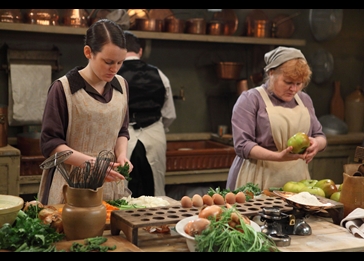
Daisy asks again about the new maid. Mrs. Patmore says they’re working on it. Alfred compliments her on speaking her mind. Daisy is about to say something to him but Mrs. Patmore cuts her off. Daisy visits William’s father and asks what he would think if she’d met a man she liked. He is supportive and wants her to be happy. Again, Daisy tries to say something to Alfred, but is interrupted by Mrs. Patmore (enough with the interruptions! Get on with it!) who introduces Ivy Stewart, the fresh-faced new kitchen maid. Daisy is now assistant cook. “Aren’t you a sight for sore eyes,” Alfred says to Ivy, and offers his help if she needs it. Daisy stares daggers at her. Ivy smiles at her and says she hopes they’ll get on.

“We don’t have to get on. We have to work together,” Daisy says. Meow! I kind of like Daisy jealous and possibly plotting against Ivy. This turn of hers will be entertaining, but makes her seem a little nutty. She and Alfred haven’t had much interaction. I could easily see Daisy going off the deep end.

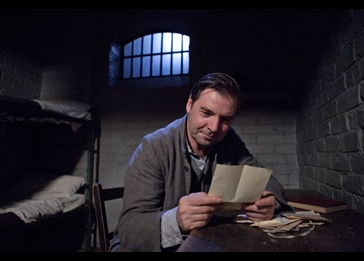
The third episode ends with Mrs. Hughes brings Anna a packet of Bates’ letters. Cut to Bates in his cell. A guard brings him all the withheld letters from Anna. He’s back in favor so can have them. Bates sits reading Anna’s letters. Cut to Anna in bed reading his letters. Both smiling and crying. Swelling music.

I vacillated between thinking it was sweet, nice to get back their original romantic vibe, but also another easy a wrap up of a conflict and a pretty unearned level of sentimentality since the ‘drama’ wasn’t made enough of. And why couldn’t we hear a voice over from both of them as each read the other’s letters?

What worked:

Ethel’s parts, anything with Thomas, Daisy’s surprise turn, Matthew trying to make sense of the books and figure out what to do.

Otherwise, mostly a bit blah, with the usual leaps and inadequate back story. I did some calculations, and I counted about 48 scenes in the episode. Some were the same ongoing scene interrupted by cutting back and forth to other scenes, making everything too fragmented so you’re not allowed to settle into the emotion, the tension, the characters. You’re continually whisked away, getting 1-2 minute sections at a time of the same scene as we cut back and forth. The show would fare much better if that stopped and if three story lines were picked per episode and developed and followed the whole show, rather than the 7 or so we have here.

Let the debate begin!

To read the rest of this blog’s Downton Abbey’s Season 3 links, click here. 

Read Full Post »

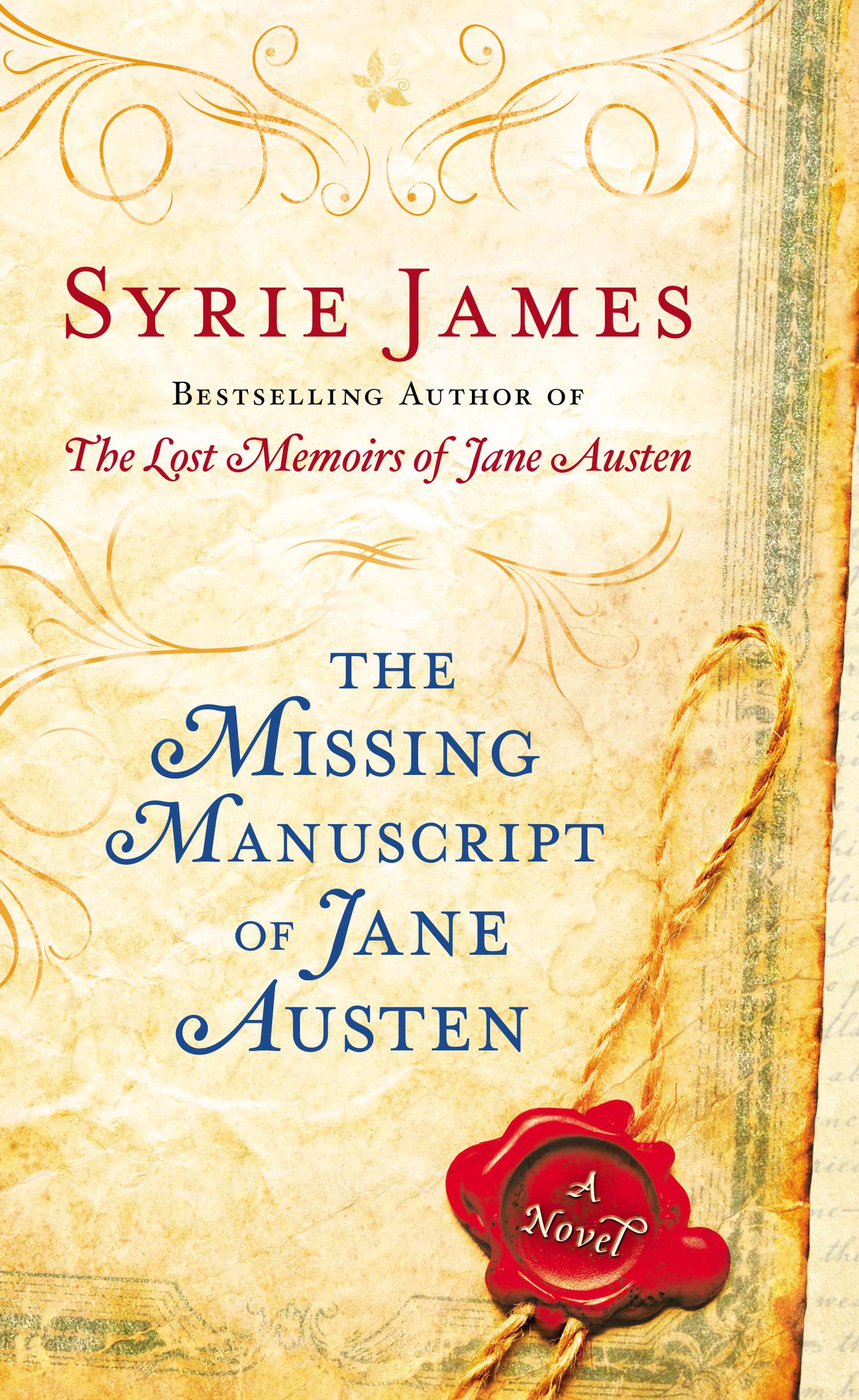
The Missing Manuscript of Jane Austen by Syrie JamesGentle readers, One lucky U.S. reader is eligible to win a copy of Syrie James’s latest book, The Missing Manuscript of Jane Austen! (See below) Contest Closed: The winner is – Lilyane Soltz. Congratulations!

The Missing Manuscript of Jane Austen, Syrie James

In the Missing Manuscript of Jane Austen, author Syrie James attempts a plot device that often trips up even the most experienced authors -a novel within a novel. Samantha McDonough, librarian and Jane Austen scholar, stumbles upon a clue in an old book of poetry she purchased while on a visit to England.

The minute I saw the letter, I knew it was hers. There was no mistaking it: the salutation, the tiny, precise handwriting, the date, the content itself, all confirmed its ancient status and authorship…

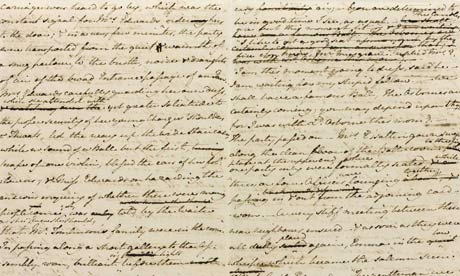
This letter leads her on a quest to find a missing manuscript by Jane Austen. Her journey lands her on the doorstep of handsome Anthony Whitaker, who has just inherited his estranged father’s rundown estate. By virtue of her charm, grit, and determination, Samantha persuades a skeptical Anthony to rummage around dusty rooms, cupboards, and closets and his attic until, voilà, they miraculously find a manuscript entitled The Stanhopes and that consists of 41 tiny hand-cut and bound booklets. (The Watsons, Jane’s unfinished manuscript, is made of 11 similarly bound booklets.)

A draft of Jane Austen's novel The Watsons, which was written in about 1804 . Image @The Guardian

A draft of Jane Austen’s novel The Watsons, which was written in about 1804 . Image @The Guardian

Anthony and Samantha immediately begin to read Jane’s long lost words, and, like Alice tumbling down the rabbit hole, the pair are instantly swept into the story of Rebecca Stanhope and her father, a rector with a propensity for mild gambling over a friendly game of cards. His vice sets off the plot, which is based on Jane’s hilarious Plan of a Novel. In short order, the rector loses a great deal of money with which he has been entrusted and then is forcibly retired from his living. Now destitute,  Mr. Stanhope and Rebecca (a sweet heroine  in the vein of a slightly feistier Jane Bennet or more mature Catherine Morland) must move from place to place — from the rectory to a married daughter’s cramped house, to an elegant abode in Bath, to a seedy inn, and so forth. Along the way, Rebecca receives three proposals, one that is almost as ridiculous as Mr. Collins’ proposal to Elizabeth, and two more serious ones from two suitors who are as different from each other in temperament and intent as, well, Henry Crawford and Edmund Bertram or Willoughby and Colonel Brandon. The road to a romantic union is rocky, and along the way both heroines (Rebecca and Samantha) must learn some harsh truths about themselves and others before they can be united with their heroes.

As the story develops, the reader will recognize a number of plot developments and characters based on those in Austen’s novels. Since the missing manuscript was written early (1802) and before Jane published her books and rewrote Sense and Sensibility and Pride and Prejudice for publication, one can assume that this manuscript is meant to be a foreshadowing of the mature novels.  Syrie James, a strong writer in her own right, is smart in setting Jane’s  lost manuscript so early in Jane’s writing career. Austen’s Juvinilia includes melodramatic twists and turns, evident in Northanger Abbey (when Catherine Morland is forced to leave the Abbey alone in the middle of the night) and in The Stanhopes, when Rebecca must find employment in the most unusual and creative way in order to feed herself and her father. The reader should also assume that the manuscript, having been lost before Jane could fully edit and revise it, was found in its  “raw” stage. This would explain any stylistic differences between the lost manuscript and Jane’s later works (and, more practically, between Syrie’s and Jane’s writing styles as well).

I won’t give too much of the plot away, except to say that I was more interested in the Stanhopes than the modern Samantha and Anthony story line. (I believe I had the same preference with Jane Odiwe’s Searching for Captain Wentworth, in which I liked the time travel to the past more than the contemporary narrative.) Syrie’s novel is filled with historically and geographically correct details, which I always appreciate in a novel set in a foreign country or in the past. As an interesting aside, one of Samantha’s friends in the modern world is Laurel Ann, a bookseller. Who could it be, I wonder? (Hint: Austenprose.)

Insights into Jane Austen’s World

Syrie, who I met at the Brooklyn AGM meeting and whose Regency costumes are varied and fabulous, graciously sent me some interesting details about one of Jane’s letters to Cassandra, and how one should handle an old manuscript:

 I don’t know if it’s strange or funny, but while re-reading Jane Austen’s letters to her sister Cassandra, I was fascinated to find the following mention of a “shut-up bed”:

Martha kindly made room for me in her bed, which was the shut-up one in the new nursery. Nurse and the child slept upon the floor, and there we all were in some confusion and great comfort. The bed did exceedingly well for us, both to lie awake in and talk till two o’clock, and to sleep in the rest of the night.

I take this to mean that a “shut-up bed” is what we now call a Murphy bed, or a bed that folds up and away by day into a piece of furniture. I happily put this information to use in The Stanhopes.

Here’s one fact that surprised me: I presumed that when my modern day characters found Jane Austen’s centuries-old manuscript, they’d have to wear latex gloves while handling it. (That was previous my experience when reviewing precious, old documents.) However, Christine Megowan, the Special Collections Librarian at Loyola Marymount University, explained that none of the conservators she knows wear gloves to handle old books and paper, because they don’t fit well and are clumsy. As long as your hands are clean and you work gently, she said, the oils on your fingers don’t do all that much damage to paper—you’d do far more mechanical damage by fumbling with latex gloves. I put that quote directly into the novel.

If you are interesting in reading similar  insights from Syrie, click on the links to her blog tour!

About Syrie James:

Syrie JamesAuthorPhoto2011 - Credit William James (1)Syrie James is the bestselling author of eight critically acclaimed novels, including The Missing Manuscript of Jane Austen, The Lost Memoirs of Jane Austen, The Secret Diaries of Charlotte Brontë, Dracula My Love, Nocturne, Forbidden, and The Harrison Duet: Songbird and Propositions. Her books have been translated into eighteen foreign languages. In addition to her work as a novelist, she is a screenwriter, a member of the Writers Guild of America, and a life member of the Jane Austen Society of North America. She lives with her family in Los Angeles, California. Connect with her on her website, Facebook, and Twitter.

Follow Syrie’s Blog tour in these links: 

About the book:

Amazon Prices

  • Kindle Edition $9.99
  • Paperback $10.20
  • Audible Audio Edition, Unabridged $23.95 or Free with Audible 30-day free trial
  • Reading level: Ages 18 and up
  • Paperback: 432 pages
  • Publisher: Berkley Trade; Reprint edition (December 31, 2012)
  • ISBN-10: 0425253368
  • ISBN-13: 978-0425253366

About the book giveaway for The Missing Manuscript of Jane Austen:  

For your chance to win a copy of Syrie’s latest book, let us know how you would feel and react if you stumbled across a long lost Jane Austen document! Contest open to U.S. readers only. Drawing by random number generator. Deadline, January 23rd, 2013, midnight EST. Contest Closed: The winner is – Lilyane Soltz. Congratulations!

Read Full Post »

« Newer Posts - Older Posts »