Feeds:
Posts
Comments

Archive for the ‘jane austen’ Category

In 1751, Denis Diderot and Jean le Rond d’Alembert edited the 17-volume Encyclopedia: the Rational Dictionary of the Sciences, commonly known as the Encyclopédie. These heavily illustrated volumes were designed to teach people to think critically and objectively about all matters in the 18th century. Diderot said he wanted to “change the general way of thinking.” His ambition created quite a stir.

Diderot Couturiere

The Encyclopedie aroused opposition from the outset. Its first volume, published in 1751, dealt with topics such as atheism, the soul, and blind people (all words beginning with “a” in French. As a result, the government banned publication and the pope placed it on the Index of Forbidden books. He threatened to excommunicate all who bought or read it. The publisher of the work watered down later volumes without the consent of the writers in an attempt to stay out of trouble. The Encyclopedie exalted knowledge, questioned religion and immortality (Diderot was a proclaimed atheist), and criticized legal injustices and intolerance. Diderot championed the cause of women, writing that laws which limited the rights of women were counter to nature. The work was widely read and published in Switzerland, but was extremely popular in France. Copies reached America where it was read by Benjamin Franklin and Thomas Jefferson. It was completely banned in Spain as were other enlightenment works by order of church authorities.- The Enlightenment

Onsite Review discusses Diderot’s mid-18th century tailors, or tailleurs, and offers several corresponding images:

This survey of French crafts and trades just before the Revolution, includes such things as how a bodice is made, a riding jacket, gloves, hats – all the patterns laid out flat. Included are the workrooms for glovemakers, tailors, hatmakers – the spaces of craft and trade: where is the dress cut and stitched? where does the dressmaker or the tailor sit as they fell a seam? what is the space like in which the hat is sold?

In the Encyclopédie they are austere rooms flooded with light from tall many-paned sash windows. These rooms are never deep and usually have windows on two facing sides. Because these are crafts and trades, furniture is the work bench, a sturdy work table, open shelves and sometimes a cabinet. Accompanying the plates illustrating the garment, and the plates showing the spaces, are the plates of tools, the instruments of the craft: a catalogue of needles, of stretchers, of hat presses, of shears.

Gants, or glove patterns

The illustrated plates and their topics are discussed by John Morley, who wrote about the Encyclopédie in 1905:

Diderot, as has been justly said, himself the son of a cutler, might well bring handiwork into honour; assuredly he had inherited from his good father’s workshop sympathy and regard for skill and labour.The illustrative plates to which Diderot gave the most laborious attention for a period of almost thirty years, are not only remarkable for their copiousness, their clearness, their finish—and in all these respects they are truly admirable—but they strike us even more by the semi-poetic feeling that transforms the mere representation of a process into an animated scene of human life, stirring the sympathy and touching the imagination of the onlooker as by something dramatic. The bustle, the dexterity, the alert force of the iron foundry, the glass furnace, the gunpowder mill, the silk calendry are as skilfully reproduced as the more tranquil toil of the dairywoman, the embroiderer, the confectioner, the setter of types, the compounder of drugs, the chaser of metals. The drawings recall that eager and personal interest in his work, that nimble complacency, which is so charming a trait in the best French craftsman. The animation of these great folios of plates is prodigious. They affect one like looking down on the world of Paris from the heights of Montmartre. To turn over volume after volume is like watching a splendid panorama of all the busy life of the time. Minute care is as striking in them as their comprehensiveness. The smallest tool, the knot in a thread, the ply in a cord, the curve of wrist or finger, each has special and proper delineation. The reader smiles at a complete and elaborate set of tailor’s patterns.-DIDEROT AND THE ENCYCLOPÆDISTS, BY JOHN MORLEY, 1905

Illustration from Onsite Review

The above illustration from Onsite Review shows how the pattern for a riding outfit is laid out on the cloth. The width of the cloth varied. Wool cloth was wider than brocade, for instance. With Diderot’s publication of these plates, the knowledge of how to lay out these patterns became standardized. Onsite Review’s article, Diderot: Cutting Your Coat to Fit the Cloth, is fascinating to read.

Share/Bookmark// More about the Encyclopédie and Diderot:

Read Full Post »

…they are very affectionate and playful, and bear the confinement of the house better than many other breeds, racing over the carpets in their play as freely as others do over the turf. For this reason, as well as the sweetness of their skins, and their short and soft coats, they are much liked by the ladies as pets.Chest of Books, Dog Breeding, The Pug

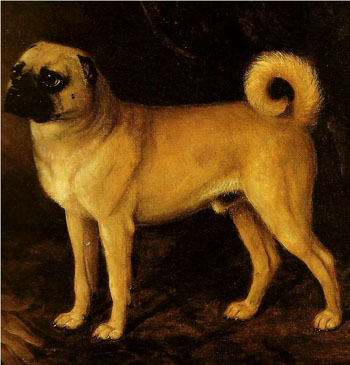
Gainsborough's painting of a pug sold for £993,250 at Sotheby's in 2009

Much has been made of Lady Bertram’s affection for her pug in Mansfield Park, and some have identified the dog as a symbol of imperialism, sexism and oppression. (Slipping the Leash: Lady Bertram’s Lapdog, Sally Palmer.) I see pug as a symbol of Lady Bertram’s wealth, indolence, and misplaced affection, for she cares much more for her dog’s minute-to-minute well-being than her childrens’. Towards the end of the novel, Lady Bertram showers more affection on Fanny Price than her disgraced daughter Maria, offering Fanny a puglet from Pug’s next litter.

William Hogarth, self-portrait with pug

Pugs are among the oldest breed of dogs. Their root can be traced to 400 BC China, where the dogs were bred to adorn the laps of Chinese sovereigns during the Shang dynasty.   By the 1300s there were three main types of dogs that are identifiable as founders of breeds of today: the Pekingese, the Japanese Spaniel, and the Pug.*  Small dogs presented as gifts arrived in Europe via the Dutch East India Company. In The Netherlands, the pug became the official dog of the House of Orange, and by 1688, William and Mary had  introduced the pug to England. Their popularity spread quickly  throughout the British Isles, and during this period the little dog may have been bred with the old type King Charles Spaniel.

Pug with clipped ears, J.A. Howe, 1850

The Victorians made dogs acceptable as pets in Britain and, as a result, they are largely responsible for the degree of genetic disorders in dogs today. They bred dogs to achieve a fashionable look or to emphasise a cute, childlike appearance as seen in the pug, the King Charles spaniel and other lapdogs. A Potted Relationship of Dog and Man Through the Ages

Engraving, pair of 19th century pugs. Notice the clipped ears.

Reading Mansfield Park again, I came to realize that Jane Austen’s choice of a dog for Lady Bertram was a stroke of genius, for Pug is the canine reflection of herself. The tiny dog’s affectionate and inactive natures makes it the perfect house-bound dog. They are known for preferring human laps over engaging in outdoor exercise. Unless they are trained from puppyhood to be more independent, Pugs suffer from separation anxiety should their humans leave them for very long. Just recently, when I took my terrier to a dog park to exercise and play with his own kind, I saw a Pug contentedly sitting in his mistress’s lap, observing the commotion and rambunctious activity around him with a look that I can only describe as Pug-eyed horror. Though a young dog, he was not at all inclined to move. His mistress, a young woman, sighed, saying this was her first Pug and that she’d had not idea how very disinclined they were to do anything but sit, eat, and sleep. She did add that he was a perfect apartment pet.

George Selwyn and pug by Reynolds, 1766

Today’s Pug looks different from their 18th & 19th century counterparts, who were longer in leg and less wrinkled of face. Many had their ears clipped, a practice banned in England in 1895. Today’s Pug is stockier (tending to obesity in older age), needs a thorough cleaning of its facial folds to prevent infection,  and is prone to illnesses due to overbreeding. Nevertheless, this affectionate pet is still popular, gentle with children and considered an excellent little guard dog.

Dermot, a Westminster Dog Show Quality Pug

More on the Topic

* The Pug FAQ

Read Full Post »


Two years ago PBS offered Northanger Abbey during Jane Austen Season. Tonight we are having an encore presentation. Such fun! For information about this series, click on this PBS link.

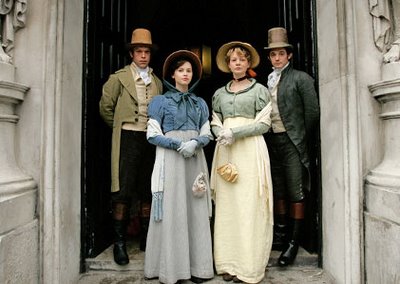
John Thorpe, Catherine Morland, Isabella Thorpe, and James Morland

For my original review and others, click on the links below!

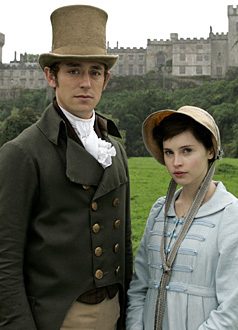
Henry Tilney and Catherine Morland

Read Full Post »

Morning Dress and Full Dress, 1807 La Belle Assemblee

When it first appeared in February 1806, La Belle Assemblée claimed to be ‘an entirely original and most interesting work, addressed to the ladies’. However, the new magazine entered a market that was already well established. Periodicals directed particularly at leisured women had existed since the late seventeenth century, and with the success of the Lady’s Magazine (1770–1837), the monthly magazine became an established form. The new magazine, however, had a distinctive flamboyance in its elegant combination of polite literature and illustrated accounts of the fashionable world. It was the production of John Bell (1745–1831), a printer and publisher of considerable reputation and style who was renowned for his puckishness and love of innovation, not least in introducing modern type-faces to British readers.- Science in the 19th Century Periodical

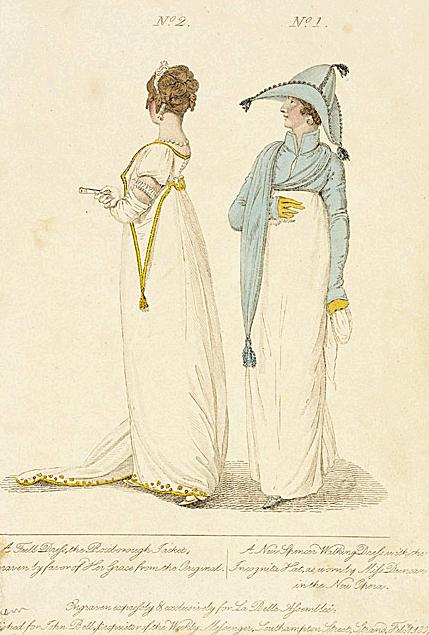
Not all fashion plates were created equal. La Belle Assemblée came out in two forms, one at half-a-crown with plain fashion-plate and one at three shillings and sixpence with the plates coloured by hand. * The difference in treatment can be seen in the fashion plates below.

An engraved plate from ‘La Belle Assemblée,. This is an early black and white plate from February 1807, featuring the Roxborough jacket and the Incognita hat – both drawn from fashions worn by the Duchess of Roxborough and a Miss Duncan.   Plate 1: A new spencer walking dress with the incognito hat, Plate 2: A full dress, the Roxborough jacket.

At 76, ten years before his death, John Bell sold the magazine. La Belle Assemblée predated Ackermann’s Repository of Arts (begun 1809 – 1827) by three years.  Obituary of John Bell, 1831:

At Fulham aged 86. John Bell esq formerly of the Strand bookseller. Few men have contributed more by their industry and good taste to the improvement of the graphic and typographic arts, witness his beautiful editions of the British Poets and Shakspeare. He was one of the original proprietors of the Morning Post and projector of that well established Sunday newspaper Bell’s Weekly Messenger. Another of his successful projects was the elegant monthly publication La Belle Assemblée.The Gentleman’s magazine, Volume 101, Part 1 By John Nichols

La Belle Assemblee Morning and Afternoon Walking Dress, November 1807

More on the topic

*Hand coloured fashion plates, 1770 to 1899 By Vyvyan Beresford Holland

Colored Fashion Plate (The Roxborough Jacket – A New Spencer Walking Dress), February 1807 LACMA Collections Online

Read Full Post »

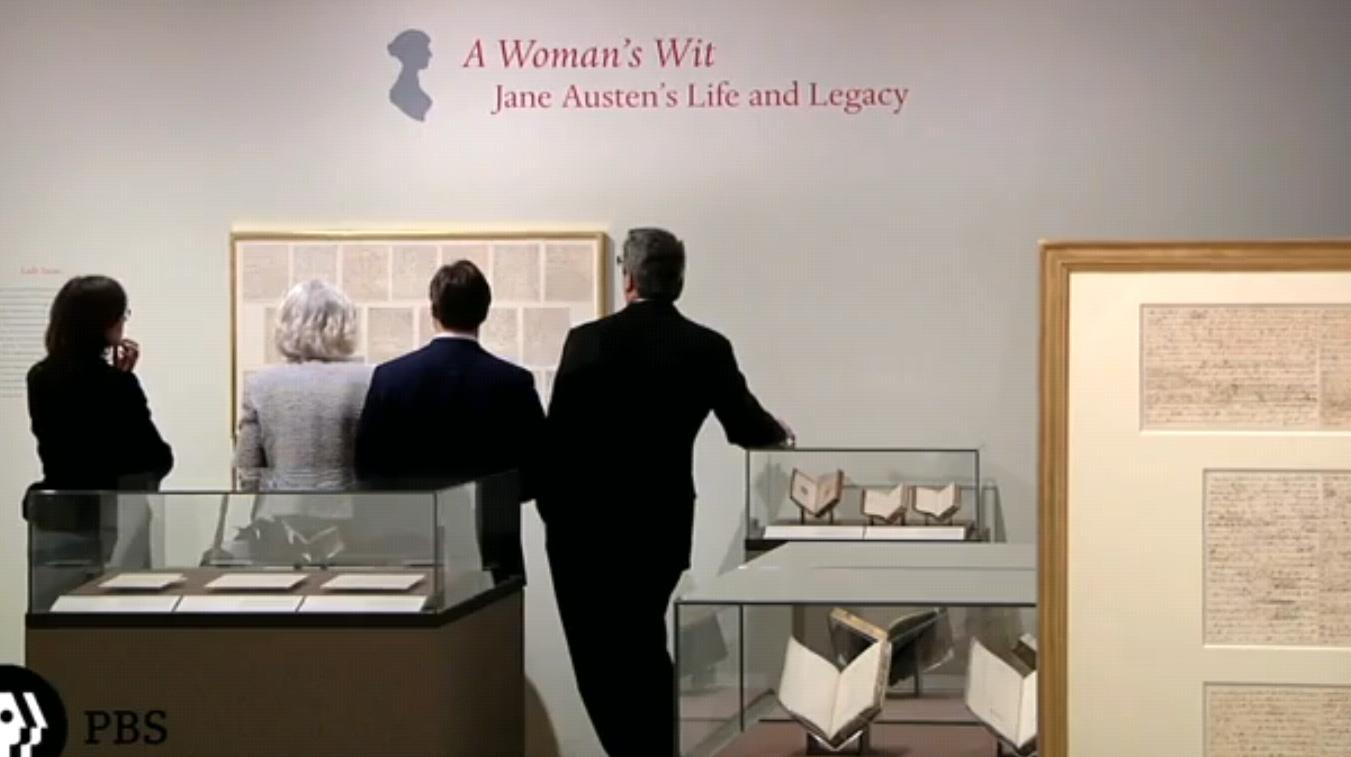
Last month I wrote about my trip to the Morgan Library in New York to view A Woman’s Wit:Jane Austen’s Life and Legacy, and of my impressions of the letters.

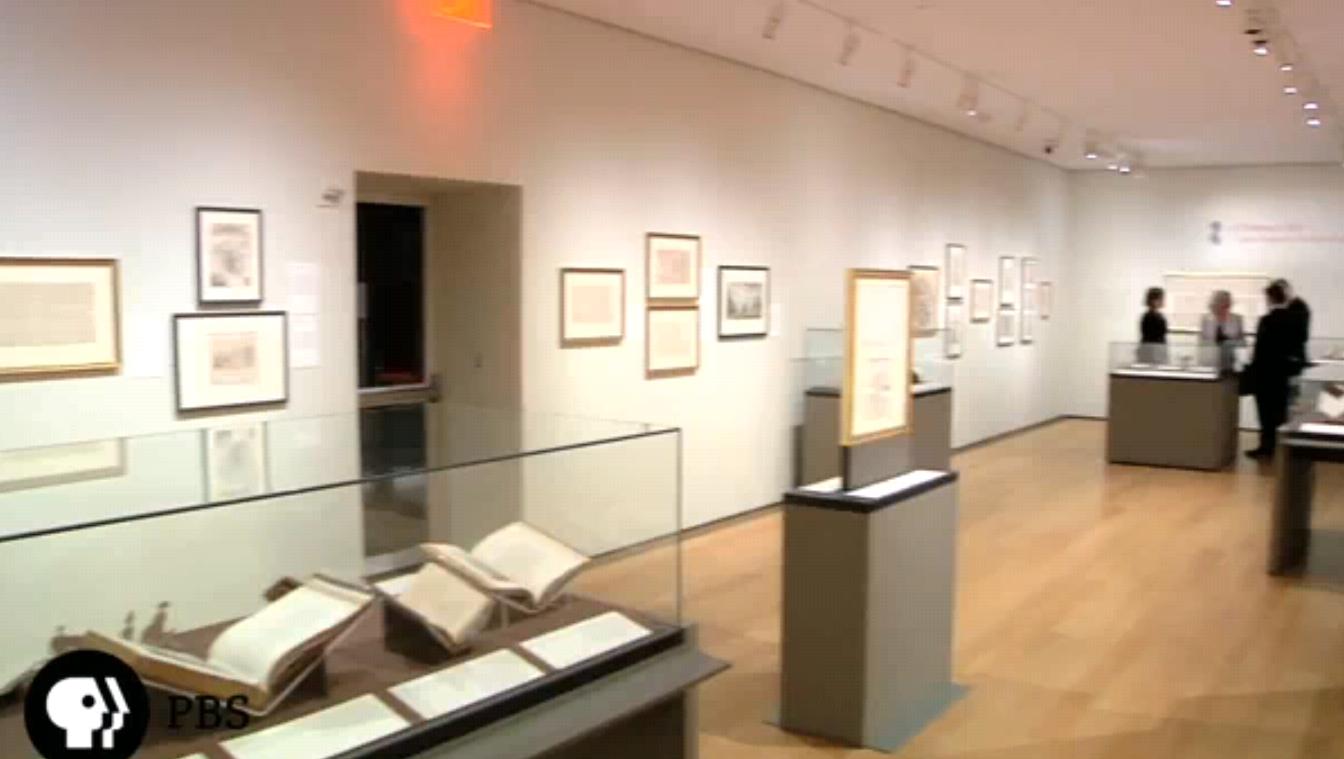
Exhibition room for Jane Austen's artifacts at the Morgan Library

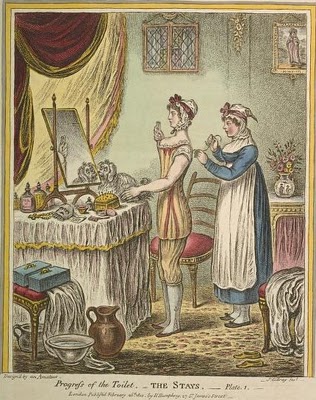
But I didn’t mention the many other interesting artifacts: the Gillray prints of a lady dressing and Rowlandson’s caricature of The Comforts of Bath,

Progress of the Toilet, The Stays, James Gillray

the books that Jane owned,

Jane Austen's personal books, including The Spectator and Poems by William Cowper

a lovely steel engraved oval image of her,

Steel engraved image of Jane Austen and Lady Susan

an original copy of the Memoir of Jane Austen, fair copies of the first 7 letters of Lady Susan,

Viewing the Lady Susan letters on the far wall of the exhibit room

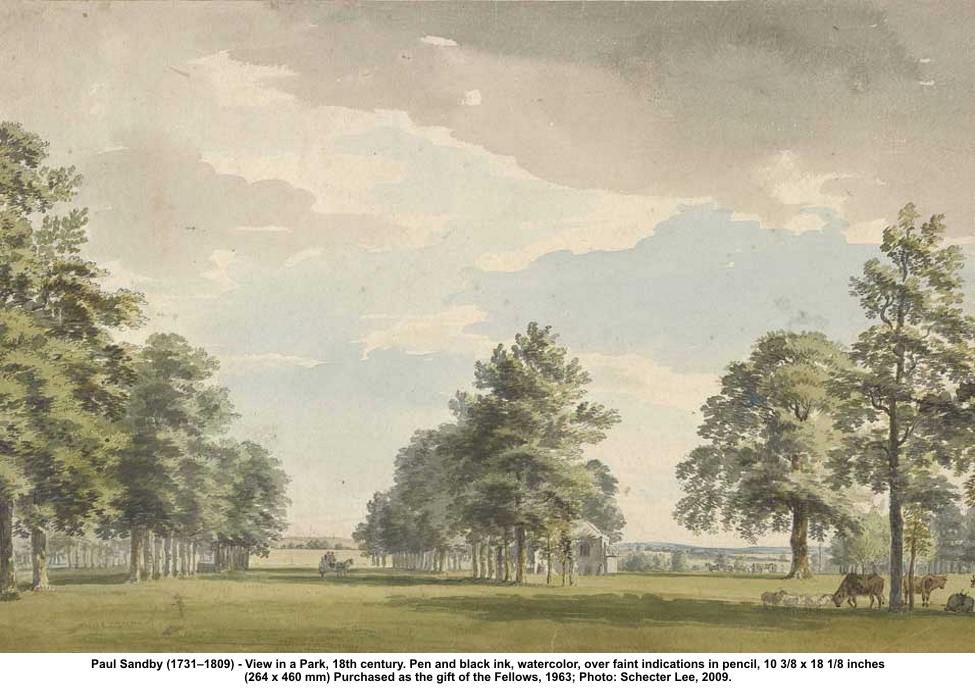
a rough 12-page fragment of The Watsons, a watercolor by Paul Sandby,

Paul Sandby's View in a Park

and a well-known image from An Analysis of Country Dances by Wilson, 1811.

Five positions from An Analysis of Country Dancing by Wilson, 1811

An account of Jane’s personal purchases of a little over 42 pounds for the year (1807), Isabel Bishop’s images for Pride and Prejudice,

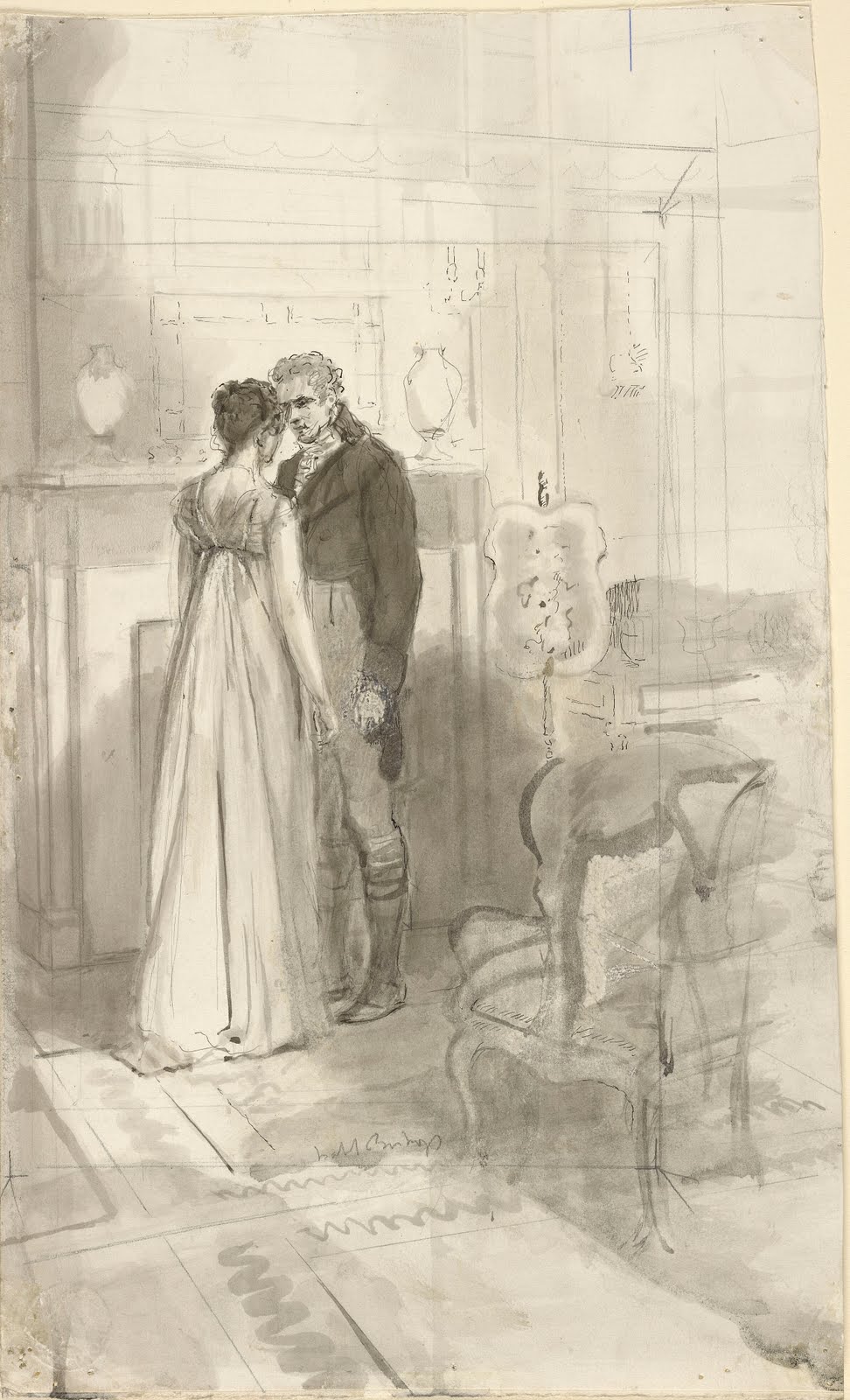
Isabel Bishop's image of Jane and Bingley standing together

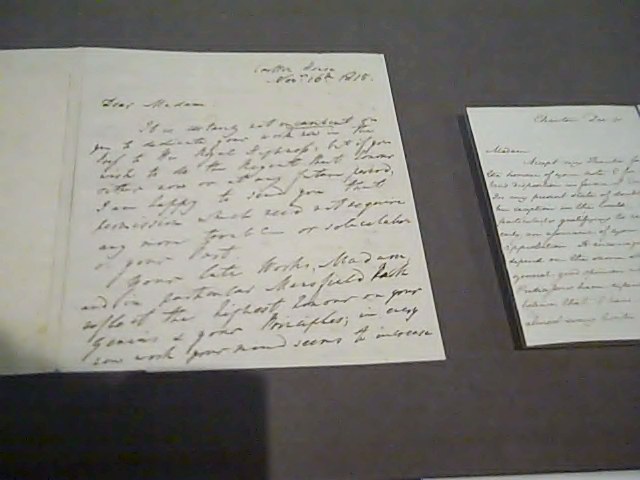
and the correspondence between Jane and Cassandra, her letter to Francis Talbot, the Countess of Morley and a letter from the Prince Regent’s librarian, James Clarke add to our knowledge of her world.

James Clarke's letter to Jane Austen, on the left

There were artifacts from Byron and Fanny Burney and Sir Walter Scott, and more images than I can recall so many weeks later.

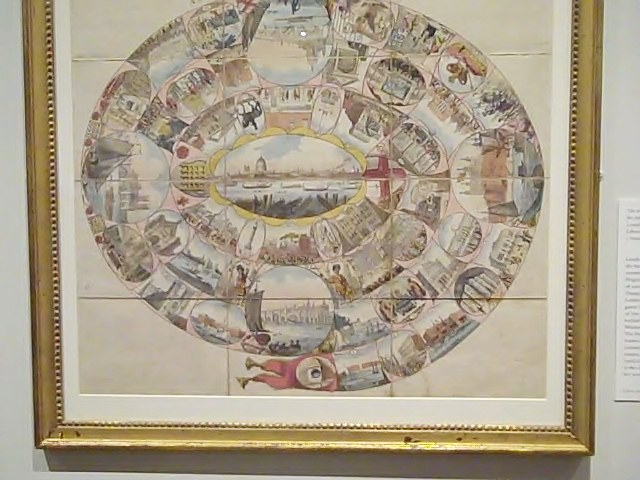
The Panorama of London

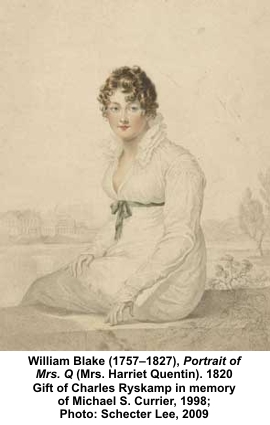
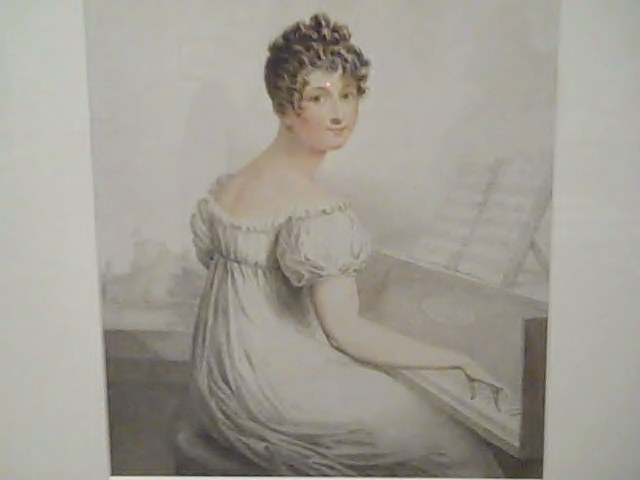
William Blake and Georges Mail drew two portraits that forcibly reminded me of my internal images of Jane and Elizabeth Bennet

Georges Maile (fl. 1818–1841) Marchioness of Huntley.

Which brings me to my only (and major) disappointment with this exhibit: no catalogue. Thankfully, I can reconstruct my memory of the visit from my notes, images I have gleaned online or taken myself, and from a list provided by the Morgan Library (see the link below.) For anyone who lives within striking distance of the Morgan Library, you have until March 14th to travel to New York. The exhibition room might be small, but it is filled with treasures and is well worth the effort.

More links:

View PBS’s video of the Jane Austen exhibit at the Morgan Library on YouTube.

Read Full Post »

« Newer Posts - Older Posts »