Feeds:
Posts
Comments

Archive for the ‘Jane Austen’s enduring popularity’ Category

Inquiring readers: Tony Grant from London Calling has been a frequent contributor to this blog, sending posts and images. He lives in Wimbledon and acts as a tour guide, taking visitors on tours to Jane Austen country, the Lakes region, and points of interest all around London and the U.K. Recently, Tony sent in his thoughts about Jane Austen and his wish to delve deeper into other authors and their lives. As an active guide, he knows whereof he speaks. I asked Susannah Fullerton, author, president of JASA, and also a tour guide, to give her response (with Tony’s approval).  Here, then, is their very interesting conversation. I intend to weigh in. Does anyone else have an opinion? If so, please feel free to comment. Meanwhile, to all my U.S. readers, Happy Thanksgiving! Drive safely and have a wonderful time with kith and kin.

“Good-Bye to All That,” is an autobiography by Robert Graves. Graves said, “It was my bitter leave-taking of England where I had recently broken a good many conventions”.

I was reading a poem by Edward Thomas, (Philip Edward Thomas, 3rd March 1878 – 9th April 1917) recently, entitled, “The Brook.” In the poem Thomas is sitting by a stream and watching a child paddling in the brook. His senses are completely alert to the sights and sounds of insects, the sight of birds and the sounds of birds unseen, the play of sunlight, the rippling tinkling sounds of water and the memories of a past horseman and horse buried under a barrow on the heath nearby. The poem ends,

And then the child’s voice raised the dead.
“No one’s been here before,” is what she said.

It occurred to me that the child was right. Of course, probably, many people had been to that spot over years and decades. For each of us, however, when we go to a place for the first time that is pristine and natural and remains how it has always been we do experience something for the first time. It is as if nobody has been there or done that, or experienced that before us. We can experience things fresh and new for ourselves when we go somewhere like this, for the first time.
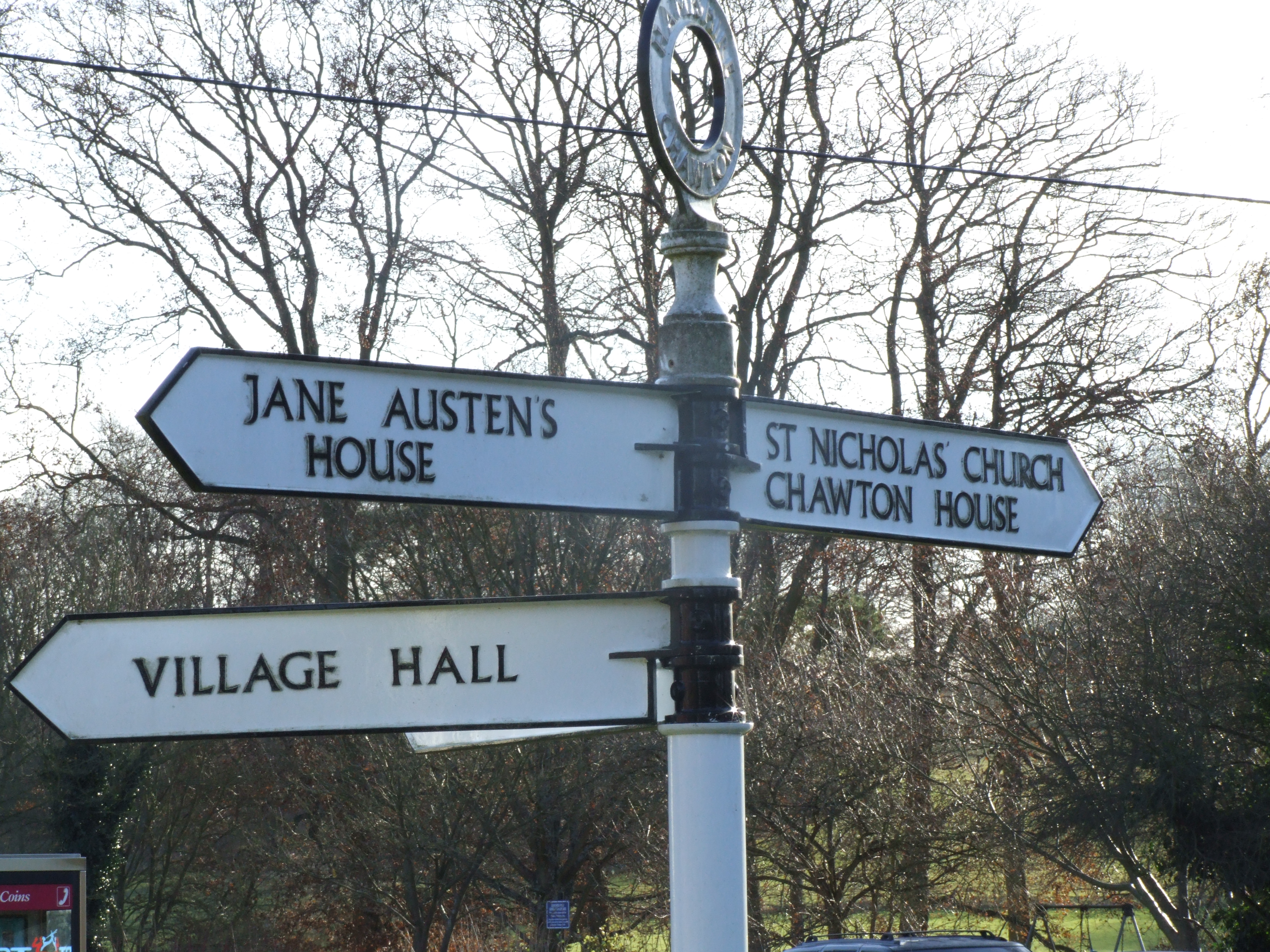
Signpost. Image @Tony Grant

Now lets take a visit to Chawton, Jane Austen’s last home before she died. I wonder if we can actually experience things fresh and new to us on a visit to Chawton and say,“No one’s been here before,” in the way the child in Edward Thomas’s poem did?

I remember standing at the crossroads in Chawton , years ago, for the first time. What I should have experienced, according to Jane Austen pilgrims to Chawton, is a sense of where she lived, a connection with Jane Austen – where she wrote, cooked, sewed, wrote letters, enjoyed the company of Cassandra, Martha, her mother and brothers and neighbours too. Indeed, Jane Austen (16 December 1775 – 18 July 1817) did all this over two hundred years ago. But can I or any of us get that feeling of, “No one’s been here before.” Do we really get an experience standing at Chawton crossroads next to that much photographed sign post put up in the 1930’s with pointers to the great house, the church and the cottage that it is the Chawton of Jane Austen? Do we really believe that we have a connection with Austen by being there? Isn’t it all in our imaginations because we want to believe?
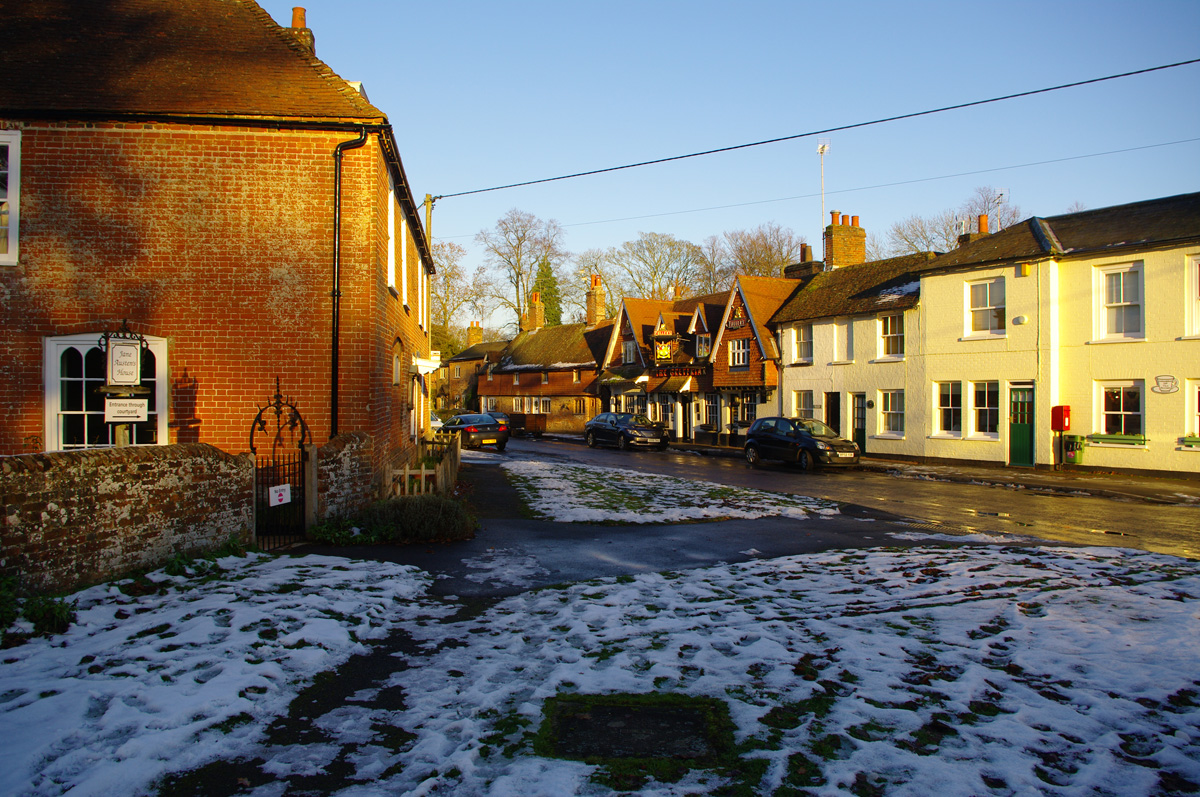
Chawton Village street. Image @Tony Grant

Chawton high street is full of parked cars with Japanese, French, German, Spanish and Scandinavian makers emblems on them. The road is metalled and covered in tarmac. It has a pavement edged by slate and granite curb stones from Dartmoor. It has concrete and tarmac pavements. Houses surrounding the cottage have a mesh of telecommunication wires leading to each one. People who live in Chawton are all connected to the World Wide Web with broadband like the rest of us. Modern street lights light the streets at night. In the small park opposite the cottage there is a children’s playground with steal clambering structures and swings. The pub opposite, The Greyfriar, is a Fullers pub. They hold a quiz night once a week for locals that probably doesn’t include questions about Jane Austen. Fullers, by the way, is a London brewery situated on the Great West Road, leading out towards Heathrow Airport, close to where Hogarth had his country retreat. These very locals travel to Winchester, Southampton or even commute to London for work every day. Chawton C of E Primary School, just along the road, on the way to The Great House, is an ordinary primary school that teaches the national curriculum. The children are like children anywhere and this is where they live. The Jane Austen connection to them is by the by, not really pertinent to their lives. Although, I am sure, as the school is in Chawton the children will know a lot about Jane Austen, but she will really be just somebody else on their list of famous people and writers to know about. Those children play computer games on their Ipads at home. Chawton is an ordinary place where people live and get on with their ordinary lives, where Jane doesn’t loom much in their minds when they are peeling the potatoes or hoovering their carpets or watching the TV.
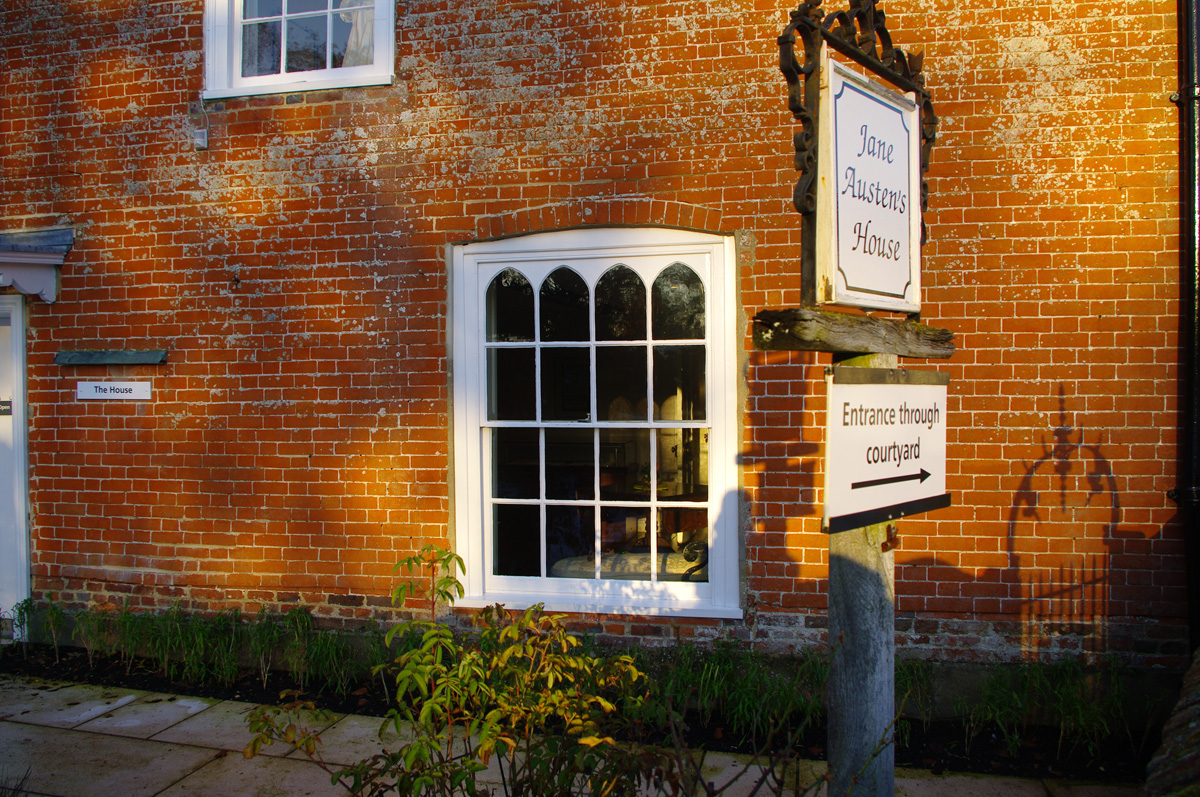
Chawton Cottage signs. Image @Tony Grant

Looking at the cottage from the outside, the Jane Austen societies have stuck large obtrusive signs on the walls facing the road. If you look at the structure of the building itself you begin to wonder what of it Jane would actually recognise if she were to come back today. Windows have obviously been bricked up. Was that a result of 18th century window taxes or because at one time the cottage was split into a group of smaller cottages? It has a variety of doors to enter by too which probably weren’t there or were in different locations in Jane’s day.
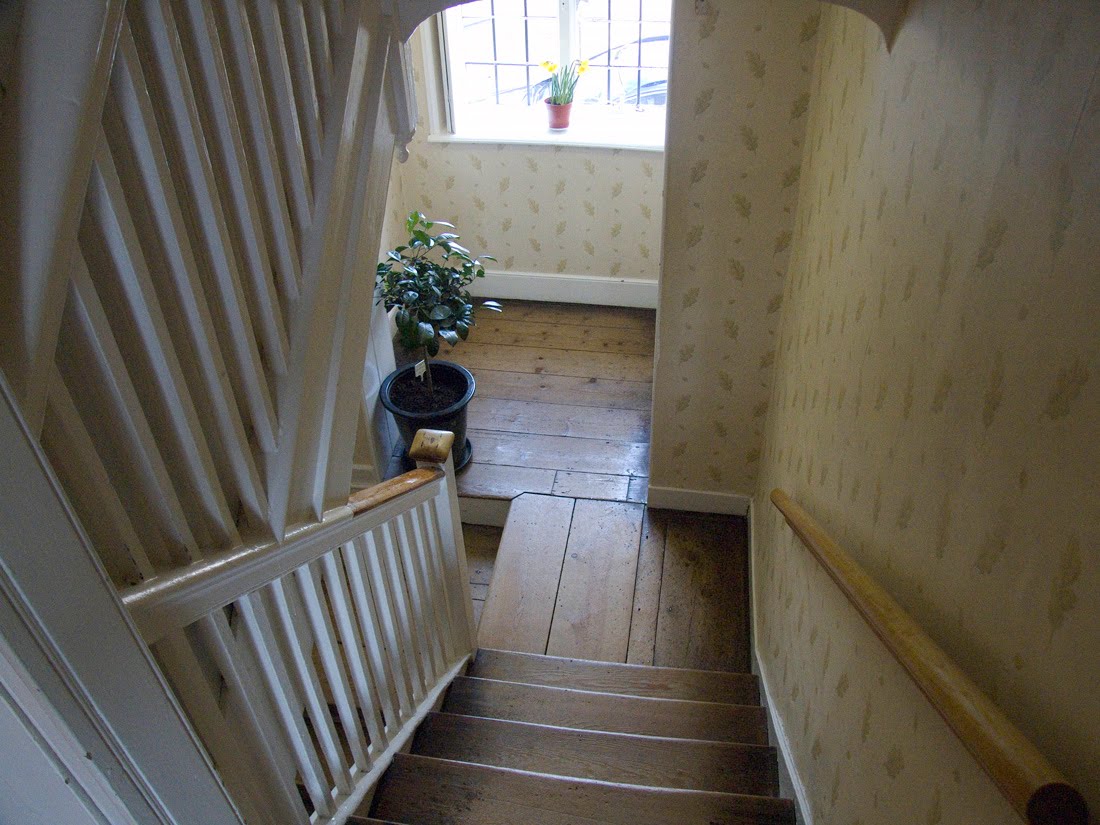
Staircase. Image @Tony Grant

When you go into the cottage you see modern radiators, electrical wiring, plug sockets and fire exit signs with the requisite fire extinguisher points. These are not subtly hidden or unobtrusive but are very prominent. Many of the display cases, especially upstairs, are bulky and obtrusive. They don’t look good. The staircase itself is not the staircase Jane Austen would have known in her time. The whole house has actually been restructured. The Austen’s might not recognise the place. It’s not really the place they knew.
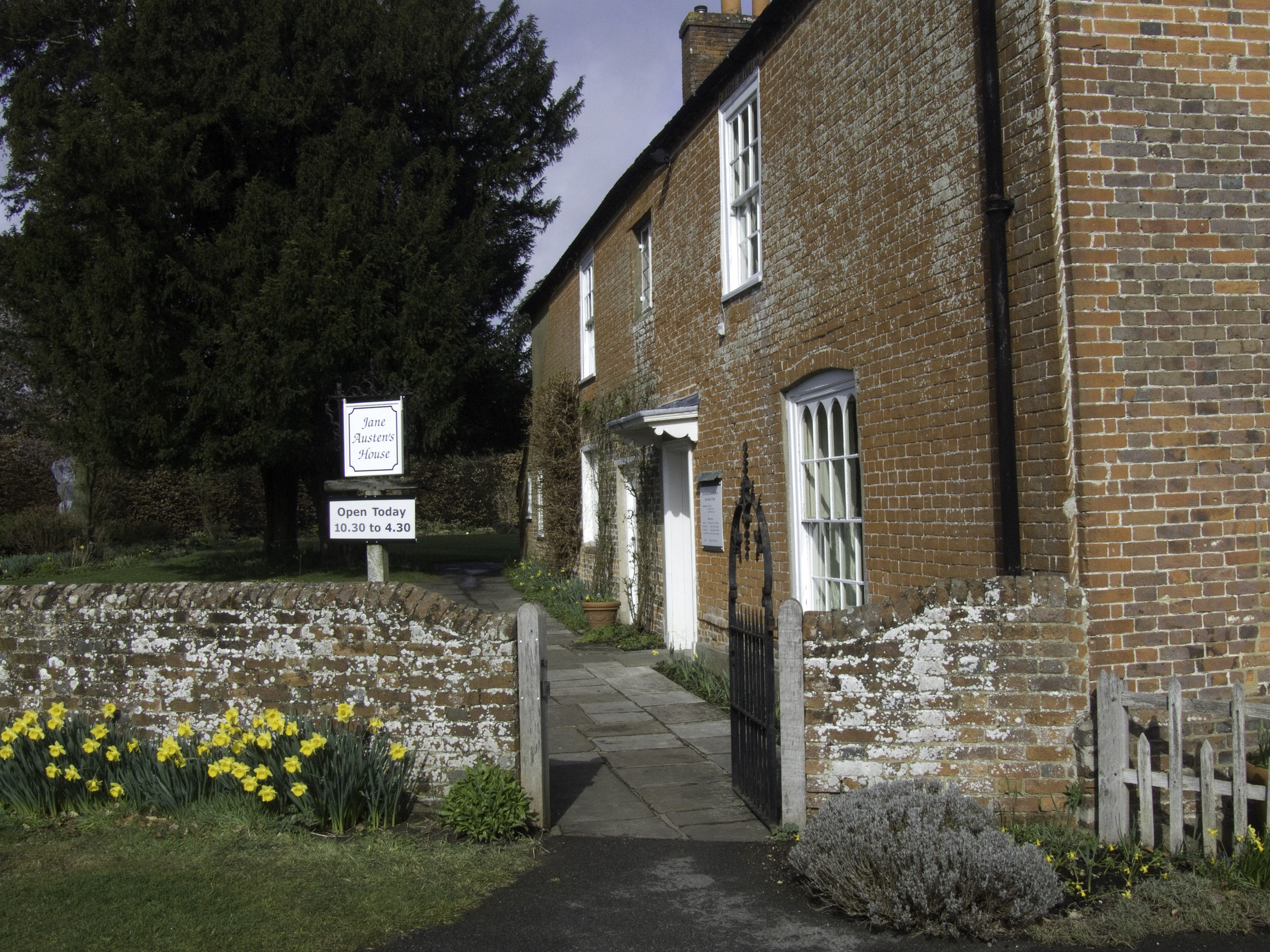
The visitor’s entrance to Chawton Cottage. Image @Tony Grant

I always come back to the books and her letters. That is where to find Jane Austen. That is where we are going to get glimpses of the real person if we are attentive.
Now don’t get me wrong, I absolutely love reading Jane’s novels, her letters and the biographies written about her. However all these Jane Austen societies bother me. They worship and idolise her. They focus exclusively on her. They wring every bit of Janenness out of her. They make Chawton a false holy of holies. She was one writer for goodness sake. The world is a diverse and varied place full of great writers that we all need to read and not be partisan about. If I had my way I would get rid of all literary societies connected with all writers and say, just read. Reading develops us and helps us grow. Centering on one writer narrows us.
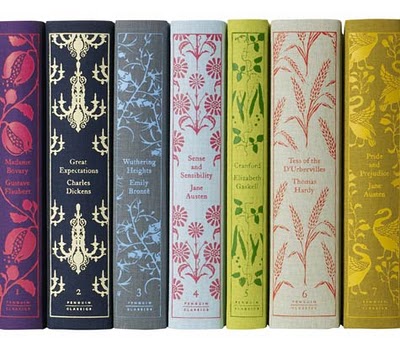
Penguin Classics

As a paraphrase of Robert Graves, this article “ (Is) my(not so) bitter leave-taking of (Austen) where I (have) recently broken a good many conventions”. We all need to stop squeezing the life out of Jane Austen and get on with real life and the rest of the real literary world. Returning to the essence of the Edward Thomas poem, I feel that my senses need to be open but to other writers without the weighty manufactured image of Jane Austen hovering over my shoulder.

Doesn’t anybody else feel that they would like to get out from underneath the weight of Austen and breath freely again?
Tony Grant

I am going to read all of Virginia Woolf’s novels after Christmas and post reviews. My mate Clive and I are going to do this in tandem. If you want an antidote to all things Jane, don’t stray!!!!!!! Clive and Tone are on their way.

Tony Grant, Wimbledon

Hi Tony,

I hope you are well. I enjoy reading your comments on Vic’s lovely website. Your photo of the Dolphin Hotel looks so nice in my new book, A Dance with Jane Austen. Thanks again for giving me permission to use it when we met.

I’m intrigued by your comments about Jane Austen societies, but don’t agree with you that they are in any way narrowing. My experience is quite the opposite. At JASA we’ve had talks on Jane Austen’s connections with / influence on many other writers – Kipling, Georgette Heyer, Byron, Radcliffe, the Brontes, etc. Such talks immediately send you hurrying off to get to know more about those other writers. We’ve had talks about Jane Austen and various historical figures, so you then want to learn more about them, and of course we’ve had talks and articles about the age in which she lived, so our members then explore music in her time, art and what paintings she knew, they learn about the church in that era, the navy and army, Georgian crime, fashion, food, travel, and the list goes on. I see JASA (and the other literary societies to which I belong) as a wonderful way of extending my reading and my knowledge, not limiting it.

And joining good literary societies is addictive. If you get great pleasure from learning more about one writer, you soon realise that you can do the same with another writer. It does not have to be exclusive – I’m extremely promiscuous indeed when it comes to joining literary groups! I’m part of an Anthony Trollope group (we have trouble knowing what to call our group – ‘The Trollopes’ has dubious connotations – I’d love to hear suggestions??) and we have been making our way through Trollope’s more than 40 novels with enormous pleasure. (Trollope, by the way, was a great admirer of Jane Austen). We have also read biographies of Trollope, biographies of his mother Frances, critical books about his writings, and books about the position of women in Victorian England. It’s a small group but we have all felt so enriched by it. Plus we have great fun, good food and wine, picnics (in places Trollope visited in Australia) and we have all made new friends.

And lastly a fabulous reason to join a literary society is for the social aspects. I have met some of my dearest friends through JASA and other Jane Austen connections. I can honestly say that joining JASA has totally changed my life – and all for the better – so there’s been nothing ‘narrowing’ about my passion for Jane Austen’s novels. Rather than ‘squeezing the life’ out of Jane Austen, my love of her writings has widened my knowledge, increased my appreciation of her books, life and historical era, has taken me around the world, given me new friends and given me intense happiness. The more I turn to her novels, the more I get from them; and the same goes for JASA – Jane Austen keeps giving and giving and I receive so very happily all she has to give in so many ways.
Am I waxing too lyrical??? I think you need to pay a visit to Australia, Tony, so that I can show you in person all you could get from a great literary society. Please come and visit any time!!!! JASA would love to welcome you to sunny Sydney.

Cheers,
Susannah
Read Full Post »

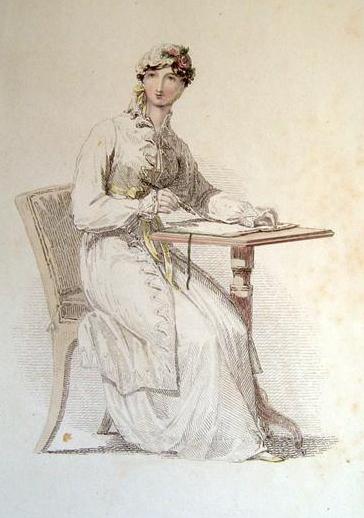
Lady writing at her desk, 1813, Ackermann fashion plate, morning dress.

It is a truth universally known that during her lifetime, Jane Austen published her novels as “a lady.”  While some in the family knew about her writing success – her brother Henry and sister Cassandra swiftly come to mind – many did not, including the cousins. When a genteel woman like Jane was described as being at “work”, the phrase meant needlework and sewing clothes for the poor basket. A lady simply did not sully her hands by toiling at a trade. Jane did not want it bandied about that she was the author of Pride and Prejudice or Sense and Sensibility, but her proud siblings, Henry in particular, couldn’t restrain themselves and bragged about their talented sister.  The word got out and the least well-kept secret was the name of the lady who wrote those delightful novels.

James Edward Austen, the son of Jane’s eldest brother James, and a favorite nephew of hers, discovered at school in 1813 that his favorite aunt was the author of two novels he had enjoyed immensely. The 11-12 year-old was so delighted with the news that he penned an enthusiastic poem about his discovery and sent it to her:

To Miss J. Austen

No words can express, my dear Aunt, my surprise
Or make you conceive how I opened my eyes,
Like a pig Butcher Pile has just struck with his knife,
When I heard for the very first time in my life
That I had the honour to have a relation
Whose works were dispersed throughout the whole of the nation.

I assure you, however, I’m terribly glad;
Oh dear! just to think (and the thought drives me mad)
That you made the Middletons, Dashwoods, and all,
And that you (not young Ferrars) found out that a ball
May be given in cottages never so small.
And though Mr. Collins, so grateful for all,
Will Lady de Bourgh his dear Patroness call,
‘Tis to your ingenuity he really owed
His living, his wife, and his humble abode.

James Edward Austen as a young man.

When Edward Austen-Leigh, as he became later known in life, was 72, he penned his now famous Memoirs of Jane Austen,  leaving a legacy of the memories that he and his cousins retained a half century after her death. Had Edward not embarked on this quest, his memories (he was 16 when Jane died), and those of Caroline Austen and Fanny Knatchbull, might not have been captured in print. While his book preserved those fading memories, they also “sanitized” his aunt Jane’s reputation, erasing much of her sharp tongue and wit and replacing it with sweetness of character:

The grave closed over my aunt fifty-two years ago; and during that long period no idea of writing her life had been entertained by any of her family. Her nearest relatives, far from making provision for such a purpose, had actually destroyed many of the letters and papers by which it might have been facilitated. They were influenced, I believe, partly by an extreme dislike to publishing private details, and partly by never having assumed that the world would take so strong and abiding an interest in her works as to claim her name as public property. It was therefore necessary for me to draw upon recollections rather than on written documents for my materials; while the subject itself supplied me with nothing striking or prominent with which to arrest the attention of the reader…

Edward Austen-Leigh at the time he wrote Memoirs of Jane Austen

The motive which at last induced me to make the attempt [to write this memoir] is exactly expressed in the passage prefixed to these pages. I thought that I saw something to be done: knew of no one who could do it but myself, and so was driven to the enterprise. I am glad that I have been able to finish my work. As a family record it can scarcely fail to be interesting to those relatives who must ever set a high value on their connection with Jane Austen, and to them I especially dedicate it; but as I have been asked to do so, I also submit it to the censure of the public, with all its faults both of deficiency and redundancy. I know that its value in their eyes must depend, not on any merits of its own, but on the degree of estimation in which my aunt’s works may still be held; and indeed I shall esteem it one of the strongest testimonies ever borne to her talents, if for her sake an interest can be taken in so poor a sketch as I have been able to draw.

Bray Vicarage:
Sept. 7, 1869.

Read Full Post »

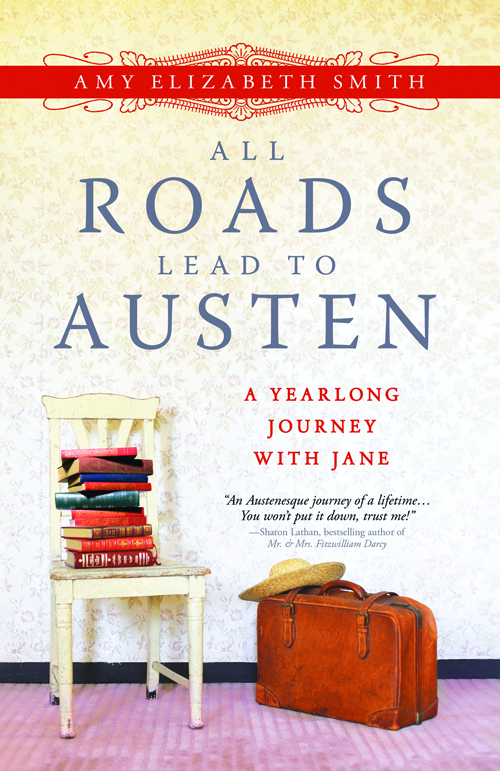
Inquiring Readers: All Roads Lead to Austen: A Yearlong Journey with Jane Austen by Amy Elizabeth Smith is now available through Sourcebooks. I will be reviewing this fabulous, intelligently written book later this week. Meanwhile, enjoy my interview with Ms. Smith about her Latin American adventure as she discusses Jane Austen’s novels en Español with Latin American book groups. All readers of this blog from any country can enter a contest to win a copy of this charming book. Please click on this link and leave your comment. Make sure to leave a way I can reach you. Contest is now closed!

Amy, I love that Jane Austen, a spinster who didn’t travel far or frequently in her lifetime, is so beloved the world wide over. Which country surprised you most in terms of her popularity there and why?

I found translations of Austen left and right in bookstores in Argentina. I met plenty of people there who’d read Austen and liked her or who’d seen film adaptations of her novels and enjoyed them. And the Jane Austen Society of Buenos Aires was the first Austen society in South America. But sometimes it’s hard not to be influenced by stereotypes about people — I’d heard that Chileans were “the English of South America,” so somehow I thought Austen would be popular in Chile. But when I was living in Santiago, the capital (which I absolutely loved), a number of people told me Austen’s not very well known in Chile.

As for Argentineans, I’d heard over and over from people in Mexico, Guatemala, Ecuador, and other places that Argentineans are, well, pretty arrogant. Other latinos kept passing on jokes like, “When Argentineans see lightening, what do they think is happening? They think it’s God, taking their picture!” So, I guess I got the idea that Argentineans might think Austen was stuffy or old fashioned or some such thing. But she’s popular, at least in Buenos Aires, according to my experiences.

What aspects of that particular culture do you think Jane would have enjoyed the most?

Bookstores, bookstores, bookstores. I had great experiences in bookstores all over Latin America, but Argentina — and Buenos Aires specifically — really is the bookstore capital of South America. It’s so easy for us now to take for granted that we can get our hands on just about any book we want, any time. We’ve got access to bookstores, next-day delivery with websites, and good public libraries. And electronic readers have made it easier than ever — just order whatever book you want, wherever you are on the planet! But imagine what it must have been like for an imaginative, inquisitive reader like Austen — how often did she ever set foot in a bookstore? How often could she afford to pay for books from a circulating library? How many books did her family or friends or neighbors actually own? I think Austen would have fainted from sheer pleasure at the sight of bookstore after bookstore on Avenida Corrientes in Buenos Aires.

Librerias Libertador: One of my favorite bookstores on Corrientes, in Buenos Aires

Jane Austen fans cross all religious boundaries. Can you identify any characteristics that Janeites share across the world, besides their obvious love for Jane Austen’s novels?

I honestly can’t speak for many places beyond Latin America (although I might try a next project in some other interesting countries!). But I suspect that there’s a kind of optimism that people — especially women — love about Austen. Her leading ladies find love, not in spite of being strong and intelligent, but because of it. That’s a pretty appealing idea in a world were, in many places, women are still told they’d better not appear too smart, or they’ll scare men off.

What were some of your most memorable experiences in writing this book?

I actually started the book while I was still traveling, although I didn’t finish it until after my trip was done. I wrote the first portion on Guatemala while I was living in Puerto Vallarta, Mexico. I was living well away from the tourist area, renting a partially-finished house that had glass in only one or two windows, so it was pretty noisy — street vendors would cruise by with loudspeakers, selling ice cream, vegetables, you name it. The people across the street had a huge bird caged outside their house that shrieked and chattered like a demon. And animals would wander in at will — there was one very persistent cat that kept making me jump out of my skin by appearing under my writing table with no warning.

There were animals all over the place in that neighborhood — no leash laws for dogs, and some of the neighbors had roosters and other farm animals. When I wanted a break from writing, I’d wander out to buy groceries or take my clothes to the laundromat. I always carried them in a plastic bag, and there was this goat a few houses down from me that was only tied up about half of the time. When it was loose, it usually ignored me, but when I had that plastic bag with laundry, it would come bolting after me — maybe its food came in a plastic bag, and it thought I had something good to eat? Or maybe it knew I had laundry and really wanted to eat my socks. Who knows. Sometimes I actually miss that goat — laundry day’s not the same without it.

A friendly neighborhood rooster from Puerto Vallarta, Mexico

Thank you, Amy, for your wonderful insights and good luck with your book. (I just love the cover!) Is there anything else you would like my readers to know about All Roads Lead to Austen?

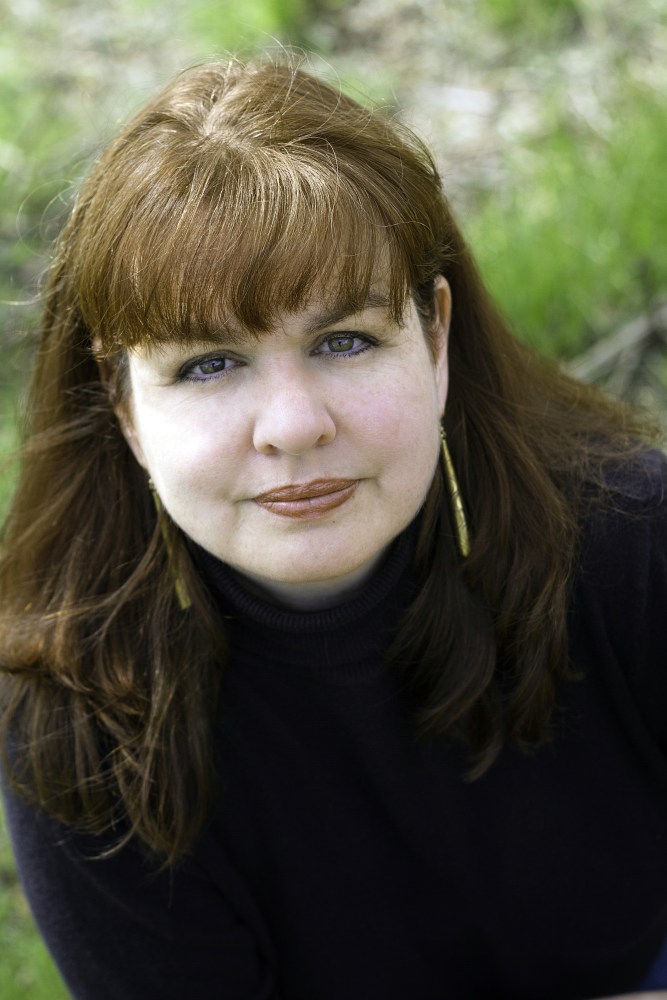
Amy Elizabeth Smith

I had two main sources of inspiration for this book — Azar Nafisi’s Reading Lolita in Tehran, and my own Jane Austen students at the University of the Pacific, in California. Readers can enjoy All Roads as a fun opportunity to sit back and be an armchair traveler, but I’d also love it if the book inspired some other international journey I could sit back and read about. Austen in China? Turkey? Belgium? Bora Bora? I’d love to see somebody else take on a journey like this with Jane. Even if they don’t want to write a whole book about it — I’d love to have people share reading-on-the-road stories on my website (http://allroadsleadtoausten.com/). Consider that an official invitation! And thanks so much for letting me visit here at Jane Austen’s World!

To Enter the Contest: Please make sure to leave your comment on Jane Austen Today at this link. The first two comments left on this post will be included in the random number generator drawing at midnight EST USA time on June 11. Please leave all other comments on Jane Austen Today. Make sure to leave a way I can reach you. 

Read Full Post »

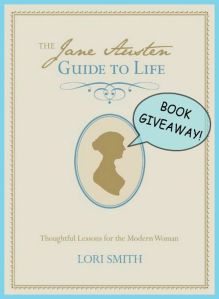
The contest is open until May 15th. You have two chances of winning this book by leaving a comment. Click on image to enter.

Nearly 200 years after her death, Jane Austen is more popular than ever with publishers and readers. Many of her fans are attracted to her era, which they identify as one filled with grace, gentility, and good manners. In The Jane Austen Guide to Life: Thoughtful Lessons for the Modern Woman, author Lori Smith examines Jane Austen’s novels, letters, and life for insights that can help guide today’s woman through life’s passages. There is much good material to digest.

The most important thing is family. Jane was blessed with a large, supportive tribe. They encouraged her talents, reveling in her tales, giving her time to write, and enjoying her books as she was writing them. With much love and support she was able to pursue and develop her talent in an age when such a career was not easily open to women. When she began to write as a girl, Jane had no idea that she would ever make money from her talent, much less find the time to pursue her career.  Some lessons to extract from her persistence in writing are: Do what you would be willing to be poor for; temper your expectations; and share your gifts with the world.  Lucky for us Jane never gave up and weathered the dry giving for posterity six incomparable novels.

Lori Smith’s Guide moves from the essential to the romantic. Let me explain. It is hard to find true love if you don’t know what you want. So, Jane’s advice via Lori is: Be accepting of yourself. Be self-aware. And be sensible. If you’re never satisfied with yourself, then you can’t please others. It’s an axiom that Jane and her heroines followed:

Not only do Austen’s characters find love, they find themselves, and they improve themselves. They see their faults in ways they haven’t before. They realize what kinds of things they are capable of — and that at times they are capable of doing things badly — and this awareness spurs them to change.

Regarding romance, once a woman is open to changing her mind, she is receptive to so many possibilities – of the fact that she was wrong, of opening her eyes to others, of finding the right man. In Jane Austen’s era, a sense of community and belonging helped to guide a woman in the right direction. Jane’s characters (and the author herself) lived in a small, connected society, where friends and relatives knew many details about each other. This situation no longer exists for many of us today:

I think [Jane’s] greatest advice to us would be to keep our eyes open and watch carefully, to not commit too quickly before we really understand a guy’s character.

Spoken like our wise mothers. The Guide continues to cover such topics as saving and spending, gratitude and enduring hardships. In the end, Jane shows us to live life to the fullest and to enjoy every moment. She was capable of making fun of herself and laugh even when things were not going her way.

Even the smaller things, that for most of us would only annoy us and lead to complaint, Jane approached with humor. She told Cassandra, “I will not say that your Mulberry trees are dead, but I am afraid they are not alive.”

In the end, no one can live our lives but ourselves. We can only follow our inner guide and the principles we have chosen to live by.

Lori Smith’s  The Jane Austen Guide to Life: Thoughtful Lessons for the Modern Woman continues to inform us about our lives through the lessons that Jane Austen and her characters can teach us. Like her first book. A Walk with Jane Austen, Lori’s clear writing style is a delight to read. One can almost hear Jane speaking through her words. This book is a wonderful gift for mother’s day, for mothers to give to their daughters, and for men to understand the mind of a fine woman. It is also delightfully illustrated.

I give it 4.5 out of 5 regency tea cups.

Book Giveaway: To enter the book giveaway, click on this link. Contest is open until May 15th. Sadly, only those living in the US and Canada are eligible. Please leave a way to contact you in your comment.

Order the book in both hard cover and eBook format:

  • Hardcover: 224 pages
  • Publisher: skirt! (May 1, 2012)
  • Language: English
  • ISBN-10: 0762773812
  • ISBN-13: 978-0762773817

Read Full Post »

Gentle Readers, Laurel Anne from Austenprose and I were chatting the other day about this, that, and the other, for we are both a bit Jane Austen nutty (if you haven’t noticed.) As you continue reading, you will need to know only one thing:  we are just a wee bit longer in the tooth than Jane’s young heroines:

LA: Vic and I were chatting on the phone today. Over the course of our three plus year Austen-inspired friendship we have mostly emailed, so this was a treat. She has the most infectious laugh which made me laugh too. Of course we were talking about our favorite author and she remarked that Austen excelled at humor and the amazing secondary characters she developed. Somehow it just popped out and I boldly asked her what Jane Austen character she most identified with. Without hesitation she replied, Lady Russell from Persuasion. “Lady Russell?” I replied in surprise! “Well, yes.”

Jane Rus.., er, Mrs. Russell

She then revealed that she is often wrong about the advice she gives people. At work she gathers the young-uns around her and freely offers opinions, whether they are solicited or not. When she gives wrong counsel – which she admits is more often than not – she torpedos herself in a most spectacular fashion. “The error of my ways does not go unnoticed by this unforgiving crowd. Unlike Lady Russell, I will own up to a misteak, er, mistake or two, and apologize for having interfered, but I hold the line at groveling.”

Another reason why she identifies with this character is her independence. Lady Russell is a widow with a healthy income and she has no intention of remarrying and being subjugated by a man. “I am a divorced woman who has discovered the joys of living singly on my own terms and by my own schedule. Ah, what total, selfish bliss!”

Vic further admitted that at a party, or when she lets her hair loose, she starts to resemble Mrs. Jennings. You know the type: a bit vulgar, out for a good time, giggling at precisely the wrong moments, and making those with a more composed nature feel uncomfortable with crass jokes and loud language. “Like Mrs. Jennings, I have a good heart. But I can be out there and in your face too. I might seem unseemly to a quieter person like Elinor, and be totally disliked by the likes of a Marianne, but my friends and family get me, and that’s what counts.”

Oh Vic! You are such a card. Lady Russell and Mrs. Jennings? She then turned the tables on me. “Now, who do you identify with in Jane’s novels? Are you like me, a bossy and interfering carouser? Or are your a bit more sedate and ladylike?”

Harriet Smith (Tony Collette) patiently poses for Emma

Vic: “Sedate. A total Harriet Smith,” LA replied. Many years ago a dear Janeite friend tagged her as a Harriet to her Emma. “It seemed appropriate since I was often asking for advice and was very mailable to change.” In her view, Harriet was a bit of a ditz and gullible which she has been accused of too. The thing she liked about being a Harriet is that Austen gave her such a great ending. She is resilient, and after being tossed about in love no less than three times in a year, Harriet gets the man she wanted in the first place and proves Emma, with her self-important airs, was totally clueless about the human heart. “I like having the last laugh, and being right.” ;-)

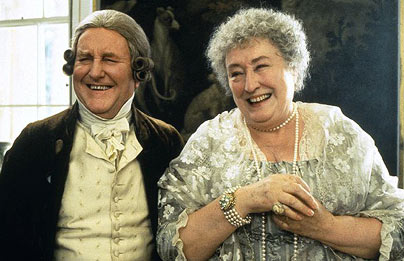
Sir John Middleton (Robert Hardy) and Mrs. Jennings (Elizabeth Spriggs)

Lately LA thinks she has evolved into Sir John Middleton from Sense and Sensibility. He was the Dashwood’s cousin and landlord of Barton Cottage. He is very gracious and likes to pop in and make sure his tenants are comfortable and entertained. He is a bit of a bore and talks too much about things that are not of interest to his young companions, but he likes dogs, has a good heart and loves to laugh. “As an enthusiastic bookseller, I like to inform customers of their choices and make suggestions. I am also a bit of an organizer and enjoy planning events on my blog, and orchestrating the 23 authors in my anthology. It is like herding cats, but I like being the boss of my own world!”

One man’s ways may be as good as another’s, but we all like our own best. Persuasion, Ch 13

Now our question. Which Jane Austen character do you, estimable viewer, most identify with, or which character are you afraid of becoming? Feel free to leave your comments!

Read Full Post »

« Newer Posts - Older Posts »