Feeds:
Posts
Comments

Archive for the ‘Jane Austen’s family’ Category

As spring turns to summer on our month-by-month exploration of Jane Austen’s life, letters, and novels, we turn our attention to June in Jane Austen’s world. If you’re new to the series, you can find previous articles in this “A Year in Jane Austen’s World” series here: JanuaryFebruaryMarch, April, and May.

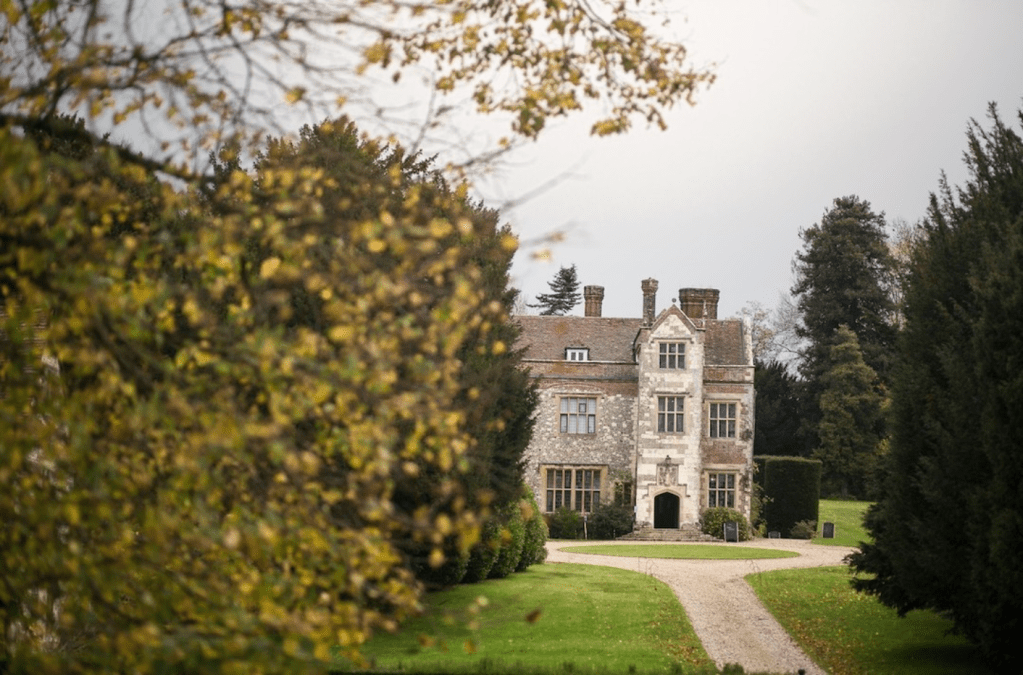
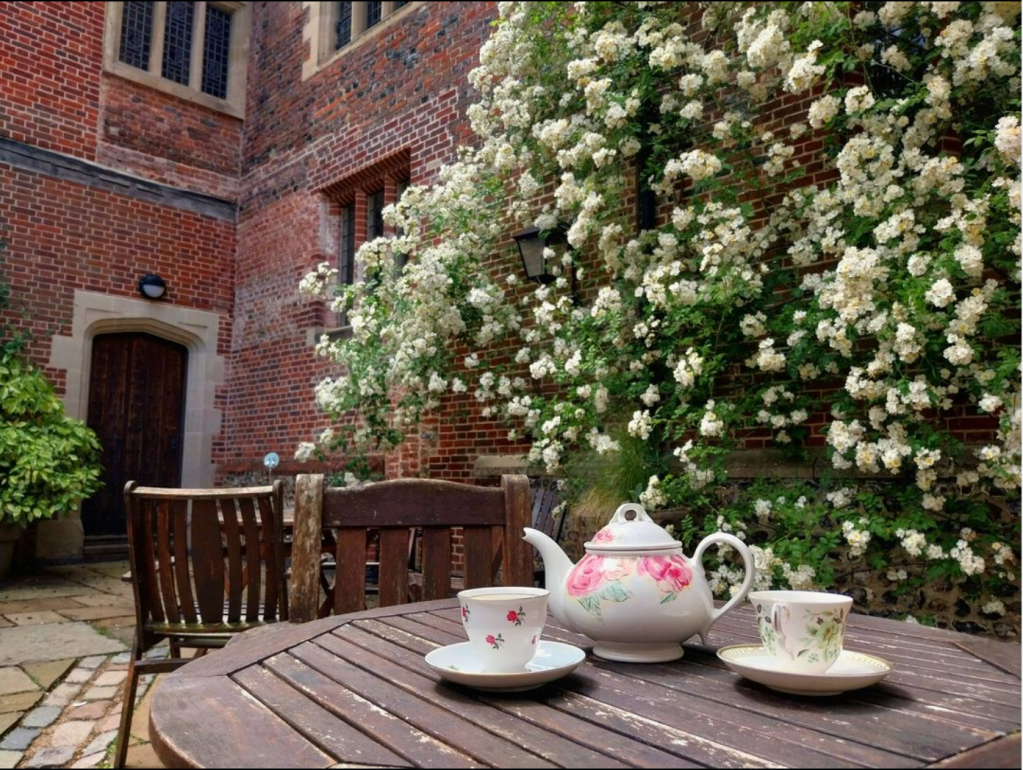
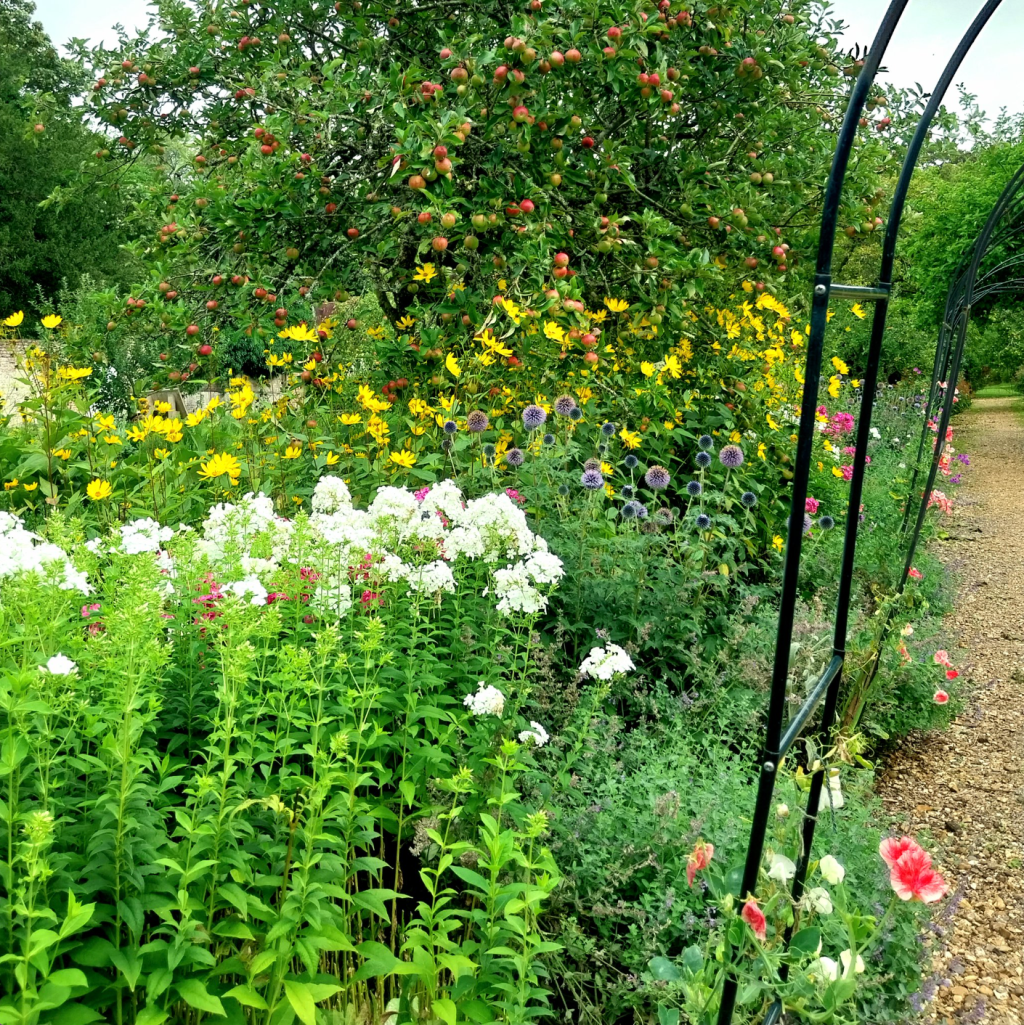
Last month, we enjoyed the beauty of springtime coming to Chawton, along with the beautiful blooms of May. Let’s take a look at our monthly view of Chawton House Gardens. Many visitors will come tour the gardens over the next few months to enjoy the garden walks, see the house, and perhaps stay for tea.

Chawton House in June: Photo @ChawtonHouse.

June in Hampshire

June is the time of year when England turns into a beautiful garden of scenic greenery, lush fields, and lovely flowers. Hampshire is one of the prettiest places you can visit. I’ve been to Hampshire in the spring and early summer several times, and I highly recommend a summer trip if the opportunity ever presents itself. It’s also time for berries!

“Yesterday I had the agreable (sic) surprise of finding several scarlet strawberries quite ripe;- had you been at home, this would have been a pleasure lost. There are more Gooseberries & fewer Currants than I thought at first.- We must buy currants for our Wine.-” (Jane Austen writing to Cassandra from Chawton Cottage in June 1811)

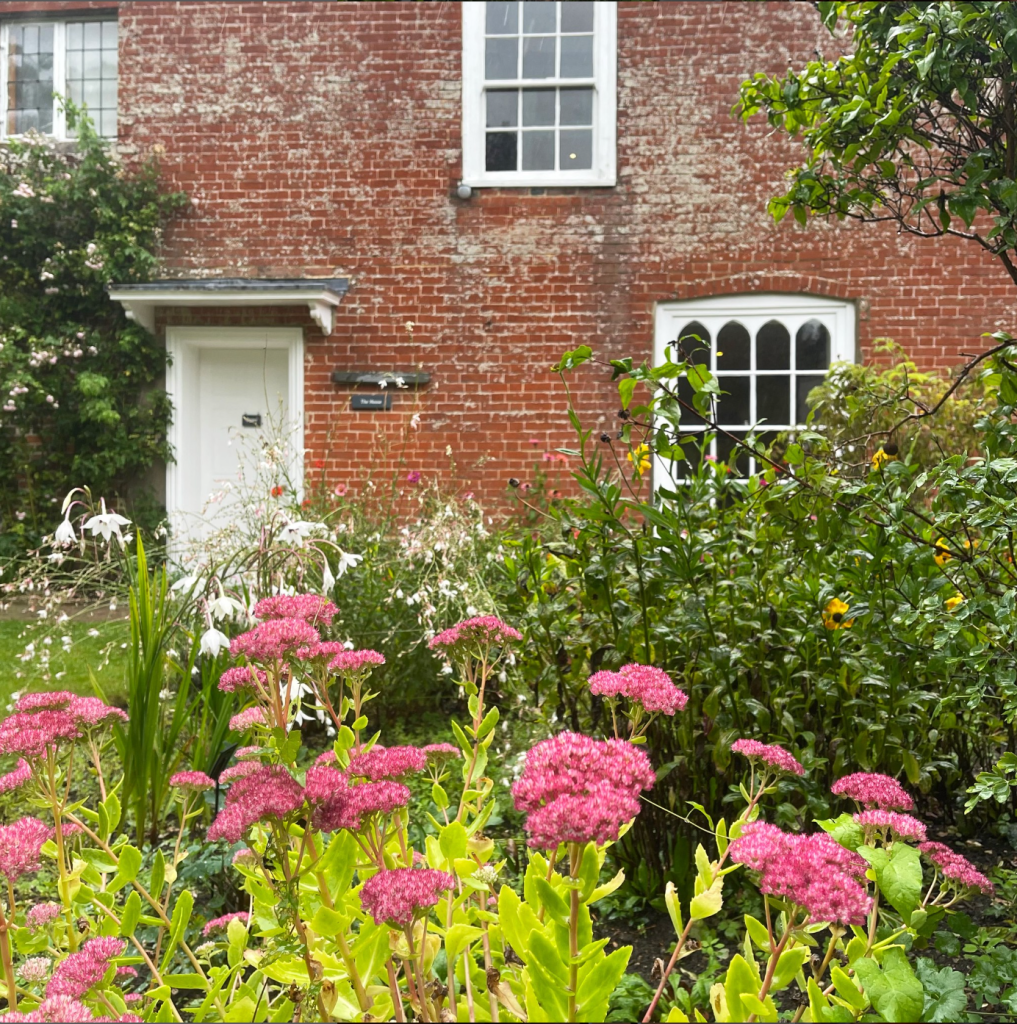
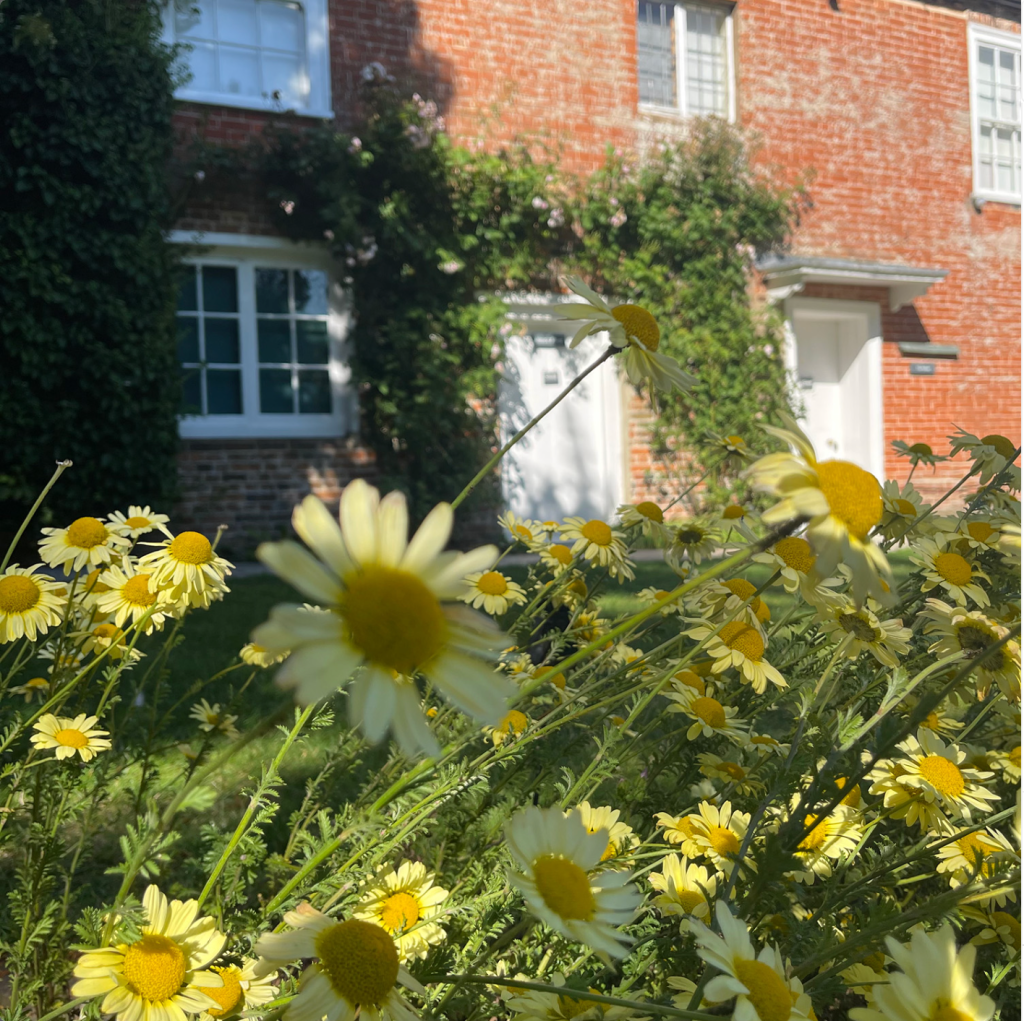
Here is Jane Austen’s House Museum and the roses that frame the front door this time of year:

Jane Austen’s House in June, Photo: @JaneAustensHouse.

June in Jane Austen’s Letters

We have several letters from June to explore. After the “season” ended, many rich families left London and went to the countryside or Bath. Jane and her family frequently traveled to visit family members or friends for longer visits during the summer months.

2 June 1799 (Queen’s Square, Bath):

  • Edward’s health: “What must I tell you of Edward? Truth or falsehood? I will try the former, and you may choose for yourself another time. He was better yesterday than he had been for two or three days before,—about as well as while he was at Steventon. He drinks at the Hetling Pump, is to bathe to-morrow, and try electricity on Tuesday. He proposed the latter himself to Dr. Fellowes, who made no objection to it, but I fancy we are all unanimous in expecting no advantage from it. At present I have no great notion of our staying here beyond the month.”
  • Visits with friends: “I spent Friday evening with the Mapletons, and was obliged to submit to being pleased in spite of my inclination. We took a very charming walk from six to eight up Beacon Hill, and across some fields, to the village of Charlecombe, which is sweetly situated in a little green valley, as a village with such a name ought to be. Marianne is sensible and intelligent; and even Jane, considering how fair she is, is not unpleasant. We had a Miss North and a Mr. Gould of our party; the latter walked home with me after tea. He is a very young man, just entered Oxford, wears spectacles, and has heard that ‘Evelina’ was written by Dr. Johnson.”
  • Outings: “There is to be a grand gala on Tuesday evening in Sydney Gardens, a concert, with illuminations and fireworks. To the latter Elizabeth and I look forward with pleasure, and even the concert will have more than its usual charm for me, as the gardens are large enough for me to get pretty well beyond the reach of its sound. In the morning Lady Willoughby is to present the colors to some corps, or Yeomanry, or other, in the Crescent, and that such festivities may have a proper commencement, we think of going to….”

11 June 1799 (Queen Square, Bath):

  • Taking the waters: “Edward has been pretty well for this last week, and as the waters have never disagreed with him in any respect, we are inclined to hope that he will derive advantage from them in the end. Everybody encourages us in this expectation, for they all say that the effect of the waters cannot be negative, and many are the instances in which their benefit is felt afterwards more than on the spot.”
  • Thoughts on “First Impressions”: “I would not let Martha read ‘First Impressions’ again upon any account, and am very glad that I did not leave it in your power. She is very cunning, but I saw through her design; she means to publish it from memory, and one more perusal must enable her to do it.”
Public Domain Image.

15 June 1808 (Godmersham)

  • Details of their journey: “Which of all my important nothings shall I tell you first? At half after seven yesterday morning Henry saw us into our own carriage, and we drove away from the Bath Hotel; which, by the by, had been found most uncomfortable quarters,—very dirty, very noisy, and very ill-provided. James began his journey by the coach at five. Our first eight miles were hot; Deptford Hill brought to my mind our hot journey into Kent fourteen years ago; but after Blackheath we suffered nothing, and as the day advanced it grew quite cool.
  • A rest for breakfast: “At Dartford, which we reached within the two hours and three-quarters, we went to the Bull, the same inn at which we breakfasted in that said journey, and on the present occasion had about the same bad butter. At half-past ten we were again off, and, travelling on without any adventure reached Sittingbourne by three. Daniel was watching for us at the door of the George, and I was acknowledged very kindly by Mr. and Mrs. Marshall, to the latter of whom I devoted my conversation, while Mary went out to buy some gloves. A few minutes, of course, did for Sittingbourne; and so off we drove, drove, drove, and by six o’clock were at Godmersham.”
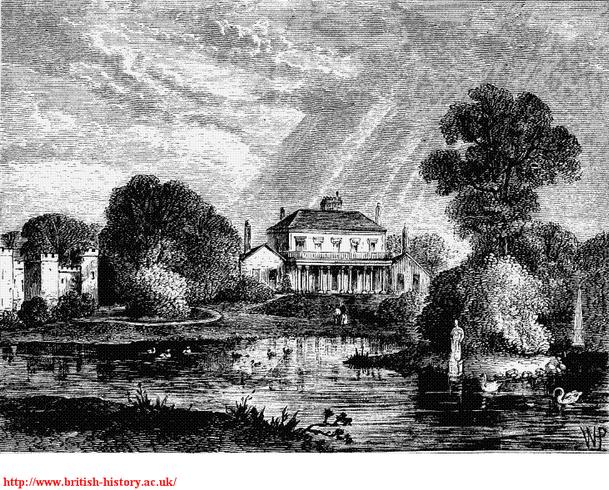
Godmersham Park

25 April 1811 (Sloane St.)

  • Possible publishing date for Sense and Sensibility: “No, indeed, I am never too busy to think of S. and S. I can no more forget it than a mother can forget her sucking child; and I am much obliged to you for your inquiries. I have had two sheets to correct, but the last only brings us to Willoughby’s first appearance. Mrs. K. regrets in the most flattering manner that she must wait till May, but I have scarcely a hope of its being out in June. Henry does not neglect it; he has hurried the printer, and says he will see him again to-day. It will not stand still during his absence, it will be sent to Eliza.”

6 June 1811 (Chawton)

  • New set of dishes: “On Monday I had the pleasure of receiving, unpacking, and approving our Wedgwood ware. It all came very safely, and upon the whole is a good match, though I think they might have allowed us rather larger leaves, especially in such a year of fine foliage as this. One is apt to suppose that the woods about Birmingham must be blighted. There was no bill with the goods, but that shall not screen them from being paid. I mean to ask Martha to settle the account. It will be quite in her way, for she is just now sending my mother a breakfast-set from the same place. I hope it will come by the wagon to-morrow; it is certainly what we want, and I long to know what it is like, and as I am sure Martha has great pleasure in making the present, I will not have any regret. We have considerable dealings with the wagons at present: a hamper of port and brandy from Southampton is now in the kitchen.”
Wedgwood Queensware, c. 1790. Image @Christies

13 June 1814 (Chawton)

  • Thoughts on Mansfield Park from Mr. and Mrs. Cooke: “In addition to their standing claims on me they admire “Mansfield Park” exceedingly. Mr. Cooke says “it is the most sensible novel he ever read,” and the manner in which I treat the clergy delights them very much. Altogether, I must go, and I want you to join me there when your visit in Henrietta St. is over. Put this into your capacious head.”

23 June 1814 (Chawton):

  • Travels and plans: “I certainly do not wish that Henry should think again of getting me to town. I would rather return straight from Bookham; but if he really does propose it, I cannot say No to what will be so kindly intended. It could be but for a few days, however, as my mother would be quite disappointed by my exceeding the fortnight which I now talk of as the outside—at least, we could not both remain longer away comfortably.”
  • Friends go to Clifton: “Instead of Bath the Deans Dundases have taken a house at Clifton—Richmond Terrace—and she is as glad of the change as even you and I should be, or almost. She will now be able to go on from Berks and visit them without any fears from heat.”

23 June 1816 (Chawton)

  • Bits of news: “My dear Anna,—Cassy desires her best thanks for the book. She was quite delighted to see it. I do not know when I have seen her so much struck by anybody’s kindness as on this occasion. Her sensibility seems to be opening to the perception of great actions. These gloves having appeared on the pianoforte ever since you were here on Friday, we imagine they must be yours. Mrs. Digweed returned yesterday through all the afternoon’s rain, and was of course wet through; but in speaking of it she never once said “it was beyond everything,” which I am sure it must have been. Your mamma means to ride to Speen Hill to-morrow to see the Mrs. Hulberts, who are both very indifferent. By all accounts they really are breaking now,—not so stout as the old jackass.”
Rolinda Sharples’ Clifton Assembly Room (1817).

June in Jane Austen’s Novels

Pride and Prejudice

  • Lady Catherine to Elizabeth: “Oh, your father, of course, may spare you, if your mother can. Daughters are never of so much consequence to a father. And if you will stay another month complete, it will be in my power to take one of you as far as London, for I am going there early in June, for a week; and as Dawson does not object to the barouche-box, there will be very good room for one of you—and, indeed, if the weather should happen to be cool, I should not object to taking you both, as you are neither of you large.”
  • June at Longbourn after Lydia’s departure: After the first fortnight or three weeks of [Lydia’s] absence, health, good-humour, and cheerfulness began to reappear at Longbourn. Everything wore a happier aspect. The families who had been in town for the winter came back again, and summer finery and summer engagements arose. Mrs. Bennet was restored to her usual querulous serenity; and by the middle of June Kitty was so much recovered as to be able to enter Meryton without tears…
  • Lydia born in June: “Well,” cried her mother, “it is all very right; who should do it but her own uncle? If he had not had a family of his own, I and my children must have had all his money, you know; and it is the first time we have ever had anything from him except a few presents. Well! I am so happy. In a short time, I shall have a daughter married. Mrs. Wickham! How well it sounds! And she was only sixteen last June. My dear Jane, I am in such a flutter, that I am sure I can’t write; so I will dictate, and you write for me. We will settle with your father about the money afterwards; but the things should be ordered immediately.”
Happy Lydia and Unhappy Mr. Wickham

Mansfield Park

  • Edmund’s letter to Fanny: “I have sometimes thought of going to London again after Easter, and sometimes resolved on doing nothing till she returns to Mansfield. Even now, she speaks with pleasure of being in Mansfield in June; but June is at a great distance, and I believe I shall write to her. I have nearly determined on explaining myself by letter. To be at an early certainty is a material object. My present state is miserably irksome.”

Emma

  • Happenings in Highbury: “In this state of schemes, and hopes, and connivance, June opened upon Hartfield. To Highbury in general it brought no material change. The Eltons were still talking of a visit from the Sucklings, and of the use to be made of their barouche-landau; and Jane Fairfax was still at her grandmother’s; and as the return of the Campbells from Ireland was again delayed, and August, instead of Midsummer, fixed for it, she was likely to remain there full two months longer, provided at least she were able to defeat Mrs. Elton’s activity in her service, and save herself from being hurried into a delightful situation against her will.”
  • An outing delayed: “It was now the middle of June, and the weather fine; and Mrs. Elton was growing impatient to name the day, and settle with Mr. Weston as to pigeon-pies and cold lamb, when a lame carriage-horse threw every thing into sad uncertainty. It might be weeks, it might be only a few days, before the horse were useable; but no preparations could be ventured on, and it was all melancholy stagnation. Mrs. Elton’s resources were inadequate to such an attack.”
  • Mr. Knightley offers his strawberry fields: “You had better explore to Donwell,” replied Mr. Knightley. “That may be done without horses. Come, and eat my strawberries. They are ripening fast.”
Mr. and Mrs. Elton involved in everyone’s lives.

Persuasion

  • Elizabeth Elliot born: “Walter Elliot, born March 1, 1760, married, July 15, 1784, Elizabeth, daughter of James Stevenson, Esq. of South Park, in the county of Gloucester, by which lady (who died 1800) he has issue Elizabeth, born June 1, 1785; Anne, born August 9, 1787; a still-born son, November 5, 1789; Mary, born November 20, 1791.”
  • A June sorrow: “And I am sure,” cried Mary, warmly, “it was a very little to his credit, if he did. Miss Harville only died last June. Such a heart is very little worth having; is it, Lady Russell? I am sure you will agree with me.”

June Dates of Importance

This brings us now to several important June dates that relate to Jane and her family:

Family News:

8 June 1771: Henry Thomas Austen (Jane’s brother) born at Steventon.

23 June 1779: Charles Austen (Jane’s brother) born at Steventon.

18 June 1805: James Austen’s daughter, Caroline, born.

Historic Dates:

18 June 1812: The United States declares war on Great Britain (War of 1812).

18 June 1815: The Duke of Wellington defeats Napoleon at the Battle of Waterloo.

Writing:

3 June 1793: Jane Austen most likely writes the last item of her juvenilia.

June 1799: Austen most likely finishes Susan (Northanger Abbey).

Sorrows:

I’m happy to report that I found no major sorrows for the Austen family in the month of June throughout Austen’s lifetime.

June 2024 @JaneAustensHouse.

Joyful June

This concludes our June ramble through Jane Austen’s life, letters, and works. There is always something fascinating to explore! Next month, we’ll discover all the important dates and events from July in Jane Austen’s World. Until then, you might join the Jane Austen’s House Museum virtual book club! You can click here for more: https://janeaustens.house/visit/whats-on/.


RACHEL DODGE teaches college English classes, gives talks at libraries, teas, and book clubs, and writes for Jane Austen’s World blog. She is the bestselling author of The Little Women DevotionalThe Anne of Green Gables Devotional and Praying with Jane: 31 Days Through the Prayers of Jane Austen. Now Available: The Secret Garden Devotional! You can visit Rachel online at www.RachelDodge.com.
Read Full Post »

From her birth in 1775 until her family moved to Bath in 1801, Jane Austen spent most of her time in a small triangle of villages: Steventon, Ashe, and Deane. Her father was rector of both Steventon and Deane, leading services and preaching at both parish churches, and serving the people of both communities.

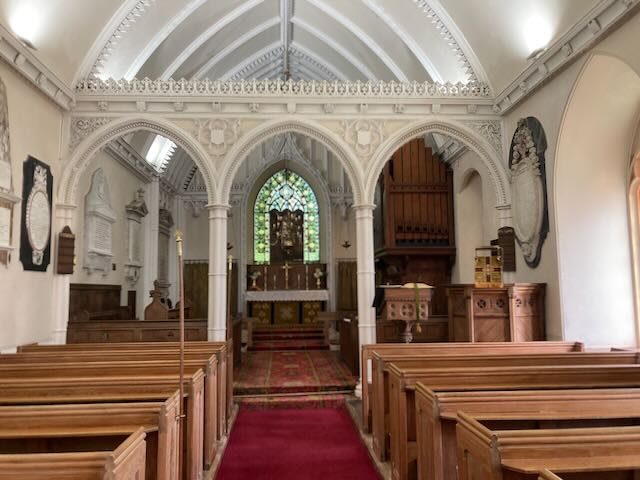
Nave and chancel of Holy Trinity Church at Deane.
The damp Deane parsonage where the Austens lived is long gone; it was replaced by a new building in 1855. One of the churchwardens says, “There was a rectory in the paddock opposite the path leading to the church, which burnt down. I believe the wall [old section in this photo] protected this rectory.”

Deane Parsonage and Living

George and Cassandra Austen lived in the Deane parsonage until 1768 when the Steventon parsonage was ready. Their first three children, James, George, and Edward, were born there. Mrs. Austen’s widowed mother, Jane Leigh, also lived with them at Deane, though she died shortly after the move to Steventon.

The Steventon living was worth only about £100 a year, including about three acres of glebe farmland. So Mr. Knight also let George Austen farm the 200-acre Cheesedown Farm for more income. Still, the Austens found the income too low to support their rapidly growing family. George’s great-uncle Francis of Sevenoaks in Kent bought the options on two nearby livings, Ashe and Deane, for George’s benefit.

The rector of Deane died before the rector of Ashe, so George Austen took the living for the parish of Deane, and Francis sold the other option to another relative, who later installed the Lefroys at Ashe. In 1773, Mr. Austen became rector of Deane, another small parish of “about two dozen families of farm labourers . . . worth £110” per year (Le Faye, 25). He also began taking in boys as students, to further supplement his income.

The Deane parsonage now belonged to George Austen, as part of the living. From 1786-1788, Madam Lefroy’s younger brother, Egerton Brydges, rented it from him and lived there. In 1789, George advertised the parsonage for rent, as “a neat brick dwelling-house with four living-rooms and four bedrooms, as well as all the necessary store rooms and servants’ quarter, plus a large garden, coach-house and stabling for six horses” (Le Faye, 68), making it sound more desirable than it had been. The next tenants were a clergyman’s widow, Mrs. Lloyd, and her daughters Martha and Mary. (Good Bible names for sisters; see John 11.) Martha and Mary soon became close friends of Jane and her sister Cassandra. Eventually both Lloyd sisters married into the Austen family.

In 1792, Jane’s eldest brother James and his wife Anne took over Deane parsonage, spending £200 to refurnish it, more than they could actually afford. James became his father’s curate at Deane, also serving two other small parishes. Their daughter Anna (Jane Anna Elizabeth Austen) was born in the Deane parsonage in 1793, with the help of her grandmother. “Mrs. Austen rose from her bed in the middle of the night, and walked by the light of a lantern a mile and a half of muddy country lane to attend her [daughter-in-law], and to usher into the world a new grandchild” (Le Faye, 84).

James’s wife Anne died in 1795, and Mary Lloyd returned to Deane parsonage as James’s second wife in 1797. In 1801, James and his family moved to the Steventon parsonage when George Austen retired to Bath. James served as curate of Steventon until his father died in 1805, when James became rector of Steventon.

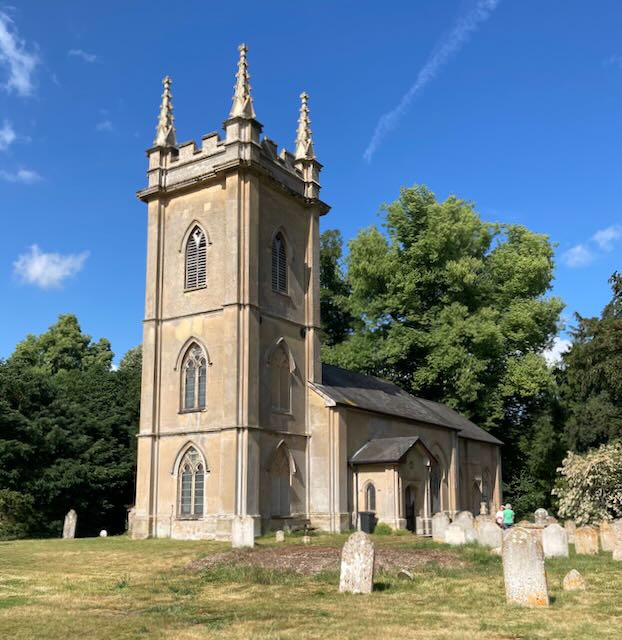
Holy Trinity Church at Deane was completely rebuilt, 1818-1820, in the pointed Gothic style. Much of the church was built of Coade stone, an artificial stone invented and produced by a woman, Eleanor Coade (1733-1821). She developed an amazing material that could be made to look like either wood or marble, resisted weathering, and could be molded into mass-produced items ranging from tiny ornaments to the pinnacles of this church. Thousands of intact examples of Coade stone can still be seen across England and abroad today.

Jane Austen’s Connections with Deane

Jane Austen mentions Deane in 27 of her existing letters. She also includes it in one of her juvenile pieces, “Memoirs of Mr. Clifford.” Mr. Clifford’s “first Day’s Journey carried him only to Dean Gate where he remained a few Days and found himself much benefited by the change of Air.” She is referring to the Deane Gate Inn, where men of the Austen family would catch the stagecoach. It is now a restaurant, the Palm Brasserie.

Jane often visited the parsonage at Deane, first when the Lloyds were living there, then when her brother and his family were there. Dampness and flooding were still an issue. On Oct. 27, 1798, she wrote:

“There has been a great deal of rain here for this last fortnight, much more than in Kent, and indeed we found the roads all the way from Staines most disgracefully dirty. Steventon lane has its full share of it, and I don’t know when I shall be able to get to Deane.”

In November and December she again talks about visits to her sister-in-law Mary at Deane, who gave birth to James Edward (who became Jane Austen’s first biographer) on Nov. 17:

I went to Deane with my father two days ago to see Mary, who is still plagued with the rheumatism, which she would be very glad to get rid of, and still more glad to get rid of her child, of whom she is heartily tired. Her nurse is come and has no particular charm either of person or manner; but as all the Hurstbourne world pronounce her to be the best nurse that ever was, Mary expects her attachment to increase. . . . Sunday. — I have just received a note from James to say that Mary was brought to bed last night, at eleven o’clock, of a fine little boy, and that everything is going on very well. My mother had desired to know nothing of it before it should be all over, and we were clever enough to prevent her having any suspicion of it”—Nov. 17-18, 1798

Jane continued to visit Mary every few days, reporting on her health. She even visited when ice covered the ground: 

“I enjoyed the hard black Frosts of last week very much, & one day while they lasted walked to Deane by myself.–I do not know that I ever did such a thing in my life before. . . . Mary went to Church on Sunday, & had the weather been smiling, we would have seen her here before this time”—Dec. 18, 1798.  This may have been when Mary was “churched,” a ceremony celebrating the safety of a mother after childbirth.

The main families of Deane, Steventon, and Ashe all visited each other and went to balls together. Jane danced at the Harwoods’ ball, in Deane, on Jan. 8, 1796. She often mentions John Harwood in her letters; for example:

“This morning has been made very gay to us, by visits from our two lively Neighbours, Mr. Holder and Mr. John Harwood.”—Dec. 18, 1798

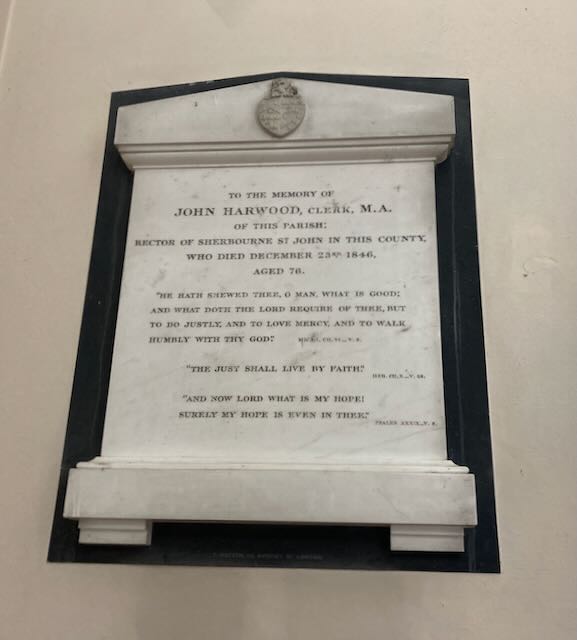
Deane church memorial to John Harwood (1770-1846), a member of the Harwood family of Deane, friends of the Austens. Harwood was rector of nearby Sherbourne St. John, where James Austen was vicar from 1791 to 1819. (The parish had both a vicar and a rector until 1844; the rector got more of the tithes.) Jane Austen mentions John Harwood in her letters in the context of visits, balls, and other events.
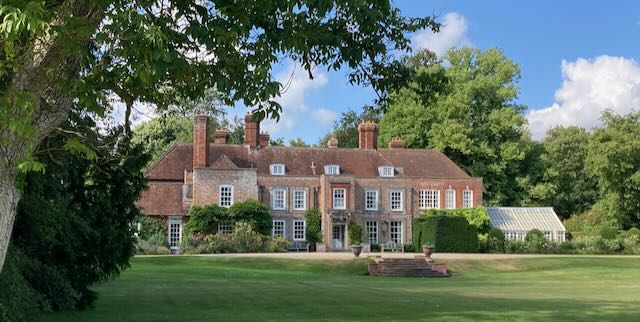
The Harwoods owned Deane House, now The Old Manor House. It can still be seen from the Deane church. Jane Austen danced there.

All Saints Church at Deane, Then and Now

In July, 1818, the Norman-era church at Deane was “in so Dangerous a state of Ruin as to be unsafe for the congregation.” So the patron, Wither Bramston of Oakley Hall, got approval from the Bishop of Winchester to rebuild it at his own cost, about £8000. It was consecrated two years later.

All Saints at Deane is considered “one of the most complete and successful” 19th century Gothic churches (Tanner). It is also renowned for its eight bells, which are rung regularly, and an 1820 Gothic chancel screen. The church today is a grade II listed building, but is not the same as the medieval church building where George and James Austen ministered. Some monuments from their time are on the walls of the current church, however.

An entrance to the Deane church marks its rebuilding in 1818.
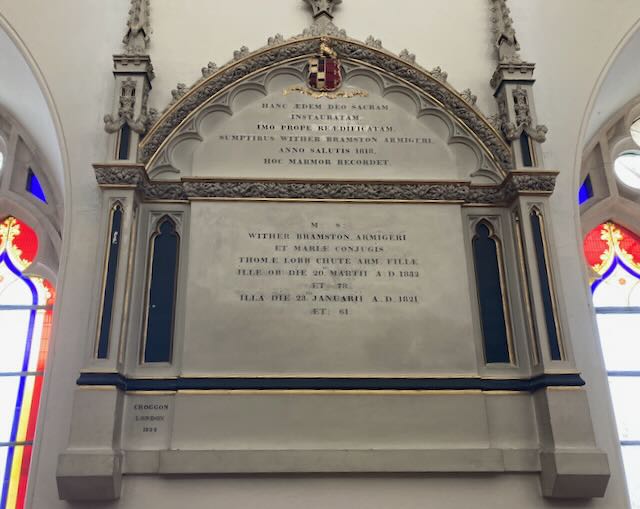
Memorial in Latin to Wither Bramston, died 1832, and his wife. As patron of the Deane living, he rebuilt the Deane church in 1818-1820 (as recorded in the top section of the memorial), at his own expense.

The church could seat 146 people in 1851. On Census Sunday, 94 parishioners attended in the morning and 124 in the evening. Leading up to World War I, the rector offered daily Communion in the church, and in 1917, he reported twenty people in the choir for Evensong. However, the population dropped, and in 2011, Deane included only an estimated 55 inhabitants, with an average age of over 60.

Now there are about 25 houses in the village, and about 8-10 people attend Sunday morning services twice a month. For a larger service, like the Christmas carol service, they may have about 40 attendees. Weddings are held there occasionally, and special services like pet blessings. All Saints is part of the United Benefice of North Waltham, Steventon, Ashe, and Deane.

Our guide to the church, Sue Hebeler, said she loves this church since it is her local church and her husband is buried there. She appreciates the traditional, old-fashioned services. If you’re in the vicinity, you may also enjoy a visit to this lovely, peaceful church.

This embroidered tapestry blesses the church, which was called St. Mary’s before it was rebuilt over 200 years ago. The picture may be more like the church’s earlier form. It reads, “Peace be within this sacred place; And joy a constant guest; With holy gifts and heavenly grace; Be her attendants blest.”

All images in this post ©Brenda S. Cox, 2024.

Brenda S. Cox is the author of Fashionable Goodness: Christianity in Jane Austen’s England. She also blogs at Faith, Science, Joy, and Jane Austen.


Posts on Other Austen Family Churches

Steventon

Chawton

Hamstall Ridware and Austen’s First Cousin, Edward Cooper

Adlestrop and the Leigh Family

Stoneleigh Abbey Chapel and Mansfield Park

Great Bookham and Austen’s Godfather, Rev. Samuel Cooke

Ashe and the Lefroy Family


Sources and Further Reference

Deirdre Le Faye, Jane Austen : A Family Record. Much of Le Faye’s information about Deane is also online at Deane

Terry Townsend, Jane Austen’s Hampshire, has a helpful chapter on Deane.

Richard Tanner, Ashe & Deane, explores the area.

Trailblazing Women of the Georgian Era by Mike Rendell includes a fascinating chapter on Eleanor Coade—manufacturer of artificial stone.

Read Full Post »

by Brenda S. Cox

“Madam” Anne Lefroy

Anne Lefroy, a dear friend of young Jane Austen, lived about two and a half miles north of Steventon, in the village of Ashe. Wealthy Benjamin Langlois was patron of the parish church, and he gave the living of Ashe to his nephew, Reverend Isaac Peter George Lefroy (called George) in 1783, when Jane was eight years old. At that time the church was called St. Andrew’s, and Ashe was spelled Ash.

Church of the Holy Trinity and St. Andrew at Ashe. While there has been a church on this site since Norman times, major rebuilding was done in 1878-9 by the Victorian church architect, George Gilbert Scott. So this is not the same building Jane Austen knew. The belfry houses one bell and occasional bats.

Rev. Lefroy’s wife was Anne Lefroy, cultured, educated, and hospitable. She wrote poetry, and had two witty poems published before her marriage. Because of her sophistication and hospitality, in the neighbourhood she was “known affectionately and respectfully” as Madam Lefroy. Mrs. Lefroy was 25 years older than Jane. So how did they become friends?  According to information sheets at the church,

“Anne Lefroy and Jane Austen, despite their age difference, formed a close friendship that started when the Lefroys invited the 11-year-old Jane to play with their 7-year-old daughter. Due to a mutual love of literature, Anne and Jane are believed to have had long literary discussions. Jane was allowed access to the extensive library of the Ashe rectory. Jane may also have shared her writing with Anne who, some have suggested, acted as a surrogate parent. This must have acted as an important source of support for Jane in her early years of writing.”

This is speculative. But Mrs. Lefroy is often mentioned in Jane Austen’s letters. Jane frequently visited the Lefroys’ parsonage and attended dances and parties there and at the local squire’s house, Ashe Park.

Rectors of Holy Trinity, Ashe. Rev. George Lefroy, wife of Jane’s friend Anne Lefroy, was rector from 1783 to 1806. His son John Henry followed him as rector, then another son, Benjamin, who married Jane Austen’s niece Anna Austen.

Tom Lefroy

Famously, Jane danced and flirted with George Lefroy’s nephew from Ireland, Tom Lefroy, when he came for a visit in 1796. She wrote to Cassandra, “Imagine to yourself everything most profligate and shocking in the way of dancing and sitting down together” (Jan. 9, 1796). A week later, on January 15, she wrote, “At length the Day is come on which I am to flirt my last with Tom Lefroy. . . . My tears flow as I write, at the melancholy idea.” She immediately starts another topic and we don’t know if she was joking or serious. She may have hoped to marry Tom, but a proposal never came.

It’s been speculated that Rev. and Mrs. Lefroy sent him away, since he needed to marry someone with more money than the Austens had. Or Tom himself may have decided to leave, and the Lefroys were disappointed in him for flirting and not following through. Jane said Tom was “laughed at” at Ashe because of her, so it might have all been teasing, not serious. In any case, Jane does not seem to have held the outcome against Tom or against Mrs. Lefroy. After all, as she wrote in Pride and Prejudice, “Handsome young men must have something to live on as well as the plain.”

(Tom Lefroy, by the way, pursued a legal career and became a chief justice of Ireland. His son Jeffrey became a churchman, dean of Dromore Cathedral in Ireland, and Tom’s grandson George Alfred Lefroy became an Anglican clergyman and a missionary to India, then Bishop of Lahore and Calcutta. He is remembered for opposing western racism toward Indians.)

Mrs. Lefroy apparently tried to set Jane up later with another friend, the Reverend Samual Blackall, who Jane later called “a piece of . . . noisy perfection . . . which I always recollect with regard.” But nothing came of that, either.

This information sheet at Holy Trinity, Ashe, shows the former rectory, home of Mrs. Anne Lefroy, as it is today, inside and out. Double doors between the drawing room and dining room could be thrown open for parties and dances, including those Jane Austen attended. The brick façade was built by Rev. George Lefroy, who “mortgaged the living,” presumably taking out a loan on the basis of his church income, to pay for improvements to the rectory.
Pews in the Ashe church, and a churchwarden’s stave, which was used to bar the way of congregants who misbehaved.

Jane Austen’s Poem

The strongest testimony of Jane’s attachment to Mrs. Lefroy is a poem Jane wrote to her in 1808. Four years earlier, Mrs. Lefroy had been thrown from her horse and died on Jane’s birthday, December 16.

In the poem, Jane calls Mrs. Lefroy “beloved friend,” and says the reminder of her death is a “bitter pang of torturing Memory.” She describes her:

Angelic Woman! past my power to praise
In Language meet, thy Talents, Temper, Mind.
Thy solid Worth, thy captivating Grace! –
Thou friend and ornament of Humankind! –

She says Mrs. Lefroy was unequalled, angelic, “with all her smiles benign, Her looks of eager Love, her accents sweet.” She spoke with “sense, . . . Genius, Taste, & Tenderness of soul.”

Jane also praises Mrs. Lefroy’s religious principles:

“She speaks; ’tis Eloquence–that grace of Tongue
So rare, so lovely! – Never misapplied
By her to palliate Vice, or deck a Wrong,
She speaks and reasons but on Virtue’s side.

Hers is the Energy of Soul sincere.
Her Christian Spirit, ignorant to feign,
Seeks but to comfort, heal, enlighten, chear,
Confer a pleasure, or prevent a pain. –

Can ought enhance such Goodness? – Yes, to me,
Her partial favour from my earliest years
Consummates all. – Ah! Give me yet to see
Her smile of Love. – the Vision disappears.

And Jane says she hopes to meet her again in heaven.

Mrs. Lefroy as a Clergyman’s Wife

Interestingly, Jane’s tribute is similar to Mrs. Lefroy’s obituary. One section says:

“Her religion predominated over all her excellencies, and influenced and exalted every expression and action of her life. How amiable and angelic she was in the domestic duties of daughter, wife, mother, and sister, . . . She has left a chasm in society. . . . Above all, the poor will receive this afflicting dispensation of Providence with the keenest sorrow and lamentation: she fed, she cloathed, she instructed them, with daily and never-ceasing attention; in grief she soothed them by her conversation and her kind looks; and in sickness, she comforted them by medicines and advice. . . .”

Mrs. Lefroy was very attached to her children, as we see in her letters to her son Christopher Edward. They have been published by the Jane Austen Society. Mrs. Lefroy ran a school from her home. She said teaching other children helped her to not miss her own children so much when they were away at school. She taught poor children to read and write and gave them practical skills to help them support themselves.

Like most clergy wives, she was also involved in medicating her parish as needed, but she took that a huge step further. Smallpox was a great killer in those days. When Mrs. Lefroy learned about the brand-new system of vaccination, she investigated and determined it was beneficial. Then she learned to do it herself, and vaccinated her own family and over 800 poor people, giving them protection from smallpox. The obituary concludes, “Thus she seemed like a ministering Angel, going about to dispense unmingled good in the world.”

A rood screen separates the nave, where the congregation worships, from the chancel, where the altar is located. It was designed to look like the same screen that Austen would have seen in the eighteenth century church at Ashe.

Ashe Church Memorials to the Lefroy Family

While most of the Ashe church is Victorian, a number of memorials remain from Austen’s time. Her Lefroy friends are all buried there.

Memorial to Rev. Isaac Peter George Lefroy, “late Rector of this Parish and of Compton in Surry and formerly Fellow of All Souls College Oxford,” born Nov., 1745, died at the parsonage of a paralytic stroke Jan. 13, 1806; and Anne Lefroy, born March, 1749, and “died at the Parsonage House of this Parish in consequence of a fall from her horse the preceding day on Sunday December 16th 1804.”

The memorial to George and Anne Lefroy is very hard to read now, but a page in the church gives the text. The facts of their deaths are followed by:

“Reader: The characters here recorded need no laboured panegyric; prompted by the elevate dictates of Christianity, of whose glorious truths they are most firm believers, they were alike exemplary in the performance of every duty, and amicable in every relationship of life; to their fervent piety their strict integrity, their active and comprehensive charity, and in short to the lovely and useful tenor of their whole lives and conversations those amongst us who they lived, and especially the inhabitants of this parish, will bear ample and ready testimony, after a union of 26 years, having been separated by death scarcely more than 12 months, their earthy remains are together deposited in peace near this marble. Together be raised. We humbly trust in glory when the grave shall give up her dead, and death itself be swallowed up in Victory 

Rev. 14 v. 13

Blessed are the dead, which die in the Lord, even so saith the spirit for they rest from their labours.”

Many children died young. Memorials in the Ashe church commemorate two of the Lefroys’ children who died young, leaving their parents broken-hearted.

William Thomas Lefroy was only three years old when he “Died Alas!” as the plaque says. His brother Anthony Brydges Lefroy was fifteen when he died of an enlarged heart; they speculated it was the result of him falling from a horse two years earlier and not being bled by the doctor. Anne may have written the poem commemorating her son: “Such patient sweetness, such untainted youth, such early piety, and spotless truth; were lent a few short years to point the way; to heaven’s blessed courts, realms of endless day.” The plaque also commemorates their brother Christopher Edward, recipient of Anne’s letters, who lived to the ripe age of 71.

 Memorial in Ashe church to Rev. John Henry George Lefroy, born in 1782, who succeeded his father as rector of Ashe from 1806 until his death in 1823. (He became rector at age 24, the earliest legal age to take a living.)

The memorial to their son John Henry, the next rector of Ashe, focuses a great deal on his parents, George and Anne, who apparently taught him well: [brackets added]

“Heir to the same glorious hopes, he pursued with undeviating fidelity the example of his parents, whose characters are recorded on the adjacent marble. Distrustful alike of clamourous profession [religious ‘enthusiasm’] and philosophical liberality [Deism], he daily sought, with anxious singleness of eye [focus], amidst the tumult of religious opinions, the narrow practical way of Christianity. Imbued from his infancy with the deepest reverence for the benignant [kind, good] character and divine authority of Christ, the spirit of Christianity pervaded his whole walk and conversation; in all the relations of son, brother, husband, father, as a minister, a magistrate, a man, his constant affection, his earnest benevolence, his scrupulous integrity were equally conspicuous; utterly rejecting at the same time, all presumptuous dependence on his own merits, his humble and only confidence in death, as through life, was in the one full perfect, and sufficient sacrifice of his saviour upon the cross, for the sins of the whole world. Having, thus, maintained through life, his parents character, and died in his parents faith, here, at the early age of forty one, he reposes in his parents grave, having left a widow and eleven children to cultivate the memory of his excellence, exert themselves to follow his footsteps, and deplore their irreparable loss.”

Wow! I don’t know who wrote that, but this was an impressive family.

Memorial in Ashe Church to Benjamin Lefroy, the next rector, who married Jane Austen’s niece Anna Austen, also memorialized here.

John Henry’s brother Benjamin Lefroy married Jane’s beloved niece Anna Austen (daughter of Jane’s clergyman brother James). Benjamin followed John Henry as the next rector, for only four more years until he died in 1829, age 38. A poem recalling Christ’s resurrection commemorates Ben Lefroy’s life, and the life of his wife Anna, who died near Reading in 1872, age 79.

“When by a good man’s grave I muse alone,

Methinks an angel sits upon the stone; 

Like those of old on that thrice-hallowed night.

Who sate and watched in raiment heavenly bright,

And, with a voice inspiring joy, not fear,

Says, pointing upward, that he is not here.”

Holy Trinity and St. Andrew’s Church, Ashe, Today

There has been a church in Ashe since Norman times. In 1851, during the only Religious Census taken in England, the church had a seating capacity of 140. Their attendance at the morning service that Sunday was 98, and at the afternoon service, 120. 

However, like many English rural parishes today, the area is now mostly farmland with only about 100 residents in the parish. About 10-15 people attend the church’s Sunday services twice a month. Of course they can attend other churches nearby on the alternate Sundays. Ashe is in a combined benefice with Steventon, Deane, and North Waltham, and they sometimes combine events with the adjoining benefice of Overton. Special services bring in more people; Ashe may fill the church with 140 worshipers at Christmas. They occasionally host weddings; special services, including one for blessing pets; and other events.

The Robin at the Ashe church. When the church was being rebuilt in the nineteenth century, a robin would come in and eat out of the workmen’s hands. It even built a nest in one of the windows. In honor of that robin, one of the carpenters carved this wooden robin, kept in a little closed vault in one wall of the church.
The church sometimes enjoys organ music from this instrument at Ashe church, which I was told is about 150 years old.
At Ashe church, Victorian stained glass windows and this 1887 painting representing baptism and the Tree of Life, add lovely touches to the walls.

Fiona Price, our guide to the church, said she and her young grandson love the peace and tranquility of the place. Holy Trinity and St. Andrew’s Church at Ashe is an interesting church to visit, near Steventon. It would have been about an hour’s walk away for Jane Austen.

All images in this post ©Brenda S. Cox, 2024.

Brenda S. Cox is the author of Fashionable Goodness: Christianity in Jane Austen’s England. She also blogs at Faith, Science, Joy, and Jane Austen.

The obituary is quoted from a “Provincial Newspaper” in a footnote to S.E. Bridges, “Lines to the Memory of Mrs. Lefroy,” in The Poetical Register, 1805 (London: Rivington, 1807): 67–68. 

Further Resources

The Letters of Mrs. Lefroy, edited by Helen Lefroy and Gavin Turner, published by the Jane Austen Society (U.K.) This is hard to get hold of in the US, though I found it through Inter-Library Loan. I thought it gave the best insights into Mrs. Lefroy, her character, thoughts, and life. 

Jane Austen’s Inspiration: Beloved Friend Anne Lefroy, by Judith Stove, explores Anne Lefroy’s life, writings, and family connections. 

Posts on Other Austen Family Churches

Steventon

Chawton

Hamstall Ridware

Adlestrop and the Leigh Family

Stoneleigh Abbey Chapel

Great Bookham and Austen’s godfather, Rev. Samuel Cooke

Deane

Read Full Post »

As we continue our month-by-month journey through Jane Austen’s novels, letters, and lifetime, we find ourselves in the lovely month of April! If you’re just jumping on the bus, you can find previous articles in my “A Year in Jane Austen’s World” series here: JanuaryFebruary, and March.

Let’s see what we find as we explore April in Jane Austen’s World! First up, our monthly view of Chawton House and Gardens, where the tulips are beginning to bloom!

Chawton House in April, Photo: @ChawtonHouse.

April in Hampshire

April is when everything starts to come back to life and bloom in Hampshire. The trees boast new leaves, the roads and lanes are lined with green, and flowers and trees are in blossom. The weather ranges from cloudy to partly cloudy to partly sunny to rainy.

Why talk about the flowers and the weather? Because it’s fun to picture some of the details about Hampshire that Austen loved and that we can still enjoy today!

The badness of the weather disconcerted an excellent plan of mine,—that of calling on Miss Beckford again; but from the middle of the day it rained incessantly.

Letter to Cassandra, Sloane St., Thursday (April 18, 1811)

Your lilacs are in leaf, ours are in bloom. The horse-chestnuts are quite out, and the elms almost. I had a pleasant walk in Kensington Gardens on Sunday with Henry, Mr. Smith, and Mr. Tilson; everything was fresh and beautiful.

Letter to Cassandra, Sloane St., Thursday (April 25, 1811)

Here is a glimpse of Jane Austen’s House Museum this month. The garden is looking absolutely lovely already!

Jane Austen’s House in April, Photo: @JaneAustensHouse.

April in Jane Austen’s Letters

We have two letters from April 1811 when Jane was staying with her brother in Sloane Street in London. The following are a few excerpts of special interest:

April 18, 1811 Letter: Sloane Street

  • Her spring shopping purchases: “I am sorry to tell you that I am getting very extravagant, and spending all my money, and, what is worse for you, I have been spending yours too; for in a linendraper’s shop to which I went for checked muslin, and for which I was obliged to give seven shillings a yard, I was tempted by a pretty-coloured muslin, and bought ten yards of it on the chance of your liking it; but, at the same time, if it should not suit you, you must not think yourself at all obliged to take it; it is only 3s. 6d. per yard, and I should not in the least mind keeping the whole. In texture it is just what we prefer, but its resemblance to green crewels, I must own, is not great, for the pattern is a small red spot. And now I believe I have done all my commissions except Wedgwood.”
  • More walking and shopping: “I liked my walk very much; it was shorter than I had expected, and the weather was delightful. We set off immediately after breakfast, and must have reached Grafton House by half-past 11; but when we entered the shop the whole counter was thronged, and we waited full half an hour before we could be attended to. When we were served, however, I was very well satisfied with my purchases — my bugle trimming at 2s. 4d. and three pair silk stockings for a little less than 12s. a pair.”
  • News about their brothers and their careers in the Navy: “Frank is superseded in the ‘Caledonia.’ Henry brought us this news yesterday from Mr. Daysh, and he heard at the same time that Charles may be in England in the course of a month. Sir Edward Pollen succeeds Lord Gambier in his command, and some captain of his succeeds Frank; and I believe the order is already gone out. Henry means to inquire farther to-day. He wrote to Mary on the occasion. This is something to think of. Henry is convinced that he will have the offer of something else, but does not think it will be at all incumbent on him to accept it; and then follows, what will he do? and where will he live?”
The HMS Caledonia was a 120-gun first-rate ship of the line of the Royal Navy, launched on 25 June 1808 at Plymouth. Wikipedia.

April 25, 1811 Letter: Sloane Street

  • Austen’s progress with and thoughts about Sense and Sensibility: “No, indeed, I am never too busy to think of S. and S. I can no more forget it than a mother can forget her sucking child; and I am much obliged to you for your inquiries. I have had two sheets to correct, but the last only brings us to Willoughby’s first appearance. Mrs. K. regrets in the most flattering manner that she must wait till May, but I have scarcely a hope of its being out in June. Henry does not neglect it; he has hurried the printer, and says he will see him again to-day. It will not stand still during his absence, it will be sent to Eliza.”
  • Plenty of wonderful details about a party hosted by Henry and Eliza: “Including everybody we were sixty-six — which was considerably more than Eliza had expected, and quite enough to fill the back drawing-room and leave a few to be scattered about in the other and in the passage.”
  • “The music was extremely good. It opened (tell Fanny) with ‘Poike de Parp pirs praise pof Prapela’; and of the other glees I remember, ‘In peace love tunes,’ ‘Rosabelle,’ ‘The Red Cross Knight,’ and ‘Poor Insect.’ Between the songs were lessons on the harp, or harp and pianoforte together; and the harp-player was Wiepart, whose name seems famous, though new to me. There was one female singer, a short Miss Davis, all in blue, bringing up for the public line, whose voice was said to be very fine indeed; and all the performers gave great satisfaction by doing what they were paid for, and giving themselves no airs. No amateur could be persuaded to do anything.”
  • “The house was not clear till after twelve. If you wish to hear more of it, you must put your questions, but I seem rather to have exhausted than spared the subject.”
64 Sloane Street in London. Photo Credit: © Ingrid M Wallenborg, GuideLondon.org.

April in Jane Austen’s Novels

The following are a collection of interesting details and scenes that occur in (or refer to) the month of April in Austen’s novels. Springtime appears to be a good time for travel, walking, and riding as the weather slowly improves:

Sense and Sensibility

  • The Palmers, Mrs. Jennings, and the Dashwood sisters leave London for Cleveland in April (for the Easter holidays): “Very early in April, and tolerably early in the day, the two parties from Hanover Square and Berkeley Street set out from their respective homes, to meet, by appointment, on the road. For the convenience of Charlotte and her child, they were to be more than two days on their journey, and Mr. Palmer, travelling more expeditiously with Colonel Brandon, was to join them at Cleveland soon after their arrival.”

Pride and Prejudice

  • Darcy proposes again and refers to his first April proposal to Elizabeth Bennet (he surely remembers that date VERY well): “You are too generous to trifle with me. If your feelings are still what they were last April, tell me so at once. My affections and wishes are unchanged; but one word from you will silence me on this subject for ever.”

Mansfield Park

  • Fanny is left without fitting exercise: “[The Miss Bertrams] took their cheerful rides in the fine mornings of April and May; and Fanny either sat at home the whole day with one aunt, or walked beyond her strength at the instigation of the other: Lady Bertram holding exercise to be as unnecessary for everybody as it was unpleasant to herself; and Mrs. Norris, who was walking all day, thinking everybody ought to walk as much.”
  • Sir Thomas’s letter home: “[Sir Thomas] wrote in April, and had strong hopes of settling everything to his entire satisfaction, and leaving Antigua before the end of the summer.”
  • Fanny Price in Portsmouth: “The end of April was coming on; it would soon be almost three months, instead of two, that she had been absent from them all, and that her days had been passing in a state of penance, which she loved them too well to hope they would thoroughly understand; and who could yet say when there might be leisure to think of or fetch her?”
  • Fanny’s thoughts on springtime in the countryside versus the congested town: “It was sad to Fanny to lose all the pleasures of spring. She had not known before what pleasures she had to lose in passing March and April in a town. She had not known before how much the beginnings and progress of vegetation had delighted her. What animation, both of body and mind, she had derived from watching the advance of that season which cannot, in spite of its capriciousness, be unlovely, and seeing its increasing beauties from the earliest flowers in the warmest divisions of her aunt’s garden, to the opening of leaves of her uncle’s plantations, and the glory of his woods. To be losing such pleasures was no trifle; to be losing them, because she was in the midst of closeness and noise, to have confinement, bad air, bad smells, substituted for liberty, freshness, fragrance, and verdure, was infinitely worse: but even these incitements to regret were feeble, compared with what arose from the conviction of being missed by her best friends, and the longing to be useful to those who were wanting her!

Northanger Abbey

  • Isabella writes a “very unexpected letter” to Catherine.

Emma

  • Mrs. Elton pressures Jane to find a position as a governess very soon so that she doesn’t miss her chance: “But, my dear child, the time is drawing near; here is April, and June, or say even July, is very near, with such business to accomplish before us. Your inexperience really amuses me! A situation such as you deserve, and your friends would require for you, is no everyday occurrence, is not obtained at a moment’s notice; indeed, indeed, we must begin inquiring directly.”
  • For the introverts among us: “John Knightley only was in mute astonishment.—That a man (Mr. Weston) who might have spent his evening quietly at home after a day of business in London, should set off again, and walk half a mile to another man’s house, for the sake of being in mixed company till bed-time, of finishing his day in the efforts of civility and the noise of numbers, was a circumstance to strike him deeply. A man who had been in motion since eight o’clock in the morning, and might now have been still, who had been long talking, and might have been silent, who had been in more than one crowd, and might have been alone!—Such a man, to quit the tranquillity and independence of his own fireside, and on the evening of a cold sleety April day rush out again into the world!
Mrs. Elton and Jane Fairfax in Emma (1996).

April Dates of Importance

This brings us now to several dates that would have been important to Austen personally and to the Austen family as a whole:

Family News:

26 April 1764: Rev. George Austen marries Cassandra Leigh.

23 April 1774: Francis (Frank) Austen (Jane’s brother) born at Steventon.

April 1786: Francis Austen enters the Royal Naval Academy at Portsmouth

15 April 1793: James Austen’s first child, Anna, is born.

Historic Dates:

19 April 1775: The Battle of Lexington marks the start of America’s Revolutionary War.

Writing:

April 1811: Austen continues to correct proofs of Sense and Sensibility. She anticipates its publication date.

Sorrows:

22 April 1813: Eliza de Feuillide (Austen’s cousin and, later, sister-in-law) ill. Jane Austen goes to her bedside in London to help attend to her.

25 April 1813: Eliza de Feuillide dies.

27 April 1817: Austen drafts her will:

“I Jane Austen of the Parish of Chawton do by this my last Will & Testament give and bequeath to my dearest Sister Cassandra Elizth everything of which I may die possessed, or which may be hereafter due to me, subject to the payment of my Funeral Expences, & to a Legacy of £50. to my Brother Henry, & £50. to Mde Bigeon–which I request may be paid as soon as convenient. And I appoint my said dear Sister the Executrix of this my last Will & Testament.”

April Showers

As we continue through the year, one of the highlights for me has been surveying the photos of the gardens at Chawton House and Jane Austen’s House each month and seeing the changes therein. I hope these April showers will bring many beautiful May flowers next month as we continue our tour of Hampshire in the spring with May in Jane Austen’s World!


RACHEL DODGE teaches college English classes, gives talks at libraries, teas, and book clubs, and writes for Jane Austen’s World blog. She is the bestselling author of The Little Women DevotionalThe Anne of Green Gables Devotional and Praying with Jane: 31 Days Through the Prayers of Jane Austen. Now Available: The Secret Garden Devotional! You can visit Rachel online at www.RachelDodge.com.
Read Full Post »

Last month I started a new month-by-month series titled “A Year in Jane Austen’s World,” wherein I began exploring important events and details that happened in Jane Austen’s novels, letters, and lifetime during each month of the year. Starting with January in Jane Austen’s World, my aim is to share my monthly finds every month this year, through December. My goal is simple: Glean as much as I can from Austen’s life, letters, and novels about what life was like for Jane Austen during her time and era.

We now turn our attention to February in Jane Austen’s novels. As I examined passages in her novels and letters that mention February, some of the information I found was an extension of what we learned last month: Mainly, that most of the British aristocracy went to the London (and some to Bath) during the winter months for “the season.” They enjoyed balls, parties, and other social gatherings in the bigger cities during the colder months and then moved back to their country homes by summer when the heat and stench of the cities became unendurable. You can read about it here.

Snowdrops at Chawton House in February, Photo: @ChawtonHouse.

February in Hampshire

The snowdrops are in full bloom at Jane Austen’s House Museum and Chawton House this time of year. Chawton House even hosts “Snowdrop Sunday” tours, when guests can come visit the grounds and enjoy the stunning display of snowdrops and other bulbs that are starting to pop out.

I mention the snowdrops because they are everywhere on the grounds of Chawton House in the winter time, and it’s lovely to think that perhaps Jane Austen saw them for herself. These type of bulbs can spread and spread for years.

Chawton House in February, Photo: @ChawtonHouse.

February in Jane Austen’s Letters

Several of Austen’s surviving letters were written in February. In them, she covers many topics, but the excerpts belows are especially intriguing.

8 February 1807 (Castle Square, Southampton):

These snippets are from Austen’s letters when the Austen women lived in Castle Square, Southampton. This first letter mentions the improvements they were making:

  • Garden: “Our garden is putting in order by a man who bears a remarkably good character, has a very fine complexion, and asks something less than the first. The shrubs which border the gravel walk, he says, are only sweetbriar and roses, and the latter of an indifferent sort; we mean to get a few of a better kind, therefore, and at my own particular desire he procures us some syringas. I could not do without a syringa, for the sake of Cowper’s line. We talk also of a laburnum. The border under the terrace wall is clearing away to receive currants and gooseberry bushes, and a spot is found very proper for raspberries.”
  • Interior: “The alterations and improvements within doors, too, advance very properly, and the offices will be made very convenient indeed. Our dressing table is constructing on the spot, out of a large kitchen table belonging to the house, for doing which we have the permission of Mr. Husket, Lord Lansdown’s painter — domestic painter, I should call him, for he lives in the castle. Domestic chaplains have given way to this more necessary office, and I suppose whenever the walls want no touching up he is employed about my lady’s face.”
  • Beds: “The garret beds are made, and ours will be finished to-day. I had hoped it would be finished on Saturday, but neither Mrs. Hall nor Jenny was able to give help enough for that, and I have as yet done very little, and Mary nothing at all. This week we shall do more, and I should like to have all the five beds completed by the end of it. There will then be the window curtains, sofa-cover, and a carpet to be altered.”
  • You must be very cold to-day at Godmersham. We are cold here. I expect a severe March, a wet April, and a sharp May. And with this prophecy I must conclude.

20 February 1807 (Castle Square):

In this letter, we hear a bit more about the weather there in Southampton and at Godmersham, where Cassandra was staying:

  • “We could not pay our visit on Monday; the weather altered just too soon, and we have since had a touch of almost everything in the weather way; two of the severest frosts since the winter began, preceded by rain, hail, and snow. Now we are smiling again.”
  • “You must have had more snow at Godmersham than we had here; on Wednesday morning there was a thin covering of it over the fields and roofs of the houses, but I do not think there was any left the next day. Everybody used to Southampton says that snow never lies more than twenty-four hours near it, and, from what we have observed ourselves, it is very true.”
  • And one of Austen’s hilarious one-liners:”A widower with three children has no right to look higher than his daughter’s governess.”
Southampton High Street, 18th C.

4 February 1813 (Chawton, regarding PP):

In the following letters, we read a bit about Austen’s first beta readers for Pride and Prejudice and her reactions to their commentary:

  • “My dear Cassandra,—Your letter was truly welcome, and I am much obliged to you for all your praise; it came at a right time, for I had had some fits of disgust. Our second evening’s reading to Miss B. had not pleased me so well, but I believe something must be attributed to my mother’s too rapid way of getting on: though she perfectly understands the characters herself, she cannot speak as they ought. Upon the whole, however, I am quite vain enough and well satisfied enough. The work is rather too light and bright and sparkling: it wants shade; it wants to be stretched out here and there with a long chapter of sense, if it could be had; if not, of solemn specious nonsense, about something unconnected with the story,—an essay on writing, a critique on Walter Scott, or the history of Buonaparte, or something that would form a contrast, and bring the reader with increased delight to the playfulness and epigrammatism of the general style…. The greatest blunder in the printing that I have met with is in page 220, v. 3, where two speeches are made into one. There might as well be no suppers at Longbourn; but I suppose it was the remains of Mrs. Bennet’s old Meryton habits.”

Dated soon after:

  • “I am exceedingly pleased that you can say what you do, after having gone through the whole work, and Fanny’s praise is very gratifying. My hopes were tolerably strong of her, but nothing like a certainty. Her liking Darcy and Elizabeth is enough. She might hate all the others, if she would. I have her opinion under her own hand this morning, but your transcript of it, which I read first, was not, and is not, the less acceptable. To me it is of course all praise, but the more exact truth which she sends you is good enough.”

Garden Plans at Castle Square

As most gardeners (myself included) can attest, planning one’s spring garden is a happy prospect in the middle of February. Jane Austen was no different! With that in mind, let’s take a closer look at her descriptions of the plans for their garden from her 8 February 1807 letter to Cassandra:

Our garden is putting in order by a man who bears a remarkably good character, has a very fine complexion, and asks something less than the first. The shrubs which border the gravel walk, he says, are only sweetbriar and roses, and the latter of an indifferent sort; we mean to get a few of a better kind, therefore, and at my own particular desire he procures us some syringas. I could not do without a syringa, for the sake of Cowper’s line. We talk also of a laburnum. The border under the terrace wall is clearing away to receive currants and gooseberry bushes, and a spot is found very proper for raspberries.

Letter to Cassandra, 8 February 1807.

Austen’s Southampton Garden

With these lovely descriptions, we can paint a picture in our minds of what Austen was imagining as she planned the garden:

Sweet Briar

Austen wrote: “The shrubs which border the gravel walk, he says, are only sweetbriar and roses, and the latter of an indifferent sort; we mean to get a few of a better…”

On the blog From the Notebook of a Rosarian, you can read all about Sweet-Briar (or Eglantine Rose). I imagine Austen would have looked forward to seeing these blooms very much! Here is an example:

Regency Roses

Austen wrote: “roses . . . of an indifferent sort; we mean to get a few of a better…”

Perhaps the existing roses either weren’t uniform or weren’t as pretty as the Austen women wanted. Thus, they planned to add a few of “a better” sort. One can imagine a line of beautiful roses along their walkway come summer.

You can read a wonderful article about Regency Roses from Leeds University Library here: Regency Roses. Here is an example:

Pierre-Joseph Redouté, ‘Les Roses’, 1817-1824. Image credit: Leeds University Library.

Syringa (Lilac)

Austen wrote: “I could not do without a syringa, for the sake of Cowper’s line. We talk also of a laburnum.” This is in reference to a line in William Cowper’s poem, “The Winter Walk at Noon” (Book VI, The Task, 1899).

In her article “‘With what intense desire she wants her home’: Cowper’s Influence on Jane Austen,” Jane Darcy provides the following commentary:

The house in Castle Square in Southampton feels more like a home [for Austen]; there is a garden which she energetically starts to plan. She insists on lilacs: ‘I could not do without a Syringa, for the sake of Cowper’s Line’, adding ‘We talk also of a Laburnum’, referring to the lines in ‘The Winter Walk at Noon’,
Book VI of The Task:
… Laburnum rich
In streaming gold; syringa iv’ry pure (149-150)

Jane Darcy, CowperandNewtonMuseum.org
Edward Phillis, “A Georgian Springtime” (Strictly Jane Austen).

Laburnum

Austen wrote: “We talk also of a laburnum.”

Laburnum, a flowering tree, also called golden chain or golden rain, is pictured below. One can imagine how lovely it would look in Austen’s garden in spring.

Laburnum, flowering tree. Wikimedia.

Austen wrote: “The border under the terrace wall is clearing away to receive currants and gooseberry bushes, and a spot is found very proper for raspberries.”

Here, we find an example of something pretty and edible for the garden come summer. Currants, gooseberries, and raspberries were all useful in a variety recipes. You can read more about the history of British food and Gooseberries here.

Gooseberries, Britishfoodhistory.com.

To read more about the trees and shrubs Austen would have recognized, the JASNA Eastern Washington/Northern Idado region provides this fascinating information regarding the “Trees and Shrubs Mentioned in Jane Austen’s Novels, Letters, and Minor Works with Historical Background: “Austen’s Trees and Shrubs A-K” and “Austen’s Trees and Shrubs L-Z.”

February in Jane Austen’s Novels

The following are a collection of interesting little tidbits and important moments from Austen’s novels:

Sense and Sensibility

  • “[Mrs. Palmer] expects to be confined in February,” continued Mrs. Jennings.
  • “[Edward] will be there in February, otherwise London would have no charms for me; I have not spirits for it.” (Lucy Steele)
  • Colonel Brandon: “But last February, almost a twelvemonth back, [my little Eliza] suddenly disappeared.” […] “Good heavens!” cried Elinor, “could it be—could Willoughby!”—
  • “[Mrs. Dashwood] had yet another reason for wishing her children to remain [in London]; a letter from her son-in-law had told her that he and his wife were to be in town before the middle of February, and she judged it right that they should sometimes see their brother.”
  • “Early in February, within a fortnight from the receipt of Willoughby’s letter, Elinor had the painful office of informing her sister that he was married.”

Pride and Prejudice

  • “With no greater events than these in the Longbourn family, and otherwise diversified by little beyond the walks to Meryton, sometimes dirty and sometimes cold, did January and February pass away.”

Mansfield Park

  • “With such thoughts as these, among ten hundred others, Fanny proceeded in her journey safely and cheerfully, and as expeditiously as could rationally be hoped in the dirty month of February. They entered Oxford, but she could take only a hasty glimpse of Edmund’s college as they passed along, and made no stop anywhere till they reached Newbury, where a comfortable meal, uniting dinner and supper, wound up the enjoyments and fatigues of the day.”
“Entrance to Oxford from the London Road.” Ackermann’s Oxford University. Engraved by Frederick Christian Lewis after Frederick Nash (1814).

Emma

  • “In the summer it might have passed; but what can any body’s native air do for them in the months of January, February, and March? Good fires and carriages would be much more to the purpose in most cases of delicate health, and I dare say in her’s. I do not require you to adopt all my suspicions, though you make so noble a profession of doing it, but I honestly tell you what they are.”
  • “Frank was here in February for a fortnight.”
  • “When [Frank] was here before, we made the best of it; but there was a good deal of wet, damp, cheerless weather; there always is in February, you know, and we could not do half that we intended. Now will be the time.
  • “Mr. Woodhouse was resigned. The time of year lightened the evil to him. May was better for every thing than February.”

Persuasion

  • “It was the beginning of February; and Anne, having been a month in Bath, was growing very eager for news from Uppercross and Lyme.”
  • Mary Musgrove sends a long, newsy letter to Anne from Uppercross.

Northanger Abbey

  • “Catherine . . . gave herself up to all the enjoyment of air and exercise of the most invigorating kind, in a fine mild day of February, with the consciousness of safety.”
Bath, England, Regency Era.

February Dates of Importance

This brings us now to several dates that would have been quite important to Austen personally:

Celebrations/Birthdays:

13 February 1765: James Austen (Jane’s brother) born at Deane.

Historic Dates:

1 February 1793: France declares war on England.

4 February 1794: France abolishes slavery in French colonies.

February 1811: George, Prince of Wales, becomes the prince regent of England.

Sorrows:

22 February 1794: Eliza de Feuillide’s husband is executed by guillotine in Paris.

February 1797: Tom Fowle (Cassandra’s fiancé), who was serving as a chaplain, dies in San Domingo of yellow fever.

Writing:

Winter 1810: Sense and Sensibility accepted for publication (Thomas Egerton).

February 1811: Jane Austen starts work on Mansfield Park.

Sense and Sensibility, 1st edition, JaneAusten’s.House.

February in the Life of Austen

I hope you enjoyed this tour of February in Jane Austen’s World as much as I enjoyed researching it and writing it. There is so much more to explore! I followed several intriguing trails and threads in this article, but I’m sure one might find many other avenues to research. Austen’s letters alone are a fount of information and charm. Here’s to what we’ll find in March in Jane Austen’s World next month!


RACHEL DODGE teaches college English classes, gives talks at libraries, teas, and book clubs, and writes for Jane Austen’s World blog. She is the bestselling author of The Little Women DevotionalThe Anne of Green Gables Devotional and Praying with Jane: 31 Days Through the Prayers of Jane Austen. Now Available: The Secret Garden Devotional! You can visit Rachel online at www.RachelDodge.com.
Read Full Post »

« Newer Posts - Older Posts »