Feeds:
Posts
Comments

Archive for the ‘Jane Austen’s life’ Category

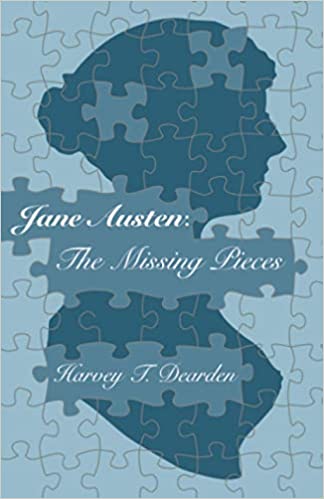
Book cover of Jane Austen: The Missing Pieces by Harvey T. Dearden, using the popular profile image as a puzzle.Inquiring readers: Not only did I enjoy reading Jane Austen: The Missing Pieces, but spent many silent hours debating with its author, Harvey T. Dearden, agreeing or disagreeing with his points of view, and thinking back on my history of reading about and researching her life to find how I arrived at my own conclusions. This succinctly written book, only 168 pages long, including endnotes and bibliography, is packed with ideas and suppositions based on Jane Austen’s letters, novels, history, and the scholarly articles and books written about her. 

Introduction:

Like me, author Harvey Dearden is an amateur Janeite with a  keen interest in the topic, but whose area of expertise is in another subject area. In Mr. Dearden’s case, it is as an engineer; in mine it is as a professional development trainer. We do not pretend to be academics. Like amateur scientists in the 19th century who formed societies in pursuit of scientific knowledge, Mr. Dearden and I resemble Janeite enthusiasts the world over – those who study Austen’s novels and life to become well informed and are curious to learn more.

Mr. Dearden’s book, which examines questions regarding the many missing pieces in Jane Austen’s life and work, is divided into short chapters in a variety of topics, all of which pose questions or suppositions which readers and scholars have addressed about Austen for ages. Supporting evidence in these instances may be hard to find or might once have existed (such as in her letters to Cassandra and members of her family) but have either been destroyed or might be hiding undiscovered in an attic. 

Jane’s Face:

Here’s how my reaction and silent debate with Mr. Rearden’s conjectures worked, and why I took longer to read this book than I at first anticipated:

One tantalizing question most of us have is: “What Did Jane Austen Look Like?” The author addresses this in a chapter titled “Jane’s Face.” (p.99.) He refers to Cassandra’s small watercolor portrait of her sister, (which, in my instance, I saw as an American tourist in the National Portrait Gallery) and which he (and most of us) characterizes as an amateurish attempt; the engraved image included in James Edward Austen-Leigh’s Memoir of his aunt, which was a supposed “improvement” upon Cassandra’s real life attempt; Jane’s engraved image on the 10 pound bank note; and recent forensic artists’ attempts at recreating her image in painting and sculpture according to family descriptions, family portrait resemblances, and physical traits that descendants have in common with the Austen bloodline. (Compare the images of actress Anna Chancellor, a direct descendent of the Austen family, [she played Caroline Bingley in P&P 1995] to Cassandra’s portrait of Jane and one of her father,  and you will see a family resemblance in the dark eyes, long nose, and smallish, tight mouth.)

Mr. Dearden’s clear language, his engineer’s logic, and his talented wife, Linda’s, lovely pencil portrait of Jane Austen, based on a portrait bust by sculpturist Suzie Zamit, makes sense from his POV and logic. I respect his conclusion and the two artist’s representations, so why am I introducing my own interpretation? First, because Mr. Dearden invites inquiry and makes it clear that our informed guesses are as good as his.

Second, because I’ve been trained at the Maryland Institute College of Art and practiced as a successful local artist in Charlottesville for ten years. My experience painting a family member’s portrait places me in a unique position to discuss the difficulty of capturing a likeness of a stern-faced woman. Mom and Dad Sanborn (my in-laws) had their portraits captured by a local artist, a talented man who delineated their features perfectly. Dad’s face showed a kind, smiling man. Mom looked like a mirthless, tight-lipped school marm. She framed Dad’s portrait, hung it in his study, and tore her portrait up. She then commissioned me to paint her. Aaargh! 

I could have fallen into a trap, for I considered her first portrait an accurate representation of her features. What the artist did not capture was her personality. So I asked the family how they viewed her, and thought about my relationship with her and her kindness, sweetness, and willingness to put family and friends above herself. The changes I made in her portrait were to enlarge her eyes slightly and soften her prim mouth into a half smile. I removed many of her wrinkles and worked on the pencil sketches a long time before embarking on the painting. She loved it. The family loved it. And none realized that I had cheated in favor of personality over feature accuracy. What they saw in my portrait was MOM.

This brings me to Cassandra’s watercolor of her sister. We Janeites have formed a personal connection to Jane Austen and have our own perceptions of how she might have looked. Cassandra’s watercolor, drawn and painted by an amateur, portrays a tight-faced woman with arms crossed in a protective, stay-away-from-me body language. The painting is extremely small and I would have used a smaller brush to paint her features, but it also lacks any semblance to the descriptions that Jane’s family gave us: her sparkling eyes, her liveliness and sense of humor, and one who enjoyed a loving relationship as a daughter, sister, and aunt.

I speculate that Jane felt comfortable to be totally herself in front of Cassandra, and that she might have been thinking about writing, editing, or correcting a particularly difficult passage she’d been working on, thus the “resting bitch face.”  As for us, her fans, we are still searching for that illusive image that reflects our knowledge of her, our personal relationship with her, and our own interpretation of what she might have looked like.

I spent a long time on my reaction to this 7-page chapter to illustrate that, while Mr. Dearden’s book is succinct, well-thought out, and clearly written, his speculations inspired me to examine my knowledge of Austen and how and why I reacted the way I did to her many mysteries. At times I agreed with him completely, but at other times I paused to think back on how I came to a different conclusion. 

I suspect Mr. Dearden would enjoy a healthy debate, as would I. I’d like to add that reading this book gave me great enjoyment and pleasure, and much food for thought.

Addendum: Denise Holcomb contributed her image of Austen portraits in a Will & Jane exhibit at the Folger Shakespeare Library in Washington D.C. in 2016.  She took an image of the progression of 3 portraits of Austen, from Cassandra’s rendition to the Memoir engraving.

The book’s organization:

This book is organized in such a fashion as to facilitate how the author arrived at his conclusions. Sources are listed after each chapter. The bibliography lists most of the books and resources I’ve used, but a few are included from authors that I have not read before, such as Marian Veevers.  Mr. Dearden backs up his arguments using Austen’s letters from Deirdre LeFaye’s excellent, fully inclusive edition, direct quotes from family and friends, evidence in Jane’s novels, and examples of her manuscripts digitized online at the Bodleian Library, for example.

Images of Jane Austen taken in progression from 1810 to an engraved portrait in 1870, Folger Exhibit, 2016.

Image taken by D. Holcomb at the Folger Exhibit, 2016.

I loved how the author used his engineer’s logic to consider the size and weight of the quatros of letters from Jane that Cassandra must have stored over the years, and the difficulty and the considerable time it would have taken her to burn those that she did not want to keep for posterity. He used both LeFaye’s information and his precise mathematical skills to calculate the sheer effort it would have taken Cassandra to burn those letters. 

I feel that Mr. Dearden missed one opportunity when he introduced Charlotte Bronte’s three letters regarding her opinion about Austen’s talent and genius. I loved that he reproduced the letters in full, which placed some of her more controversial opinions in context. Bronte could not have known of Austen’s Juvenilia at this time, but it bears repeating that the lack of passion that she accuses Austen of not having was displayed in full in these exuberant scribblings of a young and budding genius. 

For Janeites who are new to this conversation, this book will be a valuable addition. I see it as a great conversation starter for a book group who could use its list of topics for discussion over a year of meetings, or as a source of Austen resources that add value to any Janeite’s library collection. The bibliography for the neophyte Janeite, combined with Le Faye’s meticulous listing of all her known existing letters, provide an immediate resource for those who are only familiar with Austen’s novels and would like to know more about Austen’s conversational style and the missing information about her.

Riddles and word games abound in Emma. This book puzzles out the many mysteries in Austen’s life and continues that tradition. Dearden’s conclusion fits my assessment of Austen and why her novels attract readers with different political backgrounds, religions, sexes, and ages the world over.

“She is celebrated for the nicety of her language and, preferring the rapier to the bludgeon, she could use it in a most cutting manner. There is plenty of evidence for this in her private correspondence. There is with Jane no self-indulgent ornamentation beyond the immediate purpose of her stories. She would have wielded Occam’s razor with admirable zeal.” 

Purchase the book:

Amazon US: Click here

Amazon UK: Click here

About the author: 

Harvey T. Dearden Linked In portrait

Author Harvey T. Dearden

Harvey T. Dearden is a Chartered Engineer who works as a consultant in the process industries (power, oil and gas, chemicals, etc.; basically those with something in a pipe)…He is married to an Anglesey girl and lives in north Wales. He has one child who is mum to Otts [to whom this book is dedicated.]

This book is a family affair and I wish to record my gratitude to my daughter, Lucy Dearden Jones for the editing, my wife, Linda Dearden, for the portrait sketch of Jane and first proofreading, and to my niece, Alexandra Parkinson, for the book cover.


Read Full Post »

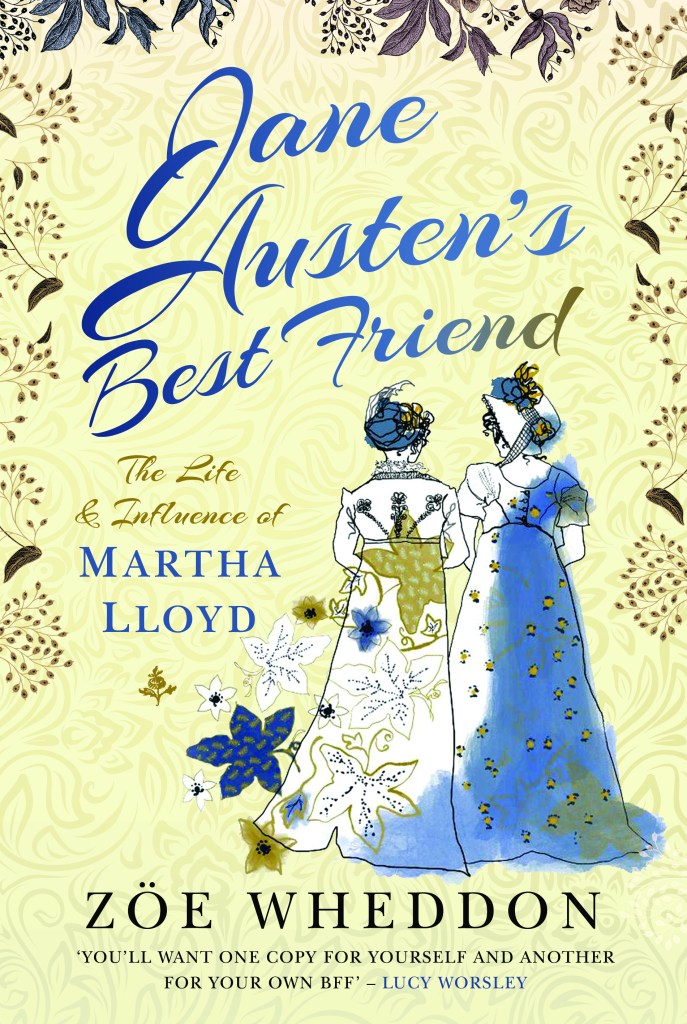
I’ve always been intrigued by the friendship between Jane Austen and Martha Lloyd. (Who wouldn’t want to be close friends with Jane Austen?) When I saw Zöe Wheddon’s new book, Jane Austen’s Best Friend: The Life and Influence of Martha Lloyd, I knew I had to have it.

As a lifelong student of Jane Austen’s life and works, I particularly enjoy books that focus on one aspect of her life. It’s helpful to have gathered into one place all of the information I want to read on a certain topic. Jane Austen’s Best Friend tells the story of Jane and Martha’s friendship and brings together many of the finer details of Martha’s life and her impact on Jane as a person and a writer.

Photo courtesy of Rachel Dodge

I was personally touched by the closeness that was shared by Cassandra, Jane, and Martha. Jane’s deep affection and care for both her sister and her friend are clear. I took note of the fact that Jane formed her strongest bonds with women who were wise and clever, devoted and kind. Her active mind needed people who could keep up with her quick wit—and even challenge her and keep her on her toes—and Martha seems to have fit the bill perfectly.

“I would not let Martha read First Impressions again upon any account, & am very glad that I did not leave it in your power.—She is very cunning, but I see through her design;–she means to publish it from Memory, & one more perusal must enable her to do it.”

Jane Austen in a letter to Cassandra, June 11, 1799.

While this book takes on a lighter, more modern tone, the research is thorough and detailed. Jane’s letters to and about Martha reveal yet another warm, loving relationship in her close circle. The early years of their friendship were marked by silliness, witty remarks, dresses, and balls. Later, their relationship deepened as they walked through pain, loss, change, and grief together. Martha’s inner strength seems to have been particularly important in Jane’s life, especially as she grew older, began to see success as an author, and later became ill.

When I set out to read Jane Austen’s Best Friend, I wasn’t sure how much information could be found about Martha herself, but after reading it, I was amazed at just how much there is to learn about Martha Lloyd. While I enjoyed reading about the bosom friendship between Jane and Martha, I was blown away by Martha herself. She was truly a remarkable woman, and I could have just as happily read a book based solely on her life. It’s easy to see why she and Jane became as close as sisters. I’ve always wished I could spend a day with Jane Austen, but now I’d like to spend a day with these two friends. It certainly seems like they never ran out of things to say or do—and they always had a lot of fun along the way.

If you’ve ever wanted to know more about Martha Lloyd and her friendship with Jane Austen, this is the place to start!

Stay tuned next month as I interview Zöe and share details about her inspiration for Jane Austen’s Best friend, her thoughts on friendship, and some of her favorite highlights from her research for the book.


ABOUT THE AUTHOR

A native of Jane Austen’s beloved county of Hampshire, Zöe lives in a North Hampshire village, on the outskirts of the town that she and her husband Matt both grew up in, with their 3 grown up children and their cat Leia. When she is not researching or writing, Zöe can be found in the classroom teaching Spanish and French or singing ABBA songs loudly in her kitchen. People can get to know her better at www.zoewheddon.co.uk.

Zoe Wheddon, Author

ABOUT THE BOOK

JANE AUSTEN’S BEST FRIEND: THE LIFE AND INFLUENCE OF MARTHA LLOYD is a heart-warming examination of the ‘recipe for friendship’ between Jane Austen, (with whom all Janeites are best friends in their imaginations,) and Martha Lloyd. In looking back somewhat longingly at Martha and Jane’s strong and enduring bond we can examine all their interests, including the hits and misses of their romantic love lives, their passion for shopping and fashion, their family histories, their lucky breaks and their girly chats.

Through an examination of the defining moments of their shared lives together, the book gives readers an insight into the inner circle of the famously enigmatic and private authoress and the life changing force of their friendship.

All fans for Jane Austen everywhere believe themselves to be best friends with the beloved author and this book shines a light on what it meant to be exactly that. JANE AUSTEN’S BEST FRIEND: THE LIFE AND INFLUENCE OF MARTHA LLOYD offers a unique insight into Jane’s private inner circle. Each chapter details fascinating facts and friendship forming qualities that tied Jane and Martha together. This book offers a behind the scenes tour of the shared lives of a fascinating pair and the chance to deepen our own bonds in ‘love and friendship’ with them both.

Available in the USA with Pen and Sword/Casemate.


PURCHASE LINKS:


Amazon (US)
Barnes and Noble (US)
Bookshop.org (UK)


SOCIAL MEDIA

Instagram – Zoe_Wheddon
Website – www.zoewheddon.co.uk
Twitter – @ZoeWheddon
Facebook – @authorzoewheddon


RACHEL DODGE teaches college English classes, gives talks at libraries, teas, and book clubs, and writes for Jane Austen’s World blog and Jane Austen’s Regency World magazine. She is the bestselling author of The Anne of Green Gables Devotional: A Chapter-By-Chapter Companion for Kindred Spirits and Praying with Jane: 31 Days Through the Prayers of Jane Austen. Her newest book The Little Women Devotional is now available for pre-order and releases later this year. You can visit Rachel online at www.RachelDodge.com.

Read Full Post »

After sharing my book review of A Most Clever Girl: How Jane Austen Discovered Her Voice by Jasmine A. Stirling, I had the great pleasure of interviewing Jasmine about her background, her writing process, and the inspiration behind her book. Thank you to Jasmine for her time and her thoughtful answers to my questions!

Q. What initially inspired you to write A Most Clever Girl? Describe your vision for the book and your writing process.

A. When I set out to write this book, I chose Jane Austen because I admire her life and her work, and because I believe she is one of the most misunderstood women in history. Jane Austen was far from being the prim, prudish, “dear Aunt Jane” depicted by her brother Henry and her nephew Edward in their biographies of the author. She is also far from being an author of swoony romances, as we are sometimes led to believe.

These discrepancies between the popular image of Austen and the real Jane Austen gripped me. I wanted to help young people understand Austen the rebel, Austen the humorist, and Austen the artist, so that when they encountered her work later on, they might better be able to fully appreciate and enjoy it.

However, as I delved into my research, it became clear that Jane Austen was a perfect subject for a children’s book about creativity and persistence, because her upbringing, life struggles, and triumphs tell us a great deal about what a writer needs in order to fully master her craft. Of course, I still hope that A Most Clever Girl will help kids relate to the real Jane Austen and encourage them to pick up her novels when they get a little older.

As for my process, it was extensive. I read widely on Austen—both primary and secondary sources—for two years before I wrote a single word. Then, I sat down and wrote a draft of the book in less than an hour. Of course, it was mediocre. It was my first attempt at creative writing as an adult. I was a beginner.

Over the next ten months, I worked for hours each week rewriting and revising the manuscript based on feedback from dozens of people—writers, kids, freelance editors, and agents. I continued to refer to and pull things from primary and secondary sources as I went. Ultimately, I rewrote or revised my initial draft more than 60 times. The final story was unrecognizable when compared with the first draft.

One of the most challenging aspects of writing this book was figuring out how to explain the literary significance of what Jane Austen did—pioneer her witty realist style, rich with social commentary and moral imperatives—to very young people who have no idea what literature was like in Regency England and have scant understanding of what a writer’s voice is all about. Hopefully I pulled it off!

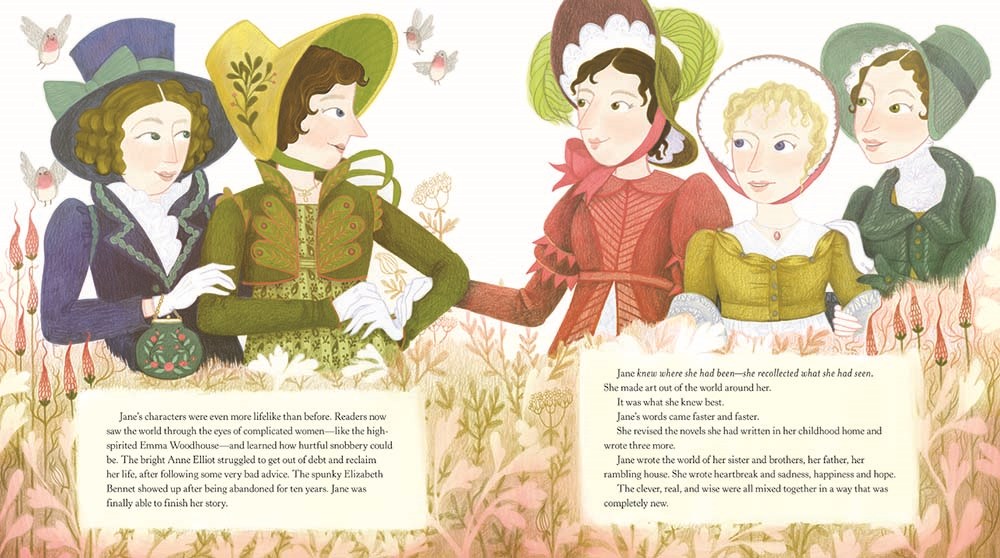
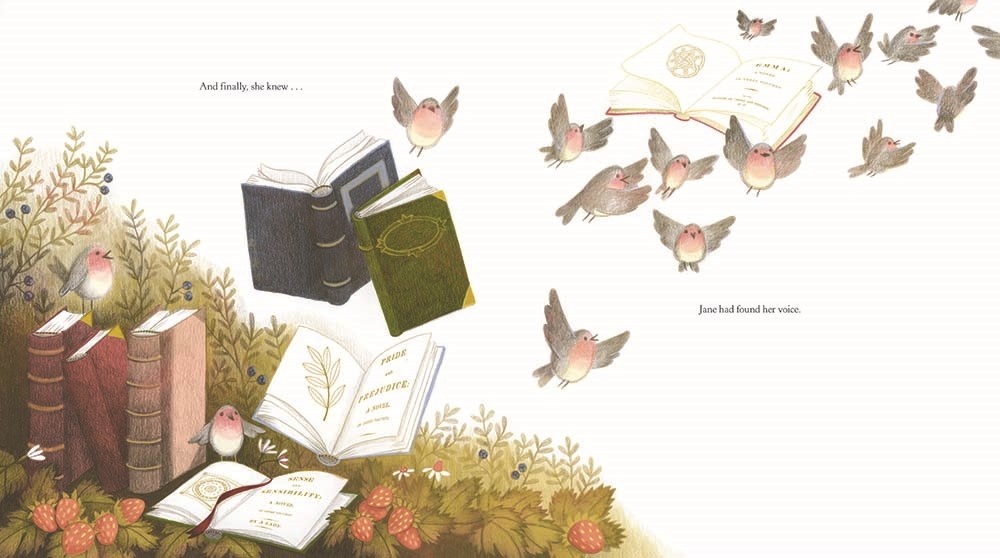
Interior illustration of A Most Clever Girl

Q. What do you hope young readers and the worldwide Jane Austen community will gain from reading this book?

A. A Most Clever Girl is about the process of creative mastery. It’s about all those boring, mundane aspects of creative achievement that our culture doesn’t like to talk about—being rooted in place, having community support, getting consistent feedback, having time, money, and a room of one’s own, discipline, and maturity—which are critical for an artist to bloom.

My hope is that if children (and adults!) study and learn more about how someone becomes a great writer, or filmmaker, or painter, or musician, it will give them insight into how to nurture their own talents—whatever they may be—to greatness.

The message, I hope, is an empowering one. If one begins a project and it isn’t coming out quite as nicely as one expected, do not despair! Set aside ninety minutes each day before or after school or work and keep at it. Find your community. Get feedback. Advocate for the time and space to work on your craft. Be patient.

Although Jane Austen had written drafts of her most famous and beloved novels by her mid 20s, it was not until more than a decade later that she had fully developed her voice as a writer. In fact, by the time Austen had mastered her craft, she had been writing for more than a quarter of a century.

In short, creative mastery is not born of a flash of inspiration. Inspiration plays a part, but not the major part, in any creative endeavor.

Q. When did you first discover Jane Austen and how have her books touched your life?

A. I first fell in love with Jane Austen while reading Persuasion at age nineteen while studying abroad as an associate member of Keble College at the University of Oxford. I also adore Pride and Prejudice.

One way in which Austen inspires me is in her ability to create literature that is fun and escapist and yet anything but light. I am dazzled by Austen’s depth and skill as an artist, and love that she challenges our notion that great art must be a moody, dark, and bitter tonic. Austen, like Shakespeare, is able to work simultaneously on many levels at once. While distracting us with her perfect sentences and tidy plotlines, she entertains and amuses while also viciously satirizing patriarchy, the church, the aristocracy, and conventional views of women. Her characters are of her time and yet distinctively modern. She is perennially relevant, offering each new generation corrective wisdom without being gauche or overbearing.

Q. What was your research process for A Most Clever Girl and what sources did you consult? Have you visited any of the Jane Austen sites in England?

A. One of the things that I think is unique about A Most Clever Girl among children’s books is its liberal use of and reliance on primary sources. Austen’s letters are used to describe details of her life in three spreads. Actual examples from her juvenilia are referenced right at the beginning of the book. Quotes from her novels are sprinkled liberally throughout the text (in italics) to describe Austen’s own creative journey. Every detail, from what young Jane is reading in the second spread to what she thought about her how brother James cut up his turkey, is grounded in a primary source and laid out on an accurate timeline.

Each decision I made was carefully considered, often in agonizing detail. For example, several biographies state that Austen fainted upon hearing the news that the family would move to Bath. On further investigation, I concluded that, based on the primary sources used to develop this theory, this might not have occurred. So although I had included it in an early draft, I wrote it out later on. The last thing a biographer for children wants to do is to perpetuate inaccurate information about someone in history.

I was painfully aware throughout my writing process that Austen is a unique subject. Her enormous popularity and the vast number of professional and novice Austen experts means that anyone writing about her needs to be particularly sensitive about the many versions of the Austen narrative. I tried to tread that line respectfully while also making sure my own version of her story had real heft and direction.

When I was a student at Oxford I had the opportunity to visit many of the sites mentioned in my book. My college friends from those days are currently planning an Oxford reunion (when things open up again) and we plan to revisit the sites in A Most Clever Girl on the same trip.

Interior illustration of A Most Clever Girl

Q. The illustrations for the book are charming! Tell us about those and any other special features in the book.

A. I love that Vesper Stamper visited the sites that she illustrated for the book on a research trip to the UK. Her work emphasizes the three-dimensional portrait of Austen I worked hard to evoke in my writing. Vesper’s Austen sparkles with mischief and wit. At the same time, her illustrations are gorgeous and lush and tap into that escapism that I think make Austen such a delight for grownups to read.

Q. This book traces Jane Austen’s journey as a writer, from Steventon to Bath to Chawton, and explores the way she found her voice. What parts of her story were particularly meaningful for you? In what ways do you relate to Austen as a writer?

A. My journey mirrors Austen’s in that, as a child, I wrote prolifically. From the age of three, I regularly composed poems in my head and dictated them to my mother to write down. I wrote throughout my childhood and into my young adult life. But as an adult, I stopped writing completely, until a few years ago, when I began my first creative writing project—a picture book biography of Jane Austen.

My reasons for abandoning creative writing are probably not dissimilar to Austen’s. In hindsight, I wish I had understood more about how creative achievement works. I think it would have motivated me to carve out time for writing during those years, even when I struggled with where to begin.

Q. If you could step into one of Jane Austen’s novels, which one would it be and which character would you like to play?

A. I would most like to be Anne Eliot in Persuasion. I appreciate that Captain Wentworth is a self-made man, and that he does not come with a large estate. We would be free to make our own, new home together. I think his industriousness, good sense, and lack of inherited wealth would put me at ease. Furthermore, Wentworth writes the most romantic and self-aware letter in human history when he proposes to Anne. That letter would get me through many a quarrel in later years as we raised children and managed a household together.

Q. What are you working on now?

A. I have a 450-page YA/New Adult narrative nonfiction book coming out next year about the women’s suffrage movement titled: We Demand An Equal Voice: Carrie Chapman Catt and Votes for Women. I am also working on a novel.

Interior illustration of A Most Clever Girl

Thank you again to Jasmine for her wonderful interview! If you haven’t read my book review of A Most Clever Girl, you can read it here. I found the book utterly charming. I’m planning to give copies to my friends at birthday parties, baby showers, and graduations–and pretty much every other occasion I can think of. I hope you do too! –Rachel

ABOUT THE BOOK

Witty and mischievous Jane Austen grew up in a house overflowing with words. As a young girl, she delighted in making her family laugh with tales that poked fun at the popular novels of her time, stories that featured fragile ladies and ridiculous plots. Before long, Jane was writing her own stories-uproariously funny ones, using all the details of her life in a country village as inspiration.

In times of joy, Jane’s words burst from her pen. But after facing sorrow and loss, she wondered if she’d ever write again. Jane realized her writing would not be truly her own until she found her unique voice. She didn’t know it then, but that voice would go on to capture readers’ hearts and minds for generations to come.

PURCHASE LINKS:
Amazon
Bookshop.org


ABOUT THE AUTHOR

Jasmine A. Stirling is the debut author of A Most Clever Girl: How Jane Austen Discovered Her Voice, a picture book biography of Jane Austen about persistence and creative mastery. Jasmine lives on a cheerful street in San Francisco with her husband, two daughters, and their dog. From a young age, she loved to write poems and stories and worked her way through nearly every children’s book (and quite a few for grownups, too) in her local library. When she’s not writing, Jasmine can be found hiking in the fog, singing songs from old musicals, and fiddling with her camera.

Follow Jasmine on Instagram and Facebook @jasmine.a.stirling.author where she posts about kidlit and life with two young girls.


RACHEL DODGE teaches college English classes, gives talks at libraries, teas, and book clubs, and writes for Jane Austen’s World blog and Jane Austen’s Regency World magazine. She is the bestselling author of The Anne of Green Gables Devotional: A Chapter-By-Chapter Companion for Kindred Spirits and Praying with Jane: 31 Days Through the Prayers of Jane Austen. Her newest book The Little Women Devotional is now available for pre-order and releases later this year. You can visit Rachel online at www.RachelDodge.com.

Read Full Post »

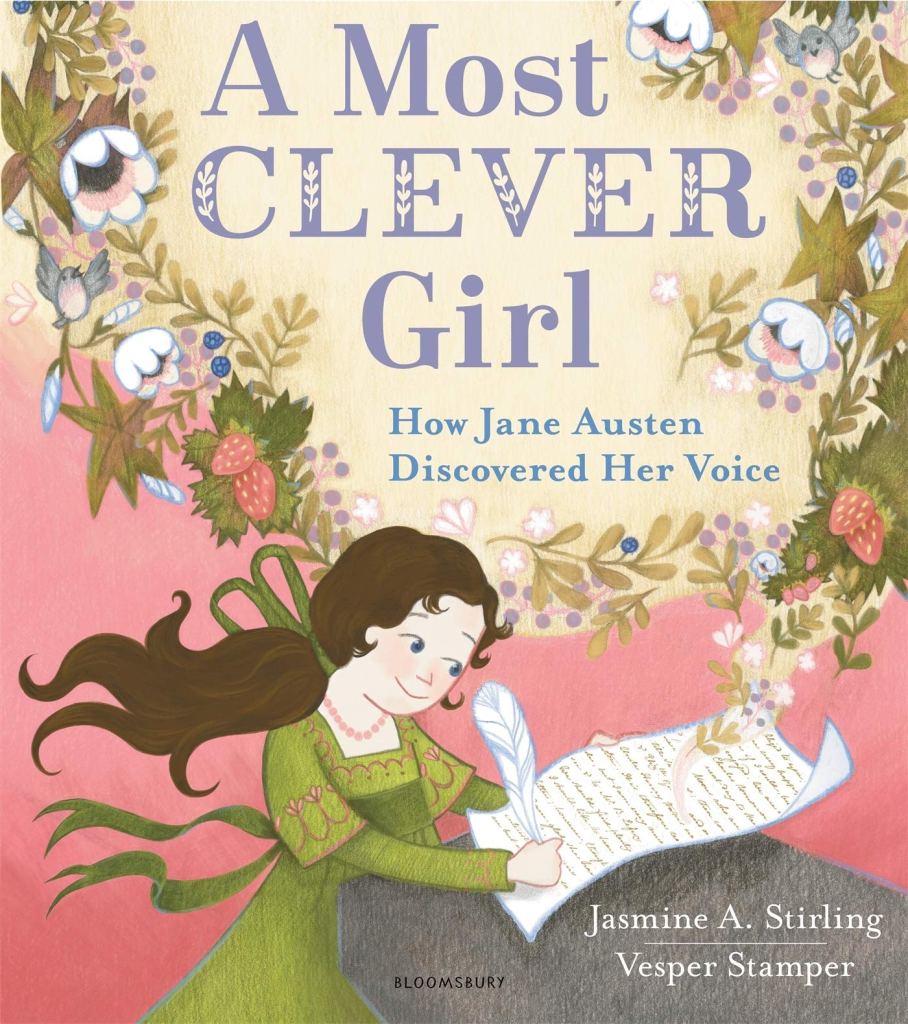
In light of Women’s History Month, I’m pleased to share my review of a beautiful new book by Jasmine A. Stirling that is sure to delight the hearts of Jane Austen fans of all ages entitled A Most Clever Girl: How Jane Austen Found Her Voice.

This exquisitely illustrated, full-color book traces Austen’s writing journey from her younger years at Steventon, to her “quiet” years in Bath after her father died, and finally to her years of astonishing creativity at Chawton. This is a book you’ll want to read for yourself, give as a gift, and display on your coffee table.

The writing by Jasmine A. Stirling and the illustrations by Vesper Stamper truly make this book a feast for the eyes and the heart. As a lifelong Austen fan, I found myself swept up in Stirling’s writing style. Her exploration of Austen’s talent, her heart, and her genius brought me new-found joy. This book vividly captures Austen’s experiences as a writer and shows us why her writing still endures today.

Jasmine and I connected on social media several months ago, and I was intrigued by her book because it is a fictional telling of what I and many others have noticed about Austen’s writing career: that she found her perfect time and place to write when she came to Chawton. (You can read my article on this topic here: New Beginnings at Chawton Cottage.)

Jasmine’s book explores the early foundations of Austen’s literary upbringing, the depth of character that Austen’s life experiences produced, and the intriguing set of circumstances that allowed Austen to discover her unique writer’s voice at Chawton.

I highly recommend A Most Clever Girl to any Austen fan of any age. I especially like the idea that I can give this book as a gift to my friends and family members who have younger children so that their children can be exposed to Jane Austen at an early age and be inspired to follow her example as a person and as a creative.

Please continue reading below for the book details, purchase links, and details for a lovely giveaway contest which includes a Jane Austen-themed picnic basket and a hardcover copy of A Most Clever Girl autographed by Jasmine A. Stirling!

ABOUT THE BOOK

A Most Clever Girl: How Jane Austen Found Her Voice
Written by Jasmine A. Stirling
Illustrated by Vesper Stamper
Publisher: Bloomsbury Children’s Books
Release date: March 30, 2021

Publisher’s Synopsis: Witty and mischievous Jane Austen grew up in a house overflowing with words. As a young girl, she delighted in making her family laugh with tales that poked fun at the popular novels of her time, stories that featured fragile ladies and ridiculous plots. Before long, Jane was writing her own stories-uproariously funny ones, using all the details of her life in a country village as inspiration.

In times of joy, Jane’s words burst from her pen. But after facing sorrow and loss, she wondered if she’d ever write again. Jane realized her writing would not be truly her own until she found her unique voice. She didn’t know it then, but that voice would go on to capture readers’ hearts and minds for generations to come.

PURCHASE LINKS:
Amazon
Bookshop.org

ABOUT THE AUTHOR

Jasmine A. Stirling is the debut author of A Most Clever Girl: How Jane Austen Discovered Her Voice, a picture book biography of Jane Austen about persistence and creative mastery. Jasmine lives on a cheerful street in San Francisco with her husband, two daughters, and their dog. From a young age, she loved to write poems and stories and worked her way through nearly every children’s book (and quite a few for grownups, too) in her local library. When she’s not writing, Jasmine can be found hiking in the fog, singing songs from old musicals, and fiddling with her camera.

Jasmine first fell in love with Jane Austen as a student at Oxford, where she read her favorite of Jane’s six masterful novels, Persuasion. A Most Clever Girl is her dream project, done with her dream team—award-winning illustrator Vesper Stamper and Bloomsbury Children’s Publishing. Jasmine also has a YA/New Adult history of the women’s suffrage movement out soon, titled We Demand An Equal Voice.

Visit www.jasmineastirling.com to get a free Jane Austen paper doll kit with the purchase of A Most Clever Girl. While you’re there, enter to win a Regency tea party gift basket!

Follow Jasmine on Instagram and Facebook @jasmine.a.stirling.author where she posts about kidlit and life with two young girls.

GIVEAWAY DETAILS

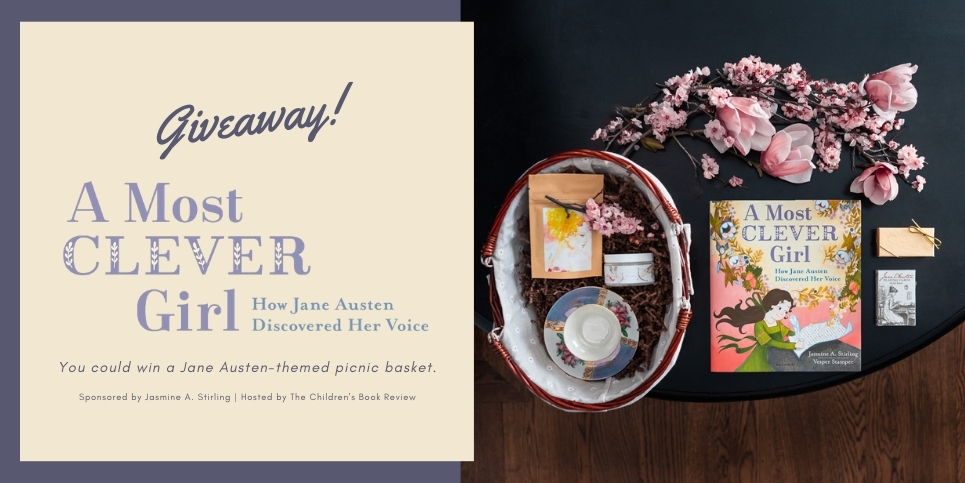
Enter for a chance to win a glorious Jane Austen-themed picnic basket, including a hardcover copy of A Most Clever Girl autographed by Jasmine A. Stirling!

ENTER GIVEAWAY HERE

One (1) grand prize winner receives:

  • A picnic basket filled with:
    • A copy of A Most Clever Girl: How Jane Austen Discovered Her Voice, signed by author Jasmine A. Stirling
    • A vintage teacup
    • 1 oz of tea From Adagio Teas
    • Truffles from Moonstruck Chocolates
    • Gardenia hand cream
    • A set of Jane Austen playing cards

Two (2) winners receive:

  • A copy of A Most Clever Girl: How Jane Austen Discovered Her Voice, signed by author Jasmine A. Stirling

The giveaway begins March 16, 2021, at 12:01 A.M. MT, and ends April 16, 2021, at 11:59 P.M. MT.

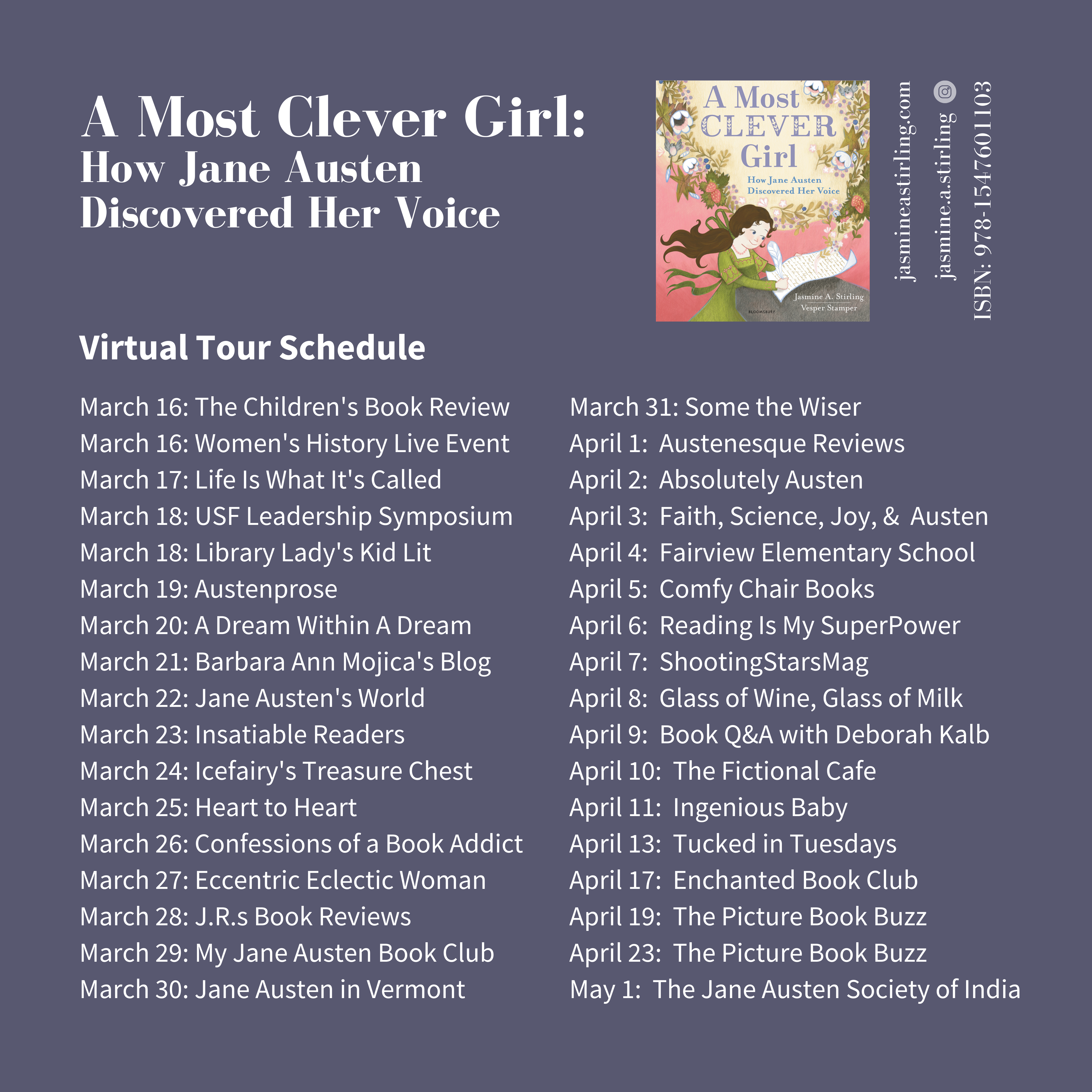
BOOK TOUR SCHEDULE FOR A MOST CLEVER GIRL

March 16The Children’s Book Reviewhttps://www.thechildrensbookreview.com/Book Review
March 17Life is What It’s Calledwww.lifeiswhatitscalled.blogspot.comInterview
March 18Library Lady’s Kid Lithttps://janemouttet.wordpress.com/Book Review & Guest Post
March 19Austen Prosehttps://austenprose.com/Book Preview & Guest Post
March 20A Dream Within A Dreamhttp://adreamwithindream.blogspot.comBook Review
March 21Barbara Ann Mojica’s Bloghttps://bamauthor.meBook Review
March 22Jane Austen’s Worldhttps://janeaustensworld.wordpress.com/Interview
March 23Satisfaction for Insatiable Readershttps://insatiablereaders.blogspot.comBook Review & Guest Post
March 24icefairy’s Treasure Chesthttp://icefairystreasurechest.blogspot.com/Book Review
March 25Heart to Hearttynea-lewis.comBook Review
March 26Confessions of a Book Addicthttp://www.confessionsofabookaddict.comGuest Post
March 27Eccentric Eclectic Womanhttp://finamoon.blogspot.comBook Review
March 28J.R.s Book Reviewshttps://jrsbookreviews.wordpress.com/Book Review
March 29My Jane Austen Book Clubhttp://thesecretunderstandingofthehearts.blogspot.com/Interview
March 30Jane Austen in Vermonthttps://janeausteninvermont.blog/Book Review & Guest Post
March 31Some the Wiserhttps://somethewiser.comBook Review
April 1Austenesque Reviewswww.AustenesqueReviews.comBook Review
April 2Absolutely Austenhttps://absolutelyausten.com/Book Review
April 3Faith, Science, Joy, and Jane Austenbrendascox.wordpress.comBook Review
April 4Fairview Elementary School (Library)https://fveslibrary.blogspot.com/Book Review
April 5Comfy Chair Bookshttps://comfychairbooks.com/Book Review
April 6Reading Is My SuperPowerhttps://readingismysuperpower.orgBook Review
April 7ShootingStarsMagwww.shootingstarsmag.netA Beyond the Book Activity
April 8Glass of Wine, Glass of Milkglassofwineglassofmilk.blogspot.comBook Review
April 9Book Q&As with Deborah Kalbhttp://deborahkalbbooks.blogspot.com/Interview
April 10The Fictional Cafehttps://www.fictionalcafe.com/Review + Interview
April 11Ingenious Babyhttps://www.youtube.com/channel/UCkNfesiHAPnqc4STgBn-LjwInterview
April 12The Children’s Book Reviewhttps://www.thechildrensbookreview.com/Guest Post
April 13Tucked In Tuesdayhttps://www.instagram.com/tutoringyoutoexcellence/Instagram Live: Tucked in Tuesday

RACHEL DODGE teaches college English classes, gives talks at libraries, teas, and book clubs, and writes for Jane Austen’s World blog and Jane Austen’s Regency World magazine. She is the bestselling author of The Anne of Green Gables Devotional: A Chapter-By-Chapter Companion for Kindred Spirits and Praying with Jane: 31 Days Through the Prayers of Jane Austen. You can visit Rachel online at www.RachelDodge.com.

Read Full Post »

Inquiring readers: While our world travels have been curtailed during the COVID-19 pandemic, we can think of no better a way to take a tour than with Tony Grant, who has served as a guide in Jane Austen country for many years.

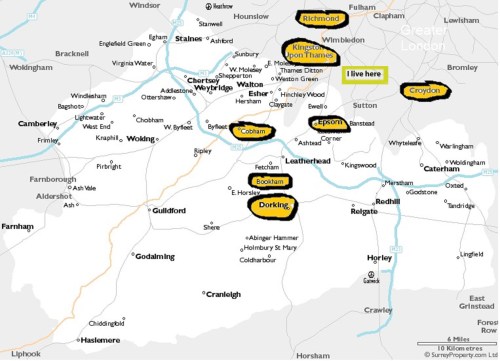
Map of Surrey

Map of Surrey

Map of Surrey

Jane Austen criss crossed the county of Surrey many, many times in her lifetime. Surrey is the county north of Hampshire. All the direct routes from Basingstoke, Steventon and Chawton to London pass through Surrey. She mentions Surrey places in her letters, providing a sense of what it was like to travel the roads of the 18th and 19th centuries.  Emma, her completed Surrey novel, is set in the fictitious Highbury and Hartfield located right in the middle of the county, surrounded by the real Surrey, Dorking, Mickleham, Box Hill, Cobham and with Kingston upon Thames and Richmond upon Thames to the north. Jane’s earlier attempt at another Surrey novel, The Watsons, begun while living in Bath in 1804 was never completed. The few pages of The Watsons that were completed set the action mostly in Dorking but also some outlying places.  Croydon, a large town, is repeatedly referred to and,” a village about three miles distant,” from Dorking, Westhumble, is a template for Stanton. Jane stayed at Great Bookham just north of Dorking with her relations, the Cookes. It is a short carriage ride away from Box Hill. Just north of Great Bookham is Leatherhead which has a debatable role in this account and to the north west of Great Bookham is Cobham, another place of interest mentioned in Emma. Interestingly a well-known, famous town in Surrey–Epsom– also gets a passing mention in Pride and Prejudice. It is amazing to see how the places and locations in Surrey came together in Jane’s imagination and how she used them in her novels. It’s like pieces of a jigsaw fitting together neatly. 

Great Bookham

Photo of St. Nicholas, Great Bookham

St. Nicholas, Great Bookham. Photo by Tony Grant

I am going to introduce Great Bookham first, because although Jane knew many places in Surrey well and visited most of them many times she actually spent lengthy periods of time in Great Bookham, staying with her aunt and uncle and cousins, the Cookes. Cassandra Cooke, her mother’s cousin, was Jane ‘s aunt. You might notice, the name Cassandra seems popular within the extended family as well as her immediate family. It is the same name as both Jane’s sister and mother. Cassandra Cooke was a budding writer. A forgotten novel called, Battleridge, is her contribution to posterity. Jane’s uncle Samuel Cooke was the vicar of St Nicholas Church in Great Bookham. The Cookes were well acquainted with Fanny Burney, who lived in the village with her husband, General D’Arblay, and their young son. The Reverend Cooke asked Fanny Burney‘s father for advice about church music. Burneys father, Charles Burney, was a reputed musician and composer. It is from Great Bookham that Jane first visited Box Hill a few miles away. Great Bookham, like Highbury and Hartfield, is at the centre of the geographical world of both The Watsons and Emma.

Box Hill

Image Mickleham to the right of Box Hill

Mickleham to the right of Box Hill. Photo by Tony Grant

So, to Box Hill, a mere few miles east of Great Bookham.

“They had a very fine day for Box Hill……. Seven miles were travelled in expectation of enjoyment, and everybody had a burst of admiration on first arriving.” Emma

Later, Frank Churchill, as though proclaiming from a vast church pulpit, (which indeed, if you stand on the top of Box Hill and look out over the surrounding countryside, does feel like that,) announces grandly and perhaps grandiosely

“Let everybody on the hill hear me if they can. Let my accents swell to Mickleham on one side and Dorking on the other.”

Box Hill is part of the chalk incline that forms the North Downs in Surrey. It was a beauty spot, where visitors loved to look out on the beautiful surrounding countryside in Jane’s time and that is the situation still today. A National Trust shop and café is at the top. A 19th century fort built as part of a line of forts to help repulse a French invasion is there too. Throughout the 18th and most of the 19th century, France was always a threat to Britain real and imaginary. Pre Raphaelite artists painted there, poets wrote poetry about the countryside and John Logie Baird, the inventor of the television, carried out experiments from his cottage at the top of the hill. It is a nature reserve, the site of a very strange burial, and is still a great picnic site, as Emma was anticipating.

Mickleham

Mickleham

Mickleham, photo by Tony Grant

If you do as Frank Churchill informs us, look out from Box Hill with Mickleham to one side and Dorking to the other you will be facing west straight towards Great Bookham. Mickleham is located at the foot of Box Hill on its north west side. It is home to a  junior school called Box Hill School. St Michael’s Church in the village is where Fanny Burney and General D’Arblay were married. General D’Arblay was a French exile, who fled France for England after the rise of Maximillian Robespierre. He and other emigres were living at Juniper Hall on the edge of Mickleham. The house was leased from 1792 to 1793 by David Jenkinson, a wealthy landowner, to a group of French emigres which included Anne Louise Germaine de Staël, a writer who Jane Austen admired, although de Stael was dismissive of Jane Austen’s writing. Charles Maurice de Talleyrand-PérigordLouis, comte de Narbonne-Lara grandson of King Louis XV of France, and General Alexandre D’Arblay were among the key emigres staying at Juniper Hall. D’Arblay met Fanny Burney in the Templeton Room here. 

Dorking

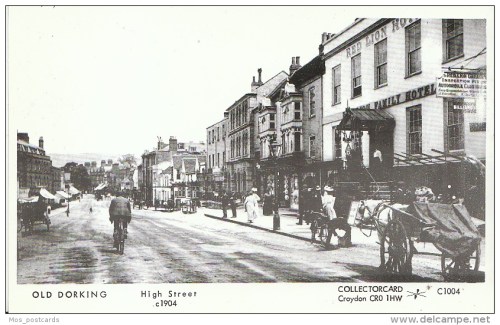
Image Dorking, the Red Lion Hotel, 1904 Postcard

Dorking, the Red Lion Hotel, 1904 Postcard

Dorking is located south west of Box Hill. From Stanton ( Mickleham) the two Watson sisters  travelled by the turnpike road which led to the east end of the town. As they entered the town they could see the White Hart Inn on their right, where the ball they were so anticipating was to take place, and the church steeple of St Martins just behind the inn. In the Penguin Classic version of The Watsons the editor, Claire Lamoy suggests that The White Hart was in reality The Red Lion Inn, located in Dorking High Street which Jane visited while staying at Great Bookham. The Red Lion backed on to the churchyard of St Martins Church. The inn does not exist nowadays. A modern row of shops stands in its place. Many buildings in Dorking do originate from the 18th century and some earlier. It is an ancient market town. Dorking has links to The Pilgrim fathers. William Mullins a shoe maker from Dorking was on that first voyage of The Mayflower. His shop still stands in the High Street and is now a coffee shop. There are also connections to Dickens and Vaughn Williams, the 20th century composer.

Croydon

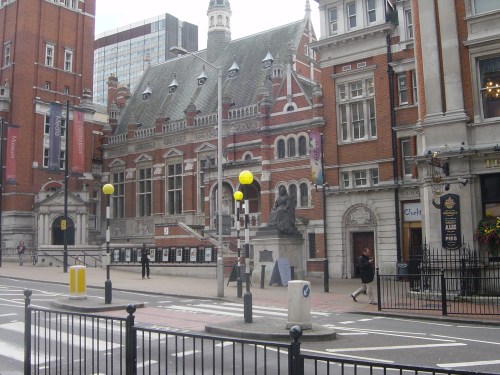
Image of Croydon Town Hall and Art Gallery, by Tony Grant

Croydon Town Hall and Art Gallery. Photo by Tony Grant.

In The Watsons the town of Croydon, about 17 miles from Dorking, is mentioned a number of times. Rich relations of the Watsons live there. It is where Emma Watson has been living with an aunt. When the story starts her aunt has died and Emma has recently returned to her family in Stanton.

Cobham

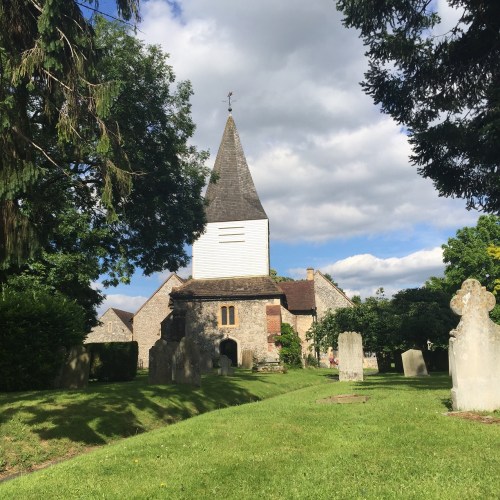
Image of Cobham churchyard

Cobham churchyard photo by Tony Grant

Cobham, north west of Great Bookham, has a cameo appearance in Emma. John Knightley’s wife Isabella, in praise of Mr Weston, states,

“and ever since his kindness last September twelvemonth in writing that note, at twelve o’clock at night, on purpose to assure me that there was no scarlet fever at Cobham, I have been convinced there could not be a more feeling heart nor a better man in existence.”

I have always thought that Cobham fits a description of Highbury and Hartfield. Many of the features of Cobham are the same. But you can find similar features in most country towns and large villages. There are the church, a mill, a local school, old coaching inns, houses for the local gentry and a large estate such as Mr Knightley’s a mile from the centre of town. Cobham has Painshill Park on its outskirts and Jane herself mentions it in a letter to Cassandra when travelling through leafy Surrey on one of her many visits to London. 

Kingston upon Thames

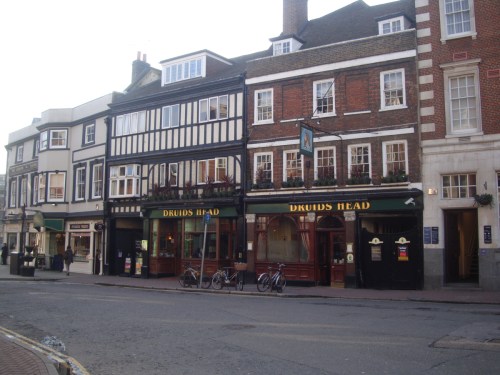
Image of O Druids head coaching inn Kingston

O Druids head coaching inn, Kingston. Photo by Tony Grant.

Kingston upon Thames is an important location in Emma. Mr Martin and also Mr Knightley go to Kingston regularly.

Harriet after meeting Robert Martin in the street reports to Emma

“He has not been able to get, “The Romance of the Forest,” yet. He was so busy the last time he was in Kingston that he quite forgot it, but he goes again tomorrow.”

Kingston used to have a large cattle market on the edge of town The area where it was located is still called The Cattle Market to this day. The municipal swimming baths and sports centre is on the site. It had an apple market, and that spot is still called The Apple Market, and also a large central market in the middle of the town where fishmongers, butchers, and fruit and vegetables from market gardens were sold. Fresh meat, fish, fruit and vegetables are sold from market stalls in the same location today. A few of the 18th century coaching inns still exist, The Griffin and The Druids Head are still pubs and inns, and the site of The Crown Inn that Jane Austen knew well is a department store that still retains a magnificent 18th century carved oak staircase. She often mentioned her visits to Kingston in letters to Cassandra as she travelled on the way to London. Kingston was an important place for carriages to change horses.

To Cassandra. Wednesday 15-Thursday 16 September 1813 from Henrietta Street

“… We had a very good journey-Weather and roads excellent-the three stages for 1s-6d & our only misadventure the being delayed about a quarter of an hour at Kingston for Horse, & being obliged to put up with a pair belonging to a Hackney Coach & their Coachman which left no room on the Barouche box for Lizzy.”

Jerry Abershaw

Black and white etching of Louis Jeremiah or Jerry Abershaw, 1773-1795. Highwayman, National Gallery of Scotland

Louis Jeremiah or Jerry Abershaw, 1773-1795. Highwayman, National Gallery of Scotland

Kingston has a more chilling aspect to i,t which has a relevance to Northanger Abbey. On the main road from Kingston into the centre of London the route passed through a remote wild area of heath and woodland. In 1795, at Tibbets Corner (the Putney, Wandsworth and Wimbledon Village junction) beside Wimbledon Common, a young highwayman called Jerry Abershawe was detained and executed. His body hung at Tibbets Corner inside a gibbet to rot and be picked to pieces by carrion crows as a warning to all highwaymen. In Northangar Abbey General Tilney sends the teenage Catherine Moreland away from the Abbey by herself in a public coach. Highwaymen were a danger. Even Jane’s brothers would not let her travel independently. Perhaps Jane and Cassandra witnessed Abershawe’s body in the gibbet. His body would have been left there until nothing was left. It would take a year or two to disappear.

Richmond upon Thames

Photo of Richmond Green The Churchills lived here.

Richmond Green. The Churchills lived here. Photo by Tony Grant.

Richmond upon Thames further north along The Thames from Kingston also has an importance in Emma. The Churchill’s removed from London to Richmond because of Mrs Churchill’s health.  

“It soon appeared that London was not the place for her. She could not endure its noise. Her nerves were under continual irritation and suffering; and by the ten days’ end, her nephew’s letter to Randalls communicated a change of plan. They were going to remove to Richmond. Mrs Churchill had been recommended to the medical skill of an eminent person there.”

I know Richmond well. It is just seven miles north of Richmond Park from where I live. It has an amazing history with connections to the nobility and the Monarchy. A Tudor palace was located at Richmond and also just outside of Richmond is Kew Gardens and Kew Palace where George III and his family spent a lot of time. Richmond was a very well connected town. Jane used this in Emma as an underlying comment about Frank Churchill.

Epsom

Image of Epsom Centre, by Tony Grant

Epsom Centre photo by Tony Grant

Epsom, at the foot of the north downs and famous for the Derby Racecourse, the forerunner of all Derbys around the world, gets a mention in Pride and Prejudice. When Wickham and Lydia elope from Brighton, where Wickham’s regiment is stationed, they of course have to pass through the county of Surrey to reach London. They change horses at Epsom. 

Lydia had disappeared with Wickham and Mr Bennet had turned into a man of action. Elizabeth enquired.

“She then proceeded to enquire into the measures which her father had intended to pursue, while in town, for the recovery of his daughter.”

“He meant,” I believe, “replied Jane, to go to Epsom, the place where they last changed horses, see the postilions and try if anything could be made out … His principal object must be to discover the number of the hackney coach which took them …”

Epsom, is a lovely market town and has an amazing central clock tower and wide thoroughfare for the market stalls set up there. There is also a well preserved 18th century Assembly Rooms called, “The Assembly Rooms,” which is now a Weatherspoon’s pub and restaurant. I have indeed imbibed a pint or two in there. There are many 18th century buildings still in the town.

Leatherhead

Image of leatherhead museum

Leatherhead Museum. Photo by Tony Grant

I must mention Leatherhead, very close to Great Bookham and Box Hill. It is a town Jane would have visited and probably knew well. It has become somewhat a cause celebre in the world of Jane Austen and generally causes arguments.  Highbury and Hartfield are fictitious places set within the real world of Surrey. There are those, however, who are  convinced that Leatherhead is indeed Highbury and Hartfield. They point out all the places that are in and around Leatherhead which they think fit Jane’s descriptions in Emma. It cannot be forgotten that Emma is a fiction, all said and done. Highbury and Hartfield are the quintessential 18th century English villages. Jane is concerned about the lives and relationships of people within a community.  That is what really counts.

There are many places in Surrey that Jane knew. I have included an overall map to show some of the key places I mention in this article and here are a few more places she mentions either in her novels or in her letters.

Guildford, Streatham, The Hogsback (A long hill outside of Guildford) Ripley, Painshill, Clapham, Battersea, Barnes and Egham.

To Cassandra Austen Thursday 20th May 1813

“We left Guildford at 20 minutes before 12- (I hope somebody cares for these minutes) & were at Esher in about 2 hours more.- I was very much pleased with the country in general-;- between Guildford and Ripley I thought it particularly pretty, also about Painshill & everywhere else; & from a Mr Spicer’s Grounds at Esher which we Walked into before dinner, the views were beautiful. I cannot say what we did not see but I should think there could not be a wood or a meadow or a palace or a remarkable spot in England that was not spread out us on one side or another.-“

Streatham is interesting, located  in South London at Tooting. It is where Dr Johnson lived for a while with Esther Thrale and her husband in their grand house next to the common and where many of the artistic glitterati of the 18th century met.

REFERENCES:

  • Austen J. Lady Susan, The Watsons, Sanditon Penguin Classics (first published 1974) Revised edition published 2015
  • Austen J. Emma, Penguin Classics (Published in Penguin Classics 1996) reissued 2003.
  • Austen J. Pride and Prejudice, (published by Penguin Classics 1996) reissued 2003.
  • Austen J. Northanger Abbey, (published by Penguin Classics 1996) reissued 2003.
  • Le Faye D. Jane Austen’s Letters, (Third Edition) Oxford University Press 1995.

TONY’S OTHER BLOG POSTS: Below are some of the blog posts I have written connected with places I have mentioned in this article located in Surrey and South London where I live.

London Calling, Tony’s blog

Jane Austen in Vermont, Tony’s guest posts

Jane Austen’s World, Tony’s posts

Read Full Post »

« Newer Posts - Older Posts »