Feeds:
Posts
Comments

Archive for the ‘Jane Austen’s World’ Category

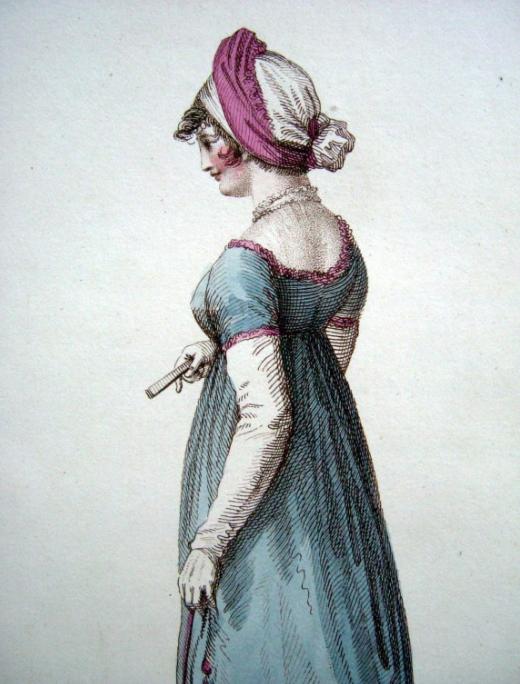
1803 Mirroir de la Mode Evening Dress

In 1803, a woman named Madame Lanchester of Bond Street, published  ‘Le Miroir de la Mode‘. By 1804, scarcely two years after it appeared, the magazine had vanished. (Although The Museum of London has at least one plate published by Madame Lanchester which is dated 1807).  Very little is known about the woman, who had designed for other publications, such as Richard Phillips Fashions of London and Paris.

La Miroir de la Mode was a short-lived, expensive, and large quarto-sized magazine published only from 1803 to 1804, clearly a failed attempt to follow in the footsteps of the defunct Gallery of Fashion, which was also quarto size. The publisher was the famous modiste, Madame Lanchester, who later wrote fashion descriptions and commentary for Ackermann’s Repository. – Word Wenches: Regency Ladies Magazines, Part 3

Ebay is a rich resource for people who are interested  in viewing Regency fashion plates, as this page by Cabrio4 attests. People can purchase their own fashion plates for a reasonable  price, with this particular seller enjoying a reputation of 100% satisfaction. The small image below of a Full Walking Dress  from  ‘Le Miroir de la Mode’, April 1803 (Measures approx: 10.5″ x 8.5″), is extremely rare (and has been sold).

Walking dress, 1803, Mirroir de la Mode

More about the topic

Early Georgian & Regency Fashion Prints to 1806 – Guide written by Cabrio4, eBay seller
Regency Ladies’ Magazines, Part One
Regency Ladies’ Magazines, Part Two
Regency Ladies’ Magazines, Part Three

Read Full Post »

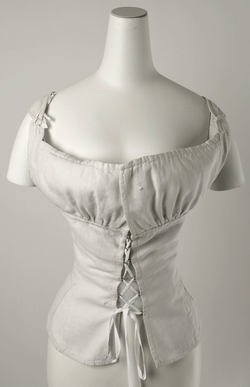
Share/Bookmark// Find examples of Regency dresses and unmentionables in this extensive database by Démodé. The clothes featured in this link are from 1800 through 1830. Examples include corsets, bodices, shifts, underdresses, petticoats, day dresses, spencers, robes, etc, from collections around the world. These images are representative of the Démodé Regency collection.

Corset, Metropolitan Museum, c. 1798-1810

1800 Muslin gown from the V & A Collection

Read Full Post »

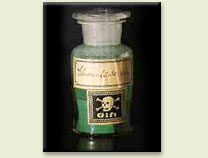
Bottle with emerald green pigment

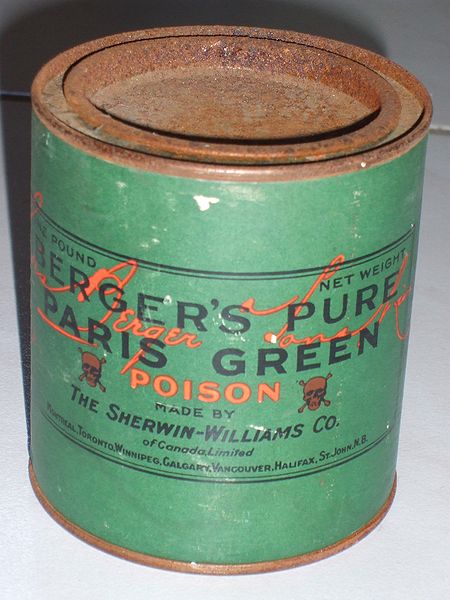
Once upon a time green paint literally killed people. In 1814 in Schweinfurt, Germany, two men named Russ and Sattler tried to improve on Scheele’s green, a paint made with copper arsenite. The result was a highly toxic pigment called emerald green. Made with arsenic and verdigris, the bright green color became an instant favorite with painters, cloth makers, wall paper designers, and dyers. The first commercial British arsenic was produced at Perran-ar-Worthal in 1812, and at Bissoe in the Carnon Valley in 1834. Their product appealed to the Lancashire cotton industry which used the chemical in pigments and dyes. It was also used by other industries such as glass manufacture (as a decolouriser), in the production of lead-shot, leather tanning, soaps, lampshades, wallpaper manufacture (to create green and yellow print), pharmaceuticals, agriculture for sheep dips, children’s toys, candles, a highly effective rat poison, etc.*

“Manufacture of [emerald green] began in 1814 at the Wilhelm Dye and White Lead Company of Schweinfurt. It was more popular than Scheele’s green and was soon being used for printing on paper and cloth; it even coloured confectionary. –  The Elements of Murder: A History of Poison, John Emsley
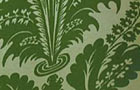
Textured Georgian wallpaper

Emerald green was also called Schweinfurt green, Paris green, and Vienna green. The toxicity of dye made with emerald green was not initially recognized, until the recipe was published in 1822, and
“…its poisonous nature was revealed. Manufacturers then changed the recipe, adding other ingredients to lighten the colour, and changing its name accordingly in an effort to disguise its true nature.” – Murder, Emsley
Eventually, the use of this pigment was abandoned when it became generally known that people who wore clothes dyed with the substance tended to die early. To this day the French avoid making green theater costumes.** Emerald green was also used to color confectionary and cake cake decorations:
“The leaves of artificial flowers in particular were coloured with various arsenic greens and they were very popular in Victorian households. The industry making them employed hundreds of young girls, who suffered accordingly from chronic arsenic poisoning…at a banquet held by the Irish Regiment in London in the 1850’s the table decorations were sugar leaves coloured by them. Many of the diners took these home for their children to eat as sweets and several deaths ensued. At another dinner in 1860 a chef was eager to produce a spectacular green blancmange and sent to a local supplier for green dye. He was given Scheele’s green and three of the diners later died.” – Ibid
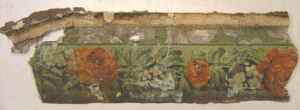
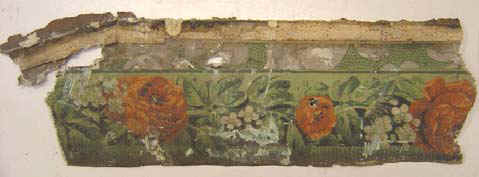
Floral border wallpaper, Ipswich, late 18th c.***

Wallpaper made with Scheele’s green was deadly, By 1830, wallpaper production had risen to 1 million rolls a year in the UK, and by 30 million in 1870. Tests later revealed that four out of five wallpapers contained arsenic. Leopold Gmelin (1788-1853), a famous German chemist, suspected as early as 1815 that wallpaper could poison the atmosphere. He noticed that the substance gave off a mouse-like odor when the paper was slightly damp. Gmelin warned people to strip their rooms of the paper and advocated banning Scheele’s green, but he was too far ahead of his time.
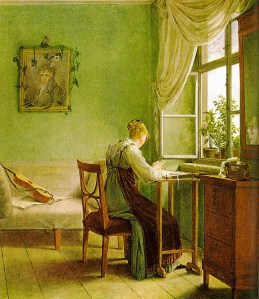
In 1861, Dr W. Fraser tested wallpaper that contained arsenic.The threat, he said, came from breathing the dust of the papers, especially flocked wallpaper. The warnings went unheeded, and by 1871, arsenic production had increased to the point that Britain had become its largest producer and consumer. An addition of a small amount of arsenic, for example, would neutralize iron in glass and give it a green tint. “Potassium chromate (K2CrO4) is yellow and this colour can be imparted to certain glasses. To produce emerald green glass in which a yellowish cast has to be avoided the addition of tin oxide and arsenic is necessary.” (Substances used in the making of colored glass.)

Soon arsenic was exported for the making of pesticides in the United States. Health considerations did not end the use of arsenic-laced wallpaper. By the 1870’s synthetic green dyes began to replace arsenic, and fewer people were placed in danger by its poisonous gases. Experiments at the end of the 19th century proved that arsenic pigments in damp or rotting wallpaper were lethal. The mold that grew on damp wallpaper emitted a toxic odor that smelled of garlic.

The French painter Cezanne had an affinity for using paris green, and it might have been no coincidence that he suffered from severe diabetes. The pigment had a tendency to turn black when exposed to heat and thus it did not become universally popular with artists. Even with scientific evidence of its highly toxic nature, production of emerald green paint was not banned until the 1960’s.

More on the topic

Read Full Post »
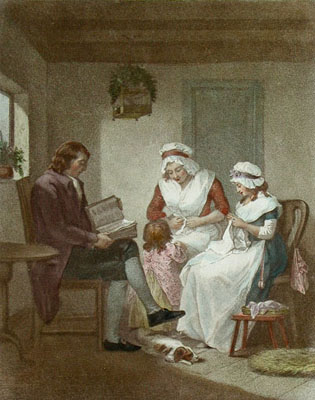
Domestic Happiness, after George Morland

We have come to associate the Regency period with fine white, high-waisted muslin dresses that were beautifully detailed and embroidered. Until quite recently in human history, a lady did not roam far from her sewing basket. She would mend, sew, and embroider whenever she had spare time. (Even the finest lady in the land could be found plying her needles.) During the day she would sit near a well lit window or even outdoors, and during the long evening hours she would sit by the fireside in a room with other family members, sharing the light from expensive candles (sometimes a single one). For entertainment, one of the men would read aloud from a book, or other family members would play musical instruments. Jane Austen was well known for her sewing skills and examples of her needlework are shown in the Jane Austen Museum in Chawton.

Diamond shaped pattern with a flower in the center

White work is a broad term, one that may be said to encompass any white-on-white needlework, that is, needlework that uses a white yarn or thread on a white ground to create a pattern. Various techniques are employed to make these patterns stand out in high relief against their monochrome background, with the result that many white work pieces have an intensely sculptural quality

All over the country, women carried their needlework with them on visits, and traded patterns among friends.

These techniques include embroidery, drawn work, pulled-fabric work, stump work, stuffed work, cording, quilting, candlewicking, and, later, weaving, both by draw loom and machine. – From Lap to Loom: The transition of Marseilles white work from hand to machine

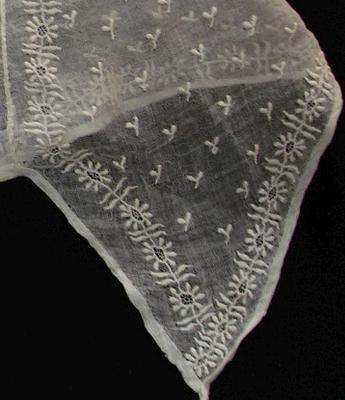
Detail of cap with twigs and flowers on a ladder motif

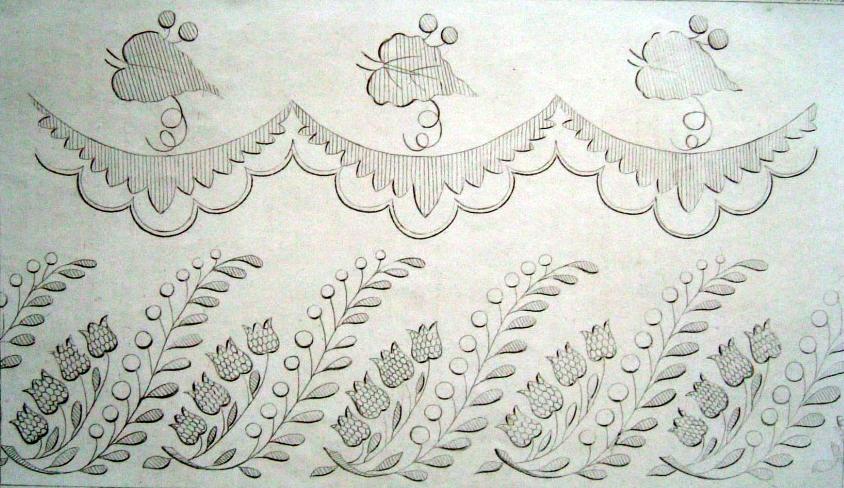
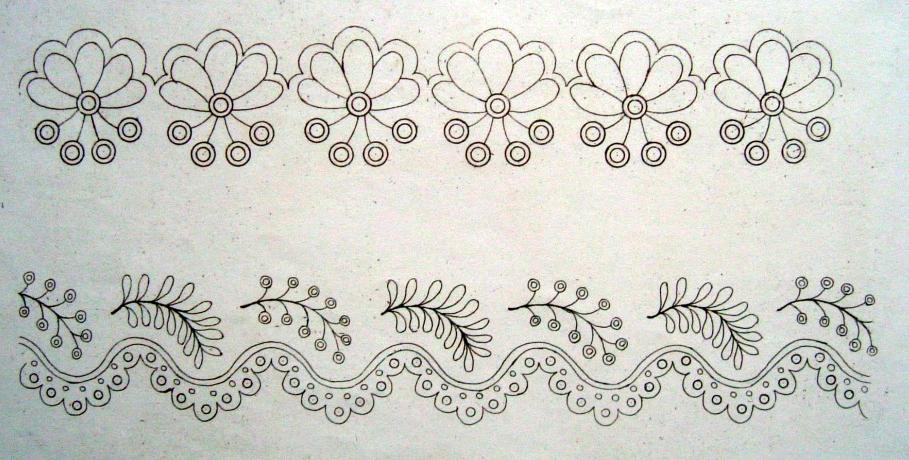
Whitework embroidery was frequently used on muslin dresses, fine lawn caps, handerkerchiefs, tablecloths, and bed linens. Patterns were featured in Ladies Periodicals, showing many different motifs, some fancier than others.

1815 La Belle Assemblee Wheat sheaf design

The finest whitework was done on cambric and fine muslin, or netting. This was called French embroidery, or French Hand Sewing. The most delicate threads and techniques were utilized to make gorgeous, lacy handkerchiefs, veils, bonnets, cuffs, collars and baby clothes, as well as gifts to very special friends…

1823 Ackermann embroidery pattern

Christening gowns and robes of the time were very heavily embroidered and were most treasured by their owners. Lots of different patterns and stitches were used, with lots of feather stitching all over, leading to flowers made of satin stitch, eyelets, and buttonhole stitches so tiny as to be difficult to see, and almost all with matching bonnets and slips or petticoats. French knots decorated edges.

1825 Two simple muslin edging patterns

Wedding gowns, too, were embroidered with these techniques, and some of the grooms’ clothes, too, were embroidered to match! – Whitework embroidery

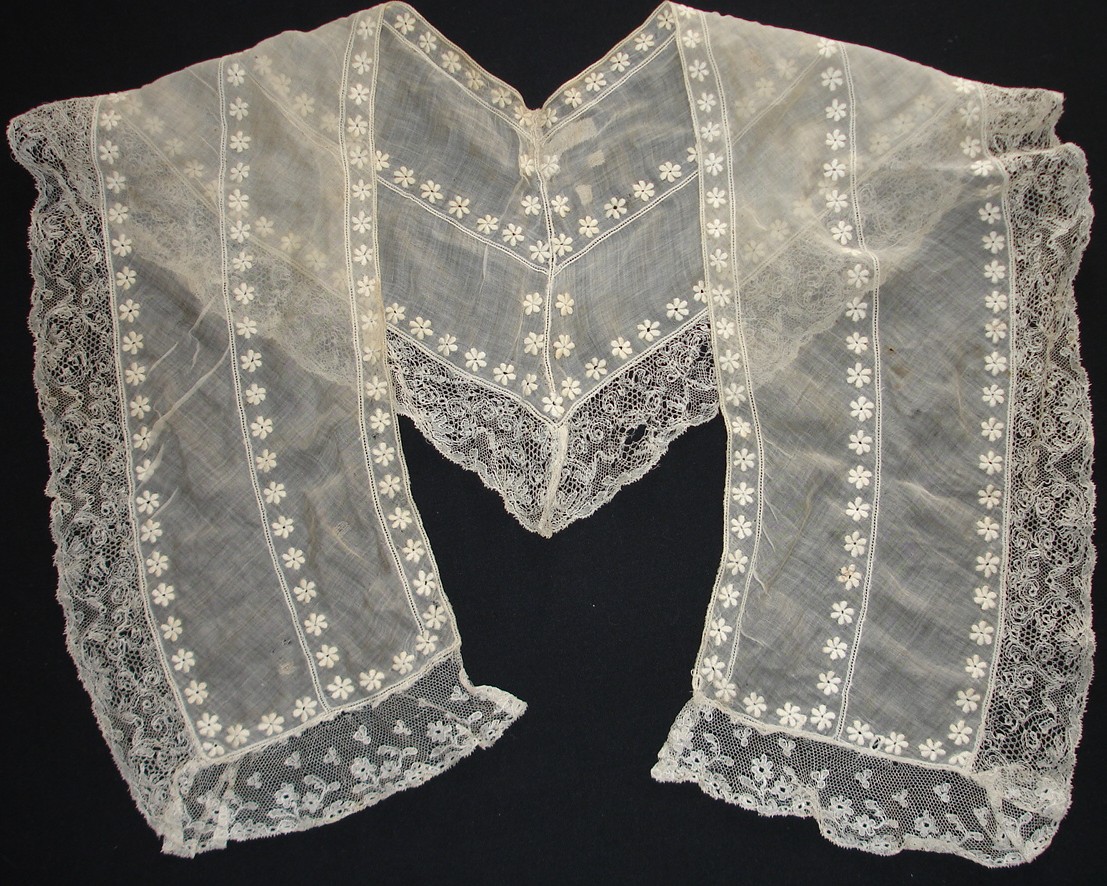
Embroidered collar with lace

More on the topic:

Detail of the hem of a muslin gown. Vintage Textiles.

Read Full Post »

PBS Masterpiece Classic will show an encore presentation of Persuasion 2007 tonight. If you missed this 90-minute film the first time, you will have a chance to see it at 9 PM EST. (Check your local listing).

Sally Hawkins as Anne Elliot in Persuasion, 2007

Vic’s posts about Persuasion 2007:

Other blogger views of the Film

Rupert Penry Jones as Captain Wentworth and Sally Hawkins as Anne Elliot, Persuasion

Posts on this blog about Persuasion

The Elliots of Kellynch Hall, Persuasion 2007

Read Full Post »

« Newer Posts - Older Posts »