Feeds:
Posts
Comments

Archive for the ‘Jane Austen’s World’ Category

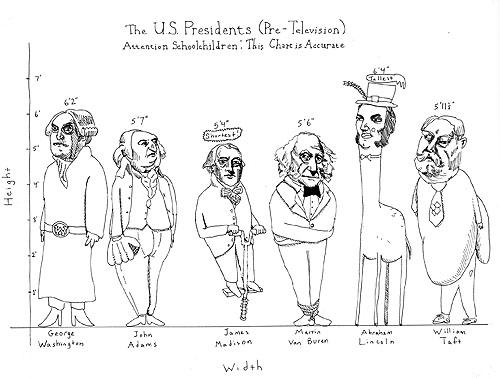
Carolyn Freeman Travers, Research Manager at Plimoth Patuxet Museum, wrote in an article entitled, “Were They All Shorter Back Then?” that the “average height for an early 17th-century English man was approximately 5′ 6″. For 17th-century English women, it was about 5′ ½”. While average heights in England remained virtually unchanged in the 17th and 18th centuries, American colonists grew taller.”

Note: Update to links May 2022: PDF Document from Evergreen Log, 2006: Where They All Shorter Back Then?

This post from History Hoydens provides more detail about the Georgian era.

Phys.org traces the height of an average Englishman over 2000 years.

Early presidents
Image from “Does Height Matter in Politics?”

Read Full Post »

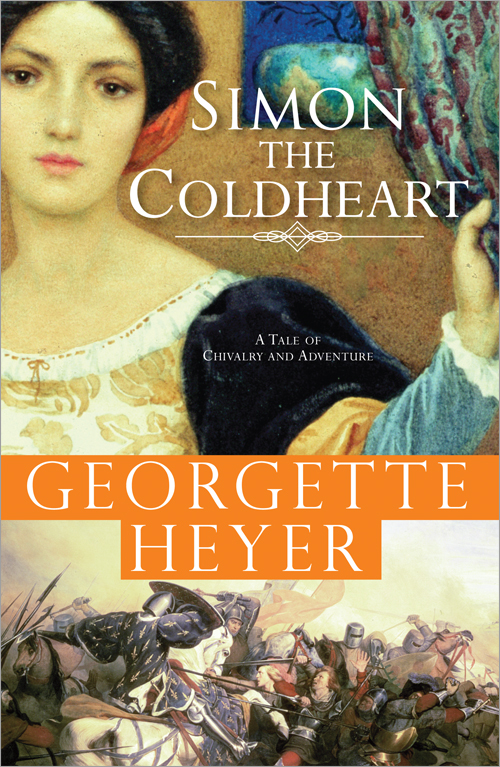
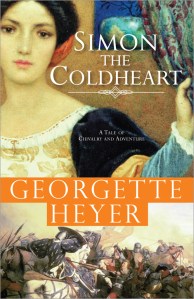
Layout 1Inquiring readers, Simon the Coldheart, an early Georgette Heyer novel, was reviewed by my co-founder of our Jane Austen book group. Lady Anne would be the first person to admit that she is addicted to reading Ms. Heyer’s novels. Her collection of Georgette Heyer’s novels is complete – she owns all her regency romance novels, mysteries, and historical novels. (With 51 titles, that is saying something.)  This is Lady Anne’s review of one of Georgette Heyer’s earliest novels, which will be reissued by SourceBooks just in time for this holiday season.

No one gets period better than Georgette Heyer. Whether she is writing about England in the Regency era or the 15th Century, she has the details and the language perfectly.

In Simon the Coldheart Heyer uses period language to excellent effect. The story, characterized as a tale of chivalry and adventure, tells of young Simon, a base-born bastard of one Geoffrey of Malvallet, as he is off to make his way in the world. Our young hero is not one to feel sorry for his accident of birth, nor does he look to his father to support him. Simon instead styles himself Beauvallet – a nice little wordplay — and seeks to become a member of the household of one of his father’s enemies.
Matters would have gone ill with Simon but for the appearance of a boy, a little younger than himself, who came strolling towards them, followed by two liver-coloured hounds. He was dark, and magnificently clad, and he carried himself with an air of languid arrogance.

“Hola there! he called, and the soldiers fell away from Simon, leaving him to stand alone, arms folded and head turned to survey the newcomer.

The boy came up gracefully, looking at Simon with a questioning lift to his brows.

“What is this?” he asked. “Who are you who strike our men?”

Simon stepped forward.

“So please you sir, I seek my Lord the Earl.”

One of the men, he whom Simon had dealt that lusty blow, started to speak, but was hushed by an imperious gesture from the boy. He smiled at Simon with a mixture of friendliness and hauteur.

“I am Alan of Montlice,” he said. “What want you of my father?”

Simon doffed his cap, showing his thick, straight hair clubbed across his brow and at the nape of his brown neck. He bowed awkwardly.

I want employment, sir, he replied.

Simon is strong and sure of himself. His great confidence amuses and charms Fulk of Montlice, in whose household he seeks to live, and he is awarded a place. Fulk’s son is about Simon’s age, and the two very different young men become close friends. No jealousy or tiresome infighting here.

The book is set in the early 15th Century, and before long, we find ourselves with King Henry IV and young Prince Hal fighting Hotspur and Owen Glendower, in that famous uprising. Young Simon proves himself in battle – no surprise – and comes to the rescue of his half-brother, the young Geoffrey of Malvallet. The rescue earns him a knighthood and begins another surprising friendship, this time with his half-brother. During the next few years, Simon is a knight in the household of Fulk, and young Alan of Montlice, always in love, despairs over Simon. But Simon is looking for a home. On the day that he finds a baronetcy in disarray, he also learns of a plot against King Henry. Gathering some of the men of Montlice around him, he goes to London to tell Henry, and so is awarded the home he needs. His father comes to ask him to live in his household, but he refuses. Because he goes his solitary way, he earns the soubriquet of Coldheart.

But here, Heyer is on firm psychological ground. The base-born child of a servant-girl who died in his childhood is likely to keep his own council and wish to establish his own line. At our first meeting of Simon he claims to be going to his goal, and throughout the book, he stays clear on that. He does not have the luxury of excuses, or whining, or wasting time over women or poetry. He is intent on making his way. It could be an interesting portrait of a complex person, but Heyer only alludes to it. Her business is with the history, and the fun of a group of young men.

Soon enough, Prince Hal, now King Henry V, calls on Simon, his half-brother Geoffrey, and his great friend Alan to assist with the war in France. This is Shakespeare’s Henry at Agincourt, and the battles that Simon and his men fight are a continuation of that part of the Hundred Year’ War. Like his King, Simon meets a strong-willed Frenchwoman at Belremy, and in the end, of course, the lady Margaret falls before Simon and Simon is Coldheart no more. Ultimately, King Henry makes Simon his lieutenant and warden of the lands and marches of Normandy. Heyer, ever the careful scholar, notes in a footnote that in fact the Earls of March and Salisbury held that title.

Simon the Coldheart is an early book, originally published in 1925. As always, Heyer’s details describe the period, and in this book, she takes the further step of using language suited to the time: slightly inverted, filled with pomp and chivalry. It adds greatly to total experience. The book is a romp, fun for those of us who loved the transformation of Prince Hal into Henry, and fun for anyone who would want to read of that bygone age of chivalry. Click here to order the book.

Click on More Book Links Here:

Our Other Georgette Heyer Reviews Sit Below

These Georgette Heyer books, available this holiday season, will be reviewed on this blog and Jane Austen Today.

Cotillion, Simon the Coldheart, The Reluctant Widow, Faro's Daugher, and The Conqueror

Cotillion, Simon the Coldheart, The Reluctant Widow, Faro's Daughter, and The Conqueror


Read Full Post »
Two generations gone—gone in a moment! I have felt for myself, but I have also felt for the prince regent. My Charlotte is gone from the country—it has lost her. She was a good, she was an admirable woman. None could know my Charlotte as I did know her. It was my study, my duty, to know her character, but it was also my delight. – Prince Leopold to Sir Thomas Lawrence after the death of his wife.

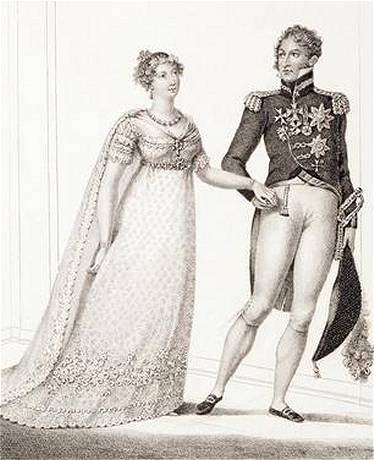
Princess Charlotte and Prince Leopold at their Wedding

Princess Charlotte and Prince Leopold at their Wedding

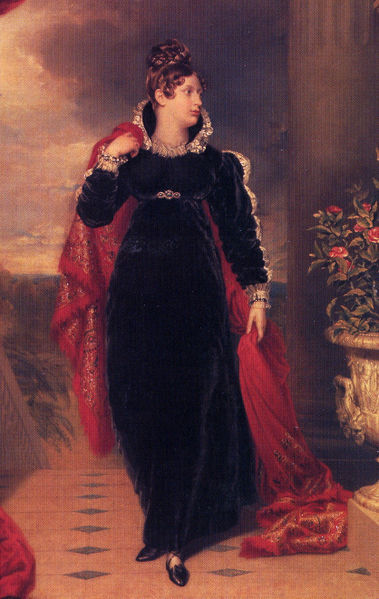
Princess Charlotte’s death after giving birth to a still-born son on November 5, 1817 elicited a national outpouring of grief that was unprecedented in Britain, and her funeral drew massive mourning crowds on a scale similar to those who thronged to Princess Diana’s funeral in 1997. In stark contrast to her father, the Prince Regent, who was universally despised, the young princess was extremely popular, and her pregnancy was closely followed by an enthusiastic public. Charlotte, the only child of George, Prince of Wales (later Prince Regent and George IV) by his wife Caroline of Brunswick, had been married a mere seventeen months before to Prince Leopold of Saxe-Coburg-Gotha amid pomp and splendor. A dutiful young Regency wife, she became pregnant almost immediately, but suffered two miscarriages before carrying her third child to full term. Though her grandfather, George III, had 7 sons and 5 daughters, Charlotte was the only legitimate grandchild. Thus this pregnancy was a truly significant one.

Charlotte  began her pregnancy as a healthy and robust young woman, but after months of blood-letting and a strict diet, an accepted medical practice prescribed by her physician, Sir Richard Croft, she grew feeble. Her death after her tortuous two-day, 50-hour labor would precipitate a new age in medicine,

Princess Charlotte

Princess Charlotte

ending arch-conservatism in obstetrics. At the time that Princess Charlotte gave birth there were two schools of medical thought in delivering a baby: intervention and non-intervention. During the previous century, anatomical knowledge about the birth process increased. Henrick Van Deventer showed that the female pelvis was unyielding during labor, and forceps were introduced. Intervention during labor was still crude, largely consisting of extracting the baby with forceps during a breech birth in order to save the mother’s life. A cesarean section, which might have saved the baby, would surely have resulted in Princess Charlotte’s death.

Princess Charlotte’s physician had married the daughter of a prominent physician who had trained him and who belonged to the non-intervention school of obstetrics. On the evening of November 3, the Princess’s water broke. Although Dr. Croft had accurately diagnosed a breech birth, he decided not to use forceps during the first stage of labor. He also did not administer pain killers. Prince Leopold was so concerned about his wife’s labor that he rarely left her side.

Throughout the Princess’s labour, Royal Physicians, courtiers and ladies-in-waiting had been in constant attendance. The Archbishop of Canterbury and the Home Secretary waited in a downstairs room, while her husband, Prince Leopold, was often at her side. The first stage of her labour, lasting 26 hours, was characterised by inefficient contractions of the uterus – there was very slow progress towards the full dilatation, or opening up, of the cervix that is an essential step in natural birth. The second stage of labour, that part involving the actual pushing of the baby out into the world, which at the beginning of the 21st century we believe should be accomplished in two or three hours, dragged on for twenty-four. The attending doctors were concerned by the appearance of meconium, the dark green bowel contents of the newborn – meconium detected in the course of labour suggests that the infant is becoming distressed. And indeed the child, a boy, was stillborn. Following the birth there was a brisk haemorrhage which undoubtedly contributed to the Princess’s demise. Despite the best efforts of the galaxy of medical talent gathered at Charlotte’s bedside, the royal line could not be secured. So depressed by the tragic event was the Royal Physician Sir Richard Croft that he later committed suicide. – De Costa

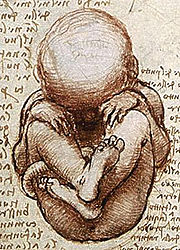
leonardo-fetus-in-wombAfter 50 hours, Princess Charlotte delivered a stillborn 9-pound son. His head had been in a sideways position and was too large for her pelvis. After the delivery Charlotte seemed to do well at first, and she was even given some port wine to drink after two days without food (she mentioned later that the alcohol made her tipsy), but after several hours she became restless, had difficulty breathing, and her pulse became rapid and feeble. She developed malaise and weakness, followed by somnolence then agitation, with progressive worsening and death. Five and half hours after her delivery she died from post partum haemorrhage and shock. Three months after this event, Sir Richard Croft committed suicide, unable to live with the resulting criticism and the knowledge that he had been responsible for the two deaths. Later it was concluded that:

Physicians attending her had failed to act with effective means at their disposal, hastening her demise. In the aftermath of this widely publicized tragedy, “rational intervention” — best represented in the work of Davis — gained force once again. This development included the use of ergot (to stimulate uterine contraction during labor and for expulsion of the placenta), experimentation with blood transfusion, and the introduction of anesthesia for obstetrics by Simpson, all intended to make birth safer, as well as less painful. – Obstetric Literature and the Changing Character of Childbirth

For my other post about medicine in this era, click on: The Physician in the 19th Century

For more information about this triple tragedy and about the Princess, click on the links below:

Read Full Post »

Terrance Hill, author

Terrence Hill, author

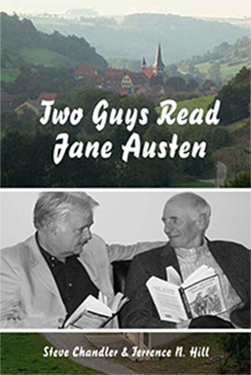
two-guys-read-jane-austen1

I can’t wait to finish Two Guys Read Jane Austen written by life long friends Steve Chandler and Terrence Hill. The beginning chapters, which combine biography,  insights, humor, and information, are quite promising and I feel confident that Terrence and Steve will answer my question: What do literate men think about Jane’s fabulous novels? Using an epistolary format, Steve and Terrence write their observations about Jane’s perennial best-seller Pride and Prejudice and Mansfield Park.

  • Read author Steve Chandler’s description of the book on his blog, iMindShift.

Read Full Post »

It’s been years since I’ve run across the word “clodpole”, which Georgette Heyer uses to great effect in Cotillion, one of the splendid Regency romance novels that Sourcebooks had brought out and is available for order, including as an E-book, in this link. Half the fun of reading Ms. Heyer’s books is discovering which of her stereotypical characters will court or insult each other in that ironic British upper class way we Heyer fans have come to love.

cotillion

In Cotillion we meet a veritable bevy of the typical Heyer characters:

  • Eccentric, old and tight-fisted uncle? Check.
  • Young and pretty heiress? Check.
  • Silly spinster chaperone? Check.
  • Buffoonish impoverished earl? Check.
  • Darkly handsome rake? Check.
  • Foppish Pink of the Ton? Check.
  • Long-suffering but pleasantly surprised father? Check.
  • Beautiful but vapid beauty in distress? Check.

The list of Heyer archetypes goes on and on, but we don’t care. We WANT the familiarity of Georgette Heyer’s typical characters, for they play off each other so well. Like an audience at a concert that has been performed in other music halls, we are interested in how this new orchestration of a well-known arrangement will compare to the others. In Cotillion, Heyer’s particular brand of Regency music reaches the heights of perfection. The rich uncle hopes that by bequeathing his entire estate to his orphaned ward, Kitty, he will force his favorite nephew, Jack, to vie for her hand in marriage. For the sake of equality,  Jack must propose alongside his other male cousins so that all may have an equal chance. But Jack won’t be manipulated and forced to court Kitty. An inveterate gambler,  he bets that Kitty and the considerable fortune she stands to inherit will always be available to him, for she has had an unhidden crush on him since the schoolroom. Jack didn’t count on the one variable that would put a spoke in his plans: Kitty’s anger at his absence and her stubborn determination to teach him a lesson.

Enter the Honourable Frederick Standen. The reader first meets this Exquisite in typical Heyer style:

The young gentleman who alighted from the chaise must have been recognized at sight by the discerning as a Pink of the Ton, for although his judgment, which, in all matters of Fashion, was extremely nice, had forbidden him to travel into the country arrayed in the long-tailed coat of blue superfine, the pantaloons of delicate yellow, and the tasselled Hessian boots which marked him in the Metroplolis as a veritable Tulip, or Bond Street Beau, none but a regular Dash, patronizing the most exclusive of tailors, could have presented himself in so exquisitely moulded a riding-coat, such peerless breeches, or such effulgent top-boots.

Freddy, though fond of Kitty, is not in love with her, and he is out of his depth when it comes to countering her will. Before he knows it he is engaged to her and has promised her a month in London before she must return to her uncle’s stuffy old mansion. Ms. Heyer takes her time setting up this fun plot, but knowing the particulars will be important, for when she sets events in motion they roll along seemingly of their own accord and with some unexpected twists that are sure to delight.

Can Frederick successfully introduce his faux Intended to his family and Society without having to submit to the Shackles of Marriage?

Will Jack be able to forgive Kitty for (unsuccessfully) trying to make him jealous?

Will Kitty, a total Innocent when it comes to London Society, be able to stay out of trouble?

As the plot thickens, we are treated to one priceless scene after another, including those of Kitty dragging Freddy to all the Sights of London. Our fastidious Freddy is aghast when forced to enter the musty rooms of the Egyptian Hall, and feels downright incensed when viewing the Elgin Marbles. “Why, they have no heads!” he expostulates, feeling very put upon at having to escort Kitty to places that he’d never intended to see or ever see again. He’d have much preferred to take her to Astley’s Amphitheatre or the Royal Circus, but both edifices did not open until Easter Monday.

Freddy’s family adds spice to this hugely enjoyable novel. His sister Meg, whose taste in Fashion is questionable; his mother, who spends most of the novel tending to her sick children; and his father, whose encounters with his son are all too brief and rare, add to the deliciousness of this convoluted plot. The title of the book hints at plot developments that are not so obvious at first, for when dancing the Cotillion, partners must switch and change within the dance formations.  If you are looking for a book to read during the Thanksgiving holidays, I cannot recommend Cotillion enough, for its conclusion is as satisfying as its very promising beginning.

Read Full Post »

« Newer Posts - Older Posts »