Feeds:
Posts
Comments

Archive for the ‘Jane Austen’s World’ Category

“after descending to the brink of the river for the better inspection of some curious water-plant, . . .” –Pride and Prejudice, chapter 43; Elizabeth Bennet, the Gardiners, and Mr. Darcy do a bit of “botanizing” during their walk at Pemberley.

On May 30 and 31, 2020, Chawton House hosted a refreshing Virtual Garden Festival. If you missed it, you can still watch most of it online. You can virtually tour the beautiful Chawton House Gardens with Chawton House volunteer Yvette Carpenter or walk the Jane Austen Garden Trail with Clio O’Sullivan. An intriguing section of the gardens highlights a pioneering woman botanist of the eighteenth century. She lived in an era when science was the nearly-exclusive province of men.

The Elizabeth Blackwell Herbal Garden

The Elizabeth Blackwell Herb Garden is inside the Walled Garden built by Edward Knight. In Jane Austen’s letter of July 3-6, 1813, she wrote from her home, Chawton Cottage, that her brother Edward Knight was enjoying his property at nearby Chawton House. She said, “He talks of making a new Garden . . . at the top of the Lawn behind his own house—We like to have him proving & strengthening his attachment to the place by making it better.” The garden Edward built (which was finished after Austen’s death) has been restored, and the Herb Garden was added in 2016. 

Each section of the Elizabeth Blackwell Herb Garden is planted with medicinal herbs that were used to treat different parts of the body. For example, the Chest Bed includes herbs used to treat ailments of a person’s chest, such as coughs. The other sections are Head Beds, Digestion Beds, and Skin Beds. Carpenter tells us that many of these medicinal herbs, such as rosemary, were also used in cooking. Others have -wort as part of their names, indicating they were used for healing. For example, doctors today still recommend the use of St. John’s Wort for the treatment of mild to moderate depression. In the 1700s, Blackwell said it was used against “melancholy and madness.” Other herbs, as the narrator points out, sound magical, like the dragon tree, snakeweed, and mandrake.


Elizabeth Blackwell, Lady Botanist

The plants in this garden are described in a book owned by the Chawton House Library. A Curious Herbal (1737-9), by Elizabeth Blackwell, is said to be the first herbal produced by a woman. It was also far superior to other herbals available at the time. An “herbal” was a book of plants used as medicines. Blackwell drew and colored 500 meticulously-detailed color plates, each of a different plant, with its flower, seeds, and fruit. Along with each plate is the name of the plant in various languages, a description of it, and how it was used medically. The British Library shows 42 pages of A Curious Herbal online, with summarized information about 38 of the plants. (The Biodiversity Heritage Library offers a complete scanned version.)

Amanda Edmiston, an herbalist and professional storyteller, tells Elizabeth Blackwell’s story. According to Edmiston, Elizabeth was born around 1707 in Aberdeen, Scotland. She was the daughter of a wealthy merchant. Elizabeth eloped with a physician named Alexander Blackwell. His medical credentials were called into question, so they fled to London and she set him up in a printing business. (In Scotland, unlike England, women kept their own property after marriage, so she had the money to do this.) Unfortunately, Alexander was also not qualified to be a printer. He got deep into debt, and ended up in debtor’s prison. Elizabeth, penniless, stayed loyal to her husband, and looked for a way to support herself and their young son, and to pay off his debts. 

Elizabeth Blackwell came up with a plan as she and her son enjoyed the Chelsea Physic Garden. Physic meant medical; the plants in this garden were used to treat illnesses. It was filled with exotic plants. Sir Hans Sloane, a respected doctor and renowned naturalist, had collected the plants on his botanical journeys around the world. Many, including cocoa, came from the Americas. Elizabeth became friends with Sir Hans, as well as with the director and the head gardener of the Physic Garden. They supported her idea of creating a whole new herbal, including both native and imported plants. The Worshipful Society of Apothecaries, who rented the garden from Sir Hans Sloane, also officially approved her project. This support was crucial, since otherwise the scientific work of Blackwell, a woman, would probably not have been accepted and respected. 
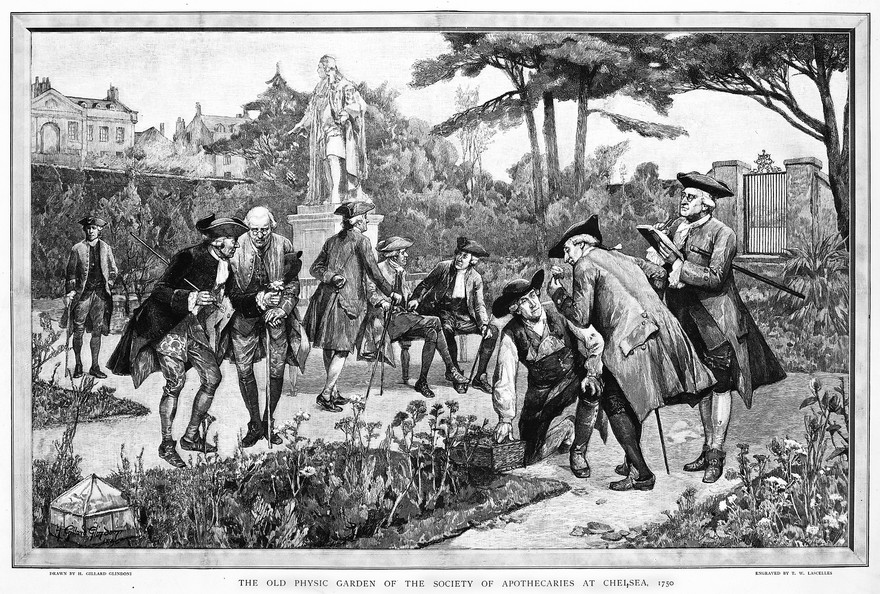
The Physic Garden, Chelsea: men botanizing in the garden, near the statue of Sir Hans Sloane, 1750. Wood engraving by T. W. Lascelles after H. G. Glindoni, 1890.. Credit: Wellcome Collection. Attribution 4.0 International (CC BY 4.0)

The Physic Garden, Chelsea: men botanizing in the garden, near the statue of Sir Hans Sloane, 1750. Wood engraving by T. W. Lascelles after H. G. Glindoni, 1890.. Credit: Wellcome Collection. Attribution 4.0 International (CC BY 4.0)

Even after Blackwell’s achievement, women botanists of the 1760s had to disguise themselves as men to study plants. In the 1790s, a clergyman wrote that it was “unseemly” for girls to study botany. But with the approval of medical and botanical experts, Elizabeth had been able to publish her groundbreaking Curious Herbal

A Curious Herbal

Before this time, most plants in herbals were not drawn from life. For example, mandrakes were often drawn with the root in the shape of an actual man and were said to scream as they were uprooted (as Harry Potter experiences in his magical herbology classes!). Elizabeth Blackwell, however, drew all 500 plants directly from real plants, some from the Physic Garden and others from other collections in Europe. Her illustrations were thus completely accurate. They can still be used today to clearly identify plants. 

It was said that her husband Alexander wrote the text of the book while he was in prison. Edmiston speculates that it’s more likely that Elizabeth did the writing herself. She had access to experts and to a library including texts that she often references. The idea that Alexander, a male physician, had written the text was probably a fiction to make the book more acceptable.

Elizabeth Blackwell published a section of the herbal with four plants every week, from 1737 to 1739 (about forty years before Jane Austen’s birth). Serial publication made her knowledge available and affordable for many, as well as giving her a regular income. The book did well and raised enough money for her to pay her husband’s debts and get him out of prison. However, he then took a job in Sweden. He got caught up in a plot there to overthrow the king and was executed, just as his wife was about to travel to join him. So Elizabeth and her son were on their own again; we don’t know much about the rest of her life.


In Edmiston’s further videos, she tells stories about many of the plants in Blackwell’s herbal. In Afternoon Tea with the Curious Herbal, we learn about cucumbers, tomatoes, green tea, chocolate, and coffee. Part 3, A Walk Through a Garden, includes stories about rosemary, St. John’s wort, lavender, yarrow, sage, and lemon balm. Take a look!

Other Lady Botanists

Blackwell was not the only woman botanist who published about plants in the eighteenth and nineteenth centuries. In “The Women Who Wrote Plants,” Katie Childs introduces us to other women whose books on botany are in the Chawton House Library. 

My favorite title is The Wonders of the Vegetable Kingdom, by Mary Roberts, published in 1822. The “wonders” are described in a series of letters; perhaps imitating the approach of the famous naturalist Gilbert White. (Gilbert White’s Natural History of Selborne in 1789 was a groundbreaking book on the natural world and ecology. You can visit his house, which is now a fascinating museum, just a short drive from Jane Austen’s house at Chawton.) Roberts also wrote A Popular History of the Mollusca, with 18 color plates showing varieties of seashells and the creatures that live in them. It doesn’t sound like a “popular” subject, but perhaps it was in her day!

While women were not expected to write adult books on botany during Austen’s lifetime, it was fine for them to write botany textbooks for children’s education. These are quite detailed, like adult books. Priscilla Wakefield’s text for children, Introduction to Botany, was published in 1796. She wrote it as a series of letters, with color illustrations. In Katie Childs’ presentation, she tells us that Wakefield was a Quaker social reformer who started a maternity hospital. Elizabeth Fry, the famous Quaker prison reformer, was Wakefield’s niece.
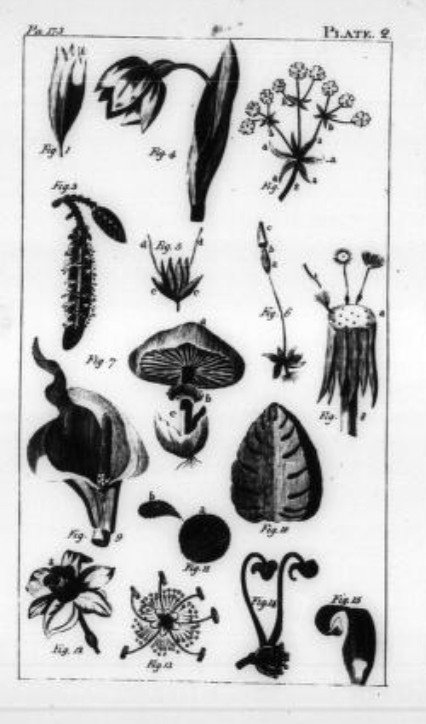
Plate from An Introduction to Botany by Priscilla Wakefield, 1796, at archive.org

Botany did become a fashionable pursuit for elegant ladies. Botanical Rambles (1826), by Lucy Sarah Atkins, is subtitled, “Designed as an Early and Familiar Introduction to the Elegant and Pleasing Study of Botany.” The ability to draw plants accurately became an “accomplishment” ladies aspired to. Books were written specifically on how to draw plants, including information about the plants themselves. Watch Ms. Childs’ talk for more about early female botanical writers, and to see illustrations from their books.

Beatrix Potter, Expert on Fungi!

Speaking of discrimination against women in science, especially in botany: Much later, in 1897, a paper on fungi by Beatrix Potter (yes, the author of Peter Rabbit) was presented at the Linnaean Society in London. However, since she was a woman, she was not allowed to present, or even to attend the meeting. Her paper, presented by her uncle, was not taken seriously since it was written by a woman. Today, though, Beatrix Potter’s illustrations of various fungi are used around the world to identify species of mushrooms.

Highlight of the Festival: Gardens in Jane Austen

On Sunday, the Garden Festival offered some presentations specifically for gardeners, so if gardening is one of your passions, you may want to check those out.

For Jane Austen lovers like me, though, the highlight of the festival was “Love in the Shrubbery: Gardens in Jane Austen’s Life and Works.” Kim Wilson, author of In the Garden with Jane Austen, finished out the festival with this charming presentation. In it, she shows us gardens Austen knew. She also explains and illustrates those terms like shrubbery and wilderness, describing places where Austen’s ladies and gentlemen walk. Did you know that shrubberies had paths made of gravel to keep the ladies’ feet dry, since wet feet were considered potentially fatal? (Think of Marianne Dashwood, sitting in wet shoes and stockings before her near-fatal illness.) If you only have time to watch one video from the Chawton House Virtual Garden Festival, I recommend this delightful 28-minute presentation.

I also joined in an engaging creative writing workshop led by Claire Thurlow, “A Garden Writing Retreat.” Claire encouraged the participants to imagine ourselves in our own special gardens as we write. While that workshop is not available online, you might use Kim Wilson’s talk, or any of the virtual garden tours from the festival, to enjoy time in a virtual garden today. I hope it will refresh your soul.

Note for anyone who might be wondering: There was also a later Elizabeth Blackwell, first woman to graduate in medicine in the United States, in 1849. Both Blackwells were pioneering women in the medical field of their times.

A Word About the Author: Brenda S. Cox blogs on “Faith, Science, Joy, . . . and Jane Austen!” at brendascox.wordpress.com . Under the category “Science” at her site, you will find other articles on science in Jane Austen’s England, including women of science like Caroline Herschel and Mary Anning.

Quote from Austen’s letters is from p. 224 of Deirdre Le Faye’s fourth edition of Jane Austen’s Letters.

Links embedded in the article:


Read Full Post »

Last summer I received an uncorrected manuscript of The Jane Austen Society to read with a request for feedback and any thoughts I had before a final printing. (I assume many other readers also received this request.) Natalie Jenner’s name was not on the cover. Not wanting to be influenced by preconceived notions, I read the MS before seeking the author’s name. Once I realized that the story is purely fictional (peppered with historical facts), I stopped comparing it to the founding of the real Jane Austen Society in the United Kingdom in 1940.


The tale is, in fact, a lovely story—a fairy tale—about a group of people who have very little in common except their love for Jane Austen’s novels. It is a perfect summer read that transported me to Chawton and to a different age and time. Natalie Jenner, in her first published novel, gave herself a difficult assignment: to write about pre- and post-World War II England, to incorporate history and knowledge of the customs of the time, place and setting, and to make the intricacies of estate law and wills understandable without bogging down the story’s pace. She also added complexities to her characters’ motivation and insights that sets the tale apart from Austen fan fiction.

About the Plot:

Aside from their love for Austen’s novels, the primary characters have another thing in common—pain and loss in one form or another. At the start of the book, they are facing their demons in isolation. Some are more successful than others in finding a way forward in life, but all are struggling until they join in a common effort to found The Jane Austen Society. This bond begins a healing process for them all.

Jenner sets up the potential for this bond early in the book, where through the thoughts of Adam Berwick, a young farmer who reads Austen, he thinks about why her novels hold so much meaning in his life:

Adam loved being in this world, transported, where people were honest with each other, but also sincerely cared for each other, no matter their rank. Where the Miss Bateses of the world would always have a family to dine with, and the Harvilles would take in the grief-stricken Captain Benwick…and even the imperious and insensitive Bertrams would give Fanny Price a roof above her head. And the letters people sent—long, regular missives designed to keep people as close to one’s heart and thoughts as possible…” (p.98)

Adeline Lewis, who, as a newlywed, loses her husband at the end of WWII, and experiences yet another loss less than a year later, is in profound pain. In this passage she is haunted by her spouse’s last moments:

She pictured him in his bomber plane, the gauges rattling before him…and the intensity and the detachment that he would have brought to this one terrifying moment. He would have given his all, even though the effort didn’t matter—you were just a speck on someone else’s gauge, a tightrope walk across an abyss, an entire human life balanced on the point of a needle.

Now she was on the point of the needle too…if she kept this up and fell off and into the abyss, she might pull herself out one day—but she also might not.” (p. 101)

As a school teacher in Chawton, Adeline introduces young pupils, including Evie Stone, to a challenging choice of reading materials and class discussions which were more sophisticated than the village authorities liked. The books included Jane Austen novels, as well as writings by Mary Wollstonecraft. Evie dropped out of school at fourteen to supplement her family’s income as a house maid in Chawton House. There she encountered the richness of the Knight family library—over 2,000 volumes, many of them original editions. Sleeping only 4 hours a night, the young girl catalogues every book in the collection after work hours. We Austen fans know that a house maid’s daily duties are grueling, even with the kindest mistress. At this point I suspended disbelief and the fairy tale quality that I mentioned in the second paragraph of this review kicked in. Jenner’s writing style is so lovely that I kept going, for Evie’s trajectory, which is fun to follow, is important in moving the plot forward.

As with many reviewers, I won’t give the rest of the plot away. Jenner adopts Austen’s use of free indirect discourse (FID), which allows us to get in the minds of the narrator and characters. This technique is not as easy as it seems, but as a new author she switches between characters and narrators seamlessly and superbly IMHO.

The group’s discussions and thoughts about Austen’s novels are among the most rewarding passages in the book and provide the details that Austen fans crave. Take this exchange between Adam, the farmer, and Adeline, sitting in her window seat surrounded by books, the top cover of which is Persuasion:

“A hard book, that,” he comments. Adeline asks if he likes Jane Austen and he nods yes.

“…which of the books is your favourite?”

He looked down at his lap and gave her a small, self-conscious smile. “All of them. But Elizabeth Bennet is my favourite character.”

“Oh, me, too. There’s no one like her in all of literature. Dr. Gray goes on and on about his Emma, but I’ll take Lizzie over Emma any day.” (p. 103)

At that moment Adam realizes that Adeline views Austen’s characters as real people, as he does, and discovers that someone else in the village feels the same way about the novels as he.

Each of Jenner’s characters are bonded through their love of Austen, and they talk about the books frequently, which is a joy. Jenner also provides clues and hints about which of her characters resemble those in Austen’s books. It’s a fun game, one that evokes the many hints and mysteries buried within Emma.

To Listen or to Read?

Image of Richard Armitage, narrator of the audio book, with the book cover of The Jane Austen Society in the background.When I agreed to review this novel, I received a traditional book and an audio book. I “read” both and had thoughts about each of the treatments. Who can argue with listening to Richard Armitrage reading a story set in early 20th century England? Not I. Think of me as a fan struck by his rich baritone voice, which can be transformed to that of a 16-year-old girl. Richard’s pacing in reading the book is effortless, clear, and easy to follow. He acts the voices of the characters so that we know exactly who’s talking at any time:

Adam Berwith, the farmer with an overbearing mama, who mourns the loss of his father and brothers in the war and who finds solace in reading Austen’s novels; Mimi Harrison, the almost-washed up Hollywood actress who loves Austen’s novels and has funds to burn; Dr. Gray, grieving for his long dead wife and yearning for a woman who doesn’t give him the time of day; Adeline, who struggles to pull herself out of a deep depression; Evie, the young energetic maid; Francis Knight, alone, forlorn, and rejected by her father; and Andrew Forrester, the solicitor who must keep a terrible secret from Miss Knight. These characters are skillfully acted by Mr. Armitrage, who does not disappoint. His brogue as Yardley Sinclair, the auctioneer, is lovely to hear, and I wish Sinclair had a larger role to play in the novel.

The one exception is Jack Leonard, a Hollywood producer and Miss Harrison’s one-dimensional fiancé. Jenner gave him none of the shades and nuances of her other characters. This becomes most obvious when even a talented voice actor can do little but bark out Leonard’s lines. Leonard comes across like an unfeeling thug, which makes this reader wonder what anyone as nice and beautiful as Mimi (Marianne) ever saw in him.

I listened to the book on long walks or car rides; sunning on the deck; washing the dishes or dusting. The convenience of audio books is undeniable, but not when a stray train of thought takes you away from listening closely. It is easy to lose your attention, and if you are interrupted the medium makes it hard for you to toggle back and forth to find the precise spot you lost. In addition, one can’t speed up or slow down an audio book without affecting the sound quality. One bonus of this audio book is an interview of the author at the end of the story, which adds more information about Ms. Jenner to the short biography that sits at the bottom of this post.

Traditional print books—*sigh.* New books crackle, old books emit a delicious library “musk” smell. Print books can be held and fondled, with each page lovingly turned. They are read at leisure or skimmed and skipped quickly to find information. They can be earmarked; they provide space for margin notes. Words and phrases can be underlined (which for years I considered heresy, until I learned that marginalia is a time-honored tradition).

I cherish my books and treat them like beloved possessions. My biggest concern is that they hog space. In my former house, I could devote several rooms to book cases that contained over 4,000 volumes collected since college, but when I downsized, this luxury disappeared. Choosing which books to keep broke my heart, but I managed to save around 600 (and add 100 more since.)

Read or listened to, Natalie Jenner’s debut novel provides a relaxing, fun read. I give it four out of five tea cups.

The Contest: which is your preference?

Please feel free to comment on your preference: Audio or Traditional? The contest will be open until midnight June 30th EST U.S. For the first time, I am giving away an audio book, which I hope traditionalists won’t mind.

Image of Natalie JennerAbout Natalie Jenner:

Natalie Jenner is the international bestselling author of THE JANE AUSTEN SOCIETY, a fictional telling of the start of the society in the 1940s in the village of Chawton, where Austen lived. Born in England and raised in Canada, Natalie recently founded the independent bookstore Archetype Books in Oakville, Ontario, where she lives with her family and two rescue dogs. THE JANE AUSTEN SOCIETY is her first published novel and is available now from St. Martin’s Press in North America and Orion Books in the UK/Commonwealth, with translation rights sold in Portugal, France, Romania, Italy, Brazil, Greece, Czechoslovakia, Croatia, South Korea and Serbia.

About the book:

Purchase The Jane Austen Society at this link to Amazon.

Hardcover: 320 pages

Publisher: St. Martin’s Press (May 26, 2020)

Language: English

ISBN-10: 1250248736

ISBN-13: 978-1250248732

Other reviews:

See the blog tour on the side bar

Rachel Dodge, Jane Austen’s World: An interview with the author, Natalie Jenner

Deborah Barnum, Jane Austen in Vermont: A list of ten reasons to read the novel

Read Full Post »

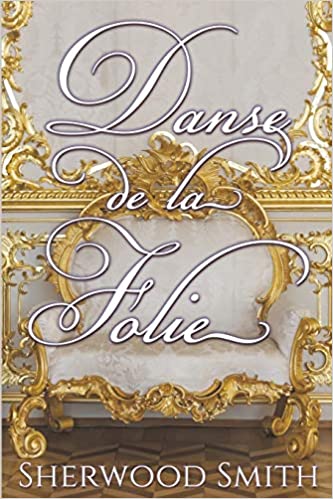
Image of the book cover of Danse de la Folie by Sherwood SmithLovers of Austen novels will find much delight in Sherwood Smith’s Danse de la Folie. With more wit than romance, this novel introduces two couples, mapping their relationships onto the quadrille. Smith’s attention to historical details, family dynamics, and rich characters create an engaging story.
Using the four dancers of the quadrille, Sherwood Smith overtly indicates our heroes and heroines. The first heroine on the page is the Honourable Miss Clarissa Harlowe. Described as plain in comparison with her younger stepsisters, Clarissa is warm, observant, and conscientious—especially kind to her servants. And unlike the witty heroines of most Austen books, Clarissa will inherit a large fortune when she comes of age.

Clarissa’s Hampshire household combines all the best domestic elements of Austen novels—benevolent parents, garrulous sisters, and wealth. Smith writes Lord and Lady Chadwick, their bevy of young daughters, and the widowed Aunt Sophia without any of the financial anxieties of the Bennets or Dashwoods. Aunt Sophia is Smith’s nod to Mrs. Norris, but the reader will not see Clarissa treated like Fanny Price. Though Clarissa is a child of Lord Chadwick’s first marriage, her glamorous stepmother, the present Lady Chadwick, treats her kindly.

As an heiress, Clarissa has lost her taste for romance. She has endured suitors only interested in her fortune, so she is reticent to be swept away by the popular tales of languishing love. She tells her friend Lady Kitty, “I do not see the appeal in hopelessness.”

Catherine Decourcey (Lady Kitty) lives for romance, gothic tropes, and wild narratives. Where Clarissa is wealthy, unassuming, and practical, our second heroine is beautiful, imaginative, and in desperate need of financial help. After Clarissa survives a shipwreck, she and Kitty become fast friends while she recovers at Kitty’s family home, Tarval Hall. The friendship shows both women at their best: Clarissa, wise and generous, and Kitty, earnest and sensitive. If you’ve ever wanted to refashion Elinor and Marianne Dashwood with contemporary depth, you can thank Shewood Smith for Clarissa Harlowe and Catherine Decourcey.

Though Clarissa has no desire to marry, a persistent suitor awaits her return to Hampshire: the ponderous Lord Wilburfolde. Well-born, respectable, and dull, Lord Wilburfolde prefaces every comment with, “My mother says.” With no suitors of her own, Lady Kitty accompanies Clarissa and her family to Hampshire and then to London for the Season, determined to publish her novel and marry well so she can ease her family’s financial burdens.

While the dancing romance of the novel only favors two couples, Miss Lucretia Boulderston angles for a chance to play the heroine. A neighbor to Lady Kitty, and quietly engaged to Kitty’s brother Carlisle, Lucretia uses every opportunity to gain social advantages. After her first meeting with Clarissa, Sherwood Smith writes, “Miss Boulderston curtseyed and departed, leaving behind a pleasant trace of French scent, and a general sense of constraint.” Lucretia is a calculating presence in the novel, snubbing her family and friends by turns, plying gentlemen with wine, and planning a picnic just to get caught in the rain. Her betrothal to Carlisle is privately announced early on, and inserted into the newspaper much later—without Carlisle’s consent.

Though Carlisle is not secretly engaged like Edward Ferrars, the arrangement is equally burdensome. For much of the novel, Carlisle cannot pursue the woman he loves—all because Lucretia engineered a kiss in the garden years ago. Quiet and well-read, Carlisle Decourcey inherited his father’s title as the Marquess of St. Tarval, but not his reputation as a spendthrift and rake. Our hero wants to keep his family home in good repair, spend a quiet life in the country, and introduce his sister into society. He struggles to find the means.

The final hero is Philip Devereaux, a sharp, fashionable gentleman, and the object of Lucretia’s most determined machinations. Like his cousin Clarissa, Philip is pursued for his wealth. Lucretia dreams of becoming his wife—“only two deaths away from being a duchess”—and making London society sick with envy.

The four dancers come together in the London Season, meeting at the weekly Almack’s balls, occasional soirees, rides in the park, and even a duchess’s masquerade. Smith’s writing sparkles with the historically appropriate details that contemporary readers crave—observations on fashion, etiquette, and social luminaries like Beau Brummell. While Lady Chadwick copies gown patterns from the Duchess of Devonshire, the younger Miss Boulderston has a suitor known in town for the height of his shirt-points.

Despite her fortune, Clarissa’s position in the novel is another poignant historical circumstance. As an unmarried woman, she fears being a burden to her brother James when he sets up his own household. She accepts Lord Wilburfolde’s suit so she won’t become another Aunt Sophia, living on her brother’s goodwill. But with encouragement from her formidable grandmother, she manages to create a better future for herself.

Though Smith identifies the four dancers clearly, the eventual pairings don’t ring false or shallow at the end of the novel. With a wide cast of characters, Danse de la Folie reads more like a miniseries. Aunt Sophia and Lucretia Boulderston compete for most exaggerated theatrical gestures while Lord and Lady Chadwick are the most benevolent and disinterested parents a reader could wish for. To solve her problems, Lady Kitty declares, “One must be the heroine,” but she never adopts Lucretia’s rehearsed gestures, a running joke throughout the book. Lady Kitty steps into the heroine’s position with her charming artlessness, catching the eye of Mr. Devereaux and proving that warmth and sincerity will defeat strategy and malice.

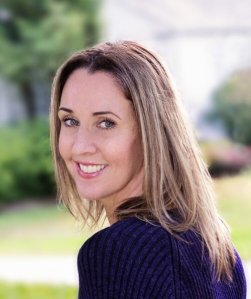
Image of author Sherwood Smith

Sherwood Smith

About the author: Sherwood Smith has loved Jane Austen all her life, which led to her getting a degree in European history. She lives in Southern California with her spouse, two kids, and two dogs.

  • Paperback: 338 pages
  • Publisher: Book View Cafe (September 25, 2018)
  • ISBN-10: 9781611387407
  • ISBN-13: 978-1611387407


About the reviewer: Emily K. Michael is a poet, musician, and writing instructor from Jacksonville, FL. She is the poetry editor for Wordgathering: A Journal of Disability Poetry and Literature at Syracuse University, and she curates the Blind Academy blog. Her first book Neoteny: Poems is available from Finishing Line Press (click here to enter the site). Blind and print-disabled users can also find it on Bookshare.

Read more of her work at her website:

  • “On the Blink: How My Light is Spent.” Click on this link.
  • Watch her TEDx FSCJ talk entitled The Confluence of Disability and Imagination (Dec 6, 2016) at this link.


Read Full Post »

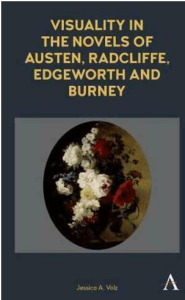
Cover image of Visuality in the Novels of Austen, Radcliffe, Edgeworth and Burney by Jessica A. Volz Inquiring readers: This post is a follow up to my review of Dr. Jessica Volz’s book, Visuality in the Novels of Austen, Radcliffe, Edgeworth and Burney. I mainly reviewed Chapter 1, which concentrated on Austen’s visuality. For this post, I asked the author about Radcliffe’s, Edgeworth’s, and Burney’s contributions and why she began her interesting observations with Austen.

Vic: Your book’s title is Visuality in the Novels of Austen, Radcliffe, Edgeworth and Burney. Jane Austen was younger than the last three women and not as famed during her lifetime. Why did you choose to place her “story” first in your book? Is it because she emerges as the best known, most popular author today – the genius?

Volz: Jane Austen was indeed born after the other women authors whose novels I discuss. She was born on December 16, 1775 – roughly 8 years after Maria Edgeworth, 12 years after Ann Radcliffe and 24 years after Frances Burney (Madame d’Arblay). Nonetheless, she was outlived by these illustrious contemporaries, departing from this world in 1817 at the age of 41, leaving her last work – Sanditon – (distressingly) unfinished. While Austen, Radcliffe, Edgeworth and Burney were geniuses of their times in their own respective ways, I believe Austen is a genius for our era as well. The novel coronavirus pandemic has made some of the dynamics that her novels expose all the more relatable. After William Shakespeare (whose fame as an indivisible person is still a question of heated debate), many would argue that Austen is the most universally acclaimed literary figure in history. For a writer whose name was not initially attached to any of her published works, that’s quite the surge to branded stardom. When I set out to turn my doctoral research into a book that would bridge the divide between academic and non-academic audiences, I wanted its discussion to open with an author whose appeal continues to grow across the globe and whose brilliant use of language has inspired other luminaries, from Sir Winston Churchill to J.K. Rowling. It’s not for nothing that Austen is the only woman apart from the Queen to appear on a UK bank note. I am also very grateful that Caroline Jane Knight, Jane Austen’s fifth great niece and the founder and chair of the Jane Austen Literacy Foundation (which I cannot encourage you enough to support!), supplied the foreword to my book.

Jessica Voltz at Chawton House

Jessica Volz at Chawton House. Image courtesy of Dr. Volz

As Anna Laetitia Barbauld once exclaimed, “Next to the Balloon, Miss Burney is the object of public curiosity.” The celebrity status that Frances Burney – novelist, playwright, diarist and Second Keeper of the Robes to Queen Charlotte – had attained upon being acknowledged as the Authoress of Evelina, the book that everyone was reading in 1778, is no longer. From an anonymous literary “incognita,” who had relied on writing both furtively and in a feigned hand, Burney had metamorphosed into a highly visible household name. (Perhaps only Georgiana Cavendish, Duchess of Devonshire, exceeded her standing in this regard.) Edmund Burke found in Evelina a page-turner, while Sir Joshua Reynolds reputedly offered £50 in exchange for the author’s identity. As today’s bookshelves can attest, Burney’s fame has curiously waned; in her afterlife, Austen has usurped Burney’s place on the podium of visibility.

While each of the novelists I examine in my book relied on visuality – a methodology empowering the continuum linking visual and verbal communication – its forms and functions varied in scale and in style. In addition, Austen, Radcliffe, Edgeworth and Burney experimented with and contributed to different approaches to the novel: Austen modernized narration through her introduction of free indirect discourse; Radcliffe reinterpreted the Gothic novel and removed her plots to temporally and geographically disparate settings (picture a scene painted by Nicolas Poussin or Claude Lorrain); Edgeworth imbued her narratives with political undertones that conveyed the situation in Ireland and was innovative in her theatrical experimentation with male narrators and cross-dressing; Burney’s comparative visibility in society, from Samuel Johnson’s circle to the Court of Queen Charlotte, shaped her treatment of the courtship novel and influenced her transition from an epistolary to a third-person perspective, which was, in my humble opinion, nothing short of Revolutionary.

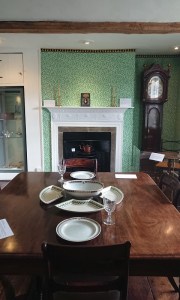
Image of dining room at the Jane Austen House Museum

One of the rooms at the Jane Austen House Museum in Chawton. You can see Austen’s writing desk on the far right, where she wrote in private. Image courtesy of Dr. Volz

My book moves from novels empowering the role of projections of character exterior to the self (think portraiture and architectural metaphors) to the drama of reflections, fashion and the minutiae of self-display (as in color codes of emotions and eyes that “speak”). This calculated progression shows how visuality “liberated” women novelists at a time when self-expression was particularly constrained for their sex, arming them with a means by which they could freely direct the reader’s attention to otherwise “indescribable” aspects of the era: its gender politics, socio-economic constraints and patriarchal abuses.

Vic: Please summarize the contributions to visuality that Radcliffe, Edgeworth and Burney made that influenced Austen or were parallel to Austen’s influences, and that were readily known to 18th- and 19th-century readers.

Volz: Given that writers cannot help but be influenced by what they read, the forms and functions of visuality that I describe in my book were trending to varying degrees when Austen was penning her novels. For instance, she would have been well-acquainted with Burney’s manipulation of ocular dialogue and color codes of emotion. However, Austen’s approach to directing the female gaze is more complex, especially when combined with free indirect discourse. She often challenges her protagonists and, in turn, readers of her fiction to make judgments about true character through portraiture and architectural metaphors – approaches to visuality that were also employed by Radcliffe and Edgeworth. The fact that visuality was not an esoteric means of communicating the otherwise difficult/impossible to express was what gave it power. The language that women novelists had to employ (to preserve their reputations as respectable women) reveals the self-consciousness that resonated between the author and her fictional women. Women novelists were, like women readers of novels, seen as threats to a patriarchal regime of knowledge where men had power over women’s perceptions of their surroundings and themselves. Today, gender equality remains a call to action, an unfortunate truth which UN Secretary-General António Guterres has also reiterated. In addition to appealing to those similarly infatuated with British literature, my book would serve as a uniquely valuable resource for diplomats, politicians and lawyers, as visuality remains an efficient and effective means of strategic and diplomatic communication that should not be overlooked.

Vic: My third question is a minor one: Burney and Austen never met, but their lives in terms of acquaintances and places they visited and lived in were close. Do you have any thoughts about this?

Volz: Yes, I think it’s fascinating to consider that Austen and Burney would have been directly or indirectly acquainted with a number of the same sights and social contexts on British shores. The views of Austen, Radcliffe, Edgeworth and Burney were culturally representative, making them and their novels choice case studies in my book.

(Gentle reader: please read more about the intersection between Frances Burney and Jane Austen in the link below along with accompanying images.)

Vic: Why did you not include more information about Austen’s ‘Persuasion?’

Volz: It was admittedly difficult to narrow the scope of my book. I ultimately opted to confine my discussion to novels published in Britain between 1778, which coincided with the start of the Anglo-French War, and 1815, the year that witnessed the Battle of Waterloo. (Burney was actually in Brussels at the time.) As my book explores cross-Channel tensions and manifestations of cultural identity, this period was of particular interest. Nonetheless, Austen’s use of visuality in her other works, including Persuasion and Northanger Abbey, would be fascinating subjects of future exploration. Like Burney’s approach to visuality, Austen’s penchant for architectural metaphors and portraiture remained largely unchanged during her lifetime. It was a hallmark of her artful construction of language and, like her penmanship, held strong right up until the end.

Additional information about the Burney-Austen connection:

“Jane Austen and Great Bookham,” a post on Deborah Barnum’s blog, Jane Austen in Vermont, and written by guest contributor Tony Grant (accompanied by his usual informative photographs), discusses how Frances Burney’s and Jane Austen’s lives intersected. Below find a slide show of a few of the images in that post.

This slideshow requires JavaScript.

Fanny Burney’s tomb rests in the cemetery of St Swithins Church in Bath. George Austen is buried in the same churchyard. St. Swithins is the church where Jane Austen’s parents– George Austen and Cassandra Leigh–were married.

Email comment from Jessica Volz regarding the Jane Austen–Frances Burney connection:  The Burney-Austen link is fascinating. I made it to King’s Lynn after speaking at the Pride an Prejudice bicentenary conference at the University of Cambridge and quested for  her birthplace, which was marked by a Clarks footwear shop (as of 2013). What a shame! Burney led a fascinating life, and her journals and letters are the stuff of which novels were/are made.

Read Full Post »

Image of the cover of The Jane Austen Society by Natalie JennerIt is my pleasure to introduce to you author Natalie Jenner and her debut novel, The Jane Austen Society. – Rachel Dodge

Let’s begin with a description of the novel to whet your literary appetites:

One hundred and fifty years ago, Chawton was the final home of Jane Austen, one of England’s finest novelists. Now it’s home to a few distant relatives and their diminishing estate. With the last bit of Austen’s legacy threatened, a group of disparate individuals come together to preserve both Jane Austen’s home and her legacy. These people—a laborer, a young widow, the local doctor, and a movie star, among others—could not be more different and yet they are united in their love for the works and words of Austen. As each of them endures their own quiet struggle with loss and trauma, some from the recent war, others from more distant tragedies, they rally together to create the Jane Austen Society.

Introducing Natalie Jenner, author of The Jane Austen Society:

I first “met” Natalie Jenner online last year, and we’ve since formed a lovely friendship—one that I foresee extending into the future for a very long time. That’s the thing about Jane Austen devotees: We always seem to find one another, even if we’re from different parts of the world, because of our shared love for Jane, her life, and her work. That magic is also what immediately drew me to Natalie’s debut novel, The Jane Austen Society, a story about a group of people who are drawn together based on their love for all things Austen and a desire to protect her legacy.

As a fellow writer, I couldn’t wait to pick Natalie’s brain about how she came up with such a beautiful concept for a novel. Her answers to my questions gave me a further glimpse into her creative process and the story of how this novel came to be. I’ve loved getting to know Natalie this past year. And I hope, once you read her interview, you’ll feel like you know her, too.

Q: When did you first discover Jane Austen and how have her books touched your life?

A: I discovered a beautiful 1976 Dutton edition of Pride and Prejudice on my parents’ bookshelves when I was a child, and I remember being besotted by the fact that the book came in a box with a ribbon that ran through it, by the wonderful ink and wash illustrations by Isabel Bishop, and most of all by that crazy dialogue-heavy opening scene with Mr. and Mrs. Bennet that reads just like a screenplay.

Austen’s books have touched my life in many ways: as a teenager, they introduced me to female characters with little social agency yet huge reservoirs of inner conviction and resilience and hope. As I started my own adult and family life, books like Persuasion and Sense and Sensibility in particular showed me a side to the pathos of real grown-up life that seemed missing from so much modern culture. And most recently, Austen helped me through a challenging time in middle age by her personal example of living with chronic pain and grief, and writing through illness and despair.

Q: What initially inspired you to write The Jane Austen Society? (Do you remember where you were when the idea first came to you?)

A: I remember exactly where I was. I had been spending a “quiet year” rereading all of Austen, looking for solace when my husband was diagnosed in his early 50s with a very rare and incurable form of lung disease. This led me to start reading as many books about her life as I could find, which in turn inspired me to take a bucket list trip to Bath and Chawton to literally walk in Austen’s footsteps, as well as attend my first JASNA regional event. I was also binge-watching a lot of Downton Abbey and British television during this time, including a home real estate series called Escape to the Country. When my husband’s lung decline started to stabilize following experimental treatment, I remember feeling hope for the first time in two years of what was frankly a medical nightmare. Along with hope, I was also surprised to find myself yearning to write again, after locking five unpublished manuscripts from my 30s away in a drawer many years ago. Initially I was going to write about a group of people trying to rescue an old British estate house, similar to Downton Abbey. But my daughter very clearly remembers me one day, out of the blue, looking up from my reading and saying very simply instead, “I am going to write a book about a group of people trying to save Jane Austen’s house.” And that is pretty much still the tag line for my book.

Q: At what point did you decide to write it as a fictional account? Did the story come to you all at once or did it slowly build as you planned and drafted?

A: Interestingly, because my first impulse was to write something completely fictional about a made-up house, the idea of any of it being related to Austen only came upon the heels of that. So, fictional first, then Austen second. I conceived of eight to ten characters, half men and half women, and I gave them jobs (as a career coach in my other life, I know how important one’s job is to one’s identity, and in looking back, I think that must be why so much of the action stems from the fact of someone being a doctor, or a lawyer, or a servant girl).

That was all the planning that I did in advance. When I sat down one day to write, an image immediately came to mind of a man, tired and lonely and sad, lying back on the very stone wall in the churchyard of St. Nicholas where I had rested the fall before when visiting Chawton. I remember typing that first chapter, having this man meet the Austen fan from America who has descended on his village, making up his life story, having him start reading a copy of Pride and Prejudice from the library (that moment we can all relate to, that very first “hit”), and then I wrote the words “He was becoming quite worried for Mr. Darcy” and right away I knew what my book was really going to be about. People in love with Jane Austen, and then learning to love themselves. I write completely without a plan or outline of any kind—I love it, it’s so exhilarating, and it lets my characters drive the action, so everything always comes as a complete surprise to me. That’s where all the fun in writing is for me. Revision is the penance for the fun.

Q: How do your characters “introduce” themselves to you? What is the process you use to create and develop them?

A: My characters appear to me completely formed and ready, in terms of their appearance but also their temperament, personality, and mannerisms. I can’t explain it, and I haven’t asked other authors how common that is, probably because I am afraid of the answer! I can immediately picture everything about my characters when they first appear to me except—strangely—the exact features of their face. Their faces always remain a little blurry, but that does enable me to do stunt-casting later on for my dream movie or tv version.

Q: Your character names are perfectly charming! How did you come up with their names?

A: This is also a strangely intuitive part of the process, as the names for the most part just pop up in my mind. But I do remember struggling with Dr. Gray’s first name, Benjamin, because I wanted it to be traditional and strong and pleasant, but also not overly common. And I am going to give you a little nugget: I had already picked Mimi for the Hollywood actress’s name, and it was only later in researching the name that I learned that “Mimi” is also a diminutive for “Mary Ann”—which was, obviously, so perfect, and a sign that I just could not ignore. Once I had all the names in place, and because I did not want to step on any real-life people in creating this fictional work about a very real society and place, I did go through census records online for the village of Chawton, trying to the best of my ability to ensure that no real villagers now or in the past shared surnames with any of my characters, just to avoid any unnecessary confusion.

Q: What was your research process for this book and what sources did you consult? Did you visit any Jane Austen sites in England?

A: So I had actually done a year of what I now call “unintentional research” when I was sitting in my garden rereading Austen and then reading every book I could find on the story of her life. I was particularly impacted by the following books: Among the Janeites by Deborah Yaffe, Jane’s Fame by Claire Harman, and Reading Austen in America by Professor Juliette Wells, all of which really got me thinking about Austen fandom and how it has manifested itself historically; and Caroline Knight’s memoir, Jane & Me: My Austen Heritage, which introduced me to the more private, familial side of Chawton House’s history.

Throughout my life I have visited and revisited many Austen sites, but during this particular time, I was fortunate to get to spend a week on my own in Hampshire. Every morning I would make the same walk to Chawton from Alton that Austen herself used to make. I would be the first person to arrive at the Jane Austen’s House Museum when it opened in the morning, and the last person to leave Chawton House at the end of the day. All of this “research” was done before I even had an inkling that I was going to write a book about any of it one day!

Q: Are there any characters or storylines in the book that strike a chord with you personally? Do you have a favorite character?

A: I love this question, because yes! Adeline the war widow can be a polarizing figure but her total immersion in her grief really resonated with me—it was like a funhouse mirror reflection of the great parts of her character: the intensity, the curiousity, the always-up-for-a-fight. She’s just so independent and her own person, and I loved that about her. I also loved Dr. Gray, who is propping this entire little village totally at the expense of his own emotional healing, which seemed so human to me. But my real soft spot is for Evie: she is my daughter and myself at that age, so single-mindedly focused on her intellectual growth and academic ambition, and just waiting, impatiently, for her moment in the sun.

Q: Where and when do you get your writing done? Can you share any rituals or quirks you have as a writer?

A: My main quirk as a writer is the fact that I can and do write anywhere, anytime. I gave up my home office when my husband started working from home, and so far I have not yet been able to get it back! I write by the fireplace and big window in the living room, in bed, at the dining room table, by the pool, and last summer I treated myself to an 8 foot by 8 foot writing shed in the garden. My absolute favourite time to write is when I first wake up, usually around 5 am if I am in the middle of a book and can’t stand the suspense myself of what’s going to happen next. All I need when I write is just my laptop and sometimes a cup of English breakfast tea to keep me going.

Q: What do you hope the worldwide Jane Austen community will gain from reading this book?

A: My goal for this book is even more global than that: I want everyone, Austenites and strangers to Austen alike, to reaffirm for themselves, through the experiences of my characters, the critical and essential role of hope in all our lives. As I say in the book, sometimes hope is all we have: but hope can also sometimes be just enough. I know it was for me. For Austenites in particular, I would love for them to appreciate and celebrate all of our individual and collective efforts in keeping the works of Austen so thriving and alive.

Q: If you could step into one of Jane Austen’s novels, which one would it be and which character would you like to play?

A: Elizabeth Bennet. All the way. In fact, I’m already halfway there in my mind as I say this. She is undoubtably the most delightful, charismatic, and authentic character in all of literature.

Q: Who is your favorite actor from the new Emma movie and what do you like most about his/her performance. (I think I know the answer, but I can’t wait to hear your thoughts!)

A: You are a good guesser because, yes, it’s Mr. Johnny Flynn. I was so averse to his casting announcement, and superficially so—he struck me as having a very young, British-boy-band, foppish manner. My Mr. Knightley (my favourite romantic figure in all of Austen) is tall, and imposing, and so smart. What I loved about Flynn’s performance in the new Emma movie was how he retained the imposing manner in any room, but gave it a quieter confidence and vulnerability that I hadn’t seen before. I could feel how much he wanted to love and be loved, and to start a family, and I just found that all so incredibly romantic and touching.

Q: Is there anything else you would like to tell us about this book?

A: I would add that I tried while I was writing, and in the dreaded revising, to throw in as many little “Easter eggs” as I could, so that the more hard-core Austen fans could have fun picking up on little allusions and parallels to events, characters, and romances from Austen’s own works. Although over the course of three drafts many of these parallels were intentional, some still surprised even me. Which, as I said before, is the total joy and fun of writing.

Image of Natalie Jenner

Natalie Jenner

AUTHOR BIO:

Natalie Jenner is the debut author of THE JANE AUSTEN SOCIETY, a fictional telling of the start of the society in the 1940s in the village of Chawton, where Austen wrote or revised her major works. Born in England and raised in Canada, Natalie graduated from the University of Toronto with degrees in English Literature and Law and has worked for decades in the legal industry. She recently founded the independent bookstore Archetype Books in Oakville, Ontario, where she lives with her family and two rescue dogs.

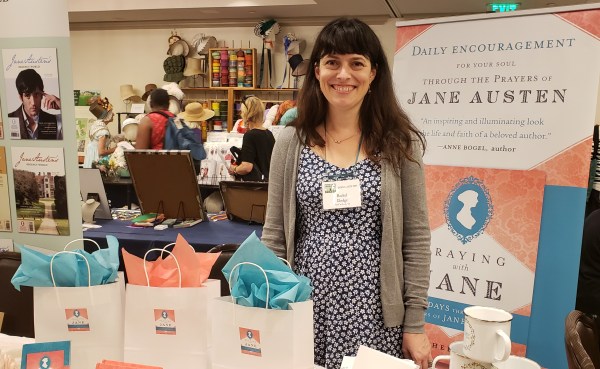
Rachel Dodge, author of Praying With Jane Austen, at the 2019 JASNA AGM in Williamsburg

Rachel Dodge at the JASNA AGM in Williamsburg, October 2019

About Rachel Dodge, the interviewer: Rachel Dodge is a college English professor and the author of Praying with Jane: 31 Days Through the Prayers of Jane Austen and The Anne of Green Gables Devotional: A Chapter-by-Chapter Companion for Kindred Spirits (November 1, 2020). . You can find her online at http://www.RachelDodge.com.

WEBSITE | TWITTER | FACEBOOK | INSTAGRAM | GOODREADS

AUDIOBOOK NARRATED BY ACTOR RICHARD ARMITAGE:

The full unabridged text of THE JANE AUSTEN SOCIETY was read by the distinguished English film, television, theatre and voice actor Richard Armitage for the audiobook recording. Best known by many period drama fans for his outstanding performance as John Thornton in the BBC television adaptation of North and South (2004), Armitage also portrayed Thorin Oakenshield in Peter Jackson’s film trilogy adaptation of The Hobbit (2012 – 2014).

Link to YouTube audiobook excerpt: https://youtu.be/OJ1ACJluRi8

PURCHASE LINKS:

Just after the Second World War, in the small English village of Chawton, an unusual but like-minded group of people band together to attempt something remarkable.

You may order your copy of The Jane Austen Society here:

AMAZON | BARNES & NOBLE | BOOK DEPOSITORYINDIEBOUND | AUDIBLEGOODREADS | BOOKBUB

JOHN THE BLOG TOUR!

Join the virtual online book tour of THE JANE AUSTEN SOCIETY, Natalie Jenner’s highly acclaimed debut novel May 25 through June 30, 2020. Seventy-five popular blogs and websites specializing in historical fiction, historical romance, women’s fiction, and Austenesque fiction will feature interviews and reviews of this post-WWII novel set in Chawton, England.

BLOG TOUR SCHEDULE:

May 25 Jane Austen’s World

May 25 Austenprose—A Jane Austen Blog

May 26 Frolic Media

May 26 A Bookish Affair

May 26 Courtney Reads Romance

May 26 Margie’s Must Reads

May 26 The Reading Frenzy

View the Rest of the Tour Schedule in the Side Bar – The blog tour lasts until June 30th!


Read Full Post »

« Newer Posts - Older Posts »