Feeds:
Posts
Comments

Archive for the ‘Movie review’ Category

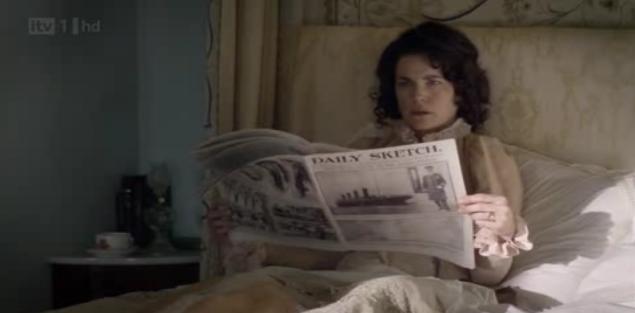
At the start of Downton Abbey, the Earl of Grantham sadly learns of the death of his cousin and cousin’s son on the Titanic. This event places the Earl and Countess of Grantham in a tragic and unexpected situation, for both men – the heir and the spare – were in line to inherit Downton Abbey.

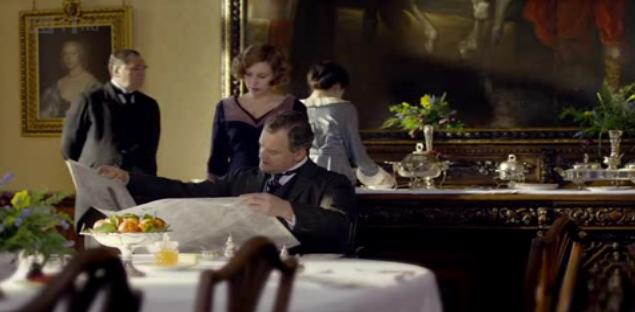
The earl (Hugh Bonneville) reads about the Titanic

The earl had never anticipated such a tragic turn of events. He had married Cora, an American heiress, in a marriage of convenience in order to maintain his landed estate in the manner in which it had been run for centuries. During the marriage negotiations, the old Earl of Grantham struck a hard bargain and Cora’s fortune became completely tied up in the entail. This  was no great matter to the young couple, who were certain they would produce an heir. While the earl eventually fell in love with his beautiful bride, they were unable to produce a son, their union resulting in three daughters.

The countess (Elizabeth McGovern) learns of the tragedy.

And so the plot of Downton Abbey thickens, for lovely Lady Mary, the earl’s eldest daughter, was engaged to the younger heir, Patrick. But Patrick died and now Matthew Crawley, the earl’s third cousin once removed, stands next in line to inherit. Unlike the previous heirs, who were accustomed to the ways of the upper classes, the very reluctant Matthew must learn how to run a great estate from the ground up … and Lady Mary, by dint of being a woman and as the result of an unbreakable entail, is left out in the cold.

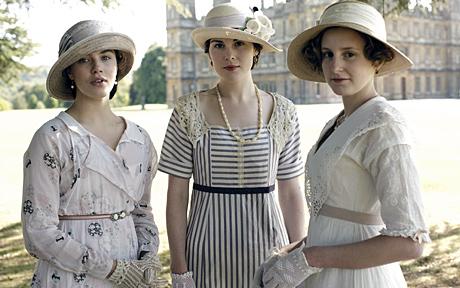
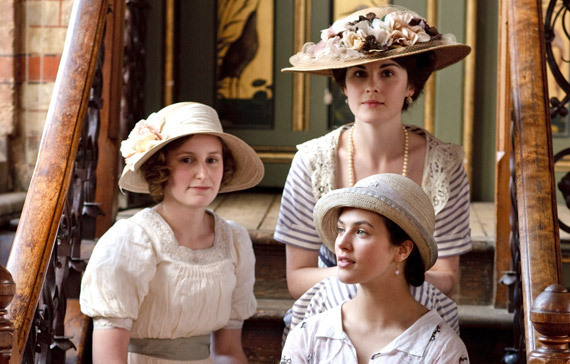
Lady Sybil, Lady Mary, and Lady Edith

The plot line of Downton Abbey weaves the stories of the privileged who live upstairs with the lives of those who serve them, and involves the intricacies of the entail and running the estate. Of the three sisters, only Lady Mary plays a major role. But the other two, Lady Edith and Lady Sybil, faced challenges that were typical of upper class women of the era. As Jane Austen astutely observed, “ There are not so many men of fortune in the world as there are pretty girls who deserve them,” a fact that the middle sister, Lady Edith, comes to know too well, and one that Lady Sybil ignores, for she has modern notions of a woman’s place in Society.

Downton Abbey. Jane Austen's World

Upon learning of the death of her fiance, Patrick, Lady Mary is not as sad as she should be.

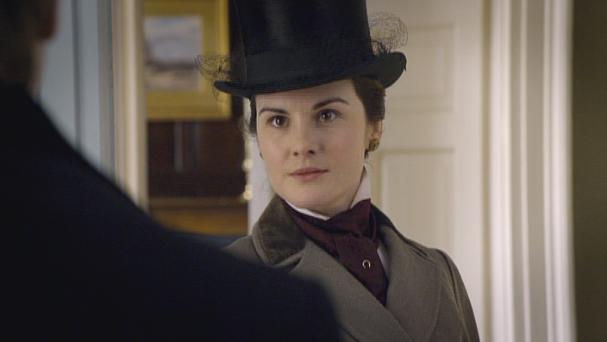
Lady Mary Crawley (Michelle Dockerey)

The eldest of the three girls, and the most beautiful and self-assured, is Lady Mary Crawley who knows her worth. Upset that the entail cannot be undone, she realizes that her only way to marry “up” or to financial security is to find a wealthy man with (preferably) a title. The new heir, Matthew Crawley, in no way interests her. From the moment they meet, snobby Lady Mary looks down her patrician nose at the upstart heir, who, she doubts, even knows how to hunt. (Lady Mary might have no use for Matthew, but he has more than a passing interest in her.)

Lady Mary meets Matthew and ... is not impressed

Ever the opportunist when it comes to snaring a suitable mate, Lady Mary sets her sights on a duke, as well as Evelyn Napier, a gentleman who is besotted with her.  But then a handsome and exotic visitor catches her eye and makes her heart flutter uncharacteristically,  and Lady Mary’s safe and secure world will never be the same again.

Downton Abbey. Jane Austen's World

Lady Edith reads Lady Mary's private letter

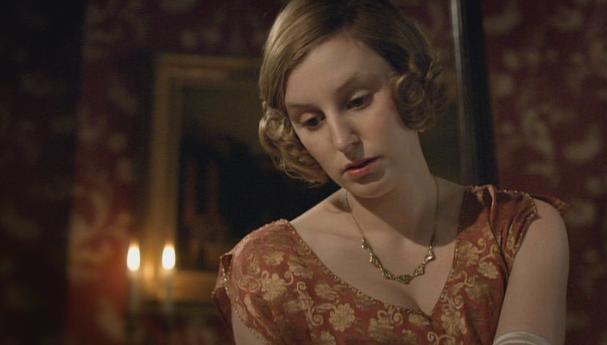
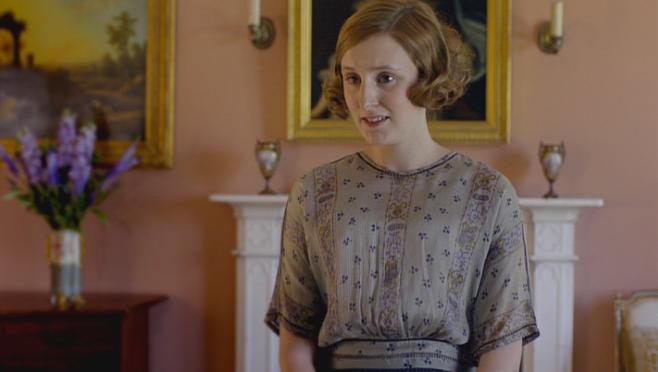
Lady Edith Crawley (Laura Carmichael)

Lady Edith can hardly contain her jealousy of Lady Mary’s beauty, her easy popularity with men, and her status as elder daughter. As the second daughter, she feels invisible. Lady Mary barely mourns her fiance, which triggers Lady Edith’s resentment of her older sister and her cool reaction to his death. Not that she is entirely to be pitied, for her jealousy drives her to snoop on her sister, and tattle tales that should never be shared.

Lady Edith looks hopeful as she is courted unexpectedly

The complex, nasty relationship between the two sisters is a result of the keen pressure that women still felt to marry up and well in the Edwardian era. Upper class women, as Amanda Vickery pointed out in her excellent series, At Home With the Georgians, were raised to live passive lives and accept the fact that they were second-class citizens. While Lady Edith plots and schemes to find a husband (if even from her older sister’s romantic leavings), Lady Sybil, the younger sister, is forging a role for herself.

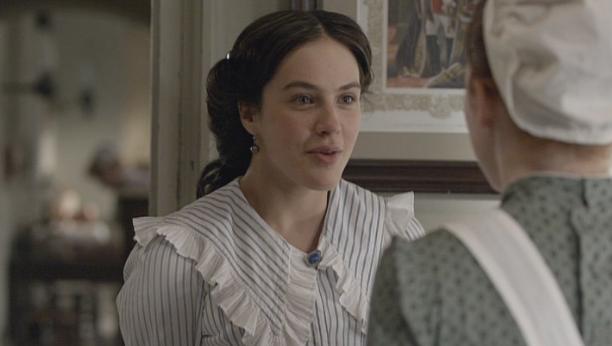
Lady Sybil helping Gwen, the housemaid

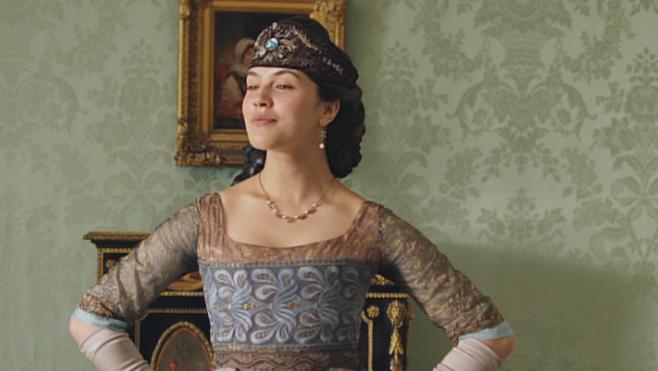
Lady Sybil Crawley (Jessica Brown-Findlay)

Lively, upbeat, and compassionate, Lady Sybil plays no role in the spiteful drama of her two older sisters. She is too busy admiring suffragettes, supporting Gwen, the housemaid, in her ambition to become a secretary, reading political tracts and attending forbidden rallies. Even her taste in clothes is flamboyant, and one suspects that as Lady Sybil matures she will become a character with a capital “C”.

Lady Sybil shows off her new frock

In Downton Abbey, Lady Edith and Lady Mary demonstrate the dependent role that women still played in the early 20th century. But Lady Sybil was another creature altogether.  After the end of World War I,  she would no doubt be dancing the Charleston in flapper clothes, and after turning thirty, exercising her right to vote and earn her own living.


Edith, Mary, and Sybil

More about Downton Abbey, to air on Masterpiece Classic, Sunday, January 9th at your local PBS station:

Read Full Post »

Inquiring readers, from now until the U.S. airing of Downton Abbey, this blog will explore the facets of living in an English country house during the Edwardian era, and drawing upon the similarity and differences between the Edwardian and Regency eras.
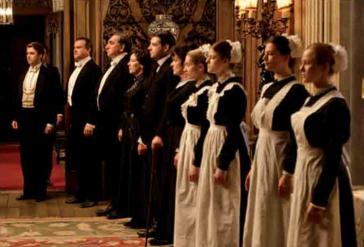
Downton Abbey. Credit: Courtesy of © Carnival Film & Television Limited for MASTERPIECE

Servants await the arrival of guests. Credit: Courtesy of © Carnival Film & Television Limited for MASTERPIECE

Many of us today cannot understand why servants in country manors such as Downton Abbey would consider catering to the whims of others as a desirable occupation. In reality, service in great houses was preferred over other jobs that were available during the 18th and 19th centuries, such as tedious and often dangerous labor in factories or backbreaking work on farms.

Downton Abbey. Credit: Courtesy of © Carnival Film & Television Limited for MASTERPIECE

Siobhan Finneran as O’Brien, the countess’s ladies maid, Rose Leslie as Gwen, housemaid, and Joanne Froggatt as Anna, head maid. Credit: Courtesy of © Carnival Film & Television Limited for MASTERPIECE

Unlike their poorly paid counterparts, servants were housed and fed by their masters. They had the ability to save a large portion of their salaries, or send money to support their families back home. At the end of their stay with their hosts, guests paid servants a tip for their services. Housekeepers, as Jane Austen famously showed in Pride and Prejudice, served as tour guides when the family was absent. Mrs. Reynolds no doubt received a tip from the Gardiners after showing the public rooms of Mr. Darcy’s great estate.
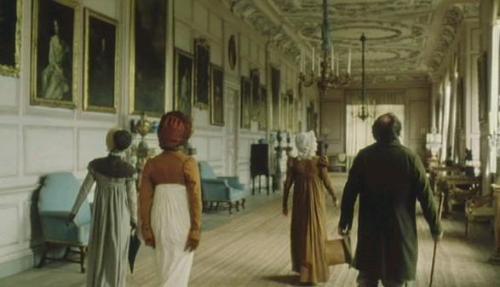
Jane Austen's World

Mrs. Reynolds, the housekeeper, escorts Elizabeth Bennet and the Gardiners through Pemberley

Although servants began their careers at the bottom, working menial jobs and catering to the upper servants as well as their masters, they could move up in the servant hierarchy. It was not uncommon for a scullery maid to be promoted to kitchen maid and eventually up to a cook.

Downton Abbey. Jane Austen's World

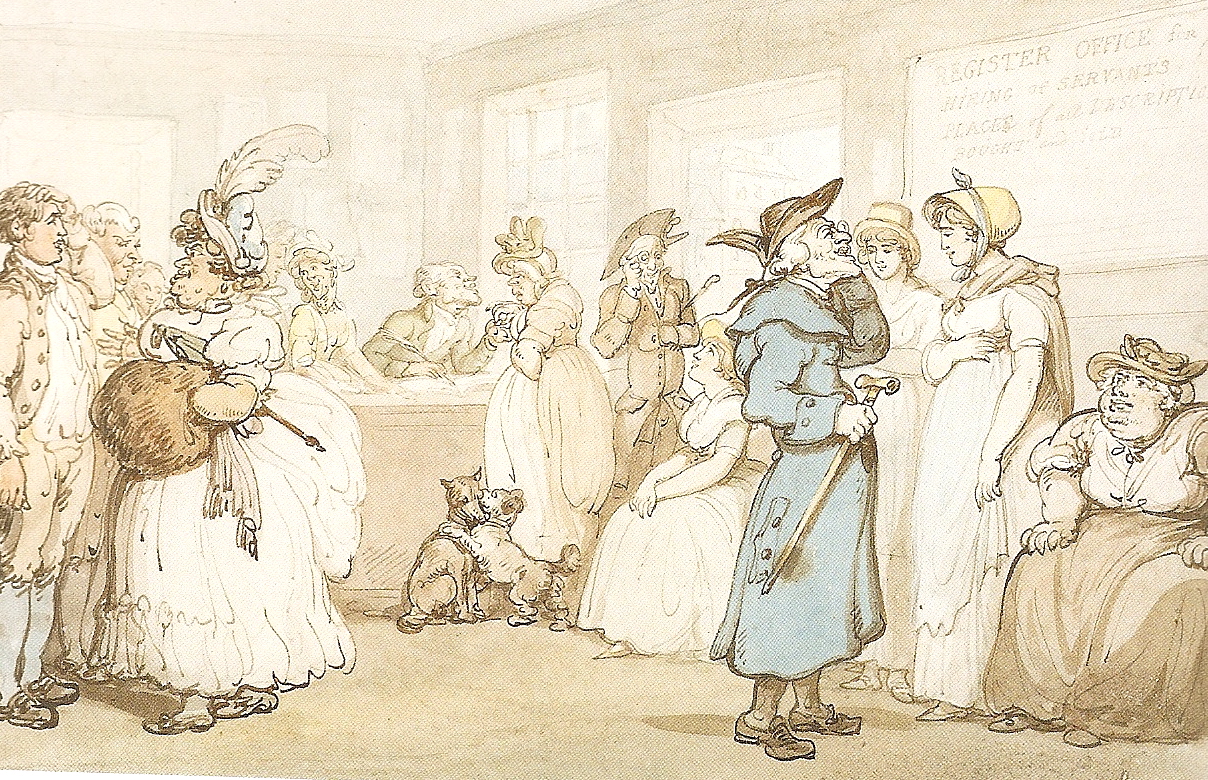
The registry office

A good and reliable servant was a prized commodity. Young, able servants were in a constant state of flux (they worked on average for 2-3 years before moving on), always looking for a better position, which they could acquire as long as their masters gave them good references. Servants found new work in registry offices, where they would enter their name in the registry book, or through word of mouth. (Read more about this topic in my post, Hiring Servants in the Regency Era and Later.)

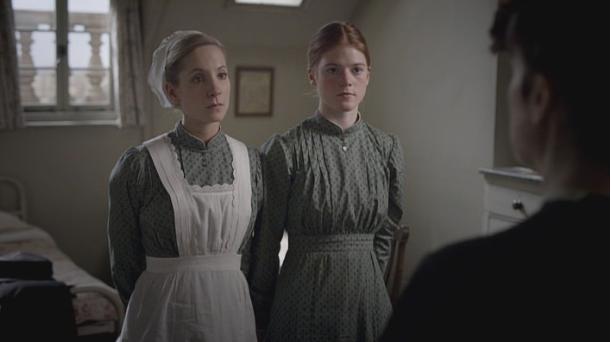
Downton Abbey 2010. Credit: Courtesy of © Carnival Film & Television Limited for MASTERPIECE

Anna (Head maid) and Gwen (house maid) in their room. Credit: Courtesy of © Carnival Film & Television Limited for MASTERPIECE

Upon rising, servants would labor first and eat only after the family had risen, dressed, and breakfasted. When Downton Abbey opens, the camera follows the servants as they rise and ready the house for the day. The earliest rising servant was the scullery maid, or tweeny, who sat lowest on the pecking order. She would stoke the kitchen fire for the cook and boil water. The kitchen maid would perform these offices if there were no tweeny or scullery maid.

Credit: Courtesy of © Carnival Film & Television Limited for MASTERPIECE

Daisy, the kitchen maid, lays a fire in the library. Credit: Courtesy of © Carnival Film & Television Limited for MASTERPIECE

Housemaids would tread silently up the servant (back) stairs unseen and unheard with fresh water and carrying covered slop pails. Quietly, so as not to wake their masters, the servants – maids and footmen – would empty chamber pots, remove cold ashes in the fireplace, carry up coal and stoke a new fire, and tidy any messes away from the previous day.

The servant stairs. Credit: Courtesy of © Carnival Film & Television Limited for MASTERPIECE

Downstairs they would continue making preparations for the day, opening drapes and shutters, dusting and polishing, and sweeping floors. The only time that the servants might be visible to family or guests was when they cleaned and polished the main halls and stairway. At all other times they were expected to remain invisible as they worked around the house, using the servant’s stairs and working in a room when the family was not expected to use it.
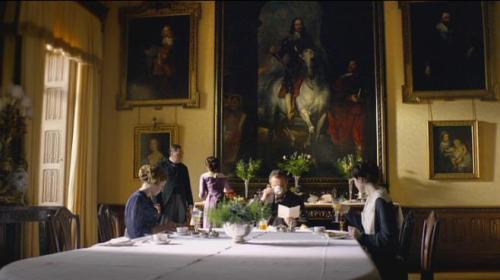
Credit: Courtesy of © Carnival Film & Television Limited for MASTERPIECE

Breakfast at Downton Abbey. Credit: Courtesy of © Carnival Film & Television Limited for MASTERPIECE

With or without guests, the daily routine for a family at its country house was unalterable, due in part to the servants, whose meal-times were rigid, and in part to Edwadian era tradition. At nine 0’clock, housemaids and valets arrived to draw bedroom curtains and deliver a cup of teac as ordered by the hostess the night before.” – The End of High Society

Downton Abbey 2010. Credit: Courtesy of © Carnival Film & Television Limited for MASTERPIECE

The servants quarters. Credit: Courtesy of © Carnival Film & Television Limited for MASTERPIECE

Servant’s dining space and table, Downton Abbey

The hierarchy among the servants was strictly defined. At the top stood the butler and housekeeper. Dowton Abbey, the series, highlights eleven servants who ran the household, but in 1912, Highclere Castle, where the exterior and interior shots were filmed, used the services of 25 maids, 14 footmen, and three chefs. Although Downton Abbey follows only 11 of the upper servants closely, one can see other servants (housemaids, a scullery maid, young boys, coal men, and the like) in the background going about their business.
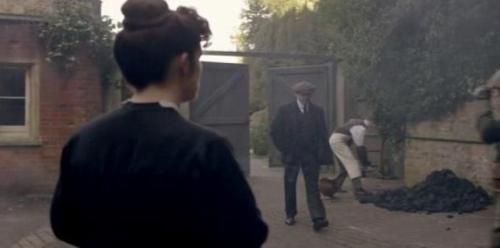
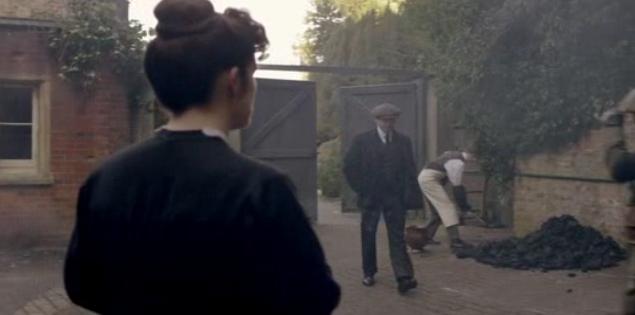
Credit: Courtesy of © Carnival Film & Television Limited for MASTERPIECE

Back of the house. In the background, a servant scoops coal.Credit: Courtesy of © Carnival Film & Television Limited for MASTERPIECE

In addition to the main house, servants worked in the service buildings, such as the stables, garage, dairy, bakehouse, laundry, gun room, and pantry. The kitchen in these great houses often sat away from the house (to prevent cooking smells from wafting up to the public and private rooms) and were connected to the main house via underground passages. This meant that the food often arrived at the dining table cold or, at best, lukewarm.

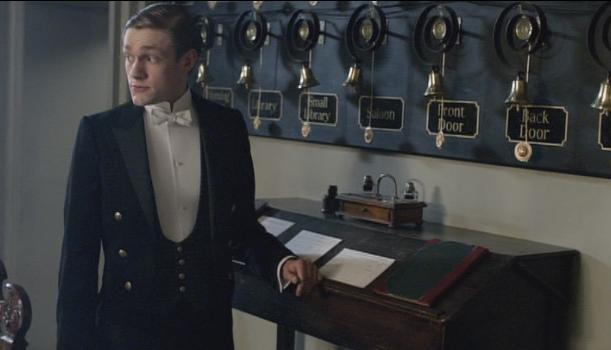
Credit: Courtesy of © Carnival Film & Television Limited for MASTERPIECE

The servant bells behind William, the second footman. Credit: Courtesy of © Carnival Film & Television Limited for MASTERPIECE

In the lower common area, servants were summoned by the family via a system of bells connected to each room. In theory, even when servants had finished with their duties and were finally sitting down to eat their breakfast, they were subject to be called at a moment’s whim. But was this always the case? While the servants of Downton Abbey are shown to be loyal and proud of their positions, the Punch cartoon below shows a group of shiftless servants who are slow to respond to their master’s summons.

‘Oh, ah, let ’em ring again!’ by George Cruikshank

The servants of Downton Abbey worked hard, but as shown in the series, they knew their place and were proud of their positions.
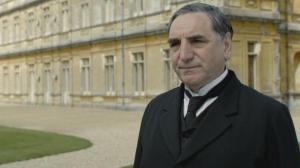
Downton Abbey 2010. Credit: Courtesy of © Carnival Film & Television Limited for MASTERPIECE

Jim Carter as Mr. Carson, the Butler. Credit: Courtesy of © Carnival Film & Television Limited for MASTERPIECE

The Butler: Jim Carter, who you may remember as Captain Brown from Cranford, portrays Mr. Carson, the butler, with grave dignity. He is as protective towards the Crawley family as he would have been to his own. While Mr. Carson is fair, he does not hesitate to reprimand a servant or even fire one if he thinks it is for the benefit of the house. Mr. Carson was not only in charge of the male servants, but also of the wine cellar and the butler’s pantry, which contained the family plate and silver. In addition to his managerial duties, he is shown in several scenes either polishing the silver or pouring over the books and counting the bottles of wine.

Downton Abbey 2010. Jane Austen's World

Phyllis Logan as Mrs. Hughes, Housekeeper. Credit: Courtesy of © Carnival Film & Television Limited for MASTERPIECE

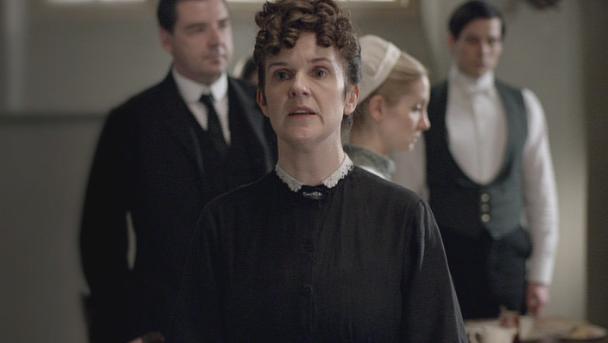
The Housekeeper: Phyllis Logan as Mrs. Hughes is Mr. Carson’s counterpart. Head of the female servants, she consults with her mistress daily about the meals, family plans, and any guests that are expected. Mrs. Hughes (even if they are single, which Mrs. Hughes was, housekeepers were given the distinction of being a Mrs.) was also responsible for the linen and china. A kind and observant woman, Mrs. Hughes nevertheless keeps her female team in line. She begins to wonder if, by devoting her life to this household, she has missed out on managing one of her own.

Downton Abbey 2010.

Brendan Coyle as John Bates, the Valet. Credit: Courtesy of © Carnival Film & Television Limited for MASTERPIECE

The Valet: (Brendan Coyle) In small households, such as Matthew Crawley’s, the position of butler and valet was combined. But Downton Abbey is a great house, and there are servants aplenty. Mr. Bates’s arrival creates a stir that causes the lady’s maid and first footman to plot against him. A stoic and capable man who served the earl as batman during the war, he must perform his duties of dressing the earl and seeing to his wardrobe regardless of the war injury that requires him to use a cane. For Mr. Bates, the flights of steep stairs can be daunting, and he is incapable of carrying large trays or helping with dinner service when more hands are needed.
Downton Abbey 2010.

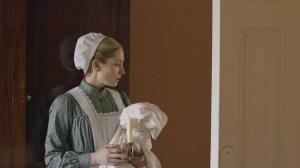
Joanne Froggatt as Anna, Head Housemaid. Credit: Courtesy of © Carnival Film & Television Limited for MASTERPIECE

Head Housemaid: Joanne Froggatt as Anna is a pretty, quiet, and dependable presence. She works with a positive attitude and champions those who need defending. As head housemaid, she assists the daughters of the house with their hair and wardrobe, but she also performs the duties of a regular maid, dusting, cleaning, and changing the bed linen.
Downton Abbey 2010.

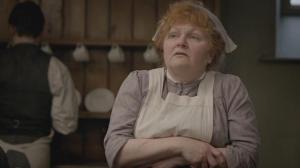
Lesley Nicol as Mrs. Patmore, the Cook. Credit: Courtesy of © Carnival Film & Television Limited for MASTERPIECE

The Cook: Lesley Nicol as Mrs. Patmore, the cook, is hiding a secret, one that threatens her very livelihood. The viewer will be struck by the sheer volume and variety of dishes that she creates and oversees daily. Although only her kitchen maid, Daisy, is seen as her regular assistant, there would have been others in a house this size. At the very least, Mrs. Patmore would have needed a permanent person in the scullery, and other assistants to help maintain order in the kitchens.
Downton Abbey 2010. Credit: Courtesy of © Carnival Film & Television Limited for MASTERPIECE

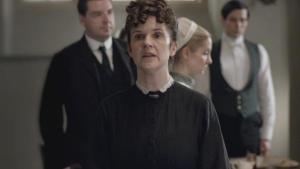
Siobhan Finneran as O’Brien, Lady’s Maid. Credit: Courtesy of © Carnival Film & Television Limited for MASTERPIECE

The Lady’s Maid: Siobhan Finneran plays O’Brien as a cold, ruthless woman, who trusts no one. When the Countess of Grantham states that she and O’Brien are friends, for they are often in each others’ company,  O’Brien knows better than to disagree, but disagree she does. A lady’s maid caters to her mistresses’ every whim, making sure that not one coat button is missing or one strand of hair is out of place. Such a close daily association often develops intimacy over time. The countess mistakenly thinks that O’Brien is as fond of her as she is of her maid.

Downton Abbey 2010.

Rob James-Collier as Thomas, First Footman.Credit: Courtesy of © Carnival Film & Television Limited for MASTERPIECE

The First Footman: Thomas (Rob James-Collier) is a piece of work. An ambitious man, who cares only for his own advancement, he will use anyone to achieve his goals, even if it means destroying another’s reputation. A first footman will serve as valet to the male guests if they arrive without a male servant. Footmen are expected to wear livery and are generally tall and handsome. Only the very rich could afford footmen, and thus they were a form of status symbol.

Downton Abbey 2010.

Allen Leech as Tom Branson, the Chauffeur. Credit: Courtesy of © Carnival Film & Television Limited for MASTERPIECE

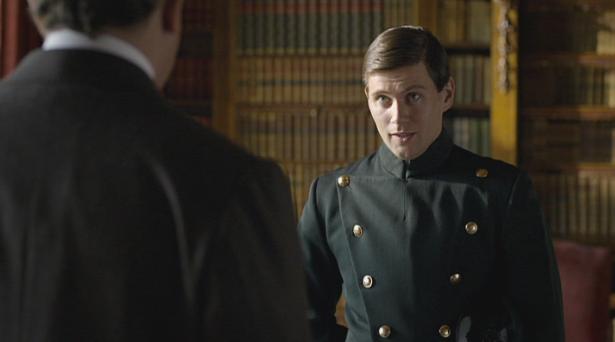
The Chauffeur: Allen Leech as Tom Branson, the chaffeur, demonstrates how very different Edwardian England is from Regency England. Carriages are being replaced by automobiles, but the infrastructure for maintaining cars is not yet in place. A chauffeur not only drove the family around, but he was also its mechanic, keeping the car in top shape, acquiring parts when they were needed, and making sure there was enough petrol on hand to satisfy the family’s needs. This chauffeur can also read and has been given permission by the earl to check books out of his library.
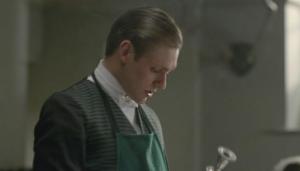
Downton Abbey 2010.

Thomas Howes as William, the Second Footman. Credit: Courtesy of © Carnival Film & Television Limited for MASTERPIECE

The Second Footman: (Thomas Howes) William’s position among the upper servants is low, for he must answer to the butler, housekeeper, and first footman. Young, fresh-faced, and just starting out, William misses his loving family. Yet service allows him to better himself and someday work his way up to the position of butler. One wonders if William will ever achieve that ambition, for times are changing and the aristocracy will be hard pressed to hang onto their lands and houses after the second world war.

Downton Abbey 2010.

Rose Leslie as Gwen, House Maid. Credit: Courtesy of © Carnival Film & Television Limited for MASTERPIECE

The House Maid: (Rose Leslie) Young Gwen is a housemaid with a goal – that of becoming a typist. Towards this end, she has been secretly taking typing courses. When her secret is uncovered the other servants are astounded – how could anyone prefer working in as some faceless office over service in a great house? Yet Gwen represents the future, in which political and socio-economic changes for women will end their dependency on the men of their family and force many to start fending for themselves.
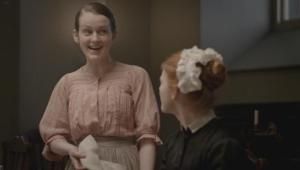
Downton Abbey 2010.

Sophie McShera as Daisy, Kitchen Maid. Credit: Courtesy of © Carnival Film & Television Limited for MASTERPIECE

The Kitchen Maid: (Sophie McShera) Poor Daisy is at the bottom of the status ladder. Subject to the cook’s every whim (and to the housekeeper’s and anyone else who happens nearby) she goes about her duties cheerfully. When disaster strikes, Daisy not only steps in but demonstrates that she is more than ready to step up the servant hierarchy.

Downton Abbey will be shown Sunday night on your local PBS station starting at 9 p.m. Click here to view the video clips.

More about the series:

Read Full Post »
Jane is NOT amused

These past two weeks I have been anticipating Downton Abbey daily, getting ready for PBS’s presentation of the series, researching historical tidbits that will add to the reader’s enjoyment, and eagerly anticipating the U.S. audience’s reaction.

Then The Daily Mail (or The Daily Fail, as an astute reader called the tabloid) published an article, Downton Downsized, accusing PBS of cutting 2 hours from the original 8 hour U.K. presentation. Writer Chris Hastings not only pointed to the edits with glee, but accused PBS of dumbing down the series for American audiences. Hastings quoted PBS Executive Producer Rebecca Eaton as admitting “that American audiences demand a ‘different speed’ to their shows.”

The article was an insult to the American viewing audience, and PBS for that matter. It did not take into account that PBS shows no commercials (as ITV does), which means that the U.S. And U.K. Versions of Downton Abbey are practically the same length, even with minor editing. Neither did it acknowledge that PBS viewing audiences are sophisticated, patient, well-read, and well-traveled, as well as knowledgable about history and social customs in the U.K.

I watched the first two ITV episodes of Downton Abbey, to compare them to the so called edited PBS version. I saw so little difference, even with the discussion about inheritances and the British entail, that I wondered what this across-the-pond kerfuffle was all about.

When Sarah Crompton from The Telegraph, wrote her opinion about The Daily Fail’s article, she gave me hope that relations between U.S. and U.K. viewing audiences are still friendly and filled with mutual respect. Crompton wrote:

“Anyone who has read any of the novels of Edith Wharton will know that the statement from PBS executive producer Rebecca Eaton that “we thought there might be too many references to the entail… It is not a concept people in the US are very familiar with” is simply untrue. The difficulties of fortune and inheritance power whole tracts of American 19th-century fiction.”

Crompton goes on to say with confidence that educated American audience would have no trouble following Downton Abbey’s plot. She also found Eton’s statement extraordinary, mentioning The Wire and The Larry Sanders Show as two examples of intelligent, complex and creative television shows that originated in the U.S. and that our audiences have supported.

“This is, after all, the country that gave us The Wire, possibly the most complex series of plotlines ever devised. Are we really to think that US audiences understand drug-dealing in Baltimore any better than they grasp 19th-century legal shenanigans? Of course not. PBS is just being silly.

It is, ironically, the sophistication of the best of American television that I most admire.” – Sarah Crompton, The Telegraph, Americans Understand the Wire, So Why Simplify Downton Abbey for Them?

Insulted by The Daily Mail’s stance, I placed a poll about the edits on my regular Sunday Throwdown feature on Jane Austen Today, asking readers what they thought. The results of that poll demonstrate that PBS viewers do not want to watch a changed version of this British show or any British show for that matter. We feel confident that we can take the slow-pokey, esoteric passages as well as any Brit and not yawn half-way through or lose our way because we don’t understand British social customs or legalities.

The comments left by those who voted in the poll show that the PBS brass might be overreacting to our willingness to sit through exposition. I suspect that in talking about needing a faster-paced plot, Ms. Eaton was discussing the new viewers PBS is courting, but this is only a guess. Be that as it may, in their comments the poll voters expressed mostly their hurt from The Daily Mail’s view about American audiences and the nasty tone of the article. Here is a sampling:

If we Americans can watch 8 hours of Bleak House and Little Dorrit and love it, then we should be able to handle [Downton Abbey]. As for the plot being complicated, Americans flocked to “Inception” and loved it. No way “Downton Abbey” can be more complicated than that.

Rebecca Eaton should know that the attention span problem she refers to does not apply to “her” audience!

I’m very disappointed. Below the Daily Mail article sits a parody for American viewers to help us “understand” the series.

“…although it seems the beautifully nuanced portrait of pre-First World War upper-class life could prove just a little too complex for the trans­atlantic audience.” How insulting!

I am offended by anyone who would feel the American audience can’t support good drama.

I was weaned on Masterpiece Theatre and PBS and this pains me to see this reaction by Eaton. I have seen the UK version. It is not that complicated.

I am really hurt by this attitude! England means the world to me. How can they say Americans need these shows dumbed down?

This is typical ignorance on the part of the Brits. I say that as an American of much experience and relatives in UK. Annoyed as hell.

Don’t underestimate the size of the American audience who are longing for something other than arid, mindless TV fair geared to a 10 year old audience!!!

I think The Daily Mail article brought up two issues that raised hackles and confused readers, who assumed that PBS shared Chris Hastings’ disdain for the American viewing audience and that we require dumbed down versions of British T.V. shows in order to understand them. Since this mentality was shared by Joe Wright, who directed Pride and Prejudice 2005 and who offered an insulting “American” ending for U.S. audiences, no wonder we are baffled.

The second issue is one that many of us who adore PBS imports from Britain have noticed all too often recently. When purchasing the BBC (or ITV) and PBS versions of the same movies, PBS films are routinely shorter, with scenes that have been cut out. Why? These edited versions (sometimes only one or two scenes are missing) lend credence to Rebecca Eaton’s assessment that U.S. audiences demand a different pace. I would love for this PBS executive to explain her statement more fully, for I must admit that the differences between the first two episodes of ITV’s version of Downton Abbey and PBS’s first 100 minutes are so minor as to be barely noticeable. If this is the case, and if the change in pace is barely perceptible, and if Matthew Crawley still shows up in the first 90 minutes, why make the changes at all?

Other bloggers who have written about this controversy:

Read Full Post »

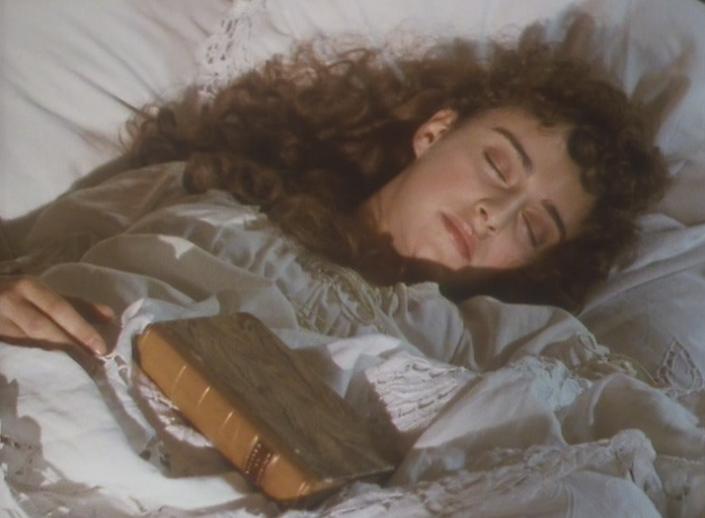
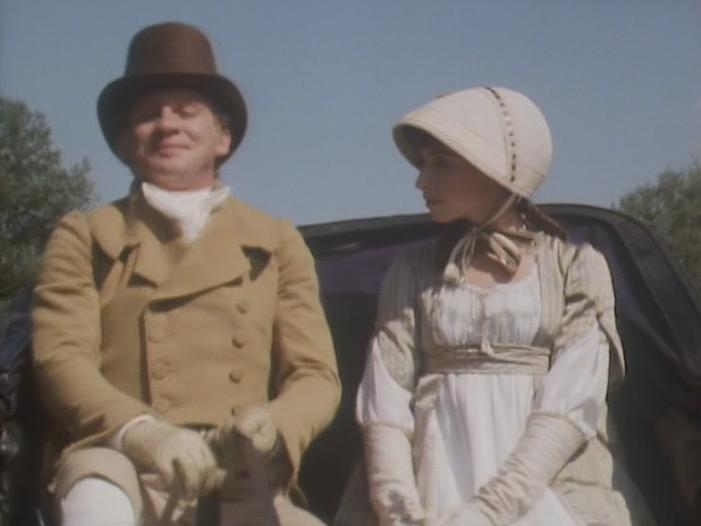
Until a cold felled me low this week, I had refrained from rewatching Northanger Abbey 1986, which I had a tough time sitting all the way through the first few times around. This film has left me feeling frustrated for its lost opportunities and many misses, and I wonder if the director and script writer wish today that they could change some of the creative decisions they made almost a quarter of a century earlier. In this film, we see the story unfold from young Catherine Morland’s (Katherine Schlesinger’s) point of view. This means we get a lot of Gothic novel fantasies made up by script writer Maggie Wadey, and hardly any Jane Austen at all.

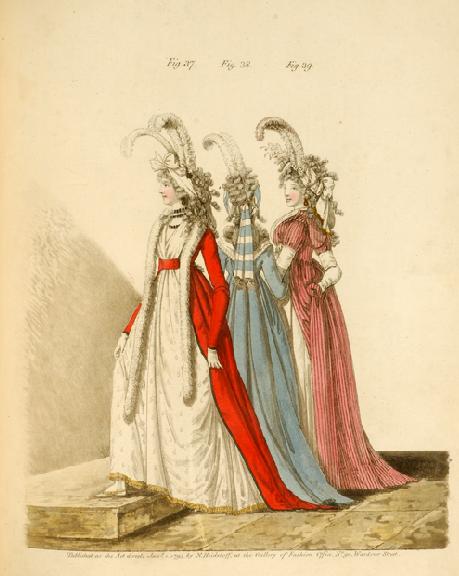
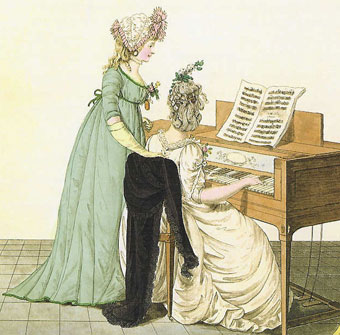
Isabella Thorpe and her mother wear outfits, hats, and hairdos that seem inspired by Von Heideloff prints

The production values are quite stunning, considering how old this BBC adaptation is and how poorly made films for television were in that era. Costumes designed by Nicholas Rocker are the fashion equivalent of beautiful meringues and chocolate bonbons (how could any of these women, except Mrs. Allen or Eleanor Tilney have afforded such luxurious gowns?). Despite the breathtaking settings and authentic backdrops, this 90-minute film adaptation with its strange synthetic music manages to entirely miss the satiric point of Jane Austen’s wonderful take on the gothic novel. And someone should have told the makeup department to lay off the heavy mascara and lipstick on all the ladies.

1795 Von Heidoloff fashion plate

Although the length of this adaptation is a mere 90 minutes, script writer Maggie Wadey added scenes and characters that detracted from the story or overwhelmed it, and that replaced moments in the book that were important to drive the plot forward and understand the characters better.

While Jane Austen made it clear that young Catherine had quite an imagination, these over the top film scenes were jarring and took away valuable cinematic time from good story telling.

I also found major problems with the musical score. The four musical clips embedded in this post and written by composer Ilona Sekacs in no way evoke the Regency era.  Click to hear the theme for the DVD – a 47 second music clip.

Catherine's Gothic dreams drive the music

Sekacs’ synthesized music and odd vocalizations from a female choir concentrate almost solely on giving us an eerie sense of ” Gothic doom”. Unfortunately, the composer uses the  “Lah da dah-Ooh” chorus throughout the film, and occasionally throws in a Gregorian Chant for good measure. Only during the ball scenes and at a musicale in Northanger Abbey are we allowed to hear music made with traditional instruments and that might have been heard during the Regency era.

An occasional tinkle from a pianoforte would have added greatly to a Georgian era atmosphere

I can only surmise that Ilona Sekacs was influenced by Vangelis, who had won an Academy Award for his score for Chariots of Fire five years before this production. Although Chariots was a period film, Vangelis’ electronic score sounded fresh and sweeping as 1920’s male runners practiced their speed against a back drop of endless beaches, rolling waves, and big sky. His score was a huge success in the early 80’s and he was rewarded for it. Alas for Jane Austen lovers, electronic synthesizers do not work as effectively in evoking a Bath drawing room, or as a backdrop for such Regency pastimes as walking, taking the waters, and carriage rides.

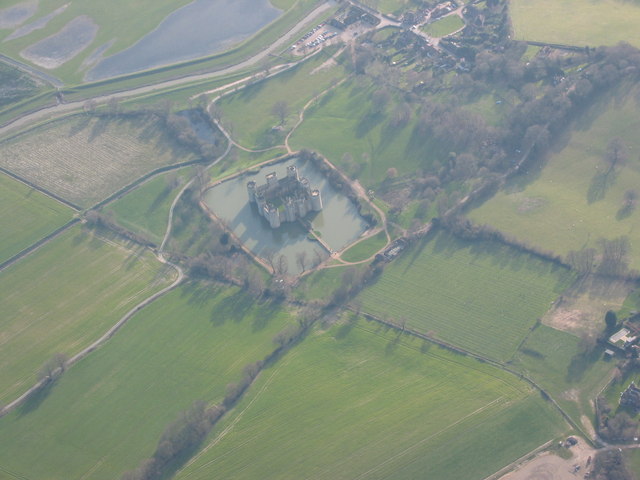
Bodiam Castle, built 1385

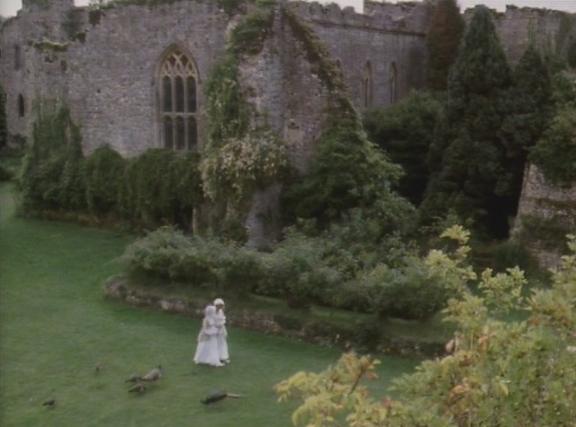
As the opening credits roll by, Catherine’s views Northanger Abbey from the carriage (to the accompaniment of this musical clip, which features male and female chanters and trumpets blaring). The Abbey is actually Bodiam Castle, a 14th-century keep with a water moat, and a well-known tourist destination.

Bodiam Castle's grounds from the air

I instantly sat up and took notice, for I have visited Bodium Castle. It was a ruin during Jane Austen’s day and was only partially rebuilt in 1829, a good twelve years after her death. According to Jane’s novel, Northanger Abbey was surrounded by extensive gardens, and I wondered how the director would pull off the scene where the general boasted of his fruit trees.  Imagine my surprise when I saw Catherine and Miss Tilney walking towards a side entrance of an entirely new building with different architectural details and nary a moat in sight. “Badly done”, as Mr. Knightley would have said. Bad transition, indeed.

A stroll through the gardens of Northanger Abbey

But I have jumped ahead of myself, for there are other earlier errors for which I cannot forgive this production. Take Henry Tilney (Peter Firth), for instance. At the Assembly Ball, he bumps into Catherine and Mrs. Allen (a delightful Googie Withers) without a proper introduction from the Master of Ceremonies. Except for Henry’s comments about muslins, his fey but wise sense of humor is almost entirely missing at the start of this film.

Henry Tilney bumps into Catherine Morland and Mrs Allen.

I must admit that I do not like Firth‘s portrayal of Henry Tilney and could never see him as this character. But even so, Henry’s charming conversation was given short shrift, and he appears only long enough for Catherine to develop an interest in him before disappearing. Click here to view a YouTube clip (and hear period appropriate music) of Henry’s first meeting with Catherine.

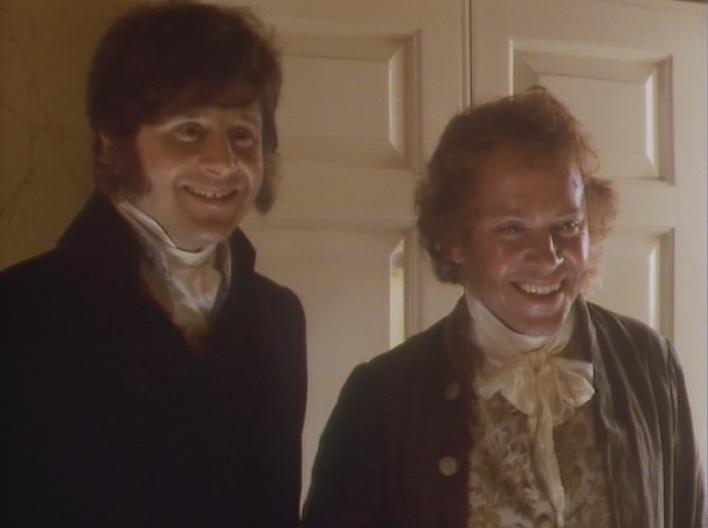
James Morland introduces John Thorpe

Where Henry’s role was severely diminished, John Thorpe’s presence early in the film was largely retained.  Mrs. Allen and Catherine do not bump into Mrs. Thorpe as they walk through Bath, as Jane Austen had written. Rather, as you can see in this YouTube clip, Catherine’s brother, James, visits the Allens and makes the introduction. Catherine then meets Isabella, overplayed by Cassie Stuart.

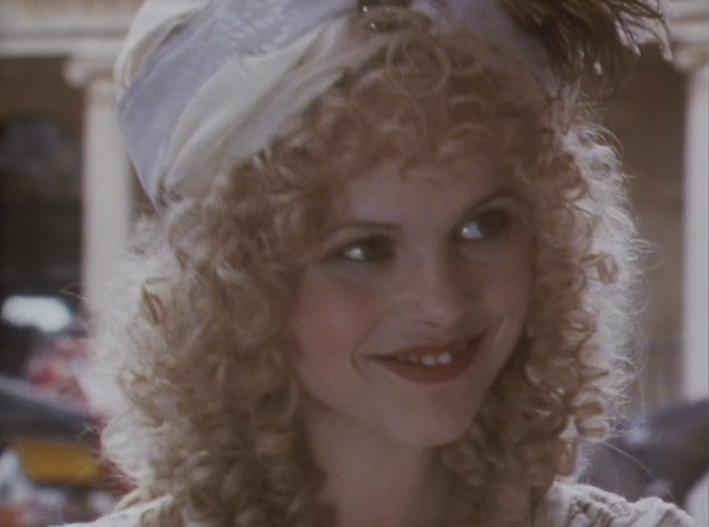
Isabella Thorpe, pretty but calculating

Because of the film’s short length, Isabella’s overly forward and friendly manner seems doubly rushed. The second time she meets Catherine, she reveals her love for James and her wish to marry him, and the next thing you know, James goes racing off to his father to beg for his permission to marry her.

John's loud coat should clue Catherine about his character

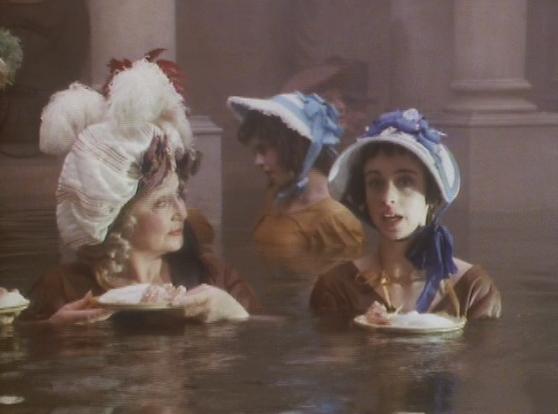
But once I again I digress.  John Thorpe (Jonathan Coy) is suitably sleazy (can’t you tell from his hideously striped suit?) and even Catherine leaves her Gothic fantasies long enough to be appalled by his boorishness. Thorpe’s early scenes are quite effective and then … he disappears. Except for a few mentions later, he literally falls off the face of the DVD, but not before he participates in one final scene in the hot baths, where Catherine, Isabella, Mrs. Allen, and Eleanor Tilney gather to bathe in the hot mineral waters. The party enters the baths to the strains of odd discordant music. An entire chorus is now crowding in on Catherine’s brain, and she can only stare wide-eyed around her.

Mrs. Allen and Catherine in the hot bath

But Catherine, who has a full and active day ahead of her, can bathe for only a short time. She makes a walking date with pretty Eleanor Tilney (Ingrid Lacey), who happens to be there. After sweating for some time in a hot and humid room, Catherine and Isabella emerge from the building with every curl in place and looking fresh in their beautiful unwrinkled, delicate muslin walking dresses. Isabella begins to fret over Catherine’s excessive attention to Eleanor. It is at this point that the uninitiated will start to lose an important thread of the story, for unless the viewer has already read the book, she will have no idea why John and Isabella are so determined to have Catherine accompany them to Clifton.

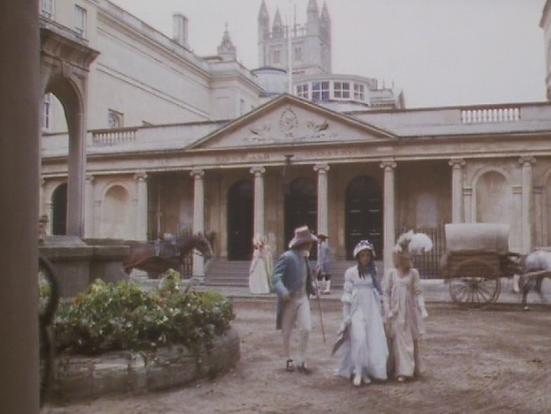
Bath is a beautiful setting as always

The plot has been so compressed and muddled, that the motivation that drives these characters is a bit murky.  The uninitiated will wonder: Why is John so interested in Catherine? Why is Isabella jealous of Eleanor? Why, indeed.

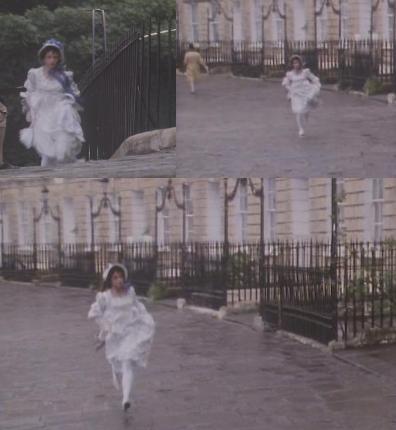
As John meets the ladies outside the hot baths he reveals that he has rearranged Catherine’s walking date with Eleanor, which sets Catherine’s temper off and sends her running through the streets towards General Tilney’s house.

In my opinion, this would have been a good time to insert Vangelis’s oscar-winning score for Chariots of Fire, since a run through Bath by a Jane Austen heroine is now rapidly becoming a Jane Austen TV adaptation tradition. (See Persuasion 2007.)

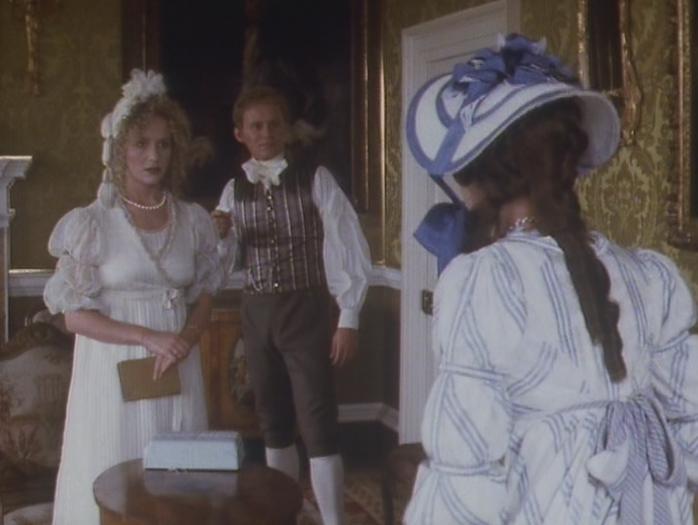
Catherine interrupts the Tilneys

Catherine rushes past the footman as he opens the Tilney’s front door, enters the house alone, and barges into the drawing room to apologize to Eleanor for John’s arrogance. All the while, she still looks fresh as a daisy.

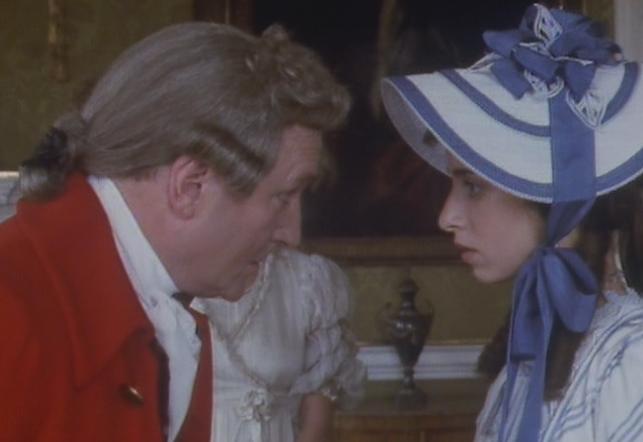
The General meets his unexpected guest

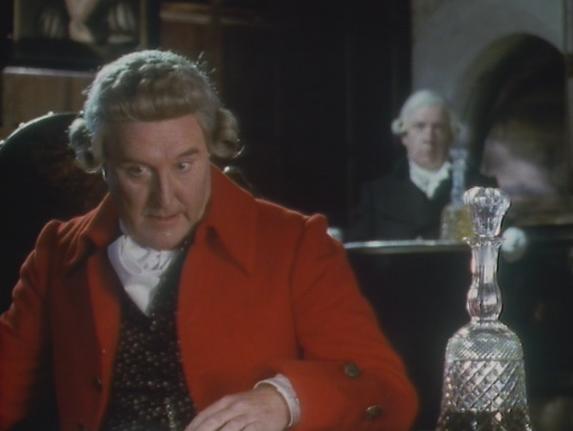
She meets General Tilney (Robert Hardy), who is simply delighted with Catherine and who encourages her to go on an outing with Henry and Eleanor as soon as possible. (The uninitiated will wonder: “why is he so intrigued with this rather simple, uninteresting girl?” Why indeed.) And so Catherine hurries off with the Tilney siblings to … Beechen Cliff ? Why, no! Jane Austen’s chosen spot for discussing the picturesque wasn’t deemed good enough and so the actors were taken to another location.

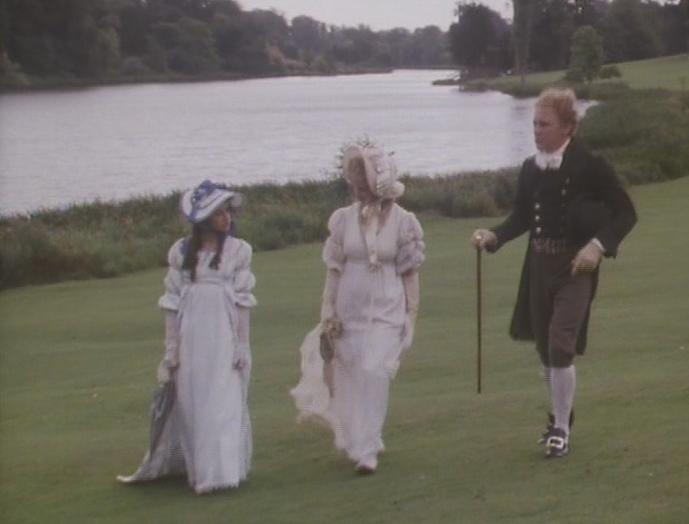
A walk along a sculpted lake instead of Beechen Cliff

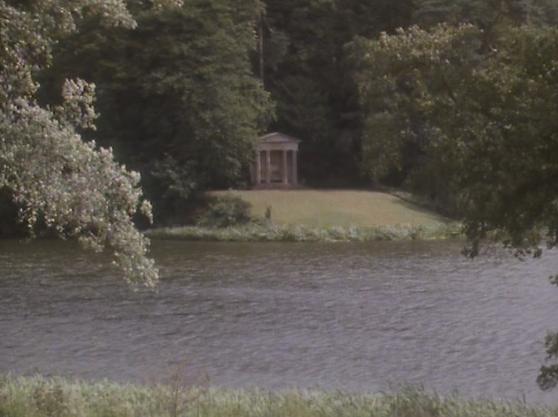
And thus they are filmed walking through a picturesque setting, with a lake and temple folly and weeping willows (so very 18th century refined), to talk about the picturesque.

A lake with temple folly

Instead of gazing at Bath from the heights of Beechen Cliff, the viewers are treated to the sight of Henry rowing the ladies across the waters.

At the end of this important scene (for Henry recognizes Catherine’s natural, unassuming, yet unformed airs), the music crescendos and the viewers hear 31 seconds of neo-jazz/Grecian tragedy music with a greek chorus and New Orleans saxophone.

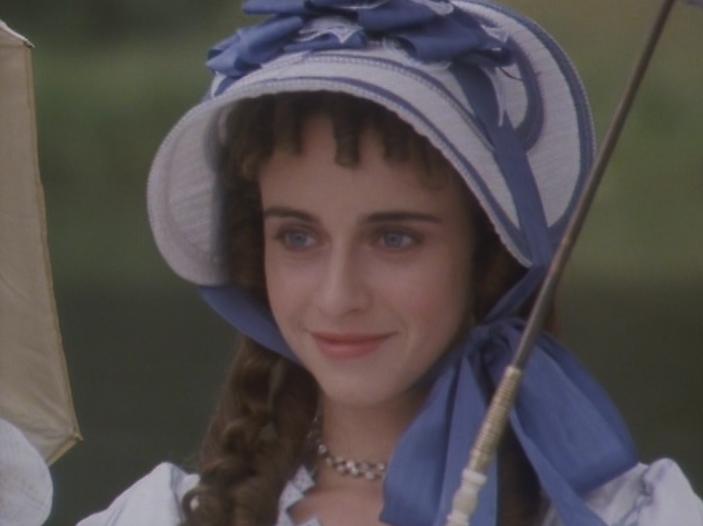
In this image, the description of Catherine rings true: ""Catherine grows quite a good-looking girl-she is almost pretty today."

At this juncture I must share the following comment, just to soften my own harsh critique. Jules, a very well spoken person, had this to say in 2005:

Ilona Sekacz wrote the score for a BBC TV version of ‘Northanger Abbey’ with Peter Firth. The music stood out a mile. A wonderful, haunting voice with a pulsing rhythm that has has stayed with me since I first saw the programme back in the 80s (I think). I could hum it now. I have tried to find this music but it has disappeared into cyberspace. Such a shame, it was so memorable. I bought the video years ago just to get the music. It’s not out on DVD but I transferred my VHS so I’ll never lose it.

I love this woman’s music, it’s unique and inspiring.

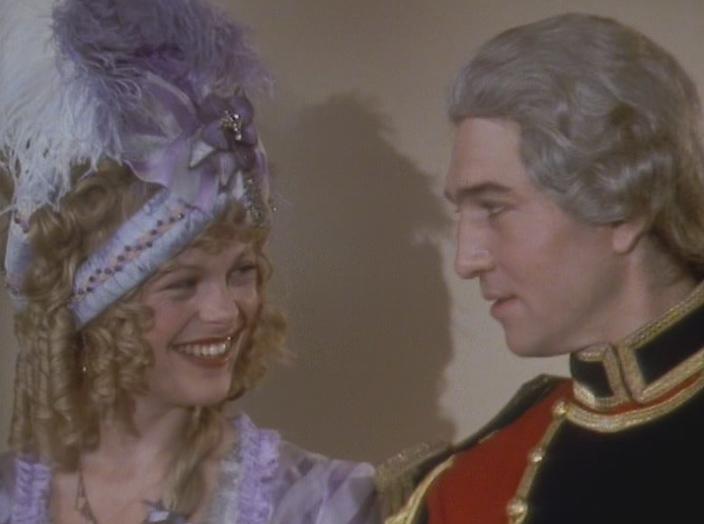
Isabella flirts with Captain Tilney and gets her comeuppance

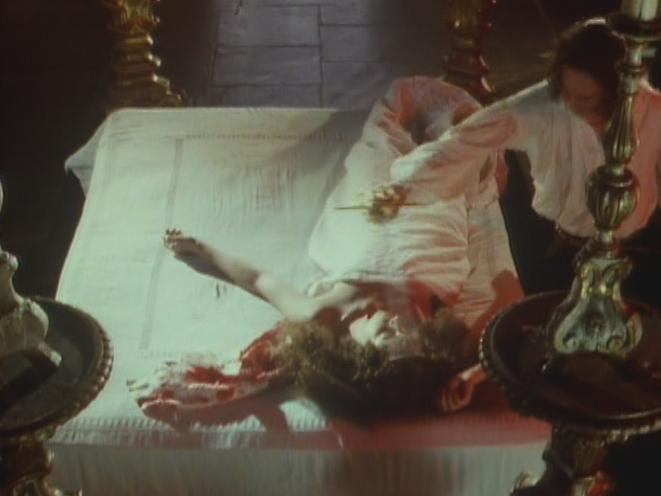
Ok, so to each his own. I’ve gone on long enough about how much I dislike the film. In swift succession, Isabella flirts with Captain Frederick Tilney, prompting James to end their engagement; Catherine visits Northanger Abbey and makes a fool of herself trying to find intrigue and uncover a murder most foul,

Catherine rides with Henry to Northanger Abbey

and General Tilney discovers she’s as poor as a church mouse and casts her out of his house.

The general learns that Catherine is poor

Because time is so compressed in this film, Catherine is cast out of Northanger Abbey without explanation. The uninitiated will have no idea what has transpired, because no explanation was given at first. And because the camera does not follow her on her ride alone back home on a public stage without adequate resources, the uninitiated remain clueless about Catherine’s mature demeanor during that long journey alone and how dastardly the General treated her by forcing her to go unescorted, thereby placing her in harm’s way. Henry Tilney soon discovers he can’t live without her and comes after her on his steed. And because he comes across in this film as a prosy old bore, not a sharp-witted, dashing hero, the uninitiated will wonder what Catherine actually saw in him.

Henry comes for Catherine

Did I find anything of redeeming value in this film? Yes, but those comments shall have to wait for another critique. A production that added a marchioness who provided General Tilney with the latest gossip (and perhaps some sport in his bed), but that prevented Henry Tilney from saying some of his best lines deserves little praise.

Why was the marchioness (Elaine Ives-Cameron)added?

How would Lady Catherine de Bourgh have critiqued the film, I wonder?

“I send no compliments to the director or script writer. They deserve no such attention. I am most seriously displeased.”

I must explain that this film was one of the main reason why I did not read Northanger Abbey until the very last of Jane’s novels. The story as told in this film is quite awful, so you can imagine my delight and surprise when I finally met Jane Austen’s actual characters in print.

Read more on the topic:

Read Full Post »

Copright (c) Jane Austen’s World. Katie Couric interviewed Colin Firth in this half hour interview about The King’s Speech and King George VI’s stammer. Click on this link to view the video.

Read Full Post »

« Newer Posts - Older Posts »