Feeds:
Posts
Comments

Archive for the ‘Northanger Abbey’ Category

“I had expected to find everything about the place very fine and all that, but I had no idea of its being so beautiful.” –Mrs. Cassandra Leigh Austen, Aug. 13, 1806, on a visit to Stoneleigh Abbey with her daughters Jane and Cassandra

Merry Christmas and Happy Holidays! As my gift to you, let’s take a trip to Stoneleigh Abbey together.

Jane Austen visited Stoneleigh Abbey in 1806. She and her mother and sister were visiting their cousin, Rev. Thomas Leigh, in Adlestrop when his distant cousin, the Honorable Mary Leigh, died. Rev. Thomas inherited the wealthy estate. He took his poorer relations, the Austens, with him to take possession, as a treat for them. They enjoyed it very much, as Mrs. Austen wrote in a letter.  She said the house was so large that they needed signposts to find their way, and that it was not only very “fine,” but more beautiful than she had imagined. Catherine Morland, similarly, when she saw Northanger Abbey, “was struck . . . beyond her expectation, by the grandeur of the abbey.”

Based on income, Stoneleigh Abbey was an even grander place than Pemberley or Sotherton (the Rushworth estate in Mansfield Park) would have been. Austen tells us that Darcy’s income was £10,000 a year and Mr. Rushworth’s was £12,000 a year. But the income of the Leighs of Stoneleigh Abbey, in Jane Austen’s time, was even higher, at £17,000 a year, which Victoria Huxley says was “perhaps the annual equivalent of a million pounds in today’s values” (p. 9). (We were told when touring Chatsworth that the income there in Austen’s time was about £30,000, three times Darcy’s income; I haven’t found confirmation of that number anywhere, though.)

Today, ideally you need a car or a tour bus to get you to Stoneleigh Abbey. It is about an hour’s drive north of Oxford or about 40 minutes southeast from Birmingham. If you want to take public transport, it looks like you’ll have a half-hour’s walk at the end of your journey.

I went with the JASNA Summer Tour. We saw the Adlestrop church the same day; it’s only about an hour’s drive away.

Stoneleigh Abbey, like Austen’s fictional Northanger Abbey, is a mix of older monastic buildings and newer buildings. (Newer in Austen’s time, at least.) Let’s take a trip through it, with some quotes from Austen’s novels.

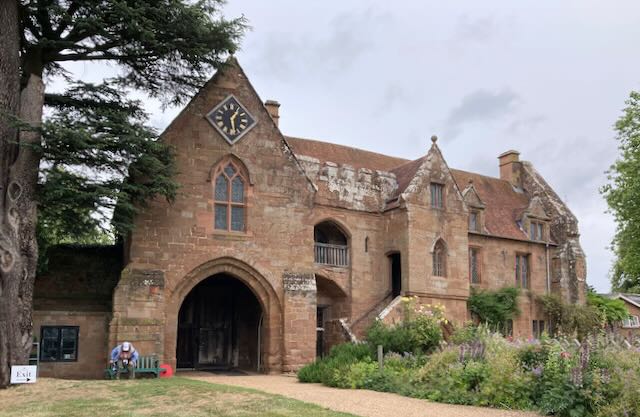
The red sandstone gatehouse, where you buy entry tickets, is from the 14th century, a remnant of the original Cistercian monastery. At this gatehouse, built in 1346 by Abbot Robert de Hoeckle, the poor received alms and travelers found hospitality.

So low did the building stand, that she found herself passing through the great gates of the lodge into the very grounds of Northanger, without having discerned even an antique chimney. . . . To pass between lodges of a modern appearance, to find herself with such ease in the very precincts of the abbey, and driven so rapidly along a smooth, level road of fine gravel, without obstacle, alarm, or solemnity of any kind, struck her as odd and inconsistent.–Catherine Morland, Northanger Abbey

Now we are coming to the lodge-gates; but we have nearly a mile through the park still.–Maria Bertram, Mansfield Park

The tour did not take us into this north wing. But you can still see arches on the walls, from the original monastery church. They are now bricked over. A cloister and medieval stained glass windows remain in the older buildings.
Another building from the old monastery. Stoneleigh Abbey was a small Cistercian monastery from 1155 until Henry VIII dissolved the monasteries in 1536. The Leigh family bought it in 1561. Catherine Morland was disappointed not to stay in such a building at Northanger Abbey.

[Catherine] was hardly more assured than before, of Northanger Abbey having been a richly endowed convent at the time of the Reformation, of its having fallen into the hands of an ancestor of the Tilneys on its dissolution–Northanger Abbey
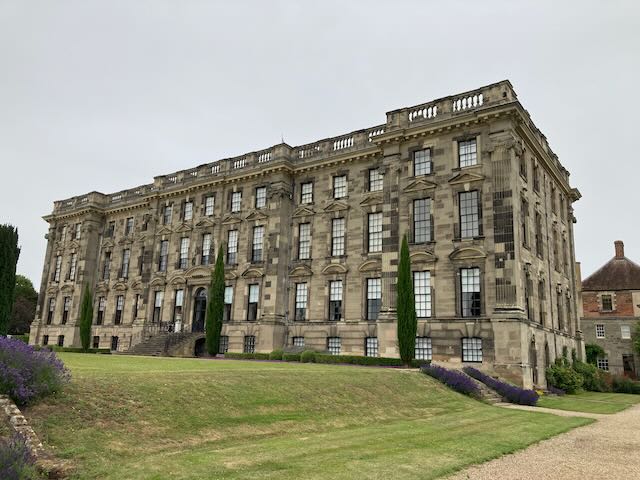
The baroque West Wing is the most impressive building, built in the 1720s by Edward, the third baron Leigh. He married a rich heiress. After his Grand Tour on the continent, he was inspired to create his own Italian-style palace. Mrs. Austen wrote that there are 45 windows in the front.

She was struck, however, beyond her expectation, by the grandeur of the abbey, as she saw it for the first time from the lawn.–Catherine Morland, Northanger Abbey

Even Fanny had something to say in admiration. . . . Her eye was eagerly taking in everything within her reach; . . . being at some pains to get a view of the house, and observing that “it was a sort of building which she could not look at but with respect”–Mansfield Park

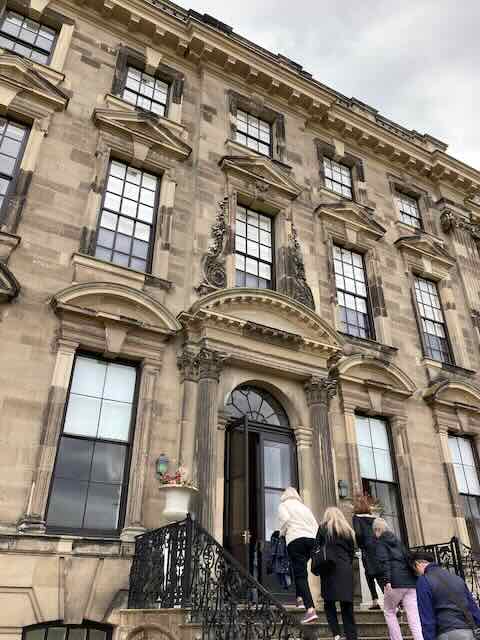
Architect Francis Smith designed the Stoneleigh Abbey West Wing, which cost £3,300. The older abbey buildings became servants’ quarters.
A flight of stairs leads up to the main entry to Stoneleigh Abbey, West wing

Miss Bertram could now speak with decided information of what she had known nothing about when Mr. Rushworth had asked her opinion; and her spirits were in as happy a flutter as vanity and pride could furnish, when they drove up to the spacious stone steps before the principal entrance.–Mansfield Park
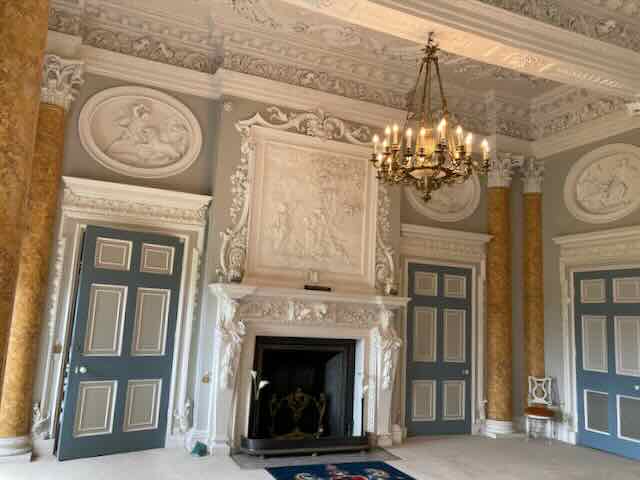
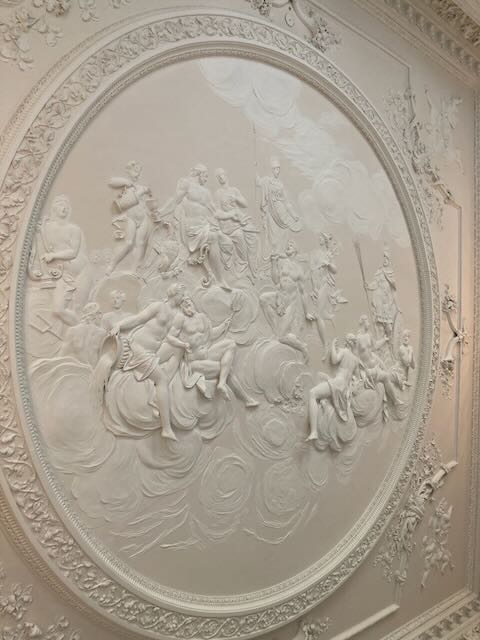
One end of the impressive “saloon” (salon, entry room) of Stoneleigh Abbey. Plaster decorations show myths of the Greek hero Hercules. Edward, the fifth Lord Leigh, decorated this room in the 1760s while doing vast “improvements” to his manor.
Ceiling plasterwork in the Stoneleigh Abbey saloon showing Hercules joining the gods. Ironically, Hercules suffered from bouts of madness, as did Edward Leigh himself.

An abbey! Yes, it was delightful to be really in an abbey! But she doubted, as she looked round the room, whether anything within her observation would have given her the consciousness. The furniture was in all the profusion and elegance of modern taste.–Catherine Morland, Northanger Abbey

The whole party rose accordingly, and under Mrs. Rushworth’s guidance were shewn through a number of rooms, all lofty, and many large, and amply furnished in the taste of fifty years back, with shining floors, solid mahogany, rich damask, marble, gilding, and carving, each handsome in its way.–Mansfield Park
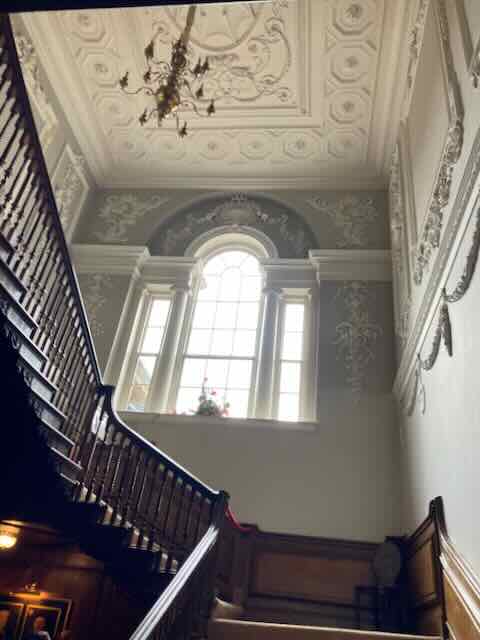
The main staircase of Stoneleigh Abbey, one of three staircases Jane Austen’s mother mentions.

They returned to the hall, that the chief staircase might be ascended, and the beauty of its wood, and ornaments of rich carving might be pointed out.–Northanger Abbey

The lower part of the house had been now entirely shewn, and Mrs. Rushworth, never weary in the cause, would have proceeded towards the principal staircase, and taken them through all the rooms above, if her son had not interposed with a doubt of there being time enough.–Mansfield Park
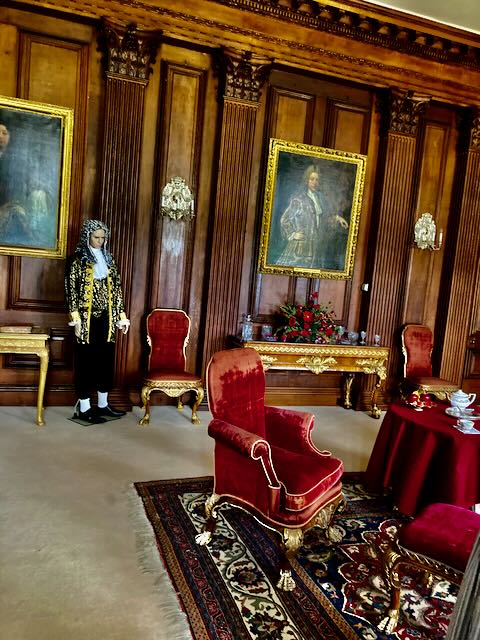
The drawing room of Stoneleigh Abbey. After dinner, the ladies would “withdraw” to the “withdrawing room,” later called the drawing room. The gentlemen would join them after a time.

The general leads Catherine “into a room magnificent both in size and furniture—the real drawing-room, used only with company of consequence. It was very noble—very grand—very charming!—was all that Catherine had to say, for her indiscriminating eye scarcely discerned the colour of the satin; and all minuteness of praise, all praise that had much meaning, was supplied by the general: the costliness or elegance of any room’s fitting-up could be nothing to her; she cared for no furniture of a more modern date than the fifteenth century.”–Northanger Abbey

The drawing room clock, from 1786, plays carillon music on the hour. Stoneleigh Abbey

“Till midnight, she supposed it would be in vain to watch; but then, when the clock had struck twelve, and all was quiet, she would, if not quite appalled by darkness, steal out and look once more. The clock struck twelve—and Catherine had been half an hour asleep.”–Northanger Abbey

Stoneleigh Abbey card room fireplace, with plates of “the prettiest English china,” hand painted by ladies of the family.

The fireplace, where she had expected the ample width and ponderous carving of former times, was contracted to a Rumford, with slabs of plain though handsome marble, and ornaments over it of the prettiest English china.–Northanger Abbey

A Rumford was an invention that made fireplaces more efficient. They are still used today.
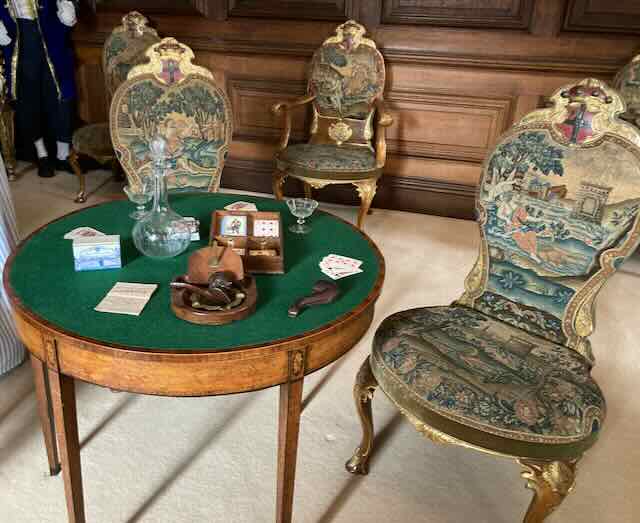
Stoneleigh Abbey card room, set up for a game of cards.

Mr. Elton had retreated into the card-room, looking (Emma trusted) very foolish.–Emma
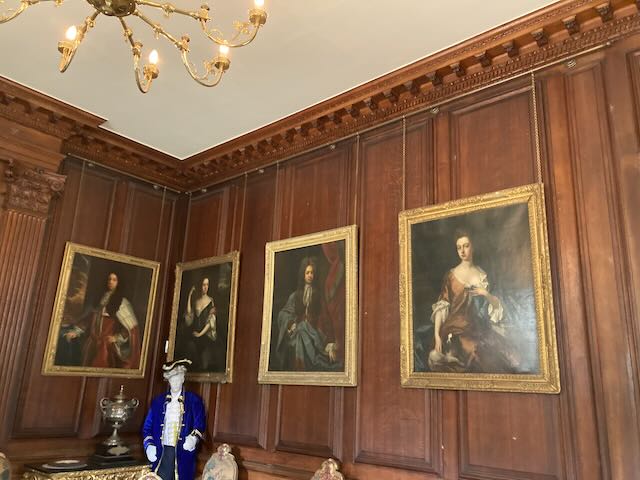
Portraits in the Card Room. All the rooms we saw were lined with family portraits.

Of pictures there were abundance, and some few good, but the larger part were family portraits, no longer anything to anybody but Mrs. Rushworth–Mansfield Park

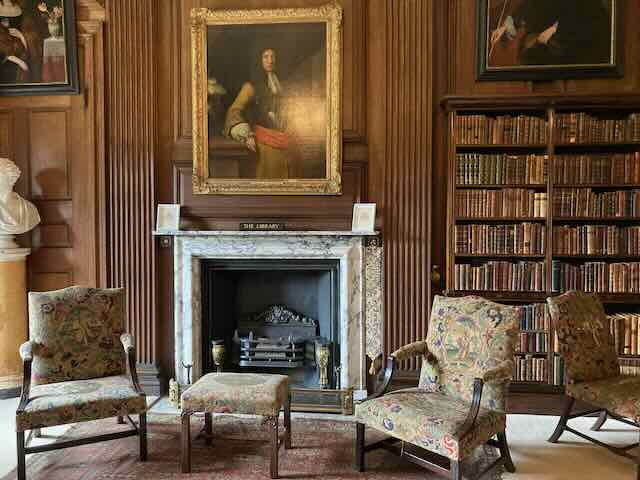
Edward, fifth Lord Leigh, bequeathed most of his extensive library to his alma mater, Oriel College at Oxford. These included “outstanding works on architecture and music, his scientific instruments, maps and prints.” (Jane Austen & Adlestrop, 22).
The library of Stoneleigh Abbey was replenished by later heirs.

Marianne, who had the knack of finding her way in every house to the library, however it might be avoided by the family in general, soon procured herself a book.–Sense and Sensibility

Ready to play chess in the library, Stoneleigh Abbey

“What a delightful library you have at Pemberley, Mr. Darcy!”

“It ought to be good,” he replied, “it has been the work of many generations.”

“And then you have added so much to it yourself, you are always buying books.”

“I cannot comprehend the neglect of a family library in such days as these.”–Miss Bingley and Mr. Darcy, Pride and Prejudice
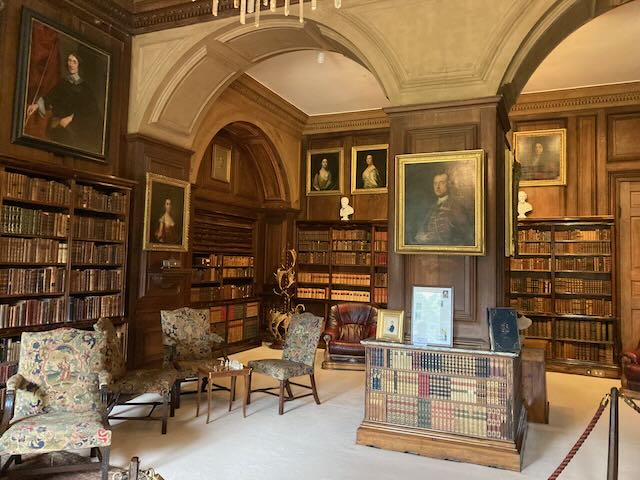
Stoneleigh Abbey library

After tea, Mr. Bennet retired to the library, as was his custom–Pride and Prejudice

Ladies’ dressing table, Stoneleigh Abbey

“My mother is tolerably well, I trust; though her spirits are greatly shaken. She is up stairs and will have great satisfaction in seeing you all. She does not yet leave her dressing-room.”–Jane Bennet, Pride and Prejudice
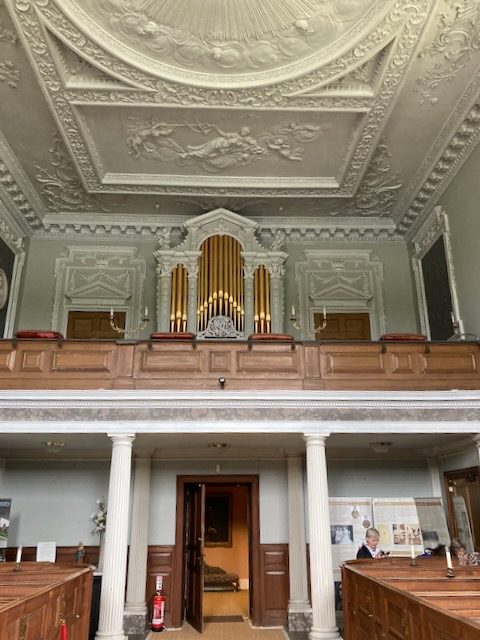
The chapel at Stoneleigh Abbey is considered to be the model for the chapel at Sotherton in Mansfield Park. Crimson cushions appear over the balcony ledge, as in Mansfield Park. Rev. Thomas Leigh read prayers (led a worship service) in the chapel twice a day, with morning prayers at 9 A.M.

Fanny’s imagination had prepared her for something grander than a mere spacious, oblong room, fitted up for the purpose of devotion: with nothing more striking or more solemn than the profusion of mahogany, and the crimson velvet cushions appearing over the ledge of the family gallery above. “I am disappointed,” said she, in a low voice, to Edmund. “This is not my idea of a chapel. There is nothing awful here, nothing melancholy, nothing grand.” . . .

Mrs. Rushworth began her relation. “This chapel was fitted up as you see it, in James the Second’s time. Before that period, as I understand, the pews were only wainscot; and there is some reason to think that the linings and cushions of the pulpit and family seat were only purple cloth; but this is not quite certain. It is a handsome chapel, and was formerly in constant use both morning and evening. Prayers were always read in it by the domestic chaplain, within the memory of many; but the late Mr. Rushworth left it off.” . . .

“It is a pity,” cried Fanny, “that the custom should have been discontinued. It was a valuable part of former times. There is something in a chapel and chaplain so much in character with a great house, with one’s ideas of what such a household should be! A whole family assembling regularly for the purpose of prayer is fine!”–Mansfield Park

See my post on The Stoneleigh Abbey Chapel and Mansfield Park for a visit to the chapel with further quotes from Mansfield Park.

Queen Victoria’s bedroom at Stoneleigh Abbey. In 1858, Queen Victoria stayed for two nights at the Abbey, in a suite of five rooms. The furniture was painted white and gold, according to the Queen’s preference.

In a house so furnished, and so guarded, she could have nothing to explore or to suffer, and might go to her bedroom as securely as if it had been her own chamber at Fullerton.–Catherine Morland, Northanger Abbey
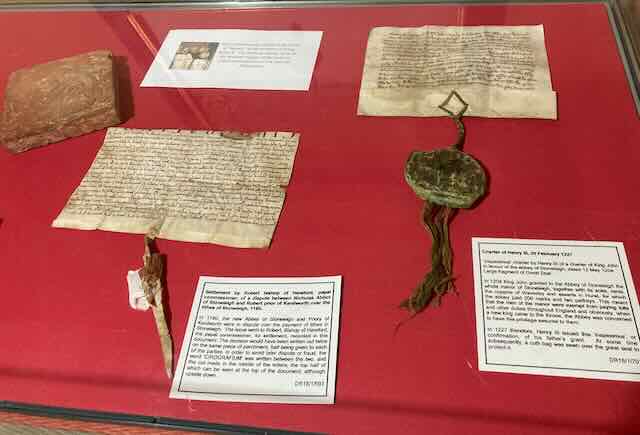
Further rooms at Stoneleigh Abbey display historical relics, such as the monks’ charters and seals.

Northanger turned up an abbey, and she was to be its inhabitant. Its long, damp passages, its narrow cells and ruined chapel, were to be within her daily reach, and she could not entirely subdue the hope of some traditional legends, some awful memorials of an injured and ill-fated nun.–Catherine Morland, Northanger Abbey

Humphry Repton was hired to improve Stoneleigh Abbey and its surroundings. His Red Book, showing before and after pictures, still exists.
Repton moved the river toward Stoneleigh Abbey so you could see the house reflected in the water.

“Smith’s place is the admiration of all the country; and it was a mere nothing before Repton took it in hand. I think I shall have Repton.”–Mr. Rushworth, Mansfield Park

A ha-ha (see below) at Stoneleigh Abbey gives an uninterrupted view across the fields.
From the other side of Stoneleigh Abbey’s hedge of lavender shown above, you can see the wall that kept animals from trespassing to the area around the house. A ha-ha is a walled ditch dug to act as a fence without disrupting the view.

A few steps farther brought them out at the bottom of the very walk they had been talking of; and standing back, well shaded and sheltered, and looking over a ha-ha into the park, was a comfortable-sized bench, on which they all sat down. . . .

“You will hurt yourself, Miss Bertram,” [Fanny Price] cried; “you will certainly hurt yourself against those spikes; you will tear your gown; you will be in danger of slipping into the ha-ha.”–Mansfield Park

In 1946, Stoneleigh Abbey became “one of the first stately homes to open its doors to the public” (Stoneleigh Abbey, 18). A fire destroyed much of it in 1960, though most of the furniture and paintings were rescued. In 1996, a trust was set up to restore it, at a cost of £12 million. They did an amazing job. Restoration was also done on the grounds and the lake. The restoration work sought to improve the habitats of bats, otters, kingfishers, and other species

Restorers also worked on conserving water management structures such as these locks.
We exit back through the Stoneleigh Abbey gatehouse, having enjoyed a beautiful day.

During their visit, the Austens enjoyed extensive walks through the grounds. Rachel Dodge has posted some of those lovely views. The Austens must have also attended the Stoneleigh Church, St. Mary the Virgin, though we didn’t get to visit it this trip. 

I hope you have enjoyed our visit to Stoneleigh Abbey with Jane Austen’s characters, and that you can see it in person some day! This year, the Abbey celebrated Christmas with a Christmas fair and a series of concerts, including carols in the chapel. If you have been to Stoneleigh Abbey, please tell us about your impressions!

Brenda S. Cox is the author of Fashionable Goodness: Christianity in Jane Austen’s England. She also blogs at Faith, Science, Joy, and Jane Austen.

All photos in this post, © Brenda S. Cox, 2023.

Sources and Further Reading

Jane Austen & Adlestrop: Her Other Family, by Victoria Huxley. US Amazon link

Stoneleigh Abbey by Paula Cornwell (obtained from Stoneleigh Abbey)

Jane Austen: A Family Record, 2nd ed., by Deirdre Le Faye

The Stoneleigh Abbey Chapel and Mansfield Park

Jane Austen’s Rich(er) Leigh Family Connections at Adlestrop and Stoneleigh Abbey 

Visiting Stoneleigh Abbey

Cassandra Leigh Austen’s Stay at Stoneleigh Abbey (letter)

Jane Austen’s Leigh Family: Stories Behind the Stories

Jane Austen’s Clergymen and Her Leigh Family

Jane Austen’s Mansfield Park and Stoneleigh Abbey

More pictures of Stoneleigh village, church, and abbey 

Stoneleigh Abbey website

Read Full Post »

It’s time for the next installment in this series devoted to examining the enduring romantic themes in Jane Austen’s novels, many of which are used over and over again in today’s most popular “rom com” movies and books.

So far in this series, we’ve explored popular themes in Jane Austen’s other novels: “Enemies to Lovers” in Pride and Prejudice, the “Slow Burn” Romance in Emma“Best Friends to Lovers” in Mansfield Park, and “Second-Chance” Love in Persuasion.

This month, we’re taking a closer look at the romantic themes Jane Austen used in Northanger Abbey (NA) and tracking the themes that are still used today.

Defining the “Meet-Cute”

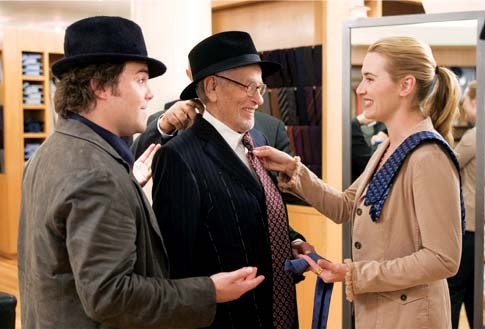
Every rom com has a meet-cute, the moment when two characters meet each other in a “cute” and memorable way. In The Holiday, Arthur (Eli Wallach) defines a meet-cute like this:

Say a man and a woman both need something to sleep in, and they both go to the same men’s pajama department. And the man says to the salesman, ‘I just need bottoms.’ The woman says, ‘I just need a top.’ They look at each other, and that’s the meet-cute.”

The Holiday

While every story has a meet-cute, some are cuter than others. Sometimes the two characters cannot stand one another, sometimes there is a misunderstanding, and sometimes there is a clash. But sometimes, as in NA, the two characters meet and are immediately drawn to one another.

Introducing Mr. Tilney

In NA, not only do Catherine Morland and Henry Tilney have a clever first meeting, we also learn a lot about social etiquette during that era.

When Catherine arrives in Bath, she knows no one and her chaperone, Mrs. Allen, has no immediate acquaintances. On their first night in the Upper Rooms, they move through a crowded ballroom, but because Mrs. Allen does not see anyone she knows, Catherine cannot dance:

[S]he longed to dance, but she had not an acquaintance in the room. Mrs. Allen did all that she could do in such a case by saying very placidly, every now and then, “I wish you could dance, my dear—I wish you could get a partner.”

Northanger Abbey

However, when they visit the Lower Rooms, “fortune” is “more favourable to our heroine” (Ch. 3). It’s there that the master of ceremonies makes an introduction: “The master of the ceremonies introduced to her a very gentleman-like young man as a partner; his name was Tilney.”

After dancing they strike up a lively conversation and the meet-cute is on.

Northanger’s Meet-Cute

Henry is described by Austen in highly favorable terms: “He seemed to be about four or five and twenty, was rather tall, had a pleasing countenance, a very intelligent and lively eye, and, if not quite handsome, was very near it. His address was good, and Catherine felt herself in high luck.”

As they talk, Mr. Tilney teases Catherine and is clearly a good-humored man: “He talked with fluency and spirit—and there was an archness and pleasantry in his manner which interested, though it was hardly understood by her.”

Mr. Tilney flirts with Catherine when he questions her about her journal and even tells her what she “ought” to write in it after their meeting:

“I danced with a very agreeable young man, introduced by Mr. King; had a great deal of conversation with him—seems a most extraordinary genius—hope I may know more of him. That, madam, is what I wish you to say.”

For the remainder of the chapter, Austen is at her absolute best with light-hearted, quick-paced dialogue and witty banter. Rarely do any of her characters talk quite so much upon first meeting one another, and we, her readers, find ourselves as charmed by Henry as Catherine herself:

They danced again; and, when the assembly closed, parted, on the lady’s side at least, with a strong inclination for continuing the acquaintance. Whether she thought of him so much, while she drank her warm wine and water, and prepared herself for bed, as to dream of him when there, cannot be ascertained; but I hope it was no more than in a slight slumber, or a morning doze at most; for if it be true, as a celebrated writer has maintained, that no young lady can be justified in falling in love before the gentleman’s love is declared, it must be very improper that a young lady should dream of a gentleman before the gentleman is first known to have dreamt of her.

Northanger Abbey

Love at First Sight, Conflict Ahead

In a book with a quick mutual connection between characters, there must be some kind of problem or conflict to keep the story going. Otherwise, it would be over in the first few pages. In many popular movies today, writers add in misunderstandings, timing issues, geographical hurdles, age differences, and other road blocks to make things interesting.

The same is true for NA. After their first meeting, Catherine develops an immediate first major crush, and it’s clear that Mr. Tilney is hoping to see more of her as well. Both are charmed and interested. Both hope to see one another again. However, as with most stories that start with immediate attraction, Catherine and Henry don’t live happily ever after–at least not right away.

For the remainder of the novel, Austen uses a variety of plot devices to create conflict for her two young lovers, unfold a larger plot with its own major themes, and build a multi-layered story arc for Catherine and Henry.

C.E. Brock illustration, Northanger Abbey, “Pray, pray, Stop Mr. Thorpe”

Popular “Meet-Cute” Examples

No romantic comedy can hold a candle to Jane Austen’s complex plots, characters, and novels. However, it’s interesting to think about the devices she used to create the meet-cute in NA versus the devices writers must use today. While people don’t need a master of ceremonies to introduce them anymore, writers still must find ways to “match-make” their characters. Here are some popular movies that fall into the “meet-cute” category:

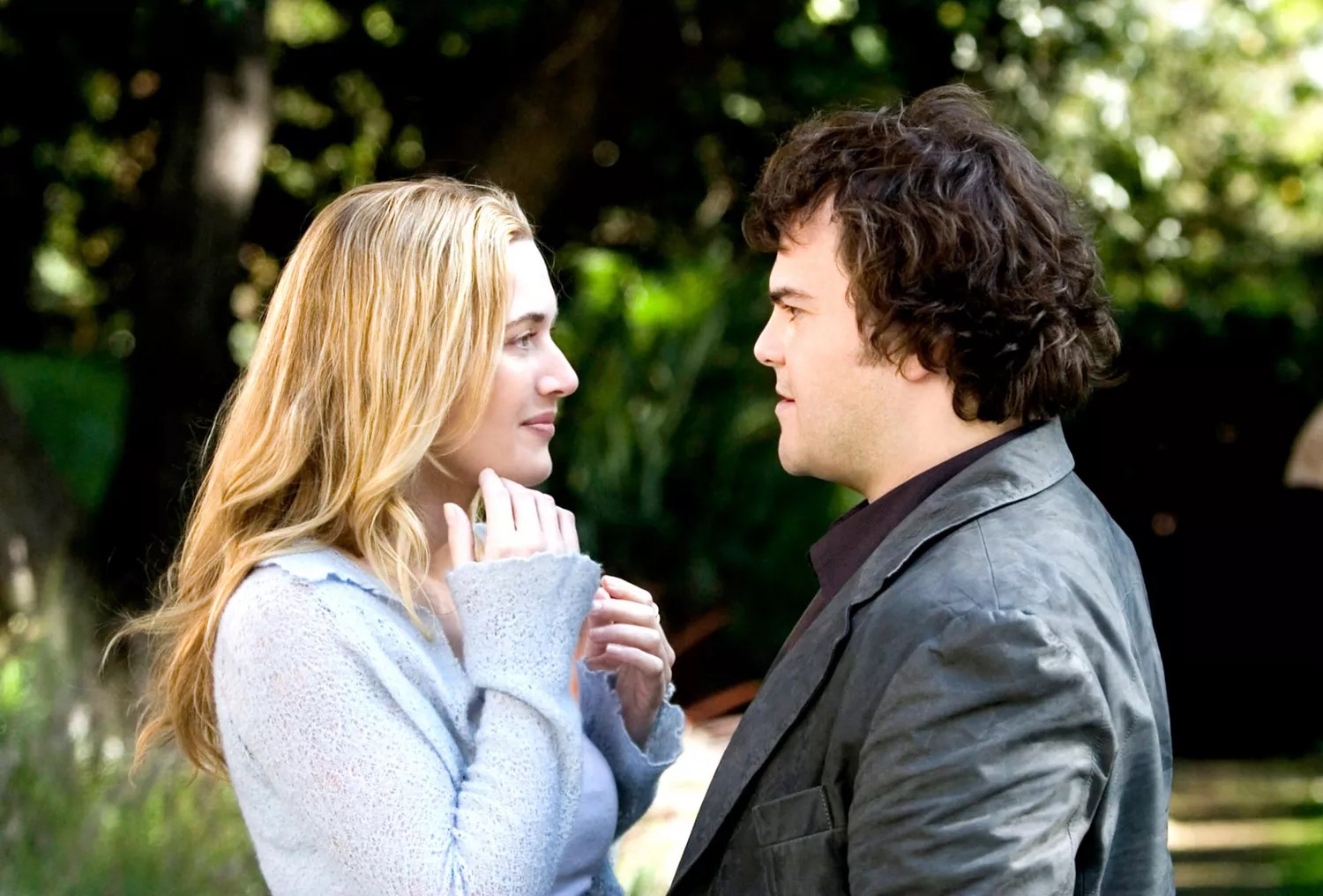
In The Holiday, there are several meet-cutes: When Iris and Amanda switch houses for Christmas, Iris ends up meeting Miles when he comes to drop something off at Amanda’s house on a windy day in Los Angeles. Miles and Iris immediately hit it off, while Miles’ girlfriend sits in his car waiting. Amanda meets Graham when he shows up on her doorstep (Iris’ doorstep), hoping to crash at his sister’s house after a night out.

In Serendipity, the two main characters meet in a busy department store at Christmas time. They each grab for the last pair of black gloves and strike up a conversation.

In Notting Hill, Will spills orange juice on Anna, a popular movie star, when they crash into one another on the sidewalk near his apartment. She agrees to go to his place to change into clean clothes and they share a delightful first conversation and an unexpected first kiss.

In 50 First Dates, Henry must create a series of meet-cutes to gain the attention of Lucy each day because she has lost her short-term memory and forgets who he is every time they meet.

And in My Big Fat Greek Wedding, we find a refreshing twist on the meet-cute when Toula meets and falls in love with Ian. As she serves him at her family’s restaurant, she can’t even speak to him. However, that meeting pushes Toula to change her life, go to school, (get a makeover – of course), and become the confident woman Ian later notices through the window of a travel agency.

Clever Introductions

Jane Austen created her stories in a world where men and women could only meet under certain circumstances. The social rules of her time necessarily set up parameters that she had to follow, which provided for some very creative inspiration. Today, people don’t have to follow those same rules, but they still need to find a way to meet and introduce themselves, either in person, online, at church, work, or school, or through a mutual friend.

What are some of your favorite “meet-cute” moments in literature or film? If you have a “meet-cute” story of your own, we’d love to hear about it in the comments!


RACHEL DODGE teaches college English classes, gives talks at libraries, teas, and book clubs, and writes for Jane Austen’s World blog. She is the bestselling author of The Little Women DevotionalThe Anne of Green Gables Devotional and Praying with Jane: 31 Days Through the Prayers of Jane Austen. Now Available: The Secret Garden Devotional! You can visit Rachel online at www.RachelDodge.com.

Read Full Post »

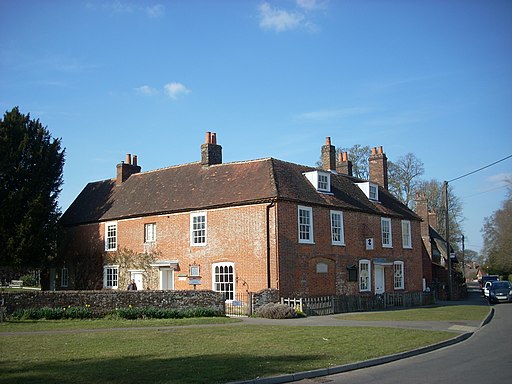
Inquiring readers: Are you tired of Zoom workshops? Don’t be. At times the easiest way to attend workshops abroad is via the internet. This workshop is sponsored by The Jane Austen’s House Museum in Chawton. (Austen fans will recognize the house!)

Jane_Austen's_House_Museum,_Chawton

Jane Austen House Museum, Chawton, Wikimedia Commons

The following text is from the website (click on the link of the title below)

VIRTUAL BOOK CLUB: NORTHANGER ABBEY

northanger_abbey-01

Northanger Abbey, H.M. Brock, Wikimedia Commons

Back by popular demand… snap up a ticket to our virtual book club! Bring your thoughts, ideas and observations on ‘Northanger Abbey’… bring tea and quotes and questions… expect stimulating discussion and debate!

“Join us for a lively online book club, discussing all things Northanger Abbey! We’ll get the ball rolling with questions, ideas and provocations about this bright, brilliant novel, and then it’s over to you – as a group we’ll share thoughts, theories, favourites and best-bits.”

Date: Tuesday 6 September

Time: 7pm – 8pm (British Summer Time – 

those in other countries are responsible for figuring out their time)

Location: This event will take place online. Join us from the comfort of your own home!

Tickets: £6.50 (Major Credit Cards are accepted)

(Note: As of August 17, 2022 

6.50 British Pounds = 7.831456 US Dollars

1 GBP = 1.20484 USD

1 USD = 0.829986 GBP)

As of August 17th, 8 PM U.S. EST, 49 seats are still open

BOOK HERE  (please make sure you select the right date on the calendar!)

  • 💻 This event will take place on Zoom. Please provide a valid email address, as you will be emailed a link to join the tour in the run up to the event. 
  • 🎫 If you are joining as a group or household, please buy one ticket for each person attending.  All proceeds go towards the upkeep of the Museum. 
  • ⏰ Timings are given in UK time (British Summertime) – please do check what the event time is in your territory, to ensure you log in at the right time.

___________

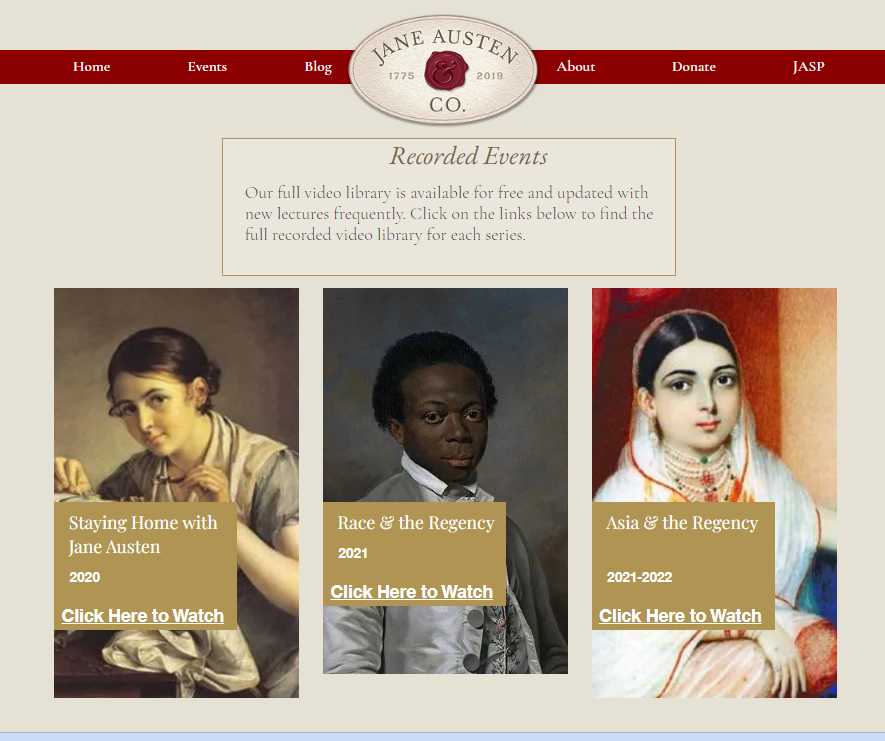
If the time is inconvenient for this workshop, Jane Austen & Co., based in the U.S., offers free zoom presentations of past workshops. Click on the above link to enter the site. Click on this link to enter videos and workshops of past events since 2020.

Videos Jane Austen+Co

Image of past videos available to the public: Staying at Home With Jane Austen; Race & the Regency; and Asia & the Regency

Read Full Post »

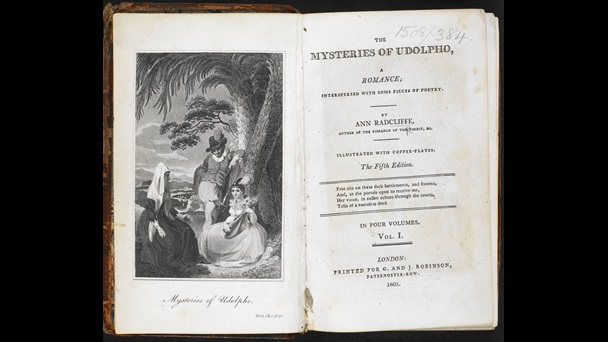
In Austen’s youth, sentimental romances and sensational Gothic novels full of dramatized heroines, dark towers and dungeons, and dangerous male villains became popular. These included novels like Charlotte Smith’s Emmeline (1788), which some believe is echoed in Austen’s early writings, and Ann Radcliffe’s The Mysteries of Udolpho (1794), which Austen later referenced in Northanger Abbey in its famous discussion of novels.

The Mysteries of Udolpho (1794) by Ann Radcliffe. Image: British Library.

These sensationalized novels were widely scorned by polite society and considered indecent because they were thought to promote sinful thoughts and immoral behavior. Lord Francis Jeffrey is quoted as saying the following about British fiction during the mid to late eighteenth century:

A greater mass of trash and rubbish never disgraced the press of any country than the ordinary novels that filled and supported the circulating library down nearly to the time of Miss Edgeworth’s first appearance… There had been Miss Burney’s Evelina and Cecilia…But the staple of our novel market was beyond imagination despicable, and had consequently sunk and degraded the whole department of literature of which it had usurped the name.

Lord Francis Jeffrey, Essays, 1853.

Indeed, much of the British literary world agreed. Samuel Johnson commented on the moral obligation of fiction writers to instruct the minds of young readers: “These books are written chiefly to the young, the ignorant, and the idle, to whom they serve as lectures of conduct, and introductions into life” (Johnson, Rambler No. 4).

Are They All Horrid?

So just what were these novels – this “greater mass of trash and rubbish” – that were so degrading to the public? In Northanger Abbey, Isabella Thorpe—a character we quickly learn is not the best guide or role model for any young person—lists them right out for us!

Isabella: “Dear creature! how much I am obliged to you; and when you have finished Udolpho, we will read The Italian together; and I have made out a list of ten or twelve more of the same kind for you.”

Catherine: “Have you, indeed! How glad I am! — What are they all?”

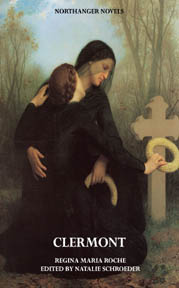
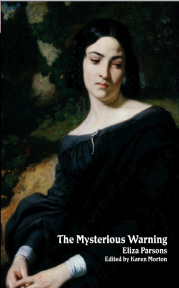
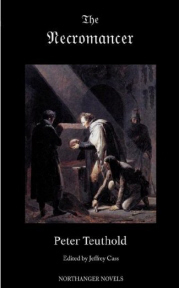
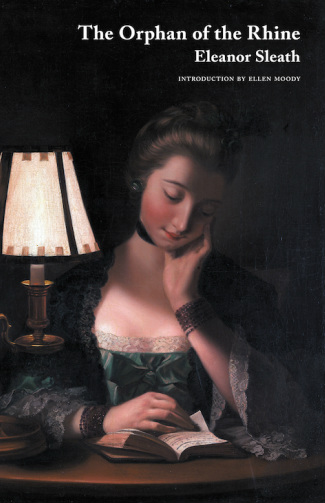
Isabella: “I will read you their names directly; here they are, in my pocket-book. Castle of Wolfenbach, Clermont, Mysterious Warnings, Necromancer of the Black Forest, Midnight Bell, Orphan of the Rhine, and Horrid Mysteries. Those will last us some time.”

Catherine: “Yes, pretty well; but are they all horrid, are you sure they are all horrid?”

Isabella: “Yes, quite sure; for a particular friend of mine, a Miss Andrews, a sweet girl, one of the sweetest creatures in the world, has read every one of them.”

Northanger Abbey, Jane Austen
Catherine Morland (Felicity Jones), Northanger Abbey, 2007.

Yes, that’s right. Austen gives us, her readers, the exact names of these “horrid” novels that we should definitely read avoid. But what exactly made the books on Isabella’s must-read list so deliciously “horrid”? Let’s find out!

Each of these books is now widely available online as e-texts, on e-readers, and even in print. Thanks to publishers such as Valencourt Books, we have access to these “scandalous” novels, giving them—and their genre—a proper place in the literary canon (and allowing us to more fully understand Austen’s work on Northanger Abbey).

The Castle of Wolfenbach (1793) by Eliza Parsons

The Castle of Wolfenbach by Eliza Parsons (1793) is the novel that has been printed and reprinted the most, as it is now considered an important literary work from Austen’s day and a “highly readable” Gothic novel of its time.

No longer to be regarded as a footnote to the literary history of Jane Austen’s Northanger septet, Eliza Parsons’s Castle of Wolfenbach (1793) now secures its proper place as both a work of historical importance and a highly readable Gothic novel in its own right with this fine edition. Diane Long Hoeveler’s thoughtful introduction opens new perspectives on Parsons’s achievement in the field of what might be called “international” Gothic in her creation of an “ideologically bifurcated female Gothic, part liberal and part conservative” in its political outlook. This new edition both supplants earlier editions of this pivotal Gothic and tells us much about how the Gothic novel evolved in the late 1790s as an historical reflector of the fears, beliefs, and prejudices of  a revolutionary, yet reactionary, era.

-Frederick S. Frank, Professor Emeritus of English, Allegheny College, and author of The First Gothics, Valancourtbooks.com

Book Description: Matilda Weimar flees her lecherous and incestuous uncle and seeks refuge in the ancient Castle of Wolfenbach. Among the castle’s abandoned chambers, Matilda will discover the horrifying mystery of the missing Countess of Wolfenbach. But when her uncle tracks her down, can she escape his despicable intentions?

A sampling of covers for The Castle of Wolfenbach.

One of the seven “horrid novels” named in Jane Austen’s Northanger AbbeyThe Castle of Wolfenbach is perhaps the most important of the early Gothic novels, predating both The Mysteries of Udolpho and The Monk.

Clermont (1798) by Regina Maria Roche

Book Description: Clermont is the story of Madeline, a porcelain doll of a Gothic heroine, who lives in seclusion from society with her father, Clermont, whose past is shrouded in mystery. One stormy night, their solitude is interrupted by a benighted traveller, a Countess who turns out to be a friend from Clermont’s past.

Madeline goes to live with the Countess to receive her education, but her new idyllic life soon turns into a shocking nightmare. Ruffians attack the gentle Countess, and Madeline is assaulted in a gloomy crypt. And to make matters worse, a sinister stranger appears, threatening to reveal the bloody truth of Clermont’s past unless Madeline marries him. Can she avoid the snares of her wily pursuers, solve the mystery of her father’s past, and win the love of her dear De Sevignie?

The Mysterious Warning (1796) by Eliza Parsons

Book Description: The good old Count Renaud is dead, and his will makes the degenerate Rhodophil his heir, disinheriting his other son Ferdinand, who has married against his father’s wishes. Rhodophil promises to share his new riches with his younger brother and his wife Claudina, but Ferdinand hears a mysterious voice from beyond the grave, warning him to flee his brother and his wife to save himself from sin and death!

Ferdinand obeys the supernatural warning and sets out to find fortune and adventure. In the course of his quest he will encounter a recluse in a ruined castle with a horrible secret, find himself captured and imprisoned by the Turkish army, and encounter one of Gothic literature’s most depraved female characters, the monstrous Fatima. And if he survives all these dangers, Ferdinand must return to Renaud Castle to solve the mystery of the ghostly voice and uncover the terrible truth about his wife and his brother!

The Necromancer; or, The Tale of the Black Forest (1794) by Lawrence Flammenberg

Book Description: “The hurricane was howling, the hailstones beating against windows, the hoarse croaking of the raven bidding adieu to autumn, and the weather-cock’s dismal creaking joined with the mournful dirge of the solitary owl…”

The Necromancer consists of a series of interconnected stories, all centering on the enigmatic figure of Volkert the Necromancer. Filled with murder, ghosts, and dark magic, and featuring a delirious and dizzying plot that almost defies comprehension, The Necromancer is one of the strangest horror novels ever written.

One of the earliest Gothic bestsellers, The Necromancer was first published in 1794, and after more than two centuries still retains the power to thrill and fascinate readers.

The Orphan of the Rhine (1798) by Eleanor Sleath

Book Description: Seduced and betrayed by a rake, Julie de Rubine lives in seclusion with her infant son, Enrîco. One day, their calm retirement is interrupted by the Marchese de Montferrat, who promises to provide for Julie and her son if she agrees to care for an unfortunate orphan, Laurette, whose origin is shrouded in mystery. Under the assumed name of Madame Chamont, Julie raises the two children, whose youthful friendship eventually blossoms into love.

As Laurette matures, she resolves to learn the identity of her real parents. Her only clues are a painted miniature of a beautiful lady and the whisperings of a sinister monk, who warns her to avoid the Marchese de Montferrat. But when Julie is kidnapped by banditti and Laurette is taken to the gloomy castle of the lascivious Marchese, will she be able to uncover the truth and marry her beloved Enrîco, or will she fall victim to the lustful Montferrat?

The rarest of the seven “horrid novels,” Eleanor Sleath’s The Orphan of the Rhine (1798) is indebted to Ann Radcliffe’s The Mysteries of Udolpho (1794) and Regina Maria Roche’s The Children of the Abbey (1796) but possesses a charm and fascination all its own. 

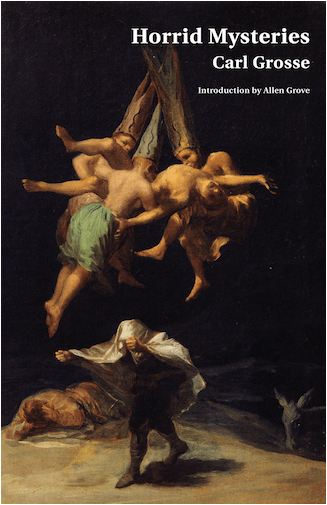
Horrid Mysteries (1796) by Carl Grosse

Book description: A bizarre work whose labyrinthine plot defies summary, Horrid Mysteries (1796) recounts the experiences of Don Carlos and his friend, the Marquis of G******, who become entangled in the web of a secret society bent on world domination. As the heroes flee from place to place across Europe, the agents of this dark confederacy, seemingly possessed of supernatural powers, are always at their heels—and death lies around every corner!

Unavailable for nearly 50 years, this unabashedly lurid Gothic novel written by an enigmatic German who styled himself the “Marquis of Grosse” and “Marquis of Pharnusia” returns to print at last as the seventh and final reissue in Valancourt’s series of the rare Gothic novels mentioned in Jane Austen’s Northanger Abbey.

Gothic Novels and Jane Austen

For more on this topic, our own Tony Grant has also written about Austen’s influences and her work on Northanger Abbey in his article, Netley Abbey and the Gothic. In his article, Tony also references an article by John Mullan on the fascinating topic of Gothic literature that is well worth your time: The Origins of the Gothic.

In his Rambler No. 4, Johnson said that the “task” of “present writers” is to write books that “serve as lectures of conduct, and introductions into life” so that “nothing indecent” should be set in front of the eyes of young men and women.

As sensational, Gothic novels were being written, other authors were at the same time attempting to raise the bar and write novels that were both entertaining and instructive. Many of the books in each of these genres are novels with which Austen herself was familiar or, in many cases, would have read. Next month, I’ll be talking about didactic fiction—writing that was meant to provide positive role models and good morals—and the influence it had on Austen’s writing.


RACHEL DODGE teaches college English classes, gives talks at libraries, teas, and book clubs, and writes for Jane Austen’s World blog and Jane Austen’s Regency World magazine. She is the bestselling author of The Anne of Green Gables Devotional: A Chapter-By-Chapter Companion for Kindred Spirits and Praying with Jane: 31 Days Through the Prayers of Jane Austen. Her newest book The Little Women Devotional is now available. You can visit Rachel online at www.RachelDodge.com.

Read Full Post »

Northanger Abbey, Vol 2, Chapter XIII + XIV

Inquiring readers, 

In Volume Two, Chapters 13 & 14, the emotional drama that Eleanor Tilney and Catherine Morland share almost explodes from its pages. After discovering that Catherine Morland was not the great heiress he thought her to be, General Tilney ordered his daughter, Eleanor, to oust Catherine from Northanger Abbey. Heretofore, Jane Austen has depicted Eleanor as a quiet, genteel, and deferential young lady, who had not been given much of a center stage. Now Austen reveals us to her inner thoughts and emotions. Catherine, as usual, continues to be an open and wide-eyed innocent.

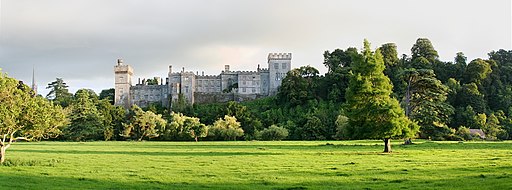
Image of Lismore Castle in a setting of trees and fields.

Lismore Castle, Ireland, County Waterford served as Northanger Abbey in the 2007 film of the same name, Wikimedia Commons. Image taken by Ingo Mehling, 18 August, 2010. CC BY-SA 3.0

Eleanor’s Reluctant Message

“Eleanor, stood there. Catherine’s spirits, however, were tranquillized but for an instant, for Eleanor’s cheeks were pale, and her manner greatly agitated. Though evidently intending to come in, it seemed an effort to enter the room, and a still greater to speak when there. Catherine, supposing some uneasiness on Captain Tilney’s account, could only express her concern by silent attention, obliged her to be seated, rubbed her temples with lavender-water, and hung over her with affectionate solicitude. “My dear Catherine, you must not — you must not indeed — ” were Eleanor’s first connected words. “I am quite well. This kindness distracts me — I cannot bear it — I come to you on such an errand!”

“Errand! –to me!”

“How shall I tell you! — Oh! how shall I tell you!” 

The above scene is more about Eleanor’s mortification at being the messenger of bad tidings than Catherine Morland’s reaction, which was concern for another, not herself. Eleanor knew the consequences of her angry’s father’s actions and is devastated. Catherine, perplexed, wonders about the reason for her departure. 

A new idea now darted into Catherine’s mind, and turning as pale as her friend, she exclaimed, “‘Tis a messenger from Woodston!”

Catherine’s only concern is for Henry Tilney. Woodston is his residence, about 20 miles away from the Abbey.

“You are mistaken, indeed,” returned Eleanor, looking at her most compassionately — “it is no one from Woodston. It is my father himself.” 

Eleanor could not lie. Indeed, she could not implicate her brother, who had no part in this deception. 

Her voice faltered, and her eyes were turned to the ground as she mentioned his name. His unlooked-for return was enough in itself to make Catherine’s heart sink, and for a few moments she hardly supposed there were anything worse to be told. 

Eleanor bravely continues, telling Catherine of her part as an unwilling messenger. She also reveals how much Catherine’s friendship means to her:

She  [Catherine] said nothing; and Eleanor, endeavoring to collect herself and speak with firmness, but with eyes still cast down, soon went on. “You are too good, I am sure, to think the worse of me for the part I am obliged to perform. I am indeed a most unwilling messenger. After what has so lately passed, so lately been settled between us — how joyfully, how thankfully on my side! — as to your continuing here as I hoped for many, many weeks longer, how can I tell you that your kindness is not to be accepted — and that the happiness your company has hitherto given us is to be repaid by — but I must not trust myself with words. My dear Catherine, we are to part. My father has recollected an engagement that takes our whole family away on Monday. We are going to Lord Longtown’s, near Hereford, for a fortnight. Explanation and apology are equally impossible. I cannot attempt either.”

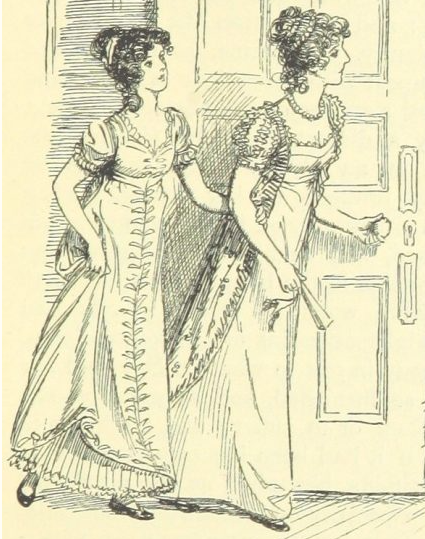
Eleanor-Catherine-closeup-Tomson

Detail of Catherine (L) and Eleanor (R), Hugh Tomson drawing, 1897, entitled “General Tilney was Pacing the Drawing Room.”

Although the General’s excuse was a lie, poor Eleanor was forced to give it. She could not hide her shame. Anything Eleanor said between the lines escaped Catherine, who must have known that Lord Longtown could not be ignored.

“My dear Eleanor,” cried Catherine, suppressing her feelings as well as she could, “do not be so distressed. A second engagement must give way to a first. I am very, very sorry we are to part – so soon, and so suddenly too; but I am not offended, indeed I am not. I can finish my visit here, you know, at any time; or I hope you will come to me. Can you, when you return from this lord’s, come to Fullerton?”

Eleanor answers:

“It will not be in my power, Catherine.”

This sentence illustrates Eleanor’s story in a nutshell – she has no power and is entirely ruled by her father. Her oldest brother is largely absent. Henry is the only male in her family who shows her respect and deference, but she still must depend on him to escort her in public. 

Catherine, Eleanor, and Henry had forged a close relationship because of their genuine like for each other. The brother and sister loved Catherine for her guileless utterances. She in turn admired them for the attention they paid her, which she found flattering. She trusted them like an eager puppy and reveled in their company, especially Henry’s, with whom she had fallen in love. 

Astounded by Eleanor’s answer, she swallows her disappointment, but still can’t understand why she must leave the Abbey.

“Come when you can, then.” —

Eleanor made no answer; and Catherine’s thoughts recurring to something more directly interesting, she added, thinking aloud, “Monday — so soon as Monday; — and you all go. Well, I am certain of — I shall be able to take leave, however. I need not go till just before you do, you know. Do not be distressed, Eleanor, I can go on Monday very well. My father and mother’s having no notice of it is of very little consequence. The General will send a servant with me, I dare say, half the way — and then I shall soon be at Salisbury, and then I am only nine miles from home.”

Her sweet speech hurt Eleanor more than harsh words ever could. Eleanor must have steeled herself before answering her friend. Someone new to reading Jane Austen’s novels or who has recently been introduced to the Regency Era with all its strict customs, mores, and rules of etiquette could only guess why Eleanor was so distressed by her father’s behavior. The truth was that no genteel Regency lady of Catherine’s station was allowed by her family to travel as an unescorted passenger in a public coach. 

“Ah, Catherine! were it settled so, it would be somewhat less intolerable, though in such common attentions you would have received but half what you ought. But — how can I tell you? — tomorrow morning is fixed for your leaving us, and not even the hour is left to your choice; the very carriage is ordered, and will be here at seven o’clock, and no servant will be offered you.”

The General’s edict was dangerous and indefensible. Both Eleanor and Catherine understood the full import of the message. Catherine was to be banished without even the most common decency or courtesy, alone, and without funds – her nightmare has come true, except she was not to be abducted but evicted.

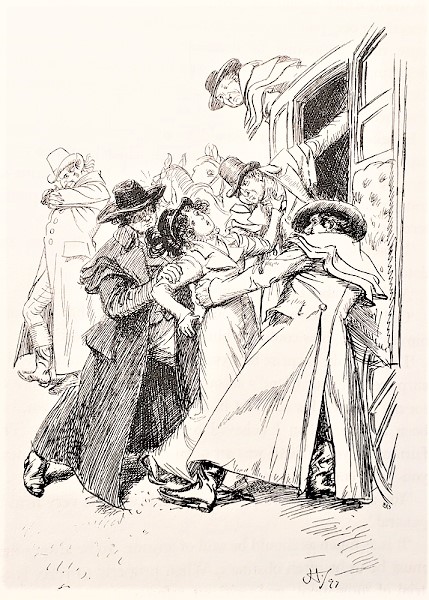
carriage-Northanger Abbey-HThompson-Sm (3)

Catherine’s nightmare: Three villains force her into a carriage. Hugh Tomson, 1897. Catherine’s imagination takes her to Gothic levels, but the danger of a single woman in a public carriage was real.

Catherine sat down, breathless and speechless. “I could hardly believe my senses, when I heard it; — and no displeasure, no resentment that you can feel at this moment, however justly great, can be more than I myself — but I must not talk of what I felt. Oh! that I could suggest anything in extenuation! Good God! what will your father and mother say! After courting you from the protection of real friends to this — almost double distance from your home, to have you driven out of the house, without the considerations even of decent civility! Dear, dear Catherine, in being the bearer of such a message, I seem guilty myself of all its insult; yet, I trust you will acquit me, for you must have been long enough in this house to see that I am but a nominal mistress of it, that my real power is nothing.”

Catherine searches for an answer:

“Have I offended the General?” said Catherine in a faltering voice.

Eleanor can give no good excuse:

“Alas! for my feelings as a daughter, all that I know, all that I answer for, is that you can have given him no just cause of offence. He certainly is greatly, very greatly discomposed; I have seldom seen him more so. His temper is not happy, and something has now occurred to ruffle it in an uncommon degree; some disappointment, some vexation, which just at this moment seems important, but which I can hardly suppose you to have any concern in, for how is it possible?”

Catherine still grasps for excuses and is still sorry for offending the General. She is only sad that he had not recalled his assignation with Lord Longtown earlier, so that she could have written to her parents for funds and an escort. 

Eleanor responds:

“I hope, I earnestly hope, that to your real safety it will be of none; but to everything else it is of the greatest consequence: to comfort, appearance, propriety, to your family, to the world. Were your friends, the Allens, still in Bath, you might go to them with comparative ease; a few hours would take you there; but a journey of seventy miles, to be taken post by you, at your age, alone, unattended!”

“Oh, the journey is nothing. Do not think about that. And if we are to part, a few hours sooner or later, you know, makes no difference. I can be ready by seven. Let me be called in time.” Eleanor saw that she wished to be alone; and believing it better for each that they should avoid any further conversation, now left her with “I shall see you in the morning.”

Catherine must have had an accurate idea of her journey’s long distance and its travails. (Northanger Abbey is over twice the distance from her home than the thirty mile journey with the Allens to Bath.) She also must have known that the General’s order was grossly uncivil. However, she was given no choice as to the time and day she was to depart, or of her mode of travel, and thus, stripped of choice, she spent a sleepless night. 

As good as her word, Catherine was ready early.

Soon after six Eleanor entered her room, eager to show attention or give assistance where it was possible; but very little remained to be done. Catherine had not loitered; she was almost dressed, and her packing almost finished.” 

The silence between the two women spoke volumes. 

Very little passed between them on meeting; each found her greatest safety in silence, and few and trivial were the sentences exchanged while they remained upstairs, Catherine in busy agitation completing her dress, and Eleanor with more good-will than experience intent upon filling the trunk.” 

One can imagine the discomfort both women felt at that moment. They were quiet and deep in thought, and for the first time experienced awkwardness in each other’s company. Catherine, her appetite gone, silently reminisced how cheerful and carefree her previous breakfast in this room had been with brother and sister. 

The appearance of the carriage, a hack post chaise, brought Catherine and Eleanor back to the present. A hack post chaise was a basic hired carriage guided only by a post-boy or postillion on a lead horse. (Jennifer S. Ewing states in her JASNA article: “Olsen observes that “There is always something vaguely tacky about hack vehicles in Austen.  When she wants to convey a sense of comfortable, sophisticated travel, she uses the phrase ‘post-chaise’ or something similar.  Hackney coaches are associated with poverty, disgrace, anonymity, and disappointment…”)

Eleanor turns to her friend:

“You must write to me, Catherine,” she cried, “you must let me hear from you as soon as possible. Till I know you to be safe at home, I shall not have an hour’s comfort. For one letter, at all risks, all hazards, I must entreat. Let me have the satisfaction of knowing that you are safe at Fullerton, and have found your family well, and then, till I can ask for your correspondence as I ought to do, I will not expect more. Direct to me at Lord Longtown’s, and, I must ask it, under cover to Alice.”

Eleanor asks Catherine to send word of her safe arrival at Fullerton to someone named Alice. This person was probably her maid or a servant, as Eleanor would not have called Lord Longtown’s wife or daughter by their first names. The secrecy was necessary, for her controlling father would have the mail delivered to him before distributing the letters to his family.

Eleanor would not rest until she learned of Catherine’s safe arrival. Catherine balks at first, but then gives in – “Oh, Eleanor, I will write to you indeed.”

This gave Eleanor some comfort, but she suspected Catherine might not have had enough money left from her personal allowance to pay for the ride home. This…

proved to be exactly the case. Catherine had never thought on the subject till that moment, but, upon examining her purse, was convinced that but for this kindness of her friend, she might have been turned away from the house without even the means of getting home…”

Catherine’s artless utterances during her visit with the Tilneys must have clued Eleanor about the true state of her family’s finances, and so her father’s reason for evicting her from the Abbey was probably no surprise.

The Journey Home

Catherine was too wretched to be fearful. The journey in itself had no terrors for her; and she began it without either dreading its length or feeling its solitariness. Leaning back in one comer of the carriage, in a violent burst of tears, she was conveyed some miles beyond the walls of the abbey before she raised her head…”

During this first stage of the ride Catherine must have been alone in the carriage. Had passengers been present, she would not have burst violently into tears. Gentle ladies were taught to hold their emotions in check. While she was impulsive and naive, she also had impeccable manners.

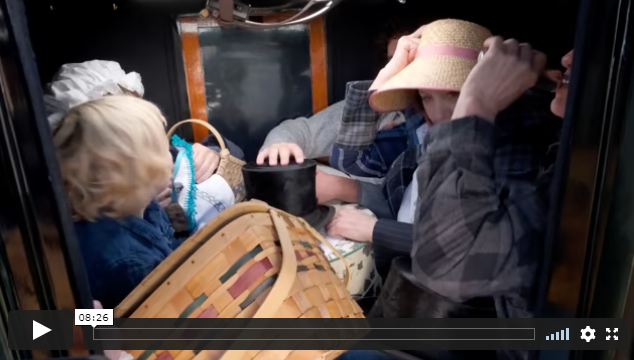
A public coach was generally cramped and dirty. The straw on the floor was rarely changed. Passengers sought the four corners for some privacy, but some passengers in a six-seater coach were squeezed into the center, like the filling in a sandwich. 

Sandy.Lerner.Carriage.JASNA

Crammed quarters. Image of Sandy Lerner’s Part 2 video of Pen and Parsimony: Carriages in the Novels of Jane Austen. Copyright Sandy Lerner. JASNA

Watch the beginning of Part 2 of two videos from a JASNA article about riding in a public coach, by Sandy Lerner .

The distance between Fullerton and Northanger Abbey was seventy miles. Carriages during that time could go as fast as 6-7 miles per hour on a post road. They often slowed down significantly on secondary roads, which were rutted after heavy rains and badly maintained. Austen writes:

…”she traveled on for about eleven hours without accident or alarm, and between six and seven o’clock in the evening found herself entering Fullerton.” 

The journey lasted from ten to eleven hours, which meant that the horses reached speeds of up to 7 miles per hour. The added time was due to the stops in stages when fresh horses were exchanged with spent horses. Horses could pull a carriage for an average from 15 to 20 miles at most before needing to stop. The exchanges were rapid, and took as little as five minutes per stop (think of the speed of NASCAR pit stops – Regina Jeffers). 

…after the first stage she had been indebted to the post-masters for the names of the places which were then to conduct her to it; so great had been her ignorance of her route. She met with nothing, however, to distress or frighten her. Her youth, civil manners, and liberal pay procured her all the attention that a traveller like herself could require; and stopping only to change horses…”

Of the journey, Jane writes that “the hours passed away, and her journey advanced much faster than she looked for”, but Catherine had not eaten since breakfast, which ended around 7 AM. She must have been hungry and exhausted when the coach stopped in Fullerton. Her spirits lifted, however, when she was met with joy by her family and she reveled in their unconditional love.

The chaise of a traveller being a rare sight in Fullerton, the whole family were immediately at the window; and to have it stop at the sweep-gate was a pleasure to brighten every eye and occupy every fancy — a pleasure quite unlooked for by all but the two youngest children, a boy and girl of six and four years old, who expected a brother or sister in every carriage…”

“…Her father, mother, Sarah, George, and Harriet, all assembled at the door to welcome her with affectionate eagerness, was a sight to awaken the best feelings of Catherine’s heart; and in the embrace of each, as she stepped from the carriage, she found herself soothed beyond anything that she had believed possible. So surrounded, so caressed, she was even happy!” 

This heartwarming homecoming was the balm Catherine needed after such a heartsore night and day, but after the homecoming, reality set in and the family noticed her pale looks:

In the joyfulness of family love everything for a short time was subdued, and the pleasure of seeing her, leaving them at first little leisure for calm curiosity, they were all seated round the tea-table, which Mrs. Morland had hurried for the comfort of the poor traveller, whose pale and jaded looks soon caught her notice, before any inquiry so direct as to demand a positive answer was addressed to her.”

As Catherine spoke for half an hour, her family’s distress on her behalf increased.

…but here, when the whole was unfolded, was an insult not to be overlooked, nor, for the first half hour, to be easily pardoned. Without suffering any romantic alarm, in the consideration of their daughter’s long and lonely journey, Mr. and Mrs. Morland could not but feel that it might have been productive of much unpleasantness to her; that it was what they could never have voluntarily suffered; and that, in forcing her on such a measure, General Tilney had acted neither honourably nor feelingly — neither as a gentleman nor as a parent. Why he had done it, what could have provoked him to such a breach of hospitality, and so suddenly turned all his partial regard for their daughter into actual ill will…”

Mrs Morland was struck by General Tilney’s actions of sending her away without even a servant to escort her, and the needless trouble he caused her daughter. Not only could travel be dangerous during this era, especially at night when highwaymen roamed (recall the earlier Hugh Thomson image), or in the bitter cold of winter, but the journey might be delayed due to a broken wagon wheel, a lame horse, or impassable roads, rivers, or streams. Mrs Morland, ever the positive thinker, concludes that this experience was a character builder for her daughter.

“Well,” continued her philosophic mother, “I am glad I did not know of your journey at the time; but now it is over, perhaps there is no great harm done. It is always good for young people to be put upon exerting themselves; and you know, my dear Catherine, you always were a sad little shatter-brained creature; but now you must have been forced to have your wits about you, with so much changing of chaises and so forth; and I hope it will appear that you have not left anything behind you in any of the pockets.”

Catherine Keeps her Promise and Writes a Letter

Catherine reproached herself for coolly saying goodbye to Eleanor. The funds she gave her provided for a safe journey instead of one that was fraught with danger. If she had run out of the ability to pay, she might have been stranded miles from home without the means to contact her family.

According to Deborah Barnum, author of the Jane Austen in Vermont blog, the estimated cost of a hired post-chaise in 1800 was “about £1 / mile [i.e @1 shilling / horse / mile, to include the postillion.]”  Eleanor’s gift was truly generous when one considers that Jane Austen’s annual allowance for personal purchases (which included gifts) was around £ 20 per year. Cassandra’s yearly income from the investments she made with the  £1,000 that Tom Fowler bequeathed to her was around  £35 (Lucy Worsley). The sisters’ combined income could not have paid for this expensive journey. 

The money therefore which Eleanor had advanced was enclosed with little more than grateful thanks, and the thousand good wishes of a most affectionate heart.”

Mrs Morland observed how sadly out of luck Catherine had been in making friends during her ventures in Bath and at the Abbey, and says ”the next new friends you make I hope will be better worth keeping.”

Catherine coloured as she warmly answered, “No friend can be better worth keeping than Eleanor.”

Eleanor, who had largely been invisible before this drama, became a three-dimensional character in these two chapters. She reacted with real feeling and emotion when her father ordered her to remove Catherine from the Abbey, and when she had to put the plan in motion, but when Austen sped the novel to its conclusion, she was placed in the background again. 

General Tilney’s behavior so disgusted his son Henry that it irrevocably altered their relationship. Henry hurried to Fullerton to apologize to Catherine and ask for her hand in marriage. She was just the sweet acquiescent girl he’d been searching for as his wife.

Additional Resources

Jane Austen Northanger Abbey: An Annotated Edition, edited by Susan J. Wolfson, 2014.Harvard University Press, Massachusetts, US. London, UK. 363 pp.

Worsley, Lucy.Jane Austen at Home: A Biography, 2017. St. Martin’s Press, 1st. Ed. NY

Jane Austen’s World, Tagged with royal mail coaches

Jerry Abershaw, Highwayman, Tony Grant

Regina Jeffers: Every Woman Dreams: Traveling by Coach During the Regency, an Overview

Susanna Ives’ Floating World: Lost in the Regency Mail

As the Wheel Turns: Horse-Drawn Vehicles in Jane Austen’s Novels » JASNA

Read Full Post »

Older Posts »