This Jane Austen blog brings Jane Austen, her novels, and the Regency Period alive through food, dress, social customs, and other 19th C. historical details related to this topic.
As we continue our investigation into Jane Austen’s irresistible romantic themes and plots, we now come to one of my favorite Austen novels, Persuasion.
Now we turn our attention to the love story that many Austen fans love as much as (or more than) Pride and Prejudice. It’s the story of Anne Elliot and Captain Wentworth and the one that got away.
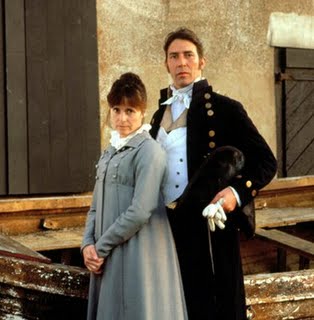
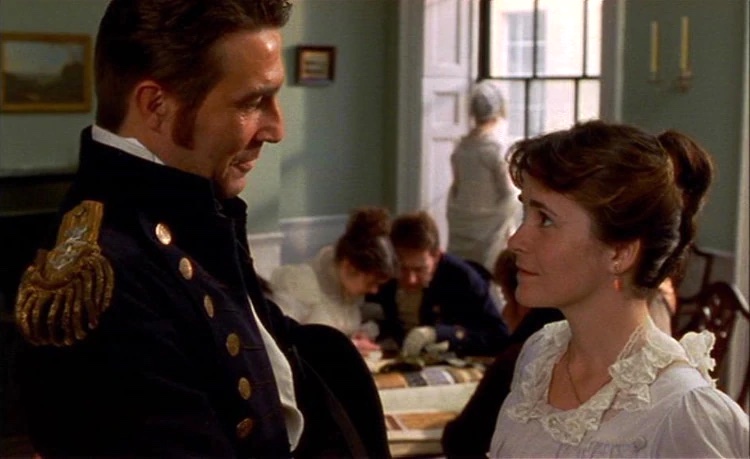
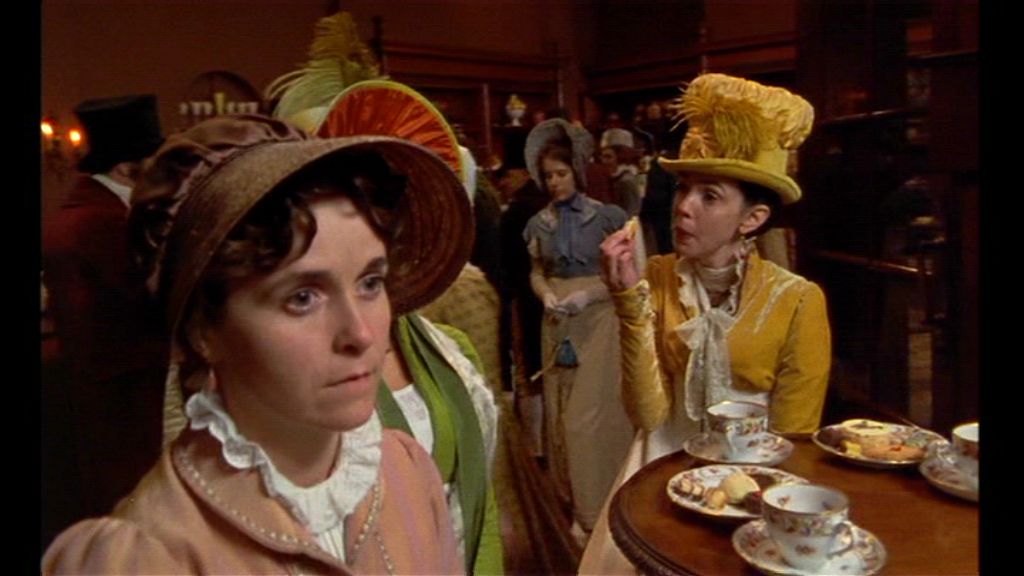
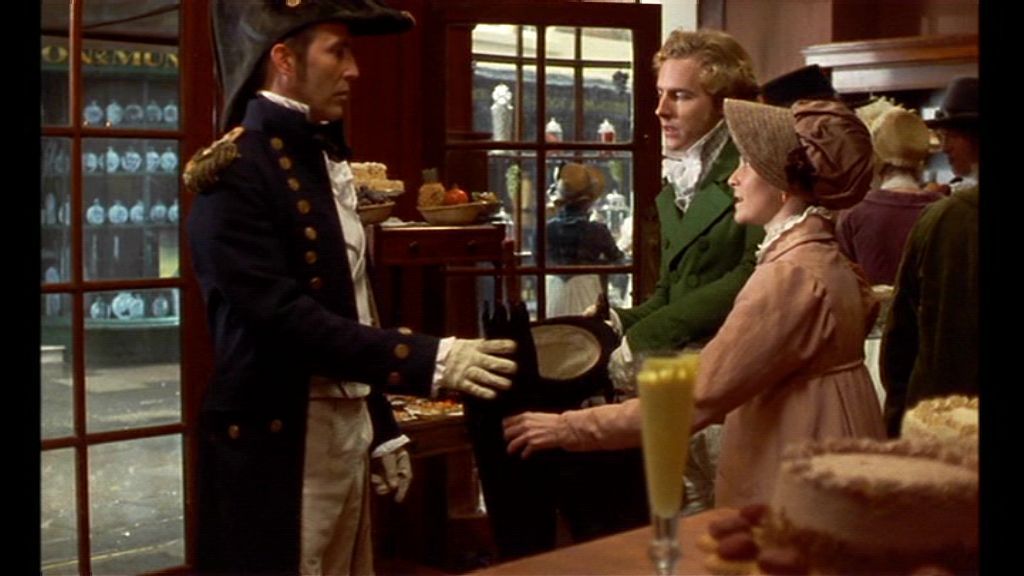
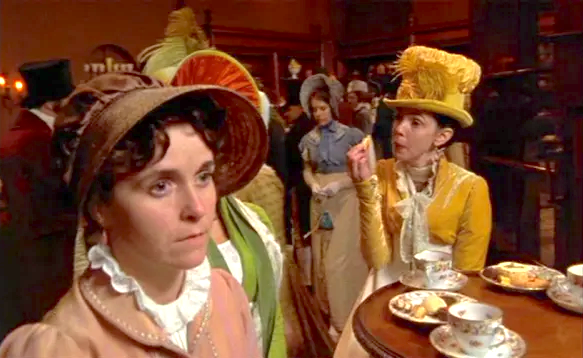
The 1995 film adaptation of Persuasion with Amanda Root and Ciaran Hinds.
Second-Chance Love
Persuasion is a second-chance story because Anne Elliot receives another chance at love with Captain Wentworth and another chance at living her own life and choosing her own happiness.
When the story opens, she’s somewhat of a faded, wilted flower:
A few years before, Anne Elliot had been a very pretty girl, but her bloom had vanished early; and as even in its height, her father had found little to admire in her, (so totally different were her delicate features and mild dark eyes from his own), there could be nothing in them, now that she was faded and thin, to excite his esteem.
Persuasion
However, her true beauty and worth go far beyond her exterior, and Captain Wentworth quickly notices that she’s still the same Anne:
She was looking remarkably well; her very regular, very pretty features, having the bloom and freshness of youth restored by the fine wind which had been blowing on her complexion, and by the animation of eye which it had also produced. It was evident that the gentleman . . . admired her exceedingly. Captain Wentworth looked round at her instantly in a way which shewed his noticing of it. He gave her a momentary glance, a glance of brightness, which seemed to say, ‘That man is struck with you, and even I, at this moment, see something like Anne Elliot again.’
Persuasion
The One That Got Away
Beyond a second chance at love, Persuasion is a picture-perfect model of “The One That Got Away” (or “Long-Lost Love”) romantic theme that has become so popular in romantic movies and books. Austen knew what she was doing when she created a storyline about passionate, young love; years of separation, heartache, and regret; and a long, drawn-out rekindling of a long-lost love that has only grown deeper and more mature with time.
But one of the reasons Persuasion is so intriguing is that Austen doesn’t instantly rekindle the relationship when Anne and Wentworth meet again. Instead, Austen builds a storyline that creates questions, heartache, and angst for Anne (and Austen’s readers).
While Anne never stopped pining for Wentworth, it seems as though he has moved on completely and has not forgiven Anne. There is no quick thrill, instant reignite, or swift rekindle. He acts almost as though they’ve never met.
Anne’s only recourse is to patiently, achingly watch the love of her life search for a wife, flirt with other women, and essentially ignore her (or so she thinks). She remains humble, quiet, and ever-patient, though each day brings fresh torture.
Forced Proximity
One romantic device Austen uses expertly in Persuasion (and in most of her novels) is what we now term “forced proximity.” This is when an author places two characters in a situation where they are forced to spend extra time together in close quarters. It might be a stalled elevator, a shared school or work project, a single bed in a hotel room, or a small car on a long road trip.
In Persuasion, Austen brings Wentworth right into Anne’s neighborhood, places him among the families she and her family socialize with, and even has them travel in the same group to Lyme. Austen also creates situations where Anne and Wentworth are even in close physical proximity:
They were actually on the same sofa, for Mrs Musgrove had most readily made room for him; they were divided only by Mrs Musgrove.
Persuasion
In another moment, however, she found herself in the state of being released from him; some one was taking him from her, though he had bent down her head so much, that his little sturdy hands were unfastened from around her neck, and he was resolutely borne away, before she knew that Captain Wentworth had done it. Her sensations on the discovery made her perfectly speechless.
Persuasion
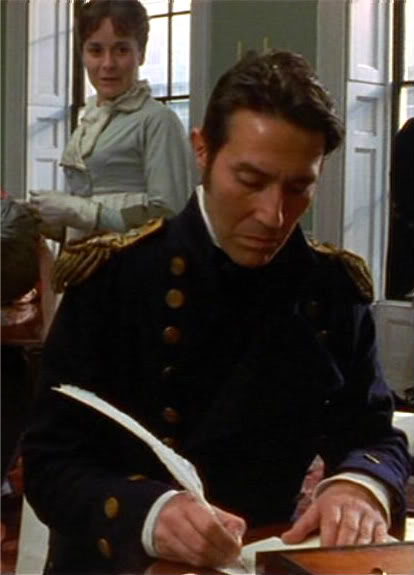
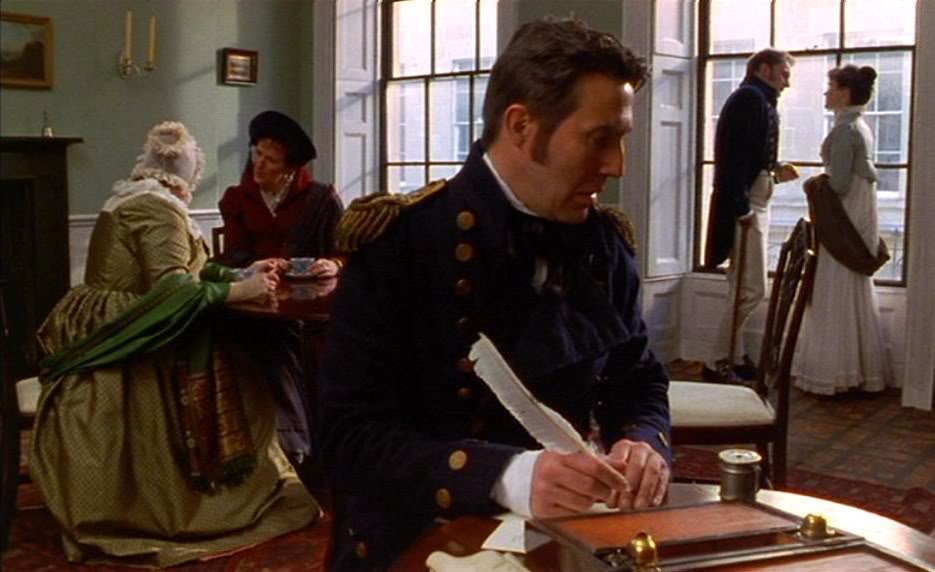
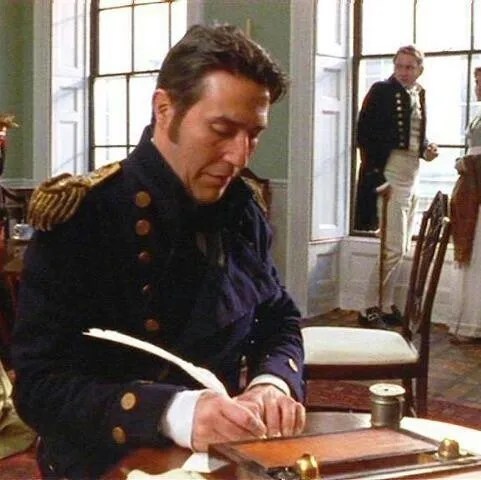
In Bath, there are more opportunities for the two of them to cross paths, including the day when Wentworth overhears Anne’s conversation with Captain Harville and writes her his letter.
Love Stories Like Persuasion
Many popular romantic movies make use of these similar themes, such as The Notebook, Serendipity, The Princess Bride, Sweet Home Alabama, Before Sunset, 13 Going on 30, The Best of Me, The Parent Trap, Grosse Pointe Blank, Ticket to Paradise, Pearl Harbor, Love Actually, The Story of Us, Crazy, Stupid Love, When Harry Met Sally,and An Affair to Remember.
Television shows such as Friends (Ross Geller and Rachel Green) and As Time Goes By (Jean Pargetter and Lionel Hardcastle) also utilize the rekindled love or long-lost love theme.
Geoffrey Palmer and Judi Dench in As Time Goes By
Stories We Love
I’m sure you can add other books, shows, or movies to this list with similar themes. I personally think that many of us can relate to Anne Elliot and a desired second chance, whether it’s in love or some other passion or pursuit. Though none of these popular rom coms hold a candle to Jane Austen’s masterpiece, it’s clear that the themes she employed have stood the test of time.
Inquiring readers; Almost a week ago I attended an author’s gathering and book signing in Columbia, MD. The occasion was held at The King’s Contrivance Restaurant, a suitable setting for this lovely get together with Jane Porter and Denise Holcomb, who found the restaurant, invited guests, and kept tabs on RSVPs. I counted around 21 people. You might recognize Denise’s name, for she is a regular visitor to this blog and frequently leaves a comment.
Jane Porter’s masthead forjaneporter.com. Learn about this NY Times bestselling author’s accomplishments at this site.
I first thought this event was Jane Austen related. Jane Porter’s charming presence and the beauty of the location overcame my brief disappointment when I realized it was not. All the guests were authors, editors, or bloggers and book reviewers, so I was in good company. The event celebrated Jane’s recent release of her latest novel: Flirting With Fifty.
Front entrance of The Kings Contrivance Restaurant
Porch in back of the restaurant where the event was held.
One view of the grounds
Jane Porter talking animatedly to the guests at her table.
(Hover cursor over images for description.) I had only a short discussion with Ms Porter about her latest publication which deals with a late life romance for contemporary women. This book has been promoted by AARP, a membership organization for people 50 years and older. Her earlier novel in this series, Flirting With Forty, was turned into a successful cable movie. Our talk ranged over the dearth of novels of romance for women over a certain age and how her recent novels addressed the issue, and how women change in outlook and attitude as they mature. I agreed that there was a market and interest for women who had lived past their 20’s and 30’s and learned live’s lessons, both personally and career wise. Jane was gracious to spend a few minutes chatting with me, for there were others who wanted her attention.
Denise Holcomb
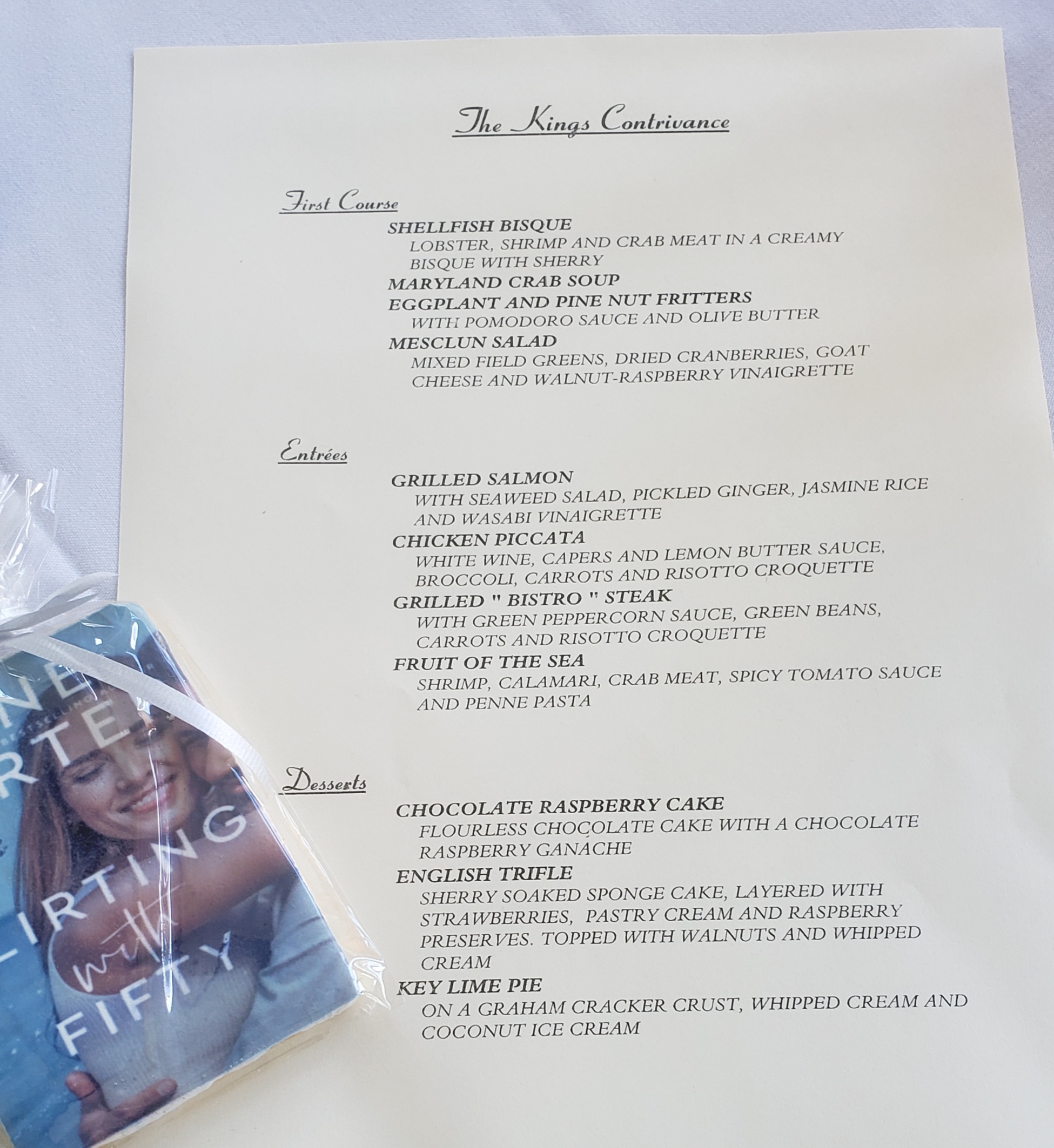
I sat at a table with Denise and a friend of hers, who writes romance book reviews. We ordered our lunch. Mine was delicious, starting with a shellfish bisque, a main entree of fruit of the sea with shrimp, calamari and crabmeat, and ended with an English trifle. (I won’t describe the other choices :) When one lives in a mid-Atlantic state near the Chesapeake Bay, one must take advantage of the fresh seafood!}
After our delicious lunch (and a glass of pinot grigio in my case nursed over two hours), Jane Porter spoke to the group. She had already introduced the authors and the editor to her publishing house, Tule Publishing. Porter, among the many novels she has written and published, is also the founder & editorial director of Tule Publishing.
Whew! Where does she find the energy? She also plies homes between Sacramento, CA, and Hawaii, for her husband is a surfer. (Be still my romantic heart.)
The menu with an edible orange and cardamon cookie
One thing I have learned attending Jane Austen related conferences and meetings, and Romance Writers Conferences of America is that getting one’s foot in the door as an author is an arduous ordeal. Once one is successfully published, the work of getting one’s book noticed through publicity and personal appearances starts. It’s a nonstop effort.
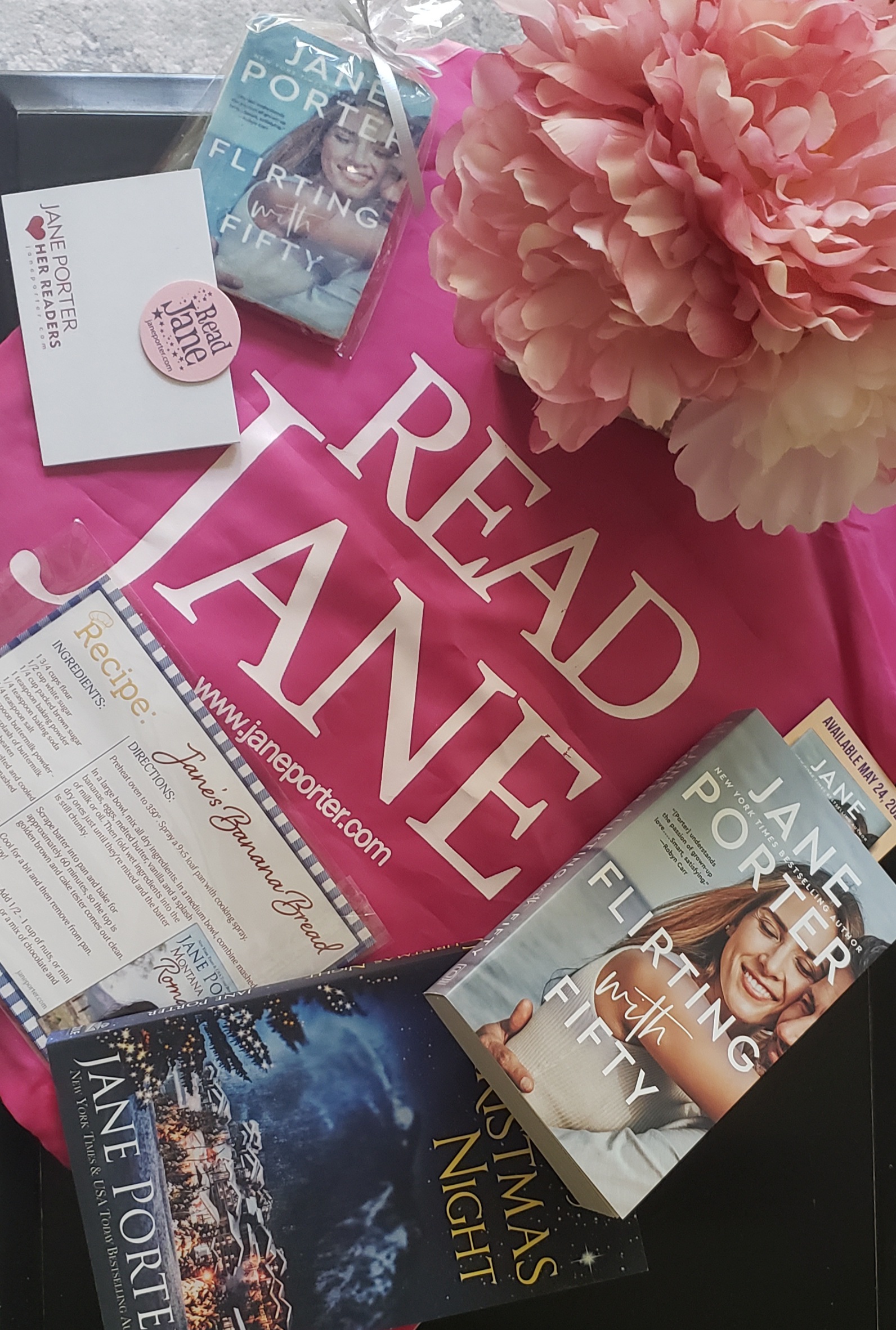
Swag: Free book: Christmas Night; Pink Bag with ‘Read Jane;” “Flirting With Jane” signed book bought with substantial savings; Banana Bread Recipe; sticky note pad, round emery board, and at the top an orange cardamon “cookie” with a frosted image of Jane’s latest published book.
After lunch, Jane talked about her motivation as a writer, which began in her childhood when she wrote stories. Six-seven other authors discussed their passion for writing in various stages of their lives that compelled them to follow that arduous though satisfying road. None said it was easy (believe me, I know), but all sallied forth and found a home in Tule Publishing.
I left so uplifted with the conversation afterwards and entered my car with gifts in hand. (I purchased Flirting With Fifty at an incredibly low price and had the book signed.) Leaving the meeting sated, I mused about the conversation on my way back over busy throughways and byways. When I arrived home, I realized that I had agreed to review one of my favorite new author’s books from Tule Publishing: Katherine Cowley’s The Lady’s Guide to Death and Deception. My review of this mystery series based on the middle sister in the Bennet household — Mary — is scheduled for early September.
Inquiring readers, Persuasion-lite is a cinematic reworking of Jane Austen’s final novel, finished before her death, but not published until afterward. Coming off the heels of Netflix’s highly successful Bridgerton (in this cast of Persuasion-lite you can surmise the former series’ influence) and the popularity of PBS’s Sanditon, the decision-makers behind Netflix productions gave the go ahead to a film that ‘modernized’ Austen’s book in order to introduce young audiences to Jane Austen. Or so the story goes. To do so, Chefs Moderne created a story-telling recipe to appeal to newcomers.
Persuasion’s traditional recipe:
This rich, full-bodied classic was created by a Chef in her prime. Her finished recipe transfigured deceptively simple components into rich flavors heretofore undiscovered by the ordinary palate. The original ingredients, while considered old-fashioned today, are still accessible to epicureans who wish to savor the recipe’s nuanced complexity and its historical references.
Time to digest: hours, with repeated enjoyment over a lifetime. Three Michelin stars were awarded to this Chef, who served distinct dishes that were executed to perfection. (Some might say she would have been awarded four stars had this rating system included such a category.)
Netflix’s Persuasion-lite recipe:
This adaptation took a traditional recipe and simplified it to its basic components, using only those ingredients readily accessible in any grocery store today. While it echoes the original, it pales in comparison and fails to plumb the classic’s rich depths. To be fair, there were hints of originality in the spices. This recipe has been rewritten in modern terms that defy belief.
Time to digest: One hour and 47 minutes. One may partake of repeated helpings at the Netflix buffet. A number of diners might find this meal delicious and insist on more helpings; a number will push half eaten plates away or not order the meal again. Sadly the Chefs Moderne who adapted the recipe were not awarded a single Michelin star, since their efforts resulted in a dish that leaves the diner hungry.
Primary Ingredients:
Anne Elliot
The original recipe described a complex woman of 27 who has lost the bloom of youth. She regrets her decision at nineteen to reject Frederick Wentworth’s proposal due to Lady Russell’s persuasive influence. He had not yet made his mark in life. Anne is a woman of character and conviction who must negotiate the difficulties of living with a shallow father and sisters. As the neglected middle child, she lives largely in their selfish shadows, submitting to her family’s and friends’ needs. When Wentworth reenters her life unexpectedly, she observes her long lost love from afar. From his indifference he seems all but lost to her. Under the Classic Chef’s direction, Anne’s journey back to her Captain via circuitous routes is touching, romantic, and memorable.
Dakota Johnson sharing Anne Elliot’s thoughts. Netflix publicity photo.
The Netflix recipe describes Anne as an opinionated cheeky woman (Dakota Johnson) who gazes at and talks to the viewers (breaking the fourth wall) while stroking her pet rabbit (see image above from Netflix publicity), sharing her thoughts in contemporary language, and swilling red wine. She tells us what’s on her mind and in her mind throughout the production. Her observations, starting with her missing Captain Wentworth, the love of her life, are often amusing. In no way does this reworked Anne reflect Austen’s language or intent. In fact, her comical mannerisms and frequent faux pas wind up as a shallow, one-note substitution for the fully realized original. The makeup department also notably applied lipstick to her mouth, thereby diminishing Anne’s transformation from a wan and mousy woman into someone who blossoms with love when reunited with her captain.
Captain Wentworth
The classic recipe describes Wentworth as a vigorous, successful male, whose pride prevents him from revealing the hurt and, yes, love he still feels for the woman who rejected him. In the classic recipe, one can find instances of his kindness towards Anne and his growing realization that this complex, level-headed, and kind woman is worthy of his regard now as much (even more) as then.
The modern Wentworth is certainly handsome (Cosmo Jarvis), but as written for this lite version, he remains on the sidelines. I wanted him sprinkled more vigorously into this plot, but had to make do with his weak, almost secondary role. Only when Anne reads his letter out loud (it is considered to be one of the best love letters ever written) does the real and complex Austen hero come to the fore.
Mary Musgrove
Her role (Mia McKenna-Bruce) adds much comic spice and her presence in the modern version seems major compared to her irritating presence in the classic. Certainly her ingredient is one-note and overly exagerrated, but her character remains true to Austen’s depiction of a selfish, prickly, and whining sister. One memorable addition not in the classic, but quite original, is of Anne answering her sister in Italian during Mary’s nonstop self-indulgent monologues – which she fails to notice.
William Elliot
His role is stronger in the lite recipe than in the classic. In fact, his (Henry Golding’s) presence overpowers Wentworth’s at times and Anne seems more susceptible to his dubious charms. Why is beyond me, for he shares with her his sleazy plan to prevent a possible marriage between Sir Walter and his daughter’s widowed companion in Bath, a Mrs Clay, who in the original recipe sported a snaggle tooth but who, in the lite version, has an ample bosom. William’s sole aim was to prevent Sir Walter from siring an heir that would knock him out of first place for inheriting what remains of the Elliot estate. His final scene in the film elicited a guffaw from me, but Austen’s classic wit did not look for laughter in the cheap seats and the ending in Persuasion-lite made no sense, for William would never have married a woman with no station in life or money.
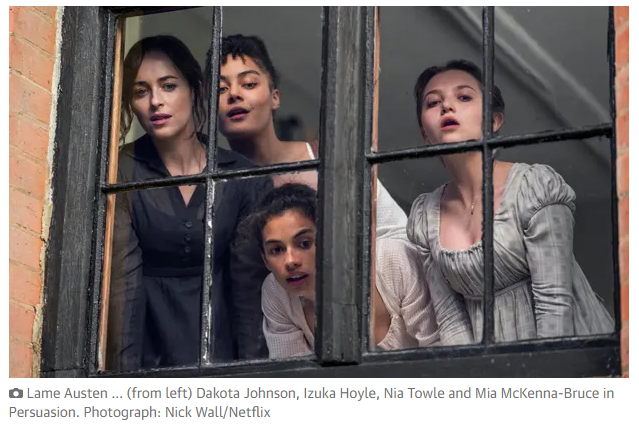
Henrietta, Louisa, and Charles Musgrove (Respectively: Izuka Hoyle, Nia Towle, and Ben Bailey-Smith).
Sisters-in-law and husband of Mary Musgrove, they pop in and out of the lite narrative to showcase the sisters’ friendship with Anne and her former and current relationship to Charles. Louisa’s story arc especially moves the plot forward. Charles is Mary’s long suffering husband in the classic version, but the Chefs Moderne use him to demonstrate Anne’s awkward drunken confession during the Musgrove’s dinner party to inform the assembled company that Charles had proposed to her first. The Classic’s sensible, thoughtful Anne would rather have died than commit such crude impropriety.
Supporting Ingredients:
Sir Walter and Elizabeth Elliot
Both characters are sadly given short shrift. Their curt treatment was perhaps intentional, but during their short on screen time, the two actors made their mark. Richard Grant’s performance, while over the top funny, reminds me more of Billy Nighy’s comedic turn as Mr. Woodhouse in Emma. 2020 than the character described by Austen. In Grant’s case, his Sir Walter is certainly fixated on his self-important status, which in the lite version was funny. In the classic version, however, Austen made it clear that as a baronet he sat at the lowest end of the peerage scale, making his egotistical turn even more absurd.
Elizabeth (Yolanda Kettle) is not more beautiful than Anne, as described in the Classic. In fact, she looks anemically pale next to her sister’s vivid coloring. Except for Elizabeth’s sumptuous wardrobe and meticulous hairstyles, one would not have thought her to be the favored older sister. Her mean-spiritedness remains intact, however, and contrasts nicely with Anne’s, well, niceness.
Lady Russell (Nikki Amuka-Bird)
This lady’s well meaning advice separated Anne from her captain. She plays the loving mother substitute and appears just enough in Persuasion-lite to remind us that Anne has had someone in her corner since her mother’s death. As in the Classic, she shows more concern for her young friend than her actual family.
A variety of ingredients (which, sadly, are mostly unrecognizable for uninformed palates in this lite version):
Admiral and Mrs Croft, Captain and Mrs Harville, Mr & Mrs Musgrove and their two young grandsons, Captain Benwick, Mrs Clay, and Lady Dalrymple and Miss Carteret. (Mrs Smith is undetectable.)
Those unfamiliar with the classic recipe will miss their almost absent presence or wonder about their inclusion. Mrs Smith, who made an appearance in the Classic, is ignored, but she was an important witness to William Elliot’s character.
I defy those new to Austen to accurately suss out these characters’ relationship with Anne or the Elliot family. Sir Walter’s attraction to Lady Dalrymple and Miss Carteret is given more importance (we already know he’s a peerage snob) than the elder Musgroves and Mary’s two young boys, or Admiral and Mrs Croft, who play important roles in Anne’s journey back to Wentworth.
Spices:
.
Clothing
Some critics who reviewed Persuasion-lite found the clothes drab and lackluster. Their critiques should have been amended to Anne’s clothes only. Since the makeup department never removed the bloom off her rose, her wardrobe substituted for her appearance, which was ‘“so altered that [Wentworth] should not have known her again.” Her gray and brown spinsterish gowns brighten as she is exposed more to Wentworth’s company. The other actors and actresses are appropriately fashionable for their stations, which reflect clothing in 1816-17 England. I also thought that the homespun, handmade feel of Anne’s wardrobe made sense, in that she was the least favored daughter and probably had her clothes sewn by a local seamstress, whereas Elizabeth and Mary most likely demanded gowns made by modistes in London.
Sites:
Ah, lovely England with its historic villages and great mansions.These were wonderfully represented with beautiful exteriors, interiors and gardens. Two locations played prominent roles.
Lyme Regis: This seaside village plays a pivotal role in both the Classic and Lite versions. The basic storyline of Austen’s plot remains in the lite version, but details are missing. Still, Lyme Regis, the Cobb, the village, and it beautiful shoreline are a visual treat, and many of the scenes do echo the Classic version, and even include bits and pieces of original dialogue.
First glimpse of William Elliot’s carriage in Lyme Regis. At the window from left, Anne Elliot and to her right the Musgrove sisters. To the far right, Mary Musgrove nee Elliot.
Bath: Ah, the buildings, the streets, the views of the Royal Crescent, the walk down the stairs in the Upper Assembly Rooms. There was no promenade in the Pump rooms, where Anne’s famous line to William Elliot is widely quoted (but looked over in the Lite version;)
“My idea of good company, Mr. Elliot, is the company of clever, well-informed people, who have a great deal of conversation; that is what I call good company.’
‘You are mistaken,’ said he gently, ‘that is not good company, that is the best.” – Jane Austen, Persuasion
Although this lovely quote was not included, some of Anne’s conversations were used in Bath, as well as Captain Wentworth’s love letter. Since these scenes lead to the denouement, they ended the film on a high note.
Language:
Here’s where the Chefs Moderne took the greatest license. Instead of using the beautiful language in the Classic, the Chefs Moderne chose modern phrases. I defy you to find them in a Regency era lexicon.
“We are strangers. Worse than strangers. We’re exes.” (Anne Elliot)
“It is often said if you’re a five in London, you’re a ten in Bath!” (Anne Elliot breaking the 4th wall when she looks directly into the camera to converse with the viewer.)
“Marriage is transactional” (Lady Russell)
“Thanks”
“I am an empath” (Mary Musgrove)
“Fart around”
“He’s a ten – I never trust a ten” (Anne about William Elliot)
“Embodying gratitude” (Mary again)
Comment:
Good grief. The Chefs Moderne must have burned their candles down to their wicks to come up with this drivel. After watching Persuasion-lite, those not initiated to Austen’s novels and who love this filmed version, might turn to the novel. Imagine their surprise when they discover that her 205 year old book, filled with the language, customs, and manners of her day, varies significantly from this comic book version.
Personal request: Gentle readers, feel free to agree or disagree with my musings. Let’s keep our discourse genteel and agreeable for the sake of my sanity. I thank you in advance.
Other Critics Reviews:
Negative
“At no point during Carrie Cracknell’s directorial debut do you ever get the sense that anyone’s actually read Persuasion.” – Dakota Johnson is woefully miscast in mortifying Jane Austen adaptation – Clarisse Loughrey, The Independent
“Our demure protagonist Anne Elliot is forever doing supercilious takes and wry monologues to camera, taking despairing swigs from a bottle of red wine in private, occasionally nursing a quirky pet rabbit, and at the end (unforgivably) gives us a wink to seal the deal of our adoringly complicit approval.” Persuasion review – Dakota Johnson looks the part as Jane Austen gets Fleabagged, Peter Bradshaw, The Guardian
Positive
“For anyone not too bothered by departures from the novel, the romantic denouement will be immensely pleasurable.: – Dakota Johnson in Netflix’s ‘Persuasion’: Film Review, David Rooney, Chief Film Critic, The Hollywood Reporter
More reviews:
Netflix’s Persuasion the worst film of the year?, Olivia Pym, GQ Magazine
Persuasion review – a travesty of Jane Austen, Slash Film,
Trailer of the film:
Under this trailer, J.Dion wrote:
“Anne’s strength is her quiet, consistency. She is intelligent and thoughtful. Altering her character for modern sensibilities is insulting not only to Austin’s character but to modern audiences. There are many “Anne’s” in this world they and deserve to be valued for who they are and the enrichment they bring to all.
Persuasion is my favorite of Austen’s novel. Unfortunately this looks to be another instance of the “title and names are unchanged but the characters are missing.”
What’s in a voice? According to recent research, quite a lot. In her article “Only 4 Syllables Needed to Recognize Voice,” Madeline McConnell says humans can identify familiar voices in as few as four syllables, or two words. That’s better than some of the most advanced voice recognition software available today.
Here’s how it works in everyday life: Spouses can recognize their mate’s voice across a crowded room. From a young age, “babies are able to distinguish the voice of their mothers from the voices of others” (McConnell). And close friends can hear one another’s voices from an adjacent room.
In the case of Anne Elliot and Captain Wentworth, a word uttered by anyone else truly would not sound so sweet. The way they actively listen to one another—often without speaking directly to one another—plays a crucial role in repairing their relationship, rebuilding their trust, and rekindling their love.
Anne Listens
Throughout the novel, Austen gives us many important clues about Wentworth’s true feelings for Anne, often through what Anne hears (and overhears) him say. As Anne listens and hopes, she strains to catch hints of Wentworth’s true opinion of her now, to either “its constancy or its change” (Ch. 4). Here are a few key examples of Anne intent listening:
When they meet: “Her eye half met Captain Wentworth’s, a bow, a curtsey passed; she heard his voice.” (Ch. 7)
As she listens to his review of the past: “‘That happened before I went to sea in the year six,’ occurred in the course of the first evening they spent together: and though his voice did not falter, and though she had no reason to suppose his eye wandering towards her while he spoke, Anne felt the utter impossibility, from her knowledge of his mind, that he could be unvisited by remembrance any more than herself. There must be the same immediate association of thought, though she was very far from conceiving it to be of equal pain.” (Ch. 8)
Her discernment of the voice and mind she knows so well: “When he talked, she heard the same voice, and discerned the same mind.” (Ch. 8)
Her keen interest in the “low voice” on the other end of the sofa: “[I]n another moment he was perfectly collected and serious, and almost instantly afterwards coming up to the sofa, on which she and Mrs Musgrove were sitting, took a place by the latter, and entered into conversation with her, in a low voice, about her son, doing it with so much sympathy and natural grace . . .” (Ch. 8)
Her reaction to overhearing Wentworth, “in the hedge-row, behind her,” walking and talking with Louisa: “The listener’s proverbial fate was not absolutely hers; she had heard no evil of herself, but she had heard a great deal of very painful import.” (Ch. 10)
Her reaction to him “speaking with a glow, and yet a gentleness” to her: “She coloured deeply, and he recollected himself and moved away. She expressed herself most willing, ready, happy to remain.” (Ch. 12)
Her intense focus on his words and the sound of his voice: “Whether he would have proceeded farther was left to Anne’s imagination to ponder over in a calmer hour; for while still hearing the sounds he had uttered, she was startled to other subjects by Henrietta, eager to make use of the present leisure for getting out, and calling on her companions to lose no time, lest somebody else should come in. (Ch. 22)
And here especially, we see Anne’s ability to “distinguish” Wentworth’s words even in the midst of a noisy room, when he says, “A man does not recover from such a devotion of the heart to such a woman. He ought not; he does not.”
Either from the consciousness, however, that his friend had recovered, or from other consciousness, [Wentworth] went no farther; and Anne who, in spite of the agitated voice in which the latter part had been uttered, and in spite of all the various noises of the room, the almost ceaseless slam of the door, and ceaseless buzz of persons walking through, had distinguished every word, was struck, gratified, confused, and beginning to breathe very quick, and feel an hundred things in a moment. (Ch. 20)
Jane Austen’s Persuasion
Wentworth Listens
This keen sense of listening doesn’t just go one way. Even when he doesn’t look at her, Wentworth listens carefully to Anne. At the end of the novel, we discover the extent to which he has listened to her conversations with others and tried to discern her feelings:
When the topic of Mr. Elliot comes up: “As she spoke, she felt that Captain Wentworth was looking at her, the consciousness of which vexed and embarrassed her, and made her regret that she had said so much, simple as it was.” (Ch. 22)
When Charles says “What is Mr. Elliot to me?” and Anne realizes that Wentworth is “all attention, looking and listening with his whole soul; and that the last words brought his enquiring eyes from Charles to herself.” (Ch. 22)
How carefully Wentworth listens to Anne’s response to Charles: “She had spoken it; but she trembled when it was done, conscious that her words were listened to, and daring not even to try to observe their effect.” (Ch. 22)
Wentworth’s reaction to the topic of parents becoming involved in long or “uncertain” engagements: “Anne found an unexpected interest here. She felt its application to herself, felt it in a nervous thrill all over her; and at the same moment that her eyes instinctively glanced towards the distant table, Captain Wentworth’s pen ceased to move, his head was raised, pausing, listening, and he turned round the next instant to give a look, one quick, conscious look at her.” (Ch. 23)
When Wentworth tunes in to Anne’s conversation with Captain Harville about love affairs and constancy of heart between the sexes: “a slight noise called their attention to Captain Wentworth’s hitherto perfectly quiet division of the room. It was nothing more than that his pen had fallen down; but Anne was startled at finding him nearer than she had supposed, and half inclined to suspect that the pen had only fallen because he had been occupied by them,striving to catch sounds, which yet she did not think he could have caught.” (Ch. 23)
The most stunning piece of evidence is Captain Wentworth’s letter to Anne, which he drafts while listening to her conversation with Captain Harville:
I had not waited even these ten days, could I have read your feelings, as I think you must have penetrated mine. I can hardly write. I am every instant hearing something which overpowers me. You sink your voice, but I can distinguish the tones of that voice when they would be lost on others. (Ch. 23)
Jane Austen’s Persuasion
Wentworth’s words reveal that he was not only listening carefully to Anne during the letter-writing scene, but that he has been listening to her throughout the novel. Indeed, Anne’s voice is something like a siren call to the seafaring Captain Wentworth. No matter how hard he has tried to forget her, he has “never seen a woman since whom he thought her equal” and has only “imagined himself indifferent” (Ch. 23).
Rekindled Love
Though Anne and Wentworth’s initial courtship was brief, and though they have not seen each other for many long years, Austen shows us the depth of their true feelings through what they say (and don’t say). While this article only covers some of the most pointed examples of the subtle communication between these two characters, a close reading of the novel reveals so much more. Austen shows us throughout the novel—through gestures, looks, and glances—just how aware they both are of one another in every scene, in every room, and in every situation.
Indeed, Austen builds much of the romantic tension between Anne and Wentworth based more on what they say to other people than on what they say to one another. Throughout the novel, she uses listening and, yes, eavesdropping, as a clever literary technique. As Anne listens in on Wentworth’s conversations, analyzing his every word, phrase, tone, and inflection, we listen in as well, gathering clues as we go. And as she begins to dare to hope, so do we.
The art of listening well in Persuasion plays an important role in reigniting an old flame, rekindling lost love, and soothing broken hearts, helping to make Anne and Wentworth “more exquisitely happy, perhaps, in their re-union, than when it had been first projected.”
What other moments have you noticed in this novel or another Austen novel when listening closely was important to the plot?
In 2021, on the heels of Bridgerton’s success, Netflix announced a new adaptation of Persuasion starring Dakota Johnson as 27-year-old Anne Elliot and Cosmo Jarvis as Captain Wentworth. Henry Golding, given the choice to play either the captain or William Elliot, interestingly chose the latter. Also on board are Richard E. Grant and Suki Waterhouse as, I suppose, Sir Walter Elliot and Elizabeth Elliot, for their roles have not been announced. The other cast members are described at IMBD Persuasion 2022.
Let these exquisite photos of Dakota Johnson, Cosmo Jarvis (t), and Henry Golding (b) tide you over until PERSUASION, a most excitable new film adaptation of Jane Austen’s novel arrives on Netflix in 2022.- NetflixFilm twitter @NetflixFilm
Netflix is betting on a sure thing. In addition to Bridgerton, now in its second season, the powers that be at Netflix must also have noticed Emma 2020’s draw. Before theaters closed during the pandemic, this film drew huge audiences in its opening weeks and enjoyed a steady stream of online viewers during lock down.
Jane Austen’s final novel was published posthumously in 1818, and by many it is considered her finest. This new adaptation is described as a “modern, witty approach.” We’ll see how well this approach matches Austen’s nuanced novel. Carrie Cracknell, a theater director, directs this film. Like Autumn de Wilde (Emma. 2020), she is a first-time film director. The script was written by Ron Bass (Rain Man) and Alice Victoria Winslow (Hot Spot).
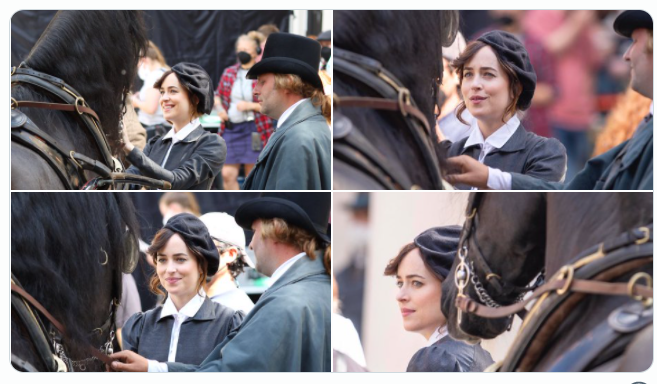
Filming began in 2021, and a release date is anticipated this year. The film is now in post production. I’m curious to see how this Persuasion stacks up against two previous adaptations, one in 1995 starring Amanda Root, and in 2007 starring Sally Hawkins. Stay tuned for more news as it comes.
Behind the scenes photos from Twitter, Period Drama World @WorldPeriod
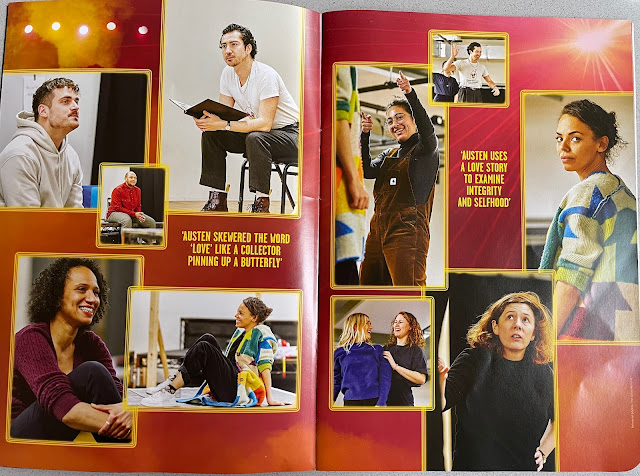
Review of Persuasion by Tony Grant of the theater production, 2022
“PERSUASION (an adaptation of Jane Austen’s novel by Jeff James and James Yeatman) at The Rose Theatre Kingston upon Thames.”
Marilyn and I went to see Persuasion performed at The Rose on Tuesday 8th March. It may be strange but for somebody who professes to know a little bit about Jane Austen it is a long time since I had actually read the novel. I have delved deep into Austen’s novels over the years for quotes and to reference her possible thoughts and ideas about life and love, but I have failed to read the whole of the novels since I first read them all years ago. I have lost sight. I think of what Jane actually wrote. So I read Persuasion again and it wowed me. It is a novel that explores the shifting of society in the early 19th century when much was changing, not just relationships, but class and the industrial world was taking off. It seems apposite that at the moment when the world order is actually changing that The Rose Theatre chose Persuasion to dramatize.
I know that novels, good novels, that is, as you read them again over time and as your own experience of life develops, reveal different levels of understanding. So what did I get from reading Austen’s Persuasion this time round before seeing the performance? The word ,persuasion, is used at times during the novel, but not often. The actual consequences of being persuaded however are felt throughout and drive the novel itself. Anne Elliot was persuaded by not just her father to refuse a marriage proposal to somebody she really loved but Lady Russell, the family friend and Anne’s particular friend, was always the deciding factor in the process of persuading Anne in her youth. Ann seems to have been persuaded into a lot of things in her early life up to the moment of the novel’s action including turning down that offer of marriage from Captain Wentworth eight years previously. Ann is annoyingly hyper neurotic. Is that because she has always been pressured by others? Does she feel she has no control over her life?
Things happen to Anne. She doesn’t make things happen for herself. She analyses every situation, almost every word and look to an intense degree. She always comes out worst. In this novel and in the play she eventually learns to decide for herself. So a major theme has to be how we use people’s advice and how much we should be persuaded when making life decisions for ourselves.
Persuasion program. Image taken by Tony Grant. See more of his images in the link at the bottom of this post.
A novel written in the early 19th century translated into a play set in the 21st century, surely, it can’t be done. They are two worlds so far apart. How can they possibly come together and meet? There are the wise among us that say Austen is universal in her treatment of relationships. This is true when you drill down to what happens in a relationship but all those 18th century rules get in the way to a translation across centuries, surely? Class status, wealth, attitudes to money and the patriarchy and what seems to us blatant misogyny but wasn’t understood as such in the 18th century, how does it all get transferred to the 21st century? When I read Persuasion again finishing the day before we saw the stage adaptation, I couldn’t see any way that it was possible to achieve that transfer from the 18th century to the 21st century.
To finish the review, continue to read how this production achieved its 21st century point of view and how the comedy was resolved on London Calling, Tony’s blog. Note: Tony Grant is a frequent contributor to this blog. His site covers all things England, past and present.
Fashionable Goodness: Christianity in Jane Austen's England is now available! By JAW contributor Brenda S. Cox. See Review. Available from Amazon and Jane Austen Books.
Available through December 31st, 2025. Click on image for details, and share this poster with other teachers and students!
The Obituary of Charlotte Collins by Andrew Capes
Click on image to read the story.
Comments
“My idea of good company…is the company of clever, well-informed people, who have a great deal of conversation.” – Jane Austen, Persuasion
Gentle readers: Please feel free to post your comments and continue the conversation! Due to SPAM, we will no longer accept comments on posts after 30 days of publication. In some instances, links will be removed from comments as well.
Administrators and Contributors
Vic Sanborn, founder of this blog, is supported by a team of talented and knowledgeable writers about Jane Austen and the Regency era. They are:
Tony Grant, who now contributes his photos from London and England
Click on their names to enter their own blogs.
In addition, we thank the many experts and authors who frequently contribute their posts and opinions, and who continue to do so freely or at our request.
Click here to enter the page. Topics include Regency fashion, historic foods, Jane Austen societies, British sites, related topics. Click on image.
May we suggest?
Hello, my name is Vic and I live in Maryland, USA. I have adored Jane Austen almost all of my life. I am a proud lifetime member of the Jane Austen Society of North America. This blog is a personal blog written and edited by me and my team. We do not accept any form of cash advertising, sponsorship, or paid topic insertions. However, we do accept and keep books and CDs to review.
If you would like to share a new site, or point out an error, please email us. (Yes, we are fallible. We'll own up to our mistakes and will make the corrections with a polite smile on our faces.) Write us at
Thank you for visiting this blog. Your comments and suggestions are most welcome.
Project Gutenberg: eBook of Stage-coach and Mail in Days of Yore, Volume 2 (of 2), by Charles G. Harper
STAGE-COACH AND MAIL IN DAYS OF YORE: A PICTURESQUE HISTORY
OF THE COACHING AGE, VOL. II, By CHARLES G. HARPER. 1903. Click on this link.















 Jane Austen's World