Feeds:
Posts
Comments

Archive for the ‘Popular culture’ Category

Murder Most Persuasive is Tracy Kiely’s 3rd mystery based loosely on Jane Austen’s novels. One can readily guess the influence from the title. Elizabeth Parker makes her third appearance as a sleuth. Much like Miss Marple she finds herself at the right place at the right time. Like Miss Marple, Elizabeth understands that she has a talent for solving mysteries.

In this instance, Elizabeth has gathered with family members at the funeral of great-uncle Martin Reynolds. When Uncle Martie’s house in St. Michael’s is sold for the benefit of his three daughters, the body of Michael Barrow is discovered buried underneath the swimming pool. Michael, who was to have married Reggie, Martie’s eldest daughter, had disappeared the night before the wedding and only days before the pool’s concrete shell was poured.

Along with Michael went a great deal of Uncle Martie’s money, embezzled by the runaway groom it was presumed. With the discovery of Michael’s body the questions uppermost in everyone’s minds are: how did Michael wind up under that slab of cement and what happened to the money?

As with Tracy’s other novels, the writing style is light and breezy and the mystery’s fun to follow. In this instance, the parallel to Austen’s Persuasion is hard to ignore. Ann, Uncle Marty’s middle daughter, broke up with young Joe Muldoon under the influence of her father and her dead mother’s dearest friend, an action she still regrets 8 years later. A mousy professor who has lost her looks, she encounters Joe, now a successful man and the detective on the case. Will this star crossed couple come to find love again? My curious mind not only wanted to know, but was wholly satisfied.

I could describe the plot in more detail, but I don’t want to spoil the fun for you. Of Tracy’s three mysteries, this is my favorite so far (as is Austen’s Persuasion). I enjoyed meeting the characters so much that I quite forgot to follow the clues. Still, even when I tried to solve the mystery, I was pleasantly surprised to find out who had done the dastardly deed.

Tracy writes mysteries in the old style. No gritty reality and base language sully her pretty towns and well-drawn characters. Blood, while mentioned, is not described down to its forensic core. Thus I recommend that you read Tracy’s book on a lazy afternoon in a sunny alcove, with a pot of steaming hot tea and some scones and clotted cream, and a cat on your lap and a dog at your feet. I give this delightful tale four out of five Regency tea cups.

Murder Most Persuasive by Tracy Kiely
Hardcover: 304 pages
Publisher: Minotaur Books (August 30, 2011)
Language: English
ISBN-10: 0312699417
ISBN-13: 978-0312699413

Giveaway Contest:

The name of the winner will be drawn by random number generator at midnight on September 10th, EST. To enter, please tell me which Jane Austen character you would like to see murdered in a mystery and why. Contest over. Congratulations, Martha!

My other Kiely reviews:

Read Full Post »

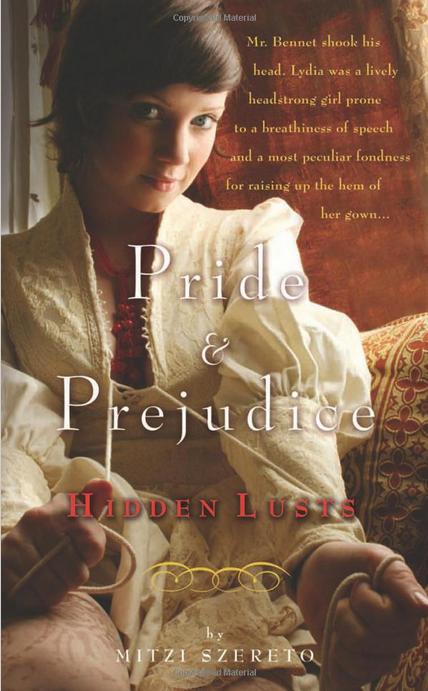
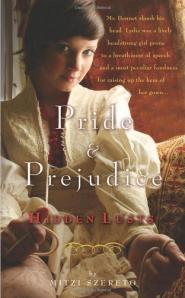
Gentle Readers, You may have noticed my previous rant about Mitzi Szereto’s blog post on Huffington Post. I had struck an attitude of silence and indifference to her sexy parody of Pride and Prejudice (Pride and Prejudice: Hidden Lusts) until I read her fighting words. Then I realized, why not debate each other and find out what we really think? Mitzi has graciously agreed to a discussion about her book and sequels in general.

Vic: Hi Mitzi, it took a while to find my pitchfork and untwist my knickers. Now that the elderberry wine has calmed down my poor nerves and heart palpitations, I can ask you this question: What on earth were you thinking writing that Huffington Post ramble? Only a few vocal Jane fans objected to your book, as most of us were too busy swooning over Colin’s wet shirt to notice the brouhaha until you pointed it out.

Mitzi: Glad the elderberry wine helped. I’ve never tried it; please send a bottle over! I should say that Colin’s little swim left an indelible impression on me as well and accounted for Pride and Prejudice becoming a major favorite of mine. As for my piece in the Huffington Post, I found that all the pitchforks being aimed at me were getting to be a bit silly, particularly when the overwhelming majority of their wielders had not even read my book, let alone anything I’ve written! I have no issue if someone simply does not like the book; everyone has their own taste in reading material. But I figured that since everyone seemed to have so much to say about Pride and Prejudice: Hidden Lusts (and me as its author), I too, had a right to speak and point out the absurdity of these arguments. Many of the comments were being directed at me in a quite personal way, not to mention insulting. Not very polite for people who claim to be defending the honor of our beloved Jane Austen! The LA Times and the Guardian were the first instigators of this whole thing. I actually didn’t think anyone’s hackles would be raised by the publication of my book, especially when it was meant to be a historical parody in the same spirit of the highly popular Zombies versions. I still don’t see what the big deal is, unless it actually is the sexual element in the book that’s upsetting people the most, because the tons of romance and chicklit versions don’t appear to be inspiring upset. If literary purists have an issue with re-imaginings of classic works or writers taking inspiration from them or borrowing from them, they should do a bit of literary investigation into the very long history of this practice and aim their pitchforks at others as well. After all, fair is fair!

Vic: Actually, the Zombies were not well received in some quarters either, but Quirk Books won me over by their cheerful willingness to forego pride and forge into new marketing territories, like toy stores, hardware stores (I kid you not), and gag stores . As an established author you must know from the outset that you can’t please everyone and that you would raise a few hackles with your rapier pen. I am thinking of statements like: “I wonder if these hecklers from the peanut gallery have even read the original Pride and Prejudice…” At this point, my teeth gnashed involuntarily for I sensed an INSULT. (Although I must admit to having met many a rabid Darcy fan who has only seen the movie.)

Mitzi: I don’t expect to please everyone, nor do I wish to! As for insults, I don’t see that it’s an insult to point out that things were not all pristine and squeaky clean in the original novel, and those who claim to have read it might be wise to do so again. Let’s get real: Jane Austen was giving us some very strong hints of the kind of impolitic behavior that was taking place between some of her characters (particularly Lydia Bennet and Mr. Wickham). Of course you’re going to get people saying we don’t need the lurid details, but you must remember that Jane Austen lived in a time when women authors were not taken seriously and were generally relegated to the category of “hack.” If she wanted to be taken seriously and keep her respectability as an author (which she clearly did), she had to be very cautious regarding how far she could go and just how much she could say. Had she been a man writing, things would have been different. But she wasn’t. So when my critics start getting all hot and bothered by my comment, they should wake up to the fact that Jane was a female writer who did not enjoy the kind of literary freedom female writers enjoy today.

Vic: OK, I see your point, but methinks I smelled a publicity stunt in that article. If so, kudos to you, for the controversy forced us to think about why we cling to our preferences AND notice your book.

Mitzi: On the contrary. As I mentioned earlier, I didn’t start the brouhaha; the Los Angeles Times did, followed by the Guardian. Hey, I’m more than happy to get publicity and maybe sell a few books to help put some food on the table. But in all honesty, I wrote a book that was intended to be a fun and entertaining historical parody/sex farce. So yeah, I do think some people definitely need to get a sense of humor! If they’re that upset, then go after the various mash-up authors and the Jane Austen romance authors as well. And let’s add to this all the Jane Austen chicklit authors. Go on, have a field day and get those bonfires burning! It worked for Salman Rushdie (though I’m not sure the fatwa on him has been lifted yet).

Vic: I finally wound up reading the Jane Austen/Zombie mash ups and they were FUN. I realize that your book is written along the line of parody and harmless entertainment, but think about the readers’ perspective. While you wrote only one Austen sequel and regard this as a noble literary tradition, we are inundated with them. Literally.

Mitzi: Oh, I agree with you. It has gone a bit haywire of late. I guess when something hits big, you’re bound to get a whole lot more of it. That’s why I wanted my book to be very much its own kind of thing, rather than just another straightforward romance or fan-fiction-ish version. This is the first time I took a classic novel and remade it, though technically I did a similar kind of thing with my book In Sleeping Beauty’s Bed: Erotic Fairy Tales. In my research I discovered that these tales went back a very long way, some even into antiquity. Perhaps Jane Austen’s works have become the new fairy tales, and will continue to be adapted and remade and re-imagined well into the future.

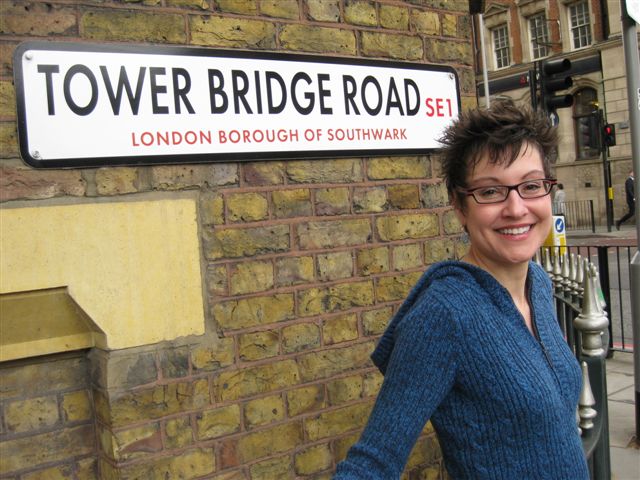
Mitzi Szereto in London

Vic: I cannot tell you the number of email requests I receive from authors and publishers who want me to review yet another Austen sequel, prequel, or parody. They range the gamut from truly well written pieces to stuff not fit for the shredder. Right now my mind is in a whirl. Precisely what time do Darcy’s fangs come out? Why did he disapprove of Lizzie for bearing him five daughters and one mewly son? When Wickham soiled his diapers, who changed them? Is Mary Bennet really more beautiful than Jane, who has turned into a brood sow? At this point I am in danger of forgetting what is what, and so my reaction to your book was one of indifference. I am done reviewing most of the sequels, except for a very few.

In addition, many authors are not fan fiction fans. Diana Gabaldon, author of the incredible Outlander books, dislikes fan fiction and has publicly said so, and yet you make a good point: Many authors, playwrights, and film makers have had their works reinterpreted or have reinterpreted the works of others.

Mitzi: Absolutely. Because so many of the Jane Austen authors have made the original work all but unrecognizable, the story and its characters can get lost, as you say. That’s why I used Austen’s story as the framework; it’s essentially the same story in my book, but I’ve taken it on a major tangent. My version is not fan fiction at all, nor is it a sequel. Those are again more erroneous assumptions being bandied about by people who’ve not read my book. I wonder if these same people would accuse Dean Koontz of writing fan fiction with his Frankenstein series or want to burn him at the stake for taking a literary classic and remaking it into something else, just as I have done with Pride and Prejudice. I can mention a slew of other authors who’ve done likewise, but we’d be here all day!

Vic: Good point. Now, let’s cut to the chase. Is there anything you would like to say about your book to my readers?

Mitzi: Pride and Prejudice: Hidden Lusts is intended to be pure entertainment and fun. I wanted to write a book that read exactly as if Jane Austen wrote every single word of it. Whether you love or hate my book, I know that I’ve been successful in achieving the Jane Austen illusion and remaining true to the essence of her characters. My book is raunchy, rude, outrageous and outlandish. It’s also extremely funny. If that sort of thing appeals to you, by all means go out and buy my book. If it doesn’t, then by all means choose something more to your liking. Thanks very much for inviting me to chat with you, Vic!

Vic: My pleasure. I wish you much success with your book, Mitzi, and thank you for visiting my humble blog.
Find Mitzi’s books and information at these links:

Read Full Post »

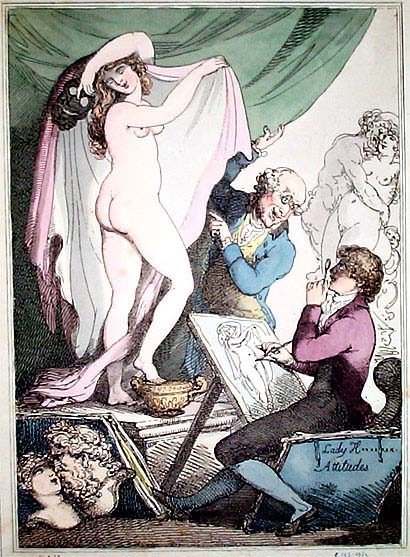
Emma Hamilton in one of her 'Attitudes', Thomas Rowlandson caricature, 1790

Just when the rage for Jane Austen monster mash-ups seems to be over, our favorite author’s fine books have been targeted for a different sort of mangling, one that explores the sexual side of her characters’ lives.

Frankly I don’t care for Jane Austen sequels in general and so chose to ignore all the hoopla surrounding Mitzi Szereto’s 15 minutes of fame with Pride and Prejudice: Hidden Lusts. But then she wrote a blog post for Huffington Post and I found that my indifference over her  x-rated foray into Pride and Prejudice could no longer be ignored. This statement particularly set up my hackles:

There appears to be this presumption by the pitchfork coalition that Jane Austen was some prim and proper spinster who wouldn’t have dared to be so impolitic as to address sexual matters in her novels. Therefore who was I, a lowly writer, to tamper with such purity? I wonder if these hecklers from the peanut gallery have even read the original Pride and Prejudice, since it alludes to matters most impolitic, indeed.

That’s a broad  sweeping statement if ever I read one.  If Mitzi had used her critical thinking skills she would have realized that even pitchfork carrying Janeites are conversant with the Regency era and its history. By and large they know about the scandals, the Hell Fire club, the mistresses, the revealing clothing, and the sexual proclivities of all segments of that society, not just the aristocrats. Thomas Rowlandson’s sexually charged cartoons are not unknown to this group. Neither are the stories of such well-known mistresses as Perdita, Emma Hamilton, and Harriette Wilson.

So if it isn’t ignorance about the Regency era and knowledge of Jane Austen’s awareness of the  hanky panky that surrounded her that has kept a Janeite like me on the sidelines regarding Mitzi’s tome, why have I been unable to embrace her new novel?

I am simply not interested.

There are readers who will LOVE her sequel, and I say to each their own. But don’t expect EVERY reader to fall all over themselves to be the first to read yet another twist on the Pride and Prejudice tale. I am so over reading these countless variations on a single theme that I no longer review them. (By the way, the sensual side of Jane Austen characters has been explored by other sequel writers; Mitzi is the first one whose steamy version has caught the eye of mainstream media.) I don’t begrudge Mitzi’s enterprising nature, her talent, or her desire to explore different sides to Lizzie and Darcy; I begrudge that she is miffed that many of us are not impressed. Here’s another statement on Huffington Post:

Why do the re-imaginings of Austen’s works push so many buttons with these “literary purists” – especially re-imaginings that don’t follow the traditional romance route? And why the vitriol, some of which is not very gentlemanly or ladylike? If it’s the sexual content that’s getting these naysayers’ knickers in a twist, perhaps said naysayers should pay closer attention to the original Pride and Prejudice …

Vitriol? To that I say piffle. And before I am lumped in with the Puritans or some virginal sect group, I have read my share of romance novels and believe me, the traditional romance route of which Ms Szereto speaks is hotter than a Houston pavement in 101 degree heat. Ever since Kathleen Woodiwiss arrived on the scene in 1972 with The Flame and the Flower, the majority of romance novels could safely be labeled as soft porn. Some, like Thea Devine’s, are downright hard-core erotic. My point is that Ms. Szereto should have let sleeping dogs lie and not responded to her naysayers in such a public way, for she gained no fan in me.  She concluded her rant with this statement:

Perhaps the members of the pitchfork brigade need to pull that stick out of their backsides and get a sense of humor. After all, Jane Austen had one!

Nice way to win me over. Talk to my friends, by the way, and none will accuse me of lacking humor or of not taking advantage of the bawdy side of my sensual nature to make a point. I am sure Mitzi’s novel will be a hit, for it has garnered more publicity than Casey Anthony sightings. I, for one, will not be reading it.

Read Full Post »

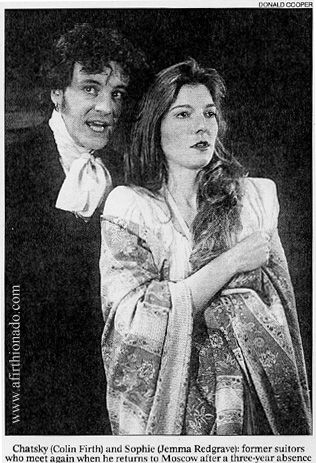
In 1993 Colin Firth starred opposite Jemma Redgrave (Lady Betram, Mansfield Park) in Chatsky, in which the hero of the play tells the truth and is mistaken for a lunatic.  It is amazing to see the images from that play,  for, since it is set during Regency times, Colin in full costume could easily be mistaken as Mr. Darcy, a role he would play two years later. Jemma played Lady Bertram in 2007′s Mansfield Park. Although the part was written against type (at the end of the film, Lady Bertram energetically unites Fanny with Edmund), her portrayal of that indolent lady was fresh and memorable.

Image @The AFirthionado Archive

To see more pictures of Chatsky and to read about the play, go to: The AFirthionado

Colin in 1993. Image @The AFirthionado Archive

Colin in 1995

Read Full Post »

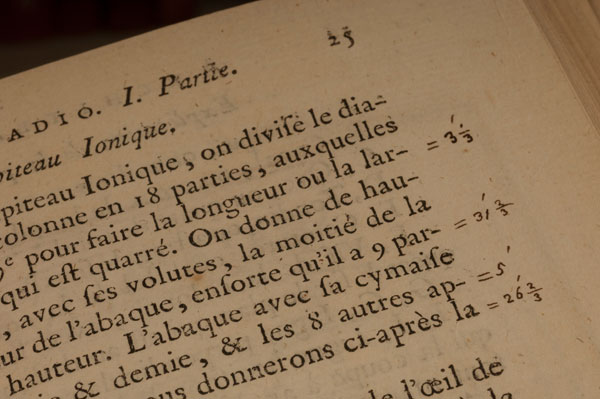
Jefferson's neat notations in the margin of "Architecture de Palladio. Image @Washington University Libraries, Department of Special Collections

Most of us have written in the margins of books, especially in our own textbooks when cramming for an exam or writing a paper, but how many of us write notes in expensive hardcovers that we treasure? These days writing inside books is heavily discouraged and frowned upon, but it was once a common practice, one that has pleased many a historian and bibliophile. Imagine coming across a dusty old book at a yard sale and finding the notes and scribblings of a famous person inside of it. Imagine the joy you would feel to come across such a connection!

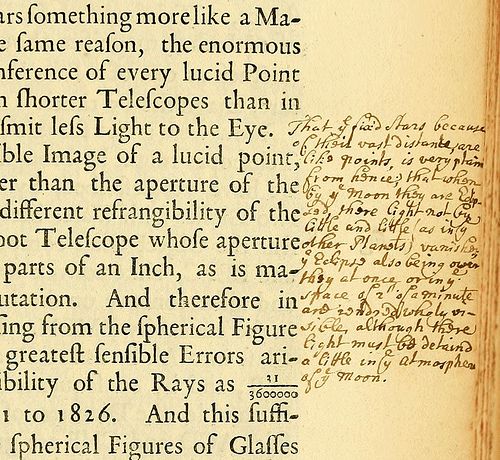
Sir Isaac Newton's marginalia

Marginalia, or the practice of writing in books, has a rich literary tradition. Samuel Taylor Coleridge’s friends lent their books to him on purpose hoping that he would write along their margins. Chances were that he did, for he was a prolific margin writer. Mark Twain often made comments, giving his opinions or hotly debating with the book’s author.  Other practitioners of margin writing were William Blake, Charles Darwin, and Thomas Jefferson. Even Jane Austen joined this select group, scribbling in her copy of Oliver Goldsmith’s book about her favorite poet, William Cowper (pronounced Cooper.)

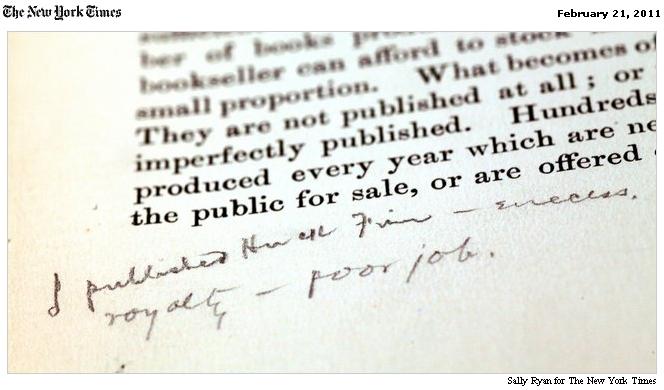
Mark Twain's annotation of his publication of Huckleberry Fin. Image @New York Times

In Persuasions Online, Jane Austen scholar Edith Lank writes about her copy of the two-volume Lord Barbourne edition of Jane Austen’s letters, which she found at a sale. This books is filled with

detailed genealogies, marginal comments, explanations and family gossip…The first were Fanny Caroline Lefroy and her sister Mrs. Louisa Lefroy Bellas, both daughters of Jane Austen’s neice (sic) Anna Austen Lefroy. The sisters annotated the book in careful nineteenth-century script and printing.” – List of Annotations in the Bellas Copy of Lord Brabourne’s Letters of Jane Austen

Thomas Jefferson’s scribblings were as elegant and refined as his mind. He sold his book collection to the Library of Congress in 1815, and kept a personal collection of books that he built upon until his death. Those books revealed that he often corrected typographical errors.

Thomas Jefferson's neat handwriting in Greek on a note inside his book.

Marginal scribblings provided a window into the minds of its writers, for they offered an insight into what they thought and revealed personal aspects of their characters. My scribblings in college texts were boring, for they merely summarized the most important points I needed to recall. I rarely left a personal thought in the margins or wrote inside my own books, although I dog eared favorite passages or left scraps of paper between pages that I wanted to reread.

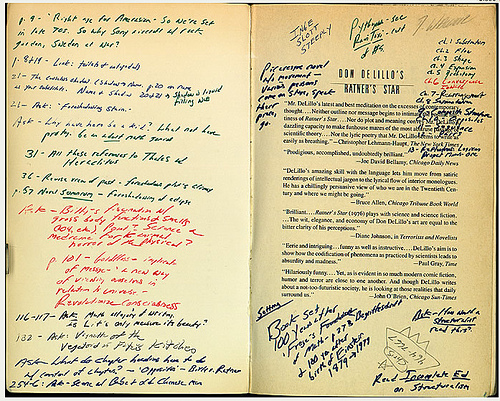
Wild scribblings

The author of an article in the New York Times feared that the advent of eBooks would end the art of marginalia, but the following passage partially assuages that fear. I say partially because part of the charm of marginalia is to see the author’s hand and his/her choice of writing implement, which is something Kindle does not yet offer (who knows what the future will hold?):

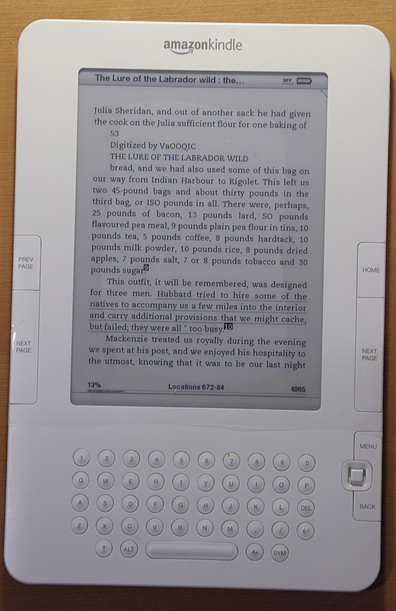
Annotations in a Kindle

When I received a Kindle as a gift earlier this year, my habits of marginalia soared to new heights. It became extremely easy to highlight passages and add notes, which are then situated in the text I’m reading but also pulled together into my Kindle account on Amazon where I can, for instance, share them with students in a course, fellow members of a book discussion group, family, and friends…even, in theory, with enemies. I’ll rebut and rebuke them with my rapier marginalia. It’s even possible to add a marginal note on a Kindle and then tweet it.-The margins of MarginaliaBooks From Thomas Jefferson’s Personal Library Rediscovered

Do you write inside books? What’s your opinion about about this literary tradition? And do you think Kindle will rekindle it?

More on the Topic

Read Full Post »

« Newer Posts - Older Posts »