Feeds:
Posts
Comments

Archive for the ‘Popular culture’ Category

Inquiring readers, Adriana Zardini from the Jane Austen Society of Brazil, wrote this post for her blog and sent it on to me! Do visit Adriana’s lovely site, which comes with a translator!

A new version of Sense and Sensibility? Take a look on IDMB page.
I discovered today a new movie being filmed there in the United States with the title: Scents and Sensibility. Because there is a summary and not even a line about Jane Austen, the only thing that links this production to Austen’s Sense and Sensibility is the fact that some of characters in the film have the same names as characters in the book.

Director: Brian Brough

Actors: Marla Sokoloff and Ashley Williams (already appeared in various TV series). Slated to do  Elinor and Marianne.

Nick Zano (Brandon) – is currently in the series Cougar Town

Brad Johnson (Edward Farris) probably a typo, right?

Danielle Chuchran (Margarett Dashwood)

Jason Celaya (John Willoughby)

Adriana’s other contributions to this blog:

Read Full Post »

Dark Matter, the third installment of season three of Inspector Lewis, is available online from September 13 through October 12.

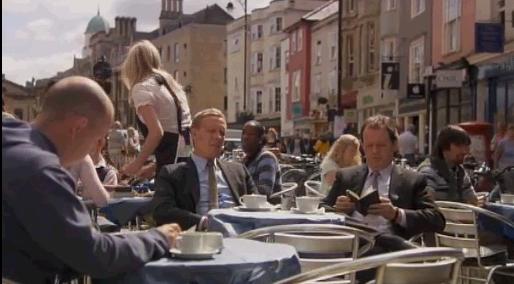
Peaceful Oxford, or is it?

In this episode, Professor Andrew Crompton, an amateur astronomer and the Master of Gresham College, is found dead at the foot of the University Observatory stairs. Lewis and Hathaway investigate the dark goings on among family, friends, colleagues, and staff. Two murders, one in broad daylight, baffle them until a crucial piece of evidence is revealed. The initial murder is set against the backdrop of Gustav Holst’s The Planet Suite, Mars: The Bringer of War.

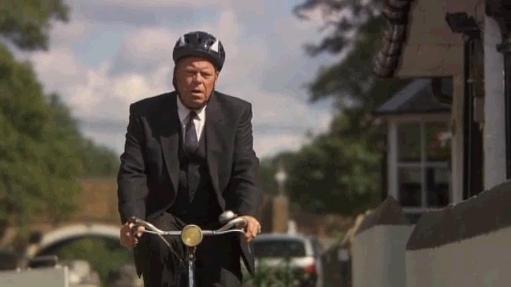
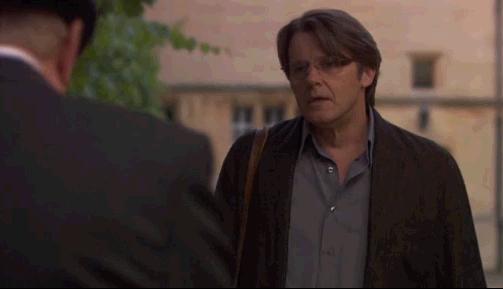
Roger Temple (Warren Clark) rides his bike to work

In fact, Holst’s fabulous music and the city of Oxford take a front seat as the murderer goes about doing dastardly deeds and Hathaway and Lewis canvas the streets and university looking for clues and talking to suspects.

Laura Hobson (Clare Holman) playing clarinet

We also learn more personal details about Dr. Laura Hobson, who plays 3rd clarinet at the gala memorial concert, which our detectives have paid to see but must leave as they pursuit the murderer. Before this happens, Lewis enlists Hobson to spy on her fellow orchestra members, notably Gwen Raeburn, also an astronomy lecturer; her husband, Sir Arnold; and the guest conductor Malcolm Finniston.

Lewis and Hathaway go over the clues

As I watched this particular episode I realized why I generally prefer shows produced for British television – middle aged people, indeed those who would be considered elderly, are allowed to find love and romance and are not relegated to stereotypical Golden Girl or old codger roles. The BBC employs skilled and seasoned actors to portray the characters, not some flavor of the month or pretty boy pinup.

Robert Hardy as Sir Arnold Raeburn

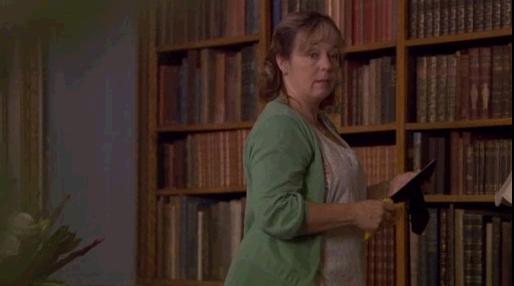
Actors like Robert Hardy (Sir Arnold Raeburn), Warren Clarke (Roger Temple), Sophie Ward (the grieving widow, Isobel),

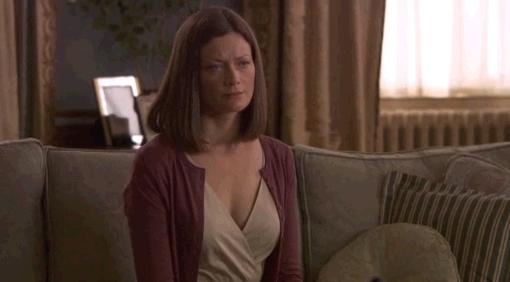
Sophie Ward as Isobel Crompton

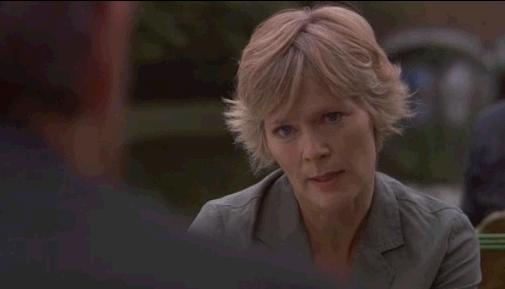
Diana Quick (Gwen Raeburn), and Annabelle Apsion (Babs Temple) are at the top of their game.

Annabelle Apsion as Babs Temple, the Crompton's housekeeper

It is simply a pleasure to watch them create a world in which I can immerse myself for an hour and a half.

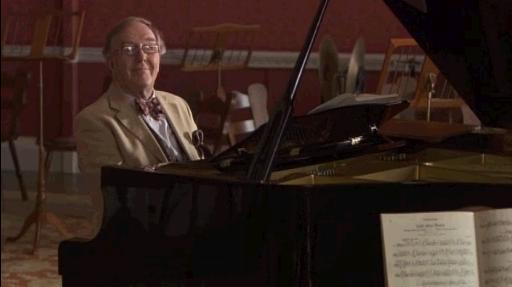
Malcolm Finniston, guest conductor

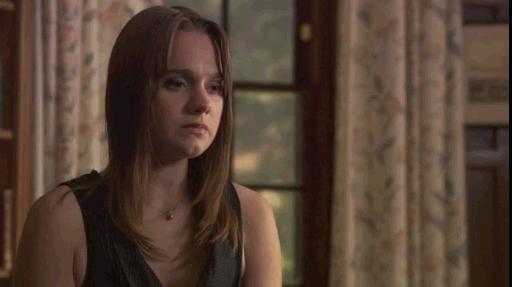
Even the young actors, like Ruby Thomas, aren’t just cookie cutter pretty. They can hold their own against their more seasoned counterparts.

Ruby Thomas as Kate Cameron

I solved the murder mystery fairly quickly, but I didn’t care. Its the relationship between Inspector Lewis and Hathaway that keeps me in thrall and tuning in to PBS Masterpiece Mystery every Sunday night. In fact, these episodes give me an excess of joy.

It was nice to see Dr. Hobson wear a dress and pursue personal goals

Read Full Post »

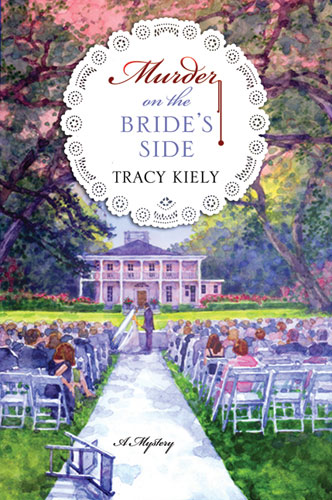
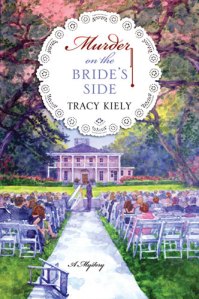
Murder on the Bride’s Side is Tracy Kiely’s second murder mystery. I thought her debut novel, Murder at Longbourn, quite charming. Although it was set in modern times, the tie ins to Jane Austen were detailed enough to be satisfying. (In the first book, Aunt Winnie was the proprietor of the Inn at Longbourn, the heroine Elizabeth Parker turned to reading Pride and Prejudice in times of stress, a cat named Lady Catherine prowled the premises, and two friends named Bridget and Colin joined a band of murder suspects for the New Year’s festivities.)

Murder on the Bride’s Side begins where Murder at Longbourn left off. Elizabeth Parker, the heroine who helped to solve the first murder, thereby saving her aunt from being falsely accused, is a fact checker for a local Virginia paper. This explains her eye for details. As the novel opens, guests are assembling to attend Bridget and Colin’s wedding in Richmond, Virginia. Elizabeth and Peter McGowan are now an item, which must have made Aunt Winnie deliriously happy, for she practically forced Peter’s company onto Elizabeth in Murder at Longbourn.

During her spare time Elizabeth reads Sense and Sensibility, which is quoted quite often at the start of this mystery. These quotes provide a tentative connection to Jane Austen, for, unlike Tracy Kiely’s first novel, the plot of this book has not been so neatly constructed around Jane’s oeuvre, and Tracy stops quoting Sense and Sensibility early on. She quotes other books as well, each one introducing a new chapter, setting up the theme.

As guests arrive for the wedding and assemble for the rehearsal dinner and reception, the reader is introduced to each murder suspect. The victim, Roni, is a suitably nasty individual whose treatment of her husband, Avery, her daughter, Megan, and the world in general is such that murdering her was quite a sensible solution.

Bridget and Colin are married and then the fun happens. As with Tracy Kiely’s first novel, the murder and its denouement are incidental to the development of the characters and their relationship to each other. Kiely’s writing style is breezy and effortless, and she has constructed a tight and entertaining mystery that leads to a satisfying conclusion. This time around the murder is not so easily solved, for she offers a side trail that a careless reader who has missed some important clues might follow.

And now we come to the tricky part of this review, for I truly enjoyed this novel. I live in Richmond, Virginia and was delighted to learn that the novel was set in my city. But the city that Tracy, a Maryland resident describes, is not one that I know. Basic mistakes were made. While going to The Tobacco Company in Shockoe Slip, Tracy has her guests park in a garage near Capitol Hill and then walk several long city blocks to the restaurant. With so many parking garages closer to this dining establishment, why would anyone want to walk through such a featureless, uninteresting part of town? The Governor’s mansion and Virginia state capitol building are not easily seen from the street and the traffic is ghastly. The cobble stone streets of East Cary Street with its trendy boutique shops, restaurants, and bars would have made a much more picturesque backdrop. Plus Tracy describes this slightly touristy, trendy-in-the-1980’s restaurant in detail, while barely mentioning the magnificent interior of the world class, historic register Jefferson Hotel several chapters later.

In this book, Tracy often arranges for people to meet “downtown”. Well, downtown Richmond is a wasteland of office buildings, banks, vacant lots, and parking garages. Major thoroughfares crisscross streets, making it hard for pedestrians to navigate towards the river, for example. The few restaurants that are making it in the financial district tend to be open only for breakfast and lunch. For entertainment and dining, Richmonders say they will meet in a specific section of town: The Fan, Cary Town, the Museum District, Church Hill, the Canal Walk, Belle Isle, Shockoe Slip, Shockoe Bottom, Libby and Grove, or the near or far West End. I am being picky, I know, but not once did I get the sense that Tracy’s characters were living and breathing in my city.

Perhaps I quibble too much, for this reviewer from The Richmond Times Dispatch was quite delighted with the book.

I give Murder on the Bride’s Side two out of three Regency fans. Will I read another Elizabeth Parker murder mystery when Tracy Kiely writes her third book? Why, yes, of course. I want to follow Peter and Elizabeth as they deepen their romance against a backdrop of murder most foul. Just not in Richmond.

More on the topic:

Read Full Post »

Watch the latest Inspector Lewis mystery, The Dead of Winter, on PBS’s Masterpiece Mystery site from September 6 until September 19. Click here for behind the scenes videos.

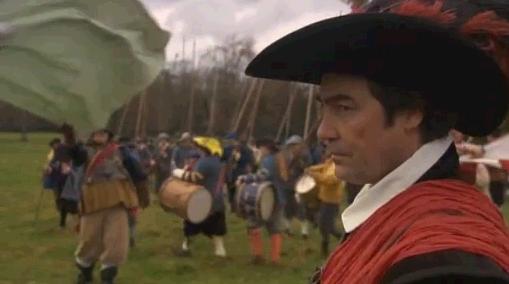
The episode opens with a shooting at a re-enactment of a battle on the grounds of Crevecoeur Hall

The curious case leads back to Crevecoeur Hall, a vast, history-rich Oxford estate, and as it happens, the setting for much of Detective Sergeant Hathaway’s (Laurence Fox) youth. Hathaway reconnects with his past – and Scarlett Mortmaigne, the daughter of the estate’s owner. But is he also consorting with a main suspect? It’s a case that threatens to expose the shortcomings and secrets of a wealthy family, cloud Hathaway’s judgment and ultimately put his relationship with Detective Inspector Lewis (Kevin Whately) in jeopardy.

Hathaway is haunted by the death of a 10 year-old girl

The Dead of Winter, the second episode in the third season, opens with a melancholic Hathaway testifying in court about an atrocity commited towards a ten year old girl. He cannot shake off the image of finding her body in a water cistern. Inspector Lewis is unable to communicate with his friend, and the emotional gulf between the two partners widens. As Dr. Hobson observes caustically, “boys never let anyone in.”

"Boys never let anyone in", Laura Hobson observes

When Hathaway is called to a murder at Crevecoeur Hall, the estate where he spent the first 12 years of his life as the son of the estate manager, his past life comes tumbling back. As the story unfolds, we learn more about Hathaway’s childhood, and that he had once played with the butler (Pip Carter) another child on the estate, and young Lady Scarlett (Camilla Arfwedson), for whom he still carries a tendre and who fondly calls him “James the Just.” Her engagement to a rich man does not stop her from revealing to Hathaway how very much she still is attracted to him, but for James her confession is a painful reminder of “what might have been.” James the Just can see no reason for her preferring money over love, the choice she has made.

While attracted to Hathaway, Scarlett chooses money over love

The script weaves in these threads of James’s former life with current events and the murder of a doctor who had visited Crevecoeur Hall. As James investigates thecrime, the current estate manager of Crevecoeur Hall, whose wife had run away 20 years ago, commits suicide.

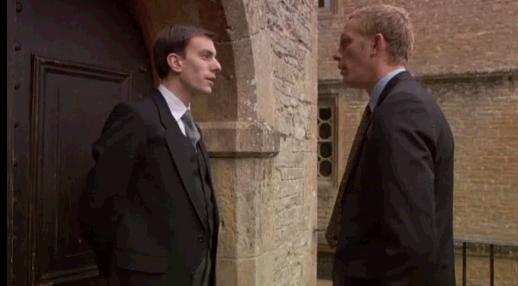
Hathaway and Paul Hopkiss, the butler and his former childhood friend

We meet an array suspects: the lord of the manor, Augustus Mortmaigne, the Marquess of Tygon (Richard Johnson); his wife, Selina Mortmaigne (Juliet Aubrey); her brother in law, Philip (Nathaniel Parker) with whom she is having an affair. Add a valuable painting that has been altered and that might hold clues, a Jesuit priest who knows more than he lets on, and a purring cat that Inspector Lewis rescues from the dead doctor’s home, and you have a fully fleshed mystery story populated with likely suspects. As both Lewis and Hathaway pursue the killer, both come at cross purposes.

Lewis pursues his own clues in the dead Dr's office

That last statement of the quote that opens this review is a bit misleading. While Lewis becomes exasperated with Hathaway, whose surpressed longings for Scarlett have gotten in the way of his judgment, he has not come to the point of breaking off their relationship, and he makes it clear that he is content with Hathaway as a partner.

The lord of the manor and those who live on his estate have many secrets to hide

This second episode in Season 3 is better than the first – more tightly written and much darker in tone. The final scene is filled with suspense, and I did not guess the murderer until just before the major clue about corn starch was dropped. For those who have missed the episode, you can watch it online from September 6 through September 19.

Read Full Post »
Jane Austen fans tend to read her books repeatedly throughout their lives.  In an article in the Guardian UK, Charlotte Higgins describes how her identity with a Jane Austen character changes with age. Here are some of her thoughts:

If you read Jane Austen more or less annually, as I have done since my late teens, you end up marking yourself against the characters. Oh reader, when I first read Pride and Prejudice I was Lydia’s age. I am about to become older than the delightful Mrs Croft in Persuasion. I still hang on to Anne Elliot, though. A tender 27 she may be, but in modern money I reckon you can give her another 10 years.

This is so true. I am starting to identify more with Mrs. Croft and Lady Russell than Anne Elliot. Charlotte Higgins goes on to say:

Persuasion is a very middle-aged novel, with its melancholic flavour and its acknowledgement that yes, you can make a grotesque mess of your life (the romance part I find much less satisfactory than the bleakly comic first three quarters of the book, essentially before one reaches Bath). It is true, however, that you can tell you are middle-aged when you start to empathise with P&P’s Mrs Bennet: with what Sir Walter Elliot would call “the rapid increase of the crow’s foot” comes a sense of sympathy with this character, written off as absurd in one’s heedless youth. At least she is trying to save her daughters from a future of poverty. And she’s certainly not getting any help from that husband of hers.

So true again. Only in recent years have I become impatient with Mr. Bennet and more sympathetic with his silly wife. I have also become more observant of Mrs. Jennings in Sense and Sensibility, of how hospitable she is, how she tries to become a matchmaker to all the unmarried ladies, and how her house is open to guest seemingly all the time. Yes, she is a silly and irritating woman, traits I could not stand when I was young (thus I could not appreciate her other than as a comic relief character), but now I rather like her positive qualities, as I do Mrs. Palmer’s. Elinor Dashwood is aware of Mrs. Palmer’s good nature and would tolerate her better if she weren’t such an unflaggingly cheerful airhead all the time.

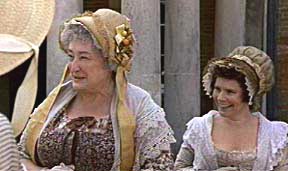
Mrs. Jennings and Mrs. Palmer, Sense and Sensibility

As I get older I see that Lady Catherine de Bourgh is all bluster, and that her authority over Elizabeth Bennet is precisely zero. Young Lizzie is smart enough to know that, but as a 19 year-old reader, I was in awe of Lizzie’s stubborn attitude towards that lady when she stormed to Longbourn to demand Lizzie promise never to marry Mr. Darcy.

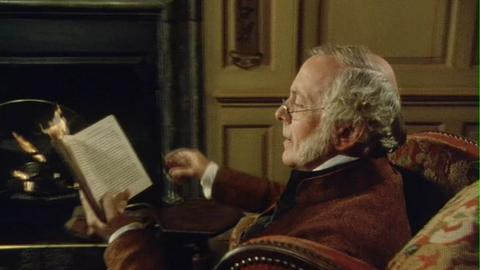
Mr. Bennet reading. Image from Jim and Ellen Moody

There are other ways that my attitude towards Jane Austen’s novels is changing. I notice how few happy marriages are portrayed. Right off the bat I can think of only the Crofts, the Gardiners, the John Knightleys, and the Musgroves. These days, I am more on the side of a pragmatic Charlotte Lucas, who has learned long ago not to look at the world through rose colored glasses, than Elizabeth, who waits for love. To be sure, she snagged her Mr. Darcy, but would Charlotte have had such an opportunity? I think not. I also see that Fanny Price’s strength of character and resolve in the face of so much bullying is a trait to admire; and that Mr. Bennet’s extensive library and unwillingness to compromise a cushy lifestyle were acquired at the expense of his family’s future financial security.

As the years roll by, my tastes and preferences for Jane’s novels are changing. Persuasion and Pride and Prejudice are running neck and neck in my favorite category. P&P used to have the field all to itself. While I loathed Mansfield Park the first time I read it, I don’t mind it so much now, and I find Emma less and less interesting and much too long . Perhaps I should lay the book aside for a few years.

Are your tastes and preferences changing towards Jane Austen’s books and characters as time goes on? How? Curious minds want to know.

Read Full Post »

« Newer Posts - Older Posts »