Feeds:
Posts
Comments

Archive for the ‘Popular culture’ Category

In Counter Culture Blues, the church's peaceful Sunday sermon is shattered by the sound of gun shots on the estate next door.

Counter Culture Blues, the latest Inspector Lewis mystery on PBS Masterpiece Mystery!, treats the viewer to three murders – a young boy, a rocker, and a music professor. This episode of Inspector Lewis kicks off to the third season and does not disappoint. Half the fun of mysteries set in England is witnessing the audaciousness of the characters and the entertaining display of British wit. Both are offered in abundance in this episode about aging rockers.

Richie (David Hayman) looks on as Franco (Anthony Higgins) sees Esme (Joanna Lumley) for the first time in 35 years.

The murders coincide with the reappearance of Esme Ford, the front singer of a once hugely popular 70’s rock band, Midnight Addiction. Esme was thought to have killed herself 35 years ago, but much to the shocked surprise of Ritchie Maguire, the band’s leather-faced leader, she walks back into his life, hoping to ressurrect the band and duplicate their past glory. It was Esme, the “tart with the heart”, who had been the “enchantment who held the band together.” While Richie Maguire had recently attempted a solo CD, whose master had mysteriously been wiped clean, the members of the band were living richly off the proceeds of their past glory.

Just when Inspector Lewis thinks it is safe to sit down to a nice meal, duty calls.

We first meet Inspector Lewis (Kevin Whately) at home and about to sit down to a microwave dinner, when he and Sergeant Hathaway (Laurence Fox) are called to investigate the illegal hunting of game near a church during Sunday service. The culprit is Richie, whose estate is nearby. Inspector Lewis knows the band’s history intimately, for in his youth he had been a huge fan. His surprise upon encountering Esme is as great as Richie’s, and it conjures up memories of a poster of Esme sans shirt and bra that he had purchased as a boy and hung in his room.

David Hayman as Richie Maguire

Anthony Higgins as Franco

The rockers have not aged well, and the actors who play Richie (David Hayman), Bone (Zig Byfield), Mack (Hilton McRae), and Franco (Anthony Higgins) are as craggy as Charlie Watts, Keith Richards, Mick Jagger, and Ron Wood of the Rolling Stones.

Zig Byfield as Bone

Hilton McRae as Mack

I won’t give too much of the plot away, since you can still see this episode online. This intelligent and often witty script was written by Guy Andre, who adapted the screenplay from a story by Nick Deare. The series itself is inspired by Colin Dexter’s’ Inspector Morse novels and is greatly enhanced by an excellent cast. Simon Callow portrays Vernon Oxe, the openly gay manager who claims that the band was his creation. Oxe’s sudden appearance in Oxford coincides with that of Esme Ford.

Simon Callow as Vernon Oxe (with Anthony Higgins)

Joanna Lumley as Esme is superb, but then I am biased in her favor. I will always adore Joanna for her turn as Patsy Stone, the boozing, smoking, non-eating, free-loving character of Absolutely Fabulous. I could not help but laugh at Esme’s brazen reason for sleeping with two men on the same night – to assure them that she had not forgotten either of them. My only beef with Joanna as Esme was her obvious wig, which was is not Ms Lumley’s fault. For the viewer’s sake, could they not have found a better hair piece?

Joanna Lumley as Esme

The plot of Counter Culture Blues is complicated, but still manages to hold the viewer’s interest. Sub plots abound. While they did not throw me off my scent (I figured out who the murderer was fairly early on), they added a richness and complexity to the world that Inspector Lewis and Sergeant Hathaway inhabit.

Perdita Weeks plays Kitten, a girl with a secret and from whom a secret is being kept.

Richie’s daughter, Kitten (Perdita Weeks), has mysterious dealings with a nasty young man named Peter, which gives James Hathaway (Laurence Fox) something productive to do. Hathaway is no slouch, and he is on to Peter’s sordid schemes. His confrontation of the young man are among my favorite scenes in this production.

Sergeant Hathaway interrogates creepy Peter

Peter (Harry Lloyd) shows no conscience

The mysterious death of Jason, the boy who was murdered at the gates of Richie’s mansion, and of two other charactes keep Inspector Lewis on his toes.

Jason's friend, Declan (Daniel Kaluuya) bravely helps Inspector Lewis solve why the boy was murdered.

It turns out that free-loving Richie has a wife. Helen Baxendale as Caroline is given the best line in this episode. When asked by Inspector Lewis why she disappears for weeks on end, she says she can always tell when her husband is gearing up to have another affair and she wanted to give him the necessary space. “He’s like a dog, really. Needs exercizing.”

Caroline, Helen Baxendale, takes a pragmatic view on marriage.

As usual the reader is treated to scenes in and around Oxford, always a delight, and Rebecca Front once againmakes her appearance as Chief Superintendent Jean Innocent, telling Lewis that “If my life is disagreeable, yours is going to be hell. “ Neither Lewis nor Hathaway can do their jobs without the sharp eyed skills of Drl Laura Hobson, capably played by Clare Holman. It would be lovely if she and Lewis got together, but that is my mothering gene working in overdrive.

The scenes in and around Oxford are part of the background.

Rebecca Front as Chief Superintendent Innocent is both exasperated with Inspector Lewis and in awe of his skills.

Lewis and Hathaway depend on Dr. Hobson's (Clare Holman) findings to do their work.

The identity of the murderer is somewhat obvious, but the ending is satisfying nevertheless. Joanna Lumley is entertaining as ever and this episode is worth watching for her performance alone. If you want to see the series again, it will be shown online at this link starting August 30 and through September 12. The other episodes scheduled for Season III are:

Needless to say, it is going to be a great September of Sundays with Inspector Lewis at PBS!
Read Full Post »


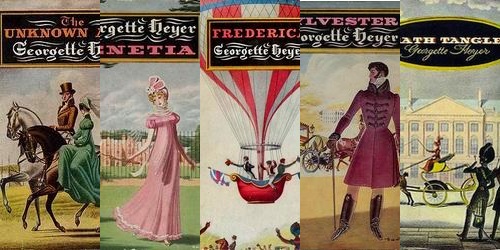
Inquiring readers: Austenprose has been featuring Georgette Heyer all this month. Today is her 108th birthday! Laurel Ann has graciously interviewed me about one of my favorite authors. My interview on her blog begins with this question:

Some critics write Georgette Heyer off as merely a romance novelist. Others praise her for her historical accuracy, witty dialogue and engaging plots. Looking back on her fifty plus novels, why do you think she is [still] so popular years after [her] first publication?

When she was a current bestselling author, Georgette Heyer’s Regency romances stood out from the pack. Her humorous but well-researched writing rose above a sea of earnestly written historical romances. In those days, Daphne du Maurier, Jean Plaidy (Victoria Holt), Mary Stewart, and Mills and Boon (Harlequin) authors reigned supreme. While these best-selling authors were popular, none came close to combining humor, history, and romance in Georgette’s inimitable way. Today, GH’s breezy style doesn’t stand out quite as vividly, because there are many other romance writers (Susan Elizabeth Phillips, Susan Andersen, Sandra Hill, Jane Ann Krentz) who publish funny and sassy romances, but back in the dark ages when I went to college, Georgette had the humorous romance field to herself.

Click here to read the rest of the interview on Austenprose.

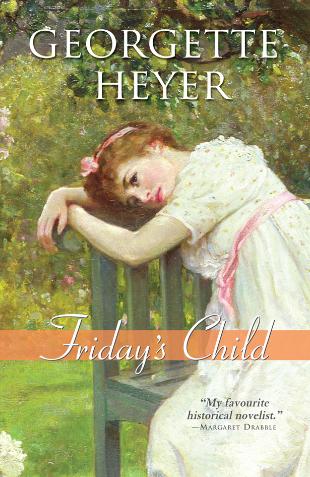
In addition to the interview, I am featuring two of my reviews of GH novels:  Lady of Quality and Friday’s Child. As a special treat for Georgette’s birthday, I am also including a link to one of her short stories: A Proposal to Cecily

Lady of Quality:

Miss Annis Wychwood, at twenty-nine, has long been on the shelf, but this bothers her not at all. She is rich and still beautiful and she enjoys living independently in Bath, except for the tiresome female cousin, who her very proper brother insists must live with her.

When Annis offers sanctuary to the very young runaway heiress Miss Lucilla Carleton, no one at all thinks this is a good idea. With the exception of Miss Carleton’s overbearing guardian, Mr. Oliver Carleton, whose reputation as the rudest man in London precedes him. Outrageous as he is, the charming Annis ends up finding him absolutely irresistible. – Sourcebooks blurb

I discovered Georgette Heyer just after I graduated from college. Having run out of new Jane Austen novels to read, I began to search for other regency stories set in similar settings. One day at the library, I stumbled across Charity Girl and Arabella, and my love affair with all things Georgette began.

In those days I was barely older than the youngest of Heyer’s heroines, and could identify closely with The Grand Sophy. I reveled in Georgette’s world filled with bored aristocratic gentlemen who, usually as they traveled by coach or horse to a country inn or walked the streets in London in the middle of the night, stumbled across an innocent and disarming chit who needed rescuing. This plot device was a popular one with the author. Another one of Georgette’s plots was that of the “older” beautiful, rich, and independent spinster (almost on the shelf, but not quite) who is determined to live her life as she likes it and skirt convention when she can. Because she has independent means, she rules her roost and will brook no interference from any man. Invariably, these strong willed women meet their match in an even richer, stronger-willed man, usually a Duke or Earl, but not always as in a Lady of Quality.
Read the rest of the review at this link

Friday’s Child:

fridays-child-sourceHeadstrong, spoiled and impetuous, Lord Sheringham wants to be married. Not because he is in love, but because he wants control of his fortune, his father having left it so that he would be either 25 or married before he could rid himself of his trustees. He has some difficulties with debts, certainly, but the main reason he wishes to have that trust drawn up is that one of his trustees is plundering his estate.

The book opens with his proposal to the Incomparable, Isabella Milborne, a lifelong neighbor and friend. She refuses him because they don’t love each other, and he, furious at her level-headed thwarting of his plans, vows to marry the next lady he sees. This would be Hero Wantage, another lifelong neighborhood friend, just out of the schoolroom and unschooled in any of the ways of Society. Hero, who has adored her friend Sherry for years, is an orphan who has been under the care of her cousin, who never intended to provide a Season for her ward, but rather to prepare her for marriage to the local curate, or for life as a governess. At just seventeen and full of fun, Hero is not ready for either quelling prospect.

So the two decide that they will get married. Lord Sheringham’s cousins Gil and Ferdy and his friend George, Lord Wrotham, all of whom seem to travel in a pack, among them arrange for the marriage by special license. The young Lord and Lady Sheringham set up house, and Sherry and his friends seek to establish young Lady Sherry in London society, where they have been cutting a pretty wild and dashing swath. What follows is a madcap romp, as Hero falls in and out of scrapes as fast as she can. All through innocence, or from following her husband’s sayings. She is bright, educated, and has a mind of her own, and when she takes umbrage at her husband’s scolding her for something, she will say, “but you said…” To his credit, he hears his words and begins to reconsider his own way of life.

Read the rest of the review at this link

A Proposal to Cecily:

Flapper Louise_BrooksCicely hurled a cushion across the room. “Thats how I feel!” she said, & glared at her first cousin once removed, Richard Spalding.

“Good lord”, he remarked, with a proper amount of sympathy in his lazy voice.

“And you sit there – idling about in my room – laughing at me! I quite hate you, Richard!

“Oh, I say!” he expostulated, “I wasn’t laughing – honour bright!”

Cicely looked scornful. “I’m absolutely sick of it all. Dead sick of it.” Cecily nodded so vigorously that her brown, bobbed curls seemed to jump. “I never want to go to another dance as long as I live.”

“That’s bad,” said Spalding respectfully. “What’s brought on this sense of repletion?”

“Everything. I’ve been trotted round till I want to scream! I feel like doing something desperate!”

At that Spalding dragged himself upright and threw away his half-smoked cigarette.

“Oh, splendid, Cis! I hoped that if I waited long enough you’d melt. When shall it be? Be a sport, now, and -”

Cicely covered her ears with her hands.

“No, no, no! I don’t want to do anything as desperate as that!”

Richard sank back again.

“Thought it was too good to be true”. He pulled a leather diary from his waistcoat pocket and proceeded, gloomily, to make an entry.

“What’s that?” asked Cicely.

“Diary.”

“But what are you writing?”

“‘Friday. Proposed to Cicely. Refused.'”

In spite of herself Cicely giggled.

“Dicky, you are idiotic! When will you give it up?”

“When we’re married.”

“We’re not going to be!” Cicely’s chin went up defiantly.

Read the rest of the short story at this link


Reviews of Georgette Heyer’s novels on this site:

Read Full Post »

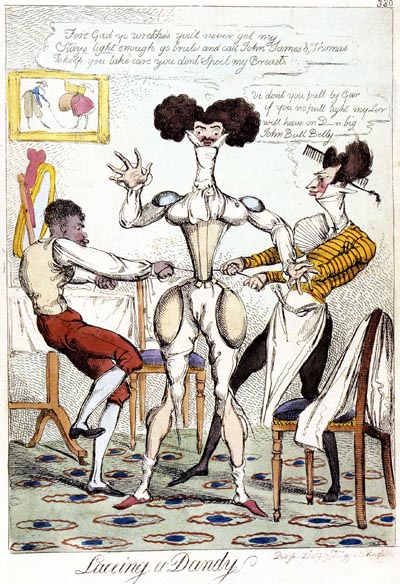
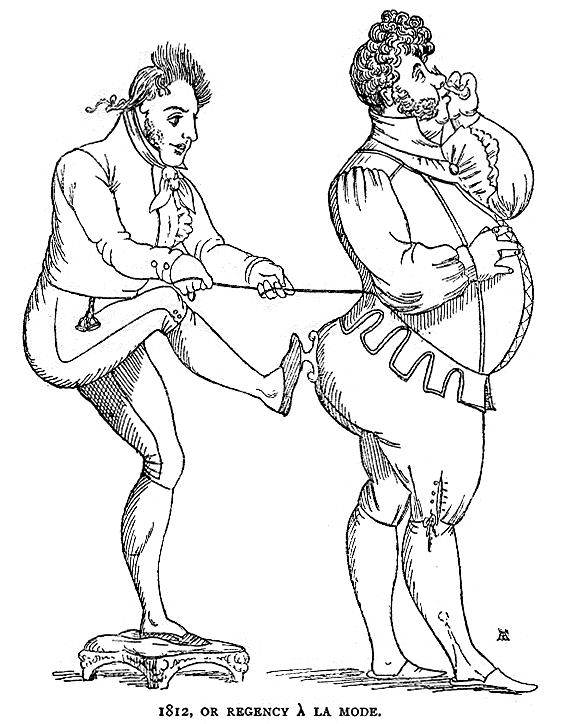
Even as women freed themselves for a short time from the confinement of corsets, the Regency dandy, following the Prince Regent’s fashion, began to constrict himself into a wasp-waisted and broad shouldered look. For men of a certain challenged physique, firm waists and tight stomachs were achieved through laced corsets. The sculpting of wide shoulders, bulging thighs, and fine calves was accomplished by well-placed pads, as the satiric image below shows.


Lacing a Dandy, 1819


There can be no doubt, indeed, that just as the large cravat resulted from defects in the royal neck, so the stays in later years became necessary to restrain the unwieldy proportions of the royal waist, and assumed by the dandies as an act of compliment to their patron. The caricatures of the day exhibit an Illustrious Personage lifted up and struggling to insert his legs into a pair of “leather”s of a size he was anxious to appear in –  which are securely lashed to the bed posts to give a sort of purchase in furtherance of his efforts – just as in 1784 stories were told of Monseigneur d’Artois, the brother of Louis XVI of France,  needing the aid of four tall lacqueys to put on and off, without creasing, his small clothes of a special make and kind. – Once a Week, Volume 10


Prince Regent at his toilet, Hugh Bonneville, Beau Brummell, This Charming Man, 2008


Corsets continued to be relatively popular among the ruling and military classes for the rest of the 19th century, and retained a significant following during the first part of the 20th century.


1812 Regency a la mode


Read more on the topic:

Read Full Post »

Inquiring Readers, Adriana Zardinia, member of the Jane Austen Society of Brazil and who oversees that organization’s excellent blog, graciously sent me an English translation of her post on a Jane Austen inspired wedding. Enjoy!

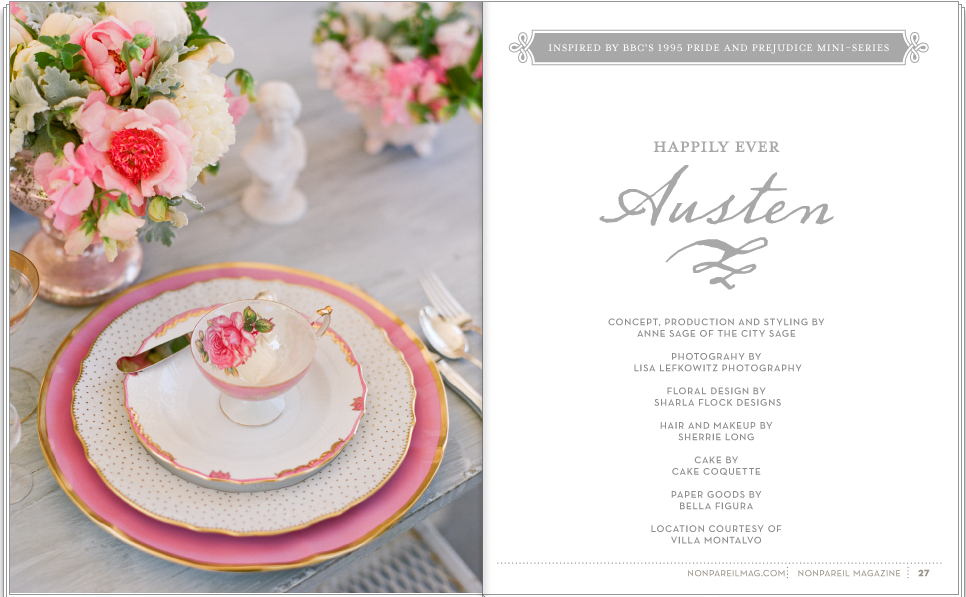
This post shows pictures from a magazine article based on Pride and Prejudice.

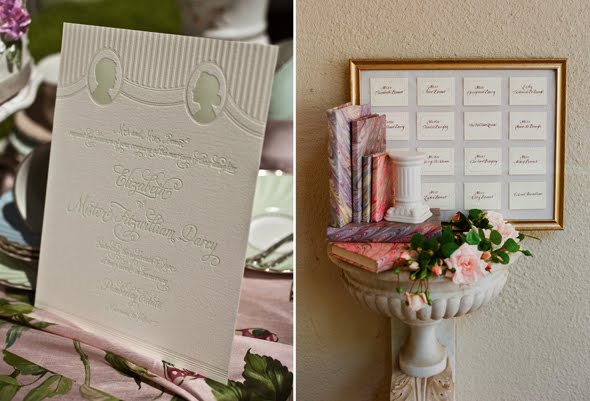
Anne, from The City Sage, showed some pictures from Nonpareil Magazine,  inspired by Jane Austen’s Pride and Prejudice, more precisely, Lizzy Bennet’s and Mr. Darcy’s wedding. Some pictures are not in the magazine’s pages and you can see them at this link.

Details of the invitation

Bride and groom

Look how perfectly chosen the flowers, candies, clothes and reception place are! See the entire article, “Happily Ever Austen”, here at this link!

Nonpareil Magazine allows you to download images and instructions for butterfly garlands and a marble table template in this link.

Adriana Zardini

http://www.jasbra.com.br

http://www.adrianazardini.blogspot.com

Reticule

More links on the topic

Read Full Post »

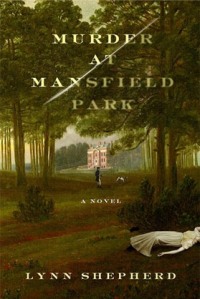
Consider this recipe for a modern Austenesque mystery: Take a familiar and beloved novel, Mansfield Park, with characters whose motives and actions we know intimately, and tear the book up. Throw the pages inside a bag, shake vigorously, and let the characters and plot fall where they may. Add a writer who has cooked up a complex plot for a delicious murder (or two or more, who knows?), and you have Murder at Mansfield Park, a truly hearty and satisfying new mystery novel.

Lynn Shepherd, the chef of this roman à clef, has by dint of her imagination turned  Jane Austen’s classic novel topsy turvy. The characters’ names are familiar, the setting is the same, some of the action as originally described by Jane Austen has been retained, and yet Ms. Shepherd has managed to create something new, refreshing and different.

I must admit to disliking mysteries in general, as many regular readers of my blog know. And I tend not to review Jane Austen sequels. But this novel is different. Oh, I was skeptical at first, slogging through the first chapter, trying to wrap my mind around the changes in the characters. And then I got caught up in the plot and became absorbed to the point where I could not put the book down.

Some red herrings are thrown into the mix, but not so many as to make the reader angry. The plot’s denouement was more than satisfactory and made logical sense. I suppose a true mystery fan might have guessed the killer sooner. Truth be told I held off guessing, for I wanted to be surprised, and so I was.

That Murder at Mansfield Park is Lynn Shepherd’s first novel is most surprising. Her writing style is lovely and effortless as she weaves several plot elements into a seamless whole. Rather than copy Jane Austen, Ms. Shepherd uses Mansfield Park as a take-off point. This novel is intelligently written and assumes that the reader has some command of the English language and enough background knowledge in history, Jane Austen, and other subtle historical and social references to understand the numerous references that crop up.

I give Murder at Mansfield Park six regency fans, my highest rating ever.

Post script: Gentle reader – If you are curious to learn more about Lynn’s novel after reading my review, be forewarned. Many reviewers have spoiled the plot by giving away too much of Lynn’s changes while gushing about them. Honestly, does no one take Review a Novel 101 any more? One irresponsible reviewer of a major online news publication even gave away who was murdered, ignoring the fact that half the fun of this mystery is guessing who the victim will be. So be careful, wary reader, of careless reviewers who do not even bother to place *Spoiler Alert* at the top of their reviews.

Read Full Post »

« Newer Posts - Older Posts »