Feeds:
Posts
Comments

Archive for the ‘Regency Life’ Category

Inquiring Readers, Tony Grant has been contributing articles to Jane Austen Today for several months. Recently, Tony and his family traveled to Bath and the West Country. This is one of many posts he has written about his journey. Tony also has published several posts about his trip on this blog: Going to Bath With Jane Austen and The Servant’s Entrance to Regency Townhouses, for which he supplied the photographs. He has already contributed a post about Milsom Street for Jane Austen Today. This post about his tour through Bath was first published on Jane Austen Today, but the images caused the sidebar to be pushed out of sight, so I placed it here.

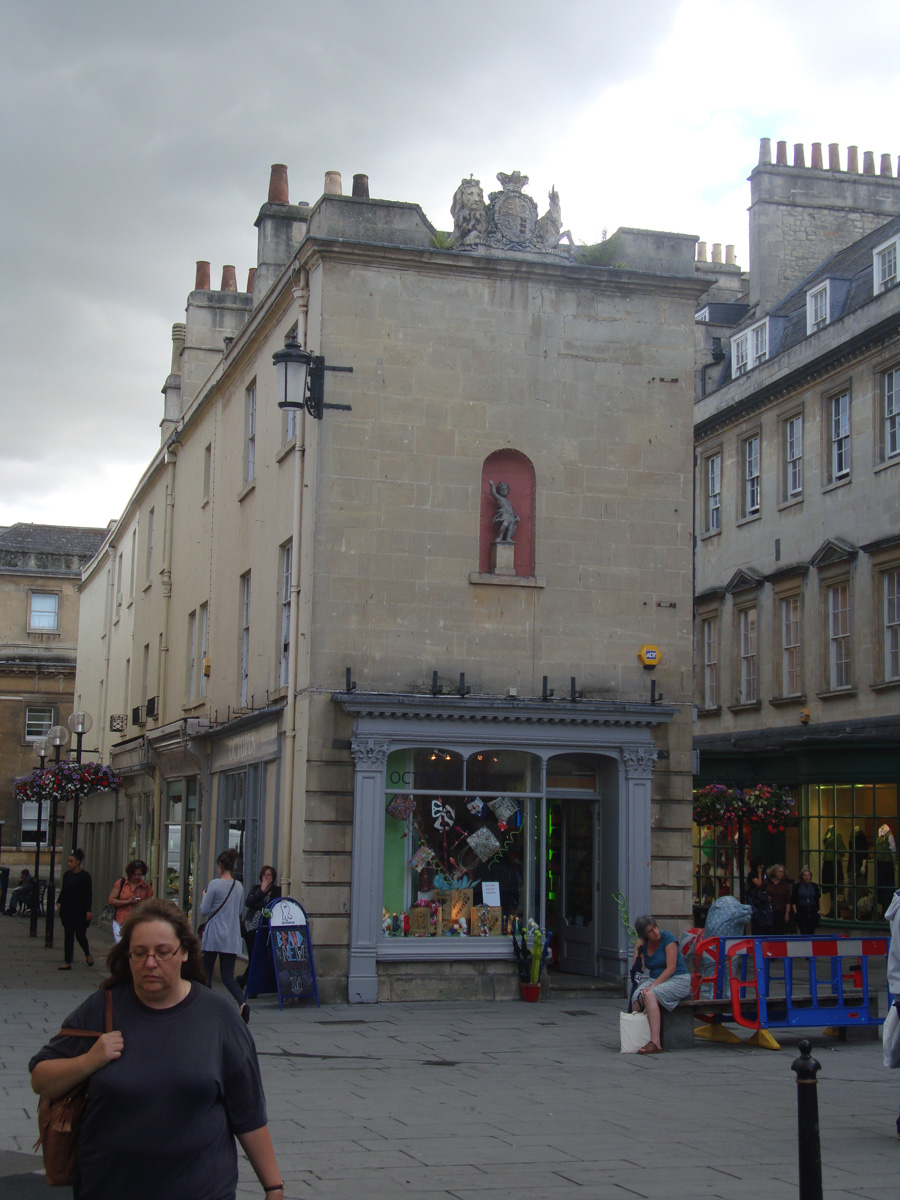
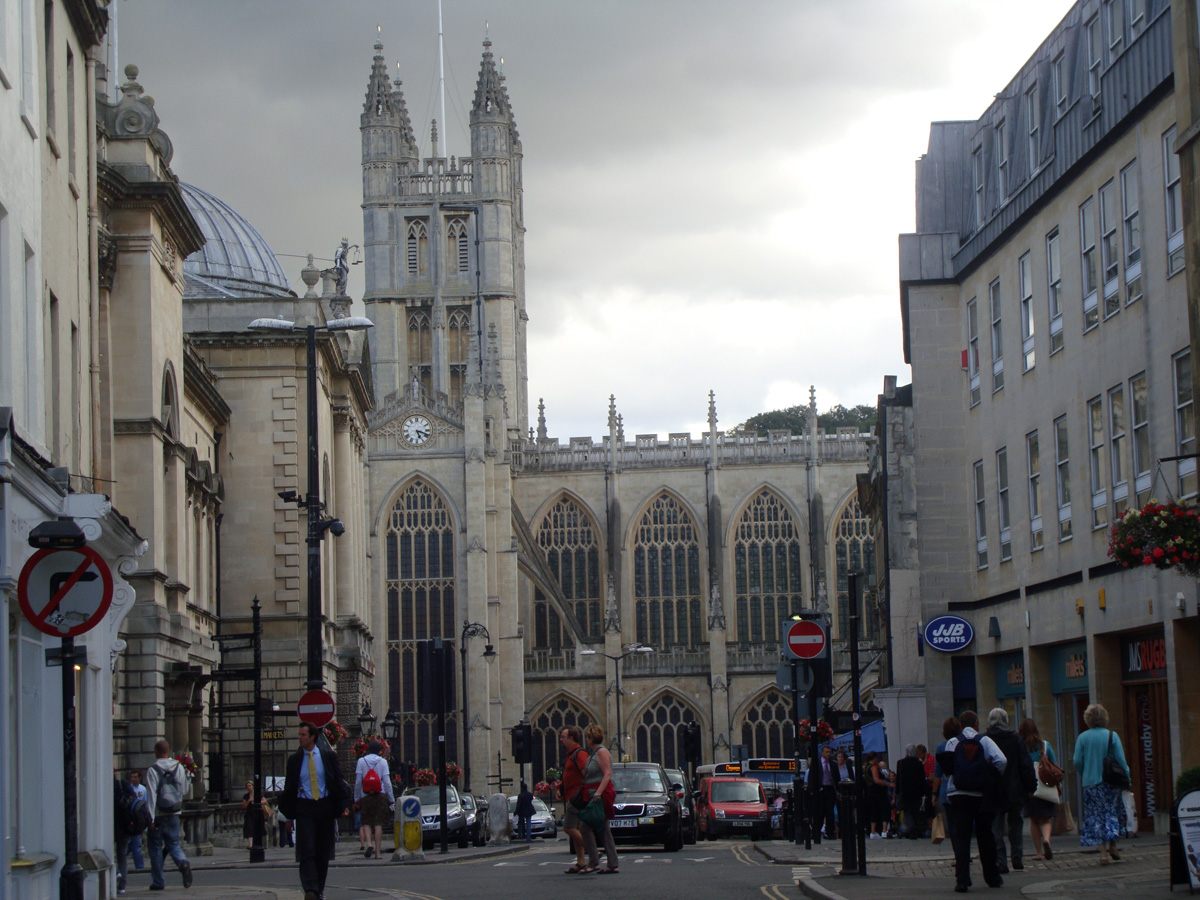
Bath Thoroughfare
Jane Austen knew Bath extremely well. Throughout Persuasion and Northanger Abbey she houses her characters in real streets and in real buildings, although she does avoid giving us the number of the house in such and such a street. The real owners and occupants might not have liked the notoriety. And today they might not like the notoriety as well. Was there such a thing as litigation in the 18th century? I’m sure there was.

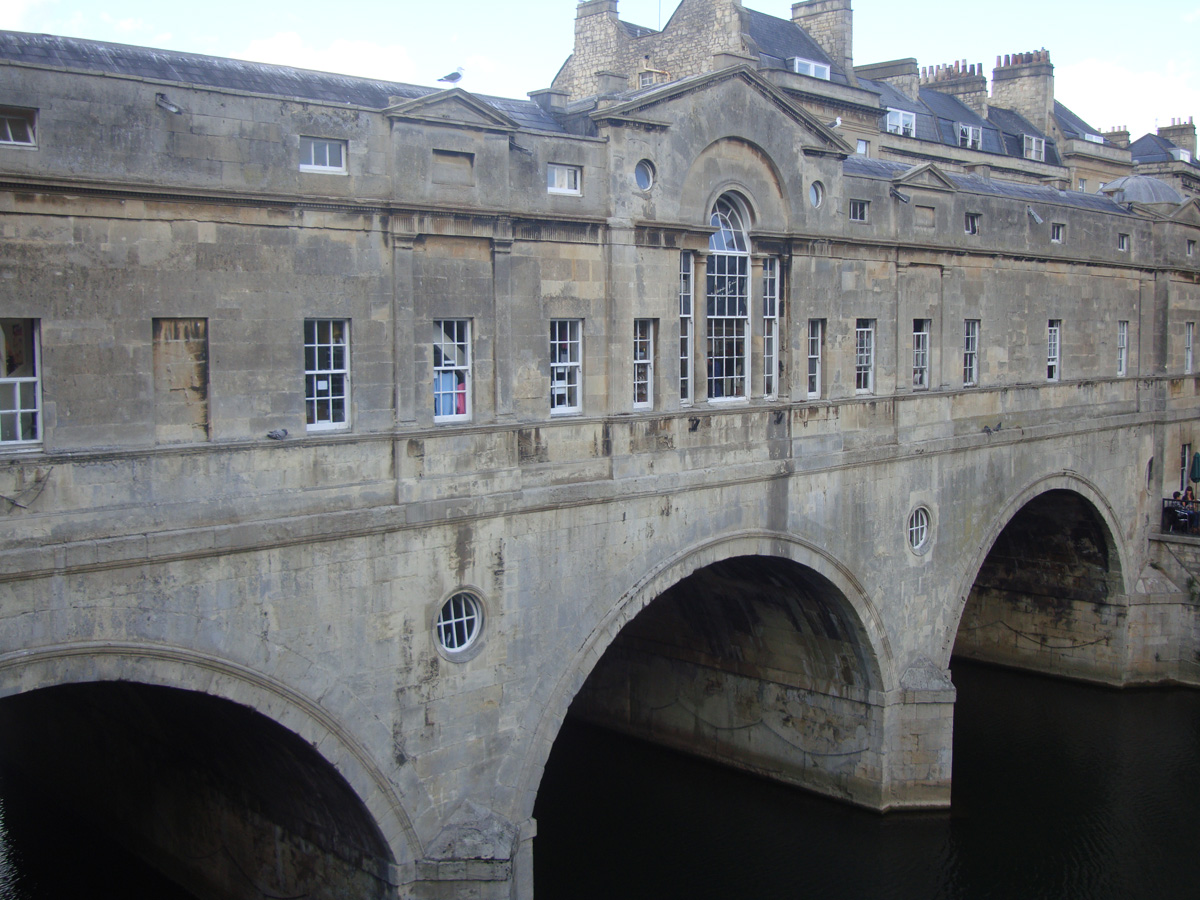
Pultney Bridge

Here are some of the places that Janes characters lived in and when you go to Bath you can see them for yourself.

  • Anne Elliot and her father lived in Camden Place up the hill at the top of the town.
  • Lady Russel lived in Rivers Street just north of The Circus.
  • Rich, Mrs Wallis lived in Marlborough Gardens on the hill leading down from the north end of The Royal Crescent.
  • Catherine Moreland lived in Pultney Street, which is now called Great Pultney Street, very close to Sydney Street. I wonder if Jane saw somebody in Pultney Street that she thought, “ah, that’s Catherine Moreland.”
  • The Dowager Viscountess Dalrymple lived in Laura Place at the end of Great Pultney Street and at the start of Pultney Bridge.

The meeting places and places central to both novels are Milsom Street where everybody shops. Shopping, the bain of my life. My wife and three daughters love shopping. Shopping could be their lives. In Jane’s time tooapparently. It makes me come out in a cold sweat thinking about it. The amount of standing in shops and outside of shops I’ve done.

God, I’ve suffered for shopping over the years.

Ah, that’s better. I needed that rant.

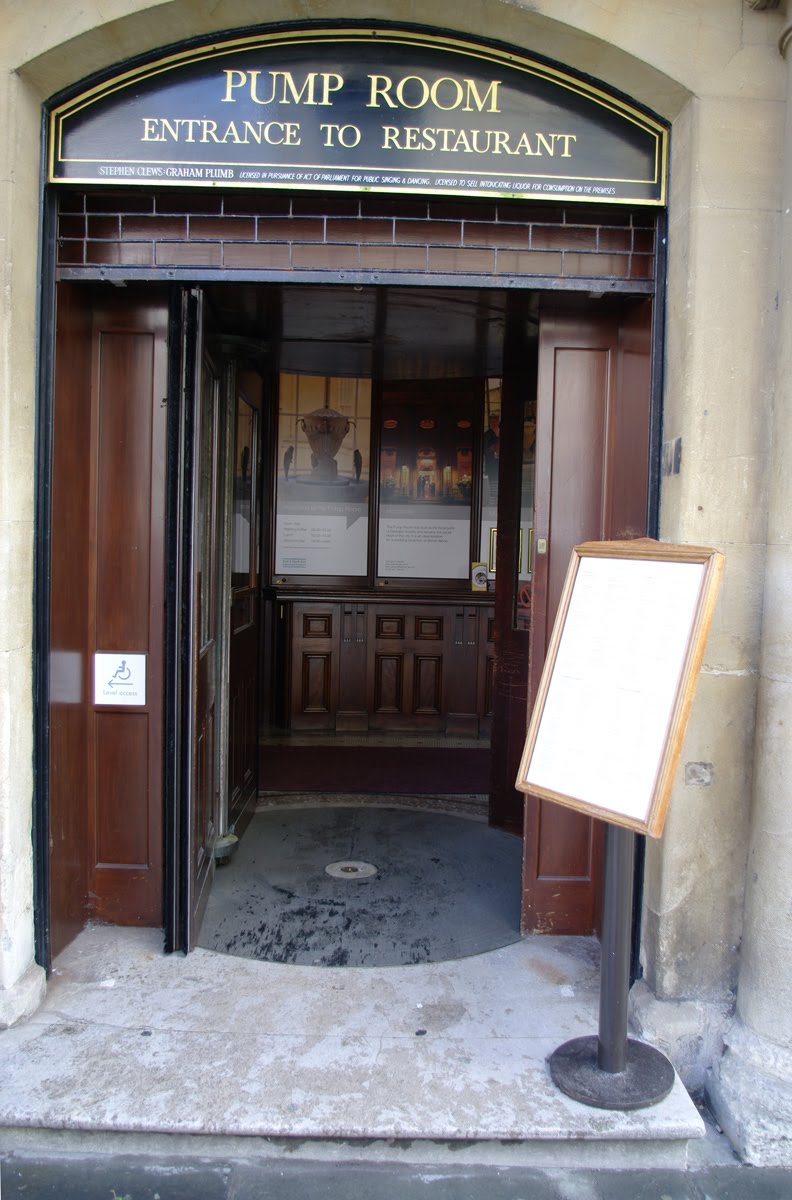
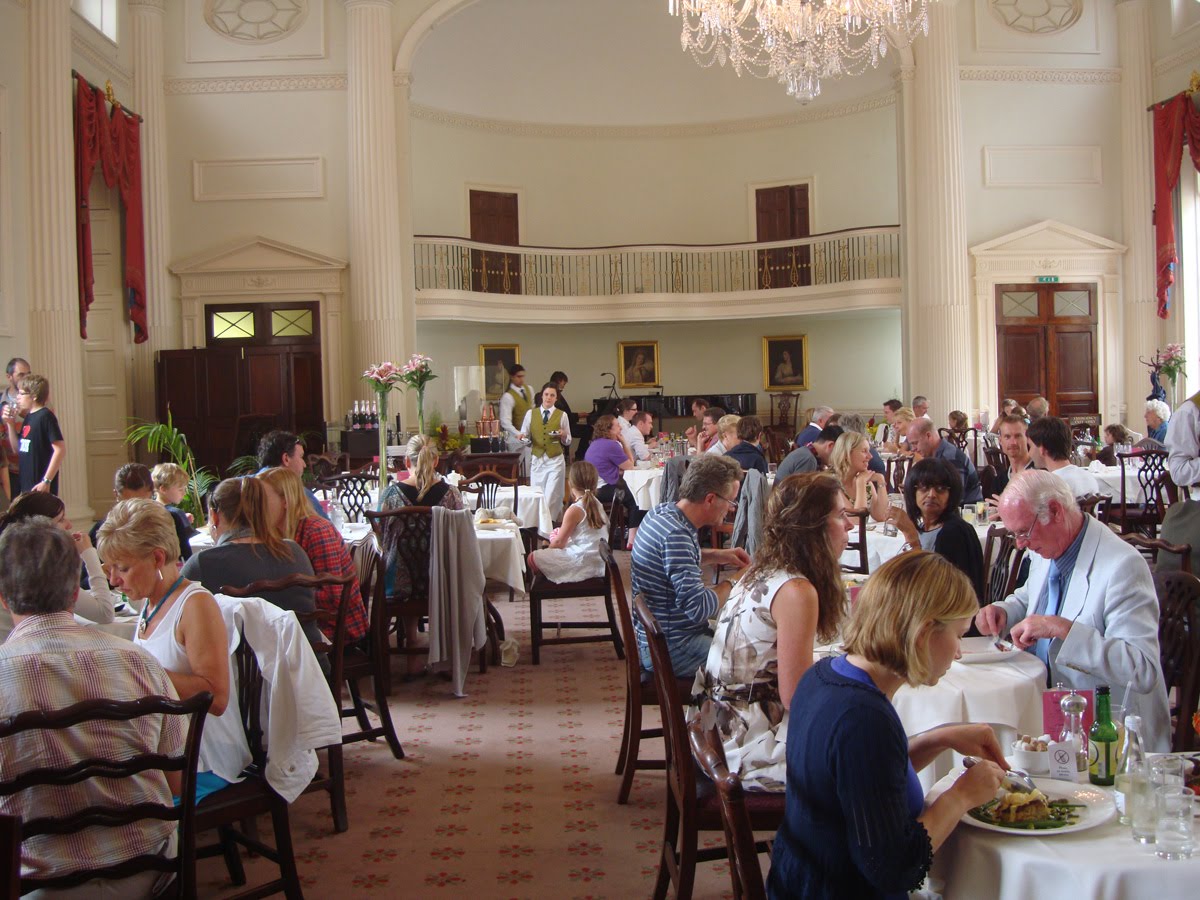
Also the Pump room. What a glorious place it is. I felt a tingle down my spine as I my wife, Abigail and myself were shown to our seats by the headwaiter and we were graciously handed the menus. A trio of musicians, cello, pianist and violinist, played sedately at one end of the room. People lined up at the water pump to imbibe Baths greatest commodity, water from the spring and we ordered tea and cakes.

Pump room window
The “pump room blend” of tea is as close as you can get to the blend of tea that Jane Austen, Catherine Morland and Anne Elliot would have drunk. The scones with clotted cream and fresh strawberry jam were exquisite. The tea was delicious and there I was with my family, in THE PUMP ROOM!!!!!!

The Pump Room

I could almost see Catherine Morland pop in to see if she could find Henry Tilney and of course take a few turns of the room to see and be seen. I knew nobody in The Pump Room just as Catherine knew nobody.

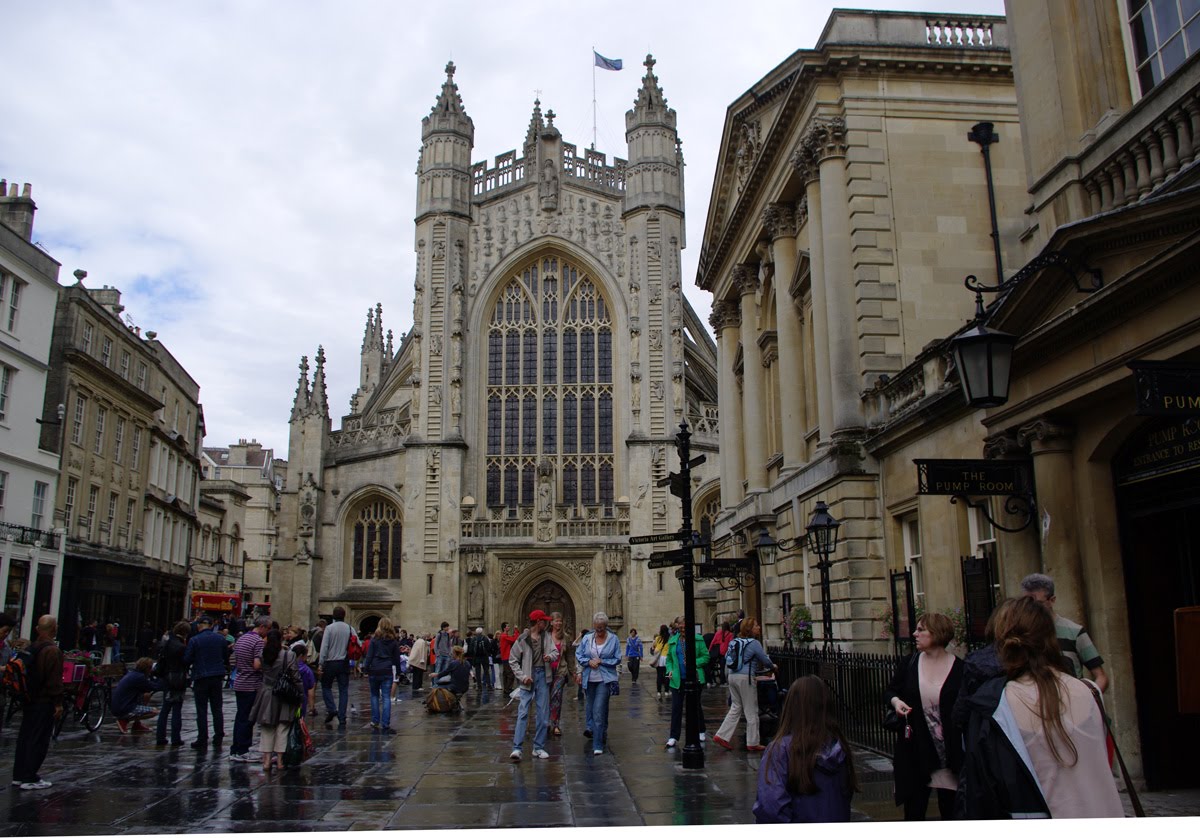
Bath Abbey


Then we had a look inside Bath Abbey. Jane seems to have not attended services at the abbey. She preferred The Octagon. This was a newly built chapel in Jane’s day. She seems to have preferred churches where the incumbent vicar had new and fresh ideas to deliver in his sermons.

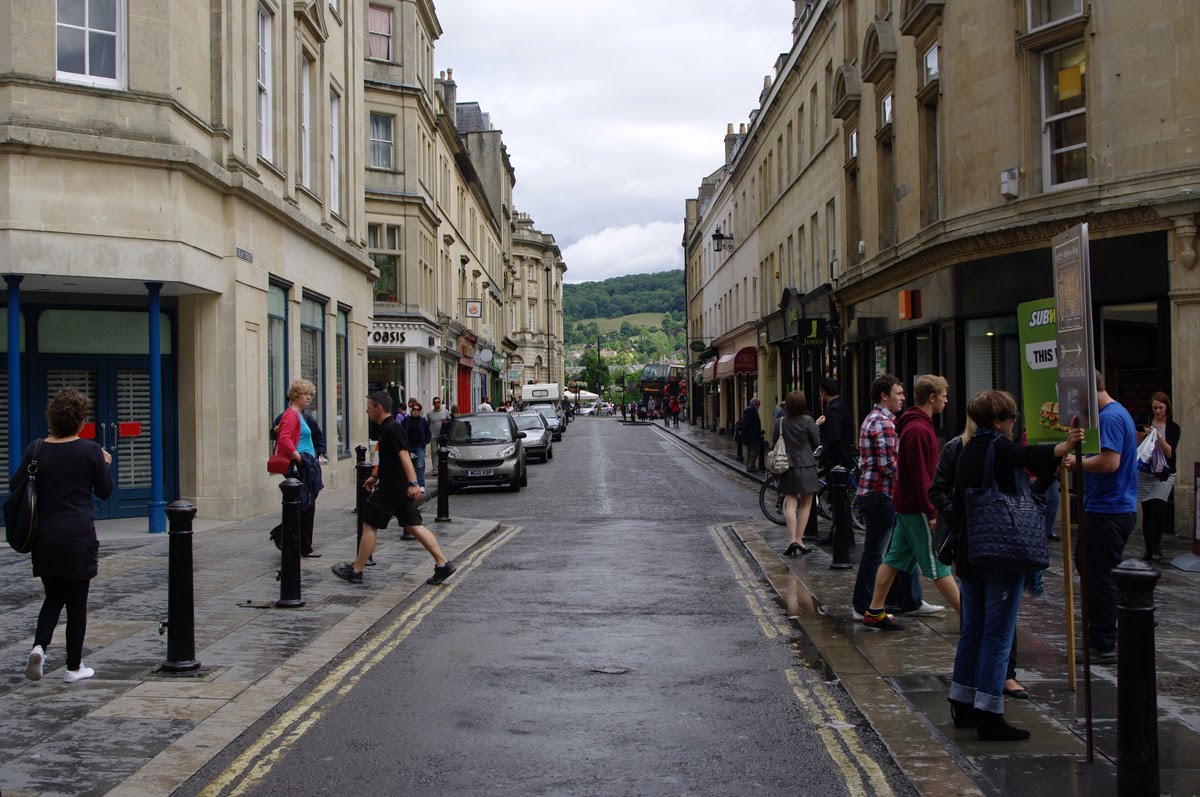
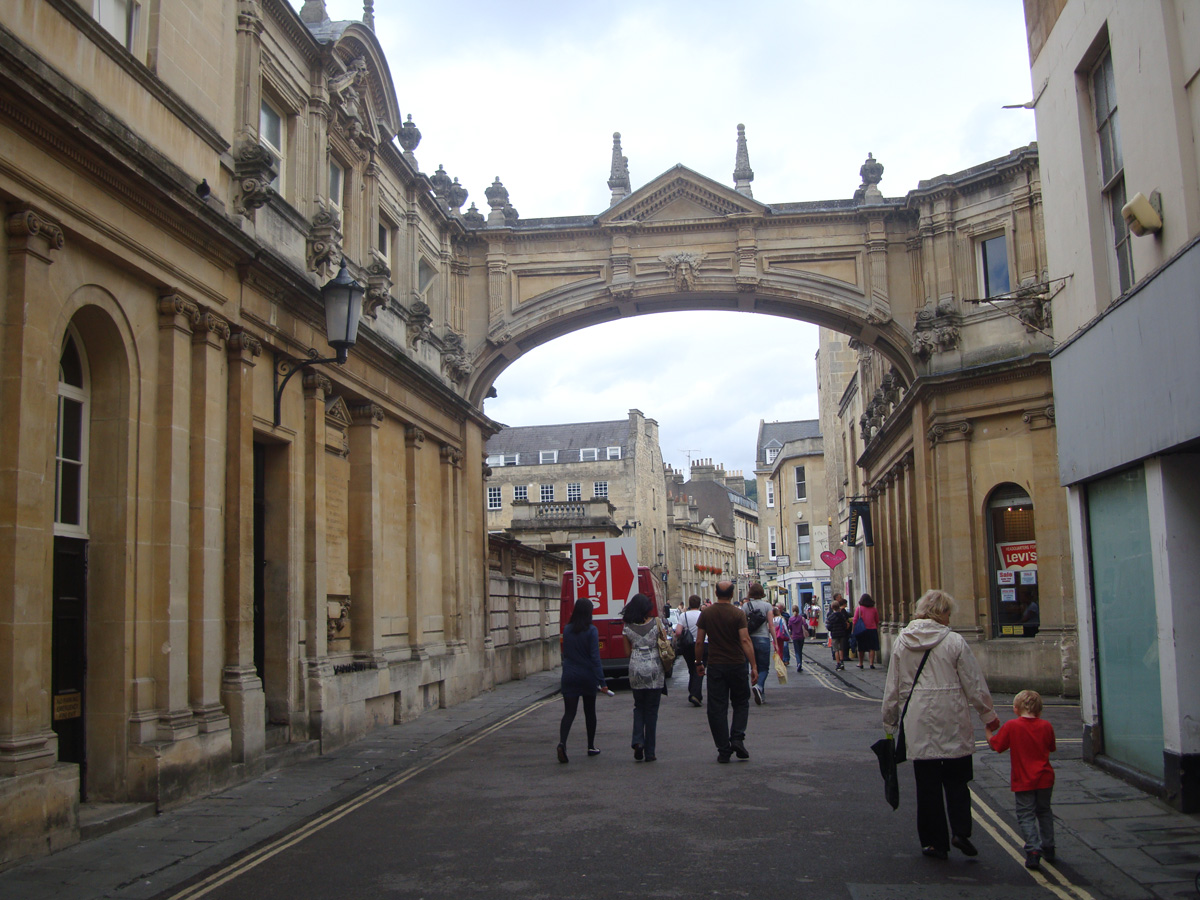
Cheap Street
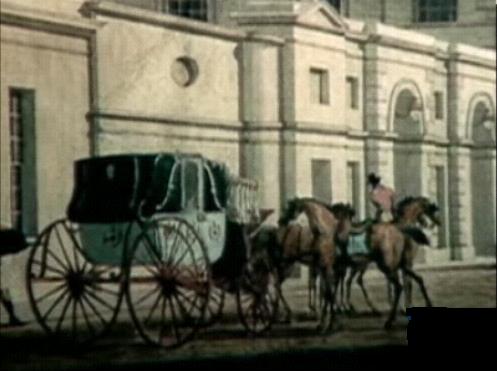
After Bath Abbey we walked through the passageway that leads from the churchyard opposite The Pump Rooms, called Union Passage and into Cheap Street. It is the very passage that Catherine Moreland walked through with Miss Thorpe and suddenly sees a carriage with her brother and coincidently Miss Thorpe’s brother too, the awful John Thorpe. It is their first fateful meeting.

George Street outside Edgar Buildings

We walked on up Milson Street to George Street where Edgar Buildings are situated. Edgar Buildings are where the Thorpes stayed.

25 Gay Street

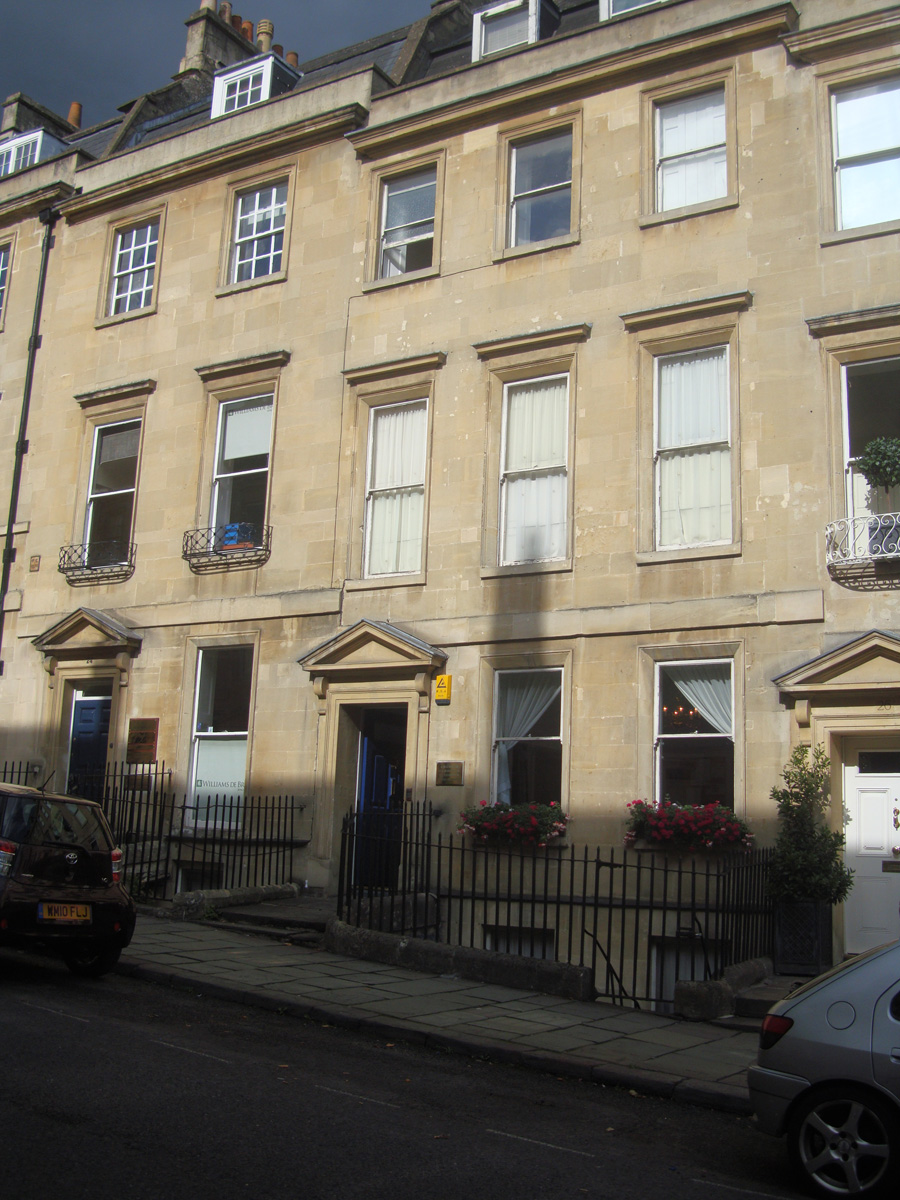
From George Street we went into Gay Street and walked past number 25 where the Austens stayed for a while.

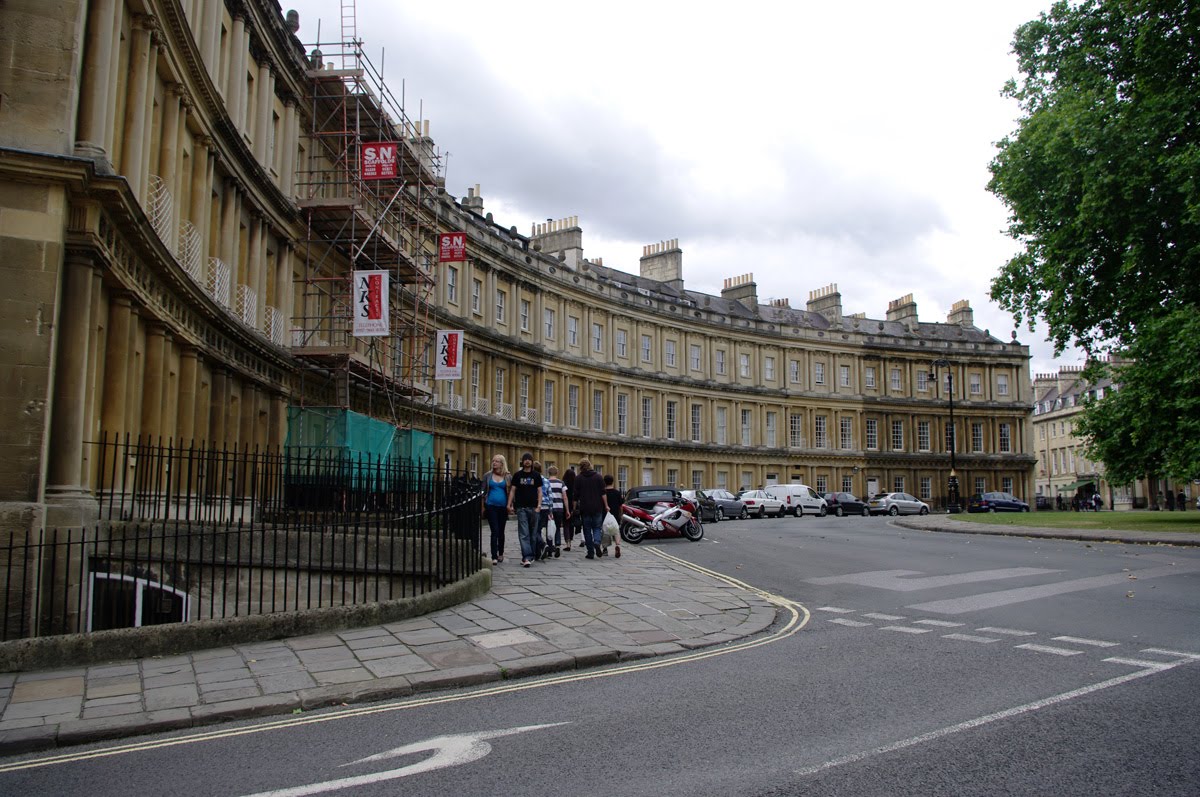
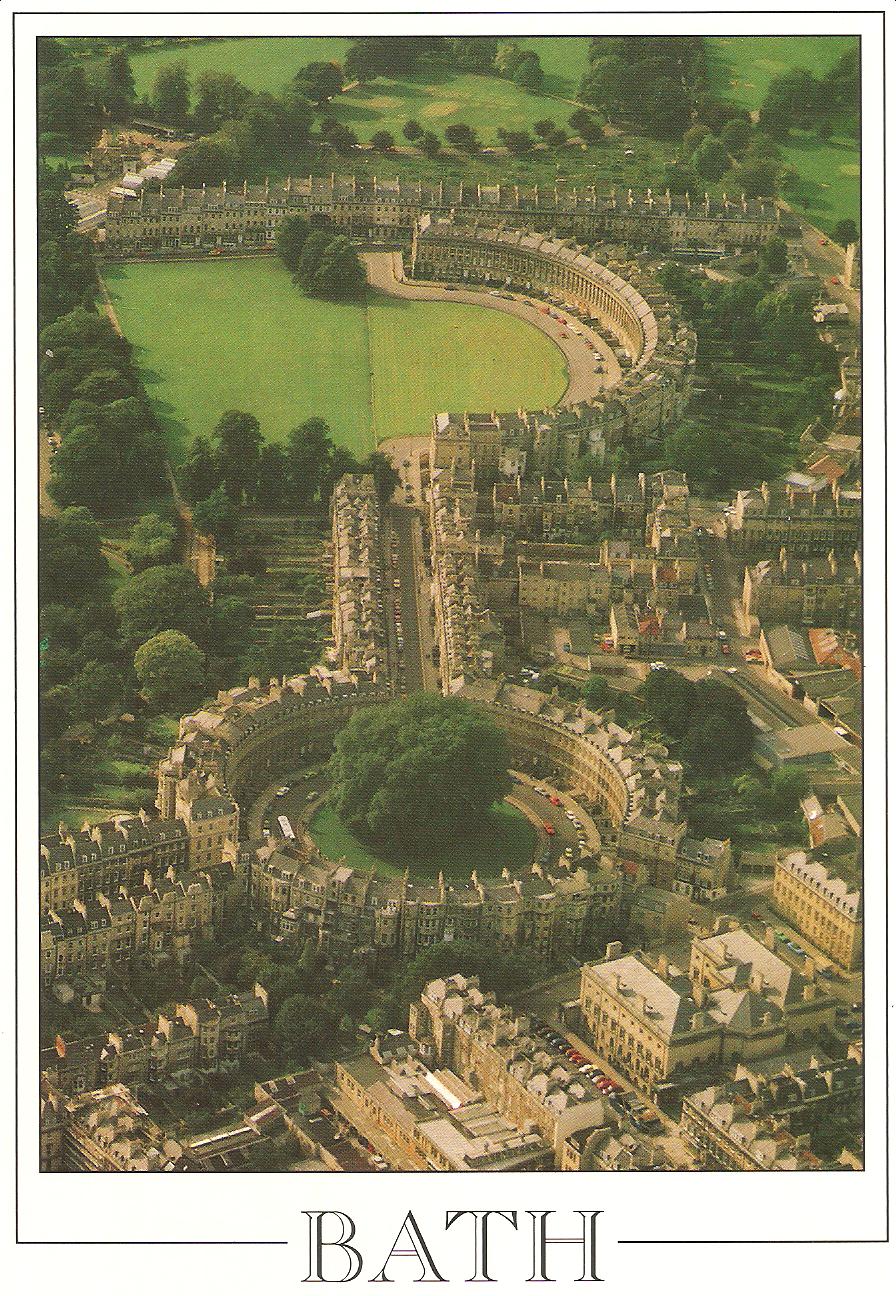
At the top of Gay Street is the magnificent, The Circus. This is a circle of the most magnificent Georgian Houses. There is a small green park in the centre of the circle in which grow four gigantic London Plains trees. They must be four or five hundred years old. Jane knew them. The portrait artist Gainsborough lived in one of these houses in The Circus for a while. Bath would have provided many opportunities to gain commissions and make money.

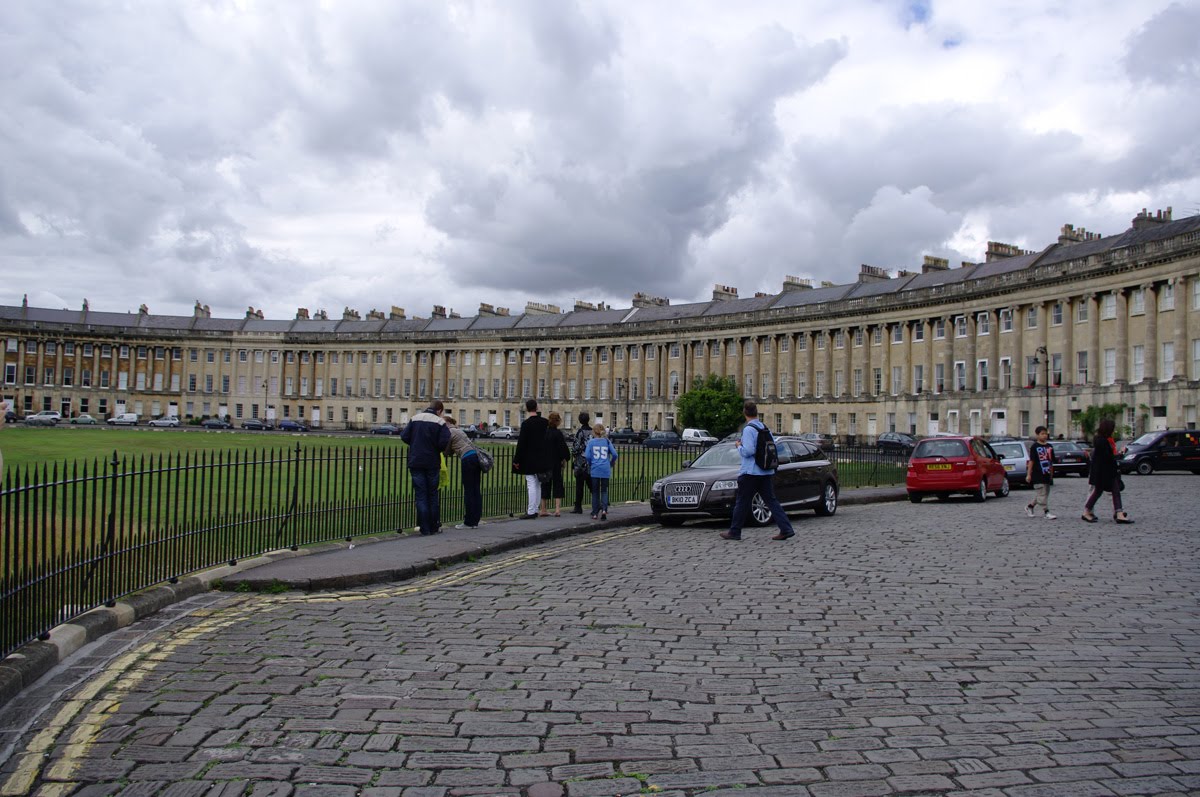
The Royal Crescent

From The Circus we turned down Brock Street and arrived at The Crescent at the top of the hill.

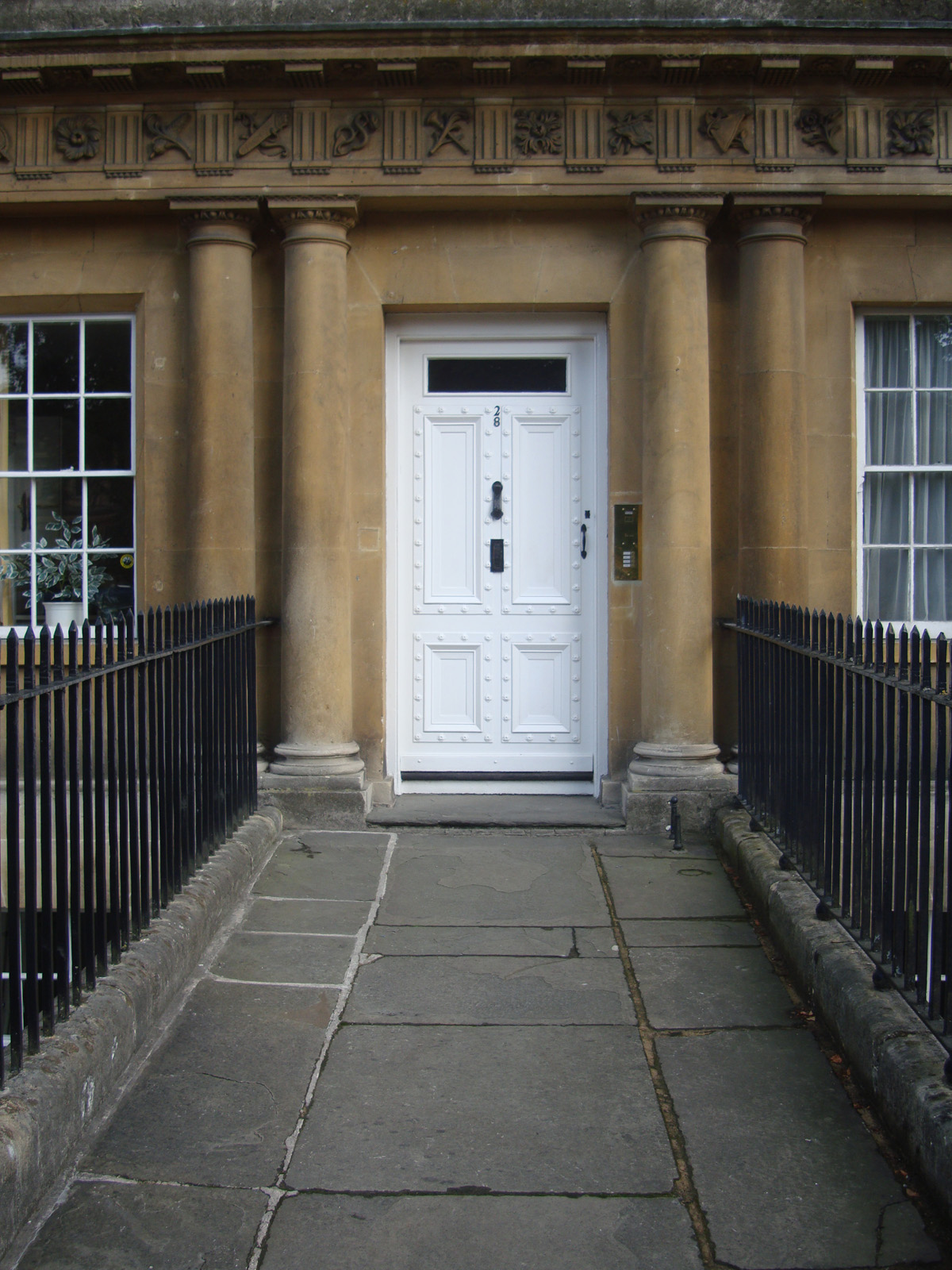
A front door at the Royal Crescent


This was the place where the elite lived. These were the largest and most expensive houses. Lords, Dukes and the very wealthy lived up here. It was also a good place to walk to get fresh air.

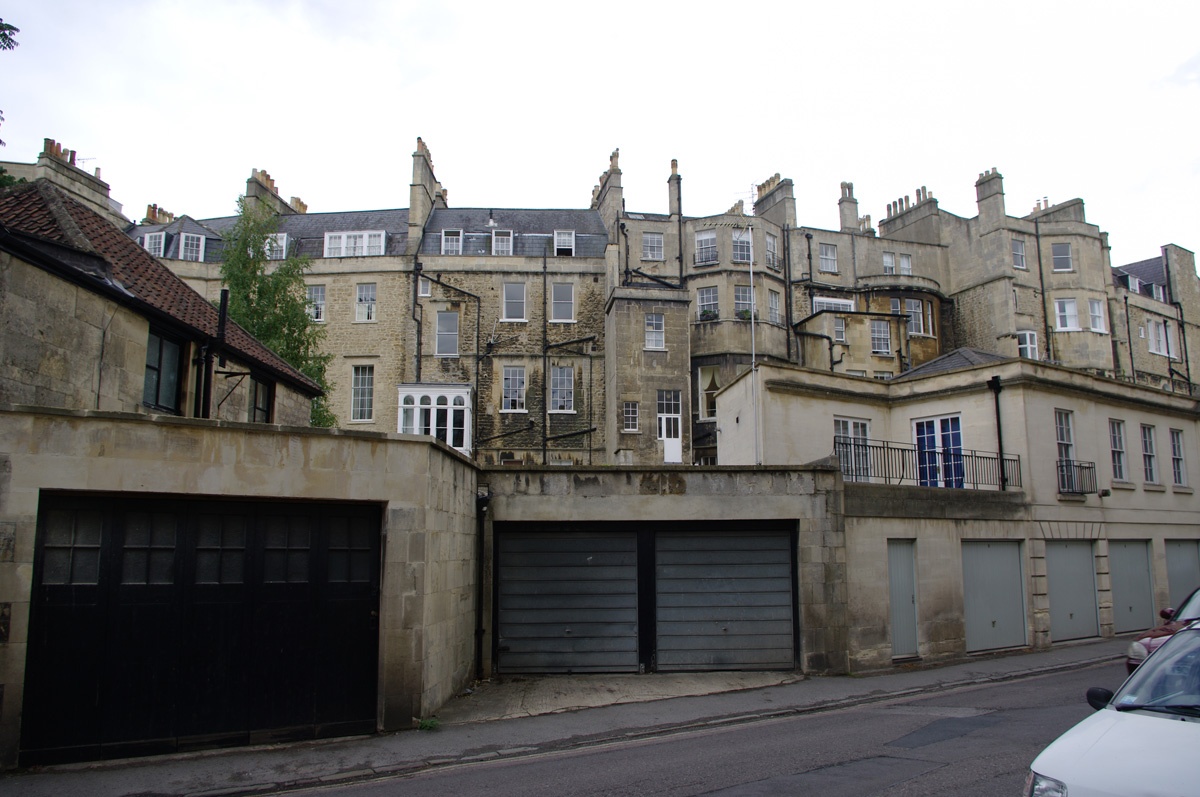
The back of the Crescent, each house is different
Jane mentions in her letters taking walks up to The Crescent and walking in the park and enjoying the views. Catherine Morland and Anne Elliot also walked there. There is a very good reason why Jane and her characters might want to walk here, the fresh air. If you look back over Bath you can see the beautiful city with its creamy yellow stonework In Jane’s time it would have been black. You will also notice the myriads of chimneys, which no longer spout black sooty smoke from thousands of coal fires. Coal is no longer burnt. We have clean air towns and cities nowadays. In Jane’s time the air was far from clean and the beautiful Cotswold stone became black. You can see today a building or two that have not had their surface cleaned since the clean air act was passed through parliament.

The Assembly Rooms

The Assembly Rooms, just north of The Circus, are what Jane and her characters knew as The Upper Assembly Rooms and also included the Octagon tearoom. This is where Catherine Morland met with the Thorpes.

The Lower Assembly Rooms, the original assembly rooms in Bath, where Beau Nash officiated , were situated near the abbey. They no longer exist. It was in the Lower Assembly Rooms that Catherine met Henry Tilney for the first time and fell in love.
Just to conclude, a couple of stories about Bath.

Sheridan eloped with Elizabeth from this house

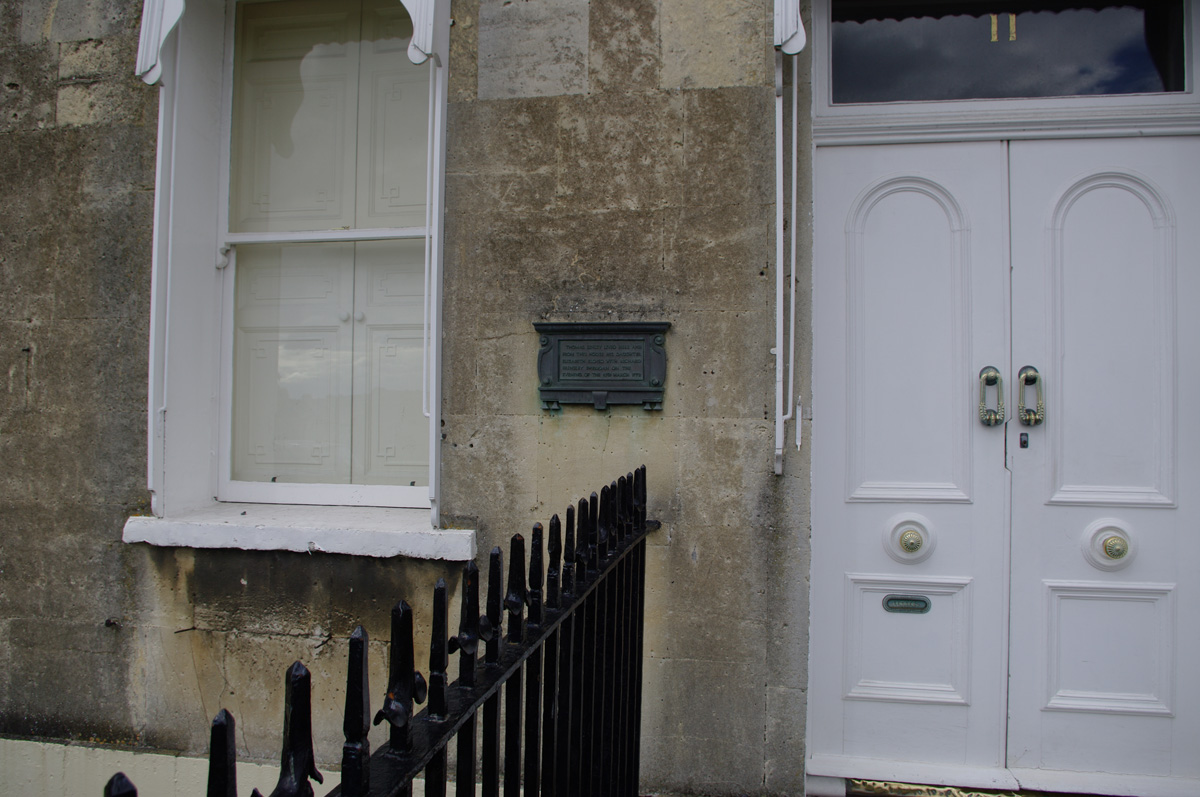
In the Crescent , about half way round, is a house with plaque that relates a very dramatic story. In 1755 Richard Brinsley Sheridan, who was a great playwright in the 18th century and wrote The Rivals and School for Scandal and who was also the owner of the Covent Garden Theatre, absconded with a young lady from the house. Her father chased them all over Europe. When they were found the father made Sheridan marry his daughter. However soon after Richard Brinsley left her in the lurch. The chase was the thing. The excitement of the chase had gone. What a cad and bounder!!!!!

Tony at Pultney Bridge

Now, a story about myself. As we walked up Gay Street towards The Circus we obviously stopped outside number 25 to look at it and photograph ourselves outside. An irate and very upset looking lady marched out of the front door next to number 25 with a bowl full of water and threw it all over my legs. I must add this does not normally happen to me. The circumstances were, that some juvenile idiot had drawn rude graffiti over the side of her white van parked outside. She was trying to clean the words off. She was obviously upset and came out to wash the side of her vehicle. Unfortunately for me, she missed. She was SO sorry. Luckily it was a warm day and my trousers dried quickly in the walk up the hill.

The Royal Crescent (top) and the Circus (Bottom with trees at center.)

One fact before I finish. Did you know that the houses in The Crescent and in The Circus are all different? They all look the same because they are the same on the outside. The builder built the fronts and sold just the fronts. The new owners had to build their own backs to their houses. Hence, if you go round behind the houses in The Crescent they all look different.

Posted by Tony Grant, London Calling

Read Full Post »

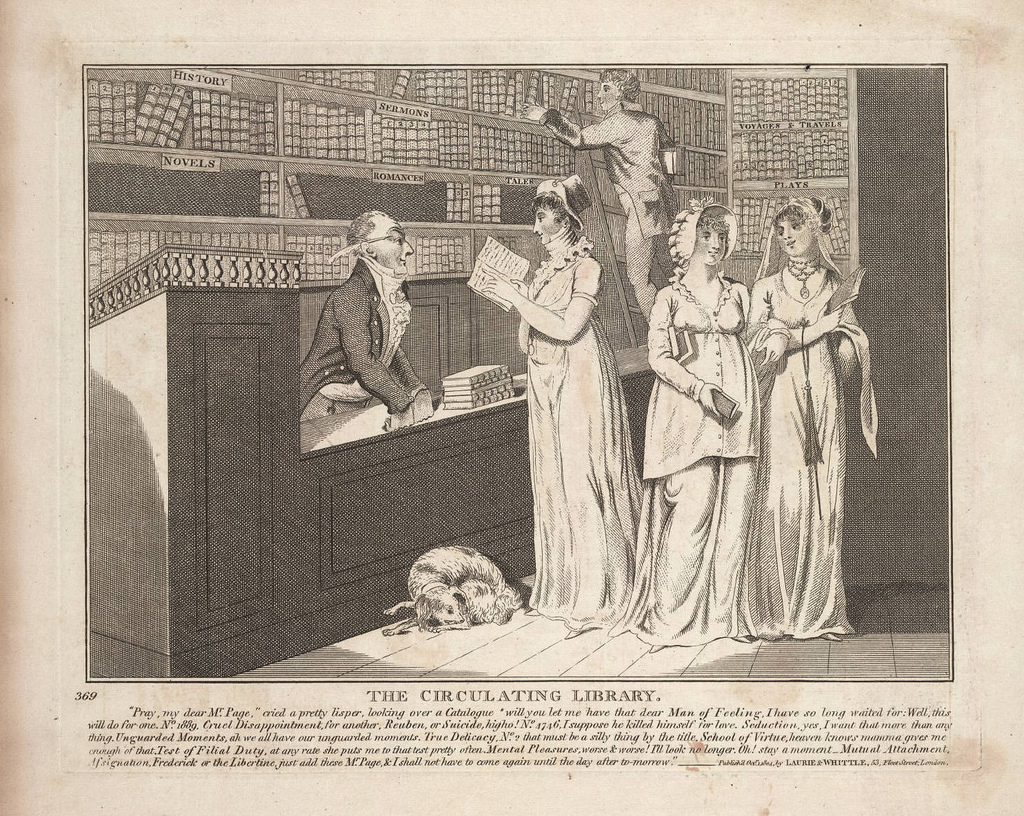
Circulating libraries in the 18th and 19th century were associated with leisure, and were found  in cities and towns with a population of 2,000 and upward. They were as much of an attraction in wealthy resorts, where people came to relax and look after their health, as in cities and small towns, like Basingstoke, where Jane Austen subscribed to Mrs. Martin’s circulating library.

In 1801, it was said that there were 1,000 circulating libraries in Britain. Book shops abounded as well, but in 1815 a 3-volume novel cost the equivalent of $100 today. Such a price placed a novel beyond the reach of most people. Worried about a second edition for Mansfield Park, Jane Austen wrote in 1814:

“People are more ready to borrow and praise, than to buy –which I cannot wonder at.”

Circulating libraries made books accessible to many more people at an affordable price.  For two guineas a year, a patron could check out two volumes. Which meant that for the price of one book, a patron could read up to 26 volumes per year.

By 1800, most copies of a novel’s edition were sold to the libraries, which were flourishing businesses to be found in every major English city and town, and which promoted the sale of books during a period when their price rose relative to the cost of living. The libraries created a market for the publishers’ product and encouraged readers to read more by charging them an annual subscription fee that would entitle them to check out a specified number of volumes at one time. – Lee Ericson, The Economy of Novel Reading

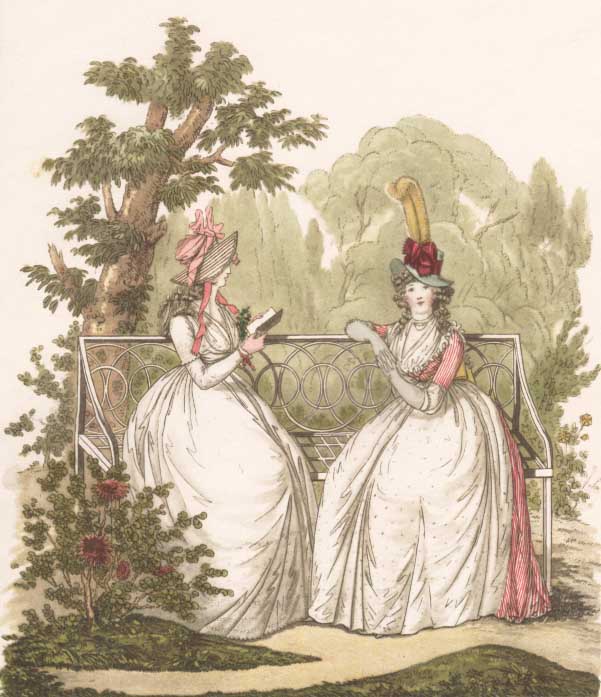
The leisurely classes had plenty of time for reading, late 18th c.

The practice of borrowing books was not a new concept in the Regency era. Records from the 17th century show that people were borrowing books from booksellers. As early as 1735, Samuel Fancourt advertised a circulating library in Salisbury for his religious books and pamphlets.

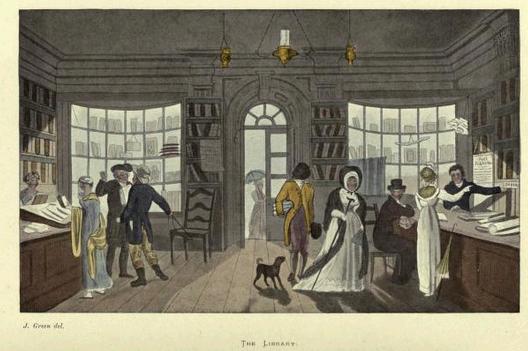
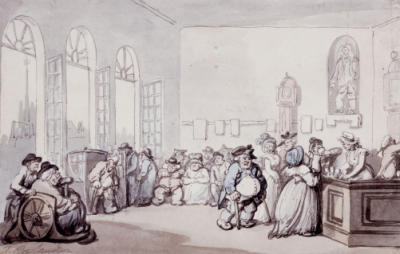
Circulating libraries attracted many patrons, even those who did not necessarily come to borrow or book or read, for they were also places for fashionable people to “hang out” and meet others.

In the resorts the circulating libraries became fashionable daytime lounges where ladies could see others and be seen, where raffles were held and games were played, and where expensive merchandise could be purchased.  – Lee Ericson, The Economy of Novel Reading

Jane Austen well knew the attractions of libraries at sea side resorts. Mrs. Whitby’s Circulating Library operated in Sanditon, and Lydia visited one in Brighton.  In her letters to Cassandra, Jane frequently mentioned circulating libraries, in particular visiting one in Southampton.

Circulating Library and Reading Room, Milsom Street, Bath. Image, Tony Grant

Circulating libraries tended to be located in a convenient location in the center of a resort. Newcomers would find out about them from guide books, such as the one in Brighton. The Royal Colonade Library advertised itself as thus:

MESSRS. WRIGHT AND SON’S ROYAL COLONADE LIBRARY, MUSIC SALOON, AND READING ROOMS.

This establishment is situated in North-street, at the corner of the New Road, and contains between seven and eight thousand volumes of History, Biography, Novels, French and Italian, and all the best Modern Publications. The Reading Room is frequented both by Ladies and Gentlemen, and is daily supplied with a profusion of London morning and evening papers, besides the French and weekly English journals, magazines, reviews, and general popular periodicals. – Brighton As It Is, 1836

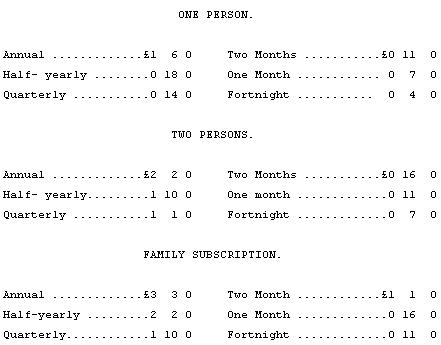
In 1836, Cassandra Austen would have been familiar with the costs associated with the Royal Colonade Library’s terms of subscriptions:

Terms of subscription

By the end of the 18th century, Scarborough, a resortt located in the county of North Yorkshire, boasted several circulating libraries. The town’s population had risen to 7,067 by 1811, and one can imagine that, with the many leisurely hours available to tourists and visitors, these libraries managed a booming business.


A circulating library in Scarborough around 1818, from Poetical Sketches of Scarborough

The Poetical Sketches of Scarborough, first published in 1813, features twenty-one illustrations of humorous subjects about the many features available in the resort, including a satiric poem about the Circulating Library:

As in life’s tide by careful fate
The mind is made to circulate
Just so each watering place supplies
It’s CIRCULATING LIBRARIES:

Where charming volumes may be had
Of good indifferent and bad
And some small towns on Britain’s shore
Can boast of book shops half a score
Scarbro and with much truth may boast
Her’s good as any on our coast
AINSWORTH’S or SCAUM’S no matter which
Or WHITING’S all in learning rich
Afford a more than common measure
Of pleasant intellectual treasure

One wonders if the following publication could be checked out a Scarborough circulating library at the turn of the 19th century, for the book was written by a local schoolmaster:

A Short Grammar of The English Language. In Two Parts By John Hornsey. Schoolmaster, Scarborough.

THE publick are much indebted to Mr Hornsey for this able and excellent compendium of English grammar. We acknowledge that we perused it with singular satisfaction; and are well persuaded that a more useful introduction to the English language cannot be placed in the hands of our youth. That this work should reach a second edition, did not excite our wonder; may it pass through many succeeding ones!- The Nichols, John.Gentleman’s Magazine, Vol 86, 1799, p 1144.

Read Full Post »

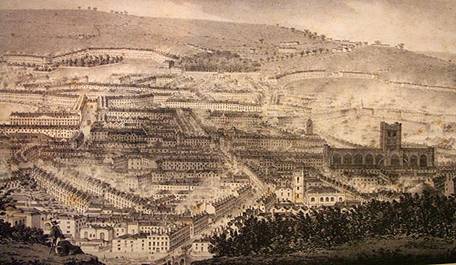
Panorama of Bath from Beechen Cliff, 1824, Harvey Wood

Inquiring Readers, Tony Grant, who lives in London, teaches, and acts as occasional tour guide, has been contributing articles to Jane Austen Today for several months. Recently, Tony and his family traveled to Bath and the West Country. This is one of many posts he has written about his journey. Tony also has his own blog, London Calling.

The Paragon from Travelpod

On Wednesday 6th May 1801 Jane wrote to Cassandra, from a house positioned on a hill half way up a road called, The Paragon, in Bath. It was her uncle and aunt’s, the Leigh Perrots, home. Her aunt was her mother’s sister. Jane and her mother and father had just arrived, just moved in and were getting settled into their rooms.

“ My dear Cassandra,

I have the pleasure of writing from my own room up two pairs of stairs, with everything very comfortable about me. Our journey here was perfectly free from accident or Event; we changed horses at the end of every stage, & paid almost at every turnpike;- we had charming weather, hardly any dust,& were exceedingly agreeable, as we did not speak above once in every three miles.- between Luggershall & Everley we made our grand meal…….”

Jane had arrived in Bath after a journey of about 50 miles from Steventon, her home.
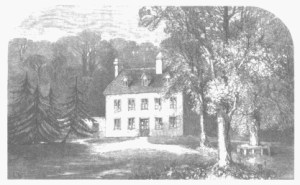
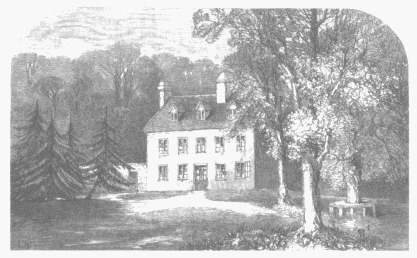
Wood engraving of Steventon Rectory

She sounds excited and thrilled by the new experience for instance she has ,” my own room.” But perhaps she was trying to put a brave face on it, be positive and put the negatives to the back of her mind.

Claire Tomlin reminds us,

“ The decision by Mr and Mrs Austen to leave their home of over thirty years, taking their children with them, came as a complete surprise to her; in effect, a twenty fifth birthday surprise, in December 1800. Not a word had been said to anyone in advance of the decision.”

Jane had spent all her life in Steventon a quiet country village near Basingstoke in Hampshire. She knew the families who lived in the great houses and many were her friends. She knew the villagers of Steventon very well. It was the source of her imagination and she had developed her own intimate writing habits there. Her world , in a sense was turned upside down and she was being wrenched from this intimate, close world that she was comfortable in, to that of a bustling town, but not just any town.
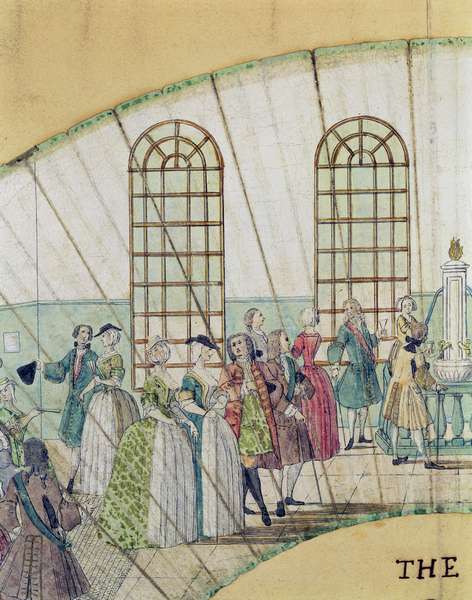
The Bath Medley, the Pump Room, detail on a fan, 1735

Bath was the centre of Georgian ,”FUN.” Here people came for the medicinal benefits of the waters, dancing, parading in the streets in their finest clothes, drinking tea, and taking rides and walks out into the nearby countryside. It was a place to rest, to be seen and to meet new people. Many families brought their unmarried daughters here to find eligible spouses.
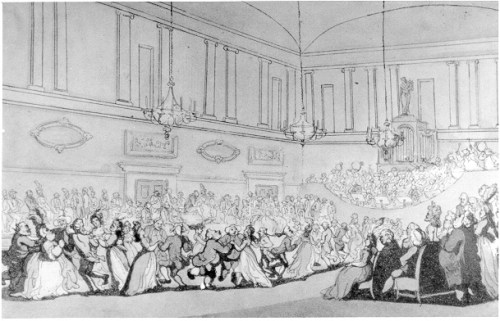
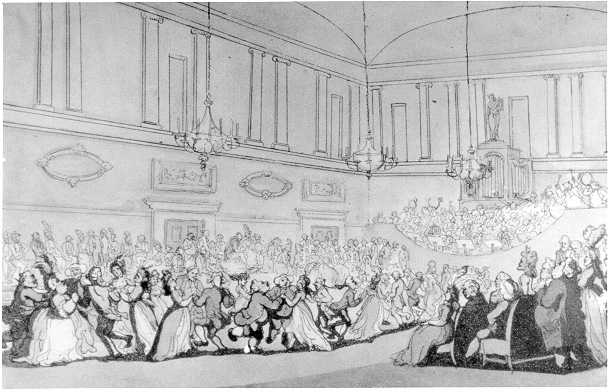
Dancing, Rowlandson, The Comforts of Bath

Bath was a magnet for the wealthy and comfortable middle classes who came and went with the season. It was a fluctuating population. Friendships could be brief. It was a hot house for relationships. Whether The Reverend George Austen had it in mind to find suitors for his two unmarried daughters, as part of his plan, is not certain. Jane however was definitely out of her comfort zone. She was a very astute judge of characters and she would not like much of the ostentatious show of Bath. People who went to Bath for the season behaved differently. Strangers were thrown together in a mix of fun and gaiety. Moral codes were loosened. You get a very strong sense of this in the description of Catherine Morelands first experiences of Bath in Northanger Abbey.

Comforts of Bath, The Pump Room, Rowlandson

To get to Bath from Steventon over the fifty mile journey, Jane took, she passed through many picturesque and beautiful villages and towns. Those places are still there today.

Overton, Andover, Weyhill, Ludgershall, Eveleigh, where the Austens stopped to take tea and rest, Upavon, crossing the River Avon at this point, Conock and Devizes where they probably rested again before the final stretch to Bath. Devizes is a bustling town today, traffic and shoppers, many small businesses, churches and chapels and still many magnificent Georgian buildings. Take away the cars, and dress the people differently and Devizes would still be very familiar to Jane. It still has very much of its Georgian character but it is a modern 21st century town too.Like modern day England, Devizes is a layer cake of history. There are bits from every era and it has and does thrive in all of them.
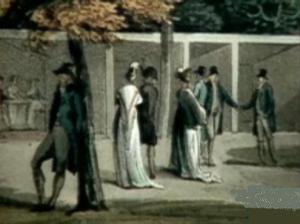
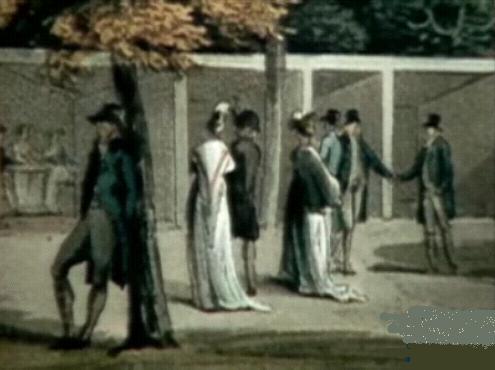
Strolling through Sydney Gardens

When I went to Bath this time I came in from a slightly different direction to Janes journey there in 1801. I came the south east, travelling from Stonehenge in Wiltshire. This road comes from high up in the hills to the south of Bath and the first sight of the city is from a steep, tree lined, Beckford Road which reaches Bath stretching along next to Sydney Gardens. It was a great pleasure and very exciting to come across, almost immediately on reaching Bath, number 4 Sydney Place, which was one of the houses Jane and her family rented.
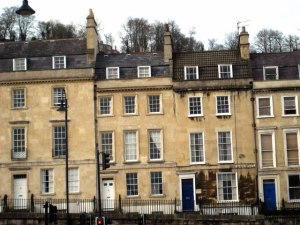
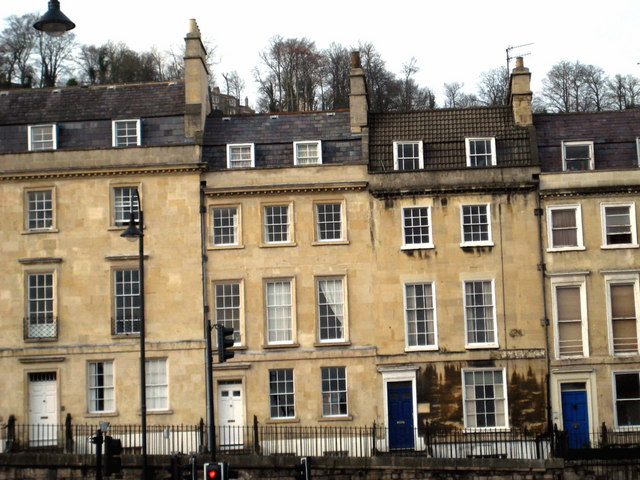
Georgian terraced houses along the London Road, Bath

Jane entered Bath by way of the London Road which sweeps in from the east and curves across the top of the bend in the River Avon which borders the southern part of the City of Bath.The London Road leads straight to The Paragon, the road in which her aunt and uncle, The Leigh Perrots, lived and where Jane and her mother and father were to live until they found their own residence. Bath has not expanded in modern times much south of the river partly because of the steep hills there.
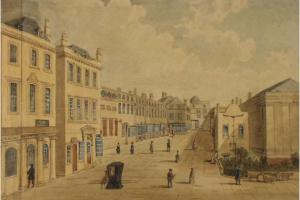
Old - Lower - Assembly Rooms

So there is an excited tone in Janes first letter from The Paragon. The excitement doesn’t last. Her aunt and uncle being residents in Bath, they at least know people to introduce Jane to. Unlike Catherine Moreland who meets nobody and knows no one at first. But what terrible people? Or is Jane just having a bout of sour grapes? Within weeks Jane is writing to Cassandra her comments about Bath acquaintances.
Wednesday 13th may 1801 writing to Cassandra

“I cannot anyhow continue to find people agreeable; I respect Mrs Chamberlayne for doing her hair well, but cannot feel a more tender sentiment.”

Mrs Chamberlayne is picked out for more effort. Jane tries to find something in common, tries to see if a new friendship can blossom.

Friday 22nd May 1801

“The friendship between Mrs Chamberlayne & me which you predicted has already taken place, for we shake hands whenever we meet Our grand walk to Weston was again fixed for yesterday & was accomplished in a very striking manner; Everyone of the party declined it under some pretence or other except our two selves, & we therefore had a tete a tete, but that we should equally have had after the first two yards, had half the inhabitants of Bath set off with us.- It would have amused you to see our progress;-we went up by Sion Hill, and returned across the fields,- in climbing a hill Mrs Chamberlayne is very capital; I could with diffuculty keep pace with her- yet would not flinch for the world.- On plain ground I was quite her equal- and so we posted away under a fine hot sun, She without any parasol or any shade to her hat, stopping for nothing ,& crossing the churchyard at Weston with as much expedition as if we were afraid of being buried alive.-After seeing what she is equal to, I cannot help feeling a regard for her.-As to agreeableness, she is much like other people.”

There is something final about this relationship as though it’s not going far, in two phrases, “The friendship between Mrs Chamberlayne & me which you predicted has already taken place,…..” and , “As to agreeableness, she is much like other people.”
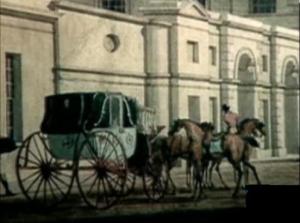
Regency Bath

Jane uses the past tense already about the relationship with Mrs Chamberlayne and she finally concludes that she is much like other people. Nothing is going to happen here. Jane was a very guarded person, certainly didn’t suffer fools gladly, gave people a chance and discarded them for their mediocrity. Jane obviously needed something else in a relationship. Already she wasn’t in the mood for Bath.
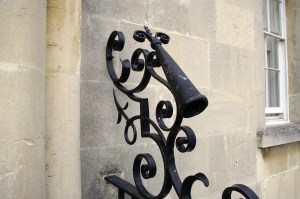
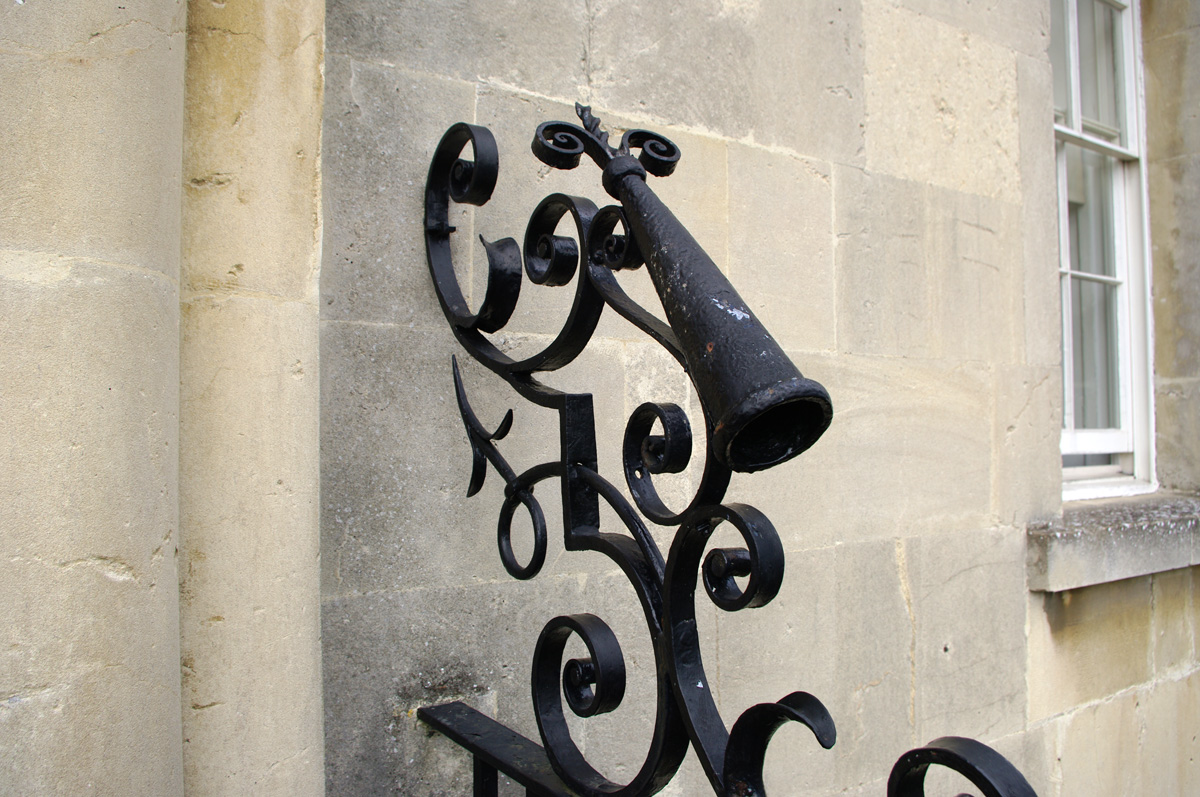
Candle Snuffer, image Tony Grant

In the same letter she mentions house hunting. They have been looking at houses amongst Green Park Buildings. Green Park Buildings are situated near the river at the bottom of the town. They were obviously prone to flooding.

“ our views on GP building seem all at an end; the observations of the damps still remaining the offices of an house which has only been vacated a week, with reports of discontented families& putrid fevers have given the coup de grace.”

Nowadays the river near Green Park Buildings has high banks to prevent flooding and has been canalised. One of the main car parks, where we actually parked is near there. Also Bath Railway Station and The University of Bath is situated nearby these days.

For all this dire and damning report the Austens did move into Green Park Buildings. It could not have been very pleasant. Perhaps they thought their stay in The Paragon was prolonged enough and anything had to be taken.

Much of Jane’s remaining letters from Bath have some discussion about finding accommodation. The contracts on these houses seem to have been short term. Maybe this was because Bath was a seasonal place. People generally came for short periods of time. If you really wanted to live there permanently you would have to buy. Perhaps the Austens could not afford to do that. It begs the question, did Mr and Mrs Austen really think through their move to Bath carefully enough?
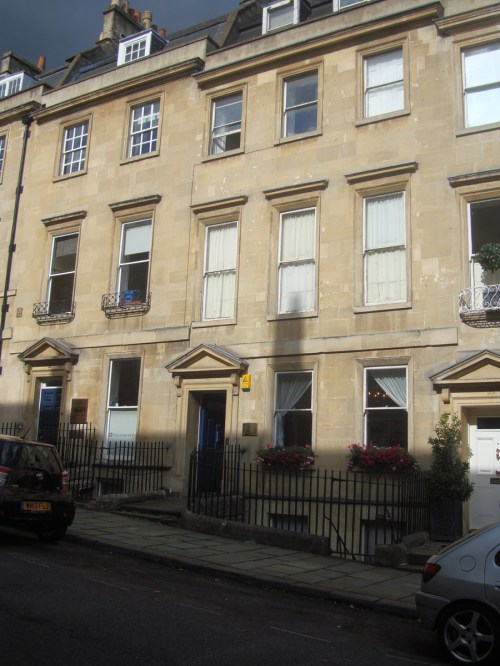
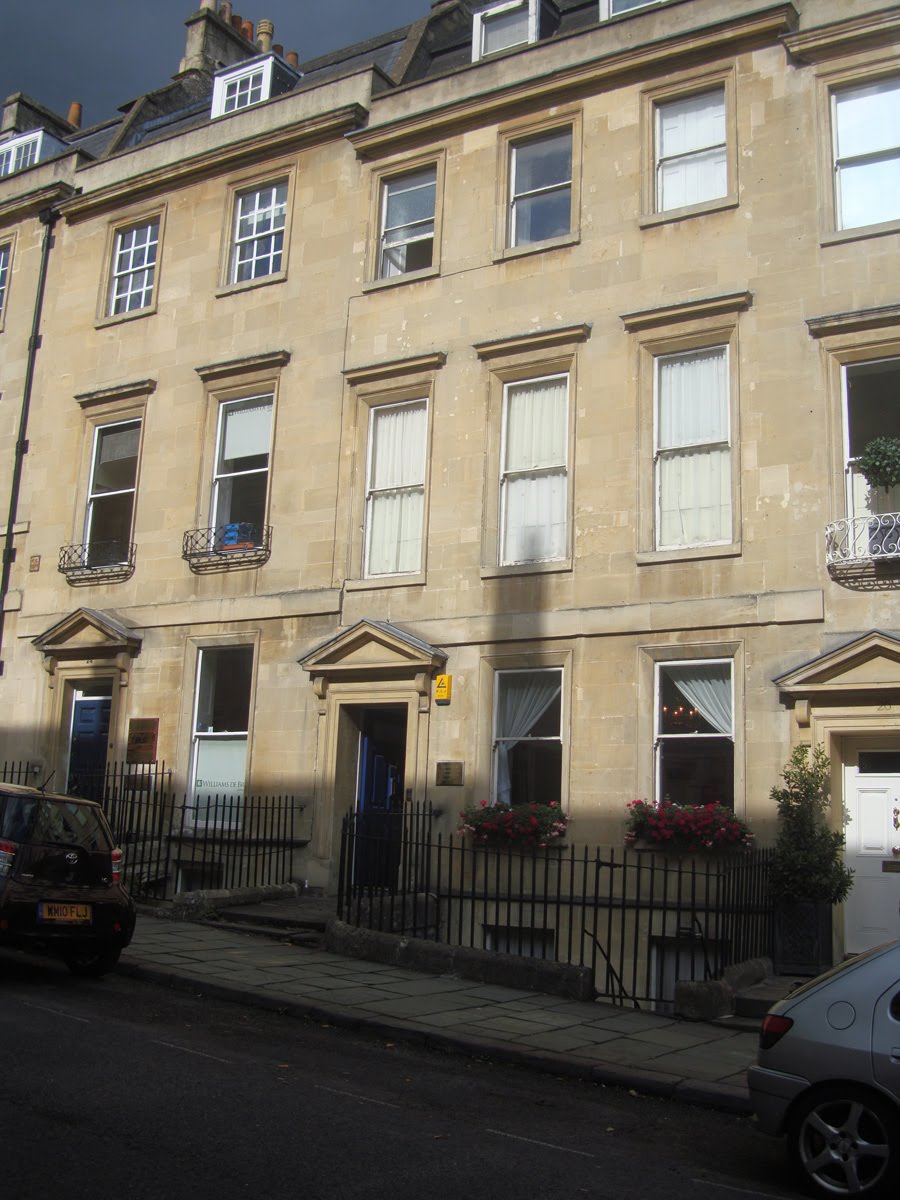
25 Gay Street, image Tony Grant

After Green Park Buildings the next set of letters come from number 25 Gay Street, just a few houses up the hill from The Jane Austen Centre. It is a dental practioners office today. The letters from Gay Street are the last from an address in Bath. However we also know that Jane lived at number 4 Sydney Street, a new house at the time overlooking a grand house which is now the Holburn Museum and its grounds, Sydney Park. This is by far one of the more pleasant situations Jane lived in.

Jane’s father died in a house in Trim Street not far from Queen Square and Gay Street. So another move had had to take place. In five years Jane had lived in at least five different house all providing differing qualities of living.
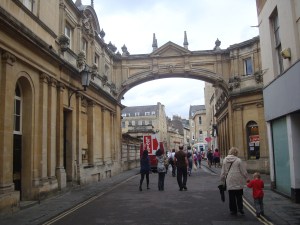
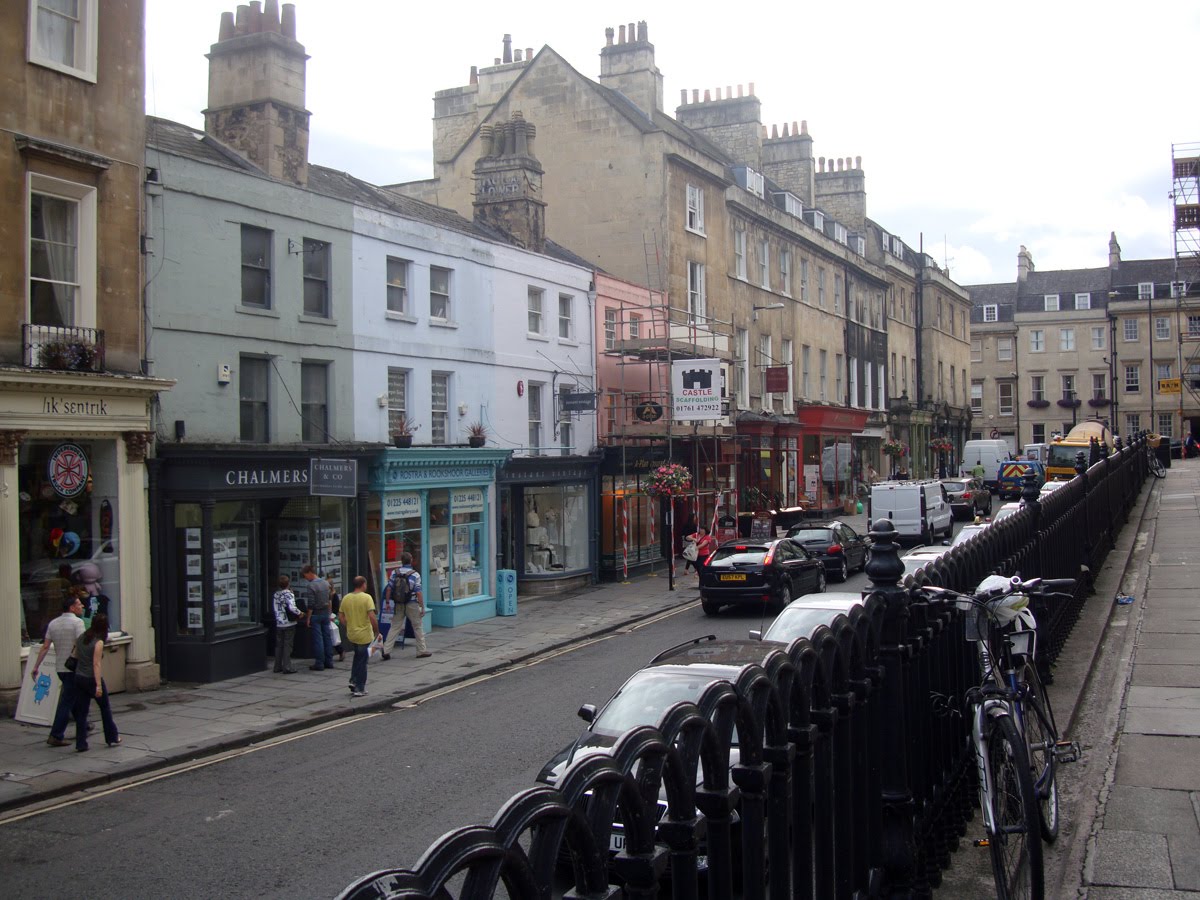
Side Street, Bath, image by Tony Grant

You can find this reflected in the two novels that concern themselves most with Bath, Persuasion and Northanger Abbey. In Persuasion Anne Elliot finds an old school friend, Mrs Smith, living in poor circumstances.

“Her accommodations were limited to a noisy parlour , and a dark bedroom behind, with no possibility of moving from one to the otherwithiout assistancewhich there was only one servant in the house to affordand she never quitted the house but to be conveyed into the warm bath.”

Mrs Smith’s accommodation was in Westgate Buildings not far from the Pump Room. Mrs Smith’s husband had died leaving her almost penniless but because of her health the warm bath treatment was seen as a cure. Her life was certainly not one of fun and frivolity. It seems, like in any city and town today, in the 18th century, the poor and destitute and the wealthy are not far from each other. Anne Elliot seems to prefer the company of Mrs Smith rather than the fripperies that Bath had to offer. She knows the right people and could have fun if she wanted to. Anne Elliot can see the two sides of Bath.
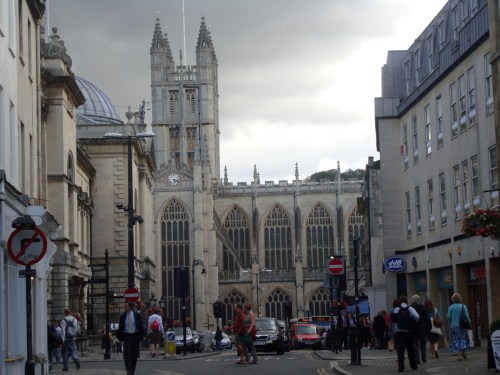
Side view of Bath Abbey, image Tony Grant

Jane Austen knew Bath extremely well. Throughout Persuasion and Northanger Abbey she houses her characters in real streets and in real buildings, although she does avoid giving us the number of the house in such and such a street. The real owners and occupants might not have liked the notoriety. And today they might not like the notoriety as well. Was there such a thing as litigation in the 18th century? I’m sure there was.

More About the Topic
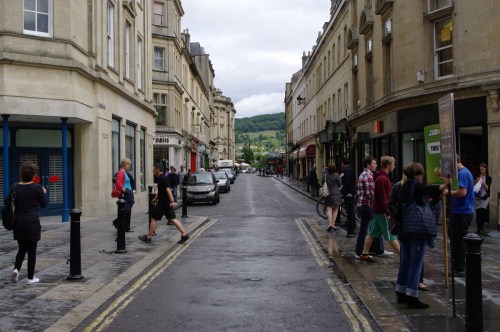
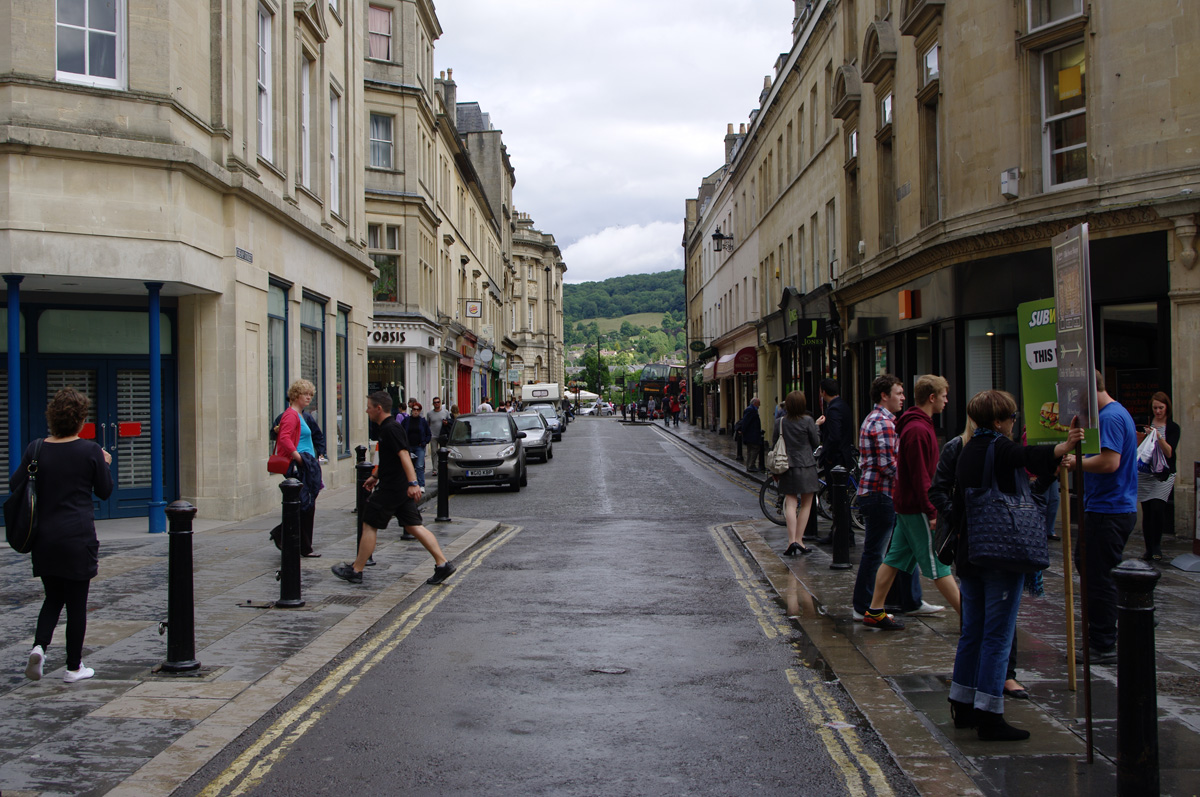
Cheap Street with hills in the distance, image from Tony Grant

Read Full Post »

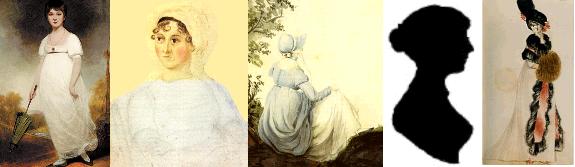
Even rarer than a first edition of a Jane Austen novel are images taken of her during her short lifetime. A small watercolor by her sister Cassandra has been reworked over the centuries to make Jane look more attractive. Another watercolor image taken of Jane’s backside as she sits in the grass, a dark silhouette, a small watercolor by James Stanier Clark, and a portrait of Jane at 14 (the validity of the latter two are in question) are all that we have to go by. Verbal descriptions of Jane Austen are also quite rare, and some seem to contradict each other, a few relatives and friends thinking her quite pretty and others declaring that her looks were rather ordinary.

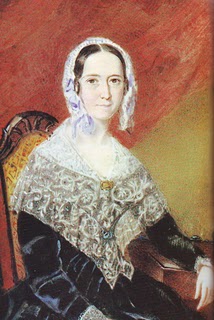
Anna Lefroy

In 1864, Anna Lefroy, Jane Austen’s niece and James Edward Austen-Leigh’s sister, wrote her memories of Aunt Jane in a letter for Edward’s memoir. She apologized that her recollections were so shadowy and that she was unable to grasp anything of substance. She did recall that Jane and Cassandra wore pattens when they walked between Dean and Steventon in “wintry weather through the sloppy lanes”. Pattens, or shoe coverings that protected delicate shoes, were worn by gentlewomen at that time, but they would soon go out of fashion. Anna also described Jane as having a tall and elegant figure, and a “quick firm step,” an observation that she shared with others.

Anna goes on to relate one particularly sweet family story of a 7 year-old Jane and her 3 year-old brother Charles greeting Cassandra, who was returning from a visit with Dr. and Mrs. Cooper at Bath. Jane and Charles had toddled down the lane “as far as New Down to meet the chaise, & have the pleasure of riding home in it.” While the popular perception was that Jane and Cassandra were inseparable, they spent a great deal of time apart.

Young Cassandra frequently visited the Coopers in Bath, and as an adult became a regular guest at Godmersham, her brother Edward’s estate. She was a favorite with the family there, but the young Godmersham children were not quite as fond of Jane. This was not the case with the Jane’s other nieces and nephews, all of whom liked her exceedingly as a playfellow and a teller of stories. In her letter, Anna bemoaned the loss of Jane’s verbal stories, those “happy tales of invention” that she wove out of nothing.
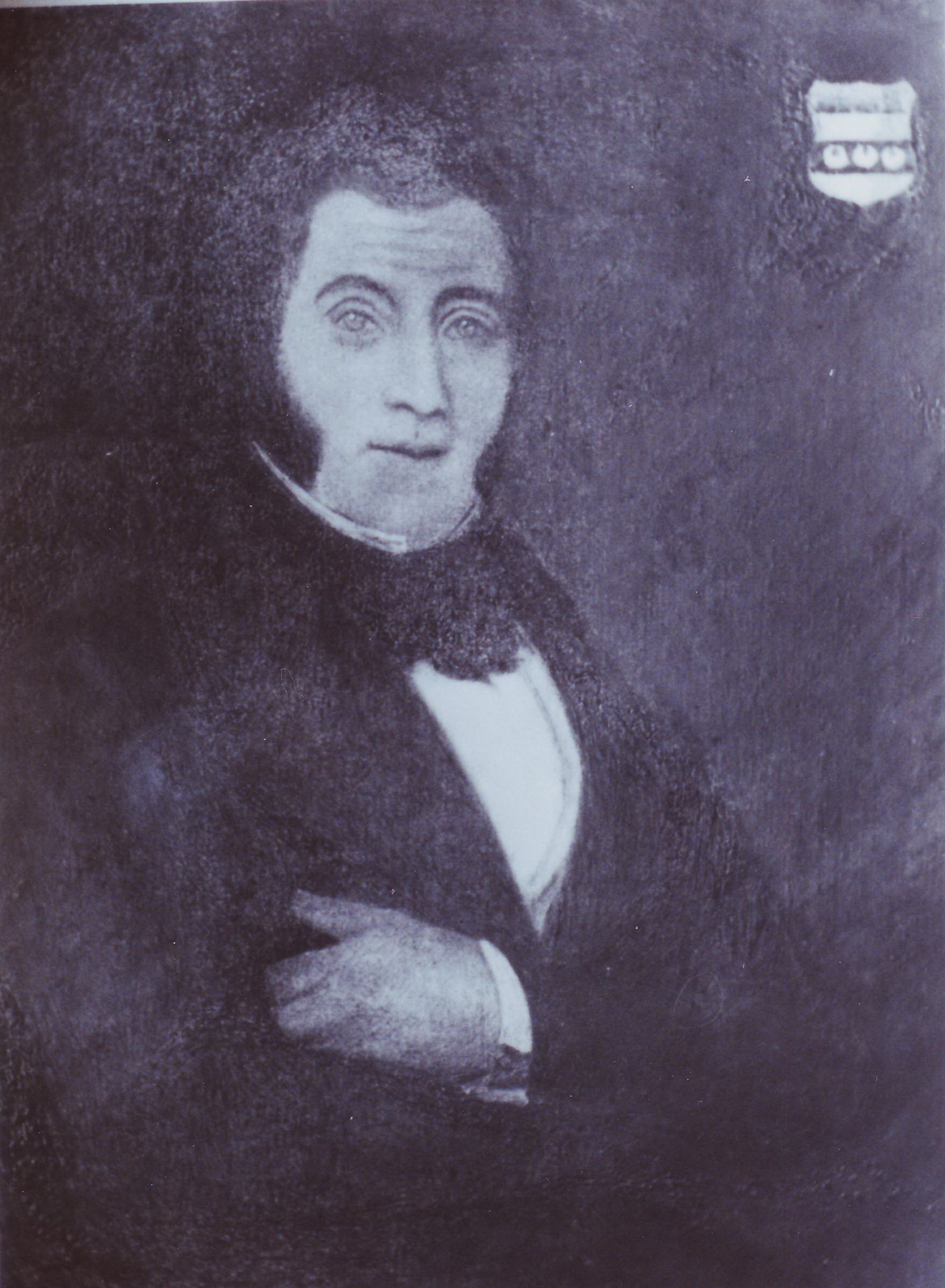
Jane’s niece wrote this observation about her aunt’s image:

“Her complexion of that rather rare sort which seems the peculiar property of light brunettes. A mottled skin, not fair, but perfectly clear & healthy in hue; the fine naturally curling hair, neither light nor dark; the bright hazel eyes to match, & the rather small but well shaped nose.”
Anna concludes, as Cassandra’s portrait attests, that Jane failed to be a decidedly handsome woman. Seventeen years younger than Jane, one wonders if Anna was thinking of an older, more mature Jane, the one who had taken to wearing caps at all times, rather than a younger and prettier Jane with bright sparkling eyes and full round cheeks.

Other posts on this blog about Jane’s image and character sit below:

Le Faye, Deirdre. Anna Lefroy’s Original Memories of Jane Austen. The Review of English Studies, New Series, Oxford University Press, Vol 39, #155 (Aug, 1988), pp 417-421.

Read Full Post »

Jean Louis Bazalgette, the Prince Regent's tailor

Most of the known accounts published about George, Prince of Wales, and his profligate spending on clothes and luxury items say that his main tailor was John Weston. It is also said that under the influence of young Beau Brummel he patronized other London tailors such as Meyer, and Schweitzer and Davidson. Steven Parissien, in his very interesting book ‘George IV, Inspiration of the Regency’ has a whole chapter entitled ‘Clothing & Militaria’ which lists tailors, bootmakers etc. used by the Prince.

The name of the unknown man who was the Prince’s tailor for 32 years – Louis Bazalgette – shows up in none of these sources. He appears to have started quietly supplying the Prince with all manner of clothes in great quantities in about 1780, and carried on making most of his clothes until at least 1795.

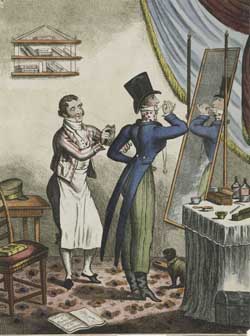
A dandy and his tailor

In 1794, the sixteen-year-old Brummel attracted the interest of the Prince, who under his influence began slowly to change his style of dress, so that by 1795 Bazalgette was making less of the gaudy outfits of which Prinny had been so fond. However, Louis continued to make most of the Prince’s uniforms, and the livery for his servants, until at least 1806.

Louis was the great-great-great-great-grandfather of Charles Bazalgette (r), who is writing his life story. The book contains a great deal of new material; as a foretaste, Charles has started a blog which can be accessed at this blog http://chasbaz.posterous.com/

Read Full Post »

« Newer Posts - Older Posts »