Feeds:
Posts
Comments

Archive for the ‘Regency Life’ Category

PBS Masterpiece Classic will show an encore presentation of Persuasion 2007 tonight. If you missed this 90-minute film the first time, you will have a chance to see it at 9 PM EST. (Check your local listing).

Sally Hawkins as Anne Elliot in Persuasion, 2007

Vic’s posts about Persuasion 2007:

Other blogger views of the Film

Rupert Penry Jones as Captain Wentworth and Sally Hawkins as Anne Elliot, Persuasion

Posts on this blog about Persuasion

The Elliots of Kellynch Hall, Persuasion 2007

Read Full Post »

Morning Dress and Full Dress, 1807 La Belle Assemblee

When it first appeared in February 1806, La Belle Assemblée claimed to be ‘an entirely original and most interesting work, addressed to the ladies’. However, the new magazine entered a market that was already well established. Periodicals directed particularly at leisured women had existed since the late seventeenth century, and with the success of the Lady’s Magazine (1770–1837), the monthly magazine became an established form. The new magazine, however, had a distinctive flamboyance in its elegant combination of polite literature and illustrated accounts of the fashionable world. It was the production of John Bell (1745–1831), a printer and publisher of considerable reputation and style who was renowned for his puckishness and love of innovation, not least in introducing modern type-faces to British readers.- Science in the 19th Century Periodical

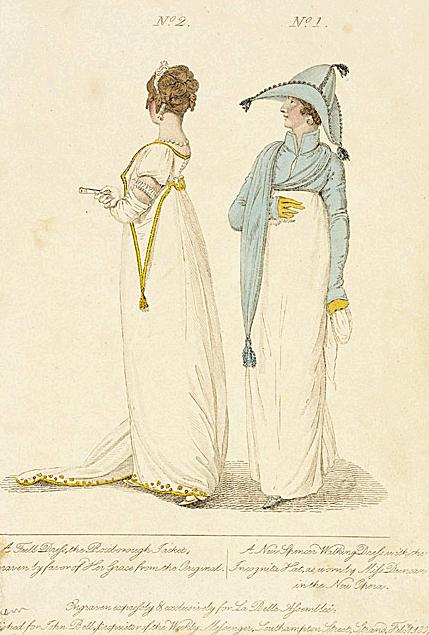
Not all fashion plates were created equal. La Belle Assemblée came out in two forms, one at half-a-crown with plain fashion-plate and one at three shillings and sixpence with the plates coloured by hand. * The difference in treatment can be seen in the fashion plates below.

An engraved plate from ‘La Belle Assemblée,. This is an early black and white plate from February 1807, featuring the Roxborough jacket and the Incognita hat – both drawn from fashions worn by the Duchess of Roxborough and a Miss Duncan.   Plate 1: A new spencer walking dress with the incognito hat, Plate 2: A full dress, the Roxborough jacket.

At 76, ten years before his death, John Bell sold the magazine. La Belle Assemblée predated Ackermann’s Repository of Arts (begun 1809 – 1827) by three years.  Obituary of John Bell, 1831:

At Fulham aged 86. John Bell esq formerly of the Strand bookseller. Few men have contributed more by their industry and good taste to the improvement of the graphic and typographic arts, witness his beautiful editions of the British Poets and Shakspeare. He was one of the original proprietors of the Morning Post and projector of that well established Sunday newspaper Bell’s Weekly Messenger. Another of his successful projects was the elegant monthly publication La Belle Assemblée.The Gentleman’s magazine, Volume 101, Part 1 By John Nichols

La Belle Assemblee Morning and Afternoon Walking Dress, November 1807

More on the topic

*Hand coloured fashion plates, 1770 to 1899 By Vyvyan Beresford Holland

Colored Fashion Plate (The Roxborough Jacket – A New Spencer Walking Dress), February 1807 LACMA Collections Online

Read Full Post »

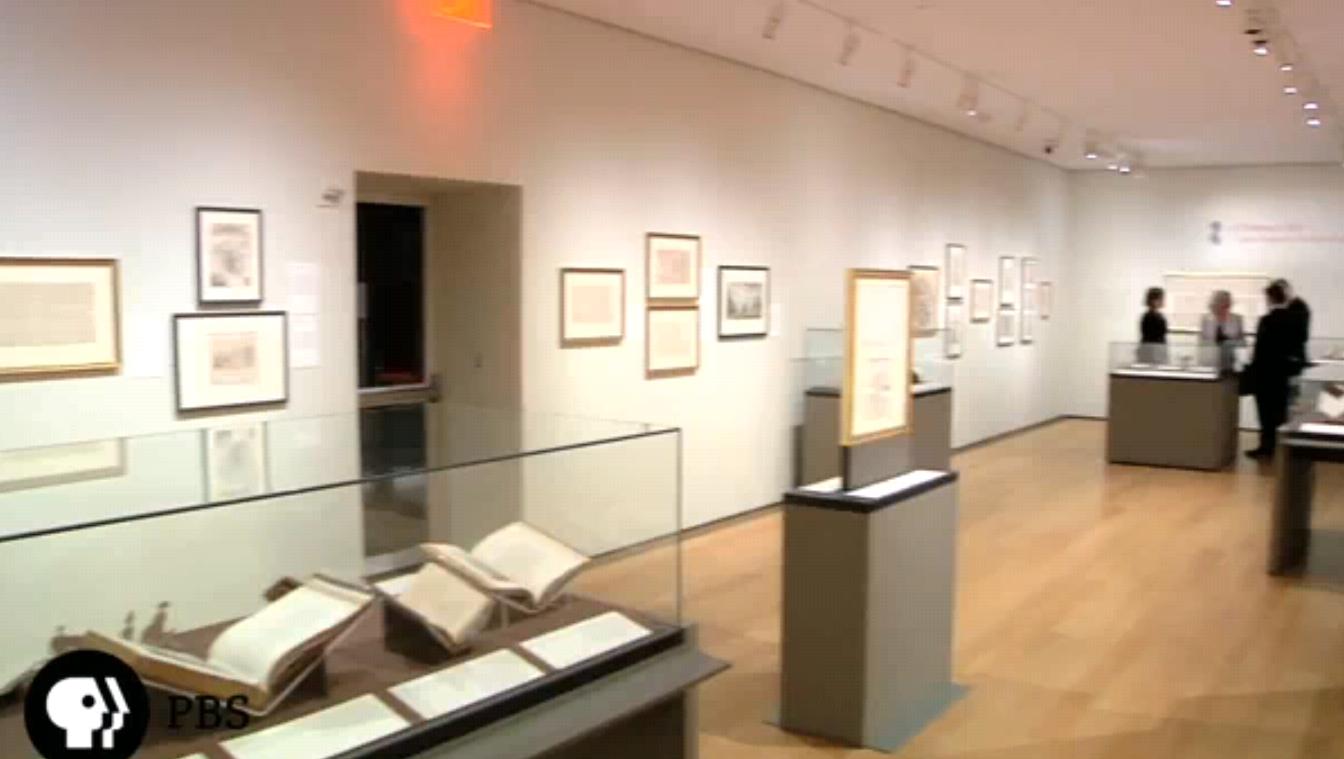
Last month I wrote about my trip to the Morgan Library in New York to view A Woman’s Wit:Jane Austen’s Life and Legacy, and of my impressions of the letters.

Exhibition room for Jane Austen's artifacts at the Morgan Library

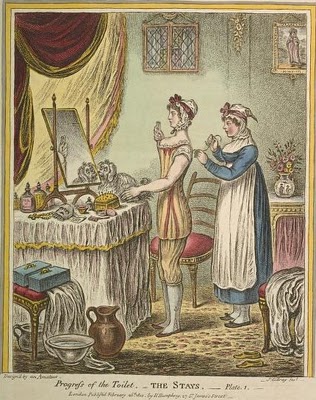
But I didn’t mention the many other interesting artifacts: the Gillray prints of a lady dressing and Rowlandson’s caricature of The Comforts of Bath,

Progress of the Toilet, The Stays, James Gillray

the books that Jane owned,

Jane Austen's personal books, including The Spectator and Poems by William Cowper

a lovely steel engraved oval image of her,

Steel engraved image of Jane Austen and Lady Susan

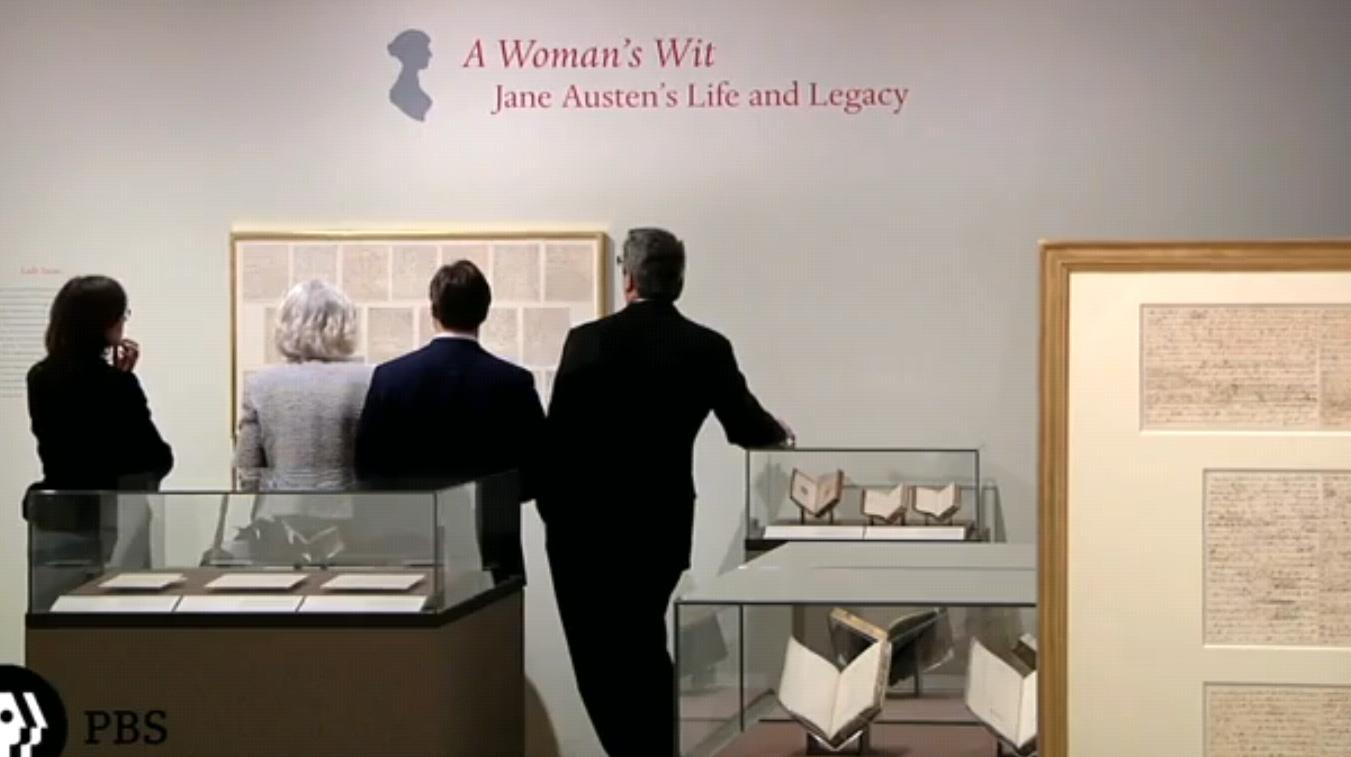
an original copy of the Memoir of Jane Austen, fair copies of the first 7 letters of Lady Susan,

Viewing the Lady Susan letters on the far wall of the exhibit room

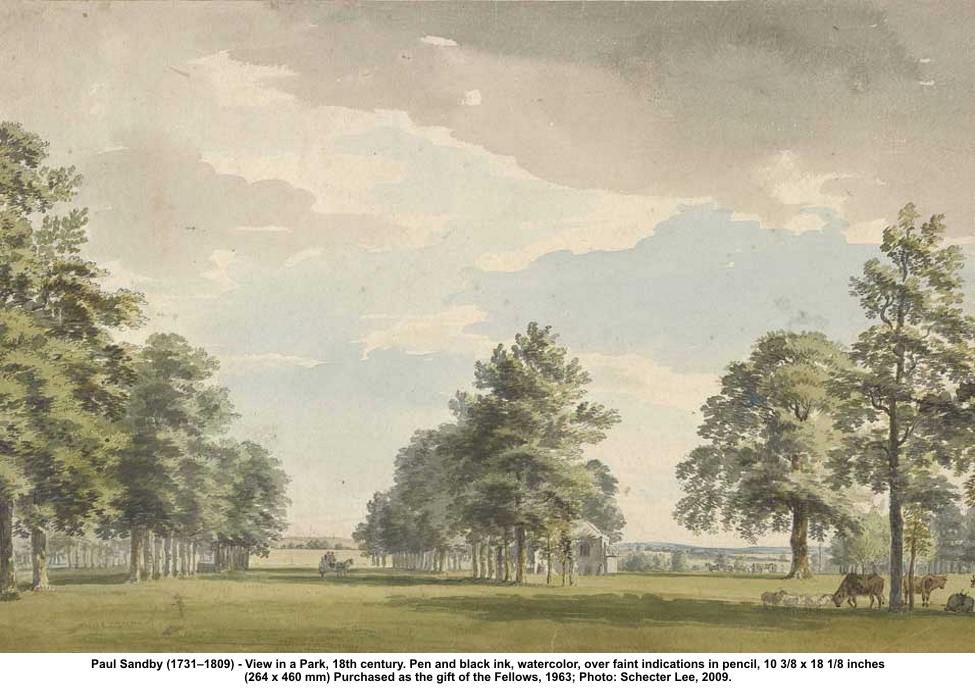
a rough 12-page fragment of The Watsons, a watercolor by Paul Sandby,

Paul Sandby's View in a Park

and a well-known image from An Analysis of Country Dances by Wilson, 1811.

Five positions from An Analysis of Country Dancing by Wilson, 1811

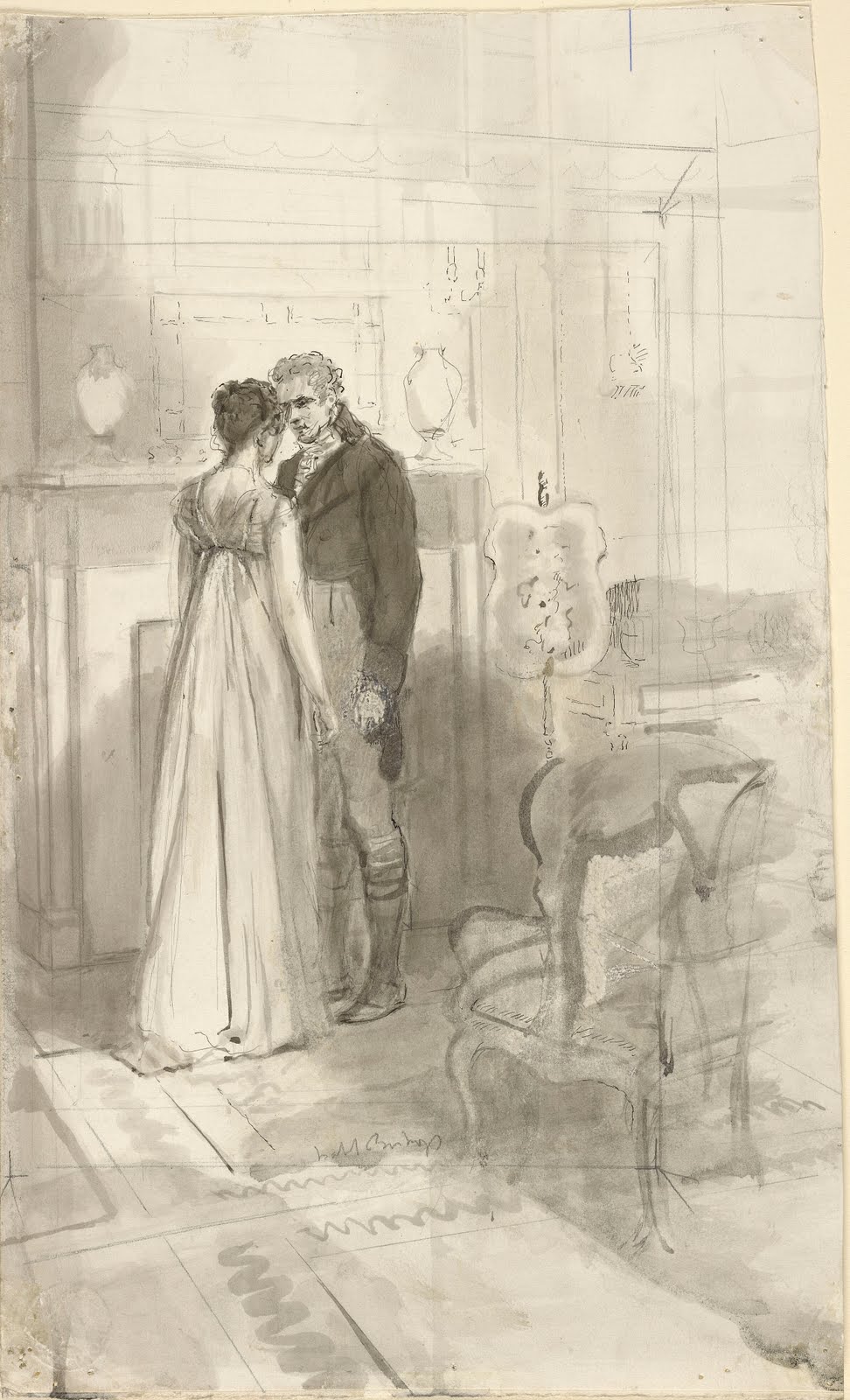
An account of Jane’s personal purchases of a little over 42 pounds for the year (1807), Isabel Bishop’s images for Pride and Prejudice,

Isabel Bishop's image of Jane and Bingley standing together

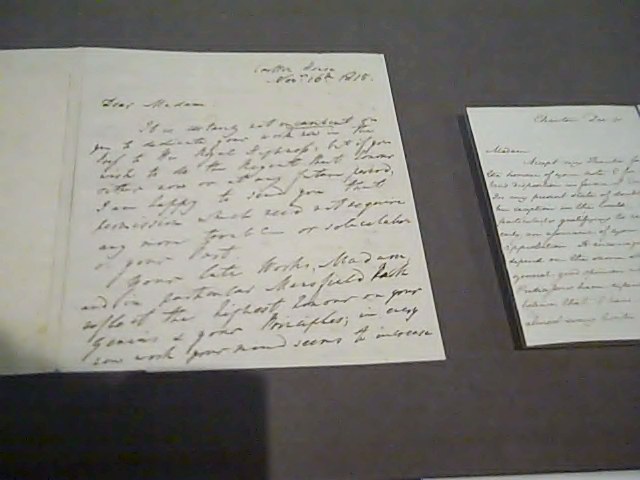
and the correspondence between Jane and Cassandra, her letter to Francis Talbot, the Countess of Morley and a letter from the Prince Regent’s librarian, James Clarke add to our knowledge of her world.

James Clarke's letter to Jane Austen, on the left

There were artifacts from Byron and Fanny Burney and Sir Walter Scott, and more images than I can recall so many weeks later.

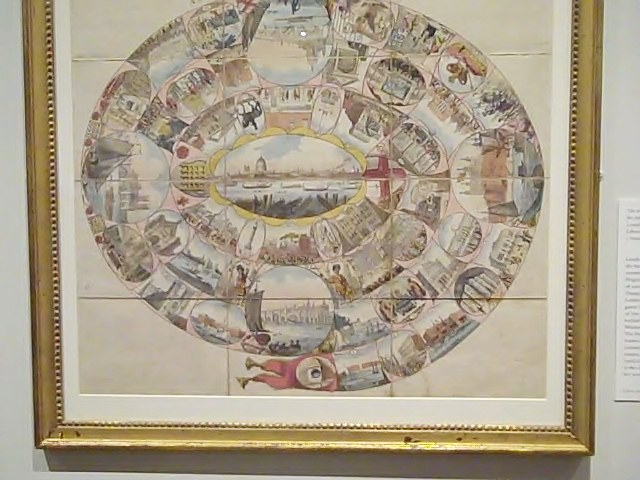
The Panorama of London

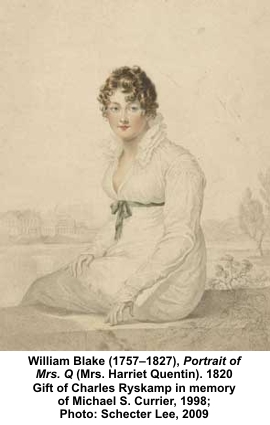
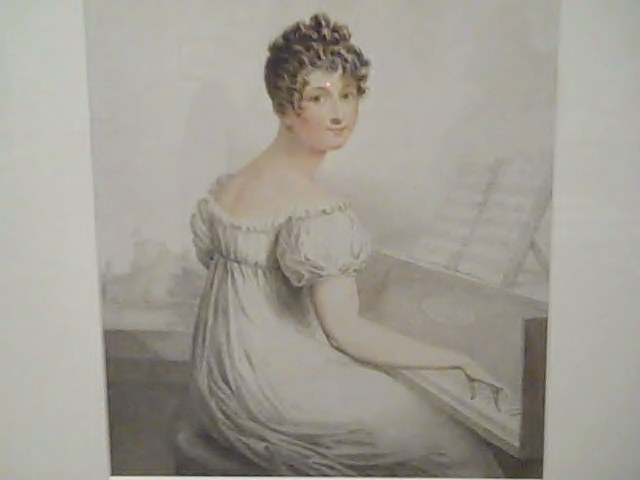
William Blake and Georges Mail drew two portraits that forcibly reminded me of my internal images of Jane and Elizabeth Bennet

Georges Maile (fl. 1818–1841) Marchioness of Huntley.

Which brings me to my only (and major) disappointment with this exhibit: no catalogue. Thankfully, I can reconstruct my memory of the visit from my notes, images I have gleaned online or taken myself, and from a list provided by the Morgan Library (see the link below.) For anyone who lives within striking distance of the Morgan Library, you have until March 14th to travel to New York. The exhibition room might be small, but it is filled with treasures and is well worth the effort.

More links:

View PBS’s video of the Jane Austen exhibit at the Morgan Library on YouTube.

Read Full Post »

IMDb has become an indispensable site for those of us who love movies. I especially love the trivia the site features about each film. Take Emma 2009, for example. Costumes that were recycled from other films are listed there. Let’s look at a few:

Johdi May's purple coat

The purple coat Jodhi May (Mrs. Weston) wears on market day in Highbury is the same costume Hattie Morahan (Elinor Dashwood) wears when she arrives at Barton Cottage in “Sense & Sensibility” (2008).

Elinor in purple pelisse

The dark Spencer worn by Louise Dylan (Harriet Smith) to visit the poor is the same costume Lucy Scott wears in “Pride and Prejudice”(1995).

Harriet Smith (Louise Dylan) in dark spencer

The off-white dress with floral embroidery on the bodice worn by Christina Cole (Mrs. Elton) for her big entrance in church is the same costume worn by Cesca Martin in “The Regency House Party” (2004) during her “engagement,” and by Natasha Little (Becky Sharp) at Park Lane in “Vanity Fair” (1998).

Christina Cole as Mrs. Elton, Her Entrance in Church

The gray gown with gold bow print worn by Tamsin Greig (Miss Bates) to Miss Taylor’s wedding is the same costume worn by Anna Massey (Aunt Norris) in “Mansfield Park” (1983), Phyllida Law (Mrs. Bates) in Emma (1996), Lindsay Duncan (Mrs. Price) when Fanny leaves home in Mansfield Park (1999), Janine Duvitski (Mrs. Meagles) in “Little Dorrit” (2008), and Linda Bassett (Mrs. Jennings) in London in “Sense & Sensibility” (2008).

Miss Bates in gray pelisse and Emma in a floral gown

The floral print dress worn by Romola Garai (Emma) to Miss Taylor’s wedding is the same costume worn by Dagmara Dominczyk (Mercedès Iguanada) for Edmond’s homecoming at the beginning of The Count of Monte Cristo (2002).

Johdi May in lilac floral colored wrap dress

The lilac colored floral wrap dress Jodhi May (Anne Taylor/Weston) wears at Hartfield is the same costume worn by Denise Black (Mrs.Brocklebank) in “To the Ends of the Earth” (2005), and Alex Kingston (Mrs.Bennet) in “Lost in Austen” (2008).

Wearing a floral waistcoat at the Cole's party, Jonny Lee Miller as Mr. Knightley

The blue floral waistcoat Jonny Lee Miller (Mr.Knightley) wears at the Coles’ party is the same costume worn by Joseph Beattie (Henry Crawford) in Mansfield Park (2007) (TV).

Henry and Mary Crawford

For more recycled fashion comparisons, go to this link.

Read Full Post »

In Chapter 54 of Emma, Mr. Knightley explains how Robert Martin became engaged to Harriet Smith. In his talk with Emma, Mr. Knightley mentions Astley’s, the wildly successful amphitheatre in London:  “It is a very simple story. [Robert Martin] went to town on business three days ago, and I got him to take charge of some papers which I was wanting to send to John.—He delivered these papers to John, at his chambers, and was asked by him to join their party the same evening to Astley’s. They were going to take the two eldest boys to Astley’s. The party was to be our brother and sister, Henry, John—and Miss Smith. My friend Robert could not resist.”

Philip Astley ( 1742 – 1814) is regarded as the father of the modern circus. At the age of 9,  young Philip became apprenticed to his father, a cabinet maker. But the young boy had another, more compelling love: horses. At seventeen young Philip joined Colonel Eliott’s Fifteenth Light Dragoon Regiment, where he rose up in the ranks to become a Sergeant- Major.  He served in the French and Indian War and became a brilliant rider in the process.
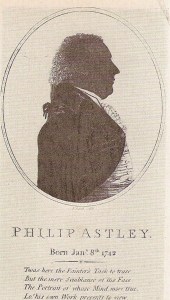
Astley's Silhouette

While in the army, Astley came  into contact with professional trainers and horse riders and served as a horse breaker for his regiment.  After his discharge from the army in 1768, he and his wife began to exhibit their riding skills on a white steed in a field just outside of London, just south of the Thames near Westminster Bridge Road. A born showman, Astley’s bareback trick riding skills included picking up handkerchiefs from the ground while cantering, doing headstands on his saddle, and riding astride two horses while playing a pipe.  (Tracy Chevalier)

Trick rider

Astley learned that centrifugal force allowed him to maintain his balance while standing on the horse. The circular path around which his horse ran became the precursor of the foundation of the circus ring.*
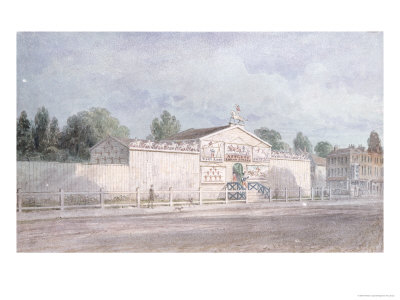
astley's amphitheatre exterior view 1777 william caponA born showman, Astley combined his horsemanship on the “Little Military Learned Horse” with other entertainments. He scheduled clowns, ropewalkers and gymnasts in his mixed theatre, and soon added other acts, including a pig that could do sums, a strong man called Hercules, and even a horse that could perform card tricks and make a cup of tea (Tracy Chevalier). Between 1768 and 1773 Asley’s equestrian and theatical performances were wildly popular. Horace Walpole wrote in 1773:

London at this time of year [September] is as nauseous a drug as any in an apothecary’s shop. I could find nothing at all to do, and so went to Astley’s, which indeed was much beyond my expectation. I do not wonder any longer that Darius was chosen king by the instuction he gave to his horse; not that Caligula made his Consul. Astley can make his dance minuets and hornpipes. But I shall not have even Astley now; Her Majesty the Queen of France, who has as much taste as Caligula, has sent for the whole of the dramatics personae to Paris.

By 1774 Philip had turned his open air riding school into a permanent structure.  He was flouting the law, for he had no license. But he had taught the Lord Chancellor’s daughters to ride and was therefore allowed to continue.** The structure burned in a fire that year and reopened in 1795 as the Royal Grove. Another fire 1803  in prompted Astley to rebuild again. Now known as the Royal Amphitheatre, the great ring inside the building featured dramatics like the Blood-Red Knight, Fatal Bridge 1810; Battle of Waterloo 1824,  Buonaparte’s Invasion of Russia, and the Conflagration of Moscow 1825. Astley also took his popular circus to France. He would not open a new Amphitheatre there until after the Revolution, but when he was able to he  entered into an agreement with Antonio Franconi, the “business brains” behind the team.
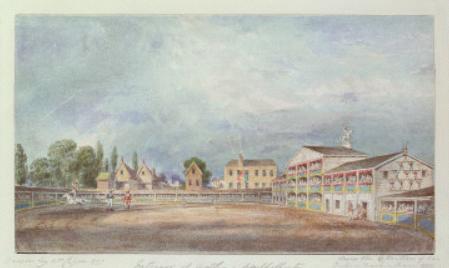
astley's amphitheatre 1777

After the fire in 1803, Astley’s Royal Amphitheatre was rebuilt in the style of rival Charles Hughes’s Royal Circus. Astley’s new theatre was lavishly decorated by Scottish scene painter John Henderson Grieve and its stage was said to be the largest in London.
Battle of the Alma
Spectacular dramas were arranged by Andrew Ducrow, the new manager and one of Astley’s former riders. When this theatre burned down in June 1841, Ducrow was said to have died mad, grieving from the losses he sustained in the fire, including his old faithful servant who lost his life in the conflagration.

astleys
The interiors of Astley’s amphitheatres were designedwith a proscenium stage, a pit, and boxes and galleries for spectators. The pit was reserved for the rides, and soon became a standardized 43 feet in diameter, its circular enclosure surrounded by a painted four foot barrier. In Jane Austen’s day, the stage had become large enough to accommodate the spectacles of reenacted battles and galloping horses.  These dramatics were hugely popular with the crowd, who represented all walks of life.
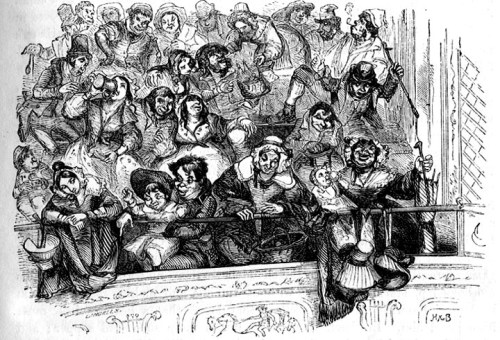
astley's amphitheatre balconey audience

…with shame we confess, that we are far more delighted and amused with the audience, than with the pageantry we once so highly appreciated. We like to watch a regular Astley’s party in the Easter or Midsummer holidays – pa and ma, and nine or ten children, varying from five foot six to two foot eleven: from fourteen years of age to four. We had just taken our seat in one of the boxes, in the centre of the house, the other night, when the next was occupied by just such a party as we should have attempted to describe, had we depicted our BEAU IDEAL of a group of Astley’s visitors ……  The play began, and the interest of the little boys knew no bounds. Pa was clearly interested too, although he very unsuccessfully endeavoured to look as if he wasn’t. –Victorian London Entertainment and Recreation

By 1818, four years after Astley’s death, the adjustable proscenium could be increased from forty to sixty feet. The enormous stage accommodated galloping horses as well as carriages, and could be raised or lowered mechanically. Such a huge stage space was able to hold military extravaganzas that featured hundreds of soldiers and horses, and cannons as well.

Copper engraving of the theater with facade, published by Robert Wilkinson, London, 1815. Engraved by W. Wise after Geo. Jones.

Astley lived to the ripe age of 72. He died in Paris, Oct. 20th, 1814 and was buried at the Père Lachaise cemetery. Sadly, his grave is no longer visible and neither is his famous Amphitheatre, which finally closed in 1893 under different management and was demolished in 1895. During his lifetime, Astley is said to have built nineteen different theatres.
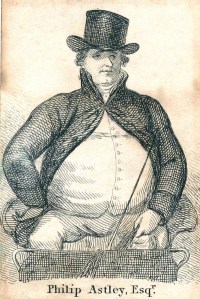
Philip Astley, c. 1800

More on the topic

* Philip Astley: Founder of the Modern-Day Circus by Timothy Sexton
**London and Its People: A Social History from Medieval Times to the Present Day, John Richardson ISBN-13: 978-0091808013
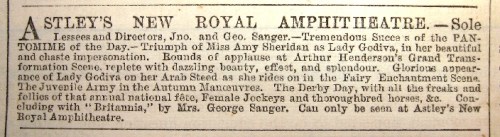
Astleys amphitheatre 1872 advert

Read Full Post »

« Newer Posts - Older Posts »