Feeds:
Posts
Comments

Archive for the ‘Regency Period’ Category

Interview by Brenda S. Cox

“no one can be really esteemed accomplished [without] a thorough knowledge of music, singing, drawing, dancing, and the modern languages”–Pride and Prejudice

Jane Austen and Company, who have given us many fascinating series of talks, have been focusing on Austen and music this year. We asked Inger Brodey, Eric Bontempo, and Susan Ellen Ford to tell us more about that.

JAW: Thanks for joining us, Inger, Eric, and Susan. I understand that the three of you are directing the Jane Austen & Company program. Jane Austen & Co has been doing a series on Music and the Regency this year. Readers can watch and listen to the recordings here. Can you tell us about that?

Jane Austen & Co. did a series on Music in the Regency during 2025, and you can still enjoy the recordings online for free.

Eric:

Sure! Music making and music appreciation could be complicated—even contested—activities during the late eighteenth and early nineteenth centuries. In 2025, Jane Austen & Co. wanted to look at aspects of public and domestic music in the Regency period, and zero in on Jane Austen’s own musical experience. Back in February, we kicked things off with Jeff Nigro’s talk on “Georgian Fangirls” and the influence that Italian castrati had on Regency Music in England. Then, Gillian Dooley discussed music in Austen’s life and work, including some of what Austen would have played and sang. Kathryn Libin moved our series outward to women and musical education during this period. In April, Laura Klein discussed the evolution of keyboard music during this period and considered the music Austen was practicing when she was writing.

This fall, we’ve added three more events to the series. Lidia Chang from Colorado College gave an insightful talk on “Frivolity, Foppery, and the English Gentleman at Music.” And just two weeks ago, Jeanice Brooks from the University of Southampton delighted us with her talk exploring how music making shaped perceptions of people and lands far beyond the British home. The grand finale of the series came in late November when Penelope Appleyard and Jonathan Delbridge revealed the new song they have commissioned, recorded, and released to celebrate Jane Austen’s 250th Anniversary.

JAW: Tell us a little about one of those recorded events that our readers might enjoy listening to.

Grand finale of Music and the Regency, “A Song for Jane”

Eric: I think our grand finale to “Music and the Regency” is definitely worth watching. The 90-minute episode has a little bit of everything: Penelope Appleyard and Jonathan Delbridge performed live, and you can watch their stunning renditions of songs that Jane Austen loved and copied down in her family’s music books. They performed “Robin Adair” and a “Song for Burns” before delighting us with their recently commissioned setting of Austen’s teenage poem “Ode to Pity.”

In between performances, they walked us through the historical context of these songs, the musical instrument being played by Jonathan, and their connection to Jane Austen and her novels. It was fascinating, and if you watch until the end, you’ll notice that the audience Q&A kept the momentum going!

JAW: What are a few interesting things that you personally have learned from that series?

Lidia Chang’s episode on music and gender

Susan: One of my favorite episodes was the interview with Lidia Chang. She taught me a great deal about music and gender. I was interested to hear about how seldom amateur men would perform music, compared to women. She also drew connections to the few examples from the novels where men perform for private audiences.

JAW: What will the next series be?

Susan: Jane Austen & Company is launching a brand new series focusing on Jane Austen’s “Unsung Characters.” We are envisioning a series of presentations that explores Austen’s minor characters and the un-thought-of connections that may tie them together. We will be announcing the list of speakers and presentations soon!

JAW: A few months ago I reviewed your lovely new site, Jane Austen’s Desk. How is that going?

Eliza de Feuillide is now in the travel section of Jane Austen’s Desk.

Inger: Yes, we were very grateful for your review! Since then, we have added a few things to Jane Austen’s Desk. Most importantly, we’ve added a new traveller: Eliza De Feuillide, Austen’s first cousin and sister-in-law. We included a new hand-drawn portrait of her and programmed in most of her travels during Austen’s lifetime. We really wanted another female traveller, along with Fanny Palmer Austen, to indicate what we are calling Austen’s “vicarious travels.”  We are countering the image of Austen living a sheltered existence by showing visual, interactive representations of how much her correspondents travelled, giving her vivid, second-hand experience of diverse regions of the world. 

Susan: In honor of our new holiday campaign to raise funds, we also added some professionally recorded Christmas music, performed by Laura Klein on a period harpsicord, and some holiday greenery.  Have you seen them yet? (You have to ignore, momentarily, the unseasonable weather for March 30.)

Under the painting for travel sits a thus-far mostly silent pianoforte on the website Jane Austen’s Desk. We can participate in bringing it to life!

JAW: I understand you are raising money for adding music to that site. What are you hoping to add? How will that enrich the site?

Inger: Music was key to Jane Austen’s creative process. As you know, in her years at Chawton Cottage, she got up early in the mornings to play her pianoforte and compose her thoughts. This Kickstarter will raise the funds necessary to give tribute to the specific music Austen knew, loved, and transcribed by hand. We will add interactive tools with access to this music to our free website, making it come alive for all kinds of Janeites. The music will be performed by professional performers on historical instruments. We will provide historic illustrations, information about composers and specific pieces, and crisp images of Austen’s own sheet music.

An exciting part of the plan is to link the mentions of music in the novels to recordings by Laura Klein, and vice versa. So when you read about Mary Crawford playing a glee, for example, you can play an example and learn about what glees are. It’s an important dimension of our plan to show how the many different parts of Austen’s lived experience come together in her masterful novels.

JAW: That sounds fantastic, Inger. Why do you need to raise the money with a Kickstarter?

Inger: The design and building of our site has been primarily funded by two “Digital Projects for the Public” grants from the National Endowment for the Humanities. We were hoping for the largest, phase 3 grant in this line, but the whole program has been cancelled at the NEH, so we are forced to look elsewhere for our funding.  What we really need is a patroness! 

JAW: Lady Catherine de Bourgh, take note. Or perhaps someone who has “more true enjoyment of music” than she does, or “better natural taste”! How can our readers contribute, if they wish?

Inger: Our Kickstarter campaign is at: https://www.kickstarter.com/projects/janeaustencoll/adding-music-to-jane-austens-desk. On that site there are also two videos: one about our team that is making Jane Austen’s Desk and the other about the goals of our project. Kickstarter campaigns are all or nothing, so if we don’t meet our target by December 28th, then we don’t receive any of the promised funding! It’s a little nerve-wracking!

JAW: We very much hope you get all your need! Readers and music lovers, here’s an opportunity to contribute. Inger, Eric, and Susan, thanks for all your hard work to make so much great material available to us in such a fun way. (I vote that you do embroidery next 😊, but the music, “a very innocent diversion,” will be delightful!)


Brenda S. Cox is the author of Fashionable Goodness: Christianity in Jane Austen’s England. She also blogs at Faith, Science, Joy, and Jane Austen.

Read Full Post »

As promised, I’m back with a reminder and announcement about Regency Marketplace’s brand-new seasonal Jane Austen Box! I’m delighted to share that the theme of this new box is “Christmas In Highbury”! If you missed my review of the lovely Autumn in Chawton Box I received, you can read about it and see photos HERE.

Christmas in Highbury

This Christmas, be transported to the little hamlet of Highbury in County Surrey. Here we find Emma and her friends and family preparing for a delightful country holiday, and you’re invited! Regency Christmastide for the aristocracy was often celebrated at the families’ country estates, and in Emma, we see her sister Isabella and Knightley’s brother John bring all their children to Hartfield for the occasion, enlivening the quiet household with their fun and noise. Mr. Woodhouse would have them stay forever!

The Perfect Gift

The “Christmas In Highbury” Jane Austen Box will be filled to the brim with a cozy and elegant medley of Emma and Regency-inspired Christmas gifts! A perfect gift box to send or receive this holiday season, it also makes a wonderful hostess gift. December 16th is Jane Austen’s birthday, too, so celebrate in style!

At Christmas every body invites their friends about them, and people think little of even the worst weather.

Jane Austen’s Emma

Place Your Order

The “Christmas In Highbury” Jane Austen Box will be available to reserve from Saturday, October 15th-Tuesday, November 15th, 2022. All boxes will ship out the first week of December! These boxes sell out quickly, so do not delay. Place an order for yourself or as a gift for a friend or relative today.

If you are longing to receive a box for Christmas, send this link to a friend or loved one as a big HINT: https://regencymarketplace.com/collections/jane-austen-box.

If you want to take it up a notch, you can subscribe to the Quarterly Jane Austen Box and receive a box every 3 months, or purchase as a One-Time Gift option (non-recurring). Free Shipping in the USA! International Flat Rate Shipping available.

Coupon Code

Many thanks to Regency Marketplace for providing me with a discount code that I can share with all my friends and readers this Christmas ordering season. If you would like to receive a discount, you can use my special COUPON CODE for 10% off the Winter Box! *While Supplies Last.*

Previous Winter-Themed Jane Austen Box

RACHEL DODGE teaches college English classes, gives talks at libraries, teas, and book clubs, and writes for Jane Austen’s World blog. She is the bestselling author of The Little Women DevotionalThe Anne of Green Gables Devotional and Praying with Jane: 31 Days Through the Prayers of Jane Austen. Coming soon: The Secret Garden Devotional! You can visit Rachel online at www.RachelDodge.com.

Read Full Post »

I just received my first Jane Austen Box from Regency Marketplace, and the minute I opened it, I knew I had to share it with all of my friends here at Jane Austen’s World. This is a beautiful Jane Austen-themed experience not to be missed–and it comes right to your own front door!

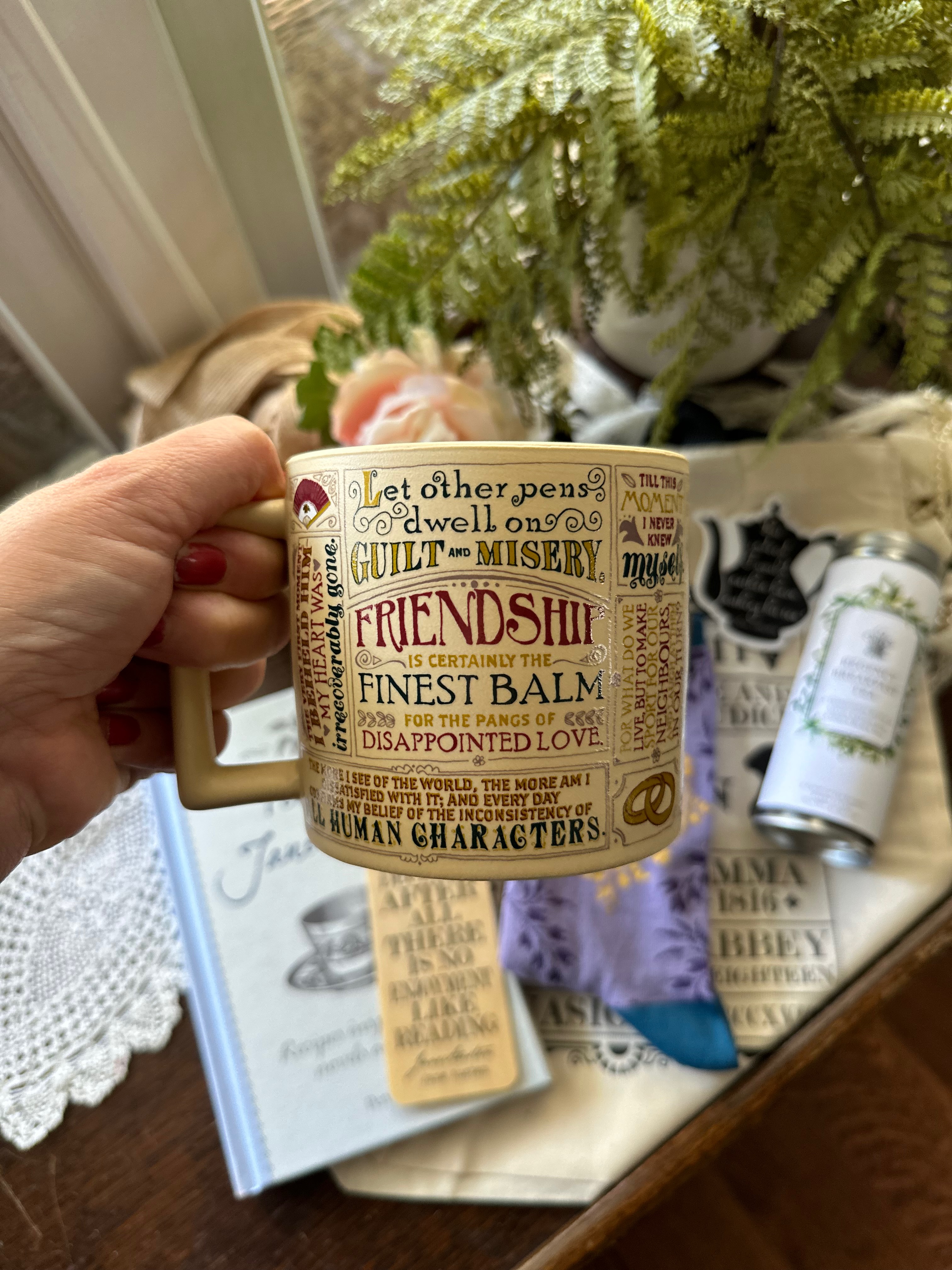
Special thanks to @regency_marketplace for sending me the “Autumn At Chawton Cottage” box this month so I could fully experience it for myself! This delightful box is filled to the brim with cozy Autumn and Jane Austen-themed items! I can’t wait to put on my cute new socks and have a cup of tea!

Box Full of Surprises

Each Jane Austen Box features a range of products from items of historical interest to lovely items you can incorporate in your everyday life, edibles and fine teas to Jane Austen inspired products. All boxes also include some form of book — expand your library!!

Categories include, but are not limited to:

  • Fine Teas
  • Books
  • Candles
  • Edibles
  • Wearables
  • Items of Historical Interest
  • Jane Austen Inspired Products
  • Bath and Body
  • Home Decor
  • Writing Accessories
  • Booklovers Paraphernalia
  • And More!

Subscription boxes are delightful because there are so many surprises held within each box. Regency Marketplace does a lovely job of keeping the mystery alive. They give hints and a theme for each box, but they never show what specific items are coming in each new box. That makes it even more exciting to open when it comes in the mail!

Unboxing

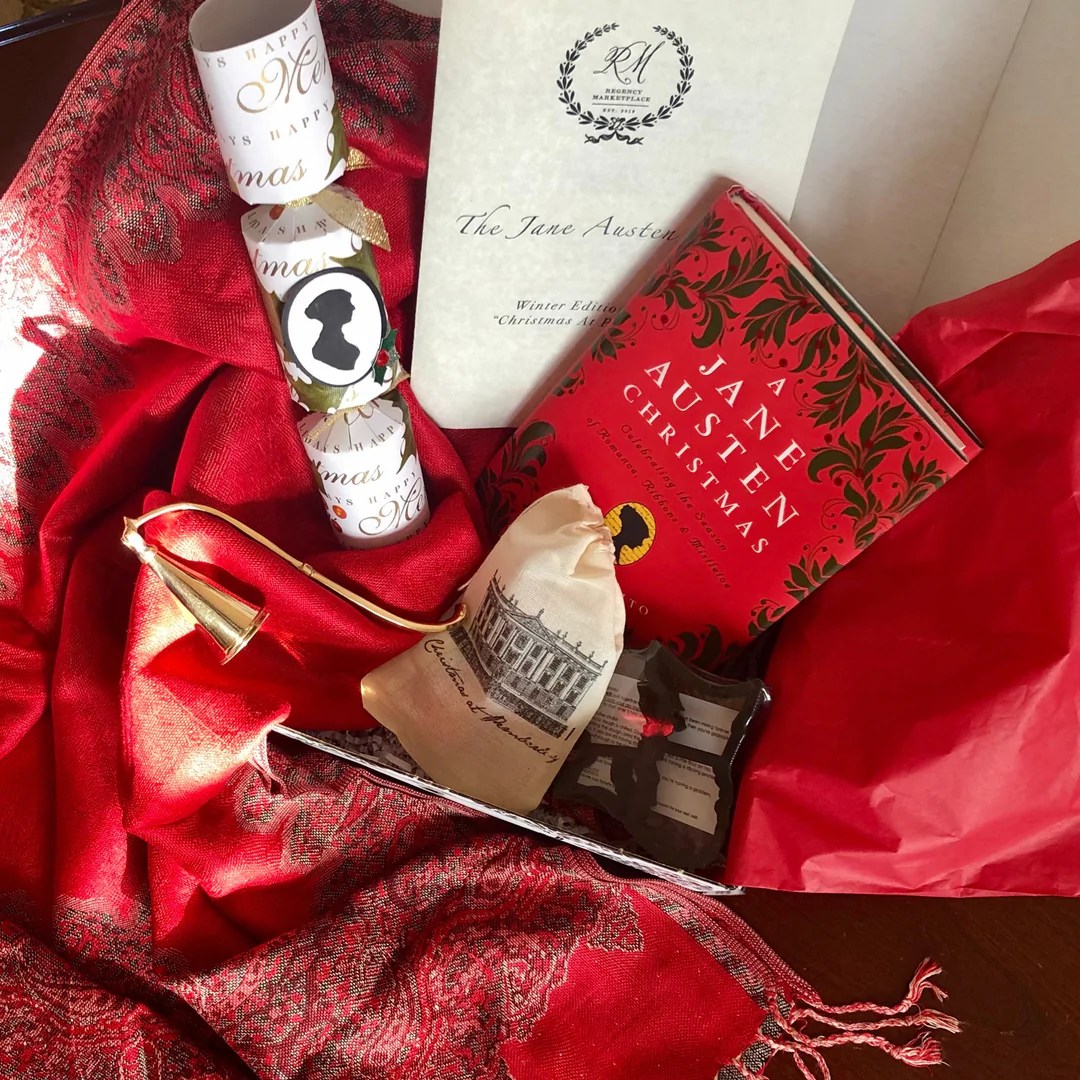
One of the most exciting parts about getting any kind of subscription box is the actual unboxing. When it arrived, I was so impressed with the packaging and the beautiful box. When I opened it and saw the pretty tissue and the sticker, I almost couldn’t bring myself to open it. I snapped a picture because it felt like my birthday and Christmas had arrived all at once.

If you’d like to watch an unboxing video of me opening the box, you can view it HERE. I had a blast (and it was my first time making a video reel like it). Here’s a peek inside:

Stay Tuned

The Winter Jane Austen Box will be available for Pre-Order October 15th – November 15th, and boxes will ship in early December. Regency Marketplace offers free shipping in the US. (International flat rate shipping is also available.) These luxurious boxes sell out quickly, so mark your calendars to reserve one for yourself or for a friend.

Enjoy this box for yourself, or gift one to a friend or family member for the holidays this year! Once the Winter Theme is announced, I will post a reminder to place your orders and a coupon code.

Sample of a previous Jane Austen Box

About Regency Marketplace

Regency Marketplace is run by the lovely Christina Denton. It was envisioned many years ago as a beautiful oasis for all things Regency and Jane Austen: a place where one could escape from the breakneck pace of today’s world, and enter into an era of elegance, charm, and wit.

A lifelong love of Jane Austen and the Regency Era is the guiding influence behind Regency Marketplace. As a family-run company, they work hard to source the best products for their discerning customers and fellow Janeites! They focus on celebrating the grace and beauty of an Era so distinct that it still captivates us two hundred years later.

Is this something you would like to receive as a gift? Would you buy it for yourself or for someone else as a lovely surprise?


RACHEL DODGE teaches college English classes, gives talks at libraries, teas, and book clubs, and writes for Jane Austen’s World blog. She is the bestselling author of The Little Women DevotionalThe Anne of Green Gables Devotional and Praying with Jane: 31 Days Through the Prayers of Jane Austen. Her new release is The Secret Garden Devotional! You can visit Rachel online at www.RachelDodge.com.

Read Full Post »

Having just made a big move myself, I was intrigued by the thought that Jane Austen herself—not to mention several of her characters—knew what it took to move an entire household from one place to another.

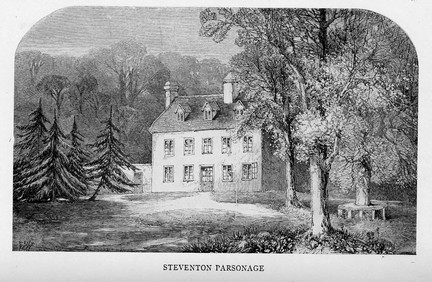
One of the best resources available to us regarding a big move is the letter Austen wrote to Cassandra on January 3, 1801, prior to their family’s move to Bath from Steventon. From it, and from the details in her novels, we learn many interesting details about what a big move entailed.

If you’ve ever wanted some Regency advice on moving house, this is for you!

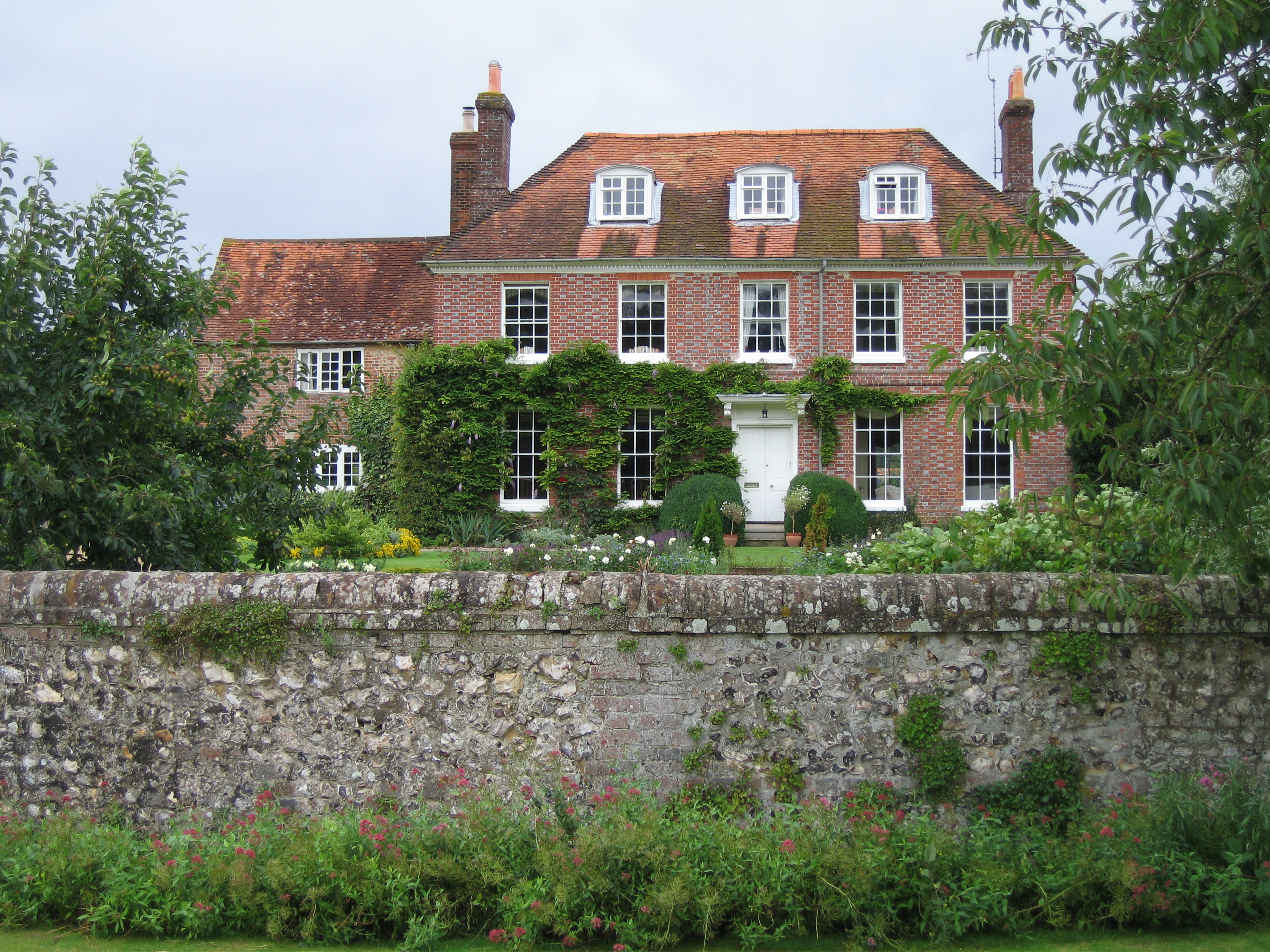
Image of Steventon Rectory, Wikimedia Commons
Steventon Rectory, Wikimedia Commons

Send Your Servants Ahead

In terms of logistics, members of the genteel class usually sent servants ahead of them when they went from one house to another, as we see when Mr. Bingley goes to Netherfield:

Why, my dear, you must know, Mrs. Long says that Netherfield is taken by a young man of large fortune from the north of England; that he came down on Monday in a chaise and four to see the place, and was so much delighted with it that he agreed with Mr. Morris immediately; that he is to take possession before Michaelmas, and some of his servants are to be in the house by the end of next week.

Pride and Prejudice

Similarly, Elinor and Marianne, when arriving in London with Mrs. Jennings after three days of travel, are greeted by “all the luxury of a good fire.” The house is “handsome, and handsomely fitted up.” Elinor writes to her mother before a dinner that will not “be ready in less than two hours from their arrival.” It’s clear that Mrs. Jennings employs servants who clean, cook, shop, and prepare the house for her visits.

Hire Good People

When preparing to move to Bath, Jane Austen’s mother wanted to keep two maids: “My mother looks forward with as much certainty as you can do to our keeping two maids; my father is the only one not in the secret.”

With her typical flair for humor, Austen hoped to engage other servants as well: “We plan having a steady cook and a young, giddy housemaid, with a sedate, middle-aged man, who is to undertake the double office of husband to the former and sweetheart to the latter. No children, of course, to be allowed on either side.”

Do Your Research

In Austen’s letter, she talks about several areas of Bath where they hoped to find a house: Westgate Buildings, Charles Street, and “some of the short streets leading from Laura Place or Pulteney Street.”

About Westgate Buildings, Austen wrote: “though quite in the lower part of the town, are not badly situated themselves. The street is broad, and has rather a good appearance.” Regarding Charles Street, she thought it “preferable”: “The buildings are new, and its nearness to Kingsmead Fields would be a pleasant circumstance.” And concerning the third area: “The houses in the streets near Laura Place I should expect to be above our price. Gay Street would be too high, except only the lower house on the left-hand side as you ascend.”

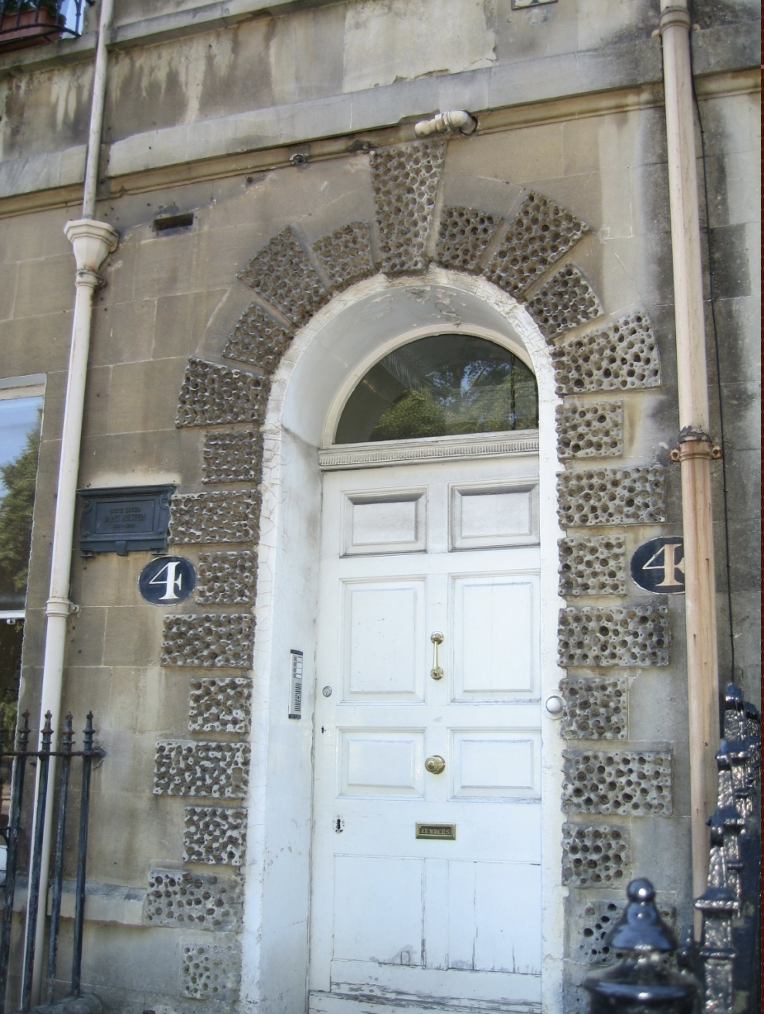
4 Syndey Place, Bath

Mrs. Austen seemed to have a preference: “her wishes are at present fixed on the corner house in Chapel Row, which opens into Prince’s Street. Her knowledge of it, however, is confined only to the outside, and therefore she is equally uncertain of its being really desirable as of its being to be had.”

None of the Austens were in favor of Oxford Buildings: “we all unite in particular dislike of that part of the town, and therefore hope to escape.”

Bring Your Art

We know from Austen’s letter that they planned to take the following pictures and paintings from Steventon to Bath: “[T]he battle-piece, Mr. Nibbs, Sir William East, and all the old heterogeneous miscellany, manuscript, Scriptural pieces dispersed over the house, are to be given to James.”

Good artwork is hard to find.

Of special note, Jane tells Cassandra, “Your own drawings will not cease to be your own, and the two paintings on tin will be at your disposal.”

Good Furniture is Worth Moving

Apparently, Rev. and Mrs. Austen had a very good bed that was irreplaceable: “My father and mother, wisely aware of the difficulty of finding in all Bath such a bed as their own, have resolved on taking it with them…” Austen wrote this about the rest of the household beds: “all the beds, indeed, that we shall want are to be removed — viz., besides theirs, our own two, the best for a spare one, and two for servants; and these necessary articles will probably be the only material ones that it would answer to send down.”

When it came to their dressers, they decided it was time for an upgrade: “I do not think it will be worth while to remove any of our chests of drawers; we shall be able to get some of a much more commodious sort, made of deal, and painted to look very neat…”

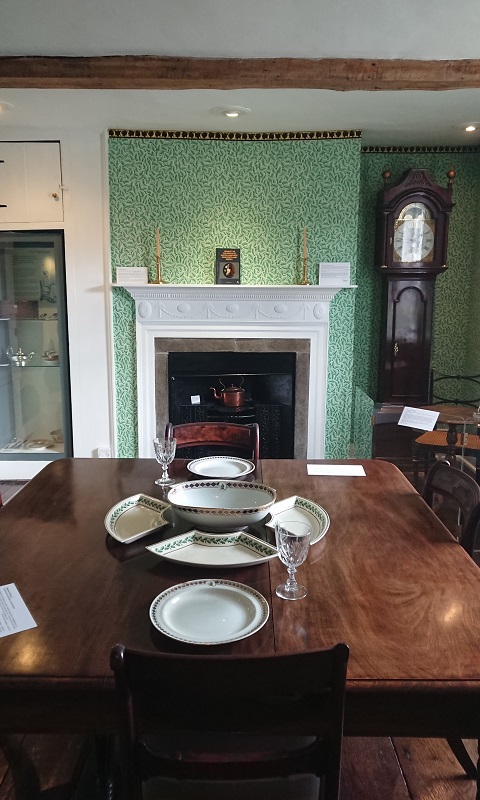
Image of dining room at the Jane Austen House Museum
Jane Austen’s House Museum in Chawton.

As to the rest of their furniture, they decided it would be better to replace most of it in Bath: “We have thought at times of removing the sideboard, or a Pembroke table, or some other piece of furniture, but, upon the whole, it has ended in thinking that the trouble and risk of the removal would be more than the advantage of having them at a place where everything may be purchased. Pray send your opinion.”

Jane’s final comments to Cassandra are amusing as ever: “My mother bargains for having no trouble at all in furnishing our house in Bath, and I have engaged for your willingly undertaking to do it all.”

Visit People on the Way

In Austen’s letter, she explains their family travel plans: “[M]y mother and our two selves are to travel down together, and my father follow us afterwards in about a fortnight or three weeks. We have promised to spend a couple of days at Ibthorp in our way. We must all meet at Bath, you know, before we set out for the sea, and, everything considered, I think the first plan as good as any.”

Ibthorpe, Photo by Rachel Dodge

Not So Different

Moving house in Jane Austen’s day was not quite so different from today. Though the modes of transportation and the methods of research and communication were somewhat different, I was delighted to find that the Austens’ moving plans were surprisingly applicable to mine! (Except for the servants.)


RACHEL DODGE teaches college English classes, gives talks at libraries, teas, and book clubs, and writes for Jane Austen’s World blog. She is the bestselling author of The Little Women DevotionalThe Anne of Green Gables Devotional and Praying with Jane: 31 Days Through the Prayers of Jane Austen. Coming this fall: The Secret Garden Devotional. You can visit Rachel online at www.RachelDodge.com.

Read Full Post »

Book's coverStrictly speaking the oficial Regency lasted from 1811 to 1820, but the author, Ian Mortimer, takes the reader on a journey to Great Britain – England, Wales and Scotland – from 1789 to 1830, a time period that is in line with most other historians, literary critics and antiques experts.

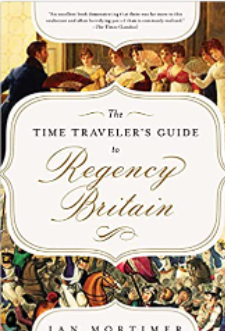
This book achieves something unique – a historian’s perspective written in a style of writing that is exciting to read. I did indeed feel like a time traveller as I was taken through the British countryside, Brighton, London, and Manchester. Mortimer touches all aspects of British life – from the vitality of the era, expansion of cities, and the explosion of scientific advances, trade, transportation, and the island’s population. Mortimer describes both the good and the bad effects of the industrial revolution, and the results of enclosures in England on farmers with small farms and of the Highland clearances on Scottish crofters.

The era’s glittering lifestyle is not neglected and the author takes advantage of the journals and accounts of contemporary eyewitnesses. This is Karl Moritz’z impression of the rotunda in Ranelagh Gardens, Chelsea (1810):

“On my entry I mixed with this crowd, and what with the constant changing of the faces around me (most of them strikingly beautiful), the illuminations, the majesty and splendour of the place, and the ever-present strains of music, I felt for a moment as a child would on first looking into a fairy-tale.”

Above: Two images included in the book. Hover cursor over them for details.

Mortimer contrasts this memory with the description of a winter in London some twenty years later. Coal fires in London so polluted the air that soot floated without falling, and the fog and smoke darkened the skies even at noon.

As the rich built grand houses or renovated outdated mansions, and hired Capability Brown or Humphrey Repton to transform their grounds, many poor people suffered, for few resources or improvements were provided for them. Liverpool’s houses for migrant workers were designed in such a way as to provide no comfort or cleanliness. Two privies might serve two or three hundred people. The overcrowding was so severe that the population density was estimated at 777 per acre. So many other topics are covered: science, medicine and health; pleasure gardens and entertainments; occupations; food and drink; clothing; etc.

Time traveAfter reading this book, I had a comprehensive overview of the Regency era and recommend it to anyone interested in this period. Amazon Kindle edition (See cover to the right) offers a sample of the book’s Introduction, and Chapters 1 & 2 in full.

About the Author:

Ian-MortimerDr Ian Mortimer has been described by The Times newspaper as ‘the most remarkable medieval historian of our time’. He is best known as the author of The Time Traveller’s Guides: to Medieval England (2008); to Elizabethan England (2012); to Restoration Britain (2017); and to Regency Britain (2020). He is a Fellow of the Royal Historical Society and a Fellow of the Society of Antiquaries, and has published research in academic journals touching on every century from the twelfth to the twentieth. For more information, see http://www.ianmortimer.com

Read Full Post »

Older Posts »