Feeds:
Posts
Comments

Archive for the ‘Regency style’ Category


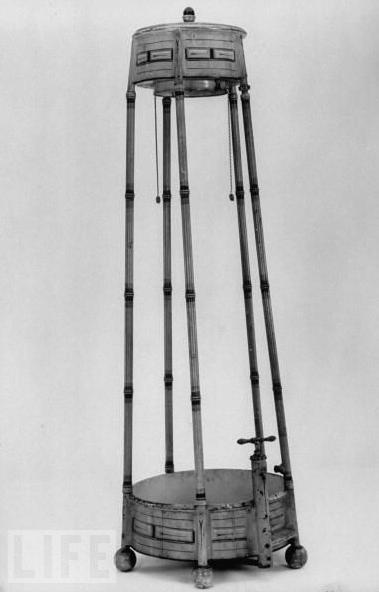
Copyright (c) Jane Austen’s World. Take a good look at this contraption. Life Magazine gave it the following description:

A treasury of old tubbery, Regency shower 12 feet high was a fancy bathing apparatus in England around 1810, pump lifted water from tank at bottom through pipe to top tank, water could be used over and over again.” – Life Magazine image

Readers familiar with the Regency era know that attitudes towards bathing and hygiene were on the cusp of change. In the early 18th century, a person might wash their face and hands daily, but at the most they would bathe every few weeks or months. Towards the end of the century, cleanliness was no longer regarded as frivolous by a growing number of people. Beau Brummel was a particular proponent of bathing and his affectation for cleanliness became the dandy’s creed. Others began to associate bathing with good health.

Washing made a comeback in the later 18th century. The age of revolution and romanticism valued simplicity and naturalness, and water – in the form of mountain torrents and medicinal springs – became fashionable. Rousseau recommended bathing children in ice-cold water, winter and summer, and a sophisticated clientele sought to relieve its frayed nerves and overtaxed digestions by taking the waters at spas. John Wesley, the founder of Methodism, who invented the phrase “Cleanliness is next to godliness”, wrote a manual claiming that cold baths had been known to cure blind-ness and leprosy, as well as “hysterick cholik” in ladies. – Review of Clean, An Unsanitized History of Washing
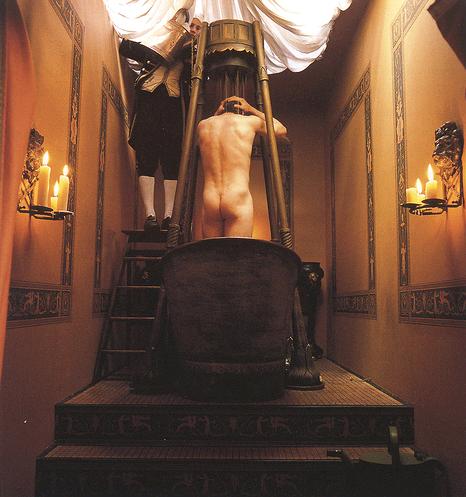
Image from Regency House Party.

The Americans echoed the British attitude towards cleanliness:

Until the last third of the 18th century, bathing practices were not clearly defined or categorized. The perceived effects on the body of the cold and warm bath were debated regularly in prescriptive literature, as were reasons for bathing in the first place. Motives for bathing changed somewhat over time, and different methods had specific connotations: did one bathe for pleasure, as a restorative of good health, for leisure and/or hot weather refreshment, as a luxurious display, or for actual, bodily cleanliness? Whatever the motivation, it was then up to the bather to decide whether she or he adhered to the cold or warm water method. – Bathing, Monticello.org

The pump is evident in this portable bath shower from the mid 19th c.

If a person opted to take a shower, the effect was at first quite bracing, for only cold water was used with this fairly new contraption, invented  in 1767)by William Feetham. In the image from Regency House Party, a servant is seen pouring water into the basin, but Feetham’s patented invention included a pump that forced the water to the upper basin and a chain that was pulled by the bather to pour water over himself. The advantage was that less water was used in bathing (A typical bath tub would require from 6-8 buckets of heated water to be carried from the nearest water source and up several flights of stairs). The early shower system’s disadvantage was clear:  the same water would be reused during the course of the shower. Not only did one reuse dirty water, but one felt quite cold during the process.

When the temperature of a bed-room ranges below the freezing-point, there is no inducement . . . to waste any unnecessary time in washing,” wrote Charles Francis Adams, grandson of President John Quincy Adams and brother of historian Henry Adams.  To Bathe or Not to Bathe
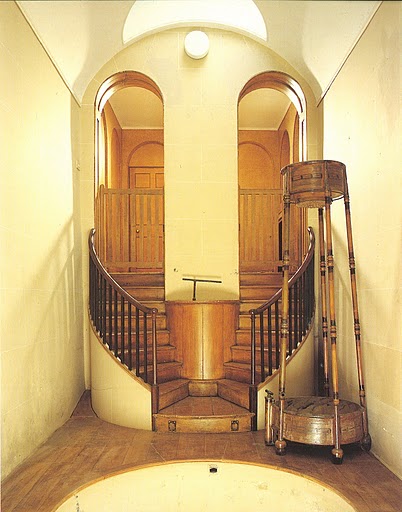
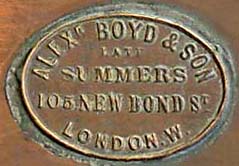
The elaborate bath house at Wimpole Hall, Cambridgeshire, with the shower made by Alexander Boyd of New Bond Street (See their mark below).

Philip Yorke, 3rd Earl of Hardwicke

The bath house at Wimpole Hall was unusual for its day. Around 1792, Sir John Soane designed the plunge pool for the 3rd Earl of Hardwicke. The pool held 2,199 gallons of water that was heated by a boiler below it in the basement.
The 10 – 12 ft tall metal supports, or poles, of these showers were painted to resemble bamboo wood and even offered a shower curtain for privacy. To protect their hair, bathers wore a conical hat made out of oil cloth.

Until plumbing with warm water was introduced inside the bathroom, the use of shower baths remained rare. Towards the middle of the 19th century, attitudes began to change.

Plumbers began to introduce indoor plumbing, and inventors experimented with perfecting showering tools and pumping in hot water. Improvements in showering equipment was continuous, as the patent given to William Feetham (below) in 1822 attests:  To William Feetham of Ludgate Hill, in the City of London, Stove grate Maker and Furnishing Iron monger, for his Invention of certain Improvements on Shower Baths, Sealed June 13 1822.

The intention of these improvements is to enable the patient, who is using the bath to regulate the flow of water, and thereby to soften the shower according as inclination or circumstances may require. This object is effected by two contrivances: the first is an adjustable stop, which may be set so as to prevent the cock from turning beyond any certain distance, so as to limit the opening of the water way to any required discharge; the second is a division of the perforated box or strainer into several chambers by two or more circular concentric partitions, by which limited quantities of water let out from the cistern above are necessarily confined to limited portions of the surface of the strainer …  Read more about the patent in The London Journal of Arts and Sciences, Vol. 5, Sherwood, Neely, and Jones, 1823, p284-6.

Feetham's Shower Bath, 1822

The Patentee states: “I do not claim, or intend hereby to claim, as my invention any of the parts which may be already in use, but I do claim the means of regulating the flow of the water from the cock of a shower bath, and also the method of extending, or contracting within central limits, the shower of water at pleasure.”

In December, 1822, Mr. Feetham was granted the patent for the following improvements:

Shower bath patent #4680 granted December 13, 1822

By the 1870’s, even middle class houses began to have hot water pumped in, for the increased rents the landlords were able to command for houses with hot water made it worthwhile for them to invest in plumbing.  Sponge baths were still recommended for “invigorating the system,” and as late as 1875 The Ladies Everyday Book cautioned that it was a great mistake to make a bath a regular event.

Godey’s Ladys Book, a popular ladies magazine in the U.S., reflected the changes in attitude towards bathing (as does John Leech’s 1851 cartoon):

Godey’s, June 1855:
The shower -bath  has the merit of being attainable by most persons, at any rate when at home, and is now made in various portable shapes. The shock communicated by it is not always safe; but it is powerful in its action, and the first disagreeable sensation after pulling the fatal string is succeeded by a delicious feeling of renewed health and vitality. The dose of water is generally made too large; and, by diminishing this, and wearing one of the high-peaked or extinguisher caps now in use, to break the fall of the descending torrent upon the head, the terrors of the shower-bath  may be abated, while the beneficial effects are retained.

Godey’s, March 1858:
The Shower Bath, whether of fresh or salt water, whether quite cold or tepid, is a valuable agent in the treatment of many nervous affections; it will suit some whom the general bath will not. It is well for persons of weak habit, or who suffer from the head, to have a thin layer of warm water put in the bottom of the shower bath  before getting in. Useful hand shower  baths are now manufactured for children.

Domestic Sanitary Regulation, John Leech 1851. In this scene, the shower is installed in the kitchen. The children are wearing the conical caps to protect their hair as they wait their turn wearing blankets, jackets or robes.

More on the topic:
Read Full Post »

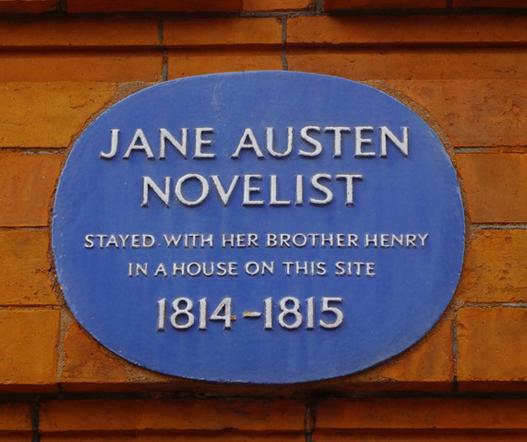
Copyright (c) Jane Austen’s World. Inquiring reader: Tony Grant sent me images of Hans Place by way of a personal tour. I am sure he won’t mind my sharing his photos of one of the areas that Jane Austen stayed in when she visited her brother Henry in London. In addition, I have elaborated on other places where Jane Austen lodged when she spent time in London.

Jane visited London as early as 1796. Constance Hill writes in her 1901 book, Jane Austen: Her Homes and Her Friends:

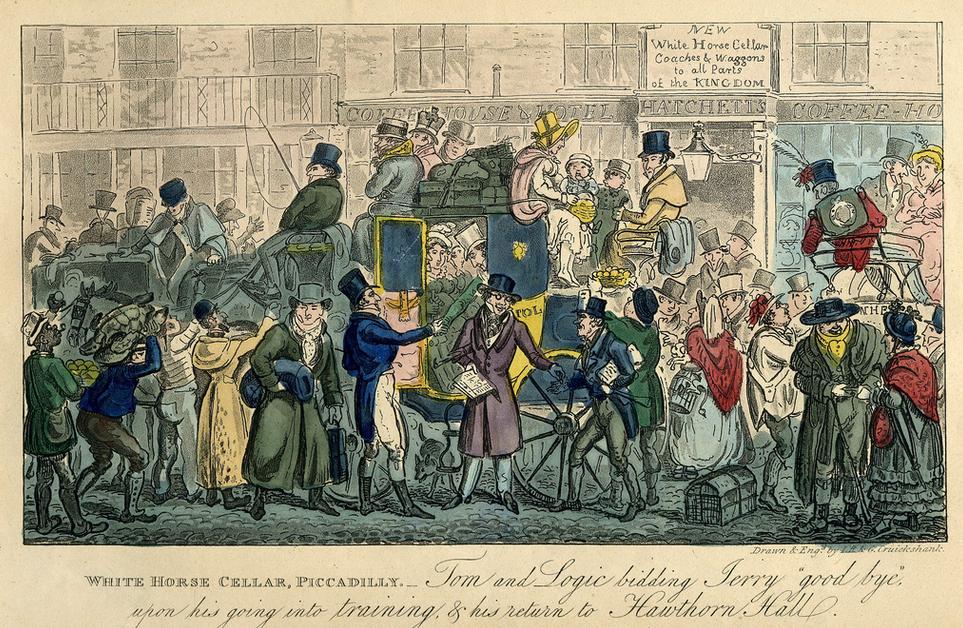
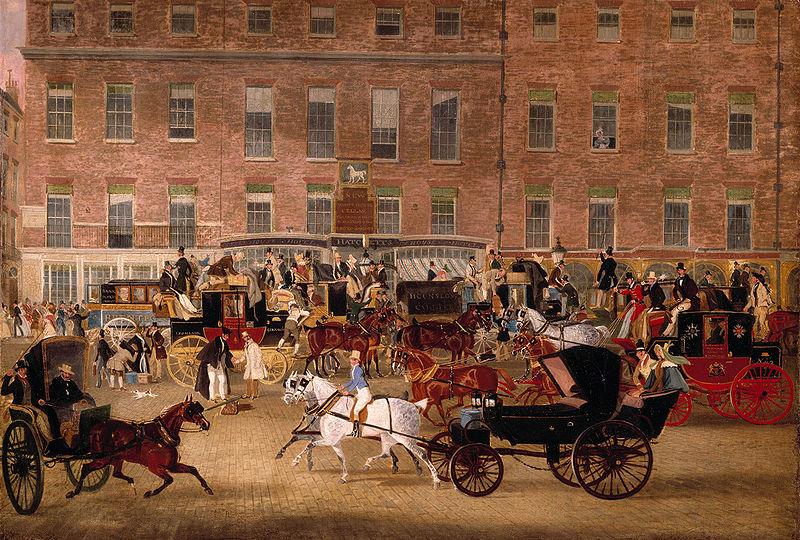
The White Horse Cellar, Piccadilly, by James Pollard

MISS JANE AUSTEN’S acquaintance with London began at an early date, as she frequently passed a few days there when journeying between Hampshire and Kent.

We have mentioned her sleeping at an inn in Cork Street in 1796. Most of the coaches from the south and west of England set down their passengers, it seems, at the “White Horse Cellar” in Piccadilly, which stood near to the entrance of what is now the Burlington Arcade. Jane and her brothers, therefore, probably alighted here and they would find Cork Street, immediately behind the “White Horse Cellar,” a convenient place for their lodging.

Jane visited Town on numerous occasions and stayed with her favorite brother, Henry, and his wife Eliza. Henry not only actively supported his sister’s writing career, but served as her agent, negotiating on her behalf with publishers and printers. When a book required editing and proofing, Jane would visit Henry to accomplish these ordinary, rather time-consuming tasks, Kathryn Sutherland’s opinions notwithstanding.

This post details her visits through Henry’s many moves as he experiences successes and tribulations in his professional and married life. In his varied career Henry served as a soldier in the Oxfordshire militia (1793-1801), a London banker (1801?-1816), and as a curate at Chawton from 1816.

Jane’s visit to Sloane Street, 1811

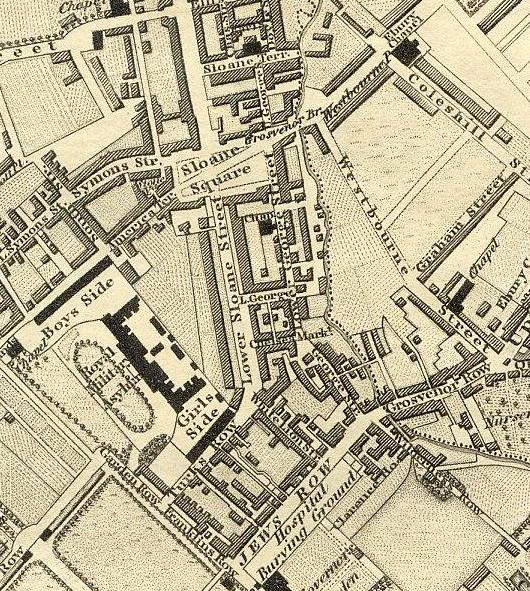
Greenwood's Map, 1827, of Lower Sloane St, Sloane Terrace, and Sloane Square

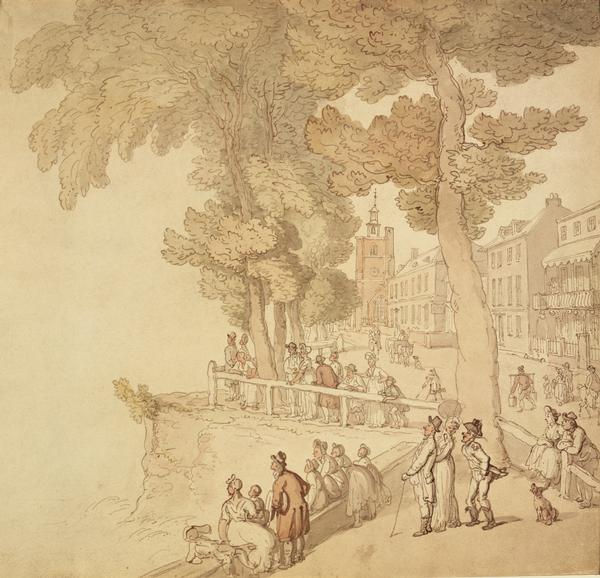
When Jane Austen visited her brother Henry in 1811, he lived in Sloane Street (today behind Harrods in Knightsbridge). At the time, the street was a wide thoroughfare that connected Knightsbridge with the west part of Pimlico and the east end of Chelsea. The area was still quite rural, for there was no development at the east side of Sloane Street before 1790.  In the late 18th century, the approach to London from this side was still regarded as a dangerous, for the area was rural and dimly lit. Chelsea, in fact, had just recently begun to be engulfed by a burgeoning London, but during Jane Austen’s day, the area was still quite bucolic and rural, as these images attest.

Cheyene Walk, London, late 18th c., early 19th century, People strolling by the banks of the River Thames, in the distance is Chelsea Old Church

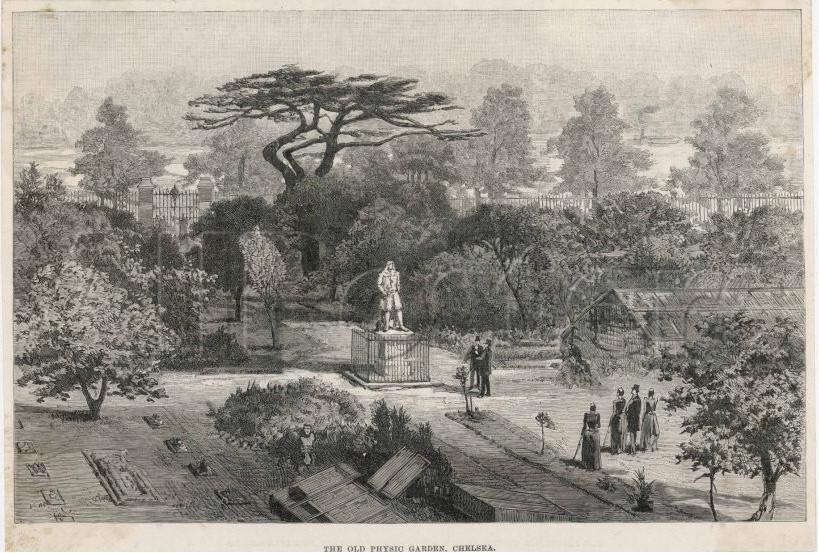
In 1796, the Old Dairy was erected, for cows still grazed nearby. The community was filled with gardens, in particular the Physic Garden founded in 1673 by the Worshipful Company of Apothecaries. Throughout these spacious grounds, apprentices learned to identify plants.

Chelsea, Old Physick Garden

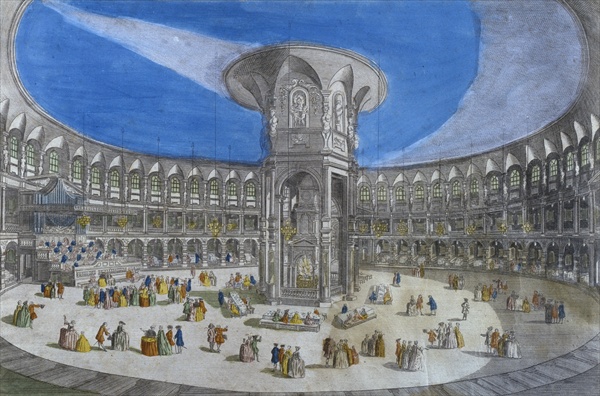
Ranelagh Gardens opened to the public in 1742 as a premier pleasure garden, popular with the wealthy and anyone who could afford a ticket.

Rotunda, Ranelagh Gardens

King’s Road, so named in the day of  King Charles IIs, was actually a private road that dated back to 1703. It connected Westminster to Fulham Palace, where he took a boat to Hampton Court.  King Charles also used the road to visit his mistress Nell Gwyn. At this time, the royal palace was at Hampton Court and Chelsea was known as the Hyde Park on Thames.

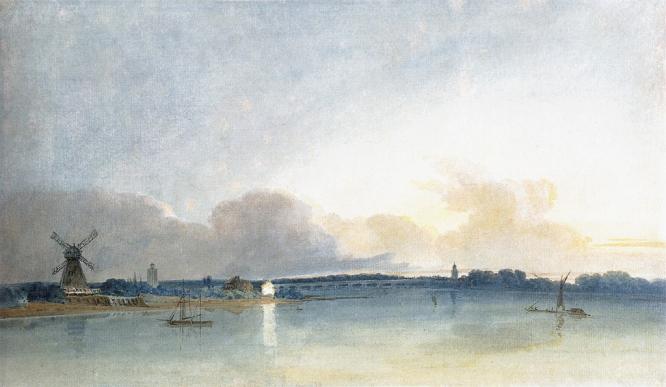
The White House at Chelsea, 1800, Thomas Girtin

By the time Henry Austen moved to Sloane Street the neighborhood had changed enough for Jane to experience pleasant society, although ten years after Jane’s death, Greenwood’s Map (1827) still showed many empty lots and gardens in the vicinity. (See map above.)

While living in Sloane Street, Henry was a successful man:

Henry and two associates had founded a banking institution in London sometime between 1804 and 1806. Austen, Maunde and Tilson of Covent Garden flourished and enabled Henry and Eliza to move from Brompton (where Jane Austen had found the quarters cramped during a visit in 1808) to a more fashionable address and larger house at 64 Sloane Street. Jane’s visits here in 1811 and 1813 were happy events, filled with parties, theatre-going, and the business of publishing Sense and Sensibility and Pride and Prejudice. – Henry Austen: Jane Austen’s “Perpetual Sunshine” by J. David Grey

When visiting her brother, Jane would venture into Town to shop and visit the theatre (Read Tony Grant’s article about Jane Austen and the Theatre).  Henry and Eliza were a fun-loving  and popular couple, and from Jane’s description in a letter below,  they knew how to throw a party:

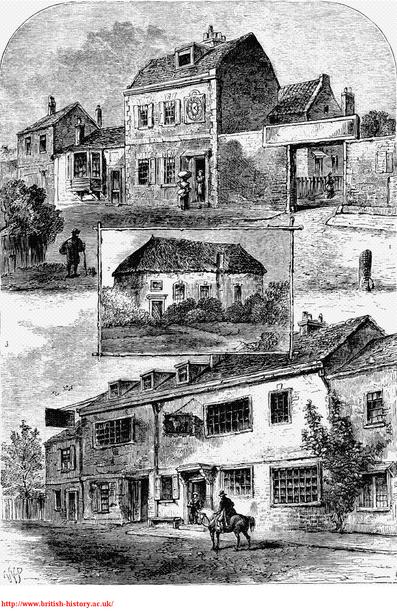
Old Chelsea, 1750. Clock House, Moravian Chapel, White Horse Inn Image from @BritishHistoryOnline

“Our party went off extremely well. The rooms were dressed up with flowers, &c., and looked very pretty. . . . At half-past seven arrived the musicians in two hackney coaches and by eight the lordly company began to appear. Among the earliest were George and Mary Cooke, and I spent the greatest part of the evening very pleasantly with them. The drawing-room being soon hotter than we liked, we placed ourselves in the connecting, passage, which was comparatively cool, and gave us all the advantage of the music at a pleasant distance, as well as that of the first view of every new comer. I was quite surrounded by acquaintance, especially gentlemen.”

She went on to describe the music as extremely good and “included the glees of ‘Rosabelle,’ ‘The Red Cross Knight,’ and ‘Poor Insect.’ Wiepart played the harp and Miss Davis, all dressed in blue, sang with a very fine voice.”

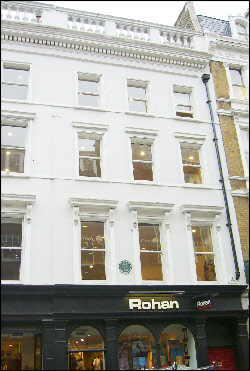
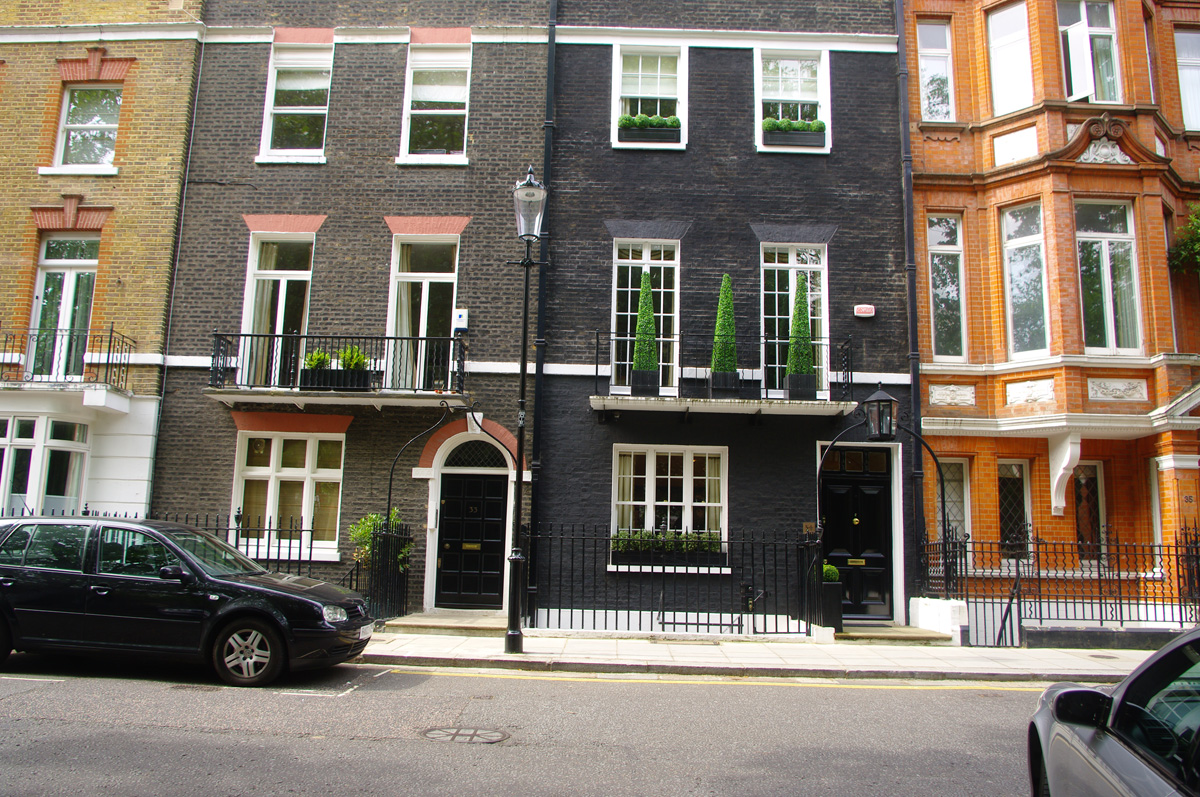
Henrietta Street today

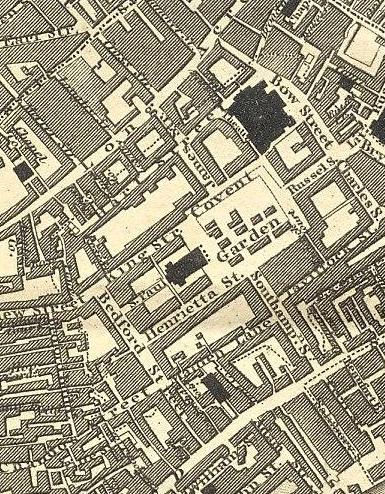
Henrietta Street, 1813

In 1813, Henry, who was four years older than Jane, lost his wife after a painful and debilitating illness. In contrast, his Uncle Leigh Perrot and brother Edward helped to secure his appointment as Receiver-General for Oxfordshire,  a most definite honor. Soon after Eliza’s death, Henry moved to rooms over Tilson’s bank on Henrietta Street in Covent Garden, a location more centrally located in London.

Both Jane and Fanny Knight, their niece, visited him there in the spring of 1814, when Mansfield Park was with the publisher.

Henrietta Street Covent Garden 1827

As was the custom, Jane brought lists of items to purchase  in Town for those who had remained behind in the countryside. In her biography, Constance Hill writes about Jane’s shopping experience:

“I hope,” she writes to her sister, “that I shall find some poplin at Layton and Shear’s that will tempt me to buy it. If I do it shall be sent to Chawton, as half will be for you; for I depend upon your being so kind as to accept it . . . It will be a great pleasure to me. Don’t say a word. I only wish you could choose it too. I shall send twenty yards.” Layton and Shear’s shop, we find, was at 11, Henrietta Street, Covent Garden.

Hans Place, 1814

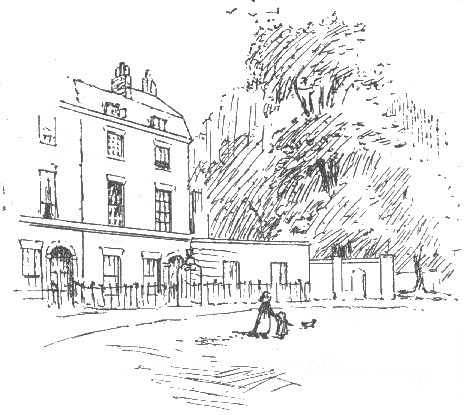
In 1814, Henry moved from his rooms above his bank to a house he purchased in Hans Place in Knightsbridge. The area was situated near his old quarters on Sloane Street, where he and his wife had spent such a pleasurable time together.

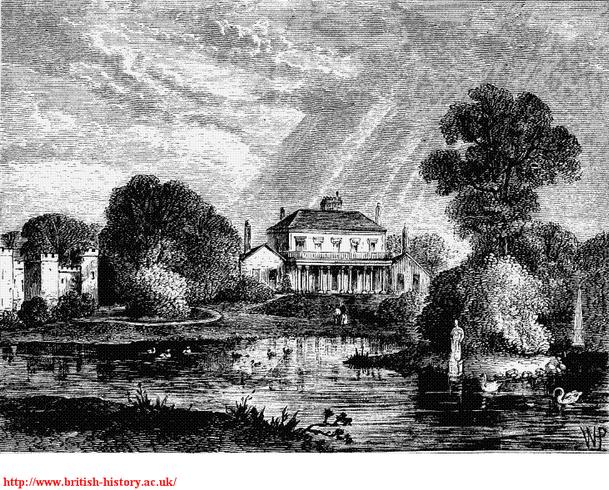
Hans Place, The Pavillion, 1812. Image @British History Online

Today, the area, developed by Henry Holland, looks much different than when Jane and Henry knew it (see the image below), but the gardens are not much changed.

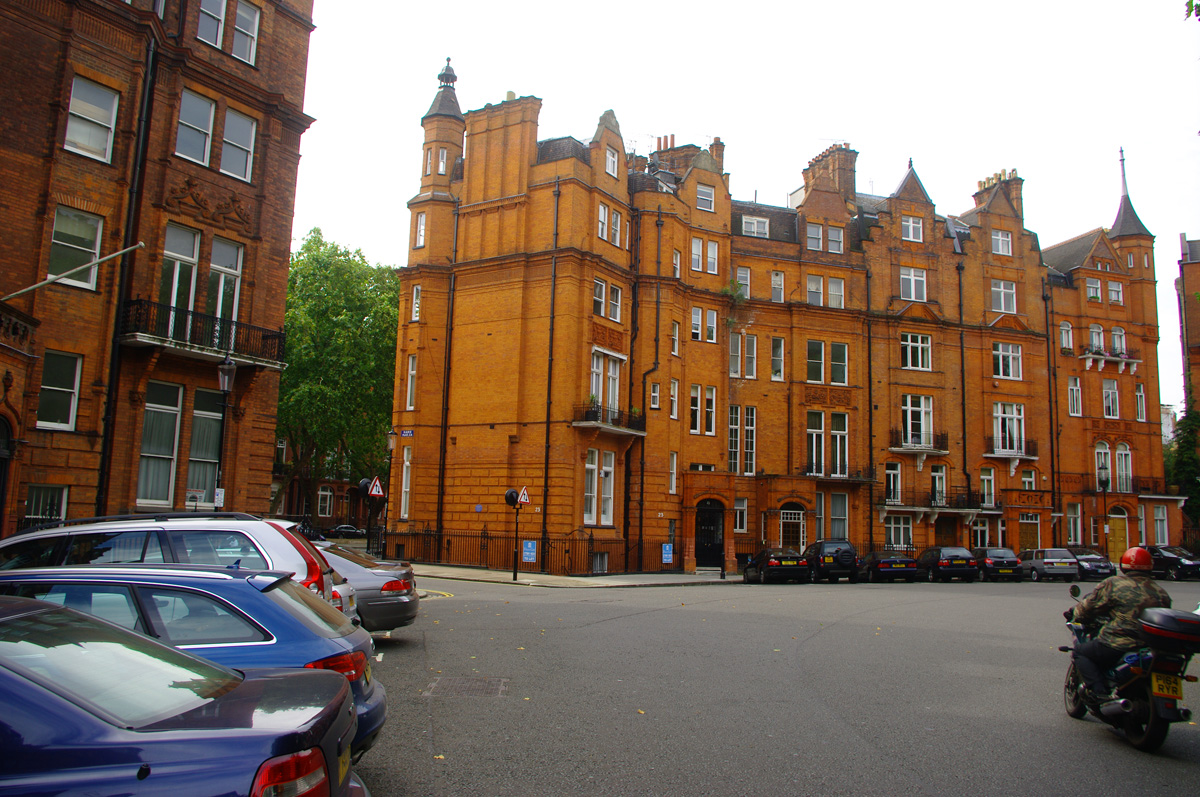
How Henry Austen's house must have looked. Image @TonyGrant

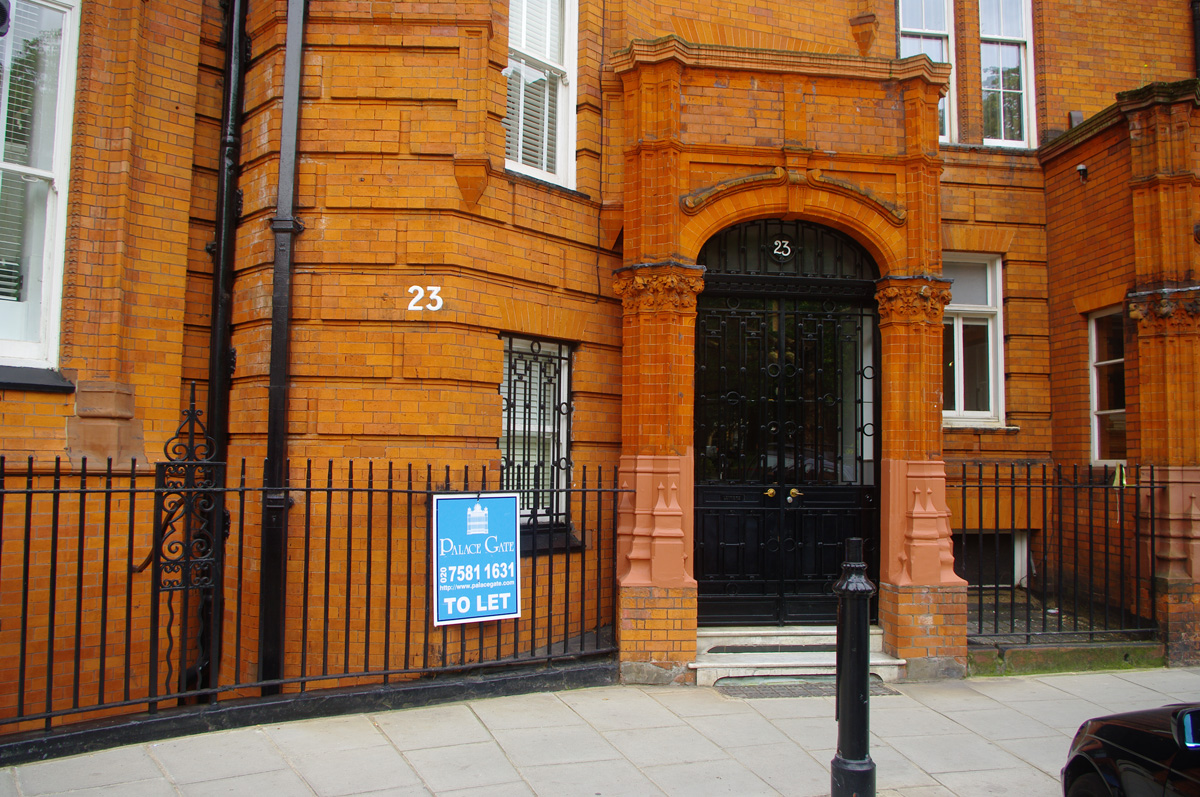
#23 Hans Place is on the corner. The location today.

Jane found #23 Hans Place delightful and Henry’s new house more than answered her expectations. She also admired the garden greatly. In the early part of the 19th century, Sloane Square was an open space enclosed with wooden posts, connected by iron chains. (British History Online)

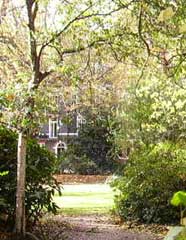
Hans Place garden

In Hans Place, Jane had the use of a downstairs room that opened onto the garden, and she describes her pattern of working indoors, then taking a break in the garden: “I go & refresh myself every now & then, and then come back to Solitary Coolness.” I like Claire Tomalin’s comment in her biography of Jane Austen (1997) that this is “very much what someone settling down to write does, getting up, pacing, thinking, returning to the page she is working on.” – My Long Jumble, Sarah Emsley

Door to #23 Hans Place today. Image @TonyGrant

Jane visited Henry in Hans place twice, once in 1814, and for a more extended period from October to December in 1815, when she was preparing Emma for publication. During this visit, Henry became seriously ill and Jane nursed him back to health. She also famously visited the Prince Regent’s library at Carlton House during Henry’s recuperation.

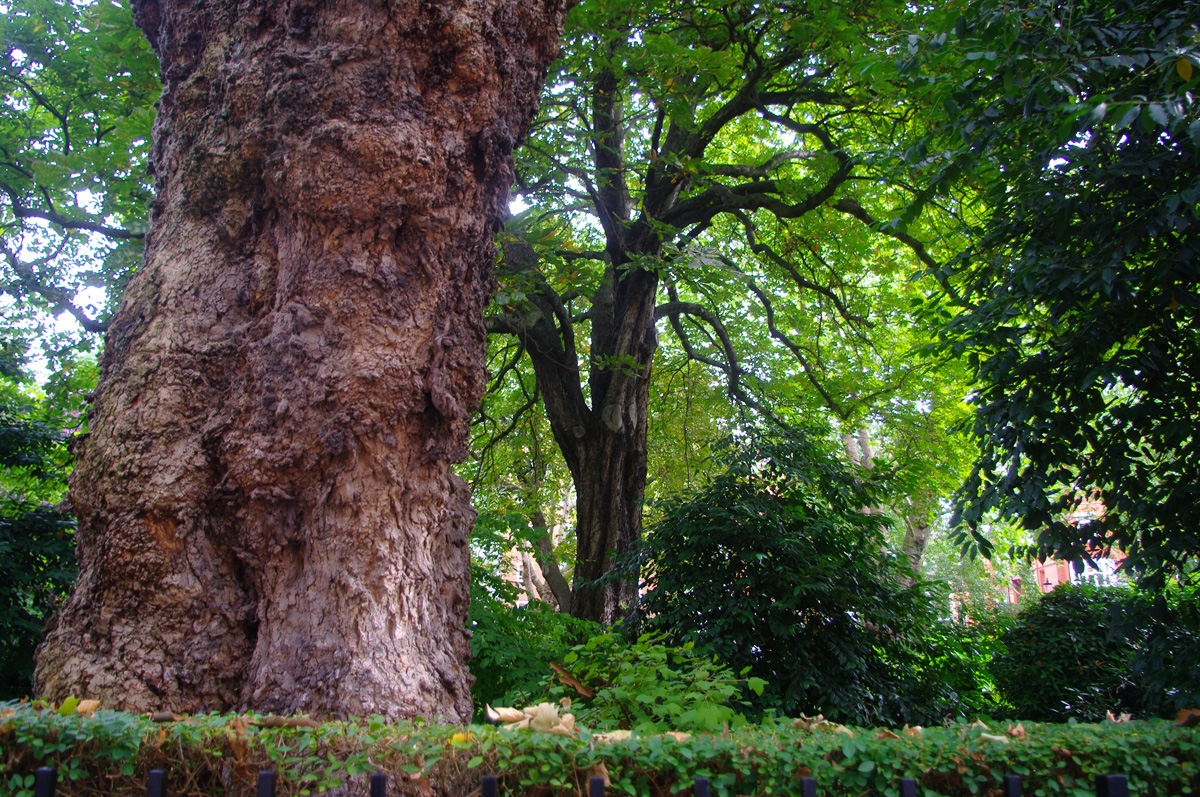
London plane trees in Hans Place, image @TonyGrant

Constance Hill writes in her biography: “… we are also told “that Hans Place” was then “nearly surrounded by fields…We hear of a small evening party to be given in Hans Place whilst Fanny is staying there with her aunt. After describing the morning engagements, Jane writes: “Then came the dinner and Mr. Haden [the apothecary who was instrumental in arranging Jane’s invitation to Carlton House] , who brought good manners and clever conversation. From seven to eight the harp; at eight Mrs. L. and Miss E. arrived, and for the rest of the evening the drawing-room was thus arranged: on the sofa the two ladies, Henry and myself, making the best of it; on the opposite side Fanny and Mr. Haden, in two chairs (I believe, at least, they had two chairs), talking together uninterruptedly. Fancy the scene! And what is to be fancied next? Why that Mr. H. dines here again to-morrow. . . Mr. H. is reading ‘Mansfield Park’ for the first time, and prefers it to P. and P.”

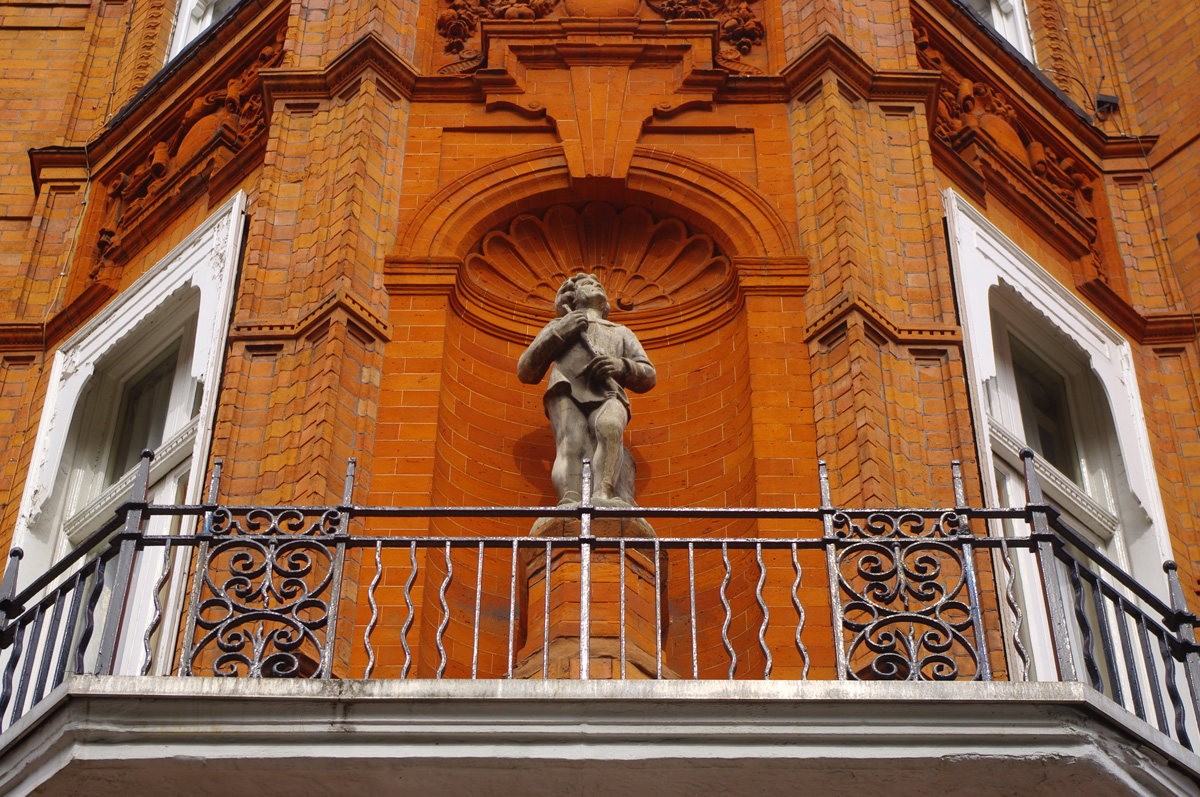
Corner of #23 Hans Place. Image @TonyGrant

Since Henry lived in #23, Hans Place has been redeveloped. Only numbers 15, 33 and 34 still survive as they once were, but the garden that Jane liked so much remains largely intact in its arrangement. The original railings, however, no longer survive, having been molten down for their iron in World War II.
Only months after Henry recovered from his illness, his bank crashed, bankrupting him and placing a number of his Austen siblings in financial distress. Henry soon became a curate at Chawton. After this period, no more visits by Jane to London are recorded. Today, two of Henry’s residences, the one on Henrietta Street and #23 Hans Place, are  still easy for visitors to tour during a short London excursion.
More on the topic:

Houses in Hans Place drawn by Ellen G. Hill, 1901

Read Full Post »

Copyright (a) Jane Austen’s World. Gentle Readers, The previous post elicited a question about Regency underdrawers or a lady’s unmentionables. My answer was so long that I decided to create a new post from it.

1742 and 1794 fashion silhouette contrast

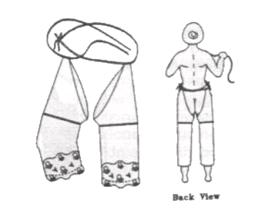
Drawers, which made their first serious appearance in 1806, and were fashioned after men’s underdrawers, were still optional during 1810. They would be worn more frequently as the century progressed. Underdrawers were considered risque, for the garments resembled men’s pant legs.  Even if the garments were worn, they did not resemble the pretty underdrawers that we associate with the Victorian era.

Image of early under drawers

As you can see in this image, early ladies underdrawers consisted of two tubes of cloth that were tied to the waist, allowing a woman to, uhm, attend to her business without having to remove too many clothes. In an era without indoor plumbing, this must have been an important consideration.

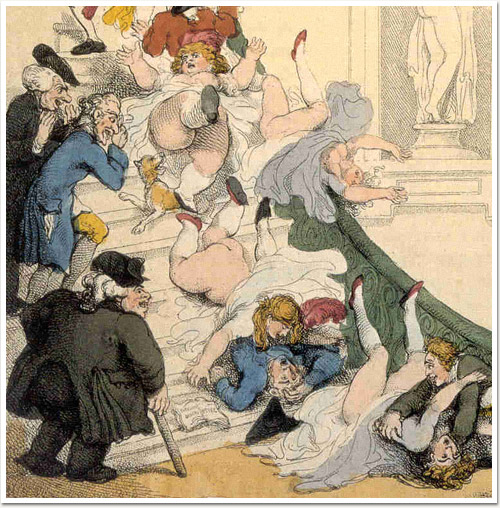
I recently viewed a shameless cartoon by Thomas Rowlandson of a group of travelers (3 ladies and a gent, all family members), who were attending to their calls of nature on the side of the road. Because the image is quite vulgar, which many of Rowlandson’s images tend to be, I will only link to it. From the headdresses that the ladies are wearing, this cartoon was drawn much earlier than 1806. As you can see, no underdrawers obstructed the group from relieving their most pressing needs.

Detail of the Exhibition Staircase, Rowlandson, 1800

Detail of Rowlandson's Exhibition Staircase, 1800

Rowlandson’s Exhibition Staircase cartoon has a given date of 1800. The ladies’ tumble down a steep, crowded staircase forcibly reminds us that underdrawers were still a fashion consideration for the future.

Underdrawers belonging to the Duchess of Kent, 1810-1820. *Image@Regency Society of America Pro Boards

By 1820, wearing drawers was still optional, but by the 1850’s, the caged hooped skirts made them a necessity, for a hoop could be wildly unpredictable. One wrong swinging move or errant gust of wind, and a lady’s most delicate (or indelicate) parts would appear in full view. The 1956 version of The King and I contains one of my favorite scenes in which the King’s wives wear Western dresses for the first time. When the King enters, they immediately drop down to bow to him. Their hooped skirts swung straight up in the air, revealing their bare bottoms and shocking Anna, who had not anticipated such an END (ahem) to her well-meant scheme.

Caged crinoline

Needless to say, by the mid-19th century, ladies wore drawers as a matter of course.

*Regency Society of America Pro Boards

Read Full Post »

Copyright (c) Jane Austen’s World. A fine mist and cool air will  greet my dog and me on our morning walk. I intend to put on a thick short coat and scarf, and faux fur lined boots. How would my Regency counterpart have dressed in November, 1810, precisely 200 years ago?

More elegantly, I decided. While I putter on my computer in my jammies and robe, and sip coffee upon first rising, my Regency counterpart would have sipped hot chocolate from a delicate china cup and written letters, read from a book, or practiced on the pianoforte, as Jane Austen was wont to do in the early morning.

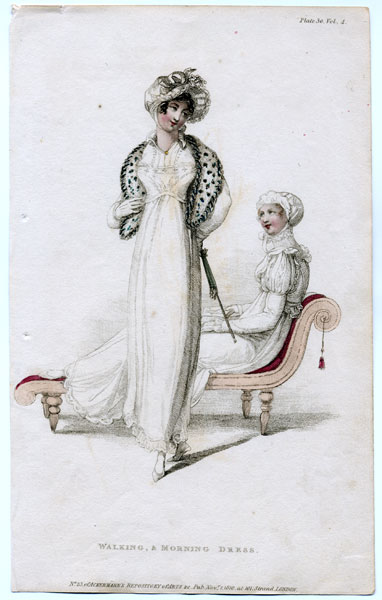
The maid would have started a fire in the morning room, but the house overall would have felt much cooler than it did even a month ago. A Rumford stove, which was becoming quite popular, would have retained  more heat, but as you can see, our Regency miss is swathed in a cap, long sleeved dress, and a high-necked chemisette. She wears gloves, stockings, and thin slippers. Layered as she is (for she probably wore a corseted petticoat underneath her ensemble and perhaps even a chemise), she would have felt comfortably warm. Had she still felt cold, she could opt to throw a thick shawl around her shoulders and a small throw over her lap.

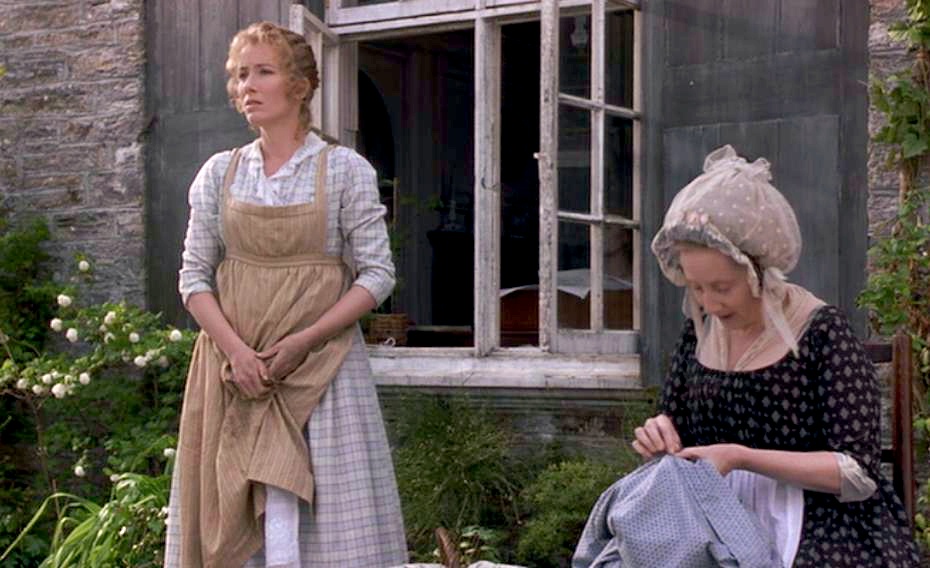
Morning dress, or undress, were dresses worn by ladies who expected to be seen only by close members of the family or guests in the home. They were never meant to be seen by visitors. Undress outfits, especially in more modest households where women worked alongside their servants, preparing vegetables or overseeing household duties, gardening and the like, were covered by aprons and pinafores.

In this image from Sense and Sensibility 1996, Elinor and Mrs. Dashwood are shown wearing undress. As soon as Edward Ferrars nears the house, the women tidy themselves, taking off their aprons, and making sure they look neat and presentable. They would not have had time to change into nicer outfits, nor would they have likely had many choices of dress to choose from.

Some Regency ladies who stayed at home all day would remain in a state of undress until dinner, when they changed into a gown suitable for the dinner table. Others would change their outfit much sooner, when they were ready to leave the house or if they had arranged to receive visitors. After I finish writing this post, I shall put on my half-dress, replacing my morning robe with a walking outfit consisting of a hooded sweatshirt, long-sleeved t-shirt, jeans a short coat and a scarf. I’ll exchange these outdoor exercise clothes with a more formal office look for work, which means that I will have worn three outfits by nine a.m.

My Regency counterpart would also change her outfit. A lady of fashion would look vastly more elegant  in her walking outfit with its little fur tippet artfully arranged over a long-sleeved spencer jacket than me in my walking suit. If she was married or a spinster, she would place her  jaunty hat with its  soft capote crown over a cap, whose lace trim would peep out from beneath the hat’s brim. Sturdier leather slippers, leather gloves, a reticule and umbrella or parasol would complete the ensemble.

A middle class lady would look less modish than the idealized women depicted in Ackermann’s Repository, which was the Vogue magazine of its day. She would have fewer clothes to choose from, and most likely possessed only one walking outfit instead of a variety, and certainly not in the first stare of fashion.

Whatever her social background, our Regency lady was now ready to meet the world and visit friends, go shopping, or generally run errands outside of the house. The walking outfit in the Ackermann plate provided sufficient layers for a lady to stay warm during her walks and errands. Should the November day turn particularly windy and wet, she would most likely trade the tiny fur tippet for a more substantial shawl or cloak. The middle class Regency lady might trade her shawl for her only cloak, which she would keep for years until its usefulness was outworn.

More on the topic:
Read Full Post »

“Now, Edward,” said [Marianne], calling his attention to the prospect, “here is Barton valley. Look up it, and be tranquil if you can. Look at those hills! Did you ever see their equals? To the left is Barton park, amongst those woods and plantations. You may see one end of the house. And there, beneath that farthest hill, which rises with such grandeur, is our cottage.”

“It is a beautiful country,” he replied; “but these bottoms must be dirty in winter.”

“How can you think of dirt, with such objects before you?”

“Because,” replied he, smiling, “among the rest of the objects before me, I see a very dirty lane.”

“How strange!” said Marianne to herself as she walked on.

“Have you an agreeable neighbourhood here? Are the Middletons pleasant people?”

“No, not at all,” answered Marianne, “we could not be more unfortunately situated.”

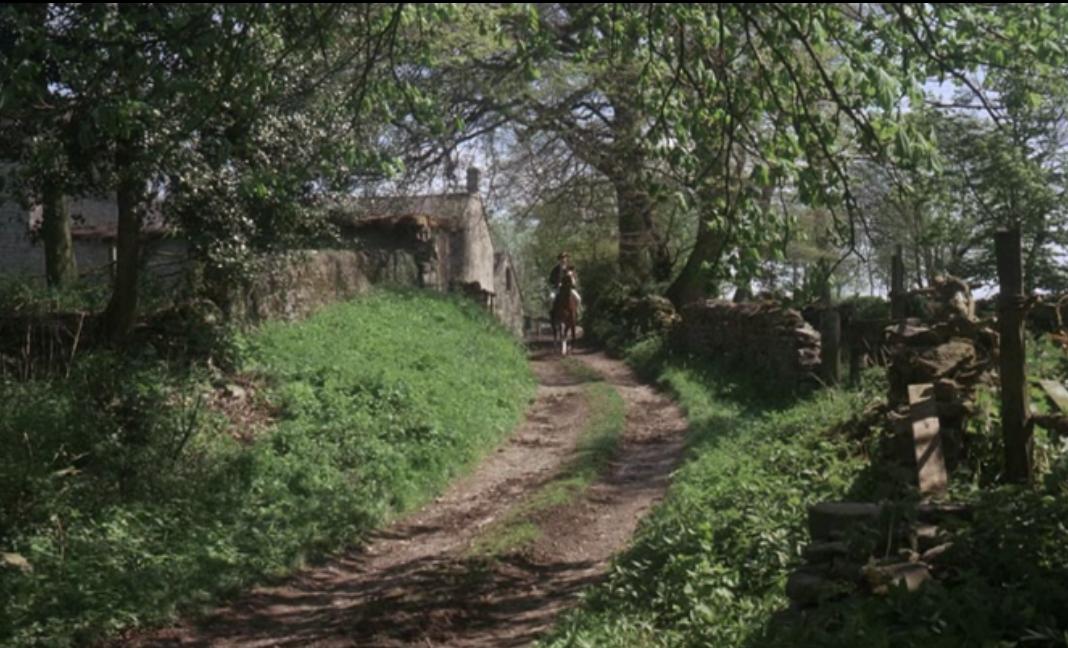
Country lane, Barry Lyndon

I had the leisure of viewing Stanley Kubrick’s Barry Lyndon the other day, I say leisure, for the film is over three hours long and I took the opportunity to pull images. These two stills of country roads reminded me forcibly of the difference between Marianne’s histrionic behavior in Sense and Sensibility and Edward’s reactions during a time when both characters are experiencing extreme disappointment in their love lives.

Marianne has completely given over to her emotions after Willoughby departs, and Edward struggles to hold up his chin, knowing he is in love with Elinor but is bound by his engagement to Lucy Steele. His view of the landscape is utilitarian. He sees none of the sweep of grandeur and only the practical aspects of the scene below and can only imagine it in the winter, when roads are rutted and muddy. Throughout Sense and Sensibility, Marianne expresses picturesque point of views. In this scene in particular, she also demonstrates her youth and immaturity, giving Edward a churlish answer about their new neighbors, which, while perhaps  true, the sensible Elinor would never admit.

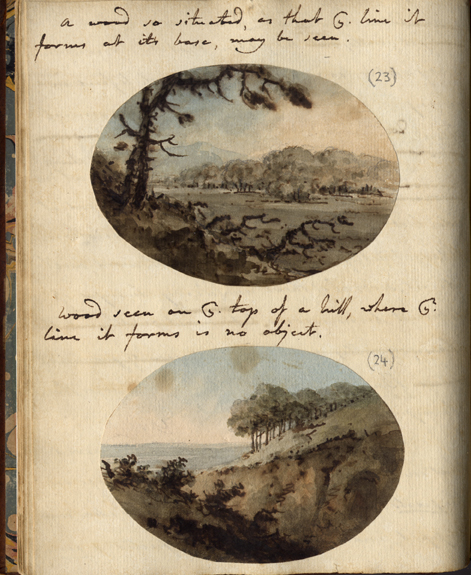
William Gilpin was instrumental in promoting the Romantic picturesque movement, which defines an aesthetic sensibility of a charming or quaint scene. Marianne Dashwood, whose personality tends towards the melodramatic, embraces the fashion for the picturesque ideal, whereas both Elinor Dashwood and Edward Ferrars represent a more practical viewpoint which depends less on the sublime and relies more on what their experiences and restrained personalities tell them to feel.

Gilpin's watercolor shows how best to achieve a picturesque effect through the clumping of trees.*

The following quote about William Gilpin’s influence on this new aesthetic movement is from the aptly titled, Penny cyclopaedia of the Society for the Diffusion of Useful Knowledge, Volumes 11-12, Charles Knight, London, 1838, p. 222:

But Mr Gilpin was a person of a remarkably refined taste, as is evinced by writings of his, of a class entirely distinct from those we have enumerated. These are his volumes in which he has illustrated, both by his pencil and his pen, the picturesque beauty of some parts of England, and generally the principles of beauty in landscape. The first of these works was published in 1790 in two volumes 8 vo; it was entitled Observations relative chiefly to Picturesque Beauty, made in the year 76 in several parts of Great Britain, particularly the Highlands of Scotland. This was followed by two other volumes of the same character, the greater part of them relating to the lake country of Cumberland and Westmoreland. Two volumes more on Forest Scenery succeeded. Besides these there are his Essays on Picturesque Beauty, Picturesque Travels, and the Art of Sketching Landscapes; Observations on the River Wye; and Picturesque Remarks on the Western parts of England. These form a body of works which were well received by the public at the times of their appearance, and which are now gathered into the libraries of the tasteful and the curious, so that copies rarely present themselves for public sale.”

The picturesque ideal expressed itself in literature, poetry, and paintings, and its influence could still be felt in the romantic paintings that depicted the natural beauty of America’s vast landscapes, such as the Hudson River School of painting.

Excellent posts about the topic are found in the following blogs:

*William Gilpin, How to Clump Trees, Bodlein Library

Read Full Post »

« Newer Posts - Older Posts »