Feeds:
Posts
Comments

Archive for the ‘Regency style’ Category

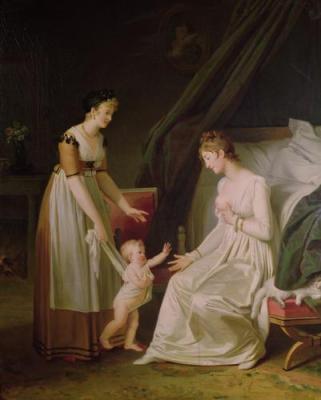
Breastfeeding mother, Marguerite Gerard

French artists Marguerite Gerard (1761-1837) painted this domestic scene of a mother about to breast feed her child.  The subject is unusual in that breasfeeding one’s baby was unfashionable for aristocratic and upper classes,  and the act had become associated with the poor and lower classes.

Generally, wet nurses were paid to feed the babies of the wealthy. Much thought and care went into their selection, and their milk was examined for texture, color, viscosity, and taste. Some thought that aspects of a wet nurse’s personality could be passed through her milk, and therefore her character had to be impeccable. Cassandra Austen, Jane Austen’s mother, sent all her children to the nearby village of Deane to be nursed in their infancy.  Although Cassandra Austen visited her babies daily, they did not return to the family fold until they were around 18 months of age.

The popularity of wet nurses stemmed from the fact that royalty often wanted large families. Wet nurses were hired to feed the newborn so that the royal mother would soon regain fertility and become pregnant again. When royals stopped breastfeeding their children, other women from wealthy families soon followed suit and began to farm their babies out to wet nurses.  This practiced continued until the end of the 19th century, when it largely died out.

Read Full Post »

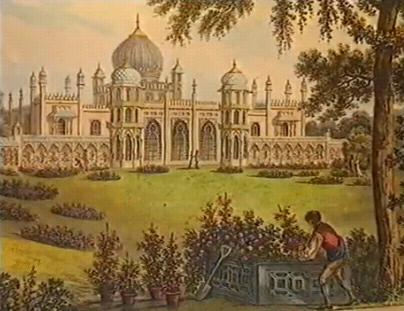
Repton's design for the gardens for the Royal Pavillion, Brighton

Sir Humphry Repton (1752-1818), who was mentioned in a previous post about the paint color Invisible Green was a famous landscape designer during the end of the 18th century and early 19th century. “In his day, [he]was equal in stature to Capability Brown or Gertrude Jekyll, but is now often-overlooked. However, he was once favoured by the Prince Regent (later George IV), drawing up plans for the Brighton Pavillion, as well as working at Woburn, in Londons Bedford Square, Sherringham in Norfolk and Ensleigh in Devon.”

This 1991 film about Repton’s career, which I found on YouTube and whose title I could not find, features Sir Michael Hordern as the narrator and John Savident as Repton. The special showcases Repton’s magnificent drawings for the redesign of many famous properties; some of his work can still be observed in their natural settings.

About the name: Is it Humphry or Humphrey? I have seen both spellings. The BBC spelled the name as Humprhey, whereas the National Portrait Gallery, Morgan Library, and the majority of sources use Humphry.

Read Full Post »

Inquiring reader: This is the second post by historical paint expert Patrick Baty of Papers and Paints, who has carried out extensive research into the use of pigments in architectural and decorative paintings. He has kindly answered a question about the paint color “invisible green,” which was left on his previous post, Painting a House During the Regency Era.

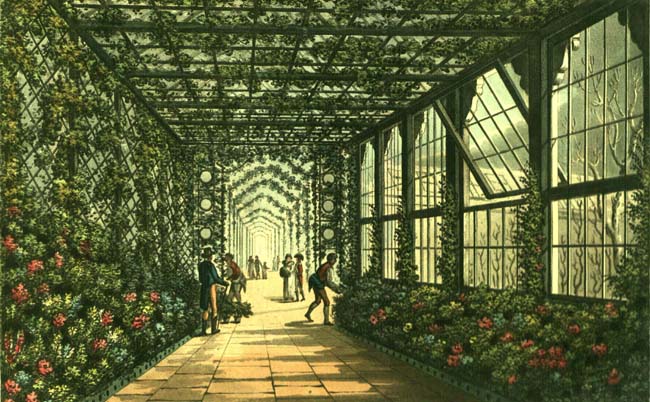
Invisible Green was a favourite of Humphrey Repton, the famous landscape designer of the Georgian/Regency eras. (The image above shows his trellises painted in a dark, rich green.)

William Mason, in his poem “The English Garden” published in 1783, provides us with a very early reference to the Picturesque treatment of fences and to the colour that became know as “Invisible Green”. He describes in verse the preparation of a dark green oil paint based on yellow ochre and black with white lead. Great care was required in mixing the right colour:

‘Tis thine alone to seek what shadowy hues
Tinging thy fence may lose it in the lawn…”

and he concludes by saying:

the paint is spread, the barrier pales retire,
snatched as by magic from the gazer’s view”.

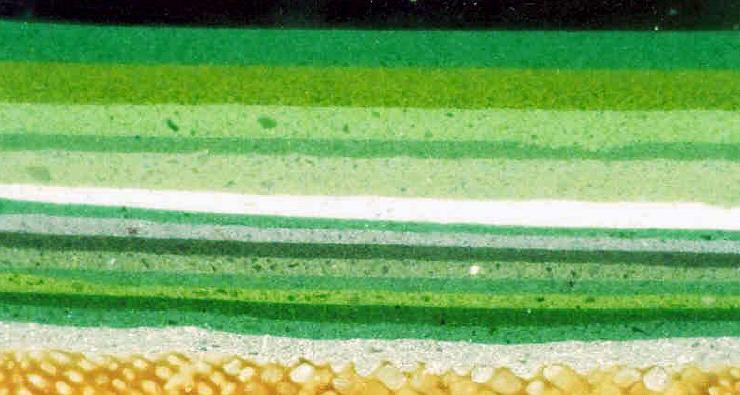
Patrick Baty, Green Schemes, Garden Door, Scottish Estate

In 1808, James Crease, the Bath colourman, described “Invisible Green” as a dark green:

so denominated from its being proper for covering gates and rails in parks, pleasure grounds, etc. by rendering them in a measure invisible at a distance on account of its approximation to the hue of the vegetation”.

In 1829, T.H. Vanherman, the London colourman, described Invisible Green as follows:

“The Invisible Green is one of the most pleasant colours for fences, and all work connected with buildings, gardens, or pleasure grounds, as it displays a richness and solidity, and also harmonizes with every object, and is a back-ground and foil to the foliage of fields, trees, and plants, as also to flowers.”

One of my early projects was at Uppark, where the young Emma Hamilton is alleged to have danced naked on the dining room table.  The wonderful Lucy Inglis has written very well in her blog Georgian London about the concept of prostitution in the eighteenth century in Frances Barton – Alimony and Acting: The Life of Nosegay Fan.

More information on this topic:

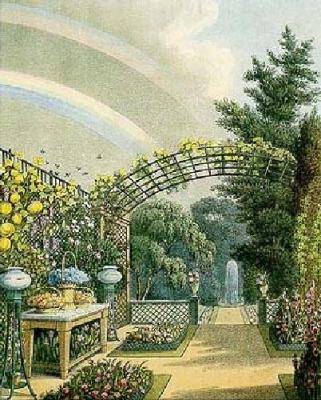
Second image by Sir Humprhy Repton of a garden building for the Royal Pavillion at Brighton. The design was not used.

Read Full Post »

Inquiring readers, One of the perks of overseeing a blog is getting to know the fascinating people one encounters while researching a topic. One such individual is Patrick Baty of Papers and Paints. Mr. Baty has carried out extensive research into the use of pigments in architectural and decorative paintings. Recently I asked him the following questions:

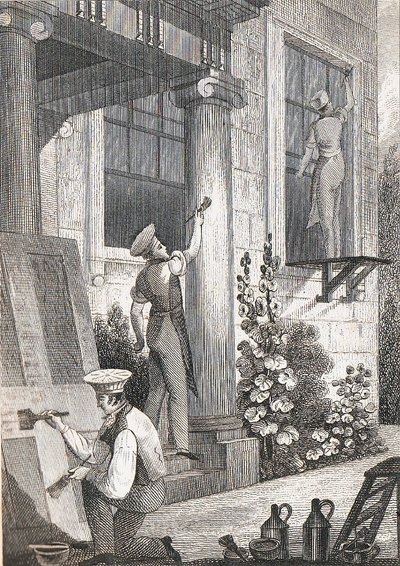
Image of painters from Papers and Paints

“If Sir Walter Elliot from Persuasion decided to paint the door to the carriage house at Kellynch Hall, how would this be accomplished? Would he keep a painter on hand or hire one? Were paints made from scratch from a tried and true formula, or did each painter have a formulaic secret? What were the typical colors used for exterior doors and window casements, and wooden structures?”

Mr. Baty: “It is likely that [Sir Walter] would have hired a painter, unless he was tempted by some of the literature of the time, for example T.H. Vanherman’s “Every Man his own House-painter and Colourman“, 1829. One hundred years earlier there was this revealing passage in a work of 1734:

“Painters Work being very expensive, and this being the only part in Building wherein a Gentleman can be assisting either by himself or Servants, it being almost impossible for any Gentleman to do either Masons, Bricklayers, Carpenters, or Smiths Works; whereas it is well known and daily experienced since the Advertisement of ALEXANDER EMERTON, that several Noblemen and Gentlemen have by themselves and Servants painted whole Houses without the Assistance or Direction of a Painter, which when examined by the best Judges could not be distinguished from the Work of a professed Painter.”

If his house/estate were big enough he might have had a handyman/painter. Otherwise he would have called upon the services of a firm like Messrs Moxon & Carfrae Ltd, painters and decorators, Edinburgh, whose day books survive from the 1770s.

Paints were generally made from ready-mixed paste bought at a colourman’s shop as can be seen in this quote of 1747:

“Methods practised by some Colour-Shops; who have set up Horse-Mills to grind the Colours, and sell them to Noblemen & Gentlemen ready mixed at a low price, & by the help of a few printed Directions, a house may be painted by any common Labourer at one Third of the Expense it would have cost before the Mystery was made public”

Different painters might have had slightly different recipes, but the general mixes would have been very similar.  (The Methods and Materials of the House Painter in England: An Analysis of House Painting Literature 1660 – 1850, thesis by Patrick Baty.)

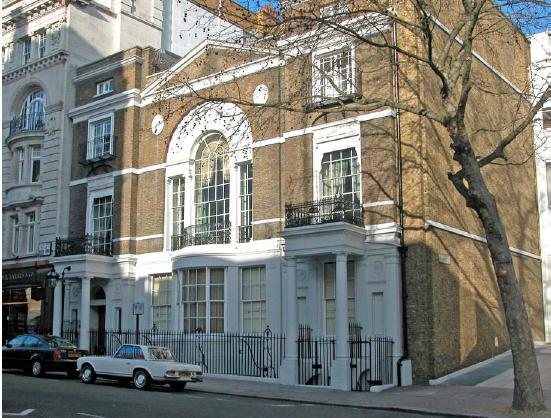
Boodle's St. James's. Papers and Paints performed the colour survey.

The sort of colours being sold by a Bath colourman of the period for exterior use were:

Olive brown paint in casks of 30lb & upwards, per lb 3d

Oil Paints

  • Lead colour 4 1/2d
  • Chocolate colour 4 1/2d
  • Invisible green 4 1/2d
  • Stone colour 5d
  • Black 6d
  • Garden green 8d
  • Rich bottle green 1 0
  • Deep Sardinian green 2 0
  • Light ditto, ditto, 2 0
  • Rainbow green 3 6

Windows, normally, would have been a pale stone colour (off white).

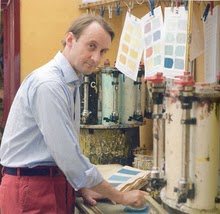
More about Patrick Baty:  Since carrying out a research degree which focussed on The Methods and Materials of the House-painter 1650-1850,Patrick has been running a consultancy that advises on the use of paint and colours in historic buildings.  Buildings have ranged in size and type from Royal palaces; country houses and cathedrals to museums; a wartime RAF station and London housing estates.

Visit Patrick’s sites at the following links: Papers and Paints website; Colourman Blog, the Papers and Paints blog; and Papers and Paints Twitter Account.

More on the topic:

Read Full Post »
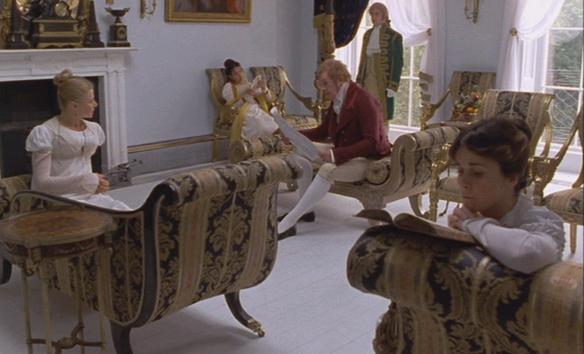
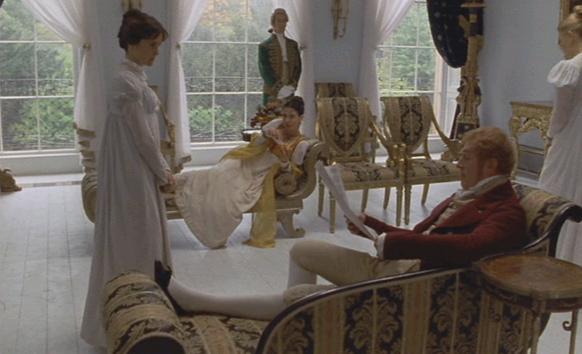
Camden Place, Bath. Sir Walter Elliot and his family reading.

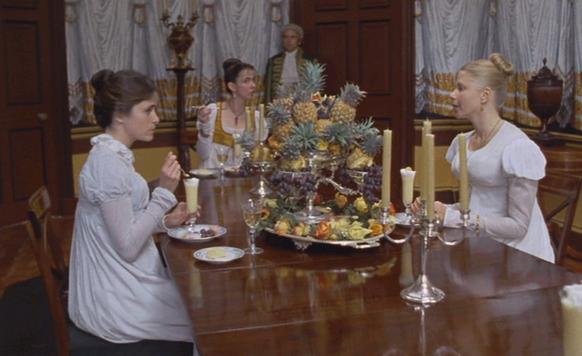
Thomas Hope (1769–1831), the style icon of the Regency interior, would have been happy with these images of Sir Walter Elliot’s interior of Camden Place in Persuasion 1995.  Thomas Hope was known for the “decorative details and ornament based on influences from his nearly ten-year Grand Tour, as well as from motifs from ancient Greece and Egypt.”

Camden Place: A view of the Drawing Room

Hope’s startling juxtaposition of styles included Egyptian, Greek, Roman and Indian elements, as well as his own version of the French Empire style. Classical sculpture and vases were displayed alongside modern paintings and sculpture. Most striking of all was the inventive and exotic furniture that Hope designed specifically for the house. – Exhibition, Thomas Hope, V&A Museum

Camden Place: Dining Room (Anne and Elizabeth Elliot and Mrs. Clay)

From these images it is quite obvious that the set designer of this film chose furniture and draperies that for the Regency era would have been regarded as ultra fashionable. Sir Walter might have moved from Kellynch Hall to reduce his expenses, but his tastes remain expensive and he shows no inclination to follow the rules of economy.

More on the Topic

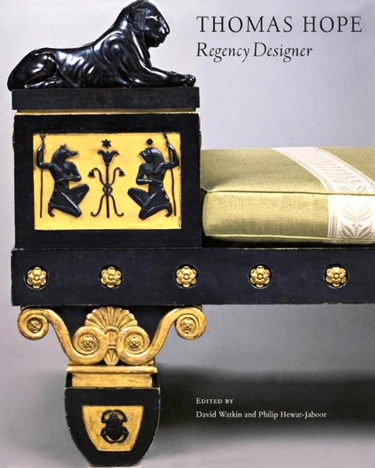
Thomas Hope: Regency Designer

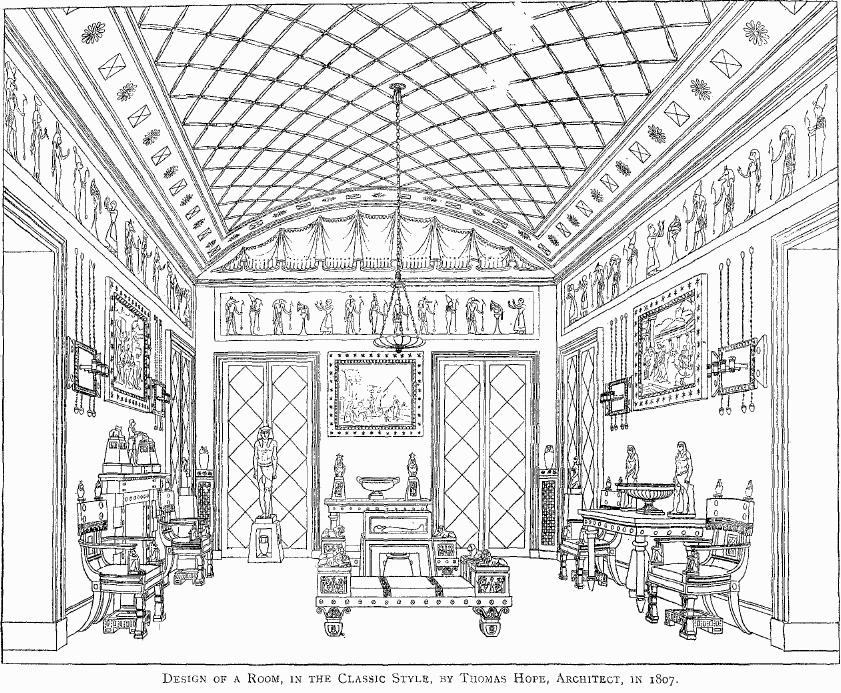
Like designers of his day, Sir Thomas Hope drew his planned room design ahead of time. Witness the following whole room design:
Design of a room, 1807, by Sir Thomas Hope

Read Full Post »

« Newer Posts - Older Posts »