Feeds:
Posts
Comments

Archive for the ‘Regency style’ Category

Edward Austen Knight

[Marianne] “’What have wealth or grandeur to do with happiness?’
‘Grandeur has but little,’ said Elinor, ‘but wealth has much to do with it.’‘Elinor, for shame!’ said Marianne; ‘money can only give happiness where there is nothing else to give it. Beyond a competence, it can afford no real satisfaction as far as mere self is concerned.’

‘Perhaps,’ said Elinor, smiling, ‘we may come to the same point. Your competence and my wealth are very much alike, I dare say; and without them, as the world goes now, we shall both agree that every kind of external comfort must be wanting. Your ideas are only more noble than mine. Come, what is your competence?’

‘About eighteen hundred or two thousand a year; not more than that.’

Elinor laughed. ‘Two thousand a year! One is my wealth! I guessed how it would end.’” – Jane Austen, Sense & Sensibility, volume 1, chapter 17

“To be above vulgar economy” … was one of Jane Austen’s express wishes, yet on the surface it would seem that her rich brother Edward contributed very little to Jane’s and her mother’s and sister’s notions of security. How was it that Edward’s fortunes were so very much above that of his family, and why did he not do more for his sisters and mother than provide them with a roof over their heads and a small annual sum?

Rev. George Austen presents his son, Edward, to Thomas Knight and family

Rev. George Austen presents his son, Edward, to Thomas Knight and family

Edward, third son of the family … became the favourite of some wealthy childless relatives of his father, the Thomas Knights. They met him as a 12-year-old when they visited the rectory at Steventon on their wedding journey. When they left, Edward accompanied them for the rest of the trip and subsequently went frequently for holidays at their estate. Eventually, when Edward was 16, they adopted him as their heir. – Janet Todd, Jane Austen in Context

The Austens must have been thrilled beyond belief when Thomas Knight, George’s rich, childless cousin, took an interest in Edward, his third son. The practice of childless couples in adopting an heir from a less fortunate branch of the family was not an uncommon one for wealthy relatives to take at the time. When Edward inherited his estates from his adopted father, he became richer than Mr. Darcy, earning £15,000 per year from his investments against Mr. Darcy’s £10,000 per year. Multiply this number by 50 and you have an approximate amount of how much income Edward enjoyed in today’s terms.
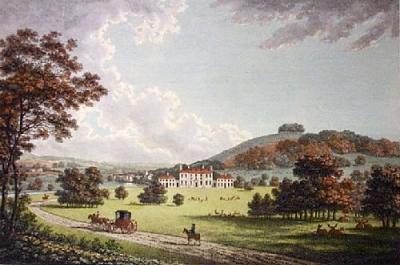
Godmersham Park

Godmersham Park

And yet, with such a rich brother, Jane and her sister and mother worried a great deal about money after the sudden death of Rev. George Austen in Bath in 1805. Three of the brothers rallied behind them. Edward’s initial pledge of £100 a year almost doubled his mother’s income of  £122 from a small South Seas fortune, and both Henry and Frank pledged £50 apiece per year to support their mother and sisters. Cassandra received a small income from Tom Fowle’s £1000, which he had bequeathed to her in his will.  Even so, the three women were forced to move in March to more affordable rented living quarters on Gay Street, and then to Southampton in 1806, where they, along with their friend Martha Lloyd, shared a house with Frank Austen and his new bride.

The move to the house in Castle Square, Southampton in 1807 brought much cheer to Jane. The house, she noted, was not in good repair but it had a large garden. Her accounts for 1807 show that from her allowance of £50 she spent £2.13.6 to hire a pianoforte.”- Soft and Loud, JASA
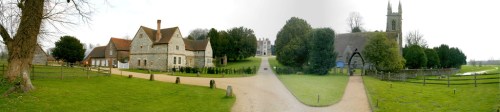
Panorama of Chawton

Panorama of Chawton

Edward finally came through for his mother and sisters. Four years after his father’s death, he refurbished Chawton Cottage and invited them to move in. It was in this cottage that Jane was at her most prolific, polishing off earlier versions of Pride and Prejudice and Sense and Sensibility and famously writing Mansfield Park, Emma, and Persuasion. In skimming through a variety of biographies, many authors treat Edward’s seeming parsimony with a hint of contempt. The Knights had a history of generosity towards their poorer Austen relatives. Thomas Knight, second cousin to Rev. George Austen, gave him two livings that were valued at £210 the year that Jane was born. At Steventon, the Austens also had land to farm, which was an important factor in their diet and maintaining their self-sufficiency. The Austens also took in boarding pupils, and by the time Rev. Austen retired , he was earning almost  £600 per year, the same amount that his eldest son, James, made towards the end of his life.

Jane, her sister and mother had fallen on hard times. Financially dependend on their families, they are forced to move in March to rented living quarters on Gay Street, and then to Southampton in 1806, where they, along with their friend martha Lloyd shared a house with Frank Austen and his new bride.
“The move to the house in Castle Square, Southampton in 1807 brought much cheer to Jane. The house, she noted, was not in good repair but it had a large garden. Her accounts for 1807 show that from her allowance of £50 she spent £2.13.6 to hire a pianoforte.” JASA Soft and Loud,
Finally, four years after his father’s death, Edward Austen Knight refurbished Chawton Cottage for his mother and sisters, and had them move in. The walled garden, designed by Edward Austen Knight on the advice of his sisters Jane and Cassandra, is being recreated to provide not only flowers but organically grown fruit, vegetables and herbs, some of which will be used in contemporary recipes to be prepared in the kitchens. The church where Jane’s mother and sister are buried sits halfway up the drive.(from Chawton site)There had always been generostiy from the Knights towards the Austens. .

Jane’s mother, Cassandra, who was related to the Leighs of Stoneleigh Abbey, placed a great hope that her rich childless brother, James Leigh-Perrot, would leave money to her eldest son James. While James Leigh-Perrot provided James with a clerical living and some supplementary cash, his property eventually went  not to James, but to his son, James Edward, who was Jane Austen’s biographer. James Leigh-Perrot left nothing to his sister Cassandra, even knowing that she lived on a small income. He might have supposed that her uber rich son, Edward, would take care of his mother, which, in a fashion he did. Why did Edward not contribute more to his mother and siblings?

This is mere conjecture on my part, but Edward did the best he could under the circumstances. Yes, he was rich beyond imagining, but his responsibilities were many and heavy. He inherited two large estates, which were the physical embodiment of his inheritance. The laws of primogentirue demanded that as the heir, he should keep everything intact, from the land, which provided the income, to the house and all the family heirlooms within it. The heir was merely a “keeper” of the estate and the family name, and his actions were proscribed. Edward was more a tenant than an owner, and he was duty bound to turn over his entire estate to his male heir. – The Country House, JASA.
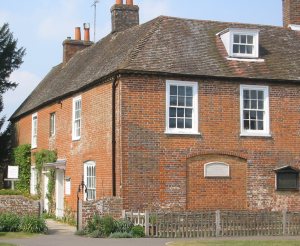
Chawton Cottage

Chawton Cottage

Running these estates, with their attendant servants and necessary improvements, took an enormous, some would say crippling, amount of resources. In addition, Edward’s family was large. His first wife, Elizabeth, died after giving birth to their eleventh child. Add his seven brothers and sisters, his biological mother and adopted mother and her family, the Knight family, and the ever widening circle of nieces and nephews, and the even larger circle of aunts, uncles and cousins on both the biological and adopted sides, and you can imagine the pressures Edward must have felt all around.  Had he doled out what we would deem as adequate support to all the needy individuals in his extended family, Edward’s estate would soon have been frittered away.

Chawton House

Chawton House

One cannot fault Edward too much for moving prudently and cautiously, for he was obliged first to his immediate family and the need to provide for adequate dowries for his daughters and support for his younger sons. I do fault him for not helping Jane to repurchase her manuscript, Susan (renamed Northanger Abbey), for the measly sum of £10, so that she could pursue its publication, but for all we know she might have never applied to him for help.

I sometimes wonder if the Austen women were as destitute as people today conjecture. Unlike 90% of their countrymen, who rarely traveled outside of their immediate area, the Austens traveled frequently, visiting friends and relatives. They were able to keep two servants and supplement their diet with vegetables from their kitchen garden, and received an endless supply of milk from Edward’s cows. Jane secured a modest but extra income from her writing, and the three women lived off a yearly income of  £500 pounds, which was only  £100 less than Rev. George Austen earned, who had a family of eight to feed, in addition to his boarders. Jane’s eldest brother,  Rev. Frank Austen, managed to keep a carriage for his second wife on an income of  £600 per year. I am not saying that the three women were rich, by any means, for, like Elinor Dashwood, they lived frugally and prudently, but they did dine frequently with Edward and visited him over extensive periods of time at Godmersham Park, which must have been as luxurious an experience as any visit to a high end resort.

After Thomas Knight died, his widow, instead of waiting until her own death, handed over the family estates to Edward, who from 1798 lived the life of a country gentleman at Godmersham in Kent. When Mrs Knight herself died in 1812, Edward and his family, as stipulated in her will, took the name of ‘Knight’, prompting his eldest daughter Fanny (a favourite niece of Jane Austen’s) to write in her diary that now ‘we are therefore all Knights instead of dear old Austens How I hate it!!!!!’. Fanny’s aunt Jane wrote more calmly to her friend Martha Lloyd that ‘I must learn to make a better K.” – Janet Todd, Jane Austen in Context
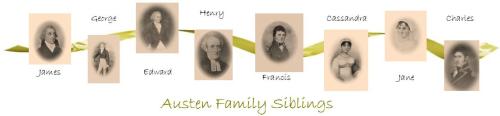
Edward was the Austen's third oldest child

Edward was the Austen's third oldest child

More on the topic:

Gentle reader: In honor of JASNA’s annual meeting in Philadelphia this week, this blog, Austenprose, and Jane Austen Today will be devoting posts to Jane Austen and her siblings. Look for new links each day.

Read Full Post »

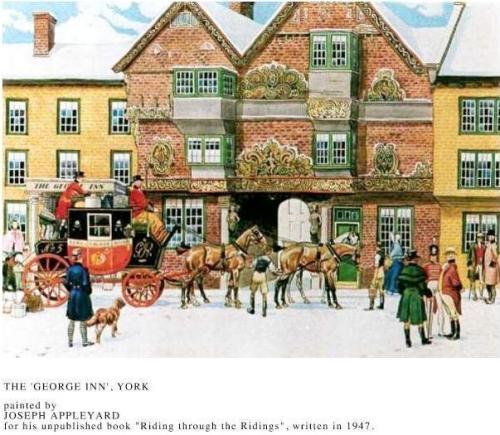
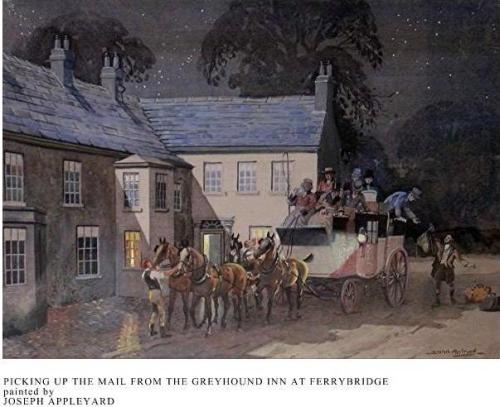
“Riding Through the Ridings”: Random Sketches of Yorkshire Coaching Inns was written and illustrated in 1947 by Joseph Appleyard. An unpublished book, it has found a home online through his son, David. The illustrations fit so well with my recent posts for post boys and the postal mail, that I was eager to share them with you,with Mr. Appleyard’s kind permission.
The George Inn York Joseph Appleyard

The website contains the full transcript and most of the illustrations for “Riding through the Ridings”, whose foreword by Major J. Fairfax-Blakeborough M.C. is telling:
Post-Boys Joseph Appleyard

Some of us are old enough to have talked with the last of the drivers of stage coaches, with post-boys and quaint old ostlers, who could recall the music of the fast-trotting horses and the note on the guard’s horn. Such have heard at first hand of all the bustle there was when the four steaming horses were to be speedily changed, relieved by others standing in readiness for the next stage. More there are who remember the long rows of stables, loose-boxes, saddle rooms and post-boy’s quarters — unused and maybe derelict — in the spacious yards of the old coaching inns. These have also lived to see the end of coach-horse breeding in Yorkshire and the passing of the fairs in the country, at which hundreds of animals were yearly bought to horse the coaches in various parts of the country. Later, in pre-motor days, the best carriage-horses were sold in large numbers at these same Yorkshire fairs; to buyers from all over the world. The horse fairs as they declined, were the swan song of the long ranges of stabling, which were an essential adjunct and integral part of every coaching inn. All this formed the last remaining links with the spacious, leisurely, picturesque coaching-days.

Picking up the mail

Picking up the mail

Major Fairfax-Blakeboroughsums up the illustrations nicely:

The beautifully executed illustrations in this book are marked by their accuracy in technique and detail — no easy achievement in view of the distinctive dress, horse, harness and so forth, which belonged to those days and to a great extent passed with them. Contemporary literature is pregnant with references to the particular care and pride those who played their part in the coaching era took with regard to all these details and how the young sons of patrician families, did not consider their education complete until they could tool a four-in-hand and dress the part with such meticulous exactness that they were mistaken for professional coachmen. The fascinating illustration on the succeeding pages emphasise more than any other of the previous volumes dealing with the epoch, the poetry and romance surrounding it and the important part the old posting houses plated in the life of the nation and as the very hub of their own immediate area.

coach Horse, Joseph Appleyard 1947

coach Horse, Joseph Appleyard 1947

The site also offers a short biography of the artist (1908-1960), and contains photographs, published works, sketches, drawings, book illustrations and newspaper articles of his life and career.

Joe Appleyard attended local evening classes at Leeds School of Art where his fondness of animals gave rise to his interest in Romany and Circus life. He worked full time in window display and general advertising, and painted the scenery of Airedale, Wharfedale and Washburn Valleys in his spare time. Appleyard first began showing his paintings at the Leeds City Art Gallery in 1934, and by 1947 had exhibited over two hundred different works. He co-founded Otley Arts Club, and today his sketchbooks are in a permanent collection at Leeds Art Gallery. His St Leger and racehorse portraits and studies are in a permanent collection at Doncaster Art Gallery.

A light post horse, Joseph Appleyard

A light post horse, Joseph Appleyard

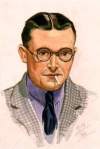
Joe Appleyard, Self portrait, age 26

Joe Appleyard, Self portrait, age 26

David Appleyard writes about designing a website for his father:

The Old Swan Hotel, Harrogate, has three large oil paintings on permanent display, now well restored to remove fifty years of nicotine. The nicotine would not have bothered Joe for he liked his Three Castles cigarettes and as his self-portrait shows political correctness was not an issue in those days! Some twelve years ago I tried to publish “Riding through the Ridings”. My efforts were unsuccessful and the project lay dormant until 1999 when I decided to “publish” it on the Internet. With access to Joe’s remarkably good records the site has grown and showcases more than 200 examples of his work as my tribute to a wonderful father and talented artist.

To see the rest of the illustrations and read the book, click on this link: Joseph Appleyard, Author or type http://www.josephappleyard.co.uk

Read Full Post »

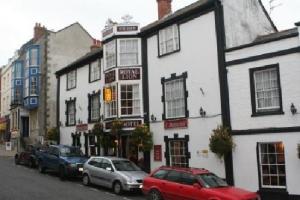
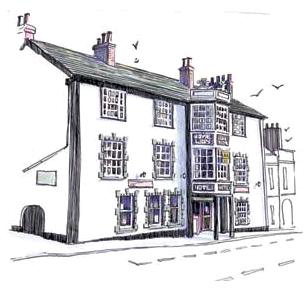
royal lion innDorset Public Inns With a Literary Connection showcases a number of inns with connections to John Cowper Powys, Thomas Hardy, Jane Austen,  Robert Louis Stevenson, and John Fowles. Constance Hill, author of Jane Austen: Her Homes and Her Friends, identifies the lodging in Persuasion as the Royal Lion Inn:

Now the inn to which they were bound we fully believe to have been the “Royal Lion,” which stands on the right-hand side about half way up the main street. The circumstances of the story all suggest it rather than the old “Three Cups,” the only other inn of importance in Miss Austen’s day. From the quaint projecting windows of the “Royal Lion” the ladies would be able to see Mr. Elliot’s “curricle coming round from the stable yard to the front door,” and could “all kindly watch” its owner as he drove up the steep hill. This would have been impossible from the windows of the “Three Cups,” which stood at the bottom of the main street and turned slightly away from it. The “Three Cups” was burnt down in 1844, but we have seen its site and have looked at an old print showing the building and its surroundings.

Update: Natalie Manifold, who runs the Jane Austen tours in Lyme Regis, wrote to say that Constance Hill’s information is wrong. The Royal Lion Inn is not the inn described in Persuasion. She has done extensive research on this topic, examining all the town’s old maps and records, and found that the front section of the hotel was a “privately owned cottage up until 1844 when it was scorched in a fire. Subsequently, it was sold and bought by the owner of the inn, which up until that point had been situated right at the back of the hotel’s car park near the river. The bay window is also Victorian as it was added when the front structure was included as part of the hotel.” Natalie concludes: “There is no way that the party would have been able to see up the hill from the hotel’s situation during the Regency period, leaving the old Three Cups as the most likely place of their stay.”

Agreeing with Natalie’s assessment are: John Fowles – the town’s most noted historian and author, Diana Shervington – relation of Austen, and Francis Turner Palgrave – Anthologist. (Thank you for the update, Natalie, which I very much appreciate.)

Royal Lion Inn Lyme Regis
Chances are that Jane Austen was familiar with the  Inn. In 1804 Jane Austen and her family traveled to Lyme and stayed there in the summer. The Royal Lion Inn, or the Lion as it was known, was built as a coaching inn in 1601. More information about the inn can be found in Dorset Public Inns With a Literary Connection. Over a century later, author and traveler, F. J. Harvey Darton wrote about the two inns:

Nothing could be better than the confrontation of the two chief hotels, the Royal Lion and the Three Cups. The Cups is the older house, and seems to go back to at least Stuart times in name and site. But they are both models of what a country inn of the better sort should appear to be. – The Soul of Dorset, F. J. Harvey Darton , 1922

More Links to Lyme Regis

Read Full Post »

Prior to the 19th century, children were dressed as miniature adults…

18th c. Girl With a Kitten, Jean-Baptiste Perronneau

18th c. Girl With a Kitten, Jean-Baptiste Perronneau

Children’s fashion often preceded similar changes in adult clothing. Simple frocks for girls in the closing decades of the 18th century foreshadowed the fashionable high-waisted, neo-classical style that would become popular for women during the first decades of the 19th century.

1790 Portrait of a Girl, John Hoppner

1790 Portrait of a Girl, John Hoppner

This pastoral image of a young girl by Thomas Gainsborough is a reminder that poor girls wore “tattered hand me downs or clothes made of coarse woollens and rougher cottons or mixtures like fustian.” (Fashion-Era)

Cottage Girl with Dog and Pitcher, Gainsborough, 1785

Cottage Girl with Dog and Pitcher, Gainsborough, 1785

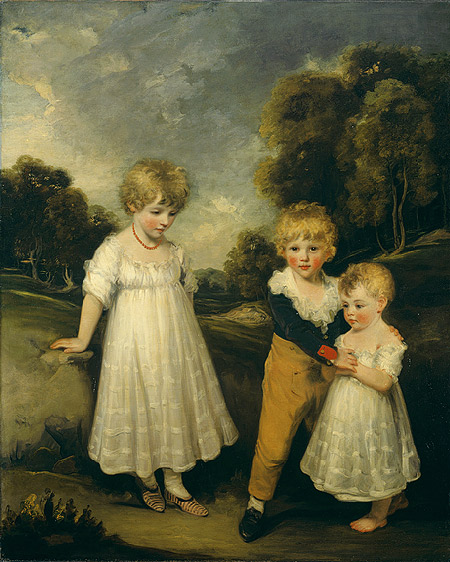
The easy, loose-fitting shifts below made it easy for little girls to play. The little boy’s skeleton suit is described in the post below.

The Sackville Children, John Hoppner 1797

The Sackville Children, John Hoppner 1797

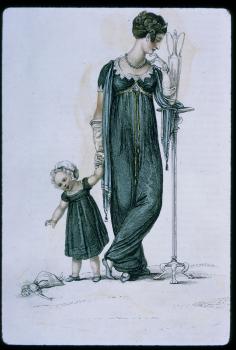
A little girl’s mourning dress in 1809, although black, remained comfortable and unrestrictive. More details about this dress are at this link from Jessamyn’s Regency page.

Mourning dress, Ackermann plate, 1809

Mourning dress, Ackermann plate, 1809

Childrens’ fashion posts on this site:

Read Full Post »

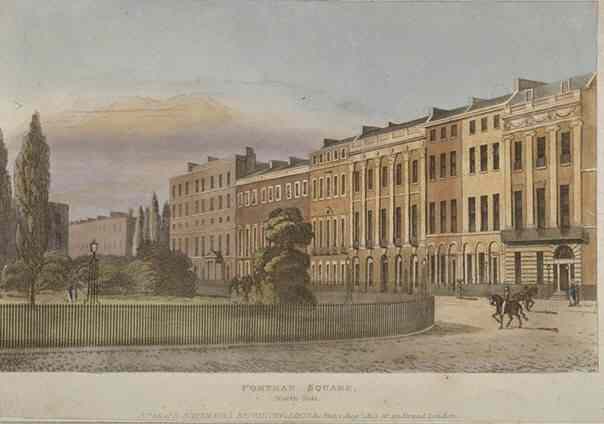
Detail of the North Side of Portman Square

Detail of the North Side of Portman Square

Inquiring readers: For two weeks, Laurel Ann, my blogging partner at Jane Austen Today, has been blogging about Lady Susan at her own blog, Austenprose. Lady Susan was published posthumously in 1871, almost 80 years after Jane Austen wrote this short epistolary novel. When one reads the book, one is struck by the number of letters Lady Susan writes to an address on Upper Seymour Street. This is where her friend Mrs. Johnson (Alicia) lives. It was Alicia who famously wrote at the end of the book:

I would ask you to Edward Street, but that once [Mr. Johnson] forced from me a kind of promise never to invite you to my house; nothing but my being in the utmost distress for money should have extorted it from me. I can get you, however, a nice drawing-room apartment in Upper Seymour Street, and we may be always together there or here; for I consider my promise to Mr. Johnson as comprehending only (at least in his absence) your not sleeping in the house. – Mrs. Johnson (Alicia) to Lady Susan, ca. 1805

The houses along Upper Seymour Street in Westminster, which is situated near the Marble Arch (then known as Tyburn) near Hyde Park Corner, are tall, narrow, and four stories high. Edward Lear, the Victorian writer of charming limericks, lived in a house that has been converted to a hotel (Image below). I stayed on the 3rd floor a decade ago and can attest that the stairs are steep!
edlearfront_small

Living at this location off Oxford Street was considered a moderately respectable to fairly good address during the Regency era.  Upper Seymour Street is close to Hyde Park, and within easy walking distance to Mayfair and St. James’s, where the upper crust lived and visited each other when they stayed in London. Upper Seymour Street is actually situated in Marelybone, just around the corner from Portman Square and one block over from Upper Berkeley Street, an area that Jane Austen and her sister, Cassandra, knew well:

Upper Seymour Street and Portman Square

Upper Seymour Street and Portman Square

The Countess de Feuillide looked out from her windows in Upper Berkeley Street towards Portman Square, waiting for her cousin Cassandra to arrive. It still pleased the Countess to be know by her former title rather than as plain ‘Mrs Austen’, and she was always gratified by tradespeople and others who thought to humour her vanity in this matter. – Jane Austen: A Life, David Nokes, 1998, Google Books

North side, Portman Square, 1812

The nouveau riche, whose ambition was to enter Society, moved as close to the “action” as they could. In 1772, Lady Home, a 67-year-old widow,  made plans to move to Portman Square. This area of London was just beginning to be developed, and, as the image at right attests, the houses (Rated 1 and 2) were big and spacious.  Lady Home had been twice widowed and had become rich from the money she inherited from her father and first husband, Sir Nicholas Lawes, Governor of Jamaica. Her second husband, the 8th Earl of Home, was a dissipated spendthrift. Their marriage in 1742 was one of convenience, for while she got the title, he most definitely married her for her money. In 1744 the earl deserted Lady Home just months before she was to give birth to their child, who, sadly, did not survive. The earl died in 1761, leaving Lady Home a widow once again and free to act as she pleased.

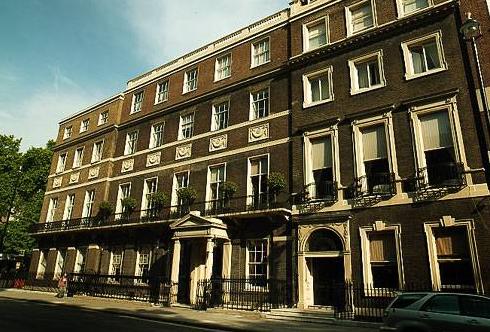
Home House Today

Home House Today

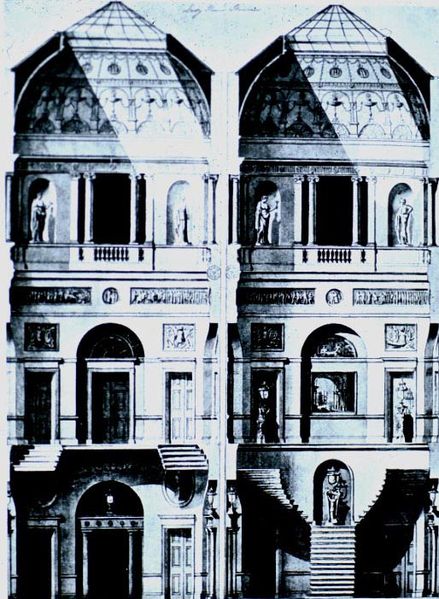
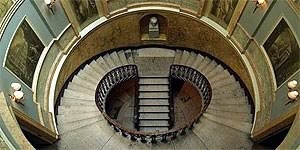
Very little is known about Lady Home’s life until she began to build her grand house in Portman Square. In the early 18th century, Henry William Portman had developed 200 acres of meadow passed down from a Tudor ancestor and turned them into Portman Square. In 1755 he began issuing the first housing leases. Lady Home took a 90 year lease from William Baker in June 1772, on which she was permitted to build a brick house. By 1774, builder Richard Norris was close to completing the house, which had been designed by the architect James Wyatt. His claim to fame was The Pantheon which had opened in 1772 when Mr. Wyatt was just 26 years old.  In 1775, Lady Home fired Wyatt and hired his archrival Robert Adam to complete the interior. One of the most unforgettable features of Adam’s design was the breathtaking  neoclassical stairway under a glass dome.

Stair case

Stair case

Stair case, view down

Stair case, view down

Staircase

Staircase

Skylight above staircase

Skylight above staircase

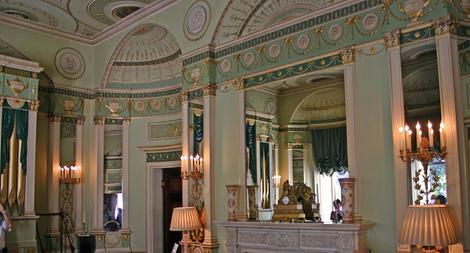
Adam details, Music room

Adam details, Music room

William Beckford, who came from another wealthy plantation-owning family, and who also lived in [Portman] square, described her as: ‘.. the Countess of Home, known among all Irish chairmen and riff-raff of the metropolis by the name, style and title of Queen of Hell…’ He went on to describe her extravagant and eccentric behaviour. She entertained other wealthy Caribbean plantation owners and was related to many of them. She also had royal connections. – BBC History, The business of enslavement

In reading about Lady Home, I was struck by her ambition and audacity, and began to compare her to Lady Susan. Publicly deserted but her husband, Lady Home chose to remain in London and entertain in high style. She successfully made a life for herself on the fringes of society, but, despite her wealth, she was never quite accepted among the haut ton. She lived and entertained in the house from 1776 to 1784, the year that she died.

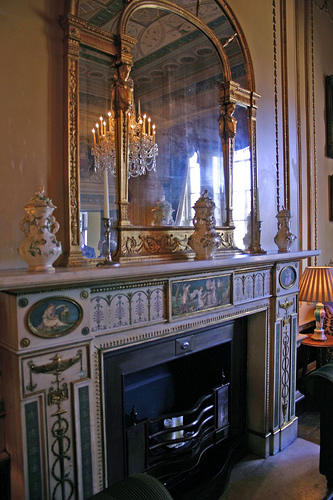
Adam fireplace

Adam fireplace

In an interesting aside, Robert Adam and James Stuart were also the architects of Montagu House, which was built for Mrs. Elizabeth Montague in the northwest corner of Portman Square. The house, known as the ‘Montpelier of England’, became famous for its meetings with the literary world. The Blue-Stocking Club, named for the informal blue stockings that many in the group wore, invited intellectuals to discourse on a variety topics.

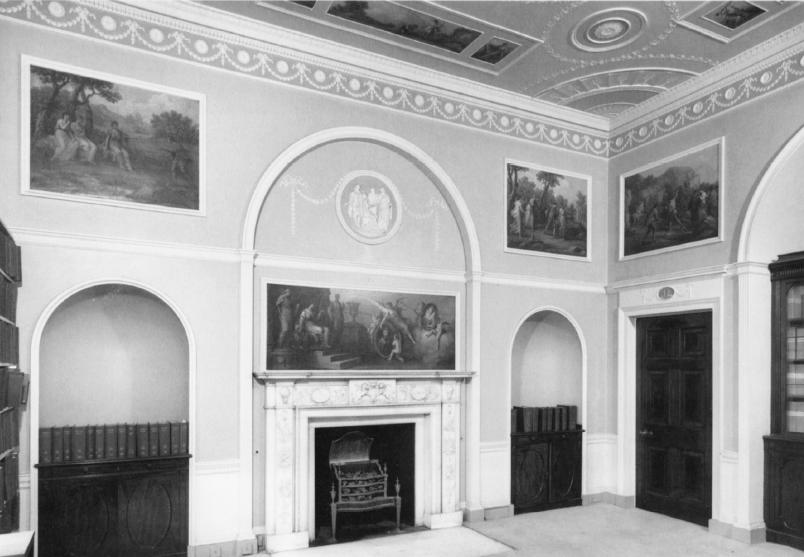
Library

Library

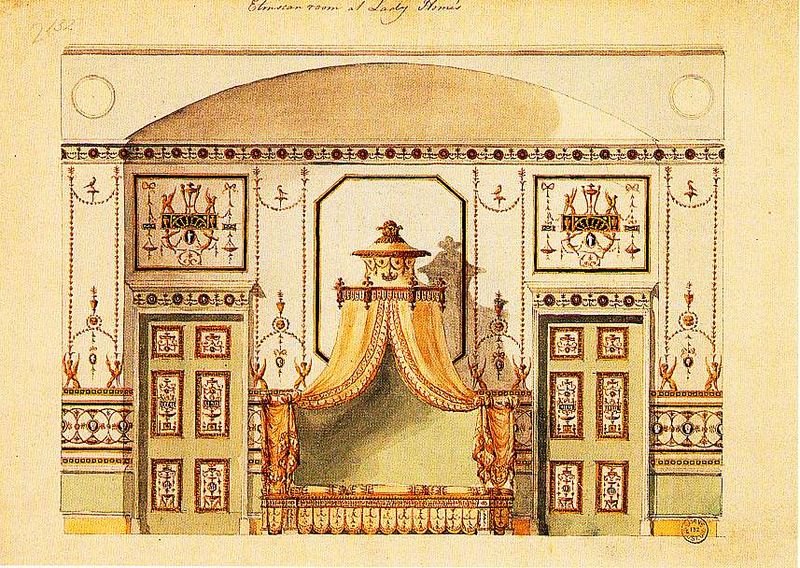
Lady Home’s Etruscan bedroom reflected the current interest in antiquities. The house almost did not survive. From 1989 to 1996, the house was listed on the 100 most endangered sites, and extensive renovations did not begin until 1998. Today the house is part of a private men’s club.

Etruscan room, Home house

Etruscan room (bedroom), Home house

Two portraits by Gainsborough hung in her house, depicting the duke and duchess of Cumberland. The duke was the brother of George III and the duchess related to Lady Home through her first husband. It has been suggested that Lady Home’s motive for building such a large and elegant house when she was a widow who had no children was to entertain the Cumberlands. – BBC History, The business of enslavement

Read Full Post »

« Newer Posts - Older Posts »