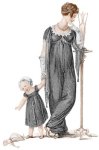
I’ve placed these gorgeous Ackermann fashion plates here to wish my readers who are mothers a Happy Mother’s day. Aren’t these images precious?
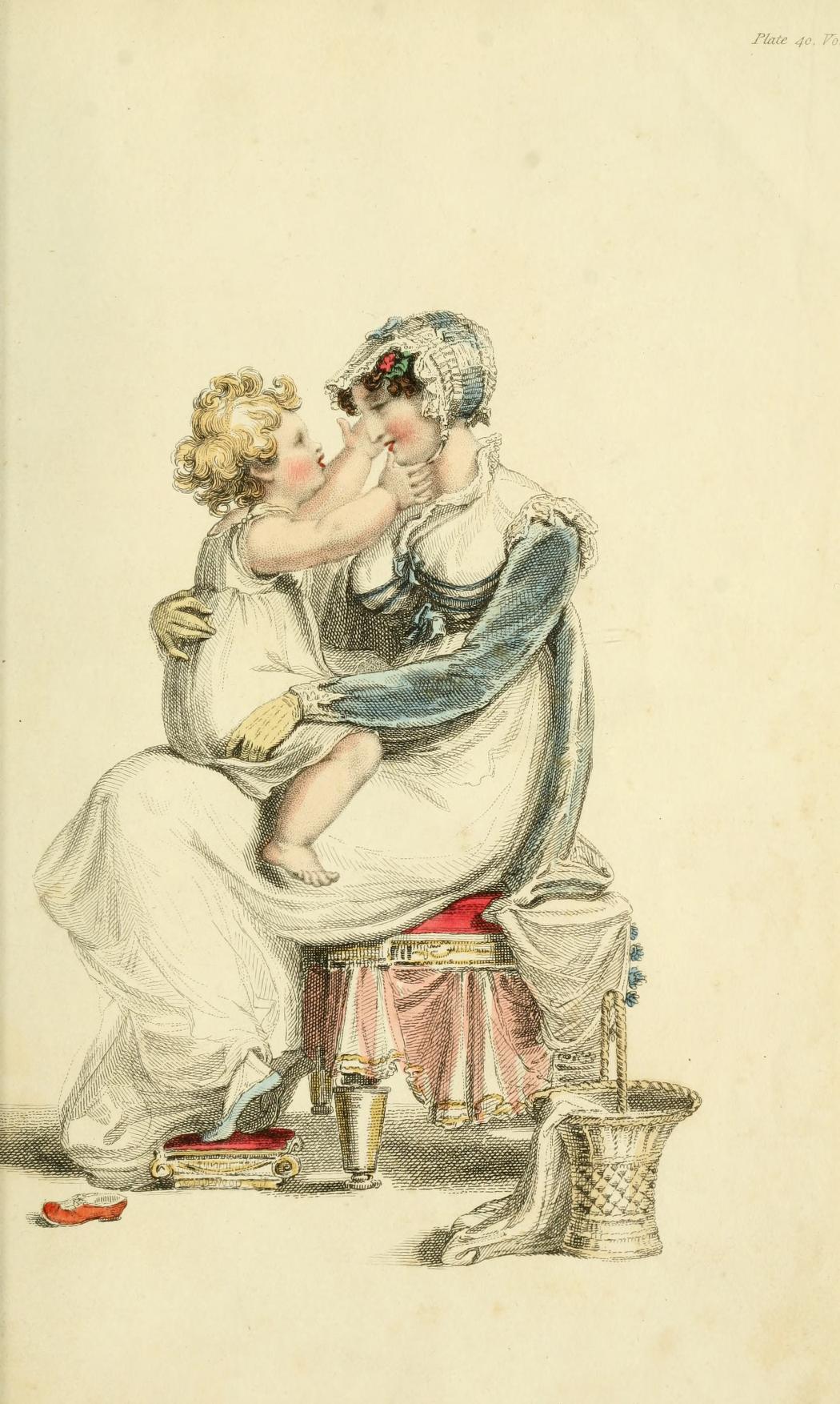
1812 morning dress or domestic dress.
Click on images to enlarge.

1826 evening gowns, March.
Posted in 19th Century England, Children's regency fashion, Jane Austen's World, Regency Life, Regency Period, Regency style, Regency World, tagged Ackermann fashion plates, Ackermanns Repository, Regency Fashion on May 13, 2012| 10 Comments »
I’ve placed these gorgeous Ackermann fashion plates here to wish my readers who are mothers a Happy Mother’s day. Aren’t these images precious?
1812 morning dress or domestic dress.
Click on images to enlarge.

1826 evening gowns, March.
Posted in Architecture, Georgian Life, Georgian London, Jane Austen's World, Regency Life, Regency London, Regency style, Regency World, tagged Georgian Architecture, Georgian door knockers, Lion motifs and symbols on May 1, 2012| 11 Comments »
Gentle Readers, Frequent contributor Tony Grant has supplied us with yet another treat: a post about door knockers. After you have read it, you will want to hop on over to his blog, London Calling, in which he describes his trip to Venice.
The quintessential door knocker in Georgian architecture is the brass lion head with a large brass ring gripped in its mouth. It has been used as a symbol of Great Britain for centuries. Trafalgar Square has four enormous bronze lions positioned on great granite plinths at the four corners of the base of Nelson’s Column. They are made from the melted down bronze from canons captured from French ships at The Battle of Trafalgar.
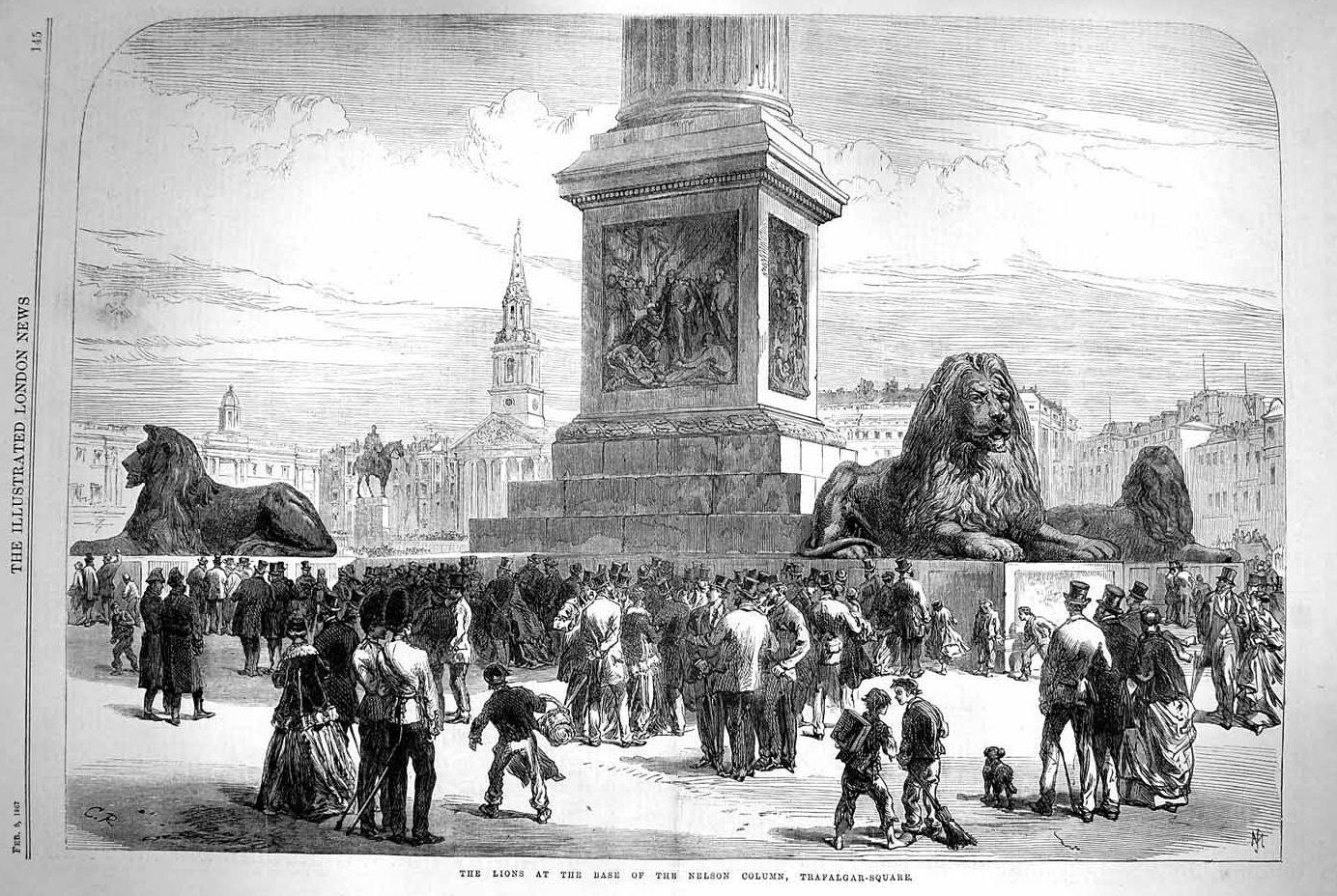
Lions at the base of Nelson's Column, Trafalgar Square. Image @The Illustrated London News
All coats of arms relating to the monarchy have lions as a prominent feature of their design, usually rampant. Lions have been used symbolically since the Paleolithic period.
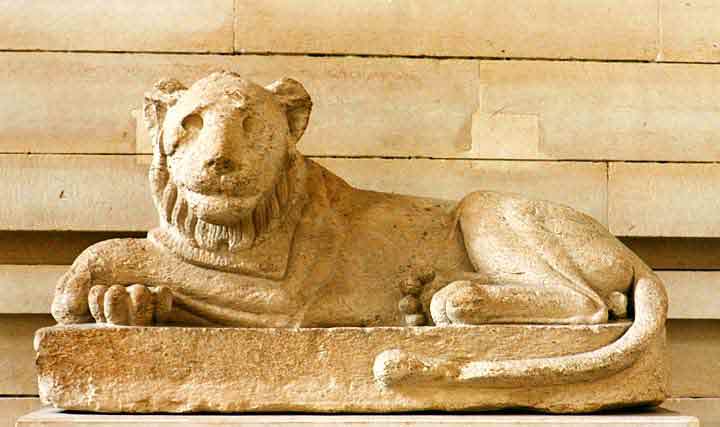
Egyptian lion sculpture carved out of limestone, Louvre
The Egyptians carved sphinxes, half man, half lion. They symbolise power and strength, courage and fortitude.

Heraldic lion
You can go to any part of London and you will come across Victorian or Georgian housing still with their original door furniture. Very often the door furniture will include a brass lion head door knocker. This could be a sign of Victorian and Georgian confidence. A sign for people of the greatest and largest empire the world has ever known. For the visitor it is their first contact with the house and a way of communicating their arrival by lifting the knocker and rapping it smartly against its back plate. The back plate to a lion head knocker is the lion’s head.
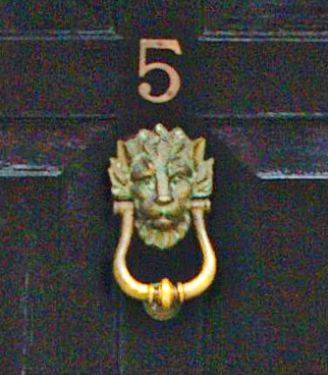
Lion door knocker. Image @Tony Grant
Knocking on a door does two things. First it makes the visitor take hold of the house. The hand grips the knocker. It is a like a handshake; a very English form of greeting. Secondly, through the sound of the knock it communicates to the occupants that somebody is visiting. The way the door is knocked can express other things too like haste, frustration, timidity or confidence.
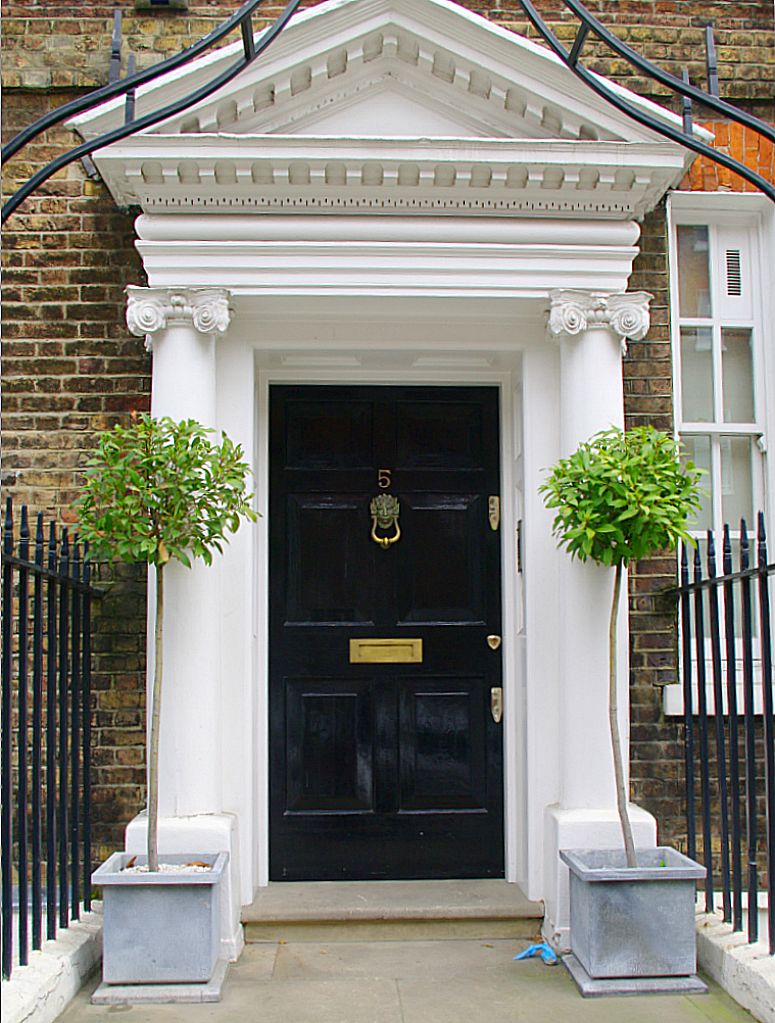
Front door with lion knocker. Image @Tony Grant
The fact that many Georgian houses have door knockers that are the originals means that we today in the 21st century, who are still using these door knockers to gain entrance, have a palpable, physical connection to people from past generations and from all classes of a past society.
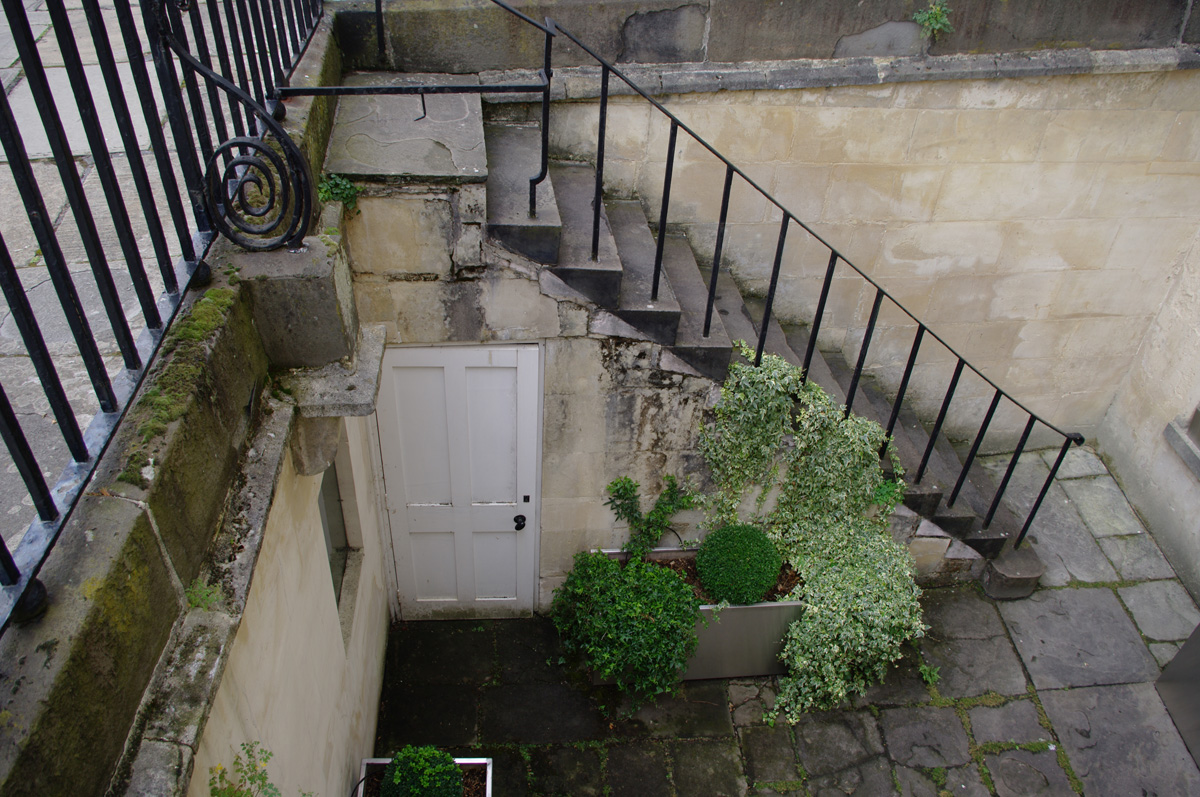
Downstairs to the servant's quarters, Bath. Image @Tony Grant
The servants belonging to the Georgian household would not have used the doorknocker of their own house. They would have slipped down the flight of stone steps near the front gate, to the servant’s quarters in the basement. However a footman or servant sent with a message or communication from another household would have used the front door knocker. The owners of the house would have knocked to alert their footman to open the door to them and their friends would have knocked to gain entrance too.
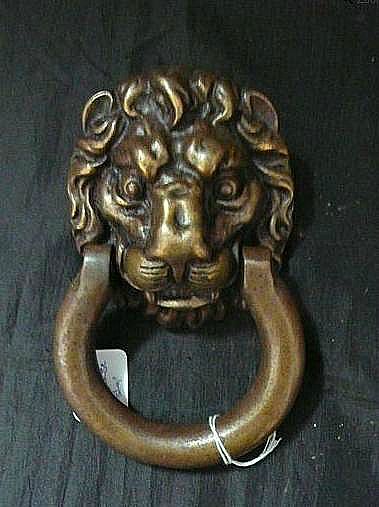
Door knocker made of brass. Image @Ruby Lane
A lot of door knockers are made from brass. Some are iron. Brass is a very special metal. It has a golden lustre when polished and expresses wealth, a friendly glow and a welcoming feel. Iron on the other hand can be aggressive and harsh. Iron against iron can cause a spark. It can rust and have unfriendly qualities. Brass on the other hand is benign. It is a malleable metal and has acoustic properties. In fact the brass door knocker on a Georgian front door can almost be regarded as a percussion instrument. The solid wooden door is the drum skin and the entrance hall behind it is the chamber within which the sound resonates and vibrates.

J. L. Settle door knocker at Portsmouth
Brass is used for many purposes, including bullet cases, artillery shell casings, horse accoutrements, locks, bearings, gears, musical instruments, horns and bells. It does not create a spark. It is low friction.
Brass is an alloy, which almost makes it a magical thing. It is an alloy of copper and zinc. The proportions can vary between the two metals to create different qualities in the brass. It is a substitutional alloy. This means that when the copper and zinc are melted together they replace some of each other’s atoms with their own atoms. Brass has been made since Roman times. You can imagine in the middle ages or earlier and perhaps even up to Georgian times people regarded blacksmiths and workers of metals almost as magicians being able to smelt ores and extract pure metals from their furnaces to make the most magical things. Brass is a difficult alloy to make, even more so than other alloys. Copper can be smelted easily but zinc cannot be smelted from it’s ore. Brass has to be created through what is called a cementation process. This is when smelted copper is mixed with the unsmelted zinc ore. This means that many impurities are included and the slag that is created has to be carefully separated during the alloy creating process. Zinc comes from rocks called hemimorphite and smithsonite. Lead is something that is also added to some brass alloys to create a different quality. However, sometimes, the lead leaches from the finished brass. Imagine that rubbing onto some unsuspecting visitors hands. Particles of lead unseen on the hands and transferred to the mouth and the digestive system.
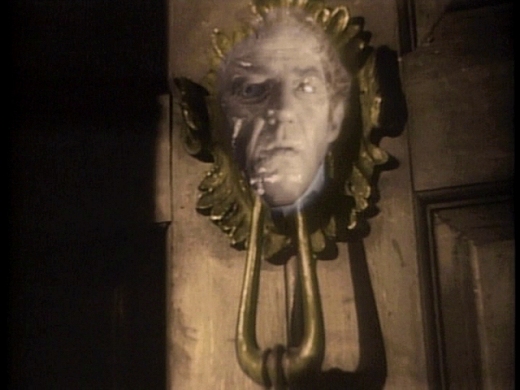
That thought lends new credence to the famous scene in Charles Dickens a Christmas Carol when Scrooge returns home on a cold misty winters night,
Now, it is a fact, that there was nothing at all particular about the knocker on the door, except that it was very large. It is also a fact, that Scrooge had seen it, night and morning, during his whole residence in that place; also that Scrooge had as little of what is called fancy about him as any man in the city of London, even including — which is a bold word — the corporation, aldermen, and livery. Let it also be borne in mind that Scrooge had not bestowed one thought on Marley, since his last mention of his seven years’ dead partner that afternoon. And then let any man explain to me, if he can, how it happened that Scrooge, having his key in the lock of the door, saw in the knocker, without its undergoing any intermediate process of change — not a knocker, but Marley’s face.
Marley’s face. It was not in impenetrable shadow as the other objects in the yard were, but had a dismal light about it, like a bad lobster in a dark cellar. It was not angry or ferocious, but looked at Scrooge as Marley used to look: with ghostly spectacles turned up on its ghostly forehead. The hair was curiously stirred, as if by breath or hot air; and, though the eyes were wide open, they were perfectly motionless. That, and its livid colour, made it horrible; but its horror seemed to be in spite of the face and beyond its control, rather than a part or its own expression.
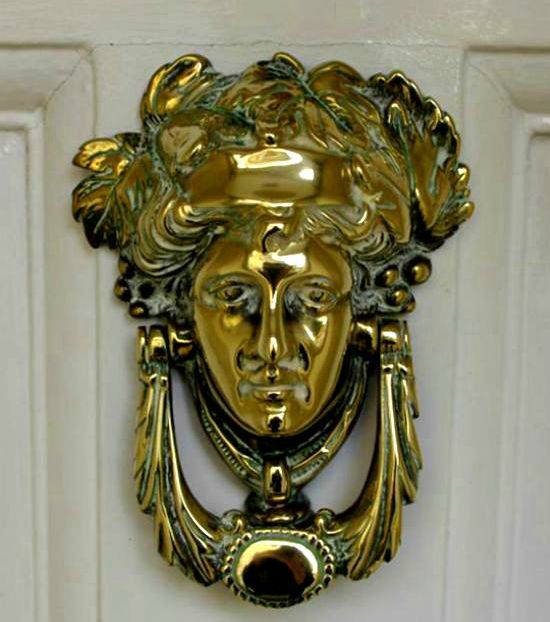
Another form of door knocker - that of a Roman god wearing a laurel wreath, Bath. Image@Tony Grant
As Scrooge looked fixedly at this phenomenon, it was a knocker again.
To say that he was not startled, or that his blood was not conscious of a terrible sensation to which it had been a stranger from infancy, would be untrue. But he put his hand upon the key he had relinquished, turned it sturdily, walked in, and lighted his candle.”
Was it lead poisoning that was rotting Scrooges brain or just tiredness, misery, the cold and mist and darkness playing tricks with his imagination and senses?
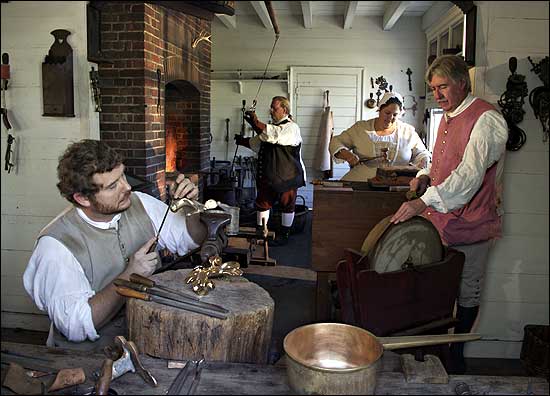
Filing a door knocker. Image @History.org Foundation Journal
To make a lion head door knocker a few technical and difficult processes have to be carried out. A mould has to be made. A carver carves a lion head pattern out of wood. A mould maker uses a box filled with a mixture of sand and clay to make a fire-proof mould. The wooden pattern is pressed into the sand and clay composite and a lion head knocker mould is thus created. The molten alloy of copper and zinc that creates the brass is then poured into the mould and left to cool and solidify. When cold the brass knocker can be extracted and filed and sanded down to get rid of any rough surfaces. In this process, craftsmen, metal workers geologists and miners would form a trail of work and economy. Finally the finished door knocker would have been sold to a carpenter making a door to then be sold to a builder who would fix the door in the house he made for a new purchaser.
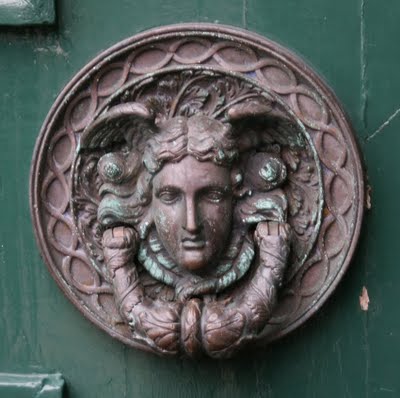
Door knocker at the Brighton dome at the Brighton Pavilion, early 19th c.
More on the topic:
Posted in 19th Century England, Fashions, Jane Austen's World, Regency Life, Regency society, Regency style, tagged Ackermann fashion plates, Circassian, Limerick glove, Regency Fashion on April 27, 2012| 16 Comments »
Recently I commented on a morning gown whose influences were largely from British history. In this April 1812 Ackermann fashion plate, the pink ball gown is indicative of the impact of trade and foreign travel in eastern lands and the advances of the Industrial Revolution on fashion. A young lady attending the ball would have (in her mind) come as a strong exotic eastern woman, resplendent in her turban, peasant bodice, and other rich oriental details.

Click on this fashion plate to enlarge it.
Ball Dress: a round Circassian robe of pink carpe , or gossamer net, over a white satin slip, fringed full at the feet; a peasant’s bodice of pink satin or velvet, laced in front with silver, and decorated with the same ornament. Spanish slash sleeve, embellished with white crape foldings, and finished at its terminations with bands of silver. A Spartan or Calypso helmet cap of pink frosted crape, with silver bandeaus, and embellished with tassels, and rosets to correspond. A rich neck-chain and ear-rings of Oriental gold. Fan of carved ivory. Slippers of pink kid, with correspondent clasps; and gloves of white kid: an occasional square veil of Mechlin lace.”

Detail of the Spartan or Calypso helmet cap, mechlin lace, fan, peasant bodice, and Limerick gloves.
Eastern Turkish influence includes those of Circassian women, whose reputation dates back to the Ottoman Empire and the Sultan’s harem. Circassians became a common symbol of orientalism during the Romantic era. In Europe and America
Circassians were regularly characterised as the ideal of feminine beauty in poetry, novels, and art. Cosmetic products were advertised, from the 18th century on, using the word “Circassian” in the title, or claiming that the product was based on substances used by the women of Circassia.- Wikipedia
The gossamer net represented the advances made in machine made lace during the late 18th and early 19th centuries. (Click here to read my article about net lace.)
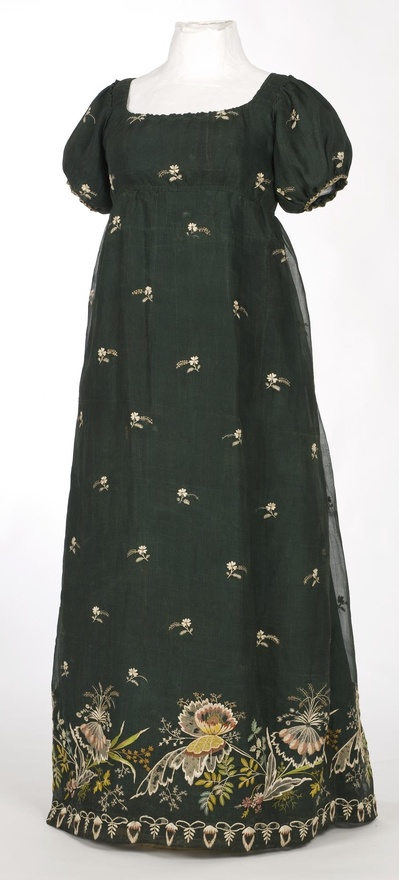
Early 19th century dress made with embroidered black net.
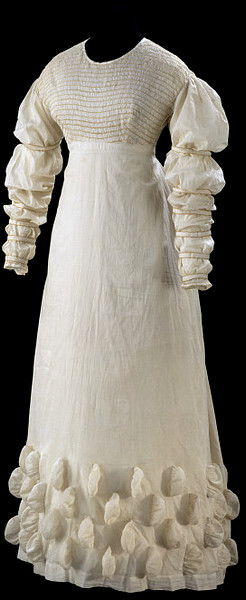
The white crape foldings in the Spanish slash sleeves remind me of the puffs in the hem of this early 19th century gown.
Limerick gloves were “a celebrated style of glove that became popular throughout England and Ireland during the late 18th, early 19th century. Commonly referred to as ‘chicken-skins’, the gloves were renowned for their exquisite texture. They were made from a thin strong leather derived from the skin of unborn calves and sold encased in a walnut shell.”
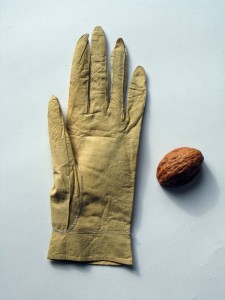
Limerick glove. Image @The Museum of Leathercraft.
Circassian women were regarded as strong, beautiful, and exotic, which is how the woman wearing the ball dress depicted in the Ackermann fashion plate must have felt.
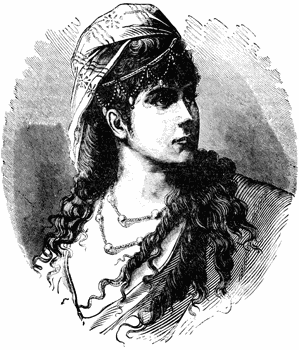
Circassian woman. Image @Clipart, etc.
The circassian robe, or an outer garment used in ceremonial occasions, is not as evident in the fashion plate as in the dress below, where it flows over the gown’s train.
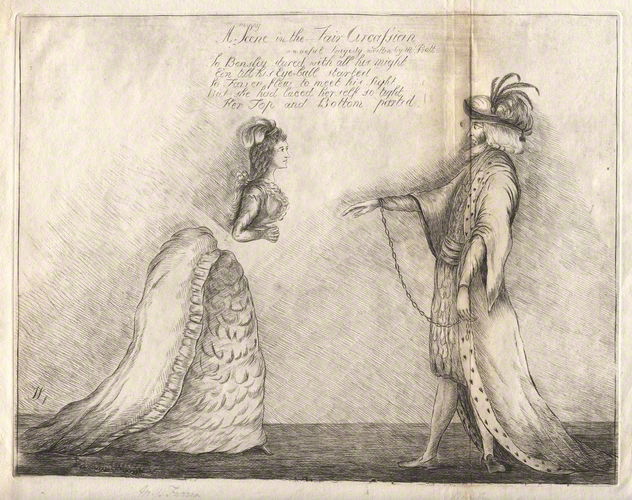
Eliza Farren in 'A Scene in the Fair Circassian' with Robert Bensley by James Sayers. Etching ca. 1781 from the National Portrait Gallery NPG D9544
Rich lace, tassels, and an ivory fan completed our fashionable lady’s the ensemble.
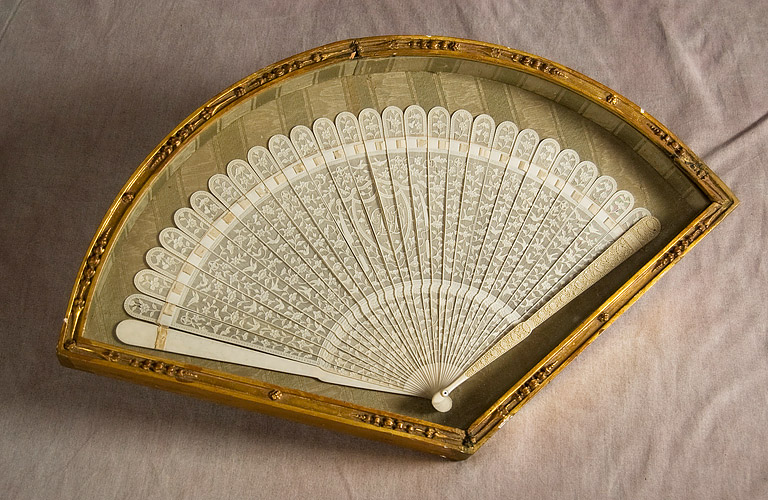
Decorative imported ivory fan. Image @Independence Seaport Museum.
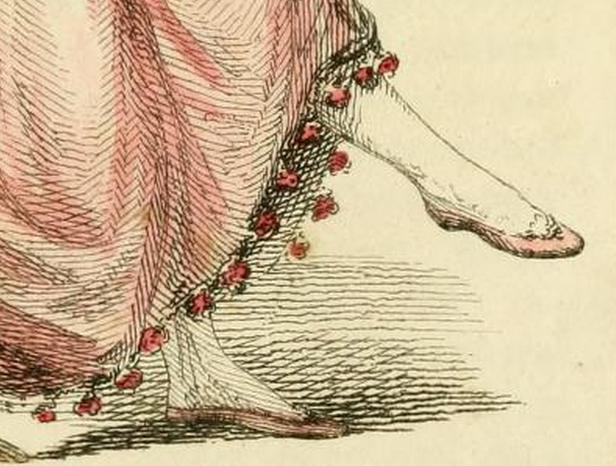
Detail of the hem.
More about the ball gown’s fashion influences:
Posted in Fashions, Jane Austen's World, Regency Life, Regency Period, Regency style, Royalty, tagged Princess Charlotte, Princess Charlotte's blue gown, Regency Fashion on April 22, 2012| 17 Comments »
It is a rare occasion when we can compare a gown in a portrait with the actual dress. The painting, after George Daw, of the Prince Regent’s daughter, Princess Charlotte, shows her wearing a charming blue gown in a domestic, albeit royal, setting.
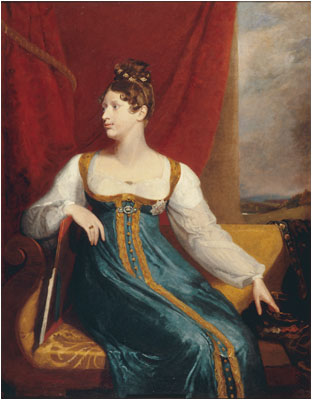
Princess Charlotte in her Russian Dress. Painting after George Daw, 1817. Image @Wikipedia
A second portrait depicts the same dress more royally. Princess Charlotte (or the artist) has accessorized the dress with ermine, lace, and pearls.
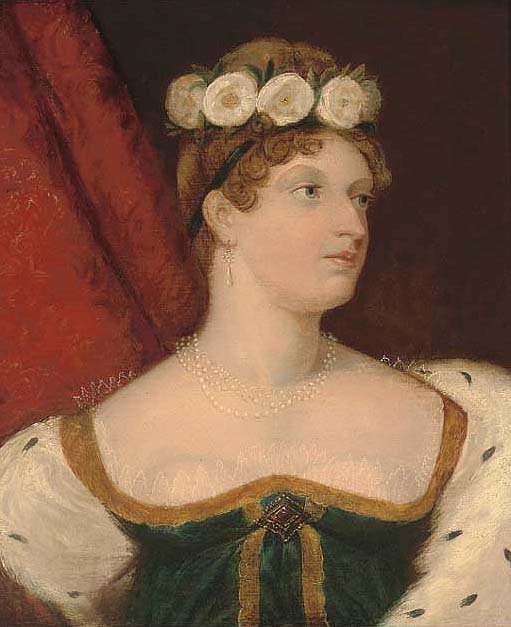
Image @Grand Ladies
The mannequin from the Museum of London exhibit a few years back is dressed more informally, as if she was in the morning room reading. I found the image on Pinterest, but unfortunately the pin did not state the image’s origin. (A reader wrote that the dress belongs to the Royal Collection.)
As you can see, the dress no longer possesses the rich blue hue as shown in the paintings. So many of the costumes of that era are not only in a fragile state and can rarely be shown, but we cannot trust that the colors have remained the same.
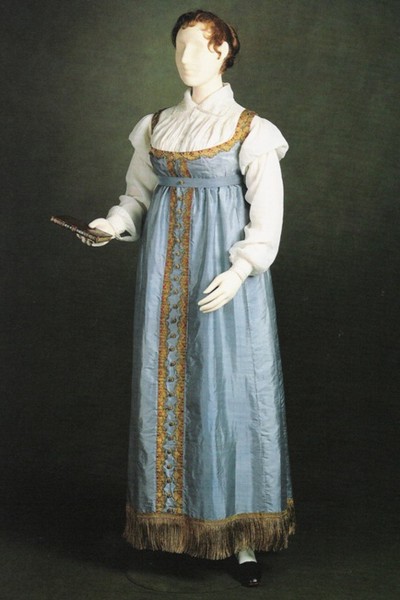
Princess Charlotte's "Russian" outfit as shown at The Museum of London. The gown belongs to The Royal Collection.
Below is the original portrait by George Daw, which shows Princess Charlotte wearing the same dress. Click here for yet another view of Charlotte in a similar gown, but without the trim and wearing a lace cap. My sense is that after her death Princess Charlotte’s image became sought after and that many portrait copies were made (both in oil and in print) to satisfy the mourning public.
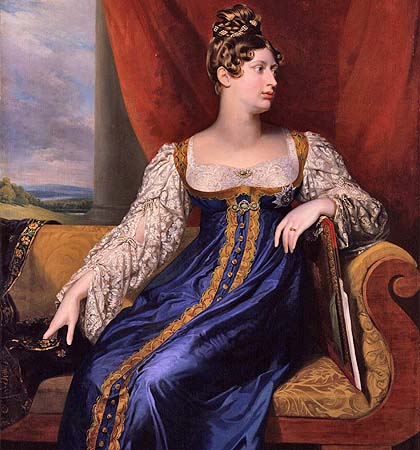
Princess Charlotte, George Daw, 1817. Image @National Portrait Gallery
Find more views of the gown at Jenny La Fleur’s site. Images of the gown can be seen in the exhibit catalogue called In Royal Fashion: Clothes of Princess Charlotte of Wales and Queen Victoria, 1796-1901, which can only be obtained second hand.
The exhibit: Princess Charlotte, The Lost Princess, will be on display at the Prince Regent Gallery in the Brighton Pavillion through 10 March, 2013.
My other posts about Princess Charlotte:
Posted in Fashions, jane austen, Jane Austen's World, Regency Life, Regency style, Sense and Sensibility, tagged Capote bonnet, Heideloff fashion plate, Regency Fashion, Regency hats on April 20, 2012| 13 Comments »
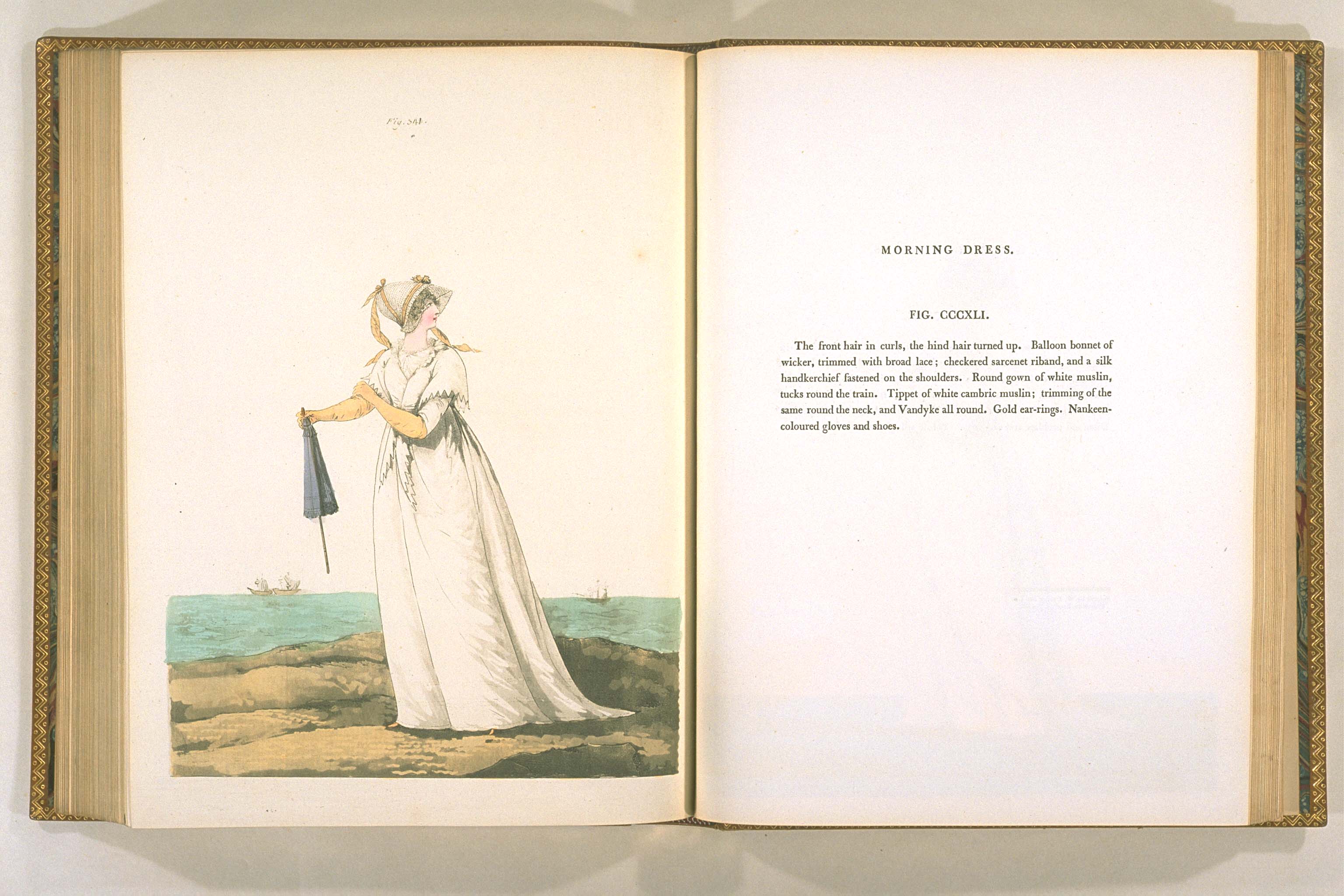
In Sense and Sensibility 1996, Kate Winslet as Marianne wears a charming straw sun bonnet as she recuperates from her illness. When I ran across the fashion plate of a morning dress from The Gallery of Fashion, 1794-1798, I was immediately struck by the similarity, although the brim in the fashion plate is more elaborate.
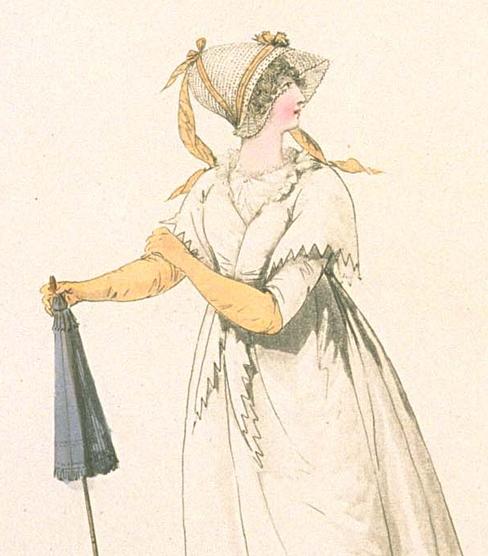
Detail of a morning gown and balloon bonnet, Heideloff, The Gallery of Fashion
The magazine described the head wear as a “balloon bonnet of wicker, trimmed with broad lace. The front hair is in curls, the hind hair is turned up.” I suspect that Lydia Bennet would have wrapped ribbons around her capote much as in the above image.
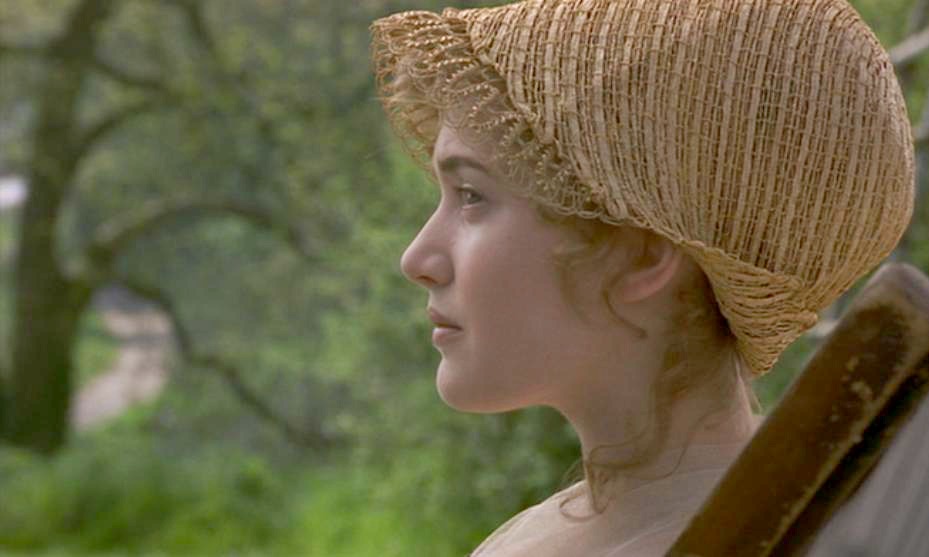
Kate Winslet’s capote is simpler, but equally charming. Capotes, or scoop-shaped bonnets, were popular in the early Regency and first made their appearance in the 1790s. The hats accommodated the modish hair styles of that era, which were short or piled on top of the head.

Bonnet, 1805-1810. Image@The Victoria & Albert Museum
Generally made to be worn outdoors, capotes were also worn as evening headwear early in the 19th century. This evening capote is elaborately trimmed.
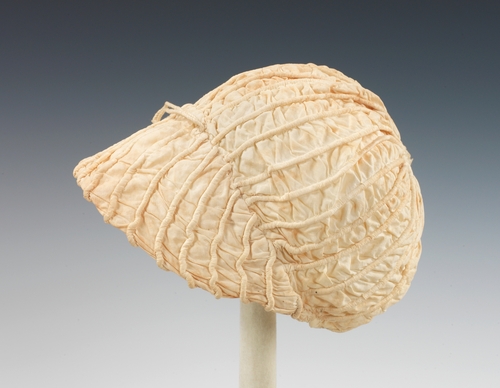
Infant bonnet, 1820. Image @Metropolitan Museum of Art
The charming bonnet was made for an infant. Click here to read the description. The image below shows a modern interpretation of a Regency era capote bonnet. (Living With Jane)
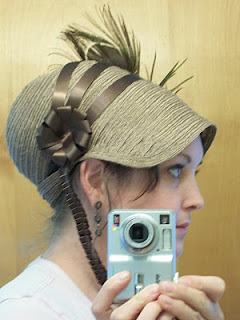
Image @Living With Jane
The shape of the Capote bonnet changed as hairdos changed, and the hat crown shifted to accommodate the increased height of swept up hair. The poke, or brim, also became larger over time. This definition describes the Victorian capote: Close fitting bonnet with rigid brim, either of straw or boned into shape. Soft, shirred crown , ribbon bows tied under the chin, Victorian 19 c. with deep ruffle in back. Also poke bonnet, fanchon, scuttle bonnet, sun bonnet. – Glossary of hats, Village Hat Shop.
View images of the Victorian capote here http://www.metmuseum.org/collections/search-the-collections/80044650 and here http://www.metmuseum.org/collections/search-the-collections/80044657. You can see the vast difference between the two styles, yet they are still capotes.
This link leads to instructions for making a Capote Beguin, or Edwardian Era bonnet.
Make Your Own Regency Bonnet
More on the topic:
2025 AGM in Baltimore

RECOMMENDED BOOKS AND RESOURCES



Available through December 31st, 2025. Click on image for details, and share this poster with other teachers and students!


Click on image to read the story.

Gentle readers: Please feel free to post your comments and continue the conversation! Due to SPAM, we will no longer accept comments on posts after 30 days of publication. In some instances, links will be removed from comments as well.


If you would like to share a new site, or point out an error, please email us. (Yes, we are fallible. We'll own up to our mistakes and will make the corrections with a polite smile on our faces.) Write us at

Thank you for visiting this blog. Your comments and suggestions are most welcome.
STAGE-COACH AND MAIL IN DAYS OF YORE: A PICTURESQUE HISTORY
OF THE COACHING AGE, VOL. II, By CHARLES G. HARPER. 1903. Click on this link.

Disclaimer: Our team makes no profit from this blog. We may receive books (physical or digitized) for review purposes.
Copyright Statement: © Jane Austen's World blog, 2009-2024. Unauthorized use and/or duplication of this material without express and written permission from this blog’s author and/or owners is strictly prohibited. Excerpts and links may be used, provided that full and clear credit is given to Jane Austen's World with appropriate and specific direction to the original content.
 Jane Austen's World