Gentle reader: This is the second of a series of three posts about the postal service in 18th century Britain. The first, Letters and the Penny-Post, can be read at this link. These posts are written in conjunction with Austenprose’s discussion of Lady Susan, an epistolary novel written in the form of letters, and thus are the inspiration for these posts.
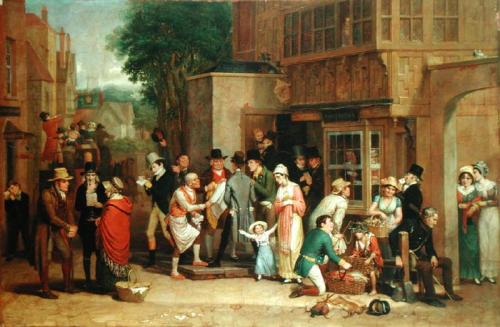
The Post Office, Edward Villiers Rippingille, 1820
As early as the 16th century horses were used to carry the royal mail. Sir Brian Tuke, appointed by Henry VIII, oversaw a system of riders on routes from London to Edinburgh, Scotland, Holyhead, Falmouth, Dover, and Dublin. Each stage, or post, was about 20 miles in length. After this distance, tired horses were exchanged for fresh replacements. From 1574, each ‘Post Master’ had to have at least three horses available for use. At the sound of the approaching Post-Boy’s horn, his own Post-Boy was made ready to start the next stage of the journey. Post Boys & Mail Coaches, The British Postal Museum archive
A public postal service was introduced in 1635. Riders on horseback carried the mail, but due to the poor condition of the roads the Royal Mail system was slow and hard on the men and the horses they rode. The riders, or post-boys, wore scarlet livery, and barely traveled more than three miles per hour in those early years. They could manage a faster four miles per hour for an express delivery. Dirt roads were in notoriously poor condition and the journey was challenging for even fresh horses. Only six post roads led from London. Letters were carried from post to post by post-boys and delivered to the local postmaster (or postmistres), who removed the letters for the area and had them picked up or delivered. The post-boy would then continue to the next post, carrying the rest of the letters. The Mail Coach Service
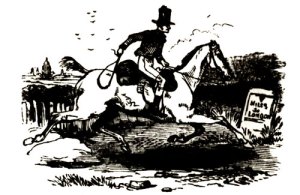
Post-Boy En Route to London, 1800
Before 1765, sending a letter a short distance outside London cost 3d. and sending a letter halfway across the country cost one shilling, or a week’s wages for most people. To cut costs, business concerns preferred to ship their goods down a river or up a canal, rather than chance a slow and dangerous journey by road, for highwaymen and robbers lay in wait, and post-boys were easy prey. Horace Wallpole wrote about a trip from Tonbridge to Penhurst: “The roads grew bad, beyond all badness, the night dark, beyond all darkness, the guide frightened beyond all frightfulness.” In Sussex the roads were generally so impassable in winter that the judges on circuit refused to hold the assizes at Lewes, the county town. Roads, Tolls, and Highwaymen
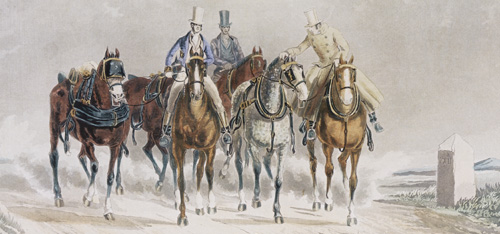
Post-Boys and their ponies, I Henderson, 1834. Although this image depicts a scene later than the era described in this post, and the ponies are harnessed to pull carriages, not deliver the mail, I chose the image because it is reminded me of a description of post-boys setting out with several ponies. This image is from the British Postal Museum Archive.
The following impressions by Arthur Young, a traveler in the 18th century are reminders of the economic consequences of poor roads. Poor linkages meant that postal carriers could not travel around the country easily:
To Luton; the cross-road execrable.
To Dunstable; a cross-road, very indifferent.
To Bedford; turnpike: a vile, narrow, cut-up lane.
To Kimbolton; very shabby.
To Thrapstone; a cross-road, but so so, much cut up.
To Grimsthorpe; cross-road; very bad; at one part of it over a common, with roads pointing nine ways at once, and no direction-post.
To Colsterworth; most execrably vile; a narrow causeway, cut into ruts, that threaten to swallow us up.
To Wakefield; indifferent; through the town of Wakefield so bad that it ought to be indicted. Most of the Yorkshire roads are favourably spoken of, but there are some exceptions that
To Medley; a cross-road, being a line of vile deep ruts cut into the clay.
To Temple Newsham; the road is a disgrace to the whole country.
To Castle Howard; infamous. I was near being swallowed up in a slough.
To Morpeth; a pavement a mile or two out of Newcastle: all the rest vile.
To Carlisle; cut up by innumerable little paltry one-horse carts.
“From Newton to Stokesley in Cleveland,” says Young, “is execrably bad. You are obliged to cross the moors they call Black Hambledon, over which the road runs in narrow hollows, that admit a south-country chaise with such difficulty that I reckon this part of the journey made at the hazard of my neck. The going down into Cleveland is beyond all description terrible, for you go through such steep, rough, narrow, rocky precipices, that I would sincerely advise any friend to go a hundred miles to escape it. The name of this pass is very judicious; Scarthneck, that is, Scare nick, or frighten the devil.
From Richmond to Darlington; part of the great north road; execrably broke into holes like an old pavement; sufficient to dislocate one’s bones. Her Majesty’s mails: a history of the post-office, and an industrial account …, 1865, p 126-127.

Post-Boys and Horses, 1794, George Morland
Many areas of the country didn’t have easy access to the postal system because few of the mail routes came near them. In the early 18th century, Ralph Allen, an entrepeneur who lived in Bath, added a system of crossroads, which connected two post roads, thus covering more of the country. By-posts ran between a post road and a town some distance from it. A way-letter went between two towns on the same post road. Instructions were put on the bottom left corner of letters, hence early covers often arrived with ‘Cross post’ or ‘X-post’ written on them. (History of the Postal Service .)
Allen – who later became the model for Squire Allworthy in Fielding’s Tom Jones – immediately began to stamp out corrupt practices. He had postmasters send him quarterly returns and swear an oath that their figures were accurate. All by- and cross-letters were to be stamped, and tallies kept of all the unstamped mail that came into the postmasters’ hands. As a result of these measures, income from the mail service increased dramatically.
Apart from stamping out bad practice, Allen expanded the routes used by the postal service. During his tenure, he established posts from London to Bristol, Bath, Cambridge, Norwich and Yarmouth, and also increased the number of deliveries that were made. By the time Allen died in 1764, by- and cross-letters were a profitable source of revenue and the department was soon incorporated within the Inland section of the Post Office.- Potted History by Ben Locker
By the middle of the 18th century, road improvements changed to the point where a contributor to the Gentleman’s Magazine wrote in 1754: “Were the same persons, who made a full tour of England thirty years ago, to make a fresh one now, they would find themselves in a land of enchantment England is no more like to what England was than it resembles Borneo or Madagascar.” (Road, Tolls, and Highwaymen.) Road improvements included toll roads, or private roads which the public paid to use but which were maintained and kept in decent condition. The effects of these turnpikes in 18th-century England contributed to lower freight charges of goods and travel times, and better economic conditions. – POSTAL CENSORSHIP IN ENGLAND 1635-1844 BY SUSAN E. WHYMAN
Though notoriously inefficient, post-boys continued to deliver the mail for over 150 years. They took two days to deliver mail from Bath to London, or 4-5 miles per hour, while the stagecoach took only seventeen hours. They also reputedly took forty-eight hours to carry a letter from Bath to London – (Great Britain). Post-boys were vulnerable to adverse weather conditions and highwaymen. “Attacks from robbers were so common in the late 18th century that the Post Office advised customers sending banknotes ‘to cut all such Notes and Draughts in Half in the following Form, to send them at two different Times, and to wait for the return of the Post, till the receipt of one Half is acknowledged before the other is sent’.”
In addition to losing much of their profits to robbers, post-boys had a poor reputation, much of it deserved. Although postage could be prepaid, a major reason that the recipient paid for the delivery of a letter was to ensure that it would be delivered in the first place. Post-boys often failed to place by-letters and cross-letters with the official mail, and they managed to lose or miscarry a great deal of their baggage.
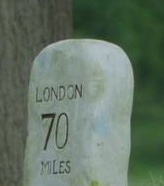
Mile post on the way to London
Inquiring reader, I decided to end this post with a series of vignettes culled from different sources. While they add to our knowledge of Post Roads, Post-Boys, and Post-Offices, I could find no smooth way to fit the information into the narrative. I end with a poem by Cowper, Jane Austen’s favorite poet, whose poem about a Post Man seems a most fitting way to end this topic.
The boy who carried the mail dismounted at Hammersmith, about three miles from Hyde Park Corner, and called for beer, when some thieves took the opportunity to cut the mail-bags from off the horse’s crupper, and got away undiscovered.” Conditions of the Road P. 125
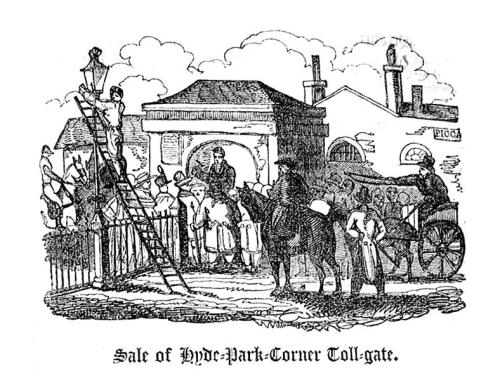
It must be added, however, that there was little help for raw, unarmed post-boys, when carriages were stopped in broad daylight in Hyde Park, and even in Piccadilly, and pistols pointed at the breasts of the nobility and gentry living close at hand! (Conditions of the roads: pp 126-127)
Rumors of their drunkenness and irresponsibility were rife. At one point it was claimed that “the gentry doe give much money to the riders, whereby they he very subject to get in liquor, which stopes the mails”. Paying the messenger after a letter was delivered was probably the most effective way to ensure it didn’t get lost.- Potted History by Ben Locker
Fell Pony
The late 18th century saw the Fell as the pack animal of choice, carrying loads of lead ore to coastal smelters. Fells were often driven in pack trains of ten animals each, carrying a ton of lead ore between them. The loads were just heavy enough so that two men could lift up the pack saddles while a boy led the Fell out from under. The active, long strides of the Fell Pony meant the pack train could travel over 30 miles a day, over 230 miles a week, for seven days a week, year-after-year, with no breaks for the animals.
The Fell became the mount of choice for the Post Office to carry the mail in Cumberland and Westmorland. In the northern towns, the Fell was also a driving animal, crucial to tradesmen. In the 1800’s, the breed gained renown as a premier trotter, frequently winning against all breeds. – Mustahevonen Farm
Posting in England, about the time of the Tudors, and for some long time afterwards, was carried on by riders on horseback. These persons, who were generally young lads, were termed Post-boys. Their only livery was a scarlet jacket and waistcoat, given to them on the birthday of the reigning sovereign. They might often be seen loitering on the way, and rarely travelled quicker than three miles an hour; or, if sent on express business, managed to accomplish four miles in that time. Campbell writes:
Near Inverary we regained a spot of comparative civilization, and came up with the postboy, whose horse was quietly grazing at some distance, whilst redjacket himself was immersed in play with other lads.
“You rascal! I said to him, “are you the post-boy, and thus spending your time?”
“Na, na, Sir, he answered, “I m no the post, I m only an express!”
But these postboys became the special prey of the highway robbers, who often stopped them and ransacked their bags. In February, 1779, an advertisement appeared, stating that the boy carrying the mail for Liverpool, Manchester, Chester, aiid thirty other towns, besides the Irish niail, had been robbed of the whol – Victorian London – Communications – Post – Postal System
http://www.victorianlondon.org/communications/postal.htmPost Boys
Posting in England, about the time of the Tudors, and for some long time afterwards, was carried on by riders on horseback. These persons, who were generally young lads, were termed Post-boys. Their only livery was a scarlet jacket and waistcoat, given to them on the birthday of the reigning sovereign. They might often be seen loitering on the way, and rarely travelled quicker than three miles an hour; or, if sent on express business, managed to accomplish four miles in that time. Campbell writes: ”
Near Inverary we regained a spot of comparative civilization, and came up with the postboy, whose horse was quietly grazing at some distance, whilst redjacket himself was immersed in play with other lads.
“You rascal! I said to him, “are you the post-boy, and thus spending your time?”
“Na, na, Sir, he answered, “I m no the post, I m only an express!”
But these postboys became the special prey of the highway robbers, who often stopped them and ransacked their bags. In February, 1779, an advertisement appeared, stating that the boy carrying the mail for Liverpool, Manchester, Chester, aiid thirty other towns, besides the Irish niail, had been robbed of the whole – Victorian London – Communications – Post – Postal System
Post Master
During the 17th and 18th centuries, postmasters had also been innkeepers due to the fact that they were responsible for finding post boys and horses, providing stabling, etc. Once recognized mails came into being, this was no longer necessary and it was felt that inns provided little security for the mailbags. By March 1836, only one post town in the entire country had an innkeeper as postmaster. More common were post offices run by druggists, stationers, grocers and booksellers. Kristine Hughes, Rakehell, 19th Century Mail
The Post Man, William Cowper
HARK ! ’tis the twanging horn o’er yonder bridge,
That with its wearisome but needful length
Bestrides the wintry flood, in which the moon
Sees her unwrinkled face reflected bright ;
He comes, the herald of a noisy world,
With spatter’d boots, strapp’d waist, and frozen
locks ;
News from all nations lumbering at his back.
True to his charge, the close-pack’d load behind,
Yet careless what he brings, his one concern
Is to conduct it to the destined inn:
And, having dropt the expected bag, pass on.
He whistles as he goes, light-hearted wretch,
Cold and yet cheerful: messenger of grief
Perhaps to thousands, and of joy to som ;
To him indifferent whether grief or joy.
Houses in ashes, and the fall of stocks,
Births, deaths, and marriages, epistles wet
With tears, that trickled down the writer’s cheeks
Fast as the periods from his fluent quill,
Or charged with amorous sighs of absent swains,
Or nymphs responsive, equally affect
His horse and him, unconscious of them all.
But oh the important budget! usher’d in
With such heart-shaking music, who can say
What are its tidings? have our troops awaked?
Or do they still, as if with opium drugg’d,
Snore to the murmurs of the Atlantic wave?
Is India free? and does she wear her plumed
And jewell’d turban with a smile of peace,
Or do we grind her still? The grand debate,
The popular harangue, the tart reply,
The logic, and the wisdom, and the wit,
And the loud laugh I long to know them all;
I burn to set the imprison’d wranglers free,
And give them voice and utterance once again.
More on the topic
This post was updated 29, September.
Read Full Post »
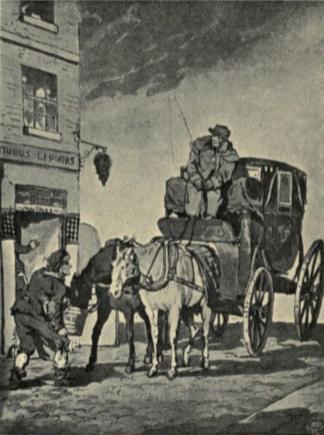
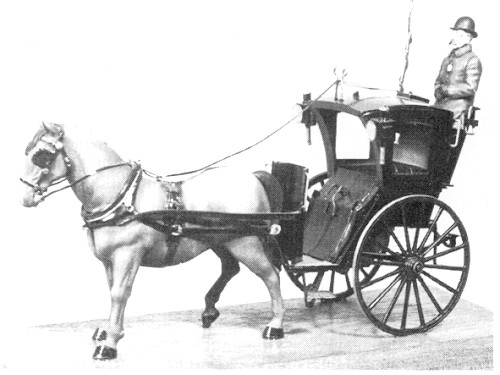
 Another book review so soon on this blog? Well, yes. This book from Shire Publications, Victorian and Edwardian Horse Cabs by Trevor May, is short, just 32 pages long, but it is filled with many facts and rare images of interest to lovers of history. In Jane Austen’s day most people walked to work, town, church, and market square, or to their neighbors. Six miles was not considered an undue distance to travel by foot one way. The gentry were another breed. They either owned their own carriages or hired a public horse cab. These equipages were available as early as the 1620’s.











 Jane Austen's World