Feeds:
Posts
Comments

Archive for the ‘Regency World’ Category

Gentle Reader: This is Christine Stewart’s fifth post for this blog. Christine has embarked on a year-long journey on a Sense and Sensibility inspired project that she chronicles on Embarking on a Course of Study. Herewith are her impressions of Country Dancing, her interview with Rebecca Smith, writer in residence at the Jane Austen House Museum, and her chat with Juliette Wells, the Burke-Austen Scholar-in-Residence at Goucher College

I’m officially six months in to this project and, lately, many things have happened to move me forward, as well as set me back due to my own occasional tendency towards doubt that got the best of me!
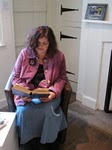
The most exciting was a correspondence with Rebecca Smith, writer-in-residence at the Jane Austen House Museum. Ms. Smith is the great, great, great, great, great niece of Jane Austen and is installed there for six months (until May 2010) working on a novel (she has already written two, which can be found on Amazon).

In response to my question, “How has being in Jane Austen’s house affected your writing and your feelings about yourself as a writer?” Ms. Smith writes:

“Well, I think the first thing I have noticed is how 200 years now seems to be such a short time, and I think this has changed the way I feel about everything.
If 200 years isn’t so long, the past and its people are more present, and less seems to be lost. I find this comforting. One of the odd and lovely things about being here is that some of the objects in the Museum are things that were once owned by my great aunts. For instance, a box that was carved by Jane’s brother, Francis, was, until not that long ago, something that my Aunt Diana kept cereal box and cracker toys in for the amusement of visiting children; and some of the smaller portraits I recognize as having once hung on their walls. I only had vague ideas of who these various Austens were when I was growing up – I probably wasn’t paying attention – but here they are now. It is as though I am following them round and we have all ended up where we should be. I do have this feeling – probably quite misplaced – of coming home. And this is ridiculous – why should I pay more attention to this branch of my family tree than any others? I have some really interesting Scottish ancestors too, including a captain who was shipwrecked on an island and was rescued to tell the tale. I had an Indian grandmother who died when my father was tiny – we know close to nothing about her. These stories are what I’m interested in writing about at the moment. It will be fiction, but the novel I’m trying to finish follows the story of five generations of a family from Hampshire to Canada and India and back again. I’m only going as far back as the Edwardians and the novel isn’t to do with Jane Austen.
I’m interested in ideas about home and belonging (and not belonging). But I can see that it is rather convenient of me to feel the pull of Jane Austen’s cottage in Chawton, which happens to be gorgeous and only 27 miles from where I live, rather than the houses in Scotland or India or Canada or the north of England where other ancestors dwelt.”

The title of the novel she is working on is tentatively called The Home Museum, which sounds welcoming and intriguing all at the same time. I can only imagine how thrilling it must be to write in the same house in which one’s ancestor wrote so brilliantly. There’s a longer answer to other questions on my website.

I also hosted an English Country Dancing lesson that took place at the end of January in the ballroom of the Baltimore Hostel, a renovated 19th Century home in downtown Baltimore. There are pictures on my website of the room and the dance in progress. We had a wonderful professional, English, caller, Mr. Michael Barrelclough, who taught us five dances. We had eighteen people and by the end of the second dance, I could look down the set and see everyone becoming more comfortable and familiar with the style of English Country Dancing and the steps.
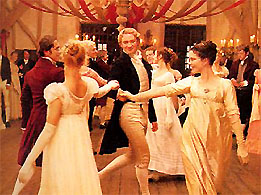
English Country Dancing, Emma with Kate Beckinsale

We still stumbled and Michael led us through some sections several times until we got it, and we laughed and laughed. It was one of the happiest evenings, and I felt so much more confident about my ability to remember steps and understand the calls. I worried less about messing up and just had a marvelous time. There’s something about these dances that is both down-to-earth and elegant and you feel both giddy and graceful at the same time. Everyone wants to have another dance so, we shall!

I’d like to say I’ve made progress on the dating ‘the Jane Austen way,’ but I have not. December – February is my busiest time of year at the arts council and I’m barely keeping my head above water – or should I say snow? The back-to-back snowstorms in the last few weeks set me back quite a bit and rescheduling meetings and Poetry Out Loud competitions completely took over.

There’s also the cost. I’m a state employee and due to our mess of a budget, state employees are required to take 8 furlough days, which is shredding my paycheck. I can’t afford a $30 or more fee for online dating services every month. Maybe in a few months, once the fiscal year ends and we, hopefully, have a balanced budget (or I have a decent tax return!).

In the meantime, I will do what practicing I can at any events I attend, of which there are many when one works in the arts!
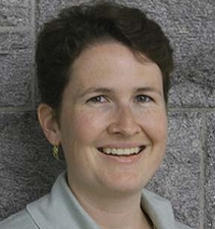
Most recently I sat down with Juliette Wells, the Burke-Austen Scholar-in-Residence at Goucher College this year. Dr. Wells teaches at Manhattanville College in New York and was here for a week to give a talk, meet with faculty and students, and do research in Goucher’s Austen collection, donated in 1975 by alum Alberta Hirshheimer Burke (1928) at the time of her death. This nationally-recognized collection consists of Austen first editions, rare period publications related to the life and landscape of rural England, and Alberta Burke’s own notebooks of Austen-related memorabilia and correspondence with Austen collectors and scholars. The Burkes also donated letters to The Morgan Library in New York, where the current Austen exhbit is taking place.

A little trivia: apparently, her husband, Henry Burke, cofounded JASNA with Joan Austen-Leigh and J. David Gray just a few years later in 1979, so the first 25 years of JASNA’s archives are also housed at Goucher.

Dr. Wells was interested in, and supportive of, the project, and I’ll be posting more info about our meeting soon, along with a picture and a podcast of her talk at Goucher. She is writing a book called Everybody’s Jane: Austen in the Popular Imagination, and is exploring how Austen has been appropriated and absorbed by popular culture through film, television, and books. She completed a fellowship at the Chawton House Library last summer.

You can read one of her articles in Persuasion at this link.

and find a link to an interview on Penguin Classics On Air at my website. She was the editor of the recent electronic version of Pride and Prejudice published by Penguin Classics, that includes all sorts of wonderful extras about fashion, architecture, dancing, and etiquette.

You can also read about the mini-crisis I had about this project, mostly because people began asking me about whether or not I wanted a book deal and if so, what was the purpose of the project, and I realized I didn’t have a thesis and did I want a book deal like Lori Smith was angling for when she had her blog that turned into A Walk With Jane Austen ?!?!?!

Deep breath!

So then I became very overwhelmed and lost sight of the joys and the basics of what I was doing. I realized I did need to figure out the purpose of the project for myself, and let the rest fall where it may.

This led me to an examination of character through the unlikely source of Pamela Aidan’s trilogy Fitzwilliam Darcy, A Gentleman which was the only reading I could manage during the storms. It’s both cozy and anxiety-provoking to be caught in snowstorms, knowing you’re missing all your commitments and how much catch up there will be….Plus I had a dead battery and every day I left the car at the dealership they seemed to find something else wrong with the it!

But back to my crisis. Did I figure out that darned purpose? I did, with Dr. Wells’ indirect help.

Next weekend I’m off to NYC to visit The Morgan Library’s Jane Austen exhibit, “A Woman’s Wit.” Some friends are going and we’re taking a video camera, so watch out!

Share/Bookmark// More on the Topic

Read Full Post »

PBS Masterpiece Classic will show an encore presentation of Persuasion 2007 tonight. If you missed this 90-minute film the first time, you will have a chance to see it at 9 PM EST. (Check your local listing).

Sally Hawkins as Anne Elliot in Persuasion, 2007

Vic’s posts about Persuasion 2007:

Other blogger views of the Film

Rupert Penry Jones as Captain Wentworth and Sally Hawkins as Anne Elliot, Persuasion

Posts on this blog about Persuasion

The Elliots of Kellynch Hall, Persuasion 2007

Read Full Post »

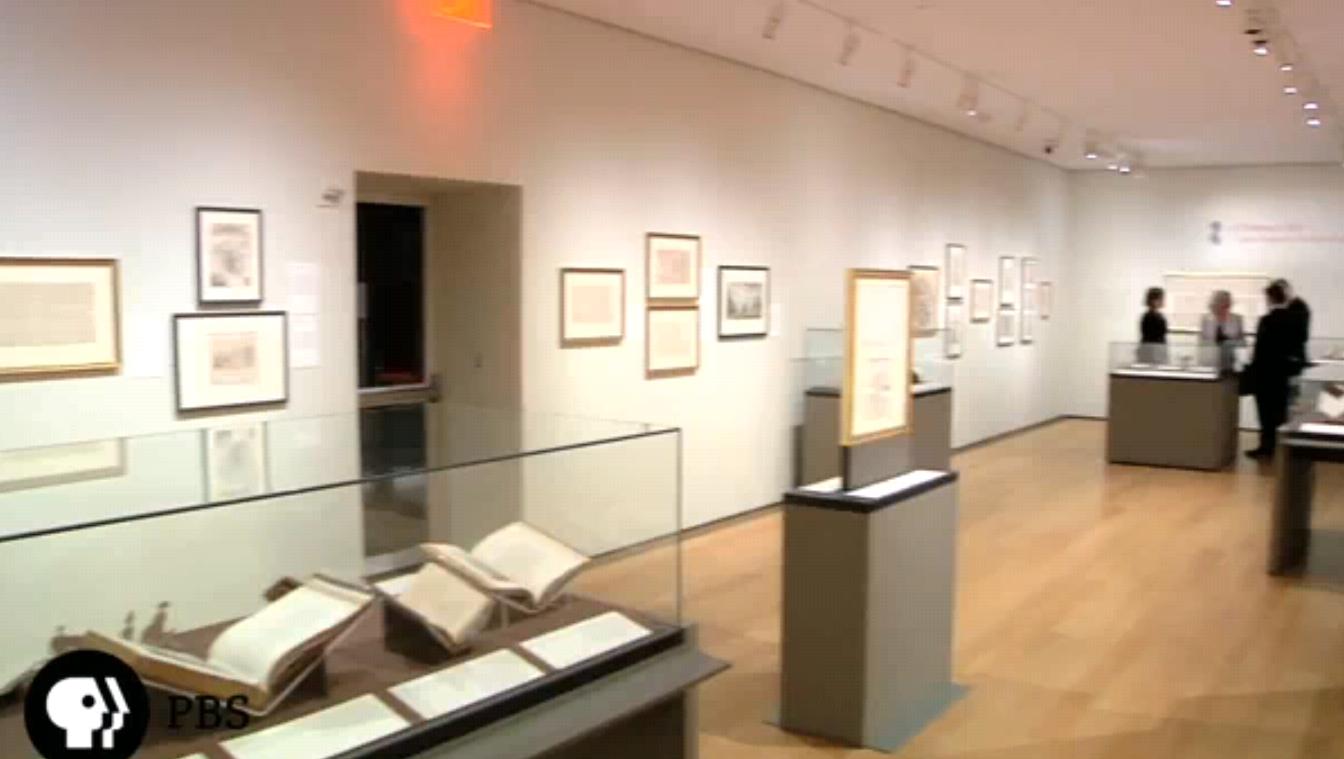
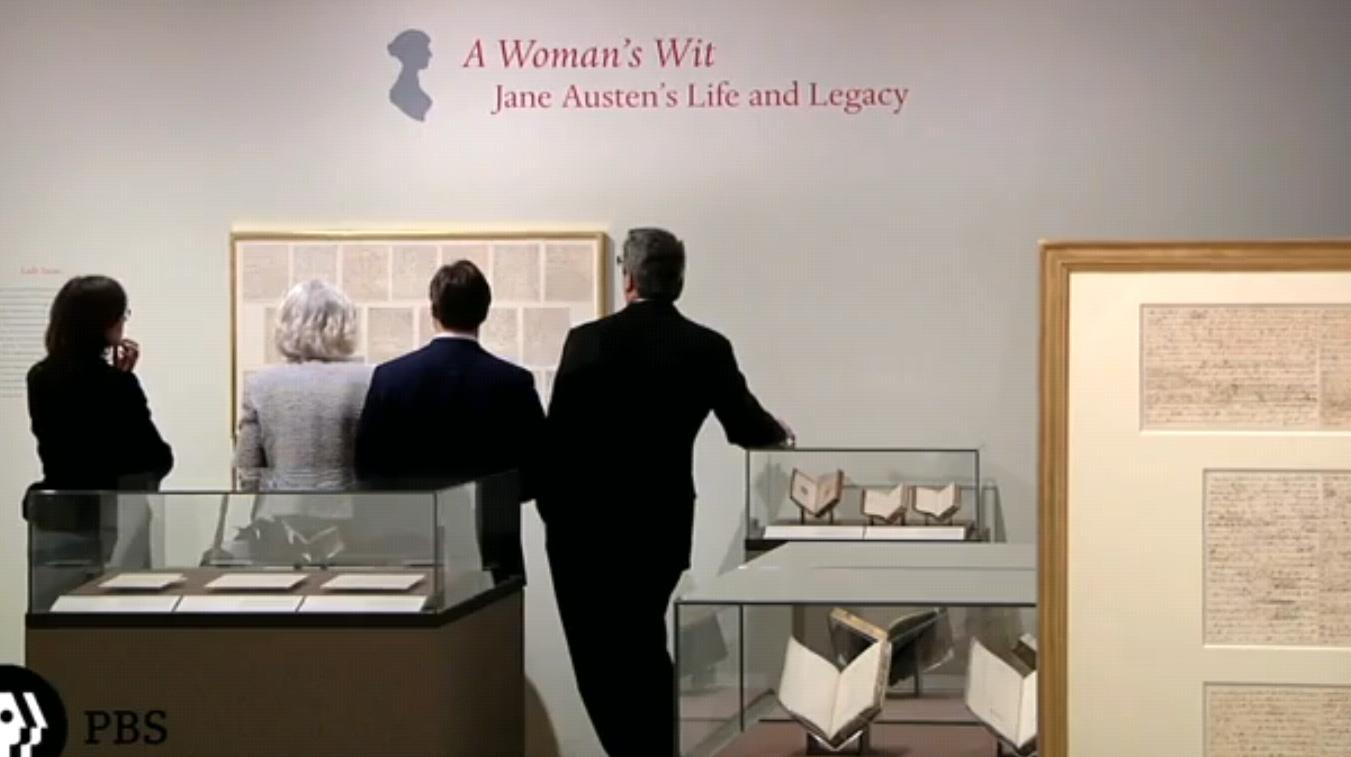
Last month I wrote about my trip to the Morgan Library in New York to view A Woman’s Wit:Jane Austen’s Life and Legacy, and of my impressions of the letters.

Exhibition room for Jane Austen's artifacts at the Morgan Library

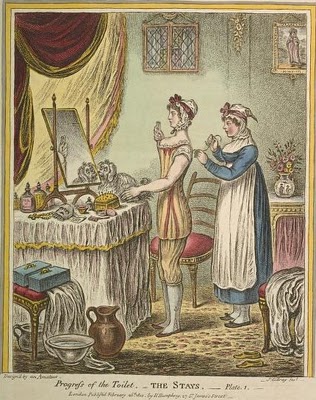
But I didn’t mention the many other interesting artifacts: the Gillray prints of a lady dressing and Rowlandson’s caricature of The Comforts of Bath,

Progress of the Toilet, The Stays, James Gillray

the books that Jane owned,

Jane Austen's personal books, including The Spectator and Poems by William Cowper

a lovely steel engraved oval image of her,

Steel engraved image of Jane Austen and Lady Susan

an original copy of the Memoir of Jane Austen, fair copies of the first 7 letters of Lady Susan,

Viewing the Lady Susan letters on the far wall of the exhibit room

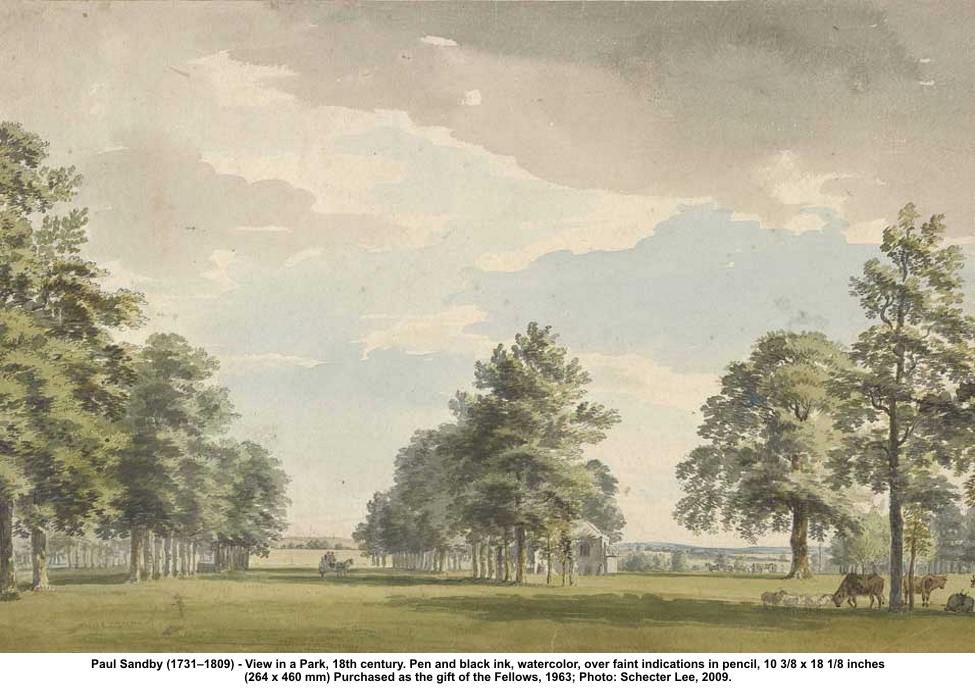
a rough 12-page fragment of The Watsons, a watercolor by Paul Sandby,

Paul Sandby's View in a Park

and a well-known image from An Analysis of Country Dances by Wilson, 1811.

Five positions from An Analysis of Country Dancing by Wilson, 1811

An account of Jane’s personal purchases of a little over 42 pounds for the year (1807), Isabel Bishop’s images for Pride and Prejudice,

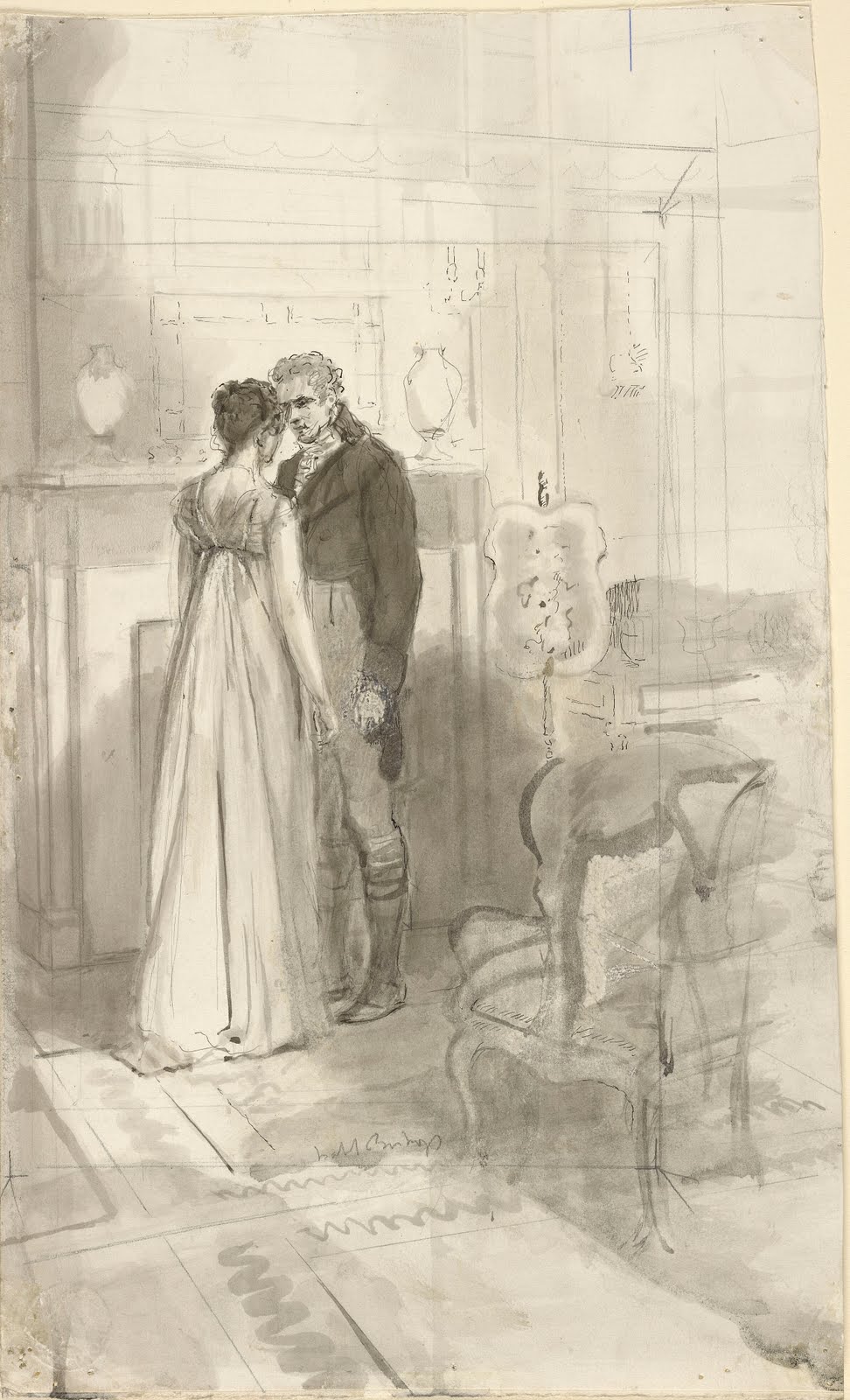
Isabel Bishop's image of Jane and Bingley standing together

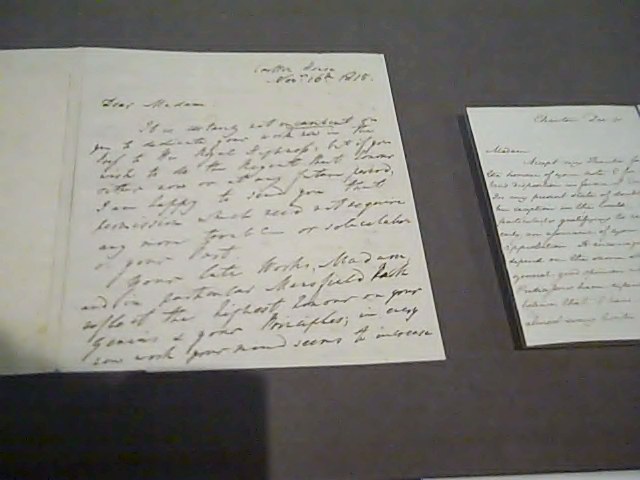
and the correspondence between Jane and Cassandra, her letter to Francis Talbot, the Countess of Morley and a letter from the Prince Regent’s librarian, James Clarke add to our knowledge of her world.

James Clarke's letter to Jane Austen, on the left

There were artifacts from Byron and Fanny Burney and Sir Walter Scott, and more images than I can recall so many weeks later.

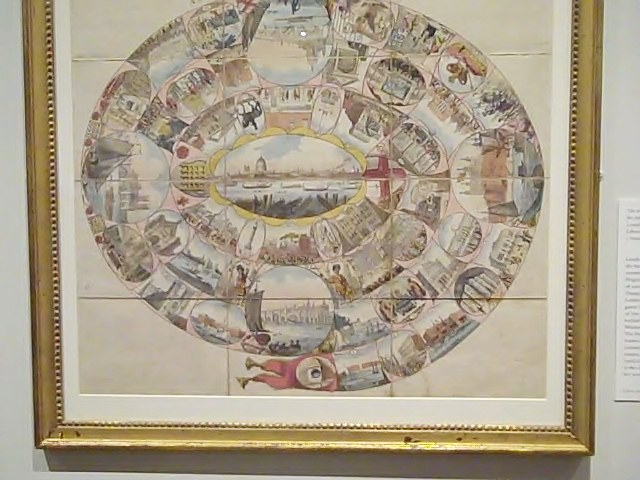
The Panorama of London

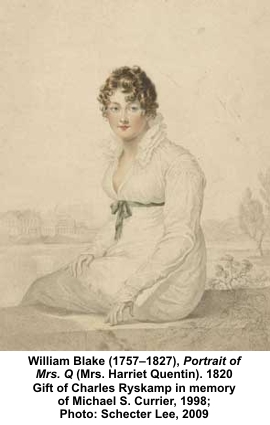
William Blake and Georges Mail drew two portraits that forcibly reminded me of my internal images of Jane and Elizabeth Bennet

Georges Maile (fl. 1818–1841) Marchioness of Huntley.

Which brings me to my only (and major) disappointment with this exhibit: no catalogue. Thankfully, I can reconstruct my memory of the visit from my notes, images I have gleaned online or taken myself, and from a list provided by the Morgan Library (see the link below.) For anyone who lives within striking distance of the Morgan Library, you have until March 14th to travel to New York. The exhibition room might be small, but it is filled with treasures and is well worth the effort.

More links:

View PBS’s video of the Jane Austen exhibit at the Morgan Library on YouTube.

Read Full Post »

IMDb has become an indispensable site for those of us who love movies. I especially love the trivia the site features about each film. Take Emma 2009, for example. Costumes that were recycled from other films are listed there. Let’s look at a few:

Johdi May's purple coat

The purple coat Jodhi May (Mrs. Weston) wears on market day in Highbury is the same costume Hattie Morahan (Elinor Dashwood) wears when she arrives at Barton Cottage in “Sense & Sensibility” (2008).

Elinor in purple pelisse

The dark Spencer worn by Louise Dylan (Harriet Smith) to visit the poor is the same costume Lucy Scott wears in “Pride and Prejudice”(1995).

Harriet Smith (Louise Dylan) in dark spencer

The off-white dress with floral embroidery on the bodice worn by Christina Cole (Mrs. Elton) for her big entrance in church is the same costume worn by Cesca Martin in “The Regency House Party” (2004) during her “engagement,” and by Natasha Little (Becky Sharp) at Park Lane in “Vanity Fair” (1998).

Christina Cole as Mrs. Elton, Her Entrance in Church

The gray gown with gold bow print worn by Tamsin Greig (Miss Bates) to Miss Taylor’s wedding is the same costume worn by Anna Massey (Aunt Norris) in “Mansfield Park” (1983), Phyllida Law (Mrs. Bates) in Emma (1996), Lindsay Duncan (Mrs. Price) when Fanny leaves home in Mansfield Park (1999), Janine Duvitski (Mrs. Meagles) in “Little Dorrit” (2008), and Linda Bassett (Mrs. Jennings) in London in “Sense & Sensibility” (2008).

Miss Bates in gray pelisse and Emma in a floral gown

The floral print dress worn by Romola Garai (Emma) to Miss Taylor’s wedding is the same costume worn by Dagmara Dominczyk (Mercedès Iguanada) for Edmond’s homecoming at the beginning of The Count of Monte Cristo (2002).

Johdi May in lilac floral colored wrap dress

The lilac colored floral wrap dress Jodhi May (Anne Taylor/Weston) wears at Hartfield is the same costume worn by Denise Black (Mrs.Brocklebank) in “To the Ends of the Earth” (2005), and Alex Kingston (Mrs.Bennet) in “Lost in Austen” (2008).

Wearing a floral waistcoat at the Cole's party, Jonny Lee Miller as Mr. Knightley

The blue floral waistcoat Jonny Lee Miller (Mr.Knightley) wears at the Coles’ party is the same costume worn by Joseph Beattie (Henry Crawford) in Mansfield Park (2007) (TV).

Henry and Mary Crawford

For more recycled fashion comparisons, go to this link.

Read Full Post »

Watching Emma 2009 is a visual feast for the eye. I wrote about my visceral reaction to this film for the PBS blog Remotely Connected and discussed the similarities between Jane Austen and Vermeer. This review addresses my other impressions about Emma 2009, first shown by the BBC in Great Britain last fall and airing on PBS Masterpiece Classic over the next three Sundays. Take a poll here and tell us what you think of Episode One.

A young Emma plays with her sister Isabella in Hartfield

I am of two minds about this new version of Emma. The script follows the story linearly, from Emma’s birth to the moment of Miss Taylor’s wedding to Mr. Weston, whereas in the book the story starts with the marriage. Interestingly, the narrator at the start of the film is Jonny Lee Miller (Mr Knightley), and we hear of Emma’s story from his perspective. The film sets up three characters from the start: Emma Woodhouse, Frank Churchill née Weston, and Jane Fairfax. All three children lost their mothers at an early age, but only Emma remained in Highbury. She led a charmed life under the care of her governess, Miss Taylor, a kind and loving mother figure.

Emma walks with Miss Taylor in Highbury

I must admit that I was in “high dudgeon” when I first watched these scenes, unable to connect the script to Jane Austen’s writing. However, I am aware that films are a visual and expensive medium, and they must not only take into account time restrictions, but also the richness of visual language. It might take Jane Austen several pages to describe a scene that the eye can perceive within moments. Mr. Woodhouse’s nervous-Nellie approach to life, always worried about the minutia of the health and the welfare of his family and friends, is woven into the fabric of the script, and is often shown more than told.

Tamsin Greig as Miss Bates

Mrs. and Miss Bates’ downfall is not described per se. We first see them saying goodbye to Jane Fairfax in the hallway of the comfortable vicarage, which was their home when Rev. Bates was still alive. We then see them next in their new lodging, an upstairs apartment in Highbury with crumbling walls and meanly furnished rooms. A single glance from Tamsin Greig (Miss Bates) belies her cheery disposition and tells us all we need to know about their reduced circumstances.

Emma 2010 character costumes compliment the setting and each other

I was also struck by the costumes and how the colors the characters wore complimented the settings as well as each other. In one scene in Hartfield, Mr. Knightley’s vest, Mr. Woodhouse’s scarf, and Emma’s sash picked up the colors in the room and of each other. This scheme is followed repeatedly in many scenes.

Jonny Lee Miller as Mr. Knightley reacts to Harriet Smith's rejection of Mr. Martin

The more I watch this film adaptation (I have seen portions of it four times), the more my impressions of the actors keep changing. In real life, Jonny Lee Miller is 37 years old, exactly Mr. Knightley’s age. Some critics have thought him too young or all wrong for the part, but as the film progressed, especially in the second and third installments, I warmed towards him. I now regard his performance as George Knightley as my favorite of all the actors who have played this gentleman. High praise coming from me, for I admit I was among the naysayers when Jonny’s casting was first announced.

Emma (Romola Garai) talks to Mr. Knightley

Although I changed my mind about Jonny Lee Miller, I have never quite warmed up to Romola Garai as Emma. She is a lovely and talented actress, and I liked her star turn in Daniel Deronda immensely, but I found her facial contortions in this film disconcerting and cannot recall such exaggerated mannerisms in her other films. A friend who watched the film with me liked Romola’s performance, saying that her portrayal of a spoilt, headstrong girl who was raised by a doting father was spot on. However, I thought Romola’s performance was too theatrical, as if she were trying to reach the audience seated in the last row of a large theatre. The camera’s lens magnifies everything facial movement, and she could have (should have) toned down her grimaces, toothy smiles, and wide-eyed looks of wonder or consternation. I did come to appreciate Romola’s chemistry with Jonny Lee Miller, which was palpable. One can see the sparks fly between these two characters, which is the point of a romance after all.

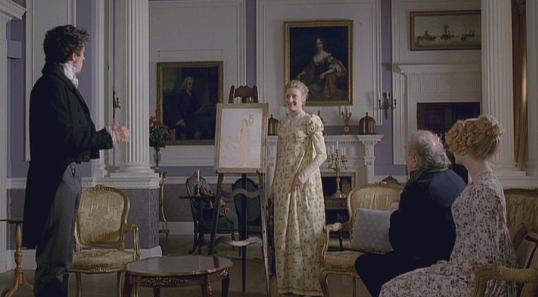
Blake Ritson as Mr. Elton offers to take Emma's drawing to London to be framed. Mr. Knightley watches the scene, aware of Mr. Elton's intentions, but Emma is clueless.

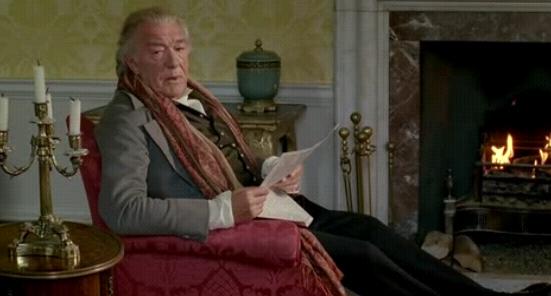
As for the secondary characters, I admired Tamsin Greig’s Miss Bates, which surprised me. While her character is irritating, Tamsin managed to make us feel sorry for her even as we were irritated by her babbling. Her performance is almost as memorable as Sophie Thompson’s, whose 1996 portrayal of Miss Bates remains my favorite. Valerie Lillie’s performance as Mrs. Bates was way past tea, for she looked comatose and unresponsive. Frankly, her part required nothing more than for her to sit in a chair and look dour. Blake Ritson’s turn as Mr. Elton was a bit too mannered for my tastes, but he was perfectly matched with Christina Cole’s vulgar Mrs. Elton. And I quit liked Louise Dylan as Harriet Smith: pretty but not as attractive as beautiful Emma, sweet-natured and malleable, and as dim as a snuffed candle. I’m not sure Michael Gambon was quite right for the part of Mr. Woodhouse. His face and figure are too vigorous for a hypochondriac and worrywart, and his performance did not in any way displace my estimation of Bernard Hepton’s masterful portrayal of Mr.Woodhouse in 1996.

Michael Gambon as Mr. Woodhouse

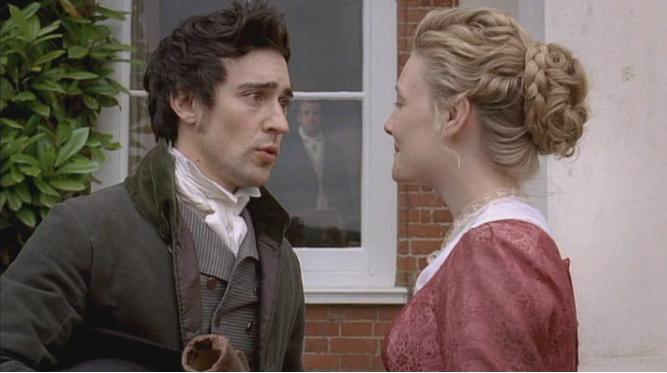
As far as I am concerned, the Frank Churchill of my imagination has never been captured by any of the Emma adaptations, including this one. I thought that pug-nosed Rupert Evans was all wrong for the part and I did not believe for a moment that anything about his looks or behavior would attract Emma’s interest. As for Laura Pyper as Jane Fairfax, she’s talented, but much too mousy for my tastes. Yes, her situation is untenable, for Frank does not at all act in a gentleman like manner, but I rather liked Olivia Williams’ interpretation of the character, beautiful, demure, and alternately angry and hurt.

Emma finally meets Frank Churchill (Rupert Evans)

This film gets stronger with each episode, and the second and third installments sealed my admiration for this latest version of Emma. The cinematography is beautiful and the actors play their characters in lovely interiors, settings and locations. The film is almost four hours long, which, thankfully, allows for more plot and character development than a 2-hour version.

At the Coles, Emma and Mrs. Weston (Johdi May) listen to Jane Fairfax sing and play

I must add that PBS has gone out of its way to make its Masterpiece Classic site worth visiting. Those who missed the first installment can watch it online starting Monday, January 25th. The site offers a Bachelors of Highbury quiz (such fun), a Romola Garai audio slide show, screenwriter Q&A with Sandy Welch, and other features.

My other posts:

Read Full Post »

« Newer Posts - Older Posts »