Feeds:
Posts
Comments

Archive for the ‘Religion in Austen’s England’ Category

Interviewed by Brenda S. Cox

“As soon as he can light upon a bishop, he will be ordained. I wonder what curacy he will get!”–Anne Steele, about Edward Ferrars in Sense and Sensibility.

A few days ago, I told you about a fascinating new book on Henry Austen. The author is a retired Church of England bishop, living in Farnham, where Henry Austen served as perpetual curate of the parish church. (A perpetual curate was a curate, substituting for the rector or vicar holding the living of that church. “Perpetual” meant that he could not be fired; he could keep his job for life, just as a rector or vicar did. However, his salary was still only a portion of the tithes that supported the main, absentee clergyman.)

I asked the Right Reverend Dr. Christopher Herbert, who is now a Visiting Professor of Christian Ethics at Surrey University, about his journey in writing this book.

Jane Austen’s Favourite Brother, Henry, was written by an Anglican bishop, Christopher Herbert

Jane Austen’s World: Rev. Herbert, what led you to write Jane Austen’s Favourite Brother, Henry?  How did you get interested in Henry Austen?

Rev. Herbert: In retirement I live in Farnham, Surrey, only a few miles from Chawton. I am the Patron of the Farnham Castle Trust; Farnham Castle was once one of the major homes/palaces of the Bishops of Winchester. At a Trustees’ meeting, discussing how to attract more visitors to the Castle and Farnham, I wondered if there might be some connection with Chawton and Jane Austen. The other Trustees did not know of any, but a friend pointed out an article in the Farnham Herald mentioning a man called Henry Austen christening a baby in the parish church of St Andrew’s. [JAW: This story opens Herbert’s book.]

I followed this up, checking the Parish Registers at the Surrey History Centre, and found many signatures in Henry’s hand—and of course, he was Jane’s brother. I was fascinated. Who was he? How did he become a Perpetual Curate in Farnham? What was his story?

At that point, all that I had were his dates of birth and death, and a few insights from Wikipedia. I had no intention of writing a book about him, but the more I researched his life, the more intriguing Henry became. By the way, my book’s publication in the 250th Anniversary Year was pure chance. I had no idea that was coming up when I raised my initial question!

JAW: How long did it take you to research and write the book?  What were some of the most interesting sources you found?

I took well over two years to research and write the book. That might seem a short period of time. However, in my earlier work as a diocesan bishop, with over 400 churches in my diocese, plus membership of the House of Lords and other national and international responsibilities, I was accustomed to working very rapidly to fulfil all my duties. I also read for [pursued/studied for] an MPhil [Master of Philosophy] and a PhD in Medieval Art History at the University of Leicester whilst I was a bishop, and again, had been able to read and digest and write rapidly. So, I had some of the requisite research skills, and I loved the research process—that joy of discovering new and unexpected jewels.

My most useful primary sources were obtained from the Hampshire County Record Office where I was able to trawl through a great deal of original material, plus similar material such as the Parish Registers of St Andrew’s, Farnham, at the Surrey History Centre.

For secondary sources, I read biographies of Jane Austen by people such as Claire Tomalin, and David Cecil, and accessed the huge online resources of JASNA, etc. I was helped greatly by the staff at Jane Austen’s House, Chawton, and, of course, re-read all of Jane’s novels, plus the utterly invaluable edited version of Jane’s letters by Deirdre Le Faye and invaluable and scholarly papers by people such as yourself [Brenda Cox], John Avery Jones, et al.

Of course, as is often and frustratingly the case, after my book had been published, I came across some more primary material at Winchester College. The researcher’s life, as you know, is littered with ‘if onlys’. [I encouraged him to find a place online to publish his further research.]

Amongst the most interesting material were the Parish Registers of Bentley and Farnham. Those gave me enlightening insights about the lives of Henry and his parishioners.

JAW: What did you learn about Henry that interested you the most?

Apart from my obvious personal affinity with Henry as a clergyman, it was his time as a dealer in Army Commissions, a Banker, and a Tax Collector which I loved researching. I am not an economic historian and so my research in this area was very challenging. I would need to re-train in economic history to begin to fully understand every detail. This was the most difficult part to write, trying to get my head around the economic and financial landscape within which Henry worked.

Beneath all the top-layer elements of his life, I enjoyed delving beneath the wealthy surface and speculating on Henry’s motivations and methods of work. Walking the streets of London and investigating where he lived during this phase of his life was hugely enjoyable.

Following Henry through his banking downfall and his approach to his bishop to discuss the possibility of ordination required a great deal of ‘inner work’ on my part  to comprehend how and why that happened. I have interviewed hundreds of ordinands in my life. It was fascinating trying to get into the mindset of Henry’s bishop, Bishop Brownlow North, who lived in very different times to my own. Like Henry, Bishop North worked with different cultural assumptions than ours. It is such a challenge to try to stretch one’s sympathetic imagination into another era.

By contrast, and bathetically*, it was the fact of Henry having almost 1,000 bottles of wine in his cellars which sticks in my mind!
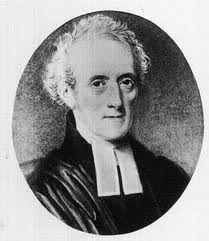
Henry Austen as a Clergyman later in life. Public domain via wikimedia.

JAW: What was something interesting you learned about Jane Austen herself in writing the book?

Oddly, it was spending time exploring Steventon and realising how isolated the Rectory and the village were in the late 18th and early 19th centuries. I had, of course, been to Jane Austen’s House in Chawton a number of times, but in my mind’s eye I had imagined Steventon as a quintessential English Village: village green, church, a few farmsteads, a pub, and even, perhaps, a game of cricket. That idea was completely shattered when I visited Steventon. The cultural life inside the Rectory must have been a great contrast to the isolated, scattered cottages of the poor inhabitants of the village. 

My understanding of the life of Cassandra Austen (Leigh) [Jane’s mother] grew as I thought of her coping with her own children plus the students boarding with them—all that food, oversight of the washing of bedding and getting it dry, all that hullabaloo inside the house during term-time. When did she have a moment to herself?  I began to wonder, as Jane watched her mother, how much Jane recognised the sheer logistical task her mother undertook to keep the ship happy, afloat and moving in the right direction.

This was the most fun part of the book to write, showing the inside of Steventon Rectory with all the liveliness and learning of Jane, Henry, and their siblings.

And, of course, Jane’s letters are an absolute delight. If only there were more…if only…

JAW: If you were able to meet Henry Austen personally, what do you think you would like about him? What would you want to ask him? What parts of his character might you find difficult or less pleasant?

I would enjoy his sense of humour, his generosity towards, and affection for, Jane, and his affection for Liza [his wife Eliza] and her son, Hastings. Not being a risk taker myself, I would love to hear about his own understanding of the nature of financial risk and entrepreneurship. When did he see the storm clouds brewing? Was ordination always at the back of his mind? Was it a kind of attempt to ‘give back’ to society, having enjoyed and then lost the fruits of worldly success?

I would find his undoubted attraction to the aristocratic level of society difficult, but I fully recognise that it was the 18th/early 19th century way. And when he was Perpetual Curate, I suspect I would have found his lack of awareness of the Farnham Workhouse very difficult. However, in fairness, I must add that it might simply be lack of evidence which leads me to suppose that he was not at his best with the poor and impoverished. So much information has been lost. I could be entirely wrong. 

JAW: Why do you think he was Jane’s favourite Brother?

I will say the idea for the title of the book was not mine, it was my publisher’s, but I am entirely happy with it. Why was Henry Jane’s favourite? He was obviously very close to her and looked to her for help whenever he hit a difficult or tragic patch in his life. They shared the same sense of humour, the same love of the quirks of society, the same interest in humanity. And it was Henry who went out of his way to ensure that her books were published. Besides, who but a favourite brother would actually volunteer to read Proofs!?

JAW: What would you like to tell potential readers about your book?

I hope that if they love Jane Austen, my book will reveal some lesser-known aspects of Regency society which might enhance their understanding of Jane and her novels. In brief, context really matters. But, most importantly of all, if my book leads to people reading or re-reading Jane, my hopes will have been more than fulfilled.

JAW: Thanks very much, Christopher! I loved Jane Austen’s Favourite Brother, Henry, and I think our readers will also.

Jane Austen’s Favourite Brother, Henry, by Christopher Herbert, is now available from the publisher, Pen & Sword, and from Amazon in the US and in the UK in hardcover. The Kindle version will be released September 30, 2025.

You can find out more about Dr. Herbert at https://en.wikipedia.org/wiki/Christopher_Herbert and https://www.chpublishing.co.uk/authors/christopher-herbert Since those lists of accomplishments, he has also been involved in the Royal Hospital for Neurodisability in London and the Lyme Resource Centre, a charity based in Scotland raising awareness of the growing incidence of Lyme disease and co-infections in Scotland and elsewhere in the UK.

*I looked up bathetic. It means “producing an unintentional effect of anticlimax.” Nice word!

Brenda S. Cox is the author of Fashionable Goodness: Christianity in Jane Austen’s England. She also blogs at Faith, Science, Joy, and Jane Austen.
Read Full Post »

Book Review by Brenda S. Cox

“I had a letter from him [Henry], in which he desired to hear from me very soon—His to me was most affectionate and kind, as well as entertaining;—but there is no merit in that, he cannot help being amusing.”—Jane to Cassandra, April 8, 1805

“Henry at White’s! Oh, what a Henry!”—Jane to Cassandra, June 23, 1814 (when Henry attended an exclusive high class gathering celebrating Napoleon’s defeat)

Jane Austen’s Favourite Brother, Henry, by Christopher Herbert, gives an in-depth view of Henry Austen’s life, beliefs, and connections with Jane and her novels.

What a Henry

Henry Austen was apparently a lot of fun, and Jane loved her brother dearly. He was also quite versatile. At various times he was:

  • an Oxford student who produced a periodical called The Loiterer with his brother James,
  • paymaster and adjutant in the Oxford Militia,
  • army agent,
  • banker (of a bank that eventually failed),
  • receiver general of taxes,
  • Jane Austen’s own literary agent,
  • clergyman of several parishes,
  • chaplain of the British Embassy in Berlin, and
  • husband of Eliza de Feuillide and later of Eleanor Jackson (niece of Rev. Papillon of Chawton).

Christopher Herbert, in his fascinating new book, Jane Austen’s Favourite Brother, Henry, explores Henry Austen’s life through all these changes.

Culture and Current Events

I loved that Herbert gives lots of cultural details in going through Henry’s life. For example, in the chapter on Henry’s birth, we learn about childbirth practices at the time. During pregnancy, his mother Cassandra Austen, rather than buying special maternity clothes as we do today, would have widened her stomacher, used aprons to cover gaps in clothing, and loosened side lacings. A “churching” service would celebrate her survival of the very dangerous process of giving birth. Philadelphia Hancock, her sister-in-law, may have been there to help the mother before, during, and after the delivery.

The author speculates on what the children growing up in the the rectory may have read, who taught them to read and write, and where they obtained their books.

Current events and ideas are woven in alongside stories of Henry and Jane growing up. The balloon ascent of 1784 is described by quoting a magazine article of the time. We hear about battles, steam power, improvements and enclosures, and the Wesleyan revival which began at Oxford. We see how the ideas of contemporary writers such as John Locke, focusing on reason in understanding God and society, may have affected Jane Austen’s ideas of church and clergy in Mansfield Park, as well as her prayers.

Henry Austen as a Clergyman later in his life. Public domain via wikimedia.

Work and Money

An in-depth discussion explains Henry’s various jobs and what they involved. We see how his bank throve, launching Henry into upper ranks of society, and then failed. The author obviously did quite extensive research to dig this all up, and it was interesting to learn, for example, what exactly an army agent was. (For me, there was a little too much detail, since I’m not interested in finance; however, other readers may find this the most illuminating part!) It seems Henry had some financial dealings which were at least ill-advised, and possibly questionable.

Henry as Clergyman

After his bank failed, Henry reverted to earlier plans and was ordained as a clergyman. In Henry’s one extant sermon, he attacks pride and prejudices. Herbert says Henry is encouraging his congregation toward giving Catholics political rights, a major issue of that time. (See also “Sermons by Jane Austen’s Family.”) Herbert explores what Henry may have believed, also drawing from statements in Mansfield Park.

He also points out that Henry’s pastoral workload was much greater than that of Mr. Elton or other Austen clergymen. In one year, Henry performed 149 christenings, 34 weddings, and 105 funerals! All for very little income. He also had to deal with a new workhouse and other issues related to the poor of his parishes. Henry’s journey as a clergyman, his income and how he spent it, are further explored, as well as his anti-slavery work.

Jane Austen’s Novels

The author skillfully connects concepts to passages in Austen’s novels.  He also explains Henry’s role in getting her novels published. He concludes that there are still some questions about Henry’s life. But we do know that:

“without Henry’s determined and passionate commitment in getting Jane’s novels published, our lives, and the life of the world, would be so much the poorer.”

Amen!

On Thursday I will post an interview with the author, who is uniquely qualified to write this book. He is a former bishop of the Church of England, now living in Farnham where Henry Austen served as perpetual curate in the parish church. Farnham Palace, where the Right Revd. Dr. Herbert is a patron, was a home of the Bishops of Winchester.

I recommend this book to anyone who wants to learn more about Austen’s family and her world.

Jane Austen’s Favourite Brother, Henry, by Christopher Herbert, is now available from the publisher, Pen & Sword, and from Amazon in the US and in the UK in hardcover. The Kindle version will be released September 30, 2025.

Brenda S. Cox is the author of Fashionable Goodness: Christianity in Jane Austen’s England. She also blogs at Faith, Science, Joy, and Jane Austen.
Read Full Post »

By Brenda S. Cox

“Edward & I settled that you went to St. Paul’s Covent Garden, on Sunday.”—Jane Austen, letter to Cassandra from Godmersham Park, Oct. 26, 1813

Covent Garden

We’ve been visiting London churches mentioned in Austen’s novels. Now let’s go to one mentioned in her letters. In the fall of 1813, Jane was staying with her brother Edward and his family at Godmersham Park. Cassandra was visiting their brother Henry at 10 Henrietta Street, Covent Garden, London. He lived in a flat above his bank. (For locations Henry lived in London, see Jane Austen’s Visits to London.) Covent Garden was known for its fruit and vegetable market, as well as, unfortunately, its prostitutes.

Jane Austen’s London offered two official theatres, at Drury Lane and Covent Garden. Both were in the church parish served by St. Paul’s Covent Garden, and Austen saw plays at both. She was planning to see a play at the Covent Garden theatre when she visited Henry a month earlier:

“Fanny and the two little girls are gone to take places for to-night at Covent Garden; “Clandestine Marriage” and “Midas.” The latter will be a fine show for L. and M.” (Lizzie and Marianne)—Sept. 15, 1813 (Fanny was the eldest daughter of Jane’s brother Edward Austen Knight; her mother had died five years earlier. Lizzie and Marianne were Fanny’s younger sisters. Edward was with them but staying at a nearby hotel.)

Jane and Edward assumed Cassandra would go to church at St. Paul’s Covent Garden, since it was Henry’s parish church. Jane probably attended that church herself when any of her visits to Henrietta Street lasted over a Sunday. She and her family regularly attended church on Sundays, wherever they were.

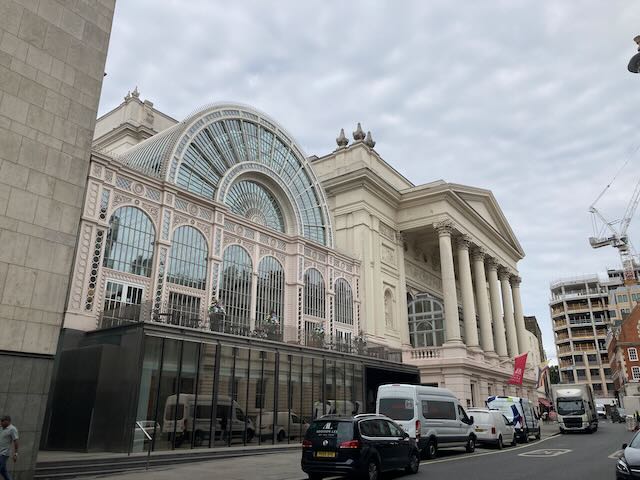
The old Covent Garden Theatre building is at the center of the modern Royal Opera House.

The Actors’ Church

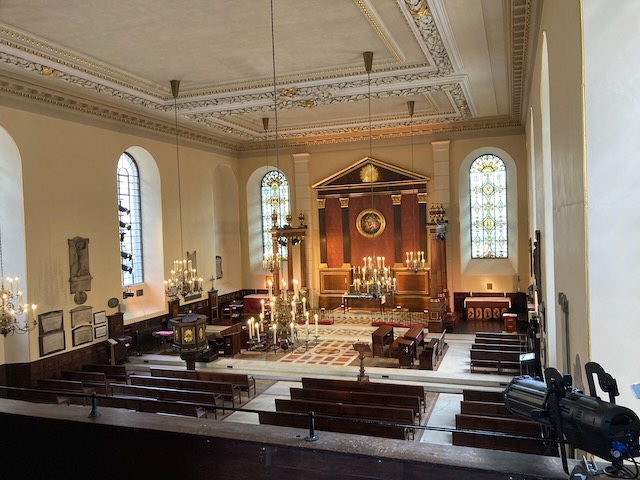
The Covent Garden area today offers more than twenty theatres. St. Paul’s, called “The Actors’ Church,” hosts concerts and plays in the church and in its walled garden. They have an in-house professional theatre company, Iris Theatre. The church’s summer schedule for this year includes Sense and Sensibility and Pride and Prejudice, along with several Shakespeare productions and children’s shows. To accommodate such events, the church replaced deteriorating Victorian pews with custom-made movable and stackable pews.

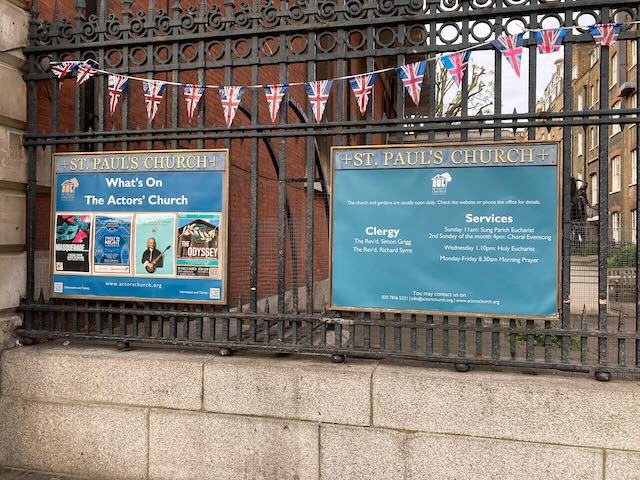
Signs announce upcoming shows and services at St. Paul’s Covent Garden, the Actors’ Church.

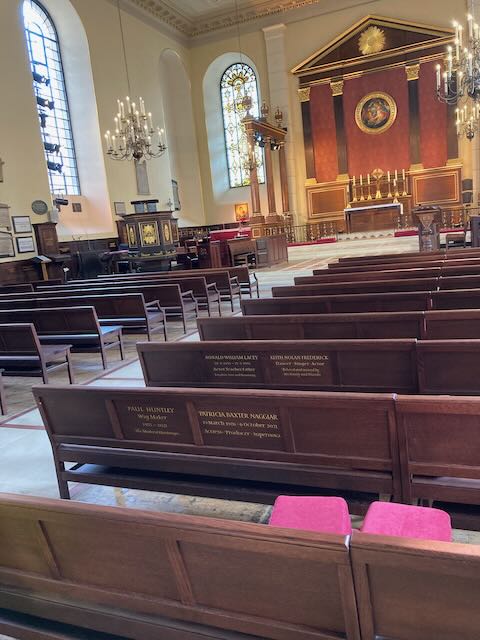
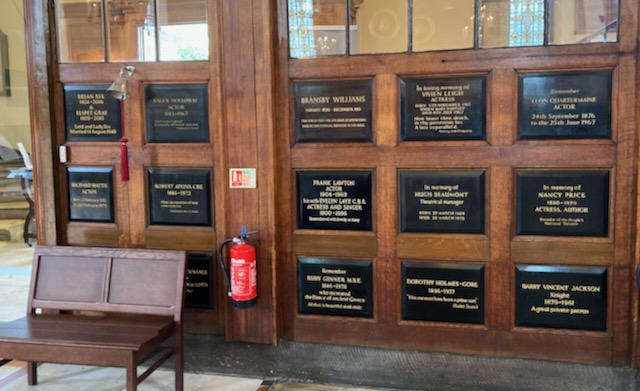
The inside of the church commemorates famous entertainers wherever you look. Hundreds of plaques adorn the walls of the church, the backs of the pews, and the garden benches and walls.

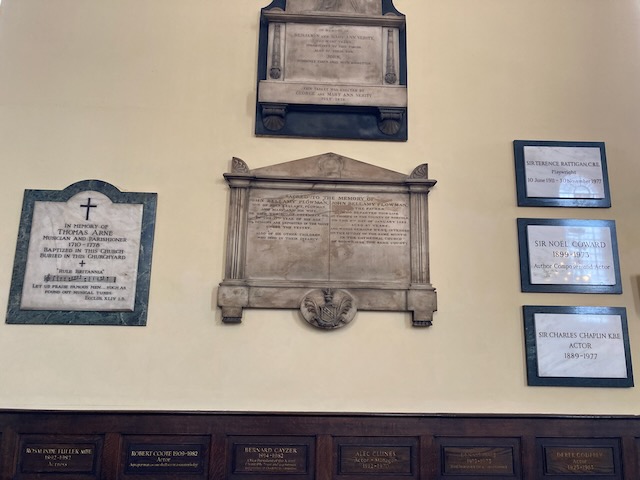
Wall plaques at St. Paul’s Covent Garden. Vivien Leigh’s is in the top right center.

Some plaques are memorials to the church’s leaders and parishioners, as you would see in other English churches. But most remind visitors of famous people such as Vivien Leigh (star of Gone with the Wind), Boris Karloff (who played Frankenstein’s monster), Thomas Arne (who wrote “Rule, Britannia” around 1740), Sir Charles Chaplin (Charlie Chaplin), and others.

A variety of memorials line the walls of St. Paul’s Covent Garden. The central memorial is to John Bellamy Plowman, his son who died in 1811 at age 17, his son’s wife, and six children who died in infancy. The monument above it is from 1879. The grey and white plaque to the left is to Thomas Arne, “musician and parishioner,” 1710-1778, who wrote the anthem “Rule Britannia.” To the right are three twentieth century plaques, honoring playwright Sir Terence Rattigan; author, composer, and actor Sir Noel Coward; and actor Sir Charles Chaplin. A line of more modern brown plaques is below.

Besides actors and actresses, plaques commemorate dancers, singers, directors, theatre managers, patrons, choreographers, drama teachers, playwrights, and even a “critic, journalist, wit.” One woman is listed as “Actress, Producer, Supernova.” The church charges hefty fees to install these plaques (around £3000 for a plaque on the wall). These fees have kept the church solvent.

Memorials on the backs of pews at St. Paul’s Covent Garden

History

The church was designed by Inigo Jones and consecrated to St. Paul in 1638.

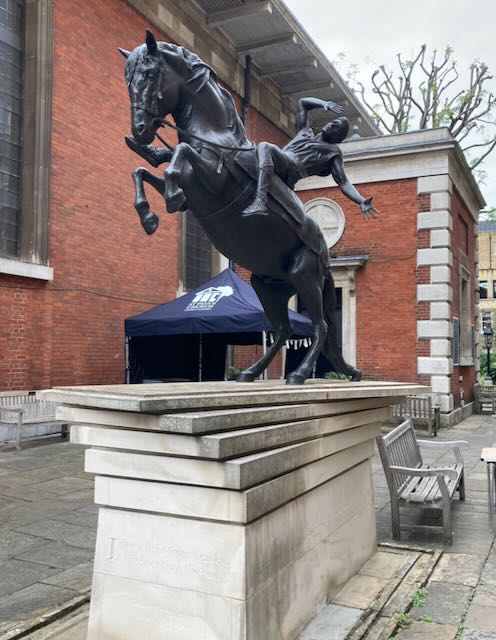
Covent Garden churchyard statue of St. Paul seeing a vision on the road to Damascus.

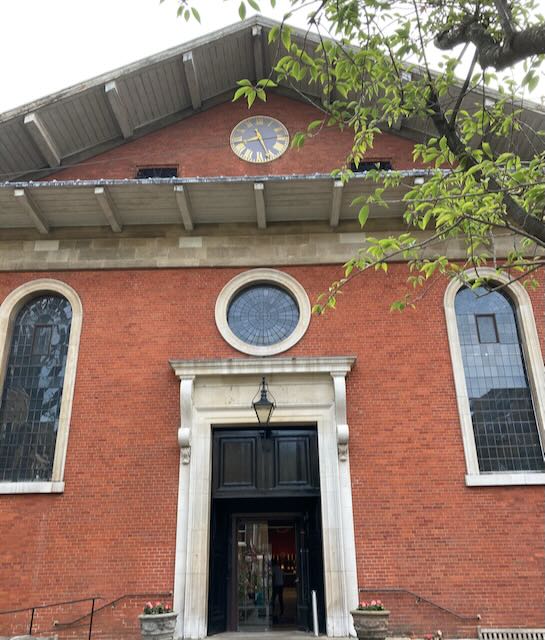
Jones designed it with a great East Door into the main piazza of Covent Garden. However, that would have put the altar at the west end of the church, which went against Christian tradition. At the last moment, the Bishop of London decreed that the altar had to be in the east end of the church, so the East Door doesn’t open. Entry is through the churchyard, from the sides of the building.

Front of St. Paul’s Covent Garden, with the false door in the center.

Various famous people are buried in the churchyard, including the painter JMW Turner and the first victim of the Great Plague of London, who died in 1665. In the 1850s, Parliament stopped all burials in central London churches. At that time, the headstones were removed and the gardens laid out as they are today.

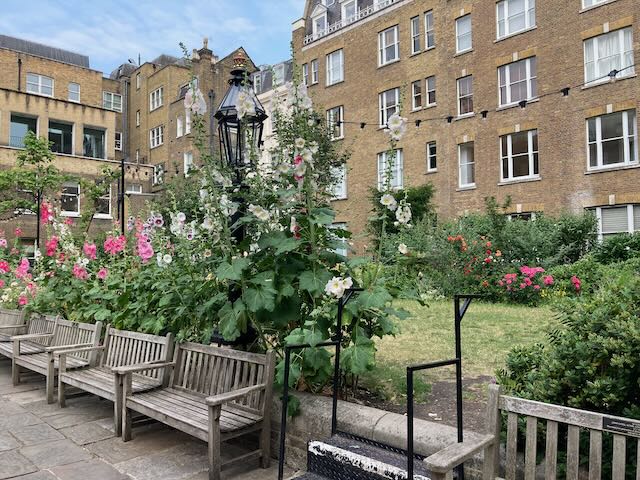
Lovely garden in the churchyard of St. Paul’s Covent Garden

A fire destroyed much of the church in 1795, but it was rebuilt so that today it is much as Austen would have seen it.

Entrance from the churchyard of St. Paul’s Covent Garden.

Rectors

When Jane Austen was there, Edward Embry was the rector, from 1810-1817. She might have heard him preach, but she does not mention him in her letters. His portrait is in the National Gallery.

The rector who kindly showed us around when we visited was Rev. Simon Grigg, who has been rector since 2006. His bio says “When not in church you will usually find him in a bar, a theatre or the gym.” The assistant rector, Rev. Richard Syms, is a professional actor and theatre manager as well as a priest.

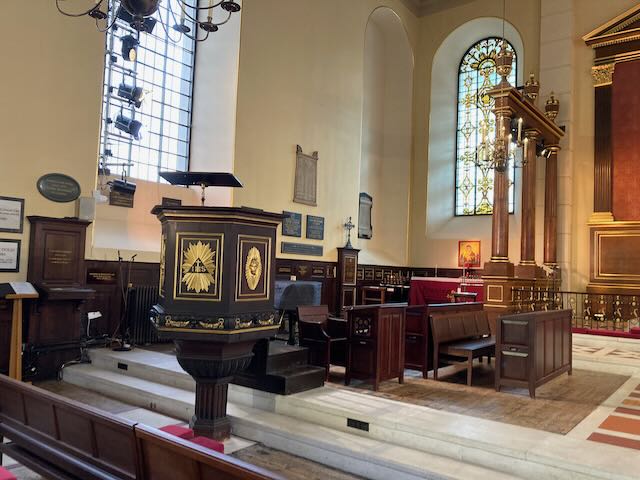
The pulpit of St. Paul’s Covent Garden was designed by Grinling Gibbons (1648-1721) or his students.

Worship

The church offers communion services on Sundays and Wednesdays, and brief Morning Prayer services Tuesday through Friday. Their choir sings Choral Evensong once a month. Rev. Grigg told us that attendance on Sundays is about 50 people, plus those who attend online. The church seats 200.

Chancel of St. Paul’s Covent Garden. Note the camera on the right.

They have larger services for Easter and for midnight mass on Christmas Eve. Of course they also host weddings, baptisms, and funerals. According to their website, “St Paul’s is well known because of its memorial services for members of the theatrical and entertainment community, but we also offer them for the local community.”

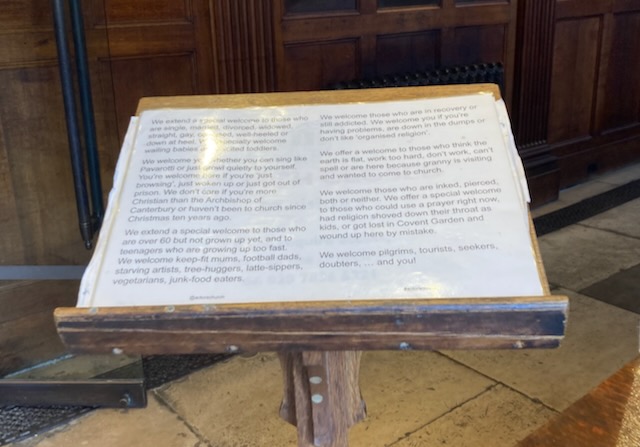
Welcome sign to St. Paul’s Covent Garden; text is below.

Inclusion

The church seeks to be inclusive, according to their website and this entry sign:

“We extend a special welcome to those who are single, married, divorced, widowed, straight, gay, confused, well-heeled or down at heel. We especially welcome wailing babies and excited toddlers.

We welcome you whether you can sing like Pavarotti or just growl quietly to yourself. You’re welcome here if you’re ‘just browsing’, just woken up or just got out of prison. We don’t care if you’re more Christian than the Archbishop of Canterbury or haven’t been to church since Christmas ten years ago.

We extend a special welcome to those who are over 60 but not grown up yet, and to teenagers who are growing up too fast. We welcome keep-fit mums, football dads, starving artists, tree-huggers, latte-sippers, vegetarians, junk-food eaters.

We welcome those who are in recovery or still addicted. We welcome you if you are having problems, are down in the dumps, or don’t like ‘organized religion’.

We offer a welcome to those who think the earth is flat, work too hard, don’t work, can’t spell or are here because granny is visiting and wanted to come to church.

We welcome those who are inked, pierced, both or neither. We offer a special welcome to those who could use a prayer right now, had religion shoved down their throats as kids, or got lost in Covent Garden and wound up here by mistake.

We welcome pilgrims, tourists, seekers, doubters, . . . and you!”

No doubt Jane Austen and her family would have felt welcome in the church, especially with their love of the theatre.

All photos in this post ©Brenda S. Cox, 2025

More Information about St. Paul’s Covent Garden

Physical dedications 

Self-Guided Tour, explaining parts of the church and giving prayers 

Visitor Information and schedule of events 

History of the church 

Churches Mentioned by Name in Jane Austen’s Novels

Garrison Chapel

St. Swithin’s, Walcot and other churches in Northanger Abbey

St. George’s, Hanover Square

London Churches in Austen’s Novels

Austen Family Churches

Steventon

Chawton

Deane

Hamstall Ridware and Austen’s First Cousin, Edward Cooper

Adlestrop and the Leigh Family

Stoneleigh Abbey Chapel and Mansfield Park

Great Bookham and Austen’s Godfather, Rev. Samuel Cooke

Ashe and the Lefroy Family


Brenda S. Cox is the author of Fashionable Goodness: Christianity in Jane Austen’s England. She also blogs at Faith, Science, Joy, and Jane Austen.
Read Full Post »

by Brenda S. Cox

“Hot! He [John Thorpe’s horse] had not turned a hair till we came to Walcot Church; but look at his forehand; look at his loins; only see how he moves; that horse cannot go less than ten miles an hour: tie his legs and he will get on.”–John Thorpe, Northanger Abbey, chapter 7

“Walcot Church” in Bath is one of several real churches that Jane Austen mentions in her novels. This particular church is closely connected to Jane Austen’s family. Austen made several visits to Bath and lived there for some years, so she knew Bath and its churches and chapels well.

As we’re celebrating Jane Austen’s life this year, we remember that church was an important part of her life. We’ve already looked at some of the churches she attended: St. Nicholas’ at Steventon, where she went as a child, St. Nicholas’ at Chawton, which she attended during the years she was writing most of her novels, and others (see links at the end of those posts).

St. Swithin’s Walcot in Bath. Completed in 1790, externally it is still much as it was when Jane Austen saw it.

“Walcot Church”

Walcot Church is the parish church of Walcot, right on the London Road coming into Bath. So it would have marked Thorpe’s arrival at the town. Wealthy and influential people worshipped there during the nineteenth century, so this may also be an indirect boast, as Thorpe tries to connect himself with a prestigious place.

A parish church can be called by the name of the parish or by the name of its patron saint. The patron saint of this church is St. Swithin, so the church is St. Swithin’s Walcot. St. Swithin (also spelled Swithun) was an Anglo-Saxon bishop. The patron saint of Winchester Cathedral, where Jane Austen is buried, is also St. Swithin.

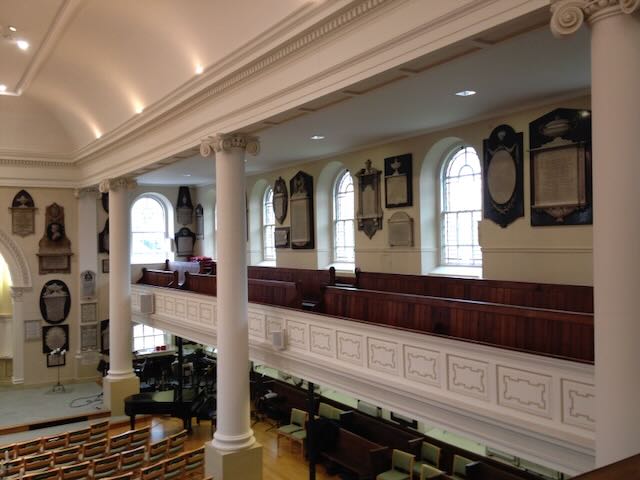
Many “monuments”–the plaques on the walls–commemorate wealthy and influential people who have worshipped at St. Swithin’s Walcot through the years. In Northanger Abbey, Catherine contemplates a similar monument to General Tilney’s wife at the fictional Northanger parish church.

St. Swithin

St. Swithin was associated with various miracles. He came to be connected mostly with the weather. July 15 is St. Swithin’s Day (each saint has a day associated with him or her in the church calendar, usually the day of their death). According to tradition, if it rains on St. Swithun’s day, it will rain for the next forty days, but if it’s clear that day, it will be clear for forty days.

Just before she died, Jane Austen wrote a humorous poem in which St. Swithin threatens Winchester race-goers with rain because they have forgotten him.

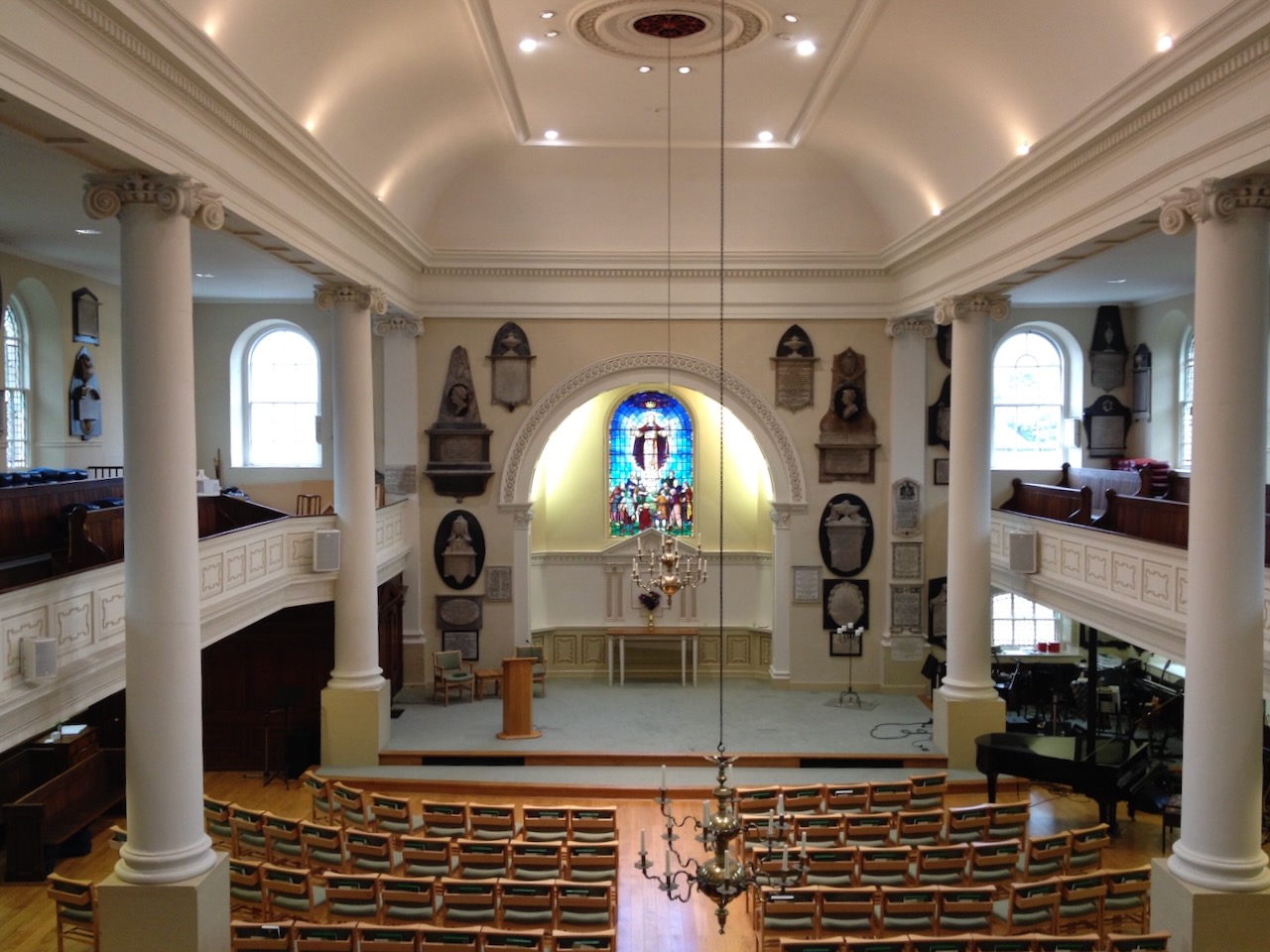
Interior of St. Swithin’s Walcot Church today. The stained glass window was first added in 1841 and replaced in 1958 after it was shattered in World War II. It portrays Christ ascending into heaven, surrounded by his disciples. Modern seating on the main floor, rather than pews, allows the church to host a variety of events.

Austen’s Parents’ Wedding

How was the Austen family connected with St. Swithin’s?

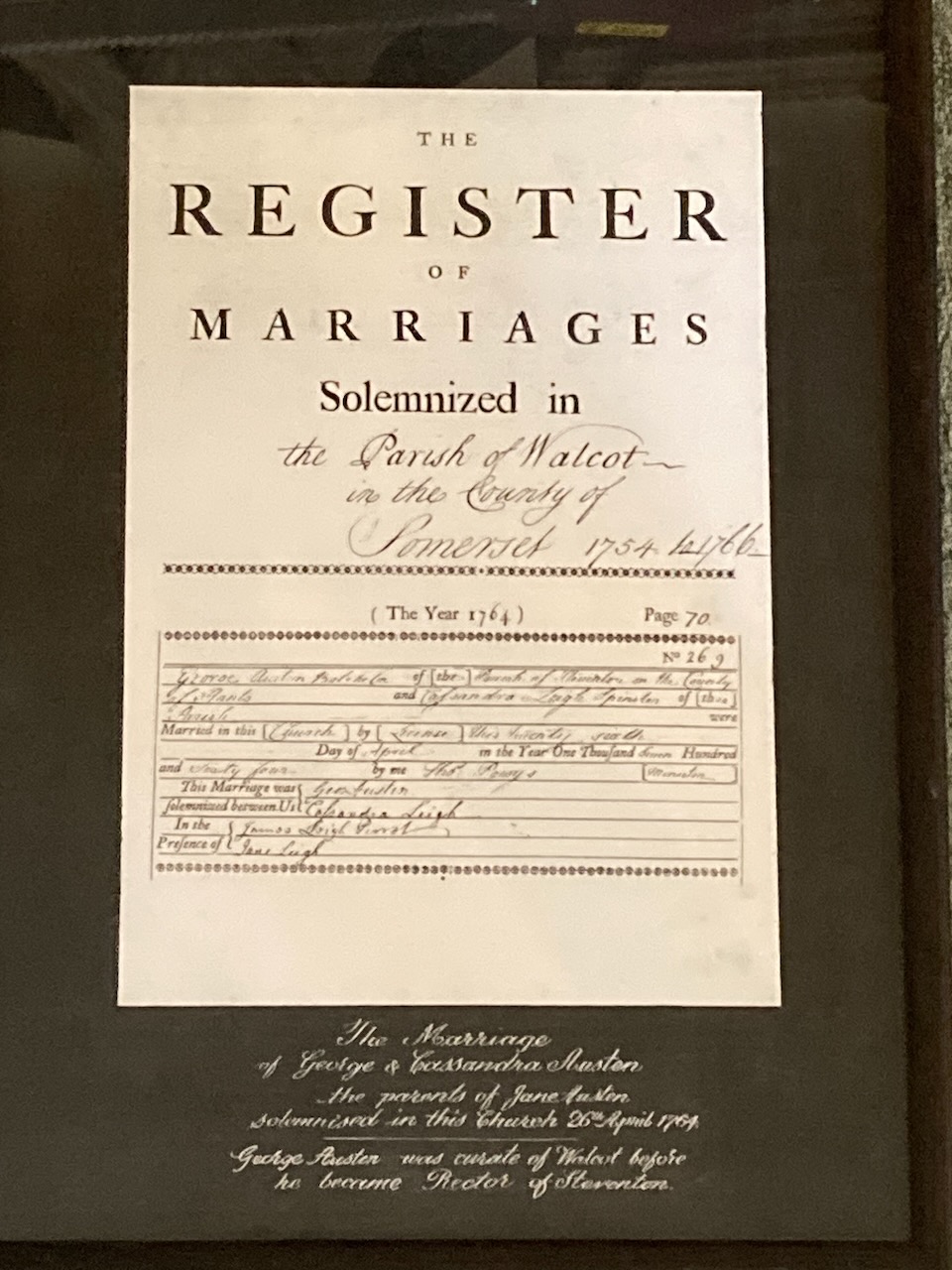
Jane’s father, George Austen, studied at Oxford University. He eventually became an assistant chaplain, then a proctor (in charge of student discipline), called “the Handsome Proctor.” At some point he met Cassandra Leigh, niece of the Master of Balliol College at Oxford. Cassandra was the daughter of a clergyman. Her father eventually retired and moved with his family to Bath. After he died, Cassandra Leigh agreed to marry George Austen, and they were married on April 2, 1764, at St. Swithin’s Church. The register states that Cassandra was living in Walcot parish, while George was in the parish of Steventon in Hampshire. Cassandra’s mother came to the wedding, and her brother, James Leigh-Perrot, and her sister, Jane Leigh, signed as witnesses. George was 32 and Cassandra was 24. They were married by license, presumably a common license, not by banns

By then George Austen had been ordained and gained the living of Steventon, through his relatives. The young couple went straight to Hampshire, where they rented the parsonage at Deane while the Steventon parsonage was prepared. Of course, Jane Austen was born in 1775 in that Steventon parsonage.

Copy of the entry in the marriage register for George and Cassandra Austen, married at St. Swithin’s Walcot on April 26, 1764.
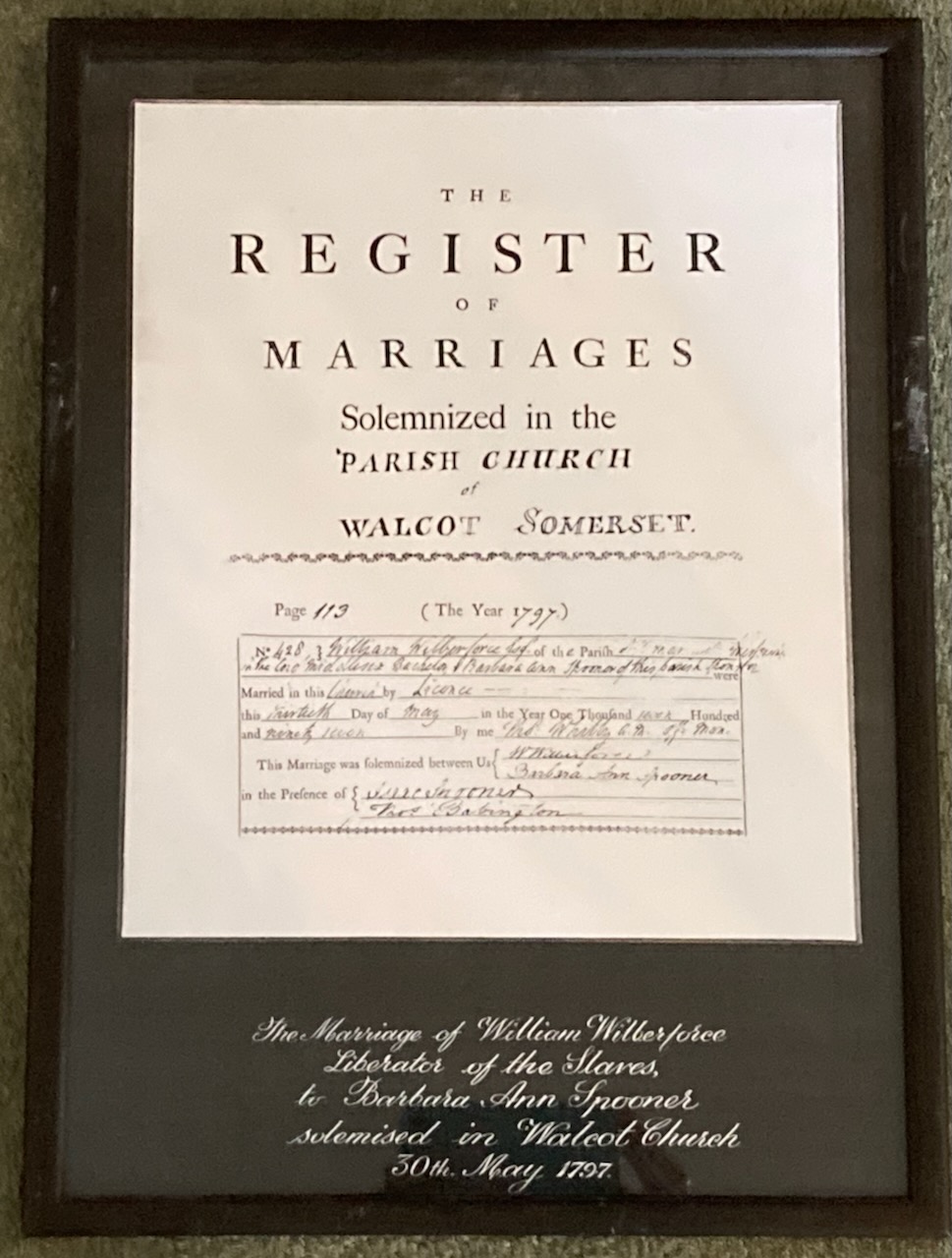
Another famous wedding at St. Swithin’s Walcot: William and Barbara Wilberforce were married there on May 30, 1797, after a six-week whirlwind courtship in Bath. Wilberforce led the fight against the trade in enslaved people and slavery.

George Austen’s Death

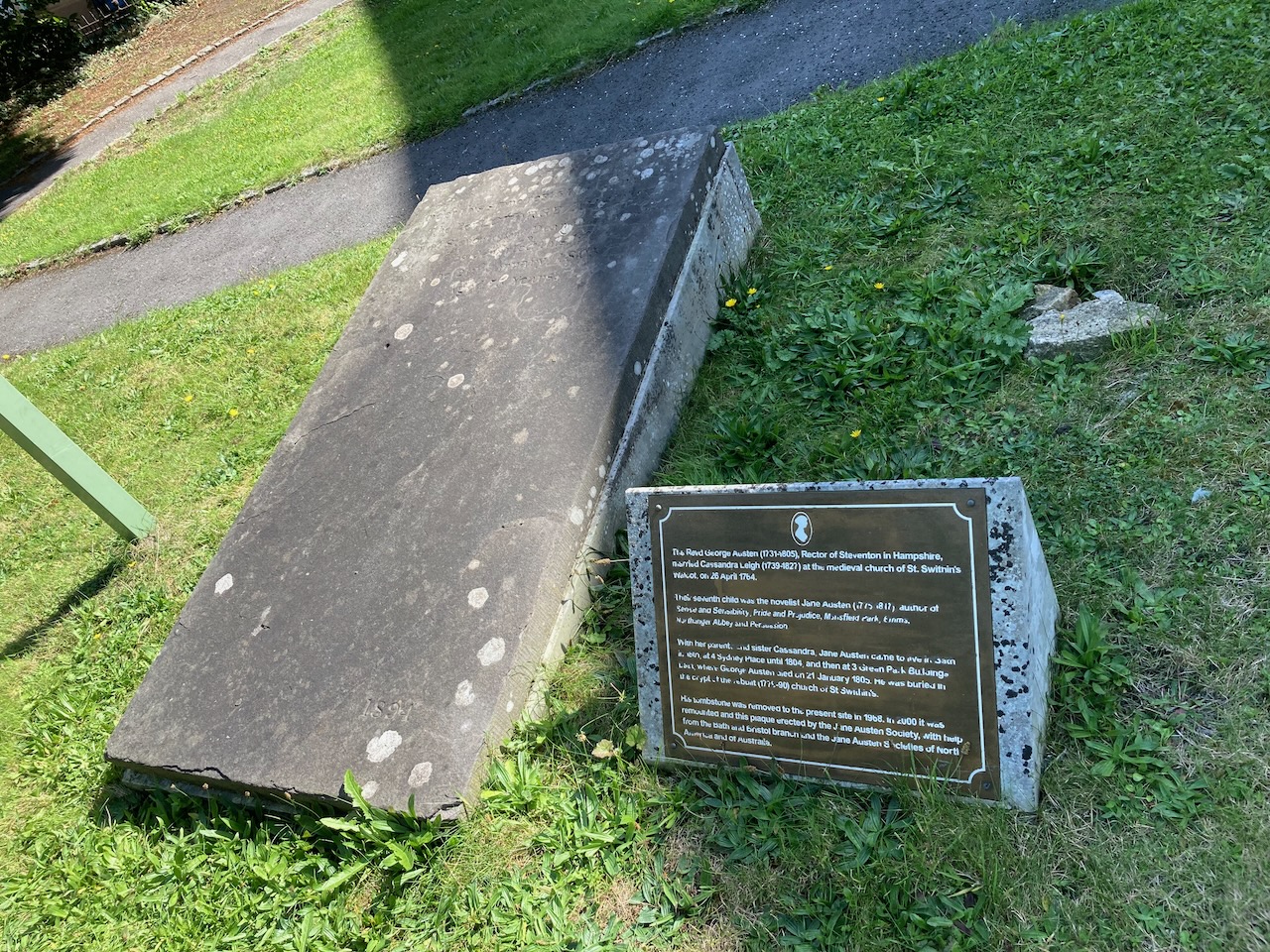
In 1801, George Austen left his Steventon parish to his son’s care and moved to Bath with his wife and two daughters, as his wife’s father had done much earlier. In 1805, George Austen died there. He was buried at St. Swithin’s, where you can still see his grave. Jane Austen wrote to her brother Frank, on Jan. 21 and 22, 1805:

“Our dear Father has closed his virtuous & happy life, in a death almost as free from suffering as his Children could have wished. . . . We have lost an Excellent Father. . . .The funeral is to be on Saturday, at Walcot Church. . . . [his body] preserves the sweet, benevolent smile which always distinguished him.” 

Jane did not have a suitor waiting in the wings (as her father had been waiting for her mother in a similar situation). She and her mother and sisters had to depend on her brothers for financial help after her father died.

George Austen’s grave at St. Swithin’s Walcot. He died Jan. 21, 1805. The inscription on the gravestone is worn and hard to read. It identifies him as the rector of Steventon and Deane, who died age 75 (meaning, in his 75th year). The newer brown plaque, added in 2000, adds information about his daughter Jane Austen and her residence in Bath.
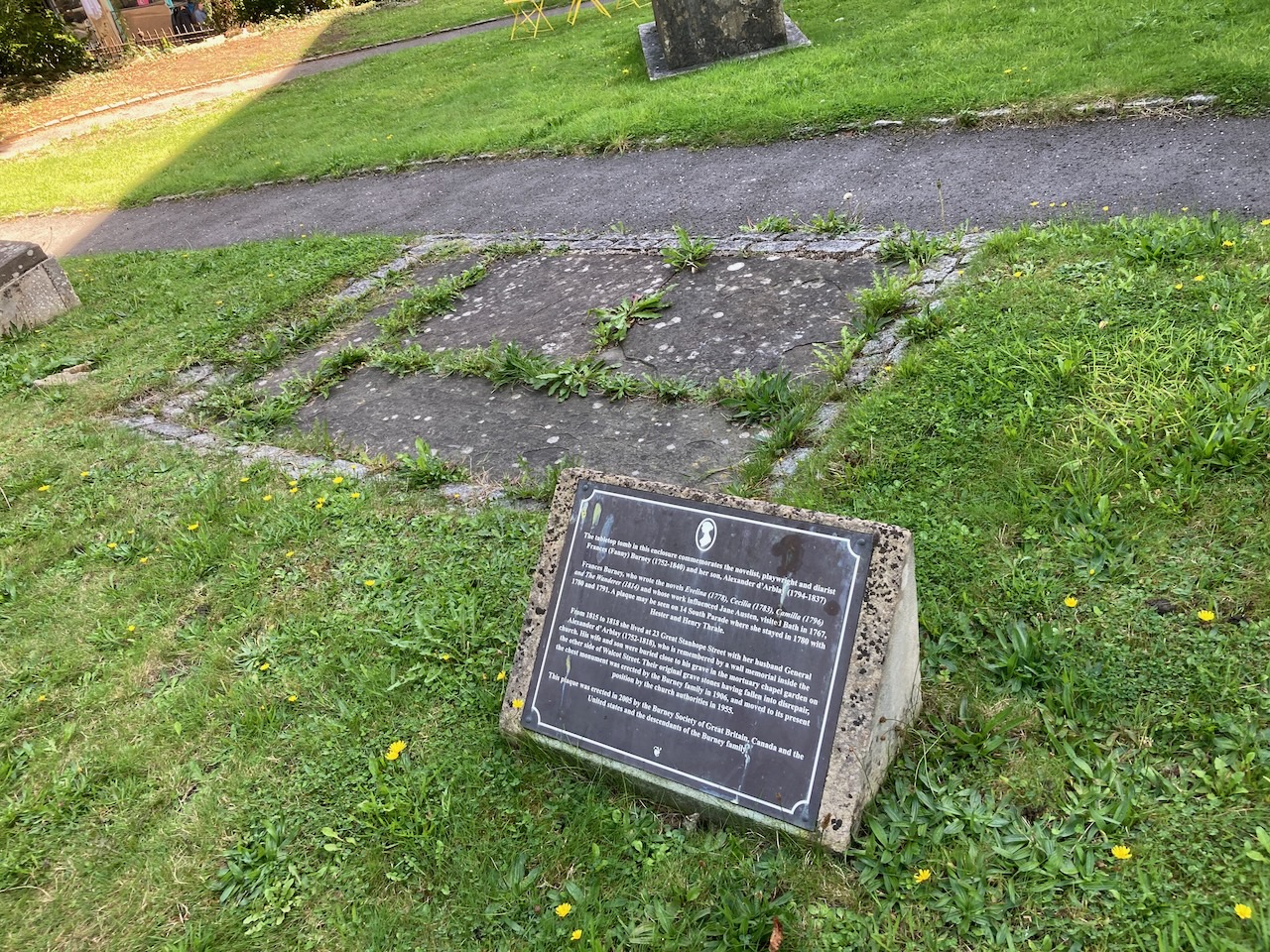
The author Fanny Burney, Jane Austen’s contemporary, is buried and commemorated nearby.

Did Austen ever attend church at St. Swithin’s? I’ve written another post exploring where she may have gone to church and chapel in Bath. It’s likely that she went to St. Swithin’s when she was visiting her aunt and uncle Leigh-Perrot who lived on the Paragon in Bath. That’s the edge of Walcot parish. The church is a steep walk uphill from their home. Later on, when Jane lived in Bath, she more likely went to chapels closer to her family’s various lodgings.

St. Swithin’s is a busy, thriving church today, with many activities going on. Some events of the Jane Austen Festival last fall took place there. The Charles Simeon Trust, started in 1836 by Evangelical clergyman Charles Simeon, is a patron of St. Swithin’s, as well as of Bath Abbey.

Other Churches Mentioned in Northanger Abbey

Northanger Abbey refers to four other real churches or chapels, more obliquely.

Thorpe says he bought his gig from a “Christchurch man.” He is referring to one of the colleges at Oxford University. Oxford and Cambridge are made up of semiautonomous colleges, and a student’s studies were mostly at his own college. Christ Church is a college at Oxford, and its college chapel is also Christ Church Cathedral for the diocese of Oxford. Thorpe shows a cavalier attitude toward “Christchurch” as well as toward everything else.

(A cathedral is the seat of a bishop, who leads a diocese made up of a number of parishes. A parish is a geographical area which was generally served by one main church, like the parishes that Edward Ferrars and Mr. Collins serve.)

Catherine and Isabella expect to worship together in a chapel in Bath; Austen doesn’t tell us which one. It may have been the Octagon Chapel, which would have been convenient to both of them.

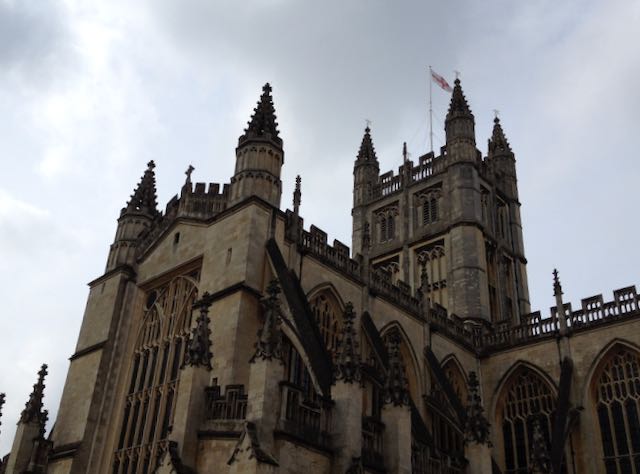
Northanger Abbey also indirectly refers to Bath Abbey. Twice the “church-yard” in the center of Bath comes up. The two young men Catherine and Isabella are following go “towards the church-yard,” and later Catherine trips “lightly through the church-yard” to go make her apologies to the Tilneys. This would be the church-yard of Bath Abbey, in the center of Bath. Roger E. Moore, in Jane Austen and the Reformation, argues that Austen purposely did not name the abbey, which was historically the spiritual center of the town. She may have wanted to critique the fact that Bath in her time was a place of pursuing shallow entertainment rather than deeper spirituality.

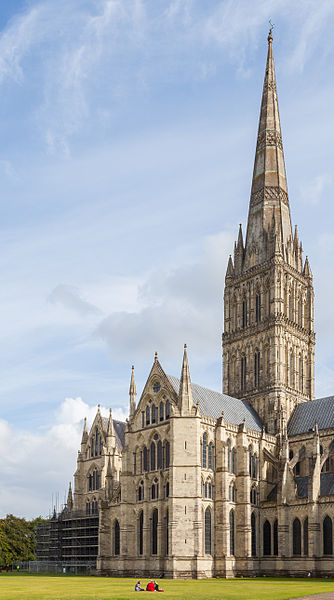
Near the end of the novel, Catherine is headed home. She looks out for the “well-known spire” of Salisbury. This is ancient Salisbury Cathedral, which has the tallest cathedral spire in England. Her father’s parish is in Salisbury diocese.

While Jane Austen invents country parishes for her characters, she also connects them with spiritual places in the real world.

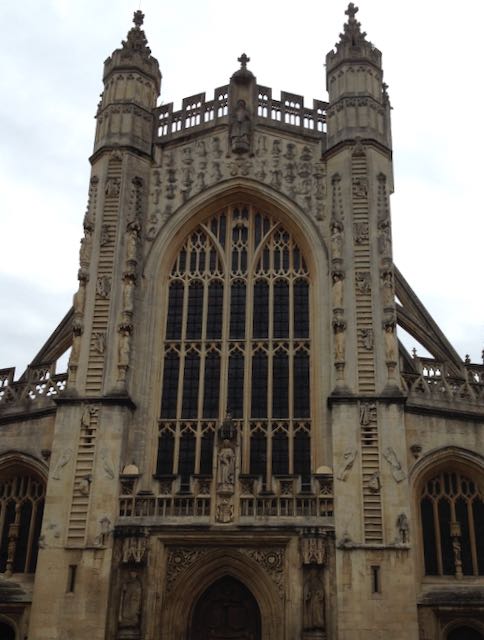
Bath Abbey towers above the city of Bath. It is not mentioned by name in Northanger Abbey, though its church-yard is mentioned.

All images above ©Brenda S. Cox, 2025

Austen includes real-life churches in her novels, such as Salisbury Cathedral, with the highest spire in England. This is Catherine Morland’s landmark as she heads home.
Photo by Diego Delso, CC-BY-SA license.

Real Churches in Austen’s Novels and Letters

Garrison Chapel

St. Swithin’s, Walcot and other churches in Northanger Abbey

St. George’s, Hanover Square

London Churches

St. Paul’s, Covent Garden: Actors’ Church

Austen Family Churches

Steventon

Chawton

Deane

Hamstall Ridware and Austen’s First Cousin, Edward Cooper

Adlestrop and the Leigh Family

Stoneleigh Abbey Chapel and Mansfield Park

Great Bookham and Austen’s Godfather, Rev. Samuel Cooke

Ashe and the Lefroy Family

Read Full Post »

By Brenda S. Cox

“Netherfield is taken by a young man of large fortune from the north of England . . . he is to take possession before Michaelmas.” –Pride and Prejudice, chapter 1

“People did say you [Mr. Bingley] meant to quit the place entirely at Michaelmas . . .” –Pride and Prejudice, chapter 53

Today, September 29, is Michaelmas (pronounced MICK-ul-muss). In the church calendar, for Catholics and for Anglicans like Austen, this is a “holy day” (from which we get our word holiday). It commemorates St. Michael, the archangel.

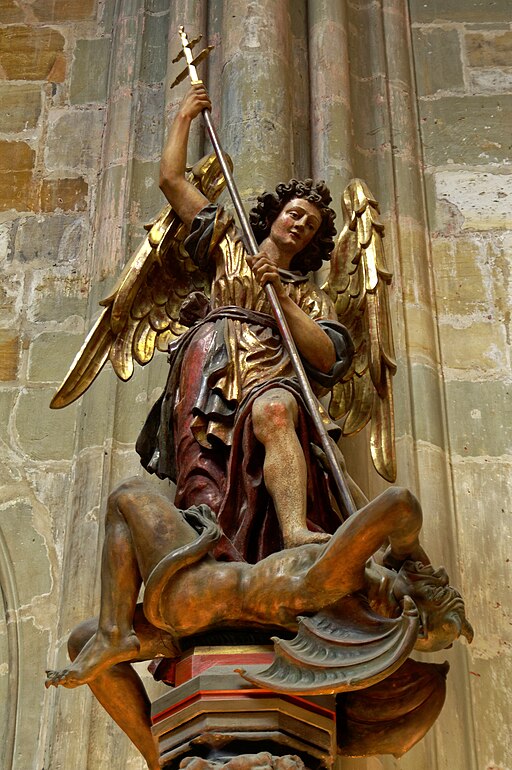
Sculpture of the Archangel Michael defeating the devil, from St. Vitus Cathedral, Prague.
Photo by Jakub Hałun, CC BY-SA 4.0

Sometimes other angels are also commemorated on this day: “St. Michael and All Angels,” or specifically Michael, Gabriel and Rafael, the three angels mentioned by name in the Bible. The word “saint,” from Latin “sanctus,” means “holy one,” so the holy angels of heaven can be considered saints.

“Michaelmas” means the mass of Michael, as “Christmas” means the mass of Christ. Mass is the Catholic version of what Anglicans call the Lord’s Supper or Holy Communion, the ceremony where Christians eat unleavened bread and drink wine together to remember Christ’s suffering and death on the cross.

On the Calendar

In earlier times, the church and community were closely intertwined. Church holidays gave the year rhythm and consistency. Judicial, financial, and academic schedules came to revolve around four “quarter days” of the year. For England, these were Lady Day, Midsummer Day, Michaelmas, and Christmas.

March 25, Lady Day: Austen mentions this in her letters as the day when an allowance of money was to begin for her brother James, and as a day when someone was moving houses. In the church, it was the Feast of the Annunciation, when the angel Gabriel announced to the Virgin Mary (the “Lady”) that she would have a child, Jesus.

June 24, Midsummer Day: In Emma, Jane Fairfax is supposed to leave at Midsummer, though she gets delayed. The Box Hill picnic takes place at “almost Midsummer.” Midsummer is capitalized, so it means a specific date. On this date, the church celebrates the birth of John the Baptist, who prepared the way for Jesus’s coming.

Sept. 29, Michaelmas Day is mentioned in all of Austen’s novels except Northanger Abbey as a date when things happen. Mrs. Jennings thinks Colonel Brandon will be married by Michaelmas. Mr. Bingley is to take possession of Netherfield at Michaelmas, and rumor has it he will leave by the next Michaelmas. In Mansfield Park, Mrs. Norris has been doctoring the coachman for rheumatism from Michaelmas through the winter, and Henry Crawford expects to have a small home nearby at Michaelmas, obviously hoping he and Fanny will be married by then. In Emma, Harriet Smith is amazed that Mr. Elton could be in love with her, since she hardly knew him at Michaelmas. It is probably November when she says this. The Crofts take possession of Kellynch Hall at Michaelmas, and Anne tells her father that Mary has been in “good looks” since Michaelmas. In Sanditon, Lady Denham brings Clara Brereton from London at Michaelmas.

Dec. 25, Christmas Day. In Austen’s novels and shorter works, she mentions Christmas 41 times and Easter 18 times by my count. They often serve to mark dates and times of year.

(For some purposes, Epiphany (Jan. 6) was a quarter day instead of Christmas, and Easter instead of Lady Day. But Midsummer and Michaelmas were still the other quarter days.)

Around these four quarterly dates, rents and payments came due, leases of lands and houses (like Netherfield) began and ended, servants were hired, and local courts held “quarter sessions.”

The academic year also revolved around church dates. The fall term at both Oxford and Cambridge is called Michaelmas term. I was surprised when I was at Cambridge two weeks ago, in mid-September, that the colleges were not yet in session. Then I realized it was not  yet Michaelmas. This year’s fall term starts just after Michaelmas, on Oct. 8. 

In the Church

The Book of Common Prayer (BCP), which gives daily worship services for the Church of England, includes a calendar of saints’ days. By Austen’s time, special services for most of those days were not commonly held in country parishes unless they fell on a Sunday. Christmas Day, though, was celebrated with a church service. In Emma, the weather keeps Emma from going to church on Christmas.

For each saint’s day, the BCP gives relevant Bible readings and a collect (pronounced KAH-lect) prayer for that day. Austen was likely very familiar with these, hearing them every year. For Michaelmas, the clergyman could choose from these readings about angels:

Revelation 12:7-12. “War in heaven”; “Michael and his angels fought against the dragons” [the demons]. Satan is cast out of heaven, but those who believe in Christ “overcame him by the blood of the Lamb, and by the word of their testimony; and they loved not their lives unto the death.” Many depictions of Michael show him defeating Satan, sometimes in the form of a dragon.

Matthew 18:1-10. Jesus says not to despise children, for “their angels do always behold the face of my Father who is in heaven.”

Genesis 32. Jacob wrestles with an angel. This is the same Jacob who earlier saw a vision of a ladder to heaven, with angels going up and down it. The front of Bath Abbey, which Jane Austen must have seen many times, pictures that ladder.

Angels going up and down the ladder to heaven, on the front of Bath Abbey. Photo © Brenda S. Cox, 2024.

Daniel 10:4-14. An angel sent to Daniel was delayed by the prince of Persia, apparently a demon, until the archangel Michael, “one of the chief princes,” came to help him. The angel looked like a man “clothed in linen, whose loins were girded with fine gold of Uphaz: his body also was like the beryl [a gem, possibly an emerald], and his face as the appearance of lightning, and his eyes as lamps of fire, and his arms and his feet like in colour to polished brass, and the voice of his words like the voice of a multitude” (Daniel 10:5-6). This angel doesn’t sound much like today’s usual pictures of angels!

Acts 12:5-18 An angel rescues the apostle Peter from prison.

Revelation 14:14-20 Angels pour out God’s wrath and judgment on the earth.

The Collect prayer read on Michaelmas requests the help of angels for those on earth:

“O everlasting God, who hast ordained and constituted the services of Angels and men in a wonderful order: Mercifully grant that, as thy holy Angels always do thee service in heaven, so by thy appointment they may succour and defend us on earth; through Jesus Christ our Lord. Amen.”

Nowadays most Anglican churches use the more modern Book of Common Worship, but a traditional BCP service might still use this prayer and some of these Bible passages.

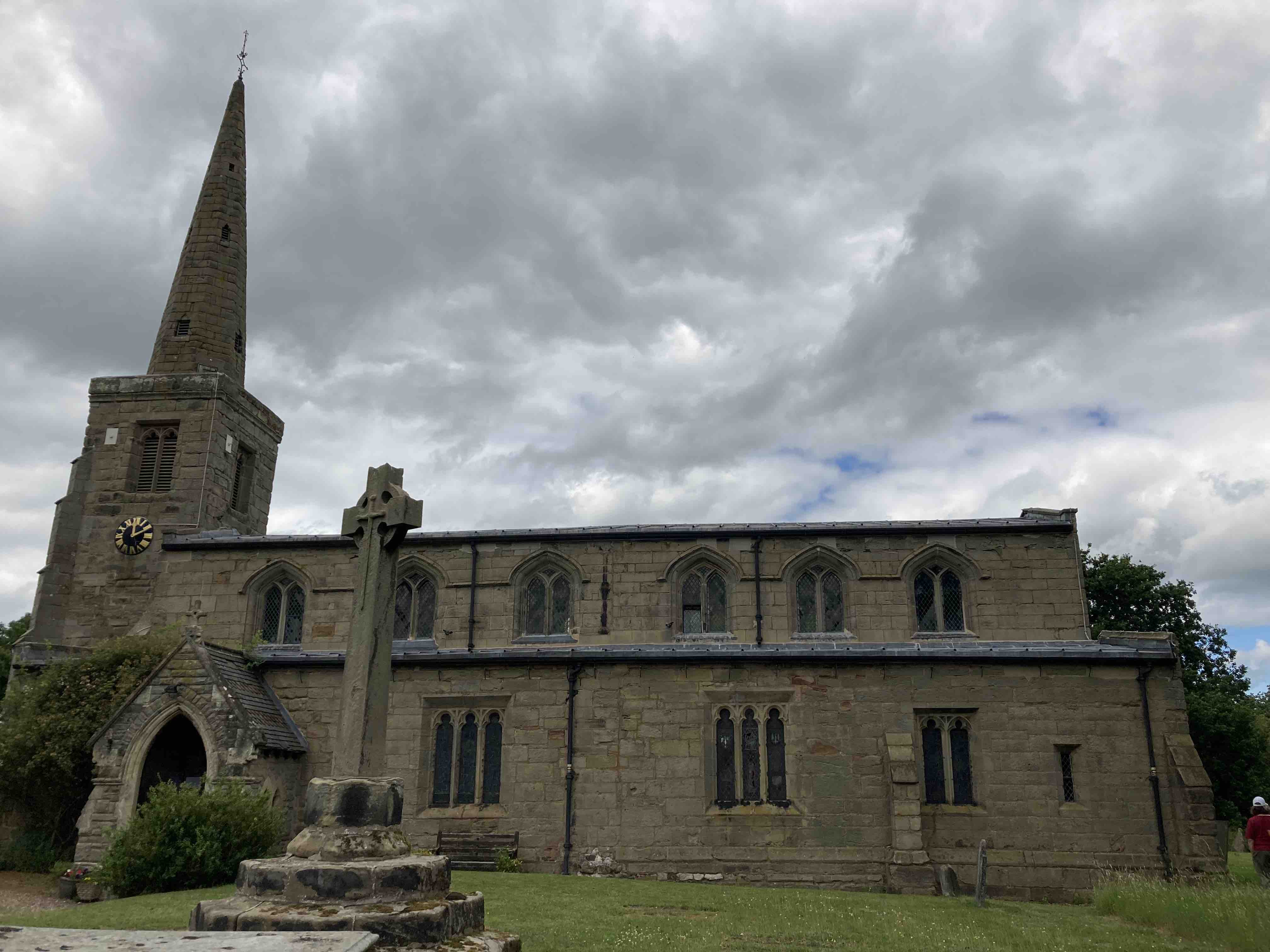
Church of St. Michael and All Angels, Hamstall Ridware, where Austen’s first cousin, Edward Cooper, served. Many English parish churches are named for St. Michael.
Photo © Brenda S. Cox, 2023

The church of Austen’s first cousin, Edward Cooper, in Hamstall Ridware, is named after St. Michael and All Angels. Their service this Sunday will be a celebration of Harvest (the British equivalent of America’s Thanksgiving) as well as a “patronal festival,” since it is the day of St. Michael, patron saint of the church. The clergyman, Revd. Jeremy Brading, told me, “The aim of these occasions [patronal festivals] is to celebrate the life of the local church on the occasion of its saint’s day. The celebration is for all that has gone previously, thanking God for his work through the local church. [Just] as important, is praying to God for his leadership and guidance for the future, that the local church might serve him faithfully.”

In Popular Culture

While Michaelmas is not much celebrated in today’s Anglican church, it was a great religious feast day in the Middle Ages, and traditions grew up around it. Michaelmas comes at the end of the harvest and the change of the season. A few old English traditions:

Eating goose and doing good: If you ate goose on Michaelmas, it was supposed to protect you from financial need for the next year. One writer says, “On Michaelmas, families spend the day doing good, dancing, singing, and at the end of the day, sharing a feast of freshly baked bread, roast goose stuffed with potatoes, veggies, and herbs.”

Picking blackberries: According to legend, when the Archangel Michael, with his flaming sword, cast the devil out of heaven, the devil landed in a thorny patch of blackberries. He was so angry that he spat on the blackberries and even urinated on them to make them unfit to eat. Thus blackberries picked after Michaelmas are considered inedible. Since Michaelmas originally fell in what is now mid-October, until the calendar changed (from Julian to Gregorian), that was pretty much the end of blackberry season.

A European Michaelmas daisy, aster amellus.
Photo by Björn S…, CC BY-SA 2.0

Michaelmas daisies: An old rhyme says,

The Michaelmas daisy, among dead weeds,

Blooms for St Michael’s valorous deeds.

And seems the last of flowers that stood,

Till the feast of St Simon and St Jude.’

Michaelmas daisies are asters, star-shaped flowers in lilac, blue, pink, or white. The peak of their bloom is around Michaelmas, though many are still blooming at the feast of St. Simon and St. Jude on Oct. 28.

Lawless Hour: An odd custom from Worcestershire: “In Kidderminster the Monday after Michaelmas had Lawless Hour between 12 pm and 1 pm, in between the old constable stepping down and the new one taking office. This led to an hour when people couldn’t be arrested, so groups would fight by throwing cabbage stalks and other fruit and vegetables at each other. The authorities mostly turned a blind eye, but by the mid 19th century this practice ended as it was considerate inappropriate.” Other local areas have their own Michaelmas traditions

We don’t know what Michaelmas traditions Jane Austen kept. But she did mention Michaelmas 15 times in her fiction, and now you know what it meant. Happy Michaelmas to you all!

Read Full Post »

Older Posts »