Feeds:
Posts
Comments

Archive for the ‘Victorian Era’ Category

Copyright @Jane Austen’s World. Post written by Tony Grant, London Calling.
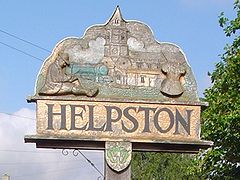
John Clare (1793-1864) was born at Helpston, a village in Northamptonshire on July 13th 1793. Jane Austen was 18 years old and living in the south in an equally rural setting of the parsonage at Steventon, Hampshire. Her family and life was very different to John Clare’s. His father was a farm labourer, a fairground wrestler and a ballad singer. The ballad singing was John’s first introduction to verse, rhythm and rhyme.

John Clare was at first educated at a dame school in his native village between 1798 and 1800. Then he went to Glinton school in the next village.
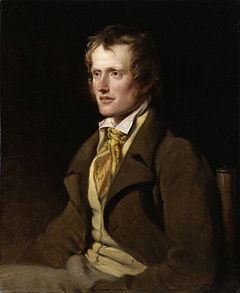
John Clare, Poet

He had a need to write poetry and his first poems were based on his father’s songs. People said of him at the time and nowadays that he was a self-taught poet. It’s difficult to imagine anybody being taught to be a poet. John Clare could hear the rhythms and rhymes in his father’s songs and he did read quite extensively. He was able to think in rhythms and find the right words to say what he wanted by writing poetry. He was sensitive to the sounds and meanings of words and was able to put them together. Great writers don’t learn to be great writers. They have certain skills but the rest is innate. They can hear and find things in words that is very difficult for the rest of us. Otherwise we could all do it. People have struggled to explain the genius of Shakespeare and perhaps Jane Austen. They didn’t come from the aristocracy or were particularly well educated. It was part of their inner selves. That can be the only explanation. Great lawyers or accountants or architects are taught the knowledge they need and some skills but something innate can only make them great.
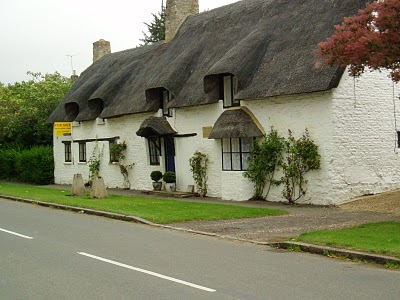
John Clare's cottage

John Clare’s father became rheumatic and couldn’t work in the fields and so John had to take his place so the family could eat. He worked as a horse boy, a ploughboy and then became a gardener at Burley House. In 1812 he joined the local militia returning home 18 months later.
When he returned he took up lime burning. Lime was very useful for building purposes. It was and is a necessary ingredient for cement and concrete. It can also be spread on fields to keep pests down.

In Casterton, a village nearby, he met Martha Turner. She became his wife and they had eight children together.

John Clare’s first book of poems was called “Poems Descriptive of Rural Life.” This was published in 1820 by Hessey and Taylor who were Keats publisher. The volume ran to four editions and Clare began to become famous in London literary circles. They called him, the, “peasant poet,” a rather derogatory title in many ways. In 1821 he published “The Village Minstrel,” and in 1827 The Shepherds Calendar,” came out. The success of his first volume, which was obviously a curio, eluded these following books. In 1835, “The Rural Muse,” was produced and hardly sold at all. John Clare and his family had no money and were virtually destitute.
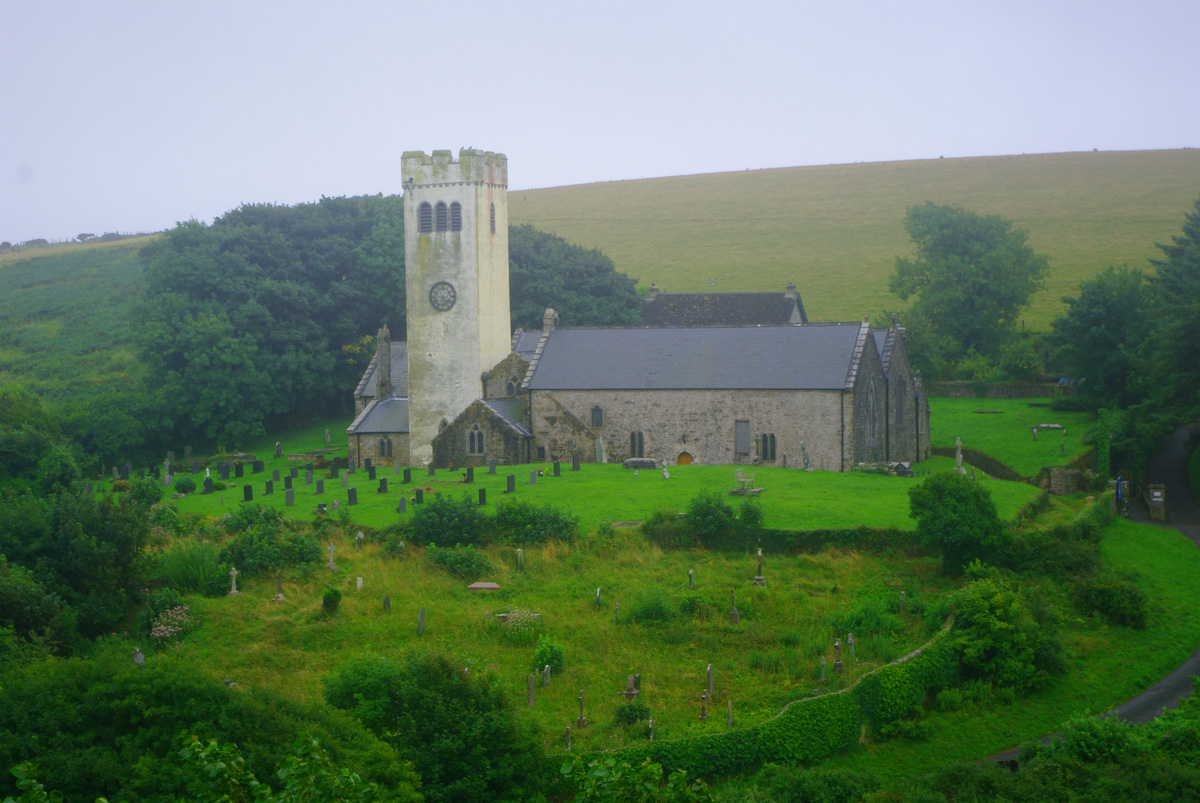
Country Church. Image @Tony Grant

In 1837 John Clare was admitted to Matthew Allen’s private asylum of High Beech in Epping Forest. He was there for four years. He had begun to have delusions. He thought he was Shakespeare for a while. His family couldn’t cope with him. The mental strain of being torn between two worlds was destroying him. After four years he was discharged and had to walk the eighty miles home, which took him three days. He ate grass along the way. When he got home he wrote two long poems based on Byron’s poems Don Juan and Childe Harold.These two poems described his state of mind. Again in December 1841 he was certified insane by two doctors. He was admitted to St Andrew’s County Lunatic Asylum in Northampton where he was treated well. He was able to continue writing poetry. He died there in 1864.
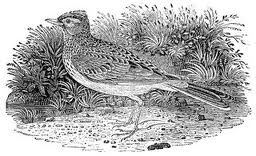
Skylark

The Skylark

THE rolls and harrows lie at rest beside
The battered road; and spreading far and wide
Above the russet clods, the corn is seen
Sprouting its spiry points of tender green,
Where squats the hare, to terrors wide awake,
Like some brown clod the harrows failed to break.
Opening their golden caskets to the sun,
The buttercups make schoolboys eager run,
To see who shall be first to pluck the prize–
Up from their hurry, see, the skylark flies,
And o’er her half-formed nest, with happy wings
Winnows the air, till in the cloud she sings,
Then hangs a dust-spot in the sunny skies,
And drops, and drops, till in her nest she lies,
Which they unheeded passed–not dreaming then
That birds which flew so high would drop again
To nests upon the ground, which anything
May come at to destroy. Had they the wing
Like such a bird, themselves would be too proud,
And build on nothing but a passing cloud!
As free from danger as the heavens are free
From pain and toil, there would they build and be,
And sail about the world to scenes unheard
Of and unseen–Oh, were they but a bird!
So think they, while they listen to its song,
And smile and fancy and so pass along;
While its low nest, moist with the dews of morn,
Lies safely, with the leveret, in the corn.

John Clare

John Clare often wrote in Iambic pentameter, that most used metre in the English language. Shakespeare and Milton and many poets since have found iambic pentameter the best form to use. It is a ten-syllable line with pared, soft and strong beat pulses. It’s like an inner natural force. It is the most natural rhythm pattern to use because it is close to a conversational style; it’s like our heartbeat and our breathing patterns. It is most apt for conveying every sort of meaning in the English Language. It’s easy and smooth and a real joy to say.

John Clare moves straight into this perfect rhythm in the first two lines of The Skylark with these rhyming couplets.

The rolls and harrows lie at rest beside
The battered road: and spreading far and wide”

The iambic pentameter mesmerises us, carries us along, and Clare enters right into the detail of the countryside with “rolls,” “harrows” and “the battered road.” We are there immediately with him on his walk or ramble about his village.
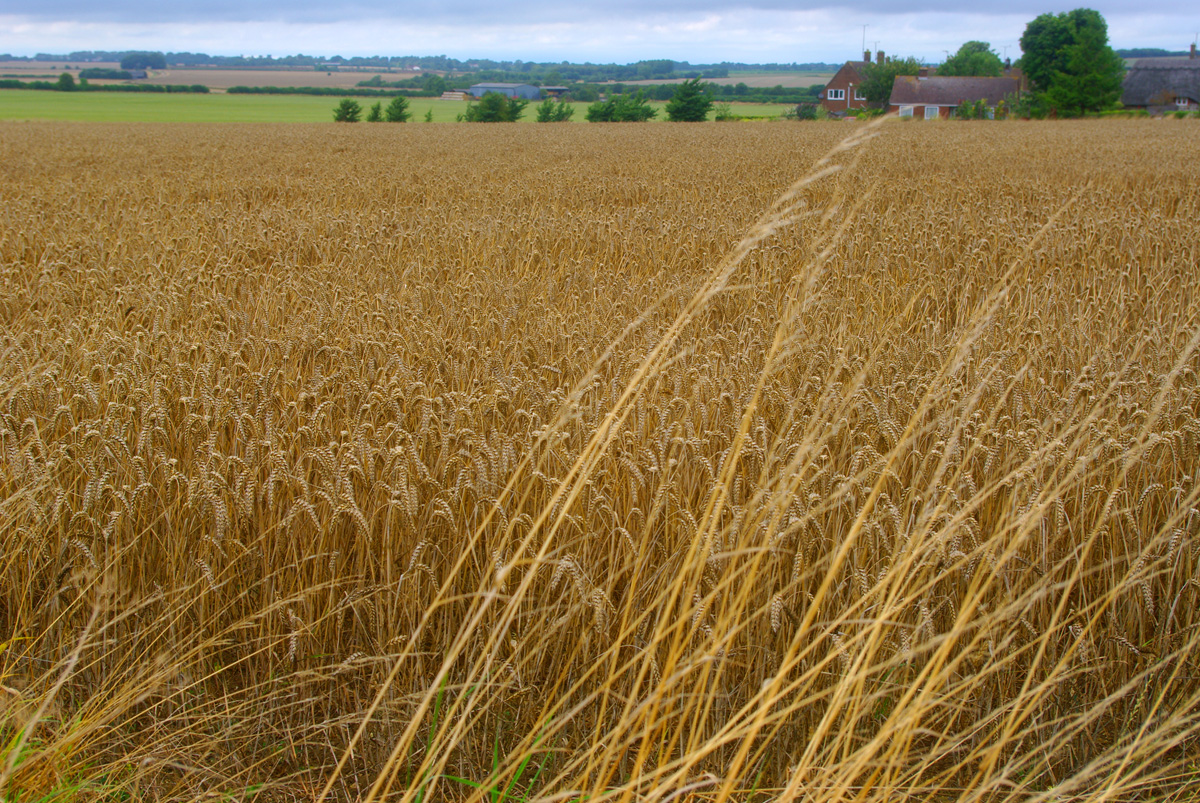
Wheat field. Image @Tony Grant

In this poem, John Clare shows his detailed knowledge of the countryside where he lives and his knowledge about country practices and farming equipment. “Rolls and harrows lie at rest,” “ the battered road,” presumably cut deep and rutted by cartwheels are there for him to see. He describes the colour of the clods of clay, a russet colour, and we learn the season when the events of this poem happen, in his description of the growing corn, “sprouting spiry points of tender green.” It’s the time of year the buttercups are, “ opening their golden caskets to the sun.”

The introduction of humans, in Clare’s poetry, always brings foreboding, fear and the possibility of danger and destruction. In the Skylark “schoolboys eager run, to see who shall be first to pluck the prize.” The boys are not there to admire and be sensitive to nature they want to, “pluck,” it, tear it from it’s place and use it for their own fun and amusement. Are they, the boys, the, “anything,” that, “may come at to destroy?”

Clare shows his closeness and affinity with nature and the world of the countryside with words and phrases such as,

…harrows lie at rest,”

“Where squats the hare, to
terrors wide awake,”

“…the skylark flies,
And oe’r her half formed nest, with happy wings
Winnows the air, till in the cloud she sings.”

We are so used to using the word, sings, to describe the sounds a bird makes. Clare has used, in this poem, words to describe country objects and nature; rest, terror, winnows and happy. This is personification. It shows his relationship, his emotional attachment to nature and wild animals. He is part of it and it is part of him.
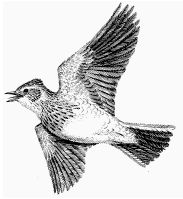
Skylark in flight

There is a very powerful section in the poem which describes a certain fear and dislocation in the life of the skylark which the schoolboys create.
Clare describes the skylark suddenly and abruptly flying high to distract them from it’s weak, fragile and vulnerable nest on the ground.

The line starts abruptly:

Up from their hurry, see, the
Skylark flies,
And oe’r her half formed nest, with happy wings
Winnows the air, till in the cloud she sings
Then hangs a dust spot in the sunny skies
And drops, and drops, till in her nest she lies,”

The boys have passed by unaware, and the skylark feels safe to return to her nest and probably her eggs or new laid chicks. She has flown high and put on a happy and joyous show, an act, a false hood, all the time terrified about her nest being discovered. Just as suddenly she drops back down to the nest when the coast is clear. It’s a sudden dramatic,reversal and change of positions.

The description of the skylark being, “a dust spot,” adds to this sense of dislocation. I thought it a strange description of the skylark high in the sky. In a literal sense the skylark might look like a dark spot against the bright blue spring sky. However, a dust spot is dirt that needs to be removed, swept away. It’s out of place. The beauty of the skylark reduced to something dirty. This description has a strange resonance. Why should Clare think of the skylark as a piece of dirt?
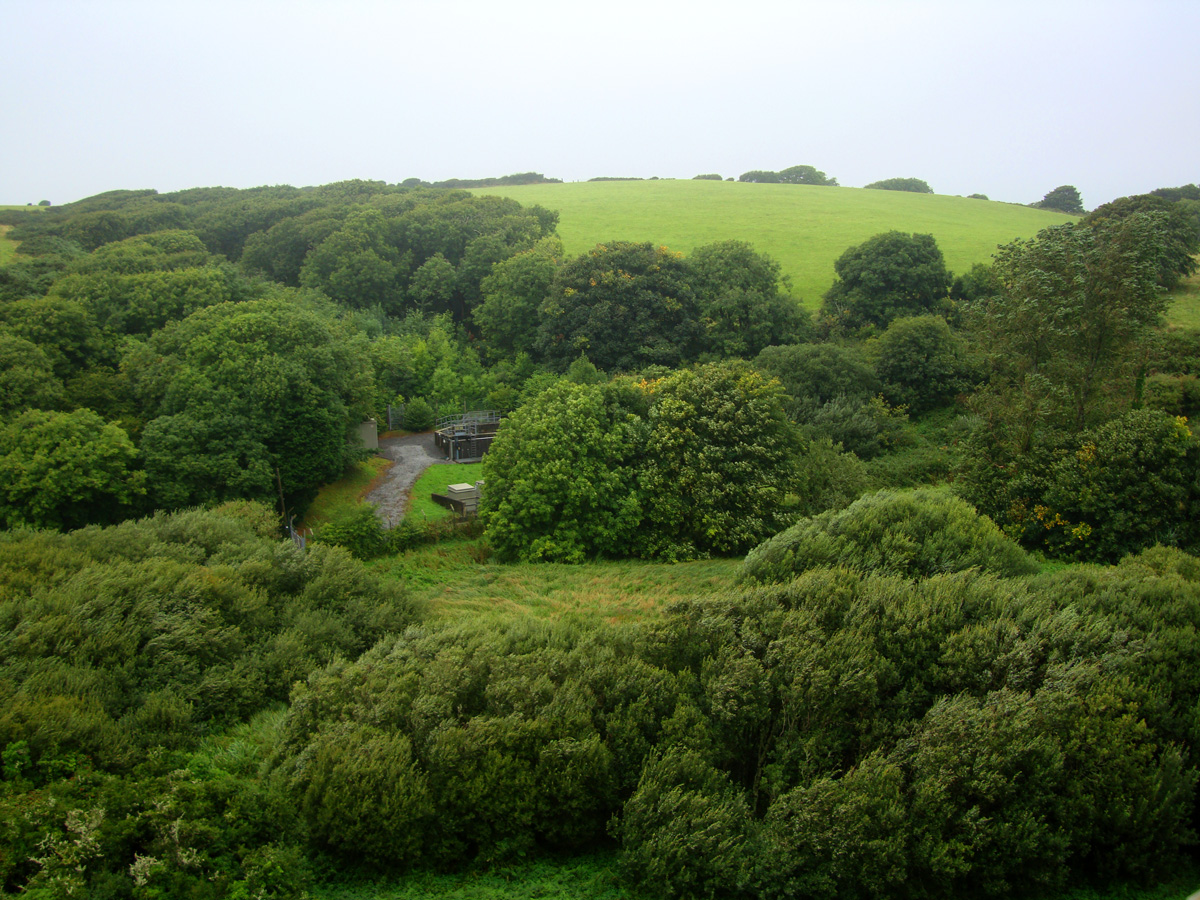
Woodland. Image @Tony Grant

To relieve us from all this dire, stark reality, Clare, describes at the end of the poem his idea of perfection. His thoughts are about the schoolboys but this is Clare’s hope. It is sad to think that freedom for Clare can only be in death and the hope of heaven. Only there can the skylark, it’s, “low nest, moist with the dew of morn,” be safe.

Like such a bird themselves
Would be too proud

And build on nothing but a passing cloud!
As free from danger as the heavens are free
From pain and toil, there would they build and be.”

It is very easy to compare the events in this poem with Clare’s own life and perhaps his feelings about himself. Is he the skylark torn between heaven and earth, the heights of the literary world where many regarded him as a curio, a country yokel, a,”dust spot?” Is the skylark’s vulnerable nest his own vulnerable family and fragile existence back home in his Northamptonshire village?
Read Full Post »

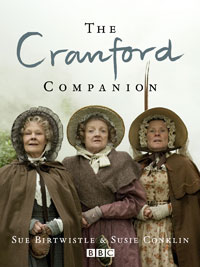
Copyright (c) Jane Austen’s World. The Cranford Companion, a book by Sue Birtwistle and Susie Conklin, the co-creators of the wildly popular series based on the Cranford books by Elizabeth Gaskell, is now available for purchase. The miniseries, produced by the BBC, aired last year in the United States on PBS.

Lushly illustrated in full color photographs, this companion book will provide fans of the two mini-series, Cranford and Return to Cranford, with all the behind the scenes stories about the production, film locations, map of Cranford, and the characters and actors who portray them. Included are points of historic interest, such as the building of the railroads, as well as information on etiquette, the fairer sex, Victorian society and more.

It is hard to describe the book when I think a short video can demonstrate all its fabulous features so much better!

I recommend The Cranford Companion highly to all Cranford and Elizabeth Gaskell fans. Purchase the book in England at this Bloomsbury site and in the U.S. at Amazon.com

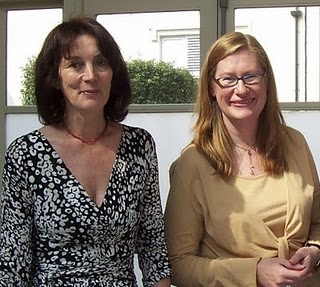
Sue Birtwistle and Susie Conklin. Image @Manchester Literature Festival Blog*

My reviews of the series:

My post about Elizabeth Gaskell: A Short description of Her Life

*Manchester Literature Festival Blog

Read Full Post »

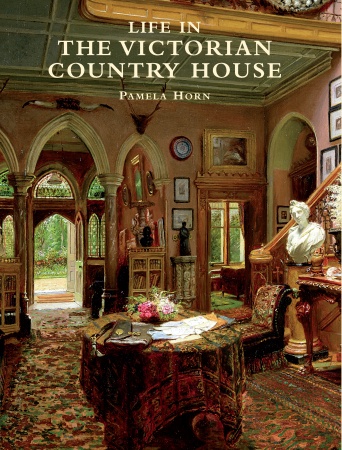
Life in the Victorian Country House is a beautifully illustrated book that is best described visually (See my video below). Filled with historical details and archived photographs of Britain’s landed families and their day-to-day lives, which depended on the work of their household servants and outdoor staff, this book considers the relationships between those who live above stairs and those who meet their needs and live below stairs.

The table of contents:

  • The Country House and its Occupants
  • Victorian and Edwardian Households
  • Growing Up in the Country House
  • Out of Doors
  • The London Season and Other Pelasures
  • The End of an Era

About the author: Pamela Horn formerly lectured on economic and social history at Oxford Poyltechnic, now Oxford Brookes University, for over twenty years. She has written a number of books on Victorian social history, including The Rise and fall of the Victorian Servant and Ladies of the Manor.

The relationship between master and servant, and wealth and land are outlined so well that it was hard to put the book down. I give it a strong recommendation. Three out of three regency fans.

Read Full Post »

Happy 200th Birthday, Elizabeth Gaskell! Although your life was cut short at 55, you still cast a bright light in our world.

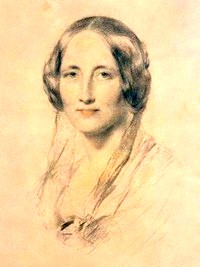
Elizabeth Gaskell around the time of her marriage, 1832

“No, I tell you it’s the poor, and the poor only, as does such things for the poor. Don’t think to come over me with th’ old tale, that the rich know nothing of the trials of the poor; I say, if they don’t know, they ought to know. We’re their slaves as long as we can work…” – Elizabeth Gaskell, Mary Barton

Since babyhood Elizabeth Cleghorn Gaskell nee Stevenson experienced profound sorrow and a sense of loss and displacement. Her parents, Elizabeth and William Stevenson, had eight children, but only two survived – baby Elizabeth and her older brother John. Her mother did not live to raise her, for she died a year after her daugher’s birth. Sadly, her widowed father did not feel up to taking care of his young daughter and sent Elizabeth away to live with her Aunt Lumb in Knutsford, Chesire.

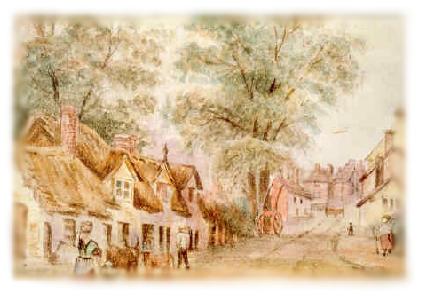
Knutsford, the model for Cranford, 1863

Under this loving aunt’s care, Elizabeth experienced a happy childhood. She played with cousins in the rural town of Knutsford where lived “11 widows of respectability who kept house, besides spinsters innumerable”. In later life, Elizabeth would use Knutsford as the idealized setting for Cranford. She was to return there often to recall the rare happy memories of her early childhood.

Knutsford in 1860, before the railroad came

Elizabeth’s father continued to reject her even after his remarriage. When she was nine years old, he finally sent for her to visit him in London, but Elizabeth and her stepmother did not hit it off. In addition, her father and his new wife favored the children of their union. Although often reduced to tears by their indifference, Elizabeth did have one person she could turn to, her beloved brother John.

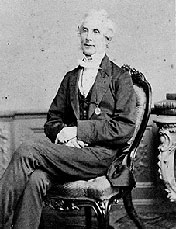
William Gaskel

When Elizabeth was twelve, John joined the merchant navy. She would never see him again, for he drowned six years later off the coast of India. Within six months of John’s death, her griefstricken father also died. And thus, at the tender age of eighteen, Elizabeth was alone again.

William Turner, a distant relative, took Elizabeth in to live with his family. As a Unitarian minister he influenced her religious beliefs and introduced her to charitable works. It was through William Turner’s daugher that Elizabeth met William Gaskell, whom she married in the Knutsford Parish Church on August, 1832.

Gaskell was also a Unitarian minister and a lecturer and educator. After their honeymoon, the young couple moved to industrial Manchester, where William had acquired a post as minister of the Cross Street Chapel. Gaskell was also to hold the chair of English history and literature in Manchester New College.

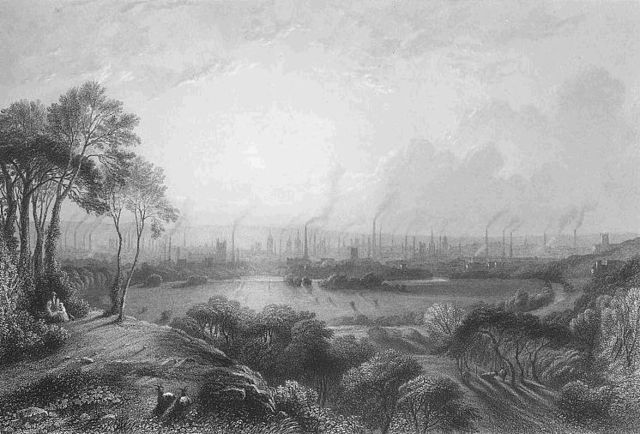
Manchester in 1840. Note the factory chimneys.

Elizabeth would eventually bear her husband six children, the first of whom was a stillborn daughter. Considering the losses she had already experienced in her life, the death of this little girl, born in 1833, must have grieved her deeply. Three years afterward she penned this touching poem:

On Visiting the Grave of My Stillborn Little Girl

I made a vow within my soul, O child,
When thou wert laid beside my weary heart,
With marks of Death on every tender part,
That, if in time a living infant smiled,
Winning my ear with gentle sounds of love
In sunshine of such joy, I still would save
A green rest for thy memory, O Dove!
And oft times visit thy small, nameless grave.
Thee have I not forgot, my firstborn, thou
Whose eyes ne’er opened to my wistful gaze,
Whose suff’ rings stamped with pain thy little brow;
I think of thee in these far happier days,
And thou, my child, from thy bright heaven see
How well I keep my faithful vow to thee.
– Elizabeth Gaskell’s poem for her stillborn daughter, 1836

Then three healthy girls arrived in succession: Marianne (1834), Margaret Emily (1837), and Florence Elizabeth (1842). In 1844 she gave birth to her son William. These years marked a busy and productive period in Elizabeth’s life. Both the Gaskell’s divided their time between his ministry, their social life, and charity work. In Manchester, Gaskell witnessed the dire poverty of the textile workers, which was to have a lasting effect on her writing.

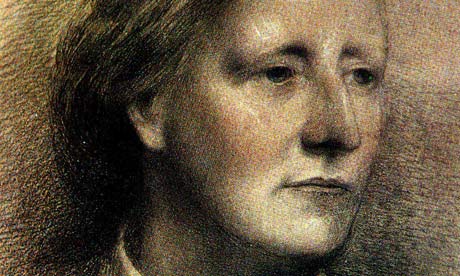
Elizabeth Gaskell by George Richmond, 1851. @National Portrait Gallery, London.

Between raising children and visiting the poor, Elizabeth managed to find the time to write. Her husband supported her in this endeavor, helping her with research and editing. The year she gave birth to her daugher Margaret, Elizabeth sold her first story to Blackwoods Magazine entitled “Sketches Among the Poor.” In 1846, she gave birth to another daughter, Julia.

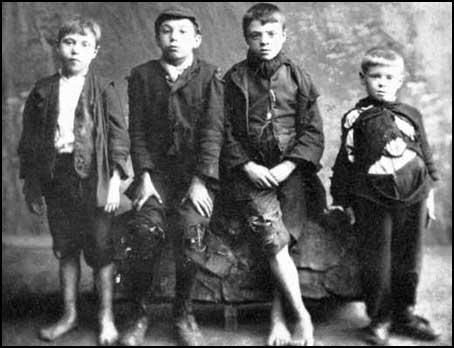
Factory Kids, Manchester 1836

Elizabeth’s life was a fulfilling and happy one until her nine-month old son, William, caught scarlet fever during a visit to Wales in1848, and died. The blow was too much. When a devastated Elizabeth was unable to rise out of bed, William encouraged her to concentrate on her writing and begin a novel. The result was Mary Barton, which told about the desperate poverty of those living in industrial cities like Manchester, a topic with which Elizabeth had become all too familiar during her charity work.

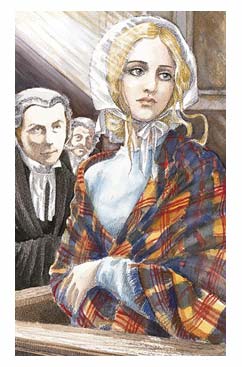
Illustration by Alexy Pendle from Mary Barton by Elizabeth Gaskell

Mary Barton brought  success to Elizabeth. She was paid £200 for the book, which was published anonymously. Charles Dickens sang its praises. Other admirers included John Ruskin, Charles Kingsley, and Thomas Carlyle. Although critics took a jaundiced view towards her championing of the poor and calls for social reform, the novel led to her writing other books, each one making her more money. From then on she published her books under her own name, Mrs. Gaskell.

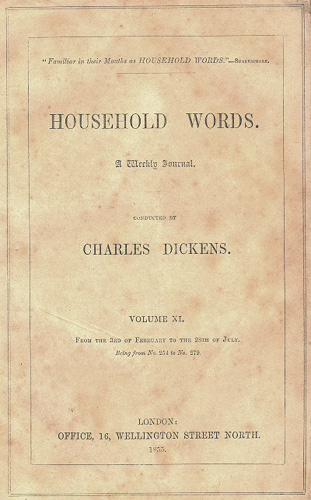
Houshold Words, Charles Dickens

Charles Dickens admired Elizabeth so much that he serialised her next novel, Cranford, in his journal, Household Words (1851-1853). More novels followed in rapid succession, including Ruth (1853), North and South (1855), and Sylvia’s Lovers (1863). These books did not represent her sole literary output. Elizabeth wrote several novellas, of which Cranford was one, as well as short stories and articles for periodicals.

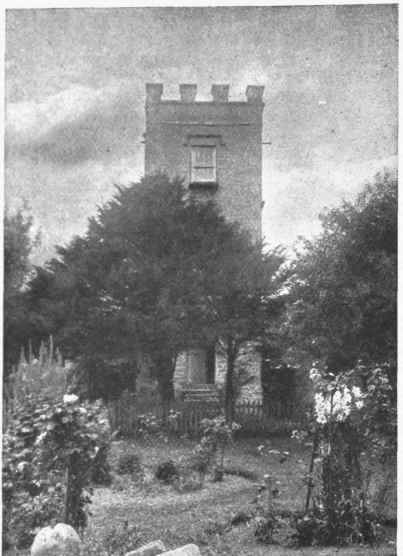
Gilbraltar Tower House, Carnforth. Mrs. Gaskell often wrote in the top room of the tower.

After her good friend Charlotte Bronte died, Gaskell wrote her acclaimed biography, using firsthand accounts and sources. This led her into some legal trouble, for shortly after the book’s publication a few of the people mentioned in it threatened to sue for having been represented incorrectly.

She made many other important friends, and was an avid correspondent, writing thousands of letters to friends and near strangers with the rapidity and ease of someone who, had she lived in the future, would most likely have embraced email.*

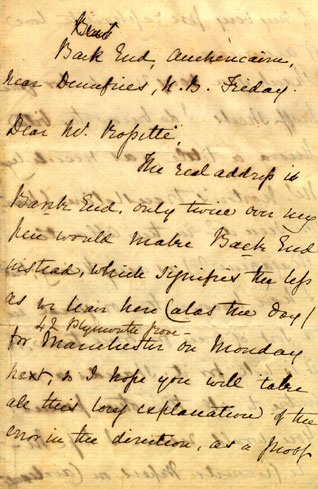
Mrs. Gaskell's letter to Dante Gabriel Rossetti about William Wordsworth, Princeton Collection

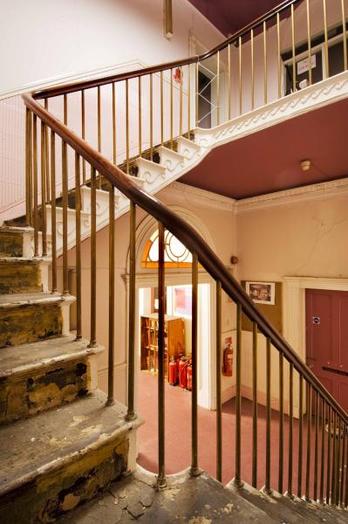
Elizabeth’s novels were enormously popular with the public, and the Gaskells lived well, traveling around Europe, hiring servants, and moving into a bigger house, Plymouth Grove, which still stands. Even with the income from her books and her popularity, Elizabeth continued to remain involved in her husband’s ministry and charity work.

Interior of Plymouth Grove, National Trust

“He is very shy, but very merry when he is well, delights in puns & punning, is very fond of children… 6 foot high, grey hair and whiskers….I do believe he does like Manchester better than any other place in the world; and his study the best place in Manchester” – Elizabeth Gaskell, in describing her husband.

While Gaskell loved her husband dearly and was faithful to him, she did meet a young man in her later life who flattered her womanly ego. On one of her trips to Italy with her daughters, she met an American, Charles Norton, who was 20 years her junior and clearly worshipped her. One cannot be surprised by his attraction, for Elizabeth was a successful, intelligent, and passionate woman. But their friendship remained platonic and they corresponded until Elizabeth’s death. Her Roman flirtation left an indelible memory in Elizabeth’s mind: “It was in those charming Roman days that my life culminated,” she later wrote to a friend. “I shall never be so happy again. I don’t think I was ever so happy before.”**

Mrs. Gaskell towards the end of her life.

Years of loss, sorrow, hard work, and success took a toll on her. Once a vibrant and lovely woman, she looked drawn and tired in later photographs. Elizabeth’s death came suddenly and unexpectedly on a visit to her cottage near Alton in Holybourne, Hampshire. Unknown to her husband, she had secretly purchased the house for their retirement.

“On Sunday November 12, 1865, she and her daughters spent a lazy morning before Elizabeth walked up the lane to church. The vicar thought she looked extremely well.

At 5pm, everyone sat in the drawing room for tea. Elizabeth was gossiping, relating a conversation she’d had with a judge when, mid-sentence, she stopped, gasped and slumped down dead from a heart attack.” – The Daily Mail Online, 2007

Manuscript of Wives and Daughters

Elizabeth had been witing her last work, Wives and Daughters, which remained unfinished. After her unexpected death, a friend wrote, “The world of English letters has lost one of its foremost authors,” a sentiment the Anthenaeum echoed: “If not the most popular, with small question, the most powerful and finished female novelist of an epoch singularly rich in female novelists.”

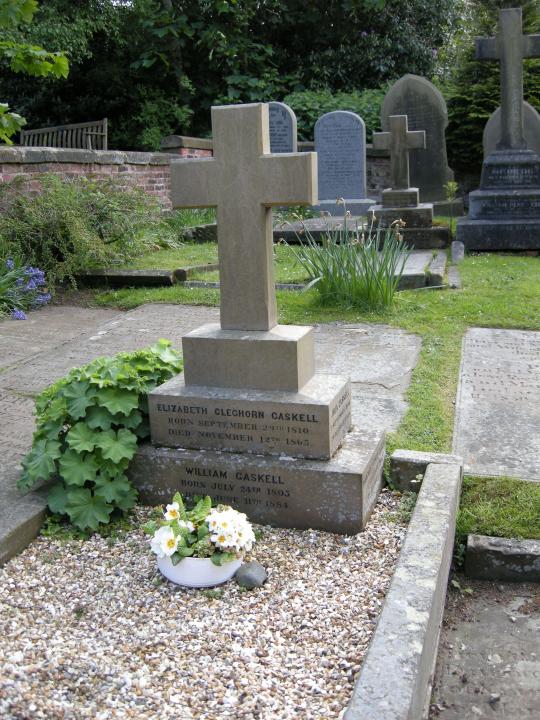
Burial spot for Elizabeth and William Gaskell

Elizabeth is buried at Brookstreet Chapel in Knutsford. William Gaskell survived her by two decades and never retired, serving as Minister in Cross Street and living in Plymouth Grove with two daughters until his death in 1884. He is buried beside her.

In terms of her legacy, this 1989 letter by Henry Rollin, Chairman, History of Psychiatry Group,  sums up Elizabeth Gaskell’s body of work:

But of greater importance to the medical historian are the glimpses she gives in her novels of the socioeconomic diseases of the period of which she writes. Life is cheap. Alcoholism and prostitution are rife. Cholera and typhus are commonplace. Women die in childbirth. And she reveals in harrowing detail the prevalence of opium addiction. John Barton, the father of Mary Barton in her novel of that name, is portrayed as a man so bitterly humiliated by his abject failure in all departments of his life that he degenerates into the quintessential opium addict. But even more haunting is the intense pathos of her description of the relationship between opium and the grinding poverty and near-starvation of the underprivileged. “Many a penny that would have gone little way enough in oatmeal or potatoes, bought opium to still the hungry little ones, and make them forget their uneasiness in heavy troubled sleep”, she writes of the Manchester she knew in her day-to-day work as the wife of a Unitarian minister.”

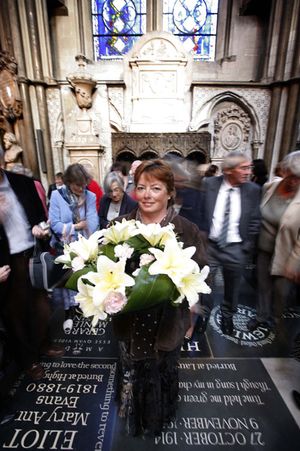
Gaskell's great great great granddaughter, Sarah Prince, lays a wreath in the Poet's Corner

In honor of the Bicentenary, Mrs. Gaskell was included in the poet’s corner in Westminster Abbey, a top honor indeed. Rest in peace, Elizabeth Gaskell, and happy, happy birthday!

Gentle Reader: This blog has joined fourteen others in celebrating the Elizabeth Gaskell Bicentenary Blog Tour, sponsored by Austenprose. The next blog on your tour is Mary Barton (1848) Book: Kelly’s of the Jane Austen Sequel Examiner. She will discuss Mary Barton, Gaskell’s first book.

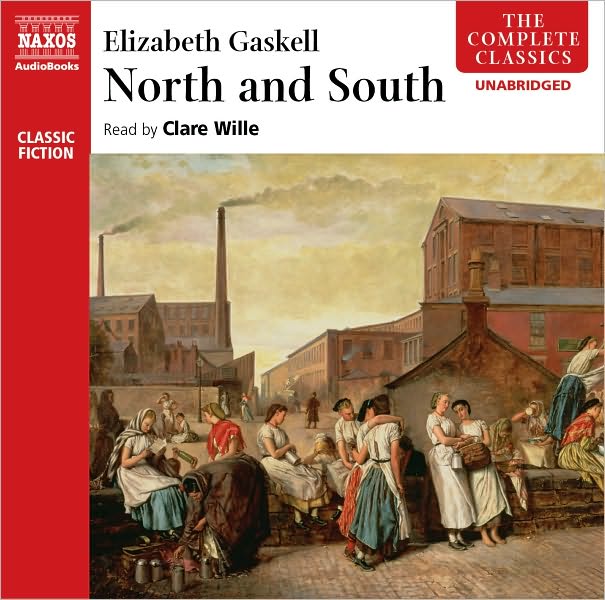
Leave a comment below for a chance to win a copy of an unabridged edition of North and South by Naxos AudioBooks read by Clare Willie. Deadline October 7th, midnight PT

Sources:

Thank you, Austenprose, for arranging this web tour!

The Gaskell Blog Tour:

Biography

Novels/Biography

Novellas

Resources

  • 14.) Your Gaskell Library – a select bibliography of written resources and links to MP3′s, ebooks, audio books, other downloads and reading resources available online: Janeite Deb – Jane Austen in Vermont
  • 15) Plymouth Grove – A Visit to Elizabeth Gaskell’s home in Manchester:  Tony Grant – London Calling

Read Full Post »

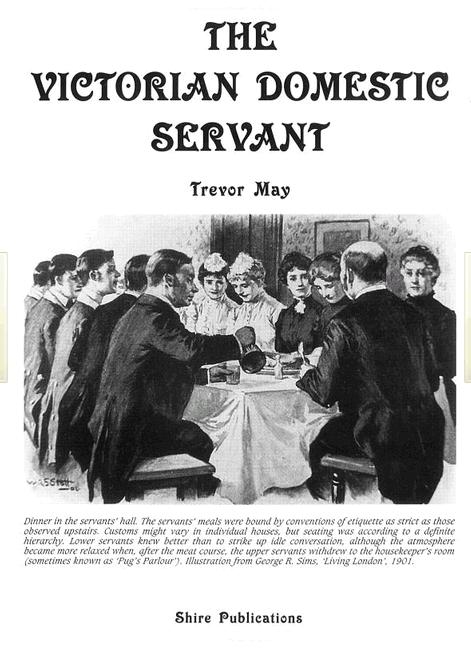
This book from Shire Classics describes the 19th-Century servant class in Great Britain in satisfying detail. Combined with another book I purchased at the National Portrait Gallery of portraits taken of the servant class, my DVDs of Gosford Park and Upstairs/Downstairs, and my recent viewing of Edwardian House and Regency House, I think that I am getting a fairly good idea about how a great house operated in days of yore.

The Victorian Domestic Servant reveals that the Duke of Bedford (died 1839) employed 300 servants and the Duke of Portland employed 320. These were excessive amounts to be sure, but most respectable Victorian households employed servants. An income of 250 a year allowed a family to employ a maid of all work, but an income of 100 would barely pay the rent, much less pay for help. As an aside, Jane Austen, her mother and sister were able to afford a maid of all work and a male servant on their modest income. After moving to Barton Cottage, the Dashwood women employed two servants as well. Yet both the Austen and Dashwood women, while not destitute, had to count every penny. People like Mrs. Smith from Persuasion and the Bates women in Emma could afford no help at all.

In 1851 domestic service represented the second largest occupation in England after agriculture, although the servant class was in constant flux. People frequently moved positions looking for higher pay or for promotions or for a way out. Although many servants felt professional pride towards their work, they often left service because the deference their employers expected wore them down. For the lower servants, the constant need for showing respect was even worse. The servant hierarchy Below Stairs showed as many distinctions as Above Stairs, with lower and upper servants rarely commingling. Lower servants were expected to remain silent unless spoken to at the table when dining, for example. They were expected neither to be seen nor heard as they worked.

Most of the work that servants performed had to be done out of sight of the family that employed them. This meant they had to rise early to do their tasks, stopping when the family arose and restarting late in the evening. Tasks were repetitive and laborious, such as filling a tub with water, which meant heating pails and pails of water and trudging up and down the stairs, or bringing coal to fireplaces and stoves and removing ashes. Much time was spent removing coal ash from fireplaces, and then dusting rooms and sweeping floors clear of the substance.

The preferred servant was raised in the country, for these people tended to show more respect and deference than their urban counterparts. A symbol of status was the footman, who wore livery and had actually not much work to do other than to look handsome and open and close doors, help the butler serve food at table, and sleep in the Butler’s Pantry to protect the family plate and silver from thieves.

While The Victorian Domestic Servant is only 32 pages long, I found so much information packed in its pages that I will have to read it again soon. For those who are curious about the servant class, or for writers of the Victorian Era, I cannot recommend this book enough. If this were a regency book, I would give it three regency fans. In this instance, I think I shall give it five out of five dust bins, broom sticks, and wash cloths.

More on the topic

Paperback: 32 pages
Publisher: Shire; illustrated edition edition (March 4, 2008)
Language: English
ISBN-10: 0747803684
ISBN-13: 978-0747803683

Read Full Post »

« Newer Posts - Older Posts »