Feeds:
Posts
Comments

“Trust no one, confide in no one …” This memorable line in Endgame, PBS’s latest presentation from Masterpiece Contemporary, is the essence of a plot that includes secret talks and negotiations between Afrikaners and the African National Congress (ANC) that ended apartheid. If you missed the show or want to see it again, you can watch it online from October 26th – November 8th. For those who aren’t familiar with the characters in this story or the story itself, I recommend that you read a short biography of the characters in this PBS link. Photographs of the historical people involved are placed next to the images of the actors who portray them.

fragile trust

William Hurt portrays Willie Esterhuyse, an Afrikaner professor, who secretly met with Thabo Mbeki (Chiwetel Ejiofor), a member of the ANC. The two men grew to respect and trust each other, much through the efforts of negotiator Michael Young (Jonny Lee Miller), who worked for Consolidated Goldfields, the firm that sponsored the secluded talks in England. Young was smuggled across guarded checkpoints in undercover forays to Soweto, where he approached representatives of the ANC. His presence was not necessarily wanted in this hostile territory, and the scenes showed how dangerous his mission was.  There are suspenseful moments throughout the film, and I found myself riveted by the excellence of the actors and script. My only complaint about this production is that at times the pace slowed to a crawl and the scenes seemed a tad long, but overall I found it one of the best docu-dramas I have seen in a long time. PBS feels so strongly about this production, that the film will be shown in theaters after its introduction on television:

smuggled

The traditional feature-film release cycle is to start on movie screens and then move to television via DVDs, cable or network broadcasts.

A different approach has been plotted for “Endgame,” which airs tonight on the PBS series “Masterpiece Contemporary” and then will have a theatrical run.

Rebecca Eaton, “Masterpiece Contemporary” executive producer, says the original plan was to open “Endgame” in theaters first to earn Oscar attention. Because the movie aired on British TV, it’s no longer eligible for Oscar consideration. Now Eaton wants to see the film’s message get to the largest audience possible.

“We’re not going to make a ton of money from this even if it is a hit. But we want to make sure that everybody knows about it and can see it wherever, preferably on ‘Masterpiece,’ then possibly screening in the movie theaters, buy the DVD,” Eaton says. – San Luis Obispo The Tribune

car bomb
The negotiations culminated in Nelson Mandela’s (Clarke Peters) release from prison, but it would take four more years before apartheid disappeared. Click here to read the synopsis of the film.
four images

Watch an interview with Chiwetel Ejiofor about the film in this YouTube clip.

More Links

Trailer for the film:
The National Gallery of Victoria

The National Gallery of Victoria

Inquiring Reader: Emma, the author of this post, lives in Melbourne, Australia. After she interviewed me for a class assignment, I asked her if she would give us her impressions of the the fabulous fashion show at the National Gallery of Victoria. Happily, she said yes. Click here to read an article on Jane Austen Today and for more images from the exhibit. I first featured this post on Jane Austen Today and decided to embellish it a little, adding more images of the museum and items in the exhibit. New links have been added, as well as additional comments about the dresses. About 50 costumes were shown in the exhibit. If you click on all the links to view images on other sites, you will see about 20% of the outfits and a few of the Regency items that accompanied them.

Entrance arch to the National Gallery of Victoria

Entrance arch to the National Gallery of Victoria

Entrance to exhibit

Entrance to exhibit

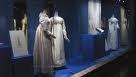
The National Gallery of Victoria has a permanent space for textile exhibits that is often overlooked by visitors. So, you can imagine my surprise when I entered the Persuasion space and found it far from empty. There were young children, middle aged couples, elderly couples and a selection of tourists, all gathered in the rooms openly admiring the clothing and documents behind their glass cases.

Exhibits with dresses, drawings and artifacts

Exhibits with dresses, drawings and artifacts

The collection was set up beautifully in their cases, decorated to become rooms – painted blue, with pianofortes, writing desks and sitting chairs.

It was interesting listening to the thoughts of those around me, with many observing the “heaviness of the walking dress” and the “gorgeous detailing on that white muslin.” Of course every woman in the room stopped to admire the outfit worn by Colin Firth in the BBC adaptation of Pride and Prejudice, no doubt reliving the lake scene.

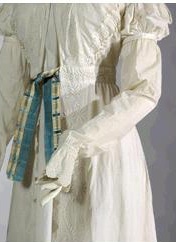
Detail, cotton muslin dress, 1815

Detail, cotton muslin dress, 1815

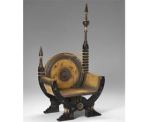
Regency chair "throne"

Regency chair "throne"

With so many pieces to choose from I had no idea how I was going to pick one or two to write about, but finally I have settled on the ball and the walking dress.

Having read many ball scenes in Austen’s works it what inevitable that I would love the ball dress. The dress was an empire line, with a skirt that went outwards into a cone shape, and the sleeves were puffed with lace detailing. It was interesting to read the plaque which revealed just how complicated the ball dress actually was – with there being gauze, embroidery with silk floss, lace, satin, piping and some sort of plants vine used in its construction.

And then there was the walking dress, a dress that I’m not sure I’d like to go for a walk in myself. I’d expected something lighter so I was very surprised by the heavy bronze satin dress in the case. It appeared very restrictive – fitted, long tight sleeves – but was incredibly beautiful and well made.

The bronze walking dress is at right

The bronze walking dress is at right

The exhibit closes at the gallery on November 8, 2009. I encourage anyone that can make it to go. It’s free of charge and definitely a collection not be to missed.

This 1802 round gown is similar to one that Jane Austen would have worn

This 1802 round gown is similar to one that Jane Austen would have worn

Click here for an audio tour of the exhibit. In it you will learn that this exhibit shows the more provincial, country dresses that were designed for walking and outdoor activities. Empire dresses allowed for a greater freedom of movement than in previous eras. The thin cotton, often low-cut gowns also revealed more of a woman’s figure than before, prompting Jane Austen to write about a vicar’s wife that she was “nakedly and expensively dressed.”
pub_Persuasion_P

Pelisse and dress, 1818

Pelisse and dress, 1818

More links to images:

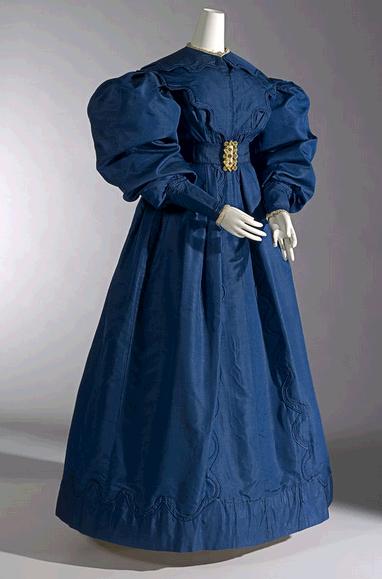
Carriage dress, silk gros de naples, 1830

Carriage dress, silk gros de naples, 1830


Photos NVG

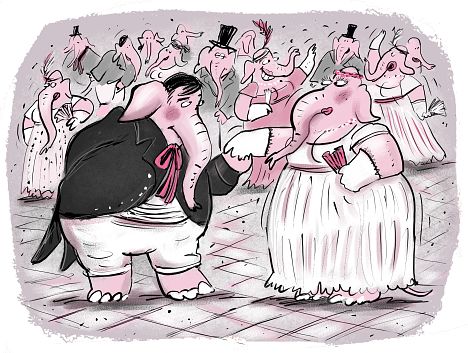
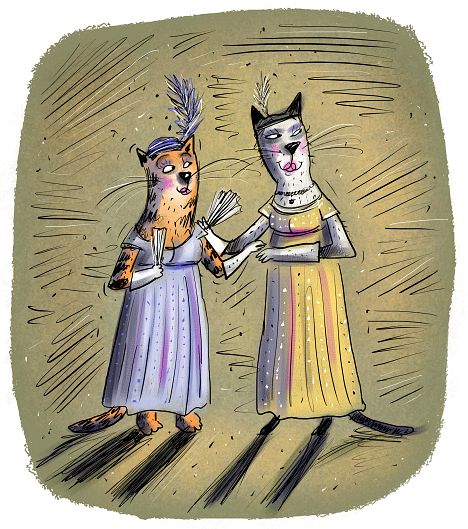
During the 2007-2008 holidays, artist and cartoonist Paula J. Becker watched Pride and Prejudice movies nonstop, from the 1940’s version, to the 1980’s and the mammoth 1995 Colin Firth adaptation.  When she finished viewing P&P 2005, she was inspired to draw Mr. Darcy and Lizzy at a ball. What fun she must have had! You will recognize Ms Becker’s style, for you have most likely seen her cartoons in greeting cards and her artwork in children’s books.

pride_72Mr. Darcy makes a most handsome bow to his Lizzy. The revel rousers in the background seem to be having a great deal of fun.

g-kitties_72These Georgian Kitties could easily be Caroline Bingley and her sister, Mrs. Hurst.

Cartoons reproduced with Ms. Becker’s permission.

Emma 2009: Episode Three

Romola speaks as emmaEmily Hill of the Evening Standard isn’t thrilled with this adaptation of Emma:
The tension of the series comes not from the characters being marooned in stuffy Regency England, but from the bizarre twenty-first-century dating psychobabble. At some point, whoever created this very pretty 9 pm drama seems to have thrown the actual novel aside and adapted the work with exclusive reference to other Jane Austen adaptations and what they think middle-aged women want to down with their end-of-Sabbath Chardonnay. Even the actors seem to be stuck in synthetic Austen-land.

My review of Emma sits at this link

Having watched 3/4 of the film, tell us what you thought of Emma, Episode Three


My rambling discourse about hair echoes my thinking about this production of Emma, for I can’t decide whether I like it or not. Count me as one of the viewers who is still sitting on the fence. I understand that the producers wanted to modernize and jazz Emma up, so that a new audience can appreciate her story. But many liberties were taken in the process,  such as with Jane Austen’s dialogue and wit, which are practically nonexistent. Let’s examine the hair styles in this film. Ringlets were in vogue at the time Jane Austen wrote the novel. They peeped out of bonnets and mobcaps. Even when hair was pulled back into a chignon, ringlets would be fashioned around the face and in front of the ears.

harriet smith hair
In this image, Harriet Smith’s hair style has ringlets aplenty, but is more reminiscent of the updos worn in 1826-1832, when the ringlets resembled poodle ears. Of course, this hairdo did have a certain cinematic effect, for Harriet is a bit silly and naive and the hairdo suits her personality to a tee. If you recall, Mrs. Bennet (Alison Steadman) in 1995’s Pride and Prejudice was given a similar hair do, and every time she spoke, her ringlets shook, making her seem even sillier.

Ballgown 1826

Ballgown 1826

Fashion plate 1832

Fashion plate 1832

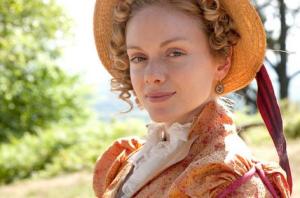
In the next image, Christina Cole (Augusta Elton), below, demonstrates the sort of hair/bonnet combination I have come to associate with the era. Her loose ringlets peep out from under her straw hat most becomingly.
augusta elton Christina Cole
Emma was published in 1815. Let’s compare Augusta’s hair and cap to fashion plate images of the same year. Close enough, don’t you think? Her bonnet is different, but there were many modish styles to choose from and one can’t quibble with a becoming straw cap.
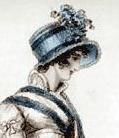
1815 cap and bonnet1815 bonnet

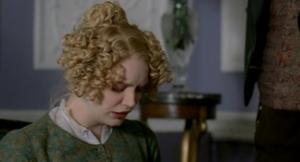
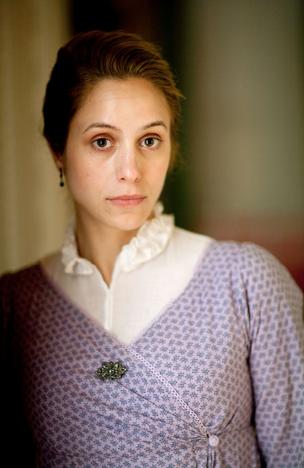
Jodhi May as Mrs. Weston

Jodhi May as Mrs. Weston

Why was such a plain and unflattering hairstyle chosen for beautiful Jodhi May? Was her hair Quakerish on purpose so that she would not compete in beauty with Emma? At this point she is no longer a governess, but the mistress of her own house and can dress herself accordingly. Even poor Miss Bates (sitting at right below) shows more attempt at “styling”.

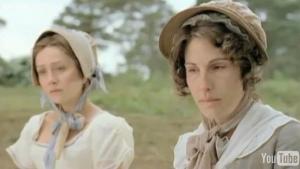
Miss Fairfax and Miss Bates at Box Hill

Miss Fairfax and Miss Bates at Box Hill

This plain upswept chignon was adorned with simple curls in front of the ears, which would have helped Jodhi’s hairstyle immensely, making it seem more “authentic.”
chignon ringlets
In this image, Blake Ritson wears his hair a la Brutus, a style commonly worn by men in the Regency era. Poor Harriet (Louise Dylan) is stuck with the poodle style for the duration of the film.
blake ritson and louise dylan
In the image below, Blake looks like he’s about to enter Bedlam, which I suppose was his hair stylist’s intention, for Mr. Elton IS a ridiculous character. Still, Blake’s facial ticks should have been enough to clue the viewer in. We didn’t need crazy hair as well.

Did the stylists use 21st century hair gel to accomplish this style?

Did the stylists use 21st century hair gel to accomplish this style?

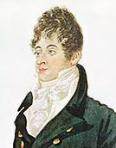
To be fair, men pomaded their hair and created fantastic styles. Witness Beau Brummel in 1805.

BeauBrummellKlein

beau 1805

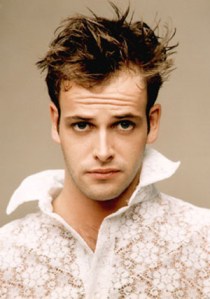
Which begs the question: Why did Jonny Lee Miller fashion his hair a la the 21st century?

Oops, wrong image

Oops, wrong image

I meant to insert this one

I meant to insert this one

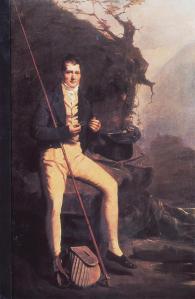
Men wore their hair in many styles, some elaborate, and some quite sleek and modern to our eyes. Jonny’s hairstyle is remarkably close to McMurdo’s below, who, from the neck up would not look too out of place in today’s world.

Lieut Colonel Bryce McMurdo, 1800-1810 by Henry Raeburn

Lieut Colonel Bryce McMurdo, 1800-1810 by Henry Raeburn

Women often wore caps in bed, which they drew over their paper curlers.  Hair was washed only occasionally in those days, and caps prevented pillow cases from being soiled from accumulated oil and dirt.
harriet sick

Ok, we get it. Harriet is SICK. Where is her night cap?

I just had to include the image below. Yes, very young girls at that time wore their hair loose, and, yes, they had to be taught their manners.  (For aren’t we all little savages until our governesses teach us better?) For my finnicky taste, this image shows a woman who is much too modern in hairstyle and facial expression. At the very least, Emma would have been taught to place her hand in front of her mouth when yawning.

yawn Goodness. What would the servants have thought?
I’m still on the fence, waiting to like this film adaptation. It seems that the numbers are tanking and people are not staying with the show (a bad omen for the future of bonnet movies on BBC). Kali at StrangeGirl.com and blog author of Emma Adaptations is still liking this adaptation, although elements are starting to get on her nerves. Please feel free to agree or disagree with anything said in this post. :)

First glimpse of Bingley and Darcy

First glimpse of Bingley and Darcy

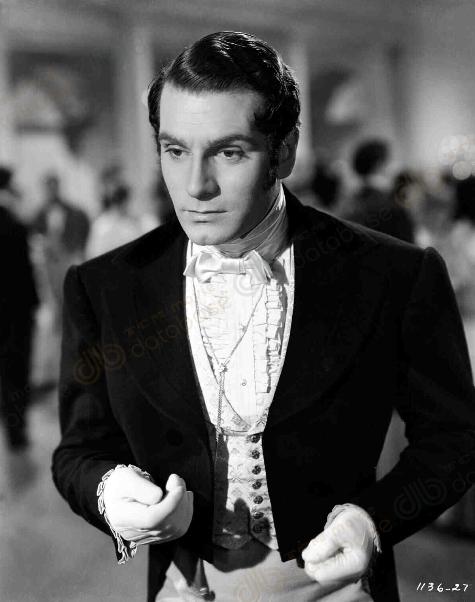
Turner Movie Classics offers a website with trailers and featurettes about its films. Click on this link to hear Ann Rutherford speak in two featurettes about the making of Pride and Prejudice 1940.

Laurence Olivier as Mr. Darcy

Laurence Olivier as Mr. Darcy

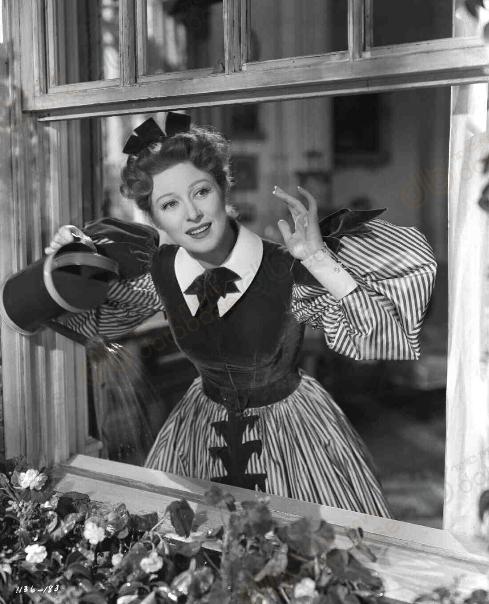
Of his part as Mr. Darcy, Laurence Olivier said in his autobiography:  “I was very unhappy with the picture. It was difficult to make Darcy into anything more than an unattractive-looking prig, and darling Greer seemed to me all wrong as Elizabeth.”

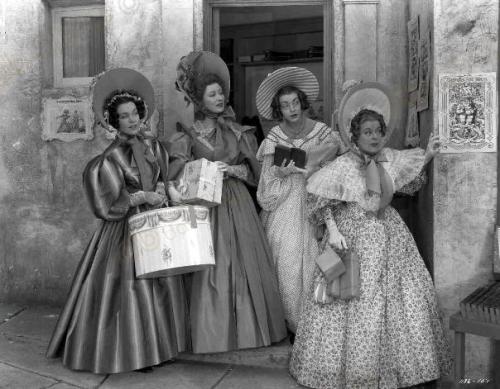
If I may put in my two cents, I agree heartily with Mr. Olivier’s assessment. Considered a classic in the 20th century, the film now seems anachronistic and outdated. Except for a few excellent portrayals, (Mary Boland as Mrs. Bennet, Edna May Oliver as Lady Catherine de Bourgh, Edmund Gwenn as Mr. Bennet, Marsha Hunt as Mary Bennet, and Melville Cooper as Mr. Collins) I would not bother to see the film again.

Lizzy at the window looking like a matron in Little Women

Lizzy at the window looking like a matron in Little Women

From the notes on the TMC website: “M-G-M took several liberties with Jane Austen’s novel, among them moving the time period of the story forty years ahead. According to modern sources, this was done in order to allow for more ornate costumes.” Anne Rutherford said in a JASNA interview: “But I must say, that when the studio, in its infinite wisdom, when they changed the wardrobe from the wet-nightgown look, that empire look, to the ship-in-full-sail [Victorian] – they did such a wise thing. Because the sight of Mary Boland [Mrs. Bennet] bustling down the street with all of her little goslings behind her in their huge voluminous skirts, and all of them chattering at once – it wouldn’t have been nearly as delightful a sight-gag if we had all been in little, skinny wet-night-gown-type things.”

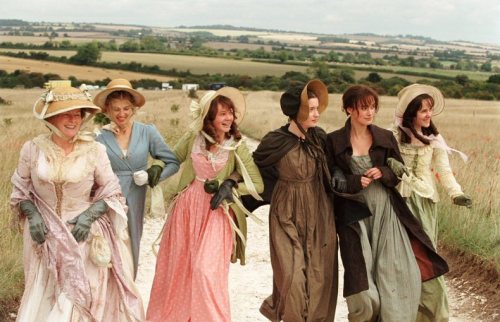
Again, I beg to differ. Notice the delightful picture these actresses in the 2005 Pride and Prejudice adaptation make in their regency gowns:

Bennet women 2005 Pride and Prejudice

Bennet women 2005 Pride and Prejudice