Feeds:
Posts
Comments
Visitor Books, Pump Room, Northanger Abbey

Visitor's Book, Pump Room

With more than usual eagerness did Catherine hasten to the Pump-room the next day, secure within herself of seeing Mr. Tilney there before the morning were over, and ready to meet him with a smile; – but no smile was demanded – Mr. Tilney did not appear. Every creature in Bath, except himself, was to be seen in the room at different periods of the fashionable hours; crowds of people were every moment passing in and out, up the steps and down; people whom nobody cared about, and nobody wanted to see; and he only was absent. “What a delightful place Bath is,” said Mrs. Allen as they sat down near the great clock, after parading the room till they were tired; “and how pleasant it would be if we had any acquaintance here.” Jane Austen, Northanger Abbey Chapter IV

Gentle readers, before you continue please be aware that this post features a series of vignettes and memories from people who wrote their recollections about the historic Pump Room in Bath, so prominently mentioned in Northanger Abbey during Catherine Morland’s visits there with her benefactors, the Allens. In honor of Austenprose’s coverage of Northanger Abbey for the month of October, I have gathered observations about the Pump Room that were placed online from periodicals and journals of Jane Austen’s time. Please enjoy the reviews of Jane’s contemporaries and predecessors:

In 1678 a single woman named Celia Fiennes journeyed to Bath and wrote in her journal:
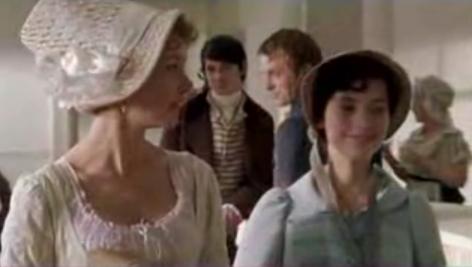
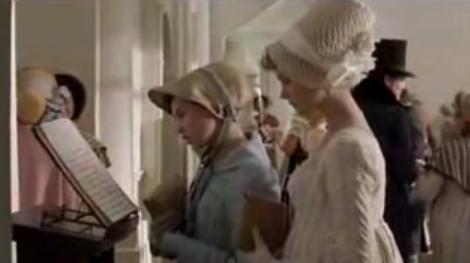
Promenade in the Pump Room, Isabella Thorpe and Catherine Morland

Promenade in the Pump Room, Isabella Thorpe and Catherine Morland

All the baths has the same attendance, the Queen’s bath is bigger than the other three but not a neare so big as the King’s, which do run into each other and is only parted by a wall and at one place a great arch where they run into each other; the Queen’s bath is a degree hotter than the Cross bath, and the King’s bath much hotter; these have all gallery’s round and the pump is in one of these galleryes at the Kings bath which the Company drinks of; its very hot and tastes like the water that boyles eggs, has such a smell, but the nearer the pumpe you drinke it the hotter and less offencive and more spiriteous. (Celia Fiennes (1662-1741), was a grand-daughter of Lord Saye and Sele. It was not unusual for single ladies to travel about the country during the 1600s. Her journal was not published until 1688.)
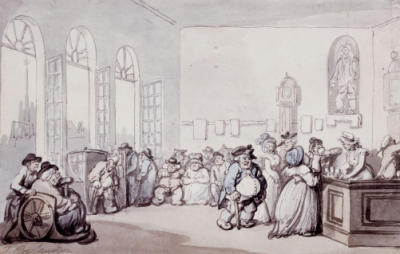
The Comforts of Bath, Rowlandson, The Pump Room, 1798

The Comforts of Bath, Rowlandson, The Pump Room, 1798

Since Roman times, Bath’s hot mineral springs have pumped a quarter of a million gallons of spring water a day at a steady temperature of 49°c. In 1708, Thomas Harrison built the Bath Assembly House, for which the public paid fees to dance and gamble. During mid-18th to early 19th century, Bath’s population exploded from 2,000 to 38,000, becoming the eighth largest city in England by 1801. Three men – Ralph Allen, post master; John Wood, architect; and Beau Nash, fashion and social arbiter – contributed to this up and coming city’s popularity with the leisure classes. Developer John Wood followed the Palladian concept of the architectural ideal, constructing magnificent squares, parades, and buildings out of softly-hued, beautiful honey-coloured Bath stone. Ralph Allen contributed much of his personal fortune to Bath’s rebuilding, and Beau Nash organized Bath’s social life and balls, bringing in musicians from London, exerting his influence as a dandy, and becoming a leader of fashion. The original Pump Room, erected in 1706, quickly became too small for the increasing numbers of visitors. It was enlarged in 1751, a new portico was added in 1786, and a new frontage was constructed in 1791. Even so, the renovations were inadequate. An entirely new room that was eighty-five feet long, forty-six feet wide, and thirty-four feet high was constructed in 1796.

It was in digging for the foundation of this building that the valuable and interesting remains of the Roman temple of Minerva were discovered. So far did the new buildings surpass those of the old town in architectural beauty that steps were taken in 1789 for modernizing and improving it, and an Act of Parliament was obtained empowering the Corporation to raise the Sum of 80,000 upon their estates and other securities for the purpose of improving the city by the erection of new streets and widening of others. It was under the powers of this Act that the present pump room, Union street, Bath street, and Hot Bath street were erected, Cheap street widened and other improvements effected.The Gentleman’s Magazine

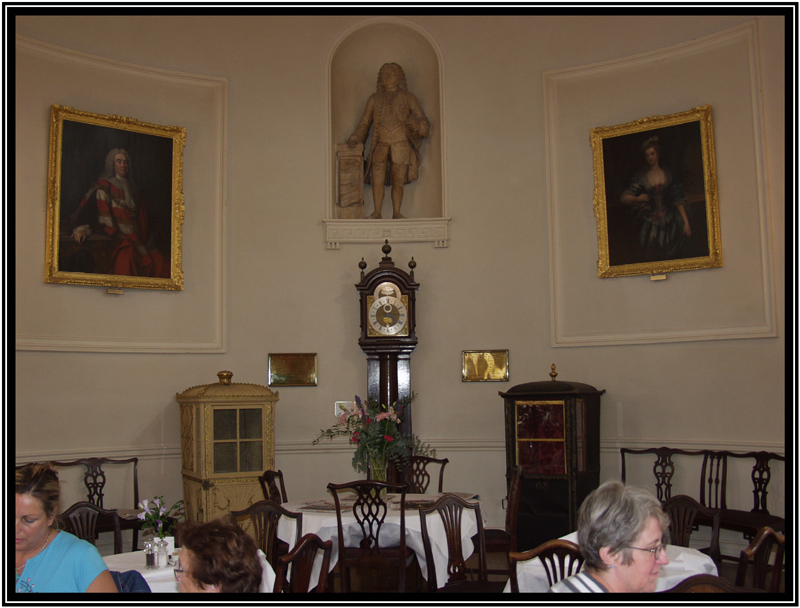
Statue of Beau Nash in the Pump Room

Statue of Beau Nash in the Pump Room

Visitors promenaded up and down the great room, and drank the waters from eight or nine in the morning until three in the afternoon. The main spring that feeds the fountain “is in the centre of the King’s Bath where it is retained in a large leaden cistern at the bottom from which pipes conduct the water used for drinking the principal of which conveys it to the fountain of the pump room and most certainly an uninformed spectator would suppose that the identical liquid was drunk in which the people were bathing.The British Magazine

“In the Pump Room itself, an orchestra played while visitors drank the obligatory quantity of the water. Lydia, in Smollett’s novel Humphrey Clinker, describes the experience: “The noise of the music playing in the gallery, the heat and flavour of such a crowd, and the hum and buzz of their conversation, gave one the headache and vertigo&.” (The gallery in question, reached by a ladder, was semi-circular and contained five musicians led by a trumpeter). The Bath Herald in 1799 was rather more enthusiastic: “The Pump Room Band is one of the oldest and best establishments of this place; it draws visitor and inhabitant to one general place of morning rendezvous, whilst the inspiring melody of the Orchestra spreads a general glow of happiness around. Bath Baroque

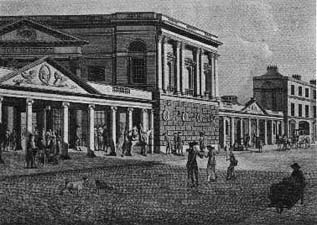
Facade of the Pump Room

In 1811 a Canadian visitor visited Bath and described the Pump Room in his journal:

The gentlemen dressed in breeches stockings and cocked hats; the ladies in the most superb manner – pelisses laced with gold cords and Hussars’ hats, having three circles of gold cord round them with two great tassels of gold upon the left side. What is called a reticule, which contains their pocket-handkerchief and work, is hanging by a gold chain to the arm, and is fringed with gold. I went to the Pump Room, which is very large and grand. On one side is the pump, where a woman stands and distributes old King Bladud’s waters to old and young, sick and ill. An old duchess of eighty and a child of four were both drinking the waters while I was there. I had a glass; it is very hot and tastes very mineral. At one end of the room is an orchestra, where bands of music are continually playing. The company at the same time walking up and down in crowds, not minding the music, but buzzing like merchants on ‘change. At the end of each tune they clap their hands and kick up or not for what they don’t know. – The Early Days of the Nineteenth Century in England, 1800-1820 1800-1820. By William Connor Sydney

Pump Room with Chandelier and Music Gallery

Pump Room with Chandelier and Music Gallery

The baths to which the city chiefly owes its celebrity and wealth are five in number: the King’s bath ,the Queen’s bath ,the Hot bath, the Cross bath ,and the Kingston bath, the last of which is the property of Earl Manvers. The others are the exclusive property of the corporation, who retain the management of them and from them and the profits of the Pump room obtain an income of about 1,500 a year. The revenue from the Pump room is derived from subscriptions for drinking the waters. The Pump room is an elegant and spacious hall built in 1797 for a promenade for the company and for drinking the waters it is 85 feet long 48 wide and 34 high the ceiling being supported by elegant Ionic pillars having at the cast end a statue of the celebrated Beau Nash who first officiated as master of the ceremonies. The baths are of course provided with all the appliances which luxury or sensitiveness can desire .The Hot bath derives its name from the superior heat of its waters, which average about 117 of Fahrenheit. The British Gazetteer, Political, Commercial, Ecclesiastical, and Historical Showing the Distances of Each Place from London and Derby-gentlemen’s Seats-populations … &c. Illustrated by a Full Set of County Maps, with All the Railways Accurately Laid Down … By Benjamin Clarke

Pump Room by Palmer

Palmer, Pump Room, 1804

One spring supplies the fountain in the Grand Pump Room, the King’s Public and Private Baths, the large tepid swimming bath, and the New Royal Private Baths adjoining the Pump Room Hotel, and the baths of the Mineral Water Hospital. A continual flow of the mineral water coming straight from the spring is supplied by a fountain in the Grand Pump Room. Formerly the internal treatment was much in vogue and large quantities of the hot water were ordered or taken without orders. At present the amount usually drunk is from four ounces to half a pint twice a day. The Climates and Baths of Great Britain Being the Report of a Committee of the Royal Medical and Chirurgical Society of London By Royal Medical and Chirurgical Society of London, Robert Barnes, J. Mitchel Bruce, William Ewart, William Murrell
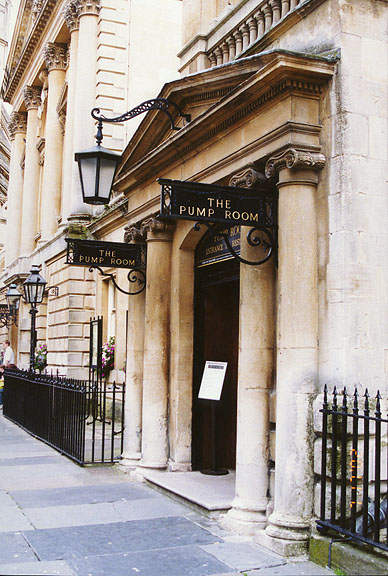
Entrance to the Pump Room

Entrance to the Pump Room

A year before her death in 1818, Queen Charlotte stayed in a house in Sydney Place.

A house was taken for her at 93 Sydney Place, and lavishly equipped; and a second house at 103 Sydney Place was reserved for her entourage, and for the Duke of Clarence, who arrived in the city on the same day. Bath welcomed the royal party enthusiastically and a contemporary, after describing the decorations, noted that, ‘tho the streets were crowded to an excess, not the least riot or confusion appeared; nor were groups of well-dressed females annoyed in their perambulations by the throwing of squibs or the firing of guns‘.”
Shortly after her arrival, the Queen’s granddaugher died in childbirth. After the funeral, the seventy-three year-old Queen returned to Bath for nearly a month. Queen Charlotte in Bath.
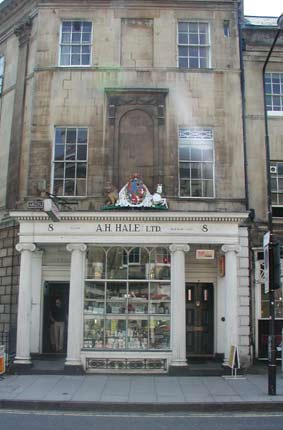
House on Pulteney Street, where Queen Charlotte Stayed

The House Where Queen Charlotte Stayed

“Her Majesty occupied a large house in Sydney Place.  She daily passed in a sedan chair to the Pump Room and graciously as well as gracefully acknowledged the obeisances of those who assembled to behold her.” Historic Houses in Bath, and Their Associations By Robert Edward Myhill Peach.
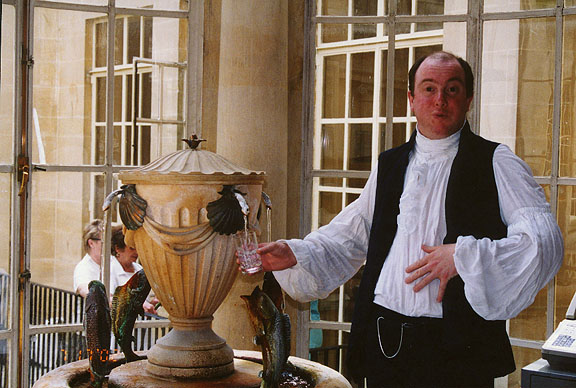
Taking the waters

Taking warm mineral waters from the King

Bath Timeline (1714-1820)

1738–Start of the construction of The Royal Mineral Water Hospital reflected a new period of faith in the healing properties of the waters. It is also notable as the only building on which the three men most responsible for the construction of Georgian Bath–John Wood the Elder, Beau Nash and Ralph Allen–collaborated. While the beneficial and healing properties of the water have always been acknowledged, modesty and decency have not always been inherent in Bath’s “spa culture.” John Wood the Elder writes at this time: “The Baths were like so many Bear Gardens, and modesty was entirely shut out of them; people of both sexes bathing by day and night naked.”

1777–Hot Bath rebuilt to the design of John Wood the Younger.

1783-98–Cross Bath rebuilt and then enlarged.

1788–New Private baths (now demolished) built between King’s Bath and Stall Street.

1790s–Great Pump Room built. While excavating the foundations for the new Great Pump Room, many of the
first finds relating to the Roman Temple were made.

1798–The publication of “The Comforts of Bath,” a satirical view of life in Bath, reflects the infamous lifestyle of elements of Georgian society. The Pump Rooms and the baths were the center of much revelry throughout this period when Bath became known as the “premier resort of frivolity and Fashion – Bath: A World Heritage Site
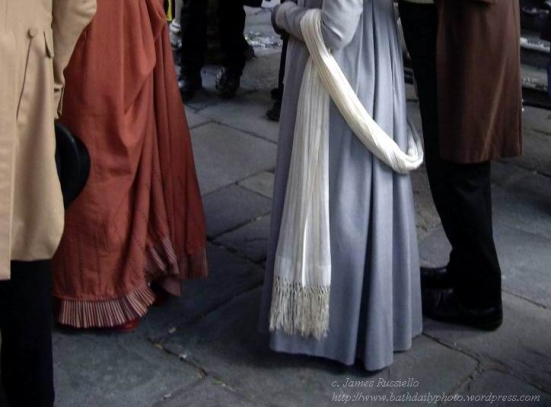
2007 Persuasion actors filing into the Pump Room

2007 Persuasion actors filing into the Pump Room, Bath Daily Photo

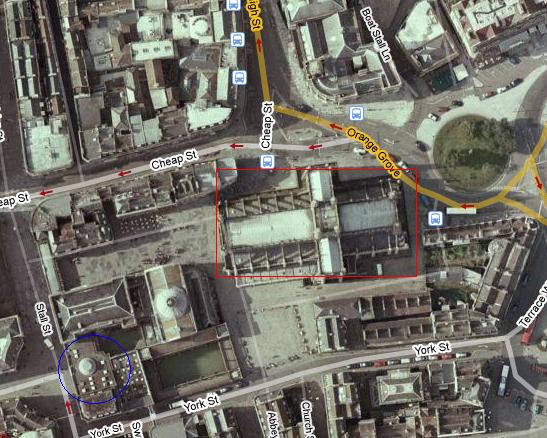
Pump Room and Roman Baths (blue Circle) and Bath Abbey (Red Rectangle)

Google Map: Pump Room (blue Circle) and Bath Abbey (Red Rectangle)

Mrs. Norris, Lady Bertram and pug

Mrs. Norris, Lady Bertram and pug, 2007 Mansfield Park"I hope she will not tease my poor pug," said Lady Bertram; "I have but just got Julia to leave it alone." - Mansfield Park, Chapter One

To the education of her daughters, Lady Bertram paid not the smallest attention. She had not time for such cares. She was a woman who spent her days in sitting nicely dressed on a sofa, doing some long piece of needlework, of little use and no beauty, thinking more of her pug than her children, but very indulgent to the latter, when it did not put herself to inconvenience, guided in every thing important by Sir Thomas, and in smaller concerns by her sister. – description of Lady Bertram by Jane Austen, Mansfield Park

One is continually struck by the varied roles that dogs have played (and continue to play) in civilized society. Take the Georgian era, for example. Dogs were either pampered and coddled in the upper echelons or considered a work dog at best or a pest in the lower stratas. The image of Lady Bertram caring more for her pug than children, and of the upper crust caring for their hunting dogs and appreciating their courage and companionship is reinforced by paintings commissioned at that time. Edwin Landseer, the famous Victorian painter of animals, painted a typical series of paintings for the day: Dogs in Low Places and High Places, which showed the dog in pampered and humble settings.

But for every coddled Georgian canine, there were a score of dogs that lived lives of misery as garbage collectors (scavenging what they could off the streets), or were used for cruel sports, such as dog fights or bear baiting. (I have deliberately used a small image, for I cannot think of the unspeakable cruelty such “sport” must have been to the animals.) Dog fights are still popular today, as evinced by the Michael Vick scandals.

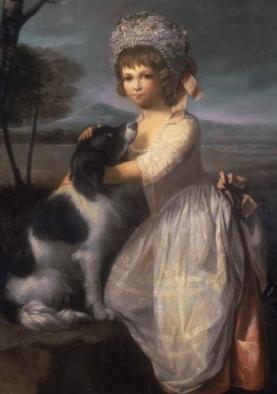
Girl with her dog, British School, 1775, Sudley House

Girl with her dog, British School, 1775, Sudley House

“Industrialization and urbanization in the late 18th and early 19th centuries shifted the focus of blood sports from baiting (in which dogs attacked other species) to fighting (in which dogs attacked each other). Rural laborers flocked to cities to become factory hands. They retained their love for blood sports but lacked the space and free days for baits of large animals. Dogfights, on the other hand, could be held indoors, artificial light allowed evening matches, and workers could still go to work the next day. Businesses called pits arose to meet the demand.” Edmund Russell, A Tale of Two Smithfields, UVA Today

Despite the cruel way in which dogs were treated, increased urbanization marked a change in which dogs were regarded. Edmund Russell goes on to say in his article, “At the same time, industrialization and urbanization in Britain changed attitudes toward dogs. Urbanites had little experience with raising farm animals for slaughter, while more and more families kept pets. Pet dogs had individual names, lived in the house, and never arrived for dinner on a platter.”

Portrait of an Extraordinary Musical Dog, Philip Reinagle, 1805, Virginia Museum of Fine Arts

Portrait of an Extraordinary Musical Dog, Philip Reinagle, 1805, Virginia Museum of Fine Arts

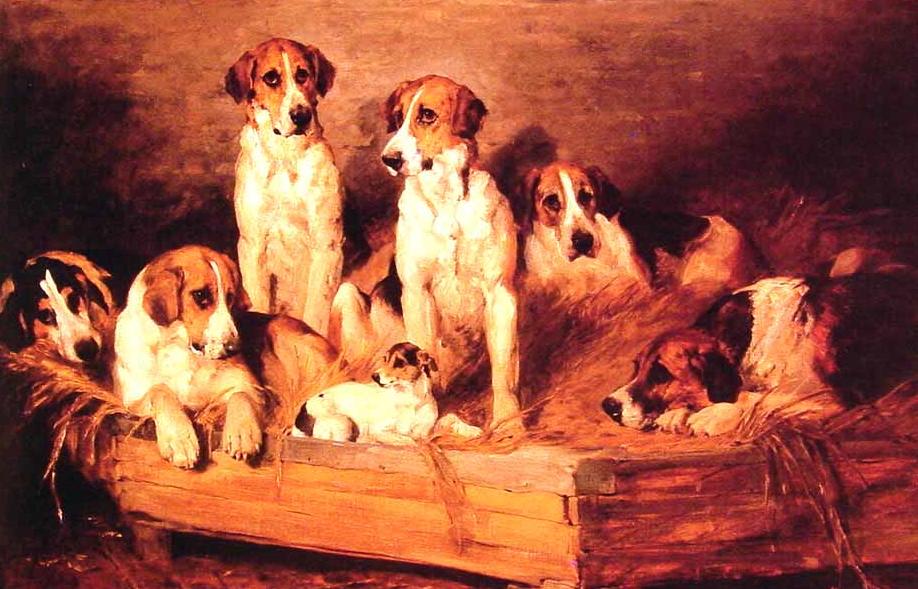
Hunters were bred for specific purposes, and these dogs were kept in kennels to live lives of relative ease and prosperity.

Foxhounds and terriers in a kennel, John Emms (1843-1912)

Foxhounds and terriers in a kennel, John Emms (1843-1912)

But in an age when many people were displaced and lived in abject poverty, the last thing on their minds would be the well-being of their canine friends. During times of plague and epidemics, dogs were killed by the scores as potential carriers of diseases such as rabies. In her cookbook, Hannah Glasse provides recipes to make cures for those bitten by mad dogs. The first one is an 18th century recipe (1747) provided by a Dr. Mead.


Text not available

Text not available
The Art of Cookery, Made Plain and Easy Which Far Exceeds Any Thing of the Kind Yet Published … By Hannah Glasse

As the 19th century progressed, humane societies were formed and paintings of dogs took on a sentimental turn, like this painting by Edwin Landseer entitled “Saved.” Today, the dog’s role in society has not changed much from what it was in Jane Austen’s day, and they still occupy a niche in all strata of society, from the high to the low … to the despicably cruel. (See image in this post.)

Edwin Landseer, Saved, Wikimedia Commons

Edwin Landseer, Saved, 1856, Wikimedia Commons

For more about dogs in this era, click on the following links:

Landseer High and Low images from Picturing Animals in Great Britain: 1750-1850

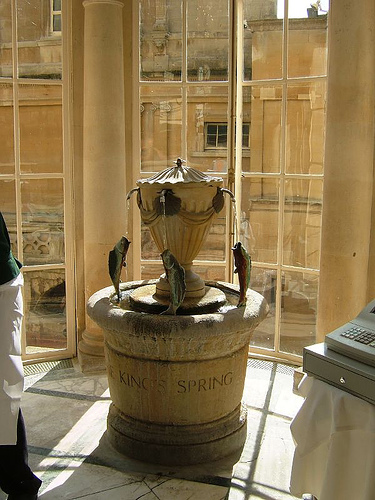
The water from King Spring is no longer free

The water from King's Spring is no longer free

I am attending a conference this weekend (no, not the JASNA meeting in Chicago – drat). When I get back I will be publishing a series of posts about Bath in honor of Austenprose’s Gothic Northanger Abbey Month. Stay tuned for visits to Bath and its environs all month long. Meanwhile, feel free to visit the modern Pump Room in the link below.

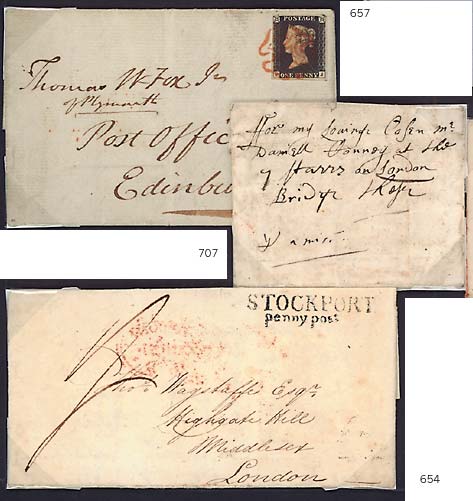
Sending letters was expensive in the days before the penny post: the cost was usually paid by the recipient, but letters sent to or by peers and Members of Parliament went free under certain conditions. Whilst she was in Lord Ilchester’s household Agnes would have been able to obtain from her employer franked, post-dated covers for her letters, which meant that she did not have to worry that she might be imposing an unwelcome expense on her many correspondents. In later years Anges was sometimes able to obtain covers from acquaintances: two letters sent from Fairford in 1806 and 1807 are endorsed “Free, W. Windham’, and a letter from Malvern in 1810 has a cover signed by Charles Lemon. – A Governess in the Age of Jane Austen, Agnes Porter, 1998

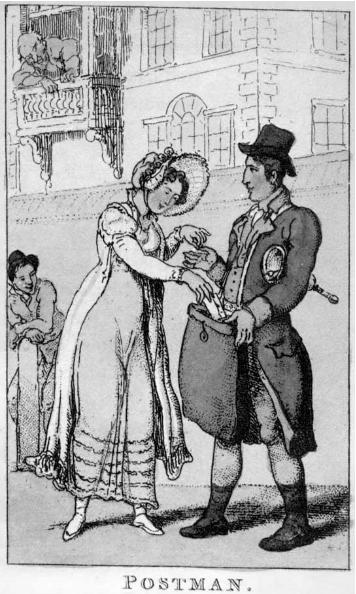
Postman 1810

Postman 1810

Penny Post

Penny Post

Franking privilege, characterized by sir Heneagh Finch as “a real poor mendicant proviso,” is granted to knights etc, chosen to represent the commons in parliament … 1660

Penny post first established in London and its suburbs by Robert Murray, who assigned his interest in the undertaking to Mr Dockwra 2 years later … 1681

Penny post annexed to the revenue of the crown … 1690

General post established throughout the British colonies … 1710

Cross posts established by Ralph Allen deputy-postmaster of Bath, whom Fielding has immortalized as Mr Allworthy in “Tom Jones”, and of whom Pope writes:

“Let humble Allen with an Awkward shame, do good by shealth and blush to find It fame” … 1720

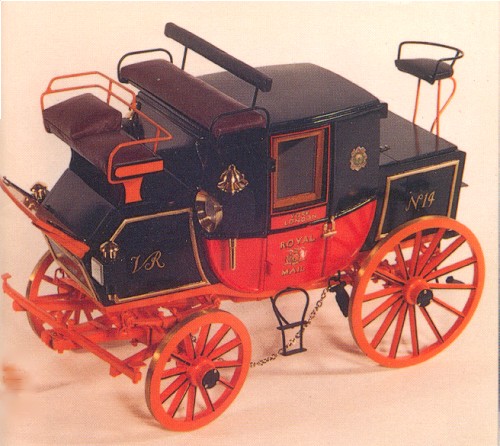
Royal Mail Coach, toy model

Royal Mail Coach model

First mail coaches started by John Palmer, theatre manager of Bath, leaving London 8 AM arriving at Bristol 11 PM, 24 Aug … 1784

[These coaches were attended by an armed guard to prevent robbery of the mail then very common]

Money order system in England founded by 3 post offlce officials as a private speculation (incorporated into the general system in 1838)  established … 1792

Mails sent in steamers first by British post office … 1821

First contract made by postmaster general of England with the Mona Isle Steam company to run mail steamers twice a week between Liverpool and Douglas … 1833

First travelling post carriage used on the Grand Junction railway between Liverpool and Birmingham … 1 July, 1837

Rowland Hill’s plan of penny postage adopted … 1839

Harper’s Book of Facts A Classified History of the World; Embracing Science, Literature, and Art By Charlton Thomas Lewis, Joseph H. Willsey

My Dear Cassandra, I will endeavour to make this letter more worthy of your acceptance than my last, which was so shabby a one that I think Mr. Marshall could never charge you with the postage, Jane Austen, January 21, 1798-99

Inquiring reader,

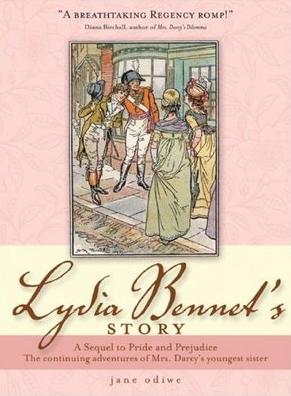
Last year I met Jane Odiwe online. We immediately struck up an email friendship discussing all things Jane Austen. She had just written Lydia Bennet’s Story, which came out in the U.K. Sourcebooks will be bringing out the book this month with a new and beautiful cover. Jane not only writes, but she also paints lovely watercolours and maintains several blogs and websites. Below is my interview with Jane. I have also added links of interest at the bottom.

1. Jane, you have such a wonderful light and deft touch with watercolours, a difficult medium at best: Have you always painted? And were you schooled? Where, and for how long?
I have painted as long as I can remember, sitting with my mother at the kitchen table. It was also a love of hers which she passed on to me. I went to art school in Sutton Coldfield, studying at Foundation level and then at Degree level in Birmingham, England, five years all together. Mine was an unusual degree, I was able to indulge my love of History, Art History and Literature whilst specialising in Fine Art. Watercolour and oils are my favourite medium.

2. Have you always been a Jane Austen fan? When did you first encounter her works?
I remember seeing the old black and white version of Pride and Prejudice on television when I was very young and dressing up in my mother’s nightgown. I was very taken with the dancing at the time and all the fashion which I loved. I read the book later but I was inspired to re-read all of Jane’s works after the lovely Pride and Prejudice production starring Jennifer Ehle and Colin Firth. I think Jane and Elizabeth were my mother’s favourites, as my first names are Jane Elizabeth!

3. In order to create these works, you’ve had to combine a working knowledge of anatomy, history, historical places, Jane’s biography, and an intimate knowledge of her writings. That is quite a feat. Why did you decide to embark on such a difficult and exacting project?
I have always enjoyed reading the biographies written about Jane Austen but there never seemed to be enough pictures and of course, one of the reasons is, that they simply don’t exist. There is the little watercolour painting of Jane Austen in the National Portrait Gallery, the silhouette that is said to be of her and Cassandra’s other painting of Jane, sitting with her back to us but they do not give us a real idea of what she looked like. I was intrigued by her letters and her romance with Tom Lefroy and the first painting I did was of them dancing together. I painted it for the sheer pleasure of ‘seeing’ them together; I think it was an attempt to depict her happiness at being with the young man she seemed to like best. All the written descriptions of Jane seem to bear little resemblance to Cassandra’s painting; I wanted to see a younger Jane at the time when she experienced her first love and was starting to enjoy balls and attention from young men. I based Jane Austen’s portrait on Cassandra’s painting but I admit I wanted to see her smile. She had such a wonderful sense of humour, I wanted to try and show a happier Jane. I never thought of my Effusions of Fancy paintings in terms of an exacting project. I didn’t expect anyone else would ever see them and they were a purely personal tribute. However, when I thought about putting the pictures into a book, I did want to try and change people’s idea that Jane was a quiet spinster in a mob cap and I thought one of the ways I could do that was to attempt a painting of a younger woman with her hair dressed as though she is about to go dancing.
4. Regarding this painting of the Austen family, tell me a bit about your working process. I can see that you studied the actual paintings of each family member. How did you incorporate so many likenesses in one composition? Did you sketch each portrait separately first? Or did you work from an overall composition?
Because we only ever see the portraits of the family members by themselves, I wanted to picture the Austens all together around the table, showing them as the close family I believe them to have been. I started with the silhouettes of Mr and Mrs Austen. Silhouettes give us such a tantalising glimpse of a person without revealing the whole; I had no other reference for Mrs Austen but there is a lovely portrait of Jane’s father, with his white hair, which helped enormously. I used my knowledge of figure drawing and many painting references to find bodies for the heads and tried to bear in mind what I had read about their characters. Henry, for example, is depicted in the only portrait that exists of him as being a very sober looking clergyman with receding hair. Everything I have ever read about him illustrates quite a different character; handsome, fun loving, slightly reckless and witty. I painted another portrait of Henry to see if I could find the ‘handsome’ Henry and incorporated this into the painting. Edward’s portraits at Chawton are wonderful and I have studied them many times. I imagine Edward resembled his mother in looks and also has those ruddy cheeks which Jane is supposed to have had. Edward did not really grow up with the other children as he was sent to live with his richer relations and I wanted to indicate this; he is slightly aloof, not sitting with the immediate family but protective of his mother. Lovely Frank, the seafaring brother who took his mother and sisters into his home after Mr Austen died, has his arms around Henry and his sisters. I imagine him to have been very dependable and loving and wanted to portray this aspect of his character. James, the poet, I think was probably quite earnest and serious. I think he looks lost in his own thoughts. Charles, another sailor looks very dashing in the portraits I
have seen of him, I wanted to show him with a bit of a smile, as though he is about to laugh at something his mother has just said. Jane and Cassandra are talking to each other and laughing at some shared amusement. I really wanted to show how close they were, two young girls having fun and chatting, nineteen to the dozen. I used a painting and a silhouette said to be of
Cassandra for my painting, I believe she was a pretty girl. I would like to do another family portrait one of the days which tells another story, perhaps illustrating a well known event in their lives.

5. Do you feel that all your hard work in this area is paying off? If you knew then what you know now, what would you do differently?
I’ve ‘met’ so many lovely people as a result of producing my little book and cards, (many through my web site and from different countries) and for me this is my greatest pleasure. If someone writes to tell me that they have enjoyed my work, that is the biggest payoff for me. Other people’s lives are always interesting to me and I like to keep in touch and hear their news.

I wouldn’t do anything differently, I’ve enjoyed the whole process of creating the paintings but perhaps I would like to add or do different versions of the same ideas. It’s essential to keep striving to improve and continue to study, I think. I would like to do a larger version of Effusions of Fancy with more paintings, perhaps telling the story of all of Jane’s life. More time to accomplish everything I would wish would be lovely, but time has a habit of running away!

6. Is this a full time career? Or are you squeezing this extraordinary passion into an already full schedule?
It is a full time career, but I also work with my husband to help earn our bread and butter! He is a graphic designer and he often needs an illustration to help with his work. At this time of year I am usually to be found drawing Christmas trees, baubles, popping champagne bottles etc. for restaurant menus, Christmas cards and invitations etc. After Christmas, it’s Valentine’s day and so it goes on. I really enjoy this type of work. I am very lucky to be able to work with my husband, doing illustrations that I enjoy working on. I get a huge thrill out of seeing my work out in public.

7. Any advice you would give to budding authors/illustrators?
You need to be passionate about your work and have a tough skin. You will face many rejections and possible hurtful comments as well as enjoy success. Try to remember why you started on this journey in the first place, believe in what you do and don’t give up, which is easy to say but not always easy to put into practice!

8. Aside from Lydia Bennett’s Journal, what other projects are you currently working on?
I’ve just completed a little map for Deirdre Le Faye’s book, Jane Austen’s Steventon, which was a lovely job to do and at present I am putting together menus for the wonderful Scottish Branch Jane Austen Birthday Lunch in December.

I’m having a great time writing a new novel, which of course is another Jane Austen sequel. It is another ‘Story’ of one of Jane’s characters but this time inspired by Sense and Sensibility. I hope this will be ready in the spring. I’m off to Devon soon to do some research. This is one of my favourite reasons for writing, although I often find it takes over!

In addition to all her other plans and activities, Jane wrote, “I’m also very excited to tell you that my Jane Austen illustrations are to be used in a documentary feature on the DVD of The Jane Austen Book Club. They asked to use about 16 of them, so I can’t wait to see what they’ve done with them.” We can’t either, Jane!

Update: Here are Jane’s thoughts about her new Sense and Sensibility sequel, out in 2009:

I am really thrilled to be able to tell you that my second novel, Mrs Brandon’s Invitation will be published by Sourcebooks next year. It will be coming out in September, which seems such a long time to wait to see it in print, but will fit so perfectly within the time frame of the book, that I will just have to learn to be more patient.

As the title suggests, Mrs Brandon’s Invitation is a sequel to Jane Austen’s Sense and Sensibility. The story principally centres around Marianne (nee Dashwood) who has been married to Colonel Brandon for three years and that of her younger sister Margaret, but most of the characters are there, plus a few new ones. I have so enjoyed writing this one, interweaving the stories of two heroines against the backdrops of Delaford in the Autumn, Lyme and London in winter. It was such fun to write the characters of Mrs Jennings and Lucy Ferrars, along with her sister Anne Steele. Colonel Brandon’s sister, husband and son make an appearance at Whitwell and this is where the mischief starts. I am often inspired by a secondary character or mention of one in the original books and I decided to introduce the family. If you remember, Mrs Jennings refers to Colonel Brandon’s sister as residing in Avignon at the time of Sense and Sensibility. With her son Henry coming home from university, it was time to bring the Lawrence family back to Whitwell.

Here is a little taster of what is to come.

No one is more delighted by the appearance of an eligible suitor for her sister Margaret Dashwood than Marianne Brandon, until it becomes clear that not only the happiness of the match, but also that of her own marriage are bound and ensnared by the secrets and lies that belong to the past. First attachments, false impressions, resentments and misconceptions, are the elements that conspire to jeopardise the happiness of the Brandon family at Delaford Park, along with the added predicament of Mrs Brandon’s first love John Willoughby returning to the neighbourhood.