Feeds:
Posts
Comments

Fashionable GoodnessGentle Readers:

One of our blog’s writers, Brenda Cox, is introducing her book Fashionable Goodness: Christianity in Jane Austen’s England this week to the Jane Austen community. I am not only excited about its publication, but honored to be the first person on this tour to interview her. 

Prior Praise: 

“Finally! Fashionable Goodness is the Jane Austen reference book that’s been missing from the bookshelves of every Austen fan and scholar.”

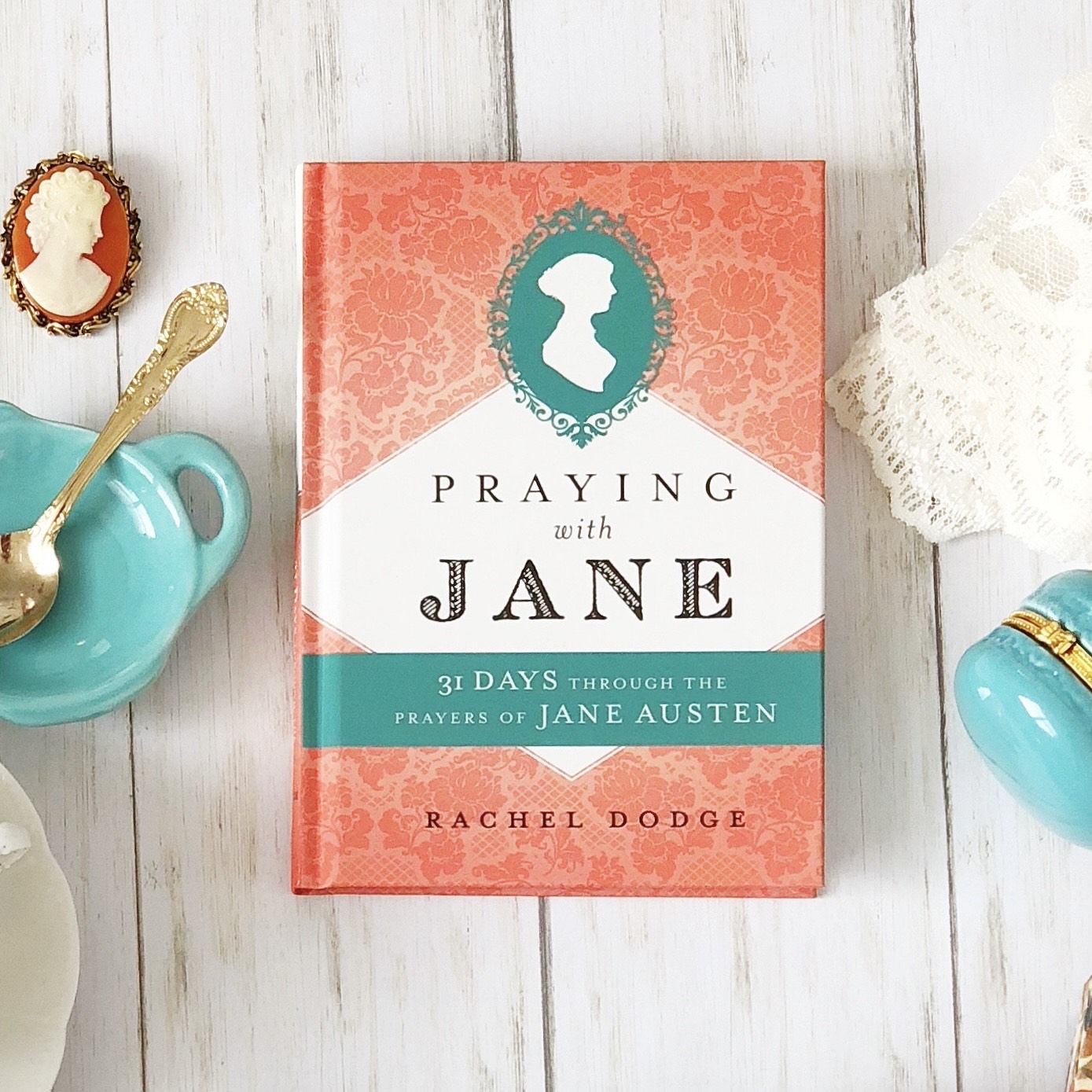
— Rachel Dodge, bestselling author of Praying with Jane

You will look at Mr. Collins, the Crawfords, the Dashwoods, the Tilneys, the Wickhams, and Willoughbys–and especially Fanny Price!–with new and surprising insights. Bravo to Brenda Cox for giving us this very accessible, illuminating take on the ‘fashionable goodness’ of Austen’s era!”

— Deborah Barnum, Jane Austen in Vermont

Vic: What prompted you to write Fashionable Goodness? Was your decision a quick one, or was your journey long and thoughtful?

Brenda: It was a long journey. I first intended, about ten years ago, to write a novel based on Sense and Sensibility. But I always want to get things “right,” so I began to research. I wanted to include the church and faith in the story, since those things are important to me and I knew they were important to Austen. I discovered some fascinating churches, with their own stories, on a visit to Bath. I got hold of all the relevant books and sources I could. As I learned more and more about the church in Austen’s England, my notes multiplied. 

Finally, I realized that I needed a book about this topic, and it might benefit other readers as well. Therefore, I decided to put together a book that would bring together a wide range of information in one place. I wanted it to be accurate, affordable, and accessible for any reader. The book grew, I cut it back, grew, and I cut it back, multiple times. The text is easy for anyone to read, plus I have included resource lists and notes for scholars.

Eventually I shared it with friends, writers, and my wonderful editor, who all told me I needed to publish it. It’s been a  journey of several years even from then. I am such a perfectionist that it’s hard for me to let go of the book and release it into the world, but I’m excited to see it become “real” at last!

Vic: How did researching and writing Fashionable Goodness give you insights about Jane Austen as a person and a writer?

I can see now how deeply Austen’s faith affected her life and novels. I can also now understand her references to the church and clergy. That gives even more depth to the stories and characters.

Vic: How did your research change your personal feelings towards Jane?

Brenda: I feel closer to her now, since I’ve spent so much time in her letters and books. I looked at many small details to gain a clearer picture of her values. I can understand and appreciate her views, even when they are not quite the same as mine.

Vic: Do you have any advice for authors who are thinking about self-publishing? What tools do they need? What support system would help them along?

Brenda: For myself, I spoke to a number of agents and publishers during my journey, and their input was helpful. Some really liked the book and wanted to read it when it came out. However, it didn’t fit into their “categories,” since it’s about literature, history, and religion, and the intersection of all three. Also the book is fairly long, but my editor and beta readers kept wanting me to add more rather than take things out! So finally I went with self-publishing, which gives me the freedom to publish something “outside of the box” and charge what I think is a reasonable price.

But, I made sure to do it right. I have been writing for publications for many years. I know the craft well, from books, courses, and workshops about writing. I attended writers’ conferences to learn and to network. I hired a professional editor: a Janeite I providentially met at an AGM, who has edited for major publishers. I got extensive feedback from other writers and from beta readers. I got very involved in JASNA and gave JASNA talks, which honed my information and showed me what Janeites wanted to know. And, in the book, I show extensive documentation (with many pages of endnotes and a long bibliography) for those who might wonder about a self-published work.

The mechanics of self-publishing are much easier than in the past; Amazon keeps honing the process. A friend recommended Vellum as a formatting program, which I found excellent and reasonably priced. Once you have a good, professionally written and edited book, getting it online is not difficult, if you are at all technically inclined. (If you are not, you can hire people to do that part.) 

I am thankful that self-publishing has allowed me to get this book out into the world without the long lead time and higher prices of more traditional publishers. But I do encourage anyone considering self-publishing to get good help and make sure your work is done well.

Thank you, Brenda, for your thoughtful answers. You are the fourth writer I know who is self-published. While the journey is not easy, all feel such satisfaction in finding their hard work in print. I wish you all the luck in the world with this book!–Vic

Brenda CoxAbout the author, Brenda S. Cox:

Brenda S. Cox has loved Jane Austen since she came across a copy of Emma as a young adult; she went out and bought a whole set of the novels as soon as she finished it! She has spent years researching the church in Austen’s England, visiting English churches and reading hundreds of books and articles, including many written by Austen’s contemporaries. She speaks at Jane Austen Society of North America meetings (incuding three AGMs) and writes for Persuasions On-Line (JASNA journal) and the websites Jane Austen’s World and her own Faith, Science, Joy, and Jane Austen.

Where to Buy:

Fashionable Goodness: Christianity in Jane Austen’s England is now available from Amazon and Jane Austen Books. International link: Amazon

Blog Tour Schedule

Austen in the News

R.I.P. Marsha Hunt: Mary Bennet Actress in 1940’s Cinematic Treatment of Pride and Prejudice

749px-Marsha_Hunt_in_Pride_and_Prejudice_trailer

Marsha Hunt as Mary Bennet

Marsha Hunt, Pride and Prejudice’s Mary Bennet in the classic 1940 film, died a few weeks ago at 104 years of age. Those of us of a certain age recall this first full feature film of Pride and Prejudice well (view a description on IMBD). This flawed (yes, FLAWED classic in my opinion – the comments in this post, including mine, are quite heated. Many readers and classic film aficionados have disagreed with my opinions) introduced the Bennets and Mr Darcy in full black and white glory in a Mr Dickens wonderland. Still, Marsha’s Miss Mary left an indelible memory in my mind – the middle child, striving to compete awkwardly but in her own way with her more noticed and beautiful sisters – struck much empathy in my heart. 

The female costumes in this film were awful, for they were NOT vintage 1813, when P&P was published, but were repurposed from another studio film that dated in the Victorian era. Greer Garson’s advanced age (36) in playing Elizabeth had me snort wine out of my nose. Laurence Olivier as Mr Darcy (and the same age as his character) looked as if he fought a burr in his pants throughout the entire production. (He was unhappy with Greer, wanted Vivien Leigh to play the part, but the studios nixed this because of their scandalous love affair, which would be no more than rubbish today.)  

In addition, the film’s ending was changed in a manner that defied Jane’s intentions: Lady Catherine de Bourgh was the Deux et Machina who reunited Darcy and Elizabeth in marriage. When I saw that scene, I could no longer hold in my popcorn. (This JASNA article from 1986 holds a different view from mine. It was written years before subsequent adaptations when 1800’s Regency empire fashions were accepted as romantic and accurate by contemporary audiences.)

marsha hunt glamorous

Marsha Hunt

This P&P adaptation IMO was not a Jane Austen adaptation – it was a fantasy Hollywood re-creation. I don’t care how much Aldous Huxley was/is admired – he messed with my Jane.  Marsha Hunt is still my most memorable Mary (She acted in over 60 films in her career). Whose Mary is your favorite in subsequent P&P film adaptations? Informed minds want to know!

IMBD Obituary of Marsha Hunt.

Now Available: Jane Austen: Connecting the Dots (Her Letters Explained), Edited by Harvey T. Dearden

Jane Austen Connecting the Dots - Her letters explainedHow could any book compete with Deirdre Le Fay’s 4th edition of the Jane Austen’s Letters, I wondered? None in my opinion, for her last edition provides all the information I needed when reading Austen’s letters. YET. Harvey T. Dearden assembled a resource of her letters for people new to Austen who wanted an annotated edition that was easy to use and follow.

Let’s be honest. Le Faye’s excellent book is hard to use. While her content includes the letters, abbreviations and citations, notes, general notes, select bibliography, biographical index, topographical index, subject index, and general index – the size and arrangement of the book is awkward. I experienced a lot of back and forthing, and needed to tag the pages when reviewing the history and details of the letters. Le Faye’s research is definitive and the best in the business, but the hard book is difficult to use because its size is small (8 ¾” x 5 ½”  x 2 ½ “) and incredibly thick (667 pages). One cannot keep the book open without breaking its spine and placing heavy weights on it to read it while taking notes.

Mr Dearden’s new edition introduces the letters to a newer reading audience. His annotations are simpler, his book’s contents are more straightforward, and the size of his paperback allows the book to lay flatter, while the font size s larger.  In short order, Jane Austen: Connecting the Dots (Her Letters Explained) target an audience of Austen fans who are curious to know more about Austen’s personal life, thoughts, and family and friend connections in a relaxed manner.

Mr Dearden’s book is designed for Austen fans. Ms LeFaye’s book is the definitive scholarly edition of Austen’s letters. Her book is rich with scholarly information; Mr Dearden’s book is easy to handle and use.

Find Jane Austen: Connecting the Dots book by Harvey T. Dearden at Amazon UK.

For US citizens, enter the title of the book and author in Amazon US. This works best if you already subscribe to Amazon Prime.

Screen Shot 2022-10-16 at 4.48.31 PM

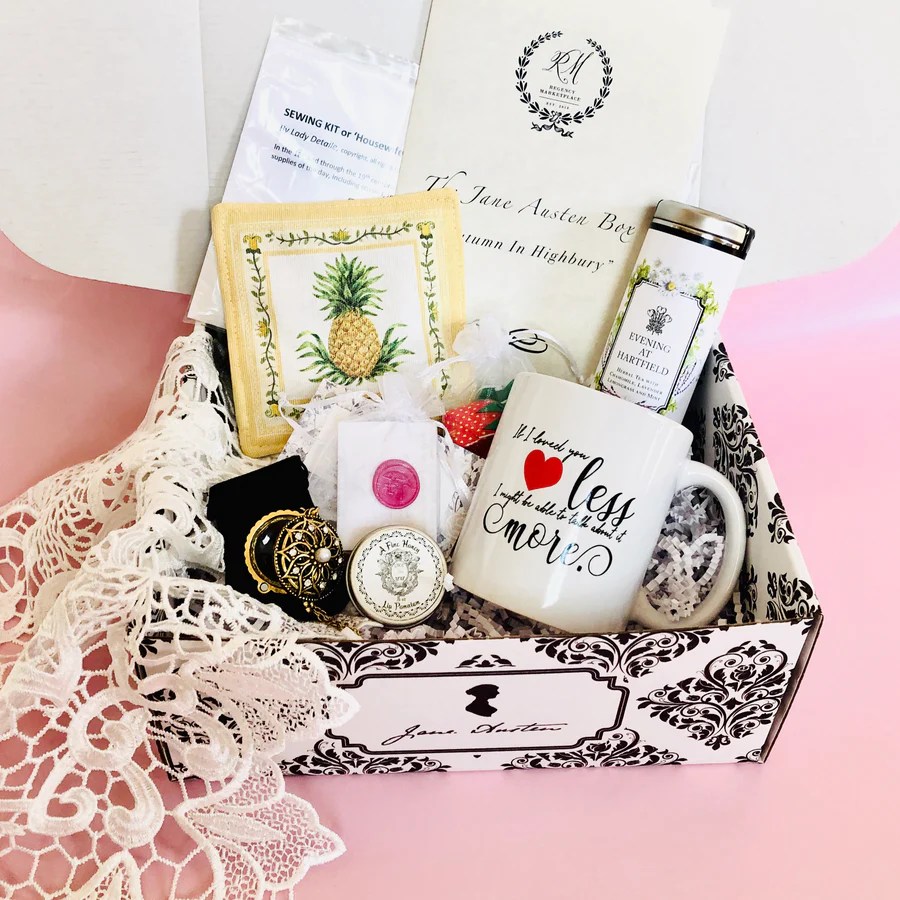
As promised, I’m back with a reminder and announcement about Regency Marketplace’s brand-new seasonal Jane Austen Box! I’m delighted to share that the theme of this new box is “Christmas In Highbury”! If you missed my review of the lovely Autumn in Chawton Box I received, you can read about it and see photos HERE.

Christmas in Highbury

This Christmas, be transported to the little hamlet of Highbury in County Surrey. Here we find Emma and her friends and family preparing for a delightful country holiday, and you’re invited! Regency Christmastide for the aristocracy was often celebrated at the families’ country estates, and in Emma, we see her sister Isabella and Knightley’s brother John bring all their children to Hartfield for the occasion, enlivening the quiet household with their fun and noise. Mr. Woodhouse would have them stay forever!

The Perfect Gift

The “Christmas In Highbury” Jane Austen Box will be filled to the brim with a cozy and elegant medley of Emma and Regency-inspired Christmas gifts! A perfect gift box to send or receive this holiday season, it also makes a wonderful hostess gift. December 16th is Jane Austen’s birthday, too, so celebrate in style!

At Christmas every body invites their friends about them, and people think little of even the worst weather.

Jane Austen’s Emma

Place Your Order

The “Christmas In Highbury” Jane Austen Box will be available to reserve from Saturday, October 15th-Tuesday, November 15th, 2022. All boxes will ship out the first week of December! These boxes sell out quickly, so do not delay. Place an order for yourself or as a gift for a friend or relative today.

If you are longing to receive a box for Christmas, send this link to a friend or loved one as a big HINT: https://regencymarketplace.com/collections/jane-austen-box.

If you want to take it up a notch, you can subscribe to the Quarterly Jane Austen Box and receive a box every 3 months, or purchase as a One-Time Gift option (non-recurring). Free Shipping in the USA! International Flat Rate Shipping available.

Coupon Code

Many thanks to Regency Marketplace for providing me with a discount code that I can share with all my friends and readers this Christmas ordering season. If you would like to receive a discount, you can use my special COUPON CODE for 10% off the Winter Box! *While Supplies Last.*

Previous Winter-Themed Jane Austen Box

RACHEL DODGE teaches college English classes, gives talks at libraries, teas, and book clubs, and writes for Jane Austen’s World blog. She is the bestselling author of The Little Women DevotionalThe Anne of Green Gables Devotional and Praying with Jane: 31 Days Through the Prayers of Jane Austen. Coming soon: The Secret Garden Devotional! You can visit Rachel online at www.RachelDodge.com.

Jane Austen in a Box

I just received my first Jane Austen Box from Regency Marketplace, and the minute I opened it, I knew I had to share it with all of my friends here at Jane Austen’s World. This is a beautiful Jane Austen-themed experience not to be missed–and it comes right to your own front door!

Special thanks to @regency_marketplace for sending me the “Autumn At Chawton Cottage” box this month so I could fully experience it for myself! This delightful box is filled to the brim with cozy Autumn and Jane Austen-themed items! I can’t wait to put on my cute new socks and have a cup of tea!

Box Full of Surprises

Each Jane Austen Box features a range of products from items of historical interest to lovely items you can incorporate in your everyday life, edibles and fine teas to Jane Austen inspired products. All boxes also include some form of book — expand your library!!

Categories include, but are not limited to:

  • Fine Teas
  • Books
  • Candles
  • Edibles
  • Wearables
  • Items of Historical Interest
  • Jane Austen Inspired Products
  • Bath and Body
  • Home Decor
  • Writing Accessories
  • Booklovers Paraphernalia
  • And More!

Subscription boxes are delightful because there are so many surprises held within each box. Regency Marketplace does a lovely job of keeping the mystery alive. They give hints and a theme for each box, but they never show what specific items are coming in each new box. That makes it even more exciting to open when it comes in the mail!

Unboxing

One of the most exciting parts about getting any kind of subscription box is the actual unboxing. When it arrived, I was so impressed with the packaging and the beautiful box. When I opened it and saw the pretty tissue and the sticker, I almost couldn’t bring myself to open it. I snapped a picture because it felt like my birthday and Christmas had arrived all at once.

If you’d like to watch an unboxing video of me opening the box, you can view it HERE. I had a blast (and it was my first time making a video reel like it). Here’s a peek inside:

Stay Tuned

The Winter Jane Austen Box will be available for Pre-Order October 15th – November 15th, and boxes will ship in early December. Regency Marketplace offers free shipping in the US. (International flat rate shipping is also available.) These luxurious boxes sell out quickly, so mark your calendars to reserve one for yourself or for a friend.

Enjoy this box for yourself, or gift one to a friend or family member for the holidays this year! Once the Winter Theme is announced, I will post a reminder to place your orders and a coupon code.

Sample of a previous Jane Austen Box

About Regency Marketplace

Regency Marketplace is run by the lovely Christina Denton. It was envisioned many years ago as a beautiful oasis for all things Regency and Jane Austen: a place where one could escape from the breakneck pace of today’s world, and enter into an era of elegance, charm, and wit.

A lifelong love of Jane Austen and the Regency Era is the guiding influence behind Regency Marketplace. As a family-run company, they work hard to source the best products for their discerning customers and fellow Janeites! They focus on celebrating the grace and beauty of an Era so distinct that it still captivates us two hundred years later.

Is this something you would like to receive as a gift? Would you buy it for yourself or for someone else as a lovely surprise?


RACHEL DODGE teaches college English classes, gives talks at libraries, teas, and book clubs, and writes for Jane Austen’s World blog. She is the bestselling author of The Little Women DevotionalThe Anne of Green Gables Devotional and Praying with Jane: 31 Days Through the Prayers of Jane Austen. Her new release is The Secret Garden Devotional! You can visit Rachel online at www.RachelDodge.com.

“Jane and her family simply had to put up with the small aches and ailments of life.” – Lucy Worsley, Jane Austen at Home

cassandraleighausten

Cassandra Leigh Austen

When Jane Austen was seven, her mother, Cassandra Leigh Austen, lost several foreteeth, which made her look older. One can tell the absence of those teeth in this profile. 

Healthy teeth and gums are signs of a good constitution. Throughout her adulthood, Mrs Austen was known for her many ailments. One wonders if there was a connection between her poor health and missing teeth. One also wonders if tooth problems were regarded as small aches and ailments of life, or something more.

In fall of 1813, Jane Austen visited her brother Henry in Henrietta Street in London, along with Edward Knight, their older brother and his three daughters, 20 year old Fanny and Lizzy (13) and Marianne (12). In two letters to her sister Cassandra,  Jane described pleasurable family pastimes and shopping purchases, but her most vivid recollections are of two visits to the dentist. Her first account is of an hour-long visit to a dentist named Mr Spence. On September 15, she wrote:

“Going to Mr. Spence’s was a sad business and cost us many tears; unluckily we were obliged to go a second time before he could do more than just look. We went first at half-past twelve and afterwards at three; papa (edward) with us each time; and, alas! we are to go again to-morrow. Lizzy is not finished yet. There have been no teeth taken out, however, nor will be, I believe, but he finds hers in a very bad state, and seems to think particularly ill of their durableness. They have been all cleaned, hers filed, and are to be filed again. There is a very sad hole between two of her front teeth.”

London was apparently filled with a tribe of Mr Spences, all of whom were dentists. Braving the Dentist with Jane Austen conjectures that the individual who treated the Knight girls might be George Spence, dentist to George III. This makes sense, for Edward Austen Leigh was rich enough to afford a dentist whose career and a patented brand of tooth powder made him “wealthy enough to buy a country estate at Cranford and to see his sons well educated.”

The Regency Era was not known for gentle dentistry practices. Jane’s letter on the 16th details a harrowing scenario:

“The poor Girls & their Teeth!—I have not mentioned them yet, but we were a whole hour at Spence’s, & Lizzy’s were filed & lamented over again & poor Marianne had two taken out after all, the two just beyond the Eye teeth, to make room for those in front.When her doom was fixed, Fanny Lizzy & I walked into the next room, where we heard each of the two sharp hasty Screams.”

– Fanny’s teeth were cleaned too–& pretty as they are, Spence found something to do to them, putting in gold & talking gravely–& making a considerable point of seeing her again before winter.–He had before urged the expediency of L. & M.s being brought to Town in the course of a couple of Months to be farther examined, & continued to the last to press for their all coming to him.—My Br[other] would not absolutely promise.

—The little girls teeth I can suppose in a critical state, but I think he must be a Lover of Teeth & Money & Mischeif to parade about Fannys. I would not have had him look at mine for a shilling a tooth & double it.—It was a disagreable hour.”

I’m amazed that Mr Spence’s efforts took only an hour, for in that time he cleaned Fanny’s teeth and put in gold, pulled two of Marianne’s teeth, and filed Lizzy’s. I wonder if he gave laudanum (10% opium powder solution in alcohol) to poor Marianne. Had she taken the tincture it would not have helped her immediately, for she let out two short screams. Relief would come only 15 minutes or so later. (Nitrous oxide was not generally used as a dental anesthetic until 1844.)

As for filing Lizzy’s teeth, this was a common practice at the time (and even today) to smooth out uneven teeth. This practice achieved both good or evil results, for if too much of the tooth was filed (especially in a young person), the enamel could be significantly thinned in subsequent filings and make the teeth more sensitive. Jane used the words mischief and disagreeable to remark on Fanny’s unnecessary treatment, and emphatically wrote she would not subject herself to Mr Spence’s care.

Daily Dental Hygiene

By the late 18th century, people used a variety of means to take care of their teeth: toothpicks made with the quills of goose feathers and toothbrushes created with horsehair or hog’s hair. These implements created as many problems as they solved, for they were unsterile and distributed  germs while “cleaning teeth.”

In Sense & Sensibility, Austen connected toothpicks with privilege. She described Robert Ferrars as he carefully chose a toothpick case at Gray’s jeweler’s in Sackville Street, detaining the Dashwood sisters:

‘At last the affair was decided.  The ivory, the gold, and the pearls, all received their appointment; and the gentleman having named the last day on which his existence could be continued without the possession of the toothpick-case, drew on his gloves with leisurely care and … walked off with a happy air of real conceit and affected indifference’.

The jewellery shop on Sackville Street, near Regent Street, was likely well known to Jane, who frequently visited her brother Henry in central London. This scene is a reminder to Austen’s contemporaries that implements for dental hygiene, although affordable for the upper and middle classes, were unaffordable to the poor, who had to make do with whatever was at hand, such as soda ash (lake brine or naturally occurring mineral deposits) or salt. Both were clean products. 

The toothpaste of that era or tooth powders were also problematic. Ian Mortimer lists a recipe in his book for white tooth powder: 60oz chalk, ½oz of cassia powder and 1oz of orris root.* Other recipes included pulverized charcoal, brick or salt. All could destroy tooth enamel.

Austen described the effects of Harriet Smith’s tooth extractions in Emma:

“Pretty little Harriet Smith was usually the most cheerful, happy natured young lady, but just now she was leaning on the sofa in a despondent, listless posture, and not seeming to even notice Isabella’s five children, who were romping at their feet, in various states of frisk and noise. As Harriet normally loved to play with the children, and made herself the most useful guest possible, Isabella ventured a question.

“Miss Smith – may I ask? Are you in pain – are your teeth hurting still?”

Harriet roused herself to smile and demur. “Oh! no, Mrs. Knightley, I do assure you. The tooth-pulling was hard, I cannot deny; but you know it is better when it is all over, and I have felt no bad sensations now for at least a week.”

Emma had arranged for Harriet to stay with her sister Isabella’s family in London, in order to consult the best dentist, as there were wisdom teeth to remove. If any wry thought, that the extraction of any part of Harriet’s wisdom might be to her detriment came to her mind, Emma did not venture on that bon mot to anybody. She was trying to become a kinder person, and in the first rapture of her engagement with Mr. Knightley she was beginning to feel that it might not be altogether difficult to achieve.”

This scene accurately described the after effects of wisdom tooth extraction, which must have been quite painful. The favored extraction instrument, called a tooth or dental key, often caused gum damage or even a fractured jaw. Jane contrasted Harriet’s sweet acquiescent nature against Emma’s exalted opinion of herself, even while she strove to become a kinder and more compassionate person. The reader senses in this passage that Emma’s improvement took conscious effort and did not come at all naturally. 

It is significant that Emma sent Harriet to her sister’s house in London for the tooth extractions. In town, she would receive the services of a dentist. Barbers also pulled teeth in cities. The rural populace might visit the blacksmith, or, as in this 1823 Rowlandson print below, a village practitioner.  One imagines that to dull the pain, patients imbibed  laudanum or copious amounts of alcohol before submitting themselves to the procedure. The instrument used until the late 19th century was called a dental key. 

Rowlandson, 1823, The Tooth Ache or Torment & Torture

Thomas Rowlandson | The Tooth-Ache, or, Torment & Torture | The Metropolitan Museum of Art

A woman, who has called upon a village practitioner for a toothache, sits in a chair at center, while he places his finger in her mouth. His assistant brings him a pair of horse pliers at left. Another woman waits in the background at left, clenching her mouth in agony.

Dentalkeyusage

Dental Key Usage, Print, Wikimedia, Delabarre, 1815

By the end of the 19th century dental forceps were developed and replaced the key. The improved instruments were less likely to do major damage to gums or jaws.

Emma’s concern for Harriet is affecting, as is Austen’s description of her three nieces under Mr Spence’s ministrations. Upper and middle class ladies treasured white teeth and fresh breath, which in an age of poor dental hygiene was quite a brash goal. Ladies who belong to the upper strata of society could afford sugar, whose costs were out of reach for the lower classes. Interestingly, they had healthier teeth than their betters. (Queen Elizabeth I’s teeth were black from the sweets she loved to eat. Her teeth rotted. After losing so many, listeners were hard put to understand her speech.) 

In ancient cultures, chew sticks in the form of thin twigs whose ends were frayed were used to clean teeth and gums by rubbing them. Other ways to clean teeth were to use tooth cloths, sponges, and fingers dipped in alcohol. Tongue scrapers, a piece of liquorice, peppermint leaves, cloves, cinnamon, salt water rinses, and apple cider vinegar were natural means for bad breath control.

Dentures

Unlike George Washington in the United States, Jane’s mother did not wear dentures. During this time artificial teeth were acquired in a number of ways.

Waterloo Teeth

The battle of Waterloo was a watershed moment in more ways than the loss of the French on the battlefield.  Artificial teeth were expensive.  The 47,000 young men who died had healthy teeth and were freshly dead. This sounds awful, but the trove of almost perfect teeth for dentures, pulled out by the men who combed through the bodies to find teeth to sell, was morbid to say the least. 

Resurrection Men

Also known as  grave robbers, resurrection men dug bodies up in cemeteries. Sad to say, the corpses were not fresh or uniformly young, and thus provided teeth that were not of premium quality and could spread disease and infection.

“Donations” from Slaves or  the Poor

Worse than grave robbery was the purchase of healthy teeth and pulling them from the mouths of the desperate and powerless. Slaves in the east and west Indies had no choice, but neither had the hungry poor who needed the money to feed their starving families or themselves. These teeth were the “freshest.” 

The purloined or so called purchased teeth were set into dentures or into the holes left by extracted teeth. Fresh and healthy human teeth were preferred, of course, but cow and horse teeth were also used, as were expensive French porcelain teeth made to order for the rich. Natural materials included tusks. All dentures created from these mediums were for the rich only. They ironically had the worst teeth due to their sugary diets. 

In addition, the dentures were often made with lead, whose slow poisoning presence caused irreversible damage to brains or kidneys. Hygiene was practically nonexistent and dentures were seldom cleaned. Those made of wood rotted inside the mouth and the stench of bacteria forming under them must have been overpowering. Women who valued clean breath must have gone from one embarrassment to another. Perhaps Mrs Austen’s choice to live her life without upper dentures was a wise one.

Improvements in dentistry kept apace with inventions and scientific advances. The need for oral surgery in the general populace attracted dentists, apprentices, oral surgeons, and apothecaries. The possibility of generating a good income in cities, towns, and the countryside on rotting teeth seemed endless.

Tooth brushes improved as well.  They were first mass produced in the 1780s, but did not trickle down to the lower classes until they became affordable. 

Screen Shot 2022-10-04 at 6.50.40 PM

Ancient toothbrushes

Evolution of Toothbrush | Download Scientific Diagram

Napoleon’s_toothbrush,_c_1795._(9660576547)

This toothbrush with a silver gilt handle was made for Emperor Napoleon Bonaparte (1769-1821) of France.

File:Napoleon’s toothbrush, c 1795. (9660576547).jpg – Wikimedia Commons

By 1820, advances in tooth powders had reduced their abrasive quality. These tooth powders were homemade or purchased from an apothecary, and placed in jars or boxes. Eventually they became a paste that was more effective in cleaning and protecting teeth and tasted good as well. The collapsible toothpaste tube, invented by Dr Washington Sheffield, appeared in the 1880s.

By the mid-19th century, dental practices were strikingly less painful due to the application of nitrous oxide, which for a time fueled laughing gas parties for the rich. Once that fad faded, the gas turned out to be a wondrous invention for medical applications. Thomas Beddoes, an English Physician conducted experiments on the therapeutic properties of the gas, and James Watts, he of steam engine fame, invented a way to deliver it to patients more efficiently. Humphry Davy used himself as a guinea pig and tested the pleasurable sensation he felt while inhaling the gas. Poet Robert Southey wrote that “Davy has actually invented a new pleasure for which language has no name.”

Resources:  

While this list of resources is extensive, the information is fascinating!