Beau Brummell’s Dandyism and His Far Reaching Influence. Click here. Read archived posts about him here.
The life of a stage coach horse during the Regency era was not easy. Roads, though much improved over previous centuries, could be filled with mud and ruts that impeded progress. Generally one horse could pull a wheeled vehicle six times its own weight. Therefore, a carriage horse weighing from 1200 lbs to 2300 lbs is able to pull from 7200 lbs to 13,800 lbs. Multiply this number by four or six, and you have team that can pull a substantially sized vehicle. However, tired horses had to be replaced about every ten miles or so, and “the average life of a horse pulling a coach at about eight mile per hour was six years; at ten miles per hour or over, possible on good roads, a horse lasted three years.” (The Prince of Pleasure, J.B. Priestley, p 151-152)

Charles Dickens provides a vivid account of horses dragging a carriage out of mire and muck:
…there is another hole and beyond that another bank close before us. So he [the coachman] stops short, cries to the horses again, “Easy, Easy, den”, “Ease Steady, Hi”, “Jiddy”, “Pill”, “Ally”, “Loo”, but never Lee until we are reduced to the very last extremity and are in the midst of difficulties, extrication from which appears above all but impossible. And so we do the ten miles or thereabouts in two hours and a half, breaking no bones, though bruising a great many, and in short getting through the distance like a fiddle. (Charles Dickens’s works. Charles Dickens ed. [18 vols. of a 21 vol. set … By Charles Dickens, pages 78 & 79.)
One would hope that each time the horses struggled the passengers got out of the coach and removed the heavier belongings, so that the horses’ efforts were eased. This illustration of horses pulling a carriage through snow shows that the passengers have disembarked, but that the coach is still laden with cargo.
 Inns, ostlers, fresh teams of horses, stables, postillions, and blacksmiths supported travel throughout England, and rivalry for passenger business became intense. At one time, “the Whetstone toll gate, at its height, recorded no less than 130 stagecoaches a day passing through.”
 The Mitre Inn, depicted above, dates from around 1630. It remained a coaching inn until 1926.
- Read more about travel during this era in my archived posts. Click here to view them.
- Coaching Ways and Days: The Stage Coach
- Road Transport Before the Car, page 37-50
In a related post, read about the crossing sweepers, who in the early part of the century before macadamized roads became widespread, kept passages free and clear of ruts, as well as horse dung.
Posted in Regency Travel, Travel | Tagged Regency Transportation, transportation | 6 Comments »
James Gillray, the famed Regency caricaturist, died in his fifties on June 1, 1815, an alcoholic, losing his eyesight, out of his mind, and penniless. In his hey day he was the quintessential commentator of his time, and people stood in lines outside his shop to purchase his biting political cartoons. He observed people and their habits as keenly with lines and color washes as Jane Austen did with her well-placed words.

He was a withdrawn, silent and lonely man, greatly slandered in his lifetime, probably by his victims and their friends. He worked in such a fury of creative energy that even his acquaintances years before his breakdown, wondered if he might be part-demented. He was so popular that there were often queues at the print shop, above which he worked, waiting for his latest cartoons and caricatures. At once the most ferocious and most brilliant caricaturist of his time, Gillray had a genius for turning public figures into monsters that were yet recognizable, his wild exaggeration being itself a criticism of their personalities.*

In the first print Gillray has captured the foppish, aristocratic bearing of the Prince Regent, even though all one can see is his back. Despite his proud bearing, not every sartorial detail is in place (note the untucked shirt peeking through the coat tails, and the Prince’s coat collar dusted white from powder falling off his wig.) The Prince has not yet attained the gross proportions of his later years. Two dandies (Sir Lumley St George Skeffington; Montague James Mathew) are well defined and delineated in the second caricature, one dark and menacing, the other angelic in features. Their boots are polished to a spit shine, and the evidence of their research into boot blacking is evident from the accoutrements Gillray has included in the background. In the third illustration, that of an old maid embarking on a journey, one can see that some things never change. Helped by strangers, this woman of a certain age brings her close family along with her – a dog and bird – as well as her needlework and her pitifully small amount of luggage.
*The Prince of Pleasure, J.B. Priestley, 1969, Harper & Row Publishers, NY, page 157
 Images from the Princeton University Library
1 Prince of Wales, Gillray, 1802
2 A Pair of Polished Gentlemen, Gillray, 1801
3 The Old Maid on a Journey, Gillray, 1804
- To read about the difference between cartoons and caricatures, click here.
- Read more of my posts about James Gillray here.
Posted in James Gilray | Tagged James Gillray | 1 Comment »
Jane’s beloved niece, Fanny, recalled Jane and Cassandra in 1869, when Fanny was in her seventies.
[Jane] was not so refined as she ought to have been from her talent . . . They [the Austens] were not rich & the people around with whom they chiefly mixed, were not all high bred, or in short anything more than mediocre & they of course tho’ superior in mental powers and cultivation were on the same level as far as refinement goes . . . Aunt Jane was too clever not to put aside all possible signs of “common-ness” (if such an expression is allowable) & teach herself to be more refined . . . Both the Aunts [Cassandra and Jane] were brought up in the most complete ignorance of the World & its ways (I mean as to fashion &c) & if it had not been for Papa’s marriage which brought them into Kent . . . they would have been, tho’ not less clever & agreeable in themselves, very much below par as to good Society & its ways.*
 Fanny’s seeming ungratefulness to an aunt who doted on her is deplored by many Jane fans. A forgiving Claire Tomalin explains this passage, saying “it should be remembered that Fanny was very fond of her aunt, and that she ended the passage, which was written in a private letter to her sister Marianne, ‘If you hate all this I beg yr. pardon, but I felt it at my pen’s end, & it chose to come along & speak the truth.'”

Image #1: Jane Odiwe’s watercolour of Jane and Cassandra
Image #2: Cassandra’s watercolour portrait of Fanny Knight.
*Jane Austen: A Life, Claire Tomalin, ISBN 0-679-44628-1, pages 134-135
Read a book review about Jane and Fanny in Austen’s Ungrateful Niece
Posted in jane austen, Jane Austen's World, Regency letters, Regency Life | Tagged a glimpse of Jane Austen, Claire Tomalin, Fanny Knight, Glimpse of Jane Austen | 8 Comments »
The Jane Austen Book Club is slated to open in the UK this Friday. For Jane Austen lovers who live across The Pond it is a movie well worth seeing. Click here to read my interview with director Robin Swicord.

Click here to read all my posts about the movie.
Posted in Movie review, The Jane Austen Book Club | 2 Comments »
-
Join 7,126 other subscribers
-
2025 AGM in Baltimore
-

-
Items of Interest
Blog Stats
- 18,546,497 hits
- Follow Jane Austen's World on WordPress.com
-
RECOMMENDED BOOKS AND RESOURCES
-
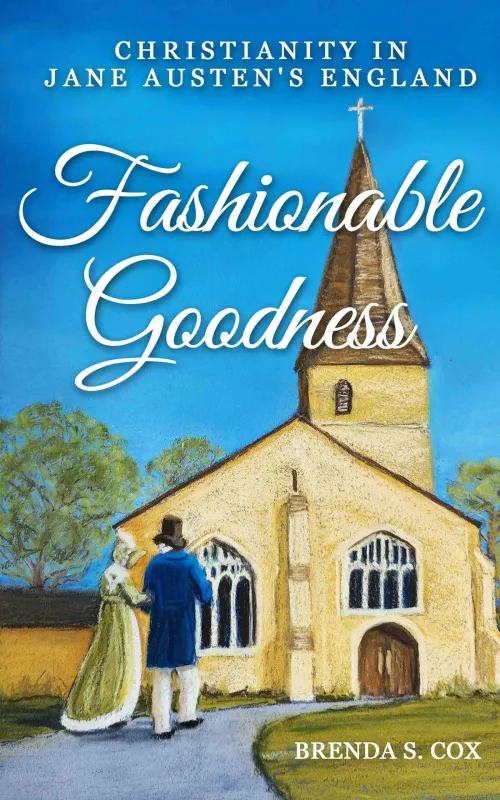
Fashionable Goodness: Christianity in Jane Austen's England is now available! By JAW contributor Brenda S. Cox. See Review. Available from Amazon and Jane Austen Books. 
We also recommend JAW contributor Rachel Dodge's devotionals based on Jane Austen's prayers and classic literature. Reviews:
Praying With Jane: 31 Days Through the Prayers of Jane Austen
The Anne of Green Gables DevotionalThe Little Women Devotional
The Secret Garden Devotional
The Tour of Doctor Syntax. Edited by Ben Wiebracht. Read the review of the book at this link. Click to order the book on Amazon US or Amazon UK or Jane Austen Books FREE Student Membership to JASNA
Available through December 31st, 2025. Click on image for details, and share this poster with other teachers and students!

The Obituary of Charlotte Collins by Andrew Capes

Click on image to read the story.
Comments
“My idea of good company…is the company of clever, well-informed people, who have a great deal of conversation.” – Jane Austen, Persuasion

Gentle readers: Please feel free to post your comments and continue the conversation! Due to SPAM, we will no longer accept comments on posts after 30 days of publication. In some instances, links will be removed from comments as well.
Administrators and Contributors
Pin It!

Top Posts
-
Recent Posts
Links to Jane Austen Blogs
May we suggest?
Hello, my name is Vic and I live in Maryland, USA. I have adored Jane Austen almost all of my life. I am a proud lifetime member of the Jane Austen Society of North America. This blog is a personal blog written and edited by me and my team. We do not accept any form of cash advertising, sponsorship, or paid topic insertions. However, we do accept and keep books and CDs to review.
If you would like to share a new site, or point out an error, please email us. (Yes, we are fallible. We'll own up to our mistakes and will make the corrections with a polite smile on our faces.) Write us at

Thank you for visiting this blog. Your comments and suggestions are most welcome.
Project Gutenberg: eBook of Stage-coach and Mail in Days of Yore, Volume 2 (of 2), by Charles G. Harper
STAGE-COACH AND MAIL IN DAYS OF YORE: A PICTURESQUE HISTORY
OF THE COACHING AGE, VOL. II, By CHARLES G. HARPER. 1903. Click on this link.
Top Posts & Pages
- Regency Fashion: Men's Breeches, Pantaloons, and Trousers
- Men's hair styles at the turn of the 19th century
- Jane Austen’s Regency Women: A Day in the Life, Part 1
- Highclere Castle Floor Plan: The Real Downton Abbey
- Regency Hygiene: The Bourdaloue
- Pictorial History of Regency Hairstyles
- Cassandra Writes About Jane Austen's Death, July 18, 1817
- Social Customs During the Regency
- Dancing at the Netherfield Ball: Pride and Prejudice
- Pride and Prejudice 1995: 20 years Later
Tour Chawton Cottage on YouTube
-
Disclaimer: Our team makes no profit from this blog. We may receive books (physical or digitized) for review purposes.
-
Copyright Statement: © Jane Austen's World blog, 2009-2024. Unauthorized use and/or duplication of this material without express and written permission from this blog’s author and/or owners is strictly prohibited. Excerpts and links may be used, provided that full and clear credit is given to Jane Austen's World with appropriate and specific direction to the original content.




 Jane Austen's World