Feeds:
Posts
Comments

Introduction

Inquiring readers: This is the first of a post on the subject of the upward mobility for two upper servant positions. Part One examines the duties of the lady’s maid, and her motivation for continuing in a position that was hard and demanding, and that required her to be loyal and subservient to her mistresses’ whims and wishes from early morning to late at night, and at times past her usual long hours.

Through her visits to grand houses, such as Godmersham Park, Jane Austen became familiar with the lives of ladies maids and housekeepers. These two positions belonged to the class of upper female servants, but even with their “status” and the deference they received from the lower servants their service required long work hours and extensive knowledge of and years of training in their respective duties and situations. Their hours were determined by the requirements of the lady of the house and her social schedule  (although, in the instance of the housekeeper, the master of the house might also have a great say, especially if he was unmarried, like Mr. Darcy or Mr. Knightley.)

Fronticepiece2

Fronticepiece, The Duties of a Lady’s Maid, 1825, public domain. Image 1

The Lady’s Maid

According to The Woman’s Domain, the position of the lady’s maid was one of the best in the female hierarchy of servants. Most of her day was spent above stairs working in her lady’s dressing room. She frequently accompanied her lady on travels and visits, a privilege not accorded to many. In public, she was expected to dress fashionably in clothes that were tasteful but not as fine as her mistress’s. Better yet, she was chosen by her mistress and employed directly by her.

The Complete Servant (1825) mentions that the “business of the lady’s maid is extremely simple, and but little varied.” The book’s authors describe the lady’s maid’s duties:

  • She is generally to be near the person of her lady ; 
  • and to be properly qualified for her situation, her education should be superior to that of the ordinary class of females, particularly in needle work, and the useful and ornamental branches of female acquirements.
  • To be peculiarly neat and clean in her person and dress is better than to be tawdry or attractive, as intrinsic merit is a much greater recommendation than extrinsic appearance. 
  • In her temper she should be cheerful and submissive, studying her lady’s disposition.
  • It will be her business to dress, re-dress , and undress her lady; and, in this, she should learn to be perfectly au fait and expeditious, ever studying, so far as it depends on herself, to manifest good taste, by suiting the ornaments and decoration of her dress to the complexion, habits, age , and general appearance of her person . (p237)

The image below lists the skills that a lady’s maid is expected to possess. 

contents2

Duties of a Lady’s Maid, 1825, Public Domain. Image 2

A lady’s maid had no set work hours. Her attention was devoted to her mistress’s comforts and whims. This left her with little time to devote to her family or to visit them. Her schedule was erratic and changed  at the last minute to accommodate unexpected house guests and family trips or travels. She was also expected to attend to her mistress after a  late night return from a ball or visit. During the day she accompanied her mistress while shopping or walking. In this capacity, and while traveling by her mistress’s side, she was expected to behave and dress appropriately, but never to wear clothes more fashionable  than her employer. 

The following image lists the behavior a mistress expects from her lady’s maid, which are described in detail in The Duties of a Lady’s Maid.

Contents 1

Duties of Behavior of a Lady’s Maid, 1825. Image 3.

In between caring for her mistress, she was expected to mend her clothes, remove spots, iron, and make poultices, lotions, and cosmetics. She was also a hairdresser, dresser, cosmetician, cleaner, supervisor of lesser servants, seamstress, and companion all rolled into one. In other words, she had no free time except for the few days and hours a month allotted to her. 

The Day of a Lady’s Maid

The Complete Servant lists the lady’s maid’s exhaustive duties:

Morning

  • Her first business, in the morning , will be to see that the housemaid has made the fire , and properly prepared her lady’s dressing room: -she then calls her mistress, informs her of the hour, and having laid out all her clothes, and carried her hot water, to wash, she retires to her breakfast with the housekeeper and other principal servants.
  • When her lady’s bell rings, she attends her in her dressing  room – combs her hair for the morning, and waits on her till dressed; after which, she folds and puts away her night clothes , cleans her combs and brushes  and adjusts her toilet table.

Noon/Afternoon

  • About one o’clock the family generally take their lunch, and the servants their dinner.– After this, she is again summoned to attend her lady’s toilet whilst dressing to go abroad.
  • It is her business to see that the house maid, or chambermaid, empties the slops, keeps up the fires , both in this and the bedroom, ( if wanted ) and keeps the rooms in perfect order .

Evening

  • Previous to her mistress ‘ retiring for the night , she will have looked out her night clothes, and aired them well; and she will not only now, but at all times when she goes to dress, carry up hot water, for washing, etc. and when she is gone to bed, she will carefully examine all her clothes, and do all that is necessary to be done to them , before she folds them away. If her lady be elderly, infirm, or unwell, she will sometimes be required to bring her work, and sit with her, to adminis ter her medicines , and sometimes to read to her. 

Progress of the Toilet Dress Completed Gillray 1810-British Museum

Progress of the Toilet, Plate 3, Dress Completed, James Gillray. Crude copy, 1810. British Museum. Image 4.

During a Lady’s Maid’s “Free Time”

  • In the absence of the housekeeper, she will be required to make tea and coffee for the drawing room company. 
  • At her leisure, practise reading aloud, from the best author; as it is important to acquire a proper style and manner of reading, in all the varieties of poetry or prose, ode or epistle, comedy, or sermon; avoiding, alike, the dull monotony of the school girl, and the formal affectation of the pedant, but following nature as her guide, in all that appertains to emphasis, modulation, and delivery.
  • If acquainted with the superior branches of needle work, she might afford her lady much gratification, in presenting her, occasionally, with such trifles as will be acceptable, and suitable ornaments for her person This will evince her disposition to be grateful and to oblige; and this, combined with a feminine sweetness of temper, and suavity of manners, cannot fail to be her sure recommendation to the esteem of her superiors and others, through all the various circumstances of life. 
  • She lays out and prepares the several articles that may be required for her dinner, or evening dress, and afterwards employs her self at needle work in her own room, or in her other avocations, till her mistress returns to dress for dinner, perhaps about five, when she attends her for that purpose; and having done this, it may happen that no further attendance on her mistress’s person will be required till she retires to bed: meanwhile she employs herself at needle work, as in the morning * more else in the various occupations of getting up the fine linen, gauzes, muslins, cambrics, laces, & washing silk stockings, taking the spots or stains out of silks, [text?] … for doing which the best receipts are annexed . 
  • It is her business to see that the house maid, or chambermaid, empties the slops, keeps up the fires, both in this and the bedroom, ( if wanted ) and keeps the rooms in perfect order .
  • Previous to her mistress’s  retiring for the night, she will have looked out her night clothes, and aired them well; and she will not only do (?), but at all times when she goes to dress, carry up hot water, for washing, & c. and when she is gone to bed, she will carefully examine all her clothes, and do all that is necessary to be done to them, before she folds them away. 
  • If her lady be elderly, infirm, or unwell, she will sometimes be required to bring her work, and sit with her, to administer her medicines, and sometimes to read to her. To qualify herself for this latter purpose, and to acquit herself with propriety

After years of service, she hoped that her loyal and attentive companionship would be rewarded by her mistress or the family in her old age. Sadly, this was not always the case if a widowed husband remarried or a son with his own wife inherited the estate. One would imagine that in Sense and Sensibility Mrs. John Dashwood would bring her own lady’s maid in place of the widow Dashwood’s loyal maid servant. 

A Female Servant’s Attraction to the Job of Lady’s Maid

In the early 19th century servant turnover was already surprisingly high. (This trend became more worrisome as the century wore on.) Those who remained with a household did so for job security, They might not have had other prospects for employment, or they might have moved to better employment. Some stayed for the chance of advancement; or in the hope for a pension after years of loyal service; or, as with a lady’s maid, for a chance to travel beyond her local parish or county. In those days a majority of the working poor or lower working classes lived and worked within walking distances of their villages or homes and rarely ventured beyond that during their lifetime, although there were exceptions.

The working lives of lower servants were not easy. They slept in cramped attic rooms that they shared and that were cold in winter and hot in summer. Many toiled in damp basements throughout the day, and carried heavy buckets of water to heat for food, laundering clothes, or bathing.

No wonder upper servants – land stewarts, butlers, and valets on the male side, and cooks, lady’s maids, and housekeepers on the woman’s side – were positions preferred by those who sought employment. These occupations came with the perks of private rooms and status in the servant hierarchy. Servants who worked under them deferred to their wishes, since few from the lower order spoke to the master or mistress of the house.

Upper servants took years to acquire the necessary skills for their positions, which took years of patience and planning. This personal investment was worth the wait … IF an upward bound position opened.  A century later, Barrow and Molesley in Downton Abbey experienced the travails of thinking they had achieved their goals, only to lose their positions and settle for situations lower down again. 

The Education of Sarah Neal, Whose Ambition Was to be a Lady’s Maid

The road Sarah Neall took to becoming a lady’s maid is described in The Woman’s Domain by Lumis and March. Sarah embarked on her ambitious journey as early as the age of eight. Her father, an innkeeper, sent her to a small private day school for girls in Chichester – which was named Miss Riley’s – to start her on her journey. There she  learned reading, writing, and arithmetic. Her instruction included scripture, a general knowledge of geography, the counties of England, names and dates of kings and queens, and a smattering of classical culture. Mr. Neal, a working class gent, could not afford French instruction, which was a desirable skill, but he had the means to give her a start that no laborer or unskilled worker could have afforded for their daughters. In her early years Sarah learned the foundational skills that sent her in the direction of achieving her ambitions. Miss Riley’s school and schools like hers were  a common pathway for working class girls to learn the rudiments required for an upper servant position

After attending Miss Riley’s, Sarah apprenticed to a dressmaker for four years where she honed her skills in dressmaking. She also took lessons in hairdressing and millinery. Eventually, Sarah landed a job as one of two young lady’s maids at Uppark, a 17th-century house in South Harting in West Sussex. She was the younger of the two maids, where she hoped for a possible advancement to housekeeper. In her position as lady’s maid, she kept a diary about the places she visited, which documented events but not her thoughts nor descriptions about her employers. Sarah left her position when her mother’s poor health required her to attend to her needs. (More about Sarah in Part 2 of this three part series.)

Uppark_Kip-early 18th C-Wiki

Uppark, early 18th c. This is a bird’s eye view of Uppark and its lands by Jan Kip. Wikipedia, creative commons image. Image 6.

Jane Austen in Pride and Prejudice mentions the Bennet servants at Longbourn: They were a butler, Mrs Hill, and two house maids. Very little is known about each, but Mrs. Bennet required Mrs. Hill’s services several times when she was needed, notably when Mr. Collins announced his visit. The two house maids in Pride and Prejudice dressed and cared for six women, as well as tended to the household duties along with Mrs. Hill. One only can imagine their chores. Lydia and Kitty’s requirements must have been quite a task compared to Mary’s, Elizabeth’s, and Jane’s demands, which I surmise were more restrained. Austen never described those interactions in detail, and so we can only guess.

In Longbourn, Jo Baker the author, weaves a story about Mr. Hill, the butler; Mrs Hill, the housekeeper and his wife; Sarah (16) and Polly (11,) the two house maids; and James Smith, a mysterious man of all work. Baker discussed the two young maids and their duties at length, and I wondered if she fashioned young Sarah after Sarah Neal, so aptly described in the Woman’s Domain and by her son, H.G. Wells in his autobiography (which is why we know so much about her). 

The Perks of Being a Lady’s Maid

As mentioned before, the lady’s maid spent the majority of her day above stairs in comfortable and often luxurious surroundings, ready to change her mistress’s dress or to rearrange her hair for an evening out at a moment’s notice. She received a major perk that other upper servants did not – her mistress’s old clothes that were out of fashion. It was important that she look presentable when accompanying her lady on walks, visits, or out of town trips. She could not under any circumstance outshine her employer. For extra money she had the freedom to sell her second-hand gifts or refurbish them. The travel, the visits to grand houses, her companionship with her lady when she read to her or listened to her confidences – all these were hers in exchange for loyalty, sacrifice from seeing her family freely, and for being discreet.

Curiosity-Ladys-Maid-British-Museum

Satirical print of a Lady’s Maid, British Museum, entitled Curiosity, Charles William, 1817.

Description (British Museum): A pretty lady’s maid stoops in profile to the right to gaze with prurient eagerness through a key-hole. She holds a salver with her left hand, letting two jelly-glasses slide off it, while her other hand is beneath her dress. A lady’s bonnet and gloves and a cocked hat and sword, carelessly laid down, show the object of her curiosity. She wears a graceful white gown and a lace cap over her curled hair. April 1817. Etching with hand-colouring.

For the reader: Think about this image re: the Lady’s Maid as discussed in this post: Knowing what is expected of the lady’s maid and her conduct, what about this image disturbs you? What in the details do you see related to her work and attire? What is the satire? Feel free to place your thought in your comment.

The Young Lady’s Maid 

Lastly, this post addresses the young lady’s maids who are hired in large families to wait on a group of young ladies or one in particular. (Recall that Sarah began her career when she was 18 or 19.) Recall Mr. Darcy’s young sister, Georgiana. He felt responsible towards her and probably made sure she was “protected” when his schedule and social activities took him away from Pemberley. The duties of her young lady’s maid were to cater to her personal needs and comfort, to be her companion during outings, and to read to her or converse with her during private periods. This young lady’s maid’s duties were similar to her more mature counterparts, and she would be expected to follow similar directions and instructions to serve her young mistress.

Her situation was considered initiatory to a better trajectory in life. A more mature upper servant in the household would provide oversight. In young Miss Darcy’s instance, this would most likely be the housekeeper. Successful young lady’s maids grew up with their mistresses and stayed with them for years, achieving a deep affection and close friendship for one another. These young charges as they matured often knew their ladies better than their own families. 

Next post in this series: Part Two: Lady’s Maid to Housekeeper and Her Responsibilities.

Resources:

Original Sources:

The Complete Servant; Being a Practical Guide to the Peculiar Duties and Business of All Descriptions of Servants, FROM THB HOUSEKEEPER TO THE SERVANT OP ALL WORK , AND FROM THE LAND STEWARD TO THE BOOT – BOY ; WITH USEFUL RECIPES AND TABLES , BY SAMUEL AND SARAH ADAMS , Fifty years Servants in different Families . LONDON : PUBLISHED BY KNIGHT AND LACEY , PUBLISHERS OF BOOKS CONNECTED WITH THE USEFUL ARTS , at the James Watt , in Paternoster – Row . MDCCCXxv (1825).  Price Seven Shillings and Sixpence. From The Pennsylvania State University Libraries. Free google play book.

The Duties of a Lady’s Maid; With Directions for Conduct and Numerous Receipts for the Toilette, LONDON : PRINTED FOR JAMES BULCOCK , 163 , STRAND . 1825 . Free Google play book, downloaded 1-11-2022. 

Wells, H.G.,  Experiment in Autobiography: Discoveries and Conclusions of a Very Ordinary Brain (Since 1866). 1934, Project Gutenberg Canada ebook #539, where this book is in the public domain with restrictions. Link to the book: Downloaded 1-14-2022.

Sources:

Lummis, T.& March, J. in association with The National Trust, The Woman’s Domain: Women and the English Country House (1993 2nd Ed.) Penguin Books, England.221 pp.

Meade-Featherstonhaugh, M. & Warner, O. Uppark and Its People (1995, 2nd ed) The National Trust, London.

Pool, D. What Jane Austen Ate and Charles Dickens Knew: From Fox Hunting to Whist – the Facts of Daily Life in 19th-Century England. 1993. Touchstone, Simon & Schuster, NY.

Servants in Regency England: Fall 2016 Adapting Jane Austen, A Xavier University First Year Seminar

Images:

Image 1: Fronticepiece, The Duties of a Lady’s Maid, 1825, Public Domain.

Image 2: Duties of a Lady’s Maid, 1825, Public Domain.

Image 3: Duties of Behavior of a Lady’s Maid, 1825, Public Domain.

Image 4: The Progress of the Toilet, Dress Completed, Plate 3, 1810. Gillray, British Museum

Image 5: The Dressmaker, Book of Trades, 1804, Rijks Museum, anonymous. Click on the title.

Image 6: Uppark, early 18th c. This is a bird’s eye view of Uppark and its lands by Jan Kip. Wikipedia, creative commons image.

Image 7: Satirical print of a Lady’s Maid, British Museum, entitled Curiosity, Charles William, 1817.

by Brenda S. Cox

“I have seen nobody in London yet with such a long chin as Dr Syntax”—Jane Austen, Letters, to Cassandra, March 2-3, 1814. (p. 267 in LeFaye’s 4th edition)

Frontispiece, The Tour of Doctor Syntax in Search of the Picturesque (1812), by William Combe and Thomas Rowlandson. Notice the chin! All of these images: Thomas Rowlandson, Public domain, via Wikimedia Commons

Jane Austen and her sister apparently enjoyed the adventures of Dr. Syntax, hero of a series of popular illustrated books. Usually, the text of a book is written, then the illustrator adds pictures. However, Dr. Syntax was created the other way around.

One of the most popular cartoonists of the day, Thomas Rowlandson, drew a series of pictures of Dr. Syntax on a journey “in search of the picturesque.” A publisher commissioned William Combe to write the text of the story, in narrative poetry, and the text and pictures were published together.

Austen could only have been familiar with the first book, published in 1812, Dr. Syntax: In Search of the Picturesque. In 1820 and 1821 sequels were published, The Second Tour of Dr. Syntax: In Search of Consolation, and The Third Tour of Dr. Syntax: In Search of a Wife.

Encyclopedia Britannica tells us, “All the Dr. Syntax books satirize the many 18th- and early 19th-century writers whose ‘Tours,’ ‘Travels,’ and ‘Journeys’ were vehicles for sententious moralizing, uninspired raptures, and sentimental accounts of amorous adventures.”  Satire: right up Austen’s alley!

I’ve read the first Dr. Syntax book and it’s a delight. You can find it on archive.org. (Which, by the way, is a great source for many old books.)

Doctor Syntax Tumbling into the Water. One of Dr. Syntax’s many adventures: Trying to get a good view, in order to sketch a castle, he falls into mucky water (Canto IX).

Dr. Syntax is a downtrodden, overlooked country curate, like Charles Hayter in Persuasion. Hayter, though, has connections to move him up in the church hierarchy. Poor Dr. Syntax does not. As a curate, he performs all the duties of a rector (like Mr. Collins and Henry Tilney) or a vicar (like Mr. Elton), but receives only a small portion of the income from the parish. An absentee rector elsewhere gets most of the money. On the first page, we see his responsibilities:

Of Church-preferment he had none,

Nay, all his hope of that was gone:

He felt that he content must be

With drudging in a Curacy,

Indeed, on ev’ry Sabbath-day,

Through eight long miles he took his way,

To preach, to grumble, and to pray;

To cheer the good, to warn the sinner,

And, if he got it,–eat a dinner:

To bury these, to christen those,

And marry such fond folks as chose

To change the tenor of their life,

And risk the matrimonial strife.

His income from these “weekly journeys” is only thirty pounds a year. (To get an idea of what this means, Mrs. Jennings thinks Edward Ferrars and his wife will have to live on a curacy of fifty pounds a year. She says, “Lord help ‘em! How poor they will be!”) Syntax complains that “that thankless parent, Mother Church” has overlooked his learning, giving jobs, as rectors and deans, to “fools.” The curate “feeds the flock, while others eat, the mutton’s nice, delicious meat.” Those others take the tithe income, while the curate serves the people of his parish.

Dr. Syntax also runs a school, to supplement his income, just as Jane Austen’s father did. Syntax laments rising expenses, though, saying the boys “delighted less in books than meat.” Even birch wood, used for caning disobedient boys, had gotten so expensive that often “To save the rod, he spar’d the child.” He did not punish them because he couldn’t afford to. (This is an inversion of the biblical advice in Proverbs 13:24, saying those who love their children will discipline them. It is often summarized as “spare the rod and spoil the child.”)

Dr. Syntax, Setting out on His Tour of the Lakes. His wife calls out “Good luck!” as his horse Grizzle awaits. The church that gives him a minimal income as a country curate is in the background (Canto I).

However, Dr. Syntax has a brilliant idea. He will go on a trip in search of the picturesque, drawing what he sees, and then write a book, making a lot of money–he hopes. His wife, dreaming of “silks and muslins fine,” happily sends him off on his faithful nag Grizzle.

Dreaming of “future treasure,” he finds himself lost on an empty plain, with only a defaced, useless signpost. However, he sits down to draw a picture of it, totally revising the landscape to make it look “picturesque.” He says, “I’ll do as other sketchers do, Put anything into the view.” He is proud that finally he has “made a Landscape of a Post.”

Dr. Syntax, Losing His Way. He finds a post from which to create a landscape picture of the “picturesque.”

The book parodies the “picturesque,” just as Austen parodied it in Sense and Sensibility. Edward Ferrars says,

I like a fine prospect, but not on picturesque principles. I do not like crooked, twisted, blasted trees. I admire them much more if they are tall, straight, and flourishing. I do not like ruined, tattered cottages. I am not fond of nettles or thistles, or heath blossoms. I have more pleasure in a snug farm-house than a watch-tower,—and a troop of tidy, happy villages please me better than the finest banditti in the world.

Marianne, of course, is shocked.

Dr. Syntax, Stop’t by Highwaymen (Canto II). They leave him tied to a tree. Fortunately, his wife has sewn most of his money into his coat so they don’t get it.

Dr. Syntax, after creating his picturesque scene of a post, is attacked by robbers and tied to a tree—the first of his many adventures. Two passing women (whom he compares to Don Quixote’s Dulcinea) free him and give him a meal. While his horse roams, a jokester cuts off half its tail and ears, making it “a fit sight for country-fair.”

At an inn, Dr. Syntax copies down quotes from books (to use in his own book), while a dog runs off with half his breakfast. He has kissed the maid (by her invitation), but her jealous boyfriend pours boiling water into his shoes.

His adventures continue. He makes new friends along the way, one of which gives him a church living in the end. He draws many pictures, writes his story, and his book is published.

Dr. Syntax, Taking Possession of His Living. A friend met on his travels provides the connection he needs to get a good church living.

At the end, Syntax, now appreciated and with a good position,

“enjoy’d his hours of learned ease;

Nor did he fail to preach and pray,

To brighter worlds to point the way . . .

Thus the good Parson, Horse, and Wife,

Led a most comfortable life.”

Dr. Syntax Preaching. Doctor Syntax gets the opportunity to show off his skills along the way.

I can imagine Jane Austen reading this book, laughing at the absurdities of Dr. Syntax’s trials and tribulations. She may have enjoyed, as I did, his more serious poetical sermon about man being “born to trouble,” which prepares us for “better worlds and brighter skies” (Canto XXI). The satirical language throughout the book is great fun. And she probably appreciated the delightful Rowlandson illustrations. You will find many entertaining passages in the book, if you get a chance to read it.

Dr. Syntax’s long, sharp chin certainly made an impression on Austen, so that she even looked for someone with such a chin in London!

Brenda S. Cox blogs on Faith, Science, Joy, and Jane Austen. She spoke on “Satirical Cartoons and Jane Austen’s Church of England” at the 2021 JASNA AGM. 

A guest post by Katherine Cowley

Katherine-Cowley-225x300

The Author

Readers and scholars have generally seen the reaction to snow in Emma as an overreaction, both ridiculous and absurd. Yet a look at the snowfalls in England in January and February of 1814 puts the snow in Emma—which was published in December of 1815—in context. Readers of the time would have seen the fears of snow as justified, or, at the very least, understandable.

A pivotal scene in Emma occurs at a Christmas Eve dinner at the Westons’ home. The dinner brings together a number of important characters—Emma, her father Mr. Woodhouse, the Westons, Mr. Knightley, Mr. Elton (who Emma believes is in love with her friend Harriet), and Isabella and John Knightley (Emma’s sister and brother-in-law). Yet the perfect holiday meal does not occur—the falling snow causes a panic (especially for Mr. Woodhouse), and everyone leaves early, hurrying home before more snow can arrive. This places Emma in the uncomfortable position of being alone in a carriage with Mr. Elton, which leads to one of literature’s most famous drunk proposals.

The General Consensus: Absurd Reactions to Snow

Modern readers and film viewers love to laugh at the absurd reactions to snow in Emma. We know with absolute certainty that it does not snow very much in England and that the reactions of the characters are overblown.

Take, for example, a sampling of quotes on the scene from past issues of Persuasions: The Jane Austen Journal. Louise Flavin calls Mr. Woodhouse an “over-cautious valetudinarian worrying over a half-inch snowfall.” Sara Wingard writes of the “false alarms raised.” Juliet McMaster describes how Mr. Woodhouse “becomes almost catatonic.” Jan Fergus features the scene in an article titled “Male Whiners in Austen’s Novels.”

In Nora Bartlett’s book, Jane Austen: Reflections of a Reader, she includes a chapter titled “Emma in the Snow.” She writes:

I have always treasured the snowfall in Chapter 15 of Emma, which endangers no one’s safety, despite Mr. Woodhouse’s fears, but threatens everyone’s equanimity: at the news that snow has fallen while the party from Hartfield is having an unwonted evening out at Randalls, “everybody had something to say”—most of it absurd.

Not Just Mr. Woodhouse

Mr. Woodhouse is often seen as a hypochondriac, and the portrait of him which Austen paints throughout the novel invites us to question his sense and find him amusing. When he learns of the snow, we read that he is “silent from consternation.” When he does speak, he says, “What is to be done, my dear Emma?—what is to be done?” Yet he is not the only character who reacts to the snow as if it is a serious matter.

Many readers have pointed out that the most sensible people during the evening are Emma and Mr. Knightley. Yet earlier in the day, Emma herself anticipates that snow could be a problem:

It is so cold, so very cold—and looks and feels so very much like snow, that if it were to any other place or with any other party, I should really try not to go out to-day—and dissuade my father from venturing; but as he has made up his mind, and does not seem to feel the cold himself, I do not like to interfere, as I know it would be so great a disappointment to Mr. and Mrs. Weston.”

During the snow scene, Mr. Knightley behaves rationally—he steps away from the house and checks on the road, discovering that there is only a half inch of snow. He also converses with the coachmen, who “both agreed with him in there being nothing to apprehend.” Taking this effort indicates his desire to help Mr. Woodhouse feel comfortable—but it also indicates that he considers it worth checking on the quantity of snow.

Mr. Weston, on the other hand, begins joking about wanting everyone to be trapped in his house:

[He] wished the road might be impassable, that he might be able to keep them all at Randalls; and with the utmost good-will was sure that accommodation might be found for every body, calling on his wife to agree with him, that with a little contrivance, every body might be lodged, which she hardly knew how to do, from the consciousness of there being but two spare rooms in the house.

Meanwhile, Mr. John Knightley speaks of what he perceives as the worst harm that could come to them:

I dare say we shall get home very well. Another hour or two’s snow can hardly make the road impassable; and we are two carriages; if one is blown over in the bleak part of the common field there will be the other at hand. I dare say we shall be all safe at Hartfield before midnight.”

It is little wonder that Norah Bartlett concludes that “‘everybody had something to say’—most of it absurd.” There is a beautiful absurdity to the scene, a lovely snapshot of humanity as we see individuals react very differently to a single threat.

Yet while Austen may be intentionally creating a situation meant to be read as absurd, the threat of snow would have felt real to readers of Emma in 1815.

The Snows of Early 1814

The novel Emma was published in December of 1815. Contemporary readers would have recent memories of frightening winters due to the intense snow falls across England during January and February of 1814.

Let’s take, as an example, the reports of snow on January 24th, 1814. In The Times, which was published in London, there was an article titled the “State of the Roads.”

1-Dover Roads

Transcription: State of the Roads. On the Dover road, the snow is 10 and 12 feet deep on the other side of Gravesend, where between 300 and 400 men are employed to clear a passage through it.

Clearly, it is no small matter for the road from London to Dover to be covered with 10 to 12 feet of snow, if more than 300 men were hired to shovel it. Yet it was not just the area southeast of London that was covered by snow. In Exeter—in southwest England—there was 4 to 6 feet of snow. Carriages heading from Bath to Marlborough became stuck in the snow. In Worcester and Gloucester it was reported that “it was as easy to get through a wall as pass the drifts of snow.” Mail coaches from Liverpool and Manchester made it to London, but they “risked their lives” in the process. Huge amounts of snow were also reported in Glasgow and Edinburgh, Scotland. 

The article continues:

4-Never since the establishment

Transcription: Never since the establishment of mail coaches has correspondence met with such general interruption as at present. Internal communication must, of course, remain at a stand till the roads are in some degree cleared; for besides the drifts by which they are rendered impassable, the whole face of the country presenting one uniform sheet of snow, no trace of road is discoverable, and travellers have had to make their path at the risk of being every moment overwhelmed. Waggons, carts, coaches, and vehicles of all descriptions are left in the midst of the storm. The drivers finding they could proceed no further, have taken the horses to the first convenient place, and are waiting until a passage is cut, to enable them to proceed with safety.

We can hardly blame Mr. John Knightley for his speculations about losing a carriage in the snow, when so many travelers in 1814 were forced to abandon their carriages.

On January 25, 1814, The St. James’s Chronicle discussed the potential sewage problems that could overwhelm (or flood) London, should the snow melt quickly. The paper also reported that in the village of Dunchurch, “drifts have exceeded the height of 24 feet.”

This was not snow to laugh at—for weeks the snow built up, making travel near impossible. In London, the Guildhall issued announcements not to shovel the snow from roofs onto the roads, because of the trouble it was causing. The snow did begin to melt, but then it became even colder, so cold in fact that the Thames River froze over in London, and the last London Frost Fair was held on its frozen waters. Printing presses were pulled onto the ice, meat was roasted on fires on the surface of the river, and tents were erected with various attractions. The ice was thick enough that an elephant—yes, an elephant—walked across the river, from one side of the Thames to the other.

Frost_Fair_of_1814_by_Luke_Clenell

The Fair on the Thames, Feb. 1814, by Luke Clenell (art in public domain). (To read more about the frost fair, see the following sources at the bottom of this post: Andrews; de Castella; Frost Fairs; Frostiana; and Knowles.)

The snows in 1814 were not just inconvenient: they were dangerous and sometimes even deadly. 

During the Regency period, it was difficult to stay dry and warm. Two previous posts on Jane Austen’s World address the efforts people took to keep warm in the Regency: part 1 and part 2.

In another article in The St. James’s Chronicle from January 25, 1814, several snow-related injuries were described. First we read that a middle-aged man slipped and fractured his knee, and then we read:

A young Lady of Kentish-town, whose name is Eustace, by passing from thence on Friday to London, by the public foot-path behind the Veterinary College, got completely immersed in a deep ravine by the side of the path which she was attempting to cross. After struggling for some time, she became quite exhausted, and must have fallen a victim to her unfortunate situation, had not two Gentlemen, who witnessed her distress, although at a considerable distance, ventured to her assistance, and relieved her from her perilous situation.”

With vivid prose, the article paints the precarious situation for Eustace—she almost fell “a victim to her unfortunate situation,” or, in other words, she almost froze to death.

While the middle-aged man and Eustace recovered from their mishaps, others were not so fortunate. 

This article, from the 19 January 1814 edition of The Times, reprinted information about deaths in Exeter and Shrewsbury on the 15th of January:

Transcription: Several accidents have occurred, some of which were fatal; on Wednesday a soldier was found dead on Haldon…and yesterday three of the Renfrew Militia were dug out near the same spot, and their bodies conveyed to Chudleigh…. Last week, several of the West Middlesex Militia, who had volunteered for foreign service, were frozen to death on their march from Nottingham. The unfortunate men had been drinking till they were intoxicated, and, lying by the road side, slept—never to wake again!

A week later, on the 26th of January, The Times reported on three more people who died in the snow.

3-Guard of the Glocester - The Times January 26

Transcription: The Guard of the Glocester mail reports, that three persons now lie dead at Burford; one a post-boy, who was dug out of the snow yesterday morning; a farmer, who was frozen to death on horseback; and another person, who died in consequence of the inclemency of the weather.

Reports of deaths caused by snow, ice, and cold were printed regularly in newspapers across the country throughout January and February of 1814. 

Readers of Emma would have read of death after death in the snow. Some of the readers might have become trapped in carriages in the snow, or forced to lodge with an acquaintance during the storm. If they had not personally suffered from the weather, they would have known people who had suffered. Would these readers really have blamed Mr. Woodhouse for asking “What is to be done, my dear Emma?—what is to be done?”

We do not have any letters from Jane Austen written in January or February of 1814, so we cannot directly access her thoughts on these snowfalls, yet we do know that she began writing Emma in January of 1814. She would have been well aware of the public memory that would develop around these snowfalls, and she uses the snow to not only influence the plot of Emma, but to create larger symbolism.

The scholar Elizabeth Toohey makes the argument that Mr. Knightley’s proposal to Emma is superior to Mr. Elton’s, in part because of the snow and all it symbolizes:

“Mr. Elton’s proposal takes place in a closed carriage in a snowfall at night with all the associations of coldness, darkness, and enclosure, in contrast to Mr. Knightley’s proposal, which occurs in the garden in the warmth of a late summer evening.”

Much of the beauty of Mr. Knightley’s proposal derives from its contrast with Mr. Elton’s proposal on a snowy night.

The characters of Emma lived in an age without snow plows, snow tires, or central heating, when large snowfalls were not just an inconvenience. Snow regularly caused disruption, injury, and death.

During their journey to the Westons, as the first snowflakes begin to fall, John Knightley declares:

“The folly of not allowing people to be comfortable at home—and the folly of people’s not staying comfortably at home when they can! If we were obliged to go out such an evening as this, by any call of duty or business, what a hardship we should deem it;—and here are we, probably with rather thinner clothing than usual, setting forward voluntarily, without excuse, in defiance of the voice of nature, which tells man, in every thing given to his view or his feelings, to stay at home himself, and keep all under shelter that he can.”

John Knightley’s view of snow has a certain soundness to it. Wouldn’t it behoove us all to take what shelter we can during difficult times?

As we read the snow scene in Emma, let us do so with a realization that while Austen may be painting an absurd portrait, the views of these characters are not, in and of themselves, absurd. For 1815 readers, a fear of snow and ice would be justifiable, or at the very least, understandable.

_________________________________________________________________

About the author

Katherine Cowley is the author of the Mary Bennet spy novel, The True Confessions of a London Spy, which features Mary Bennet of Pride and Prejudice in London during January and February of 1814. In addition to surviving epic amounts of snow and attending the last Ice Fair ever held on the Thames, Mary experiences her first London Season and investigates the murder of a messenger for Parliament.

Note from Vic, Jane Austen’s World: In 2021, we reviewed Katherine Cowley’s first mystery in the Mary Bennet series, The Secret Life of Mary Bennet. Attached to it is an interview with the author.

Accessing Regency Newspapers

If you would like to explore Regency newspapers, you can purchase an affordable monthly subscription to the British Newspaper Archive. They have digitized hundreds of newspapers from across the United Kingdom. While to my knowledge individual subscriptions to The Times Digital Archive are not available, many libraries and university libraries have subscriptions that allow you to browse and search the archives of The Times.

References and Further Reading

Andrews, Willam. Famous Frosts and Frost Fairs in Great Britain, George Redway, 1887. Accessed through Project Gutenberg, https://www.gutenberg.org/files/55375/55375-h/55375-h.htm, 1 Jan 2022.

Bartlett, Nora. Jane Austen: Reflections of a Reader, edited by Jane Stabler, Open Book Publishers, 2021.

de Castella, Tom. “Frost fair: When an elephant walked on the frozen River Thames.” BBC News Magazine, 28 Jan. 2014, https://www.bbc.com/news/magazine-25862141. Accessed 31 Jan. 2022.

Fergus, Jan. “Male Whiners in Austen’s Novels.” Persuasions: The Jane Austen Journal, vol. 18, 1996, pp. 98-108.

Flavin, Louise. “Free Indirect Discourse and the Clever Heroine of Emma.” Persuasions: The Jane Austen Journal, vol. 13, 1991, pp. 50-57.

“Frost Fairs: Where Thames Smooth Waters Glide. Frost Fairs on the River Thames.” Thames.me.uk, https://thames.me.uk/index.htm. Accessed 31 January 2022.

Frostiana: or a History of The River Thames, In a Frozen State, G. Davis, 1814.  

“Keeping Warm in the Regency Era, Part One.” Jane Austen’s World, 21 Jan. 2009, https://janeaustensworld.com/2009/01/21/keeping-warm-in-the-regency-era-part-one/. Accessed 31 Jan. 2022.

“Keeping Warm in the Regency Era, Part Two.” Jane Austen’s World, 3 Feb. 2009, https://janeaustensworld.com/2009/02/03/ways-to-keep-warm-n-the-regency-era-part-2/. Accessed 31 Jan. 2022.

Knowles, Rachel. “The Frost Fair of 1814.” Regency History, 3 Jan. 2021, https://www.regencyhistory.net/2020/05/the-frost-fair-of-1814.html. Accessed 31 Jan. 2022.

McMaster, Juliet. “The Secret Languages of Emma.” Persuasions: The Jane Austen Journal, vol. 13, 1991, pp. 119-131.

Mullan, John. “How Jane Austen’s Emma changed the face of fiction.” The Guardian, https://www.theguardian.com/books/2015/dec/05/jane-austen-emma-changed-face-fiction. Accessed 31 January 2022.

The St. James’s Chronicle (London, England), Tuesday, Jan. 25, 1814; pp. 1-4; Issue 8757. Accessed through The British Newspaper Archive 28 Jul. 2020.

The Times (London, England), Monday, Jan. 19, 1814; pp. 1-4; Issue 9122. Accessed through The Times Digital Archive 31 Jan. 2022.

The Times (London, England), Monday, Jan. 24, 1814; pp. 1-4; Issue 9126. Accessed through The Times Digital Archive 27 Jul. 2020.

The Times (London, England), Monday, Jan. 26, 1814; pp. 1-4; Issue 9128. Accessed through The Times Digital Archive 31 Jan. 2022.

Wingard, Sara. “Folks That Go a Pleasuring.” Persuasions: The Jane Austen Journal, vol. 14, 1992, pp. 122-131.

In Austen’s youth, sentimental romances and sensational Gothic novels full of dramatized heroines, dark towers and dungeons, and dangerous male villains became popular. These included novels like Charlotte Smith’s Emmeline (1788), which some believe is echoed in Austen’s early writings, and Ann Radcliffe’s The Mysteries of Udolpho (1794), which Austen later referenced in Northanger Abbey in its famous discussion of novels.

The Mysteries of Udolpho (1794) by Ann Radcliffe. Image: British Library.

These sensationalized novels were widely scorned by polite society and considered indecent because they were thought to promote sinful thoughts and immoral behavior. Lord Francis Jeffrey is quoted as saying the following about British fiction during the mid to late eighteenth century:

A greater mass of trash and rubbish never disgraced the press of any country than the ordinary novels that filled and supported the circulating library down nearly to the time of Miss Edgeworth’s first appearance… There had been Miss Burney’s Evelina and Cecilia…But the staple of our novel market was beyond imagination despicable, and had consequently sunk and degraded the whole department of literature of which it had usurped the name.

Lord Francis Jeffrey, Essays, 1853.

Indeed, much of the British literary world agreed. Samuel Johnson commented on the moral obligation of fiction writers to instruct the minds of young readers: “These books are written chiefly to the young, the ignorant, and the idle, to whom they serve as lectures of conduct, and introductions into life” (Johnson, Rambler No. 4).

Are They All Horrid?

So just what were these novels – this “greater mass of trash and rubbish” – that were so degrading to the public? In Northanger Abbey, Isabella Thorpe—a character we quickly learn is not the best guide or role model for any young person—lists them right out for us!

Isabella: “Dear creature! how much I am obliged to you; and when you have finished Udolpho, we will read The Italian together; and I have made out a list of ten or twelve more of the same kind for you.”

Catherine: “Have you, indeed! How glad I am! — What are they all?”

Isabella: “I will read you their names directly; here they are, in my pocket-book. Castle of Wolfenbach, Clermont, Mysterious Warnings, Necromancer of the Black Forest, Midnight Bell, Orphan of the Rhine, and Horrid Mysteries. Those will last us some time.”

Catherine: “Yes, pretty well; but are they all horrid, are you sure they are all horrid?”

Isabella: “Yes, quite sure; for a particular friend of mine, a Miss Andrews, a sweet girl, one of the sweetest creatures in the world, has read every one of them.”

Northanger Abbey, Jane Austen
Catherine Morland (Felicity Jones), Northanger Abbey, 2007.

Yes, that’s right. Austen gives us, her readers, the exact names of these “horrid” novels that we should definitely read avoid. But what exactly made the books on Isabella’s must-read list so deliciously “horrid”? Let’s find out!

Each of these books is now widely available online as e-texts, on e-readers, and even in print. Thanks to publishers such as Valencourt Books, we have access to these “scandalous” novels, giving them—and their genre—a proper place in the literary canon (and allowing us to more fully understand Austen’s work on Northanger Abbey).

The Castle of Wolfenbach (1793) by Eliza Parsons

The Castle of Wolfenbach by Eliza Parsons (1793) is the novel that has been printed and reprinted the most, as it is now considered an important literary work from Austen’s day and a “highly readable” Gothic novel of its time.

No longer to be regarded as a footnote to the literary history of Jane Austen’s Northanger septet, Eliza Parsons’s Castle of Wolfenbach (1793) now secures its proper place as both a work of historical importance and a highly readable Gothic novel in its own right with this fine edition. Diane Long Hoeveler’s thoughtful introduction opens new perspectives on Parsons’s achievement in the field of what might be called “international” Gothic in her creation of an “ideologically bifurcated female Gothic, part liberal and part conservative” in its political outlook. This new edition both supplants earlier editions of this pivotal Gothic and tells us much about how the Gothic novel evolved in the late 1790s as an historical reflector of the fears, beliefs, and prejudices of  a revolutionary, yet reactionary, era.

-Frederick S. Frank, Professor Emeritus of English, Allegheny College, and author of The First Gothics, Valancourtbooks.com

Book Description: Matilda Weimar flees her lecherous and incestuous uncle and seeks refuge in the ancient Castle of Wolfenbach. Among the castle’s abandoned chambers, Matilda will discover the horrifying mystery of the missing Countess of Wolfenbach. But when her uncle tracks her down, can she escape his despicable intentions?

A sampling of covers for The Castle of Wolfenbach.

One of the seven “horrid novels” named in Jane Austen’s Northanger AbbeyThe Castle of Wolfenbach is perhaps the most important of the early Gothic novels, predating both The Mysteries of Udolpho and The Monk.

Clermont (1798) by Regina Maria Roche

Book Description: Clermont is the story of Madeline, a porcelain doll of a Gothic heroine, who lives in seclusion from society with her father, Clermont, whose past is shrouded in mystery. One stormy night, their solitude is interrupted by a benighted traveller, a Countess who turns out to be a friend from Clermont’s past.

Madeline goes to live with the Countess to receive her education, but her new idyllic life soon turns into a shocking nightmare. Ruffians attack the gentle Countess, and Madeline is assaulted in a gloomy crypt. And to make matters worse, a sinister stranger appears, threatening to reveal the bloody truth of Clermont’s past unless Madeline marries him. Can she avoid the snares of her wily pursuers, solve the mystery of her father’s past, and win the love of her dear De Sevignie?

The Mysterious Warning (1796) by Eliza Parsons

Book Description: The good old Count Renaud is dead, and his will makes the degenerate Rhodophil his heir, disinheriting his other son Ferdinand, who has married against his father’s wishes. Rhodophil promises to share his new riches with his younger brother and his wife Claudina, but Ferdinand hears a mysterious voice from beyond the grave, warning him to flee his brother and his wife to save himself from sin and death!

Ferdinand obeys the supernatural warning and sets out to find fortune and adventure. In the course of his quest he will encounter a recluse in a ruined castle with a horrible secret, find himself captured and imprisoned by the Turkish army, and encounter one of Gothic literature’s most depraved female characters, the monstrous Fatima. And if he survives all these dangers, Ferdinand must return to Renaud Castle to solve the mystery of the ghostly voice and uncover the terrible truth about his wife and his brother!

The Necromancer; or, The Tale of the Black Forest (1794) by Lawrence Flammenberg

Book Description: “The hurricane was howling, the hailstones beating against windows, the hoarse croaking of the raven bidding adieu to autumn, and the weather-cock’s dismal creaking joined with the mournful dirge of the solitary owl…”

The Necromancer consists of a series of interconnected stories, all centering on the enigmatic figure of Volkert the Necromancer. Filled with murder, ghosts, and dark magic, and featuring a delirious and dizzying plot that almost defies comprehension, The Necromancer is one of the strangest horror novels ever written.

One of the earliest Gothic bestsellers, The Necromancer was first published in 1794, and after more than two centuries still retains the power to thrill and fascinate readers.

The Orphan of the Rhine (1798) by Eleanor Sleath

Book Description: Seduced and betrayed by a rake, Julie de Rubine lives in seclusion with her infant son, Enrîco. One day, their calm retirement is interrupted by the Marchese de Montferrat, who promises to provide for Julie and her son if she agrees to care for an unfortunate orphan, Laurette, whose origin is shrouded in mystery. Under the assumed name of Madame Chamont, Julie raises the two children, whose youthful friendship eventually blossoms into love.

As Laurette matures, she resolves to learn the identity of her real parents. Her only clues are a painted miniature of a beautiful lady and the whisperings of a sinister monk, who warns her to avoid the Marchese de Montferrat. But when Julie is kidnapped by banditti and Laurette is taken to the gloomy castle of the lascivious Marchese, will she be able to uncover the truth and marry her beloved Enrîco, or will she fall victim to the lustful Montferrat?

The rarest of the seven “horrid novels,” Eleanor Sleath’s The Orphan of the Rhine (1798) is indebted to Ann Radcliffe’s The Mysteries of Udolpho (1794) and Regina Maria Roche’s The Children of the Abbey (1796) but possesses a charm and fascination all its own. 

Horrid Mysteries (1796) by Carl Grosse

Book description: A bizarre work whose labyrinthine plot defies summary, Horrid Mysteries (1796) recounts the experiences of Don Carlos and his friend, the Marquis of G******, who become entangled in the web of a secret society bent on world domination. As the heroes flee from place to place across Europe, the agents of this dark confederacy, seemingly possessed of supernatural powers, are always at their heels—and death lies around every corner!

Unavailable for nearly 50 years, this unabashedly lurid Gothic novel written by an enigmatic German who styled himself the “Marquis of Grosse” and “Marquis of Pharnusia” returns to print at last as the seventh and final reissue in Valancourt’s series of the rare Gothic novels mentioned in Jane Austen’s Northanger Abbey.

Gothic Novels and Jane Austen

For more on this topic, our own Tony Grant has also written about Austen’s influences and her work on Northanger Abbey in his article, Netley Abbey and the Gothic. In his article, Tony also references an article by John Mullan on the fascinating topic of Gothic literature that is well worth your time: The Origins of the Gothic.

In his Rambler No. 4, Johnson said that the “task” of “present writers” is to write books that “serve as lectures of conduct, and introductions into life” so that “nothing indecent” should be set in front of the eyes of young men and women.

As sensational, Gothic novels were being written, other authors were at the same time attempting to raise the bar and write novels that were both entertaining and instructive. Many of the books in each of these genres are novels with which Austen herself was familiar or, in many cases, would have read. Next month, I’ll be talking about didactic fiction—writing that was meant to provide positive role models and good morals—and the influence it had on Austen’s writing.


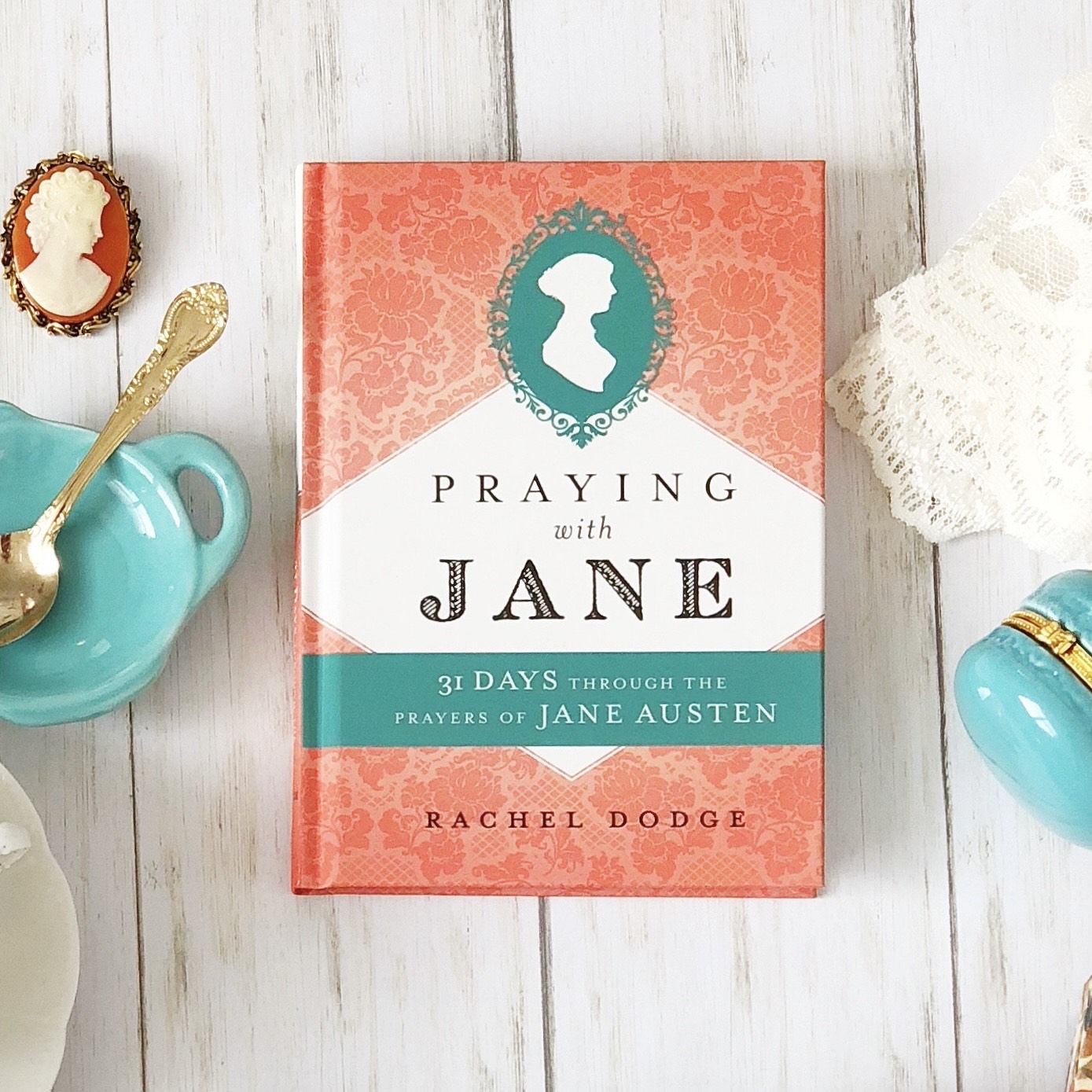
RACHEL DODGE teaches college English classes, gives talks at libraries, teas, and book clubs, and writes for Jane Austen’s World blog and Jane Austen’s Regency World magazine. She is the bestselling author of The Anne of Green Gables Devotional: A Chapter-By-Chapter Companion for Kindred Spirits and Praying with Jane: 31 Days Through the Prayers of Jane Austen. Her newest book The Little Women Devotional is now available. You can visit Rachel online at www.RachelDodge.com.

A Book Review by Brenda S. Cox

“Mr. Curtis’s [the apothecary’s] opinions were succinct . . . He looked at me–and into me, by way of a lanthorn beam directed down my throat–and pronounced me in want only of a period of rest and refreshment.”–Jane and the Year Without a Summer

Jane and the Year Without a Summer by Stephanie Barron is the newest “Jane Austen Mystery.”

Jane and the Year Without a Summer is the fourteenth book in a delightful series by Stephanie Barron. The novels show Jane Austen solving mysteries. I’ve enjoyed all of them! In the first of the series, Jane and the Unpleasantness at Scargrave Manor, she solved the murder of an earl in 1802. In each book, actual events, people, and places in Jane’s life are mixed with fiction, mystery, and a little romance.

In Jane and the Year Without a Summer, we’ve reached May 1816. So we’re nearing the end, sadly. Jane is suffering from the disease that will eventually kill her. But, of course, she doesn’t know that yet. So she goes to Cheltenham Spa with Cassandra to try the waters. She hates them, but, as always, gets involved in, and solves, a mystery. And she meets up with a romantic interest from a previous book.

You can enjoy this story without having read earlier books in the series. It’s been quite some time since I read the previous book, and I still followed this one easily.

Nothing really mysterious happens until over a third of the way through the book. But I enjoyed hanging out with Jane and Cassandra until then, and appreciating the real historical details woven into their story. The family is experiencing hard times, with Henry’s bank failure; Edward fighting a lawsuit; and Charles surviving a shipwreck and facing an inquiry over the loss of his ship. The apothecary tells Jane she needs a rest, so she uses some of her income from Emma to take Cassandra to a popular spa town.

The Year Without a Summer

At their boarding house, they meet a clergyman who calls himself a “man of Science.” (Though “natural philosophy” or “natural history” would have been more common terms used at the time.)  He prophesies apocalyptic desolations on the earth, based on an actual event.

Mount Tambora in Indonesia had erupted the year before (1815), the largest volcanic eruption in recorded history.  It filled the world’s atmosphere with ash for several years. This made 1816 a “year without a summer,” when crops failed and people went hungry around the globe. 

Austen experienced a wet, cool summer. John Constable pictures a storm moving in over Weymouth Bay that year, 1816. Public domain via wikiart.

Medicine

In another area of science, we hear the dubious medical advice of the Alton apothecary and the Cheltenham doctor. A real doctor is mentioned, though, who revolutionized medicine during Austen’s time by inventing vaccines.

Edward Jenner lived in Cheltenham at the time. He discovered that he could give people cowpox in order to prevent smallpox. (“Vaccination” comes from Latin “vacca,” meaning cow.)  Jane thinks that he “is of such dubious brilliance that some regard him as the Devil, and others as a god.” She says she was vaccinated by her friend Madame Lefroy, a clergyman’s wife who did vaccinate many people in her parish, near the Austens’ parish.

James Gillray’s 1802 cartoon, “The Cow-Pock, or the Wonderful Effects of the New Inoculation!” shows cows emerging from the bodies of people being vaccinated, illustrating the public’s fears of vaccination. Public domain via wikipedia.

“Weaknesses” of Women

The Cheltenham doctor Jane consults claims that her health problems are due to “an excess of uterine influence.” He claims that “denying the organ its proper function of childbearing” causes it to release poisons into the body, causing “every kind of affliction” common to women! Jane doesn’t think much of his advice. She comments to Cassandra that childbearing itself is even worse; some of their relatives died in childbirth.

Attitudes toward women are threaded through the novel. Jane’s brother James tells her, “the female mind is too weak to support the rigors of composition, and must necessarily fall into vice.” Jane, of course, ignores this. I’m wondering if James ever said anything like this (readers, do you know?), or if it’s just a reflection of popular attitudes. James wrote a poem, after the publication of Sense and Sensibility, praising her writing and adjuring her to continue writing. So if he said something like this later, it was quite a change.

[Spoiler alert—skip this paragraph if you wish.] The mysteries of the novel center around a frail young invalid, Miss Williams. She is trying to achieve independence. Her wealthy father’s will gave her an inheritance when she married, but she will lose control of it if she gets pregnant (or dies). So she becomes anorexic, refusing to eat. One of Barron’s many helpful notes tells us that anorexia frequently prevented menstruation and conception. So women sometimes used that choice as a way to control their own lives. However, when people close to “Miss Williams” die, questions arise. Is her wastrel husband trying to kill her to get her inheritance? Or is something else going on?

Stephanie Barron not only tells a compelling story, she has obviously done her research on Jane Austen’s life and world. We learn fun details ranging from how transparencies were made and displayed, to how much Princess Charlotte’s wedding gown cost.

I think any Austen fan will enjoy reading about Jane Austen’s fictional adventures during “the year without a summer.”

Jane and the Year Without a Summer comes out on Feb. 8. Enjoy!

Brenda S. Cox also posts on “Faith, Science, Joy, and Jane Austen,” and is working on a book entitled “Fashionable Goodness: Faith in Jane Austen’s England.”

For a scholarly examination, see Tambora and the “Year Without a Summer” of 1816