Feeds:
Posts
Comments

by Brenda S. Cox

“Here, sir,” taking out his pocket book, “if you will do me the favor of casting your eye over these advertisements which I cut out myself . . .”—Mr. Parker in Sanditon

What did ladies carry in those beautiful little reticules? In Part 1 we looked at some of the items that author Candice Hern has collected. We began with the necessary items: a fan, a vinaigrette, and a coin purse. Then we added some optional items: a perfume étui (a little container for a perfume bottle) and a cosmetics case. What else might ladies have carried in their reticules?

Books

Candice says they carried books in their reticules! That sounds right up my alley. I often carry a book or my Kindle in my purse. But these were very specific kinds of books, made very small to fit in the reticule. Candice showed us two types, pocket books and almanacs.

Pocket Books

The pocket book, perhaps like Mr. Parker’s, was the Regency version of a Day-Timer®. It was about 3” by 5”, usually covered with leather. A foldover flap kept it closed in the reticule. Many publishers produced these, so apparently they were a popular item.

Each began with a title page and a foldout fashion plate. Most pages showed a week’s calendar on one page, opposite a page to list expenses for that week. The lady might list items she bought, losses at cards, and gifts to poor people. A tiny pencil would probably accompany the pocketbook.

Pocket books also included short stories, essays, poetry, and even games. I hope these ladies had good eyes!

This English Ladies Pocket Book was published in Birmingham in 1803. The foldout shows ladies in some interesting bonnets. The book also includes calendar pages, expense pages, and things to read. Photo courtesy of Candice Hern. 

Almanacks

Another book that might be in a ladies’ reticule was a miniature almanac (or, as they would have written it, almanack). These were published yearly from 1690 to 1885. You could buy them at stationers’ shops and give them as Christmas gifts. Or, your dressmaker or milliner might give you one if you were a regular customer, as companies today might give out calendars.

These almanacs were either 1 1/8” square, or 1 1/8” by 2 ¼”. They included pictures; calendars showing holidays, phases of the moon, etc.; lists of the Kings and Queens of England and the Lord Mayors and Sheriffs of London; and information about coins and currency.

By the way, do you know why phases of the moon were important? Most evening visiting was done when the moon was full, so there was enough light to travel in your carriage by night. For example, in Sense and Sensibility when Sir John Middleton wants to invite a lot of people over, he wasn’t able to because “it was moonlight and every body was full of engagements.” So the phases of the moon were part of people’s social planning.

This miniature almanac from 1788 shows phases of the moon, dates of holidays, the church calendar, and dates for terms at Oxford and Cambridge Universities.

The tiny almanac came in a lovely case of tooled and gilded leather, to protect it in the reticule. Photos courtesy of Candice Hern. 

What else might have been in a ladies’ reticule?

A few years ago I had the privilege of attending the first few days of the Jane Austen Festival in Bath. Way up in Upper Camden Place, near where the Elliots lived in Persuasion, Jane Tapley gave a fascinating talk called “Rummaging Through the Reticule.” She added many more ideas on what might have been in the reticule. Of course reticules were not just carried to parties and visits. They were also used for travel; perhaps they had larger ones for that purpose. Besides some of the items Candice showed, Jane Tapley suggested that the reticule might have included:

  • dressy shoes (silk, satin, or starched cotton), so they wouldn’t get dirty or scuffed on the way to and from the party
  • ostrich feather for your hat (so it didn’t blow away on the way)
  • a small chamber pot if the lady was traveling; they would use it in a coach under their skirts, then dump it through a trap door in the bottom of the coach! Or they might bring one going out to dinner. It could also be carried in your muff. It would have been about the size and shape of a gravy boat.
  • cutlery (silver or wood), including a spoon, probably silver, to be used all during your lifetime
  • a cup, fork, corkscrew, and a little pot for mustard, salt, or pepper, all in a small set for traveling or visits
  • traveling drinking cup made of horn or silver

When traveling, a lady might carry her own cutlery and even salt. Items from Jane Tapley’s collection, photo by Brenda S. Cox

  • a small case (or étui) specifically for sewing. It might include a needle case, scissors case, ivory bobbin winder, silver thimble, ivory pincushion, and a little penknife for cutting thread, plus a box of colored beads and a fine needle for beading. A small sewing kit might be called a huswife or a housewife.
  • little lead pencils or a writing set
  • a tiny book like The Merchant of Venice
  • a silhouette of your sweetheart

Little books were made small enough to carry in the reticule. A silhouette was a way to carry a picture with you. (Items from Jane Tapley’s collection, photo by Brenda S. Cox)

  • glasses or magnifying glasses
  • lorgnettes (folding glasses on a string, worn on a chain around the neck)

Glasses, embroidered handkerchiefs, and sewing supplies might also come in handy in your reticule. (Items from Jane Tapley’s collection, photo by Brenda S. Cox)

  • a half sovereign case that carried two half-sovereigns
  • potpourri or pomanders to keep away body odors
  • handkerchiefs with fine embroidery
  • invitations

Now, imagine that you’re going with Jane Austen to an evening party. What will you carry in your reticule, out of these many options? Or, if you’re traveling with her to another town, what would you carry then?

To find out more about her and her work, look for her on:

Facebook

Twitter

Pinterest

Regency World

To see more of her lovely collections, go to her Regency Collections.

You can connect with Brenda S. Cox, the author of this article, at Faith, Science, Joy, and Jane Austen or on Facebook.

by Brenda S. Cox

When Emma encountered Mrs. Elton visiting Jane Fairfax, “she saw [Mrs. Elton] with a sort of anxious parade of mystery fold up a letter which she had apparently been reading aloud to Miss Fairfax, and return it into the purple and gold ridicule by her side,”—Emma, Volume 3, chapter 16, Cambridge edition

If you’ve ever made yourself a Jane Austen-era costume, you know that a reticule is an essential accessory. These lovely small purses hung by a drawstring from the lady’s wrist.

In previous generations, wide skirts had allowed for two huge pockets, one on each hip, to hold essential items. But with the slim new Regency style, there was no longer room for pockets. So the pockets were externalized and made small and beautiful.

If you have a reticule, you realize that it doesn’t hold nearly as much as a modern purse. Nowadays we might put our phone and a credit card, driver’s license, and little cash in the reticule. But what did Jane Austen’s ladies carry in theirs?

Candice Hern recently gave three lovely presentations for the JASNA AGM*. She showed her collection of items an Austen-era lady might have carried in her reticule. First, she pointed out that Jane Austen would probably not have used the word reticule! This little purse was more often called a ridicule.  This was the word used in ladies’ magazines of the time. That’s why, in the quote above from the original 1816 edition of Emma, Mrs. Elton has a purple and gold ridicule, not a reticule.

The Oxford English Dictionary lists sources calling it a ridicule from 1799 to 1999, and sources calling it a reticule from 1801 to 2004. So the terms were used interchangeably for a long time. Both words apparently came from the French word réticule for a small handbag. That word came from the Latin rēticulum for a small meshwork bag. Ridicule may have been a pun on the French word, though no one seems to know for sure.

The only time Jane Austen mentions a reticule, or ridicule, is in the above passage from Emma. Mrs. Elton slips a letter into her ridicule, which is, of course, a showy purple and gold one. Austen may have purposely chosen the form ridicule because Mrs. Elton is so often ridiculous! But modern versions usually change it to reticule.

So, we know that reticules could be used to carry letters. The Cambridge edition of Emma tells me that reticules might also hold handkerchiefs, snuff boxes, or sweets. However, snuff boxes seem to have been a gentleman’s item, so I doubt ladies would have often carried them. (Though some ladies did take snuff, though not as widely as men did.)

Candice Hern tells us that Regency reticules might range from only two inches long up to about ten inches long. So everything that ladies carried began to be made smaller. This created some lovely, tiny treasures.

Here are some of the items Candice showed us, with photos she kindly provided from her collection:

Reticule Essentials: the Fan, the Coin Purse, and the Vinaigrette

Fans

For hot evenings in the “crush” of a crowded ball or party, women carried fans. In Austen’s novels, she says Catherine Morland carried a fan at a dance. At Fanny Price’s ball, it seems her brother fanned her with his partner’s fan. Austen talks about her own “white fan” in a letter of Jan. 8, 1799.

Before and after this period, fans were about 10-12 inches long. (This is the length of the fan sticks; the open fan would be almost twice that in width.) But, to fit in the reticule, fans were made smaller, only about 7 inches long. They were most often made from ivory. Some were pierced with a tiny jeweler’s saw, to give a lacy effect. This was called brisé (pronounced bree-ZAY). Here are two of Candice’s (and my) favorites:

This gorgeous brisé fan is made of mother-of-pearl. It would shine and sparkle in a candlelit ballroom. The guard sticks, at each end of the fan, are made of faceted and polished steel. It also sparkles like jewels. Each stick is pierced identically, but the sticks are placed in alternating directions to form a pattern. c. 1810-1815.

The top section of this fan is painted rather than pierced. The birds and butterflies are made of real feathers. The flowers were created with tiny pieces of velvet.

On the lower part, sticks of three different pierced patterns are arranged to form a more complex pattern. The sticks are 6 ½” long. c. 1810-1820, or earlier.

For more lovely fans, see Candice’s website. Above photos courtesy of Candice Hern.

Coin Purses

Regency women didn’t have wallets like we carry today. In small reticules, they may have carried loose coins. But in larger reticules they kept coins in a coin purse so they could find them easily. Ladies usually made these purses, which might be beaded, knitted, or netted. In Pride and Prejudice, Mr. Bingley marvels at the accomplishments of young ladies, who can all “net purses.”

Some coin purses closed with drawstrings, while others had a metal closure at the top. The closure might be made of pinchbeck—a cheap metal alloy that looks golden—or other metals. Ladies also made coin purses for men. Austen’s favorite poet, William Cowper, wrote a poem thanking his cousin for making him a network purse. Gentlemen’s purses were sometimes called miser’s purses.

A lady probably bought the sterling silver frame (dated 1816) for this coin purse, then netted it with pink and silver metallic thread. It is 3 ¾” long, plus the tassel. Courtesy of Candice Hern.

Vinaigrettes

If a woman began to swoon, in an airless room or when she learned something unpleasant, a vinaigrette was pulled out of a reticule and waved under her nose. These tiny metal boxes held a sponge soaked in vinegar and perfumed oils, with a grille over the sponge to let out the fumes. The grille might be dotted with holes, or might be pierced in a lovely design. Vinaigrettes were made of various materials and in many shapes and designs; those in Candice’s collection are silver.

The sponge might alternatively be soaked in something sweet-smelling, like rose water or lavender water. Many places in the Regency era stank, and a sweet smell could help the lady tolerate them.

Austen doesn’t mention vinaigrettes, but she does mention smelling salts, which were used similarly. Candice thinks these salts would actually have been a solution in vinegar, kept in a vinaigrette.

Regency vinaigrettes were tiny and delicate; Candice’s range from ½” across to 1 ¾” across.

This vinaigrette is made of silver but gilded inside, so the vinegar did not discolor the silver. It still contained a ratty sponge when Candice bought it. It could be carried in a reticule, or, with the metal ring, attached to a chatelaine: chains used for hanging things to a woman’s belt. Marked 1802, made in Birmingham. Courtesy of Candice Hern.

Other Items That Might be Carried in a Reticule: Perfumes and Cosmetics

Perfume étuis

Perfume also counteracted bad smells. In Austen’s age, when bathing was not very common, perfumes were essential. However, perfume bottles were breakable, easily spilled, and too large to carry in a reticule.

So a lady would carry a perfume étui (pronounced ay-twee), a tiny container that could hold a glass vial of perfume and be fastened tightly shut. (Other types of étuis were used to carry sewing materials, writing materials, eating utensils, and other items; the word is French for any portable case.)

Perfume étuis were made of enamel, metal, tortoiseshell, shagreen, or other materials. Shagreen was a cheap option. It was shark’s skin, usually dyed green, with a knobbly texture. Shagreen étuis were probably used by middle-class women, while upper-class women used more expensive materials.

This painted enamel étui with brass fittings is about 2 ½” high. It held a tiny glass bottle of perfume with a screw-on metal top. 1760s to 1780s.

This shagreen étui is only 1 ¾” tall. It holds two tiny bottles of scent, so the lady can choose which she wants to use. Photos courtesy of Candice Hern.

Cosmetic Cases

Some ladies also carried small cosmetic cases in their reticules. These were similar to today’s compacts. When open, the top was a polished mirror, and the bottom might contain rouge and/or lip color, and an applicator.

This 2 ½” wide cosmetic case still had traces of rouge in it when Candice bought it. The applicator brush is made of ivory. The outside of this case is shagreen (dyed shark skin), with silver decoration. 1770s or 1780s. Photos courtesy of Candice Hern.

Next time, in Part 2, we’ll look at some other fun items a woman might have carried in her reticule. What else do you guess a lady might have carried?

*JASNA AGM—the Jane Austen Society of North America Annual General Meeting, which this year was held online in October.

Candice Hern writes Regency-era novels.

To find out more about her and her work, look for her on:

Facebook

Twitter

Pinterest

Regency World

To see more of her lovely collections, go to her Regency Collections.

Links in the article above take you to Candice’s articles about specific items.

All images courtesy of Candice Hern, used by permission.

For more information, see also:

Fans: Essential Accessories, including the language of the fan

Reticule: The Regency Purse

A Fashionable Accessory

The Reticule and Purse

You can connect with Brenda S. Cox, the author of this article, at Faith, Science, Joy, and Jane Austen or on Facebook.

IDress in the Age of Jane Austennquiring readers, Today is one of celebration for those of us who honor Christ’s birth. This is a year of challenge for so many in our communities whose jobs and families have been affected by COVID-19. Inspired by the Georgians in times past, I do what I can in my community and for those in need. Austen describes this community/family/friend caring so well in her novels, a theme that Rachel Dodge covered in a recent post , and Brenda Cox in a post entitled “Thankfulness in Jane Austen’s Novels.”

Charity and the sharing of bounty with the less fortunate was an appropriately pious response to the season.” — Hilary Davidson

One book I purchased this year was written by Hilary Davidson entitled Dress in the Age of Jane Austen: Regency Fashion. Yale Books offers a blog post with information from this book entitled “A Jane Austen Christmas.” Enjoy!

Image of Wool cape, last third of the eighteenth century, The Met Museum, New York. Purchase, Irene Lewisohn Bequest, 1969.

Wool cape, Met Museum 

The team of Jane Austen’s World blog: Vic Sanborn, Tony Grant, Rachel Dodge, and Brenda Cox.

Other Christmas posts on this blog: Click here to view many choices!

Inquiring readers, I first read Pride and Prejudice when I was fourteen years old. The novel was a Christmas gift from my parents. One of the first Christmas songs this Dutch girl learned in English was “The Twelve Days of Christmas,” a song that was popularized in an arrangement by Frederic Austin in 1909. We all know the tune, but do we know the words as Jane Austen wrote them? After singing the song, please stay to answer a few questions.–Enjoy & Merry Christmas! Vic

Image of Colin Firth as Mr. Darcy, 1995[Verse 1]

On the first day of Christmas, Jane Austen sent to me
A HERO named Mister Darcy

[Verse 2]

Image of Lizzy and Jane Bennet from Jennifer Ehle BlogspotOn the second day of Christmas, Jane Austen sent to me
Two wise Bennet girls, and
A HERO named Mister Darcy

[Verse 3]

Pride_and_Prejudice_CH_19-collins proposalOn the third day of Christmas, Jane Austen sent to me
Three various suitors,
Two wise Bennet girls, and
A HERO named Mister Darcy

[Verse 4]

Hugh Thomson illustration of Mr. Bingley entering the Meryton Assembly Ball with his guestsOn the fourth day of Christmas, Jane Austen sent to me
Four Bingley dances,
Three various suitors,
Two wise Bennet girls, and
A HERO named Mister Darcy

[Verse 5]

Hugh Thomson image of the five Bennet girlsOn the fifth day of Christmas, Jane Austen sent to me
FIVE S.I.N.G.L.E GIRLS!

Four Bingley dances,
Three various suitors,
Two wise Bennet girls, and
A HERO named Mister Darcy!

[Verse 6]

Image of Mary Crawford playing harp-C.E.BrockOn the sixth day of Christmas, Jane Austen sent to me
Six accomplished women
FIVE S.I.N.G.L.E GIRLS!

Four Bingley dances,
Three various suitors,
Two wise Bennet girls, and
A HERO named Mister Darcy!

[Verse 7]

On the seventh day of ChristImage of the Colinses visiting Lady Catherine de Bourg, 1995 Pride and Prejudice filmmas, Jane Austen sent to me
Seven days at Hunsford
Six accomplished women
FIVE S.I.N.G.L.E GIRLS!

Four Bingley dances,
Three various suitors,
Two wise Bennet girls, and
A HERO named Mister Darcy!

[Verse 8]

Image of Adrian Lucas as Mr. Bingley, 1995 P&POn the eighth day of Christmas, Jane Austen sent to me
Eight charms of Wickham
Seven days at Hunsford
Six accomplished women
FIVE S.I.N.G.L.E GIRLS!

Four Bingley dances,
Three various suitors,
Two wise Bennet girls, and
A HERO named Mister Darcy!

[Verse 9]

On the ninth day of Christmas, Jane Austen sent to meQuadrille_RegencyW
Nine ladies dancing
Eight charms of Wickham
Seven days at Hunsford
Six accomplished women
FIVE S.I.N.G.L.E GIRLS!

Four Bingley dances,
Three various suitors,
Two wise Bennet girls, and
A HERO named Mister Darcy!

[Verse 10]

Image of Lydia and Mr. Wickham eloping-she happy, he bored, P&P 1995On the tenth day of Christmas, Jane Austen sent to me
Lydia eloping
Nine ladies dancing
Eight charms of Wickham
Seven days at Hunsford
Six accomplished women
FIVE S.I.N.G.L.E GIRLS!

Four Bingley dances,
Three various suitors,
Two wise Bennet girls, and
A HERO named Mister Darcy!

[Verse 11]

Image of Jennifer Ehle as Elizabeth Bennet falling for Mr. Darcy at Pemberley, 1995 film of Pride and PrejudiceOn the eleventh day of Christmas, Jane Austen sent to me
Lizzy’s eyes a’ opening
Lydia eloping
Nine ladies dancing
Eight charms of Wickham
Seven days at Hunsford
Six accomplished women
FIVE S.I.N.G.L.E GIRLS!

Four Bingley dances,
Three various suitors,
Two wise Bennet girls, and
A HERO named Mister Darcy!

[Verse 12]

LadyCatherine_&_ElisabethOn the twelfth day of Christmas, Jane Austen sent to me
L C’s condescensions
Lizzy’s eyes a’ opening
Lydia eloping
Nine ladies dancing
Eight charms of Wickham
Seven days at Hunsford
Six accomplished women
FIVE S.I.N.G.L.E GIRLS!

Four Bingley dances,
Three various suitors,
Two wise Bennet girls, and
A HERO named Mister Darcy!

________________

Now, Gentle Readers, I shall pose a few questions. How do you respond to Pride and Prejudice? How are you disposed towards a few characters? (Your opinions are most welcome.) As you can see, I favor the 1995 Firth/Ehle film version of P&P! So, don’t be shy in sharing your thoughts.

  1. L C’s condescension:  In your estimation, what is the most memorable Lady Catherine de Bourgh’s condescending statement?
  2. Lizzy’s eyes a’ opening: What events changed Elizabeth’s attitude towards Mr. Darcy? Which one stands out in your mind?
  3. Lydia eloping: How old was Lydia when she ran off with Mr. Wickham? What, in her naivete, did she hope her life would have been like with him, away from her family?
  4. Nine ladies dancing: Think of the ladies Austen mentioned in Pride and Prejudice. Which women would have most likely danced at the Netherfield Ball?
  5. Eight charms of Wickham: Can you name Mr. Wickham’s charms, be they true or false, as Austen described them?
  6. Seven days at Hunsford: How did Lizzy spend her days at Hunsford? What memorable scenes occurred during this time?
  7. Six accomplished women: Who first mentioned six accomplished women? How did the conversation come up and where?
  8. Please name all the five single girls and their primary characteristic (in your opinion).
  9. Four Bingley dances: This phrase refers to an event at the beginning of the novel.
  10. Three various suitors: Name all the suitors you can think of in the novel. Who had three? Who are they?
  11. Two wise Bennet girls: Who are they? How would you personally describe them?
  12. A HERO named Mister Darcy! Why are we so mesmerized by Austen’s most memorable hero? What are the characteristics that make him stand out to you?

After this C.E. Brock composite image of Pride and Prejudice, I’ve added my own observations to a few of the questions. Thank you for participating. May you have a lovely holiday season. Please love and take care of each other in your family, your neighbors, and your community.

1024px-Scenes_from_Pride_and_Prejudice

Continue Reading »

“Look with compassion upon the afflicted of every condition, assuage the pangs of disease, comfort the broken in spirit.” Jane Austen, Prayers

This time of year—especially during 2020—many people are in need of comfort and compassion. I find it particularly touching that Jane Austen’s own timeless novels and prayers provide messages of hope that never seem to fade or wear out.

When Marianne Dashwood falls ill in Sense and Sensibility, she is “afflicted” in both body and heart. She doesn’t just need the physical “pangs of disease” assuaged; she needs comfort for her broken spirit. Sick at heart, she also lies sick in bed. It is during these difficult days that we see family members and friends coming to her aid to provide the love and care she needs.

First, Elinor spends her days “attending and nursing” Marianne and “carefully administering the cordials prescribed” (ch. 43). When Marianne worsens on the evening of the third day, Elinor notices her altered condition and stays with Marianne while Mrs. Jennings goes to bed, “knowing nothing of any change in the patient.” Anxious to see Marianne rest quietly, she resolves “to sit with her” as she sleeps. When Marianne’s pulse becomes “lower and quicker than ever,” and she suffers hours of “sleepless pain and delirium,” Elinor anxiously calls for the apothecary, sends Colonel Brandon for her mother, and never leaves her bedside.

Elinor Dashwood (Hattie Morahan) and Marianne Dashwood (Charity Wakefield)

This example of sisterly love is similar to the type of care Jane and Cassandra Austen provided for their own family members when they were unwell. When their brother Henry became suddenly and severely ill during one of Jane’s visits to him in London, Jane and Cassandra both helped to nurse him. Caroline Austen provides this detail in her memoir, My Aunt Jane: “Aunt Cass. stayed on nearly a month, and Aunt Jane remained some weeks longer, to nurse the convalescent.” And when Jane herself fell ill, Cassandra, along with Mrs. Mary Austen (née Lloyd), to “take a share in the necessary attendance,” went with her and cared for her in Winchester.

Even once Marianne begins to improve, Elinor stays by her side, “with little intermission . . . calming every fear, satisfying every inquiry of her enfeebled spirits, supplying every succour, and watching almost every look and every breath” (ch. 43). It is only when Elinor is absolutely sure that Marianne is peaceful and sleeping soundly that she can “silence every doubt” and finally quit her post.

Sir John Middleton (Robert Hardy) and Mrs. Jennings (Elizabeth Spriggs)

Mrs. Jennings, “with a kindness of heart which made Elinor really love her,” also provides as much comfort and practical help as she can during Marianne’s illness: She sends for the Palmers’ apothecary and endeavors, “by her own attentive care, to supply to her the place of the mother she had taken her from.” Elinor quickly finds Mrs. Jennings “on every occasion a most willing and active helpmate, desirous to share in all her fatigues, and often by her better experience in nursing, of material use.”

 The morning after Marianne’s long, difficult night, Mrs. Jennings greets Elinor “[w]ith strong concern, and with many reproaches for not being called to their aid.” Austen tells us “[h]er heart was really grieved.” She is “struck” with concern for Marianne’s life, one who “had been for three months her companion, was still under her care, and . . . was known to have been greatly injured, and long unhappy.” She imagines the “distress” Elinor feels and is awakened to the fact that Marianne must be to Mrs. Dashwood what her own daughter Charlotte is to her: and “her sympathy in HER sufferings was very sincere.”

Elinor Dashwood (Emma Thompson) and Colonel Brandon (Alan Rickman)

Finally, Colonel Brandon helps the Dashwood family by staying close at all times and volunteering to bring Mrs. Dashwood to town when Marianne becomes delirious and asks for her mother. When Elinor goes downstairs to the drawing room to ask his advice, “her difficulties were instantly obviated, for with a readiness that seemed to speak the occasion, and the service pre-arranged in his mind, he offered himself as the messenger who should fetch Mrs. Dashwood.”

The entire Dashwood family is greatly relieved by Colonel Brandon’s help:

“The comfort of such a friend at that moment as Colonel Brandon—or such a companion for her mother,—how gratefully was it felt!—a companion whose judgment would guide, whose attendance must relieve, and whose friendship might soothe her!—as far as the shock of such a summons COULD be lessened to her, his presence, his manners, his assistance, would lessen it.”

Sense and Sensibility, Jane Austen

Again, during Marianne’s recovery, Colonel Brandon is never far away. He stays in town, visits often, and only returns home when Marianne is well enough to travel back to Barton Cottage with her family.

True to Jane Austen’s style, this portion of the novel also provides us with a message of hope. It’s not just that Marianne’s health improves; it’s also the idea that the long night of anxious waiting doesn’t last forever. That dark hour for Elinor and Marianne does pass. A new day dawns, their mother arrives, and Marianne heals in body and in spirit. Back at Barton Cottage, she once again finds great delight in music and books, walks and nature. And she is eventually able to move forward, finding a deeper, truer love in her marriage to Colonel Brandon than she previously thought possible.

As we enter into this holiday season, perhaps we can find inspiration and hope in the example set by Austen and her characters. Though things look a lot different this year for many of us, we can still provide comfort and compassion in a variety of creative ways. Like Elinor, we can check in and keep careful watch over those who are vulnerable or lonely. Like Mrs. Jennings, we can sympathize and provide for others with genuine concern and generosity. Or, like Colonel Brandon, we can anticipate needs and jump in to help wherever we’re needed.

This year more than ever, we have the opportunity to help those around us, provide care where needed, and extend small kindnesses. We can write, we can call, and we can meet online. We can send gifts and treats and little surprises. And we can share with others those things which give us the most comfort—whether it be a handwritten card, a prayer, a poem, a verse, a piece of music, a handmade gift, or a copy of one of Austen’s beautiful novels.

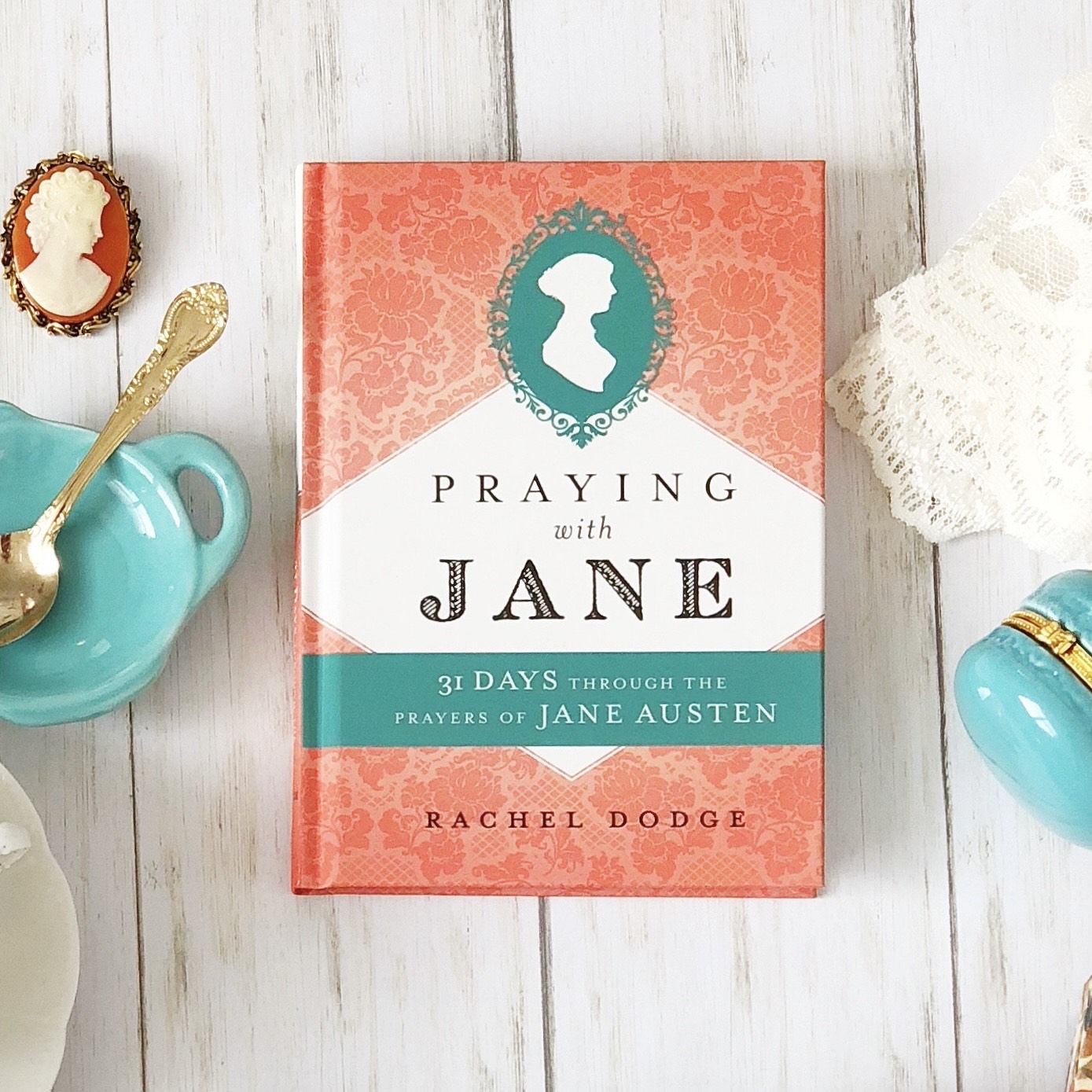
RACHEL DODGE teaches college English classes, gives talks at libraries, teas, and book clubs, and writes for Jane Austen’s World and Jane Austen’s Regency World. She is the author of Praying with Jane: 31 Days Through the Prayers of Jane Austen and The Anne of Green Gables Devotional: A Chapter-By-Chapter Companion for Kindred Spirits. You can visit Rachel online at www.RachelDodge.com.