Feeds:
Posts
Comments

Praying With Jane Blog Tour

Inquiring readers,

Praying with Jane: 31 Days through the Prayers of Jane Austen, Rachel Dodge, and a bookmark with the quote

Praying With Jane: 31 Days Through the Prayers of Jane Austen, Rachel Dodge, Bethany House, 2018

A “Praying With Jane” blog tour will begin October 31st on this blog. I am privileged to showcase Rachel Dodge’s deeply felt first book, which centers around three prayers Jane Austen wrote that have miraculously survived, given the destruction of so much of her original papers.

A whole family assembling regularly for the purpose of prayer is fine!” – Jane Austen, Mansfield Park

Many readers of this blog have come to know Rachel in the past year and a half through her blog post contributions, her exquisite writing style, and her extensive knowledge of Jane Austen’s life. This book is a labor of love for Rachel. Divided into 31 days, readers are guided for one month to a daily examination of sections of the three prayers until, at the end of the book, they have thoroughly studied Jane’s prayers.

My sister-in-law, Carol, who read Pride and Prejudice years ago and knows little of Jane Austen’s novels and characters, other than the movies she’s seen, has read the book for me.

I was skeptical about the book at first, because I know so little about Jane Austen, but I found Rachel’s choice of scriptures to be inspiring,”

Rachel includes two scriptures per day. An example of one is included in the samples of the first day of prayer below:

I have loved you with an everlasting love; I have drawn youth unfailing kindness.” – Jeremiah 31:3 NIV

This slideshow requires JavaScript.

As mentioned, the blog tour begins here October 31st! Other blogs on the tour (in random order) are:

Diary of an Eccentric | So Little Time…| Laura’s Reviews | Calico Critic | Jane Austen in Vermont| My Love for Jane Austen | A Bookish Way of Life | Burton Reviews | My Jane Austen Book Club | Delighted Reader Book Reviews | Laughing With Lizzie | Becoming |(and, of course,) Jane Austen’s World

Please join us as we examine this lovely addition to the canon of works by Jane Austen’s ardent admirers!

Information about Praying With Jane is available at

Rachel  Dodge’s posts on this blog

Follow Rachel Dodge at www.racheldodge.com


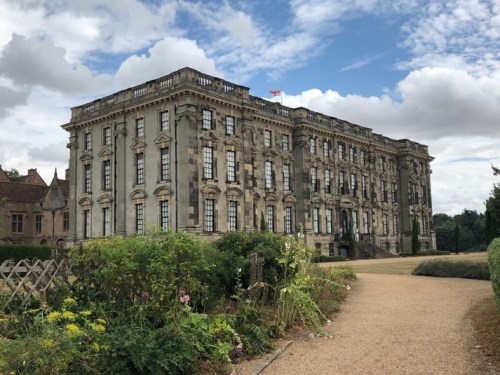
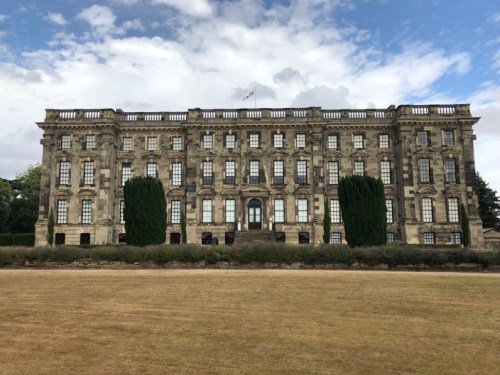
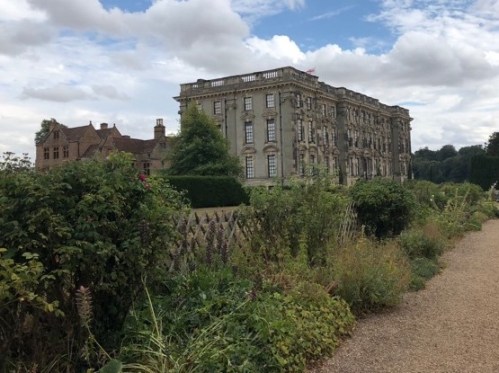
On a visit to see my relatives in Warwick, England, last month, I stopped at Stoneleigh Abbey. It was late in the day and the house tours had concluded, so I purchased a garden ticket and stepped through the wide, low door from the Gatehouse into the garden. Once inside, I followed a small path, lined on one side with tall flowers and a wooden fence. As the imposing front face of Stoneleigh came into view, I stopped and stared. In person, Stoneleigh Abbey is absolutely stunning.

1 Stoneleigh Abbey-View from lane

Stoneleigh Abbey: View from lane

[Photo: Rachel Dodge]


Jane Austen went to Stoneleigh Abbey in 1806 with her mother and Cassandra during a visit to Mrs. Austen’s first cousin, Reverend Thomas Leigh. The Austen women stayed at Leigh’s Adlestrop estate. During their visit, they also went with him to Stoneleigh Abbey, which he had just inherited. It’s believed that Austen drew inspiration from that trip for the Sotherton outing in Mansfield Park.

During the Regency period, the trend in landscape gardening aimed to make the gardens and surrounding land of grand estates look more natural and inviting. Enclosure walls were taken down, streams were redirected, long avenues of trees were chopped down, and new trees were planted in natural clumps. The orderly borders and rows of previous generations gave way to open spaces, grazing sheep or cattle, Grecian urns, and playful fountains.

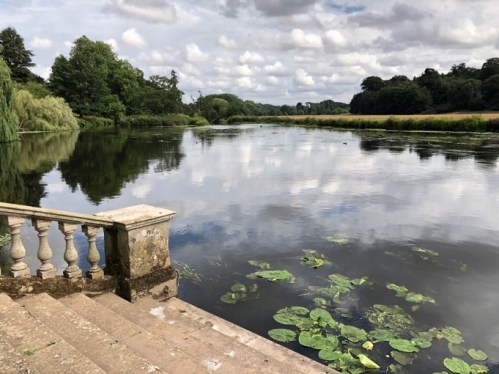
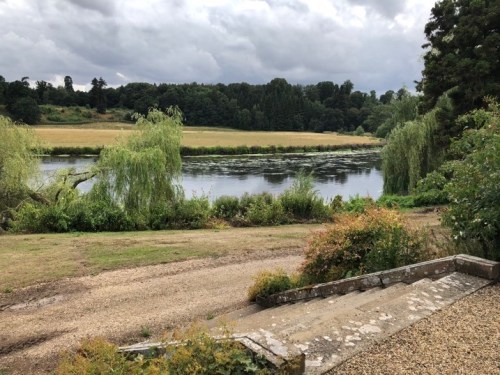
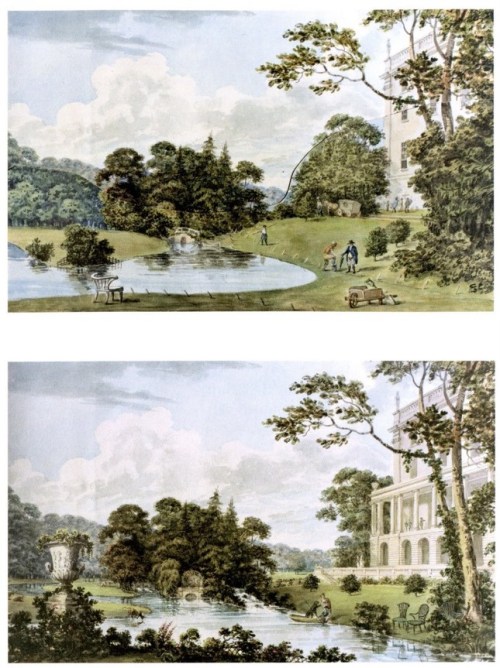
2 Stoneleigh Abbey-River Avon views

3 Stoneleigh Abbey-River Avon views

Stoneleigh Abbey: River Avon views

[Photos: Rachel Dodge]


In Jane Austen and the English Landscape, Mavis Batey closely chronicles the landscape changes made to Adlestrop and Stoneleigh during Thomas Leigh’s day as well as the Red Book design plans proposed by Humphrey Repton. Austen was familiar with Repton’s Red Books, in which Repton presented clients with detailed drawings and paintings of his proposed changes.

During her visit to Adlestrop, Austen had access to Repton’s book, Observations on the Theory and Practice of Landscape Gardening, which features examples of his “before and after” overlays, including his design plans for Adlestrop: “Jane Austen’s first real acquaintance with Repton’s work was at Adlestrop in Gloucestershire, where her cousin the Revd Thomas Leigh had consulted him in 1799” (Batey 81). By the time Austen visited Adlestrop in 1806, the improvements were complete.


When Austen saw Stoneleigh, no alterations had been made. Her brother, James, visited Stoneleigh in 1809, just after Repton had completed the Red Book for Stoneleigh (89). It’s likely that James provided the Austen women with updates on the progress there.

4 Stoneleigh Abbey-Front Approach (close-up)

Stoneleigh Abbey: Front Approach (close-up)

[Photo: Rachel Dodge]

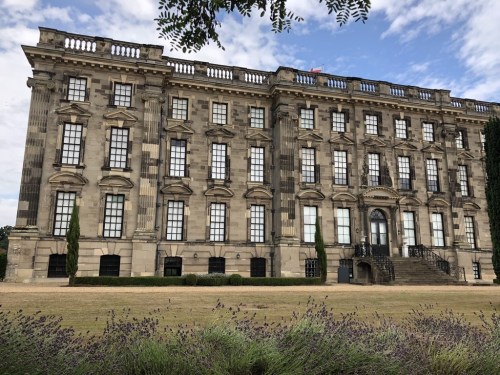
5 Stoneleigh Abbey- Front

Stoneleigh Abbey: Front

[Photo: Rachel Dodge]


Often, Repton’s improvements included redirecting nearby bodies of water, as Repton’s Red Book shows in this “before and after” of the flow of the River Avon next to Stoneleigh Abbey:

6 Stoneleigh Abbey-Repton_s Red Book “Before and After” (River Avo)

Stoneleigh Abbey: Repton’s Red Book “Before and After” (River Avon)

[Pith+Vigor, May 8, 2013]


Austen was evidently inspired by Repton’s Red Books and the changes made to Adlestrop, as well as those proposed at Stoneleigh. During the group outing to Sotherton in Mansfield Park, Repton’s name is mentioned in reference to the changes Mr. Rushworth is considering:

Now, at Sotherton we have a good seven hundred [acres], without reckoning the water meadows; so that I think, if so much could be done at Compton, we need not despair. There have been two or three fine old trees cut down, that grew too near the house, and it opens the prospect amazingly, which makes me think that Repton, or anybody of that sort, would certainly have the avenue at Sotherton down: the avenue that leads from the west front to the top of the hill . . . (Mansfield Park)


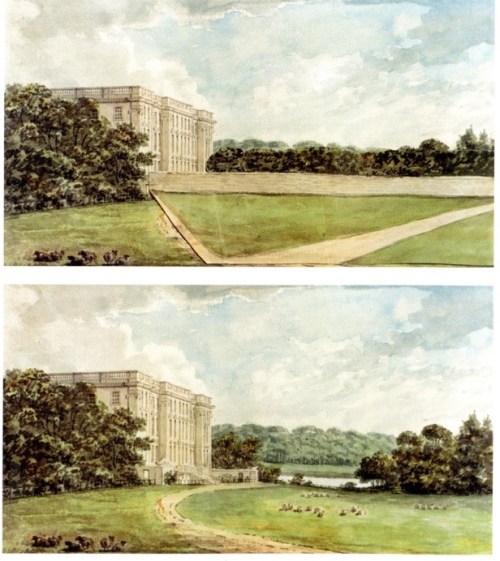
There are also similarities between the Stoneleigh improvements and those Austen describes in Mansfield Park, such as the removal of a walled enclosure:

Stoneleigh had a walled entrance forecourt on the imposing west front, which had been added by Smith of Warwick in 1726. A walled enclosure was the first object for “fault-finding” when Jane Austen’s improver, Henry Crawford, led the party out to ‘examine the capabilities of that end of the house.’ Anticipating Repton he exclaimed, “I see walls of great promise.” Repton’s before and after illustrations show how essential the removal of these walls were. (Batey 90)

7 Stoneleigh Abbey-Repton_s Red Book “Before and After” (stone wall) (2)

Stoneleigh Abbey: Repton’s Red Book “Before and After” (stone wall)

[Pith+Vigor, May 8, 2013]


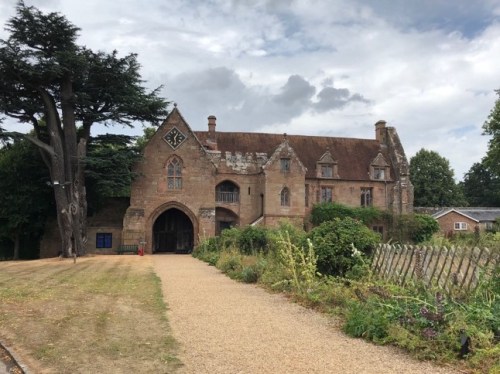
In The World of Jane Austen, Nigel Nicolson also provides a history of the Stoneleigh architecture: “It had been a Cistercian Abbey . . . founded in 1143” (141). When it came into the Leigh family after the Dissolution, an Elizabethan mansion was built. “The gatehouse was built by the sixteenth Abbot of Stoneleigh in 1346, and is the only substantial structure of the medieval abbey to survive” (146). The gatehouse still stands today (pictured below). The “entrance front” to the Great House was built in 1714.

8 Stoneleigh Abbey-Gatehouse

Stoneleigh Abbey: Gatehouse

[Photo: Rachel Dodge]


Behind the gray-stoned front face of Stoneleigh Abbey stands an older, Elizabethan house (142). The internal courtyard in the latter “was once the cloister of the medieval Abbey . . . remodeled to form the sixteenth-century house” (145). During their visit, Mrs. Austen commented on the interior of Stoneleigh, describing “the state bedchamber with a dark crimson Velvet Bed: an alarming apartment just fit for a heroine” (Batey 88).

9 Stoneleigh Abbey-Red brick Elizabethan portion of house

Stoneleigh Abbey: Red brick Elizabethan portion of house
[Photo: Rachel Dodge]

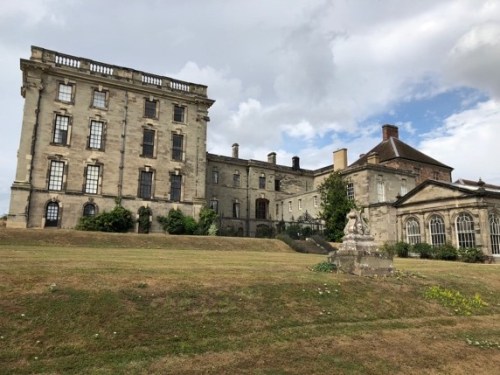
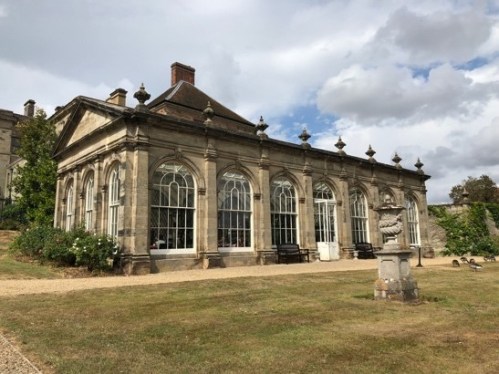
Today, visitors to Stoneleigh may enjoy an afternoon Cream Tea (tea and scone with clotted cream and jam) or a more elaborate Jane Austen Tea (http://www.stoneleighabbey.org/afternoon-tea) in the outdoor Orangery Tea Room. For those who want to spend more time on the grounds, there is a Jane Austen-themed tour of the house and a Repton Walk landscape tour available on certain days and times (reservations are encouraged for each).

10 Stoneleigh Abbey-Side view (from River Avon walk)

Stoneleigh Abbey: Side view (from River Avon walk)
[Photo: Rachel Dodge]

11 Stoneleigh Abbey-Orangery Tea Room

Stoneleigh Abbey: Orangery Tea Room
[Photo: Rachel Dodge]

One of the many delights of the Stoneleigh gardens is the lavender that grows alongside the walks. I visited on a stormy, breezy summer afternoon, and the smell of lavender filled the air. The Gatehouse has a small gift shop, and I bought dried lavender and Stoneleigh Abbey honey there, which I took as a hostess gift to my cousin that evening.

12 Stoneleigh Abbey-Lavender plants

Stoneleigh Abbey: Lavender plants

[Photo: Rachel Dodge]

Landscape architects still refer to Repton’s Red Books today. On Pith + Vigor, you can view an entire gallery of Repton’s Red Book images in Rochelle Greayer’s article, “Before & After: Humphry Repton.” [http://www.pithandvigor.com/garden/before-after/before-after-humphry-repton]

To view all of the original images from Humphrey Repton’s Red Book for Stoneleigh Abbey, please visit: http://www.stoneleighabbey.org/red-book.


Rachel Dodge is an author, college English instructor, and Jane Austen speaker. A true Janeite at heart, she loves books, bonnets, and ball gowns. For more of Rachel’s literary ramblings, you can follow her at www.racheldodge.com or on Facebook or Instagram (https://www.instagram.com/kindredspiritbooks/). Her book, Praying with Jane: 31 Days Through the Prayers of Jane Austen releases October 2, 2018 (Bethany House Publishers).

Works Cited:

Batey, Mavis. Jane Austen and the English Landscape. Chicago: Chicago Review Press, 1996.

Greayer, Rochelle. “Before & After: Humphry Repton.” Pith + Vigor, 8 May 2013, http://www.pithandvigor.com/garden/before-after/before-after-humphry-repton.

Nicholson, Nigel. The World of Jane Austen. London: Orion Publishing Group, 1991.


My Apologies

While drafting a new blog post on a recent Napoleon exhibit in Richmond, something went drastically wrong with my computer/internet connection. I thought I had placed the post in draft, but accidentally published it. I changed the settings and continued working on the piece, only to discover that none of that work was saved. I hope to publish the actual article soon.

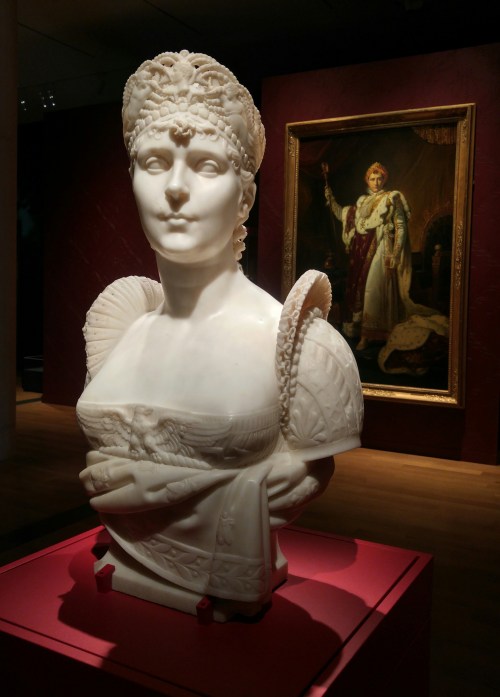
Here’s a view of the entrance to the exhibit. Vic

Marble bust of Josephine with a painting of Napoleon behind her.

Inquiring readers,

Many of you have noticed my absence for a long time. If it weren’t for the efforts of Rachel Dodge and Tony Grant, this blog would have remained silent for most of the previous twelve months. Thank you, both, dear friends, for your contributions.

Two years ago I realized my heart and soul were no longer in my work and that it was time to retire.  Since then, I have been in the process of getting my house ready for sale, selling it, and packing my belongings to move to north Baltimore to be near family. Luckily or unluckily, I sold my house the moment my realtor planted the “coming soon” sign on my lawn. This meant that I had to move two months earlier than anticipated, since the new owners were anxious to move into my beloved abode.

My new place, however, was not ready. Currently, all my possessions, save for summer clothes and necessities, are in storage, and so I am living in limbo as a guest with friends until the end of August.

Starting September 1, I will be traveling between Richmond and Baltimore for four months, waiting for my new place to be approved by a house inspector and working remotely at a distance (with frequent travels via I-95 to attend bi-monthly meetings down south). January 1st is the date of my retirement. Ah, the modern life!

As I anticipate my schedule this fall and early winter, my thoughts often turn to Jane Austen. She had immense pleasure of living the first 25 years of her life in Steventon, a small village in Hampshire.

Outside there were fields where Mr Austen farmed and his wife grew potatoes (at that time quite an innovation), formal gardens with a turf walk, sundial, strawberry beds, and a grassy bank down which the young Jane, possibly enjoyed rolling as a child, like Catherine Morland in Northanger Abbey. – http://www3.hants.gov.uk/austen/deane-parsonage/steventon-village.htm, Hantsweb, Hampshire County Council
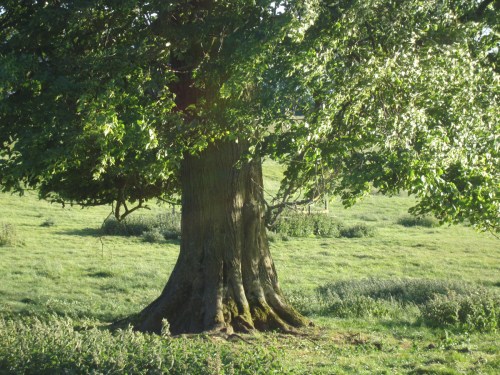
The old rectory site where the parsonage once stood. A well (inside the enclosure in back of the tree) is the only visible remnant of that house. Image @Tony Grant

The old rectory site where the parsonage once stood. A well (inside the enclosure in back of the tree) is the only visible remnant of that house. Image @Tony Grant

The Austens also ran a boarding school for young men out of the parsonage house to augment the reverend’s yearly income of £230. His extensive library of 300 – 500 volumes was amazingly large for that era, since books were frightfully expensive. Rev. Austen encouraged Jane and her sister, Cassandra, to read from his library, an unusual encouragement for females in that time.

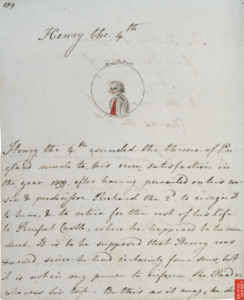
Image of a page of the History of England by Jane Austen and illustrated by Cassandra Austen of Henry the 4th, the British Library

Image of a page of the History of England by Jane Austen and illustrated by Cassandra Austen of Henry the 4th, The British Library

Jane enjoyed an extremely close relationship with her older sister, Cassandra, and they supported each other in their respective strengths and talents. Jane’s talent, as well as Cassandra’s, were nurtured by their doting family, as evidenced by the History of England, written by Jane and illustrated by Cassandra, and the plays and stories of juvenilia a young and playful Jane wrote for family gatherings.

At the age of 25, after enjoying a bucolic childhood that any woman of her era would have envied, Jane’s parents announced the Reverend’s decision to retire and leave Steventon. It was said that, upon hearing the news, Jane fainted. I can only imagine what went through her mind as she imagined the life she adored evaporating as she saw her family’s possessions reduced to the amount that one or several moving carts could hold.

(See slideshow of 18thcentury carts and wagons in Williamsburg of sample carts. I tend to think the blue covered wagon would be similar to one or two vehicles the Austen family would have contracted to move their belongings: http://www.history.org/foundation/journal/spring09/carts_slideshow/)

These days I empathize with the painful decisions the Austen family must have made regarding their possessions. After paring my own book collection down from around 4,000 volumes to 600 and getting rid of or giving away 90% of my furniture, and after living almost 30 years near a beautiful river and leaving my favorite house, ever, I can imagine Jane’s despair as beloved friends and family and favorite walking paths and shops were left behind for a city she didn’t particularly love (or so Claire Tomalin surmised). As the moving wagon and carriage that carried the Austen family and their possessions turned the corner away from the parsonage, Jane must have been overcome with nostalgia, sadness, and a bit of fear all at once.

And so for the next five years Jane began a restless, peripatetic lifestyle, one that influenced her inability to write any meaningful work for a long time. (Houses in Bath Where Jane Austen Lived, KleurijkJaneAusten, May 28, 2011)

The Austen family’s first house in Bath was located at number 4 Sydney Place.

“No. 4 Sydney Place was a good, well-proportioned, newly build terraced house. It was well placed outside the crowded centre of Bath, but within easy walking distance over Pulteney Bridge.” – Claire Tomalin, Jane Austen: A Life

Canal and walks, Sydney Gardens 19th C.This address, opposite Sydney Gardens, allowed Jane easy access to the walking paths along its beautiful grounds, a sop to her country heart. (See image on the right.)
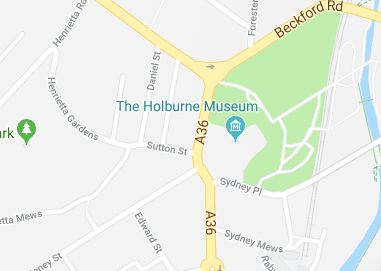
Map of Sydney Gardens and Sydney Place, Bath

Sydney Gardens and Sydney Place

Map of Bath

Main city of Bath, across the Pulteney Bridge from Sydney Place

“Whether you go to see, or to be seen, At Sydney Gardens you’ll be pleased, I ween, Whatever your taste, for prospects or good cheer, Cascades or rural walks, you’ll find them here…”
– Anon, 27 August 1795, poem in local newspaper
–“The History of Sydney Gardens” by Catherine Pitt, The Bath Magazine

Life in the city of Bath was vastly different from life in the country. In Steventon, Mrs Austen oversaw an extensive garden, and used fresh milk from a milk cow and fresh eggs from her chickens to create simple but good food from scratch. She worked alongside her servants in the kitchen and kitchen garden to provide wholesome meals for her family and young boarders, as well as clean clothes and a tidy house. She was a creative poet and a few of her recipes in verse still survive.

If the vicar you treat,
You must give him to eat,
A pudding to hit his affection;
And to make his repast,
By the canon of taste,
Be the present receipt your direction.

First take two pounds of Bread,
Be the crumb only weigh’d,
For the crust the good house-wife refuses;
The proportion you’ll guess,
May be made more or less,
To the size that each family chuses…

(Find the rest of this delightful recipe on this blog at https://janeaustensworld.wordpress.com/2011/04/23/a-receipt-for-a-pudding-by-mrs-austen/)

Imagine the shock this country family felt at having to walk to the green grocer daily, acquire milk from cows kept in city stalls and that was often cut with water, all in an age before refrigeration.


“When proud pied April, dress’d in all his trim,
Has put a spirit of youth in everything.”

yet for the rest of the year the coarse grass is carted to their stalls, or they devour what the breweries and distilleries cannot extract from the grain harvest. Long before “the unfolding star wakes up the shepherd” are the London cows milked; and the great wholesale vendors of the commodity, who have it consigned to them daily from more distant parts to the various railway stations in the metropolis, bear it in carts to every part of the town, and distribute it to the hundreds of shopkeepers and itinerants, who are anxiously waiting to receive it for re-distribution amongst their own customers. It is evident that a perishable commodity which everyone requires at a given hour, must be so distributed.

” –  — from A History of the Cries of London, Ancient and Modern, by Charles Hindley, Project Gutenberg, p 141

This situation for “not so” fresh milk, meat, and vegetables was as similar for the citizens of London as for a small city, like Bath. The Austen’s maid of all work and Austen women purchased “fresh” food on a daily basis, food that was both expensive and often past its “due date.” (Drinking Milk in Regency London, Jane Austen’s World, 2008)

Obtaining decent food supplies in Bath must have been costly for a family living on a parson’s pension. The incessant street cries of the baker, the milkmaid, and other food sellers, even across the Pulteney Bridge in a quieter section of town, must have cut into Jane’s peaceful hours. No wonder her creative juices stalled after her father’s death, as the family moved from place to place (after his pension to his family had been cut off), and before she and her mother and sister found refuge in Chawton Cottage. (Where Jane Lived, Gotta Keep Movin’ blog.)

I confess I possess not a smidgeon of Jane Austen’s writing genius, but the disruption in my life, starting with the years of my father’s slow dying and his death in 2014, and my sweet dog’s sudden fatal illness in 2016, blocked my creative input, both at work and at home.

To be near family, I am moving from a small city with many friends to the suburb of a much larger city., where I know few people. In the process, I am leaving my favorite, unique foodie haunts, small local theater productions, historic city neighborhoods, a short and easy ride to work, and white water rafting downtown on the James River to live in a land of manicured lawns, malls, congested traffic, and national restaurant chains.

Riverside Drive, Richmond, VA

My river walk along the James

Until I regain my footing in early 2019, I don’t anticipate devoting myself to this blog full-time just yet. Thank you, readers, for your understanding. Thank you, Rachel and Tony, for your support.

Vic

Sources:


Inquiring readers, Rachel Dodge has once again submitted a superb article. This time she describes the fathers in Jane Austen’s novels. This Sunday marks Father’s Day in the U.S. I lost my own father four years ago. This article once again proves that my father, in every way, was superior to those described by Jane, making me realize how lucky I am and how smart my mother was to choose him.


In life, Jane Austen enjoyed a close relationship with her father. After his death, Austen wrote these words to her brother Francis: “His tenderness as a father, who can do justice to?” (Austen-Leigh 18). In the same letter, she refers to him as “an excellent Father” and writes of “the sweet, benevolent smile which always distinguished him” (144).

But what of the fathers in Austen’s novels? While some of them show exemplary characteristics, others leave much to be desired.

In Persuasion, Sir Walter Elliot is described as “a conceited, silly father” (5) and a “foolish, spendthrift baronet, who had not had principle or sense enough to maintain himself in the situation in which Providence had placed him” (248). He is more interested in his reflection in the mirror than in fathering his three daughters.

In Northanger Abbey, General Tilney runs a tight ship and dislikes delays. Walks cannot be put off, because he is “hurried for time” and mealtimes must be punctual: In one scene, he is “impatient when his eldest son is late” and expresses “displeasure . . . at his laziness” when he finally comes down to breakfast (154). In another scene, General Tilney is described as “pacing the drawing-room, his watch in his hand, and having, on the very instant of their entering, pulled the bell with violence, ordered ‘Dinner to be on table directly!’” (165).

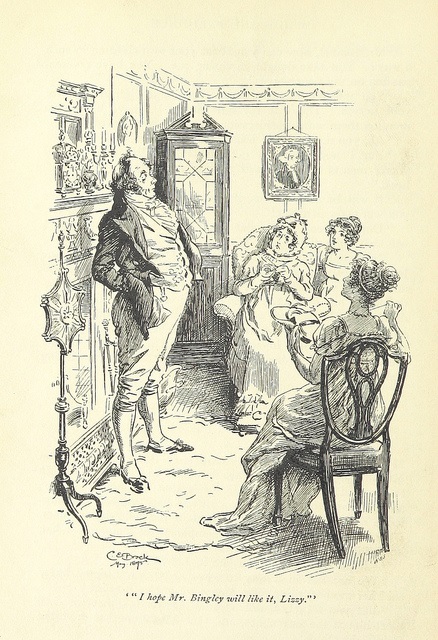
Royalty free image of Mr. Bennet by illustrator Hugh Thomson

1985 edition of Pride and Prejudice, illustrated by Hugh Thomson and published by Macmillan & Co.

In the Bennet household, Mr. Bennet prefers the quiet of his library to the daily activities of family life: “In his library he had been always sure of leisure and tranquillity; and though prepared, as he told Elizabeth, to meet with folly and conceit in every other room of the house, he was used to be free from them there” (71).

In Emma, though Mr. Woodhouse is good-natured and “everywhere beloved” (7), he is most comfortable at home. He’s described on one hand “as a most affectionate, indulgent father” (5), but we also learn that while Emma “dearly loved her father . . . he was no companion for her. He could not meet her in conversation, rational or playful” (7). Austen further explains the intricacies of Mr. Woodhouse here: “He had not much intercourse with any families beyond that circle; his horror of late hours, and large dinner-parties, made him unfit for any acquaintance but such as would visit him on his own terms” (20).

In Mansfield Park, Sir Thomas Bertram is a “truly anxious father,” but he is not “outwardly affectionate” to his children (19). Austen tells us that the “reserve of his manner represse[s] all the flow of [his children’s] spirits before him” (19). Later in the novel, Sir Thomas sees “how ill he had judged” in raising his daughters and that he had “increased the evil by teaching them to repress their spirits in his presence” (463). He feels his “grievous mismanagement” and realizes that his daughters “had been instructed theoretically in their religion, but never required to bring it into daily practice” (463). In his case, Sir Thomas reflects upon, softens, and corrects his own manner.

QUIZ: Which Father is Which?

Finally, the fathers and father figures in Jane Austen’s novels have plenty of interesting advice for their children and fascinating perspectives on the world around them. Test yourself to see if you can guess which father is represented in the following quotes (answer key below):

  1. On One’s Complexion: “I should recommend Gowland, the constant use of Gowland, during the spring months. [She] has been using it at my recommendation, and you see what it has done for her. You see how it has carried away her freckles.”
  2. On Matters of Love: “Next to being married, a girl likes to be crossed a little in love now and then. It is something to think of, and it gives her a sort of distinction among her companions.”
  3. On Being Out of Doors: “It is never safe to sit out of doors, my dear.”
  4. On Early Marriages: “I am an advocate for early marriages, where there are means in proportion, and would have every young man, with a sufficient income, settle as soon after four-and-twenty as he can.”
  5. On the Dangers of Reading: As he had been “found on the occasion . . . with some large books before him, [they] were sure all could not be right, and talked, with grave faces, of his studying himself to death.”
  6. On the Subject of Daughters: “They have none of them much to recommend them,” replied he; “they are all silly and ignorant like other girls; but [she] has something more of quickness than her sisters.”
  7. On a Father’s Role in Parenting: “[He] was a sportsman, [she] a mother. He hunted and shot, and she humoured her children; and these were their only resources. [She] had the advantage of being able to spoil her children all the year round, while [his] independent employments were in existence only half the time.”
  8. On the Care of Ladies in Crowds and Street Crossings: “Come, girls; come . . . come . . . take care of yourselves; keep a sharp lookout!”
  9. On Being Agreeable: “[He], though so charming a man, seemed always a check upon his children’s spirits, and scarcely anything was said but by himself; the observation of which, with his discontent at whatever the inn afforded, and his angry impatience at the waiters, made [her] grow every moment more in awe of him, and appeared to lengthen the two hours into four.”
  10. On Girls Receiving Letters from Lovers: “Whether the torments of absence were softened by a clandestine correspondence, let us not inquire. [Her parents] never did—they had been too kind to exact any promise; and whenever [their daughter] received a letter, as, at that time, happened pretty often, they always looked another way.”

As you reflect on Austen’s literary fathers, may these examples increase your appreciation of the fathers, grandfathers, uncles, and mentors for whom you are most thankful today.

Answer Key: 1) Sir Walter Elliot, Persuasion, 146. 2) Mr. Bennet, Pride and Prejudice, 137-8. 3) Mr. Woodhouse, Emma, 48. 4) Sir Thomas Bertram, Mansfield Park, 317. 5) Mr. Musgrove, Persuasion, 82. 6) Mr. Bennet, Pride and Prejudice, 5. 7) Sir John Middleton, Sense and Sensibility, 32. 8) Mr. Price, Mansfield Park, 403. 9) General Tilney, Northanger Abbey, 156. 10) Mr. and Mrs. Morland, Northanger Abbey, 250.

About the Author

Rachel Dodge is a Christian author, college English instructor, and Jane Austen speaker. A true Janeite at heart, she loves books, bonnets, and ball gowns. For more of Rachel’s literary ramblings, you can follow her at http://www.racheldodge.com or on Facebook or Instagram (https://www.instagram.com/kindredspiritbooks/).

Works Cited:

Austen, Jane, and R. W. Chapman. The Oxford Illustrated Jane Austen. Oxford UP, 1988.

Austen-Leigh, William and Richard Arthur Austen-Leigh. Jane Austen: Her Life and Letters, A Family Record. New York: Barnes & Noble, 2006.