By Brenda S. Cox
“Now we are come from church . . .” (Jane to Cassandra, London, March 5, 1814)
In Jane Austen’s letters and novels, she often mentions church. A quick search of my Complete Works of Jane Austen shows 119 uses of the word “church” plus 31 uses of “chapel.” The church was an important part of Jane’s life.
A number of different churches are associated with Austen and her family, and this past summer in England I had the privilege of visiting many of them. In the coming months, I will share photos with you of some of these special places.
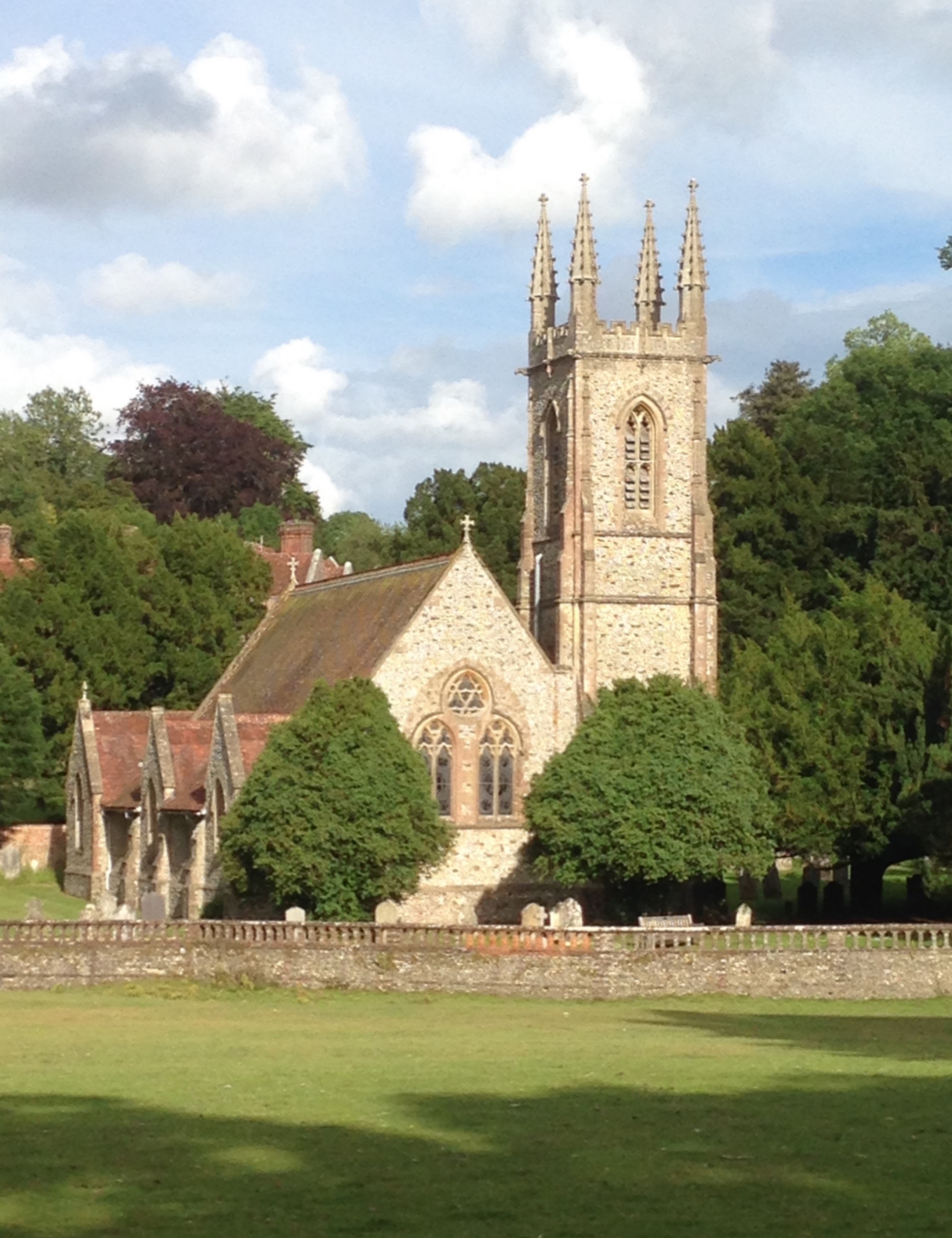
Country Churches in Austen’s England
Most of the Austen family churches are small country churches, like the churches the Bennets, Darcys, Tilneys, Dashwoods, Woodhouses, and others would have mostly attended.
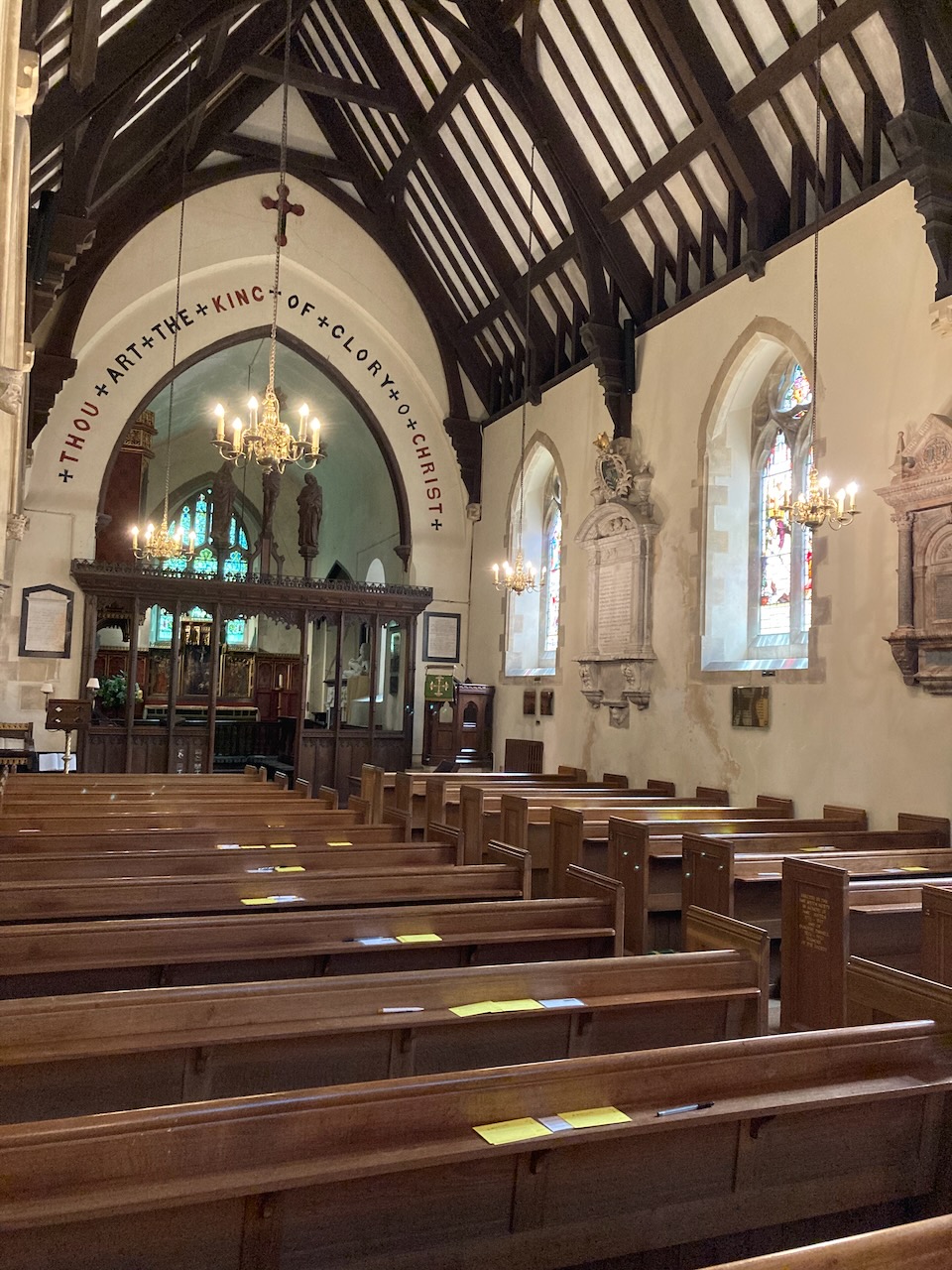
Most country churches at that time were simple, whitewashed inside, with perhaps the Ten Commandments hung on the wall somewhere, along with monuments (usually plaques on the walls) commemorating people from the squire’s family or previous rectors. A simple Communion table at the front, with a railing in front of it, would have served as the altar. The part of the church around the altar is called the chancel.



Preaching was an important part of each service, and the pulpit might have been one, two, or three levels high. Many churches had a gallery, a balcony where the choir, called the Singers, would sit, if they had music. From the top level of the pulpit, the clergyman could preach to those in the gallery, as well as see down into the box pews, pews surrounded by walls. These box pews were generally owned by the local gentry, who could listen in privacy and be protected from drafts of cold air. Others sat on benches.
Country families visiting Bath or London would have attended larger churches. I’ve speculated previously about where Jane herself (and Catherine Morland) might have worshiped in Bath.
Country Churches Today
The country churches we visited this summer now have small congregations for regular services; perhaps a dozen or so people on a Sunday morning. However, they occasionally host baptisms, weddings, and funerals, with much larger attendance. Those events also provide income to the churches. These small churches may gather one to two hundred people for holiday services such as Harvest, Christmas, or Easter. They sometimes also host local school events, concerts, and community events.
St. Nicholas’ Church, Chawton, Today
Let’s start with the Chawton church. This is the one Jane Austen fans can most easily visit, since it is next to Chawton House and a short walk from Jane Austen’s House. Jane Austen attended this church from 1809 to 1817, while she and her mother, sister, and friend were living in Chawton Cottage (now Jane Austen’s House, a museum). During that time, she wrote or rewrote all her novels, and four of them were published. (The other two were published shortly after her death.)
The church is named after St. Nicholas, like the church in Steventon where Austen grew up; that’s a little confusing.

Nowadays a small team of clergy usually serve a group of country parishes. The Chawton church is now part of the Northanger Benefice, which includes eight small rural parishes, each with its own church.
While services are offered somewhere in the area every Sunday, most small churches do not have services every week. At the church in Chawton, three Sunday services are held per month.
One is led by a layperson (not an ordained clergyman or clergywoman). In the hour-long lay service I attended during Regency Week, a woman from the congregation led the service, reading from the Book of Common Prayer, while the congregation read the responses. The congregation sang hymns: “Lord of All Hopefulness,” a lovely traditional hymn, as well as “Kum Ba Yah” and “Morning Has Broken,” perhaps chosen because they were familiar and easy to sing. There was no sermon.
The leader read the banns for two couples who plan to get married in the church. I was told that, in order to be married there, a couple had to attend the church at least six times before the wedding, and they needed some connection with the parish or benefice.
The congregation was welcoming and kind to my friend and myself as visitors. We enjoyed the fellowship before and after the service.
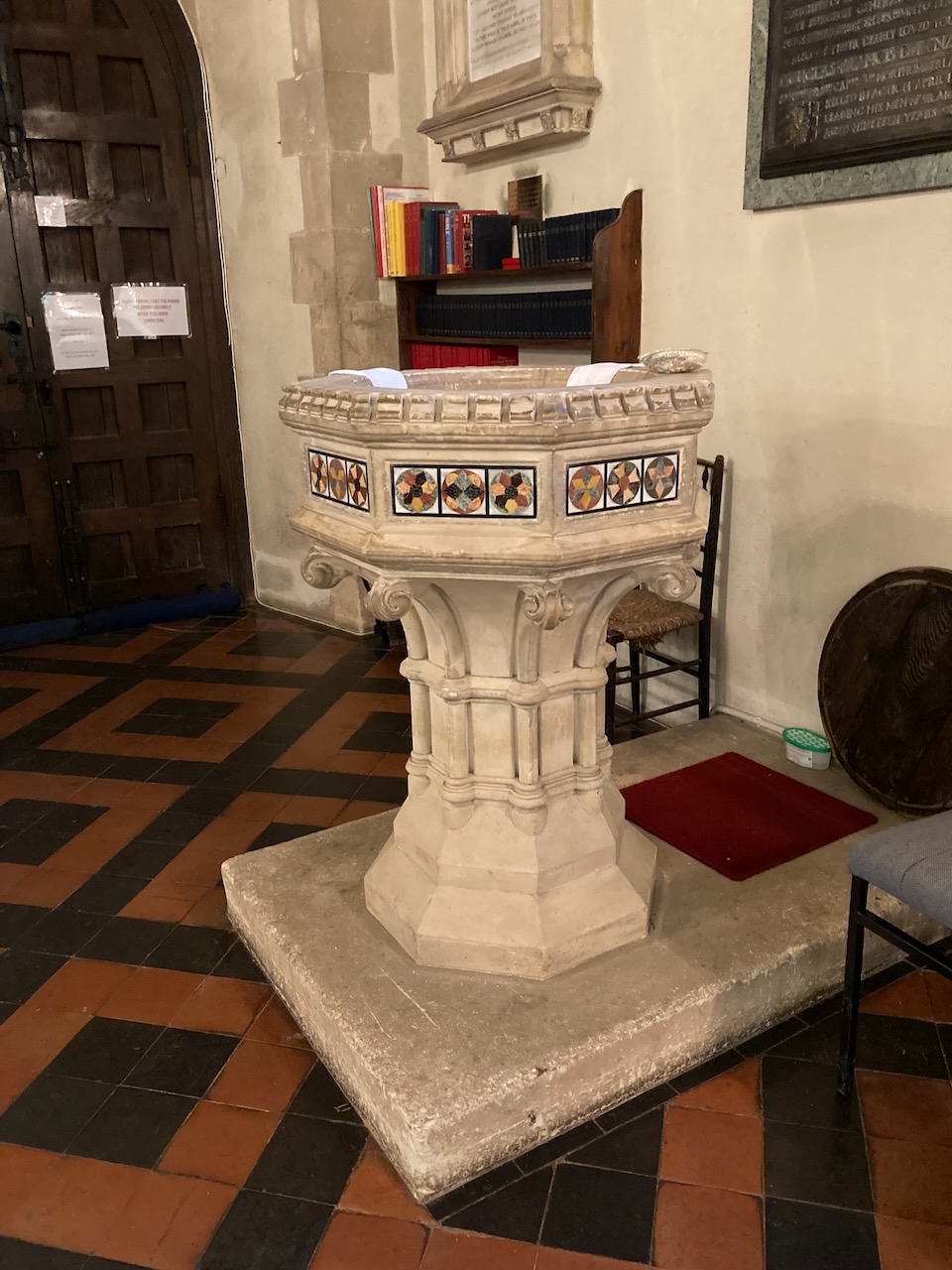
The service I attended the following Sunday included the baptism of a nine-month-old boy. About forty or fifty people attended. (I was told anyone could be baptized in the church, with the payment of a small fee.) The rector in charge of the benefice, Rev. Carrie Walshaw, officiated. (The Church of England has ordained women since 1994.) The baby was dedicated with his parents, two godfathers, and one godmother (a baby girl would have two godmothers and one godfather), and baptized at the Victorian font at the back of the church. A candle was lit and given to the parents as a symbolic remembrance. Rev. Walshaw preached a sermon about baptism and salvation, and we sang hymns with organ music. Rev. Walshaw’s husband was the organist; the organ is an electronic one that sounds like a real pipe organ (to me, at least). It is hidden behind the pipes of the old organ which is now too expensive to maintain.

History of St. Nicholas’ Church, Chawton
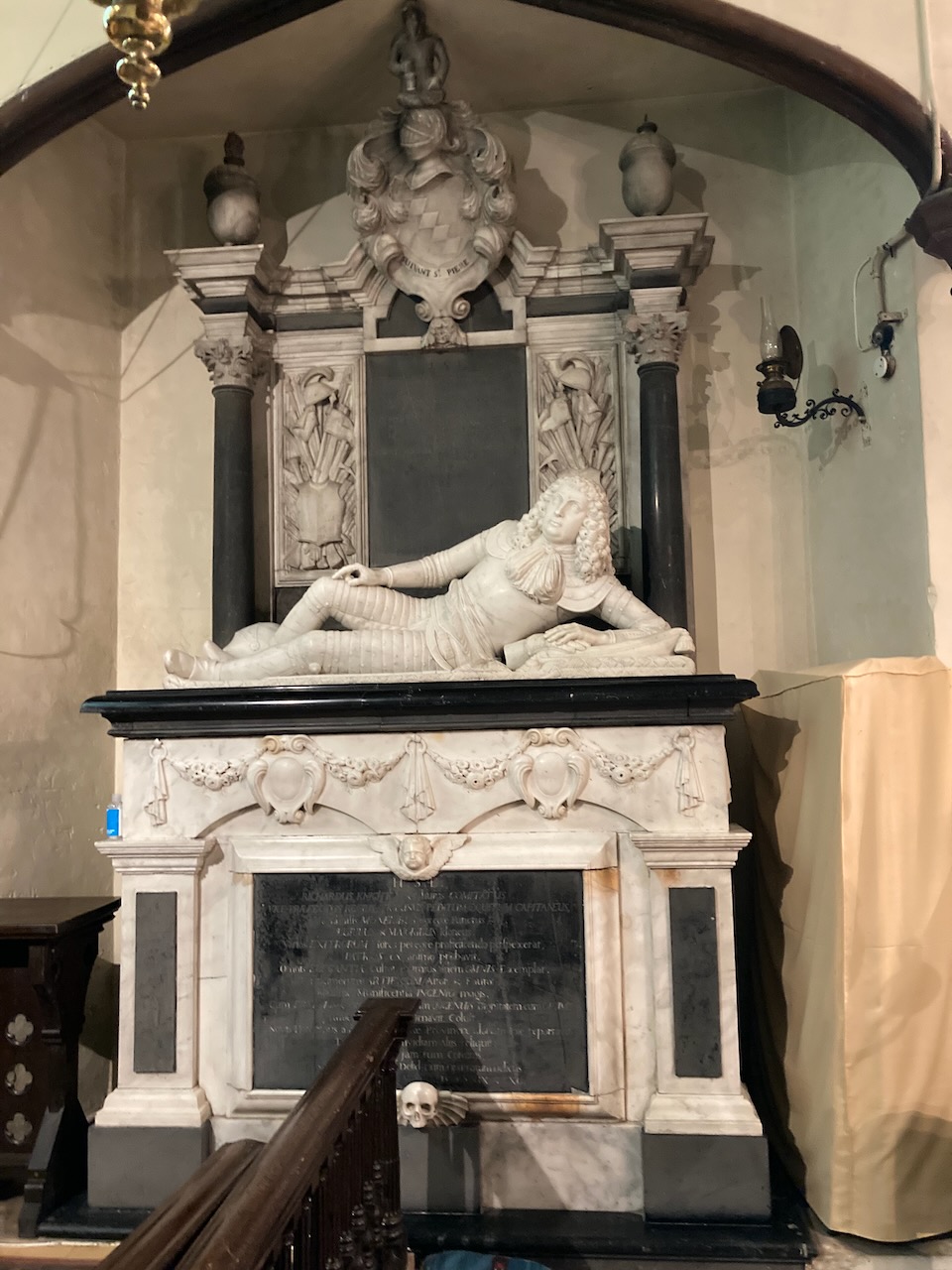
There has been a church at Chawton since at leat 1270 AD. The current church building, however, is not the same one Austen worshiped in. A fire in 1871 destroyed most of that church. The chancel (the area around the altar at the front of the church) remains, and most of the memorials were preserved, along with one original pew sitting against the back wall. So those are still as Jane Austen would have seen them, though the chancel has been extensively redecorated.
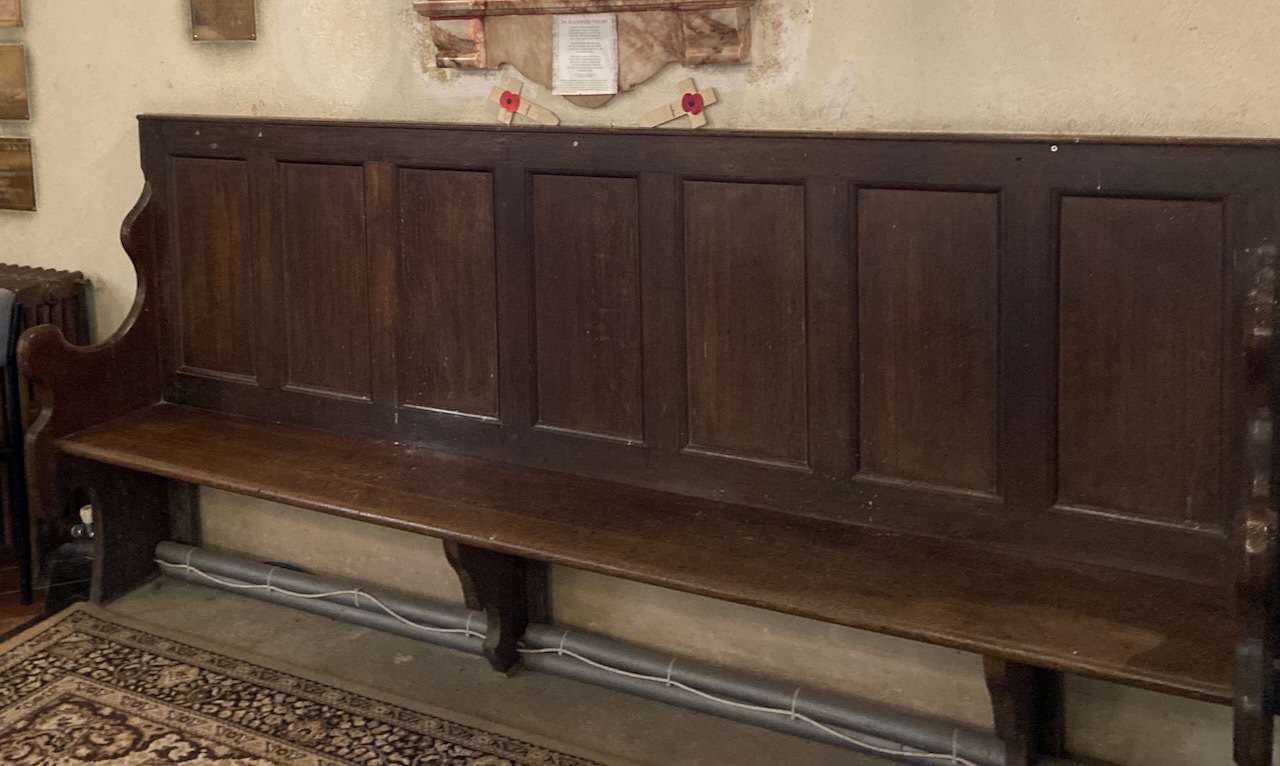
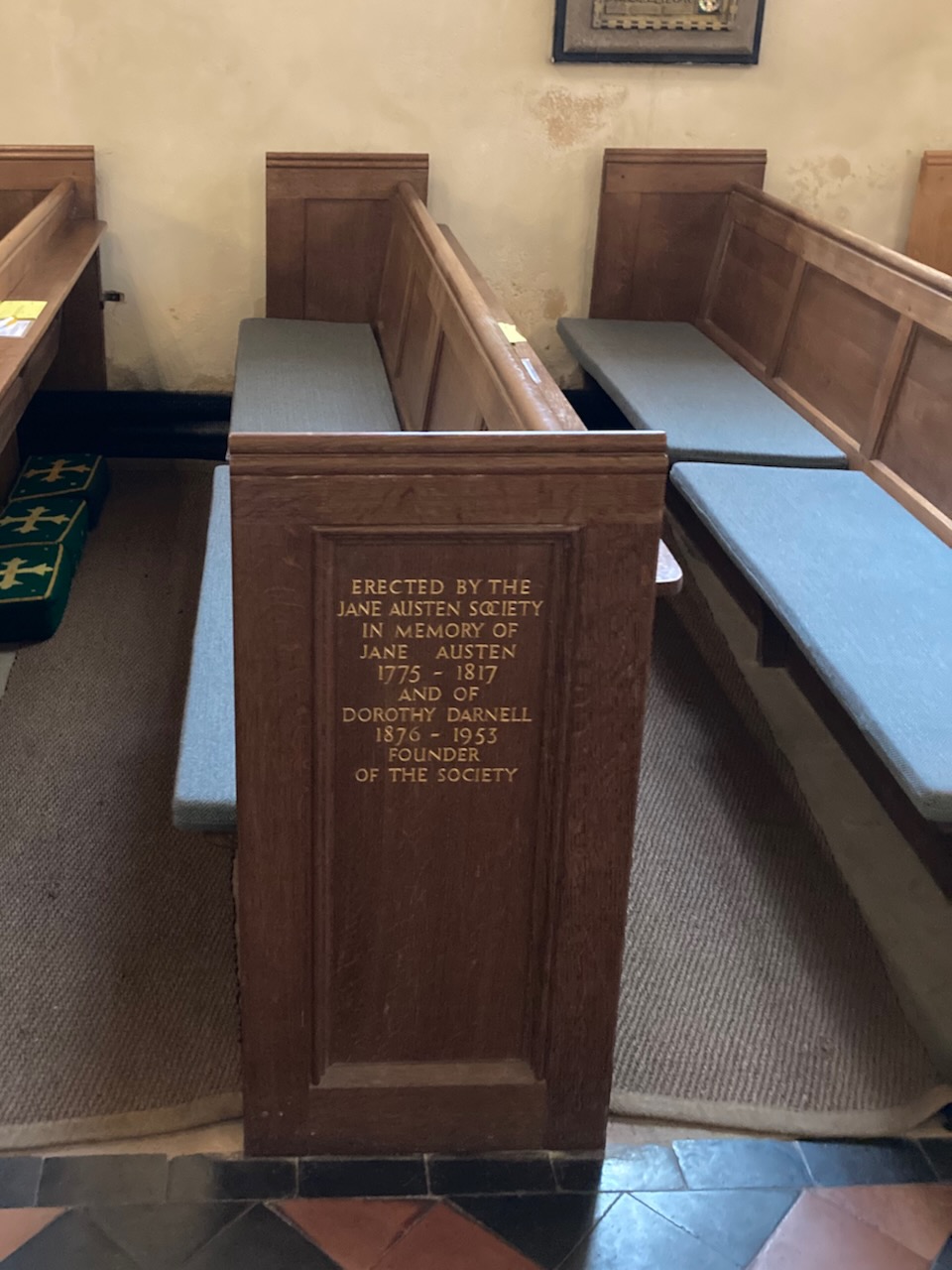
The rest of the church, including the tower, was rebuilt in 1872 and 1873 in a Victorian style. Several of the pews are marked as memorials to various people, including one for Jane Austen, though these pews are all modern.
Clergy
For each parish church in England, someone owns the advowson, the right to appoint the next clergyman. The Knight family (who adopted Jane’s brother Edward) owned the advowson for Chawton from 1578 until 1953. At that point, they gave it to the Bishop of Winchester, when Chawton became part of a benefice with nearby Farringdon.
During Austen’s time, the Knights chose Rev. John Papillon as rector of Chawton. In one of her letters, Jane refers to a family joke that she was supposed to marry Rev. Papillon, regardless of how either of them felt about it (Dec. 9, 1808).
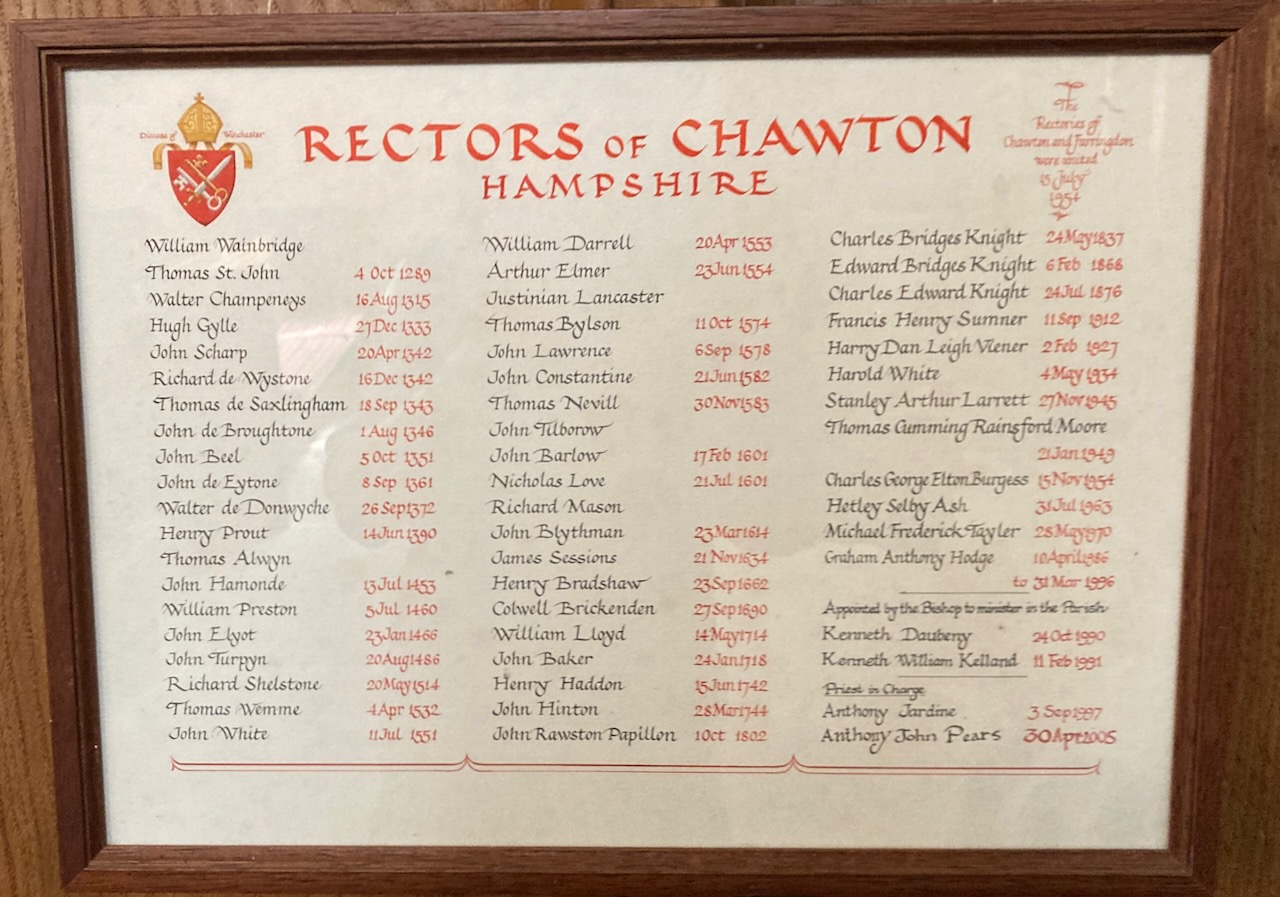
In 1817, Jane’s brother Henry Austen served briefly as curate at Chawton and at St. Lawrence the Martyr’s, parish church of the nearby market town of Alton. In 1837, Edward Knight installed his son, Charles Bridges Knight, as rector of Chawton. The rectory is the white house at the end of the lane leading to the church and Chawton house, just across the street. It is now a private home.

Updating the Church
A guidebook to Chawton Church tells us, “The parish has increased little in population since the 19th century and still only has about 300 adults living in it so that the shortage of money which is the lot of most churches in tiny parishes is likely to continue in this, the 21st century.” The building is a grade 2 listed building in the UK, meaning it is “of special interest, warranting every effort to preserve it.”
The church therefore has to get permission to make any changes. Recent changes are the addition of two restrooms and a small kitchen in the back of the church. The kitchen is made of oak matching the pews, with a cover to hide the sink. These amenities make the church more appealing as a site for weddings and other community events. Income from such events helps keep the church running. The Chawton church has hosted five weddings this year so far.
The church also has a children’s area toward the back, with toys. This helps keep children occupied, especially during the regular services geared for families.

Ring the Bells
The church has a peal of six bells, which were ringing during the baptism service I attended. Three of them would have been heard by Jane Austen; they are dated 1420, 1621, and 1748. Another original bell was re-cast and re-hung as one of the newer bells. During Austen’s time, the church had a West Gallery, a balcony which may have been used by a choir or musicians, but the rebuilt church has no gallery.


Lych Gates and Graveyard
Outside, the church can be approached from two traditional lych gates, one in front, one in the back. The word lych (pronounced litch) is from an Anglo-Saxon word for corpse. The lych gate was the entrance to the church yard, which was a cemetery. When a person died in the parish, their body might be set in the lych gate for a time, until the funeral was held.

The Chawton churchyard includes many headstones for people buried there, some of which are so ancient they are illegible.
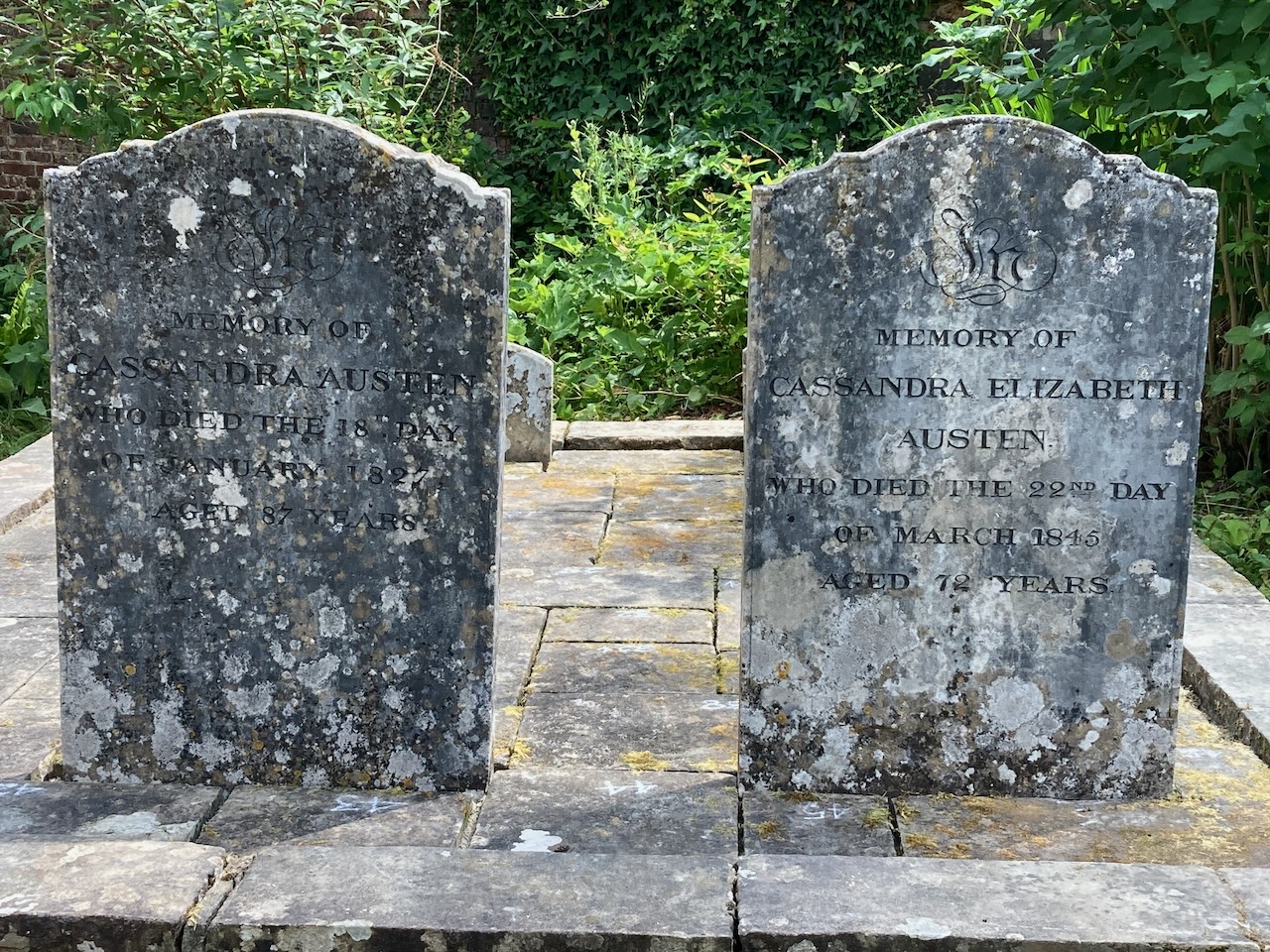
Jane Austen’s mother and sister are buried in the churchyard. Their graves were recently cleared of huge, deep weeds. But the lettering on the stones is still difficult to read.

Honoring Jane
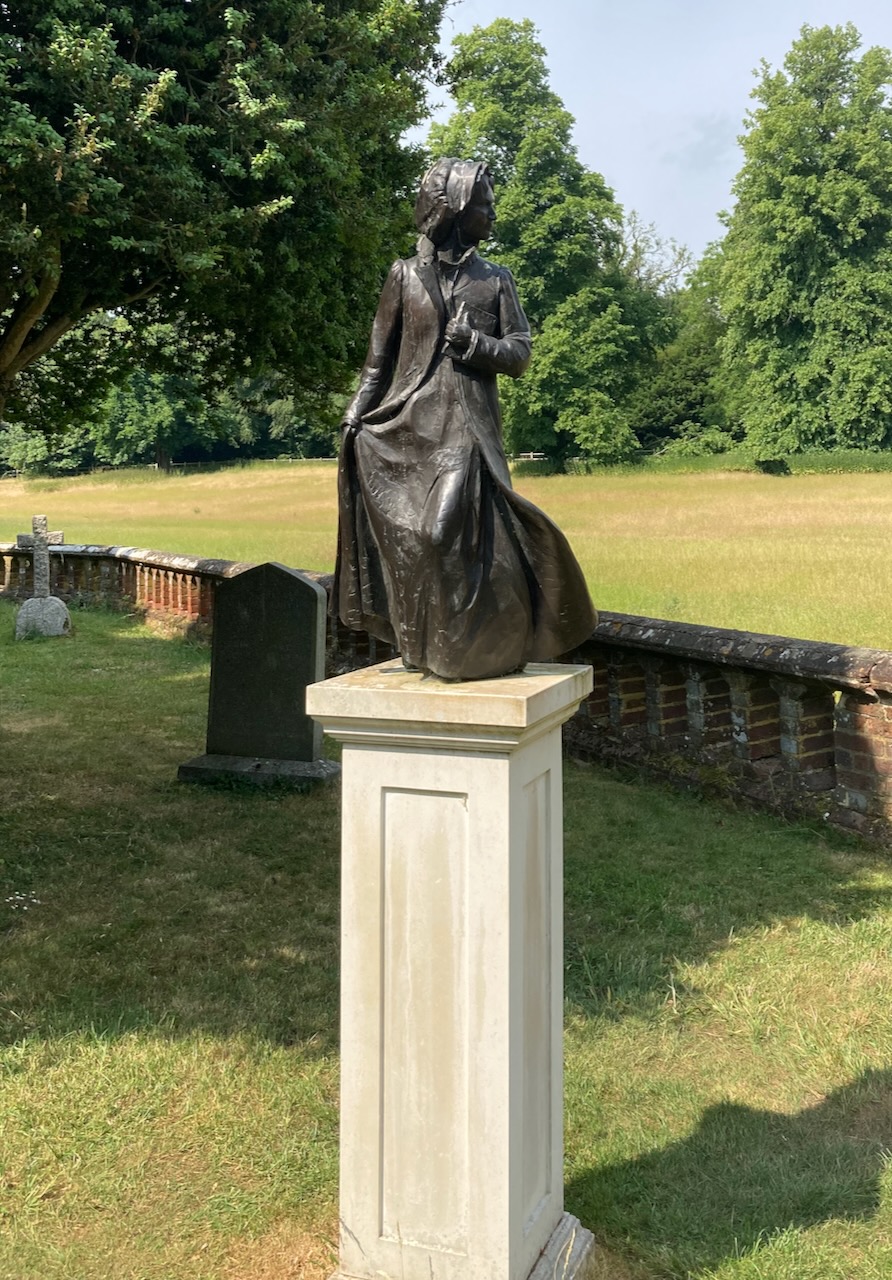
A small statue of Jane Austen now stands in front of the church, erected in 2018. The statue is the maquette, the prototype, for the life-size statue in Basingstoke. It shows Austen walking, carrying a book.
I hope you can visit the Chawton church and enjoy its peace and beauty.
Resources
Guides to Chawton church and other Austen-related churches are available from Jane Austen Books, or you can buy them at the church if you visit it.
A Walk Through Chawton will give you a wider view of Austen-related places to visit in the area.
Donations
The Chawton church is always open to visitors like yourself. According to a sign in the church, however, it costs over £75 a day to keep the church operating. If you should wish to make a donation directly to the church, churchwarden Sandra Martin has set up this site, which Rev. Lesley Leon of the Northanger Benefice shared with us: Chawton church donations.
JASNA provides support for special projects in some Austen family churches, including this one. If you are a JASNA member, donations to the churches fund for such projects are appreciated. (You can donate when renewing your membership, or sign in to your account and go under the drop-down menu to “Donate to JASNA or English Institutions.”)
Posts on other Jane Austen Family Churches
Adlestrop and the Leigh Family
Great Bookham and Austen’s godfather, Rev. Samuel Cooke
Ashe and Jane’s Friend Mrs. Lefroy
Brenda S. Cox is the author of Fashionable Goodness: Christianity in Jane Austen’s England. She also blogs at Faith, Science, Joy, and Jane Austen.







 Jane Austen's World