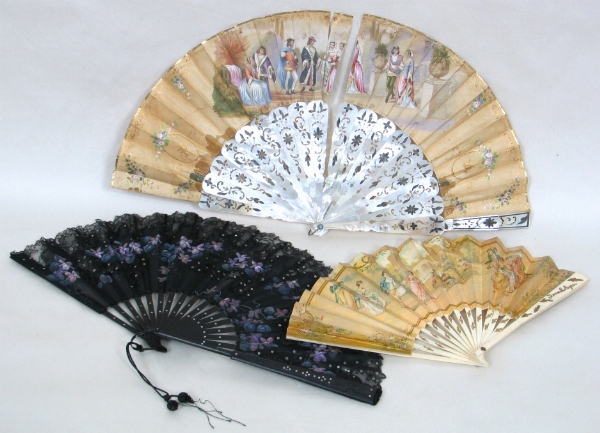
Regency fans could be beautiful or plain. All served to move air and cool the user.
Ceilings were higher, so the heated air had a place to rise, and walls were thicker, which kept rooms and basements cooler for longer. Hand held fans were popular, and one source I found said that gentlemen would sport them as well. The rich had mechanisms in the tropics whereby ceiling fans were rotated by strings and pulled by slaves or servants.

Carnfunnock ice house
Big blocks of glacier ice or blocks of ice cut from frozen rivers were hauled up river by ship into the countryside, covered in straw and burlap, and stored in ice houses that were dug into hillsides or were largely underground.

Cutting and hauling river ice. This image is from St. Petersburg, Russia, but the custom of cutting and transporting ice was widespread.
Ice cream was available to those who could afford it in such places a Gunther’s or made at home by the cook.
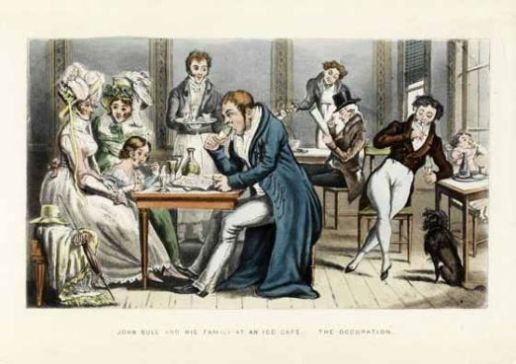
John Bull and his family at an ice cafe, 1815. Image@Newcastle University
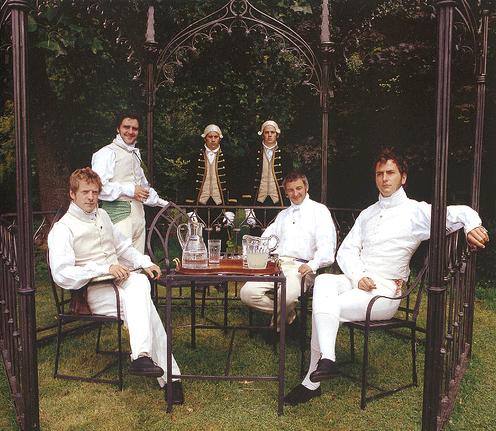
Regency gentlemen at a country house. Note that they are wearing light clothes without jackets. Sitting under a gazebo, they have pitchers of water at hand. One must pity the footmen in full uniform and wig! Image@Regency House Party







 Jane Austen's World