Feeds:
Posts
Comments

Posts Tagged ‘Rachel Dodge’

Inquiring readers,

Praying with Jane: 31 Days through the Prayers of Jane Austen, Rachel Dodge, and a bookmark with the quote

Praying With Jane: 31 Days Through the Prayers of Jane Austen, Rachel Dodge, Bethany House, 2018

A “Praying With Jane” blog tour will begin October 31st on this blog. I am privileged to showcase Rachel Dodge’s deeply felt first book, which centers around three prayers Jane Austen wrote that have miraculously survived, given the destruction of so much of her original papers.

A whole family assembling regularly for the purpose of prayer is fine!” – Jane Austen, Mansfield Park

Many readers of this blog have come to know Rachel in the past year and a half through her blog post contributions, her exquisite writing style, and her extensive knowledge of Jane Austen’s life. This book is a labor of love for Rachel. Divided into 31 days, readers are guided for one month to a daily examination of sections of the three prayers until, at the end of the book, they have thoroughly studied Jane’s prayers.

My sister-in-law, Carol, who read Pride and Prejudice years ago and knows little of Jane Austen’s novels and characters, other than the movies she’s seen, has read the book for me.

I was skeptical about the book at first, because I know so little about Jane Austen, but I found Rachel’s choice of scriptures to be inspiring,”

Rachel includes two scriptures per day. An example of one is included in the samples of the first day of prayer below:

I have loved you with an everlasting love; I have drawn youth unfailing kindness.” – Jeremiah 31:3 NIV

This slideshow requires JavaScript.

As mentioned, the blog tour begins here October 31st! Other blogs on the tour (in random order) are:

Diary of an Eccentric | So Little Time…| Laura’s Reviews | Calico Critic | Jane Austen in Vermont| My Love for Jane Austen | A Bookish Way of Life | Burton Reviews | My Jane Austen Book Club | Delighted Reader Book Reviews | Laughing With Lizzie | Becoming |(and, of course,) Jane Austen’s World

Please join us as we examine this lovely addition to the canon of works by Jane Austen’s ardent admirers!

Information about Praying With Jane is available at

Rachel  Dodge’s posts on this blog

Follow Rachel Dodge at www.racheldodge.com


Read Full Post »

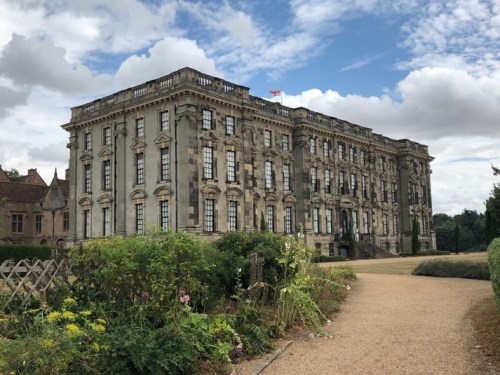
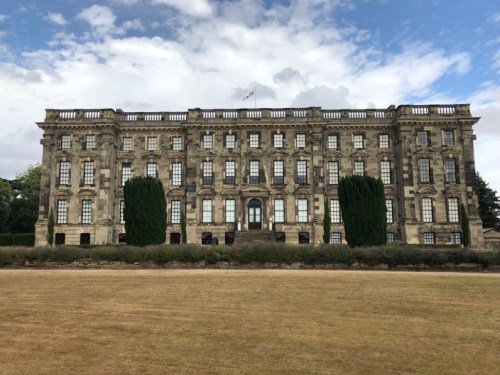
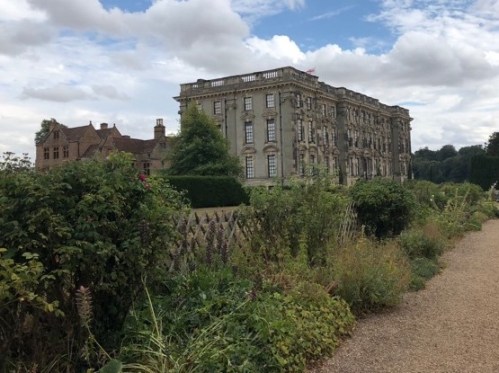
On a visit to see my relatives in Warwick, England, last month, I stopped at Stoneleigh Abbey. It was late in the day and the house tours had concluded, so I purchased a garden ticket and stepped through the wide, low door from the Gatehouse into the garden. Once inside, I followed a small path, lined on one side with tall flowers and a wooden fence. As the imposing front face of Stoneleigh came into view, I stopped and stared. In person, Stoneleigh Abbey is absolutely stunning.

1 Stoneleigh Abbey-View from lane

Stoneleigh Abbey: View from lane

[Photo: Rachel Dodge]


Jane Austen went to Stoneleigh Abbey in 1806 with her mother and Cassandra during a visit to Mrs. Austen’s first cousin, Reverend Thomas Leigh. The Austen women stayed at Leigh’s Adlestrop estate. During their visit, they also went with him to Stoneleigh Abbey, which he had just inherited. It’s believed that Austen drew inspiration from that trip for the Sotherton outing in Mansfield Park.

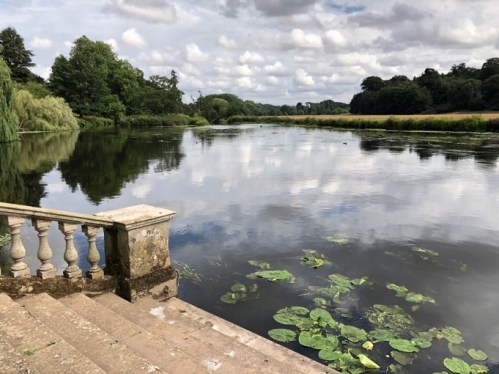
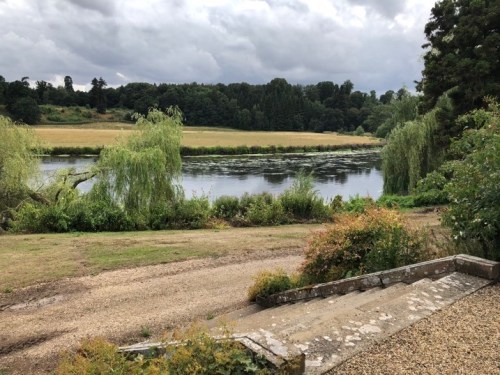
During the Regency period, the trend in landscape gardening aimed to make the gardens and surrounding land of grand estates look more natural and inviting. Enclosure walls were taken down, streams were redirected, long avenues of trees were chopped down, and new trees were planted in natural clumps. The orderly borders and rows of previous generations gave way to open spaces, grazing sheep or cattle, Grecian urns, and playful fountains.

2 Stoneleigh Abbey-River Avon views

3 Stoneleigh Abbey-River Avon views

Stoneleigh Abbey: River Avon views

[Photos: Rachel Dodge]


In Jane Austen and the English Landscape, Mavis Batey closely chronicles the landscape changes made to Adlestrop and Stoneleigh during Thomas Leigh’s day as well as the Red Book design plans proposed by Humphrey Repton. Austen was familiar with Repton’s Red Books, in which Repton presented clients with detailed drawings and paintings of his proposed changes.

During her visit to Adlestrop, Austen had access to Repton’s book, Observations on the Theory and Practice of Landscape Gardening, which features examples of his “before and after” overlays, including his design plans for Adlestrop: “Jane Austen’s first real acquaintance with Repton’s work was at Adlestrop in Gloucestershire, where her cousin the Revd Thomas Leigh had consulted him in 1799” (Batey 81). By the time Austen visited Adlestrop in 1806, the improvements were complete.


When Austen saw Stoneleigh, no alterations had been made. Her brother, James, visited Stoneleigh in 1809, just after Repton had completed the Red Book for Stoneleigh (89). It’s likely that James provided the Austen women with updates on the progress there.

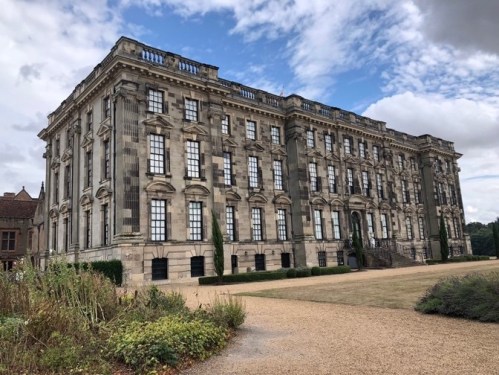
4 Stoneleigh Abbey-Front Approach (close-up)

Stoneleigh Abbey: Front Approach (close-up)

[Photo: Rachel Dodge]

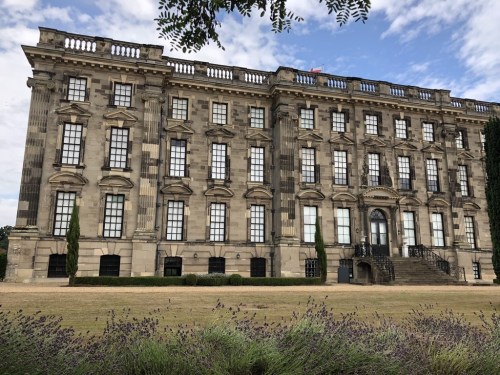
5 Stoneleigh Abbey- Front

Stoneleigh Abbey: Front

[Photo: Rachel Dodge]


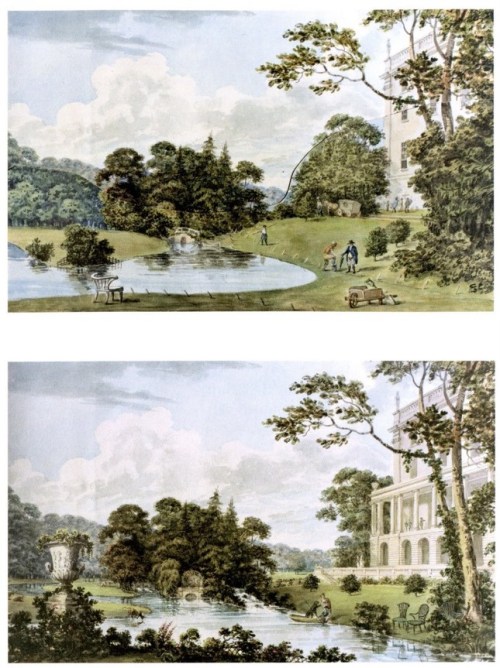
Often, Repton’s improvements included redirecting nearby bodies of water, as Repton’s Red Book shows in this “before and after” of the flow of the River Avon next to Stoneleigh Abbey:

6 Stoneleigh Abbey-Repton_s Red Book “Before and After” (River Avo)

Stoneleigh Abbey: Repton’s Red Book “Before and After” (River Avon)

[Pith+Vigor, May 8, 2013]


Austen was evidently inspired by Repton’s Red Books and the changes made to Adlestrop, as well as those proposed at Stoneleigh. During the group outing to Sotherton in Mansfield Park, Repton’s name is mentioned in reference to the changes Mr. Rushworth is considering:

Now, at Sotherton we have a good seven hundred [acres], without reckoning the water meadows; so that I think, if so much could be done at Compton, we need not despair. There have been two or three fine old trees cut down, that grew too near the house, and it opens the prospect amazingly, which makes me think that Repton, or anybody of that sort, would certainly have the avenue at Sotherton down: the avenue that leads from the west front to the top of the hill . . . (Mansfield Park)


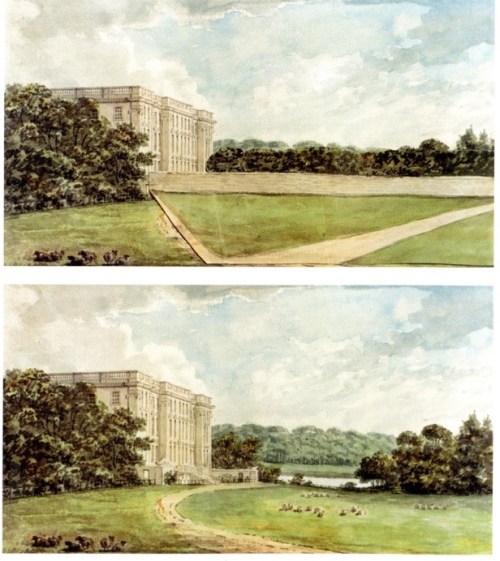
There are also similarities between the Stoneleigh improvements and those Austen describes in Mansfield Park, such as the removal of a walled enclosure:

Stoneleigh had a walled entrance forecourt on the imposing west front, which had been added by Smith of Warwick in 1726. A walled enclosure was the first object for “fault-finding” when Jane Austen’s improver, Henry Crawford, led the party out to ‘examine the capabilities of that end of the house.’ Anticipating Repton he exclaimed, “I see walls of great promise.” Repton’s before and after illustrations show how essential the removal of these walls were. (Batey 90)

7 Stoneleigh Abbey-Repton_s Red Book “Before and After” (stone wall) (2)

Stoneleigh Abbey: Repton’s Red Book “Before and After” (stone wall)

[Pith+Vigor, May 8, 2013]


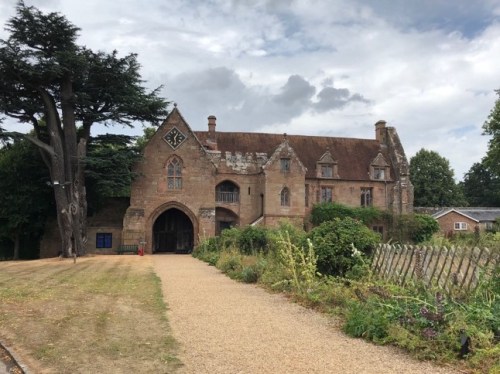
In The World of Jane Austen, Nigel Nicolson also provides a history of the Stoneleigh architecture: “It had been a Cistercian Abbey . . . founded in 1143” (141). When it came into the Leigh family after the Dissolution, an Elizabethan mansion was built. “The gatehouse was built by the sixteenth Abbot of Stoneleigh in 1346, and is the only substantial structure of the medieval abbey to survive” (146). The gatehouse still stands today (pictured below). The “entrance front” to the Great House was built in 1714.

8 Stoneleigh Abbey-Gatehouse

Stoneleigh Abbey: Gatehouse

[Photo: Rachel Dodge]


Behind the gray-stoned front face of Stoneleigh Abbey stands an older, Elizabethan house (142). The internal courtyard in the latter “was once the cloister of the medieval Abbey . . . remodeled to form the sixteenth-century house” (145). During their visit, Mrs. Austen commented on the interior of Stoneleigh, describing “the state bedchamber with a dark crimson Velvet Bed: an alarming apartment just fit for a heroine” (Batey 88).

9 Stoneleigh Abbey-Red brick Elizabethan portion of house

Stoneleigh Abbey: Red brick Elizabethan portion of house
[Photo: Rachel Dodge]

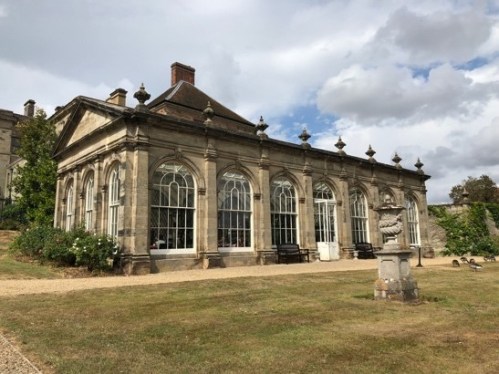
Today, visitors to Stoneleigh may enjoy an afternoon Cream Tea (tea and scone with clotted cream and jam) or a more elaborate Jane Austen Tea (http://www.stoneleighabbey.org/afternoon-tea) in the outdoor Orangery Tea Room. For those who want to spend more time on the grounds, there is a Jane Austen-themed tour of the house and a Repton Walk landscape tour available on certain days and times (reservations are encouraged for each).

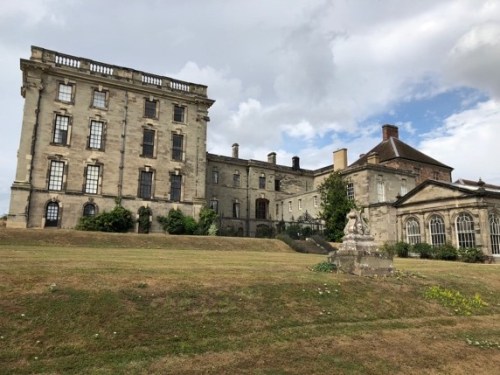
10 Stoneleigh Abbey-Side view (from River Avon walk)

Stoneleigh Abbey: Side view (from River Avon walk)
[Photo: Rachel Dodge]

11 Stoneleigh Abbey-Orangery Tea Room

Stoneleigh Abbey: Orangery Tea Room
[Photo: Rachel Dodge]

One of the many delights of the Stoneleigh gardens is the lavender that grows alongside the walks. I visited on a stormy, breezy summer afternoon, and the smell of lavender filled the air. The Gatehouse has a small gift shop, and I bought dried lavender and Stoneleigh Abbey honey there, which I took as a hostess gift to my cousin that evening.

12 Stoneleigh Abbey-Lavender plants

Stoneleigh Abbey: Lavender plants

[Photo: Rachel Dodge]

Landscape architects still refer to Repton’s Red Books today. On Pith + Vigor, you can view an entire gallery of Repton’s Red Book images in Rochelle Greayer’s article, “Before & After: Humphry Repton.” [http://www.pithandvigor.com/garden/before-after/before-after-humphry-repton]

To view all of the original images from Humphrey Repton’s Red Book for Stoneleigh Abbey, please visit: http://www.stoneleighabbey.org/red-book.


Rachel Dodge is an author, college English instructor, and Jane Austen speaker. A true Janeite at heart, she loves books, bonnets, and ball gowns. For more of Rachel’s literary ramblings, you can follow her at www.racheldodge.com or on Facebook or Instagram (https://www.instagram.com/kindredspiritbooks/). Her book, Praying with Jane: 31 Days Through the Prayers of Jane Austen releases October 2, 2018 (Bethany House Publishers).

Works Cited:

Batey, Mavis. Jane Austen and the English Landscape. Chicago: Chicago Review Press, 1996.

Greayer, Rochelle. “Before & After: Humphry Repton.” Pith + Vigor, 8 May 2013, http://www.pithandvigor.com/garden/before-after/before-after-humphry-repton.

Nicholson, Nigel. The World of Jane Austen. London: Orion Publishing Group, 1991.


Read Full Post »

you want to hear about the wedding; and I shall be happy to tell you, for we all behaved charmingly.” –Emma

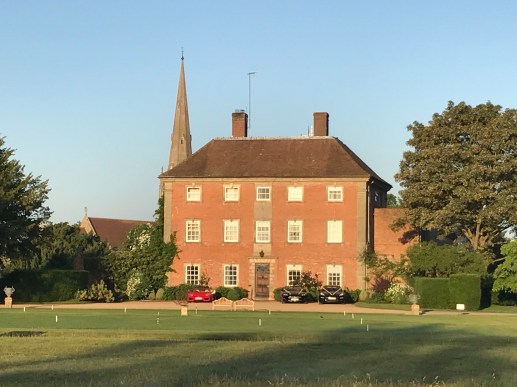
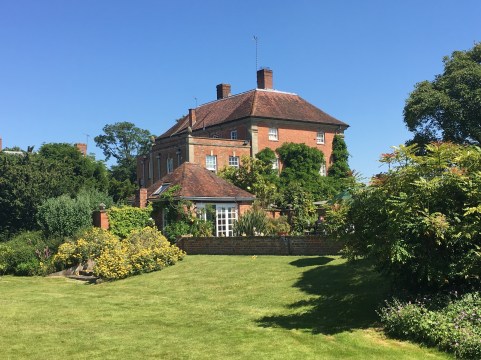
My husband and I were invited to a family wedding in England last June. The venue: Sherbourne Park, a Grade II Georgian house on a large estate dating back to 1730, just a few miles from Warwick and Stratford-upon-Avon. From the moment I first saw photos of Sherbourne Park, I felt a bit like a heroine in one of Jane Austen’s novels. I imagined myself walking the beautiful grounds, toasting the happy couple, and exploring as much of the house as possible.

Sherbourne House Exterior

Sherbourne Park. Image 1 by Rachel Dodge

You can imagine the added thrill I felt when I discovered we were also invited to stay the night at the “great house” after the wedding. My response was similar to that of Catherine Morland’s when she received her invitation to visit Northanger Abbey:

[Sherbourne Park]! These were thrilling words, and wound up [my] feelings to the highest point of ecstasy. [My] grateful and gratified heart could hardly restrain its expressions within the language of tolerable calmness. To receive so flattering an invitation! To have [my] company so warmly solicited! (NA 140)

With Sherbourne Park “on my lips,” I penned a quick “Yes!” on the reply card and began planning our trip.


Dressing the Part

Dress and hat at the wedding at Sherborne

Image by Rachel Dodge

As one of the “California relatives,” I certainly didn’t want to wear the wrong thing and open myself up to comments such as Mrs. Allen’s: “There goes a strange-looking woman! What an odd gown she has got on! How old-fashioned it is! Look at the back” (NA 23). Though I agree that a “woman can never be too fine while she is all in white” (MP 222), I knew I should leave that to the bride. Having “the greatest dislike to the idea of being over-trimmed” like Mrs. Elton, I decided that “a simple style of dress” would be “infinitely preferable to finery” (E 302).

My aim:

“nothing but what is perfectly proper” (MP 222).

The Question of Hats

Like Austen herself, I decided to wait until I arrived in England to “begin my operations on my hat, on which . . . my principal hopes of happiness depend[ed]” (Letters 17). Our English relatives assured us that many women would wear hats or fascinators. In Warwick, I found a small millinery shop filled with a variety of hats and fascinators. With the help of the capable shopkeeper, I found the perfect fascinator to match my gown. And unlike Lydia Bennet, I did not feel the need to “pull it to pieces” to see if I could “make it up any better” (PP 219).

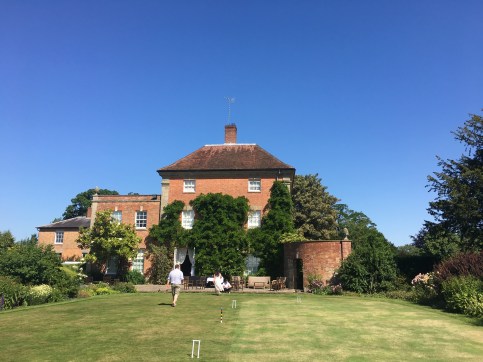
Sherbourne Park

Sherbourne house exterior 2

Sherborne Park exterior image 2 by Rachel Dodge

The day of the wedding, we dressed in our finery and drove to Sherbourne Park, a 2,000-acre estate in Warwickshire. Tucked far back from the main road, the entrance was difficult to find, but at last we found the long, tree-line driveway. Much like Elizabeth Bennet, I “watched for the first appearance of [Sherbourne Park] with some perturbation” (PP 245). When “at length” we came out of the trees, my “spirits were in a high flutter.” I found that my mind was not “too full for conversation,” and I “saw and admired every remarkable spot and point of view,” exclaiming at every new sight. When I finally saw the house, I “felt that to be mistress of [Sherbourne Park, once upon a time] might be something!” (245).


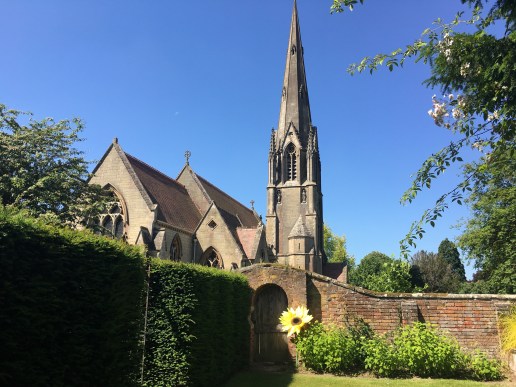
The Church

Shelbourne All Saints Church of England

Shelbourne-All Saints Church of England. Image by Rachel Dodge.

The wedding ceremony was held in Sherbourne-All Saints Church of England, built in 1864, and was complete with Scripture readings and hymns on the organ. I wished to see if the bride had chosen to “put on a few ornaments,” since a “bride, you know, must appear like a bride” (E 302) and “longed to know if [the groom] would be married in his blue coat” (PP 319). The bride was as beautiful as could be and the groom was indeed in navy blue tails.

I found the “church spire . . . remarkably handsome” (MP 82).

However, unlike Maria Bertram, I was quite happy to find the church situated “so close the Great House,” only a short walk through the garden. I did not find the bells “annoying” at all! In fact, at the end of the service, as the newlyweds led the way out of the church, the church bells added much joy to the occasion. They continued for at least ten minutes and made a glorious clamor.

The Garden

Images of the gardens at Sherbourne Park by Rachel Dodge

A “taste for flowers is always desirable . . . as a means of getting [us] out of doors, and tempting [us] to more frequent exercise than [we] would otherwise take.” (NA 174)

Following the ceremony, we moved into the garden and gathered by the pool house for cocktails, appetizers, and ice cream. The garden at Sherbourne Park boasts beautiful flower beds, flowering trees and bushes, and many pretty paths to explore. “It was hot; and after walking some time over the gardens in a scattered, dispersed way, scarcely any three together” (E 360), we made our way toward the house and found “[s]eats tolerably in the shade” (359).

During the course of the afternoon, we heard that a member of the wedding party had actually fainted due to the warm weather. I thought perhaps someone should call for the local “Mr. Perry,” but another guest assured us that he “popped right back up” and we need not worry.

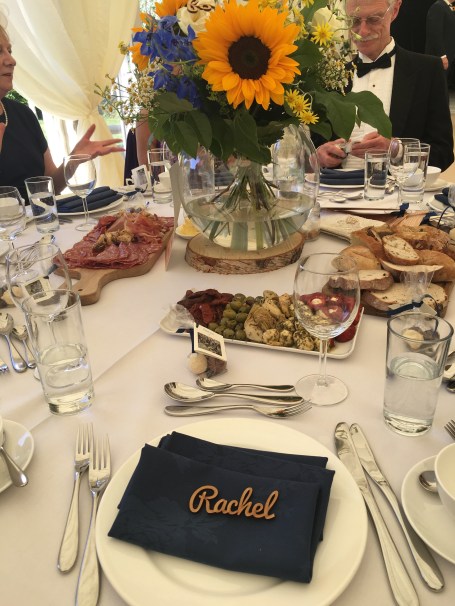
The Wedding Breakfast

Image of the wedding breakfast

The wedding breakfast. Image by Rachel Dodge.

 [Y]ou shall all have a bowl of punch to make merry at her wedding.” (PP 307)

If Mr. Woodhouse couldn’t believe the “strange rumour in Highbury of all the little Perrys being seen with a slice of Mrs. Weston’s wedding-cake in their hands” (E 19), he could never have approved of the sublime variety (or amount) of food we enjoyed during the formal wedding breakfast. As we worked our way through multiple courses of delicious food and drink, a gentleman at our table leaned over and said, “It’s best to pace yourselves.” I took his advice and was quite happy with the results.

Though many of the mealtime formalities Jane Austen knew are no longer in use, I found one matter of wedding meal etiquette intriguing: During the wedding breakfast, all of the women kept their hats on. Later, after the speeches, the Mother of the Bride took off her hat, and the rest of the ladies in attendance followed suit.

The Great House
Sherbourne Park exterior image 3

Sherbourne Park exterior image 3 by Rachel Dodge.

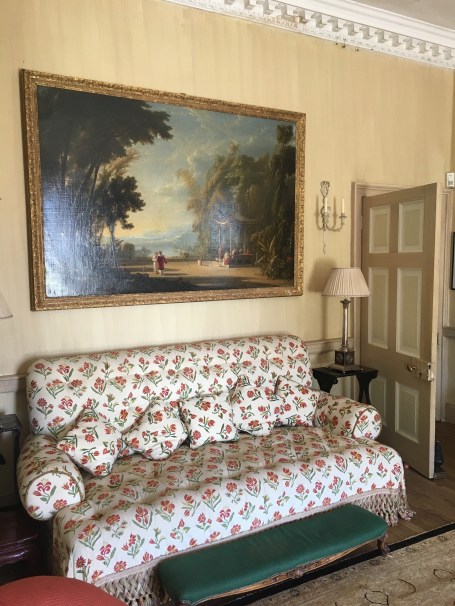
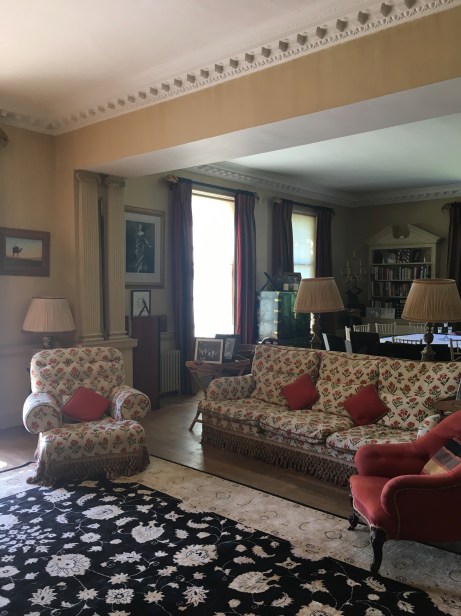
Interior 1

Interior of Sherborne Park. Image by Rachel Dodge

Interior 2

Interior of Sherborne Park. Image by Rachel Dodge

After an evening of dining and dancing, we entered the grand entrance hall of the great house with our luggage, found our rooms, and said goodnight. I thought of the description of Catherine Morland’s chamber in Northanger Abbey as I entered our room: “The walls were papered, the floor was carpeted; the windows were neither less perfect nor more dim than those of the drawing-room below; the furniture, though not of the latest fashion, was handsome and comfortable, and the air of the room altogether far from uncheerful” (NA 163).

Though I felt quite at ease sleeping there, I later found out that my sister-in-law felt a bit more like Catherine as she tried to fall asleep in the dark, creaking old house.

In the morning, we came downstairs to tea and toast in the large, formal dining room. Again, I was reminded of the descriptions in Northanger Abbey: Sherbourne Park’s

“dining-parlour was a noble room [. . .] fitted up in a style of luxury and expense” (NA 165-6).

While we were eating, the current owner of Sherbourne Park, Robin Smith-Ryland, came down from his residence upstairs and told us about the history of the estate. The Ryland family has held it for over 200 years, and they now run the house and grounds as a venue for corporate events, weddings, and hunting/fishing outings. Smith-Ryland gave us a tour of the house, which can accommodate up to 15 guests. The drawing room, morning room, open fireplaces, and multiple bedrooms were laid out most invitingly.

After brunch in the garden, we moved into the drawing-room to visit with our relatives and enjoy the aftermath of the wedding day. Alas, later in the morning, we packed our things and began to say our goodbyes. We waved as “the bride and bridegroom set off . . . and everybody had as much to say, or to hear, on the subject as usual” (PP 146).

All in all, it was a beautiful wedding weekend. The best part truly was spending the long weekend with my family. I can only hope that we’ll be invited back for the bride’s younger brother’s wedding one day because as we all know, “the expectation of one wedding” always makes “everybody eager for another” (PP 360).

You can follow Rachel Dodge at www.racheldodge.com or on Twitter, Instagram (@kindredspiritbooks), or Facebook.

Works Cited

Austen, Jane, and R. W. Chapman. The Oxford Illustrated Jane Austen. Oxford UP, 1988.

Austen, Jane. Jane Austen’s Letters. Edited by Deirdre Le Faye, 4th ed., Oxford UP, 2011.


Read Full Post »

Christmas with Jane Austen

Many Austen fans enjoy thinking about how Jane and her family celebrated Christmas. They wonder, did she give gifts, “deck” the halls, or have a Christmas tree? As most Austen fans know, many of the Christmas traditions we might picture actually became popular during the Victorian Era. However, there are plenty of Regency Christmas traditions that are still familiar today and others that can add to our enjoyment of the holiday season.

Christmas Celebrations in Jane Austen’s Novels

In each of Austen’s novels, Christmas is mentioned. It was, as it is today, a time for festive dances, parties, and dinners. As Mr. Elton says in Emma, “This is quite the season indeed for friendly meetings. At Christmas every body invites their friends about them…” (E 115). In Pride and Prejudice, Caroline Bingley writes to Jane, saying, “I sincerely hope your Christmas in Hertfordshire may abound in the gaieties which that season generally brings” (PP 117).

Just as we do today, the people of Austen’s time enjoyed seasonal foods, drinks, and decorations. In Persuasion, Austen paints a festive Christmas scene:

“On one side was a table occupied by some chattering girls, cutting up silk and gold paper; and on the other were tressels and trays, bending under the weight of brawn and cold pies, where riotous boys were holding high revel; the whole completed by a roaring Christmas fire, which seemed determined to be heard, in spite of all the noise of the others. […] Charles and Mary also came in, of course, during their visit, and Mr Musgrove made a point of paying his respects to Lady Russell, and sat down close to her for ten minutes, talking with a very raised voice, but from the clamour of the children on his knees, generally in vain. It was a fine family-piece.” (P 134)

Most of us have witnessed a similar scene at a large Christmas party or family gathering, where children are playing and laughing, great quantities of food are set out, and people are talking so loudly it’s hard to keep up a conversation.
Christmas was also a time for families to gather together. Children away at school came home for the holidays. Extended family traveled to visit one another. Emma personally looks forward to Christmas because it means her sister Isabella’s family will visit for a week: “many a long October and November evening must be struggled through at Hartfield, before Christmas brought the next visit from Isabella and her husband, and their little children, to fill the house, and give her pleasant society again” (E 7).

In Pride and Prejudice, Mr. and Mrs. Gardiner come to Longbourn with their children to visit: “On the following Monday, Mrs. Bennet had the pleasure of receiving her brother and his wife, who came as usual to spend the Christmas at Longbourn” (PP 139). At the end of Pride and Prejudice, Elizabeth writes to her aunt Gardiner and says, “You are all to come to Pemberley at Christmas” (383). Thus, a new family tradition begins.

And for a young girl like Catherine Morland, Christmas increased the likelihood of getting cornered by an older relative. In Northanger Abbey, Catherine worries about what “gown and what head-dress she should wear” because “her great aunt had read her a lecture on the subject only the Christmas before” (NA 73). The main message of that lecture: “Dress is at all times a frivolous distinction, and excessive solicitude about it often destroys its own aim” (73).

Regency Christmas Traditions

Rachel Dodge Book Photo

A Jane Austen Christmas by Maria Grace. Photo by Rachel Dodge  

In her book A Jane Austen Christmas: Regency Christmas Traditions, Maria Grace shares details about the Christmas traditions that Jane would have experienced. She explains that the Christmas season itself started “a week before Advent […] and extended all the way through Twelfth Night in January” (Grace 1). She covers the types of foods and sweets they ate—including a delightful history and explanation of plum pudding—and provides descriptions of holiday drinks, quaint parlor games, and seasonal dinner parties, card parties, and balls. She also talks about the charitable traditions of the time, like St. Thomas Day and Boxing Day, as well as the Christmas carols Jane might have known, such as The First Noel and God Rest Ye Merry, Gentlemen (31).

Gift giving, according to Grace, became more popular toward the end of the Regency period, when ads began to run “in periodicals suggesting novel ideas for gifts” (43). However, people did give gifts during Austen’s lifetime on St. Nicholas Day, Christmas Day, and Twelfth Night, typically from “those lower in status to those above them” (42) and between social equals “like friends and family” (43).

Church attendance was a focal point for most Regency families on Christmas Day. In Kirsten Olsen’s All Things Austen, she says, “At church, a special sermon was delivered, and communion was offered” (203). In Austen’s family, that meant that her father Reverend Austen would preach and her family would all go to church on Christmas Day.

Though Regency families didn’t decorate their homes to the extent that we do today, Olsen notes that “[h]ouses were decorated with holly and other green foliage” (Olsen 203). As for Christmas trees, they didn’t become prevalent in England until later: “Christmas trees only became popular after The Illustrated London News published a picture of Victoria and Albert with a family Christmas tree in 1848” (Grace 33).

First_Christmas_Tree_in_Britain_1846_Illustrated_London_News

Illustration Caption: “Lithograph in The Illustrated London News in the winter of 1848,” Wikimedia Commons.

If you’d like to add a new Regency tradition to your holiday season or throw an Austen-inspired Christmas party, books such as A Jane Austen Christmas: Regency Christmas Traditions by Maria Grace are full of wonderful details. I picked up my copy at this year’s JASNA AGM, but it’s available on Amazon as well.

Christmas in Hampshire

In Chawton, Jane Austen’s House Museum has its own special tradition this time of year. The museum celebrates the Christmas season and Jane’s birthday at their “Annual Open day” on December 16. The museum offers free admission and mince pies for all visitors. This year, visitors can also create free Christmas crafts inspired by the Austen family coverlet currently on display at the museum.

Works Cited

  • Austen, Jane. The Oxford Illustrated Jane Austen. Edited by R. W. Chapman. Oxford: Oxford University Press, 1988.
  • Grace, Maria. A Jane Austen Christmas; Regency Christmas Traditions. White Soup Press, 2014.
  • Olsen, Kirstin. All Things Austen: A Concise Encyclopedia of Austen’s World. Oxford, Greenwood World, 2008.

Other blog posts on this site citing Regency Christmas traditions: Click on this link for a variety of traditions and foods during this era

Read Full Post »

Fashion Plate (Afternoon Dress for Decr. 1800) LACMA M.86.266.37Just as fire was the centerpiece of most evening gatherings in Jane Austen’s time, candles also played a vital role in Regency life and culture. Today, family members work or read in separate rooms in the evening and go to bed at different times (due to the advent of electricity), but people in Austen’s day lived differently: They sat together to read books, write letters, and socialize in the evening—all by candlelight.

As readers, we should consider Austen’s evening scenes with a careful eye to the lighting. Dinners, dances, card games, and music were all undertaken by candlelight. Many of our favorite scenes—in which Austen brings her heroines and heroes, villains and vicars to life—take place in the evening. Candlelit rooms provide the perfect spot for Emma and Frank Churchill to gossip, for Fanny to sink into the shadows unnoticed, for Lydia and Kitty to romp with the officers, and for Anne Elliot to hide her tears at the piano while the others dance. Indeed, when Darcy watches Elizabeth and Caroline Bingley walking around the drawing-room and quips that their “figures appear to the greatest advantage in walking,” (PP 56) he watches them walk by candlelight after dinner and tea (served later in the evening). Austen uses candle-power (or the lack thereof) to communicate the rank and financial status of her characters as well as set the stage for some of her best scenes.

Candles in Regency Life

In Austen’s lifetime, virtually every task after dusk required candles. Fall and winter months in England are cold and dark with only 8-9 hours of sunlight during some months. It was a mark of wealth to have enough candles to burn in the evening for work and pleasure. In working class homes, people might burn a rushlight (which burned for 20-30 minutes) or simply retire early. In genteel homes, where candles were plentiful, people stayed up later. In her JAW article “Lighting the Dark,” Vic Sanbourn tells us, “Only the more affluent members of society could afford to burn a large number of candles at a time, and their homes were characterized by spacious windows and well placed reflectors and mirrors.” This was common in most of the grand homes in Austen’s novels, which we see when Elinor and Marianne accompany Lady Middleton to a party in London and “enter a room splendidly lit up, quite full of company, and insufferably hot” (SS 175).

During quiet evenings at home, families and small groups shared the firelight or a few candles together. As Austen states in one of her letters to Cassandra: “We have got the second volume of “Espriella’s Letters,” and I read it aloud by candle-light. (Letters 147). As one might imagine, working by candlelight was not easy on the eyes. Austen alludes to this when Lady Middleton remarks that it might “hurt [Lucy’s] eyes to work filigree by candlelight” and suggests that she “ring the bell for some working candles” (144). And in Northanger Abbey, when General Tilney stays up to read at night, he says his “eyes will be blinding” from reading so late by candlelight (NA 187).

Candles Speak Volumes

Everything in Austen’s novels means something—including the kind and number of candles used in different households. Beeswax candles burned brighter and more efficiently but were more expensive. Tallow candles were cheaper but gave off less light, smoked, and smelled of mutton. In her article “Let there be light! Candles in the time of Jane Austen,” Sue Dell of the Jane Austen’s House Museum says that “[t]allow candles would have been the most common candles in such a home as the Austens’.” She explains: “Even the very wealthy used wax candles sparingly; Jane’s brother, Edward, would have used them for entertaining, but tallow candles would have been used for everyday life” (Dell). In Emma, Mrs. Elton boasts that a certain Mrs. Bragge even has wax candles in her school room (300); however, Dell says this “would have been instantly recognised by contemporary readers as untrue” because “no-one would do such a thing” (Dell). Mrs. Elton also decides she will educate Highbury society and give “one very superior party—in which her card-tables should be set out with their separate candles and unbroken packs in the true style” (290). In affluent and pretentious homes like General Tilney’s in Northanger Abbey, candles are plentiful. When it is time to retire, Miss Tilney rings the bell for candles, which the butler comes to light (187). They each take their candles to bed, but the General stays up to work. In Emma, when they have supper at the ball, Mrs. Bates says, “I never saw any thing equal to the comfort and style—Candles everywhere” (329).

Conversely, at the Price home in Mansfield Park, even one candle is hard to come by. When Mr. Price arrives, Austen paints the scene vividly: “with something of the oath kind he kicked away his son’s port-manteau and his daughter’s bandbox in the passage, and called out for a candle; no candle was brought, however, and he walked into the room” (MP 379). Fanny rises to greet him but sits down again “on finding herself undistinguished in the dusk, and unthought of” (379). When a candle is finally brought, Fanny is still forgotten as her father reads the newspaper, “without seeming to recollect her existence. The solitary candle was held between himself and the paper, without any reference to her possible convenience” (382).

Candles Set the Stage

As anyone who has ever camped, had their electricity shut off, or eaten dinner at a romantic restaurant knows, everything looks different by candlelight. Shadows grow and dark corners emerge. The mood changes. Austen uses candles to set the tone in many scenes in her novels, and she capitalizes on the mere lack of a candle to throw rooms into confusion, provide cover for secret goodbyes, send people to bed early, and propel one imaginative young girl into hysterics.

In Austen’s novels, candlelight provides cover for all sorts of things. In a practical sense, candles hide visible flaws as when Mrs. Weston comments on the wallpaper at the Crown Inn in Emma: “[T]his paper is worse than I expected. Look! in places you see it is dreadfully dirty; and the wainscot is more yellow and forlorn than any thing I could have imagined” (253). Her husband responds that she will “see nothing of it by candlelight. It will be as clean as Randalls by candlelight.”

In a more romantic sense, Austen uses semi-darkness to cover a goodbye between Frank Churchill and Jane Fairfax. We read the following scene in Emma:

[Jane Fairfax] was afterwards looking for her shawl—Frank Churchill was looking also—it was growing dusk, and the room was in confusion; and how they parted, Mr. Knightley could not tell.  He remained at Hartfield after all the rest, his thoughts full of what he had seen; so full, that when the candles came to assist his observations, he must—yes, he certainly must, as a friend—an anxious friend—give Emma some hint, ask her some question. He could not see her in a situation of such danger, without trying to preserve her. (349)

We have no proof that anything more than “certain expressive looks” pass between Frank and Jane as they part under the covering of the dusky room; however, Austen uses this moment to give Mr. Knightley a hint as to the true nature of their relationship while everyone else is busy, before the candles are lit.

In Northanger Abbey, Austen uses a “single lamp” and the light it emits to set the stage for a nervous Catherine Morland in the gothic-style scene she paints on Catherine’s first night at the Abbey. The light from her candle and the fire are, quite humorously, the only thing standing between Catherine and emotional stability. Catherine enters “her room with a tolerably stout heart” at the end of the evening (167). However, once the fire dies down, she is left with only her candle to light the room. When Catherine “snuffs” the candle, meaning to “cut or pinch off the burned part of a candle wick” (Dictionary.com), she accidentally extinguishes it as well. Her response is hilarious:

Alas! It was snuffed and extinguished in one. A lamp could not have expired with more awful effect. Catherine, for a few moments, was motionless with horror. It was done completely; not a remnant of light in the wick could give hope to the rekindling breath. Darkness impenetrable and immovable filled the room. A violent gust of wind, rising with sudden fury, added fresh horror to the moment. (170)

Catherine’s bravery dissolves once the candle is out. Austen says, “A cold sweat stood on her forehead, the manuscript fell from her hand, and groping her way to the bed, she jumped hastily in, and sought some suspension of agony by creeping far underneath the clothes” (170). She is unable to sleep until 3 a.m. The reader chuckles, but Austen is well aware that we understand Catherine’s plight. Though some of us may not like to admit it, we all—at some point in our lives—have jumped under the covers when the wind blew, the curtains moved, and the lights suddenly went out.

Works Cited

Austen, Jane. The Oxford Illustrated Jane Austen. Edited by R. W. Chapman, Oxford UP, 1988.

—. Jane Austen’s Letters. Edited by Deirdre Le Faye, 4th ed., Oxford UP, 2011.

Dell, Sue. “Let there be light! Candles in the time of Jane Austen.” Jane Austen’s House Museum, 12 Jan 2016. https://www.jane-austens-house-museum.org.uk/single-post/2016/1/12/Let-there-be-light-Candles-in-the-time-of-Jane-Austen. Date accessed: 1 October 2017.

Sanborn, Vic. “Lighting the darkness.” Jane Austen’s World, 29 April 2007. https://janeaustensworld.wordpress.com/2007/04/29/lighting-the-darkness-in-the-regency-era/. Date accessed: 1 October 2017.

Read Full Post »

« Newer Posts - Older Posts »