Feeds:
Posts
Comments

Posts Tagged ‘Regency Fashion’

18th century robe a la Francaise. Image @Rijksmuseum

During the 18th century and much of the Regency era, trains were popular on evening and court dresses, and at times on walking gowns. The length of the train shortened as the 18th century progressed, but even shorter trains swept over lawns and grounds and sidewalks. This fashion turned out to be quite expensive, for after several short walks, the fabric would be quite soiled or would need replacement. Oliver Goldsmith wrote in Citizen of the world (1760):

Nothing can be better calculated to increase the price of silk than the present manner of dressing. A lady’s train is not bought but at some expense, and after it has swept  the public walks for a very few evenings, is fit to be worn no longer, more silk must be bought in order to repair the breach, and some ladies of peculiar economy are thus found to patch up their tails eight or ten times in a season.”

One imagines that the delicate muslin trains of the Regency era were as easily wrecked by wear and tear, and that only the rich could afford such an extravagant consumption. There were ways to save one’s train. In 1996’s Emma, Gwynneth Paltrow is seen holding up her train during the dance.

Emma's train is attached to her wrist.

In Northanger Abbey, Jane Austen described how Isabella Thorpe and Catherine Morland pinned up each others trains.

They called each other by their Christian name, were always arm in arm when they walked, pinned up each other’s train for the dance, and were not to be divided in the set; and if a rainy morning deprived them of other enjoyments, they were still resolute in meeting in defiance of wet and dirt, and shut themselves up, to read novels together.”

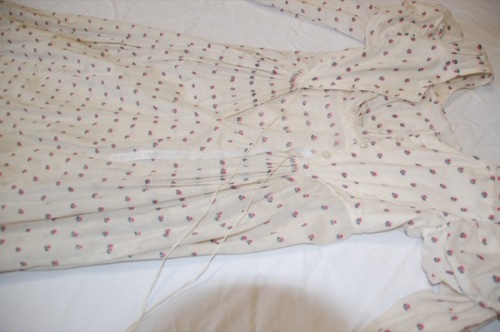
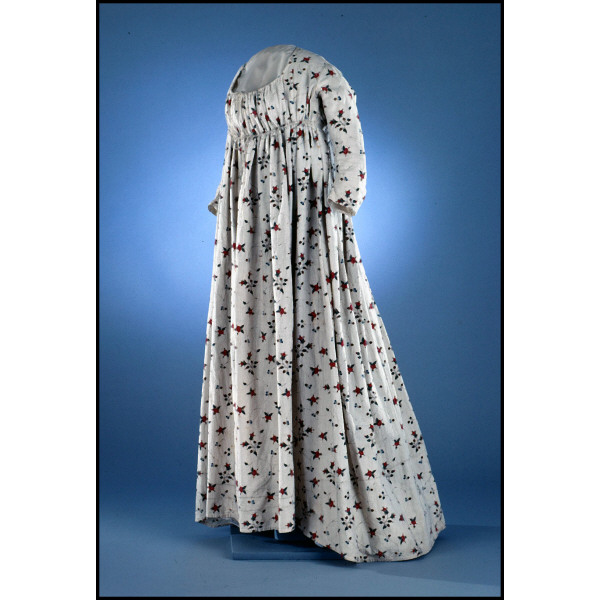
1800 sprigged muslin gown. Image @Christies

One can only conclude that trains (or tails, as Goldsmith called them) were an extravagance that the ordinary working woman did not indulge in wearing, for until mass production made cloth more affordable, the added lengths of cloth, plus the constant need for laundering and patching, would make this fashionable feature prohibitively high for most women.

Note: That Isabella and Catherine met  “in defiance of wet and dirt” meant something, for shoes and fabrics were so delicate at the time, that ladies tended to stay indoors on rainy days.
Read Full Post »

I spent a lazy Sunday catching up on the many posts I am unable to read during the week. Imagine my delight when I landed on Madame Guillotine’s blog and read her impressions about her visit to the Fashion Museum in Bath.  With increasing excitement, I viewed her close up images of several of the most beautiful 18th and early 19th century gowns imaginable. Melanie graciously allowed me to showcase her posts. (I concentrated on the early 19th century examples.) Do rush over and view all her photos. They are simply amazing.
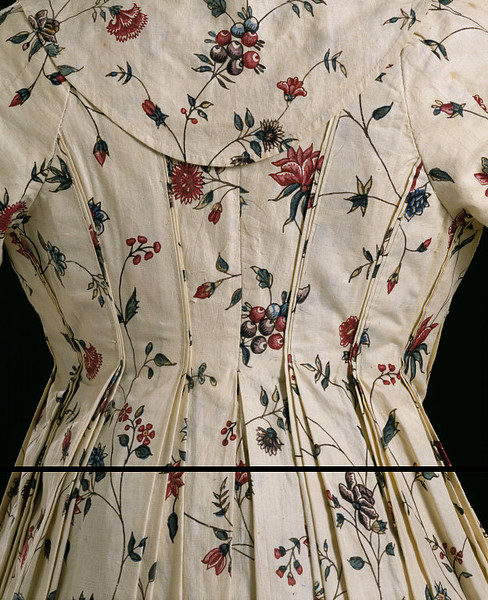
I have just got home after an amazing couple of hours spent studying some of the eighteenth century dresses in the vast collections (I think they said they have 80,000 pieces in their archives) of the Fashion Museum in Bath.

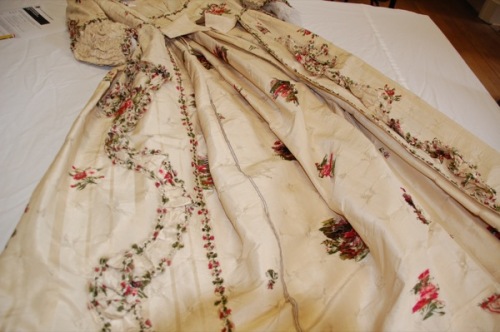
English, silk, 1770-73.

It was amazing seeing the hook and eye arrangements that they used to do up the bodices, the neat seam work and even the staining beneath the armpits which serves as a reminder that these are the real deal and not just mere costumes!

French, sacque gown, 1760-63. Image @Madame Guillotine

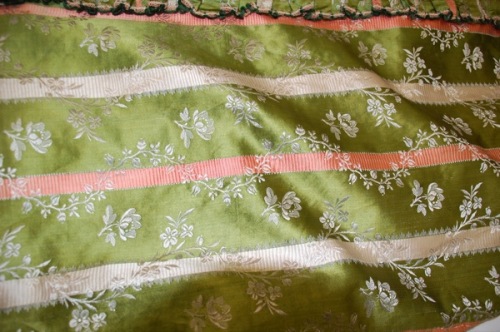
They were really keen on combinations of pink and green during the eighteenth century – a colour combination that seems to have vanished from fashion, alas.

A floral printed muslin from 1793-97. Image @Madame Guillotine

[This dress] is really is lovely – very floaty and romantic with a pretty floral print. You can really imagine Marianne Dashwood in this one!

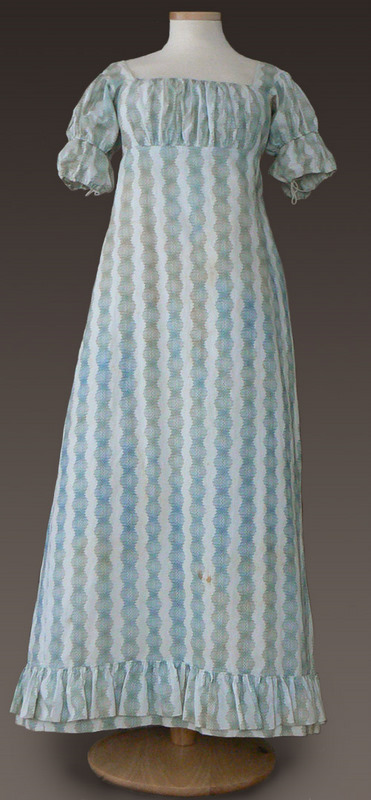
Muslin dress, 1813-20. Image @Madame Guillotine

This dress was so beautiful but really worryingly see through! You forget this about muslin when you see them in period dramas…

Patterned muslin dress, 1815-20. Image @Madame Guillotine

This is the sort of thing that a Heyer heroine would have worn.

These images are just a foretaste of the many photos that Melanie took at the Fashion Museum. To read both her posts, click on the two links below:

Read Full Post »

Bandeau: in clothing and fashion, the term means a narrow band of ribbon, velvet, etc., worn round the head. A wide range of materials make up a hair bandeau, including jewels, ribbons, cloth, and flowers. In some cases, a tiara can be said to be an elaborate form of the bandeau. This head band has been popular since the beginning of recorded history, for the decoration is flattering for almost any hair style. The bandeau provides an instant frame for curls, adds color, and can hold unruly hair in place. Bandeaux were quite popular during the Regency era as both formal and informal head wear.

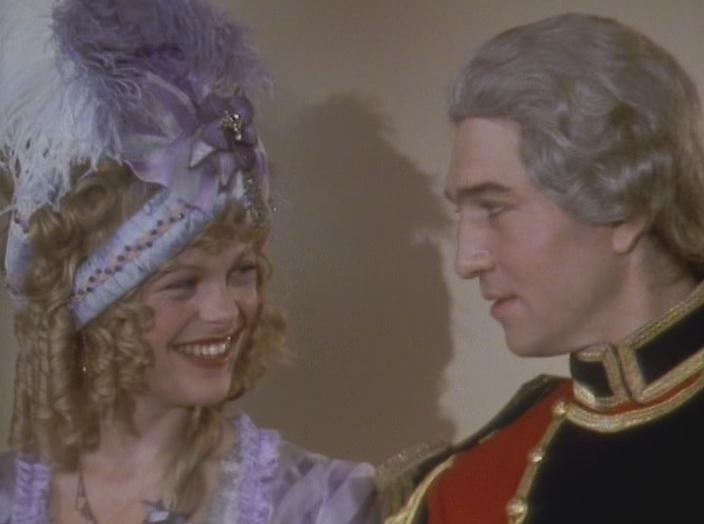
Structured bandeau with feathers. Northanger Abbey (Cassie Stuart and Greg Hicks) 1986

In the image above, Isabella Thorpe’s bandeau resembles an open turban. It play an integral part in the hair design.

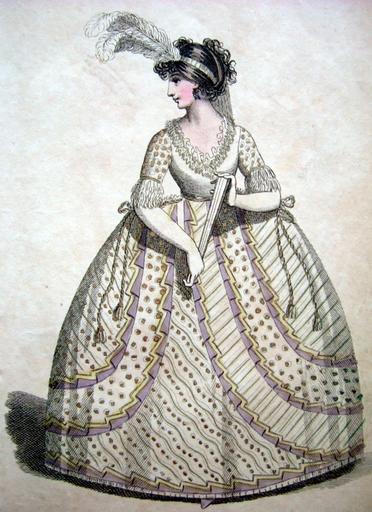
Court gown, 1799. This bandeau, worn for a formal event, also holds feathers, as in the above photo.

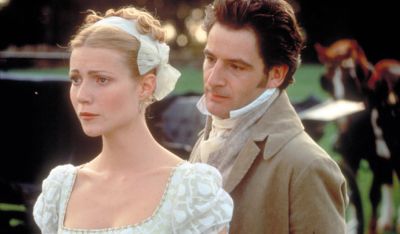
Bandeau made of ribbon, similar to the illustration below, but with the bow to the side. This is an informal use of a bandeau, which carries enough "weight" to serve as a headcover. Emma (Gwynneth Paltrow and Jeremy Northam) 1996

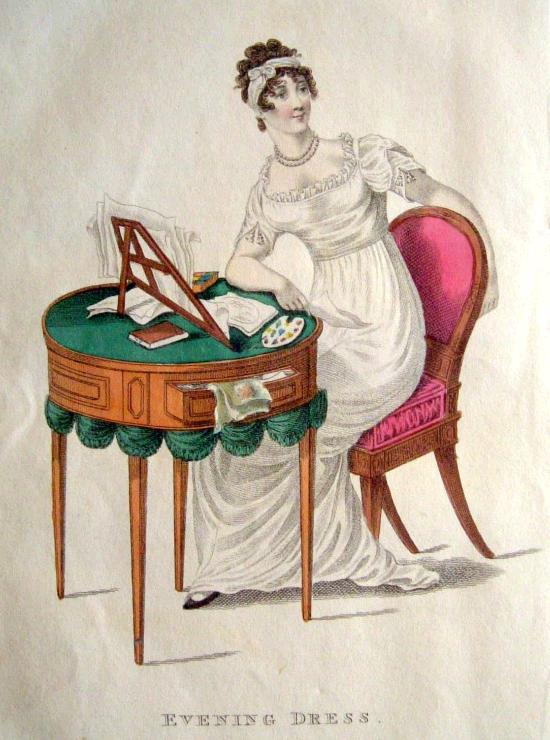
1812 La Belle Assemblee, evening dress and bandeau, which frames the curls beautifully.

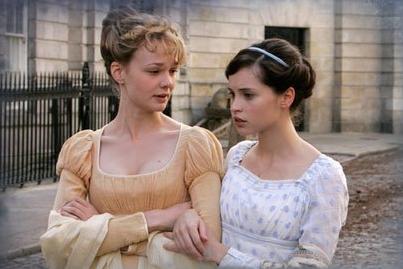
Felicity as Catherine Morland (2007) wears a thin bandeau. This image is inaccurate in that ladies in those days did not venture outdoors without a head cover. We can tell that Isabella (Carey Mulligan) is “fast” for she reveals more of her bosom during the day than is ladylike and wears no hat while strolling through Bath.

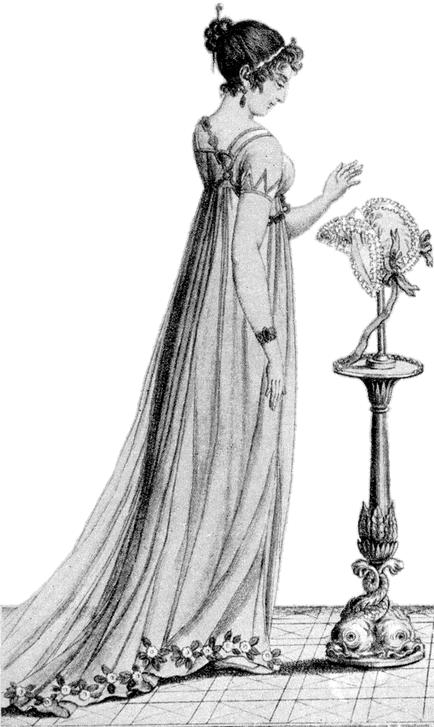
Woman wearing a chemise dress (1799) and thin bandeau, and contemplating a hat.

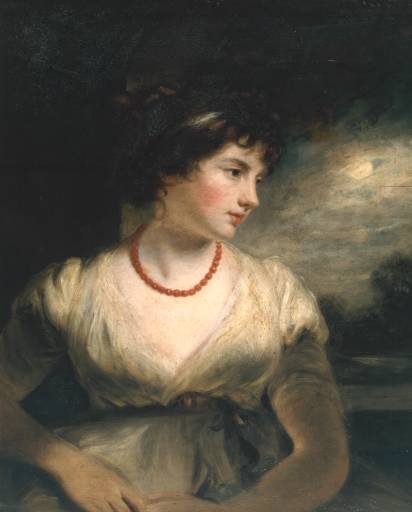
The Countess of Oxford wears a thin ribbon bandeau. Painted by John Hoppner, 1797.


Rolinda Sharples painted a flower bandeau for the lady at front and center of this detail.

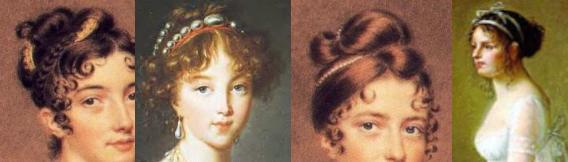
Thin satin or silk ribbon bandeau woven into the hair on the righ;, bandeaux made with pearls in the center two images; and gold ornamental combs in the hairstyle on the left.

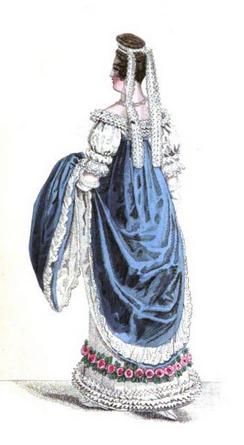
Bandeau with long lace streamers. 1818 French court dress, La Belle Assemblee.

Bandeaux have been popular throughout the ages, and continue to be so.

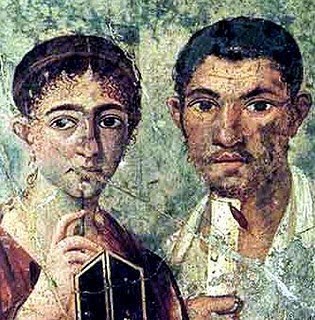
Pompeii couple. The woman at left wears a thin bandeau.

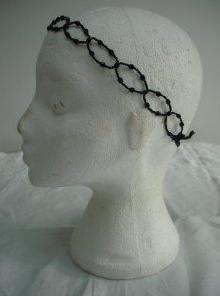
Beaded bandeau from the Edwardian Era

Haley Steinfeld, 2011 Oscars

Gallery of Fashion – Women’s bandeaux

Read Full Post »

Emma was not inclined to give herself much trouble for his entertainment, and after hard labour of mind, [Lord Osborne] produced the remark of its being a very fine day, and followed it up with the question of:  “Have you been walking this morning?”

Walking dress with blue half boots, 1818. La Belle Assemblee.

“No my lord, we thought it too dirty.” (Unpleasant, stormy.)

“You should wear half boots.” After another pause: “Nothing sets off a neat ankle more than a half boot; nankeen galoshed with black looks very well. Do not you like half boots?”

“Yes; but unless they are so stout as to injure their beauty, they are not fit for country walking.” – Jane Austen, The Watsons

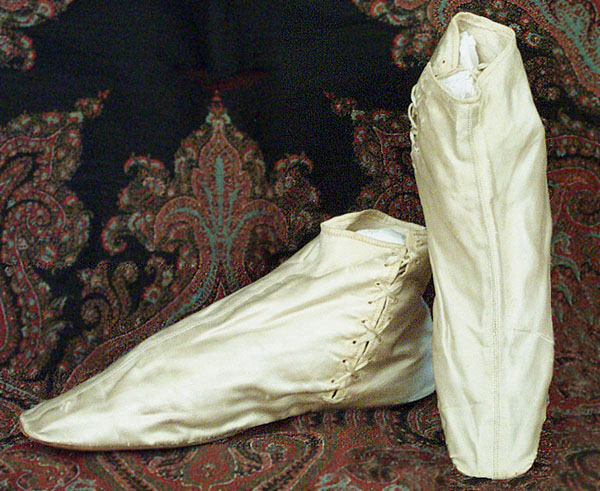
Satin half boots, 1830. Image @Vintage Textile

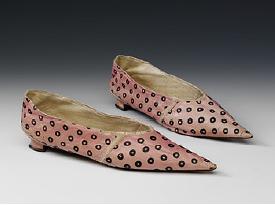
Ladies shoes were quite delicate in Jane Austen’s day. They were made of satin or soft kid leather, and thin soles with short heels.  Kid leather was a soft and pliable leather made from young goat skin that was often used for slippers (and gloves as well). Shoes made from kid leather could be dyed or embroidered, but the thin flimsy material could barely withstand ordinary wear and tear, much less rough treatment.

Delicate pastel kid shoes with stencilled motif, 1800. Image @Victoria & Albert Museum

During the mid-Regency, tied shoes went out of fashion as lace-up half-boots became popular for outdoor wear. Made of leather or nankeen (a durable natural cotton from China, with a distinct yellow color), these boots were more geared for long walks in the country than the delicate slippers they replaced. But the boots were deceptive, for the leather was quite thin by today’s standards and tore and scuffed easily or were quickly ruined by the elements. As a general rule, thick leather shoes with sturdy wooden soles were worn by laborers. The ruling classes, it was felt, needed no such rough and tumble items.

1795-1815 leather boots. Image @Metropolitan Museum Collection.

Although still a minority in women’s footwear at the beginning of the 19th century, ankle boots would become the dominant style of daytime footwear by the 1830s. This early pair of fashionable boots shoes shows the importance of angular lines, repeated throughout designs and evident from what ever position the boots are viewed. The museum also possesses a similar boot with a small “Italian” heel (2009.300.1487), demonstrating the overlap in styles. The original shoelaces, unlike those now in the boots, would have most likely matched the dark teal color of the leather. – Met Mus collection database

1795-1810, blue European boots. Image @Metropolitan Museum Collection

Boots began to become fashionable for women in the last quarter of the 18th century, but their use was limited primarily to riding and driving. Few pairs survive, and the peculiar wrap-around leg on this example is specific to this period and extremely rare. Although not well-fitted enough to provide a particularly secure fastening to the foot, the wrapped leg may have been intended to provide superior protection from dust and moisture than the standard laced closure. Colored footwear was a favored means of complimenting plain white dresses in the early 19th century, and the dark teal blue color seen here seems to have been particularly favored.- Boots

1812-1820 ladies boots. Image @Victoria & Albert Museum

In the early years of the 19th century boots gradually became acceptable for women. By 1804, half-boots with front lacing and ribbon trimmings, like this pair, had started to appear in fashion illustrations for ‘walking’ or ‘morning’ dress. Hardwearing cottons – the striped uppers are made of cotton jean – became increasingly available and were used as alternatives to leather. Heroines in novels by Jane Austen (1775-1817) are often described wearing footwear of this kind. V&A

Nankeen half boots, 1795-1810. Image @Virginia Review

Toughening Nankeen for rough wear and tear: To Wash- Put a handful of salt into a vessel with a gallon of cold water immerse the nankeenm and let it remain for twenty four hours; then wash it in hot lye without soapm and hang up to dry without wringing it, Nankeen washed in this manner will keep its colour for a long time – The Dictionary of Daily Wants, 1866

1830. Sturdier damask gaiter boots. Image @Vintage Textile

Read Full Post »

1810 woven Chinese silk cloth with handpainted decorations. Image @Victoria & Albert Museum

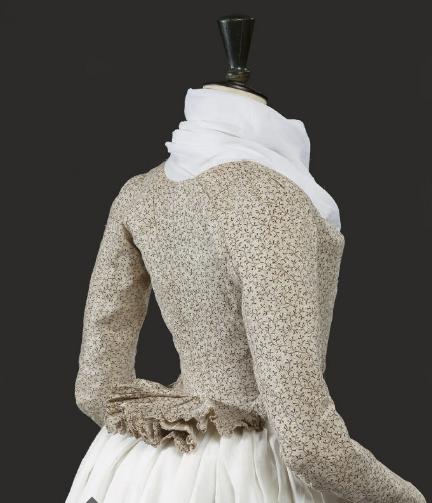
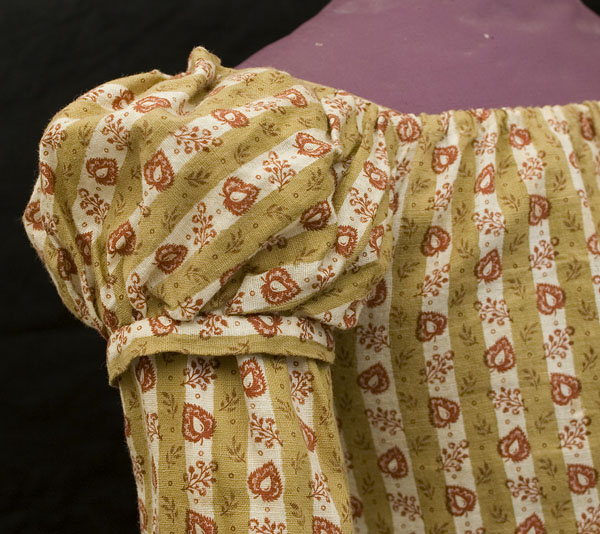
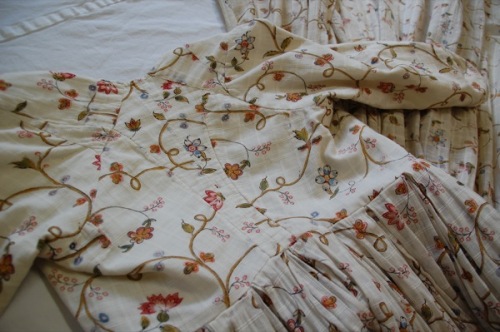
We have come to associate delicate white muslin material woven in India with Regency fashion to such a degree that it is easy to forget that other colors and printed fabrics were also used, and that many silk and cotton dresses were made of fabrics with colorful patterns and distinctive designs, such as this 1820’s day dress, or this 1790 caraco printed jacket…


1790 Caraco jacket of printed cotton. Image @Christie's

…or the lively Ackermann dress below.

Dinner dress, Ackermann. 1817

Some of the fabrics were  lavishly embroidered…

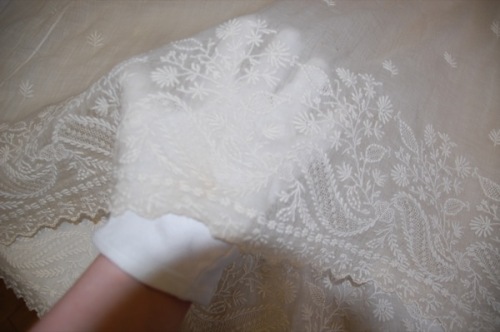
1810 Evening Dress with embroidery

… or painted to produce a patterned effect.

1780-1800. Painted satin cloth. Image @Victoria & Albert museum

But with the industrial revolution, printing and dying techniques began to be improved.

Fabric, Manchester art gallery

By the mid-eighteenth century, wood-block printing on cotton and linen textiles had developed to a high standard, even though the home market was affected by legislation protecting the silk and wool industries.” – *V&A


Block printed round gown. Image @Colonial Williamsburg

The dyeing techniques used to produce the strong fast colours on imported Indian chintzes which had dazzled European customers in the seventeenth century had been mastered, and colour ranges were developed further with the introduction of ‘pencilling’ of indigo in the 1730s, and ‘china blue’ by the early 1740s.” – *V&A

Block printed cotton, 1790. Image @Victoria & Albert Museum

“A commentator on the state of British textile arts in 1756 wrote : “chintz…can imitate the richest silk brocades, with a great variety of beautiful colours. This length of block-printed cotton dress fabric is typical in its design and colouring of English production at the end of the 18th century.” – *Block Printed Cotton, Victoria & Albert Museum


Child's cotton dress roller printed, 1820. Image @Vintage Textile

Roller printing also became popular.

Roller printing, a mechanical improvement on the copperplate technique, was developed in England in the late eighteenth century and was in use in the north of England by 1790.” – **Met Museum

Detail, roller printed Regency day gown.

The copper roller gave manufacturers the ability to print larger quantities of fabrics at greater speeds, for lower prices, and the production of printed cotton increased dramatically in the nineteenth century.” – ** Source: Textile Production in Europe: Printed, 1600–1800 | Thematic Essay | Heilbrunn Timeline of Art History | The Metropolitan Museum of Art

1800 dress fabric, British. Image @Victoria & Albert Museum


19th century white cotton gown with roller print. Image @Greene Collection

More on the topic:

1795-1800 Printed cotton gown detail. Image @Victoria&Albert Museum

Read Full Post »

« Newer Posts - Older Posts »