Feeds:
Posts
Comments

Posts Tagged ‘Thomas Rowlandson’

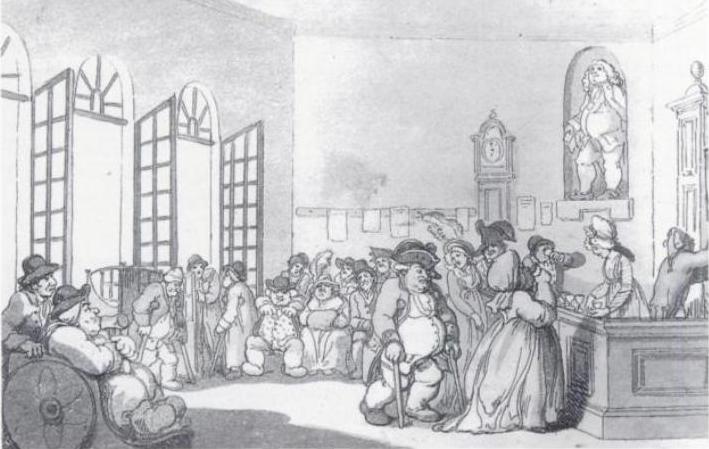
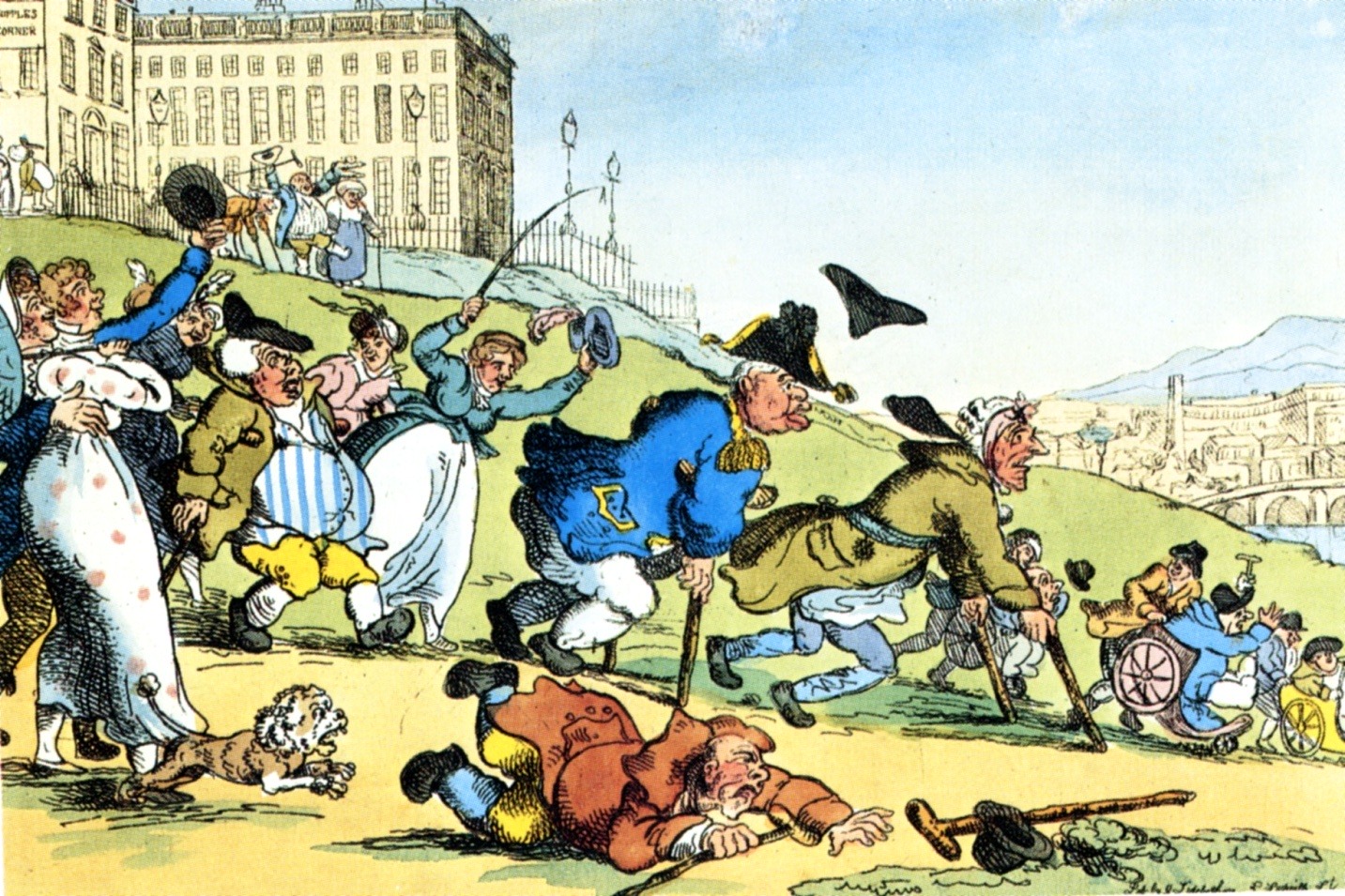
The Comforts of Bath, Thomas Rowlandson.

Almost everyone who visits my blog, Twitter account, and Facebook page knows I’ve broken my foot in two inconvenient places. Even with modern medical advances the most pleasant way to describe my experience is that it’s been a … pain. Literally and figuratively. This lover of walking 3-4 times a day with her dog has been sidelined. I’ve been sitting or lying down for a month, watching my bum grow two sizes. I’m a bit more mobile now and can hobble wearing an unwieldy boot.

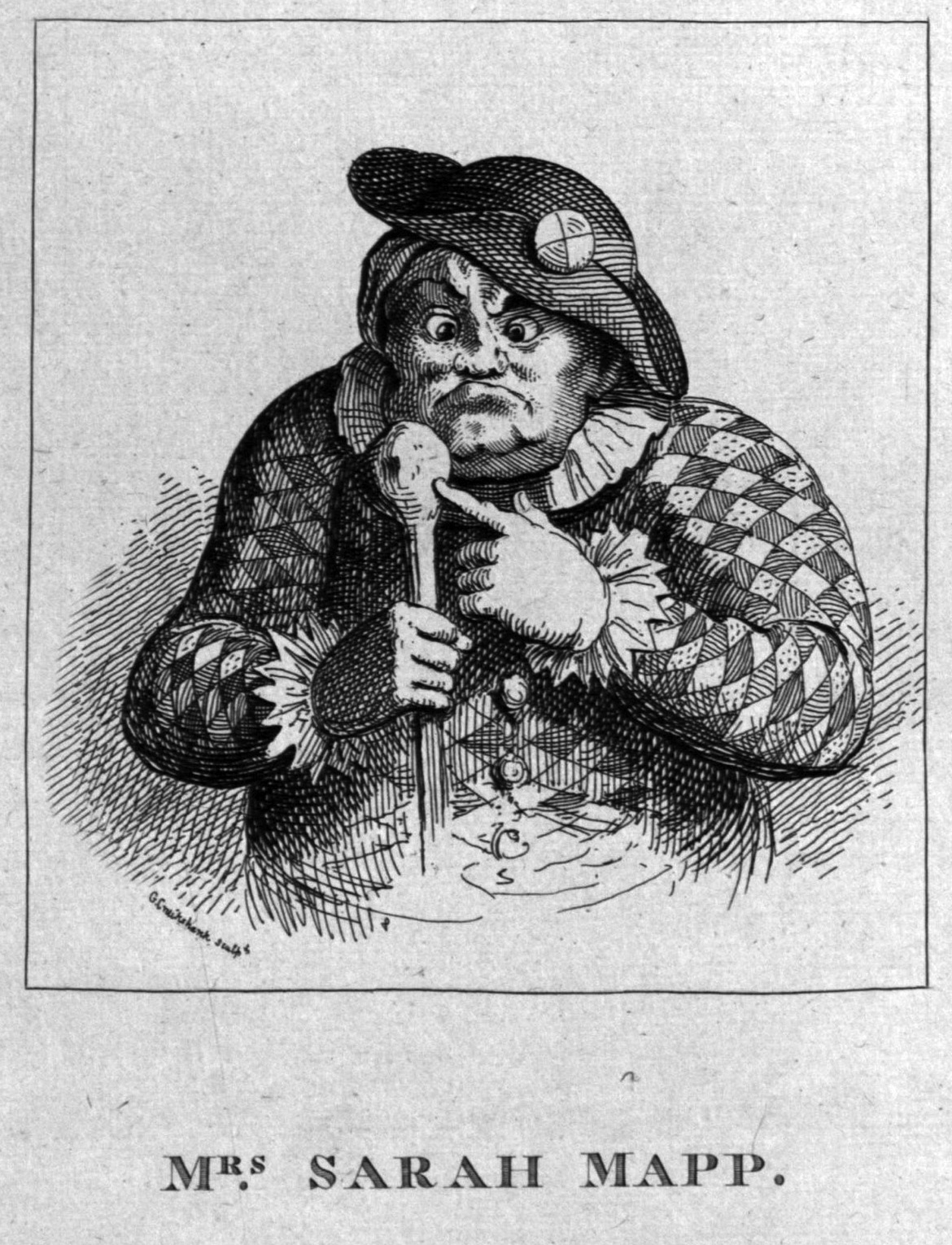
How did people deal with this situation two-hundred years ago? I wondered as I stared at the ceiling with my foot propped up higher than my head. It certainly could not have been easy. Mrs. Mapp, or Crazy Sally, as she was known, was a famous London bone setter in the early 18th century. While she was unlucky in love, she made her fortune with her strength, boldness, and wonder-working cures.

Besides driving a profitable trade at home, she used to drive to town once a week in a coach and four and return again bearing away the crutches of her patients as trophies of honour. – Mrs. Mapp: The Bone-Setter, Book of Days, Robert Chamber, 1864
I doubt Mrs. Mapp would have bothered setting my foot. There was really nothing to manipulate. All it needed was rest and a good calcium-rich diet. How did people get round and about when they were hobbled in days of yore?

In my estimation, crutches resembled torture instruments more than helpmeets.
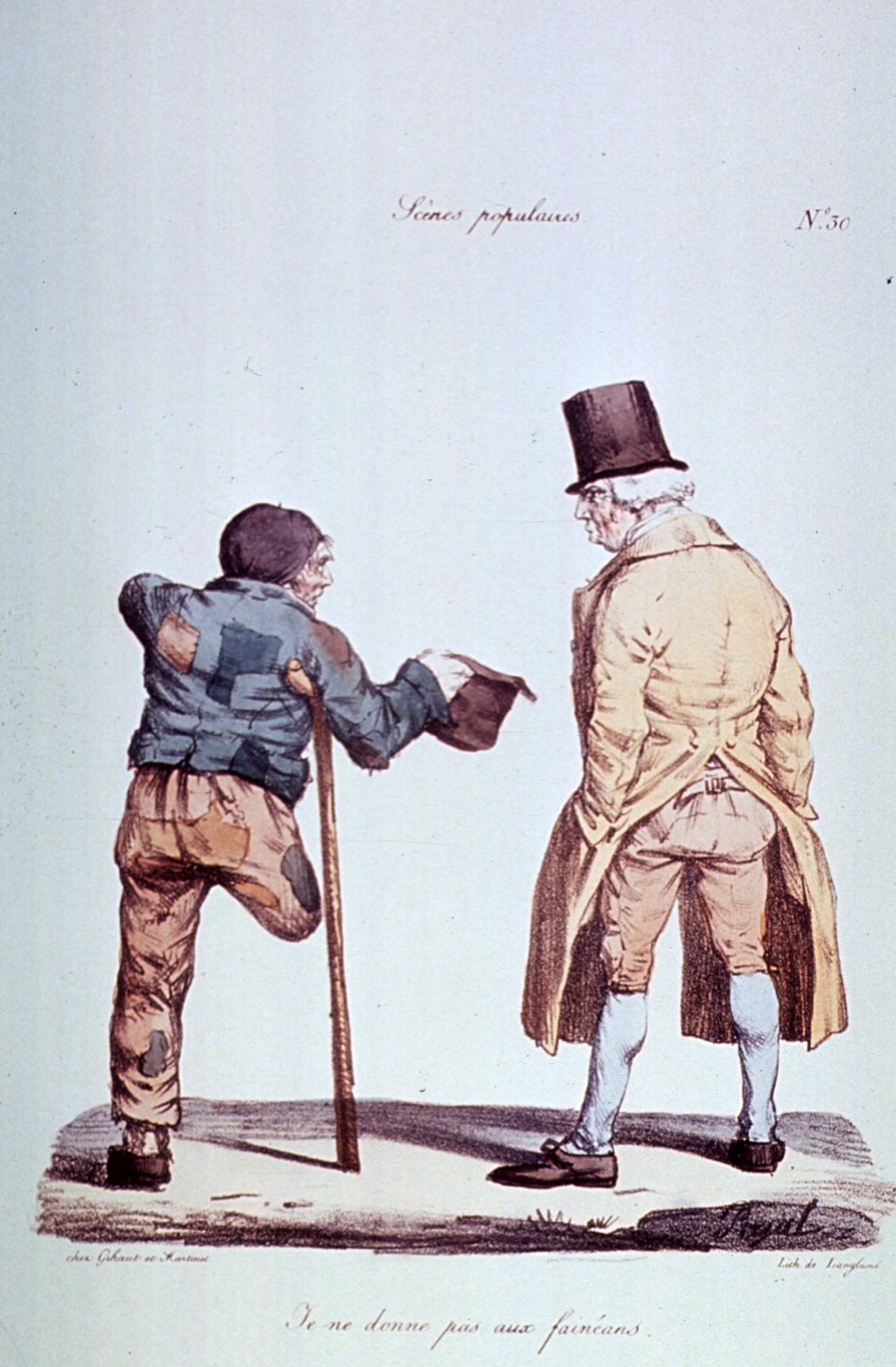
Beggar with one leg and a crutch. Image @Risky Regencies

This 1850 crutch is similar to the one depicted in the image above. It was not adjustable, and rags were wound around the top to make the crutch less painful. Even with ample padding on the modern crutch, my underarms became sore. I can only imagine how much discomfort the old models offered.

Wheelchair, Barry Lyndon

Wheelchairs were invented early in the history of mankind. In 530 B.C. a wheeled child’s bed made an appearance on a Greek vase, and in 525 A.D. a wheelchair was depicted on a Chinese print. By the 17th century, the patient’s comfort began to be taken into account.
Paralytic woman in wheelchair, 1821. Image @Museum of London

During the 18th century the Bath chair was born. Invented by John Dawson, the three-wheeled chairs remained popular all through the 19th century.
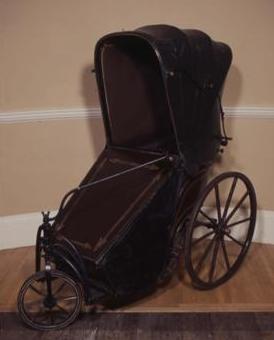
3-wheeled Bath chair. Image @BBC

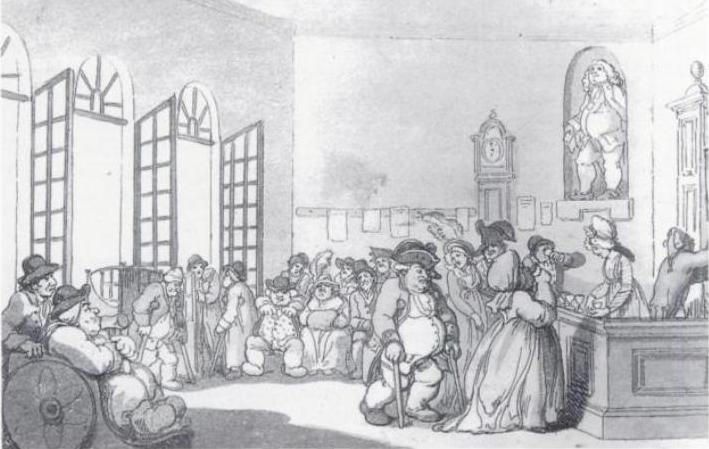
This Rowlandson caricature depicts the ill visiting the Pump Room to take the waters. Note the sedan chair at left being carried inside the room, the man in the wheelchair, and the man walking with two canes.

Read Full Post »

Copyright (a) Jane Austen’s World. Gentle Readers, The previous post elicited a question about Regency underdrawers or a lady’s unmentionables. My answer was so long that I decided to create a new post from it.

1742 and 1794 fashion silhouette contrast

Drawers, which made their first serious appearance in 1806, and were fashioned after men’s underdrawers, were still optional during 1810. They would be worn more frequently as the century progressed. Underdrawers were considered risque, for the garments resembled men’s pant legs.  Even if the garments were worn, they did not resemble the pretty underdrawers that we associate with the Victorian era.

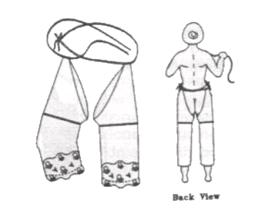
Image of early under drawers

As you can see in this image, early ladies underdrawers consisted of two tubes of cloth that were tied to the waist, allowing a woman to, uhm, attend to her business without having to remove too many clothes. In an era without indoor plumbing, this must have been an important consideration.

I recently viewed a shameless cartoon by Thomas Rowlandson of a group of travelers (3 ladies and a gent, all family members), who were attending to their calls of nature on the side of the road. Because the image is quite vulgar, which many of Rowlandson’s images tend to be, I will only link to it. From the headdresses that the ladies are wearing, this cartoon was drawn much earlier than 1806. As you can see, no underdrawers obstructed the group from relieving their most pressing needs.

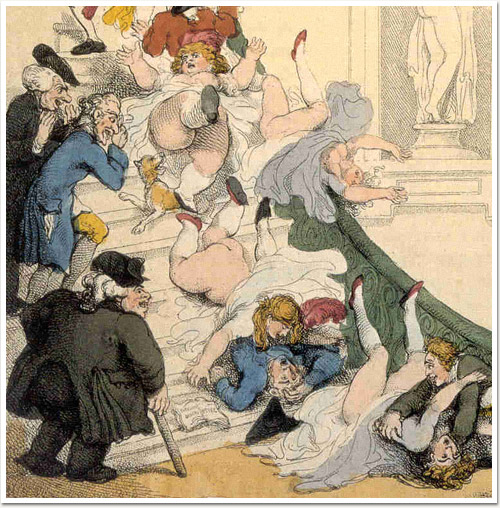
Detail of the Exhibition Staircase, Rowlandson, 1800

Detail of Rowlandson's Exhibition Staircase, 1800

Rowlandson’s Exhibition Staircase cartoon has a given date of 1800. The ladies’ tumble down a steep, crowded staircase forcibly reminds us that underdrawers were still a fashion consideration for the future.

Underdrawers belonging to the Duchess of Kent, 1810-1820. *Image@Regency Society of America Pro Boards

By 1820, wearing drawers was still optional, but by the 1850’s, the caged hooped skirts made them a necessity, for a hoop could be wildly unpredictable. One wrong swinging move or errant gust of wind, and a lady’s most delicate (or indelicate) parts would appear in full view. The 1956 version of The King and I contains one of my favorite scenes in which the King’s wives wear Western dresses for the first time. When the King enters, they immediately drop down to bow to him. Their hooped skirts swung straight up in the air, revealing their bare bottoms and shocking Anna, who had not anticipated such an END (ahem) to her well-meant scheme.

Caged crinoline

Needless to say, by the mid-19th century, ladies wore drawers as a matter of course.

*Regency Society of America Pro Boards

Read Full Post »

Gentle readers, I am taking a short hiatus from this blog for Thanksgiving week. Meanwhile, enjoy these images of people dining in days of yore…

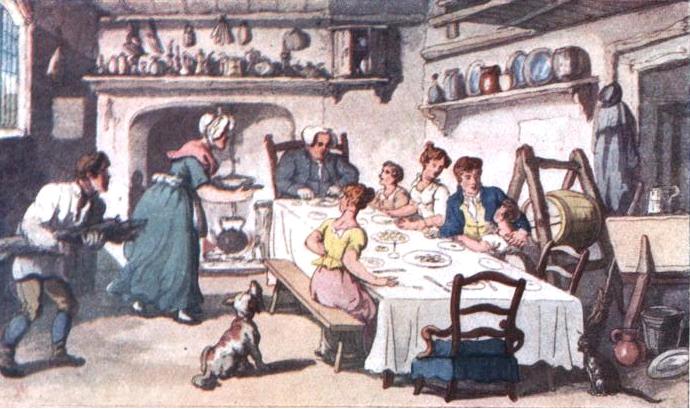
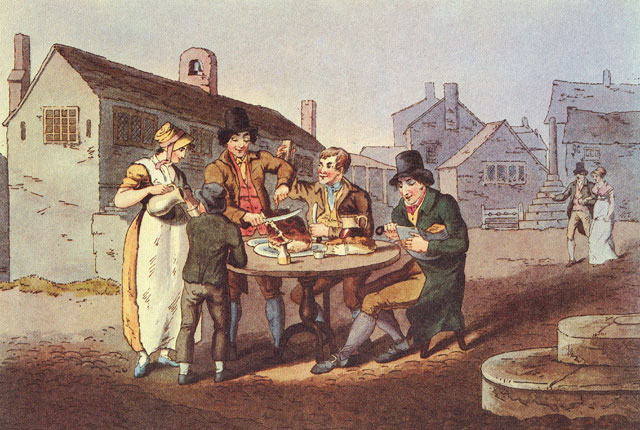
Dining for most people was a simple affair and food was taken from the land. Many families, unless their house was large enough to accommodate a dining room, ate in the kitchen.

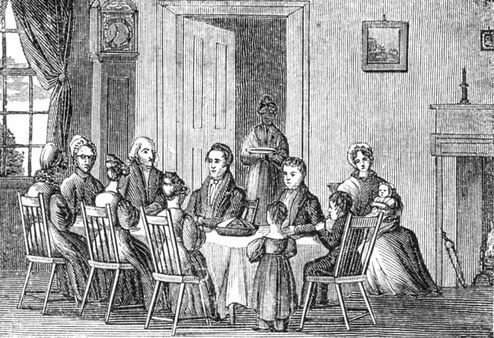
Notice in this image of a family sharing a meal by Thomas Rowlandson (from The Vicar of Wakefield by Oliver Goldsmith), that the meal is eaten during the day and near the fire.

The rich could afford to eat by candlelight, as in this early 20th C. image of a Georgian dinner scene.

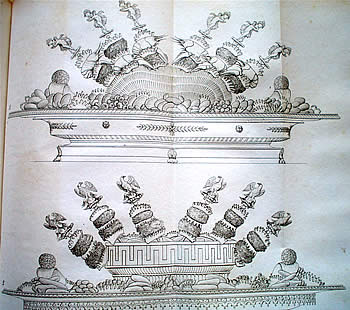
For some, like the Prince Regent, dinners were elaborate affairs.

For other families the meal was more basic and simple.

Family Meal

The hours in which people ate meals were changing:

In the beginning of the sixteenth century in England, dinner, the main meal of the day, used to begin at 11:00AM. Meals tended over time to be eaten later and later in the day: by the eighteenth century, dinner was eaten at about 3:00PM…By the early nineteenth century, lunch, what Palmer in Moveable Feasts calls “the furtive snack,” had become a sit-down meal at the dning table in the middle of the day. Upper-class people were eating breakfast earlier, and dinner later, than they had formerly done…in 1808…dinner was now a late meal and supper a snack taken at the very end of the day before people retired to bed. For a long time luncheon was a very upper-class habit; ordinarily working people dined in the early evening, and contented themselves as they had done for centuries with a mid-day snack…Supper now means a light evening meal that replaces dinner; such a meal is especially popular if people have eaten a heavy lunch – The Rituals of Dinner, Margaret Visser [Penguid:New York] 1991 (p. 159-160) – Food Timeline

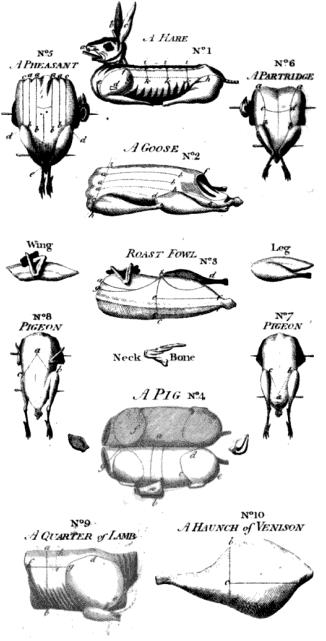
Image source: The Universal Cook: And City and Country Housekeeper, John Francis Collingwood and John Woollams, Principal Cooks at The Crown and Anchor Tavern in the Strand, 1792

Meat made up a large part of the Regency diet, even for the middle class. For most people living in London, the animals had to be brought a long way to market. Due to the length of the journey, the quality of meat was often poor. In contrast, venison and game procured from country estates and served fresh was often considered prize meat.

The Breedwell Family, Thomas Rowlandson

Families tended to be large and extended. In this boisterous family scene by Rowlandson, the Breedwells obviously bred beyond “the heir and the spare.”

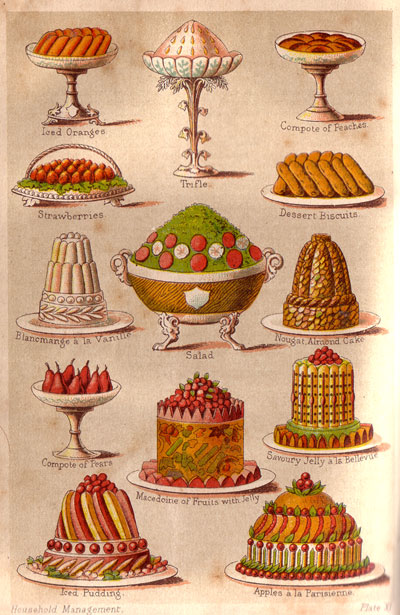
Desserts, Isabella Beaton

Desserts made up the last course of the meal. Even for the middle class this course was elaborate and plentiful, but for the rich it was spectacular.

Walled kitchen garden

Kitchen gardens provided fresh produce during the growing season. The very rich grew fruits and vegetables in hot houses, but most people ate meat, soups, or bread throughout the year. Fruit and vegetables were preserved, or, as in the case of apples and root vegetables, stored through the winter.

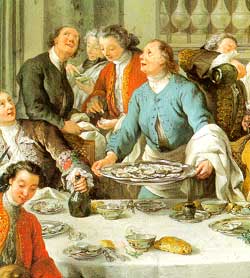
Seafood had to be served fresh and within hours of its harvest. Chances were that this tavern, where oysters were served on a platter, sits in a geographic area by the sea.

Life in Yorkshire

Elegant, or simple, the family meal meant togetherness.

Happy Thanksgiving everyone

More on the topic:

Read Full Post »

In 1798, the famous caricaturist Thomas Rowlandson drew The Comforts of Bath, a series of satiric drawings. The cartoons were used to illustrate the 1858 edition of the New Bath Guide, written by Christopher Anstey and first published in 1766.* Rowlandson depicted both the social and medical scene in Bath just before the period described by Jane Austen in Northanger Abbey and Persuasion, and by Georgette Heyer in her Regency romances.

The Portrait, Comforts of Bath, 1798, Thomas Rowlandson

In this post I combined Rowlandson’s images with excerpts from an 1811 guidebook, A new guide through Bath and its environs By Richard Warner. The scenes depict the use of mineral water therapy for the invalids who flocked to Bath, a city whose fashionable post-Nash reputation was already well past its prime and whose medical men were generally regarded as quacks or, worse, “potential murderers”. The rotund gentleman in front and center of all these scenes (who undoubtedly suffered from gout, a painful rich man’s disease), was conjectured to be based after Tobias Smollet’s Mr. Bramble. In the pictorial’s subtext, notice how “Mr. Bramble’s” young wife (companion or daughter) flirts with the young officer who boldly woos her (Image above). Even while satirizing them, Rowlandson gets the social details just right. Underneath each image sits a quote from the guidebook.

King Bladud's Bath, Comforts of Bath, Rowlandson

It is fit for the patient when he goeth into the bath to defend those parts which are apt to be offended by the bath, as to have his head well covered from the air and wind and from the vapours arising from the bath, also his kidneys if they be subject to the stone, anointed with some cooling unguents as rosatum comitiffs infrigidans Galeni Santo linum &c. Also, to begin gently with the bath till his body be inured to it, and to be quiet from swimming or much motion which may offend the head by sending up vapours thither at his coming forth, to have his body well dryed and to rest in his bed an hour and sweat, etc.” – A New Guide Through Bath, 1811

The Pump Room, The Comforts of Bath, 1798, Rowlandson

The new Pump Room supplied water from a covered pump. Before the room was built, the populace drank the waters in the open air. But the new rooms allowed them to

…  take the exercise prescribed to them sheltered from the inclemency of the weather. The work was accordingly begun in 1704, finished two years afterwards, and opened for the reception of the company under the auspices of Mr Nash, who had just then become the Arbiter Elegantiarum of Bath…A New Guide Through Bath, 1811

Black and White detail of above print

In the year 1751 [The Pump] Room was enlarged. Accommodated with a beautiful Portico stretching from it in a northern direction in 1786, and adorned with superb Western Frontispiece in 1791, The Corporation further beautified the city in 1796 by taking down the old Pump Room entirely and building on its site the much larger and more magnificent edifice known at present by that name…A New Guide Through Bath, 1811

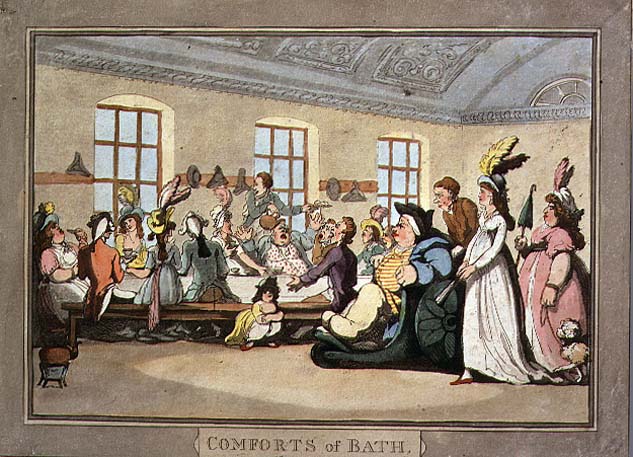
Public Breakfast, The Comforts of Bath, 1798, Rowlandson

Pertaining to the construction of  the Harrison rooms and the Assembly Rooms:

Temporary booths had hitherto been the only places in which the company could drink their tea and divert themselves with cards, but Mr Harrison, a man of spirit and speculation, perceiving that a building of this nature was much wanted and would probably make him a very suitable return, undertook at the suggestion of Mr Nash to erect a large and commodious room for the purpose of receiving the company.  The succes of this attempt induced a similar one in the year 1728, when another large room was built by Mr Thayer.  A regular system of pleasurable amusements commenced from this period, and the gay routine of public breakfasts, morning concerts, noon card parties, evening promenades, and nocturnal balls rolled on in an endless and diversified succession. – A New Guide Through Bath, 1811

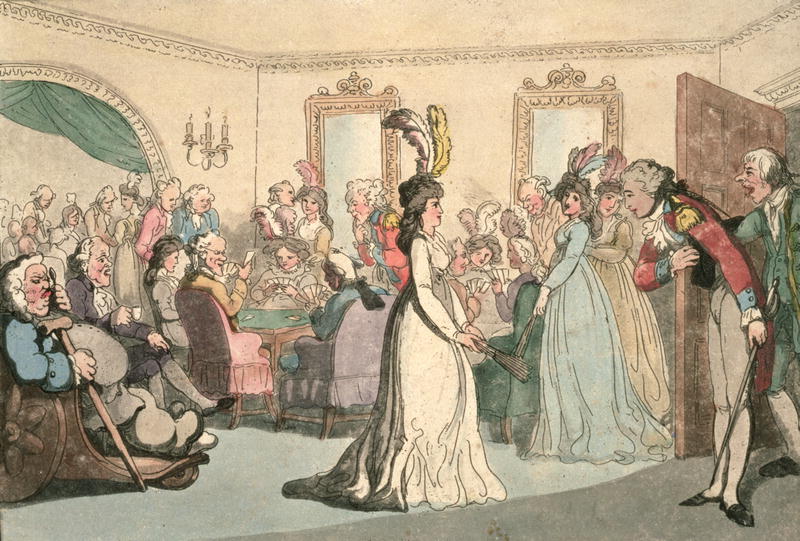
Company at Play, The Comforts of Bath, Rowlandson

Rules card games:

That no persons be permitted to play with cards left by another party;  That no hazard or unlawful game of any sort be allowed in these Rooms on any account whatever nor any cards on Sundays...A New Guide Through Bath, 1811

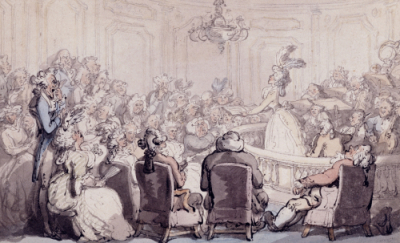
The Concert, Bath Chambers, Rowlandson

For music sweet music has charms to controul; And tune up each passion that ruffles the soul; What things have I read and what stories been told; Of feats that were done by musicians of old – The New Bath Guide, 1779

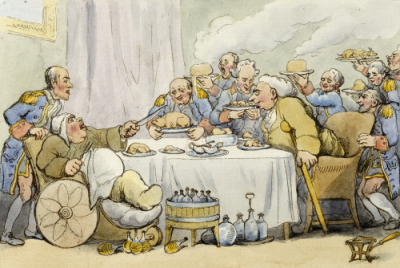
Dinner, Comforts of Bath, 1798

Bath has little trade and no manufactures; the higher clafles of people and their dependents conftitute the chief part of the population, and the number of the lower clafles being but fmall…A New Guide Through Bath, 1811

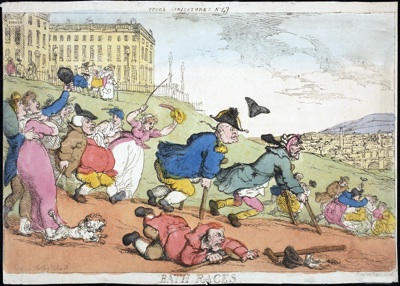
Bath Races, Rowlandson

More on the topic:

Read Full Post »

« Newer Posts