Feeds:
Posts
Comments

Archive for 2006

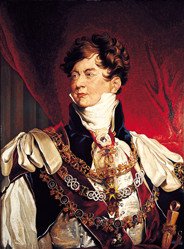
Without Prinny, the Regency Era (1811-1820) would have had a decidedly different character. He was a libertine and gifted wastrel who set the tone and style for the age.

George IV, The Prince of Wales lived life extravantly and was enormously unpopular for it in some circles. This Prince of Pleasure’s once tall slim frame grew heavy and corpulent from overindulgence, as you can see in the illustration above by James Gilray, who satirized the Prince in a number of unflattering cartoons.

But before the Prince Regent took over, the country was already in shambles. Louis Simond, An American in Regency England, observed in his travel journal in 1809: “One thing that surprises me more and more every day; it is the great number of people in opposition; that is, those who disapprove, not only the present measures of ministers,which have not been of late either very wise or very successful, but the form and constitution of the government itself. It is stigmatized as vicious, corrupt, and in decay,without hope or remedy but in a general reform, and in fact a revolution.

The links below define Prinny and his era even further:
1. George IV and the United Kingdom
2. The Prince Regent and His Circle: In Their Own Words
3. Prince Regent
4. Coronation of George IV
5. Prinny’s Many Mistresses
6. Prince George’s Culture Clubs: A Trail Through Regency Brighton

Read Full Post »

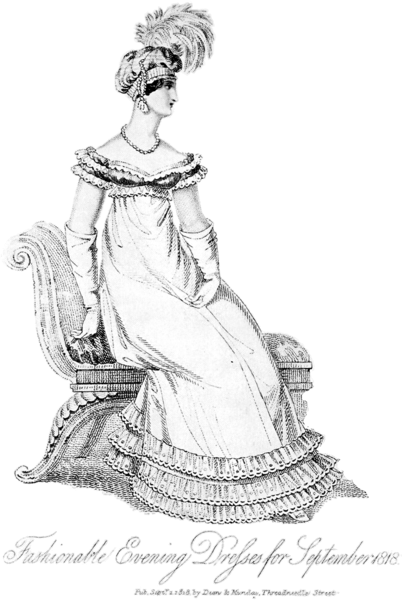
Describing the exquisite Regency gowns in its collection, The Museum of Costume & Assembly Rooms, Bath: The Official Guide states on p 32:

“These simple, light gowns were inspired by the neo-classical taste and were intended to imitate the draperies of ancient Greek and Roman statues. Muslin was an ideal dress fabric because it was soft and almost transparent, gently outlining the natural contours of the figure. It could also be washed easily (unlike silk) which made the fashion for white possible.”

View ravishing details of my favorite regency gown, which is for sale (click on dress in link and scroll down): Directoire silk gauze dress, c.1805. Fashioned from gossamer silk gauze woven with the Neoclassical stripes then popular. The draped folds and lace appliqués on the short puffed sleeves show masterful design. A rare fancy period dress with the original trim.

Read Full Post »


Art from the Regency and Georgian period in England was lush, luscious, delectable, creamy, and so mouthwatering that you just want to look AND touch. View a cornocupia of visual feasts on the following sites:

Prinny’s Paintings
English School of Painting
English Painting 1800-1900
Neoclassicism:The Classical Ideal
Neoclassicism: A Link of Artists
History of English Watercolour Paintings
J.M.W. Turner
The Neoclassical Temple
Jean Nattes Prints of Bath

Read Full Post »


The Mirror of Graces, written by a Lady of Distinction in 1811, is a first-hand source that describes the dress and manners of ladies during the Regency Period. Some speculate that the book was written by a governess or lady’s companion who was a close observer of the upper classes, but not a member of it.

Here is her observation on “the detail of dress.”

The mantle, or cottage-cloak, should never be worn by females exceeding a moderate en bon point; and we should recommend their winter garbs, such as Russian pelisses and Turkish wraps, to be formed of double sarsenet, or fine Merina cloth, rather than velvets, which (except black) give an appearance of increased size to the wearer. In the adoption of furs, flat-ermine or fringe fur is better suited to the full-formed woman than swan’s down, fox, chinchilli, or sable; these are graceful for the more slender. Women of spare habit, and of a tall and elegant height, will derive considerable advantage from the full-flowing robe, mantle, and Roman tunic. The fur trimming, too, gives to them an appearance of roundness, which nature has denied;and to this description of person we can scarcely recommend an evending-dress more chaste, elegant and advantageous, than robes of white satin trimmed with swan’s-down, with draperies of silver or gossamer net.”

Find a listing of fabric and cloth on the Phrontistery site:

This is a rather odd category, listing 269 names of kinds of fabric and cloth. There is an enormous variety in fabrics, with many different national, historical and regional varieties. It is interesting to note, however, that almost all of the types of fabric listed below are variants or blends of just five basic fabric types (silk, cotton, linen, wool and worsted).”

Read Full Post »

View the updated version of this post here.

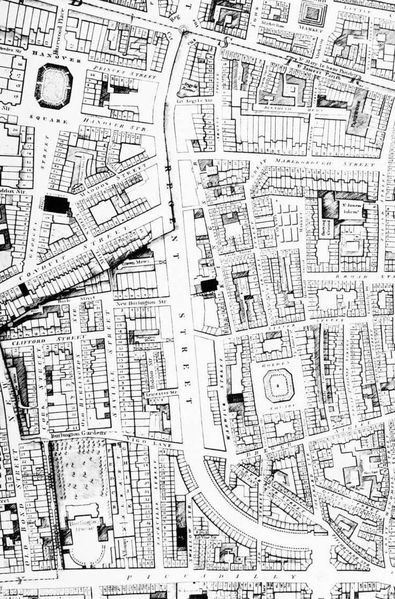
John Nash’s buildings exemplified the neoclassical style of early 19th Century Architecture. His sweeping changes transformed London, from the graceful curve of Regent Street to the majestic terraces and vistas in Regent’s Park.

View some of his edifices below:

1. Regent’s Park
2. Regent Street
3. Buckingham Palace

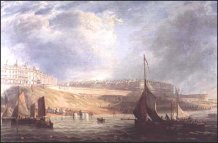
We will devote an entire section to Brighton Palace later.

Read Full Post »

« Newer Posts - Older Posts »