Feeds:
Posts
Comments

Archive for January, 2010

Update: My review of Emma

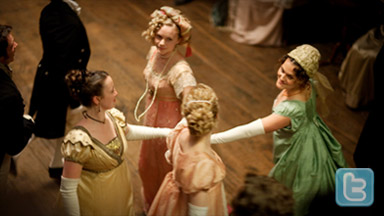
Oh, how droll! An Emma Twitter Party. What! You have no Twitter account? It’s not too late to form one and join me, PBS, and a host of other Austen lovers during the Twitfest on Sunday, January 24, from 9-11 PM EST.  PBS has kindly asked me (and other Jane Austen bloggers, like Laurel Ann, my co-blogger on Jane Austen Today) to join in on the conversation.  Click here to learn ALL the details.

If you decide to join in, make sure to tag your posts with the hashtag #emma_pbs and visit PBS @pbs@masterpiecepbs on TweetGrid, or use your own favorite aggregator. As Jane wrote sagely:

My idea of good company is the company of clever, well-informed people who have a great deal of conversation

Read Full Post »

In Chapter 54 of Emma, Mr. Knightley explains how Robert Martin became engaged to Harriet Smith. In his talk with Emma, Mr. Knightley mentions Astley’s, the wildly successful amphitheatre in London:  “It is a very simple story. [Robert Martin] went to town on business three days ago, and I got him to take charge of some papers which I was wanting to send to John.—He delivered these papers to John, at his chambers, and was asked by him to join their party the same evening to Astley’s. They were going to take the two eldest boys to Astley’s. The party was to be our brother and sister, Henry, John—and Miss Smith. My friend Robert could not resist.”

Philip Astley ( 1742 – 1814) is regarded as the father of the modern circus. At the age of 9,  young Philip became apprenticed to his father, a cabinet maker. But the young boy had another, more compelling love: horses. At seventeen young Philip joined Colonel Eliott’s Fifteenth Light Dragoon Regiment, where he rose up in the ranks to become a Sergeant- Major.  He served in the French and Indian War and became a brilliant rider in the process.
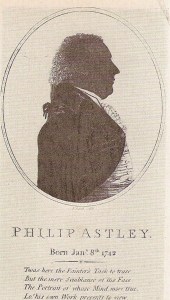
Astley's Silhouette

While in the army, Astley came  into contact with professional trainers and horse riders and served as a horse breaker for his regiment.  After his discharge from the army in 1768, he and his wife began to exhibit their riding skills on a white steed in a field just outside of London, just south of the Thames near Westminster Bridge Road. A born showman, Astley’s bareback trick riding skills included picking up handkerchiefs from the ground while cantering, doing headstands on his saddle, and riding astride two horses while playing a pipe.  (Tracy Chevalier)

Trick rider

Astley learned that centrifugal force allowed him to maintain his balance while standing on the horse. The circular path around which his horse ran became the precursor of the foundation of the circus ring.*
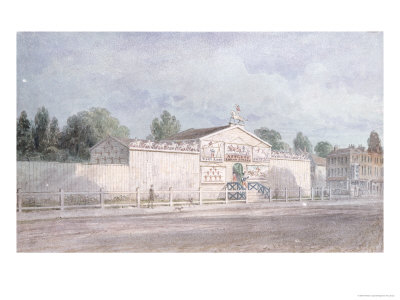
astley's amphitheatre exterior view 1777 william caponA born showman, Astley combined his horsemanship on the “Little Military Learned Horse” with other entertainments. He scheduled clowns, ropewalkers and gymnasts in his mixed theatre, and soon added other acts, including a pig that could do sums, a strong man called Hercules, and even a horse that could perform card tricks and make a cup of tea (Tracy Chevalier). Between 1768 and 1773 Asley’s equestrian and theatical performances were wildly popular. Horace Walpole wrote in 1773:

London at this time of year [September] is as nauseous a drug as any in an apothecary’s shop. I could find nothing at all to do, and so went to Astley’s, which indeed was much beyond my expectation. I do not wonder any longer that Darius was chosen king by the instuction he gave to his horse; not that Caligula made his Consul. Astley can make his dance minuets and hornpipes. But I shall not have even Astley now; Her Majesty the Queen of France, who has as much taste as Caligula, has sent for the whole of the dramatics personae to Paris.

By 1774 Philip had turned his open air riding school into a permanent structure.  He was flouting the law, for he had no license. But he had taught the Lord Chancellor’s daughters to ride and was therefore allowed to continue.** The structure burned in a fire that year and reopened in 1795 as the Royal Grove. Another fire 1803  in prompted Astley to rebuild again. Now known as the Royal Amphitheatre, the great ring inside the building featured dramatics like the Blood-Red Knight, Fatal Bridge 1810; Battle of Waterloo 1824,  Buonaparte’s Invasion of Russia, and the Conflagration of Moscow 1825. Astley also took his popular circus to France. He would not open a new Amphitheatre there until after the Revolution, but when he was able to he  entered into an agreement with Antonio Franconi, the “business brains” behind the team.
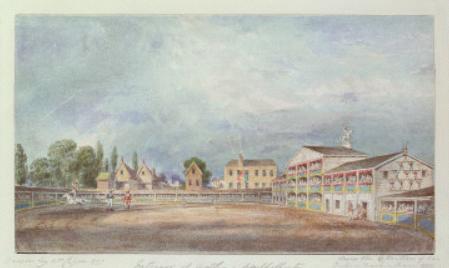
astley's amphitheatre 1777

After the fire in 1803, Astley’s Royal Amphitheatre was rebuilt in the style of rival Charles Hughes’s Royal Circus. Astley’s new theatre was lavishly decorated by Scottish scene painter John Henderson Grieve and its stage was said to be the largest in London.
Battle of the Alma
Spectacular dramas were arranged by Andrew Ducrow, the new manager and one of Astley’s former riders. When this theatre burned down in June 1841, Ducrow was said to have died mad, grieving from the losses he sustained in the fire, including his old faithful servant who lost his life in the conflagration.

astleys
The interiors of Astley’s amphitheatres were designedwith a proscenium stage, a pit, and boxes and galleries for spectators. The pit was reserved for the rides, and soon became a standardized 43 feet in diameter, its circular enclosure surrounded by a painted four foot barrier. In Jane Austen’s day, the stage had become large enough to accommodate the spectacles of reenacted battles and galloping horses.  These dramatics were hugely popular with the crowd, who represented all walks of life.
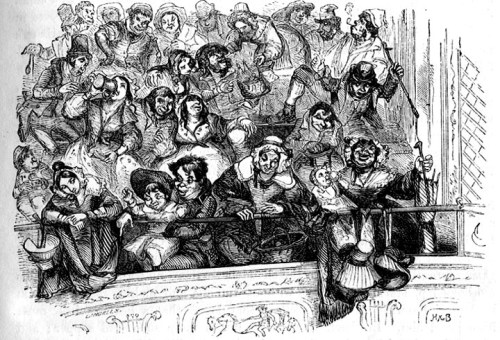
astley's amphitheatre balconey audience

…with shame we confess, that we are far more delighted and amused with the audience, than with the pageantry we once so highly appreciated. We like to watch a regular Astley’s party in the Easter or Midsummer holidays – pa and ma, and nine or ten children, varying from five foot six to two foot eleven: from fourteen years of age to four. We had just taken our seat in one of the boxes, in the centre of the house, the other night, when the next was occupied by just such a party as we should have attempted to describe, had we depicted our BEAU IDEAL of a group of Astley’s visitors ……  The play began, and the interest of the little boys knew no bounds. Pa was clearly interested too, although he very unsuccessfully endeavoured to look as if he wasn’t. –Victorian London Entertainment and Recreation

By 1818, four years after Astley’s death, the adjustable proscenium could be increased from forty to sixty feet. The enormous stage accommodated galloping horses as well as carriages, and could be raised or lowered mechanically. Such a huge stage space was able to hold military extravaganzas that featured hundreds of soldiers and horses, and cannons as well.

Copper engraving of the theater with facade, published by Robert Wilkinson, London, 1815. Engraved by W. Wise after Geo. Jones.

Astley lived to the ripe age of 72. He died in Paris, Oct. 20th, 1814 and was buried at the Père Lachaise cemetery. Sadly, his grave is no longer visible and neither is his famous Amphitheatre, which finally closed in 1893 under different management and was demolished in 1895. During his lifetime, Astley is said to have built nineteen different theatres.
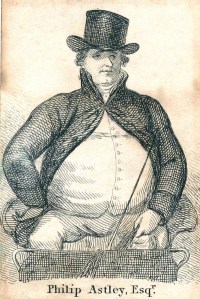
Philip Astley, c. 1800

More on the topic

* Philip Astley: Founder of the Modern-Day Circus by Timothy Sexton
**London and Its People: A Social History from Medieval Times to the Present Day, John Richardson ISBN-13: 978-0091808013
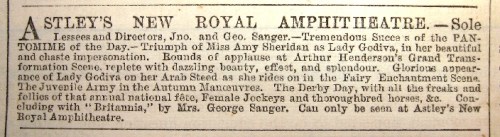
Astleys amphitheatre 1872 advert

Read Full Post »

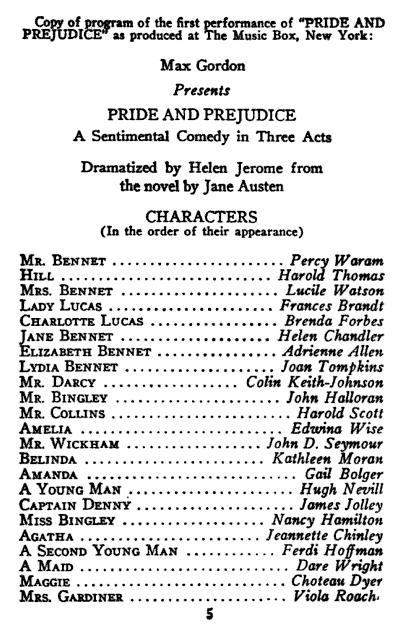
The 1935 production of Pride and Prejudice: A Sentimental Comedy Written in Three Acts, written by Helen Jerome and played on Broadway, featured Adrienne Allen, an English actress, as Elizabeth Bennet.

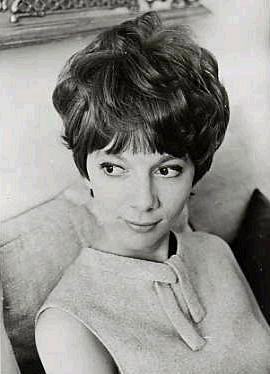
Miss Allen, a slender blonde, had been successful in London and Broadway stage productions, such as Private Lives with Noel Coward and Gertrude Lawrence, when she was signed to a contract by Paramount. She was married to actor Raymond Massey from 1929 to 1939 and is the mother of Daniel and Anna Massey.

Private Lives, 1930, Laurence Olivier, Adrienne Allen, Noel Coward, and Gertrude Lawrence

Best known for his portrayal of Abraham Lincoln, Canadian-born Massey also portrayed the character of “Jonathan Brewster” in the film version of Arsenic and Old Lace. He played Dr. Leonard Gillespie in Dr. Kildare during the 1960’s.  Raymond Massey Massey died in 1993.

Young Anna Massey’s career might have been decided as early as her christening, for her godfather was the film director John Ford.

Celia Johnson as Elizabeth Bennet in Helen Jerome's Pride and Prejudice

Anna made her stage debut at the age of 17 in the West End hit The Reluctant Debutante with Celia Johnson and Wilfred Hyde-White. Celia, coincidentally, also played Elizabeth Bennet in the Helen Jerome play of Pride and Prejudice (1936).

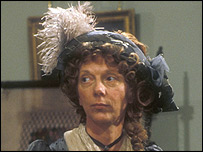
Janeites know Anna Massey best as Mrs Norris in the 1983 BBC mini-series of Mansfield Park.

Anna Massey as Aunt Norris

In recent years she has played Mrs. d’Urberville in Tess of the d’Urbervilles (left), and as Mrs. Bedwin in Oliver Twist (2008) right.

“If I’d had an education, I’m not sure that I would’ve been an actor,” she once said. “My education ended when I was 15 and it was assumed that I would go into the theatre and I did.” –  Anna Massey The Plain Girl’s Lament

More on the topic:

Read Full Post »

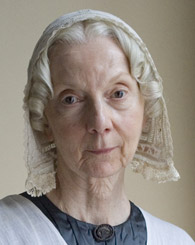
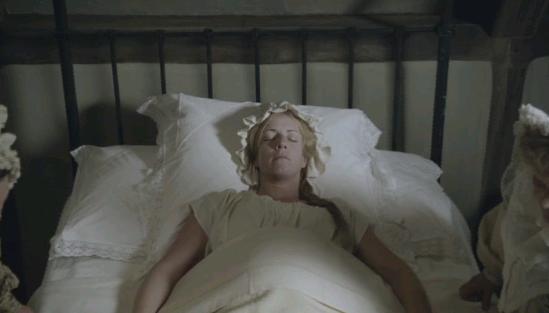
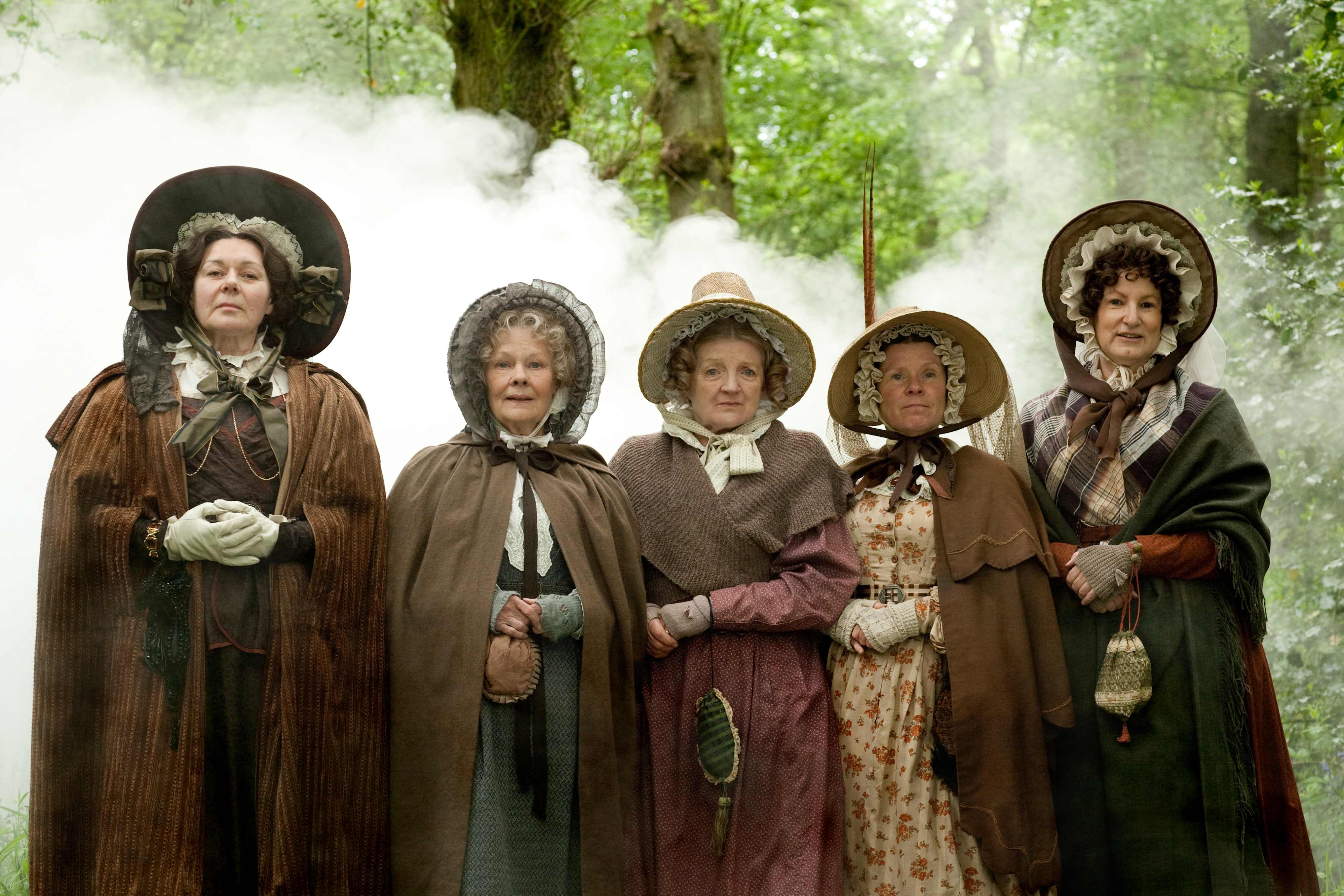
I await each January with joy, knowing that PBS Masterpiece Classic will return. Two years ago PBS concentrated on Jane Austen; last year, two Jane Austen film adaptations were featured; and this year we get to see not only the new adaptation of Emma, but reruns of Persuasion and Northanger Abbey as well. Viewers are also treated to Return to Cranford, the sequel to Cranford, last year’s runaway BBC and PBS hit. Reprising their recurring roles are the stellar actors who represent Cranford’s spinsters and widows and other denizens of this quaint Victorian town. And then we are treated to new characters, each with stories of their own.

Even as I reveled in watching the first new installment of this sequel, I found some of the new stories a tad too familiar and I could not help but shake off a vague sense of disappointment. This feeling was similar to having visited a new vacation spot for the first time. You and your family love the experience so much, you eagerly plan a return. But during the second trip , you feel a slight let down. The wonder and discovery are gone, replaced with  a sense of déjà vu and sameness. You find yourself going over old ground and repeating excursions that somehow don’t seem quite as satisfying as last time.

And so it is with Return of Cranford. All the elements of the original Cranford are still there – the Victorian town ruled by the rigid principles that are followed by a group of widows and spinsters who are set in their old-fashioned ways. The railroad still threatens the town’s placid existence, and the only person barring the line’s completion is Lady Ludlow, whose stubborn resistance is misplaced.

Francesca Annis, pale, gray and achingly beautiful, makes a short but memorable entrance and exit, as does handsome Greg Wise as Sir Charles Maulver, and Claudie Blakley as Martha, Miss Matty’s maid of all work.

New characters replace the old ones who have (sadly) moved on. The viewer is still treated to a story about star-crossed lovers (Tom Hiddleston as William Buxton and Jody Whittaker as Peggy Bell),  and an implacable father (Jonathan Pryce as Mr. Buxton) who stands in the way of their happiness. They must somehow overcome all obstacles to remain together. Part of the mystery of Return to Cranford is how they will achieve this.

Return to Cranford relies heavily on Judi Dench’s Miss Matty to keep the story threads together. While she was a pivotal character in Cranford, it was her sister Miss Deborah Jenkyns (Eileen Atkins), who was the backbone of Cranford’s widow and spinster society. Miss Deborah inspired steadfast loyalty to her unwavering convictions; Miss Matty, on the other hand, is much softer in character and a person that others want to protect. She has had to grow a strong backbone after her sister’s death, but she is still too easy a touch and has difficulty holding the small band of ‘The Amazons’ together. When hoity toity Mrs. Jamieson’s (Barbara Flynn’s) sister-in-law Lady Glenmire (Celia Imrie) comes to visit, Miss Matty and her cohort are given the sort of social snubbing that Miss Deborah would not have brooked for an instant.

Don’t get me wrong. I am still mad about Miss Matty, who is portrayed by the incomparable Judi Dench. And though her character is too weak to rule the town with the iron fist that her sister Deborah used, she’s become the town’s morally upright compass.

One of the main problems I found with episode one of Return to Cranford is the lack of real tension in the plot. This might be due to the fact that this adaptation was written largely by Heidi Thomas, not by master story teller Elizabeth Gaskell.  A dastardly character is introduced by way of Lady Ludlow’s wastrel son, Septimus (Rory Kinnear), but he is merely an unfeeling cad and shows up only long enough in the film to prove to us that Lady Ludlow had wasted her motherly affection (and money) on an unworthy son. His actions do not produce the tight-as-a-drum-tension that compels a viewer to keep watching a show or a reader to keep turning the pages. The train trip, in which Miss Matty convinces her friends to give the railroad a chance, does not provide much tension either, and the central love story between Peggy Bell and William Buxton seems like something that we have seen before.

Much of the quirky humor I delighted in with the first film is gone, although it was fun to see the ladies get tipsy as they warmed towards Lady Glenmire, and to see Miss Pole get her comeuppance as she makes a bird cage out of a French petticoat hoop frame for her parrot.

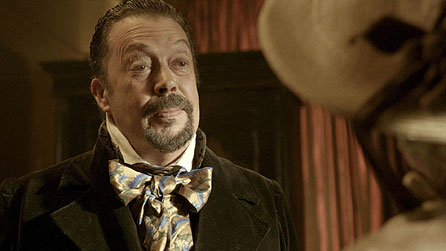
Episode Two gets much better. There’s real tension between Mr. Buxton and his son after William declares his love for Peggy Bell. Rather than honor his father’s wishes to find a more suitable wife, William decides to remain true to Peggy, make his own way in the world and work for the railroad until he has enough money to marry her.  The ladies of Cranford provide a funny backdrop to Lady Glenmire’s romance with Captain Brown. And we follow the fortunes of young Harry, who is torn between two worlds. He does not belong at boarding school and has good reasons for running away. A train accident, which kills poor Mrs Forrester’s cow and puts Harry’s life in danger, provides some true heart-wrenching moments. But all’s well that ends well. Miss Matty finds a satisfying way to unify the town, and the magic act of Senor Brunoni (Tim Curry in a funny role) was a fine (and wonderful) way to end the show and tie up loose story ends.

A friend who watched the show with me (and who did not see Cranford last year), found Return to Cranford delightful. So, I shall attribute my churlishness to a jaded palate and concede that Return is a delightful show, one worthy of viewing and certainly better than anything the competition on commercial television and cable tv have to offer. While my ranking of Cranford was five out of five stars, I rate this sequel a tad lower: four out of five stars.

Read Full Post »
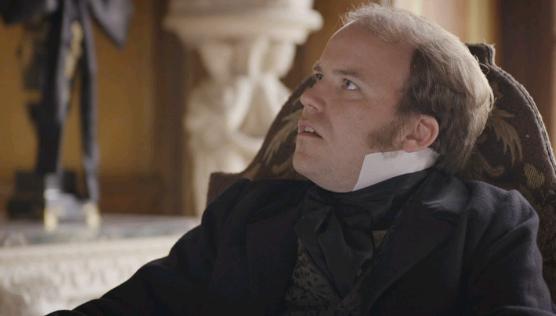
Ah, our old friends from Cranford have returned, with a few new faces among them. The first episode of Return to Cranford provided some humor, much pathos and sadness, and new beginnings. (My review sits here.) What did you think of this episode? Leave a comment or vote on Jane Austen Today. Missed the episode? Watch the series online at this link.

Read Full Post »
« Newer Posts - Older Posts »