Feeds:
Posts
Comments

Archive for January, 2021

Inquiring readers: The lists in this blog post describe us (Vic, Rachel, Brenda, and Tony) and our interests to a tee. If we were to remove our names heralding our choices, you could probably guess who chose which list. The books mentioned are those that we read in 2020 and that have influenced our interests, thoughts, and research. Enjoy! Feel free to leave your own book suggestions in the comment section!

Vic Sanborn

1. Trailblazing Women of the Georgian Era: The Eighteenth-Century Struggle for Female Success in a Man’s World, Mike Rendell, Pen & Sword History, Pen & Sword Books LTD, 2018.

This useful reference details the contributions of 18th century women (despite their lack of legal standing) in the arts, literature, sciences, business, commerce, reform, and education. Some women, like Frances Burney and Mary Wollstonecraft, are well known to us today. How many of us know about Mary Darly, Jane Marcet, Elizabeth Fry, or Ann Damer? This is a beautiful book well worth owning.

2. What Matters in Jane Austen? Twenty Crucial Puzzles Solved, John Mullan. 2003, Bloomsbury Press

John Mullan’s book was highly recommended to me. In it he discusses diverse topics in 20 chapters, such as: “How Much Does Age Matter?,” “Which Important Characters Never Speak in the Novels?,” “How Do Jane Austen’s Characters Look?,” “When Does Jane Austen Speak Directly to the Reader?,” and more. Mr. Mullan’s analysis prompts me to reread crucial passages in Austen’s novels; he helps me understand how much I still need to explore in her novels after all these years.

3. Belle: The Slave Daughter and the Lord Chief Justice, Paula Byrne, 2014, Harper Perennial.

I decided to purchase this book after watching “Bridgerton.” I did not see “Belle,” the movie, but have read short descriptions of the remarkable life of this illegitimate daughter of a captain in the Royal Navy and an enslaved African American woman.

4. The Housekeeping Book of Susanna Whatman: 1776-1800, National Trust, a primary source.

This extremely short book (62 pages) was not noticed until it was printed in 1952. Whatman’s observations on household management was for personal use only. It provides a snapshot of how an 18th century housewife managed a household, and describes her expectations and relationship with her servants. This primary source is extremely useful for anyone interested in the servant/mistress relationship during that time.

5. Hamnet, kindle edition, by Maggie O’Farrell, Deckle Edge, July 2020, mentioned as one of the 10 best books of 2020. Winner of the Women’s Prize for Fiction.

This is my only entry that was recently published. My Janeite friend, Deb Barnum, could not praise the book enough and urged me to read it. O’Farrell’s tale about the death of William Shakespeare’s son is told in prose so beautiful, lyrical, poignant and magical that one enters another world entirely. The tale is sad, for Hamnet died of the plague, but the topic speaks to the grief that so many families in this world are feeling as they mourn lost ones due to the pandemic.

Brenda Cox

1. Jane Austen and Religion, by William Jarvis. ISBN: 095271261X

This fascinating little book gives more insight into the role of religion in Austen’s life and novels. Quite easy to read, unlike some of the other books on this topic.

2. Paupers & Pig Killers: The Diary of William Holland, A Somerset Parson, 1799-1818, edited by Jack Ayres. ISBN-10 : 0750932015

These selections from a parson’s diary give you an idea of what the daily lives of Austen’s family might have been like (since her father and two of her brothers were country parsons).

3. Untold Histories: Black People in England and Wales during the period of the British Slave Trade, c. 1660-1807, by Kathleen Chater. 2011. ISBN-10 : 0719085977

If you’d like to know about black people in Jane Austen’s England and their lives, this book is based on extensive research from primary sources. See the History tab above, the section Black History, for more resources.

4. The Woman of Colour, anonymous, edited by Lyndon Dominique. ISBN-10 : 0719085977

This novel of 1808, possibly written by a woman of color, gives you a more personal view of the situation for black people in Austen’s England. It includes contemporary accounts from the slave-holding colonies.

5. Jane Austen & Crime, by Susannah Fullerton. ISBN-10 : 0976353954

This novel is full of great insights into law and crime in Austen’s England and in her life and her novels.

6. Unmarriageable, by Soniah Kamal. ISBN-10 : 0525486488

This book is a parallel retelling of Pride and Prejudice set in Pakistan. Lots of fun. See my review.

Rachel Dodge

1. Becoming Mrs. Lewis: The Improbable Love Story of Joy Davidman and C. S. Lewis by Patti Callahan. ISBN-10: 0785224505

“In this masterful exploration of one of the greatest love stories of modern times, we meet a brilliant writer, a fiercely independent mother, and a passionate woman who changed the life of this respected author and inspired books that still enchant us and change us. Joy lived at a time when women weren’t meant to have a voice—and yet her love for Jack gave them both voices they didn’t know they had.”

This book is perfect for fans of C.S. Lewis who want to know more about his wife, Joy Davidman. This novelized version of Joy’s life is hard to put down! I loved getting to know more about the brilliant mind and life of the woman Lewis called “my whole world.”

2. Les Miserables by Victor Hugo: ISBN-10 : 1846140498

This novel is one of my best memories of 2020 and one of my greatest achievements as a reader. I read this with an online read-along group for six months and fell in love with the novel and with Hugo’s writing. I could have never finished it without the group to help me stay on track. We had weekly online discussions that were incredibly invigorating. I highly recommend Les Mis to anyone who hasn’t read it — but if you can, read it with a buddy or a group. There’s nothing like it!

3. Caroline: Little House, Revisited by Sarah Miller: ISBN-10 : 006268535X

“In this novel authorized by the Little House Heritage Trust, Sarah Miller vividly recreates the beauty, hardship, and joys of the frontier in a dazzling work of historical fiction, a captivating story that illuminates one courageous, resilient, and loving pioneer woman as never before—Caroline Ingalls, “Ma” in Laura Ingalls Wilder’s beloved Little House books.”

This book gives a detailed view of the Little House books as told from Caroline “Ma” Ingalls’ perspective. It is meticulously researched and written, and I was mesmerized by the story of this incredibly strong woman. I have always wondered about the “real Ma” and how she handled even the worst situations with such grit and grace.

4. The Blue Castle by L.M. Montgomery:mISBN-10 : 1402289367

“Valancy Stirling is 29 and has never been in love. She’s spent her entire life on a quiet little street in an ugly little house and never dared to contradict her domineering mother and her unforgiving aunt. But one day she receives a shocking, life-altering letter―and decides then and there that everything needs to change. For the first time in her life, she does exactly what she wants to and says exactly what she feels.”

I’m including this on my list because it’s one of L.M. Montgomery’s best books–and many people have never read it. It is one of only two books Montgomery wrote for an adult audience, and I’ve yet to meet anyone who didn’t enjoy it. If you need a fun, quick, and invigorating read, this is a great one to pick up. You will love Valancy and Barney.

Tony Grant

1. A Portrait of the Artist by James Joyce. Published by the Penguin Group 1992 (First published 1914-15.)

Published in 1916, the book plots the course of the early life of Stephen Daedalus, his struggles with religion, education and relationships. All the things that matter in life. At that time the way people lived in Ireland was strongly controlled by the Catholic Church. We all know how that has turned out. As a lapsed catholic, even I shuddered and felt troubled by the four page description of hell.

2. Nicholas Nickleby by Charles Dickens. Published by the Penguin Group1999 (First published 1839)

I like a good dose of Dickens every now and then. I read Nicholas Nickleby recently. If you want a roller coaster of emotions, good, bad and ugly this is for you. The evil Ralph Nickleby and the Yorkshire headmaster, Squeers of Do The Boys Hall, are counterbalanced by the angelic Brothers Cheeryble and a few ,”Madonna,” like young women.It wouldn’t be Dickens without an angelic, perfect, beautiful young woman, defenceless waiting to be saved. Its Dickens at his best, mining the depths of humanity, sending your emotions in all directions like a firework display.

3. The Neopolitan Novels by Ellena Ferrante, translated by Ann Goldstein, and published by Europa Editions (2012-2015). Four novels entitled:

  • My Brilliant Friend.

  • Those Who Leave and Those Who Stay.

  • The Story of a New Name.

  • The Story of the Lost Child.

Even if you read just one of these amazing novels it is worth it. The quartet is a powerful evocation of humanity. Like all of us, the characters in these novels make awful mistakes and some terrible things happen to them but nevertheless their lives move forward. Lina and Ellena, two friends who have known each other from birth, brought up in the back streets of Naples live off their innate animal intelligence. Ferrante plots their lives. If you think in terms of soul mates these two are each one half of the same organism. Both brilliant in different ways, their lives diverge but the link between them always remains. Their power and strength is derived from their connection. Together they are a force of nature. It is tough reading at times . There is not much humour but you feel that you have gone through a cathartic experience. This is Joyce and Dickens combined. Ferrante is a genius.

4. Conversations With Friends by Sally Rooney. Published by Faber and Faber, 2017

This is the book Rooney wrote before, “Normal People.” Set in Ireland in the present time, it plots the love lives of young people. Rooney writes about her own age group. She is a great writer, plotting human relations through many hard, confusing, elating and passionate moments. Her characters are on a journey. The novel feels real, honest and gritty, with tenderness mixed in. Even at my advanced age I can empathise with the way their relationships pan out. This is the book James Joyce wanted to write, tried to write and for which he was virtually kicked out of Ireland.

5. The Rio Tape/Slide Show (Radical Community Photography in Hackney in the 1980s)

Published by Isola Press London (IsolaPress.com) October 2020.

Ok, this is not a novel but it engaged and absorbed me completely. I felt so inspired I wrote a long review for my blog, London Calling. Hackney is a London Borough in the east end of London. In the 1980s, there was a lot of unemployment and poverty. It was a whole melting pot of different cultures and ethnic minorities. People were bullied by the police and government policies made life even harder. The Rio Tape Slide project based at The Rio Cinema in Kingsland Road began community initiatives. They educated the local people in ideas, photography, art workshops, news reporting, writing and community action. News reals, shown at the cinema, were made by local people who went out with cameras to record and write about their community. The project brought people together to form very effective action groups. This is Gandhi’s peaceful action alongside Martin Luther King’s ideas about community . As well as the photographs illustrating much of what went on, there are essays written by some of the original organisers of the campaigns that occurred. They explain their philosophy and thinking behind their actions. This should be read by everybody. It is a template for grass roots social action. I kept thinking,” this is how it’s done!!” Politics can be beneficial.

__________________

And, so, gentle readers. Which books have you read? Which of them would you recommend? Which new books would you add to our list in the comments?  Curious minds want to know. Thank you for participating!

Read Full Post »

By Brenda S. Cox

“. . . we shall be overpowered with Johnson and Blair all the rest of the way.” –Northanger Abbey, when Henry Tilney is criticizing Catherine’s modern usage of the word “nice.”

“. . . like my dear Dr. Johnson, I believe I have dealt more in notions than facts.”—Letter from Jane Austen to Cassandra, Feb. 8, 1807, quoting from a letter from Johnson to Boswell.

Nowadays, we take dictionaries for granted. When an author is writing a book, she can access all kinds of dictionaries online. Even before the internet, we had a wide variety of reference books, and any author would have at least one dictionary.

However, in Jane Austen’s England, dictionaries were still relatively rare and expensive. Jane Austen may not have owned one. However, she had access, at least some of the time, to her brother Edward’s library at Godmersham Park and his library at Chawton House. The Godmersham library has been recreated online, so we can see some of the books she might have used. The 1818 library catalog lists twenty dictionaries. Most are for specialized categories. For example, the Knights owned a dictionary of heraldry, a farming dictionary, a law dictionary, and a classical dictionary.

Early Dictionaries

It took time for our modern style of dictionary to develop.

In the 1500s, some bilingual dictionaries were produced, translating from Latin, French, or Italian into English. The Knights owned a Latin dictionary published much later, in 1816.

In 1604, the first English-to-English dictionary was published, by Robert Cawdrey. However, his dictionary and later dictionaries of that century focused only on difficult, unusual words; slang expressions; or words from certain fields of study or regions of the country. They listed such words and explained them in simpler English. Some of these dictionaries were rather pretentious, including rare words like abequitate and commotrix. Cawdrey intended his dictionary to “benefit & help” “Ladies, gentlewomen or any other unskillful persons” to better understand difficult English words they might hear or read in the Bible or in sermons, and to use those words themselves. Everyday words were not defined.

The Knight Collection included one such dictionary, by Edward Phillips, published in 1678. It listed “Terms that conduce to the understanding of any of the Arts or Sciences.” Sciences at that time were simply areas of knowledge. (Austen calls dancing a science, for example.) The areas listed for this dictionary range from theology to astrology to jewelling to hunting to much more.

Nathaniel Bailey made the first attempt at a complete English-to-English dictionary in 1721.

The first attempt to include all the words of English in a dictionary was in 1721, when Nathaniel Bailey produced his Universal Etymological English Dictionary. (Etymological means giving the original sources of words; many entries, however, do not include etymologies.) Thirty editions appeared between 1721 and 1802; the last was about 900 pages long. The Knights and their family and friends could look words up in the fourteenth edition of this dictionary, published in 1751.

While Bailey’s dictionary included “many Thousand Words more” than any previous English dictionary, it was still not complete enough. Literary leaders such as Daniel Defoe and Jonathan Swift called for a better source to standardize the English language.

Johnson’s Dictionary

Jane Austen’s “dear Dr. Johnson” took up the challenge. Simon Winchester calls Johnson’s A Dictionary of the English Language “an unparalleled triumph . . . a portrait of the language of the day in all its majesty, beauty, and marvelous confusion.”

In 1746, a group of London booksellers hired Samuel Johnson to produce a new dictionary. He hired six men as scribes and spent the following years compiling his dictionary.

Samuel Johnson’s Dictionary became the definitive dictionary of English in England for the next century.

How do you write a dictionary? Johnson began by reading. He bought or borrowed stacks and stacks of books. He went through them, reading hundreds of thousands of pages. He listed and organized all the words he found.

Since he couldn’t go through all of history (as the later Oxford English Dictionary would do), he chose books from a time period of about 150 years: beginning with Sir Philip Sydney, who died in 1586, and ending with authors who had recently died in Johnson’s own time (plus a little Chaucer thrown in here and there).

As Johnson read, he marked the words he wanted and chose good sentences illustrating all the varied meanings of each word. His assistants wrote the sentences on slips of paper, which he filed.

Four years later, in 1750, Johnson had finished gathering words. Then he spent another four years sorting, choosing, and editing his 118,000 sample quotations (which he occasionally altered!). Finally, he wrote definitions for the 43,500 words included. Sometimes he based the definitions on earlier dictionaries, but many were entirely his own.

Imagine how much work this was, for one man! No wonder he defined lexicographer as “A writer of dictionaries; a harmless drudge, that busies himself in tracing the original, and detailing the signification of words.” There must have been a great deal of drudgery involved in digging out and organizing so many words, with no help from a computer or even a typewriter. While a few definitions, like lexicographer, show Johnson’s personal opinion, most are careful and exact.

I learned in a linguistics class that it is very hard to write definitions. You need to use only words that are simpler than the word you are defining, explain clearly what the word means and rule out what it doesn’t mean, and not use circular definitions (defining Word A as meaning B, but when you look up B you find it means A). Try making up a definition for an everyday word, and you’ll get some appreciation for Johnson’s task. Then you might want to compare your definition with Johnson’s.

Johnson’s dictionary was very thorough, including most of the words in use at the time. As in modern dictionaries, many words have multiple definitions. The word take, for example, is followed by 134 definitions. All are supported by at least one quotation from literature, and most have several.

Samuel Johnson’s Dictionary, 1756

When Johnson was almost ready to publish his dictionary, he convinced Oxford University to give him an honorary degree, so he would have letters to put after his name (Samuel Johnson, A. M.), and the dictionary was published in 1755.

The final dictionary was over 2300 pages long. It was printed on high quality paper in large, heavy, expensive volumes. Jane’s parents probably could not have afforded a set.

The fact that Godmersham had two copies of this dictionary shows us something of the Knight family’s wealth. They owned a first edition, published in 1755, and a  twelfth edition, published in 1810; each was in two volumes.

Samuel Johnson’s was England’s definitive dictionary of English until 1928, when the Oxford English Dictionary (OED) was completed. Simon Winchester tells the enthralling story of the OED in his book The Professor and the Madman: A Tale of Murder, Insanity, and the Making of the Oxford English Dictionary. Most of this article comes from his section on Johnson’s dictionary. For the OED, a team of thousands of volunteers sent the compilers over six million slips of paper with sample sentences on them, from works in English throughout history. After five years, the compilers had only gotten to the word ant.  It took from 1879 to 1928 to produce all ten volumes of the dictionary. The OED has been constantly updated since then, because of course language is always changing.

(In America, of course, Noah Webster published the first dictionary of American English in 1806. American and British dialects and spelling were already diverging at that point.)

Austen and Johnson’s Dictionary

We don’t know how much Jane Austen consulted Johnson’s Dictionary, but we do know that she loved to read Dr. Johnson’s works, so she probably read some of the dictionary when she could. There might have been a copy at Chawton House near her cottage.  Also, shorter, smaller abridged versions, without all the quotes, were published later in her lifetime, so perhaps she owned one of those.

Shortened versions of Johnson’s Dictionary were soon produced, like this one in 1806.

Henry Tilney is “Nice”

In Northanger Abbey, Catherine Morland and Henry Tilney have a discussion about a word and its definition:

Catherine: “But now really, do not you think Udolpho the nicest book in the world?”

Henry: “The nicest—by which I suppose you mean the neatest. That must depend upon the binding.”

“Henry,” said Miss Tilney, “you are very impertinent. Miss Morland, he is treating you exactly as he does his sister. He is forever finding fault with me, for some incorrectness of language, and now he is taking the same liberty with you. The word ‘nicest,’ as you used it, did not suit him; and you had better change it as soon as you can, or we shall be overpowered with Johnson and Blair all the rest of the way.”

“I am sure,” cried Catherine, “I did not mean to say anything wrong; but it is a nice book, and why should not I call it so?”

“Very true,” said Henry, “and this is a very nice day, and we are taking a very nice walk, and you are two very nice young ladies. Oh! It is a very nice word indeed! It does for everything. Originally perhaps it was applied only to express neatness, propriety, delicacy, or refinement—people were nice in their dress, in their sentiments, or their choice. But now every commendation on every subject is comprised in that one word.”

“While, in fact,” cried his sister, “it ought only to be applied to you, without any commendation at all. You are more nice than wise.”

“Nice” in Samuel Johnson’s original dictionary

So how did Samuel Johnson define the word nice? He gave these definitions:

  1. Accurate in judgment to minute exactness; superfluously exact. (This may describe Tilney himself in the discussion, as his sister says.)
  2. Delicate; scrupulously and minutely cautious.
  3. Fastidious; squeamish
  4. Easily injured; delicate
  5. Formed with minute exactness (Perhaps this is the definition by which Tilney says the book’s binding may be nice.)
  6. Requiring scrupulous exactness
  7. Refined
  8. Having lucky hits (a meaning no longer in use)

Catherine, however, was using the word more as we would use it today, to simply mean something good or pleasant. Apparently, when Johnson wrote his dictionary forty years earlier, nice was not often used that way, at least in books. Even an 1817 short version of his dictionary still defines nice as “accurate, scrupulous, delicate.” Henry Tilney was overly scrupulous, or too nice, in his use of words.

(By the way, Eleanor refers to “Johnson and Blair.” Blair is Dr. Hugh Blair, a Scottish minister who wrote books of sermons that Mary Crawford mentions in Mansfield Park. He also wrote Blair’s Rhetoric, teaching good writing and speaking, which is what Eleanor mentions here.)

“Nice” in an 1806 abridged version of Johnson’s Dictionary

“Nice” Austen Quotes in the Oxford English Dictionary

The current Oxford English Dictionary (OED) quotes Jane Austen in three of its 44 definitions of nice (24 of these definitions are now obsolete, 2 others are rare).

For the obsolete definition 3c, “Particular, strict, or careful with regard to a specific point or thing,” this example appears from Persuasion, 1817: “Good company requires only birth, education and manners, and with regard to education is not very nice. Birth and good manners are essential.”

The OED’s definition 14a of nice, “That one derives pleasure or satisfaction from; agreeable, pleasant, satisfactory; attractive,” is illustrated of course by Catherine and Henry’s conversation in Northanger Abbey. (It’s not the first example, though–that came from actor David Garrick in 1749, just a little too late to be included in Johnson’s Dictionary.)

And there’s one more “nice” example from Austen in definition 14d, where nice is “used ironically”: the very instance is from Jane Austen’s letter of Dec. 24, 1798: “We are to have Company to dinner on friday; the three Digweeds & James.—We shall be a nice silent party I suppose.”

Language has changed so much that we sometimes need dictionaries to understand writers of former ages. It would be easy to assume that wherever we see the word nice, for example, it means “pleasant,” but in Austen’s time it was much more likely to mean something else. In my research on the church in Austen’s time, I’ve found a number of words that had religious meanings in her time, words like principle and serious, that are now used differently. The word candour has changed almost entirely; it meant assuming the best of a person (which is why Jane Bennet is an example of candour), rather than plain speaking.

What are your favorite examples of words used in Jane Austen which now have different meanings, or are obsolete now? And, what’s your favorite dictionary or website where you look them up?

Further Resources

Johnson’s Dictionary: Myths and Reality, by linguist David Crystal

Samuel Johnson’s A Dictionary of the English Language, 1755, British Library

Johnson’s Dictionary Online is a fantastic free resource. You can look up any word in the original 1755 dictionary. Page view is available for all the words (click on the letters at the top), and some have been transcribed (search in the search window). If you want to know what words were in use in Jane Austen’s England, and how they were used, this is the book for you. If you want a later edition, archive.org has volumes of the dictionary from later dates.

Dr. Johnson, His House, Jane Austen, and a Cat Called Hodge,” by Tony Grant (who writes for Jane Austen’s World), gives a fascinating overview of Johnson’s life, Jane Austen’s comments about Johnson, and lovely photos of Johnson’s house. He also includes the intriguing story of Johnson’s black servant Francis Barber, who was like a son to Johnson; Johnson left most of his estate to Barber.

Dr. Johnson’s House, a museum of Samuel Johnson, can be visited in London (though it is currently closed for covid; check the website before going).

The Oxford English Dictionary will give you more detail and more quotations, but if you are not part of a library or university with access to it, it’s quite expensive. (Currently subscriptions are deeply discounted, at $90 per year.)

Simon Winchester tells the fascinating story of English dictionaries, especially the OED, in The Professor and the Madman: A Tale of Murder, Insanity, and the Making of the Oxford English Dictionary.

The movie, The Professor and the Madman (2019), is based on this book and is well done, though it adds some imaginative twists.

Finding Jane Austen’s ‘Dear Dr. Johnson’ at the Godmersham Park Library” includes Austen’s references to books by and about Dr. Johnson

You can connect with Brenda S. Cox, the author of this article, at Faith, Science, Joy, and Jane Austen or on Facebook.

Read Full Post »

Inquiring readers: One of the activities I have missed the most during this year of COVID-19 is traveling abroad. In this blog post, Tony Grant takes us on a tour to The Vyne, which is one of England’s grand houses and is closely associated with Jane Austen and her family. Enjoy!

Gentle readers: Please note: this post is updated with corrections about the Stained Glass Windows and Flemish Tiles, as indicated in the comments by Stuart Hall, Tour Guide, The Vyne.

Image of The_Vyne_House wikipediaThe Vyne, Sherborne St John Hampshire, Image from Wikipedia

The Vyne, is an 18th century mansion near the village of Sherbourne St John. It is just north of the town of  Basingstoke; eight miles from Steventon, which is located south west of Basingstoke; eighteen miles from Chawton; twenty miles north of Winchester; and just over fifty miles from the centre of London. It is a typical grand house that, although its present appearance is 18th century, has been developed and adapted over the centuries to fit different periods. In the late 18th century its proximity to Basingstoke and Steventon put it and the Chute family, who owned it, within Jane Austen’s family local connections. George and Cassandra Austen, after their marriage in Bath, moved to Steventon in 1764 when George and Cassandra Austen first took up the living of Steventon Parish and were set to start their family with their first child, James, born on February 13th, 1765. Jane, the Austen’s eighth child, was born 16th December, 1775. As the vicar of Steventon, George Austen associated with the country gentry and landowners in the area and these included the Chutes at The Vyne in Sherborne St John.

The Vyne Estate, The National Trust Map, image by Tony Grant

The Vyne Estate, The National Trust Map, image by Tony Grant

The Vyne was first built as a large Tudor mansion by William, 1st Lord Sandys, Henry VIII’s Lord Chamberlain who died in 1540. The King himself, was entertained three times at The Vyne by Lord Sandys. The wealth of the Sandys family declined slowly through the centuries, but the Civil Wars 1642 – 1651 finished the family as an authority in the country and their wealth declined drastically. In 1653 the estate was sold to Chaloner Chute, who was the Speaker in the House, a role which had great power in Parliament shaping how Parliament debated issues and passed legislation during the last Commonwealth. The Commonwealth was set up after the execution of Charles 1st and continued to a little after Oliver Cromwell’s death and the reinstatement of the monarchy. Chaloner Chute was a very important man in the country. He reduced the size of the original Tudor mansion and modernised it, employing John Webb, a talented pupil of Inigo Jones to redesign it.

Floorplan of The VyneThe floor plan of The Vyne, The National Trust

Chute died in 1659 and not much more was done to the house for the next hundred years. His great grandson, John Chute (1701-76) inherited the house in 1754. John Chute was a talented architect and along with his friend Horace Walpole helped Walpole design the Gothic interiors of Strawberry Hill, Walpole’s house at Twickenham. Along with Walpole he also redesigned the Gothic interior of the chapel at The Vyne. In his early thirties, he brought back mementoes from his grand tour of Europe which remain in the house today. 

John Chute died without heirs in 1776 and the house passed to his cousin Thomas Lobb (1721-90), the son of a Thomas Lobb of Norfolk who had married Elizabeth Chute (d 1725) in 1720, hence the family connection. This second Thomas Lobb assumed the name of Chute when John Chute died and passed the Vyne to him, thus keeping the family name extant. Thomas (Lobb) Chute married Anne Rachael Wiggett (1733-90) in 1753.

They had two sons, William John Chute (1757-1824) and Thomas Chute (1772-1827). William, who inherited the house in 1790, married Elizabeth Smith in 1794.

Upon his death in 1824 the Vyne passed to his younger brother Thomas, a clergyman. As neither William nor Thomas had issue, the house was left in 1827 to William John Chute’s godson and part of the Wiggett family, William Lyde Wiggett (1800-79). THIS William assumed the name of Chute in 1827 and succeeded to the Vyne in 1842 when Elizabeth Smith Chute passed away.

.

James Austen, Jane Austen’s eldest brother (above image on the right), became a close and lifelong friend of Tom Chute, William John Chute’s brother. They both loved fox hunting and often rode with the hounds together. On his clergyman’s income, James Austen was able to keep his own pack of hounds. As rector of Steventon, George Austen, Jane’s father, was also a visitor to the Chute family home.

In Pride and Prejudice, Mrs Bennet and the Bennet girls were all a flutter at wealthy landowners, such as Fitzwilliam Darcy, came to live in their neighbourhood. The game was on to get her daughters married into a wealthy strata of society and rise in the world. You had to be ambitious if nothing else and take a chance.

The local clergy were regularly invited to the local landowner’s home for dinner; they became almost a part of the family in many ways. Mr Collins waxed lyrical about his great honour of being invited to Rosings by Lady Catherine de Bourgh. 

“She had asked him twice to dine at Rosings and had sent for him only the Saturday before  to make up her pool of quadrille in the evening… she made not the smallest objection to his joining in the society of the neighbourhood.”

We can gather that James Austen became closely associated with the Chute family, first because of his father’s connections and subsequently as the vicar of  Sherborne St John, the parish in which The Vyne was located.  Later he took over the incumbency of Steventon Parish from his father, a mere eight miles from The Vyne, which kept him close to the Chutes and the great house.  

James accumulated parishes throughout his clerical career. Deirdre le Faye enumerates the following. 

“curate of Stoke Charity , Hants, 1788, (the year he completed his studies with an MA from Oxford), the curate at Overton Hants in 1790, the vicar at Sherborne St John in 1791, the curate of Deane in 1791, the vicar of Cubbington in 1792, the perpetual curate of Hunningham in 1805  curate of Steventon (under his father) in 1801 and finally the vicar of Steventon  between 1805 and 1819 (died 1819).” 

Photo of The grave of James and Mary Austen at Steventon

James is buried alongside his wife in Steventon Churchyard. Image courtesy of Tony Grant.

Jane and Cassandra fully took part in local society, including friendships formed through family associations and connections provided by their father and brothers. Jane often wrote about her acquaintances and the local activities she took part in, including information she knew Cassandra would be interested in, often referring to the Chutes of The Vyne.

Thursday 14th – Friday 15th January 1796

“Friday- At length the Day is come on which I am to flirt my last with Tom Lefroy, and when you receive this it will be over- My tears flow as I write, at the melancholy idea. William Chute called here yesterday. I wonder what he means by being so civil. There is a report that Tom ( Chute)  is going to be married to a Litchfield Lass.”

On Saturday 1st November 1800, Jane went to a ball , presumably at Basingstoke.

“It was a pleasant ball, and still more good than pleasant, for there were nearly 60 people and sometimes we had 17 couples-The Portsmouths, Dorchesters, Boltons, Portals and Clerks were there and all the meaner and more unusual etc etc’s- There was a scarcity of men in general and a still greater scarcity of any that were much good for much .- I danced nine dances out of ten, five with Steven Terry, T. Chute and James Digwood and four with Catherine-“

Saturday 9th November 1800

“Mary fully intended writing to you by Mr Chutes frank and only happened intirely (JA’s spelling) to forget it- but will write soon-“

On Saturday3rd January 1801 Jane saw Tom Chute when she visited Ash Park. On Friday 9th January  a few days later she saw him again at Deane. These are all houses belonging to the local gentry in Hampshire.

On Monday 22nd April 1805 she hears of Tom Chute’s fall from a horse.

“I am waiting to know how it happened before I begin pitying him.”

On the 8th January 1807, Jane adds another news item to her letter to Cassandra

“…. and another that Tom Chute is going to settle in Norfolk.” This was of course where another Chute family property was located, through the Wiggett connection.”

In January 1813, she again refers to the use of Mr Chute’s franks.

And probably most intriguing of all on Wednesday, February 26th 1817 Jane writes,

“I am sorry to hear of Caroline Wiggetts being so ill. Mrs Chute would feel almost like a mother in losing her.”

The reference to using the Chutes’ “frank” refers to the means by which the Chutes addressed an envelope. The MP wrote the address, dated it properly, and wrote the word “FREE” in the middle of his signature. This  meant that the recipient of the letter didn’t pay for its delivery (which was the custom), but that the Chutes would pay.  At the time of this last message Jane was still in the process of writing Sanditon and she had a mere few months left to live. Jane died in Winchester on the 18th July 1817. The Chutes remained in her sphere of interest to the last. 

Claire Tomalin makes links between Jane Austen’s real life associations, the Chutes, etc., and some of her novels’ characters. She surmises that William John Chute and Elizabeth Chute nee Smith could have inspired some of her ideas about Elizabeth Bennet and Fitzwilliam Darcy. Jane and Elizabeth Chute did not become great friends but Elizabeth Chute was well read and was an intelligent person from all accounts. There is also the matter of Caroline Wiggett, who was mentioned in the letter above. Caroline was a second cousin of William’s mother, who came to live with Elizabeth and William and thought of them as her Aunt and Uncle. She was brought up at The Vyne from 1803. From Caroline’s reminiscences we learn that she had a rather lonely childhood at The Vyne. Could she have been an inspiration for Fanny Price in Mansfield Park? Tomlin rightly warns us about making too many assumptions. Writers use many experiences from their lives but use them creatively within their works. A writer will not use personal experiences in a factual way, but aspects of their experiences can inevitably be adapted, drawn upon, and used fictionally.

However, what attracts me most about Jane’s letters, which is clearly obvious in the quotations above, is her humorous tone, often teasing, and making fun of those people and situations she writes about. Of course these letters are private letters to her dear sister Cassandra. She and Cassandra would have had their private jokes and opinions, not for publication. Haven’t we all?

Eventually in 1956, upon the death of Sir Charles Chute, the final Chute owner, The Vyne was bequeathed to The National Trust, who take care of the house today. It is open to the public.

Photo of a National Trust membership cardNational Trust Membership card.

A few years ago, Emily, one of our daughters, bought us a National Trust membership as a Christmas present. The trust looks after hundreds of old houses, estates, gardens, coastal paths and wild areas of the British Isles. With membership we get free entry into these estates, gardens and historic houses, which is an amazing thing. 

In March 2017, Marilyn and I went to visit The Vyne. I had heard of the Austen connection, of course, and also the connection with Horace Walpole (1717-1797) and the Gothic Revival movement. After university, Emily had worked as an intern at Strawberry Hill House, Walpole’s mansion at Twickenham, and we visited Strawberry Hill with Emily as our guide. We were expecting to see something of the Gothic Revival style of interior design at The Vyne, just as we had seen at Strawberry Hill. 

Photo of Sherborne St John road sign Sherborne St John. Image courtesy of Tony Grant

I have focused a lot of this article on the period when the Austens lived at Steventon and on the connections between the Austen family and the Chutes. In an earlier period, Horace Walpole was best friends with John Chute (1701-1776) before William John Chute and Thomas Chute, the Austens’ acquaintances.

The Vyne is rich in objects and paintings brought to The Vyne after John Chute returned from his grand tour of Europe. At 39, John was older than his fellow travellers. His cousin Francis Whitehead, who he went on tour with, was 23, and the friends he made on the tour, including Horace Walpole, were virtually a generation younger.

Photo of Some of John Chute's porcelain collectionPorcelain brought back by John Chute from his Grand Tour. Image courtesy of Tony Grant.

Marilyn and I entered through the entrance on the south side overlooking the extensive surrounding parkland and the lake.  Each room is attended by a guide. Once you ask a question you are inundated with the most interesting and detailed, in-depth information about the Chutes, the house, and the very room you might be standing in at the given moment.

Photo of the Vyne library, National TrustThe library. Image from The National Trust

We walked through the rooms packed with objects and paintings. The library has two large globes of the world, a fantastic ornate baroque fireplace, full length portraits of the Chutes, and walls with shelf upon shelf of books. I must admit to a quirky disposition when I walk through libraries in old houses. You must not touch the books. They are rare, ancient, bound in leather and cost a fortune. I have an enormous urge, which I have to fight against, to spend time with the said books, take them off the shelves and read them. It is always a difficult time having to merely walk past them. I spent a moment reading the titles on the spines though. 

We walked along the oak gallery, the walls lined with portraits and landscapes. The floor is of oak timbers. The walls are faced with oak wainscoting with an intricate “folded linen” effect carved and finely chiselled into the surface of each panel.  They are similar to the panelling I have seen in the Tudor Palace at Hampton Court and other Tudor mansions around the country. This is a fantastic example of the Gothic Revival on the walls, created in the 18th century and not the 16th century.

Photo of linen fold panelingLinen fold oak panelling. Image courtesy of Tony Grant

The chapel attached to the eastern wing of the house is a sight to behold. It is the epitome of Gothic Revival. We think Jane Austen did visit The Vyne, so there is a good chance she too gasped at what you see today. Horace Walpole advised on the decoration. John Chute employed an Italian craftsman called Spiridore Roma, who worked on the chapel between 1769-1771. He used a technique called trompe l’oeil, to create a three dimensional effect of buttresses, Gothic arched windows, and fan ceilings.

Photo of Trompe l'oeil in the chapel National Trust pictureTrompe l’oeil in the chapel. National Trust image.

I have seen the real thing in Bath Abbey and other medieval churches and cathedrals and it is obvious that this is not the real thing, but this paint effect is very impressive indeed. There are medieval-styled tiles on the floor and stained glass windows–all of 16th century medieval originals. The effect is glorious.

Image of Tudor floor tiles (Gothic Revival)

Image of Tudor Revival Gothic floor tiles, courtesy of Tony Grant

Next to the chapel is the Tomb Chamber. It is set out like a Gothic cathedral chapter house. It has valuabele 16th century stained glass windows and a stone slab floor, but the centre piece is a table tomb with a reclining white marble statue of Speaker Chute  (Chaloner Chute 1595- 1659) lying full length with his head propped up on an elbow. Horace Walpole wanted to create the emotions derived from Gothic architecture and in this chapel and tomb chamber he aided John Chute, his friend in recreating that Gothic moment.

Photo of Challoner Chutes tombChaloner Chutes tomb. Image courtesy of Tony Grant

After our tour inside the great house Marilyn and I walked in the grounds. We had a wonderful view of the long lake, smooth green lawns, and the massive cedar trees. We went inside the brick summer house and looked up at its web-like beamed ceiling.

Photo of the summer houseThe Summer House. Image courtesy of Tony Grant

We walked through the walled garden where the National Trust is recreating a great houses kitchen garden with a variety of shrubs, fruit trees, herbs and vegetables.

Photo of the kitchen garden by Tony GrantThe walled kitchen garden. Image courtesy of Tony Grant

 We walked along the Lime Walk and listened to the wind in the branches and birds singing in the canopy.

Photo of The lawns and lake at the front of The Vyne

The lawns and lake at the front of The Vyne. Image courtesy of Tony Grant

Visiting a National Trust property such as The Vyne lifts the spirits, and provides beauty, natural and man-made, that soothes the soul. Afterwards, we drove into the village of Sherborne St Peter nearby and walked to the church where James Austen was vicar.

References:

“The Vyne Hampshire,” published by The National Trust  1998 (revised 2015)

Jane Austen A Life, by Claire Tomalin published by Penguin Books 1997.

Jane Austen’s Letters Collected and edited by Deirdre Le Faye (Third Edition)  Published by Oxford University Press 1997.

Pride and Prejudice, by Jane Austen  Published by Penguin Classics 1996

Mansfield Park, by Jane Austen  Published by The Penguin English Library 1966

Tony Grant Posts:


Read Full Post »

As we enter a new year, it’s intriguing to think about the power of a fresh start. Jane Austen herself seems to have entered into a new season when she came back to the Hampshire countryside in 1809, after leaving Steventon for Bath with her family in 1801.

During her time away from the Hampshire of her youth, Austen’s writing activity slowed and she experienced a period marked by loss and change. But once she and Mrs. Austen and Cassandra moved into the cottage on her brother Edward’s property in Chawton, she started writing prolifically—revising earlier manuscripts, drafting new ones, and beginning her publishing journey.

An Unsettled Season

There are many thoughts on why Austen didn’t write as much during those years, but it’s important to note two important factors. First, not only did Austen move away from her childhood home, but she also experienced grief, including the loss of her dear friend Mrs. Anne Lefroy (December 1804), her own beloved father Reverend Austen (January 1805), and her sister-in-law Elizabeth Austen (1808).

Second, after the Reverend Austen’s death, the Austen women stayed on in Bath, moving several times. They then moved to Southampton in 1806, living first with Francis and Mary Austen and then in Castle Square. The Austen women remained unsettled for quite some time.

Sydney Place in Bath where Austen lived 1801-1804 (photo by Rachel Dodge)

As many of us know firsthand, losing a loved one is at the top of most stress charts. Moving to a new home is thought to be highly stressful as well. It’s possible that the combination of grief and frequent moves may have impacted Austen’s creativity.

A Fresh Start

After living away from the quiet of the Hampshire countryside for so many years, and having moved houses several times, moving to Chawton must have been a relief for the Austen women. It also seems to have provided just the right time and place for Austen’s writing to flourish. Almost as soon as they settled into the house there, Austen began revising and writing at a terrific pace.

It’s also interesting to note that when Austen moved to Chawton she picked back up her manuscript for Sense and Sensibility (originally titled “Elinor and Marianne”), a story about a recently widowed woman and her daughters who go to live in a small cottage on the property of a male relative. The Dashwood women, in need of a fresh start, find their new beginning in Barton. The Austen women found theirs in Chawton.

This intriguing quote from Sense and Sensibility almost seems as though it could have been written from the Austens’ point of view:

The Dashwoods were now settled at Barton with tolerable comfort to themselves. The house and the garden, with all the objects surrounding them, were now become familiar, and the ordinary pursuits which had given to Norland half its charms were engaged in again with far greater enjoyment than Norland had been able to afford, since the loss of their father.

Sense and Sensibility, Ch. 9

To view an image of a contemporary watercolor of Chawton Cottage, as Austen may have known it, you can see it here on the JASNA site, in a fascinating Persuasions article entitled “Chawton Cottage Transfigured” by Joan Austen-Leigh (1982).

At Chawton, Austen revised and published Sense and Sensibility (1811) and Pride and Prejudice (1813); wrote and published Mansfield Park (1814) and Emma (1815); reacquired Northanger Abbey and wrote Persuasion (both of which were published after her death in 1817); and started “Sanditon.”

St Nicholas Church at Chawton
(photo by Rachel Dodge)

Storing Up Inspiration

It seems that Austen’s time away from her beloved Hampshire countryside actually played an important role in her writing journey. Even if she didn’t write as much during those years, she was evidently storing up experiences, people, places, and inspiration all along the way. Coming “home” to the countryside and settling down sparked new creativity.

There are many factors that may have led to Austen’s fresh spurt of writing at Chawton, but here are a few that come to mind:

  • Feeling at home and settled in their own house
  • Time and space to walk, think, and listen
  • Slower pace and quieter surroundings
  • Familiar scenery, sounds, and walks
  • Extended family, nieces and nephews, and friends nearby
  • New experiences and settings for inspiration (Bath, Southampton, Godmersham, and Lyme Regis)
  • New books to read (at Chawton House and Godmersham Park)
  • The society of local families

One might say that Austen herself was living in her own ideal setting at Chawton: As she wrote to Anna Austen in 1814, “You are now collecting your People delightfully, getting them exactly into such a spot as is the delight of my life;—3 or 4 Families in a Country Village is the very thing to work on” (emphasis mine).

For Austen, perhaps a country village was not only the perfect thing to work on but also the perfect place in which to work. That setting—the “delight” of her life—seems to be where she worked best.

It’s heartening to consider new beginnings like these. After difficulty and heartache, light dawned once more for Austen. And the unsettled years certainly weren’t wasted; they provided Austen with new experiences and fresh inspiration.

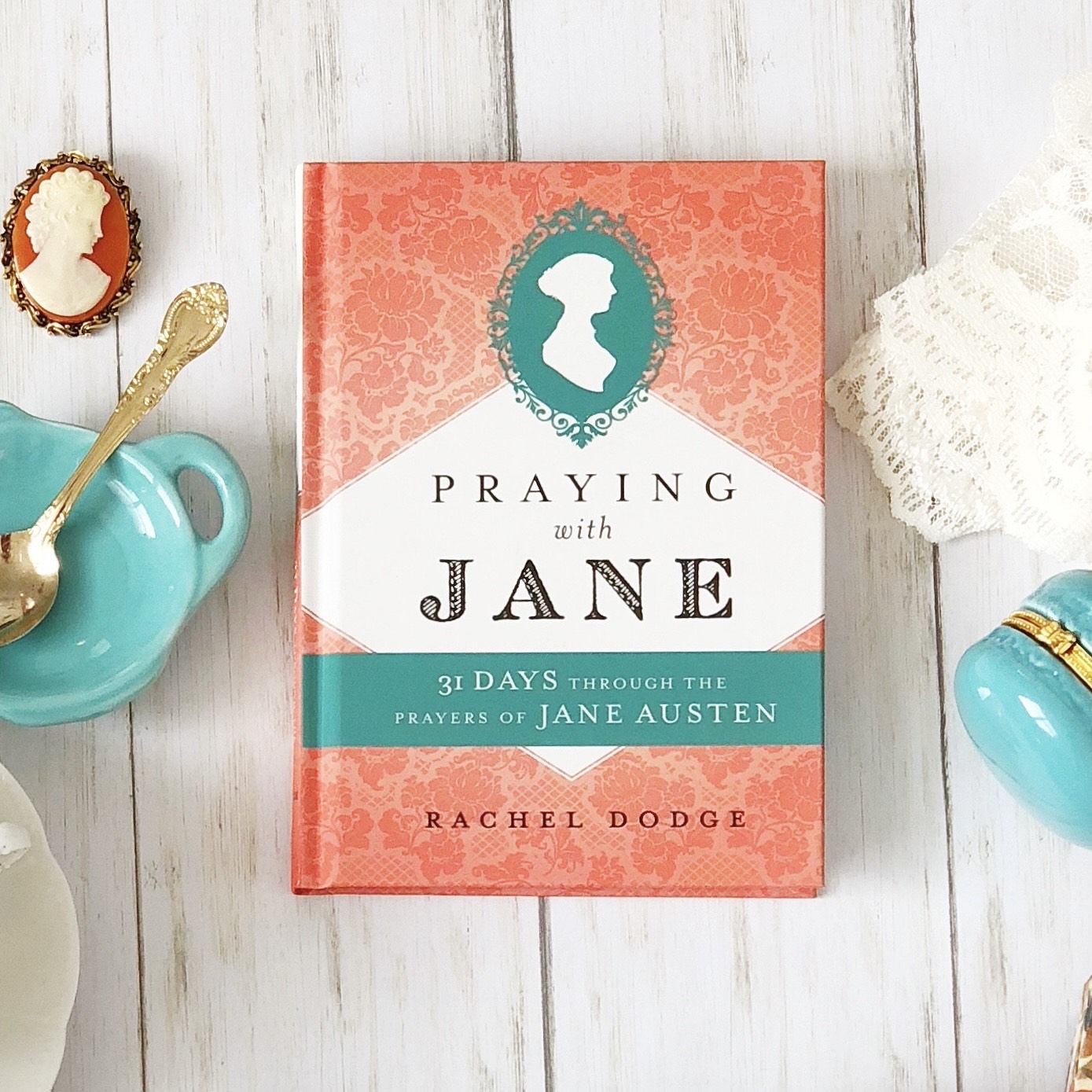
RACHEL DODGE teaches college English classes, gives talks at libraries, teas, and book clubs, and writes for Jane Austen’s World and Jane Austen’s Regency World. She is the author of Praying with Jane: 31 Days Through the Prayers of Jane Austen and The Anne of Green Gables Devotional: A Chapter-By-Chapter Companion for Kindred Spirits. You can visit Rachel online at www.RachelDodge.com.

Read Full Post »

This article was researched, written, and designed by LiYuan Byrne, Josephine Chan, Ariana Desai, Carolyn Engargiola, Ava Giles, Macy Levin, Gage Miles, Sophia Romagnoli, Kate Snyder, Oscar Steinhardt, Lauren Stoneman, Alexandria Thomas, Varsha Venkatram, and Dr. Ben Wiebracht.

Introduction to this class project

This article is by the teacher and students of “Advanced Topics: Love Stories” at Stanford Online High School. It is part of a class-wide project to explore the city that so dazzled Catherine Morland, but about which Austen herself had mixed feelings. We started with the 1795 satire “Bath: An Adumbration in Rhyme” – a roughly eight page poem by little-known poet John Matthews. The poem is chock-full of allusions and references to Bath institutions – some still familiar, like the Pump Room and the Royal Crescent; others long forgotten, like the riding school of Jonathan Dash. Working in small groups, the students consulted a wide array of sources to track down these many references, and in so doing reconstruct a typical day in the life of a Georgian visitor to Bath. They looked through old guidebooks to the city, published scholarship on Georgian Bath, old Parliamentary records, newspapers from the time, and much else. They also had the benefit of a virtual visit from two experts familiar to readers of JAW: Vic Sanborn and Tony Grant. Then, they distilled their mountain of research into what we hope is an informative and enjoyable article, one that does justice to the playful spirit of our poem, and indeed, of Northanger Abbey itself.

When Northanger Abbey was finally being prepared for publication in 1817, nearly twenty years after its composition, Austen worried that the novel had missed its moment. Anticipating criticism on that score, she included an “Advertisement” warning that “places, manners, books and opinions have undergone considerable changes.” This was particularly true of the city of Bath, where the first half of the novel is set. The thriving Georgian resort town that Catherine Morland discovers had lost much of its luster by the late Regency as the upper classes, disdainful of the new, middle-class visitors to the city, sought out other retreats (see Akiko Takei, “Sanditon and the Uncertain Prospects of a Resort Business”). Austen’s advertisement is a reminder that her novels, immortal though they may be as works of art, are still very much grounded in time and place.

This semester, my students and I have been working to recover the Bath of the 1790s. Our rather unexpected guide has been a long-forgotten satirical poem that I discovered over the summer: “Bath: An Adumbration in Rhyme” (1795), by the Herefordshire physician and poetaster John Matthews (see the full text here). The poem describes a typical day in the Bath season, from the morning trip to the Pump Room to an afternoon stroll along the Royal Crescent to the inevitable evening ball at the Upper or Lower Assembly Rooms. The poem is hardly fine verse, but it is a fun read, tripping along in four-beat couplets and cracking good-natured jokes about the vanity of Bath life. For readers of Jane Austen, it is also a rich source of information. As Matthews ribs and roasts his way through the town, he touches on many of the places and customs that Catherine herself experiences, often in ways that help us better appreciate Austen’s own treatment of the city.

The students spent almost two months tracking down the allusions in this poem, placing it in its literary and historical context, and drawing connections between it and Northanger Abbey. Our article is truly a collaborative project – both the research and the prose. And, we’re not quite done with Matthews yet! Next semester, we hope to publish a new edition of Matthews’ “Adumbration,” complete with an introduction and annotations, and designed specifically for readers of Jane Austen. For now, we offer you a day in Catherine Morland’s Bath, courtesy of John Matthews!

Morning

The Pump Room

Two images. Left: “Comforts of Bath: Pump Room,” by Thomas Rowlandson, 1798 (image credit: Yale Center for British Art, Paul Mellon Collection); The Pump Room, overlooking the baths (image credit: Tony Grant)

Of all the gay cities in Britain renowned,

Dear Bath is the place where most pleasure is found.

There alone is true breeding, politeness, and ease;

You have nothing to do, but each other to please.

There the circle of day is one scene of delight,

From morning to noon, from noon until night;

For if dull in the morning, you open your eyes,

You may run to the Pump Room as soon as you rise,

[…]

So the Beaux in their boots, the Belles in their slippers,

Come to walk up and down and peep at the dippers,

For though strange it appears, I’d have you to know,

Whilst you’re drinking above, some are bathing below,

And each glass of water, brought up by the pumps,

Contains the quintessence of half-a-score rumps.

Oh my! Our poem begins with some rather indecorous insinuations. Could it really be true that the supposed healing waters of Bath were literal bath waters, and that lecherous men could watch women bathe from the Pump Room?

In reality, the Pump Room was located at the site of the old Roman baths, where mineral water from hot springs was ingeniously pumped up and served to guests. The water was thought to have curative properties, thus making Bath a popular destination for wealthy invalids. Eighteenth-century aristocrats had the choice between descending below to relax in the baths, or drinking the mineral water in the Pump Room above the pools, giving some the perfect vantage point to peep at the underdressed bathers (cotton tends to mold to the skin!). Matthews’ racy joke that some may have visited the Pump Room to catch a glimpse of others bathing was, surprisingly, true. Fortunately, despite what rumor-mongers like Matthews might say, it was completely untrue that drinking water was pumped up from the baths below, and that those who frequented the Pump Room partook of the “quintessence of rumps”! 

And frequent they did: the Pump Room was a staple of the Bath morning routine. It was a popular, casual meeting place for visitors to “parade up and down for an hour,” conduct private conversations with friends, or search for their crush! Catherine hastens to the Pump Room several times over the course of her stay in Bath, once anxiously checking the Pump Room book to see if Henry Tilney is still in Bath, and another time consulting it for his address. The Pump Room book was a register with the names of everyone currently staying in Bath: a good way to keep tabs on interesting young men or women! All in all, the Pump Room was an important institution in the Bath marriage market. With a register of guests (with addresses), inbuilt opportunities to spy on the opposite sex, and a standard morning routine that nearly everyone followed, the Pump Room treated lovesickness at least as effectively as gout!

The New Arrivals

Image of “Comforts of Bath: Coaches Arriving,” by Thomas Rowlandson, 1798 (public domain)

Having there drank enough to banish the spleen,

You go home to breakfast with appetite keen;

But as strong tea is apt to give people the vapours,

After that ‘twill be proper to read the newspapers,

To behold where your own name appears in the list

Of arrivals at Bath, where Sir Sawny MacTwist,

And Lady O’Connor, with Mynheer Van Prow,

All figure away in the very same row.

Sure such honor as this, must make a man vain,

And chase all the megrims that trouble his brain.

Leaving behind the Pump Room and its dubious refreshments, Matthews escorts us back to our rented lodgings for breakfast – one of the few private moments a visitor was likely to enjoy during a day in Bath. There we peruse the newspapers, but not for news. The Bath papers all featured a weekly list of new arrivals in town, organized by rank. For January 7, 1784, to take an example at random, the Bath Chronicle begins the list with “Her Grace the Duchess of Devonshire,” proceeds through an array of lesser nobility and gentry, and concludes with (one suspects) a number of spinsters: “Miss Mitchell, Miss Hervey, Miss Praed, Miss Danvers, Miss Portley, &c. &c.” Where you fell in the list, as Matthews hints, was a matter of some concern. 

The famous list of Bath arrivals does, interestingly enough, make an appearance in Austen’s novels, and exactly where you would expect it to. Sir Walter Elliott learns from it that his aristocratic relatives Lady Dalrymple and Miss Carteret have arrived in Bath. If anyone in Bath were to be studying the list of arrivals, it would be the intensely rank-conscious Sir Walter!

Afternoon

Town and Country

Image of “The Macaroni,” Philip Dawe, 1773 (public domain)

When you’ve with politics done, the beauties to meet,

You may stroll for an hour up and down Milsom Street;

Where the Misses so smart, at ev’ry fine shop,

Like rabbits in burrows, just in and out pop;

Where booted and spurred, the gay macaronies,

Bestride Mandell’s counter instead of their ponies,

Preferring the pleasure of ‘tending the fair,

To breathing the freshness of Lansdown’s pure air;

Besides, ‘tis the tippy’ and more in the flash,

To canter away in the school of old Dash.

Time to sally forth again! From breakfast, Matthews shifts the scene to fashionable Milsom Street, where the best shopping in Bath was to be had. In the shop of the milliner Elizabeth Mandell, we meet a swaggering set of “macaronies” – foppish, overdressed fellows who embody both the pleasure-loving spirit of Bath and its absurd vanity. Despite their flashy spurs, these pompous bachelors are apparently less interested in riding than preening for the ladies. When they do ride, they limit themselves to a trot around the yard of Jonathan Dash’s riding school. Lansdown Hill, a popular and scenic destination nine miles from the city proper, is much beyond their range. Thus the town-bound macaronies will never know the pleasure of “pure air” – one of the few luxuries not for sale in crowded, smelly Bath (more on the aromas of Bath later…).

Matthews suggests that a young man might venture to Lansdown instead of “’tending the fair,” (read: courting the ladies), but as John Thorpe shows, the two could be done at the same time. Careful readers of Northanger Abbey might remember that John Thorpe offers Catherine a ride up Lansdown Hill during their first meeting in Bath. The Tilneys and Catherine, on the other hand, choose to traverse Beechen Cliff – the closer, more natural, and perhaps less frequented location. Jane Austen walked both Lansdown Hill and Beechen Cliff during her time in Bath, and in Northanger Abbey, she may be using the two locations to draw a distinction between Catherine’s two suitors. The hour-to-two-hours-long carriage ride to Lansdown Hill would provide the perfect occasion for Bath gallants hoping to be in close quarters with young women — how scandalous! Mr. Allen questions the propriety of such carriage rides, thinking it “an odd appearance, if young ladies are frequently driven about in them by young men, to whom they are not even related.” It makes sense that the cocksure, indecorous John Thorpe would propose such a thing to Catherine. Henry’s choice of the more respectable walking trip to Beechen Cliff (with his sister accompanying them) may be Austen’s way of offering him as the more thoughtful and substantive option for Catherine.

The Masters of Ceremony

Two images: Left: Etching of Richard Tyson, Master of Ceremonies for the Upper Rooms, 1782 (© The Trustees of the British Museum); Right: James King, Master of Ceremonies for the Lower Assembly Rooms, 1805 (© The Trustees of the British Museum)

Next on the parades, you must walk for a while,

Then to lounge at the pump again is the style;

For at Bath, goddess Trivia has ‘stablished her throne,

And even Pleasure is managed by rules of her own,

And her laws are so good, that ‘twere pity to break ‘em,

So there’s appointed two priests, to make people keep ‘em.

Them her Masters of Ceremony Folly here calls,

Who preside o’er the concerts, the assemblies, and balls;

The one is named Tyson, the other called King,

Who wear each a gold medal, tied fast to a string.

On grave Tyson’s bright bauble, Minerva is seen,

But on King’s (much more proper) is Beauty’s fair Queen;

For Wisdom with Fashion can never be found,

But too often with Folly does Beauty abound.

Baubles? Kings and Queens? What is Mr. Matthews talking about here? Well, Richard Tyson and James King were Masters of Ceremony in Bath, responsible for “presiding over social functions, welcoming newcomers, and enforcing an official code of regulations designed to preserve decorum and promote social interaction” (Gores, Psychosocial Spaces: Verbal and Visual Readings of British Culture, 1750-1820, p. 71). Though it wasn’t part of the official job description, the Masters of Ceremony were also matchmakers, personally visiting everyone who arrived at Bath and then, especially at balls, seamlessly introducing them to each other. Indeed, were it not for Mr. King, who oversaw the Lower Assembly Rooms, Henry and Catherine may never have met at all: “the master of the ceremonies introduced [Catherine] to a very gentlemanlike young man as a partner;- his name was Tilney”! As for the “gold medals,” the Masters of Ceremony were given official medallions for their roles as Arbitres Elegantiarum or “Judges of Style”. Mr. Tyson’s medallion was engraved with the somber Minerva, goddess of wisdom and war, whom the city’s Roman founders associated with the hot springs. Mr. King’s medallion, meanwhile, featured the graceful Venus, goddess of beauty and love. Matthews considers Venus the “more proper” patroness for the city. While there isn’t much wisdom to be found among the fashionable follies of Bath, there is, he concedes, plenty of beauty! (See The New Bath Guide, 1799, p. 67).

This isn’t the only passage, by the way, in which Matthews invokes classical gods and goddesses. The poem abounds with such references. This was characteristic of the eighteenth-century “mock epic” style, which found humor in describing trivial events in a lofty tone. Seen another way, though, the Roman gods may have actually provided an appropriate parallel for Bath life. Despite their power and beauty, the Roman gods had terrible tempers, exploited their inferiors (mortals) for their own gratification, and were generally rather rotten to each other: not a far cry from General Tilney and his rakish elder son.

Evening

The Belles of the Ball

Image of “The Fancy Ball at the Upper Rooms, Bath,” by Isaac Cruikshank, 1826 (Public Domain)

Having paraded the Crescent full two hours or more,

For our dinners, ‘tis usual to part about four,

In eating and dressing, employ ‘till near nine,

And then to the ball to repair it is time,

That scene of enchantment, so truly divine,

Where mortals, like angels, transcendently shine.

To attempt to describe it, I fear is in vain:

So much beauty on all sides, quite turns my weak brain.

But I’ll muster up courage, and banish my fears,

For who can be silent, when Witham appears?

In the minuet so graceful, who’ere sees her move

Must than marble be harder or else he must love.

When the Gubbins advance, arrayed with each grace,

You’d swear they were daughters of Aether’s soft race;

And Browne’s diamond eyes, armed with love-piercing darts,

Whenever they’re seen, wound a hundred fond hearts.

Ah, the public ball – the apex of Bath amusement, and a near-daily ritual for some Bath-goers. If, reading Northanger Abbey, it seemed to you as though Catherine was at some ball or other almost every night, you weren’t far off. There were four public balls a week during the Bath season, two at the Upper Assembly Rooms and two at the Lower Assembly Rooms. Each one consisted of two sets of dances: first the more precise minuets, then the livelier and less formal country dances, with a break for tea in between. Benches were set up in the ballroom for those who preferred to watch the dancing, and there was a room set aside for cards as well.

Who are the paragons who dazzle the company in this passage: Witham, the Gubbins’, and Browne? At first, we assumed Matthews had made them up. “Gubbins” in particular didn’t strike us as a plausible name, and we knew from elsewhere in the poem that Matthews delighted in the invention of ridiculous designations (“Lady Flutter,” “Miss Di-Puddle,” “Colonel Mushroom”). However, according to the Bath papers, a certain Hon. Miss Browne, daughter of Lady Browne, did visit Bath several times in the early nineties, and often led the minuets thanks to her high rank. And indeed, it turns out that a pair of sisters by the name of Gubbins also resided at Bath during the time. One, Honora, was a beauty and an accomplished singer, remembered at her death as the “accomplished and lovely Honora Gubbins, whose amiable disposition, vocal powers, and refined taste, were the theme of universal praise.” (The Athenaeum, 1807).

It is interesting to picture these long-forgotten belles of the ball alongside our own, humbler Catherine, who excited no “rapturous wonder, no eager inquiry” upon her debut in Bath. The Hon. Miss Browne and the accomplished and lovely Honora Gubbins may have ruled the ballroom in their day, but it is their unassuming fictional sister, with not much more than a good heart and a love of life to recommend her, who has lived on in the world’s imagination ever since. 

A Mad Dash for Tea

Image of “Inconveniences of a Crowded Drawing Room,” by George Cruikshank, 1818 (public domain)

The minuets over, see the crowd how it presses,

What havoc is made on the ladies’ fine dresses!

Distinction of rank, in a moment is gone,

And all eager for tea in one mass now move on;

Even the peeresses’ selves, for whom benches were kept,

Angry with the torrent, impetuous are swept;

And Mistress O’ Darby, the dealer in butter,

Now sweats by the side of the sweet Lady Flutter,

Who would certainly faint, but her senses so nice,

Are supported by smelling fat Alderman Spice;

Whilst his Worship’s white wig, almost smothers the face

Of her dainty young cousin, the dear Lady Grace.

The Countess of Pharo is forced to huddle

Between Doctor Squirt and his niece, Miss Di-Puddle;

Sir Stephen Newmarket, Sir Simon Profuse,

The Ladies St. Larum, and old Madam Goose;

For Commoners now so saucy are grown,

That Cabbage the tailor, Lady Tombstone,

The Duchess of Basset, and Marquis de Frieze

All bundle together in one loving squeeze.

One of the most memorable moments in a Bath ball was the transition from the first set of dances to tea. Matthews devotes about a tenth of his poem to those few chaotic minutes, and for good reason: they are comedic gold. If the minuet was a picture of Bath society at its best – a graceful display of beauty and breeding – the mad stampede to the tea room was Bath society at its hilarious worst.

The most immediate danger was simply that of being squashed. Even before the rush, it was hard enough navigating the jam-packed ballroom. Mrs. Allen and Catherine Morland are nearly “torn asunder” as they try to squeeze through, and Tobias Smollett’s Matthew Bramble contracts a sort of “sea-sickness” from the churning of the crowd (The Expedition of Humphry Clinker. The imagery of waves and currents was common in descriptions of the crowds, perhaps a joke on the bathing sites the city was known for). But when the crowd reached the bottleneck of the tea-room door, all best were off. It was the fortunate lady who escaped with her sartorial integrity intact. Mrs. Allen, Catherine Morland’s chaperone in Bath, is relieved to have “preserved her gown from injury” during the tea-room rush, but few of the ladies in the “Adumbration”’s ball, we suspect, have been so lucky.

Image “The Circular Room, or a Squeeze at Carlton Palace,” by Isaac Robert Cruikshank, 1825 (image source: Birmingham Museum of Art). A woman faints at the far right.

Then there was the assault on the senses. Little as we see of the phenomenon in BBC period pieces, the Georgians sweat. When they crowded themselves into a poorly ventilated ballroom and danced vigorously for several hours under chandeliers of candles dripping hot wax, on polished wooden floors that trapped heat, they sweat all the more. And Matthews isn’t about to let us forget it: noblemen sweat (“Sir Simon Profuse”) and professional men sweat (“Dr. Squirt”); males sweat and females sweat (“Miss Di-Puddle”). And when they sweat, they smelled. Matthews’ limits himself to a light joke on the subject of stenches: the delicate Lady Flutter nearly faints in the presence of Mistress O’Darby, but rallies, as though by hartshorn, thanks to the even more pungent “Alderman Spice.” Other satirists were less restrained. Smollett’s Matthew Bramble offers this rather gruesome description of the smells of a Bath ball: 

Imagine to yourself a high exalted essence of mingled odours, arising from putrid gums, imposthumated lungs, sour flatulencies, rank armpits, sweating feet, running sores and issues, plasters, ointments, and embrocations, hungary-water, spirit of lavender, assafoetida drops, musk, hartshorn, and sal volatile; besides a thousand frowsy steams, which I could not analyze. Such, O Dick! is the fragrant aether we breathe in the polite assemblies of Bath. (The Expedition of Humphry Clinker)

But Matthews hints at a larger danger in this scene as well: the danger of social mixing. To be sure, some mixing of the classes was part of the charm of Bath. As the 1796 edition of The New Bath Guide puts it, “Ceremony beyond the essential rules of politeness is totally exploded; every one mixes in the Rooms upon an equality.” During a ball, this vision would be fully realized. The flowing currents of the minuet would swirl the visitors together without excessive regard for station or birth. Exciting affairs of the heart would precipitate out of the joyful mixture. The magic certainly works for Catherine and Henry. She is the daughter of a middle-class clergyman in rural Wiltshire; he is the son of a fabulously wealthy landowner living eleven hours away. Their social circles are totally separate. Where is such to pair to meet, but at a public ball in Bath? As Matthews’ crowd squeezes through the doors to the tea-room, however, we get a very different picture of social mixing: duchesses and baronets quite literally colliding with tailors and merchants. The absurd competition for tea and personal space between Mistress O’Darby (who sells butter) and Lady Flutter is a particularly obvious affront to the British class system. Evidently, Mistress O’Darby’s awe and respect for nobility don’t go for much when refreshments are on the line!

Interestingly enough, it was just such an influx of lower-middle-class visitors that eventually drove the gentry and aristocracy out of Bath. We see a little of this snobbery already in Northanger Abbey, when General Tilney declares that there is “nothing to detain me longer in Bath” after two of his upper-crusty friends – a marquis and another general – fail to show up.

Tea Time

Photo of The tea room at the Upper Rooms, Bath (image credit: Charles DP Miller; under creative commons license)

Arrived at the tea room and compliments past,

Behold them sat down into parties at last:

But the tea-table-chat so fully is known,

‘Tis scarcely worthwhile by the Muse to be shown.

There’s such a damned noise and such a cursed clatter,

A bawling for sugar, for cream, and hot water,

None seem very anxious a long time to stay,

But just swallow their tea, and hasten away;

For the young ones, allured by the fiddle’s brisk notes,

Make their mothers and aunts near scald their old throats;

So many a character ‘scapes being dissected,

And Scandal, for once, is for dancing neglected.

After battling their way to the tea-room, Matthews’ ball-goers are finally seated, only for fresh commotions to break out as the guests clamor for their tea. While Matthews emphasizes the noisiness of the scene, the tea-drinking process was actually a rule-bound affair. To enter the tea-room, guests would have to pay an extra sixpence on top of the pricey seasonal subscription that granted them access to the balls. After paying this fee, women had yet another obstacle in acquiring refreshments: they could not eat without a man’s help. The food was generally set at a long table at one end of the room but women, for decorum’s sake, were not permitted to go up and get it. A man had to serve them. During Catherine’s first ball at Bath in Northanger Abbey, she and Mrs. Allen find themselves in this hungry predicament — in the tea-room but with no man to bring them anything. When a gentleman at their table finally notices them and makes an “offer of tea,” no wonder it is “thankfully accepted”!  But even with refreshments secured, tea at a Bath ball was hardly an opportunity for leisure or relaxed conversation. Matthews notes the way ball-goers “swallow their tea, and hasten away” and how the young people “[m]ake their mothers and aunts, near scald their old throats” trying to quickly return to some more intriguing or exciting aspect of the ball (usually the dancing). All in all, Matthews’ view is that tea at a Bath ball was something to be accomplished rather than enjoyed.

What about Austen? To be sure, during her first ball, Catherine mainly yawns her way through the tea break – with no one but Mrs. Allen and a transient, if polite, gentleman neighbor to talk to. But at her second ball, a certain Mr. Tilney changes the equation: the two converse happily through the entire tea break, and dance again when it is over. Tilney provides an escape for Catherine from the otherwise shallow “tea-table-chat”; in fact, the first words we hear from Henry in the novel are a mocking imitation of that chat:

I have hitherto been very remiss, madam, in the proper attentions of a partner here; I have not yet asked you how long you have been in Bath; whether you were ever here before; whether you have been at the Upper Rooms, the theatre, and the concert; and how you like the place altogether. I have been very negligent—but are you now at leisure to satisfy me in these particulars? If you are I will begin directly.”

This is a sign that Henry both understands how tea-room conversations were done in Bath, and has the wit and originality to do them differently.

The Country Dances

Image 9

Country dance, of all others, best pleases the fair,

When the Belles and the Beaux so agreeably pair,

When each lovesick nymph may hear her dear swain,

In whispering murmurs, declare his sweet pain;

Where the sigh, and the smile, and the soft gentle squeeze,

All contribute the hearts of each other to ease;

Where no prudish aunts, through old-maidenly spite,

Can hinder these symptoms of youthful delight.

But stop, my rash pen, it is time you should cease;

‘Tis dangerous to dwell on such subjects as these.

For if, presumptuous, you venture to trace

In the maze of the dance, who moves with most grace,

You will find it a task, not so easy to tell:

It’s an art wherein beauties so many excel.

But yet, I should hold you not a little to blame,

Forgot you to mention the charming Miss Vane;

The Butlers and Hamilton, Vassal and Mays,

So justly entitled to share in your praise.

Rehydrated and refreshed, the Bath-ites hit the ballroom for one more round of dances! It is no surprise that the country dance “best pleases the fair” as it provides more of a chance to converse, or perhaps flirt, than other ballroom dances such as the minuet. This is because each couple spent a good part of the dance waiting for other couples to complete their movements, allowing for more conversation. Thus, while Catherine and Mr. Tilney have “little leisure for speaking” while dancing a minuet at their first meeting, they are able to have a complete, lively conversation during the country-dances at a later ball. But the country-dances certainly weren’t all talk! The hand-in-hand steps afforded moments of physical intimacy, too. All of which is to say, the “whispering murmurs” and the “soft gentle squeeze” that Matthews hints at here are both quite plausible. 

Matthews also gives us a taste of who might be enjoying the country-dances by singling out five names among the rest of the charming “beauties.” We believe that, as in his account of the minuets, he is referring to real women here. One Elizabeth Vassall, for example, daughter of the wealthy American landowner and loyalist John Vassall, resided in Bath during the early 1790s. But the more suggestive name is Hamilton. Could Matthews be referring to the dazzling Lady Emma Hamilton, best remembered today as the lover of Admiral Nelson, but already famous in the early 1790s for her high-profile affairs and stunning beauty? In the 1780s, she was the subject of a series of paintings by the great portrait artist George Romney, who also painted John Matthews and his wife. And she made a memorable appearance at Bath in 1791, during which she exhibited for the Duchess of Devonshire her “attitudes” – artistic poses meant to evoke characters and scenes from antiquity. But while Lady Hamilton may have been beautiful and graceful, but she was also a socially disruptive character who challenged Georgian notions of respectability and class. The English aristocracy sniffed at her mean origins and were shocked (or pretended to be shocked) by her affairs, even as they gaped at her portraits and devoured the papers for news of her doings. All in all, if the Lady Hamilton is present at Matthews’ ball, it instantly becomes a much spicier affair! 

The Card Room

Image of “Lady Godina’s Rout,” showing various shenanigans in a public card-room, by James Gillray, 1796 (©The Trustees of the British Museum)

But the ballroom’s so hot, ‘tis stifling to stay,

So now to the cardroom, let’s hasten away!

See old Mistress Macardo and Counsellor Gabble,

Young Colonel Mushroom and Alderman Dabble,

At whist down together most lovingly sit;

Was ever a party so happily met?

The first, who though toothless, her prayers never said;

A lawyer the next, who a brief never read;

The third, a field officer, just out of the cradle;

And the last, an old beast who lives but at table.

As the country dances heat up (literally), Matthews escorts us to the cooler air of the card room, where those disinclined to dance could play. He introduces us to a party playing whist, a four-player, trick-building game that, according to historian Daniel Pool, had something of a “stodgy” reputation in Austen’s time (see What Jane Austen Ate and Charles Dickens Knew, p. 62-66). Playing largely in silence, a whist party in the card room would have seemed stodgy indeed compared to the spinning, hopping, chatting dancers next door. Nevertheless, in Bath, which attracted so many gouty invalids, seated entertainment was a necessity. Austen’s Mr. Allen heads straight for the card room as soon as he arrives at the Upper Rooms, and doesn’t emerge again until the ball is wrapping up. Hopefully he found a more engaging party there than the one Matthews describes! Among other non-entities, Matthews shows us a lawyer who has never read a brief and a colonel far too young for the rank: more proof of the emptiness of titles among so much of the English upper class.

To Bed

Map of Bath, c. 1780 (public domain)

Though much more of the rooms, the concerts, and play

‘Tis true (if he chose it), the Poet might say.

But as through one day of folly you’ve safely been led,

He’ll wish you good night and retire home to bed.

And so Matthews hits the hay after treating us to this “day of folly.” While he is pretty uniformly critical of Bath life – its vanity and pretentiousness, its overly packed ballrooms and possibly contaminated waters – one can’t help but wonder: did Matthews, in the end, actually like the place? 

On Richard Tyson’s official medallion as a Master of Ceremonies was a strange pairing: the visage of Minerva, goddess of wisdom, and beneath it, the cheeky inscription Dulce est desipere in Loco: “It is sweet to act foolish sometimes.” Wisdom and folly sharing the same medallion? It feels like a contradiction! But if so, it was one that suited late Georgian Bath. If you came to the city in a sour mood, determined to stand aloof, you’d have the pleasure of feeling superior and not much else. But if you came with a friendly sense of humor – able to laugh at the place and yet still join in the fun – then you might find that Bath still did have the power to refresh and renew. Wisdom in folly! John Matthews mocks the town, but given the detail of his descriptions, he clearly took full part in its pleasures as well. Henry Tilney makes fun of Bath dances… while in the very act of dancing, and dancing quite happily! And Catherine, while amused by Henry’s satire, doesn’t let it spoil for a moment her delight in the balls, the concerts, the operas, the walks: somehow the satire only makes them more fun! A lesson for life: sometimes the only people who “get the joke” are the ones willing to be part of it.

Questions to the Reader

Reader, we’re curious what you make of John Matthews’ take on late Georgian Bath? Are Matthews and Austen on a wavelength here? Or does the poem rather show us just how original Austen’s satire in Northanger Abbey was? We’re interested in your thoughts and insights!

A note of Thanks: The authors thank Vic Sanborn and Tony Grant for sharing their abundant knowledge of Georgian Bath; Latinist extraordinaire Dr. Thomas Hendrickson for helping with the Latin; and librarian Anna Levia for showing us the ropes of the Stanford Libraries.

Read Full Post »