• Home
  • Audio/Podcasts
  • Austensites
  • AV/E-Texts
  • History
  • JA Novels & Bio
  • Links
  • Original Sources/19th C. Texts
  • Social Customs During the Regency
  • Teacher/Student
  • Writer/Literature Resources

Jane Austen's World

This Jane Austen blog brings Jane Austen, her novels, and the Regency Period alive through food, dress, social customs, and other 19th C. historical details related to this topic.

Feeds:
Posts
Comments
« St George’s, Hanover Square and Mansfield Park
A Jane Austen Year: New Book & Podcast Review »

London Churches in Austen’s Novels

February 27, 2025 by Brenda S Cox

by Brenda S. Cox

“My dear child, commend Dr. Grant to the deanery of Westminster or St. Paul’s, and I should be as glad of your nurseryman and poulterer as you could be.”—Mrs. Grant to Mary Crawford, Mansfield Park, chapter 22

Churches Mentioned in Mansfield Park

Four real churches are mentioned in Mansfield Park, which talks extensively about the church and clergy. I’ve written about the Garrison Chapel, where the Prices and Henry Crawford went to church. A few days ago, I posted about a church in London, St. George’s, Hanover Square, the wedding venue that Mary Crawford wants to show Fanny. 

Two more real London churches are mentioned in Mansfield Park. Mrs. Grant speaks of the two most well-known churches in England, Westminster Abbey and St. Paul’s Cathedral. Mary Crawford tells her sister to greet the nurseryman (who took care of plants) and the poulterer (who provided poultry), but her sister tells her there are no such people in Mansfield. The Grants will need to move to the big city to get such help. She hopes that someone will “commend Dr. Grant to the deanery of Westminster or St. Paul’s,” so they can move to London.

The “deanery” is the office of the dean, the head clergyman of a major church.

Mrs. Grant finally gets that opportunity:

“Dr. Grant, through an interest on which he had almost ceased to form hopes, succeeded to a stall in Westminster, which, as affording an occasion for leaving Mansfield, an excuse for residence in London, and an increase of income to answer the expenses of the change, was highly acceptable to those who went and those who staid.”— Mansfield Park, chapter 48

Dr. Grant, as he had hoped, moves up in the church hierarchy to a prestigious church.  He’s been the rector of a small country church at Mansfield Park. He will still receive the tithe income from that church until he dies, when Edmund will become rector. But Dr. Grant has connections to people with influence who can get him a higher church position. The church worked much like the Navy, where Henry Crawford’s uncle, the Admiral, gets William Price a promotion.

Westminster Abbey

One of Dr. Grant’s friends, or more likely a friend of a friend, gets him a “stall in Westminster,” meaning a position as a prebendary. A prebendary was a church official who sat in a prebendal stall, a seat of honor in the church. The position came with income from a “prebend,” specific church possessions.
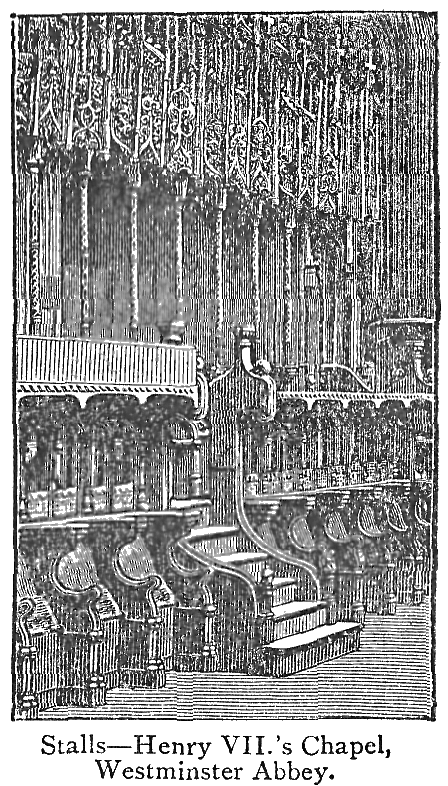
Stalls in Westminster Abbey, 1908. Image Credit: Rev. Thomas Davidson 1856-1923 (ed.), Public domain, via Wikimedia Commons

Westminster Abbey is, of course, the church in London where monarchs are crowned, as King Charles III was not long ago. All English coronations have taken place there since 1066. It is not a cathedral or a parish church. Instead it is a “Royal Peculiar,” with a dean like other large churches, but under the direct supervision of the monarch rather than a bishop or archbishop.
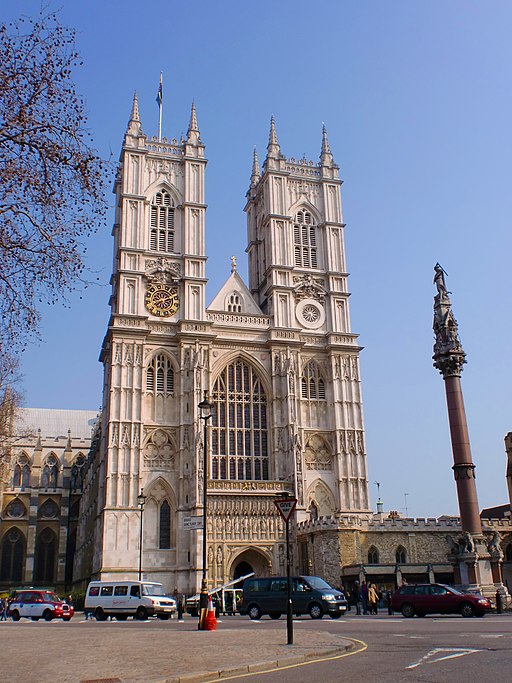
Westminster Abbey in London, a “Royal Peculiar” directly under the Crown. Credit: Σπάρτακος, CC BY-SA 3.0, via Wikimedia Commons

Westminster Abbey is also, of course, a place where many famous people are buried and memorialized. While Jane Austen is buried in Winchester Cathedral, there is a small plaque commemorating her in Poet’s Corner in Westminster Abbey, adjacent to Shakespeare’s memorial.

St. Paul’s Cathedral

St. Paul’s Cathedral, the other place where Dr. Grant hoped to get a position, is the cathedral of the diocese of London. (A diocese is a geographical group of parishes, led by a bishop, whose “seat” is at the cathedral for the diocese.) The history of the church reflects the history of London.

One interesting fact: women were first ordained as priests in the Church of England in 1994, and St. Paul’s first clergywoman was appointed in 1997. Now the Lord Bishop of London is a woman, installed in 2018, with her seat, of course, at St. Paul’s. She is called the Right Reverend and Right Honorable Dame Sarah Mullally, and she is a member of the House of Lords. No doubt Jane Austen would be amazed.

St. Paul’s Cathedral, image ©Brenda S. Cox, 2025

St. Clement’s in Pride and Prejudice

One more London church is mentioned in Jane Austen’s novels. In Pride and Prejudice, Lydia tells her sisters,

“We were married you know, at St. Clement’s, because Wickham’s lodgings were in that parish. And it was settled that we should all be there by eleven o’clock.” 

We don’t know for sure which St. Clement’s in London Austen has in mind. An old nursery rhyme goes, “Oranges and lemons, say the bells of St. Clement’s,” and two churches claim to be the St. Clement’s in the rhyme.

It seems most likely that Austen was referring to St. Clement Danes in the Strand, which served a large parish. The parish included areas of cheap lodgings and less savory areas, where Wickham could have afforded lodgings. It was also some distance from Gracechurch Street where the Gardiners lived, better concealing Wickham and Lydia from her family. (Source: Pat Rogers, editor of the Cambridge Pride and Prejudice.)

Another option, according to Rogers, is St. Clement’s Eastcheap on the east side of Clement’s Lane. However, this was a tiny parish only a block from Gracechurch Street, so was less likely to be the parish Wickham chose to lodge in.

The rhyme goes on to talk about not being able to pay a debt until one gets rich, at some unknown future time. Quite appropriate for Wickham, who was deep in debt but always hoping to get rich. 
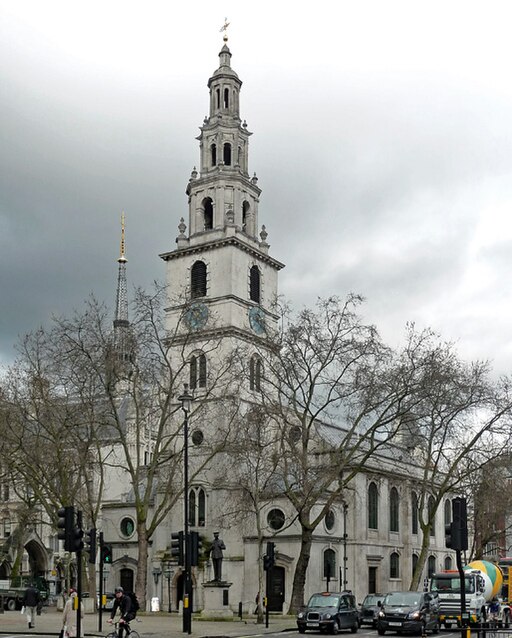
St. Clement Danes in the Strand, possible location for Lydia and Wickham’s wedding. Image credit: Stephen Richards / St Clement Danes, Strand / CC BY-SA 2.0

Faith in London Today

Another surprise for Jane Austen: In Mansfield Park, Edmund Bertram states, “We do not look in great cities for our best morality.” He implies that there was more virtue in the countryside and more vice in London. That was probably true in Austen’s time, according to all I have read.

However, a survey a few years ago indicated that the opposite is now true: “London is now more religious and socially conservative than the rest of Britain.” According to that survey, Londoners pray more, attend religious services more, and are more conservative on moral questions than those outside London. Also, Christian Londoners help their neighbours and give to charity more than non-religious Londoners. Of course, London is also a diverse religious environment, with people practicing various religious faiths, which are less common outside of the capital.

The London churches Austen mentions in Mansfield Park are still thriving.

Other churches mentioned by name in Jane Austen’s novels and letters

Garrison Chapel

St. Swithin’s, Walcot and other churches in Northanger Abbey

St. George’s, Hanover Square

St. Paul’s, Covent Garden: Actors’ Church

Austen Family Churches

Steventon

Chawton

Deane

Hamstall Ridware and Austen’s First Cousin, Edward Cooper

Adlestrop and the Leigh Family

Stoneleigh Abbey Chapel and Mansfield Park

Great Bookham and Austen’s Godfather, Rev. Samuel Cooke

Ashe and the Lefroy Family

Share with others:

  • Click to email a link to a friend (Opens in new window) Email
  • Click to print (Opens in new window) Print
  • Click to share on Facebook (Opens in new window) Facebook
  • Click to share on Reddit (Opens in new window) Reddit
  • Click to share on X (Opens in new window) X
  • Click to share on Pinterest (Opens in new window) Pinterest
  • Click to share on Tumblr (Opens in new window) Tumblr
  • Click to share on LinkedIn (Opens in new window) LinkedIn
Like Loading...

Related

Posted in 19th Century London, Anglican Church, Georgian London, Jane Austen's World, Mansfield Park, Pride and Prejudice, Regency London | Tagged Dr. Grant stall in Westminster, Mansfield Park Churches, Pride and Prejudice Church, Real Churches in Jane Austen's Novels, St. Paul's Cathedral, Westminster Abbey stalls | 1 Comment

One Response

  1. on February 27, 2025 at 04:06 dholcomb1's avatar dholcomb1

    Again, thank you for this wonderful history.–Denise


Comments are closed.

  • Enter your email address to subscribe to this blog and receive notifications of new posts by email.

    Join 7,252 other subscribers
  • 2025 AGM in Baltimore

  • Items of Interest

  • Blog Stats

    • 18,357,045 hits
  • Follow Jane Austen's World on WordPress.com
  • RECOMMENDED BOOKS AND RESOURCES

  • Fashionable Goodness: Christianity in Jane Austen's England is now available! By JAW contributor Brenda S. Cox. See Review. Available from Amazon and Jane Austen Books.
  • We also recommend JAW contributor Rachel Dodge's devotionals based on Jane Austen's prayers and classic literature. Reviews:
    Praying With Jane: 31 Days Through the Prayers of Jane Austen
    The Anne of Green Gables DevotionalThe Little Women Devotional
    The Secret Garden Devotional
  • The Tour of Doctor Syntax. Edited by Ben Wiebracht. Read the review of the book at this link. Click to order the book on Amazon US or Amazon UK or Jane Austen Books
  • FREE Student Membership to JASNA

    Available through December 31st, 2025. Click on image for details, and share this poster with other teachers and students!

  • The Obituary of Charlotte Collins by Andrew Capes

    Click on image to read the story.

  • Comments

    “My idea of good company…is the company of clever, well-informed people, who have a great deal of conversation.” – Jane Austen, Persuasion


    Gentle readers: Please feel free to post your comments and continue the conversation! Due to SPAM, we will no longer accept comments on posts after 30 days of publication. In some instances, links will be removed from comments as well.

  • Administrators and Contributors

    Vic Sanborn, founder of this blog, is supported by a team of talented and knowledgeable writers about Jane Austen and the Regency era. They are:

    • Brenda Cox
    • Rachel Dodge and
    • Tony Grant, who now contributes his photos from London and England

    Click on their names to enter their own blogs.

    In addition, we thank the many experts and authors who frequently contribute their posts and opinions, and who continue to do so freely or at our request.

  • Pin It!

    Follow Me on Pinterest
  • Top Posts

    • Highclere Castle Floor Plan: The Real Downton Abbey
      Highclere Castle Floor Plan: The Real Downton Abbey
    • Jane Austen’s Regency Women: A Day in the Life, Part 1
      Jane Austen’s Regency Women: A Day in the Life, Part 1
    • Regency Fashion: Men's Breeches, Pantaloons, and Trousers
      Regency Fashion: Men's Breeches, Pantaloons, and Trousers
    • Dressing for the Netherfield Ball in Pride and Prejudice: Regency Fashion
      Dressing for the Netherfield Ball in Pride and Prejudice: Regency Fashion
    • Cassandra Writes About Jane Austen's Death, July 18, 1817
      Cassandra Writes About Jane Austen's Death, July 18, 1817
    • Men's hair styles at the turn of the 19th century
      Men's hair styles at the turn of the 19th century
    • Dancing at the Netherfield Ball: Pride and Prejudice
      Dancing at the Netherfield Ball: Pride and Prejudice
    • Jane Austen’s Christmases
      Jane Austen’s Christmases
    • Awkward! The Regency Court Gown: Regency Fashion
      Awkward! The Regency Court Gown: Regency Fashion
    • Regency Hygiene: The Bourdaloue
      Regency Hygiene: The Bourdaloue
  • Recent Posts

    • Coming Soon: Birthday Tales for Jane Austen’s 250th
    • Book Review: The Austens, by Sarah Emsley
    • Praying with Jane Audiobook with Amanda Root
    • Book Review: The Worlds of Jane Austen: The Influences and Inspiration Behind the Novels
    • Books Purchased at the 2025 AGM in Baltimore
  • Links to Jane Austen Blogs

    Click here to enter the page. Topics include Regency fashion, historic foods, Jane Austen societies, British sites, related topics. Click on image.

  • May we suggest?

  • Unknown's avatarHello, my name is Vic and I live in Maryland, USA. I have adored Jane Austen almost all of my life. I am a proud lifetime member of the Jane Austen Society of North America. This blog is a personal blog written and edited by me and my team. We do not accept any form of cash advertising, sponsorship, or paid topic insertions. However, we do accept and keep books and CDs to review.

    If you would like to share a new site, or point out an error, please email us. (Yes, we are fallible. We'll own up to our mistakes and will make the corrections with a polite smile on our faces.) Write us at

    gmailbw

    Thank you for visiting this blog. Your comments and suggestions are most welcome.

  • Project Gutenberg: eBook of Stage-coach and Mail in Days of Yore, Volume 2 (of 2), by Charles G. Harper

    STAGE-COACH AND MAIL IN DAYS OF YORE: A PICTURESQUE HISTORY
    OF THE COACHING AGE, VOL. II, By CHARLES G. HARPER. 1903. Click on this link.


  • Top Posts & Pages

    • Highclere Castle Floor Plan: The Real Downton Abbey
    • Jane Austen’s Regency Women: A Day in the Life, Part 1
    • Regency Fashion: Men's Breeches, Pantaloons, and Trousers
    • Dressing for the Netherfield Ball in Pride and Prejudice: Regency Fashion
    • Cassandra Writes About Jane Austen's Death, July 18, 1817
    • Men's hair styles at the turn of the 19th century
    • Dancing at the Netherfield Ball: Pride and Prejudice
    • Jane Austen’s Christmases
    • Awkward! The Regency Court Gown: Regency Fashion
    • Regency Hygiene: The Bourdaloue
  • Tour Chawton Cottage on YouTube

  • Disclaimer: Our team makes no profit from this blog. We may receive books (physical or digitized) for review purposes.

  • Copyright Statement: © Jane Austen's World blog, 2009-2024. Unauthorized use and/or duplication of this material without express and written permission from this blog’s author and/or owners is strictly prohibited. Excerpts and links may be used, provided that full and clear credit is given to Jane Austen's World with appropriate and specific direction to the original content.

Blog at WordPress.com.

WPThemes.


  • Reblog
  • Subscribe Subscribed
    • Jane Austen's World
    • Join 7,252 other subscribers
    • Already have a WordPress.com account? Log in now.
    • Jane Austen's World
    • Subscribe Subscribed
    • Sign up
    • Log in
    • Copy shortlink
    • Report this content
    • View post in Reader
    • Manage subscriptions
    • Collapse this bar
 

Loading Comments...
 

    %d

