Feeds:
Posts
Comments

Archive for February, 2026

By Brenda S. Cox

A few days ago we “visited” Godmersham, the estate of Jane Austen’s brother in Kent. Today we’ll continue that visit with the church she attended while she was there. Like so many English churches, it is named after a Christian saint.

St. Lawrence the Martyr: Who Was He?

More than 200 churches in England are named after St. Lawrence. The church at Godmersham, where Jane Austen often visited her brother Edward, is one of them, as is the church at Alton, closest town to Austen’s village of Chawton.
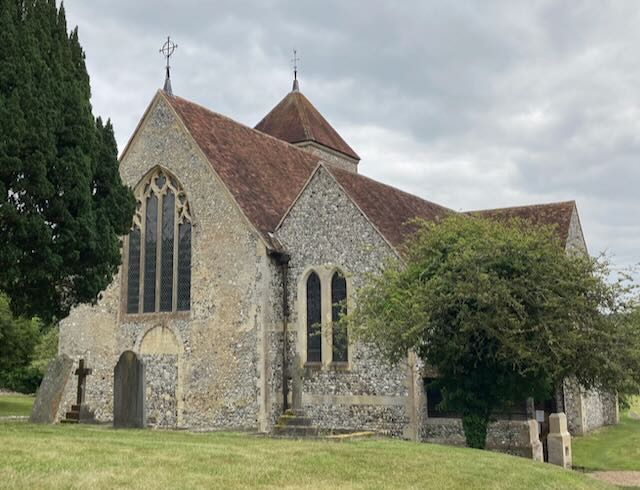
St. Lawrence the Martyr, parish church of Godmersham, which Jane Austen often attended.

The original St. Lawrence’s story is inspiring but rather grisly. He was a deacon in charge of the treasures of the church, and of distributing alms to the poor. When the Roman Emperor Valerian demanded that Christians sacrifice to the Roman gods or else be killed, they refused. Pope Sixtus II and his deacons were beheaded. Lawrence was told to hand over the church’s treasures. Instead of bringing gold, he brought in many of the poor and said they were the church’s treasure.

Valerian supposedly commanded that Lawrence be roasted on a gridiron, and Lawrence even made a joke as he was dying. (Some think he was actually beheaded and the gridiron is a transcription error; scroll down at this link.) He became the patron saint of comedians and poor people as well as those who work with open fires, such as bakers, and those who fear fires, such as librarians.

And, guess what else? He’s apparently the patron saint of barbecues. On August 10, St. Lawrence’s Day in the church calendar, many churches like this one celebrate by having a community-wide barbecue. Okay, that’s the grisly part. Moving on . . .

Godmersham Church and Jane Austen’s Family
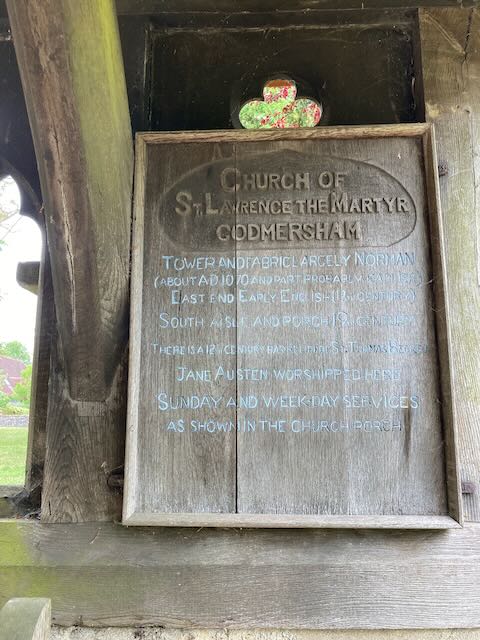
Godmersham church plaque mentioning Jane Austen
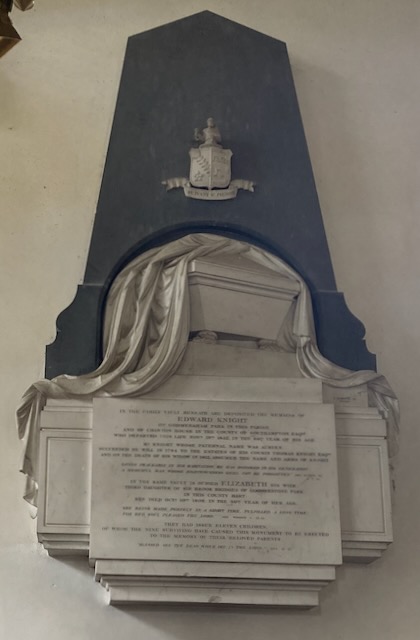
Memorial to Jane Austen’s brother, Edward Austen Knight “of Godmersham Park in this parish, and of Chawton House in the country of Southampton,” and his wife Elizabeth. It tells about Edward’s name change and inheritance. Edward is described, “Living peaceably in his habitation, he was honored in his generation, a merciful man whose righteousness shall not be forgotten.” (This combines verses from Ecclesiasticus 44:6, 7, 10; Ecclesiasticus is a book of the Apocrypha.)
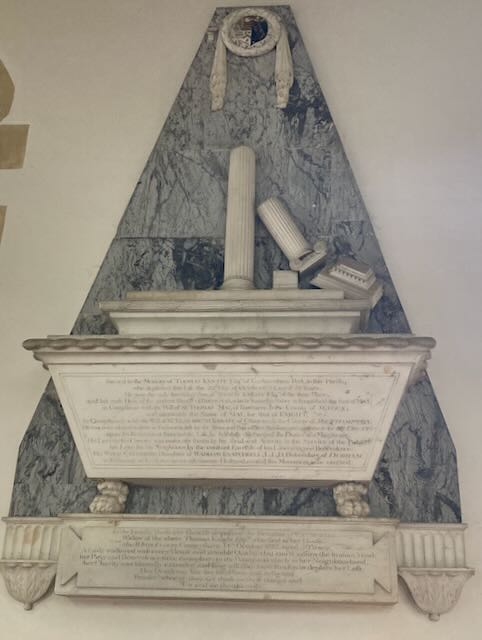
Memorial in the Godmersham church to the Knights that Edward inherited from, cousins of the Austens. The broken pillar symbolizes the end of the Brodnax family they were descended from. Thomas Brodnax, who built Godmersham Park (which was originally called Ford Place) in 1732, changed his name to May and then to Knight in order to inherit fortunes from distant relatives. His son, also named Thomas Knight, adopted Edward Austen as his heir.

Jane Austen, in a total of ten months staying at Godmersham, must have attended this church at least forty times. More likely eighty times, if they had morning and evening Sunday services as many churches did at the time. So she would have known it well.

In her time, the chuch had a triple-decker pulpit: a high wooden pulpit with a sounding board over it (a wooden structure reflecting the sound forward), from which the vicar would preach. Below that was the vicar’s “prayer desk,” from which he would lead the service, reading prayers and Scriptures. And below that, the “parish clerk’s pew,” from which the church clerk would lead congregational responses. (These are the three “decks” of the pulpit.) (See another example here.)

Across the church from this pulpit were two huge “box pews” for the major families of the parish. These were on top of burial vaults, so Austen would have walked up five steps and through an arched doorway to get to the Knight family’s “pew,” actually a separate room which enabled them to see over everyone’s heads to the top pulpit (See pages 70 and 73–pp. 26 and 29 of the pdf file– of The Parish Church of St  Laurence). Quite a different experience than her tiny churches at Steventon and Chawton, where only the squire of the area and his family would have a box pew, on a much smaller scale.
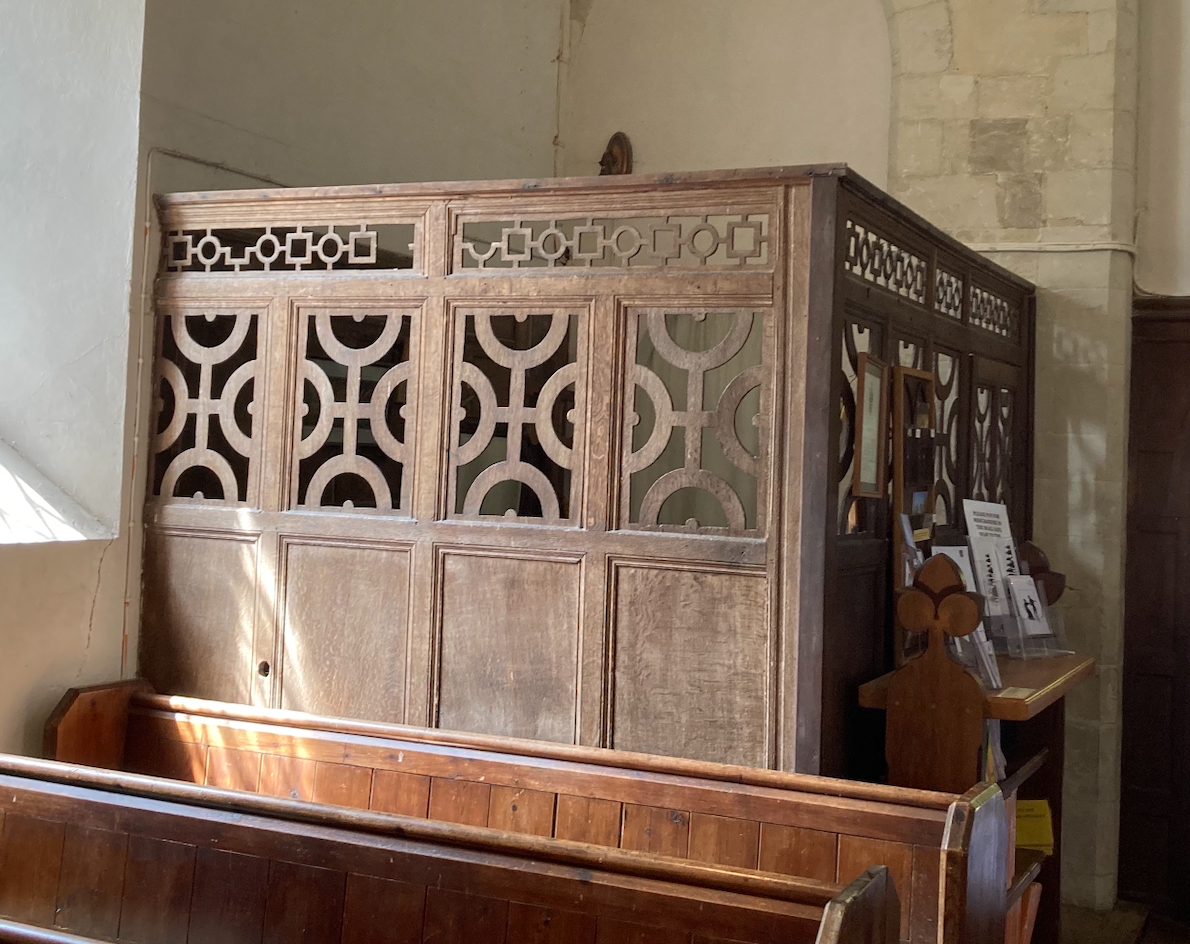
Box Pew at Steventon Church, for the squire of the area and his family. The box pews at Godmersham were much larger and more ornate, but were demolished in the 1860s.
While the Godmersham church’s triple decker pulpit is gone, like most of this era, you can still see a triple-decker pulpit at the John Wesley’s New Room Chapel in Bristol. The congregation heard preaching from the top level, Scripture reading and prayers from the middle level, and responses led by the parish clerk from the lower table.

Like so many of the Austen-era churches, the Godmersham church was remodeled and expanded in the 1860s. According to the “Souvenir Guide” for the church, at that time “The Georgian furnishings (triple-decker pulpit, parlour pews, western gallery and box pews) were swept away and the entire building restored and refurbished.”
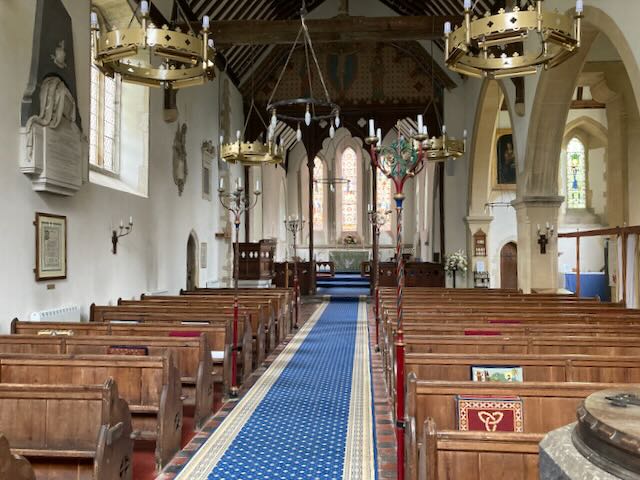
Interior of Godmersham church, much changed from Jane Austen’s time
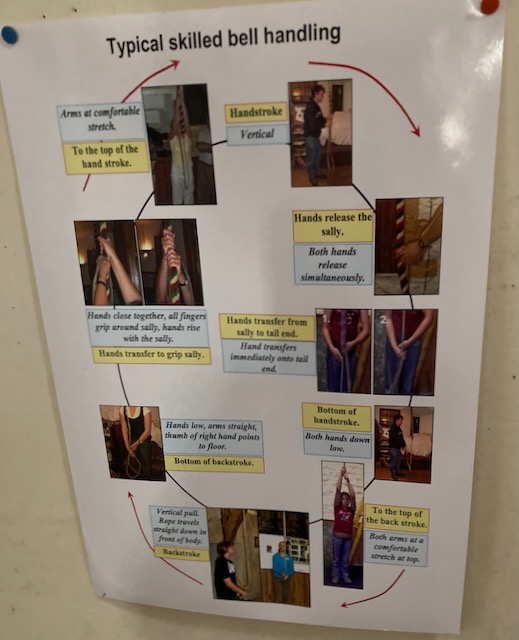
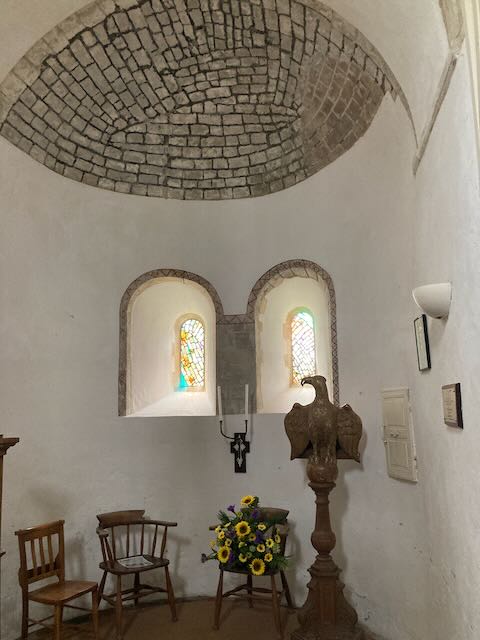
This chapel under the tower of the Godmersham church was built in the twelfth century. Next to it hang ropes for ringing the bells in the tower. The eagle lectern, a stand for reading the Bible, is typical of English churches.
Church Bell-ringing is a challenging skill to learn. Five bells in the Godmersham church tower were cast in 1687, while a sixth was added in 1999.

Vicars

The Godmersham church had vicars over the centuries. English churches traditionally either have rectors, who received all the tithes of the parish, or vicars, who received only part of the tithes. For a church with a vicar, a nominal rector elsewhere received the main tithes. The only vicar in Austen’s novels is Mr. Elton, who thus received a lower income and needed to marry money. (Tithes are ten percent of the income of the people of the parish; in Austen’s time, it was legally required that this be paid to the parish priest, in either cash or in agricultural produce. The system and these definitions have changed, of course, in modern times.)
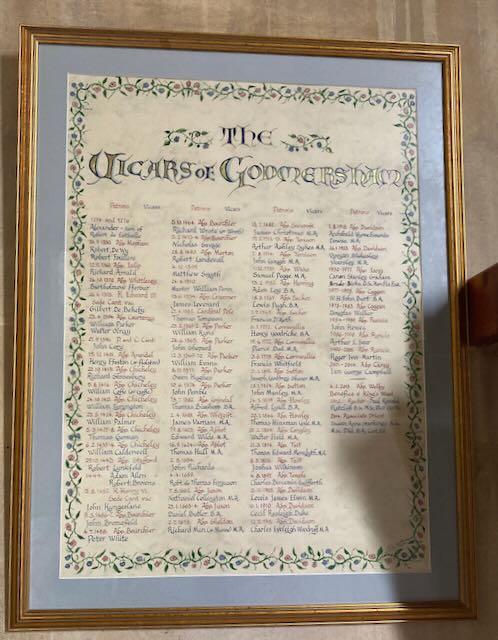
The Vicars of Godmersham Church

The “rector” of the Godmersham church, who received most of the tithe money, was the Dean and Chapter of Canterbury Cathedral, meaning the leaders of the Cathedral: the dean, canons, and prebendaries. Much of the parish income went to them, but some went to the vicar, who performed the daily responsibilities of the church and preached and led services. In Austen’s time, Francis Whitfield was vicar (1778-1811), then Joseph Godfrey Sherer (1811-1823). Jane visited Mrs. Sherer, and said in a letter that she liked Mr. Sherer very much (Sept. 23, 1813). She wrote to her brother Frank (Sept. 25, 1813):

“Mr. Sherer is quite a new Mr. Sherer to me; I heard him for the first time last Sunday, and he gave us an excellent Sermon—a little too eager sometimes in his delivery, but that is to me a better extreme than the want of animation, especially when it evidently comes from the heart, as in him. The Clerk is as much like you [Frank] as ever, I am always glad to see him on that account.”

Here we get a personal view of what Jane Austen liked in sermons: not too much emotion, but enough to show that the preacher is speaking from his heart. It reminds me of a section in her unfinished novel The Watsons, where Emma’s father, a clergyman, commends the sermon of the local minister (Emma’s love interest). Sermons were generally “read”:

“He [Mr. Howard] reads extremely well, with great propriety, and in a very impressive manner, and at the same time without any theatrical grimace or violence. I own I do not like much action in the pulpit; I do not like the studied air and artificial inflexions of voice which your very popular and most admired preachers generally have. A simple delivery is much better calculated to inspire devotion, and shows a much better taste. Mr. Howard read like a scholar and a gentleman.”
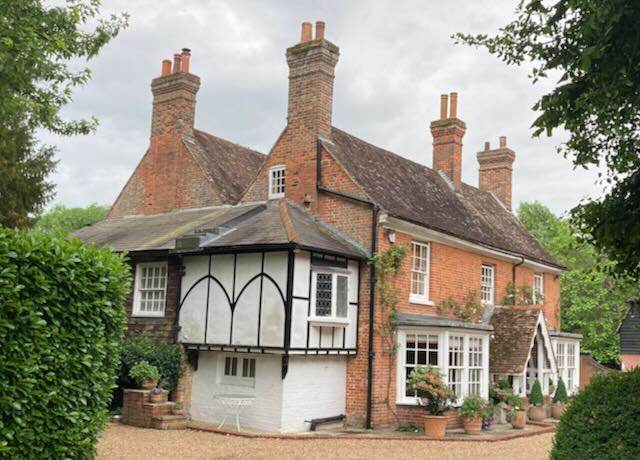
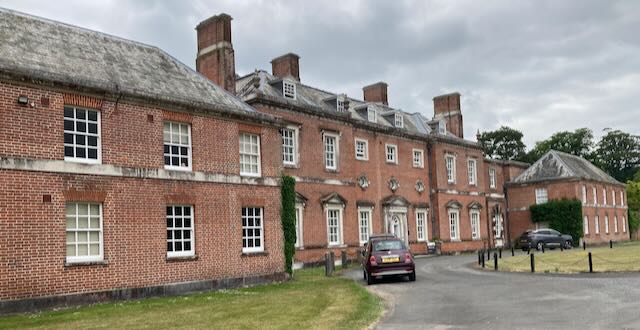
Mr. Sherer would have lived in this vicarage (also called a parsonage) close to the church. It is possible that Mr. Collins’s rectory is partially based on this building. It was enlarged in the 19th century.

Austen continues in the same letter,

“But the Sherers are going away. He has a bad Curate at Westwell, whom he can eject only by residing there himself. He goes nominally for three years, and a Mr. Paget is to have the Curacy of Godmersham—a married man, with a very musical wife, which I hope may make her a desirable acquaintance to Fanny.”

A curate was an assistant or substitute clergyman, generally paid a low salary. Mr. Sherer will hold the office of vicar of Godmersham for life, unless he resigns it. But he can hire a curate to take his place while he resides in another parish for which he is presumably also rector or vicar.

Austen mentions several more visits by the Sherers until on Nov. 7 she says they are actually gone, although Mr. Paget has not yet come. As we often see in Austen’s novels, the clergyman was a central person in a country community.
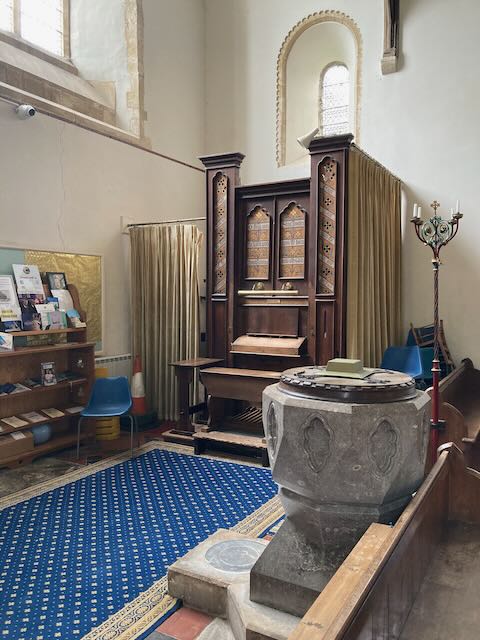
Baptismal font and organ in the Godmersham church
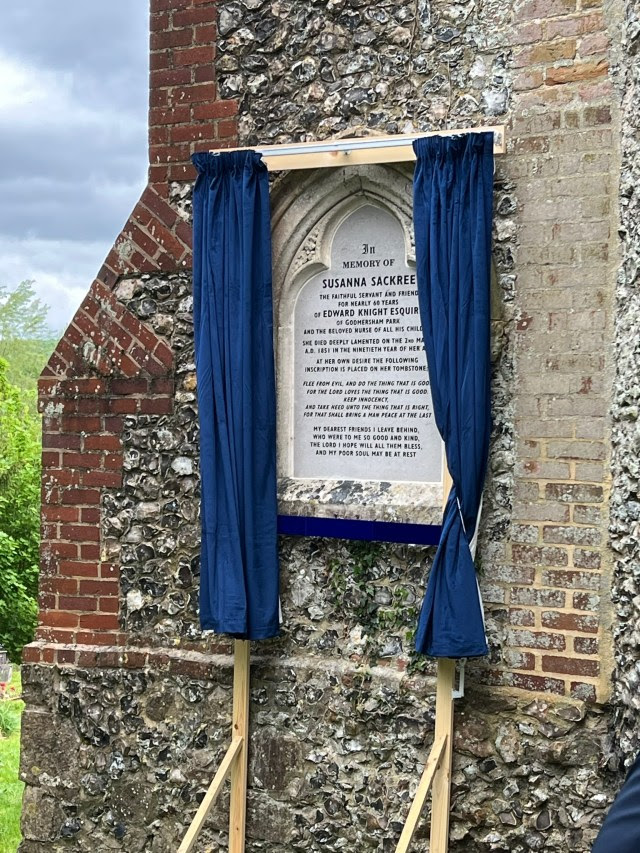
This memorial on the church’s outside wall, to Susanna Sackree, the nursemaid who raised the Knight children after their mother’s death, was recently unveiled. Photo ©Deborah Barnum, 2025.

The Godmersham Church Today

Like so many English churches today, the Godmersham church is now combined with several other churches in the area, and they take turns hosting services. Our guide estimated that there are about three hundred people in the parish, and only 15 or 20 show up for regular Sunday services. However, larger crowds show up for events such as weddings, funerals, baptisms, and church holy days. The church is blessed to have funding from wealthy former owners of Godmersham Park who left money for the church.

Our guide said he loves the peace and quiet of the church area, and enjoys the changes in the seasons, seeing the snowdrops, the daffodils, and the holly berries. The Pilgrim’s Way from Winchester to Canterbury brings modern-day pilgrims down a path next to the church, where they can enjoy it also.

This lovely, historic country church welcomes visitors, but be sure to make arrangements beforehand. And check on visiting hours for the Heritage Centre.


Brenda S. Cox is the author of Fashionable Goodness: Christianity in Jane Austen’s England. She also blogs at Faith, Science, Joy, and Jane Austen.

All photos in this post ©Brenda S. Cox, 2026 (except for Deb Barnum’s photo, which is labeled).


For Further Exploration

St. Lawrence the Martyr church at Godmersham 

Brief History of the church

Services at the church

Detailed history of the Godmersham church (pp. 66-77, “The Church in Jane Austen’s Time” includes sketches of the church interior as Austen knew it. Note the huge box pews on p. 73. Austen would have sat in one of these when she was visiting her Knight relatives.)

The reference to Mr. Sherer’s church at Westwell may refer to this church in Kent. 

See also Deborah Barnum’s post.

Other Austen Family Churches

Steventon

Chawton

Deane

Hamstall Ridware and Austen’s First Cousin, Edward Cooper

Adlestrop and the Leigh Family

Stoneleigh Abbey Chapel and Mansfield Park

Great Bookham and Austen’s Godfather, Rev. Samuel Cooke

Ashe and the Lefroy Family

St. Paul’s Covent Garden (with links to other churches mentioned in Austen’s writings)
St. Swithin’s Walcot (Bath)

Read Full Post »

By Brenda S. Cox

“I am all alone. Edward is gone into his woods. At this present time I have five tables, eight-and-twenty chairs, and two fires all to myself.”—Jane Austen writing from Godmersham, Nov. 3, 1813

Jane Austen’s brother Edward, adopted by wealthy relatives, inherited not one, but two extensive estates. Jane and her mother and sister eventually lived in a cottage at Chawton in the county of Hampshire, Edward’s secondary estate. You can still visit Chawton House and Chawton Church.

Godmersham Park

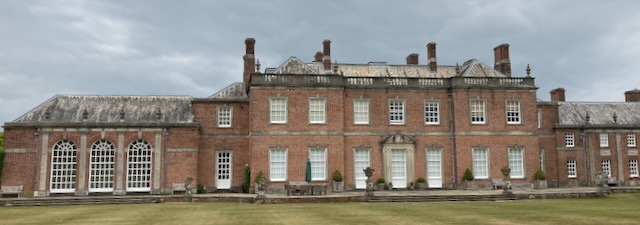
Godmersham Park today. This estate was probably one inspiration for Pemberley. Edward Knight’s income was even higher than Mr. Darcy’s, but Edward had to run two estates.

Jane and Cassandra often enjoyed the luxuries at Edward’s main residence at Godmersham Park, in the county of Kent. Edward, his wife Elizabeth, and their eleven children often needed the help and company of Edward’s poorer sisters. Sixty-one of Austen’s surviving letters (out of 161) were written either from or to Godmersham. Jane spent a total of ten months of her life at Godmersham.

Entrance to Godmersham Park today. American owners in the 1930s, Mr. and Mrs. Robert Tritton, remodeled the house. In Austen’s time it was three stories, with painted bricks on the front (which were turned around when the house was remodeled). The back and front of the house were reversed from today.

In 1808, Jane wrote of her brother James and his wife, “James and Mary are much struck with the beauty of the place” (June 15). She herself was enjoying ice cream, a Regency delicacy, and wine: “I shall eat Ice and drink French wine, and be above Vulgar Economy” (June 30). No doubt Elizabeth Bennet, once she marries Darcy, will enjoy such luxuries as well!

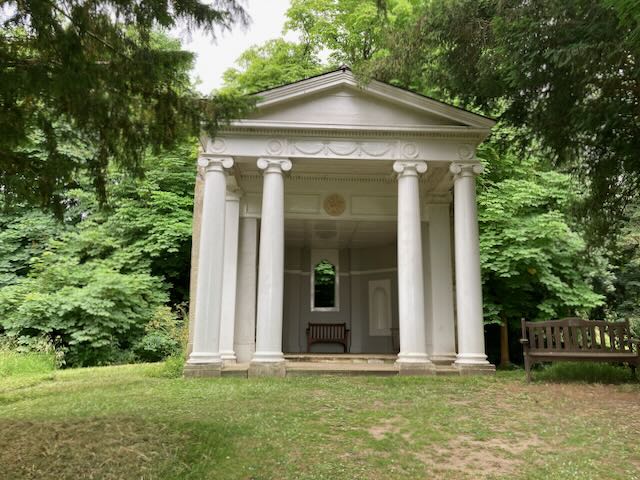
One of two “follies” at Godmersham Park built from two facades of white pillars that were originally at the front of the main house.
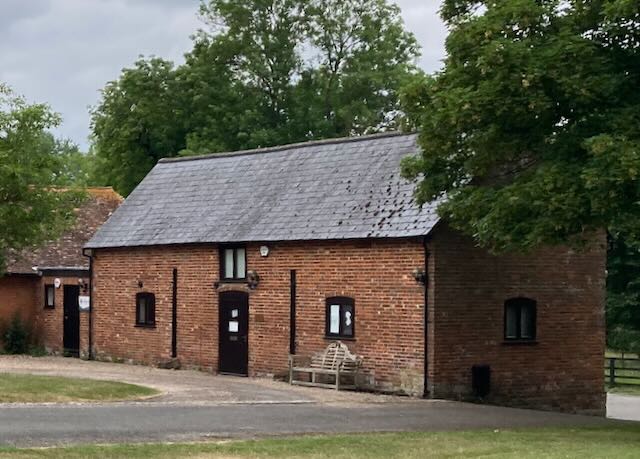
The Godmersham Park Heritage Centre is a small museum showcasing portraits, photos, and artefacts of earlier times.

Servant-Friends

Jane Austen made two friends among the servants at Godmersham. Anne Sharp was her niece Fanny’s governess; Jane later corresponded with her. Susannah Sackree was the children’s nurse. Both are often mentioned in Austen’s letters. For example:

“Pray say everything kind for us to Miss Sharpe, who could not regret the shortness of our meeting in Canterbury more than we did. I hope she returned to Godmersham as much pleased with Mrs. Knight’s beauty and Miss Milles’ judicious remarks as those ladies respectively were with hers.”—Jane Austen, Aug. 30, 1805

“Sackree is pretty well again, only weak. Much obliged to you for your message, &c.; it was very true that she blessed herself the whole time that the pain was not in her stomach. I read all the scraps I could of your letter to her. She seemed to like it, and says she shall always like to hear anything of Chawton now” —Jane Austen at Godmersham, Sept. 23, 1813

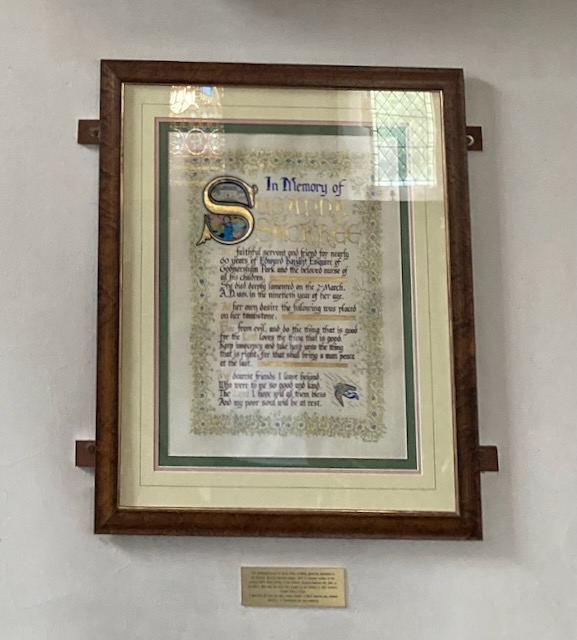
Memorial in the Godmersham church to Susanna Sackree, the Knight family’s beloved nurse. Sackree’s original memorial outside is illegible, so JASNA donated this parchment version. It calls her “faithful servant and friend for nearly 60 years” and says that at her own request the following was written on her tombstone: “Flee from evil, and do the thing that is good, for the Lord loves the thing that is good. Keep innocency, and take heed unto the thing that is right, for that shall bring a man peace at the last.” Then, “My dearest friends I leave behind/ Who were to me so good and kind/ The Lord I hope will all them bless/ And my poor soul will be at rest.”
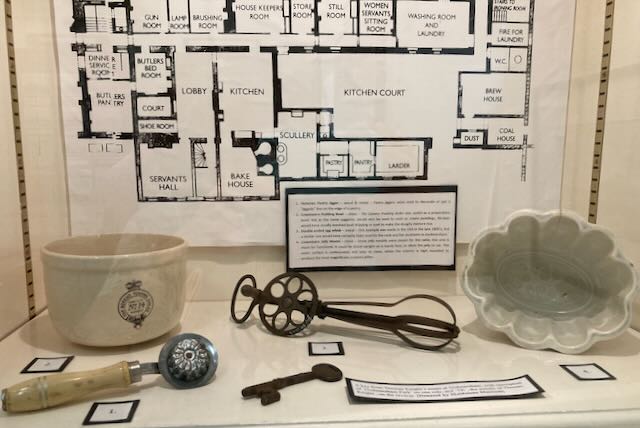
One exhibit at the Godmersham Park Heritage Centre maps the living quarters of the servants and shows items they would have used.

The Library

Austen’s favorite part of the house, not surprisingly, was the extensive library. Like Darcy’s “delightful library” at Pemberley, it was “the work of many generations,” with Edward Knight “always buying books,” like Darcy, to add to it. Jane wrote:

“We live in the library except at meals, and have a fire every evening. . . . I am now alone in the library, mistress of all I survey; at least I may say so, and repeat the whole poem if I like it, without offence to anybody.”—Jane Austen at Godmersham, Sept. 23, 1813. The poem is “Verses on Alexander Selkirk” by William Cowper; Selkirk’s real adventures were the inspiration for Robinson Crusoe.

“The Comfort of the Billiard Table here is very great. It draws all the gentlemen to it whenever they are within, especially after dinner, so that my brother, Fanny, and I have the library to ourselves in delightful quiet.”—Oct. 14, 1813

The 1818 catalogue of the library lists more than 1200 books. The books in the library were removed to Chawton before Godmersham was sold in 1874.  Most were later dispersed. The library’s bookshelves were removed and the area split into offices. The website “Reading with Austen” is an attempt to digitally recreate the library Jane Austen so much enjoyed.

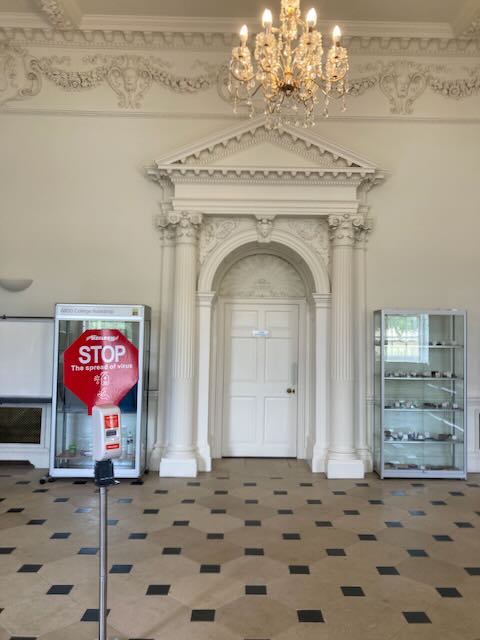
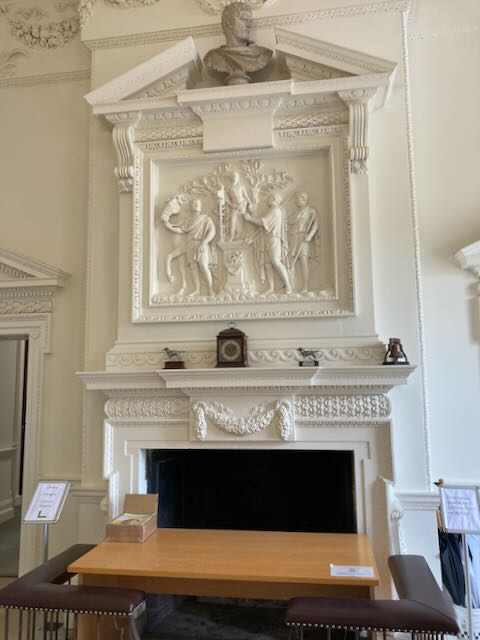
Godmersham Park is now a college of the Association of British Dispensing Opticians (ABDO College) and is not open to the public. However, we were allowed to see the front rooms. Here you can see the collage of the old, classical decorations of the entry room and the newer apparatus of the opticians association.
Godmersham Park entry area.
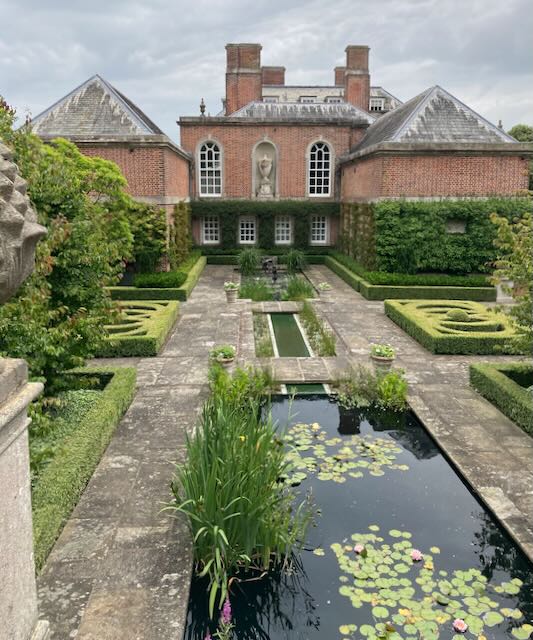
Godmersham Park still has beautiful gardens. The grounds were once quite extensive, like those of Pemberley, and you can still roam around and see different types of gardens.
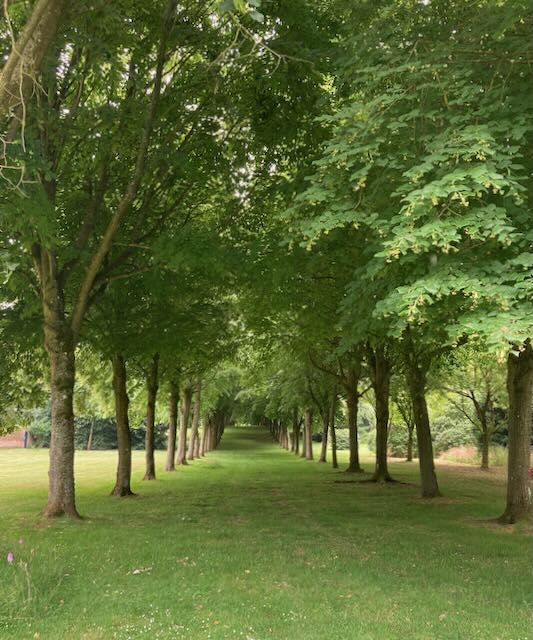
The “Lime Walk” is another lovely part of the Godmersham Park gardens. Emma walks in a lime walk at Donwell Abbey.

When Austen visited Godmersham, she attended church at St. Lawrence the Martyr parish church of Godmersham. On Thursday we explore that church.

All photos in this post ©Brenda S. Cox, 2026

Brenda S. Cox is the author of Fashionable Goodness: Christianity in Jane Austen’s England. She also blogs at Faith, Science, Joy, and Jane Austen.


For Further Exploration

Edward Austen Knight: A tightwad or a man with heavy responsibilities?

Godmersham Library—“Reading with Austen”—Search to see what books Jane might have read there, and see annotations in some of the books.

Reading at Godmersham: Edward’s Library and Marianne’s Books

Godmersham Park Heritage Centre

Godmersham Village

Godmersham Walking Tour

Godmersham Park, history of the house

Review of Godmersham Park, novel by Gill Hornsby

Godmersham Park: A Novel of the Austen Family, is based on the story of Anne Sharpe, governess at Godmersham and friend of Jane Austen.

More Godmersham Photos in this post by Deb Barnum

Regency Ice Cream and Ice Cream in Jane Austen’s Day

Read Full Post »