Feeds:
Posts
Comments

Archive for the ‘19th Century England’ Category

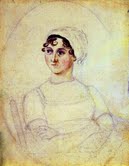
Gentle readers, this year marks the 200th anniversary of Pride and Prejudice. This blog will feature a variety of posts about the novel and on its author, Jane Austen. Frequent contributor, Tony Grant (London Calling) recently visited the National Portrait Gallery in London and viewed the small watercolour portrait of her painted by Cassandra Austen. In this tribute, Tony demonstrates her star status among other literary superstars.

jane1

Click on this link to see the portrait’s location within the National Portrait Gallery

If you enter the National Portrait Gallery as you walk into the main atrium go up the tall escalator on the left and you come to a foyer area at the top off which there are entrances into two main galleries. On the right is the wonderful gallery displaying the powerfully evocative Tudor monarchs and their statesmen.

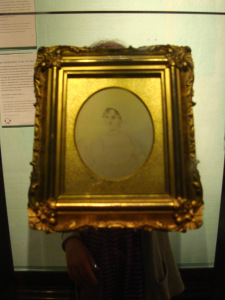
On the left are the 18th and 19th century galleries portraying the politicians, monarchs, reformers and writers of that period. It is here , many of you will know, is the tiny portrait of Jane Austen attributed to her sister Cassandra and drawn in 1810 using pencil and watercolours. It is an unprepossessing little picture. It’s great worth is in who it is. But, if you stand back from the plinth with the perspex box on its summit containing Jane and view the whole vista you will notice that Jane is surrounded by a halo of super star writers. She is the centre of the group.

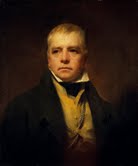
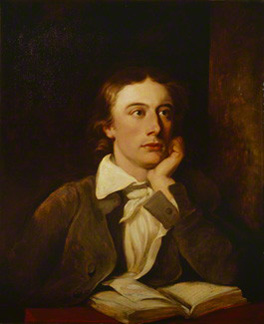
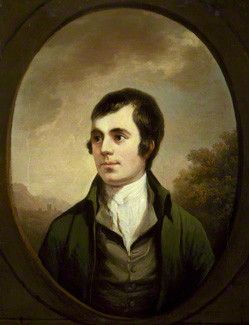
Bottom left is Sir Walter Scott. Moving clockwise next comes Samuel Taylor Coleridge, at the top is John Keats and then as you move down right of Jane, Robert Southey follows and last, bottom right, is Robert Burns. Quite a group, and there she is in the middle, our Jane. If you think I am imagining the halo metaphor, walk behind the plinth with Jane displayed and you will notice that there is nothing on the wall, there is a space. The halo metaphor works. The only thing behind Jane is a handwritten catalogue number on the back of the portrait itself. It reads; “NPG 360, Jane Austen.” It’s written in pencil in a reasonably legible hand. A scrawled note such as somebody might write as a memo to themselves on a post it and stick on their fridge door.

All of these writers were geniuses and there is Jane right at their centre. The men were all Romantics. Jane perhaps ridiculed some aspects of Romanticism in Northanger Abbey but she wrote about romance and its vicissitudes. The men wrote about their emotional response to the world. Jane did not portray her own emotions, just the emotions of her characters.

walter scottSir Walter Scott (1771-1832) painted by Sir Edwin Landseer.

Chivalry!—why, maiden, she is the nurse of pure and high affection—the stay of the oppressed, the redresser of grievances, the curb of the power of the tyrant —Nobility were but an empty name without her, and liberty finds the best protection in her lance and her sword.” Ivanhoe

Many of Scott’s novels harked back to a supposed ideal period , the Middle Ages, when chivalry was the moral high ground for men and women fitted into the system as perfect idols worshipped by men. However this was for the aristocracy. Serfdom was really slavery. Serfs were possessions. Scott wrote in Ivanhoe and Quentin Durward and novels such as those about this ideal dreamlike world. It was the ultimate escapism.
coleridgeSamuel Taylor Coleridge (1772-1834) painted by Peter Van Dyke.

The western wave was all a-flame.
The day was well nigh done !
Almost upon the western wave
Rested the broad bright Sun;
When that strange shape drove suddenly
Betwixt us and the Sun.
It seemeth him but the skeleton of a ship.”

Samuel Taylor Coleridge was a friend of William Wordsworth and his sister Dorothy. They promoted Romanticism together which added a more emotional and personal response to the world in addition to the ways of thinking the Age of Enlightenment promoted.

NPG 194; John Keats by William Hilton, after  Joseph SevernJohn Keats (1795 – 1821) painted by Joseph Severn

A thing of beauty is a joy for ever:
Its loveliness increases; it will never
Pass into nothingness; but still will keep
A bower quiet for us, and a sleep
Full of sweet dreams, and health, and quiet breathing.”

John Keats died of tuberculosis in Rome in February 1821. Joseph Severn, the portrait artist was his best friend and was with him in Rome when he died. Keats was another Romantic poet. When he first started publishing his poetry he was heavily criticised in Blackwood’s Magazine. Those with invested interests in the status quo and couldn’t think imaginatively beyond what they knew, seemed hell-bent on preventing the human race from progressing. It was ever thus.

robert southeyRobert Southey(1774 -1843) painted by Peter Van Dyke.

We pursued our way
To the house of mirth, and with that idle talk
That passes o’er the mind and is forgot,
We wore away the time. But it was eve
When homewardly I went, and in the air
Was that cool freshness, that discolouring shade
That makes the eye turn inward.”

Robert Southey was another of the Romantic poets. He lived in the lakes with Wordsworth and Coleridge and is generally known as one of the Lakeland poets. He is now considered a lesser poet than either Wordsworth or Coleridge. In 1813 he became the poet laureate and Byron lambasted him for this.

NPG 46; Robert Burns by Alexander NasmythRobert Burns (1759 – 1796) painted by Alexander Nasmyth

We’ll gae down by Cluden side,
Thro’ the hazels spreading wide,
O’er the waves that sweetly glide
To the moon sae clearly.
Yonder Cluden’s silent towers,
Where at moonshine midnight hours,
O’er the dewy-bending flowers,
Fairies dance sae cheery.”

Robert Burns is a Scottish national hero. Websites dedicated to him use his name, his picture and his poems in an unashamedly mercenary way. He is probably the most marketed writer in this group and a real money spinner for the Scottish economy. He was actually a great poet it is sometimes worth stopping and remembering. What can be difficult for many readers is the Scottish dialect and use of colloquial phrases in his poems. His poetry is worth spending time with. They require deep emotional investment. They are rich with feelings and emotions. He was a romantic poet more by inclination than belief. It was just him, the way he was.

jane austenJane Austen (1775 – 1817) painted by Cassandra Austen

The first line of Pride and Prejudice goes such:

It is a truth universally acknowledged that a single man in possession of a good fortune , must be in want of a wife.”

However, the last lines of the penultimate chapter of Pride and Prejudice are also worth considering and shed light on Elizabeth and Fitzwilliam Darcy in particular.

…….she looked forward with delight to the time they should be removed from society so little pleasing to either, to all the comfort and elegance of their family party at Pemberley.”

Read Full Post »

Gentle readers, in celebration of Pride and Prejudice’s 200 year anniversary, Jane Austen’s World will feature a regular article about Jane Austen’s most popular novel throughout 2013. We can count on frequent contributor Tony Grant from London Calling to provide us with a unique perspective. Enjoy!

All good films have a car chase. Some originate from well written, exciting, nail-biting, on the edge of your seats, breathless descriptions in a novel.

Steve McQueen in mustang

Steve McQueen in mustang

Let it not be said Pride and Prejudice doesn’t have it’s nail biter, it’s moment of burning rubber and screeching tyres that is right up there with Steve McQueen ripping up the streets of San Francisco in Bullitt, hurling his Ford Mustang over the lips of hills and down daredevil slopes with a street fighters aggression or Michael Caine escaping the Italian police with wheels spitting gravel and door smashing bravado in his supercharged mini cooper GT along the Corniche, “not many people know that,” or John Thaw in The Sweeney, as gritty streetwise cop Jack Regan thundering through the Isle of Dogs in his 3 litre V6 Ford Consul GT. Mr Bennett has his contenders, but not, may I dare say, his equals, oh no.

Elizabeth Bennett, who is visiting Derbyshire with her aunt and uncle, the Gardeners has received a letter from her sister Jane

Since writing the above, dearest Lizzy, something has occurred of a most unexpected and serious nature; but I am afraid of alarming you — be assured that we are all well. What I have to say relates to poor Lydia. An express came at twelve last night, just as we were all gone to bed, from Colonel Forster, to inform us that she was gone off to Scotland with one of his officers; to own the truth, with Wickham!”

Image of eloping couple. 1815

Image of eloping couple. 1815

This piece of information about Lydia sets in motion, literally, a series of coach journeys and desperate searchings that rivals anything Steve McQueen or Michael Caine partook of.

Michael Caine: Nuts to your watches! You just be at the Piazza at a quarter to..
Steve McQueen: Look, you work your side of the street, and I’ll work mine.
Det. Insp. Jack Regan: Remember, no guns unless they use ’em.

Mr Gardner and Mr Bennett walking the streets of London, searching for Wickham and Lydia could well have used lines like those. What needs to be said, what needs to be done, never changes whatever century, don’t you think?

“…and all three being actuated by one spirit, every thing relating to their journey was speedily settled. They were to be off as soon as possible.”

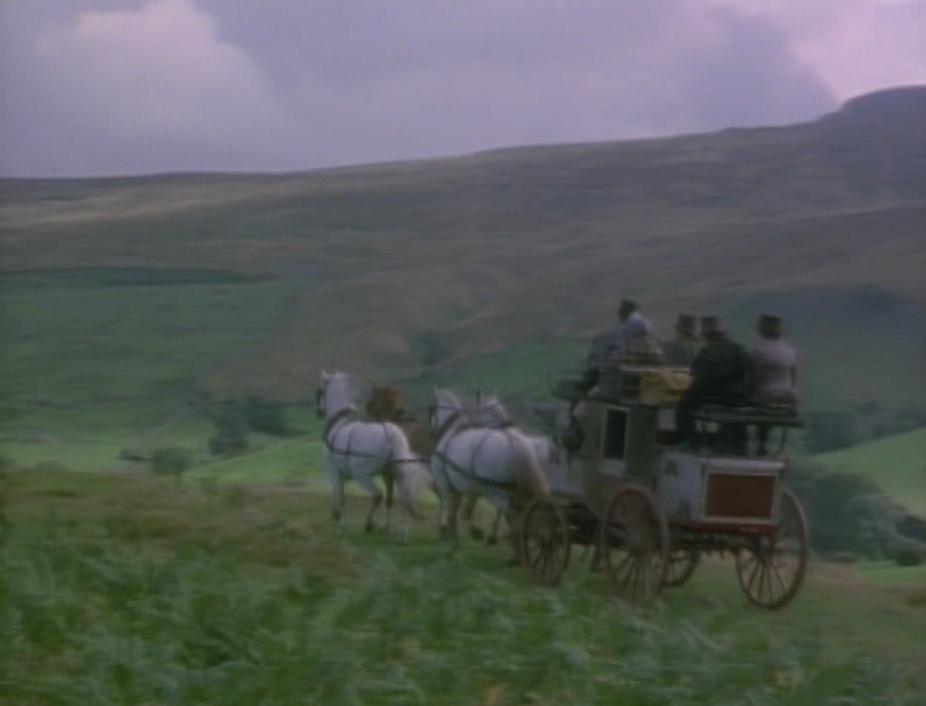
Coach travel

Coach travel

And so Mr and Mrs Gardner and Lizzie Bennett sped south to Longbourn at the hair-raising speed of 10 miles per hour or more, on the occasion of increased velocity being achieved when long flat straight roads presented themselves; jolted and tossed about, no doubt, like three potatoes in a sack.

But Lydia and Wickham were as devious and cunning as any mafia on the streets of Naples, or ruthless bank robbers from the East End of London or murderous killers off the dangerous streets of San Francisco. Gretna Green was, dare I say, a red herring. They spread rumours, gasp, horror; they planned and they plotted, they predicted and they saw clearly with their crazed, devious minds thinking out brilliantly, their next move. They lived the heady adrenalin pumped life of criminals on the run.

Mr Bennett “… did trace them easily to Clapham, but no farther; for on entering that place they removed into a Hackney coach and dismissed the chaise that brought them from Epsom.”

Oh gosh and golly, what subterfuge, what dastardly cunning. They actually changed from a chaise to a hackney coach.The evil mind games of those criminals. But they were hunted, yes, hunted, by Mr Bennett, he, a wily, ruthless backwoodsman who once he smelled the scent of his prey cannot, will not, be put off his quest. Mrs Bennett was right to be desperate in her concerns,

And now here’s Mr Bennett gone away and I know he will fight Wickham, wherever he meets him, and then he will be killed, and what is to become of us all?”.

Popeye Doyle himself could not compete with Mr Bennett surely in his ruthless endeavour

 The son of a bitch is here. I saw him. I’m gonna get him.”

But our Mr Bennett in his utter, focused, desperate determination can but say,

“Who should suffer but myself? It has been my own doing, and I ought to feel it.”

Good gracious, the man is a titan of hot-blooded aggression. Surely nothing can prevail? Wickham has met his match.

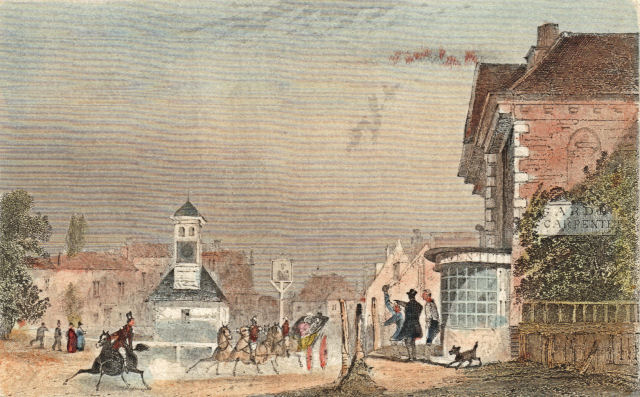
epsom

Epsom Watch House & Clock c1840 from Dugdale’s England & Wales
Image courtesy of Surrey Libraries and is held in the
Epsom & Ewell Local And Family History Centre

Elizabeth was desperate to know what lengths, what depths her father would go to retrieve his wayward daughter, her very own sister.

He meant, I believe,” replied Jane, “to go to Epsom, the place where they last changed horses, see the postilions, and try if anything could be made out from them. His principal object must be to discover the number of the hackney coach which took them from Clapham. “

Of course, a touch of sheer genius; find out the number of the Hackney Coach. That would do it. He would be sure to find them then.
And after all this searching, this animal desperation, this wolf like howl of anguish ripped from the primeval instinctive depths of Mr Bennett’s heart, what then? What could be the consequences? So after many letters flying backwards and forwards, if anything, P&P appears to hinge very often on the writing, sending and receiving of letters, Mr Gardner has appeared to pay Wickhams debts,, Mr Bennet has only to provide a paltry £100 a year, he can’t believ his luck and can’t quite work out the finances as if he ever could work out his finances. (Aside: we all know who really has settled the finances, don’t we?? Ha! Ha! It’s getting more like a pantomime all the time this. Mrs Bennnet as Widow Twanky and Mr Bennet as Baron Hardup.)

He had never before supposed that, could Wickham be prevailed on to marry his daughter, it would be done with so little inconvenience to himself as by the present arrangement. He would scarcely be ten pounds a year the loser, by the hundred that was to be paid them; for, what with her board and pocket allowance, and the continual presents in money which passed to her through her mother’s hands, Lydia’s expenses had been very little within that sum.

That it would be done with such trifling exertion on his side, too, was another very welcome surprise; for his chief wish at present was to have as little trouble in the business as possible. When the first transports of rage which had produced his activity in seeking her were over, he naturally returned to all his former indolence.”

Mr. Bennet

Mr. Bennet

So Wickham was to marry Lydia and Mrs Bennett was happy and all was well with Mr Bennett and he could return to his former state of,” indolence.” A sort of Popeye Doyle with carpet slippers smoking a pipe and reading his newspaper seated at his fireside; a Michael Caine reminiscing about his past, cold eyed and tough emotionless roles in Get Carter relaxing now in his easy chair or Steve McQueen sitting back on his ranch, his rocking chair gently calming his fevered brain and letting his motorbikes go rusty, crying into his beer, or, even a Jack Regan from The Sweeney who could at last ,” Shut it!” himself. Ah, all was well in the end. Colonel Forster could return too to Brighton, to the lesser dangers of defending our shores and leading his regiment against Napoleon knocking at the very shingle on Brighton Beach. Mr and Mrs Gardner could return to the hustle and bustle and shops and markets of Gracechurch Street in the city and Lizzie and Jane, yes, well, we know what becomes of Lizzie and Jane,

Happy for all her maternal feelings was the day on which Mrs Bennet got rid of her two most deserving daughters. With what delighted pride she afterwards visited Mrs Bingley and talked of Mrs Darcy may be guessed.”

Lydia in connubial bliss and Wickham not so

Lydia in connubial bliss and Wickham apparently not so

So, in a novel dedicated to getting daughters married, a lot of horse and carriage mileage is accrued and many letters are written. We only hear of weddings, but we certainly know about how characters felt. Will, Lady Catherine ever get over being, “exceedingly angry” or will she just explode with high blood pressure?

Read Full Post »

Inquiring readers: This is the first of many posts I’ll be writing about “Pride and Prejudice” in honor of that novel’s 200 year anniversary in 2013. Enjoy.
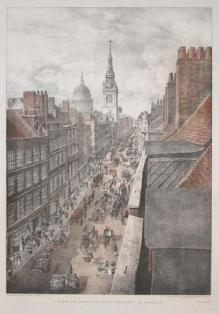
Cheapside in 1823. Engraved by T.M. Baynes from a drawing by W. Duryer.JPG

Cheapside in 1823. Engraved by T.M. Baynes from a drawing by W. Duryer. Image @Wikipedia

Some London streets seem determined never to distinguish themselves. No mediaeval scuffle has ever occurred in them; no celebrated church hoards its monuments; no City hall cherishes its relics there; no celebrated person has honoured it by birth or death. Gracechurch Street is one of these unambitious streets. It derived its name, says Stow, from the grass or herb market there kept in old time, and which gave its name to the parish church of St. Bennet. – British History Online,

It is a woeful fact that I most likely crossed Gracechurch Street on my first visit to London and never new it. We had just visited Tower Hill and were heading for St. Paul’s Cathedral on foot. My husband and I wandered here and there and got lost, no nearer to our destination. This part of London seemed a mismash of old and mostly modern buildings, with wide and narrow streets, some twisting and winding, others straight. It was nothing like the old London my 24-year-old self had expected to see, for at that time I did not fully realize the extent of the devastation that the great fire of 1666 had wrought. Those changes were compounded by the London Blitz during WWII and recent modernization.

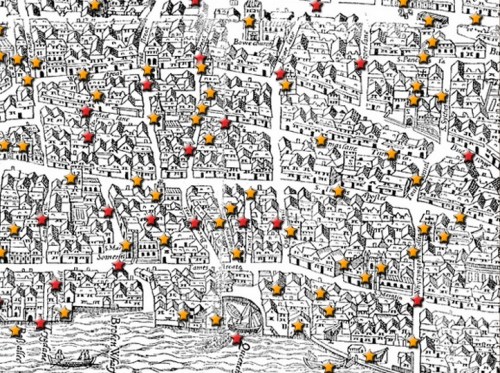
Early modern map of Cheapside. Image @The Map of Early Modern London

Early modern map of Cheapside. Image @The Map of Early Modern London One can see Bow Church at the top center.

We finally boarded a transit bus and missed noticing Gracechurch Street. Not that I would have searched for it. At that time I would not have recalled the few references in Pride and Prejudice to the street where Lizzy Bennet’s aunt and uncle Gardiner lived.

Mr. Gardiner was a sensible, gentlemanlike man, greatly superior to his sister, as well by nature as education. The Netherfield ladies would have had difficulty in believing that a man who lived by trade, and within view of his own warehouses, could have been so well bred and agreeable. Mrs. Gardiner, who was several years younger than Mrs. Bennet and Mrs. Philips, was an amiable, intelligent, elegant woman, and a great favourite with all her Longbourn nieces. Between the two eldest and herself especially, there subsisted a very particular regard. They had frequently been staying with her in town.

The first part of Mrs. Gardiner’s business on her arrival, was to distribute her presents and describe the newest fashions.

I love the Gardiners, two sane people in a novel filled with characters and oddballs. They provide ballast and sound advice to Elizabeth, who wisely turned to Mrs. Gardiner, not her mother, when mulling a problem about love and life. Mr. Gardiner was a merchant who lived close to his warehouse. Despite their middle class background, the Gardiners are more refined and sensible than many of their social betters. Elizabeth is proud to introduce them to Mr. Darcy when visiting his estate, knowing that their restrained behavior would not make him (or her) cringe.

Cheapside in the mid 18th century. Image @Republic of Pemberley

Cheapside in the mid 18th century. Image @Republic of Pemberley

Caroline Bingley, whose snobbishness was evident when she paid Jane a hasty courtesy call at Gracechurch Street, demonstrated a decided lack of class when she all but wrinkled her nose at a neighborhood she had probably managed to avoid all her life, an interesting attitude considering her family’s wealth came from trade and she was but one generation away from the “stench” of the merchant class. Social calls, their timing and length – or lack thereof – could be used to extend a friendship or give the cut direct, which in this instance Miss Bingley chose to do to Jane. Her lack of civility and coolness before and during the visit finally opened Jane’s eyes to Caroline’s desire to end their friendship. This was an event that Mrs. Gardiner and Lizzy correctly predicted beforehand:
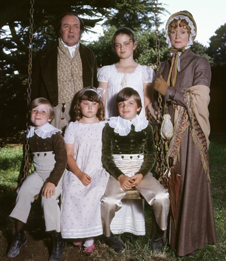
The Gardiners and their brood, Pride and Prejudice, 1995

The Gardiners and their brood, Pride and Prejudice, 1995

Chapter 25:  [Mrs. Gardiner] Poor Jane! I am sorry for her, because, with her disposition, she may not get over it [her failed love affair with Bingley] immediately. It had better have happened to you, Lizzy; you would have laughed yourself out of it sooner. But do you think she would be prevailed on to go back with us? Change of scene might be of service — and perhaps a little relief from home, may be as useful as anything.”

Elizabeth was exceedingly pleased with this proposal, and felt persuaded of her sister’s ready acquiescence.

“I hope,” added Mrs. Gardiner, “that no consideration with regard to this young man will influence her. We live in so different a part of town, all our connexions are so different, and, as you well know, we go out so little, that it is very improbable they should meet at all, unless he really comes to see her.”

“And that is quite impossible; for he is now in the custody of his friend, and Mr. Darcy would no more suffer him to call on Jane in such a part of London! My dear aunt, how could you think of it? Mr. Darcy may, perhaps, have heard of such a place as Gracechurch Street, but he would hardly think a month’s ablution enough to cleanse him from its impurities, were he once to enter it; and, depend upon it, Mr. Bingley never stirs without him.”

“So much the better. I hope they will not meet at all. But does not Jane correspond with the sister? She will not be able to help calling.”

“She will drop the acquaintance entirely.”

Dennis Severs house, a Georgian merchant's house. Image @photographsRoelof Bakker, www.rbakker.com

Dennis Severs house, a Georgian merchant’s house in Spitalsfield. Image @photographs
Roelof Bakker, http://www.rbakker.com

“…lessen their chance of marrying men of any consideration in the world.

With this phrase, Austen gives us a clue about the Bennet girls’ situation, but, as we know, the ending of Pride and Prejudice proves this forecast wrong (for Lizzy and Jane, at least).

Lizzy is right about Caroline Bingley, but not about Darcy. In the following scene her prejudice towards that proud man comes to the fore. She assumes that Mr. Darcy’s attitude towards Gracechurch Street will echo that of Caroline Bingley, for this bustling shopping district simply wasn’t an area that the upper crust tended to visit. Caroline, Darcy and Bingley made their observations about the Bennet family during their stay at Netherfield:

Darcy and Caroline at breakfast

Darcy and Caroline at breakfast

“I think I have heard you say that their uncle is an attorney in Meryton”

“Yes; and they have another, who lives somewhere near Cheapside.”

“That is capital,” added her sister, and they both laughed heartily.

“If they had uncles enough to fill all Cheapside,” cried Bingley, “it would not make them one jot less agreeable.”

“But it must very materially lessen their chance of marrying men of any consideration in the world,” replied Darcy.

Darcy, it turns out, is made of finer stuff than Caroline Bingley, for when he visits the Gardiners in his quest to find Wickham, his attitude is anything  but snobbish – stubborn, as Mrs. Gardiner later relates, but not snobbish. While arranging Wickham’s marriage to Lydia, he visits Gracechurch Street on several occasions and even dines with the Gardiners, leaving them with a very positive impression of his character:

Chapter 51 [Letter from Mrs. Gardiner to Lizzy after Lydia revealed Darcy’s part in her marriage to Wickham] He dined with us the next day, and was to leave town again on Wednesday or Thursday. Will you be very angry with me, my dear Lizzy, if I take this opportunity of saying (what I was never bold enough to say before) how much I like him. His behaviour to us has, in every respect, been as pleasing as when we were in Derbyshire. His understanding and opinions all please me; he wants nothing but a little more liveliness, and that, if he marry prudently, his wife may teach him. I thought him very sly;—he hardly ever mentioned your name. But slyness seems the fashion.

Mansion House, Cheapside. Image @Darvill's Rare Prints

Mansion House, Cheapside. Image @Darvill’s Rare Prints

At the time that Jane Austen wrote Pride and Prejudice, Cheapside was a very elegant thoroughfare with many sumptuous warehouses, convenient coffee houses, and  smart shops. In Real Life in London, Pierce Egan writes a passage in which Tom and Bob walk through this area filled with shopkeepers, bankers, merchants, shoppers, and “walking” billboards:

“Neither,” replied Dashall; “this is no other than the shop of a well-known dealer in stockings and nightcaps, who takes this ingenious mode of making himself popular, and informing the passengers that

“Here you may be served with all patterns and sizes,
From the foot to the head, at moderate prices;”
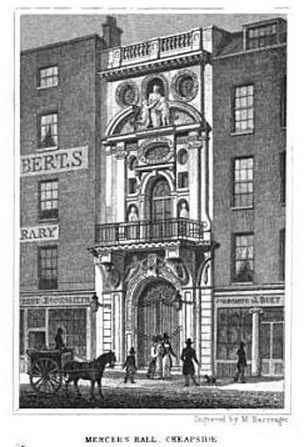
Mercer's Hall, Cheapside. Image @London and Its Environs

Mercer’s Hall, Cheapside. Image @London and Its Environs in the Nineteenth Century

with woolens for winter, and cottons for summer—Let us move on, for there generally is a crowd at the door, and there is little doubt but he profits by those who are induced to gaze, as most people do in London, if they can but entrap attention. Romanis is one of those gentlemen who has contrived to make some noise in the world by puffing advertisements, and the circulation of poetical handbills. He formerly kept a very small shop for the sale of hosiery nearly opposite the East-India House, where he supplied the Sailors after receiving their pay for a long voyage, as well as their Doxies, with the articles in which he deals, by obtaining permission to style himself “Hosier to the Rt. Hon. East India Company.” Since which, finding his trade increase and his purse extended, he has extended his patriotic views of clothing the whole population of London by opening shops in various parts, and has at almost all times two or three depositories for Romanis, the eccentric Hosier, generally places a loom near the door of his shops decorated with small busts; some of which being attached to the upper movements of the machinery, and grotesquely attired in patchwork and feathers, bend backwards and forwards with the motion of the works, apparently to salute the spectators, and present to the idea persons dancing; while every passing of the shuttle produces a noise which may be assimilated to that of the Rattlesnake, accompanied with sounds something like those of a dancing-master beating time to his scholars. his stock. (sic) At this moment, besides what we have just seen, there is one in Gracechurch Street, and another in Shoreditch, where the passengers are constantly assailed by a little boy, who stands at the door with some bills in his hand, vociferating—Cheap, cheap.”

“Then,” said Bob, “wherever he resides I suppose may really be called Cheapside?”

“With quite as much propriety,” continued Ton, “as the place we are now in; for, as the Irishman says in his song,

“At a place called Cheapside they sell every thing dear.”

During this conversation, Mortimer, Merrywell, and Harry were amusing themselves by occasionally addressing the numerous Ladies who were passing, and taking a peep at the shops—giggling with girls, or admiring the taste and elegance displayed in the sale of fashionable and useful articles—justled and impeded every now and then by the throng. Approaching Bow Church, they made a dead stop for a moment.

“What a beautiful steeple!” exclaimed Bob; “I should, though no architect, prefer this to any I have yet seen in London.” – Real Life in London, Egan
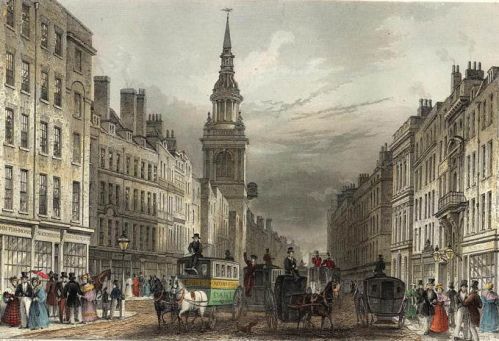
Cheapside and Bow Church engraved by W.Albutt after T.H.Shepherd publ 1837 edited. The pretty steeple is visible in this image. (wikipedia)

Cheapside and Bow Church engraved by W.Albutt after T.H.Shepherd publ 1837 edited. The pretty steeple is visible in this image. (wikipedia)

Once upon a time, Cheapside and Gracechurch Street were in the commercial heart of the city of London. It was the main shopping district in Jane Austen’s day. She describes the journey to Gracechurch street and Lizzy’s visit with the Gardiners in this lively scene:

Chapter 27: It was a journey of only twenty-four miles, and they began it so early as to be in Gracechurch Street by noon. As they drove to Mr. Gardiner’s door, Jane was at a drawing-room window watching their arrival; when they entered the passage she was there to welcome them, and Elizabeth, looking earnestly in her face, was pleased to see it healthful and lovely as ever. On the stairs were a troop of little boys and girls, whose eagerness for their cousin’s appearance would not allow them to wait in the drawing-room, and whose shyness, as they had not seen her for a twelvemonth, prevented their coming lower. All was joy and kindness. The day passed most pleasantly away: the morning in bustle and shopping, and the evening at one of the theatres.
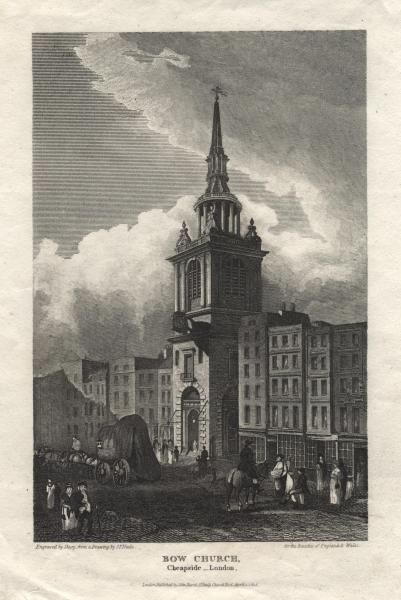
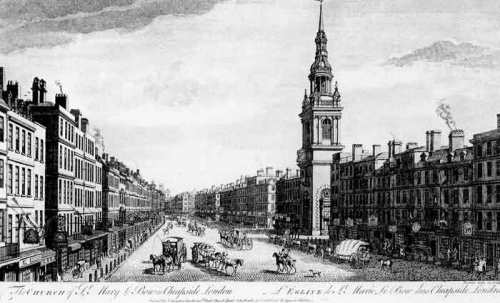
steel engraving of the Bow Church on Cheapside Street in London (the Bow Church is probably better known as Saint Mary's Le Bow and it is said that all true Cockneys were born within the sounds of this church's bells)

Steel engraving of the Bow Church on Cheapside Street in London (the Bow Church is probably better known as Saint Mary’s Le Bow and it is said that all true Cockneys were born within the sounds of this church’s bells) Image @bouletfermat.com

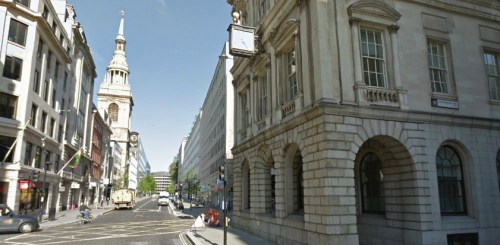
Gracechurch Street means grass-church and was thus named because of a hay market nearby (1680-1868). The distinctive steeple of  St Mary-le-Bow Church is the only structure remaining today that Jane Austen would have recognized. A church has stood on this ground since Saxon times. After the Fire of 1666, Christopher Wren designed a new structure, which was destroyed during a 1941 bombing was and carefully reconstructed during the 1950s. Today, Gracechurch Street largely resembles a modern office block.
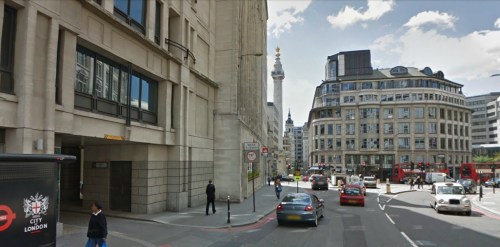
Gracechurch street today (Google maps)

Gracechurch street today (Google maps)

In the 17th century, coffeehouses arrived in the City and these soon became the place to pick up news. Some houses became the makeshift offices of the trades they served, giving birth to some of the world’s greatest financial institutions – the London Stock Exchange started in Jonathan’s Coffeehouse in Change Alley and Lloyds of London takes its name from Edward Lloyd, the proprietor of a coffeehouse in Tower Street. This, coupled with the founding by Royal Charter of the Bank of England in 1694, was the catalyst for the development of the City as a financial centre. – History of Cheapside

Cheapside was anything but cheap, the name “cheap” being the Saxon term for market. (Learn more about Cheapside Street here.) The names of the streets in that section of the City described the trades contained within this district: Wood Street, Milk Street, Bread Street, Honey Lane, Poultry and Friday Street for fish.

Today plans are afoot to revitalize this section of London and return it to its glory as a major shopping destination. History of Cheapside

More on the topic:

Read Full Post »
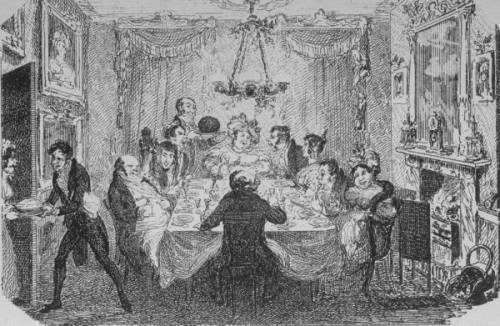
The week of Christmas and the new year has been traditionally a time for joy and celebration. In Jane Austen’s day, the decorations and celebrations weren’t quite so over-the-top commercial as they are today. Mistletoe, holly, and evergreen boughs decorated the halls, while roaring fires warmed hearth and home. Fine foods were prepared for friends and family at holiday gatherings, and gift giving was considered optional and not mandatory.

Cruikshank image. Holiday dinner party. Image @LIFE magazine.

Cruikshank image. Holiday dinner party. Image @LIFE magazine.

In her letters, Jane mentioned making wine. She was also  known to imbibe a glass or two, as did many Regency ladies. One can imagine that she heartily enjoyed a glass of homemade wine during long winter evenings. A Regency household in the country was akin to a cottage factory, processing freshly picked fruits and vegetables in summer and fall for consumption during the winter months.

Elderberry bushes, native to both Europe (Sambucus nigra)  and North America (Sambucus canadensis), ripened in August and September. The American elderberry can be found growing in old fields and meadows. The European elderberry blooms earlier than its American counterpart, with some sporting pink flowers. By Christmas, the first flasks of elderberry wine could be served at the table.  Some elder wines (depending on their strength) were ripened until spring. (Edible Landscaping)

Elderberry wine has a rich red color.

Elderberry wine has a rich red color.

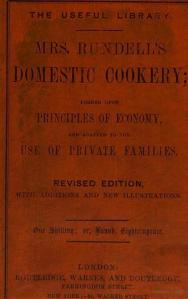
Mrs. Maria Eliza Ketelby Rundell’s elder wine recipe, written over two hundred years ago, reflects how housewives made the wine back then, using ingredients and kitchen supplies that were readily available. In 1806, John Murray (who published Emma, a second edition of Mansfield Park, Persuasion and Northanger Abbey)  published  A New System of Domestic Cookery: Founded up Principles of Economy; and Adapted to the Use of Private Families. Rundell’s cookbook became wildly popular in the first half of the 19th century in both England and America. One imagines that the Austen women were well aware of its existence.

Mrs. Rundell

Mrs. Rundell

According to Mrs. Rundell:

English wines would be found particularly useful, now foreign are so high priced, and though sugar is dear, they may be made at a quarter of the expense. If carefully made, and kept three or four year,s a proportionable strength being given, they would answer the purpose of foreign wines for health, and cause a very considerable reduction in the expenditure.”

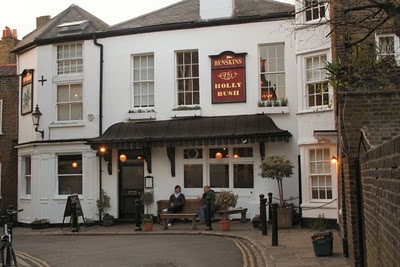
Holly Bush Inn, where Mrs. Rundell, it is speculated, wrote her recipes.

Holly Bush Inn, where Mrs. Rundell, it is speculated, wrote her recipes. Image @Persephone books (Link below)

Rundell’s book of recipes went through dozens of editions in Britain and the United States, where it was published in 1807. The following recipe for Elder Wine comes from the Google eBook 1857 edition:

Rundell Domestic Cookery

Elder Wine.

To every quart of berries put two quarts of water, boil half an hour, run the liquor, and break the fruit through a hair sieve; then to every quart of juice put three quarters of a pound of Lisbon sugar, coarse but not the very coarsest. Boil the whole a quarter of an hour with some Jamaica peppers, gingers, and a few cloves. Pour it into a tub, and when of a proper warmth, into the barrel, with toast and yeast to work, which there is more difficulty to make it do than most other liquors. When it ceases to hiss, put a quart of brandy to eight gallons, and stop up. Bottle in the spring or at Christmas. The liquor must be in a warm place to make it work.

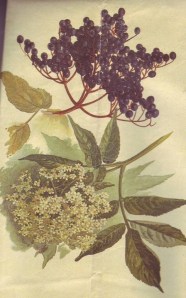
Elder berries and elder flowers. Public domain image

Elder berries and elder flowers. Public domain image

While Rundell’s recipe seems simple, some terms require explanation. In those days, sugar was classified according to place of origin, such as Brazil, or entrepot, a place of entry without excise duties, such as Lisbon. (Richard Bradley, 1736) Prospect book glossary.

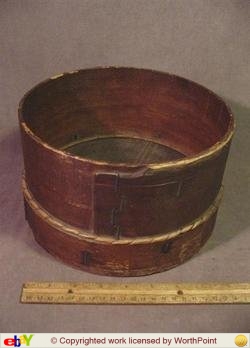
19th c. hair sieve

19th c. hair sieve

Image of Hair Sieve at Worth Point

The hair sieve mentioned by Rundell was most likely made with coarse horse hair, as shown in the above image. The mesh is quite fine. Sugar was an expensive commodity (Jane Austen was in charge of the tea and sugar stores in Chawton cottage, keeping the keys, no doubt, to the locked containers), but as previously explained, making your own wine provided a cost saving measure. The High Price of Sugar.

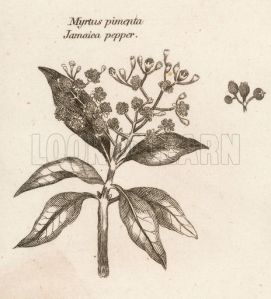
Jamaica peppers are generally known today as allspice. The peppers are larger than peppercorns and were gathered from Jamaica pepper trees. The “toast and yeast” mentioned in the recipe most likely meant bread yeast. Elder wine ferments particularly well in oak casks.

Jamaica pepper

Jamaica pepper

One can only guess what Mrs. Rundell’s elder wine, which was fortified with brandy, tasted like – strong, sweet, alcoholic, and fruity. The clusters of berries, dark purple when ripe, had many uses:

Elderberry bushes … [have] a long history of use for food, drink and medicinal purposes. Elderberry pie, jam and jelly, tarts, flavored drinks, and of course wine are a few of its better known uses.

Elderberry wine has a unique flavor that changes considerably over time. When too few berries are used, the wine is thin and unlikely to improve. When too many berries are used, the tannins and other flavor constituents may overpower the palate and require dilution, blending or prolonged aging to mellow. Between these extremes are wines that often offer exceptional enjoyment. – Winemaker Magazine

It seems that the berries had to be processed as quickly as possible after picking. There were times, I imagine, that the Austen women were busy working alongside their servants in the kitchen, processing foods, canning and pickling, and making wines and ales from recently harvested produce.

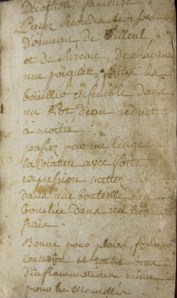
Another “job” that the Regency housewife assumed was that of nurse. Recipes for cough lozenges and simple medicinals made from herbs and plants were passed down through the generations. Elder berries were known to have many medicinal benefits:

Recipe for a "Decoction fameuse," which contains elderberry (among other ingredients). Image @MCRS Rare Book Blog

Recipe for a “Decoction fameuse,” which contains elderberry (among other ingredients). Image @MCRS Rare Book Blog

Recent research shows that elder builds up the immune system and directly inhibits the influenza virus. Elder contains an enzyme that smoothes the spikes on the outside of the virus, which the virus uses to pierce through cell walls. Elderberries have also been recommended in cases of bronchitis, sore throat, coughs, asthma, colds and constipation.” – The Health Benefits of Elderberry Wine

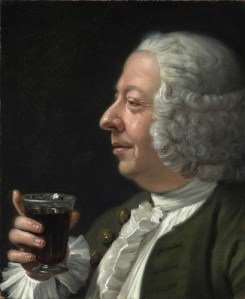
18th century red wine drinker, Franz Laktanz Graf Von Firmian

18th century red wine drinker taking his “medicine”, Franz Laktanz Graf Von Firmian

What better way to soothe one’s respiratory condition than with a nice glass of elder wine!

Ma(i)sonry Maisonry - Vintage 18th Century Wine Bottles - 1stdibs

This article from KansasCity.com, “Elderberry wine as a medicinal: A recent USDA reaction,” shows how ridiculous current U.S. health laws can be on the use of medication:

Federal authorities have seized bottles and drums of elderberry juice concentrate from a Kansas winery, contending that the company’s claims of its benefits for treating various diseases make the product a drug.

…”Products with unapproved disease claims are dangerous because they may cause consumers to delay or avoid legitimate treatments, Dara Corrigan, the FDA’s associate commissioner for regulatory affairs, said in a news release. “The FDA is committed to protecting consumers from unapproved products on the market.”

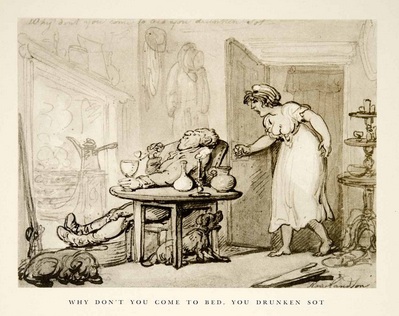
Aquatint, Rowlandson. Image @Amazon

Aquatone, Thomas Rowlandson. Image @Amazon

Wine was reserved not only for medicinal purposes or family gatherings, but for daily consumption. Bumpers of wine, or a tankard or cup filled to the brim, were common quantities.  The Georgians were notorious drinkers, for alcohol was safer than unboiled water and contaminated city or town wells.

London society of the Georgian period was renowned for its heavy consumption of alcohol. Poor people tended to drink beer or gin, but a wider range of alcoholic drinks was available to the rich. These included wines such as French claret; fortified wines such as sherry, port or Madeira; and spirits such as brandy and rum. It is noted in the text that Mr Stryver and Sydney Carton have wine, brandy, rum, sugar and lemons with which to concoct their punch.

During the Georgian period, beer might be drunk from pewter tankards, and other drinks, from glass goblets or tumblers.- Bookdrum

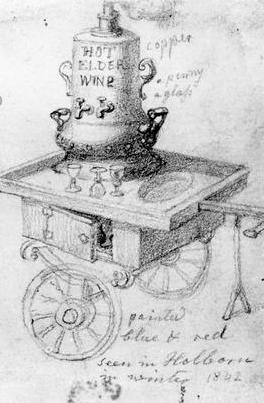
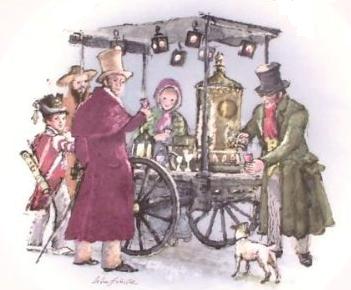
Detail, Elder Win Stand in Holborne, by George Scharff, 1842

Detail, Elder Wine Stand in Holborne in Winter, by George Scharff, 1842

In winter, elder wine heated in coppers was sold for a penny per wine glass from portable wood stands that contained glassware. (See image above.) This tradition lasted at least through the Victorian era, as attested by the modern Wedgewood scene below.

More About the Topic

Wedgewood. Victorian scene of an elder wine stand

Wedgewood. Victorian scene of an elder wine stand

Read Full Post »

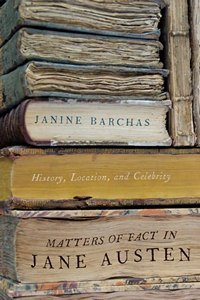
matters-of-fact-in-jane-austen-2012-x-2001Jane Austen scholars and fans have always known that there’s so much more to her novels than the mere surface description of a romantic tale. Janine Barchas, author of Matters of Fact in Jane Austen, points out that in addition to Jane’s wit, intelligence , humor, and creativity in penning her novels, she associated her fictional characters with famous British families.  For the contemporary Regency reader, the Woodhouses, Fitzwilliams, Wentworths, and Dashwoods were the celebrities of their day. In  choosing famous names, Jane Austen ramped up her readers’ interest in her fictional characters by associating them with notable names, places, and events.

In her book, Barchas examines genealogy, history, and geography and comes up with some fascinating information that has recently surfaced via online documents and texts. I had always assumed that Jane pulled names out of a hat, or picked them for how well they fit the character. (Mr. Wickham for the charming villain, Mr. Knightley, who is kind and good and a bit of a knight in shining armor.) According to Barchas, that is not necessarily the case. Take Northanger Abbey, for instance. Among Bath’s wealthiest residents n the 18th century were the Allens from Prior Park, a grand and beautiful Palladian mansion that was visible from #4 Sydney Place, the house in which the Austens resided before Rev. Austen’s death.

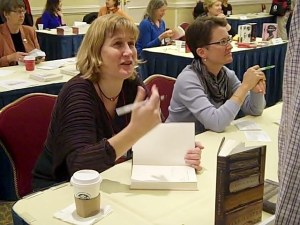
Janine Barchas (l) and Juliette Wells (r) at the Brooklyn JASNA AGM.

Janine Barchas (l) and Juliette Wells (r) at the Brooklyn JASNA AGM.

The Dashwood family gained a notorious reputation, with one of its members, Sir Francis Dashwood, becoming a prominent libertine in the Hell-Fire Club. The garden in his mansion, West Wycombe Park, featured risqué statues and Hell Fire caves. In contrast, the Ferrars (Ferrers) lived staunch Catholic lives in their medieval manor, Baddesley Clinton. Interestingly, Stoneleigh Abbey, where Jane stayed with her mother, whose family were the Leighs of Stoneleigh Abbey, is only a half day’s ride from Baddesley Clinton.

And then there are the Wentworths, the grandest family of them all. Names seen on the Wentworth genealogy tree include Woodhouse, D’arcy, Bertram, Watson, and Fitzwilliam. Wentworth House in Yorkshire is quite grand, with vast grounds and public paths. After the “real” Frederick Wentworth died in 1799, his estate was passed on to the Vernons. (Shades of Lady Susan!) The contemporary Regency reader would have known that the Whig Wentworths resided in Wentworth House, while the Tory Wentworths lived in Wentworth Castle.

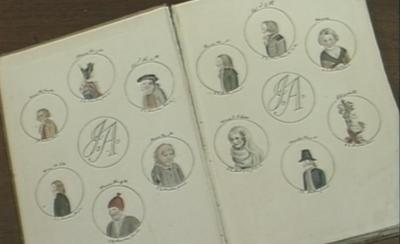
history of england_jane_cassandraThe History of England from the reign of Henry the 4th to the death of Charles the 1st, by a partial, prejudiced, and ignorant historian.

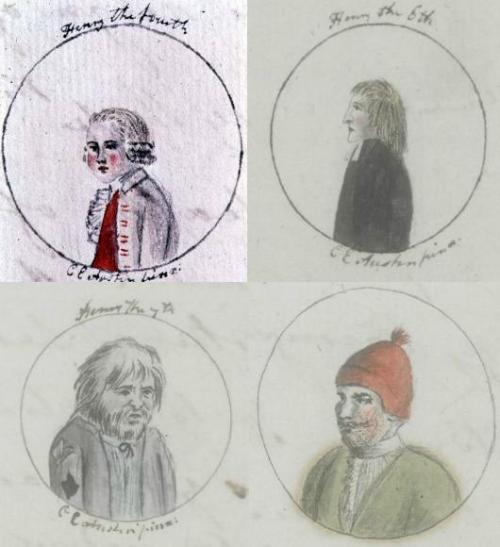
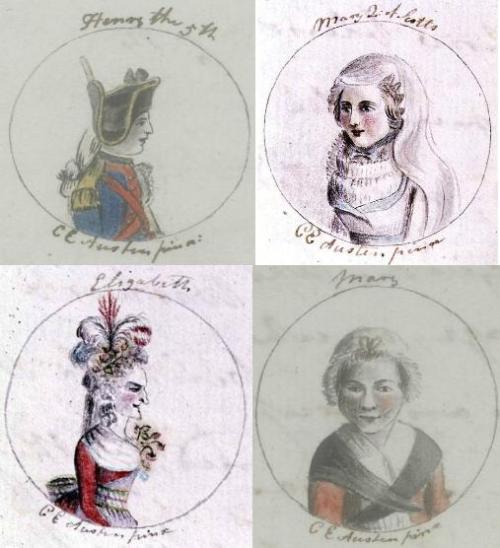
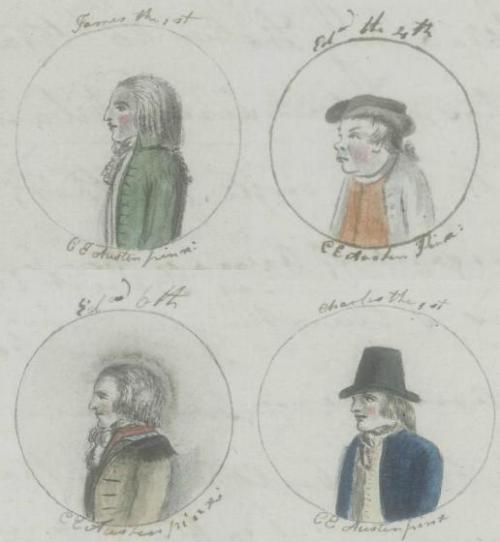
At the books beginning, Barchas mentions Jane Austen’s love for word play, riddles, and puzzles. The History of England, written when Austen was 15, was illustrated with 12 small watercolor portraits by Cassandra, Jane’s older sister.

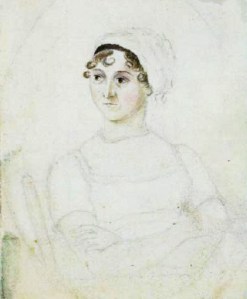
CassandraAusten-JaneAusten(c.1810)reversed

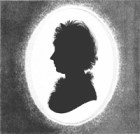
Portrait of Jane Austen by Cassandra, 1810.

According to Annette Upfal and Christine Alexander: “the portraits which Cassandra drew into her sisters’ historical satire are encoded with veiled meaning.”

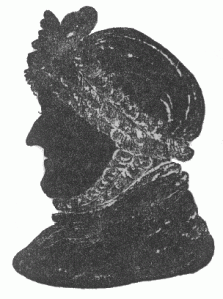
Mrs Casandra Austen

Mrs Cassandra Austen
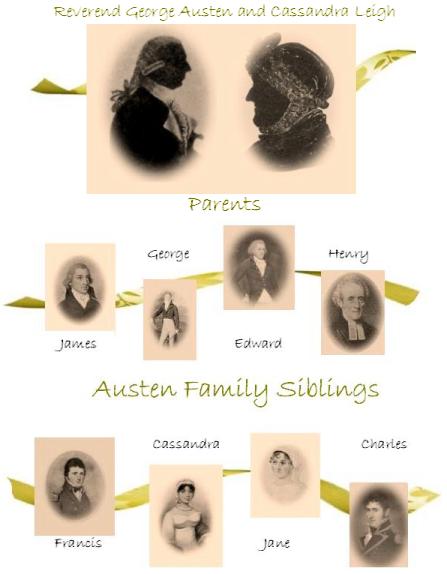
They argue that Austen’s summary discussion of kings and queens was comically interpolated with recognizable portraits of namesakes: brothers Edward, Henry, and James Austen, for example, stand in for Edward VI, Henry V, and James I, respectively. Similarly, cousins Mary Lloyd and Edward Cooper may have served Cassandra as models for Mary I and Edward IV. “

Upfal and Alexander also matched the profiles and portraits of Jane and her mother to those of Mary, Queen of Scots (Jane) and that of Elizabeth I (Mrs Austen). Barchas devotes scarcely a full page to this information and yet, as you can see, one can spend many minutes trying to decide how Jane and Cassandra used their family members and friends as models for the historical characters.

The Nenries

The Henries: the 4th, 6th, 7th, and 8th. Images from Jane Austen Fiction Manuscripts.

Marys Elizabeth and Henry

Henry the 5th, Elizabeth the 1st, Mary Queen of Scots, and Mary I. Some images from Wikimedia Commons. All others from Jane Austen Fiction Manuscripts.

cassandra james edward charles

James the 1st, Edward the 4th, Edward the 6th, and Charles the 1st

Austen family

Austen family

Matters of Fact in Jane Austen is not an easy read, for the book is crammed with facts, information, and new insights. One simply cannot skim over its pages, but should read each new chapter closely in order to learn what Jane’s contemporaries knew readily and well. Imagine an author writing a satirical novel today about a family going bankrupt and the daughters having to work for a living, using the Kardashian/Jenner family names and Los Angeles as a setting, and throwing in a crooked politician, lobbyist, Wall Street banker, and well-known radio talk show host. We would laugh and guffaw and understand the associations and jokes, but two hundred years from now, readers would be left clueless. In this book Barchas acts as our Regency guide, pointing out to us what was once obvious.

This is a serious, scholarly work, one that I highly recommend to readers who enjoy new and illuminating perspectives about Austen’s novels and life.

Janine Barchas is an associate professor of English at the University of Texas, Austin. She is the author of Graphic Design, Print Culture, and the Eighteenth-Century Novel.

Order the book here:

More on the topic:

Read Full Post »

« Newer Posts - Older Posts »