Feeds:
Posts
Comments

Archive for the ‘Austenesque novels’ Category

Copright @Jane Austen’s World. Written by Tony Grant, London Calling

Two of the greatest writers of the late 18th century and early 19th century were Jane Austen and William Wordsworth. We think we know Jane Austen’s primary influences and encouragement in her writing. They are found amongst the members of her family, the villages, towns and great houses she visited constantly near where she lived and the people she interacted with in those diverse places. She was a keen observer and knew them all intimately. Claire Tomalin in her biography, “Jane Austen, A life,” says that Jane wrote

“… tightly constructed stories that cover a short span of time…….Jane Austen also chose to write about small families.”

Dorothy Wordsworth

About, 250 miles north, there lived a young lady called Dorothy Wordsworth. She was a little older than Jane by five years. Dorothy’s brother was William Wordsworth and for a while they lived together in a tiny cottage they called Dove Cottage set in the wild and desolate scenery of The Lake District. Dorothy and William Wordsworth wrote about their emotional and intellectual response to nature and the landscape around them. While living at Dove Cottage in the Lake District, Dorothy was the muse, support, encourager and inspiration for her brother.
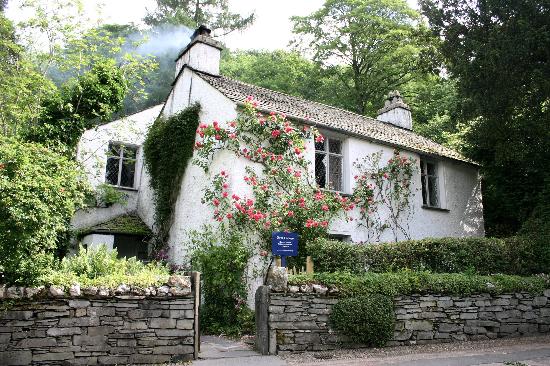
Dove Cottage, Grasmere. Image @Tony Grant

William often read Dorothy’s journal and drew inspiration for his poems from it.
We might ask why and how did these two writers have such different responses to the world about them?
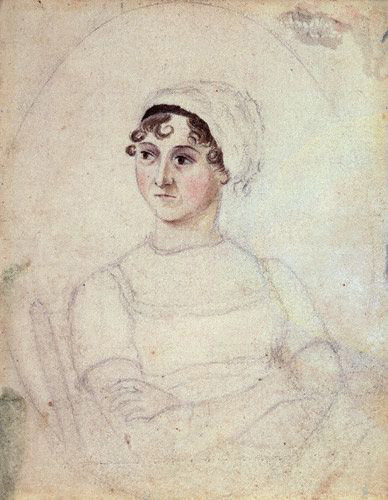
Jane Austen by Cassandra Austen

Jane was born into a lively and vibrant family of six brothers and one sister. It was a boisterous environment and aunts, uncles and neighbours were an additional group of relationships that were there, interested and ready to be involved with the new addition to the family. Family life was paramount in Jane’s existence from the start. All her senses were filled with it. Reading Gilbert Whites journals and letters makes us aware of the rich natural world all around her in her Hampshire village of Steventon, but although Jane would have been brought up in this natural environment, and she would have taken notice and interest in it, the life of family was the overriding power that carried her along. And so from an early start her environment filled her thoughts feelings and imagination. Claire Tomalin reminds us that,

“Not only was she one of eight, she lived with a perpetual awareness of a cousinage extending over many counties and even beyond England.”

Some examples of her writing show the intensity with which she was concerned with conversation and relationships as her primary focus. In Persuasion, the little Dorset coastal port of Lyme Regis plays a major role. In a letter to Cassandra written on Friday 14th, September, 1814, Jane says,

I called yesterday morning-( ought it not in strict propriety be termed yester – Morning?) on Miss Armstrong & was introduced to her father & mother. Like other young ladies she is considerably genteeler than her parents; Mrs Armstrong sat darning a pr of stockings the whole of my visit-.But I do not mention this at home , lest a warning should act as an example.-We afterwards walked on the Cobb; she is very conversable in a common way; I do perceive wit or genius- but she has Sense and some degree of Taste,& her manners are very engaging. She seems to like people too easily- she thought the Downes pleasant…”

In Persuasion, Jane writes about Anne Elliott, Captain Harville, Captain Wentworth,and Louisa Musgrove walking on the Cobb. The scenery is definitely noticed, but the main preoccupation is conversation and social interaction;

“but as they drew near The Cobb there was such a general wish to walk along it once more, all were so inclined…”
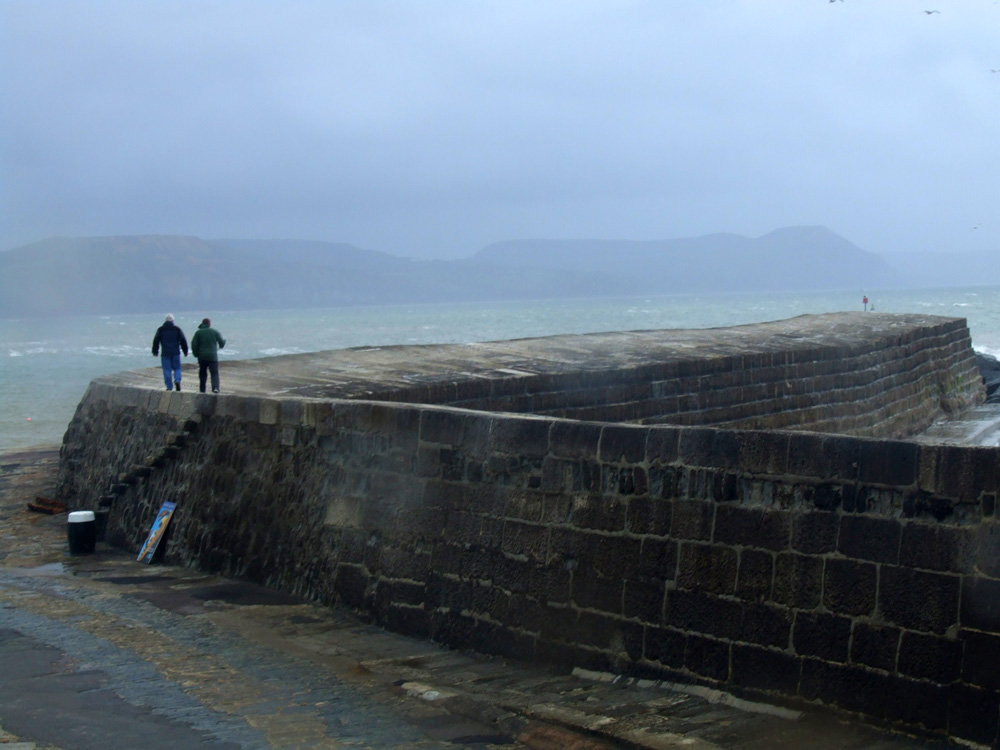
The Cobb at Lyme with Grannies Teeth. Image @Tony Grant

At this point they did not know how this walk along the Cobb would affect their whole situation, but the pull of this great physical presence was important and drew them to it as a social group conversing and interacting, their relationships developing. In both Jane’s letters above to Cassandra, and in this extract from Persuasion, it’s the relationships that are paramount. The Cobb is the setting for both. We can see in these two extracts how relationships play their part in Jane’s real life and Jane’s fictional life. Her own world is the inspiration for her fictional world.
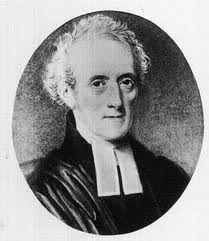
Henry Austen

Her family must have helped and encouraged her. Claire Tomalin writes,

Jane Austen managed the day-to-day routines of a novelist with an efficiency and discipline worthy of her naval brothers. The famous account of her working habits, given by her nephew, credits her with almost miraculous powers in stopping and starting under interruption.(her nephews account describes how she would stop and hide her small pieces of paper under a blotter at the slightest interruption and she used the sound of a creaking door as people entered the house to signal to her.)The picture is admirable, exasperating, painful and can only be half true………..there must have been times when the other inhabitants of the cottage protected her silence with something more than the creaking door……encouragement and practical help came from Henry….. Henry’s army connections may have helped to make the deal with
( Egerton the publisher) and Henry and Eliza’s money paid for the printing.”

Grasmere Lake

Just over two hundred and fifty miles north of Steventon, in the County of Cumbria, also know as the Lake District, during the same period of time, lived Dorothy and William Wordsworth. They lived in various houses but the most famous is a small cottage, called Dove Cottage at Grasmere, next to Grasmere Lake. It is surrounded by the steep hills and small mountains and streams of the Lake District, the Scafell Pikes, and Dungeon Ghyll. The sights and sounds they lived with were those of tumbling water as it dropped down mountain falls, the hiss of fast-moving mountain streams, and the wild rugged terrain of the Lake District’s fells, crags, tarns, and ghylls.

William Wordsworth, Benjamin Robert Haydon. Image @National Portrait Gallery

Like Jane, William was born into a large family (on the 7th April, 1770). He was the second of five children born to John Wordsworth and Ann Cookson in a large house in the centre of Cockermouth, his father being the legal representative for James Lowther, the 1st Earl of Lonsdale. At the bottom of the garden was a wild stream and this is one of the first things that attracted William’s attention. Dorothy his younger sister was born a year later. She was to become his mentor and supporter throughout her life. Their brothers did well in life as indeed Jane’s brothers did. John Wordsworth became a naval captain but was lost at sea in 1805, the youngest, Christopher became master of Trinity College Cambridge. William himself went to St John’s College Cambridge and achieved his bachelor degree in 1791. Richard became a lawyer. None of the children in the family got close to their father who remained distant to them. Williams’ father did, however, encourage William to read poetry and William, similar to Jane at the Steventon Rectory, had access to his father’s extensive library.

To illustrate the influences and the type of encouragement that William drew on to write his poetry, the time that Dorothy and he lived at Dove Cottage is a prime period to focus on.

Dorothy kept a journal covering the years they spent together at Dove Cottage. She opens the journal in the year 1800. It is May 14th, a Wednesday.

“I resolve to write a journal of the time till William and John return and I set about keeping my resolve, because I will not quarrel with myself, and because I shall give William pleasure by it when he comes home again.”

This start to her journal gives us an insight into her total dedication towards her brother. It is written for William’s pleasure, not hers. She was a selfless soul. William, and indeed their friend and poet Coleridge, who also came to live in the lake District, often referred to Dorothy’s journal. It is almost as though William used his sister’s writing to affirm his own responses and feelings about nature.

Here is an extract that shows how William’s poems and Dorothy’s journal are connected. Dorothy would have written this first of course. It is written beautifully and with passion. It shows her connection to nature.

April 15th 1801

“ When we were in the woods beyond Gowbarrow Park we saw a few daffodils close to the waterside. We fancied that the lake had floated the seeds ashore, and that the little colony had so sprung up. But as we went along there were more and yet more; and at last under the boughs of the trees, we saw that there was a long belt of them along the shore, about the breadth of a country turnpike road. I never saw daffodils so beautiful. They grew among the mossy stones about and about them; some rested their heads upon these stones as on a pillow for weariness; and the rest tossed and reeled and danced, and seemed as if they verily laughed with the wind, that blew upon them over the lake; they looked so gay, ever glancing, ever changing.”
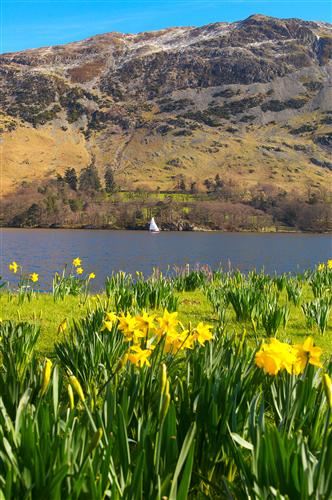
Lake District daffodils

Remember that William and Dorothy were together on this walk and saw the same sight. Soon after this entry William wrote this. It is the second verse of, The Daffodils;

Continuous as the stars that shine
And twinkle on the Milky Way,
They stretched in never ending line
Along the margin of a bay
Ten thousand saw I at a glance
Tossing their heads in sprightly dance”

It appears apparent that Dorothy’s words are used by William. “Tossed”, “danced”, repeat Dorothy’s imagery. He is relying on Dorothy’s emotional response as much as his own. They were very close as brother and sister and would have talked about their feelings of the event. But William’s heightened emotional response in this poem is the same as Dorothy’s.

It worked both ways. Williams’s poetry informed Dorothy’s emotional response too. On Monday may 26th, 1800, Mary writes;

I walked toward Rydal, and turned aside at my favourite field. The air and the lake were still……I could distinguish objects, the woods trees and houses. Two or three different kinds of birds sang at intervals on the opposite shore. I sate til I could hardly drag myself away. I grew so sad. “When pleasant thoughts,”……

Here Dorothy begins to quote a poem William had written two years earlier in 1798

I heard a thousand blended notes,
While in a grove I sate reclined,
In that sweet mood when pleasant thoughts
Bring sad thoughts to the mind.”

She is virtually re-enacting the poem. And of course Dorothy’s journal may well have informed Williams writing of the poem in the first place.

It is easy to see William Wordworths poems, in a quick superficial reading, as merely nice emotional descriptions of nature. Of course they are far more than that. Dorothy herself in her journal warns us that when reading William’s poems, to “look deep.”

In this article I wanted to show the different influences of two of the greatest writers of the late eighteenth century and early nineteenth century. It was not meant to be an analysis of their writing. However, to be fair to William Wordsworth it should be pointed out that his poems must be read carefully and a few times over. You begin to notice his emotional attachment to nature – he calls it his soul “linking” with the spirit of the natural world. It is ultimately about man’s connection with nature and being able to communicate with it, empathise with it, and know that you are part of it.  Wordsworth warns,

“And much it grieved my heart to think

What man has made of man.”

This sounds very modern and apt for our own times.

Jane Austen and William Wordsworth appear to be two very different writers, but I think placing them together shows that one is deeply concerned with the interrelationships of families and small communities and the other is deeply concerned about man’s relationship with nature. The themes and focus of Jane Austen’s and William Wordsworth’s writing were opposite, but they were closely connected too. Both writers wrote about what affected and concerned them as human beings. They show the human response to two different aspects of the world we live in and that we all share. It is interesting to note that Wordsworth obviously related and socialised with people and that Jane obviously noticed and interacted with the natural world about her in Hampshire, but both had a different emotional and intellectual responses to the world they inhabited rooted in their own personal experiences.

References:

Austen J. ( first published 1818) `(1998) Persuasion ; Penguin Classics

Clark C. (ed) (1986) Home At Grasmere : extracts from the journal of Dorothy Wordsworth ( written between 1800 and 1803) and from the poems of William Wordsworth: Penguin Classics

Le Faye D. (1995) Jane Austen’s letters (New Edition): Oxford University Press

Tomlin C. (2000) Jane Austen A Life: Penguin Books
Read Full Post »

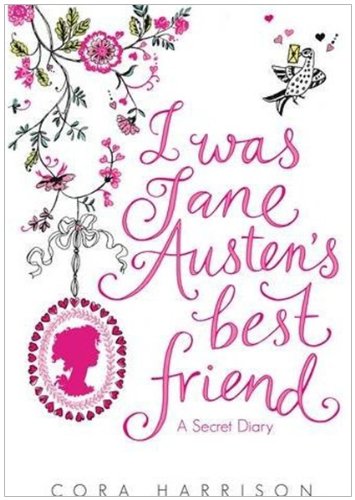
I recently finished reading a charming book by Cora Harrison, I Was Jane Austen’s Best Friend, in which Jane Austen has just reached the age of 15. It is February, 1791, and 16-year-old Jenny Cooper has slipped out of Mrs. Crawley’s boarding school to post a letter to Steventon Rectory warning Rev. and Mrs. Austen that their daughter, Jane, is seriously ill. By doing so, Jenny risks her reputation, for she ventures out alone and unescorted in a rough area of Portsmouth.

This scene sets the stage for the rest of the novel, in which young Jenny Cooper chronicles the months she spends with her best friend Jane and the Austens at the rectory.  The girls are avid writers: while Jane spins her creative tales, Jenny describes their routine days in her journal. And what days they were! Jenny observes Jane’s family and friends minutely: her gentle father and stern mother; her charming favorite brother, Henry, and the mentally challenged George, who lived with another family; Cassandra’s love for Tom Fowle; exotic cousin Eliza; the well-dressed Bigg sisters; and other vivid portraits of the people who inhabited Jane’s and Jenny’s world.

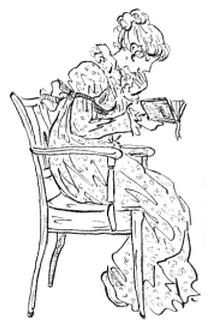
Jane Austen reads at Jenny's bedside. Image@Susan Hellard

The scenes are culled from actual events in Jane’s life and from letters that others wrote about her (for none of her letters from that time have survived). As teenagers are wont to do, Jenny and Jane dream of romantic encounters and parties and balls, engage in outdoor activities, and while away their time reading and writing and play-acting, or wishing for pretty gowns.

Image @Susan Hellard

The scene in which a pinch-penny Mrs. Austen must decide which color muslin would look best for ball gowns for all three girls (Cassandra, Jane and Jenny) is priceless, and the descriptions of tender romance between Cassandra and young Tom are heartbreaking to those who know he will die before they can be married. Tom LeFroy makes a suitably short appearance, and Jenny meets handsome Captain Thomas Williams, who in real life became engaged to her within three weeks of their first meeting, and whom she later married before her own untimely death.

Jenny witnessed Jane writing constantly and being inspired by the people she observed. For example, Jenny’s shrill sister-in-law, Augusta, becomes the prototype for Mrs. Elton and Mr. Collins is somewhat inspired by Jenny’s preachy brother.

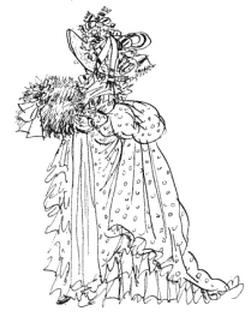
Augusta. Image @Susan Hellard

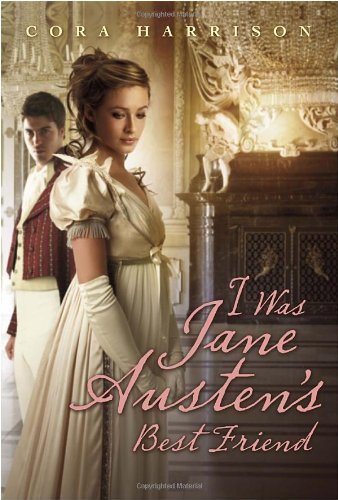
While I found the book a delight, not everyone has been thrilled with its purchase. The American cover of I Was Jane Austen’s Best Friend is a bit mature for a novel that targets young girls of eleven or so, but it explains the reason why so many older readers are buying the book.

This is what a high school  reviewer had to say about the U.S. cover: “… if you plan on buying [the book] at any time soon, make sure to check out the U.K. version… the cover art is so much cuter!” In fact, the U.K. cover (below) enjoyed the author’s full approval, and was drawn by Susan Hellard, the artist responsible for the charming illustrations displayed in this post and that are sprinkled throughout the book.

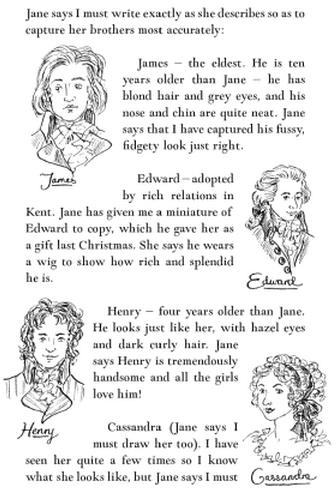
Page from the book, in which Jane describes some of her siblings. The style of writing is aimed at a very young audience. Drawings @Susan Hellard.

In writing this novel, Cora Harrison has kept her very young audience in mind. As you can see from the sample page above, the sentences are short and written in plain English, speech patterns and terms from the 18th century are kept to a minimum, the romance is sweet, and the story is written from a young lady’s point of view. While Ms.Harrison hoped that this book would introduce Jane Austen to very young readers, she also envisioned that mothers and grandmothers would enjoy reading the novel as well.

The book's U.K. cover

I have gone into great detail about the author’s intentions for a reason. Reviews of this book, while largely favorable, are varied. Lower rankings come largely from disappointed adult readers who expected a mature romance and a “more interesting plot.” But as the author wrote to me: “I didn’t want to do an in-depth analysis of love. I wanted to do a fun book, romantic in an old-fashioned style.”

Purists have also decried the changes in facts, dates, and characters, but isn’t it the novelist’s prerogative to change historical facts in order to move the plot forward? Besides, Ms. Harrison made her reasons for these changes clear in her Author’s Note in back of the book, which should have been placed as a Foreword. I also think that annotated notes for juvenile readers (such as those included for book clubs), would help adults explain some of the more obscure facts about the Georgian period to their children and place events in the novel in context.

Be that as it may, I rarely read review books from cover to cover, but I kept reading this one until I was finished (and then wished I had a daughter to give it to). This is a sweet book, filled with useful details about life in England 200 years ago. Ms. Harrison’s conjectures on how the Austens lived and interacted with each other is based on the letters and information about Jane that survived. After reading these pages, it is clear that Cora Harrison wrote her novel as an homage to Jane Austen. She also is an author with a mission. “As a teacher I am realistic enough to know that girls won’t automatically read Jane Austen unless their interest is awakened and I hoped to do that…”

More on the topic:

Read Full Post »

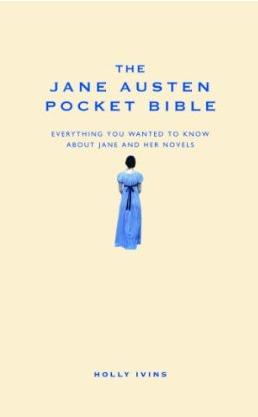
I recently received The Jane Austen Pocket Bible by Holly Ivins and have had occasion to use it a number of times. It is a small, compact, hard cover book filled with useful information about Jane’s life, novels, characters, movie adaptations, and the like.

Sprinkled throughout the chapters are facts and quotations, such as:

Pocket Fact:

“Some of Jeane’s earliest encouragement for her writing came from her neighbour Anne Lefroy, or Madame Lefroy as she was known. Anne was a lively and intelligent woman who was a great reader of Milton, Pope and Shakespeare, and was even known to write poetry herself…”

In Her Own Words:

“Our family are great Novel-readers and not ashamed of being so.” (Letter to Cassandra, 1798)

The book is divided into the following sections:

  • Introduction (including a timeline of her life and  how she wrote)
  • History and context, including a timeline of major historical events during this era.
  • Places Austen lived
  • Influences and literary context
  • Austen’s novels
  • Characters in Austen’s novels
  • Love, romance, and marriage in Austen’s novels
  • Film and TV adaptations of Austen’s novels
  • Glossary

Next time I visit England, I will bring this compact treasure trove with me. More than a guide, this handy reference will inform me and help me to recall important facts as I visit the places where she lived and worked. Outside of travel, this guide allows me to quickly look up facts as I write my posts.

I’ve taken the attractive paper cover off, for the book tucks in quite nicely in my briefcase or handbag, and its hard red cover is sturdy enough to withstand the wear and tear of travel.

I recommend this book to teachers, students, and Janeites whose interest in Jane Austen is never ending.

Other references:

Margaret Sullivan’s Jane Austen Handbook is delightful. Read my review here.

Joan Klingel Ray wrote Jane Austen for Dummies. Too large to take along on journeys, it nevertheless is a handy reference in any Jane Austen library. Read my review here.

I want to especially thank @sussexbestwalks, who I follow on Twitter, for arranging to send this book to me. What a lovely read and find. Order the book at this link.

Read Full Post »

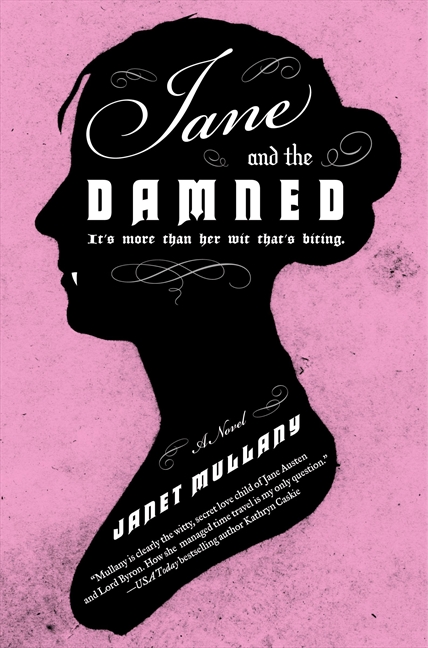
These days, centering a plot around Jane Austen as a vampire is as common as pre-packed sliced cheese, and so I approached Jane and the Damned with a jaundiced point of view. I must make a confession, however. I have been addicted to vampire novels and films about these bloodsuckers since my early 20’s, starting with Bram Stoker’s Dracula; Ann Rice’s Vampire Lestat series; Gary Oldman as the ancient bloodsucker; the cheeky tv series, Buffy the Vampire Slayer; and more recently True Blood and to a lesser extent, Twilight.

If an author or film director asks me to enter their vampire world, all I want in return is a rollicking good ride. In Jane and the Damned, author Janet Mullany does just that. Jane Austen, budding young writer, is turned into a vampire on a whim by William, a mature vampire and her dance partner at a local assembly ball. She begins to feel strange immediately.

Jane shares her awful knowledge with her father, who, while horrified at the news of his daughter having been bitten by one of the Damned, keeps a calm head. He trundles his family (wife Cassandra and daughter Cassandra and Jane) off to Bath so that Jane can take “the cure.” This treatment of taking the Bath waters is not guaranteed, for it might well kill Jane (and has killed many human seeking to rid themselves of the Vampiric poison inside them), but it is the only solution. They must rush against time before Jane’s human side disappears forever, for the longer they wait, the less successful and more painful and deadly the cure.

Rev Austen and Jane decide to keep Jane’s “condition” a secret from her mother and sister, saying only that Jane’s uncertain health requires that the family must remove to Bath immediately. As bad luck would have it, just as they settle into that Georgian city, the French invade England, and their lives are turned topsy-turvy.

Jane’s new life is conflicted on two fronts. First, she does not want to turn into a vampire. Second, she longs to taste human blood. And so her vampire adventure begins.

Going against vampire etiquette, Jane’s maker, William, has abandoned her to her fate. In Ms. Mullany’s vampire empire, the bear leader (or Creator) must guide an initiate into the intrecacies of becoming a vampire. The first feeding is problematic, since a full-blooded human takes a while to turn into one of the walking dead. A new vampire has not enough knowledge to wade through the many intricacies of vampire life without making a number of blunders. Enter Luke, who decides to act as Jane’s bear leader.

Handsome, witty, and wise in the way of Henry Tilney, Luke oversees Jane’s transformation with a hands-off approach, for he is ever aware that William has first claim on Jane and could change his mind at any time.

I have described the plot in more detail than is usual for one of my reviews, for this book is so filled with plots, sub-plots, and details that the story never peters out. Jane and the Damned feels rich, not thin, and Janet Mullany skillfully keeps juggling all the story threads she has tossed into play for a lively read. While I’ve disliked previous Jane Austen monster books, this one kept my interest for the following reasons:

1.) A thoroughly plotted back story. Mullany’s vampire empire and its mythology are well thought out. In the world Janet Mullaney has constructed, the monsters’ presence in Regency England, their ethics and mores, and their desire to rid Britain of the French make perfect sense.
2.) Internal conflict. Throughout the plot our heroine constantly struggles between her human self and vampire self, and this internal war adds to the external tension of a plot that is filled with action, romance, and historical detail. Jane must make a gutwrenching decision: to embrace her vampire life and leave her earthly family or to reclaim her human soul at the risk of death (and the chance for eternal life and happiness with the man she loves.)
3.) Desire and sensuality. In her new life, Jane yearns to be human, yet her desire for human blood overpowers her common sense, and as the novel progresses, she can no longer resist the charms of her hero. Sensuality begins to invade Jane’s life, whose awakening from sheltered spinsterhood to mature woman kept sparking my interest. (BTW, Ms. Mullany does not confuse sensuality with x-rated descriptions of the sexual act, for which I am grateful.)
4.) Boredom and ennui. Eternal life is not all that it’s cracked up to be. After a few centuries as one of the undead, a vampire is hard pressed to find anything new to do or interesting to experience. Janet Mullany has not neglected this important aspect of vampiric existence.
5.) Epic battle. In this instance, the army of the Damned has decided to defeat the French, who have invaded England (a real threat in those days) and who are bivoacked in Bath. Historical details of life in a war zone in the late 18th century are spot on, and author Mullany does not flinch from showing the seedier side of war: death, starvation, and occupation.

In short, Janet Mullany (right) addresses almost every fault I have found with other recent vampire novels set in the Regency era. Her vampire empire is so well crafted that she did not need to ride Jane Austen’s magical publicity coattails to make the story more palatable or salable. And yet, the thought of Jane Austen as an action heroine who comes into her own as she fights the French and surrenders to her own sensual longings is irresistible.

Add to the mix Ms. Mullany’s extensive knowledge about the Regency era and Jane Austen’s life (I love her depiction of Mrs. Austen), and you have a thoroughly enjoyable read. Do I recommend Jane and the Damned to everyone? No. But if you are a vampire junkie like me, you will be quite happy with your purchase.

Read Full Post »

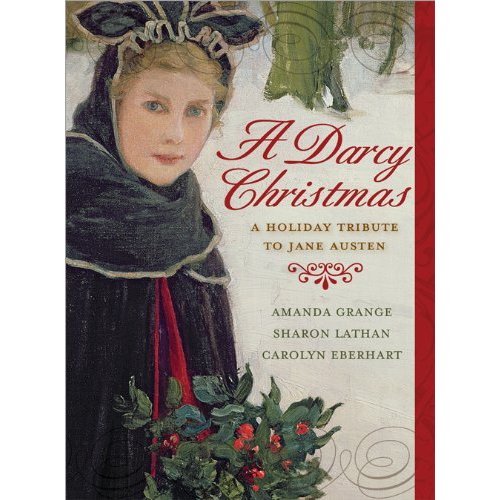
From the desk of Shelley DeWees… Gentle reader, guest writer Shelley DeWees, blog author of Uprising, writes book reviews for me. A Darcy Christmas: A Holiday Tribute to Jane Austen by Amanda Grange, Sharon Lathan, and Carolyn Eberhart is her first review for this blog. Welcome on board, Shelley.

A collection of stories designed to awaken the holiday spirit, A Darcy Christmas is a quick read showcasing veteran and amateur Austen spinoff writers. In the beginning, I was excited. I really wanted to be seduced by the magic imagery of the winter festivities, feel the warmth of some imaginary fire, manifest the taste of hot chocolate on my tongue while gazing at grainy photographs and luxuriating in a wool blanket…but success wasn’t to be mine.

The first problem was easy to spot: the short stories are printed in the wrong order. Books are like sandwiches in the way they should be designed. The fillings are important, yes, but they can be made to be better with the introduction of really delicious bread. Is your PB & J not to your liking? Too much jelly? Not enough peanut butter? Is the crunchy peanut butter a bit too crunchy? We all have our preferences. However, they seem to go by the wayside if the bread, beautiful in its simplicity and perfect in its splendor, is amazing. Who cares if the jelly to peanut butter ratio is off when the bread is wonderful?

If the first short story had in fact been the second, and Christmas Present by Amanda Grange had been the opening glimpse into Christmas à la Darcy, perhaps the subpar fillings would’ve been less noticeable. Instead, the book begins on its weakest leg, Mr. Darcy’s Christmas Carol by Carolyn Eberhart. As a fledgling author, Ms. Eberhart deserves commendation for her first publication. That being said, her portion of A Darcy Christmas was wholly unoriginal, insipid, and fraught with characters whose predictability astounded me. The connection to Charles Dickens’ timeless classic was, in my humble opinion, more than should’ve been allowed. Darcy essentially fills the shoes of Scrooge and does some soul searching, this time about whether he should renew his offer of marriage to Elizabeth (and with a little less snobbery, hmm?). The ghosts visit him, they show him the same humdrum imagery we’ve come to expect from the original story, and he has an easily-foreseeable revelation. Though a story about Darcy’s inner broodings over the loss of Elizabeth would be interesting, this one fell short and needn’t have taken place during Christmas at all.

Amanda Grange’s Christmas Present represented a noticeable uptick in the book’s procession. The story is engaging and sweet as we watch Elizabeth and Darcy bring their first child into the world, and the imagery is full-on wintery goodness. Familiar characters make their appearances including Mr. Collins, Lady Catherine, Kitty and Mary Bennet, and Bingley and Jane who have also become new parents. Mr. and Mrs. Bennet emerge too, albeit with Mrs. Bennet’s overly prominent vulgar comments and an odd social presence that seems a bit far-fetched. Beyond that though, everything is copacetic. Darcy and Elizabeth have no worries on the horizon and thus, no reason for their story to continue. This ever-positive view of their life together seems to have saturated the imaginations of all brilliant authors including Sharon Lathan, whose contribution rounds out A Darcy Christmas.

Her story, which shares the same title as the book, is another rendition of Darcy-and-Elizabeth-lived-happily-ever-after. Elderly and rich beyond measure, Mr. and Mrs. Darcy are busy hanging a family portrait when they begin to look back on their days, first as infatuated lovers and then as a cohesive couple. We see Darcy brooding over his first proposal, quietly but thoroughly berating himself, followed by a picture-perfect honeymoon scene, the birth of 5 children, the death of Mr. Bennet, and the marriage of their oldest son. There are, of course, few problems. In fact, the only recognizable woe comes in the form of a slightly disfigured daughter who is otherwise healthy, spunky, and smart.

It is at this point that I let out an audible sigh positively reeking of been-there-read-that. Isn’t there anything else that Darcy and Elizabeth could do with their lives? What about “Darcy and Elizabeth: The China Years”? Or how about a story where they lose all their money, move to a slum, and learn their true love for eachother as they slowly move forward? Though I realize that Jane Austen’s writings are most assuredly focused on the upper class, I tire of the same ‘ol “Everything is Perfect” spinoffs where Christmas means finery and feasts, gifts, treasures, and luxuries. A Darcy Christmas embodies some of the worst qualities of the holiday season, overconsumption and stuff-mongering among them.

And so it was that I felt no kinship with Christmas because of this book, no sudden urge for eggnog, no desire to buy things for my best Janeite friends or to call my Mom just because. This book left me wanting for a real story of life as a Regency twosome, with all the ups and downs that were part of everyone’s daily existence (even the very rich people of English high society). I’m tired of the “Look how happy we are!” stories that seemingly have no substance, no vulnerable underbelly, no challenge to them. A Darcy Christmas was a disappointment, not only as a vehicle for the Christmas spirit but as a statement of values as well.

Read Full Post »

« Newer Posts - Older Posts »