Feeds:
Posts
Comments

Archive for the ‘Bath’ Category

As spring turns to summer on our month-by-month exploration of Jane Austen’s life, letters, and novels, we turn our attention to June in Jane Austen’s world. If you’re new to the series, you can find previous articles in this “A Year in Jane Austen’s World” series here: JanuaryFebruaryMarch, April, and May.

Last month, we enjoyed the beauty of springtime coming to Chawton, along with the beautiful blooms of May. Let’s take a look at our monthly view of Chawton House Gardens. Many visitors will come tour the gardens over the next few months to enjoy the garden walks, see the house, and perhaps stay for tea.
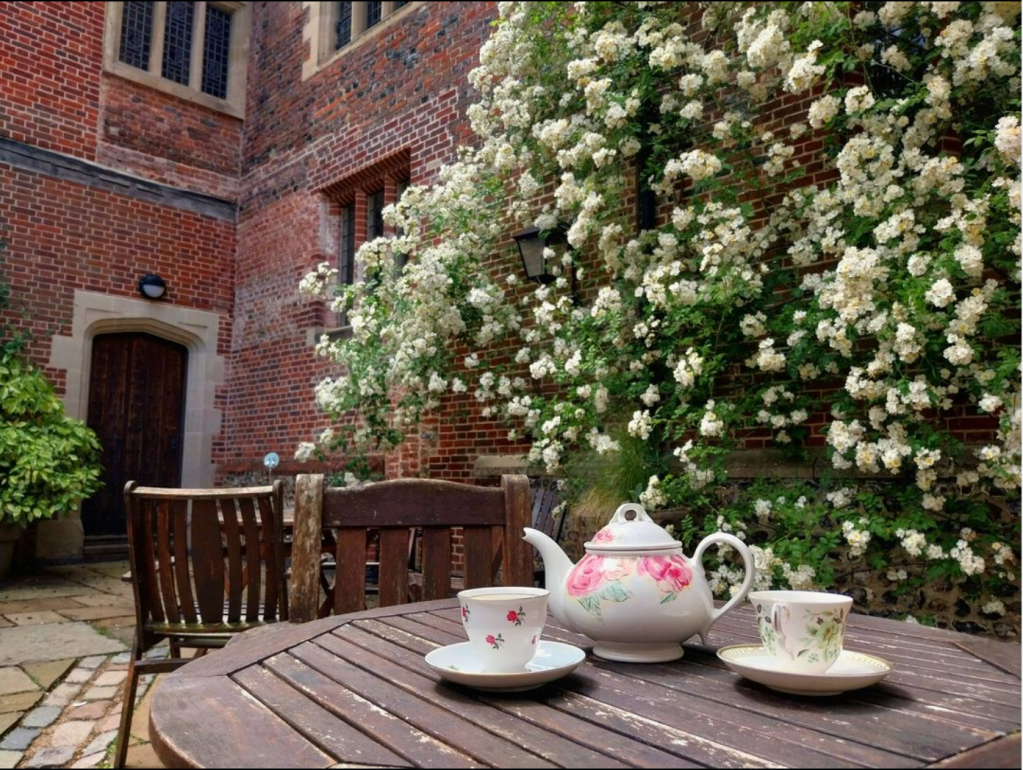
Chawton House in June: Photo @ChawtonHouse.

June in Hampshire

June is the time of year when England turns into a beautiful garden of scenic greenery, lush fields, and lovely flowers. Hampshire is one of the prettiest places you can visit. I’ve been to Hampshire in the spring and early summer several times, and I highly recommend a summer trip if the opportunity ever presents itself. It’s also time for berries!

“Yesterday I had the agreable (sic) surprise of finding several scarlet strawberries quite ripe;- had you been at home, this would have been a pleasure lost. There are more Gooseberries & fewer Currants than I thought at first.- We must buy currants for our Wine.-” (Jane Austen writing to Cassandra from Chawton Cottage in June 1811)

Here is Jane Austen’s House Museum and the roses that frame the front door this time of year:

Jane Austen’s House in June, Photo: @JaneAustensHouse.

June in Jane Austen’s Letters

We have several letters from June to explore. After the “season” ended, many rich families left London and went to the countryside or Bath. Jane and her family frequently traveled to visit family members or friends for longer visits during the summer months.

2 June 1799 (Queen’s Square, Bath):

  • Edward’s health: “What must I tell you of Edward? Truth or falsehood? I will try the former, and you may choose for yourself another time. He was better yesterday than he had been for two or three days before,—about as well as while he was at Steventon. He drinks at the Hetling Pump, is to bathe to-morrow, and try electricity on Tuesday. He proposed the latter himself to Dr. Fellowes, who made no objection to it, but I fancy we are all unanimous in expecting no advantage from it. At present I have no great notion of our staying here beyond the month.”
  • Visits with friends: “I spent Friday evening with the Mapletons, and was obliged to submit to being pleased in spite of my inclination. We took a very charming walk from six to eight up Beacon Hill, and across some fields, to the village of Charlecombe, which is sweetly situated in a little green valley, as a village with such a name ought to be. Marianne is sensible and intelligent; and even Jane, considering how fair she is, is not unpleasant. We had a Miss North and a Mr. Gould of our party; the latter walked home with me after tea. He is a very young man, just entered Oxford, wears spectacles, and has heard that ‘Evelina’ was written by Dr. Johnson.”
  • Outings: “There is to be a grand gala on Tuesday evening in Sydney Gardens, a concert, with illuminations and fireworks. To the latter Elizabeth and I look forward with pleasure, and even the concert will have more than its usual charm for me, as the gardens are large enough for me to get pretty well beyond the reach of its sound. In the morning Lady Willoughby is to present the colors to some corps, or Yeomanry, or other, in the Crescent, and that such festivities may have a proper commencement, we think of going to….”

11 June 1799 (Queen Square, Bath):

  • Taking the waters: “Edward has been pretty well for this last week, and as the waters have never disagreed with him in any respect, we are inclined to hope that he will derive advantage from them in the end. Everybody encourages us in this expectation, for they all say that the effect of the waters cannot be negative, and many are the instances in which their benefit is felt afterwards more than on the spot.”
  • Thoughts on “First Impressions”: “I would not let Martha read ‘First Impressions’ again upon any account, and am very glad that I did not leave it in your power. She is very cunning, but I saw through her design; she means to publish it from memory, and one more perusal must enable her to do it.”
Public Domain Image.

15 June 1808 (Godmersham)

  • Details of their journey: “Which of all my important nothings shall I tell you first? At half after seven yesterday morning Henry saw us into our own carriage, and we drove away from the Bath Hotel; which, by the by, had been found most uncomfortable quarters,—very dirty, very noisy, and very ill-provided. James began his journey by the coach at five. Our first eight miles were hot; Deptford Hill brought to my mind our hot journey into Kent fourteen years ago; but after Blackheath we suffered nothing, and as the day advanced it grew quite cool.
  • A rest for breakfast: “At Dartford, which we reached within the two hours and three-quarters, we went to the Bull, the same inn at which we breakfasted in that said journey, and on the present occasion had about the same bad butter. At half-past ten we were again off, and, travelling on without any adventure reached Sittingbourne by three. Daniel was watching for us at the door of the George, and I was acknowledged very kindly by Mr. and Mrs. Marshall, to the latter of whom I devoted my conversation, while Mary went out to buy some gloves. A few minutes, of course, did for Sittingbourne; and so off we drove, drove, drove, and by six o’clock were at Godmersham.”
Godmersham Park

25 April 1811 (Sloane St.)

  • Possible publishing date for Sense and Sensibility: “No, indeed, I am never too busy to think of S. and S. I can no more forget it than a mother can forget her sucking child; and I am much obliged to you for your inquiries. I have had two sheets to correct, but the last only brings us to Willoughby’s first appearance. Mrs. K. regrets in the most flattering manner that she must wait till May, but I have scarcely a hope of its being out in June. Henry does not neglect it; he has hurried the printer, and says he will see him again to-day. It will not stand still during his absence, it will be sent to Eliza.”

6 June 1811 (Chawton)

  • New set of dishes: “On Monday I had the pleasure of receiving, unpacking, and approving our Wedgwood ware. It all came very safely, and upon the whole is a good match, though I think they might have allowed us rather larger leaves, especially in such a year of fine foliage as this. One is apt to suppose that the woods about Birmingham must be blighted. There was no bill with the goods, but that shall not screen them from being paid. I mean to ask Martha to settle the account. It will be quite in her way, for she is just now sending my mother a breakfast-set from the same place. I hope it will come by the wagon to-morrow; it is certainly what we want, and I long to know what it is like, and as I am sure Martha has great pleasure in making the present, I will not have any regret. We have considerable dealings with the wagons at present: a hamper of port and brandy from Southampton is now in the kitchen.”
Wedgwood Queensware, c. 1790. Image @Christies

13 June 1814 (Chawton)

  • Thoughts on Mansfield Park from Mr. and Mrs. Cooke: “In addition to their standing claims on me they admire “Mansfield Park” exceedingly. Mr. Cooke says “it is the most sensible novel he ever read,” and the manner in which I treat the clergy delights them very much. Altogether, I must go, and I want you to join me there when your visit in Henrietta St. is over. Put this into your capacious head.”

23 June 1814 (Chawton):

  • Travels and plans: “I certainly do not wish that Henry should think again of getting me to town. I would rather return straight from Bookham; but if he really does propose it, I cannot say No to what will be so kindly intended. It could be but for a few days, however, as my mother would be quite disappointed by my exceeding the fortnight which I now talk of as the outside—at least, we could not both remain longer away comfortably.”
  • Friends go to Clifton: “Instead of Bath the Deans Dundases have taken a house at Clifton—Richmond Terrace—and she is as glad of the change as even you and I should be, or almost. She will now be able to go on from Berks and visit them without any fears from heat.”

23 June 1816 (Chawton)

  • Bits of news: “My dear Anna,—Cassy desires her best thanks for the book. She was quite delighted to see it. I do not know when I have seen her so much struck by anybody’s kindness as on this occasion. Her sensibility seems to be opening to the perception of great actions. These gloves having appeared on the pianoforte ever since you were here on Friday, we imagine they must be yours. Mrs. Digweed returned yesterday through all the afternoon’s rain, and was of course wet through; but in speaking of it she never once said “it was beyond everything,” which I am sure it must have been. Your mamma means to ride to Speen Hill to-morrow to see the Mrs. Hulberts, who are both very indifferent. By all accounts they really are breaking now,—not so stout as the old jackass.”
Rolinda Sharples’ Clifton Assembly Room (1817).

June in Jane Austen’s Novels

Pride and Prejudice

  • Lady Catherine to Elizabeth: “Oh, your father, of course, may spare you, if your mother can. Daughters are never of so much consequence to a father. And if you will stay another month complete, it will be in my power to take one of you as far as London, for I am going there early in June, for a week; and as Dawson does not object to the barouche-box, there will be very good room for one of you—and, indeed, if the weather should happen to be cool, I should not object to taking you both, as you are neither of you large.”
  • June at Longbourn after Lydia’s departure: After the first fortnight or three weeks of [Lydia’s] absence, health, good-humour, and cheerfulness began to reappear at Longbourn. Everything wore a happier aspect. The families who had been in town for the winter came back again, and summer finery and summer engagements arose. Mrs. Bennet was restored to her usual querulous serenity; and by the middle of June Kitty was so much recovered as to be able to enter Meryton without tears…
  • Lydia born in June: “Well,” cried her mother, “it is all very right; who should do it but her own uncle? If he had not had a family of his own, I and my children must have had all his money, you know; and it is the first time we have ever had anything from him except a few presents. Well! I am so happy. In a short time, I shall have a daughter married. Mrs. Wickham! How well it sounds! And she was only sixteen last June. My dear Jane, I am in such a flutter, that I am sure I can’t write; so I will dictate, and you write for me. We will settle with your father about the money afterwards; but the things should be ordered immediately.”
Happy Lydia and Unhappy Mr. Wickham

Mansfield Park

  • Edmund’s letter to Fanny: “I have sometimes thought of going to London again after Easter, and sometimes resolved on doing nothing till she returns to Mansfield. Even now, she speaks with pleasure of being in Mansfield in June; but June is at a great distance, and I believe I shall write to her. I have nearly determined on explaining myself by letter. To be at an early certainty is a material object. My present state is miserably irksome.”

Emma

  • Happenings in Highbury: “In this state of schemes, and hopes, and connivance, June opened upon Hartfield. To Highbury in general it brought no material change. The Eltons were still talking of a visit from the Sucklings, and of the use to be made of their barouche-landau; and Jane Fairfax was still at her grandmother’s; and as the return of the Campbells from Ireland was again delayed, and August, instead of Midsummer, fixed for it, she was likely to remain there full two months longer, provided at least she were able to defeat Mrs. Elton’s activity in her service, and save herself from being hurried into a delightful situation against her will.”
  • An outing delayed: “It was now the middle of June, and the weather fine; and Mrs. Elton was growing impatient to name the day, and settle with Mr. Weston as to pigeon-pies and cold lamb, when a lame carriage-horse threw every thing into sad uncertainty. It might be weeks, it might be only a few days, before the horse were useable; but no preparations could be ventured on, and it was all melancholy stagnation. Mrs. Elton’s resources were inadequate to such an attack.”
  • Mr. Knightley offers his strawberry fields: “You had better explore to Donwell,” replied Mr. Knightley. “That may be done without horses. Come, and eat my strawberries. They are ripening fast.”
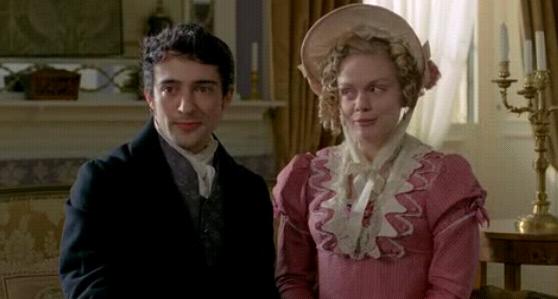
Mr. and Mrs. Elton involved in everyone’s lives.

Persuasion

  • Elizabeth Elliot born: “Walter Elliot, born March 1, 1760, married, July 15, 1784, Elizabeth, daughter of James Stevenson, Esq. of South Park, in the county of Gloucester, by which lady (who died 1800) he has issue Elizabeth, born June 1, 1785; Anne, born August 9, 1787; a still-born son, November 5, 1789; Mary, born November 20, 1791.”
  • A June sorrow: “And I am sure,” cried Mary, warmly, “it was a very little to his credit, if he did. Miss Harville only died last June. Such a heart is very little worth having; is it, Lady Russell? I am sure you will agree with me.”

June Dates of Importance

This brings us now to several important June dates that relate to Jane and her family:

Family News:

8 June 1771: Henry Thomas Austen (Jane’s brother) born at Steventon.

23 June 1779: Charles Austen (Jane’s brother) born at Steventon.

18 June 1805: James Austen’s daughter, Caroline, born.

Historic Dates:

18 June 1812: The United States declares war on Great Britain (War of 1812).

18 June 1815: The Duke of Wellington defeats Napoleon at the Battle of Waterloo.

Writing:

3 June 1793: Jane Austen most likely writes the last item of her juvenilia.

June 1799: Austen most likely finishes Susan (Northanger Abbey).

Sorrows:

I’m happy to report that I found no major sorrows for the Austen family in the month of June throughout Austen’s lifetime.

June 2024 @JaneAustensHouse.

Joyful June

This concludes our June ramble through Jane Austen’s life, letters, and works. There is always something fascinating to explore! Next month, we’ll discover all the important dates and events from July in Jane Austen’s World. Until then, you might join the Jane Austen’s House Museum virtual book club! You can click here for more: https://janeaustens.house/visit/whats-on/.


RACHEL DODGE teaches college English classes, gives talks at libraries, teas, and book clubs, and writes for Jane Austen’s World blog. She is the bestselling author of The Little Women DevotionalThe Anne of Green Gables Devotional and Praying with Jane: 31 Days Through the Prayers of Jane Austen. Now Available: The Secret Garden Devotional! You can visit Rachel online at www.RachelDodge.com.

Read Full Post »

As spring turns to summer on our month-by-month exploration of Jane Austen’s life, letters, and novels, we turn our attention to May in Jane Austen’s world. If you’re just jumping on the bus, you can find previous articles in this “A Year in Jane Austen’s World” series here: JanuaryFebruary, March, and April.

During last month’s April showers in England, we dreamed of May flowers…and the Hampshire countryside certainly is showing some May flower power. First up, our monthly view of Chawton House Gardens. It certainly is bursting with color!

Chawton House in May: Photo @ChawtonHouse.

May in Hampshire

May is the time of year when the sun shines more regularly and everything bursts into bloom. Summer is close at hand, which means the temperatures are starting to warm up a bit, but frequent rain helps keep the gardens cool and watered. Austen had this to say in May 1811 in a letter to Cassandra:

The chickens are all alive and fit for the table, but we save them for something grand. Some of the flower seeds are coming up very well, but your mignonette makes a wretched appearance. Miss Benn has been equally unlucky as to hers. She had seed from four different people, and none of it comes up. Our young piony (sic) at the foot of the fir-tree has just blown and looks very handsome, and the whole of the shrubbery border will soon be very gay with pinks and sweet-williams, in addition to the columbines already in bloom. The syringas, too, are coming out. We are likely to have a great crop of Orleans plums, but not many greengages—on the standard scarcely any, three or four dozen, perhaps, against the wall. (Chawton, Wednesday May 29, 1811)

Here is a glimpse of Jane Austen’s House Museum and its blooms this month.

Jane Austen’s House in May, Photo: @JaneAustensHouse.

May in Jane Austen’s Letters

We have several letters from May to peruse. Interestingly, several are written from Bath. In an interesting article entitled “A Brief History of Jane Austen in Bath” on VisitBath.com, we read this about Jane Austen:

While many assume that Jane’s connection with Bath began when she moved to 4 Sydney Place in 1801 after her father’s retirement, the Austen family’s history with the City actually dates back further. Jane’s parents were married at St Swithin’s Church in 1764, and Jane herself visited in 1797 and 1799, lodging with her mother and sister-in-law at 13 Queen Square in 1799 while her brother took the waters for his health. Before moving into Sydney Place, she also stayed with her aunt and uncle, the Leigh-Perrots, at No.1 The Paragon. These short visits had a lasting impact on the young Jane Austen, inspiring her to write Northanger Abbey about Catherine Morland’s first visit to Bath and her “eager delight” at all it offered. (VisitBath.com)

May 17, 1799 (Queen’s Square):

  • Jane’s thoughts on the house: “We are exceedingly pleased with the house; the rooms are quite as large as we expected. Mrs. Bromley is a fat woman in mourning, and a little black kitten runs about the staircase. Elizabeth has the apartment within the drawing-room; she wanted my mother to have it, but as there was no bed in the inner one, and the stairs are so much easier of ascent, or my mother so much stronger than in Paragon as not to regard the double flight, it is settled for us to be above, where we have two very nice-sized rooms, with dirty quilts and everything comfortable. I have the outward and larger apartment, as I ought to have; which is quite as large as our bedroom at home, and my mother’s is not materially less. The beds are both as large as any at Steventon, and I have a very nice chest of drawers and a closet full of shelves — so full indeed that there is nothing else in it, and it should therefore be called a cupboard rather than a closet, I suppose.”
  • Happy and content, despite a delay with her trunk: “I find no difficulty in closing my eyes. I like our situation very much; it is far more cheerful than Paragon, and the prospect from the drawing-room window, at which I now write, is rather picturesque, as it commands a prospective view of the left side of Brock Street, broken by three Lombardy poplars in the garden of the last house in Queen’s Parade.”
The Royal Crescent in Spring (Photo Courtesy of VisitBath.com).

May 1801 (Paragon):

  • May 5 (their journey): “I have the pleasure of writing from my own room up two pair of stairs, with everything very comfortable about me. Our journey here was perfectly free from accident or event; we changed horses at the end of every stage, and paid at almost every turn-pike. We had charming weather, hardly any dust, and were exceedingly agreeable, as we did not speak above once in three miles. Between Luggershall and Everley we made our grand meal, and then with admiring astonishment perceived in what a magnificent manner our support had been provided for. We could not with the utmost exertion consume above the twentieth part of the beef. The cucumber will, I believe, be a very acceptable present, as my uncle talks of having inquired the price of one lately, when he was told a shilling.
  • Food prices: “I am not without hopes of tempting Mrs. Lloyd to settle in Bath; meat is only 8d. per pound, butter 12d., and cheese 9 1/2 d. You must carefully conceal from her, however, the exorbitant price of fish: a salmon has been sold at 2s. 9d. per pound the whole fish. The Duchess of York’s removal is expected to make that article more reasonable — and till it really appears so, say nothing about salmon.”
  • New bonnets: “My mother has ordered a new bonnet, and so have I; both white strip, trimmed with white ribbon. I find my straw bonnet looking very much like other people’s, and quite as smart. Bonnets of cambric muslin on the plan of Lady Bridges’ are a good deal worn, and some of them are very pretty; but I shall defer one of that sort till your arrival.”
The Paragon from Travelpod
  • May 12 (a ball): “In the evening, I hope you honoured my toilette and ball with a thought; I dressed myself as well as I could, and had all my finery much admired at home. By nine o’clock my uncle, aunt, and I entered the rooms, and linked Miss Winstone on to us. Before tea it was rather a dull affair; but then the before tea did not last long, for there was only one dance, danced by four couple. Think of four couple, surrounded by about an hundred people, dancing in the Upper Rooms at Bath. After tea we cheered up; the breaking up of private parties sent some scores more to the ball, and though it was shockingly and inhumanly thin for this place, there were people enough, I suppose, to have made five or six very pretty Basingstoke assemblies.”
  • The sale of their belongings: “I thank you for your Sunday’s letter, it is very long and very agreeable. I fancy you know many more particulars of our sale than we do; we have heard the price of nothing but the cows, bacon, hay, hops, tables, and my father’s chest of drawers and study table. Mary is more minute in her account of their own gains than in ours; probably being better informed in them. I will attend to Mrs. Lloyd’s commission and to her abhorrence of musk when I write again.”
Fancy Ball at the Upper Rooms, Bath, Thomas Rowlandson
  • May 21 – the search for apartments continues: “Our views on G. P. Buildings seem all at an end; the observation of the damps still remaining in the offices of an house which has been only vacated a week, with reports of discontented families and putrid fevers, has given the coup de grace. We have now nothing in view. When you arrive, we will at least have the pleasure of examining some of these putrefying houses again; they are so very desirable in size and situation, that there is some satisfaction in spending ten minutes within them.”
  • Walking with Mrs. Chamberlayne: “It would have amused you to see our progress. We went up by Sion Hill, and returned across the fields. In climbing a hill Mrs. Chamberlayne is very capital; I could with difficulty keep pace with her, yet would not flinch for the world. On plain ground I was quite her equal. And so we posted away under a fine hot sun, she without any parasol or any shade to her hat, stopping for nothing, and crossing the churchyard at Weston with as much expedition as if we were afraid of being buried alive. After seeing what she is equal to, I cannot help feeling a regard for her. As to agreeableness, she is much like other people.”
  • On a small party: “We are to have a tiny party here to-night. I hate tiny parties, they force one into constant exertion. Miss Edwards and her father, Mrs. Busby and her nephew, Mr. Maitland, and Mrs. Lillingstone are to be the whole; and I am prevented from setting my black cap at Mr. Maitland by his having a wife and ten children.”
Panorama of Bath from Beechen Cliff, 1824, Harvey Wood

Jane wrote several other “May letters” from Chawton (1811) and Sloane Street (1813):

May 29, 1811 (Chawton):

  • Springtime storms: “Mrs. Terry, Mary, and Robert, with my aunt Harding and her daughter, came from Dummer for a day and a night,—all very agreeable and very much delighted with the new house and with Chawton in general. We sat upstairs, and had thunder and lightning as usual. I never knew such a spring for thunderstorms as it has been. Thank God! we have had no bad ones here. I thought myself in luck to have my uncomfortable feelings shared by the mistress of the house, as that procured blinds and candles. It had been excessively hot the whole day.”
  • Improvements: “The chimneys at the Great House are done. Mr. Prowting has opened a gravel-pit, very conveniently for my mother, just at the mouth of the approach to his house; but it looks a little as if he meant to catch all his company. Tolerable gravel.”

May 20, 1813 (Sloane Street):

  • Travels: “We left Guildford at twenty minutes before twelve (I hope somebody cares for these minutiæ), and were at Esher in about two hours more. I was very much pleased with the country in general. Between Guildford and Ripley I thought it particularly pretty, also about Painshill; and from a Mr. Spicer’s grounds at Esher, which we walked into before dinner, the views were beautiful. I cannot say what we did not see, but I should think there could not be a wood, or a meadow, or palace, or remarkable spot in England that was not spread out before us on one side or other.”
  • Settling in: “I fancy it was about half-past six when we reached this house,—a twelve hours’ business, and the horses did not appear more than reasonably tired. I was very tired too, and glad to get to bed early, but am quite well to-day. I am very snug in the front drawing-room all to myself, and would not say “thank you” for any company but you. The quietness of it does me good.”

May 24, 1813 (Sloane Street):

  • On visiting an exhibition and finding the Mrs. Bingley’s (Jane Bennet’s) likeness and looking for Mrs. Darcy’s (Elizabeth Bennet’s) likeness: “…to my great amusement, Henry and I went to the exhibition in Spring Gardens. It is not thought a good collection, but I was very well pleased, particularly (pray tell Fanny) with a small portrait of Mrs. Bingley, excessively like her. I went in hopes of seeing one of her sister, but there was no Mrs. Darcy. Perhaps, however, I may find her in the great exhibition, which we shall go to if we have time. I have no chance of her in the collection of Sir Joshua Reynolds’s paintings, which is now showing in Pall Mall, and which we are also to visit. Mrs. Bingley’s is exactly herself,—size, shaped face, features, and sweetness; there never was a greater likeness. She is dressed in a white gown, with green ornaments, which convinces me of what I had always supposed, that green was a favorite color with her. I dare say Mrs. D. will be in yellow.”
  • Later that evening, on searching for Mrs. D (Elizabeth Bennet): “We have been both to the exhibition and Sir J. Reynolds’s, and I am disappointed, for there was nothing like Mrs. D. at either. I can only imagine that Mr. D. prizes any picture of her too much to like it should be exposed to the public eye. I can imagine he would have that sort of feeling,—that mixture of love, pride, and delicacy.”
Jane Bennet, Pride and Prejudice (1995).

May in Jane Austen’s Novels

May isn’t mentioned too terribly much in Austen’s novels, but it is a special point of interest and conversation in Emma because of the timing of Frank Churchill’s visit and the timing of the ball:

Emma

  • Frank’s visit: “Emma heard that Frank wrote in the highest spirits of this arrangement, and seemed most fully to appreciate the blessing of having two months before him of such near neighbourhood to many dear friends—for the house was taken for May and June. She was told that now he wrote with the greatest confidence of being often with them, almost as often as he could even wish.”
  • Mr. Weston’s joy: “Mr. Weston’s own happiness was indisputable. He was quite delighted. It was the very circumstance he could have wished for. Now, it would be really having Frank in their neighbourhood. What were nine miles to a young man?—An hour’s ride. He would be always coming over.
  • A ball: “Mr. Weston’s ball was to be a real thing. A very few to-morrows stood between the young people of Highbury and happiness.”
  • May is better for everything: “Mr. Woodhouse was resigned. The time of year lightened the evil to him. May was better for every thing than February.”
  • Evening fire in May: “The whole party walked about, and looked, and praised again; and then, having nothing else to do, formed a sort of half-circle round the fire, to observe in their various modes, till other subjects were started, that, though May, a fire in the evening was still very pleasant.
Anya Taylor-Joy (left) as “Emma Woodhouse” and Callum Turner (right) as “Frank Churchilll.” (2020). Credit : Focus Features.

May Dates of Importance

This brings us now to several important May dates that relate to Jane and her family:

Family News:

May 1801: Austen family leaves Steventon and settles in Bath. Mrs. Austen and Jane travel via Ibthorpe. James Austen and his family take resident at Steventon rectory.

May 1807: Captain Charles Austen marries Fanny Palmer in Bermuda.

Historic Dates:

18 May 1804: Napoleon crowns himself emperor of France.

Writing:

May 1814: Mansfield Park published anonymously, “By the Author of ‘Sense & Sensibility,’ and ‘Pride & Prejudice.’

Sorrows:

24 May 1817: Jane leaves Chawton and moves with Cassandra to Winchester, for medical treatment.

On this day in 1817, Jane Austen left this house for the final time. She went to stay in Winchester, closer to her doctor, where she died two months later, on 18 July. -Jane Austen’s House Museum

May 24, 2024 @JaneAustensHouse

Lovely May

I hope you’re enjoying our journey through each month of the year in Jane Austen’s world. It is a joy to look through this lens into Austen’s life and letters. We’ll continue our exploration and find out what happened in June in next month’s installment, June in Jane Austen’s World!


RACHEL DODGE teaches college English classes, gives talks at libraries, teas, and book clubs, and writes for Jane Austen’s World blog. She is the bestselling author of The Little Women DevotionalThe Anne of Green Gables Devotional and Praying with Jane: 31 Days Through the Prayers of Jane Austen. Now Available: The Secret Garden Devotional! You can visit Rachel online at www.RachelDodge.com.

Read Full Post »

It’s time for the next installment in this series devoted to examining the enduring romantic themes in Jane Austen’s novels, many of which are used over and over again in today’s most popular “rom com” movies and books.

So far in this series, we’ve explored popular themes in Jane Austen’s other novels: “Enemies to Lovers” in Pride and Prejudice, the “Slow Burn” Romance in Emma“Best Friends to Lovers” in Mansfield Park, and “Second-Chance” Love in Persuasion.

This month, we’re taking a closer look at the romantic themes Jane Austen used in Northanger Abbey (NA) and tracking the themes that are still used today.

Defining the “Meet-Cute”

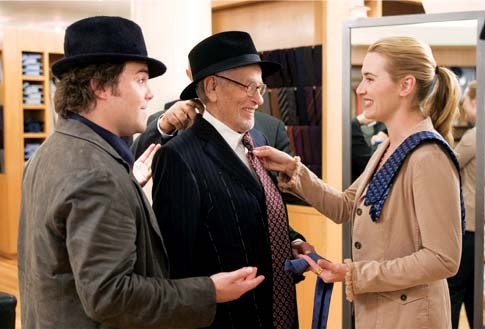
Every rom com has a meet-cute, the moment when two characters meet each other in a “cute” and memorable way. In The Holiday, Arthur (Eli Wallach) defines a meet-cute like this:

Say a man and a woman both need something to sleep in, and they both go to the same men’s pajama department. And the man says to the salesman, ‘I just need bottoms.’ The woman says, ‘I just need a top.’ They look at each other, and that’s the meet-cute.”

The Holiday

While every story has a meet-cute, some are cuter than others. Sometimes the two characters cannot stand one another, sometimes there is a misunderstanding, and sometimes there is a clash. But sometimes, as in NA, the two characters meet and are immediately drawn to one another.

Introducing Mr. Tilney

In NA, not only do Catherine Morland and Henry Tilney have a clever first meeting, we also learn a lot about social etiquette during that era.

When Catherine arrives in Bath, she knows no one and her chaperone, Mrs. Allen, has no immediate acquaintances. On their first night in the Upper Rooms, they move through a crowded ballroom, but because Mrs. Allen does not see anyone she knows, Catherine cannot dance:

[S]he longed to dance, but she had not an acquaintance in the room. Mrs. Allen did all that she could do in such a case by saying very placidly, every now and then, “I wish you could dance, my dear—I wish you could get a partner.”

Northanger Abbey

However, when they visit the Lower Rooms, “fortune” is “more favourable to our heroine” (Ch. 3). It’s there that the master of ceremonies makes an introduction: “The master of the ceremonies introduced to her a very gentleman-like young man as a partner; his name was Tilney.”

After dancing they strike up a lively conversation and the meet-cute is on.

Northanger’s Meet-Cute

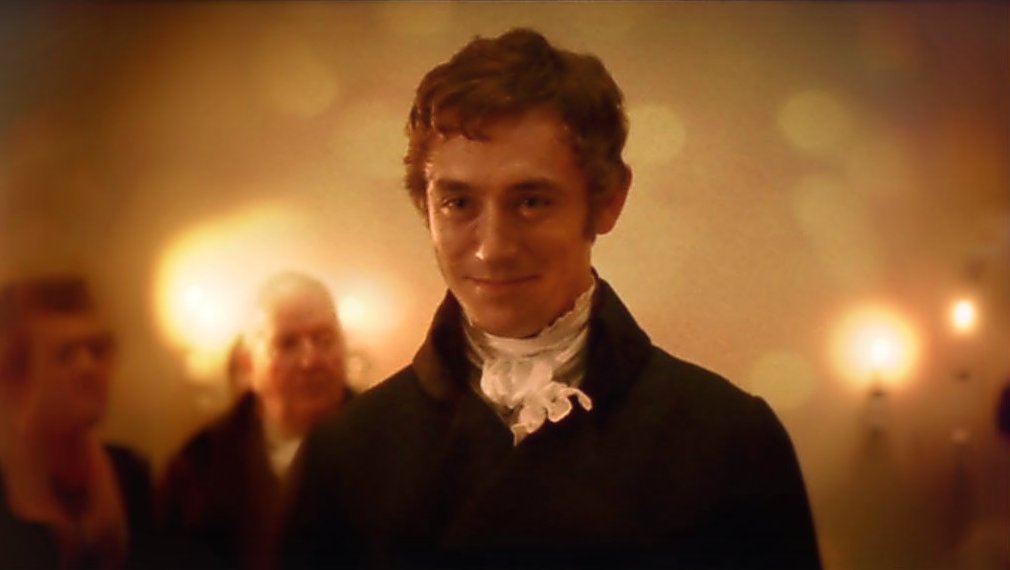
Henry is described by Austen in highly favorable terms: “He seemed to be about four or five and twenty, was rather tall, had a pleasing countenance, a very intelligent and lively eye, and, if not quite handsome, was very near it. His address was good, and Catherine felt herself in high luck.”

As they talk, Mr. Tilney teases Catherine and is clearly a good-humored man: “He talked with fluency and spirit—and there was an archness and pleasantry in his manner which interested, though it was hardly understood by her.”

Mr. Tilney flirts with Catherine when he questions her about her journal and even tells her what she “ought” to write in it after their meeting:

“I danced with a very agreeable young man, introduced by Mr. King; had a great deal of conversation with him—seems a most extraordinary genius—hope I may know more of him. That, madam, is what I wish you to say.”

For the remainder of the chapter, Austen is at her absolute best with light-hearted, quick-paced dialogue and witty banter. Rarely do any of her characters talk quite so much upon first meeting one another, and we, her readers, find ourselves as charmed by Henry as Catherine herself:

They danced again; and, when the assembly closed, parted, on the lady’s side at least, with a strong inclination for continuing the acquaintance. Whether she thought of him so much, while she drank her warm wine and water, and prepared herself for bed, as to dream of him when there, cannot be ascertained; but I hope it was no more than in a slight slumber, or a morning doze at most; for if it be true, as a celebrated writer has maintained, that no young lady can be justified in falling in love before the gentleman’s love is declared, it must be very improper that a young lady should dream of a gentleman before the gentleman is first known to have dreamt of her.

Northanger Abbey

Love at First Sight, Conflict Ahead

In a book with a quick mutual connection between characters, there must be some kind of problem or conflict to keep the story going. Otherwise, it would be over in the first few pages. In many popular movies today, writers add in misunderstandings, timing issues, geographical hurdles, age differences, and other road blocks to make things interesting.

The same is true for NA. After their first meeting, Catherine develops an immediate first major crush, and it’s clear that Mr. Tilney is hoping to see more of her as well. Both are charmed and interested. Both hope to see one another again. However, as with most stories that start with immediate attraction, Catherine and Henry don’t live happily ever after–at least not right away.

For the remainder of the novel, Austen uses a variety of plot devices to create conflict for her two young lovers, unfold a larger plot with its own major themes, and build a multi-layered story arc for Catherine and Henry.

C.E. Brock illustration, Northanger Abbey, “Pray, pray, Stop Mr. Thorpe”

Popular “Meet-Cute” Examples

No romantic comedy can hold a candle to Jane Austen’s complex plots, characters, and novels. However, it’s interesting to think about the devices she used to create the meet-cute in NA versus the devices writers must use today. While people don’t need a master of ceremonies to introduce them anymore, writers still must find ways to “match-make” their characters. Here are some popular movies that fall into the “meet-cute” category:

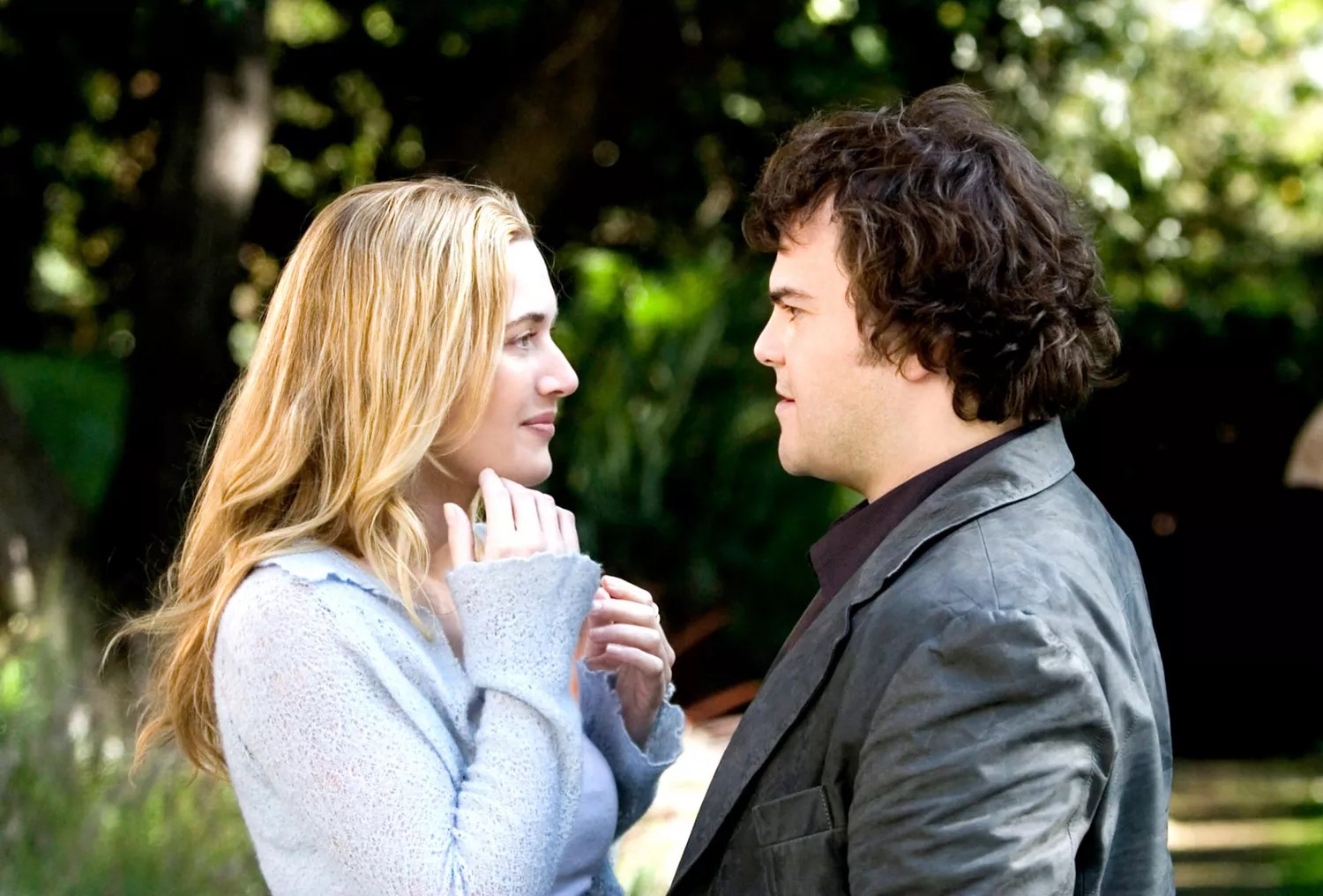
In The Holiday, there are several meet-cutes: When Iris and Amanda switch houses for Christmas, Iris ends up meeting Miles when he comes to drop something off at Amanda’s house on a windy day in Los Angeles. Miles and Iris immediately hit it off, while Miles’ girlfriend sits in his car waiting. Amanda meets Graham when he shows up on her doorstep (Iris’ doorstep), hoping to crash at his sister’s house after a night out.

In Serendipity, the two main characters meet in a busy department store at Christmas time. They each grab for the last pair of black gloves and strike up a conversation.

In Notting Hill, Will spills orange juice on Anna, a popular movie star, when they crash into one another on the sidewalk near his apartment. She agrees to go to his place to change into clean clothes and they share a delightful first conversation and an unexpected first kiss.

In 50 First Dates, Henry must create a series of meet-cutes to gain the attention of Lucy each day because she has lost her short-term memory and forgets who he is every time they meet.

And in My Big Fat Greek Wedding, we find a refreshing twist on the meet-cute when Toula meets and falls in love with Ian. As she serves him at her family’s restaurant, she can’t even speak to him. However, that meeting pushes Toula to change her life, go to school, (get a makeover – of course), and become the confident woman Ian later notices through the window of a travel agency.

Clever Introductions

Jane Austen created her stories in a world where men and women could only meet under certain circumstances. The social rules of her time necessarily set up parameters that she had to follow, which provided for some very creative inspiration. Today, people don’t have to follow those same rules, but they still need to find a way to meet and introduce themselves, either in person, online, at church, work, or school, or through a mutual friend.

What are some of your favorite “meet-cute” moments in literature or film? If you have a “meet-cute” story of your own, we’d love to hear about it in the comments!


RACHEL DODGE teaches college English classes, gives talks at libraries, teas, and book clubs, and writes for Jane Austen’s World blog. She is the bestselling author of The Little Women DevotionalThe Anne of Green Gables Devotional and Praying with Jane: 31 Days Through the Prayers of Jane Austen. Now Available: The Secret Garden Devotional! You can visit Rachel online at www.RachelDodge.com.

Read Full Post »

Growing Older with Jane Austen by Maggie Lane: Review and Highlights by Brenda S. Cox

“Me! a poor, helpless, forlorn widow, unfit for anything, my spirits quite broke down . . .”—Mrs. Norris, Mansfield Park, chapter 3

“That Lady Russell, of steady age and character, and extremely well provided for, should have no thought of a second marriage, needs no apology to the public, which is rather apt to be unreasonably discontented when a woman does marry again, than when she does not; but Sir Walter’s continuing in singleness requires explanation.”—Persuasion, chapter 1

Last month we began looking at older characters in Jane Austen’s novels, drawing from Maggie Lane’s fascinating book, Growing Older with Jane Austen. We saw the importance of beauty in making matches, and the position of women as wives and mothers, or as single “old maids.” 

Next, Lane turns to older men, in the chapter:

Still a Very Fine Man (chapter 6)

With the exception of Sir Walter Elliot, the older men in Austen are less concerned about their appearances. But they are more likely to want to remarry than the older women. This is because men generally contribute financially to the marriage. If women are lucky, money may pass into their hands when they are widowed and they can be independent.

For the men, though, they depend on women for housekeeping, and they are uncomfortable without a female relative caring for them and their households. Younger men like Henry Tilney or Colonel Brandon, expecting to marry, may be happy with a paid housekeeper for the time being. But older men like the Dashwoods’ great-uncle want a female relative to care for them. So those young enough to remarry, like Mr. Weston and Mr. Dashwood (Elinor’s father), are likely to find a second wife, and in Austen’s novels they find happiness.

Sir Walter Elliot wanted to remarry, but failed. He probably proposed to women much younger than himself, with his eye for beauty. They were not interested in a “foolish, spendthrift baronet.” Instead, he depends on his daughter Elizabeth, who is very much like himself. Unfortunately she does not balance him, “promot[ing] his real respectability,” as his wife had.

Vain and foolish, Sir Walter Elliot failed to find a second wife who would accept him.
C.E. Brock, public domain

Mr. Woodhouse, of course, also depends on his daughter Emma, and she carefully fulfills her duty to him. He is at least loving, though selfish. In contrast, General Tilney bosses his daughter around harshly and keeps control of his household in his own hands.

Austen presents some happy marriages of older men. “Older men have usually settled down to an accommodation with their wives, and Austen presents many portraits of ageing couples who seem well-knit together: the Shirleys, the senior Musgroves, and the Morlands, for example” (Lane, 109). Even Sir Thomas Bertram and Mr. Allen are always courteous to their rather foolish wives.

Merry Widows (chapter 7)

The next three chapters explore the varying possibilities for widows. Lane says, “The conventional ‘merry widow’ of literature is an unprincipled predator with a voracious sexual appetite and a carefree disregard of conventional morals” (122). The only widow like that in Austen is, of course, Lady Susan Vernon (of Lady Susan), whom Lane discusses at length.

Another widow in Austen who follows a different contemporary stereotype is Mrs. Turner of The Watsons. She is taken in by a fortune-hunting Irish officer; she marries him and leaves her niece penniless.

Other widows in Austen’s novels, like Mrs. Jennings and Lady Russell, have a comfortable income and seem content to remain unmarried. Austen makes an interesting remark about double standards when she says of Lady Russell that “the public . . . is rather apt to be unreasonably discontented when a woman does marry again, than when she does not.” Lane explains that if a woman doesn’t need to remarry for money or a home (as Lady Susan does), she is “giving proof of continuing sexual desires.” A man, though, was expected to have continuing sexual desires, and “if he lost one wife, he was thought to be doing a good thing in seeking another—and in giving another single woman the chance to be wed” (Lane, 132).

In her letters, though, Austen commended a woman, Lady Sondes, who was being criticized for marrying again (and apparently had not married for love the first time). Jane writes, “I consider everybody as having a right to marry once in their Lives for Love, if they can” (Letters, Dec. 27, 1808).

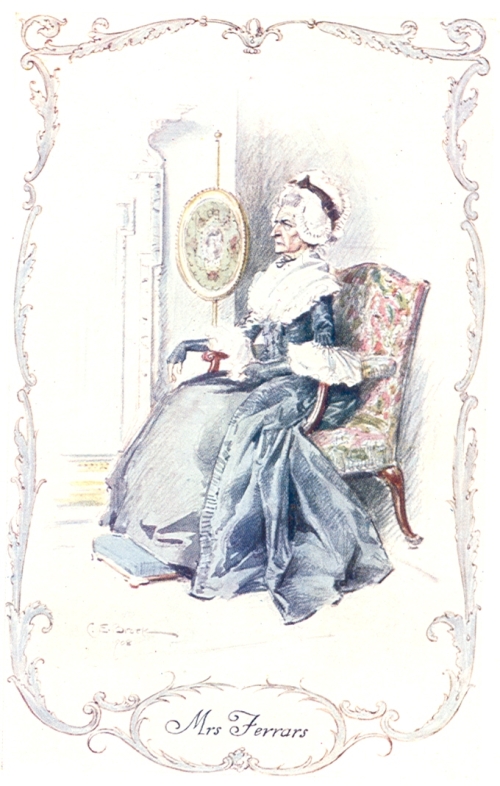
Mrs. Ferrars of Sense and Sensibility is a despot over her family. She controls the money and wants to control their lives.
C. E. Brock, public domain

Four Dowager Despots (chapter 8)

Not all of Jane Austen’s widows are as loving as Mrs. Jennings and Lady Russell. While power was usually held by men in Austen’s world, Austen gives us four rich widows who tyrannize others. (Think for a minute; who are they?) Mrs. Ferrars of S&S, Lady Catherine de Bourgh of P&P, Lady Denham of Sanditon, and Mrs. Norris of Mansfield Park. (Mrs. Norris doesn’t have a lot of her own money, but exercises authority on behalf of her “supine sister and absent brother-in-law.”)

Lane writes, “Only Lady Denham is a true dowager, the strict definition of which is a woman whose income derives by legal pre-arrangement from her late husband’s estate, the estate [and title, if there is one] having passed on his death to his heir” (136). Lady Catherine and Mrs. Ferrars appear to completely control their late husbands’ fortunes. But all of them show “a mixture of self-importance and interference in others’ lives” (Lane, 137). Lady Catherine, in particular, controls her whole parish, and it appears that Lady Denham also has great influence in Sanditon.

Lane contrasts two older women in Sense and Sensibility: the manipulative Mrs. Ferrars, who uses money to control her sons, and Mrs. Smith, who controls Willoughby financially. “The telling difference between Mrs. Ferrars and Mrs. Smith is that the latter only wants her young relation to be good, not rich or distinguished” (Lane, 142). Mrs. Smith was likely an elderly maiden lady, of “uncompromising propriety,” who was given the honorary title of “Mrs.” Her motivations are better than Mrs. Ferrars’s selfishness.

Not the Only Widow in Bath (chapter 9)

Another dowager, Mrs. Rushworth, is not a despot as far as we know. When her son marries, she retires, “with true dowager propriety,” to Bath, ready to boast of Sotherton during her evening parties. While Mrs. Elton tries to convince Emma to go to Bath to find a husband, many older people went for other reasons. People like Austen’s parents moved to Bath for “freedom from the cares of a country property and housekeeping; company on tap; and easy access to medical attention as well as to shops, libraries, concerts, and plays” (Lane, 157). (Sounds good to me; I wish I could afford to retire to Bath!)

No longer a place of high fashion, Bath now appealed to “the kind of people Jane Austen knew and wrote about: the minor gentry with a taste for social life and the means to indulge their real or imagined illnesses; the less well-off, especially single women, desperately clinging to their shreds of gentility in a place where living was comparatively cheap; well-funded widows and retired professional men with their families . . . and . . . a motley assortment of hangers-on and would-be social climbers” (Lane, 157-8).

Sir Walter Elliot, a widower, goes there to “be important at comparatively little expense.” Lady Russell, a widow, spends every winter there, “finding mental refreshment in meeting up with old friends and getting all the new publications.” Widowed Mrs. Thorpe of Northanger Abbey goes to find husbands for her daughters. Impoverished invalids like Mrs. Smith of Persuasion go for medical care, while a similar widow, Mrs. Clay, is looking to marry again.

Widowed Mrs. Smith of Persuasion goes to Bath for her health.
C.E. Brock, public domain

Because of changes in Bath, in Austen’s later novels, “Bath appears not as the place of fun and frivolity it is in Northanger Abbey, but increasingly the choice of the old and dreary. . . . Austen’s Bath is not without its young people but it is an appropriate stage for so many of her older ones” (Lane, 170).

Age and Money (chapter 10)

How they live in Bath or elsewhere depends on their income. Some of Austen’s characters got richer as they aged. These include Mr. Weston, Mr. Cole, John Knightley, Robert Martin, Mr. Jennings (now deceased), Mr. Gardiner, Captain Wentworth, and Charles Bingley’s father. They all prospered in their work.

Others, though, like Austen’s naval brothers and Henry, got poorer as they aged. They suffered reverses from “the vagaries of their profession[s].” Captain Harville has been wounded, causing him to fall on hard times, and Mrs. Smith of Persuasion has lost a fortune due to her husband’s extravagance. Mrs. Bates, a clergyman’s widow, lost her income when her husband died.

Those in the lower classes might be miserable in old age, like “old John Abdy” of Emma. Well-off families, though, were expected to care for their household servants in old age. For example, three servants of Edward Ferrars’s father receive yearly annuities from his estate.

Wills and inheritance, of course, played an important part in Austen’s novels and her life. Most famously, the entail on the Bennets’ estate, and the Dashwoods’ uncle’s will, cause the girls in the story to be urgently in need of husbands.

The Dangerous Indulgence of Illness (chapter 11)

Mrs. Bennet is constantly fearing her husband’s death, which will leave the family penniless. Illness and death were constant threats in Austen’s world (as they are today, of course). This chapter discusses Austen’s final illness. Surprisingly, she wrote Sanditon during that time, which includes absurd hypochondriacs exaggerating their own illnesses.

Sea-bathing was considered a cure-all, and the Knightleys, Dr. Shirley, and Mary Musgrove try it at seaside resorts like the fictional Sanditon. Others go to Bath to take the waters for their “gout and decrepitude.” Mr. Allen, General Tilney, Admiral Croft, and Mrs. Smith of Persuasion go to Bath for their health, as did some of Austen’s friends and relations.

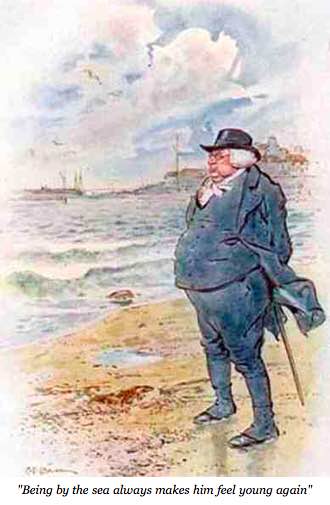
For Dr. Shirley of Persuasion,  “coming to Lyme for a month did him more good than all the medicine he took; . . . being by the sea always makes him feel young again.”
C. E. Brock, public domain

Illness is also a way to control others in Austen’s novels. Dr. Grant, Mary Musgrove, Fanny Dashwood, Mrs. Bennet, Mr. Woodhouse, and Mrs. Churchill all use illness or pretended illness to get their own way.

Once Mrs. Churchill actually dies, though, her illnesses are taken seriously. Austen uses several deaths as plot devices, including this one which frees Frank to marry. Dr. Grant’s death similarly frees Edmund and Fanny to take the living of Mansfield Park.

Lane says, “Mansfield Park is the only novel in which ideas of the hereafter find a place” (206). Fanny worries about Tom, during his illness, considering “how little useful, how little self-denying his life had (apparently) been”—she’s worried about him not going to heaven. And Austen indicates that, while society does not punish a man for adultery as it does a woman, the penalties “hereafter” will be more equal.

The chapter includes a fascinating list of the funeral expenses for Elizabeth Austen’s elaborate burial (Edward Austen Knight’s wife). For example, 22 mourning cloaks were hired for the day, and 60 pairs of black gloves bought for family, servants, and others, including the carpenter and bricklayer.

“Jane Austen’s attitude to the death of others ranged between the insouciant, the pragmatic, and the heartfelt” (Lane, 216). She of course approached her own death very seriously. She took Holy Communion one last time, while she could still understand it, about a month before her death.

For more on this topic, see my article, “Preparation for Death and Second Chances in Austen’s Novels,” which draws partly from Lane’s ideas.

Conclusion

The author explores how Austen might have fared in old age. She would probably have become more famous. Her sister Cassandra, Jane’s heir, prospered financially as the years went on, and Jane would have prospered with her.

The book ends, “Apart from the sad loss of Jane, Cassandra’s old age was in fact a secure and comfortable one. If only she had been able to share it with her sister” (Lane, 225).

I’ve only been able to give you a small taste of the riches in Growing Older with Jane Austen, but I hope you’ve found some ideas you can pursue on your own. If you can get a copy of the book (perhaps through your library), I highly recommend it. It’s well worth exploring the lives of older men and women in Austen’s novels and in Jane Austen’s world.

What do you think would have been most difficult about growing older in Jane Austen’s England? What might have been better about it than growing older in our society today?

For more on the topic of aging women in Jane Austen’s novels, see:

“Growing Older with Jane Austen, Part 1”

“’My Poor Nerves’: Women of a Certain Age on the Page,” about perimenopausal women in Austen

Past the Bloom: Aging and Beauty in the Novels of Jane Austen,” by Stephanie M. Eddleman, a fascinating article

Three Stages of Aging with Pride and Prejudice,” by Emily Willingham, a light look at how we identify with different characters as we have more life experience 

Age and Money in Austenland”: Susan Allen Ford’s review of Growing Older with Jane Austen

And, of course, the source for most of these two posts:

Growing Older with Jane Austen, by Maggie Lane

Brenda S. Cox writes about Faith, Science, Joy, and Jane Austen. Her recent book is Fashionable Goodness: Christianity in Jane Austen’s England.

This June she will be speaking about Mr. Collins at Jane Austen Regency Week in Alton, England, and would love to see some of you there!

Read Full Post »

“Well, here we are at Bath; we got here about one o’clock, & have been arrived just long enough to go over the house, fix our rooms & be every well pleased with the whole of it. … it has rained almost all the way, & our first view of Bath has been just as gloomy as it was last November twelvemonth.

Jane Austen to Cassandra Friday, 17 May, 1799

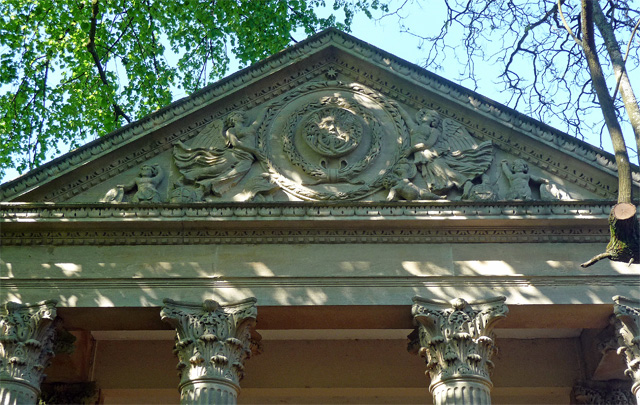
Sunday, 11th September 2022 marks a celebration at Sydney Gardens in Bath to commemorate the completion of the Garden Restoration project. (Facebook: Garden Gala) This project started three years ago. The £ 3.4  million restoration of the gardens and historic buildings includes the Temple of Minerva (below) and the Loggia (link to a 1972 photo not in the public domain).

Detail_of_Minervas_Temple,_Sydney_Gardens,_Bath_(geograph_Stephen Richards

Detail of the Minerva Temple, Sydney Gardens, Bath. Wikimedia Commons, Public Domain Image. Stephen Richards, Photographer.

“There is to be a grand gala on Tuesday evening in Sydney Gardens, a concert, with illuminations and fireworks. To the latter Elizabeth and I look forward with pleasure, and even the concert will have more than its usual charm for me, as the gardens are large enough for me to get pretty well beyond the reach of its sound. In the morning Lady Willoughby is to present the colours to some corps, or Yeomanry, or other, in the Crescent, and that such festivities may have a proper commencement, we think of going to . . .”

Jane Austen to Cassandra, June 2, 1799 on a visit to Bath

Plan-of-sydney-gardens-1810

Plan of Sydney Gardens, 1810. Wikimedia Commons, Public Domain

Bath’s 21st century gala celebrating the renewal of Sydney Gardens coincides with the Jane Austen Festival, a well attended and internationally recognized yearly event. Click here to see details for the 2022 Jane Austen Festival which will be held from the 9th to the 18th of September of this year.

janeaustenfestival.padfoot.bath

Jane Austen Festival in Bath, padfoot.org.uk

Location of the gardens:

Sydney Gardens is located at the end of Great Pulteney Street, behind the Holburne Museum. In Jane Austen’s day the museum was known as the Bath Hotel. Built in 1795, the park was popular from the late 18th into the 19th century. Jane and her family moved from Steventon to #4 Sydney Place in May, 1801, when the park was quite new.

Sydney_Place_Bath-Wikipedia-Public Domain

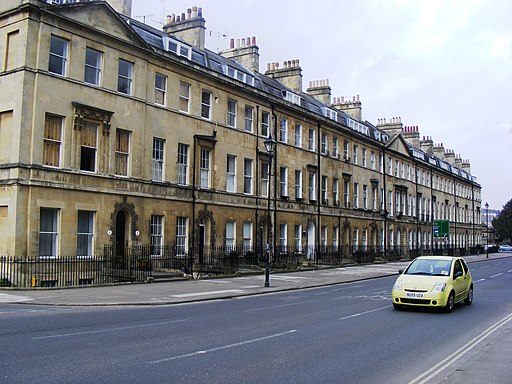
Sydney Place today. A plaque commemorates the location of #4. Wikipedia. Public Domain

The house the Austen’s rented is situated across the street from the park, diagonally opposite the hotel. (See Google map image below.) 

Bath-Pulteney St-Sydney-Gardens

Sydney Gardens in relation to Great Pulteney Street in Bath, with a star over #4 Sydney Place. Screen shot of Google Maps

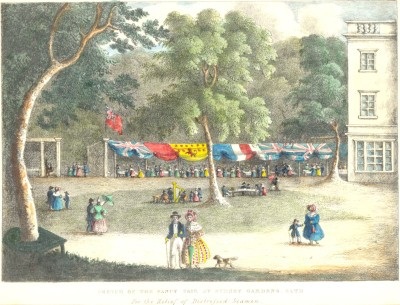
The distractions this pleasure garden afforded Bath’s populace and visitors were musical and theatrical entertainments, outdoor parties, fireworks, menageries, illuminated night time walks, and even a hot air balloon ascent. During Austen’s day, the Bath Hotel (now Holburne Museum) drew guests, and offered a tavern, coffee room, and billiard room. These amenities were expected by the upper crust during the height of Bath’s popularity. (“Outdoor Parties in the 1800’s vs Now” – Sasha Semjonova, 2021)

Sketch_of_the_Fancy_Fair_at_Sydney_Gardens,_Bath

Sketch of the Fancy Fair at Sydney Gardens, ca. 1836, artist unknown, Wikimedia Commons, Public Domain.

One can imagine that country women like Cassandra and Jane, who were accustomed to long daily walks and bracing air, must have loved their daily perambulations along Sydney Garden’s paths while smelling the scent of its grasses, trees, and flowers. Number 4 Sydney Place had a long narrow garden in the back of the house, so that the Austen women and a maid servant were able to grow some herbs and vegetables, and perhaps raise a few chickens for fresh eggs. The family could not grow all their own food and depended on frequent purchases for their provisions from city vendors, markets, and shops, where meat and produce were not as fresh and nourishing as at their former home in Steventon. 

Jane noted in June 1799 that public breakfasts were offered at Sydney Gardens every morning. She and others were enthusiastic about pretty illuminations (fireworks), visits to the theatre, long strolls in the city and its environs, and walks around the Pump Room to meet and greet other visitors. (Geri Walton.)

Recreating the Labyrinth in Sydney Gardens

Interestingly, Austen wrote this passage to her sister in January, over four months before the family moved to Bath:

“…it would be very pleasant to be near Sidney Gardens!  We might go into the Labyrinth every day.”

Jane Austen to Cassandra, January, 1801

The Labyrinth Austen mentioned fell into disuse and was reconstructed in 2017. Its restoration is fully described in Richard Wyatt’s article “It’s Amaze-ing!” in the November 20, 2017 issue of Bath Newseum. A short YouTube video entitled “Sydney Gardens: Recreating the Labyrinth” and created by the BathnesCouncil includes many images past and present. 

Articles about Sydney Gardens, with many images not in the public domain:

  • Visit Bath: Sydney Gardens from Visit Bath provides some lovely photographs of the current garden, which is among the last of the pleasure gardens that people in Regency England frequented. 
  • The Bath Magazine’s article entitled “The History of Sydney Gardens” offers lovely images of the gardens throughout the 19th century, from Austen’s time and on.
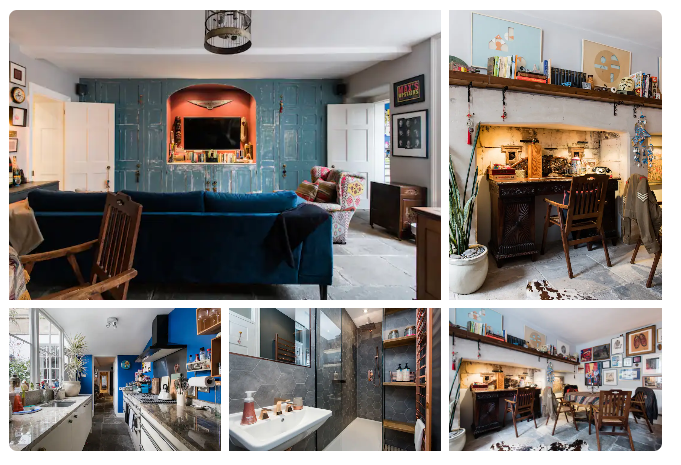
  • Today, #4 Sydney Place, the Austen’s first rented house in Bath is now available as an Airbnb. The Literary Hub discusses this house past and present. One can appreciate its proximity to Sydney Gardens and in some article view the long garden in back of the house, but the dwelling has been extensively renovated and, I assume, has been so changed that the Austen family would not recognize its interior. The reviews from those who have stayed there are positive. If one is inclined to rent the rooms, this link will take you to the page to check its availability. As you stay in Bath, you can “Walk: In the Footsteps of Jane Austen”, as described by Bath Magazine. My husband and I stayed at the Dukes Hotel many moons ago. Our view from our room was the Holburne museum.

No.4-SydneyPlace-Airbnb

Number 4 Sydney Place Airbnb screenshot. The modern renovations are in the former kitchen areas, described by Constance Hill in 1923. Obviously this part of the house has been renovated:

“…  a passage leads to a garden at the back of the house. The large, old-fashioned kitchen, with its shining copper pans and its dresser, laden with fine old china, looked as if it had remained untouched since the Austens’ day.

Chapter XII, Bath, Jane Austen: Her Homes & Her Friends, by Constance Hill, 1923

This charming blog post (with even more pictures) discusses a 2015 stay at the Austens’ former dwelling in Bath. Click Here. 

Other Resources:

Read Full Post »

Older Posts »