Feeds:
Posts
Comments

Archive for the ‘History’ Category

How much clothing would a man consume in a 70 year lifespan if he had been born in 1795, and spent his young manhood during the Regency era? The following passage is interesting in that it tells as much about the kinds of  clothes that ordinary men wore as about the material they used up.
To this we have added the following calculation of the clothing the same man may have used. We estimate that a full-dressed man carries about fifty yards of cloth upon his body, or at least it has taken so many square yards of cloth to make the following garments: one under and one over shirt and drawers, eight yards; vest, with all its inside and out, four yards; coat, overcoat and cloak, 32 yards; the handkerchiefs in the coat and cloak pockets, two yards; pants, lined, four yards. Then we may add a nightshirt, four yards and morning wrapper, 10 yards, and we have 64 yards for a single suit. Allow six of these suits a year––of some garments he will want more, and some less than six, but take that as an average, and we have 384 yards for the gentleman’s wardrobe one year. Multiply that by sixty years, and we have 23,040 yards of cloth, which appears a fair allowance, as we throw out the ten years of childhood. With these garments he will want each year two pair of boots, two pair of shoes, two pair of slippers, two pair of rubbers or overshoes––480 pairs. With these he will wear sixty dozen pairs of stockings and (four hats a year) 240 hats. I will say nothing about the yards of cloth that he will want about his toilet and table, his carpets and curtains, and his bed, with its daily change of bedding; but you can imagine it would make a large spread. The great questions for consideration, in an agricultural point of view, is this: Could such a consumer of earth’s products produce as much as he consumed, with all industry applied during life, or would he be dependent upon the labor of others?

These calculations came from Facts For Farmers: Also for The Family Circle. A Compost of Rich Materials For All Land-owners, about Domestic Animals and Domestic Economy; Farm Buildings; Gardens, Orchards, and Vineyards; and all Farm Crops, Tools, Fences, Fertilization, Draining, and Irrigation – edited by Solon Robinson, 1865. (378)

Read Full Post »

Happy Christmas from Jane Austen’s World


Heap on more wood! — the wind is chill;
But let it whistle as it will,
We’ll keep our Christmas merry still.
Each age has deemed the new born year
The fittest time for festal cheer.
And well our Christian sires of old.
Loved when the year its course had rolled,
And brought blithe Christmas back again,
With all his hospitable train.
Domestic and religious rite
Gave honour to the holy night:
On Christmas eve the bells were rung;
On Christmas eve the mass was sung;
That only night, in all the year,
Saw the stoled priest the chalice rear.
The damsel donned her kirtle sheen;
The hail was dressed with holly green;
Forth to the wood did merry men go,
To gather in the mistletoe,
Then opened wide the baron’s hail
To vassal, tenant, serf, and all;
Power laid his rod of rule aside,
And ceremony doff’d his pride.
The heir, with roses in his shoes,
That night might village partner choose.
The lord, underogating, share
The vulgar game of “post and pair!”
All hailed with uncontroll’d delight
And general voice, the happy night
That to the cottage, as the crown,
Brought tidings of salvation down.
The fire with well dried logs supplied,
Went roaring up the chimney wide;
The huge hail table’s oaken face,
Scrubb’d till it shone, the day to grace,
Bore then upon: its massive board
No mark to part the squire and lord.
Then was brought in the lusty brawn,
By old, blue-coated serving-man;
Then the grim boar’s head frowned on high,
Crested with bays and rosemary.
Well can the green-garbed ranger tell,
How, when, and where, the monster fell;
What dogs before his death he tore,
And all the baiting of the boar.
The wassail round in good brown bowls,
Garnished with ribbon, blithely trowls.
There the huge sirloin reeked: hard by
Plum-porridge stood, and Christmas pie;
Nor failed old Scotland to produce
At such high tide her savoury goose.
Then came the merry masquers in,
And carols roar’d with blithesome din;
If unmelodious was the song,
It was a hearty note, and strong.
Who lists may in their mumming see
Traces of ancient mystery;
White shirts supplied the masquerade,
And smutted cheeks the visor made
But oh! what masquers, richly dight,
Can boast of bosoms half so light!
England was merry England when
Old Christmas brought his sports again.
’Twas Christmas broached the mightiest ale,
’Twas Christmas told the merriest tale;
A Christmas gambol oft would cheer
A poor man’s heart through half the year.

Sir Walter Scott, 1808, from Marmion

Read Full Post »

I would like to suggest British History Online for your perusal. This rich resource includes information about London throughout the ages, including the Regency Period,  geographical places, genealogy charts, and census records. The factual descriptions, even with their lack of detail, make the era come alive again. The following quotes provide a small sampling of the information that sits on this endlessly useful site:

Dictionary of Traded Goods and Commodities: 1550-1820

Borage, or Forget-Me-Not

Borage, or Forget-Me-Not

This dictionary includes descriptions and definitions of items that have historic signifance. Helpful to the historian, student, and author, each term is listed alphabetically and, like the OED, includes its history.

Borage water [burrage water]

Water made from BORAGE, and probably the same as AQUA LANGUE DE BOEUF. It was a pleasantly flavoured drink with limited medicinal uses. For example, the earliest reference in the OED online claimed it was ‘good agaynst madnes or vnwytyng [German ‘unsvnnigkeit’ (spelling as OED)] and melancolye’. Both John Gerard and Nicholas Culpeper confirmed the excellence of borage generally against these conditions, and Culpeper added that the water ‘helpeth the redness and inflammation of the eyes’ [Culpeper (1792)].

See also DISTILLED WATERS.
Sources: Inventories (early), Inventories (mid-period).
References: Culpeper (1792).

Survey of London

I refer to this section most often when researching London. This section describes St. James’s and Westminster in astonishing detail.

In 1720 St. James’s Market was described as ‘a large Place, with a commodious Market-house in the Midst, filled with Butchers Shambles; besides the Stalls in the Market-Place, for Country Butchers, Higglers, and the like; being a Market new grown to great Account, and much resorted unto, as being well served with good Provisions. On the South-west Corner is the Paved Alley, a good Through-fare into Charles-Street and so into St. James’s Square, and those Parts; but is of no great Account for Buildings for Inhabitants.’  Provisions were ‘usually a fourth Part dearer than in the Markets about the City of London, most of the Provisions being brought from thence, and bought up here by the Stewards of People of Quality, who spare no Price to furnish their Lords Houses with what is nice and delicate’.

St. James's Market, Haymarket, 1850

St. James's Market, Haymarket, 1850

By the early nineteenth century St. James’s Market was no longer of such good repute. Writing in 1856 the Reverend J. Richardson remembered it and the adjoining streets as being ‘very properly avoided by all persons who respected their characters or their garments, and were consequently only known to a “select few”, whose avocations obliged, or whose peculiar tastes induced them to penetrate the labyrinth of burrows which extended to Jermyn Street, and westward to St. James-square’.

Sackville Street

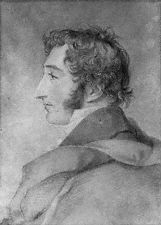
General John Fane, 11th Earl of Westmorland, born in Sackville St, 1784. Image by Sir Thomas Lawrence, 1815

General John Fane, 11th Earl of Westmorland, born in Sackville St, 1784. Image by Sir Thomas Lawrence, 1815

Though perhaps not in the first rank of fashion, the larger houses in Sackville Street, particularly those on the west side, attracted throughout the eighteenth century the minor nobility, the dowager, the member of Parliament, the senior army officer and the prosperous medical man. But the present commercial character of the street is not of recent origin. Even at the time of building there were three shops (two apothecaries’ and a cheesemonger’s), one tavern and a coffee house. By the beginning of the nineteenth century the tailoring trade, which is so prominent in the street today, had already established itself. Out of thirty-two tradesmen and professional men listed in Sackville Street in the Post Office directory for 1830 about 40 per cent (thirteen) were tailors; the next largest group consisted of four solicitors. This proportion has not changed considerably to-day (1962), for although many of the houses have been divided and there are fewer private occupants, about 34 per cent of the one hundred and fifteen listed tradesmen and professional men are tailors.

Other topics found on this site:

Read Full Post »

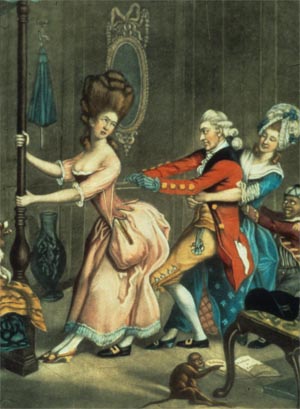
Tight Lacing, or Fashion Before Ease, John Collet, 1770-1775

Tight Lacing, or Fashion Before Ease, John Collet, 1770-1775

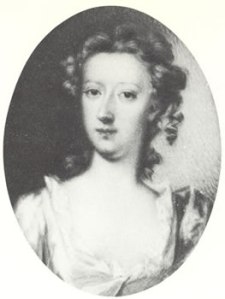
In this article, Erin McCafferty asked: What was life like for a lady living in the 18th century? Unwilling to speculate, Erin decided to follow the schedule of a rich Dublin socialite named Mary Granville Pendarvis (1700-1788), who married Patrick Delany in 1743 and who was known for throwing glamorous parties. Later in life, she became a particular friend of King George III and Queen Charlotte. The article is full of insights that remind me a wee bit of Bridget Jones’s Diary:

Venturing out in the city centre proves problematic. Narrow doorways were not made for these types of dresses and getting on the bus is a nightmare; I get stuck in the doorway and I can’t sit down so I have to stand up taking up far too much space at rush hour. Mental note to self: Don’t walk to work when wearing 18th-century gown.

Mary is famous today for her botanical collages, which she began to make at the age of 72, and for her autobiography and correspondence. This is her description of  Lord Hillsborough’s house party at his landed estate:

Lord Hillsborough is very well bred, sensible and entertaining, and nothing could be more polite that he was to all his company. Sally and I being the only women, we had the principal share of his address; he is handsome and genteel … we were twelve in company … Lord Hillsborough was very merry and said a great many lively and comical things … After the ladies had given their toasts they were desired to `command the house’; the hint was taken and I said I would upon that liberty go and prepare the tea-table for the gentlemen. Sally and I took a little step out into the garden to look at the prospect, but the weather soon drove us back. Candles lighted, tea-table and gentlemen soon came together. I made the tea. Cribbage was proposed, and I consented to be of the party, thinking it would be some relief to Lord Hillsborough; at ten we went to supper, at eleven to bed; met at nine the next morning at breakfast.

Read Full Post »

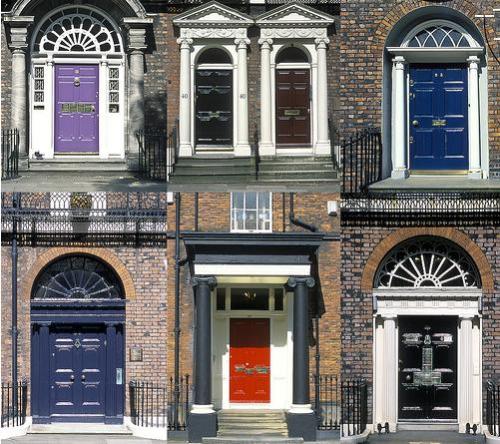
Georgian Doorways of Rodney Street, Liverpool

Georgian Doorways of Rodney Street, Liverpool

Memoirs of the Celebrated Mrs. Woffington is a fascinating blog that offers insights about the 18th century. The blog’s author, who lives in England, has been featuring Georgian Liverpool in a series of posts. Click on the following links to read:  Part 1, Part 2 , Part 3, Part 4, and Part 5.

Image of Georgian Doors (Rodney Street, Liverpool) courtesy Andy Marshall of Fotofacade

Read Full Post »

« Newer Posts - Older Posts »