Feeds:
Posts
Comments

Archive for the ‘jane austen’ Category

Jane Austen was born and grew up at Steventon in Hampshire. That tiny village is still a place of pilgrimage for Jane Austen devotees from around the world – the house has gone, but the church she attended is still there.

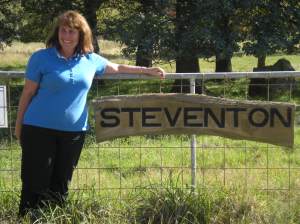
Steventon Station, New Zealand

Steventon Station, New Zealand

However, on the other side of the world there is another Steventon, with interesting Jane Austen connections. Steventon station lies on the banks of the Selwyn River, in the foothills of the Southern Alps, in New Zealand’s South Island. It was a property of 9700 acres that was taken up by Richard Knight and Arthur Charles Knight, great-nephews to Jane Austen (they were the sons of William Knight, son of Jane’s brother Edward) and named ‘Steventon’ in honour of their childhood home in England. They bought the land in 1852, but before long Richard bought his brother out and in 1855 built a working homestead on the station.

In 1866 Richard Knight sold the property to Henry Hill and Frederick Napier Broome, both of whom had been his cadets and worked on the station. Frederick Broome and his wife, Lady Barker (she had been married before and in order to get her first husband’s army pension, had to keep his name) built a property called ‘Broomielaw’ and settled in, but terrible floods and a freezing winter which killed most of their sheep, resulted in them selling the station and returning to England. The house they built still stands. Lady Barker wrote a best-selling book, Station Life in New Zealand, as a result of her experiences at Steventon, and later she and her husband lived in Western Australia, when he was made Governor there (the town of Broome was named after them).

The Knight boys remained in New Zealand. Richard married and had two sons. He died in 1866. Arthur purchased land on Banks Peninsula, near Christchurch, married, and is said to have had twenty-one children, so there are many Knight descendents in New Zealand today. Arthur died in Christchurch in 1905.

Susannah Fullerton guiding her literary tour

Susannah Fullerton guiding her literary tour

On a visit to New Zealand a few years ago I took a literary tour group to Steventon station. It was a wonderful visit. The owners Gavin and Nathalie McArthur gave us a truly Kiwi welcome, provided us all with a home-cooked lunch, and took us on a tour of the station. Inside the house are many fascinating documents and photos of Lady Barker and her writings, and information about the Knights. It is a beautiful place, and we all enjoyed finding this Jane Austen connection in New Zealand.

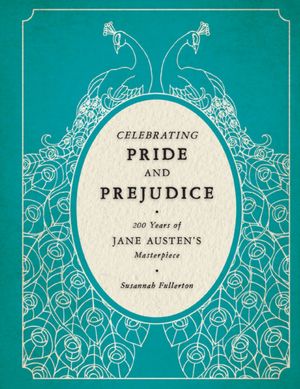
Susannah Fullerton has authored two books this year – A Dance With Jane Austen and Celebrating Pride and Prejudice: 200 years of Jane Austen’s Masterpiece (Coming out in January 2013). She is also President of JASA, tour guide, lecturer, mother and wife.

Read Full Post »

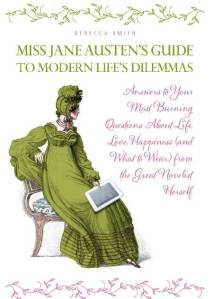
miss-jane-austen (3)This is a review of Miss Jane Austen’s Guide to Modern Life’s Dilemmas: Answers to Your Most Burning Questions About Life, Love, Happiness (and What to War) from the Great Novelist Herself, by Rebecca Smith.

2012 marks the year of Jane Austen advice books – The Jane Austen’s Guide to Life, The Jane Austen Guide to Happily Ever After, and now Miss Austen’s Guide to Modern Life’s Dilemmas. What makes this volume stand out from the others is that Rebecca Smith is Jane Austen’s great-niece (times five)! She was also selected as the first official writer in residence at Jane Austen’s House Museum in Chawton. It is logical assume that Ms. Smith has an in-depth knowledge of her great x5 aunt, her life, thoughts, and environs.

This advice book is organized quite logically into 6 major topics: love & relationships; friends & family; work & career; fashion & style, home & garden; and leisure & travel.  The question sits on the top left of a two-page spread, which also contains pull out quotes or images.

To answer such questions as “Why am I still so intimidated by the barbies of the world?” “When should I tell my parents about my debts?”, “How do I make it clear that unmentionables should be unmentionable?”, “How do I say goodbye to a fair-weather friend?”, “I have an interview for the job of my dreams”, and “How can I be sure to put my best foot forward?” To answer the last question, Ms. Smith included facts from Jane Austen’s own work experience, and some quotes from her letters and novels. In this instance, she used this advice from Jane Austen: “…no one can be really esteemed accomplished who does not greatly surpass what is usually met with.”

Miss Smith combines a mixture of modern common sense, which the iPad on the book’s cover illustrates, with old-fashioned common sense. To address the question: “To tattoo or not to tattoo?”, the author used Elinor Dashwood, who knew “that the wishes of parents and children are unlikely to coincide: “The old well established grievance of duty against will, parent against child, was the cause of all.” In other words, don’t be in a hurry to get a tattoo. Jane Austen would have said: “I consider it … one of the sweet taxes of youth to choose in a hurry and make bad bargains.”

One problem I had with the  book was with its fonts. My tired eyes found the text difficult to read. The book DOES come with the choice of an eBook edition. These days I prefer reading on my Kindle (I know, I know, book purists will disagree with me), but I appreciate choosing a larger FONT and the convenience of carrying my techie device everywhere. Both the Kindle and Nook versions are available for instant purchase!

Ms. Smith states in an interview:

I was actually quite surprised that I could answer every single dilemma with advice from Jane’s works and letters! Hundreds of dilemmas were suggested by family, friends and my students – there were too many to fit into the book – but, amazingly, all of them could be answered.”

The appendix includes a list of character summaries, biography of Jane Austen, bibliography, and useful websites (which *ahem* failed to include this blog).

tea cups ratingI give this book 3 ½ – 4  Regency tea cups out of five. If you cannot get enough of JA sequels, prequels and Austenesque advice, you will love this book. If you do not care for such publications, then Miss Austen’s Guide to Modern Life’s Dilemmas is not for you.

More on the Topic:

An interview with the author on Tarcher books

You can purchase the book on

Read Full Post »

Recording The Young Jane Austen: How Crimson Cats produced an audio book of some of Jane’s Juvenilia by Michael Bartlett, Editor, Crimson Cats Audio Books.

“Madam, You are a Phoenix. Your taste is refined, your Sentiments are noble, and your Virtues innumerable.”

So begins the Dedication to The Beautifull Cassandra, a story that the 12-year old Jane Austen wrote for her sister. Jane’s Juvenilia may be less well known than her later novels but, although these stories lack the sophistication and polish of her adult writing, Jane’s acute observation and her wicked sense of humour are already apparent. Jane, the teenager, cast a very beady eye on the behaviour of grownups who squabbled, eloped and drank too much.

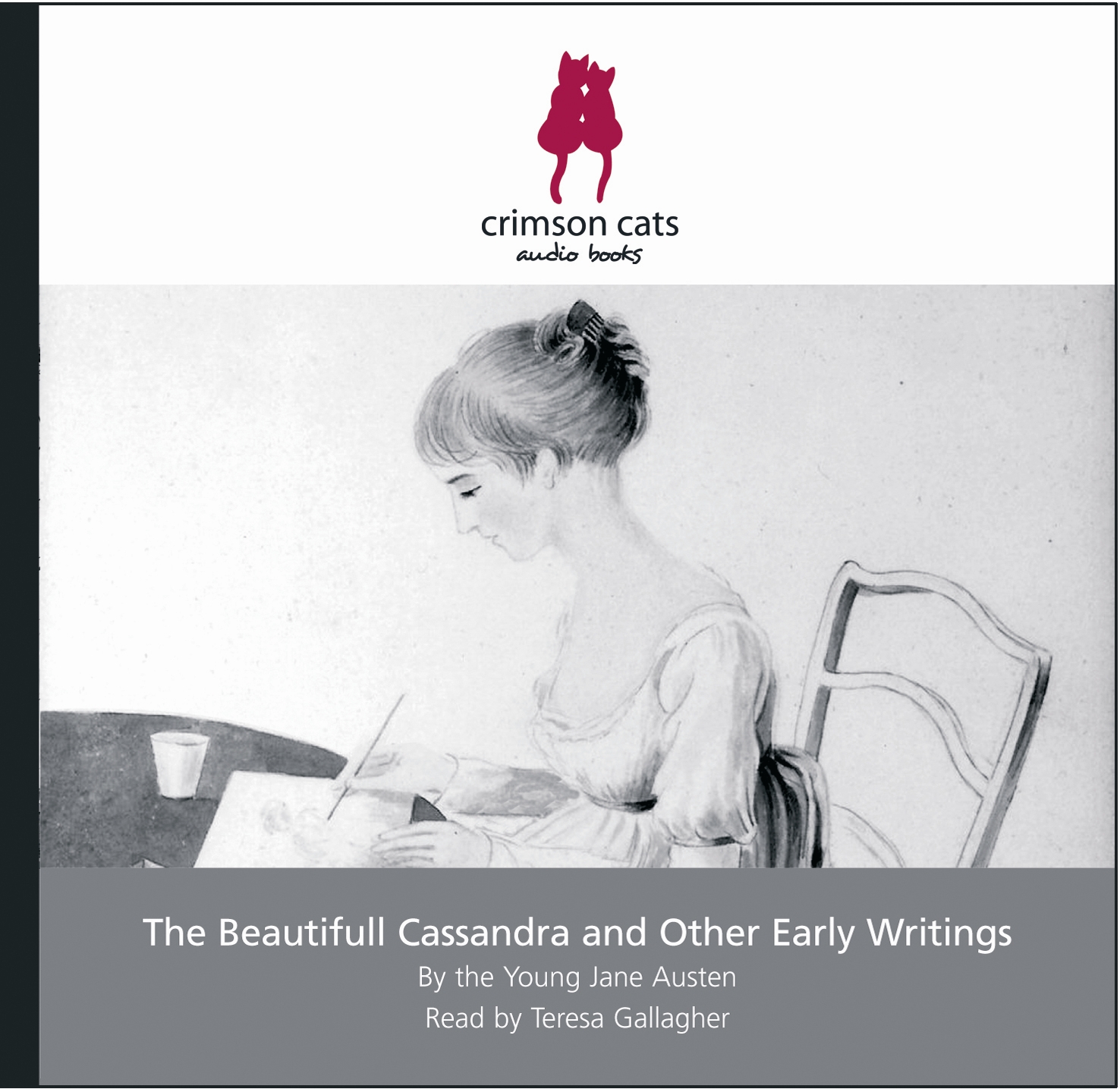
The cover of the audio CD

We decided to publish an audio book of some of Jane Austen’s Juvenilia because we wanted to bring them to a wider audience. The policy of Crimson Cats is to produce audio versions of books that are rather different from the mainstream and books which, as far as we know, have never been done in audio before.

The first stage was to choose the pieces we wanted to use. Crimson Cats publications are mostly all single CDs because this simplifies our production process, but it limits us to a maximum of 79 minutes of material. We wanted a reasonable variety but as some of the Juvenilia are very short (Mr Harley is less than a page long) that was fairly easily achieved.

Now we needed the text. It was not difficult to obtain a printed copy but although Jane Austen is, of course, long since out of copyright the problem with a published text is that if an editor has made changes for any reason, that version may be back in copyright. We did not know, so in the interests of safety we decided to work from the original manuscripts.

The manuscript of one of the pieces we wanted, The History of England, is held in the British Library and much of their material is now on-line. The design of their site and additional notes are, of course, not free to use, but Jane’s actual text is, so a quick download solved that one.

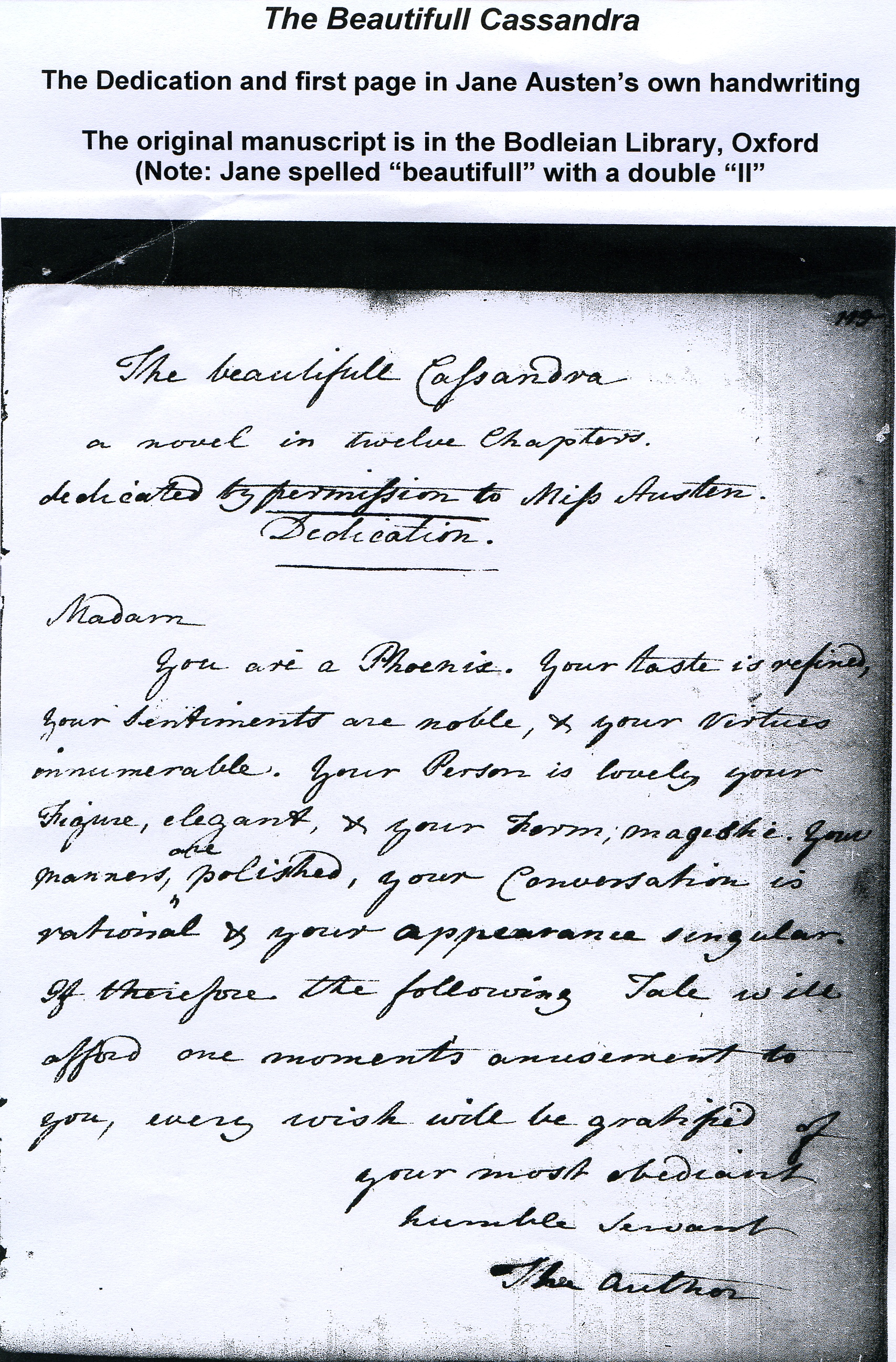
A sample of the script in Jane’s handwriting

The original manuscripts of the other 5 pieces we wanted to use are in the Bodleian Library in Oxford and that material was not then available on-line. The staff at the Bodleian were very helpful but, as with most large libraries, they needed to know the shelf reference number before they could help and that took some finding. Once we had it life became easier. For a modest fee they photocopied the material for us and so we had our text, albeit in Jane’s own handwriting which at times took some deciphering. The other stories we chose were The Beautifull Cassandra, Jack and Alice, Mr Harley, Henry and Eliza, and Amelia Webster.

With our script sorted out we turned our attention to the reader. I have been producing radio plays and book readings for many years (many of them with the BBC) so I know a lot of actors personally. For this book I needed someone who sounded young (Jane wrote these pieces when she was between the ages of 12 and 15) but someone who was really that age would not have the experience to read these stories as well as I wanted them done.

The answer was Teresa Gallagher, a very experienced actress and reader, who has the ability to adjust her voice to the young, breathy quality of a teenager but who can also deepen her voice for the older characters. Teresa has won awards for her audio book reading on both sides of the Atlantic and she liked these stories and agreed to record them for us.

We always try to include a brief audio introduction on our CDs to set the book in context and here we were fortunate enough to persuade Jean Bowden, retired curator of the Jane Austen House at Chawton in Hampshire, to write and record the opening track.

Next came the music. We don’t use a lot of music in our audio books as we feel the text is the most important thing. However, it is nice to have some to separate the different tracks and to create the right atmosphere. But what to use that was appropriate?

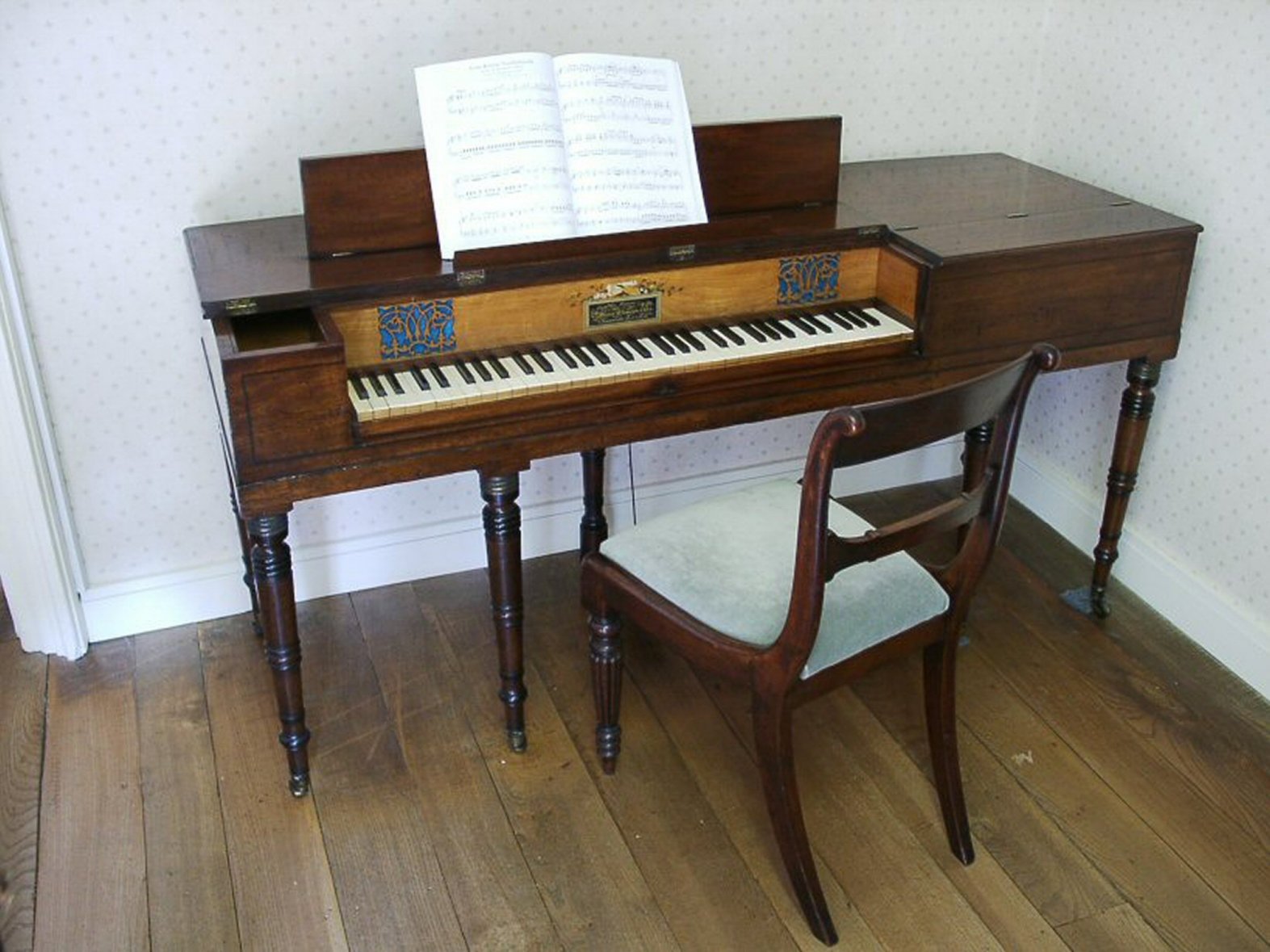
The Clementi Square piano from the Jane Austen House Museum (Chawton Cottage)

At this point Ann Channon, House Manager at the Jane Austen House, came up with a lovely idea. In the reception area at the House there stands a Clementi square piano, sadly not the one that Jane herself used but an identical one from the same period. A square piano has a wooden frame and so sounds very different from modern pianos. Also in the House they have copies of Jane’s music books containing a range of the pieces she would have played in the evenings. Ann suggested we could play some of this music on their square piano and we jumped at the chance.

We found an experienced pianist, Peter White, who was keen to try playing a square piano so one afternoon we all went down to Chawton. We could not actually record the pieces we wanted until after the House was closed so Peter used the afternoon to practise. It was not long before there was a little crowd of visitors gathered in reception listening to Jane’s favourite music being played on “Jane’s” piano. It was one of those magic moments. Once the House was closed we recorded a number of pieces from which I eventually made the final selection which we use on the CD.

There was one other bonus from that evening. We needed a picture to go on the front of the CD and one of Ann’s colleagues at the House suggested a picture of Jane’s niece, Fanny Knight, which was actually drawn by Jane’s sister, Cassandra. It shows a young woman sitting at a desk writing and was ideal. It was also owned by the House who gave us permission to use it so there was no copyright problem.

So now we had everything we needed. The actual production was very straightforward and most enjoyable because, as always, if you get the script right and find the right actor, then 90% of the creative work is done. The final job was to choose the short audio extracts to go on our web site so that anyone interested in the recording could hear some of it first.

One small problem emerged after publication. We gave the CD the overall title of The Beautifull Cassandra and other Early Writings by the young Jane Austen but we chose to spell “Beautifull” with a double “ll” at the end, which is the way that Jane herself spelled it. We thought this was a nice touch but it has caused endless problems with many people, with varying degrees of courtesy, pointing out our “spelling mistake”.

Even so The Beautifull Cassandra has proved to be one of our most popular titles. One of the things I personally like about it is that these stories are very funny. Jane wrote them to amuse her family and friends and, like all her work, they were written to be read aloud. Jane might have been over-awed by CD and download technology but I like to think that she would have enjoyed listening to this audio book.

The Beautifull Cassandra, like all Crimson Cats publications, is available as a CD or as an MP3 download from our web site: http://www.crimsoncats.co.uk

Michael Bartlett
Editor, Crimson Cats Audio Books
editor@crimsoncats.co.uk\

Receive a Special 15% Discount if you order the CD from this blog!!

If you buy from our website, Crimson Cat Audio Books,  (either the CD or the MP3 download) when you get to the first stage of the checkout you will see a Voucher box. Enter this code and you will have 15% taken off the price. Code: VIC15JA

Read Full Post »

Inquiring readers: Tony Grant from London Calling has been a frequent contributor to this blog, sending posts and images. He lives in Wimbledon and acts as a tour guide, taking visitors on tours to Jane Austen country, the Lakes region, and points of interest all around London and the U.K. Recently, Tony sent in his thoughts about Jane Austen and his wish to delve deeper into other authors and their lives. As an active guide, he knows whereof he speaks. I asked Susannah Fullerton, author, president of JASA, and also a tour guide, to give her response (with Tony’s approval).  Here, then, is their very interesting conversation. I intend to weigh in. Does anyone else have an opinion? If so, please feel free to comment. Meanwhile, to all my U.S. readers, Happy Thanksgiving! Drive safely and have a wonderful time with kith and kin.

“Good-Bye to All That,” is an autobiography by Robert Graves. Graves said, “It was my bitter leave-taking of England where I had recently broken a good many conventions”.

I was reading a poem by Edward Thomas, (Philip Edward Thomas, 3rd March 1878 – 9th April 1917) recently, entitled, “The Brook.” In the poem Thomas is sitting by a stream and watching a child paddling in the brook. His senses are completely alert to the sights and sounds of insects, the sight of birds and the sounds of birds unseen, the play of sunlight, the rippling tinkling sounds of water and the memories of a past horseman and horse buried under a barrow on the heath nearby. The poem ends,

And then the child’s voice raised the dead.
“No one’s been here before,” is what she said.

It occurred to me that the child was right. Of course, probably, many people had been to that spot over years and decades. For each of us, however, when we go to a place for the first time that is pristine and natural and remains how it has always been we do experience something for the first time. It is as if nobody has been there or done that, or experienced that before us. We can experience things fresh and new for ourselves when we go somewhere like this, for the first time.
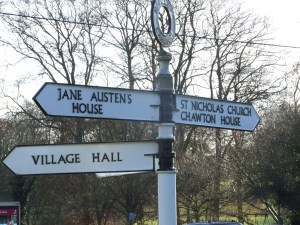
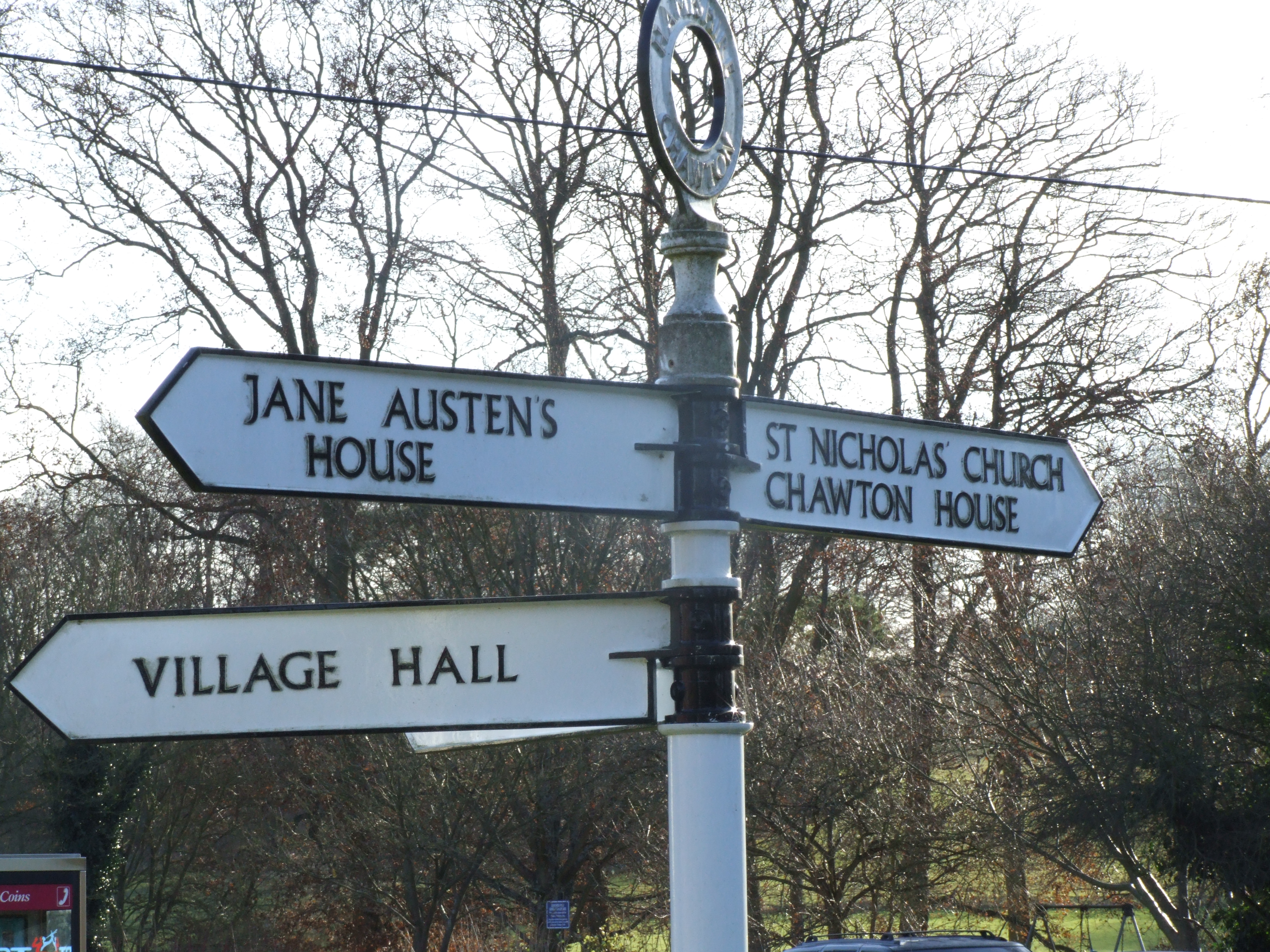
Signpost. Image @Tony Grant

Now lets take a visit to Chawton, Jane Austen’s last home before she died. I wonder if we can actually experience things fresh and new to us on a visit to Chawton and say,“No one’s been here before,” in the way the child in Edward Thomas’s poem did?

I remember standing at the crossroads in Chawton , years ago, for the first time. What I should have experienced, according to Jane Austen pilgrims to Chawton, is a sense of where she lived, a connection with Jane Austen – where she wrote, cooked, sewed, wrote letters, enjoyed the company of Cassandra, Martha, her mother and brothers and neighbours too. Indeed, Jane Austen (16 December 1775 – 18 July 1817) did all this over two hundred years ago. But can I or any of us get that feeling of, “No one’s been here before.” Do we really get an experience standing at Chawton crossroads next to that much photographed sign post put up in the 1930’s with pointers to the great house, the church and the cottage that it is the Chawton of Jane Austen? Do we really believe that we have a connection with Austen by being there? Isn’t it all in our imaginations because we want to believe?
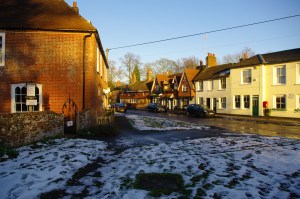
Chawton Village street. Image @Tony Grant

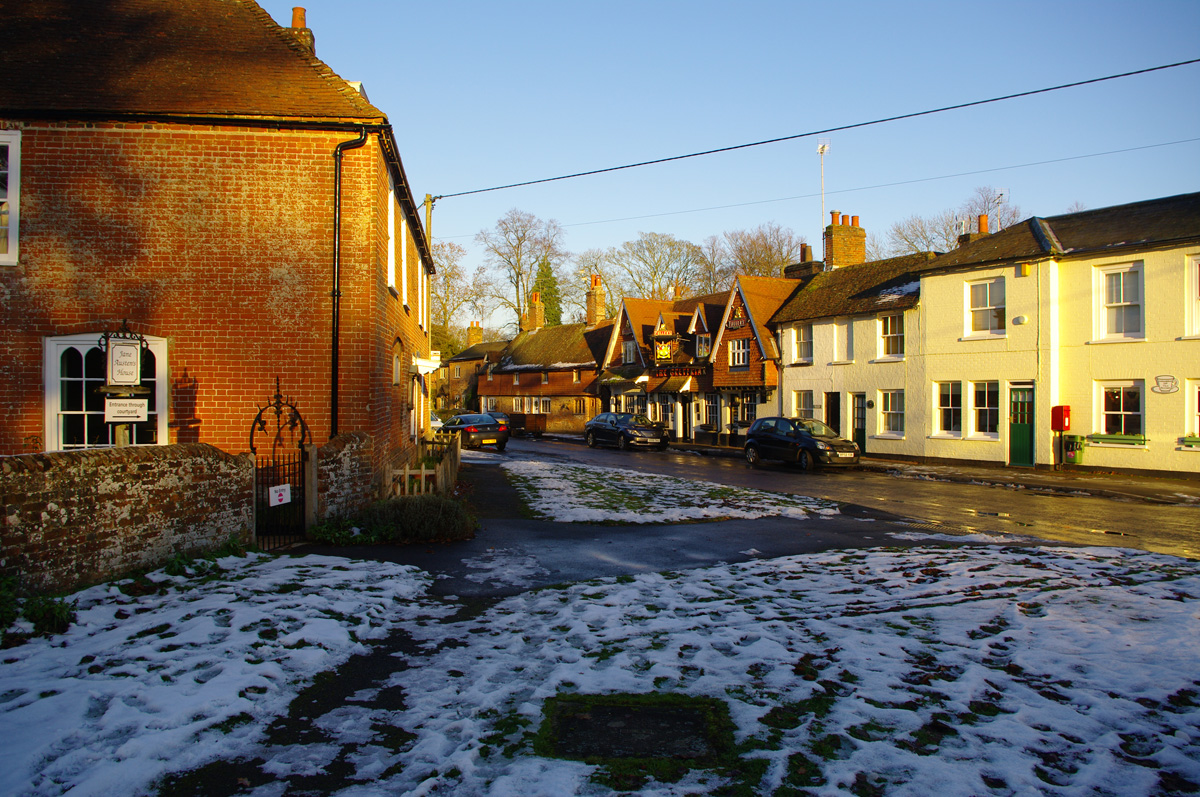
Chawton high street is full of parked cars with Japanese, French, German, Spanish and Scandinavian makers emblems on them. The road is metalled and covered in tarmac. It has a pavement edged by slate and granite curb stones from Dartmoor. It has concrete and tarmac pavements. Houses surrounding the cottage have a mesh of telecommunication wires leading to each one. People who live in Chawton are all connected to the World Wide Web with broadband like the rest of us. Modern street lights light the streets at night. In the small park opposite the cottage there is a children’s playground with steal clambering structures and swings. The pub opposite, The Greyfriar, is a Fullers pub. They hold a quiz night once a week for locals that probably doesn’t include questions about Jane Austen. Fullers, by the way, is a London brewery situated on the Great West Road, leading out towards Heathrow Airport, close to where Hogarth had his country retreat. These very locals travel to Winchester, Southampton or even commute to London for work every day. Chawton C of E Primary School, just along the road, on the way to The Great House, is an ordinary primary school that teaches the national curriculum. The children are like children anywhere and this is where they live. The Jane Austen connection to them is by the by, not really pertinent to their lives. Although, I am sure, as the school is in Chawton the children will know a lot about Jane Austen, but she will really be just somebody else on their list of famous people and writers to know about. Those children play computer games on their Ipads at home. Chawton is an ordinary place where people live and get on with their ordinary lives, where Jane doesn’t loom much in their minds when they are peeling the potatoes or hoovering their carpets or watching the TV.
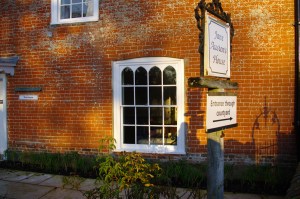
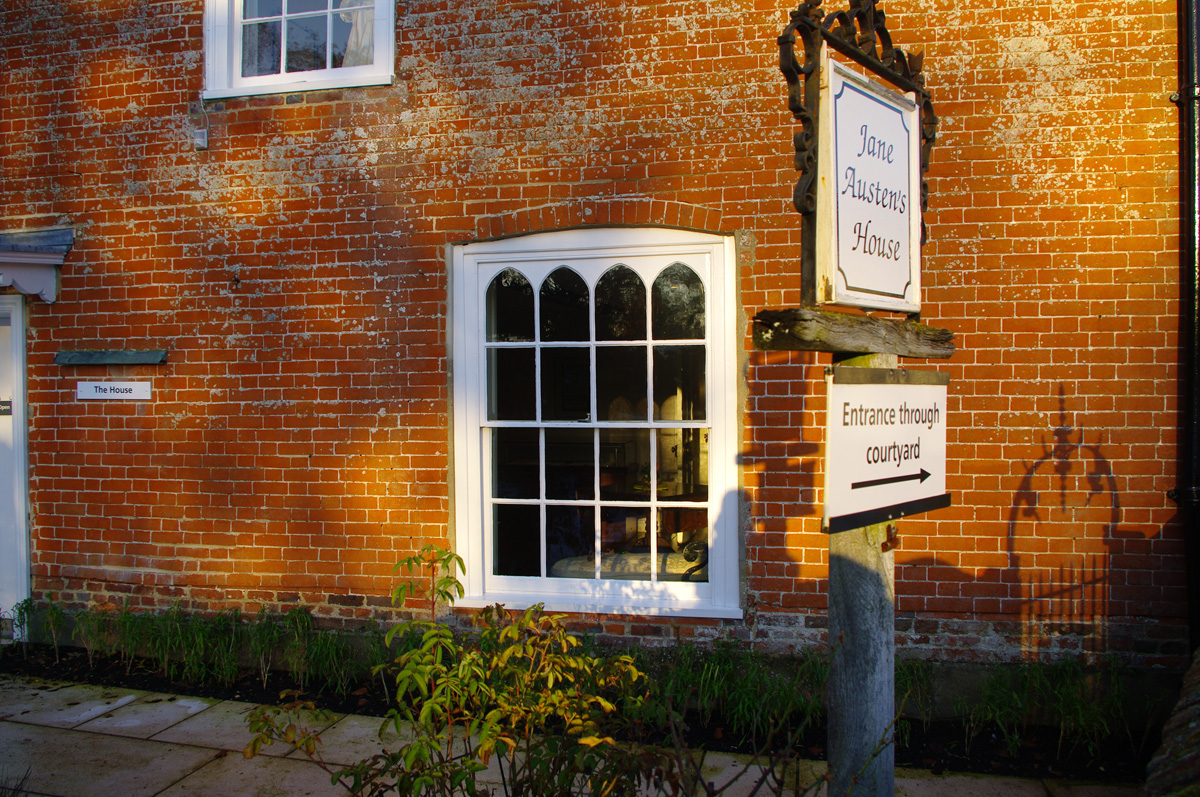
Chawton Cottage signs. Image @Tony Grant

Looking at the cottage from the outside, the Jane Austen societies have stuck large obtrusive signs on the walls facing the road. If you look at the structure of the building itself you begin to wonder what of it Jane would actually recognise if she were to come back today. Windows have obviously been bricked up. Was that a result of 18th century window taxes or because at one time the cottage was split into a group of smaller cottages? It has a variety of doors to enter by too which probably weren’t there or were in different locations in Jane’s day.
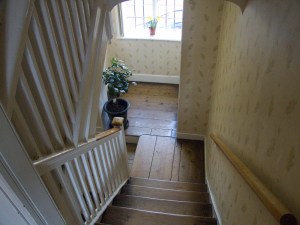
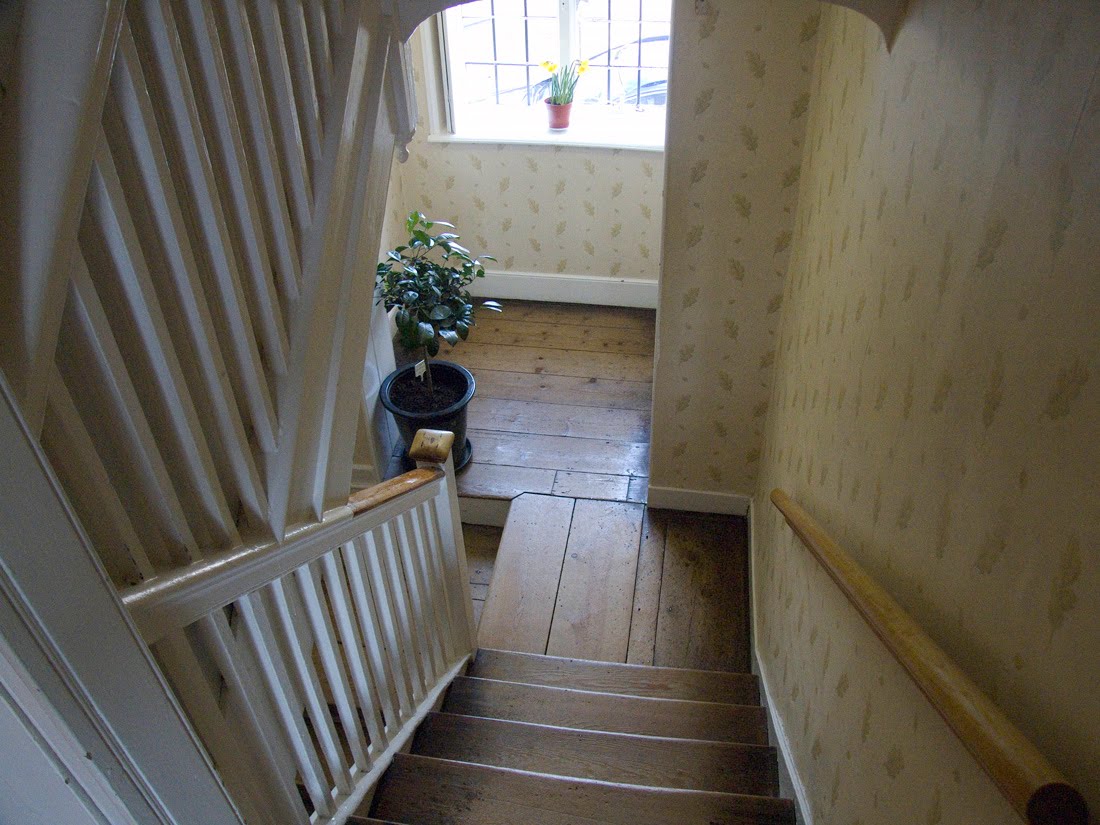
Staircase. Image @Tony Grant

When you go into the cottage you see modern radiators, electrical wiring, plug sockets and fire exit signs with the requisite fire extinguisher points. These are not subtly hidden or unobtrusive but are very prominent. Many of the display cases, especially upstairs, are bulky and obtrusive. They don’t look good. The staircase itself is not the staircase Jane Austen would have known in her time. The whole house has actually been restructured. The Austen’s might not recognise the place. It’s not really the place they knew.
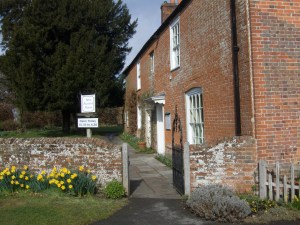
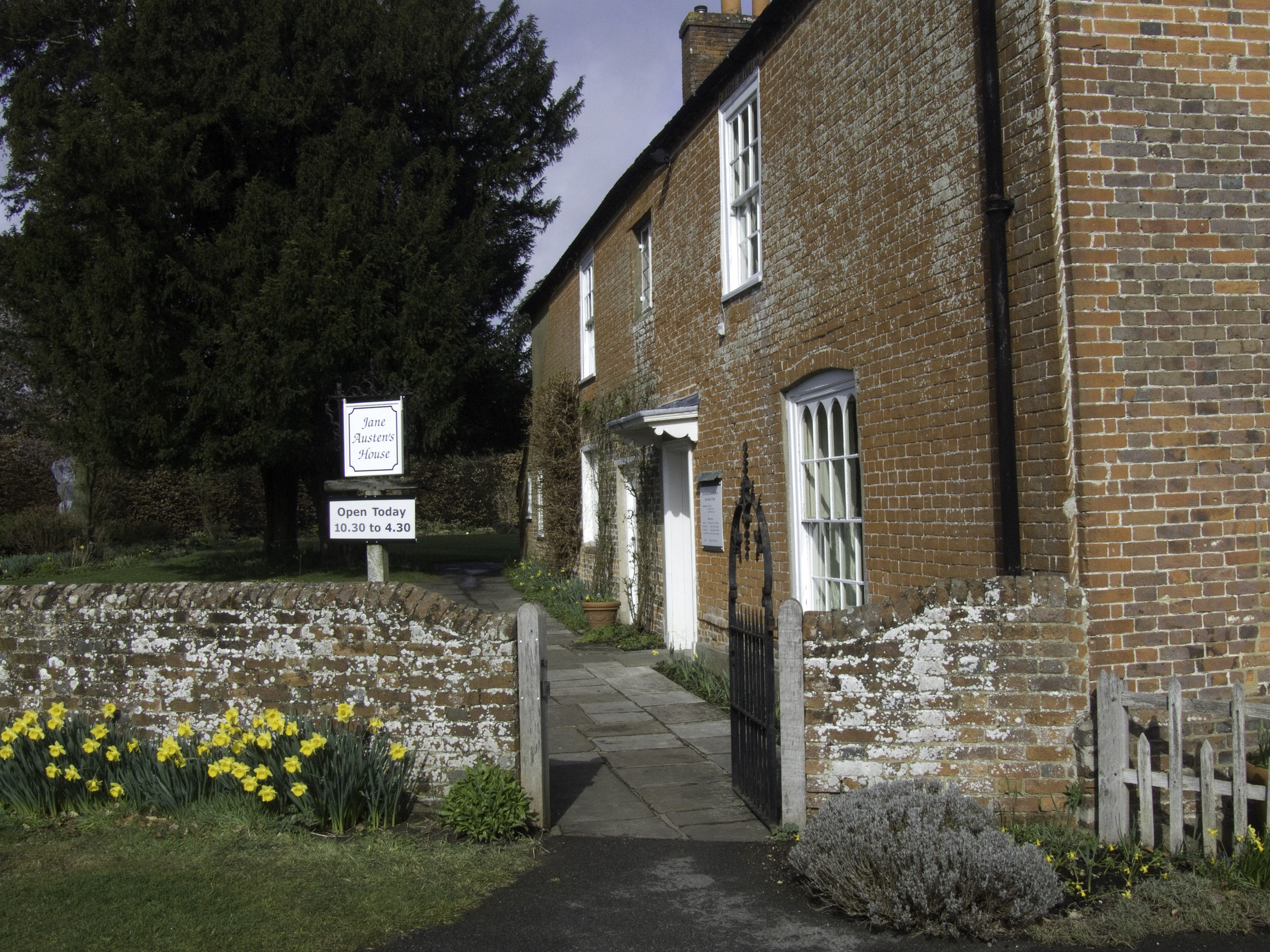
The visitor’s entrance to Chawton Cottage. Image @Tony Grant

I always come back to the books and her letters. That is where to find Jane Austen. That is where we are going to get glimpses of the real person if we are attentive.
Now don’t get me wrong, I absolutely love reading Jane’s novels, her letters and the biographies written about her. However all these Jane Austen societies bother me. They worship and idolise her. They focus exclusively on her. They wring every bit of Janenness out of her. They make Chawton a false holy of holies. She was one writer for goodness sake. The world is a diverse and varied place full of great writers that we all need to read and not be partisan about. If I had my way I would get rid of all literary societies connected with all writers and say, just read. Reading develops us and helps us grow. Centering on one writer narrows us.
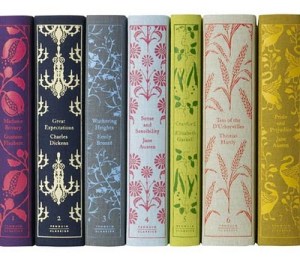
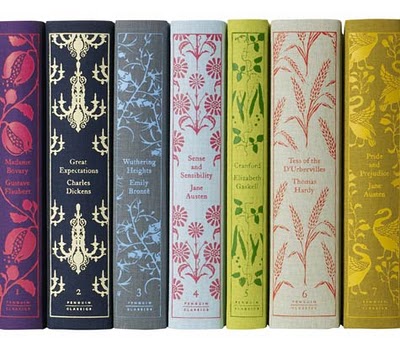
Penguin Classics

As a paraphrase of Robert Graves, this article “ (Is) my(not so) bitter leave-taking of (Austen) where I (have) recently broken a good many conventions”. We all need to stop squeezing the life out of Jane Austen and get on with real life and the rest of the real literary world. Returning to the essence of the Edward Thomas poem, I feel that my senses need to be open but to other writers without the weighty manufactured image of Jane Austen hovering over my shoulder.

Doesn’t anybody else feel that they would like to get out from underneath the weight of Austen and breath freely again?
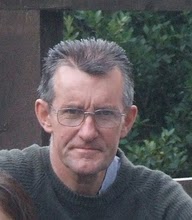
Tony Grant

I am going to read all of Virginia Woolf’s novels after Christmas and post reviews. My mate Clive and I are going to do this in tandem. If you want an antidote to all things Jane, don’t stray!!!!!!! Clive and Tone are on their way.

Tony Grant, Wimbledon

Hi Tony,

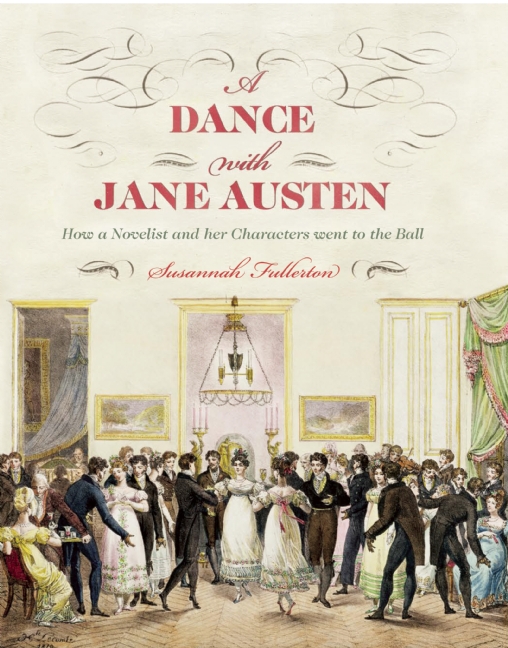
I hope you are well. I enjoy reading your comments on Vic’s lovely website. Your photo of the Dolphin Hotel looks so nice in my new book, A Dance with Jane Austen. Thanks again for giving me permission to use it when we met.

I’m intrigued by your comments about Jane Austen societies, but don’t agree with you that they are in any way narrowing. My experience is quite the opposite. At JASA we’ve had talks on Jane Austen’s connections with / influence on many other writers – Kipling, Georgette Heyer, Byron, Radcliffe, the Brontes, etc. Such talks immediately send you hurrying off to get to know more about those other writers. We’ve had talks about Jane Austen and various historical figures, so you then want to learn more about them, and of course we’ve had talks and articles about the age in which she lived, so our members then explore music in her time, art and what paintings she knew, they learn about the church in that era, the navy and army, Georgian crime, fashion, food, travel, and the list goes on. I see JASA (and the other literary societies to which I belong) as a wonderful way of extending my reading and my knowledge, not limiting it.

And joining good literary societies is addictive. If you get great pleasure from learning more about one writer, you soon realise that you can do the same with another writer. It does not have to be exclusive – I’m extremely promiscuous indeed when it comes to joining literary groups! I’m part of an Anthony Trollope group (we have trouble knowing what to call our group – ‘The Trollopes’ has dubious connotations – I’d love to hear suggestions??) and we have been making our way through Trollope’s more than 40 novels with enormous pleasure. (Trollope, by the way, was a great admirer of Jane Austen). We have also read biographies of Trollope, biographies of his mother Frances, critical books about his writings, and books about the position of women in Victorian England. It’s a small group but we have all felt so enriched by it. Plus we have great fun, good food and wine, picnics (in places Trollope visited in Australia) and we have all made new friends.

And lastly a fabulous reason to join a literary society is for the social aspects. I have met some of my dearest friends through JASA and other Jane Austen connections. I can honestly say that joining JASA has totally changed my life – and all for the better – so there’s been nothing ‘narrowing’ about my passion for Jane Austen’s novels. Rather than ‘squeezing the life’ out of Jane Austen, my love of her writings has widened my knowledge, increased my appreciation of her books, life and historical era, has taken me around the world, given me new friends and given me intense happiness. The more I turn to her novels, the more I get from them; and the same goes for JASA – Jane Austen keeps giving and giving and I receive so very happily all she has to give in so many ways.

Am I waxing too lyrical??? I think you need to pay a visit to Australia, Tony, so that I can show you in person all you could get from a great literary society. Please come and visit any time!!!! JASA would love to welcome you to sunny Sydney.

Cheers,
Susannah

Read Full Post »
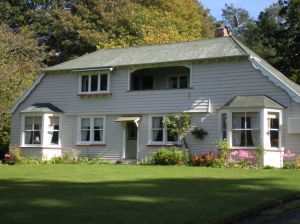
Inquiring readers: Susannah Fullerton and I met in Brooklyn at the annual JASNA meeting, where she was promoting two books and gave two workshop presentations.  Here, then, is our share of our ongoing conversation:

Susannah, it was such a pleasure meeting you at the AGM in Brooklyn. I felt as if we had known each other for years, so instant was our connection. As we talked, I came to realize that you lecture, travel, act as guide, write, and have two books coming out in a HALF year, AND you are a wife, mother, and president of JASA (Jane Austen Society of Australia). At the conference you had boundless energy. How and where do you find the time to do it all and look so fresh and enthusiastic? I am in awe.

There’s a lovely quote in Emma when Miss Bates says, ‘It is such a happiness when good people get together – and they always do.” Vic, that’s how I felt when I met you in Brooklyn – an instant recognition that we had masses in common and would get on really well. I do have an incredibly busy life and it has been especially busy these last 2 years with 2 books to write. However, I do find it hard to say ‘no’ to lovely literary projects. I have been President of JASA for 17 years (I’m wondering if that should put me in the Guinness Book of Records?) and I have a fabulous committee, so running the society is a joy. Of course we are all very excited about next year’s big P & P anniversary. My literary tours are great fun. When you yourself get an incredible thrill from walking down the Gravel Walk in the footsteps of Anne Elliot and Capt. Wentworth, or seeing the topaz crosses at Chawton, or actually standing in the room where Jane Austen died (which I did on 2 of my literary tours) then it’s fantastic to be able to take other people on tours where they can share that same excitement. My tours are with ‘Australians Studying Abroad’, and I don’t only take tours to England but to France, Scotland and the USA as well. It’s all such fun that somehow I find the energy to do it all.

In reference to your interview on Jane Austen in Vermont, you mentioned that the time for a book about dance in Jane Austen’s time was right. I agree with you. What were some of the facts you uncovered that surprised you and that you were anxious to share with the world?

What really surprised me was that no-one had written a book on Jane Austen and dancing before now! I think what you find when you focus on one particular aspect of Jane Austen’s fiction is an increased awareness of how utterly brilliant she was. When I wrote Jane Austen and Crime I found that the tiniest bit of information about something like poaching was used by Austen in a way that had so many wider implications if you knew about the laws and perceptions of poaching at that time. In Mansfield Park Mr Rushworth boasts about his “zeal after poachers”, yet completely fails to stop Henry Crawford from ‘poaching’ his wife – the ‘poaching’ undercurrents in the novel are so brilliantly done. I found the same with dancing – when you learned exactly what behaviour was expected in a ballroom, you became so much more aware of the subtler nuances of dialogue and action. For example, it was not proper etiquette to compliment your partner on their dress or looks, because it was taken for granted that everyone would be nicely dressed at a ball. You shouldn’t praise someone for doing what it was assumed they would do anyway – ie, dress nicely. This gives extra point to Mrs Elton’s behaviour at the Crown Inn ball – of course, no-one compliments her on her dress because they are behaving properly, but Mrs Elton is desperate for such attention so she takes on the task herself: “How do you like my gown? How do you like my trimming? How has Wright done my hair?” etc. The more you delve into any aspect of Austen’s world, the more you find and you come away with an even greater awe of her incredible achievement!

Was there any information in A Dance With Jane Austen that you wished you had expanded upon but simply could not due to lack of space and time?

It could have been nice to have included more particular information about steps for individual dances, but unless you are a Regency dancer yourself, that information might be rather dull on the page – more fun to ‘do’ than to read about, I think.

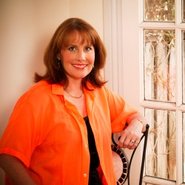
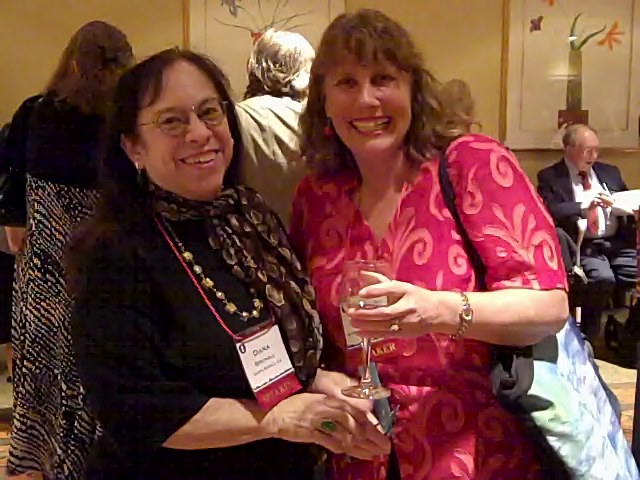
Authors Diana Birchall (l) and Susannah Fullerton (r) at the Brooklyn AGM

When we were at the AGM, you were promoting your next book as well, Celebrating Pride and Prejudice: 200 Years of Jane Austen’s Masterpiece. Other authors must be as curious as I am: How did you find the time to write TWO books with such close deadlines? Did you lock yourself in a closet and have food passed to you through a grate?

Just last week I received the most wonderful parcel in the post – two copies of Happily Ever After: Celebrating Jane Austen’s Pride and Prejudice and two copies of Celebrating Jane Austen’s Pride and Prejudice: 200 Years of Jane Austen’s Masterpiece. These are the UK and American editions of my new book. They are both gorgeous and I was so thrilled I danced round the kitchen with the copies in my arms! The book is dedicated to my daughter “my dearest loveliest Elinor Elizabeth” and she is really thrilled about that. Yes, it was quite a task to finish 2 books so close together. I was just finishing A Dance with Jane Austen when Frances Lincoln suddenly took up my suggestion that a book about 200 years of P & P would be a good idea. I must admit I lay awake most of that night, wondering if I could manage to do it given the tight time frame. But how could I resist? Spending 6 months with Elizabeth and Darcy was pure bliss and no book has given me so much pleasure to write. There were days when I was so involved I forgot to think about cooking dinner. Part of the joy was learning as I went along – discovering new depths and brilliancies in the novel. Just as an example – when I was writing my chapter on Elizabeth Bennet, I stopped to think about how she is first introduced to the reader. Most of us know her so well that it feels she has always been a part of our lives, but what are Elizabeth’s first words in the novel?? I had to go and check because I couldn’t actually remember the very first words she gets to speak in the text. And they are words that contradict her mother! In that age of conduct-book heroines, females who were expected to be obedient to parents, meek, silent and submissive, Elizabeth arrives on the literary scene with a contradiction!! Instantly we know that this woman is going to be different – unlike any heroine before (and of course since as well).

What should readers expect from Celebrating Pride and Prejudice that will make your book stand out from other publications about this novel?

I have tried in my book to give an all-round picture of why this novel has lasted 200 years and goes from strength to strength. I tell of its beginnings; Jane Austen’s struggles to get it out into the world; initial reactions to the book and then reactions as the 19thC continued and went into the 20thC; I have a chapter about the first sentence and why it has become so justly famous; I look at the use of letters in the text; I discuss the translations and how badly the novel fared for a long time in other languages and I look at the challenges faced by translators (would Mr and Mrs Bennet say ‘vous’ or ‘tu’ to each other? They have shared a bed and had 5 children, but still call each other Mr and Mrs – a translator has to make that sort of decision); I look at the extraordinary range of film versions (Dutch, Mormon, Spanish, Italian, Israeli etc); I look at the illustrations it has had foisted upon it over the years – some lovely and some truly terrible (and I include some fabulous pictures as examples) and the different sorts of covers it has been enclosed in; I look at P & P tourism which is now a big industry; I explore the amazing range of merchandise from baby’s nappies to skateboards, cosmetics to clothes pegs, china to jewellery etc. Some of the chapters I most enjoyed writing were about the characters of the novel – I have separate chapters on Darcy and Elizabeth, but then also include chapters on ‘her Relations’ and ‘his Relations’, and one on the ‘Other Characters’. I found that grouping them into ‘his’ and ‘her’ relatives made me think about them in a new way and helped make it clear why hero and heroine had become the sort of people they are.

Anything else you wish to add?

There is a T-shirt which has printed on it “What do you mean Mr Darcy isn’t real??” I think I need to buy that T-shirt! Elizabeth and Darcy, Mr and Mrs Bennet, Mr Collins and Lady Catherine, and all the characters of Pride and Prejudice are as real to me as the people I see every day. There is so much to celebrate about this utterly wonderful book by Jane Austen. My way of celebrating was to write a book about why it is so brilliant, and of course I very much hope that many readers will want to buy and read my book to discover just why, 200 years ago, the world became a far better place!

As always, Susannah, it is a pleasure chatting with you. I wish you nothing but the best and hope to see you during your spring tour in the U.S.! – Vic

NOTICE: CONTEST CLOSED. Congratulations Monica! Dear readers: Susannah is graciously giving away a free copy of A Dance With Jane Austen. Please leave your comment stating which Jane Austen character you would most like to dance with and why! The contest is open to all and closes at midnight November 27th, US Eastern Standard Time.

Susannah’s Books:

Preorder Celebrating Pride and Prejudice at this link.

Order A Dance With Jane Austen at this link

Order Susannah’s first book, Jane Austen and Crime, at this link

Read Full Post »

« Newer Posts - Older Posts »