Feeds:
Posts
Comments

Archive for the ‘jane austen’ Category

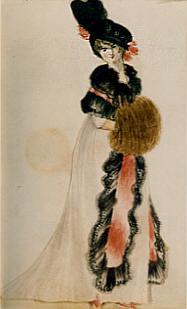
Watercolor by James Stanier Clarke. Thought to be of Jane Austen in 1815, when she visited Carlton House just months before the publication of Emma

Posted by: Tony Grant, London Calling

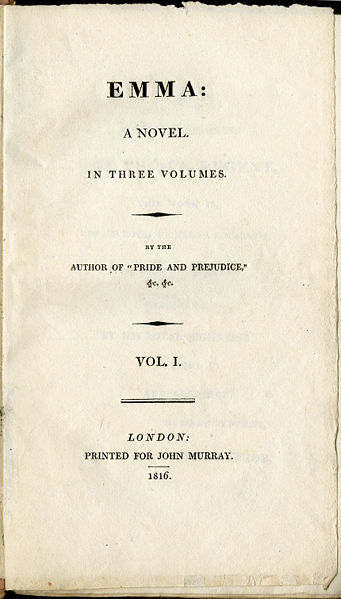
Jane Austen published Emma in December 1815, sixteen years after the French Revolution had ended but during a time when the women of that revolution were campaigning for women’s suffrage and especially for female education. It wasn’t a concept of education that had been considered before for women. Women were always thought unable to think like men. Their minds and brains worked differently on a much more superficial level, apparently. The grave subjects of philosophy, concepts about societies social needs, the study of History,mathematics,science, theology or Latin or Greek, were certainly not encouraged. It was a form of intellectual slavery. Women were kept childlike They were for marrying, procreating, looking after the home, bringing up children and being proficient in the finer arts of sewing, playing the pianoforte, singing, speaking French and being able to shop in a dress shop.

Rouseau and the Marquis de Condorcet (Marie Jean Caritat) in France and Mary Wollstonecroft here in England had different ideas for womens education.These ideas were infiltrating into the thoughts of Englishmen and women. They were the sort of ideas that would change society. I think Jane Austen introduced the character of Jane Fairfax to hint at such radical ideas. Jane Fairfax is an uncomfortable character within Emma. Emma Woodhouse can’t relate to her although they appear to be each others doppelganger, a mirror reflection of each other in many ways. But of course mirror reflections are opposites and you can’t actually become in contact with your reflection. There is a barrier, a layer of glass between you and your reflection. Jane and Emma, seem to exist in parallel worlds that cannot touch.
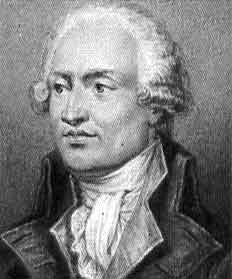
Marquis de Condorcet

Jane Austen, herself was an authoress earning money from what she wrote, but she still remained within the bounds of decent society. Emma is introduced by, “the Author of Pride and Prejudice.” She did not use her name. She was careful enough to dedicate Emma to The Prince Regent when it was suggested she might like to. She followed her urges and her intelligence and her talents but she kept her head down. She herself was critical of the education offered to young ladies and she herself had a horror of the profession of teacher as a result of her own experiences. Towards the end of her life Jane was writing Sanditon. Her heroine, Charlotte Heywood, is perhaps the most radical of her characters, in her views and in her actions. Would Jane Austen have eventually, “come out?”
Jane Fairfax was the daughter of Lieutenant Fairfax, and her mother had been, before marriage, Miss Bates, the youngest daughter of Mrs Bates of Highbury.When her father was killed in action in a foreign country and her mother died soon after of consumption, Jane had returned to live with her grandmother and aunt, her mother’s elder sister in Highbury. However, Colonel Campbell, her fathers superior officer, offered to educate her and bring her up in his own small family to give her all the benefits of education and culture he could provide. Lieutenant Fairfax had been instrumental in saving his colonel’s life years before and being a dear officer and friend, Colonel Campbell felt it his duty to look after his friends daughter, Jane. Here is a passage from Emma describing Jane Fairfax’s education.

“ She had fallen into good hands, known nothing but kindness from the Campbells, and been given an excellent education. Living constantly with right minded and well informed people., her heart and understanding had received every advantage of discipline and culture; and Colonel Campbells residence, being in London, every lighter talent had been done justice to, by the attendance of first rate masters.”

It is interesting to note that Jane alludes to two sorts of education in relation to Jane Fairfax. First she says that she was, “given an excellent education,” and associated with well informed people and received every advantage of discipline and culture. The discipline bit is a little vague. It might refer to personal, behavioural discipline or it might refer to an intellectual discipline of the mind, inquisitive, challenging ideas, thinking. Maybe Jane Austen is being vague on purpose to allay the doubts and fears of the middle class reading masses. But what does Jane Austen mean by “an excellent education?” We know what she means by, “every lighter talent.”

It can only mean one thing. Jane Fairfax had been educated in cultural aspects that might include history, geography, mathematics, science and all the areas of learning usually kept for the great universities and the exclusive education of men.She had had the influence of right minded and well informed people too. Jane Austen herself had undoubtedly been immersed in and influenced by this sort of cultural education by way of her father’s library and erudite discussions with her intelligent and learned brothers.
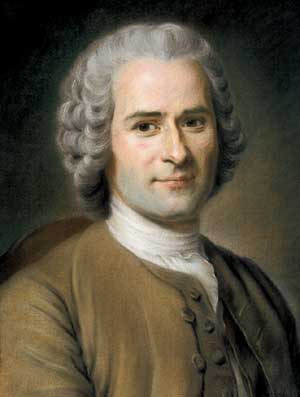
Jean Jaques Rousseau

Jean Jaque Rouseau ( 28th June 1712 – 2 July 1778) was a philosopher and writer.
He thought;

“ The education of women should always be relative to that of men. To please, to be useful to us, to make us love and esteem them, to educate us when young, to take care of us when grown up.”

His idea of education being important to women was so that they could then, in turn, educate their sons. He was only a little on the way to realising the full possibilities and potential for women. He wasn’t for giving women total freedom.

Marie Jean Antoine Nicolas Caritat (1743 – 1794) the Marquis de Condorcet, wanted to go much further than Rouseau with women’s education and freedoms. He wanted universal education as did Adam Smith, Thomas Paine and Thomas Jeffereson. He thought that the advances in reason and science would automatically limit family sizes leaving women the freedoms to expand their talents and energies in other directions. He wanted women to be admitted to the rights of citizenship. A very modern gentlemen. He had to go into hiding for his beliefs.

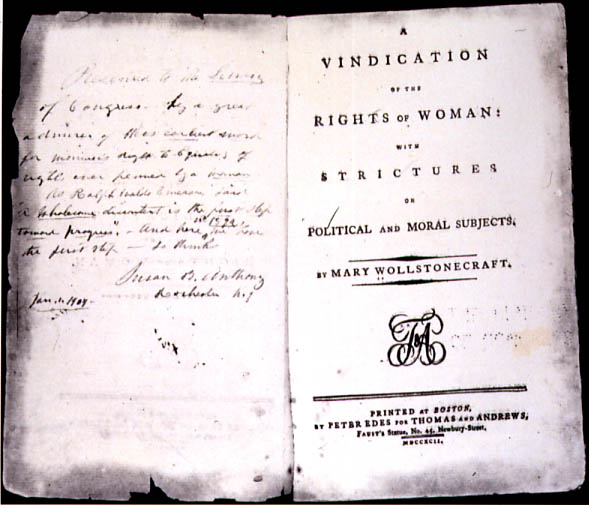
In England there was Mary Wollstonecroft. In the introduction to her “A Vindication of the Rights of Woman,” Mary Wollstonecroft writes,

“Contending for the rights of woman, my main argument is built on this simple principle, that if she be not prepared by education to become the companion of man, she will stop the progress of knowledge and virtue; for the truth must be common to all, or it will be inefficacious with respect to its influence on general practice. And how can woman expected to co operatre unless she knows why she ought to be virtuous? Unless freedom strengthens her reason till she comprehends her duty, and see in what manner it is connected with her real good. If children are to be educated to understand the true principle of patriotism, their mother must be a patriot; and the love of mankind, from which an orderly train of virtues spring, can only be produced by considering the moral and civil interest of mankind; but the education and situation of woman at present shuts her out from such investigations.”
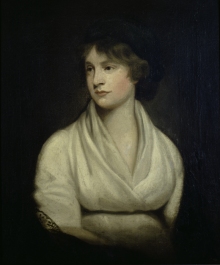
Mary Wollstonecraft

What Mary Wollstonecroft is actually saying here is that men and women need to be equal for the good and progress of mankind and if women are to be the teachers of children they need an education which enables them to think and explore and understand ideas, otherwise she cannot teach those ideas. An argument which cannot be challenged surely. Teachers today have degrees and are expected to have a thorough knowledge of their subjects and to be able to think and be creative.

How does this bring us back to Jane Fairfax? Jane Fairfax has had an, “excellent education,” and she appears to be evasive. It might be more a case of her having to be evasive as a means to survival. Emma Woodhouse cannot form a close relationship with her. As the novel unfolds we learn Jane is breaking societies strongest taboos. She and Frank Churchill are a match made in the realms of a freedom not acceptable in the England of those times. They are of a different economic and class backgrounds. Frank Churchill’s guardian, Mrs Churchill, while alive, would never condone such a relationship. Jane and Frank keep it secret and have to resort to all manner of subterfuge. Emma Woodhouse, in all her plans and manoeuvrings, and imaginings is defeated. Jane Austen is delving into areas that are perhaps closer to her own heart than she may well want to admit out right. In her final novel Sanditon, I think the way the character of Charlotte Heywood develops Jane was becoming more outspoken in her views about hypocrisy and the role of women in society. If Jane had lived into old age, with societies changes becoming more rapid with the industrial revolution, she might have become a champion of womans rights herself.
Finally, Jane Austen resolves the dilemmas, in a sort of Midsummer Nights Dream way. Characters find their true loves and permission is given, after Mrs Churchill’s death, for Frank and Jane to marry. So we have a happy ending for everybody. In a way, because Jane rounds everything off too nicely, as modern readers used to the full force of rough reality in the modern classic novel, perhaps we itch for Jane Austen to have gone the full hog. But, written as it was in the Georgian period, it was brave enough to allude to these issues. Jane couldn’t resist her true beliefs, really.

Gentle Readers, Tony Grant, who lives in England and oversees the blog, London Calling, wrote this most timely post. At the turn of the 19th century, women were not allowed to vote. This post points out the harsh realities for our female ancestors just a few generations ago. Regardless of party affiliation, I urge every woman in the U.S. to go to the polls on November 2 and exercise their hard-won freedom to VOTE for the candidate of their choice. – Vic

Images: Wikimedia Commons
Read Full Post »

What can be more appropriate than to discuss body snatching on the very weekend of All Hallow’s Eve, when witches and goblins and ghosts wander throughout the night? This post will offer a variety of facts about grave robbers, resurrectionists, and sack-em-up gentlemen who haunted cemeteries, waiting for a fresh body to snatch.

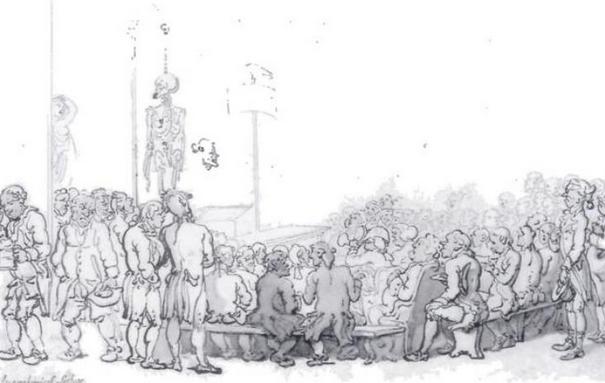
Anatomical Lecture, Thomas Rowlandson

Since the 15th century, British anatomists have been on the hunt for fresh cadavers to dissect and study. By the 18th century medical students were expected to gain practical knowledge of the human body through dissection as a pre-requisite for becoming licensed surgeons. It was the custom to study the corpses of criminals who had been executed for murder, but with the proliferation of medical schools, demand for anatomical specimens outpaced the supply. Medical students turned to stealing corpses for their own use, and thus, during this early period of body snatching, grave robbers belonged primarily to the class of ‘gentlemen’.

Reconstruction of Inigo Jones's Barber Surgeons anatomy hall, 1636

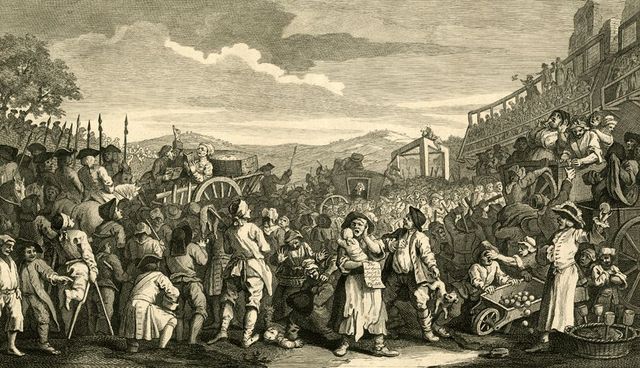
“By 1820 statutes defining crimes with capital punishments numbered over two hundred. In the words of barrister Charles Phillips, “We hanged for everything- for a shilling- for five shillings- for five pounds- for cattle- for coining- for forgery, even for witchcraft- for things that were and things that could not be”. An act of Parliament during 1752 further outraged the public by making hanging in chains or dissection of those condemned to death for murder mandatory. – Canadian Content

Executions of murderers provided fresh fodder for anatomists

“The gruesome trade [of Resurrectionists] was driven by laws which only permitted the bodies of executed criminals to be used for medical science at the height of the Enlightenment. But with only about 50 executions being carried in London every year and a lack of refrigeration meaning that specimens rapidly putrefied, demand for about 500 bodies each year far outstripped supply.” – The Independent

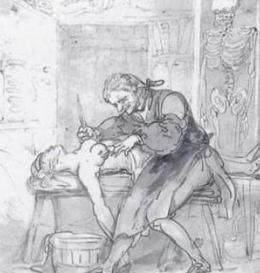
Thomas Rowlandson, The Persevering Surgeon

The laws for grave robbing had not quite caught up with the times, for those who carried away an unclothed body could not be touched, but if they so much as took one sock or piece of clothing with it, they could be hung. The corpse was hastily stuffed in a sack, and hauled to the nearest medical school before the robbery was detected.

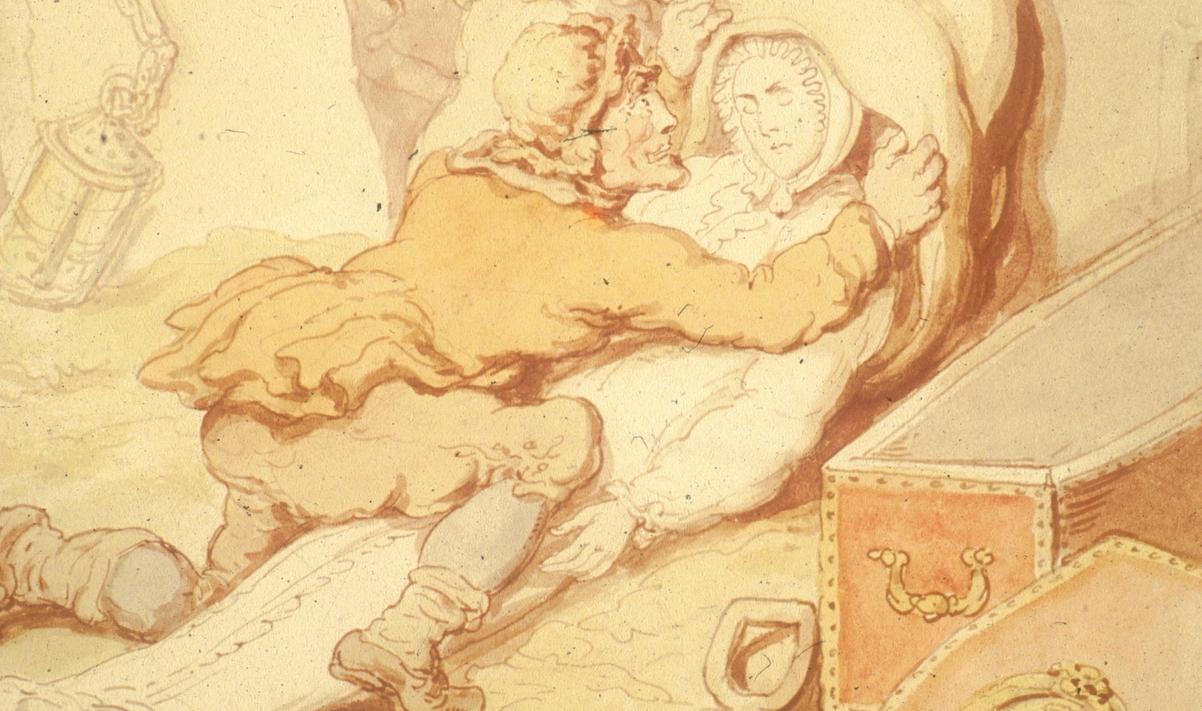
Rowlandson, The Resurrectionists, 1775

Medical students and their professors snatched bodies throughout the 18th and 19th centuries, but due to a lucrative business, an entirely new criminal element emerged: the resurrection men or gang of grave robbers. Many of these men made quite a tidy living. Resurrectionists were so efficient and became so indispensible to anatomists, that prominent physicians and surgeons would often exert their influence to keep them out of jail:

Detail of The Resurrrectionists by Rowlandson

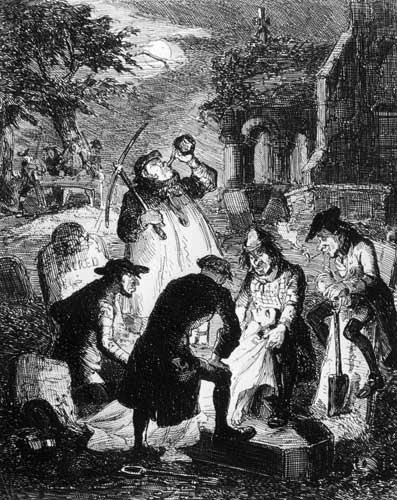
“Typically, a member of the gang, or his wife, would spend the day loitering in a likely graveyard waiting for a funeral…At night, two members of the gang would appear and, after carefully laying a sheet on the ground, would uncover the head portion of the grave, dumping the loose dirt on the sheet. The body would be pulled from the coffin head first with ropes, the shroud stuffed back in the grave, and the dirt carefully replaced.” – Body Snatching: A Grave Medical Problem, p 401

The business of selling bodies was such a good money maker that some people even kidnapped and murdered children in order to sell their bodies to the highest bidder.  One such prolific grave robber was John Bishop, who was actually tried and convicted of murdering a 14 year old boy for the purposes of selling him to a surgeon. All together Bishop admitted to stealing between 500 and 1000 corpses and of murdering 3 people to sell their bodies, although that number could be higher.  – Histatic blog

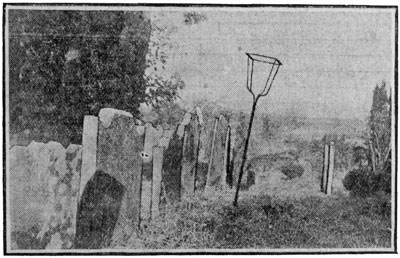
Lamp in Mallusk Cemetery for relatives who stood watch over the dead.

Look out posts in cemeteries were common, and relatives took turns watching the graves to protect their recently buried loved ones. “In the centre of the ancients have it all to themselves. Here we are in a bygone age. There is a thin iron standard with a lamp frame — a famous relic of the body-snatching days. They had no watch-house here, and so the relatives of the recently-interred lighted the lamp and sat by the graveside every night for the usual period.” –  Mallusk Burying Ground

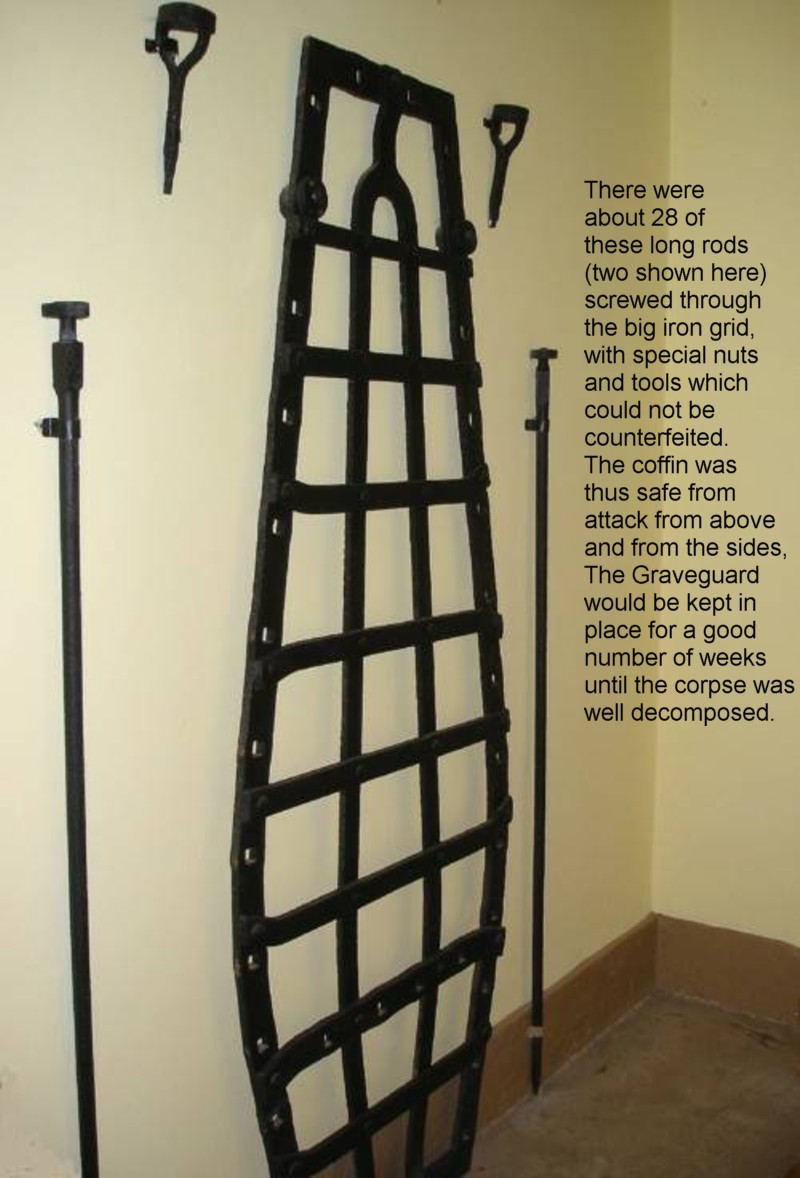
Iron grill to detract body snatchers

The families of the dead tried to purchase robber-proof coffins made with metal. There was a catch, however. Only the very rich owned the land in perpetuity in which they were buried. While their vaults could be secured and reinforced, ordinary people were buried in plots of land that were reused time and again. Thus, wrought iron and metal coffins designed to stave off grave robbers made the practice of recycling bodies in one plot impossible, and many cemeteries began to refuse such reinforced coffins.

Inventions to protect the dead.**

“Opposition to the body-snatchers took many forms. Mourners often set spring guns and other booby traps over fresh graves to discourage the body-snatchers, and it was not uncommon for relatives to mount a night watch over a fresh grave for 2 or 3 weeks until the body had decomposed sufficiently to be useless for dissection.” – A Grave Medical Problem, p. 403

Resurrectionists at work

In Richmond, Virginia, 19th century Resurrectionists had only 10 days in which to procure a newly buried body. If the robbers waited longer, the body would be too putrid to be useful. The best months for grave robbing and dissection in Richmond were between October and March, when the weather was cool enough to slow down the rate of decomposition.

Robbing a body under stealth of night

One assumes that the bodies were dead before they were delivered to anatomists. This was not always the case, as in this incident in 1816, when the subject delivered to Mr. Brooke’s Theatre of Anatomy was still very much warm and alive:

“October 21st Marlborough Street.  It was stated yesterday that a most extraordinary affair happened at Mr Brooke’s The Theatre of Anatomy Blenheim Street. On Sunday evening a man, having been delivered there as a subject, a technical name for a dead man for dissection in a sack, who, when in the act of being rolled down the steps to the vaults, turned out to be alive, and was conveyed in a state of nudity to St James’s Watch house.

Curiosity had led many hundreds of persons to the watch house, and it was with difficulty the subject could be conveyed to this Office, where there was also a great assemblage. The Subject at length arrived. He stated his name to be Robert Morgan, by trade a smith. John Bottomley, a hackney Coachman, was charged also with having delivered Morgan tied up in the Sack. The Subject appeared in the sack in the same way in which he was taken, with this difference, that holes had been made to let his arms through.

The evidence of Mr Brookes afforded much merriment. He stated that on Sunday evenin,g soon after seven o clock, his servant informed him, through the medium of a pupil, that a coachman had called to inquire if he wanted a subject from Chapman, a notorious resurrection man. Mr B agreed to have i,t and in about five minutes afterwards a Coach was driven up to the door, and a man answering to the description of Bottomley brought Morgan in a sack as a dead body, laid him in the passage at the top of the kitchen stairs, and walked away without taking any further notice. On Harris witness’s servant taking hold of the subject’s feet, which protruded through the bottom of the sack, he felt them warm and that the subject was alive.

Here the prisoner Morgan, who seems to have enjoyed the narrative with others, burst out into a fit of laughter.

Mr Burrowes, the Magistrate – ” Is it usual, Mr Brookes, when you receive a subject, to have any conversation with the parties who deliver it?”

Mr Brookes – ” Sometimes, but dead bodies are frequently left, and I recompense the procurers at my leisure.”

Mr Brookes resumed his evidence, and stated that he put his foot upon the sack ,upon being called by his servant, and kicked it down two steps, when the subject called out: “I m alive,”  and forcing half his naked body out of the sack threw the whole house into alarm. –  Social England Under the Regency, Vol 2, John Ashton, 1816, p 114

Burke and Hare turned to killing their victims in order to supply medical schools with fresh fodder

William Burke and William Hare, infamous body snatchers from Edinburgh, Scotland, delivered bodies that were remarkably fresh. It turns out that in their zeal to earn a quite comfortable living, they murdered at least 17 victims.

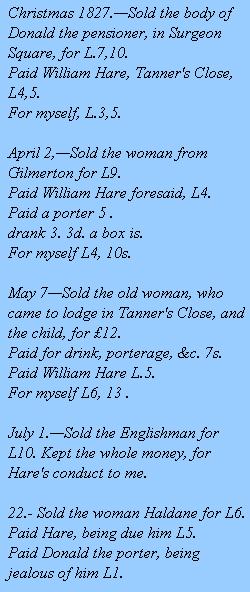
Partial account of the bodies Burke disposed of and sold*

Over time, anatomists began to recognize the bodies the two men delivered but kept silent about their suspicions. Burke tempted fate one time too often. On Halloween night in 1827, he met Mrs. Docherty at a bar and persuaded her to drink with him at his lodgings. After much jollying and merriment, he killed the woman (his favorite method was suffocation, so as not to leave a mark).

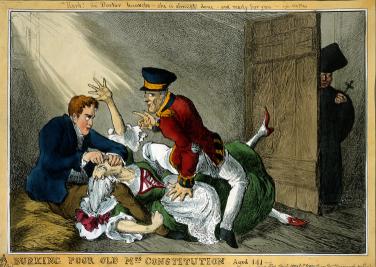
Burke and Hare hard at work

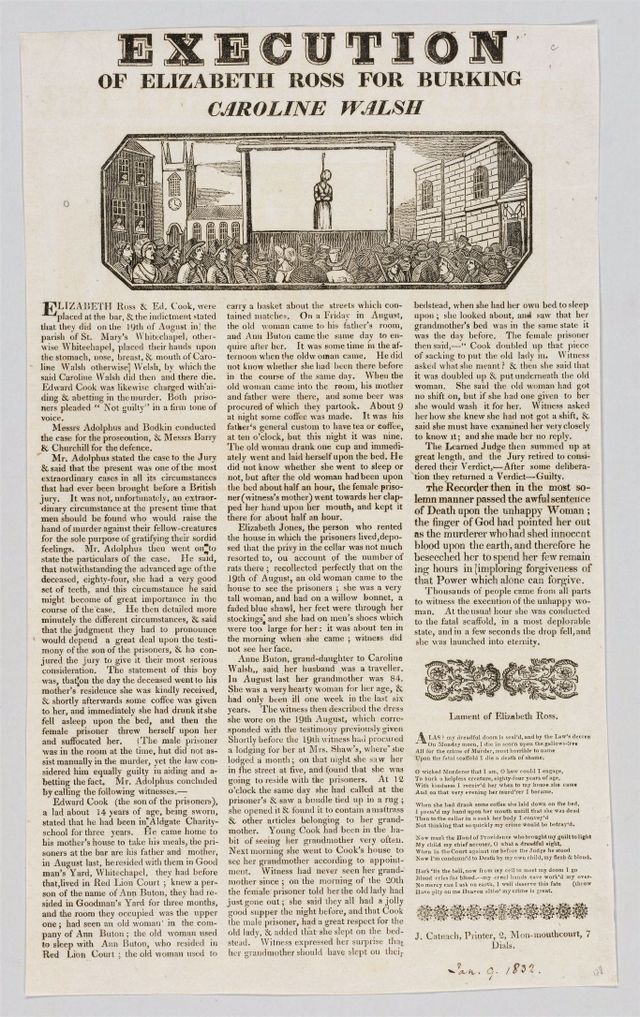
But Burke was so drunk and addled that he was unable to dispose of her body in a timely manner. His landlady and neighbors discovered poor Mrs. Docherty’s body the following day, and Burke was made to stand trial. The public was incensed upon learning that Burke and Hare killed their subjects, and from then on the act of killing people to obtain biological specimens for anatomists was known as Burking.

Burking became a verb. Click on image to read the article

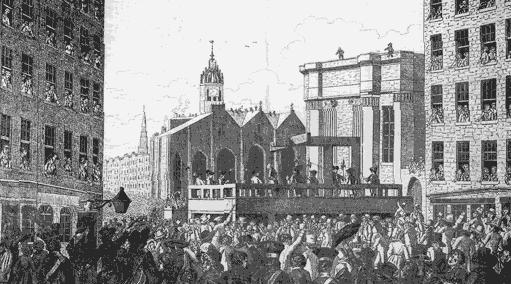
Burke and Hare were arrested in 1828. Hare turned king’s evidence, and Burke was found guilty and hanged at the Lawnmarket, the Royal Mile, on the 28th January 1829. Burke’s body was publicly dissected at the Edinburgh Medical College and his skeleton, death mask, and items such as a leather wallet made from his tanned skin are now displayed at the Royal College of Surgeon’s museum. –   Burke and Hare

Execution of William Burke

The story is so fascinating, that it has been filmed and covered in the press repeatedly. Watch this preview of a film on Burke and Hare by John Landis that will make its debut in the UK first.

Over time, public outrage over body snatching and the abuses with the Royal College of Surgeons and the hospitals in relation to the resurrectionist trade became such that Parliament passed the Anatomy Act in 1832, which sanctioned the delivery of the corpses of any unclaimed dead to anatomy schools. During this period, hospitals were considered death houses, and all but the most desperately ill people avoided going to them. People also avoided dying in workhouses for fear of having their bodies claimed for dissection. While the practice of dissection was legitimized by this act, poor people were still fearful of having their bodies “snatched”, albeit legally.

Burke's skeleton on view. As justice would have it, his body was studied by anatomists.

More on the topic:

Read Full Post »

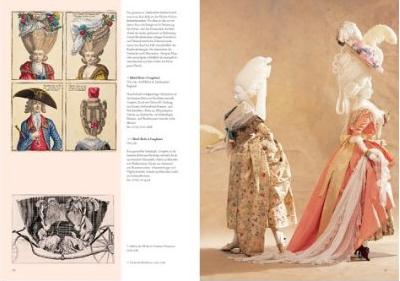
Inside of Fashion: A History from the 18th to the 19th Century

I would like to take the opportunity to thank you all, my new and recurring readers, for stopping by this blog and reading my thoughts about Jane Austen and her Regency world. This week my site counter rolled past 2 million hits. I find the number simply mind-boggling, especially since over half of you are staying long enough to read a post or two.

In 2006, when I began writing for this blog I only meant to maintain an archive for my Janeite group. Providing occasional information became an obsession, and I now research the Regency period daily. Much to my delight and surprise, people began to stop by to read my pithy thoughts and to leave their comments.

By way of thanks, I am offering a book entitled Fashion: A History from the 18th to the 19th Century by Taschen, which features costumes from the incomparable Kyoto Costume Institute. My online friend, Laurel Ann from Austenprose, gave me this book last year and I love it. I thought one of my readers would like to have their very own copy too.

For the opportunity to win the book, please leave a comment telling me what topics you’d like to read on this blog in the future, or which topics you would like me to revisit. I am sad to say that I can send this hefty book only to my readers in Canada or the United States, but everyone is welcome to leave their thoughts. Deadline for an opportunity to win is November 10, 2010.

With a humble heart, I thank you all for stopping by. Vic

CONTEST CLOSED, and Shelli is the winner!! Thank you ALL for your fabulous suggestions and your heartfelt comments.

Read Full Post »

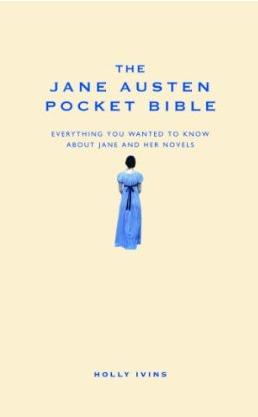
I recently received The Jane Austen Pocket Bible by Holly Ivins and have had occasion to use it a number of times. It is a small, compact, hard cover book filled with useful information about Jane’s life, novels, characters, movie adaptations, and the like.

Sprinkled throughout the chapters are facts and quotations, such as:

Pocket Fact:

“Some of Jeane’s earliest encouragement for her writing came from her neighbour Anne Lefroy, or Madame Lefroy as she was known. Anne was a lively and intelligent woman who was a great reader of Milton, Pope and Shakespeare, and was even known to write poetry herself…”

In Her Own Words:

“Our family are great Novel-readers and not ashamed of being so.” (Letter to Cassandra, 1798)

The book is divided into the following sections:

  • Introduction (including a timeline of her life and  how she wrote)
  • History and context, including a timeline of major historical events during this era.
  • Places Austen lived
  • Influences and literary context
  • Austen’s novels
  • Characters in Austen’s novels
  • Love, romance, and marriage in Austen’s novels
  • Film and TV adaptations of Austen’s novels
  • Glossary

Next time I visit England, I will bring this compact treasure trove with me. More than a guide, this handy reference will inform me and help me to recall important facts as I visit the places where she lived and worked. Outside of travel, this guide allows me to quickly look up facts as I write my posts.

I’ve taken the attractive paper cover off, for the book tucks in quite nicely in my briefcase or handbag, and its hard red cover is sturdy enough to withstand the wear and tear of travel.

I recommend this book to teachers, students, and Janeites whose interest in Jane Austen is never ending.

Other references:

Margaret Sullivan’s Jane Austen Handbook is delightful. Read my review here.

Joan Klingel Ray wrote Jane Austen for Dummies. Too large to take along on journeys, it nevertheless is a handy reference in any Jane Austen library. Read my review here.

I want to especially thank @sussexbestwalks, who I follow on Twitter, for arranging to send this book to me. What a lovely read and find. Order the book at this link.

Read Full Post »

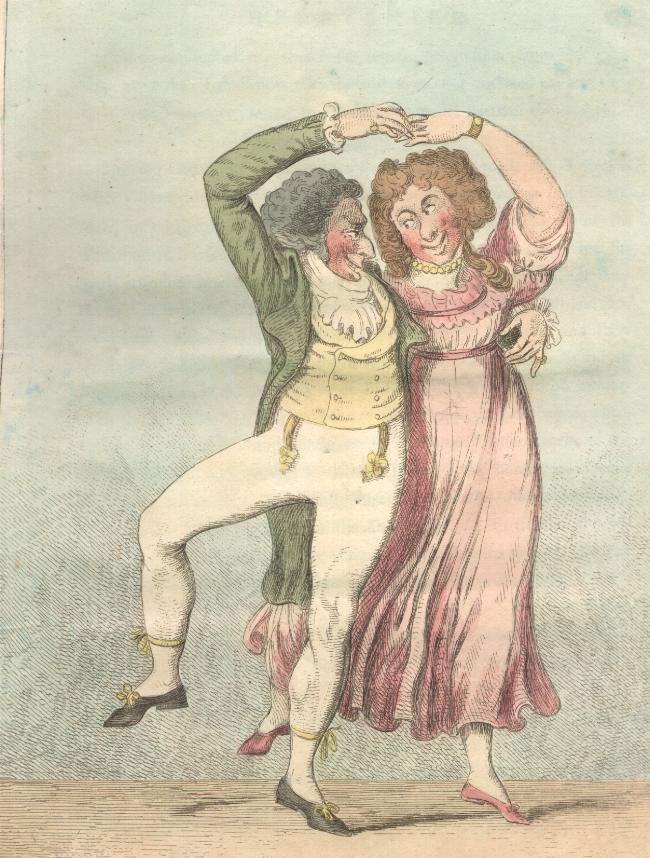
Allemande

Definition of an Allemande -Music:
An allemande (also spelled allemanda, almain, or alman) (from French “German”) is one of the most popular instrumental dance forms in Baroque music, and a standard element of a suite, generally the first or second movement.

Definition of an Allemande – Dance:

A 17th and 18th century court dance developed in France from a German folk dance: a dance step with arms interlaced.

The name ‘country dance’ has nothing to do with country as opposed to town, but comes from the French ‘contre-danse’, describing the way in which the dancers start by standing up facing each other in two long rows, men on one side and girls on the other. The leading couple would then move off down the row, the other couples falling in behind them; there was no fancy footwork involved, but the dancers would weave their way in a variety of patterns across the floor, linking arms or hands with their partners s the figure required – the ‘allemande’figure involved a ‘a great deal of going hand in hand, and passing the hands over heach other’s heads in an elegant manner’. – Jane Austen, The World of Her Novels, Deirdre Le Faye, p. 104.

More on the topic:

Read Full Post »

« Newer Posts - Older Posts »